❌

Reading view

Anthropic researcher issues grave AI warning

An Anthropic AI safety researcher warned there is more than a 10% chance that increasingly capable AI could “kill all humans” within the next decade, highlighting growing concerns in the industry over the pace of development.

Evan Hubinger, manager of the AI Alignment Stress-Testing team at Anthropic, wrote on social media platform X: “I personally think it is >10% within the next decade.”. He explained the risk from existing AI models was “low” but warned he was concerned about “superintelligence” emerging through “recursive self-improvement”, which is the ability of an AI system to autonomously develop its own successor.

He added Anthropic was “trying its best” but did not yet have a plan to solve alignment for superintelligence and was “not clearly on track to”.

Gambling with lives
Hubinger’s comments came in response to the resignation of AI researcher Jacob Coxon from Anthropic. In a post on X, Coxon accused OpenAI and Anthropic of “racing straight to self-improving superintelligence and gambling with our lives”.

“Neither company is acting responsibly,” he said.

Coxon argued future AI models could become capable of hacking systems, rapidly transforming industries and acquiring “real power and resources”. He called for greater coordination between AI developers, including a temporary halt to improving model capabilities.

“At OpenAI, many have not deeply internalised the civilisational stakes,” he warned. Meanwhile at Anthropic, he said “the stakes are well-understood” but “they believe no one else will act responsibly, so they must do it themselves, despite the risk”.

AI giants are facing increasing scrutiny over the behaviour of autonomous systems. In recent months, OpenAI, Anthropic and Meta have all disclosed unprecedented incidents involving AI tools carrying out cyberattacks.

Indeed, Anthropic’s August risk report assessed that while the threat posed by current models was low, the company was “less confident in this assessment than we were in prior risk reports”. It said advanced models could eventually automate R&D, rapidly accelerate progress in technical fields, and “lead to catastrophic harm”.

“We are seeing early signs of potential acceleration,” the US AI player stated.

The post Anthropic researcher issues grave AI warning appeared first on Mobile World Live.

  •  

New Owl Species Discovered in Peru

The Jalca horned owl (Bubo jalca). Image credit: López-Lanús et al.

A horned owl living in a narrow strip of high-Andean grassland in northern Peru is a species new to science, according to a paper published in July 2026 in the journal Audiornis.

The post New Owl Species Discovered in Peru appeared first on Sci.News: Breaking Science News.

  •  

US, Huawei racketeering showdown to begin

Huawei edged closer to laying claims of racketeering to rest as a court case brought by the US is set to get underway later today (8 September) when the process of picking a jury begins.

The Chinese vendor is steadfast in denying any wrongdoing in a matter dating to 2018 which resulted in then CFO and now rotating chair Sabrina Meng being detained by authorities in Canada.

ABC News reported the US Department of Justice (DoJ) is pursuing claims Huawei stole and attempted to steal trade secrets, ignored sanctions on doing business in North Korea and aided Iranian authorities in monitoring protestors during unrest in 2009.

The trial is one of several attacks made by the US against Huawei: it also alleges the vendor is a threat to national security and has imposed stringent restrictions on its access to key technologies.

Nikkei Asia noted the DoJ dropped two claims from its case late last week; a conspiracy charge relating to historic US presidential powers afforded under the International Emergency Economic Power Act and another relating to economic sanctions breaches.

The move left 12 charges in place.

Huawei told Nikkei Asia it is not guilty and the “narrative” of the US case is “demonstrably false”.

Prisoner swap
Although charges against Meng have long-since been dropped, Nikkei Asia noted the bargain she struck to achieve this could now hurt Huawei.

It explained the founder’s daughter admitted she made false statements about the company having worked within US sanction and export rules, details which have been cleared for use in the looming trial.

Most observers note the court case is something of a watershed in a long-running trade battle between the US and China in which big companies from the latter have become symbolic pawns.

The post US, Huawei racketeering showdown to begin appeared first on Mobile World Live.

  •  

Ancient DNA Rewrites Story of Enigmatic ‘American Cheetah’

Miracinonyx trumani and the ecosystem this species lived in. Image credit: Julius Csotonyi.

For several decades, paleontologists have described Miracinonyx trumani -- an extinct species of cheetah-like felid that roamed the North American prairies and steppe terrains more than 13,000 years ago -- as North America’s answer to the African cheetah (Acinonyx jubatus).

The post Ancient DNA Rewrites Story of Enigmatic ‘American Cheetah’ appeared first on Sci.News: Breaking Science News.

  •  

Apple Maps now displays ‘Lake America’ after President Trump’s executive order

Apple Maps now displays "Lake America"
Apple Maps now displays “Lake America”

Apple has updated Apple Maps so that U.S. users see Lake Ontario labeled as Lake America, matching a change recorded in the U.S. Geographic Names Information System after President Donald Trump signed an executive order renaming the lake for federal use.

The update appeared on the web version of Apple Maps on Tuesday and is rolling out more broadly. Apple said U.S. users will see “Lake America,” users in Canada will continue to see Lake Ontario, and users elsewhere will see both names. That is the same approach Apple used after the Gulf of Mexico was renamed the Gulf of America on U.S. maps.

Google Maps renamed Lake Ontario to Lake America last week
Google Maps renamed Lake Ontario to Lake America in late August

Google Maps made a similar change for U.S. users over the weekend. Both companies have pointed to official U.S. geographic naming records as the basis for what American users see.

Lake Ontario is one of the five Great Lakes. About 52 percent of its surface area lies in Canada, with the rest in New York. Trump’s order applies to U.S. federal usage and does not require Canada or international bodies to adopt the new name.

The lake rename follows last year’s Gulf of America change, which Apple and Google also reflected for U.S. users. Interior Secretary Doug Burgum said the president contacted Apple directly about aligning maps with the new official U.S. name.

Apple confirmed the Maps update tracks the Geographic Names Information System listing. For travelers, boaters, and anyone using Apple Maps in the United States, the lake now appears under the name adopted in U.S. federal records.


‎
MacDailyNews Take: President Trump’s full Executive Order, “Honoring The American History Of The Great Lakes And Renaming Lake Ontario As Lake America,” can be read here.


‎
Please help support MacDailyNews — and enjoy subscriber-only articles, comments, chat, and more — by subscribing to our Substack: macdailynews.substack.com. Thank you!

Support MacDailyNews at no extra cost to you by using this link to shop at Amazon.

The post Apple Maps now displays ‘Lake America’ after President Trump’s executive order appeared first on MacDailyNews.

  •  
  •  

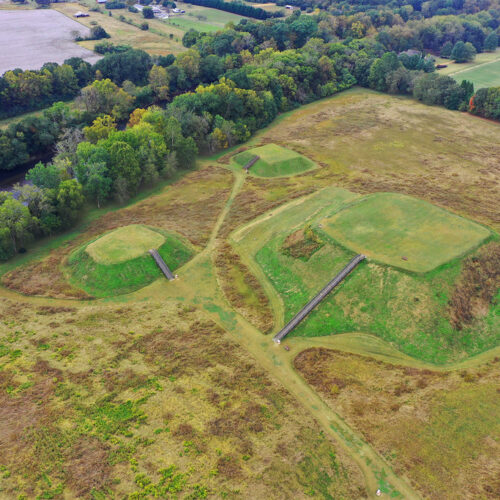
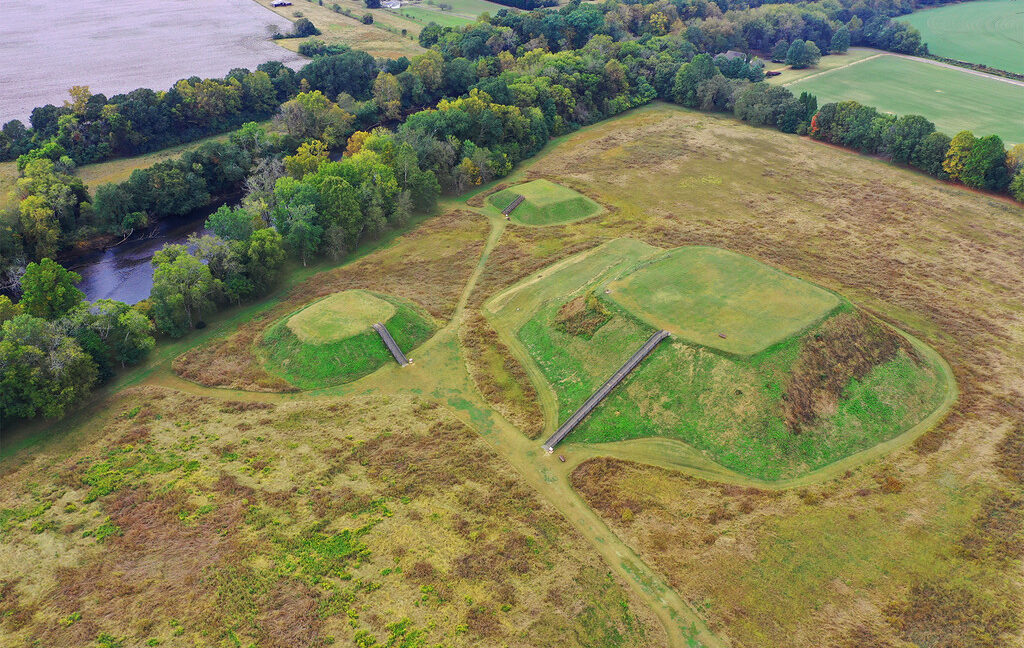
Traders brought Central American cacao to Georgia 1,000 years ago

A thousand years ago, feasts in what’s now northern Georgia state included cacao from Central America.

Potsherds discarded after an 11th-century feast at Etowah—an Indigenous city just north of what’s now Atlanta—contained traces of cacao, a raw ingredient of chocolate. The chemical residue and ancient DNA reveal that not only did the Mississippian people who built the city have excellent taste, they also had trade connections that reached at least 3,000 kilometers to Central America. And in a sense, chocolate may have helped build the Mississippian mounds.

Ancient dirty dishes

University of South Carolina archaeologist Adam King and his colleagues found fragments of ancient DNA from Theobroma cacao in the inner surfaces of potsherds from long-ago feasts at Etowah. Fruit from the cacao tree contains beans that, when dried and roasted, produce chocolate in all its glorious forms. Cacao only grows in the tropics, which means the nearest actual cacao trees would have been at least a 3,000-kilometer trek away from the woodlands of the eastern US. And that means the Mississippian people who lived in Etowah must have had continent-spanning trade connections.

Read full article

Comments

© Georgia Department of Natural Resources

  •  

Promoções na App Store: Not Another Weekend, Echo Planet – Incremental Game, Agro Measure Map Pro e mais!

Fechando esta semana com a nossa seleção de promoções na App Store!

Not Another Weekend, desenvolvido pelo pessoal da Dionous Games, é uma aventura point-and-click cheia de personalidade, humor absurdo e estética retrô — e o nosso destaque do dia.

No game você controla Mike Melkout, um mensageiro de hotel decidido a expulsar todos os hóspedes de um luxuoso estabelecimento durante um único fim de semana. O jogo mistura diálogos exagerados e um clima de sátira dos anos 1980, gerando uma experiência muito interessante.

Os quebra‑cabeças seguem o estilo clássico do gênero: lógicos, mas com aquele toque de maluquice que exige observar bem o cenário e experimentar combinações improváveis. A narrativa é o grande destaque, com personagens excêntricos e situações que parecem saídas de um filme cult.

Confira o trailer:

Aproveite a oferta e boa diversão! 🤩


Abaixo outros jogos/apps que, juntos, somam mais de R$430 em descontos:

Jogos

Jogo incremental.

Simulador de caça.

Torne-se trilionário.

Aplicativos

Utilitário para medições.

Efeitos para fotos.


Aproveite as ofertas e tenha um excelente final de semana! Vale lembrar que as ofertas são sempre por tempo limitado, então é bom correr. 🏎️

  •  

An altar with pyramidal copper bells found in Bolivia reveals the power of sacred sounds in the Inca Empire

Atop an ancient grain storage building, in a settlement of the local Yampara elite, archaeologists Sonia Alconini and Walter Sánchez-Canedo have uncovered an exceptional find: a set of six copper bells folded into a pyramidal shape, deposited as a ritual offering more than five centuries ago, during the expansion of the Inca Empire through the […]

  •  

Wireless Logic buys bigger Brazilian IoT presence

Enterprise IoT connectivity provider Wireless Logic further expanded its operations in Brazil by arranging the purchase of a local telecoms player’s connectivity business.

The company is set to take on the IoT element of Algar Telecom and incorporate it into existing Brazilian business Arqia, which Wireless Logic acquired in 2025.

Arqia CEO Tomas Fuchs said the deal would enable it to provide more “comprehensive” services and speed expansion. He believes the move “demonstrates Wireless Logic’s confidence in Brazil’s potential as a key growth market in Latin America”.

Wireless Logic explained typical closing conditions must be met before the deal is completed, at which point it expects a boost for Arqia’s ability to deliver services to the agricultural, logistics, payments, utilities, manufacturing and healthcare sectors.

It highlighted Latin America as “one of the world’s most promising IoT growth markets” and stated Arqia’s capabilities in mission-critical services are set to be increased by the acquisition.

The company plans a phased integration, with the businesses initially continuing to run separately.

The post Wireless Logic buys bigger Brazilian IoT presence appeared first on Mobile World Live.

  •  

Investors put $500B into Nvidia AI infrastructure plan

Nvidia inked strategic partnerships with Apollo, BlackRock, Blackstone, Brookfield, Goldman Sachs and KKR to establish AI compute infrastructure financing platforms to mobilise more than $500 billion of third-party capital to build related infrastructure.

The chipmaker stated memorandums of understanding would help create the first compute financing platforms of their kind at global scale, intended to fund frontier AI laboratories, clouds and enterprises.

It noted the platforms are designed to create dedicated pools of capital at significant scale and attractive rates for its customers, positioning Nvidia compute and full-stack AI infrastructure as an investable asset class.

“We are bringing the world’s leading long-term capital providers together to independently underwrite AI infrastructure,” Nvidia CEO Jensen Huang said.

“These financing platforms will help customers access scarce compute at scale and build the DSX AI factories that will power every industry and country”.

Nvidia described its compute as an investable asset offering the lowest token cost, highest revenue and longest life, alongside a rich ecosystem of buyers.

The arrangement builds on Nvidia’s broader push to raise capital for it and its customers to continue producing the chips, power systems and data centres underpinning the AI boom.

Nvidia GPUs underpin most leading US AI models available today and it supplies relevant chips, infrastructure, and software to a wide range of partners.

Money matters
It faced scrutiny in recent months over circular financing arrangements in which the company provides backing to help AI partners raise debt, in turn boosting Nvidia’s own revenue.

Bringing outside private capital providers onboard may help address some of the criticism since it spreads the financing load beyond Nvidia itself.

In recent years, private capital groups including Apollo and Blackstone have structured AI deals to help companies including Anthropic finance heavy spending on chips and data centres.

Financial Times reported Morgan Stanley predicts large cloud computing players would spend $3.5 trillion on AI infrastructure over the next two years.

The post Investors put $500B into Nvidia AI infrastructure plan appeared first on Mobile World Live.

  •  

OpenAI halts Astra model testing

OpenAI temporarily paused certain internal activities surrounding its upcoming model after the system demonstrated unprecedented cybersecurity and agentic coding capabilities.

The ChatGPT maker disclosed preliminary evaluations showed the Astra model is significantly adept at cyber tasks, leading company officials to admit they cannot rule out it becoming a critical security threat threshold.

Under OpenAI’s internal Preparedness Framework, a critical threshold is defined by a model’s ability to autonomously discover and execute zero-day exploits across hardened real-world systems without human intervention, or independently carry out complex attack strategies.

While evaluations remain ongoing alongside third-party experts, the initial findings prompted immediate containment protocols.

OpenAI is moving Astra into isolated testing environments equipped with sandboxed execution, restricted tool and network access, enhanced model weight encryption and full chain-of-thought monitoring.

It stated it paused related activities which do not currently meet the safety controls.

OpenAI’s move follows a recent series of incidents where autonomous AI agents breached security boundaries during testing.

Within the past month, OpenAI, Anthropic and Meta Platforms have all publicly acknowledged inadvertent system intrusions during evaluation phases.

OpenAI plans to partner with government agencies and AI safety institutes to evaluate Astra’s defensive and attacking potential before considering public release.

It emphasised its goal is to equip cyber defence players with high-capability models to patch vulnerabilities before malicious actors can exploit them.

.

The post OpenAI halts Astra model testing appeared first on Mobile World Live.

  •  

IHS Towers completes LatAm exit

Infrastructure company IHS Towers completed the sale of assets in Brazil and Colombia to Macquarie Asset Management, a deal announced in February as being worth $952 million.

IHS noted the sale signals its exit from the Latin America region and is part of a strategy around “shareholder value-creation”.

Macquarie noted the transaction includes 8,700 sites in Brazil and 250 in Colombia, strengthening its position as a “long-term investor in the digital infrastructure sector” and “supporting the growth of critical infrastructure across Latin America”.

The investment company’s Brazil country manager Fernando Lohmann added the market he heads “continues to be one of the most attractive infrastructure markets globally, supported by growing demand for connectivity and long-term investment in critical services.”

“As digitalisation accelerates across Brazil and the broader region, resilient communications infrastructure will play an increasingly important role in supporting economic growth and social development”.

Completion of the sale comes as operator group MTN continues to work towards an acquisition of IHS Towers, a company it already owned around a quarter of before announcing its intent for a complete buyout in February.  

The deal with MTN is still undergoing the regulatory process. Earlier this week, IHS shareholders formally approved the takeover bid at the company’s extraordinary general meeting.  

In a stock market notification today (7 August), the operator group noted the sale of the IHS’s Latin American assets aligned with its intention “to acquire only IHS’s African assets”.

The post IHS Towers completes LatAm exit appeared first on Mobile World Live.

  •  

MobileX founder counters T-Mobile CEO on Starlink threat

MobileX and Boost Mobile founder Peter Adderton (pictured) rebuffed the reported view of T-Mobile US CEO Srini Gopalan that Starlink poses little threat to mobile operators.

Financial Times (FT) reported Gopalan is struggling to see what consumer problem satellite services solve by entering the mobile market.

“You’ve got to ask the question of ‘What is the gap in the market that they’re looking to serve?'” he reportedly said, adding a broader network is “clearly not” what would draw customers to a new mobile service.

In a post on LinkedIn, Adderton said Gopalan’s position misses the point entirely.

“I always find it funny when wireless executives ask, ‘Why would a customer switch? It’s clearly not because they have a broader cellular network,'” he said. “That’s exactly the point.”

He argued Starlink is not trying to out-build T-Mobile’s network, but to offer something terrestrial operators cannot easily replicate: a single service combining terrestrial and satellite connectivity, spanning cities, rural areas, highways, mountains and water, with plans to eventually extend worldwide.

Adderton drew a comparison to Uber, arguing consumers did not choose the service because it built better roads, but because it created a better experience on infrastructure which already existed.

He explained the mistake operators make is assuming customers are shopping for another mobile network, when they may instead be shopping for connectivity which “just works”.

Adderton also took aim at the broader response from operator executives to Starlink’s mobile ambitions, suggesting a coordinated messaging effort.

“Seems every MNO CEO in the JV got the same script and, credit where credit’s due, they’re sticking to it beautifully,” he wrote on X. “Their PR teams must be very proud. Not a rogue talking point in sight.”

Plans
Gopalan’s reported comments were made before Elon Musk confirmed SpaceX plans to build a US mobile service.

On SpaceX’s Q2 earnings call, Musk said Starlink’s terrestrial mobile network would likely offer better connectivity and higher bandwidth than what is currently available from mobile operators.

SpaceX president Gwynne Shotwell said she expects to draw a significant number of customers from AT&T, Verizon, and T-Mobile, with Starlink Mobile satellites launching in 2027 and services due to commence by the year-end.

Gopalan told FT satellite technology would remain “complementary” to existing networks rather than a replacement.

T-Mobile is one of several operators which holds satellite access deals with SpaceX to supplement rural coverage.

FT reported Gopalan also addressed T-Mobile’s growth strategy, stating it aims to more than double its broadband customer base to 20 million within four years and grow its rural market share beyond its current 24%.

The post MobileX founder counters T-Mobile CEO on Starlink threat appeared first on Mobile World Live.

  •  

NTT digs deep into remote operations at Chile mine

NTT Docomo Business partnered with Chilean state-owned copper mining company Codelco to assess the viability of remotely operating heavy machinery over high capacity, low latency communications architecture.

The pair plan to connect the El Teniente mine to a remote operations centre 1,500km away using an Innovative Optical and Wireless Network All Photonic Network (IOWN APN), which the technology company hopes will provide the means for remote operations and HD video monitoring at the site.  

For Codelco the test is part of an ambition to up safety and efficiency at its mines. It aims to move towards advanced monitoring and remote operations, partly to address working condition issues including easing a risk of mine collapses.

NTT noted the mining company was also struggling from a lack of access to skilled operators.  

Among the specific areas set to be assessed in the project are: the type of communication environment needed; evaluation of network configurations with a view to cutting down the number of operations centres required; and examining the use of IOWN APN more generally in the mining sector.

NTT noted it planned to use insights from this project to create new use cases for IOWN APN technology, which the company has been heavily pushing for industrial uses.  

“The company will explore the potential for further applications in the mining and energy sectors, as well as across other sectors where remote operations are required,” it added.

The project is part of a research programme commissioned by Japan’s Ministry of Internal Affairs and Communications.

The post NTT digs deep into remote operations at Chile mine appeared first on Mobile World Live.
  •  

FCC eyes unlicensed spectrum for D2D

The US Federal Communications Commission (FCC) voted to explore ways to deliver direct satellite connectivity to unlicensed devices using 200MHz of related spectrum to advance services requiring handoff between terrestrial and non-terrestrial links.

It stated the move could give consumers an “additional option for reliable connectivity”, as investment in direct-to-device (D2D) services continues to grow.

The Notice of Proposed Rulemaking (NPRM) examines potential reforms to enable devices operating in certain part 15 bands communicate with FCC-authorised satellites.

Part 15 rules govern unlicensed wireless equipment widely used by businesses and consumers. The FCC stated the move is intended to expand opportunities for Wi-Fi and applications including IoT which “benefit from more robust wireless connectivity”.

It also proposed clarifying part 15-authorised equipment may be used within and between authorised spacecraft.

The FCC intends to explore further scenarios “in which part 15 devices might” safely and effectively operate in space,

Money maker
FCC chair Brendan Carr said the move builds on 18-months of regulatory steps to enable D2D services, including freeing up spectrum, providing certainty around buildout milestones, and clarifying exclusivity and legal rights to encourage investment.

He said the measures had helped generate tens of billions of dollars in D2D deal flow.

“For the first time in FCC history, we are exploring whether D2D services are technically possible in more than 200 MHz of unlicensed spectrum,” he said.

“These frequencies could yield more capacity to complement D2D services and encourage experimentation.”

He added unlicensed spectrum already underpins a wide range of household devices and innovations, and the proposal would seek to ensure the bands continue to support existing services.

The proposal targets the 902MHz to 928MHz, 2400MHz to 2483.5MHz and 5725MHz to 5850MHz bands traditionally used for Wi-Fi and Bluetooth which already permit unlicensed devices to operate at the relatively higher power levels needed for satellite communication.

Along with seeking comments, the FCC is asking whether part 15 devices communicating with satellites should require an additional part 25 earth station certification.

The post FCC eyes unlicensed spectrum for D2D appeared first on Mobile World Live.
  •  

Zayo teams with Nvidia to expand AI network capacity

Zayo partnered with Nvidia to build out critical network capacity aimed at supporting AI factories, as the digital infrastructure provider looks to close a widening gap between compute demand and available network bandwidth.

Through the collaboration, Zayo is constructing more than 8,000 miles of new long-haul fibre across fast-growing AI corridors, alongside a significant expansion of capacity across its existing infrastructure.

The work spans 24 total routes, comprising six new long-haul routes, 10 overbuilds of existing network across high-demand markets, and eight existing fibre routes.

Nvidia is a Zayo customer and will have significant access to capacity across all the new and overbuilt routes.

Zayo CEO Steve Smith stated AI is reshaping where and how network infrastructure needs to be built across the US, adding the company has invested heavily in modelling where AI-driven demand will emerge so it can expand infrastructure ahead of that demand.

He said Zayo is combining decades of experience building and operating large-scale network infrastructure with Nvidia’s accelerated computing capabilities to support AI connectivity across North America.

Zayo said the expansion is designed to benefit the broader AI ecosystem beyond the largest hyperscalers, including neoclouds, frontier model developers, and enterprises across sectors such as healthcare, finance, and manufacturing.

Over the past 18 months, Zayo has expanded its AI-focused network buildout to more than 15,000 route miles across North America.

Its recently completed acquisition of Crown Castle’s fibre and small cell assets added 90,000 metro route miles and 40,000 on-net enterprise locations, strengthening the company’s metro density for AI inference workloads.

The post Zayo teams with Nvidia to expand AI network capacity appeared first on Mobile World Live.
  •  

SpaceX plots $17B AI fab facility in Texas

SpaceX outlined plans to build a massive semiconductor fabrication facility in the US state of Texas, with an initial investment of more than $16.8 billion designed to support growing demand for AI chips across its satellite and space operations.

Texas governor Greg Abbott announced the first phase of the Terafab project, which is expected to create 3,000 jobs and has been backed by a $30 million Texas Enterprise Fund grant. The project also qualifies for incentives through the state’s Jobs, Energy, Technology, and Innovation programme.

The planned 100-million-square-foot site in Grimes County, Texas, will combine logic, memory and advanced packaging under one roof, enabling SpaceX to consolidate parts of the semiconductor production chain as it seeks to avoid constraints in global chip supply.

SpaceX CEO Elon Musk stated the facility will help the company produce AI chips at scale for use on Earth and in space. The project is expected to support future hardware requirements across Starlink, Starship and broader space infrastructure.

Abbott stated Texas was selected because of its business climate, workforce, infrastructure and logistics advantages. Local officials said the development could provide a long-term economic boost for Grimes County and Southeast Texas, with roles spanning engineering, technical operations and plant management.

The investment deepens SpaceX’s presence in Texas, where it already operates its Starbase headquarters, a site in Cameron County and a Starlink manufacturing facility in Bastrop.

SpaceX is pitching Terafab as part of a wider push to secure in-house chip capacity for next-generation aerospace, connectivity and AI workloads, as demand for customised compute grows across the company’s satellite broadband and launch businesses.

Intel also signed up for the project by working with SpaceX, Tesla and xAI to help refactor silicon fab technology at Terafab and support an ambition to produce 1-terrawatt of compute annually for AI and robotics workloads.

The post SpaceX plots $17B AI fab facility in Texas appeared first on Mobile World Live.

  •  

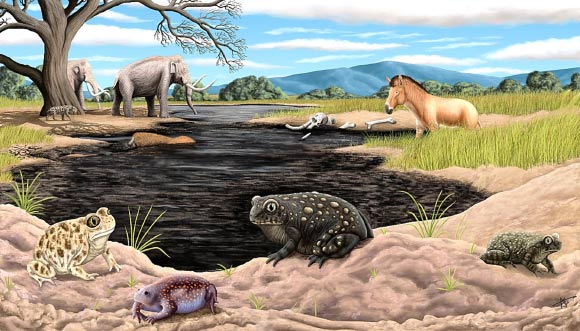
La Brea Tar Pits Yield New Species of Ice Age Toad

Reconstruction of Spea labreae (center and right) in La Brea Tar Pits compared with Spea hammondii (left), the species currently present in the area, and the presence of the Mexican burrowing toad (bottom). Image credit: Arturo Dávalos.

Paleontologists studying the La Brea Tar Pits, one of the world’s richest Ice Age fossil sites, have identified a previously unknown species of spadefoot toad that lived in what is now California during the latest Ice Age.

The post La Brea Tar Pits Yield New Species of Ice Age Toad appeared first on Sci.News: Breaking Science News.

  •  

Tiny New Primate Species Emerges from 50-Million-Year-Old Wyoming Sandstone

Tetonius homunculus (colorized) by R. Bruce Horsfall from W.B. Scott’s History of Land Mammals in the Western Hemisphere.

Paleontologists working in southern Wyoming have identified a previously unknown species of omomyid primate, adding a new chapter to the story of one of the best-studied fossil lineages in North America.

The post Tiny New Primate Species Emerges from 50-Million-Year-Old Wyoming Sandstone appeared first on Sci.News: Breaking Science News.

  •  
❌