❌

Reading view

Smoking-Gun Signatures of Bounce Cosmology from Echoes of Relic Gravitational Waves

Mian Zhu and Yi-Fu Cai 2026 ApJL 1004 L34
In a cosmology framework that proposes the universe began with a period of contraction before the Big Bang, researchers find that high-frequency gravitational waves oscillate in a way that is potentially detectable.

The post Smoking-Gun Signatures of Bounce Cosmology from Echoes of Relic Gravitational Waves appeared first on AAS Nova.

  •  

The Cocoon from a Massive Star’s Death: VLA Radio Polarization Study of Possible Historical Supernova Remnant G7.7–3.7

Tian-Xian Luo et al 2026 ApJ 1003 152
Polarization measurements show evidence of shock compression and possible interaction between a supernova remnant and previously formed circumstellar shells from the progenitor’s mass loss.

The post The Cocoon from a Massive Star’s Death: VLA Radio Polarization Study of Possible Historical Supernova Remnant G7.7–3.7 appeared first on AAS Nova.

  •  

A Massive Hot-Jupiter Companion that Disfavors Giant Planet Formation beyond the Water-Ice Line

Eritas Yang et al 2026 ApJL 1004 L29
The presence of a 34-solar-mass brown dwarf companion to an ultra-hot Jupiter suggests that the hot Jupiter must have formed within 1.5 au of its host star to remain dynamically stable.

The post A Massive Hot-Jupiter Companion that Disfavors Giant Planet Formation beyond the Water-Ice Line appeared first on AAS Nova.

  •  

The Large Smooth Patch on Comet 9P/Tempel 1: Remnant of a Recent Past Event

J. L. Rizos et al 2026 Planet. Sci. J. 7 123
Using gravitational flow simulations, researchers link smooth areas on the face of a comet to a single event 600–1,200 years ago, possibly connected to multiple close encounters with Jupiter.

The post The Large Smooth Patch on Comet 9P/Tempel 1: Remnant of a Recent Past Event appeared first on AAS Nova.

  •  

Isolating Sgr A East: The First Uncontaminated X-Ray Maps of a Galactic Center Supernova Remnant

Mayura Balakrishnan et al 2026 ApJ 1003 128
Sgr A East strongly overlaps with plasma associated with the Milky Way’s central supermassive black hole, but new efforts to disentangle this emission have successfully isolated the remnant’s emission.

The post Isolating Sgr A East: The First Uncontaminated X-Ray Maps of a Galactic Center Supernova Remnant appeared first on AAS Nova.

  •  

Featured Image: Citizen Science and Solar Structure

solar corona during a solar eclipse

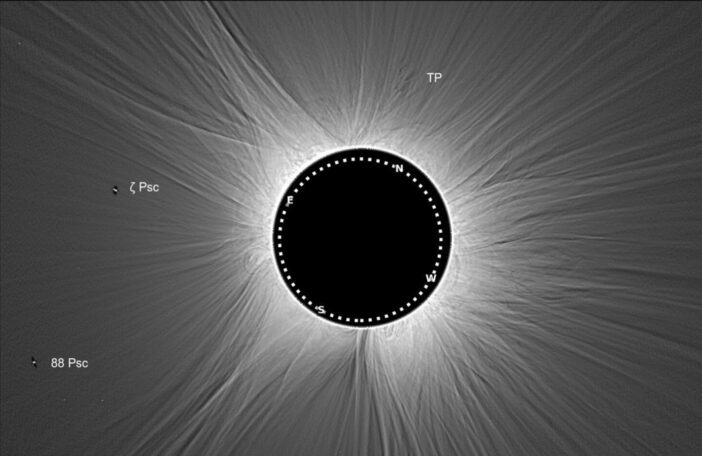
During the 8 April 2024 solar eclipse, the path of totality swept across North America, dazzling millions of skygazers. Scattered along this path were 82 viewing sites of the Dynamic Eclipse Broadcast Initiative citizen science project, which aimed to observe the dynamics of the tenuous solar corona. Though poor weather dashed many observers’ hopes, the project managed to collect data at 11 sites spanning 2,700 kilometers, capturing 49 minutes of coronal behavior. The image above shows the solar corona as seen during totality from one of the DEB Initiative sites. In a recent research article, Matthew J. Penn (Southern Illinois University Carbondale; Tucson Amateur Astronomy Association) and collaborators described the results of the Initiative’s viewing efforts, including identification of downflows and outflows, plumes, coronal loops, and apparent motion of background stars. To learn more about these observations of the solar corona, be sure to check out the full article linked below.

Citation

“Structure and Dynamics of the Inner Corona Measured from the DEB Initiative 2024 Eclipse Image Sequence,” Matthew J Penn et al 2026 ApJL 1006 L25. doi:10.3847/2041-8213/ae8797

The post Featured Image: Citizen Science and Solar Structure appeared first on AAS Nova.

  •  

Discovery of a Featureless Tidal Disruption Event at z ∼ 1 with the Wide Field Survey Telescope

Jiazheng Zhu et al 2026 ApJL 1004 L10
Discovered just 6 billion years after the Big Bang, AT2025wet is the highest-redshift non-jetted tidal disruption event known, allowing researchers to probe the missing-energy puzzle.

The post Discovery of a Featureless Tidal Disruption Event at <em>z</em> ∼ 1 with the Wide Field Survey Telescope appeared first on AAS Nova.

  •  

Disk Lifetime Distribution as a Function of the Mass of Host Star

Susanne Pfalzner et al 2026 ApJ 1003 119
The disks around young high-mass stars survive for roughly 3.72 million years, and those around low-mass stars survive for 7.20 million years, though the distributions for both populations are quite broad.

The post Disk Lifetime Distribution as a Function of the Mass of Host Star appeared first on AAS Nova.

  •  

Monthly Roundup: The Fourth Catalog of Gravitational Wave Events from LIGO, Virgo, and KAGRA

Illustration of gravitational waves emanating from a pair of black holes approaching a merger

A recent Focus Issue of the Astrophysical Journal Letters describes the fourth version of the catalog of gravitational wave events (GWTC-4.0) from the Laser Interferometer Gravitational Wave Observatory (LIGO), the Virgo interferometer, and the Kamioka Gravitational Wave Detector (KAGRA).

This catalog contains transient gravitational wave events recorded through January 2024, during the observatories’ fourth observing run, which concluded in November 2025. GWTC-4.0 displays the results of significant improvements to our suite of gravitational wave detectors, including higher-powered lasers and reduced quantum noise. A fifth catalog of gravitational wave events was released in Spring 2026, with the accompanying scientific articles being submitted to the Astrophysical Journal and the Astrophysical Journal Letters.

This Monthly Roundup consists of short descriptions of each of the currently published research articles in the LIGO–Virgo–KAGRA Gravitational Wave Transient Catalog (GWTC): Release 4 Focus Issue. Each snippet links to the corresponding research article, and the Focus Issue landing page is linked at the bottom of this post. Be sure to revisit the landing page to catch new articles as they’re published!

Introducing GWTC-4.0

timeline of gravitational wave observatories' observing runs

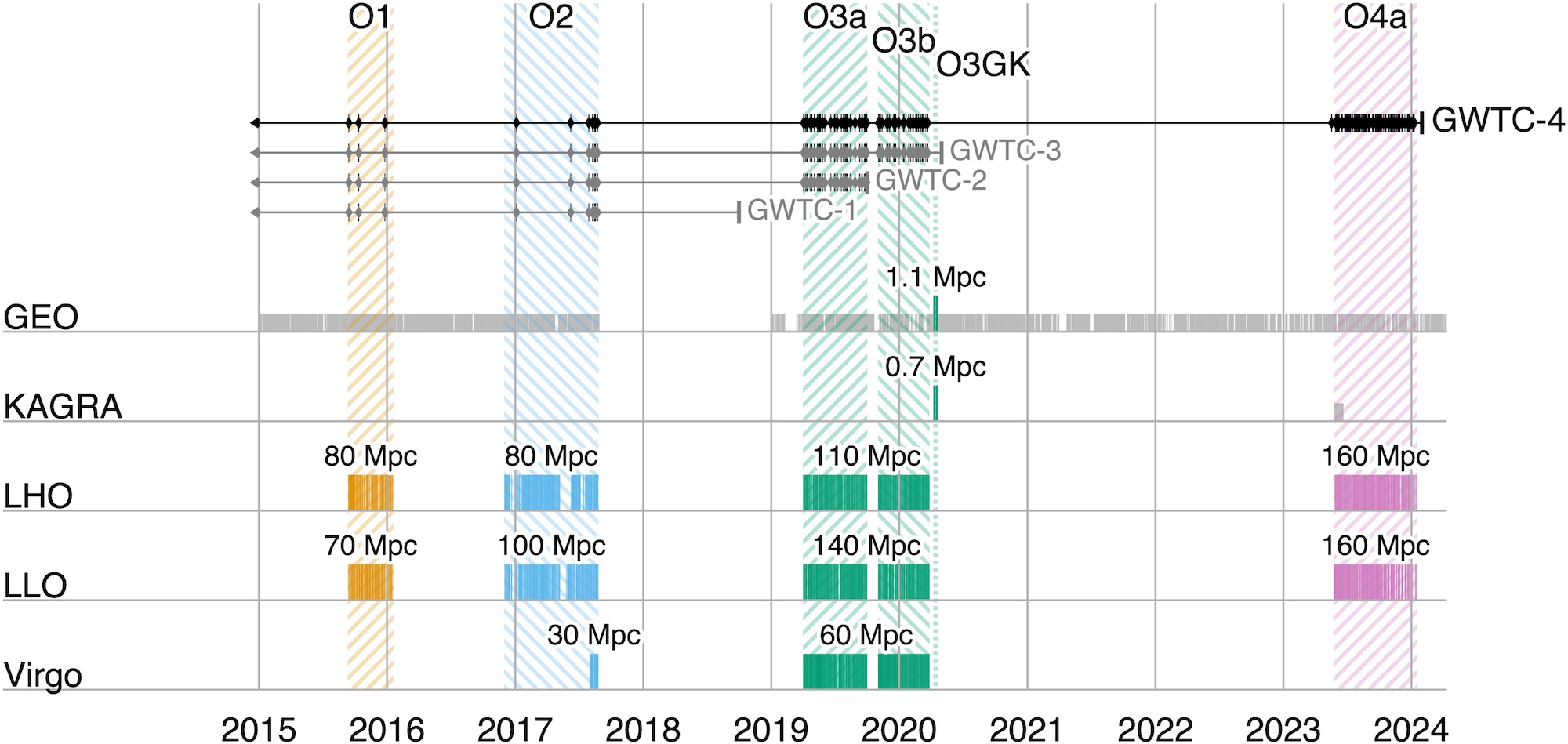
A timeline showing observing runs between 2015 and 2024. Click to enlarge. [LVK Collaboration 2025]

First up, the collaboration orients the reader to many important aspects of the catalog and the articles contained in the Focus Issue. This article describes how four detectors, each with two arms 3–4 kilometers long, monitor gravitational waves from Hanford, Washington; Livingston, Louisiana; Santo Stefano a Macerata, Italy; and Hida, Japan. These detectors work in concert, ready to receive signals from the universe during coordinated observing runs separated by periods of downtime for construction and commissioning. During these pauses, a smaller instrument, the German–British GEO600 gravitational wave detector, has kept an ear out for signals and will continue to do so until the end of 2026.

After these detectors record subtle spacetime squiggles from compact objects colliding millions to billions of light-years away, the collaboration converts the raw signals into the data contained in catalogs like GWTC-4.0. This process involves modeling the gravitational wave signals, filtering them to identify candidate transients, and pinpointing the most significant events.

After collecting and cleaning the signals, the collaboration undertakes a critical step: making their data accessible to researchers and the public. The data are available through the Gravitational Wave Open Science Center, and the Focus Issue article on open data describes how to navigate the online portal, how the datasets archived online are structured, and how the data were calibrated.

Science Results

This fourth version of the gravitational wave transient catalog greatly expands the sample of gravitational wave transients recorded by detectors across the globe. Including events from previous catalogs, GWTC-4.0 brings us to 218 events for which the probability of the source being astrophysical in nature is more than 50% and for which there is little chance of the signal being an instrumental artifact. This represents a more than 100% increase in the number of recorded gravitational wave events fulfilling this criterion, broadening our understanding of colliding compact object pairs. This release also includes some superlative signals, such as the most massive black hole binary with a low false-alarm rate and the highest signal-to-noise ratio for a gravitational wave event thus far.

Detected in November 2023 by both LIGO Hanford and LIGO Livingston, GW231123 is in many ways an exceptional gravitational wave transient. The total mass of the merging components appears to be between 190 and 265 solar masses, and the false-alarm rate for this signal is less than one per year. This makes it the most massive merger event with such a low false-alarm probability. The two components also appear to have high spins, which complicates the interpretation of the signal with existing models. A binary black hole merger in which one or more components lies within the pair-instability mass gap is the likeliest explanation for this signal, but the authors also present alternative scenarios, such as a core-collapse supernova or a gravitationally lensed gravitational wave signal.

GW230814 gravitational wave signal

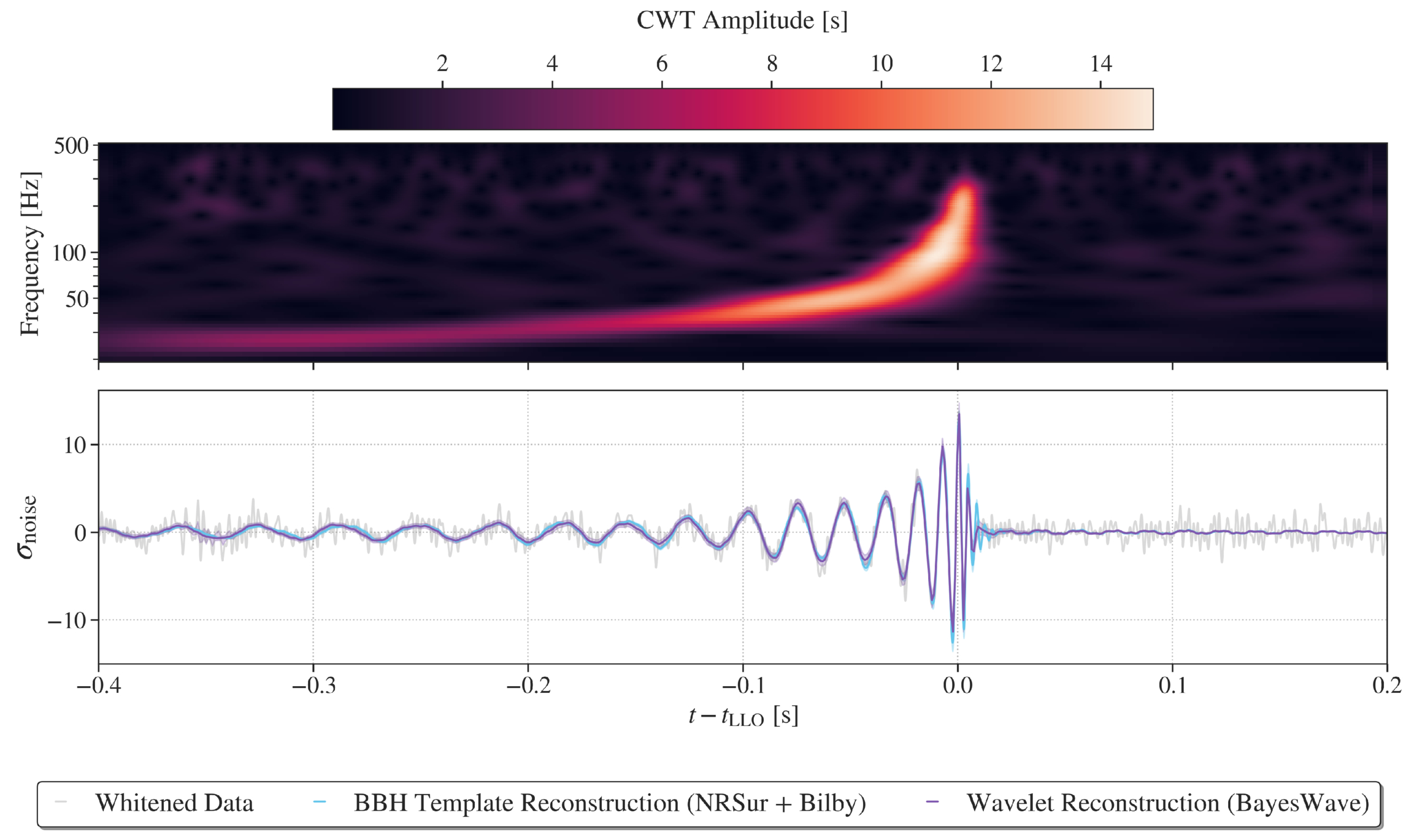
Representations of the GW230814 gravitational wave signal. Click to enlarge. [LVK Collaboration 2026]

GW230814, which was detected only by LIGO Livingston, is the loudest signal in the catalog. This signal is consistent with the collision of two black holes, each of roughly 30 solar masses. During the analysis of this signal, the team discovered potential deviations from the predictions of general relativity in the ringdown phase, when the remnant black hole settles into its final shape. Without a detection from another facility to corroborate this finding, it’s difficult to pinpoint the cause of the deviation, but the team could not rule out statistical noise fluctuations as the source.
Plot of the differential merger rate

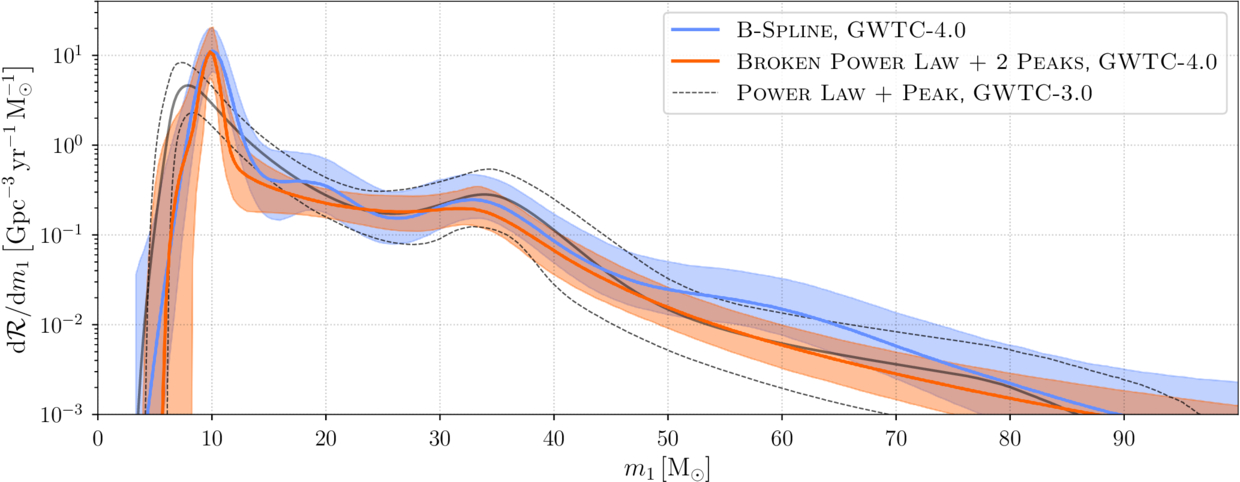
Plot of the differential merger rate as a function of the mass of the more massive of the two merger components. This shows overdensities at 10, 35, and possibly 20 solar masses. Click to enlarge. [LVK Collaboration 2026]

Surveying merging black holes and neutron stars on the population level, the team analyzed 158 gravitational wave signals from the current catalog. This analysis supported findings from previous transient catalogs, including multiple overdensities in the distribution of merging black hole masses, broadly distributed neutron star masses, and an increase in the merger rate with redshift. The new data strengthened certain previously identified trends, such as an increase in the width of the effective spin distribution with redshift, and weakened others.

The full list of articles in the GWTC-4.0 Focus Issue can be found here.

Citation

“GWTC-4.0: An Introduction to Version 4.0 of the Gravitational-Wave Transient Catalog,” A. G. Abac et al 2025 ApJL 995 L18. doi:10.3847/2041-8213/ae0c06

“GWTC-4.0: Methods for Identifying and Characterizing Gravitational-Wave Transients,” A. G. Abac et al 2026 ApJL 1004 L21. doi:10.3847/2041-8213/ae447b

“Open Data from LIGO, Virgo, and KAGRA Through the First Part of the Fourth Observing Run,” A. G. Abac et al 2026 ApJ 1004 232. doi:10.3847/1538-4357/ae211e

“GWTC-4.0: Updating the Gravitational-Wave Transient Catalog with Observations from the First Part of the Fourth LIGO–Virgo–KAGRA Observing Run,” A. G. Abac et al 2026 ApJL 1004 L22. doi:10.3847/2041-8213/ae2c74

“GW231123: A Binary Black Hole Merger with Total Mass 190–265 M⊙,” A. G. Abac et al 2025 ApJL993 L25. doi:10.3847/2041-8213/ae0c9c

“GW230814: Investigation of a Loud Gravitational-Wave Signal Observed with a Single Detector,” A. G. Abac et al 2026 ApJL 1004 L23. doi:10.3847/2041-8213/ae2ad3

“GWTC-4.0: Population Properties of Merging Compact Binaries,” A. G. Abac et al 2026 ApJL 1005 L51. doi:10.3847/2041-8213/ae771e

The post Monthly Roundup: The Fourth Catalog of Gravitational Wave Events from LIGO, Virgo, and KAGRA appeared first on AAS Nova.

  •  

A Natural ≳100× Telescope: Discovery of the Strongly Lensed Type II SN 2025mkn at z = 1.37

Cameron Lemon et al 2026 ApJL 1003 L47
Researchers have discovered a supernova that occurred when the universe was roughly 5 billion years old; if the supernova’s luminosity is similar to that of nearby events, it must have been magnified by a factor of 250.

The post A Natural ≳100× Telescope: Discovery of the Strongly Lensed Type II SN 2025mkn at <em>z</em> = 1.37 appeared first on AAS Nova.

  •  

Magnetic Activity in X-Ray Stars from eROSITA: Insights from the TESS and LAMOST Surveys

Lulu Xu et al 2026 ApJS 284 54
Of 7,229 flares from 1,430 stars, most came from stars with temperatures below 4000K and rotation periods shorter than 4 days; most flares lasted less than 2 hours.

The post Magnetic Activity in X-Ray Stars from eROSITA: Insights from the TESS and LAMOST Surveys appeared first on AAS Nova.

  •  

First-Generation Stars Provide Better Fit than a Black Hole for Early-Universe Gas Clump

Star formation in the early universe.

An unusual clump of gas 450 million years after the Big Bang may contain stars hailing from the universe’s elusive first generation of stars. New research examines an alternative explanation involving an accreting black hole.

Meet Hebe

Hebe and GN-z11

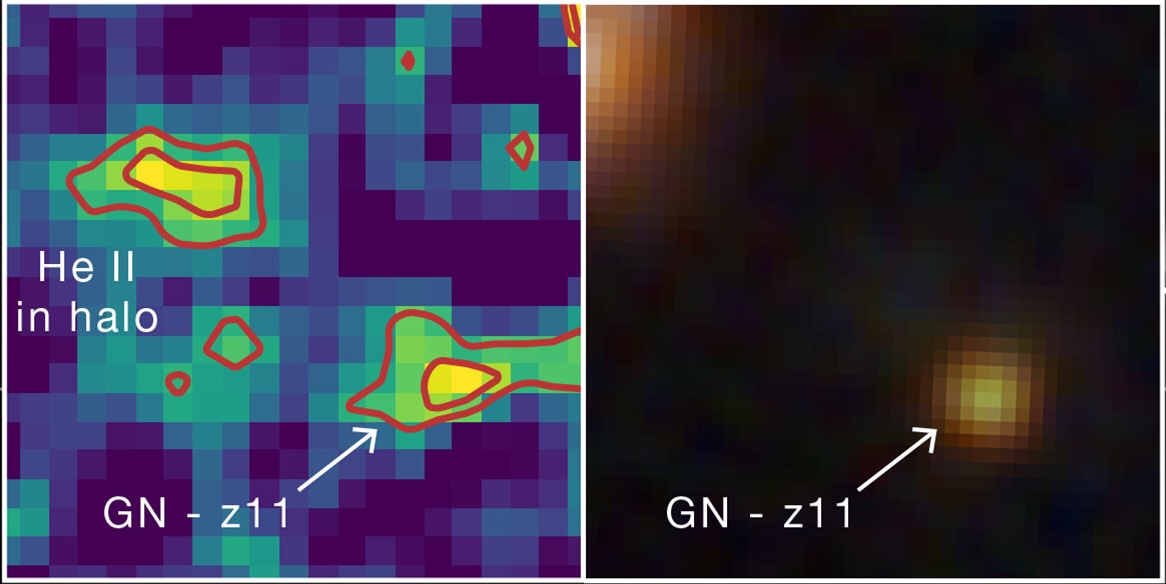
Hebe is visible in the image on the left as a prominent blob of helium emission up and to the left from GN-z11, a luminous galaxy hosting an accreting supermassive black hole. On the right is an infrared image of the same region, in which Hebe is not visible. Click to enlarge. [Adapted from NASA, ESA, CSA, Ralf Crawford (STScI)]

Initially spotted in 2024, an early-universe gas clump nicknamed Hebe has now been identified as a possible hiding place of Population III (Pop III) stars — the universe’s first generation of stars. Pop III stars are thought to be massive and chemically pristine, containing only hydrogen, helium, and a whisper of lithium. This exciting hypothesis was prompted by the detection of recombination lines from helium, which could be ionized by the high-energy radiation of the first stars.

Before the community settles on this exciting explanation, however, the hypothesis must withstand all the tests astronomers can throw at it. In a recent research article, Junehyoung Jeon, Tae Bong Jeong, and Saiyang Zhang (The University of Texas at Austin) along with Volker Bromm (The University of Texas at Austin) attempted to explain Hebe’s properties in another way.

Considering Alternatives

Hebe glows with distinctive helium emission that requires a source of high-energy radiation. This radiation could be provided by a cluster of Pop III stars, but it could also, in theory, arise from an accreting supermassive black hole embedded within the gas clump.

predicted Pop III star mass in Hebe

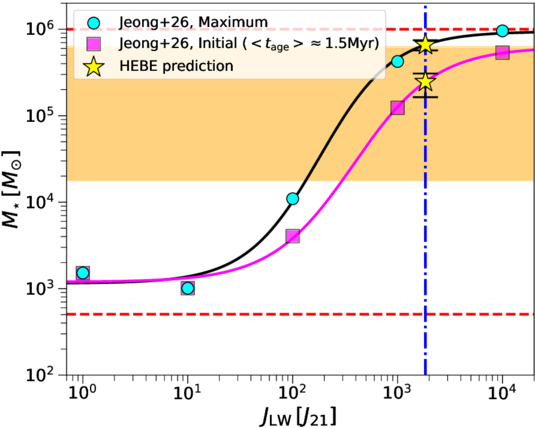
Predicted total mass of Hebe’s Pop III stars as a function of the Lyman–Werner flux from the nearby galaxy GN-z11. Click to enlarge. [Jeon et al. 2026]

The authors used models to explore both possibilities. For the first scenario, in which the telltale helium emission is driven by a cluster of Pop III stars, the team calculated the maximum possible mass of the cluster, which sets how much high-energy radiation is produced. The cluster mass is moderated by high-energy radiation from another source: GN-z11, a starburst galaxy situated about 10,000 light-years from Hebe. For the second scenario, the team modeled the spectral energy distribution arising from a supermassive black hole — either a direct-collapse black hole or a primordial black hole — accreting pristine gas from the surrounding cloud.

Still a Leading Explanation

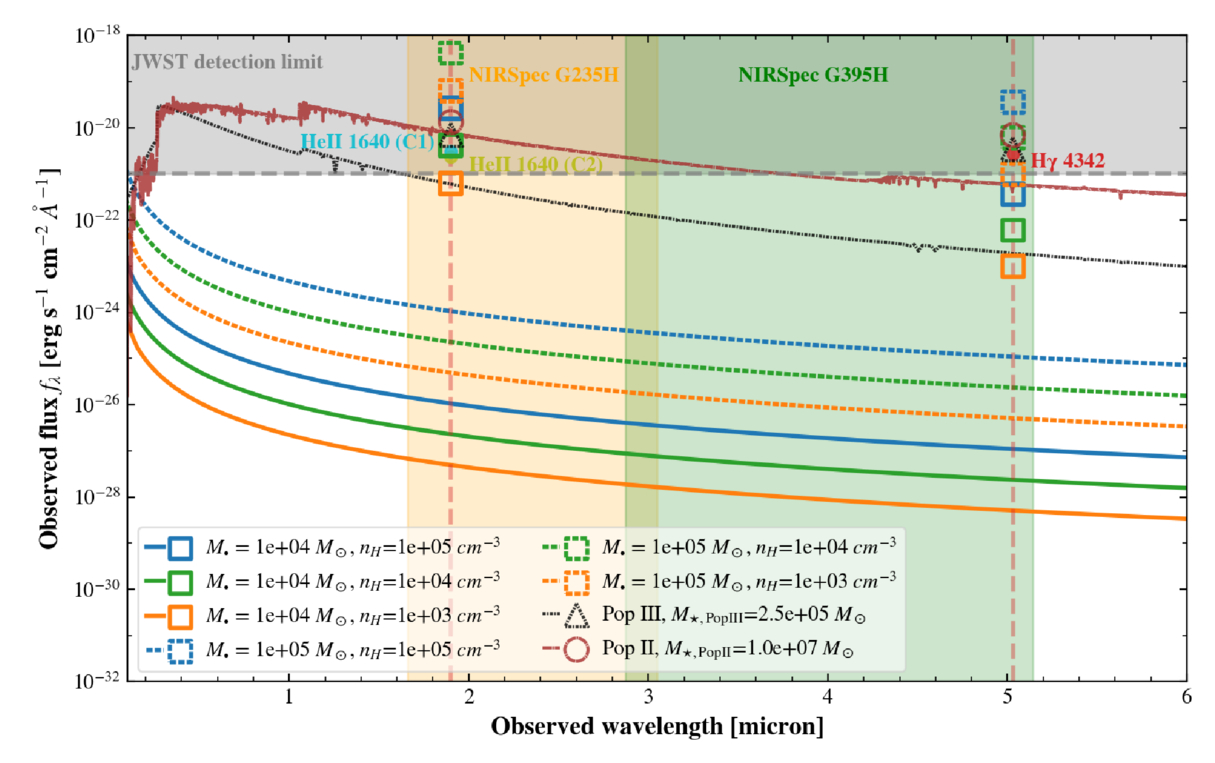
While the black hole scenario could, with reasonable black hole masses, gas densities, and accretion rates, reproduce individual flux measurements drawn from JWST observations, this hypothesis struggled to simultaneously match multiple measurements. The Pop III star cluster scenario, with a cluster mass of a few hundred thousand solar masses, provided the best fit to the JWST data.

modeled spectral energy distributions for Hebe based on the black hole or Pop III star hypotheses

Modeled spectral energy distributions (lines) and predicted line flux densities (open symbols) for the accreting black hole, Pop III star, and Pop II (second-generation) star hypotheses. The observed JWST line fluxes are shown as filled circles. Click to enlarge. [Jeon et al. 2026]

As a final test, the team introduced a third possibility involving a population of second-generation stars, which are more chemically enriched than Pop III stars. While this model fit well, the number of stars necessary to match the data — roughly 10 million — would produce a stellar continuum detectable (but so far not seen) by JWST.

While a cluster of Pop III stars is still the leading explanation for Hebe’s properties, the team noted that the Pop III star and black hole hypotheses aren’t mutually exclusive; Hebe could very well harbor a primordial black hole and a smattering of Pop III stars. Regardless of what powers its characteristic helium emission, Hebe offers an enticing glimpse into the early universe, and more work is needed to understand this intriguing object.

Citation

“What Is Powering the Enigmatic He II Emitter Hebe: The First Stars or Black Holes?” Junehyoung Jeon et al 2026 ApJ 1006 27. doi:10.3847/1538-4357/ae7bea

The post First-Generation Stars Provide Better Fit than a Black Hole for Early-Universe Gas Clump appeared first on AAS Nova.

  •  

Trends in the Population of Binary Black Holes Following the Fourth Gravitational-Wave Transient Catalog: A Data-Driven Analysis

Nir Guttman et al 2026 ApJ 996 144
An analysis of the fourth gravitational wave catalog supports the existence of a gap at 45 solar masses in the secondary black hole mass distribution, among other findings.

The post Trends in the Population of Binary Black Holes Following the Fourth Gravitational-Wave Transient Catalog: A Data-Driven Analysis appeared first on AAS Nova.

  •  

An Enhanced Formation Channel for Galactic Dual-Line Gravitational-Wave Sources: von Zeipel–Lidov–Kozai Effect in Triples Involving Sgr A*

Wen-Fan Feng et al 2026 ApJL 1003 L35
According to calculations, in a 4-year period researchers may detect of order one compact binary system in which the binary’s inspiral and the spin of its neutron star component both produce gravitational waves.

The post An Enhanced Formation Channel for Galactic Dual-Line Gravitational-Wave Sources: von Zeipel–Lidov–Kozai Effect in Triples Involving Sgr A* appeared first on AAS Nova.

  •  

Trajectory-Agnostic Asteroid Detection in TESS with Deep Learning

Brian P. Powell et al 2026 AJ 172 14
Unlike traditional “shift and stack” algorithms, a newly developed asteroid-detection method requires no assumptions on speed or direction; this method can be applied to upcoming time-domain surveys.

The post Trajectory-Agnostic Asteroid Detection in TESS with Deep Learning appeared first on AAS Nova.

  •  

Researchers Spot Hydrocarbons Surprisingly Close to a Quasar Pair

J0749+2255

Researchers have detected molecules containing rings and chains of carbon atoms in the vicinity of a rare pair of quasars. The trends in the distribution of these molecules are unexpected, suggesting that more work is needed to understand the conditions surrounding active supermassive black holes.

Infrared Eyes on Molecules in Space

skeletal formulae of aromatic and aliphatic molecules

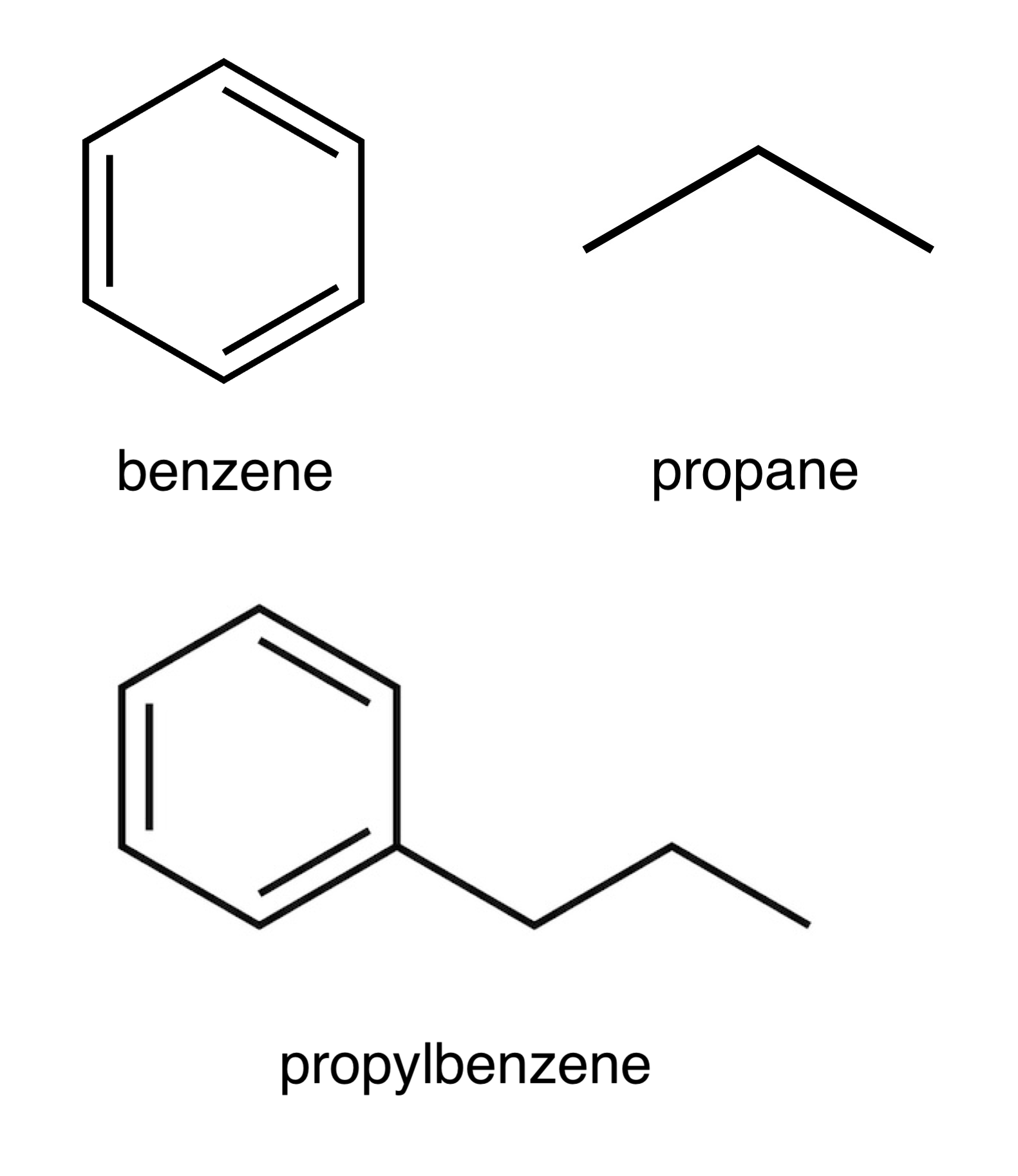
Examples of aromatic and aliphatic hydrocarbons. Benzene (top left) is the simplest aromatic molecule. Propane (top right) is a simple aliphatic molecule. Propylbenzene (bottom) is an aromatic molecule with an aliphatic chain branching off of it. In these “skeletal” formulae, there is a carbon atom at each vertex, and the remaining atoms (not depicted) are all hydrogens. Single lines indicate single chemical bonds, and double lines indicate double bonds. [Wikipedia; Public Domain]

Across the universe, atoms are combining to form molecules, and our ability to study molecules in distant realms has never been better. JWST is particularly attuned to emissions from molecules engaged in a kind of chemical yoga, stretching their bonds and flexing the angles between their atoms.

JWST’s sensitive infrared eyes have allowed researchers to study the distribution, creation, and destruction of both aromatic (containing one or more rings of carbon atoms in which certain electrons spread out within the ring) and aliphatic (containing chains of carbon atoms) hydrocarbons. These molecules have been spotted in a wide array of environments, and now, astronomers are finding them in more distant and more extreme environments than ever before.

Distant Discovery

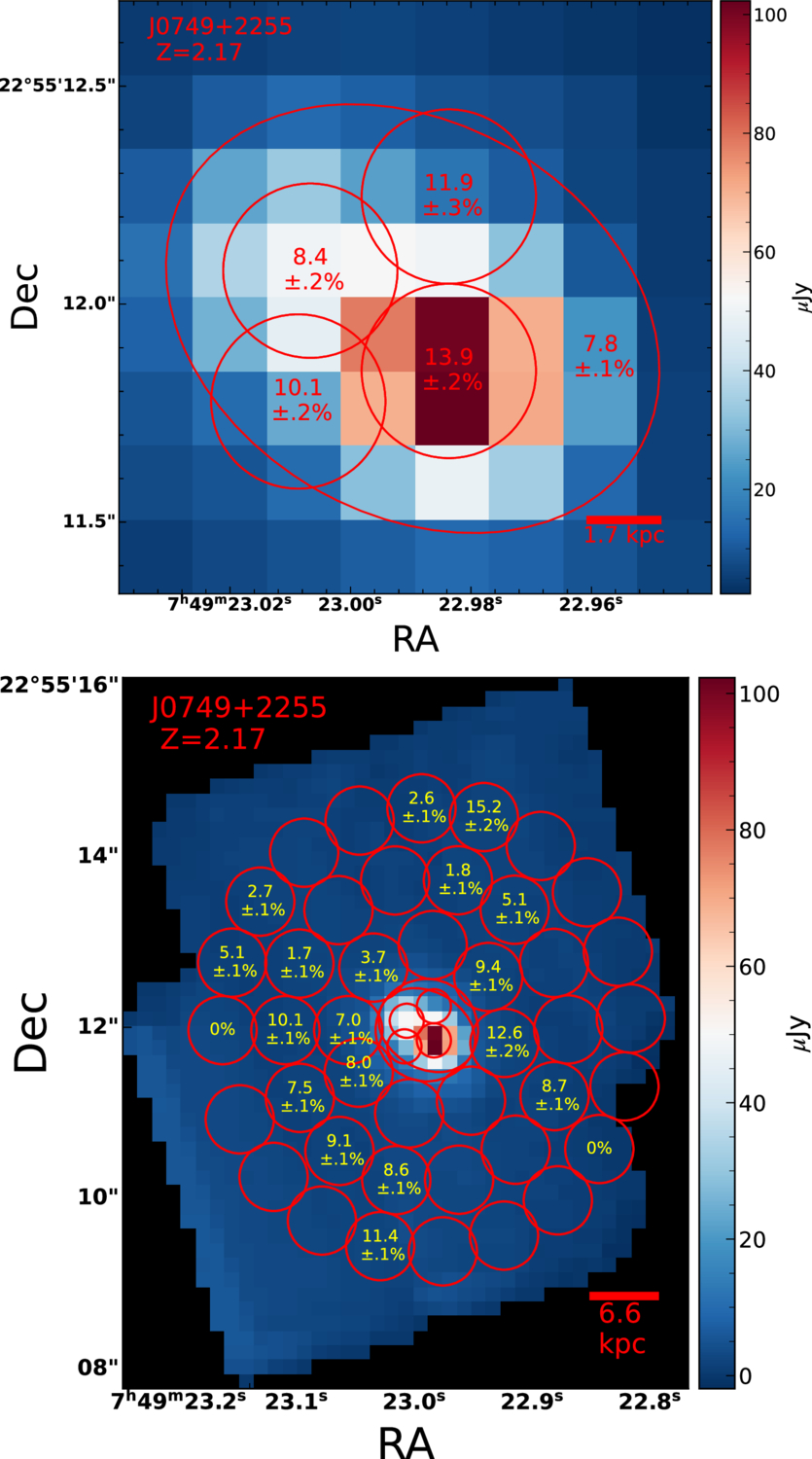
SDSS J074922.96+225511.7, or J0749+2255 for short, is a quasar pair seen 3 billion years after the Big Bang. The two feasting supermassive black holes are roughly 12,000 light-years apart, giving researchers a glimpse into the late stages of a galaxy merger and a harsh environment in which to study the survival and destruction of molecules.

Researchers studying J0749+2255 with JWST have previously reported the detection of a 3.3-μm emission feature from aromatic molecules. Now, C. E. Mentzer (University of Missouri), Aigen Li (University of Missouri), and Xuejuan Yang (Xiangtan University) have analyzed JWST spectra of J0749+2255 and found not just widespread aromatic emission at a rest-frame wavelength of 3.3 μm, but also aliphatic emission at 3.4 μm, which they attribute to carbon chains branching off from the aromatic molecules. This likely makes J0749+2255 the most distant galaxy in which both aromatic and aliphatic emission has been detected.

analysis results showing the aliphatic fraction across the quasars and the surrounding region

Aliphatic fractions in the bright central region surrounding the two quasars (top) and in the outer regions (bottom). [Mentzer et al. 2026]

Unexpected Trends

Mentzer, Li, and Yang subdivided the observations into 47 regions and measured the strength of the 3.3- and 3.4-μm features in each region. This analysis found strong aromatic emission nearest the quasars and showed that the fraction of carbon atoms bound up in aliphatic chains is highest close to the quasars.

Both of these findings are unexpected: the harsh radiation environment near the two active black holes is thought to break apart chains of carbon atoms attached to aromatic rings (which should decrease the 3.4-μm emission) and possibly destroy small aromatic molecules (which should decrease the 3.3-μm emission) — yet both of these features are strongest near the quasar cores where the radiation should be most capable of molecular destruction.

The authors speculated that the analysis regions centered on the quasars are large enough that they contain gas that hasn’t been pummeled by the quasars’ intense radiation and outflows, leaving molecules intact and able to produce the observed emission. However, this doesn’t explain the trend of stronger 3.3- and 3.4-μm emission closer to the quasars — necessitating further research into the emitting behavior of aromatic and aliphatic molecules under the extreme conditions of a dual quasar’s neighborhood.

Citation

“Widespread Detection of Aromatic and Aliphatic Emission in the Dual Quasar J0749+2255 at Cosmic Noon,” C. E. Mentzer et al 2026 ApJL 1005 L38. doi:10.3847/2041-8213/ae7e86

The post Researchers Spot Hydrocarbons Surprisingly Close to a Quasar Pair appeared first on AAS Nova.

  •  

Turbulence-Coupled Electrodynamics of the Martian Year 34 Global Dust Storm on Mars

Chali Idosa Uga et al 2026 Planet. Sci. J. 7 126
Researchers show that the global martian dust storm in Mars year 34 warmed the lower atmosphere and led to greater electrical charging and stronger electric fields compared to a dust-free atmosphere.

The post Turbulence-Coupled Electrodynamics of the Martian Year 34 Global Dust Storm on Mars appeared first on AAS Nova.

  •  

Nonthermal X-Ray Emission Associated with Supra-Arcade Downflows in the Late Decay Phase of a Solar Flare

Hanya Pan et al 2026 ApJ 1001 89
Researchers show a connection between non-thermal hard X-ray emission and a tadpole-shaped downflow, strengthening the association between these flows and magnetic reconnection.

The post Nonthermal X-Ray Emission Associated with Supra-Arcade Downflows in the Late Decay Phase of a Solar Flare appeared first on AAS Nova.

  •  

Postperihelion Optical Low-Resolution Spectroscopy of Interstellar Comet 3I/ATLAS

Hideyo Kawakita et al 2026 ApJL 1000 L60
Spectra of 3I/ATLAS as it retreated from its encounter with the Sun show that the comet’s mixing ratios of CN, C3, and C2 with respect to water are similar to those of solar system comets, while NH2 is depleted.

The post Postperihelion Optical Low-Resolution Spectroscopy of Interstellar Comet 3I/ATLAS appeared first on AAS Nova.

  •  
❌