Reading view
MacVoices #26224: Live! – The Samsung Card, Users Stay With iPhone, and AI Escapes
MacVoices #26216: Live! – Who Should Profit From The AI Revolution?
MacVoices #26214: Driver Cameras, Dash Cams, and Who is Watching What
MacVoices #26212: Live! – Google, Apple, and the Growing U.S.–EU Technology Divide
MacVoices #26174: Live! – AI Ethics, Papal Warnings, and Kansas City’s MacBook Neo Bet
How the shipping industry is helping research into plastic pollution

Parts of the shipping industry are partnering with environmental scientists to monitor ocean plastic pollution.

Opinion: Water, water, everywhere; when is it safe to drink?

We need the North Carolina General Assembly to step up and protect their constituents as the EPA rolls out its stated plans to eliminate nationwide drinking water standards for PFAS, a known human health risk.

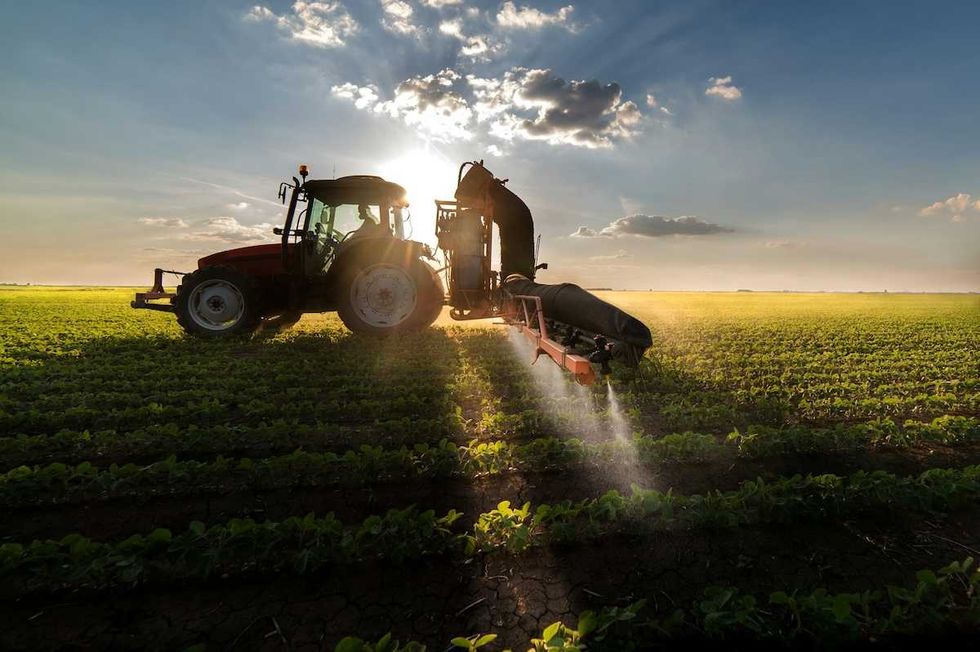
California phasing out herbicide linked to Parkinson’s disease

Pesticide manufacturers have voluntarily canceled registrations for products containing paraquat in California — kicking off a statewide phase-out of the controversial herbicide.

Michael Sheen investigates cancer concern around chemical dumping in Wales

The Hollywood actor investigates claims cancer-causing chemicals were dumped across Wales.

FDA tightens oversight on foods “generally recognized as safe”

The U.S. Food and Drug Administration (FDA) has proposed a new rule making it mandatory for companies to notify the agency about new chemical ingredients they determined are safe for use in food.

Claude will apply invisible watermarks to AI text and images
Anthropic has pledged to start marking Claude-generated text and images with machine-readable data, in an effort to comply with European rules for AI transparency. "Generated text will carry embedded watermarks, and generated files will include digitally signed provenance metadata where supported," Anthropic says on a new Claude support page. The changes are invisible to human eyes, but will make it easier for people and online platforms to detect if content was generated by Claude models.
These updates are a future commitment rather than something that will go into effect immediately. New AI labeling and transparency obligations under the …
Historian Jill Lepore says Silicon Valley misreads science fiction and undermines democracy
American dietary guidelines offer mixed results on chemical exposures during pregnancy

In a recent study published in The American Journal of Clinical Nutrition, researchers examined whether American dietary guidelines designed to promote optimal nutrition during pregnancy also helped minimize exposure to toxic chemicals.
In short:
- Pregnant women who more closely followed the United States Dietary Guidelines for Americans (DGA) had lower exposure levels to some phthalates, bisphenols, and organophosphate esters (a class of chemical flame retardants and plasticizers).
- However, closely following DGA recommendations was also associated with higher exposure to some insecticides, parabens, and benzophenones.
- Overall, a diet that meets protein, whole grain, vegetable, and fruit needs - dietary patterns that are generally associated with a lower consumption of processed and packaged foods - may reduce exposure to many toxic chemicals.
Key quote:
“Although updated recommendations can help on the individual level, given the widespread exposure to many known reproductive and developmental toxicants, efforts should ultimately focus on reducing these contaminants throughout the food supply.”
Why this matters:
Exposure to toxic chemicals has been shown to result in pregnancy complications and harm to babies’ neurodevelopment, growth, and cognitive, metabolic and reproductive health, resulting in long-term and potentially severe outcomes. While studies such as this show that lifestyle choices like diet can influence chemical exposure, the increasing use of synthetic chemicals and plastic throughout the modern food system introduces opportunities for contamination from initial processing to preparation for a wide variety of foods. Research has shown that regulatory and policy interventions are more effective, more consistent, and have a more widespread impact than strategies that put the burden on individual consumers to protect themselves.
Related EHN coverage:
- Minimizing food contact with plastics may help rapidly decrease exposure to some toxic chemicals, study finds
- Vitamins and essential minerals may help minimize the impacts of endocrine disrupting chemicals
More resources:
- SafetyNEST provides resources on how to reduce environmental exposures while pregnant and at home.
- American College of Obstetricians and Gynecologists: Reducing Prenatal Exposure to Toxic Environmental Agents

Fertilizer puts 'forever chemicals' on Indiana farms. Here's what to know

Sewer sludge, called biosolids, is used as inexpensive fertilizer on Indiana's farms, but PFAS contamination is not tracked in Indiana.

FCC eyes unlicensed spectrum for D2D
The US Federal Communications Commission (FCC) voted to explore ways to deliver direct satellite connectivity to unlicensed devices using 200MHz of related spectrum to advance services requiring handoff between terrestrial and non-terrestrial links.
It stated the move could give consumers an “additional option for reliable connectivity”, as investment in direct-to-device (D2D) services continues to grow.
The Notice of Proposed Rulemaking (NPRM) examines potential reforms to enable devices operating in certain part 15 bands communicate with FCC-authorised satellites.
Part 15 rules govern unlicensed wireless equipment widely used by businesses and consumers. The FCC stated the move is intended to expand opportunities for Wi-Fi and applications including IoT which “benefit from more robust wireless connectivity”.
It also proposed clarifying part 15-authorised equipment may be used within and between authorised spacecraft.
The FCC intends to explore further scenarios “in which part 15 devices might” safely and effectively operate in space,
Money maker
FCC chair Brendan Carr said the move builds on 18-months of regulatory steps to enable D2D services, including freeing up spectrum, providing certainty around buildout milestones, and clarifying exclusivity and legal rights to encourage investment.
He said the measures had helped generate tens of billions of dollars in D2D deal flow.
“For the first time in FCC history, we are exploring whether D2D services are technically possible in more than 200 MHz of unlicensed spectrum,” he said.
“These frequencies could yield more capacity to complement D2D services and encourage experimentation.”
He added unlicensed spectrum already underpins a wide range of household devices and innovations, and the proposal would seek to ensure the bands continue to support existing services.
The proposal targets the 902MHz to 928MHz, 2400MHz to 2483.5MHz and 5725MHz to 5850MHz bands traditionally used for Wi-Fi and Bluetooth which already permit unlicensed devices to operate at the relatively higher power levels needed for satellite communication.
Along with seeking comments, the FCC is asking whether part 15 devices communicating with satellites should require an additional part 25 earth station certification.
The post FCC eyes unlicensed spectrum for D2D appeared first on Mobile World Live.

ICE’s DNA Collection Increases, SpaceX’s Rocket Crashes Into the Moon, and the AI Backlash Grows
China takes aim at Palo Alto Networks as US row deepens
China’s cyberspace agency launched an investigation into products sold in the country by Palo Alto Networks, as the government turns up the heat on US suppliers.
In a short statement, the Cyberspace Administration of China (CAC) explained it had launched a cybersecurity review into the company, as part of its bid to ensure safe and stable operation of critical information infrastructure, prevent risks and vulnerabilities, and safeguard national security.
It did not disclose potential penalties for violations or which products it is looking into.
Palo Alto states on its website it has offices in Shanghai, Beijing, Guangzhou, Shenzhen and Macau. It sells network, cloud and other cybersecurity products in the country, but does not break out individual sales figures for the market.
China’s review comes the same week its commerce ministry barred domestic companies from doing business with seven US entities, while beefing up export controls on the US drone market.
Reuters reported Beijing has said the moves are in response to recent US restrictions impacting the Chinese technology sector, including controls put on the nation’s telecoms operators.
The post China takes aim at Palo Alto Networks as US row deepens appeared first on Mobile World Live.
The herbicide haunting a New York farm town

Paraquat is banned in over 70 countries. Some farmers and their families in Hebron, New York believe the pesticide is causing Parkinson’s disease and are demanding that New York ban it.

Forever chemicals and pesticides under Trump: what to know

The U.S. Environmental Protection Agency has an alternative definition of per- and polyfluoroalkyl substances that excludes new herbicides, insecticides and fungicides, and says they pose no threat to human health.