❌

Reading view

Using seaweed to harvest valuable metals

If you’ve ever swum in the ocean and been touched by seaweed, there’s a good chance it was Sargassum! This free-floating seaweed can have population explosions in coastal waters, degrading water quality, ecosystems, fisheries, and tourism. However, despite its drawbacks, scientists think that Sargassum could be useful for extracting valuable metals, known as rare earth elements (REEs). 

REEs are classified by their average masses and atomic weights. Light REEs include cerium, praseodymium, and neodymium, middle REEs include gadolinium, terbium, and dysprosium, and heavy REEs include erbium, thulium, and ytterbium. These metals are used in magnets, electronic motors, wind turbines, spacecraft, and more. Our current methods of extracting REEs, open-pit mining and chemical processing, are invasive, causing habitat loss and producing toxic waste. Additionally, REEs are difficult to import due to restricted access worldwide. But what if these metals could be extracted using natural methods? 

Scientists from Woods Hole and UCLA recently tested whether Sargassum could accumulate REEs, creating a sustainable solution to these problems. They harvested Sargassum at Waterfront Park in Woods Hole, rinsed the wet samples, and stored them in sterilized, filtered seawater, which they aerated with 12-hour cycles of light and dark to keep the Sargassum alive. They dried another set of samples in the sun under controlled outdoor conditions, stored them in sealed containers, and later rehydrated them in seawater for 3 hours before the experiments.

For each experiment, they added 5 grams (about 0.2 ounces) of Sargassum to solutions containing a mixture of 9 REEs – cerium, praseodymium, neodymium, gadolinium, terbium, dysprosium, erbium, thulium, and ytterbium – in concentrations totalling 0.1 micromolar (μM) REEs, 11μM REEs, 100 to 110μM REEs, and 575 to 600μM REEs. They performed each experiment 4 times: twice with fresh seaweed and twice with rehydrated seaweed. 

The researchers removed 1 gram (about 0.04 ounces) of seaweed from each solution after 1, 3, and 7 days, and dissolved it in acid to release the REEs it had absorbed. They analyzed the concentrations of REEs in each seaweed sample and the leftover solutions using 2 different plasma-based methods. They used these REE concentrations to calculate the ratio of REEs in the Sargassum versus in the solution, known as the bioconcentration factor, to determine how effectively the seaweed absorbed REEs. 

They found that after 7 days at lower REE concentrations (0.1μM), the fresh seaweed had bioconcentration factors of over 1,000. At higher REE concentrations (11μM), their bioconcentration factors ranged from about 400 to 700. However, these levels of REEs were eventually toxic to the fresh Sargassum, so they died after 2 weeks. In addition, the higher REE concentrations of 100 to 600μM were immediately toxic to the fresh Sargassum, which died within 1 day in solution. 

The researchers determined that once the seaweed died, it could no longer actively take up REEs into its tissues but could only accumulate them on its surface or adsorb them. Adsorption can be thought of as a powdered donut – when the surface is covered with powdered sugar, no more powder fits on the donut. Similarly, there was a limit to how many REEs could stick to the Sargassum. Due to this limit, the fresh seaweed samples had bioconcentration factors below 250 in the highest REE concentrations. In contrast, the rehydrated Sargassum consumed less REEs at lower concentrations, but didn’t experience toxicity and continued to accumulate REEs at higher concentrations.

Finally, the team compared Sargassum to a common industrial method of accumulating REEs, known as activated carbon. REEs bond easily to activated carbon because of its abundant surface area and high porosity. Both materials accumulated a similar amount of REEs in solutions of 0.1μM REEs. However, at 575 to 600μM REEs, Sargassum accumulated about twice as many REEs as activated carbon, especially the heavier REEs. 

​The researchers concluded that Sargassum is a natural hyper-accumulator, meaning it successfully concentrates REEs. However, they recommended that future researchers test whether Sargassum performs the same in the natural environment as it does in the lab. If so, Sargassum could be used to accumulate REEs from wastewater, like mine drainage, or other water sources with higher concentrations of REEs. Regardless, they suggested that using Sargassum to obtain REEs could simultaneously expand global access to these metals and mitigate toxic blooms.

The post Using seaweed to harvest valuable metals appeared first on Sciworthy.
  •  

Scientists Have Found “The Heaven Sword” After Years of Looking

Giant Forest in TaiwanA decade-long search through Taiwan’s remote forests led to the discovery of East Asia’s tallest tree and hundreds of other towering giants. An 84-meter-tall tree is surprisingly easy to miss. Hidden within Taiwan’s steep mountains and dense old-growth forests are some of the tallest trees on Earth, including giant conifers that rise higher than a [...]
  •  

How AI is helping referees make faster and more accurate calls at the World Cup

More than 1.5 billion people around the world are expected to watch the 2026 FIFA World Cup finals. With so many fans carefully watching every pass, tackle and goal, referees are under enormous pressure to make the right decisions. To help them, FIFA is using advanced artificial intelligence and computer vision technology to improve the […]

The post How AI is helping referees make faster and more accurate calls at the World Cup appeared first on Knowridge Science Report.

  •  

Climate Models May Be Wrong About How Trees Store Carbon

Sunrise Forest Trees Kongsvinger NorwayA new study reveals that oak trees can keep photosynthesizing for months after growth ends, challenging assumptions about how effectively forests convert absorbed carbon into long-term storage. A tree can look busy long after it has stopped building itself. Its leaves may still be absorbing sunlight and pulling carbon dioxide from the air, but deep [...]
  •  

Oak Trees Outsmart Caterpillars With a Brilliant Spring Trick

Caterpillar on TreeOak trees fight caterpillars by delaying spring just long enough to leave them hungry. In spring, forests usually burst to life right as insects hatch. Caterpillars, in particular, emerge when fresh leaves are young, soft, and packed with nutrients. This timing provides them with an immediate food supply and allows them to begin feeding right [...]
  •  

Taiwan’s tallest tree found with help of citizen science

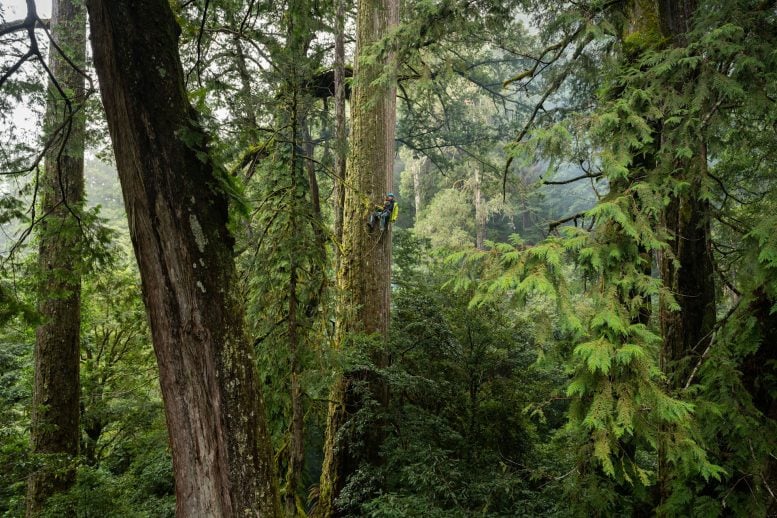
Deep in Taiwan’s misty mountains, researchers have confirmed the tallest tree in the country: a thousand-year-old fir tree higher than a 20-story building, which they’ve named “the heaven sword of the Da’an River.” Climbers scaled the tree and dropped a measuring tape from the top to the forest floor during the Lunar New Year holiday in January 2023. The tree measured 84.1-meters (276-feet). The findings have been published in Frontiers in Forests and Global Change. A team of ecologists, geologists, remote-sensing specialists, professional climbers and Indigenous people that calls itself the “Taiwan tree seekers” began the search in 2014. “The common characteristics [of the team] are probably that we are all tree lovers and like adventures,” Rebecca Chia-Chun Hsu, lead author from Division of Forest Ecology, Institute of Taiwan Forestry Research, told CNN. ‘The Heaven Sword’, Taiwan’s tallest tree, measures 84.1 meters. Photo courtesy of Steven Pearce. Taiwan is one of the few places on Earth where trees can grow this tall. The island sits where the tropics meet the subtropics, and its mountains host several giant conifer species. The species behind the new record, Taiwania cryptomerioides, is known to the Indigenous Rukai people as “the tree that hits the moon.” Although nearly 60% of Taiwan is covered in forest, loggers cleared much of the island’s old-growth forest between 1912 and 1991. However, its steep slopes were too dangerous to reach, and pockets of ancient forest survived. Still, finding the tallest tree amid the rugged terrain was a task. Taiwan…This article was originally published on Mongabay

  •  

Using bacteria to fight fungal brown rot

Brown rot is a common fungal disease in the Southeastern United States that affects stone fruits like peaches, cherries, and plums. Monilinia fructicola is a tan, fuzzy fungus that grows on tree flowers, twigs, and fruit, and is the most common cause of brown rot. Once brown rot infects a tree, the damage is irreversible, causing significant crop losses in commercial orchards. Farmers try to control the spread of M. fructicola by applying chemical sprays, called fungicides, to fruit trees in the spring.

In M. fructicola, a biosynthesis gene named MfCYP51 encodes a major protein critical to the fungi’s survival. Certain fungicides, called demethylation inhibitor (DMI) fungicides, stop M. fructicola from growing by targeting this protein. Over the last 20 years, DMI fungicides have become less effective against brown rot as M. fructicola becomes more resistant. 

Living microorganisms and their metabolites can control fungal diseases as an alternative to chemical fungicides, known as biofungicides. Many bacteria produce compounds like hydrogen cyanide and pyrrolnitrin that damage fungal cells. However, scientists have not found a biofungicide suitable for commercial production.​ A group of researchers at Clemson University in the USA and Huazhong Agricultural University in China set out to test whether the soil bacteria Pseudomonas chlororaphis and Bacillus subtilis could be effective biofungicides against brown rot. 

The researchers performed an incubation experiment to analyze how the fungal cells make their critical protein from the MfCYP51 gene, a process called gene expression, under different fungicide treatments. They used 3 M. fructicola strains sensitive to traditional DMI fungicides and 3 resistant strains. They tested these with 5 different fungicide treatments: a DMI fungicide, a mixture of P. chlororaphis metabolites, a mixture of living B. subtilis cells, a DMI fungicide + P. chlororaphis metabolites, and a DMI fungicide +  B. subtilis cells. They also set up a control treatment with sterile water instead of fungicide.  

After 6 hours, the researchers extracted the molecule that measures gene expression, called RNA, from the fungi. They found that both the P. chlororaphis treatment and the DMI fungicide + P. chlororaphis treatment substantially reduced MfCYP51 expression in both the sensitive and resistant isolates compared to the controls. In contrast, the DMI fungicide, B. subtilis, and DMI fungicide + B. subtilis treatments increased MfCYP51 expression in the resistant isolates. The researchers concluded that P. chlororaphis has a unique ability to reduce gene expression, unlike other biofungicides.

​To further investigate how the biofungicide treatments work, the team tested whether P. chlororaphis and B. subtilis produced the anti-fungal metabolite pyrrolnitrin. They added 1 milliliter of each treatment to a machine that separates and identifies liquid compounds using high pressure, called a high-performance liquid chromatograph. They found that the P. chlororaphis treatment contained pyrrolnitrin, so they hypothesized that it was responsible for reducing gene expression.

Additionally, the researchers tested their 5 treatments on brown rot in fruit. For each treatment, they took 10 Gala apples, washed and sterilized their surfaces, and sprayed them with the fungicides. After 24 hours, they poked holes in the apples with toothpicks and added 20 microliters of liquid containing M. fructicola cells to the poked holes. They placed the apples in a humid chamber for 5 days and measured the number and size of brown rot spots that developed on their surfaces. 

Despite decreasing MfCYP51 expression, ​the researchers found that P. chlororaphis treatment alone didn’t reduce brown rot disease compared to the control, but the DMI fungicide and B. subtilis treatments did. The mixed treatments of DMI fungicide + P. chlororaphis and DMI fungicide + B. subtilis both reduced brown rot disease compared to the control, but only the DMI fungicide + P. chlororaphis treatment prevented it. 

​The researchers concluded that although biofungicides may not be fully effective on their own, commercializing them could allow farmers to use less DMI fungicide. They explained that scaling back the use of DMI fungicides would slow M. fructicola resistance. Finally, they proposed that future researchers test biofungicide mixtures containing pyrrolnitrin in the field to observe real-world effects on stone fruit trees.

The post Using bacteria to fight fungal brown rot appeared first on Sciworthy.

  •  

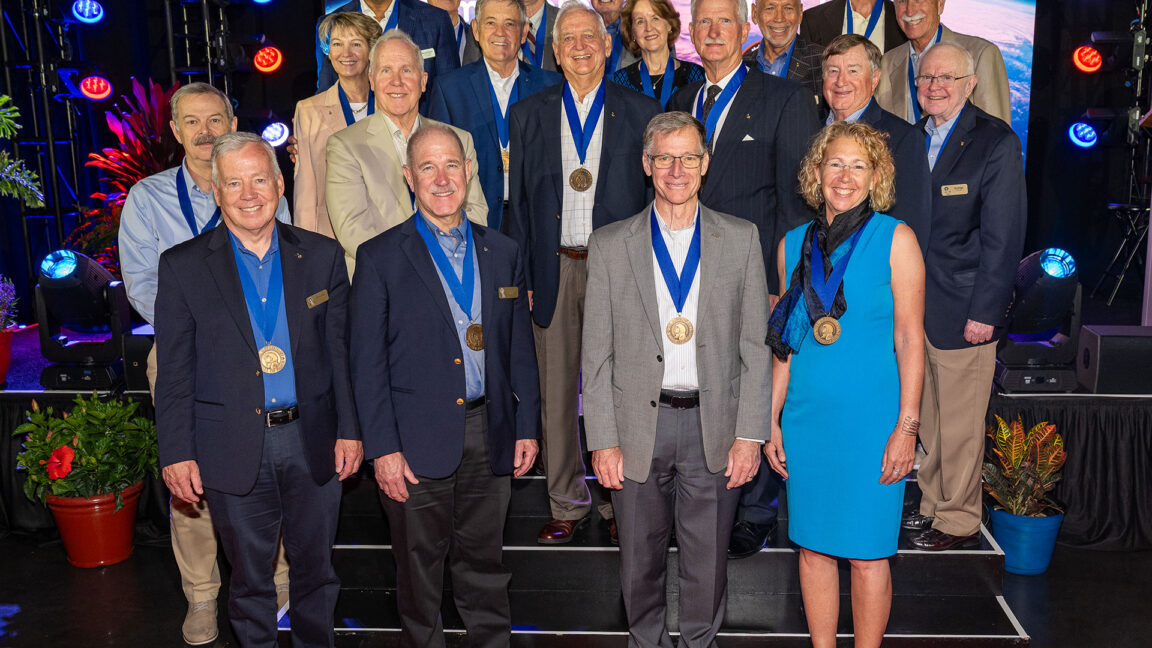
Two space shuttle-era spacewalkers enter Astronaut Hall of Fame

Tom Akers and Joe Tanner are finally in the same class.

The two veteran space shuttle crew members were inducted into the US Astronaut Hall of Fame together on May 16. They could also have been in the same NASA astronaut selection group, too, had history played out a little differently.

In 1984, Tanner reported to the Johnson Space Center (JSC) to fly as an instructor pilot and then applied for the next class of astronaut candidates.

Read full article

Comments

© Kennedy Space Center Visitor Complex

  •  
❌