❌

Reading view

Doctors Warn That Med Students Are Surrendering Their Brains to Medical AIs That Are Even Worse than Regular Chatbots

It’s no secret that doctors across the world are using AI tools to do stuff from taking notes to looking up questions. But what about the next generation of doctors still in training? According to two medical professionals on the ground, the situation is looking pretty alarming.

With AI being used by med students, “the danger is not just deskilling but never-skilling,” write Simar Bajaj, a journalist and med student at the Stanford University School of Medicine, and Joseph Sakran, a trauma surgeon and executive vice-chair of surgery at Johns Hopkins Medicine, in an essay for The Guardian.

“Although a doctor who has forgotten how to reason is recoverable,” they added, “one who never learned how may not be.”

Bajaj and Sakran point to two alarming recent findings.

One is internal data showing that around two thirds of doctors in the US are using OpenEvidence, an AI chatbot specifically designed for clinicians. The technology is already prevalent and deeply woven into how medical professionals carry out their jobs.

The next is a new study published in the journal Nature Medicine that evaluated the reliability of these medical-specific large language models. Shockingly, the clinical AI tools performed worse  at answering medical queries than general purpose chatbots like ChatGPT and Claude did, the work found. According to the authors, it performed about on par to Google’s AI Overviews, which are notorious for being wonky and inaccurate.

Even if AI tools may be handy for research — and putting aside the major questions over their reliability — they’re no substitute for relying on your brain, as fallible as it might be, because when you’re learning, “the struggle is the point.”

“For example, trainees once asked to build a list of potential diagnoses might struggle and offer an incomplete set, learning what they missed, sometimes painfully,” Bajaj and Sakran wrote. “Now, trainees can simply ask OpenEvidence and get a nearly perfect answer, complete with possibilities they might have never considered and none of the embarrassment of having overlooked them.”

Where AI is different from medical advances in the past is that it’s “not just expanding what doctors can see,” they wrote, “but inserting itself into the cognitive machinery that training is meant to build.” 

A bevy of research on the “cognitive offloading” that AI encourages, in which users naturally begin to outsource a lot of their thinking onto the tools, backs this diagnosis. Some studies have suggested AI impairs critical thinking, and leads to lower brain activity during cognitive tasks.

It’s a conundrum gripping the medical world. Earlier this year, doctors from top medical schools proposed a stricter framework on how medical students should use AI tools.

“The process of deliberately crafting the note forces us to use our brains to really wrestle with what’s happening,” Jaideep Talwalkar, associate dean of educational technology and innovation at Yale School of Medicine, told Stat News. “There’s an importance in doing that with great repetition.”

Bajaj and Sakran have a few suggestions for how to deal with this. One is requiring trainees to periodically work through cases without any AI help, similar to how the Federal Aviation Administration advises aviators to periodically disengage autopilot and fly by hand. Of course, another powerful deterrent could be shame. A recent John Hopkins student found that doctors who used AI are viewed with scorn and skepticism by their peers.

More on AI: AI Model Invents Completely New Viruses Unknown to Nature

The post Doctors Warn That Med Students Are Surrendering Their Brains to Medical AIs That Are Even Worse than Regular Chatbots appeared first on Futurism.

  •  

33 Students Treated for Deadly Bacteria Exposure When Classroom Experiment Goes Horribly Wrong

Talk about homework: a large class of undergraduates at an unnamed university in Utah became the unfortunate subject of a severe public health response after an extraordinary bungle in a science lab.

In September of last year, the group of lab students were tasked with identifying a bacterium known as P. shigelloides, a relatively harmless pathogen known to cause diarrhea when ingested. But as lab results came in, students were alarmed to find the specimens handed out in class were actually the bacteria Neisseria meningitidis, a potentially deadly pathogen that causes meningitis.

Unlike P. shigelloides, the bacterium N. meningitidis calls for high-security practices, like double gloves, disposable clothes, and fit-tested N95 masks, as the bare minimum. (In one unfortunate case from 2012, a 25-year old microbiologist whose lab was ill equipped to handle N. meningitidis died mere hours after exposure to the aerosolized microbe.)

According to People, Utah public health authorities soon raided the Utah stockroom, finding samples labeled “N. meningitidis.” That discovery prompted a recommendation that all 33 of the exposed students begin a cautionary antibiotic regimen, especially given that the lab participants were only wearing gloves and lab coats at the time of exposure.

On top of the antibiotics dose, at least two people sought medical attention due to possible exposure symptoms, which included a painful and invasive spinal tap.

It was only after the frenzy that further professional lab tests identified the offending pathogen as Neisseria sicca, a bacterium “commonly found in the upper respiratory tract” that is “nonpathogenic in immunocompetent persons,” according to a recently-filed Center for Disease Control study of the Utah lab incident.

Student misidentification notwithstanding, the event underscores the importance of accurately labeling microbial cultures — lest aspiring biologists become victims of their own studies.

More on pathogens: Meta’s AI Data Center Caught Leaking Deadly Bacteria Into Water Town Uses for Irrigation

The post 33 Students Treated for Deadly Bacteria Exposure When Classroom Experiment Goes Horribly Wrong appeared first on Futurism.

  •  

Authorities Alarmed When Person With Measles Spends Entire Day Frolicking Around Universal Studios

Even notorious anti-vaxxer and US health secretary Robert F Kennedy Jr had to urge families to vaccinate their children against measles last week.

Despite being an entirely preventable disease thanks to a highly effective vaccine that has been widely available since the 1960s, cases of measles have skyrocketed in recent years, facilitated by a White House that’s declared war on scientific research, made a mess of childhood vaccine mandates, and furthered dangerous misinformation.

As of last week, the US had recorded 2,465 confirmed infections so far this year, already more than the 2,289 total cases in 2025. The last two years saw more total infections than the rest of the 21st century combined, as The Guardian reports, with 2026’s tally beating a 35-year record.

Now, in the midst of all that crisis crisis, a character has stumbled into the narrative who perfectly illustrates how it’s gotten so bad. As the LA Times reports, a measles-infected individual spent a whopping 11 hours at the Universal Studios Hollywood theme park last month, potentially exposing countless other visitors.

The Los Angeles County Public Health Department was forced to issue a stark warning: anybody who visited the amusement park on July 26 during teh hours between 10am and 9pm may have been exposed and should monitor for symptoms including fever, cough, or rash — and stay vigilant until August 16.

The virus is contagious up to four days before the characteristic rash appears on the skin, and up to four days after that.

Measles can easily spread through the air through just via talking or breathing, and can persist on surfaces for hours at a time.

The vaccine against it, available as part of the measles, mumps, and rubella combination (MMR) shot, is extremely worthwhile. Two doses are 97 percent effective in preventing a measles infection.

The department also urged “everyone to confirm their immunity and get the vaccine if needed, especially before traveling and attending crowded events.”

California has been hit particularly hard, recording at least three localized measles outbreaks this year so far. However, according to the state’s health department, all three outbreaks have ended.

According to the Centers for Disease Control and Prevention, there have been 38 new outbreaks in 2026 across the country so far this year, with several thousand cases spanning 47 states.

The danger to one’s health is substantial — especially to the unvaccinated. According to the CDC, roughly one in five unvaccinated people in the US who get measles are hospitalized. One out of 20 children with measles develop pneumonia. and one to three of every 1,000 children who become infected die from respiratory and neurologic complications.

More on infectious diseases: This Measles Outbreak at a Detention Center Perfectly Encapsulates America Right Now

The post Authorities Alarmed When Person With Measles Spends Entire Day Frolicking Around Universal Studios appeared first on Futurism.
  •  

AI Model Invents Completely New Viruses Unknown to Nature

In case you weren’t already feeling paranoid about how AI is shaping our future, scientists for the first time have used an AI model to create new and viable viruses that have never been seen in nature.

Before you panic, the work, detailed in a study published in the journal Science, involved creating viruses that only target bacteria and are harmless to humans. Bacteriophages, as they’re called, are an important medical intervention for targeting drug-resistant pathogens.

“This is an important milestone,” Patrick Cai, a synthetic biologist at the University of Manchester who was not involved in the study, told The New York Times.

Still, it’s an alarming testament to AI’s power and trajectory. The researchers at Stanford University and the Arc Institute trained an AI model to recognize patterns of genetic structure in nature to create new DNA molecules. These molecules were inserted into bacteria that, over time, turned into wholly new viruses, at the expense of killing their hosts.

In their research, which first gained attention last year but has now been peer-reviewed, the scientists used an AI model called Evo. Unlike a general purpose large language model, Evo is trained on billions of lines of genetic sequences, and for this work in particular, millions of bacteriophage genomes. But it still functions like an LLM, predicting what DNA building blocks — nucleotides — should follow each other like a chatbot predicts what words to spit out to finish a sentence.

The researchers chose to focus on a E. coli-killing virus called Phi X-174, a variant that’s so well studied that it serves as the equivalent of a lab rat in virology. Viruses in general are simple compared to complex cellular life, making them an ideal platform to test AI’s capabilities.

They used Evo to create new viruses based on Phi X-174, and it generated 700,000 candidates. They then narrowed it down to just 300 that they would recreate in the lab. Of those 300, 16 proved to be viable, infecting and killing their bacterial hosts.

There’s clear medical merit to using AI to create bacteria-slaying viruses, but there’s already fears that the technology could be abused to crank out pathogens that are deadly to humans.

“Although this is promising for life sciences applications, it also raises urgent biosafety and biosecurity questions. The ability to compose viral genomes using generative AI now exists; the governance to safely steer it does not,” warned Tom Inglesby and Moritz Hanke at the Center for Health Security at Johns Hopkins University in Baltimore in a perspective article.

Tom Ellis, a professor of synthetic genome engineering at Imperial College London who was not involved in the research, acknowledged this threat, but told The Guardian that it would be much harder to create more complex genomes and that controlling access to genetic data could stymy the threat.

And if someone were to deliberately engineer deadly viruses, he added, doing it by hand would probably be more practical.

“But honestly, the threat from full AI design and writing of a genome of a virus or bacteria is very overblown when we consider that just taking existing pathogens and making gain-of-function changes to their genomes is so much easier and much more likely to be a real pathogenic threat,” he said.

More on pathogens: America Getting Lesson in Consequences of Trump’s War on Public Health as Rare Disease Outbreaks Ravage the Country

The post AI Model Invents Completely New Viruses Unknown to Nature appeared first on Futurism.

  •  

Kalshi Defends Plan to Bet on Outcomes of Clinical Trials

Prediction markets like Kalshi and Polymarket have long garnered a reputation for allowing users to make all kinds of ethically dubious bets, from the outcomes of deadly conflicts to mass famine. 

As the New York Times reports, Kalshi will now even allow users to bet on whether clinical trials for potentially lifesaving drugs will succeed.

To critics, the move will effectively allow betting on the lives of patients trying a final intervention in the face of a lethal diagnosis. There’s even risk that those enrolled in these trials could choose to drop out if the market were to bet against a positive outcome.

“Turning loose a betting market in an ongoing randomized clinical trial really is a breach of scientific conduct,” Robert Califf, who served as FDA commissioner in the Biden administration, told the NYT.

Kalshi first announced its “biotech prediction markets pilot program” last month, the same day president Donald Trump’s teleprompter guy was busted for winning more than $100,000 on Kalshi by betting on what he would say.

The company argued in the announcement that a “publicly listed contract on a trial or regulatory outcome produces a continuously updated, public probability that reflects the weight of the evidence rather than the preferred messaging of the trial sponsor.”

In a statement to the NYT, spokesperson Jack Such argued that these bets wouldn’t undermine research integrity, but instead cut through the hype surrounding biotech companies and the drugs they’re working on. 

Kalshi says it will prohibit betting by patients enrolled in a trial, as well as by employees of the company conducting it or its competitors, per the NYT. It will also ban betting on trials that “exclusively enroll minors,” at least at first.

But those enrolled in drug trials were left appalled by the news.

“We’re literally trying to stay alive,” metastatic pancreatic cancer patient Walter Ingaharro Jr told the NYT. “It’s not a game. The introduction of gambling into the process really creates an ethical mess.”

In an opinion piece for The Guardian, Boston University humanities professor Joshua Pederson talked about how his 12-year-old son has a “very aggressive tumor growing inches below his heart.”

“If Kalshi has its way, you could soon be able to bet on health treatments that could be essential to his survival,” Pederson argued.

While choosing a trial for his son’s cancer was a “terrifying experiment for which we feel ill-prepared,” turning to a prediction market instead of “our extremely qualified team of oncologists” feels “preposterous,” Pederson argued.

In short, it’s yet another example of prediction markets crossing a moral boundary by gamifying things with real-world consequences.

“The possibility that somebody out there might be wagering against my son, hoping that the treatment fails so they can make money, is enraging,” Pederson wrote. “How is this not just another type of ‘death market’ — like markets for war or assassination — that even Kalshi says it won’t abide?”

The headline of this story was updated to specify that the program would bet on the outcomes of clinical trials, and the piece was updated to more specifically refer to controversies around prediction markets like Kalshi, writ large, and to add details about Kalshi’s response.

More on prediction markets: In Case You Still Think Insider Trading on Prediction Markets Isn’t Real, Trump’s Teleprompter Guy Just Got Busted for Getting Rich on Betting What He Would Say

The post Kalshi Defends Plan to Bet on Outcomes of Clinical Trials appeared first on Futurism.

  •  

America Getting Lesson in Consequences of Trump’s War on Public Health as Rare Disease Outbreaks Ravage the Country

For a president who upholds “Make America Healthy Again” as a load-bearing narrative pillar, Donald Trump has gone to remarkable lengths to make the US a breeding ground for a widening range of viruses, bacterium, and parasites — and no, we’re not talking about his cabinet.

Early into his second tenure as commander-in-chief, Trump and his cronies set to rapidly dismantling offices doing critical work on public health. His appointments were a one-two punch on longstanding institutions safeguarding the US from the ravages of disease: Elon Musk’s DOGE cut the government’s capacity to identify and track public health problems, while Robert F Kennedy Jr’s Department of Health and Human Services limited what the government was willing to do about them.

Case in point: the Centre for Disease Control has lost nearly a quarter of its workforce since January 2025, while those who remain have watched in horror as the CDC’s acting director cut the number of universally recommended childhood vaccines from 17 down to 11.

Examples of those kinds of policy faceplants abound, and the cumulative consequences will surely be felt for decades to come. And nowhere are the consequences of the Trump administration’s war on public health more obvious than in the diseases we’d previously had under control, but which are now surging back after a year and a half of MAHA.

There’s the cyclospora outbreak, of course, spreading from tainted lettuce to over 18,000 victims across 45 states. And those are just the ones we know about — the true extent may be far worse, as reporting delays create a major lag in fresh data. And while cyclospora flare ups come and go, it’s hard to overlook the fact that Trump officials made reporting of the parasite optional for the CDC in 2025, right before the largest known outbreak in modern history.

Separately, a nation-wide salmonella outbreak prompted officials to recall millions of cartons of eggs as at least 100 cases were reported throughout the country. Though salmonella reporting is still mandatory for the CDC, the Food and Drug Administration under Trump has delayed the implementation of a food traceability rule, designed to speed up the tracking of food borne illnesses back to their source.

The reason for the delay? Budget cuts.

Beyond foodborne illnesses, there are even more nasty bugs spreading around the country under Trump’s watch.

The formerly-eradicated measles is back, with over 2,300 American infected in 2026 alone, the highest number since 1992, Vox reported. Flesh-eating screwworms are ravaging livestock, as staffing cuts and mandatory budget reviews at the US Department of Agriculture slowed government containment efforts. Even the nightmarish botulism toxin has made it into the headlines, entering the food supply via contaminated infant formula after the Trump administration disbanded the National Advisory Committee on Microbiological Criteria for Foods — coincidentally right as the group was about to release a report on infant formula.

We could go on. While some will surely shoot back that these diseases are always hanging over us regardless of who sits in the Oval Office, that’s exactly the point.

Public health isn’t a game of checkers, where enemy pieces leave the board once they’re conquered. It’s more like a game of whack-a-mole, demanding quick reflexes, a mallet, and someone to wield them with unending focus. Under Trump, the mallet has been sold off to the highest bidder, while the player has wandered off, convinced the moles are a hoax.

More on MAHA: RFK Jr Wants to Waste $5 Billion in the Worst Way Imaginable

The post America Getting Lesson in Consequences of Trump’s War on Public Health as Rare Disease Outbreaks Ravage the Country appeared first on Futurism.

  •  

The United States Is Rapidly Running Out of Blood

For only the second time in its history, the American Red Cross has declared a “national blood supply crisis,” after donations fell to a four-year summer low.

The hotter summer months conventionally trigger blood shortages because people are more likely to injure themselves while spending time outdoors.

And this summer has been particularly extreme. According to the Red Cross, extreme heat, poor air quality, and widespread foodborne illnesses have compounded into blood donations dropping precipitously, causing supply levels to plummet to a historic low.

The news comes amidst record-breaking temperatures this summer, devastating heatwaves that have killed at least 25 people in the US. Public health officials are also battling an outbreak of an explosive diarrhea-causing parasite that’s has spread to 45 states.

As a result of plummeting donations, the Red Cross, which is the largest single provider of blood products, has “less than a one-day national supply of type O positive blood.” Type O positive is the most commonly transfused blood type, and highly valued because can safely be used to treat over 80 percent of the population.

The Red Cross declared its first-ever national blood crisis in January 2022, triggered by a previous low in donor turnout due to ongoing COVID-19 surge disruptions.

“Every donation has the potential to help save lives, and we urgently need everyone who is eligible to make an appointment to give blood as soon as possible,” said Red Cross Biomedical Services president Chris Hrouda in a statement.

The risks of an extremely limited blood supply are considerable.

“There’s always the possibility, when the blood supply dips like it has, that patients won’t be able to get the blood products they need, when they need,” Red Cross spokesperson Matt Trotter told NPR affiliate KOSU.

By mid-July, the Red Cross was already ringing the alarm bells, warning that donations had fallen by about 25 percent in June.

To get back on track doesn’t require drastic action, either. The organization says that just “three more donors at each blood drive this summer can end this crisis and stabilize the blood supply.”

“One donation can help save multiple lives, so if you’ve got an hour you can spare, you can do a lot of good with it,” Trotter told KOSU. “Many people who think they are ineligible actually can donate blood.”

If you or a loved one wants to donate blood, this site run by the Red Cross can help find a blood drive nearby.

Updated to correctly identify blood types.

More on blood: Immortality-Obsessed Tech Guy Trying New Technique That Involves Removing “All Blood From Body”

The post The United States Is Rapidly Running Out of Blood appeared first on Futurism.

  •  

Bryan Johnson Says He’s Cloned Himself “As a Newborn” to “Grow Organs for Transplantation,” Which Is a Preposterous Exaggeration

Zillionaire eccentric Bryan Johnson, fresh off of being diagnosed with an incurable disease, says he just “cloned” himself “as a newborn.” Yep, you heard that right.

The immortality influencer shared in an X update that he has a “baby” version of himself growing in a petri dish that he says will allow him to become his “own blood boy” — doesn’t he already have a son who does that for him? — and potentially even “grow organs for transplantation.”

“This may be scary to some people… a dystopian future,” Johnson wrote. “But, for others, they will see it as the inevitable future of health.”

In case this is all starting to sound like the grim sci-fi plot of a certain Michael Bay movie or Kazuo Ishiguro novel, it’s not a literal, living breathing clone. (Although by posting an infamous picture of himself edited to look like a baby, Johnson’s certainly playing into that impression.)

Instead, Johnson’s created his own pluripotent stem cells. These stem cells can self-renew and develop into any type of cell in the body, making them invaluable for repairing damaged tissue. 

Where Johnson’s claims of cloning himself as a “newborn” come in is the fact that these highly versatile stem cells normally only exist when we’re still an embryo. But in recent decades scientists have developed techniques to reprogram regular adult cells into an embryonic pluripotent state, which are called induced pluripotent stem cells.

Johnson is confident that by having his own store of stem cells on hand he can “rebuild” his body, repairing everything from damaged lungs to eyesight.

“This technology gives us a path to reverse aging,” he declares.

His optimism is admirable, but many of these stem cell applications he’s touting haven’t been proven yet. Johnson claims his baby clone will let him grow organs, for example, but scientists still haven’t developed a reliable technique for creating organs derived from someone’s own stem cells. One promising technique involves growing an organ in the body of another animal like a pig before transplanting it into a human, but these attempts have stopped when the organ was still in an embryo, and no transplantation has been attempted.

An alternative that doesn’t involve stem cells, xenotransplantation, harvests organs from a genetically modified animal pig, but has only been demonstrated in human recipients who were braindead, with the transplanted organ slowly rejected over the course of several days.

All that’s to say is that we should be skeptical about Johnson’s longevity advice, though we will certainly keep rubbernecking to see how his quixotic quest is going.

More on health: Trump Is Having a Major Problem With Diarrhea

The post Bryan Johnson Says He’s Cloned Himself “As a Newborn” to “Grow Organs for Transplantation,” Which Is a Preposterous Exaggeration appeared first on Futurism.

  •  

Man Accused of Horrific Crimes Caught Hiding as Pharma Executive

For over two decades, a notorious fugitive accused of horrible crimes in Rhode Island hid out in one of the places you’d most expect — the corner office of a Big Pharma company.

Reported by Stat News, a 70-year old chief medical officer at the California-based firm Immix Biopharma was found to be afugitive sex predator who disappeared during his 2005 trial. Though he went by Richard Graydon in the more than twenty years since, his real name turns out to be Ronald Fischer — an anesthesiologist accused of raping numerous women on his various yachts (yes, plural).

“Although I believe my trial has gone very well and expect to be acquitted and dismissed, the small chance of losing could carry extremely and unacceptably harsh penalties,” Fischer told his lawyer via email before fleeing in 2005. “I have therefore decided not to take the risk and leave the US and enjoy life in another country where I have long been carefully planning a good, safe, secure and comfortable life.”

As it happens, Fischer never left for another country — at least not for good — but restarted his medical career in the US, leading him to rack up a number of aliases. Refusing to abandon his yachts or the medical career that paid for them, Fischer reportedly worked his way through a number of biotech companies, like Atossa Therapeutics, which appointed him interim chief medical officer in 2022.

After being hired by Immix in March of 2026, Fischer was arrested after US Marshals boarded his 56-foot vessel, The Silver Lining, as it sailed down New York’s East River. While it remains to be seen how he evaded authorities for so long, if there’s any real silver lining, it’s that this horrible fugitive is no longer lurking around the Biotech sector, or society at large.

More on crime: Innocent Man Freed After Spending Over 50 Days in Jail Due to Horribly Inaccurate AI Facial Recognition Tech

The post Man Accused of Horrific Crimes Caught Hiding as Pharma Executive appeared first on Futurism.

  •  

Trump Is Having a Major Problem With Diarrhea

President Donald Trump has a major problem with explosive diarrhea on his hands.

On Tuesday, HHS secretary Robert Kennedy Jr declared that the ongoing outbreak of cyclosporiasis — a non-lethal but extremely unpleasant gut infection caused by the Cyclospora cayetanensis parasite — was “under control.”

“We’ve identified the source of the outbreak, and the companies that are involved have implemented a recall,” he said, without elaborating any further or naming the companies.

But considering that cases are still rising, the situation is very much not looking under control. According to a Tuesday update by the Centers for Disease Control and Prevention, there have been 4,173 laboratory-confirmed domestic cases of cyclosporiasis since May 1. There are an additional 7,400 cases that have yet to be confirmed, many of which were reported in Michigan and Ohio.

Those tallies appear to be underestimating the scale of the problem considerably. In Michigan alone, state officials warned on Wednesday that there were 7,171 cyclosporiasis cases since June 22, up from 6,571 on July 21, suggesting the outbreak is only getting started.

Cases reported by the Ohio Department of Health tripled to 1,192 cases in its July 16 update, compared to June 20 — another sign that the situation is getting worse, not better.

And that’s just the data we know about. Identifying the parasite is notoriously difficult in a lab, making it particularly difficult to trace, and requiring extensive detective work by health officials.

Yet the public messaging regarding news about the outbreak has been severely lacking and downright confusing. Over the same weekend, the Food and Drug Administration said it had determined the culprit, bagged shredded lettuce ⁠supplied by Taylor Farms, one of Taco Bell’s lead suppliers — only to claim that the results were a “false positive” less than a day later.

Taylor Farms, which continues to “voluntarily” recall its tainted lettuce, celebrated the update, claiming the FDA had “apologized to us” in a since-deleted Monday statement.

Just hours later, the situation flipped on its head once again, with the FDA saying that “FDA’s traceback investigation and outbreak data continue to converge on shredded iceberg lettuce from Taylor Farms locations in central Mexico.”

There are plenty of reasons to be highly skeptical of the government narrative. The Trump administration maintains a cozy relationship with Taylor Farms, a company that has made a major donation to Trump’s political action committee, MAGA Inc.

The White House has since vehemently denied accusations from the media that it may be colluding with Taylor Farms behind the scenes, with the Health and Human Services Department calling them “FAKE NEWS” in a Monday statement — the kind of knee-jerk reaction that’s bound to invite even more scrutiny.

Then there’s the Trump administration’s gutting of key public health programs that could make truly getting the cyclosporiasis outbreak under control. Budget cuts have led to massive layoffs at the USDA, CDC, and FDA. Key food inspection and surveillance programs ahve been terminated. A team specifically dedicated to tracking cyclospora was slashed by Elon Musk’s so-called Department of Government Efficiency last year from 11 to just three people.

In short, while Kennedy claims the situation is under control, there’s plenty of evidence to the contrary. Cases are on the rise and even the evidence behind FDA’s leading suspect appears to be shaky, by the agency’s own admission.

It’s the perfect storm of short-sighted austerity measures, chummy business relationships, and poor public messaging by officials who are unable to speak from a place of authority and conviction.

Put simply, Trump’s diarrhea troubles are likely only getting started.

More on the outbreak: Trump’s Explosive Diarrhea Scandal Is Getting Worse and Worse

The post Trump Is Having a Major Problem With Diarrhea appeared first on Futurism.

  •  

Whole Foods Offering Steep Discount on Taylor Farms Shredded Iceberg Lettuce

Most of the nation may want nothing to do with Taylor Farms and its shredded iceberg lettuce, which was recalled in dozens of states for potentially being contaminated with a parasite that turns your bowels into a garden hose.

Not so for the Amazon-owned Whole Foods, which is either hoping to capitalize on the controversy or proceeding as if nothing happened. 

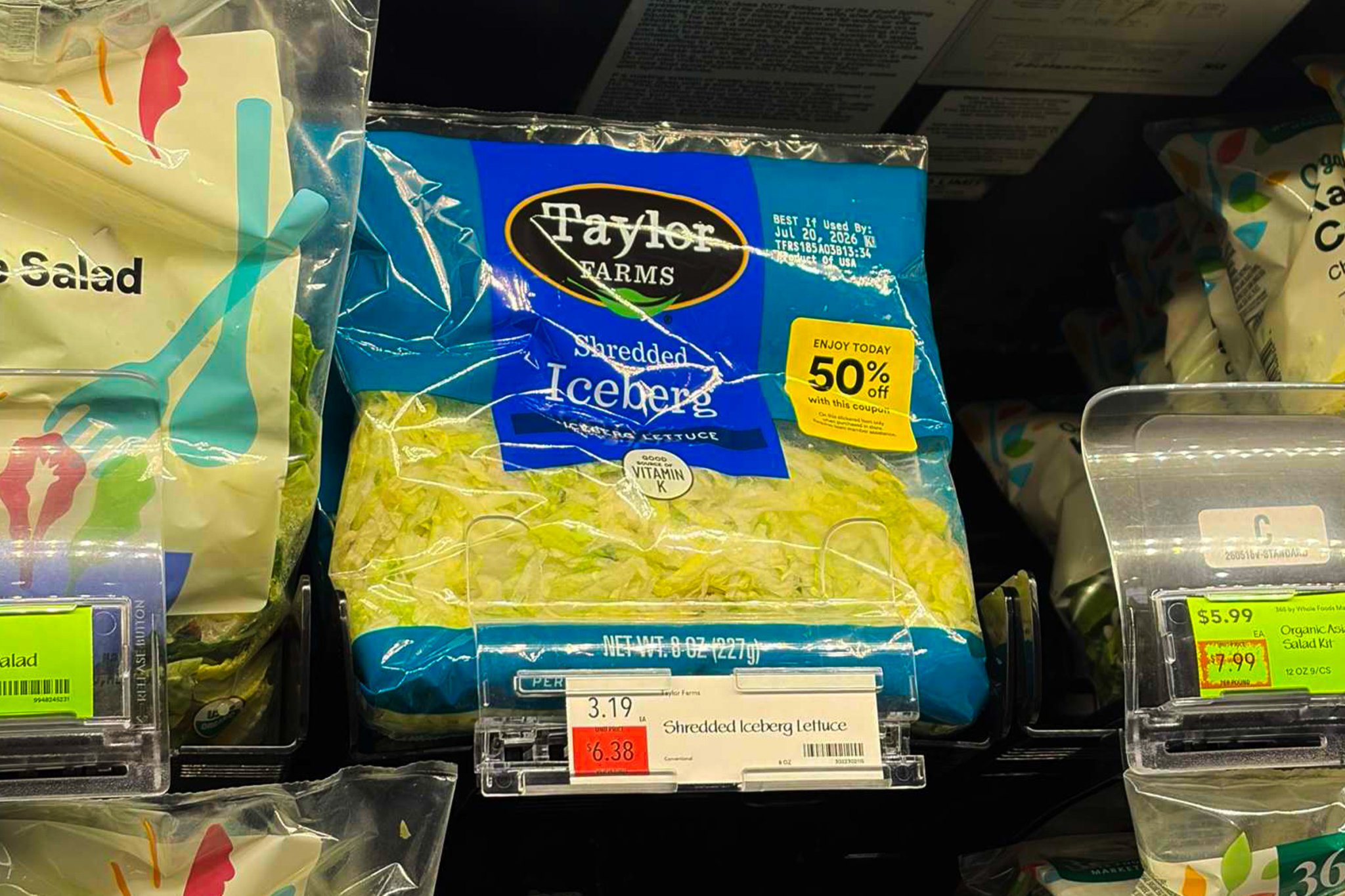
Over the weekend, we noticed that one of the grocery retailer’s locations in New York City was selling Taylor Farms’ shredded iceberg at a steep 50 percent discount — which, from an optics point of view, is absolutely extraordinary.

Is this an indictment of our country’s ruthless opportunism, and by extension, capitalism at large? Is it a total nonstory? If you’re unlucky enough, you’ll have plenty of time to ponder those questions on the porcelain throne. Many on social media just seemed to think it was a mix of funny and appalling.

“The cost is on the back end,” someone joked. “Discount diarrhea,” chimed another. Others were outraged that the location was still selling the stuff.

“They’re seriously not pulling that off the shelf,” one fumed. “For SHAME.”

The Food and Drug Administration narrowed the culprit down to a Taylor Farms facility in Mexico. So far, Taylor Farms has voluntarily recalled its Mexico products containing shredded iceberg lettuce from 27 states, including Michigan — the epicenter of the outbreak, where over 6,100 people are believed to be infected — Florida, Texas, and North Carolina.

New York state is not currently one of them, so Whole Foods isn’t obligated to pull the products from its shelves (or at least as obligated as is possible under what is technically a voluntary recall). Still, the recall has been expanded at least once already, so it’s not impossible that it could include more states in the near future. A Whole Foods representative declined to go on record, but insisted that the bag of lettuce in question was sourced from the USA, not Mexico, adding that the chain doesn’t carry any of the recalled products.

Tracing the provenance of food products can be pretty byzantine. It’s not clear at this point if Taylor Farms supplied lettuce to companies in states affected by the recall who then distributed that lettuce again more widely, the New York Times noted. Not even the FDA has “distribution information or a list of customers who received” the recalled product since Taylor Farms hasn’t provided it, it said on its website — something it’s not legally required to do.

It’s even more confusing to the public. Taylor Farms doesn’t share which stores and restaurants it directly supplied its products too, so consumers have to do their own detective work, or rely on those locations voluntarily declaring that they used those products.

All that’s to say that there’s a lot of uncertainty over what lettuce is safe and what isn’t. The safest thing to do in this environment, probably, is to just abstain from shredded lettuce entirely. But you have to admit, isn’t that Whole Foods 50 percent discount tempting? Maybe if you’re used to paying outrageous prices for a bag of mushy leaves.

More on the outbreak: Taylor Farms Made Huge Donation to Trump Group After Loosening of Rules That Could Have Prevented Explosive Diarrhea Outbreak

The post Whole Foods Offering Steep Discount on Taylor Farms Shredded Iceberg Lettuce appeared first on Futurism.

  •  

RFK Jr Wants to Waste $5 Billion in the Worst Way Imaginable

Since riding Donald Trump’s coattails to power, Robert F. Kennedy Jr has taken his haphazard anti-vaccine views and enshrined them as a core tenet of US health policy.

According to 16 current and former health officials who spoke to Reuters, RFK Jr has taken much more drastic measures to push his anti-vaccine agenda than was previously known.

Speaking on condition of anonymity, two officials told the news agency that RFK approached National Institute of Health director Jay Bhattacharya earlier this year with a proposal to spend up to $5 billion in tax dollars to establish links between vaccines and autism.

As Reuters notes, that kind of spending would encompass ten percent of the NIH’s annual budget, a massive waste that would fly in the face of decades of established science showing vaccines definitively don’t cause autism.

“He’s an anti-vaccine activist. That’s who he is. That’s who he’s been for 20 years,” Paul Offit, director of the Vaccine Education Center at the Children’s Hospital of Philadelphia told Reuters. “To expect that as secretary of Health and Human Services he’d be anything other than that is wishful thinking.”

It certainly wouldn’t have been the first time RFK Jr attempted to twist the science to link vaccines with autism. Earlier this year, the US Department of Health and Human Services was caught spending $1.6 million funding a study on hepatitis B vaccines conducted by controversial Danish researchers Peter Aaby and Christine Stabell Benn.

Had the Africa Centres for Disease Control and Prevention — the public health arm of the Africa Union — not stepped in to stop the RFK-backed study, researchers would have withheld inoculations from thousands of newborn infants in Guinea-Bissau.

The situation drew notable comparisons to the Tuskegee Experiment, a highly unethical medical experiment that used hundreds of Black men as guinea pigs to study the long-term effects of syphilis. Despite the fact that effective treatment was available, nearly 400 men spent decades without treatment, suffering life-long consequences at the hands of manipulative researchers.

Though the Tuskegee Experiment may not have produced any medical breakthroughs or scientific discoveries, its cruel legacy seemingly lives on as inspiration for RFK and his HHS cronies.

More on RFK Jr: CDC Report on Vaccines and Autism Caught Citing Hallucinated Study That Does Not Exist

The post RFK Jr Wants to Waste $5 Billion in the Worst Way Imaginable appeared first on Futurism.

  •  

Let’s Be Real, The Explosive Diarrhea Outbreak Is Trump’s Fault, Not Taco Bell’s

On Thursday, the New York Times reported that the Centers for Disease Control and Prevention had linked the outbreak of cyclosporiasis, an infection notorious for inducing explosive diarrhea, to iceberg lettuce from Taylor Farms that was supplied to Taco Bell. 

Per the reporting, Taco Bell said it was voluntarily pulling the lettuce from select states where it received the contaminated produce: Indiana, Kentucky, Michigan, Ohio, and West Virginia. An announcement from the CDC warned the public not to eat food items with shredded lettuce from Taco Bell, but hasn’t identified Taylor Farms as the source.

But while Taco Bell may have served the tainted lettuce, it would be remiss to lay all of the blame on the fast food chain (although one aggrieved customer is already suing it after contracting the illness).

The contamination occurred at the farms or facilities where the food was processed, from a single supplier in Mexico, Food and Drug Administration officials said. The supplier, Taylor Farms, has been involved in previous outbreaks, including another outbreak of cyclosporiasis in a salad mix in 2013.

Taco Bell, to its credit, also immediately pulled its ingredients from some of its locations last week as soon as it learned about the situation, according to local reports.

And then there’s the broader political context that many experts are drawing attention to: how the Trump administration has slashed funding to the CDC and paralyzed the nation’s food safety bodies.

Last February, shortly after Trump took office, the US Department of Agriculture (USDA) dissolved its National Advisory Committee on Microbiological Criteria for Foods, which provided scientific guidance on food safety policy. Ryan Cooper at The Prospect notes that the committee was working on advice for foodborne illness outbreaks before being terminated. The FDA also shut down its National Advisory Committee on Meat and Poultry Inspection.

Not spared during the wave of cuts that wreaked the federal government, the USDA lost over 20,000 workers last year, with 913 of them coming from its Food Safety Inspection Service.

Last year, the CDC — which has lost some 3,000 employees under Trump — scaled back its food surveillance program called FoodNet that monitored eight common foodborne pathogens, changing it so that surveillance of the cyclospora parasite that causes cyclosporiasis was optional.

Dan Jernigan, a former director of CDC’s Center for Emerging and Zoonotic Infectious Diseases, told the Washington Post that the decision was made because funding for food safety had not been maintained over the past few years. That the US is now on track to have more cyclospora cases this year than any previous year in history is likely no coincidence.

Other incidents show how the administration has taken a recklessly laissez faire approach to public health. The US’s worst measles outbreak this century occurred after Trump had hollowed out the CDC — and after health secretary RFK had spent years heavily promoting anti-vaccine rhetoric. The CDC also reportedly fired its ship inspectors last year, a decision that came under scrutiny during a deadly hantavirus outbreak on a Dutch cruise ship. Some experts estimate that hundreds of thousands and possibly millions of children have died as the result of Trump dismantling USAID, which funded emergency food assistance programs and HIV response across the globe.

Jernigan left the agency last August in protest of Trump ousting its then director Susan Monarez and the policies of health secretary Robert F Kennedy Jr. But he said that the Trump cuts would have little impact on the ongoing outbreak, adding that FoodNet wasn’t designed for real-time outbreak detection or response.

As the WaPo reporting notes, federal and state health authorities have insisted that the cyclosporiasis investigation hasn’t been impeded because the parasite is still reportable to a separate national database. Still, Jernigan said that scaling back FoodNet wasn’t inconsequential.

“Routine outbreak investigators are the firefighters responding to a specific blaze. FoodNet is the citywide system that tracks how often fires occur and whether the overall risk is rising,” he told WaPo. “Removing cyclosporiasis from FoodNet does not take the firefighters away from the current outbreak, but it does remove part of the system that tells us how large the problem is and whether it is getting worse over time.”

Cyclosporiasis is a particularly tough illness to track.  Symptoms can take weeks to present, making it difficult for health officials to trace back where sufferers were infected. A recent Wired piece drew attention to how many people may be wrongly misdiagnosing themselves as news of the diarrhea dilemma spread across social media.

Linda Yancey, an infectious disease specialist at Memorial Hermann Health System in Texas, warned that large outbreaks like this could become more common.

“Unfortunately with so many budget cuts, every federal agency is hurting for personnel and resources,” she told Time Magazine earlier this month. “We could be at greater risk of foodborne infections because the FDA is so understaffed and underfunded right now.”

So far, Michigan, the epicenter of the outbreak, has alone tallied over 4,300 cases of infection, while nationwide there could be 7,000 cases, though the Centers for Disease Control and Prevention has only confirmed 1,600 of them.

More on parasites: If You’ve Been Having Explosive Diarrhea, You May Want to Read This

The post Let’s Be Real, The Explosive Diarrhea Outbreak Is Trump’s Fault, Not Taco Bell’s appeared first on Futurism.

  •  

Evidence Grows That Taco Bell Infected Massive Number of Customers With Explosive Diarrhea

Apocryphal tales of its meals causing the runs have plagued Taco Bell since time immemorial. But this latest parasitic outbreak is something else entirely.

As the Washington Post reports, federal and state authorities are investigating whether the fast food chain is behind the outbreak of explosive diarrhea cases across the country — further cementing its scatological legacy.

The illness, caused by the cyclosporiasis parasite, has sickened as many as 5,100 people across the country, according to the Centers for Disease Control and Prevention. In Michigan, which appears to be the epicenter of the outbreak, over 3,700 people have been infected, state authorities said.

Taco Bell’s suspected role in the outbreak comes after reports that the chain’s Michigan locations began pulling some of its ingredients. Signs in front of the restaurants stated that they were no longer serving lettuce, cilantro, onion, pico de gallo, and guacamole due to a “nationwide recall,” though what recall they were referring to is unclear.

Health officials have so far struggled to narrow down how the parasite is spreading. While usually found on fresh produce, symptoms can take weeks to manifest, making it difficult to trace back to the source.

Lettuce has emerged as one of the likeliest culprits. In an update this week, Michigan’s chief medical executive Natasha Bagdasarian said that “early information has shown lettuce as a common product that regularly comes up during the investigation.”

“Although we do not have a definite product identified as the source of the outbreak, we want to let Michiganders know what we have learned so far so they can take steps to protect their families,” Bagdasarian added.

Federal authorities haven’t singled out any veggies yet, though acting Food and Drug Administration director Don Prater acknowledged Michigan’s fixation on lettuce.

“What I can say at this point is that we’re continuing our traceback investigation on multiple produce items, including the lettuce,” he said, per WaPo.

So far, no nationwide recalls have been made related to the outbreak. One person familiar with the federal investigation, however, praised Taco Bell’s response. 

“It’s good the chain has already voluntarily stopped serving a number of items,” they told the newspaper. They added that some who became sick said they didn’t eat at the chain, suggesting that it’s not the only one responsible.

More on parasites: If You’ve Been Having Explosive Diarrhea, You May Want to Read This

The post Evidence Grows That Taco Bell Infected Massive Number of Customers With Explosive Diarrhea appeared first on Futurism.

  •  

Taco Bells Makes Urgent Changes After Outbreak of Explosive Diarrhea

As an explosive diarrhea outbreak splatters across the country, Taco Bell is preparing for the worst.

This week, the fast food chain — or at least its locations in Michigan — began temporarily pulling some of its staple ingredients to help stop the spread of cyclosporiasis, a foodborne parasite that causes sufferers to go running to the toilet even more often than a standard Taco Bell meal might.

Many of your favorite menu items, like the Crunchwrap Supreme and the Cantina Chicken bowl, may be imperiled.

“We are currently unable to sell Lettuce, Cilantro Onion, Pico de Gallo, and Guacamole due to a nationwide recall,” a notice posted at locations in Metro Detroit reads, Michigan outlet WWJ reported. “Any items ordered that normally come with these items WILL NOT contain them,” it stressed.

It doesn’t sound like any cases of cyclosporiasis-related explosive diarrhea have been linked to Taco Bell yet, so the fast food chain is probably just trying to err on the side of caution.

So far, nearly 3,000 people have been infected with the foodborne parasite, with around 86 hospitalized, NBC News reported, citing data from the Centers for Disease Control and Prevention. Michigan appears to be one of the epicenters, accounting for over half the reported cases so far.

Cyclosporiasis symptoms are pretty gnarly, but usually not life threatening. It can cause stomach cramps and a lengthy bout of explosive diarrhea. The intensifier is warranted: one sufferer who spoke to the New York Post was in awe of the “amount of pressure when it comes out,” adding that the “force is crazy.”

No food items have been recalled yet related to the outbreak. The virus is usually found on fresh produce, but we don’t know what specific food items are spreading it or the supplier they come from. Cyclosporiasis is notoriously hard to track because the symptoms usually don’t present until at least a week after the contaminated food is ingested.

They may not all come from the same source, the CDC cautioned, and what we’re seeing could be a cluster of unrelated outbreaks.

To protect yourself, the best thing to do is thoroughly wash and cook your veggies, which you should still eat. And maybe skip on the fast food.

More on Taco Bell: Taco Bell’s Attempt to Replace Drive-Thru Employees With AI Is Not Going Well

The post Taco Bells Makes Urgent Changes After Outbreak of Explosive Diarrhea appeared first on Futurism.

  •  
❌