❌

Reading view

MacVoices #26192: Road to Macstock – Michael D.J. Eisenberg

The Road to Macstock takes us to Michael D.J. Eisenberg. whose presentation will focus on podcasting, sharing how he plans to help attendees understand what makes a show work, from concept and preparation to recording, production, and audience connection. The conversation also highlights the value of learning from experienced creators in person and the community energy that makes the event special. 

💾

  •  

The Cover-Up of Winter Excess Death Data

The ONS quietly axed its annual excess winter death reports after 2022. Why? asks Paul Homewood. Could it be because they vastly outstrip the number of people that die during summer heat waves?

The post The Cover-Up of Winter Excess Death Data appeared first on The Daily Sceptic.

  •  

NJIT Professor’s Polymer Proposal Wins $125,000 ACS Grant

A new research project at the New Jersey Institute of Technology is taking a closer look at a strange but important behavior in rubber-like materials: their properties can depend on what happened to them before. With a $125,000 New Directions grant from the American Chemical Society Petroleum Research Fund, chemical and materials engineering professor Gennady Gor and his students will investigate how petroleum-derived polymers absorb fluids, swell, contract and change their elasticity over time. The work could improve predictions of how elastomers perform in everything from industrial seals to oil and gas equipment.

Elastomers are polymers capable of undergoing large, reversible deformations. Silicone, neoprene and natural or synthetic rubber are familiar examples. Their molecular chains can stretch, rearrange and return toward their original configuration, giving these materials their characteristic flexibility. Yet exposure to liquids or vapors can dramatically alter that behavior. Hydrocarbon molecules may enter the polymer network, pushing molecular chains apart and causing the material to expand. At the same time, the absorbed fluid can change the polymer’s stiffness, strength and ability to recover its original shape.

Gor’s project focuses on a phenomenon known as hysteresis, in which a material’s current state depends not only on its present conditions but also on the path it took to reach them. For an elastomer, that means the material may respond differently when it is swelling than when it is shrinking, even if its size and surrounding environment are identical. The difference can arise from molecular rearrangements, delayed relaxation or changes in the interactions between polymer chains and absorbed molecules. Such path-dependent behavior is central to understanding why materials sometimes fail to return fully to their previous mechanical state.

The question is especially relevant for petroleum-related technologies. Elastomers are widely used as O-rings, gaskets and seals because they can deform to fill microscopic gaps and maintain a hermetic barrier. In oil and gas environments, however, these components may encounter complex mixtures of hydrocarbons under pressure and at elevated temperatures. If a seal swells excessively, softens or loses its ability to recover after repeated exposure, it can become unreliable. A better understanding of hysteresis could help engineers select materials and operating conditions that reduce leakage and extend component lifetimes.

The new study represents a shift for Gor’s Laboratory for Materials Interfaces. His previous research has largely examined porous adsorbent materials, which collect molecules on their internal surfaces. Elastomers are different: they do not need pores to take up substantial amounts of fluid. Instead, molecules diffuse into the polymer matrix and interact with its flexible chains. The resulting process is more like a sponge absorbing liquid, although the molecular mechanisms are governed by diffusion, thermodynamics and the elasticity of the polymer network.

Günel Nabiyeva, a fourth-year doctoral student, will lead much of the experimental effort with undergraduate chemical engineering student Elitsa Mileva and second-year doctoral student Supun Rangana. The team has already begun collecting data on how rubber deforms in the presence of liquids and vapors. For Mileva, who has spent considerable time reviewing the scientific literature, the grant will provide an opportunity to move deeper into laboratory work. Nabiyeva describes the project as a new system for the research group because the laboratory has not previously studied elastomers in this way.

The researchers will expose polymer samples to controlled concentrations of hydrocarbon vapors and track how the materials respond. Their measurements will combine swelling, fluid uptake and elasticity rather than treating these properties separately. This approach is essential because a polymer can gain mass and volume while simultaneously becoming softer or, under some conditions, displaying a more complicated mechanical response. Different hydrocarbons may produce different results because their molecular size, chemical structure and compatibility with the polymer influence how quickly they enter the material and how strongly they interact with its chains.

Rangana will contribute expertise in ultrasonic sensing, which can measure subtle changes without physically contacting or damaging the sample. Ultrasonic waves travel through a material in ways that depend on its density, structure and mechanical properties. By analyzing changes in wave transmission or reflection, scientists can detect variations in stiffness and internal condition with high precision. Coupling these measurements to vapor exposure could reveal how quickly elasticity changes as molecules enter the polymer and whether the material follows the same path during desorption as it did during absorption.

The team hopes its results will fill a gap in the fundamental understanding of polymer hysteresis. Although hysteresis is well known in many areas of physics and engineering, relatively few studies have examined how history-dependent elasticity develops in swollen elastomers. The new measurements may help distinguish reversible molecular motions from more persistent structural changes and improve models used to predict polymer performance. Ultimately, the researchers aim to make elastomer behavior less mysterious and more reliable, helping engineers design seals and flexible components that remain dependable across repeated cycles of chemical exposure, swelling and recovery.

Subject of Research: Elastomers, petroleum-derived polymers, polymer swelling, elasticity and hysteresis

Article Title: Ultrasonic Experiments Aim to Reveal Why Rubber Remembers Its History

Web References: Gennady Gor’s NJIT profile; NJIT Laboratory for Materials Interfaces

Image Credits: Courtesy of New Jersey Institute of Technology

Keywords

Elastomers, polymers, hysteresis, rubber, polymer swelling, ultrasonic sensors, materials science, chemical engineering, petroleum research, NJIT

  •  

Fetal brain models show IL-17A disrupts cortical development after maternal immune activation

A new study has brought scientists closer to observing how inflammation during pregnancy may alter the earliest stages of human brain development. Using three-dimensional tissue models made from human fetal brain samples, researchers modeled maternal immune activation and identified the signaling molecule interleukin-17A, or IL-17A, as a major driver of abnormal cortical development. The findings, published in Nature Neuroscience, offer a human-based experimental system for investigating how immune signals outside the brain can influence the formation of neural circuits before birth.

Maternal immune activation refers to the biological response triggered when a pregnant individual experiences infection or significant inflammation. Epidemiological studies have associated certain prenatal inflammatory exposures with an increased likelihood of neurodevelopmental conditions, including autism spectrum disorder, schizophrenia, and intellectual disability. Yet the mechanisms behind these associations have remained difficult to study. Animal models have provided important clues, but differences between species can limit their ability to reproduce the timing, cellular organization, and molecular environment of the developing human cortex.

The researchers addressed this challenge with “brain cerebroids,” three-dimensional, ex vivo models that preserve features of developing human fetal brain tissue. Unlike simplified cultures composed of a single cell type, these structures retain a more complex arrangement of neural progenitors, immature neurons, and supporting cells. Their three-dimensional architecture allows cells to communicate and organize in ways that more closely resemble the fetal cortex, including the production and movement of neurons that ultimately establish the layered structure of the brain’s outer region.

To recreate aspects of maternal immune activation, the team exposed the fetal brain cerebroids to inflammatory conditions associated with immune signaling during pregnancy. The central focus was IL-17A, a cytokine produced primarily by activated immune cells, particularly a subset of T cells known as T helper 17 cells. Cytokines are small signaling proteins that coordinate immune responses, but they can also affect tissues beyond the immune system. In the developing brain, inappropriate or excessive exposure to such signals may influence cell proliferation, migration, differentiation, and the formation of connections between neurons.

The study found that IL-17A exposure was linked to disruptions in cortical development within the human cerebroids. These effects are described as “IL-17A-driven,” indicating that the cytokine was not merely associated with the developmental changes but played a functionally important role in producing them. The disturbances affected the organization and behavior of developing neural cells, processes that are essential for building the cortex. During normal development, neural progenitor cells generate new neurons in tightly regulated sequences, while young neurons migrate to their appropriate positions. Interference with either process can alter the structure and connectivity of later-forming brain tissue.

The results are especially significant because they were observed in human fetal brain material rather than inferred only from animal studies. Previous research in mice has implicated maternal immune activation and IL-17A in changes to cortical organization and behavior in offspring. However, the human cerebroid model provides an opportunity to examine whether similar immune mechanisms operate in human tissue, where the timing of neurogenesis, cell-type composition, and cortical architecture differ from those of rodents. The approach may also help reveal human-specific responses that conventional laboratory animals cannot capture.

The findings do not mean that IL-17A exposure during pregnancy inevitably causes a neurodevelopmental condition, nor do they establish that prenatal inflammation is a single explanation for such conditions. Brain development is shaped by a combination of genetic factors, immune signals, environmental influences, and developmental timing. The experiments also took place in an ex vivo model, outside the full physiological environment of a living pregnancy. Cerebroids cannot reproduce the placenta, maternal circulation, hormonal changes, or the complete immune system, all of which influence how inflammatory signals reach the fetus and how long they remain active.

Nevertheless, the model could become a powerful platform for testing mechanisms and potential interventions. Researchers may use it to determine how IL-17A changes gene activity in neural progenitors, whether it alters communication between neurons and glial cells, and which molecular pathways make some developing cells more vulnerable than others. Because the tissue is human and three-dimensional, it may also support studies of patient-specific genetic risk, allowing investigators to compare how different backgrounds respond to the same inflammatory signal.

The work also highlights a broader shift in neuroscience toward experimental systems that combine human tissue with controlled laboratory manipulation. Understanding prenatal inflammation is difficult in clinical studies because immune exposure cannot be ethically assigned or precisely timed in pregnant people. Brain cerebroids offer a way to isolate individual components of that complex biology while preserving more of the developing tissue’s natural organization than conventional two-dimensional cell cultures. As these models improve, they may help distinguish temporary developmental changes from persistent alterations in cortical circuitry and identify when immune signaling is most consequential.

By showing that IL-17A can disrupt human cortical development in a three-dimensional ex vivo system, the study gives researchers a clearer biological target in the search for links between prenatal inflammation and later neurodevelopment. Its most immediate contribution is not a new diagnosis or treatment, but a more precise experimental framework: one that connects maternal immune signaling to cellular events in the developing human cortex. That connection could guide future work on prevention, therapeutic timing, and the complex origins of developmental differences long before the first symptoms become visible.

Subject of Research: Maternal immune activation and IL-17A-driven disruption of human fetal cortical development in 3D ex vivo brain cerebroids.

Article Title: Modeling maternal immune activation in 3D ex vivo human fetal brain cerebroids reveals IL-17A-driven disruption of cortical development.

Article References: Assir, M.Z.K., Yanakiev, M., Gim, D.H. et al. Modeling maternal immune activation in 3D ex vivo human fetal brain cerebroids reveals IL-17A-driven disruption of cortical development. Nature Neuroscience (2026). https://doi.org/10.1038/s41593-026-02400-2

Image Credits: AI Generated

DOI: https://doi.org/10.1038/s41593-026-02400-2

Keywords: maternal immune activation, IL-17A, fetal brain development, cortical development, brain cerebroids, neurodevelopment, prenatal inflammation, human brain models, cytokines, neuroscience

  •  

Le constat est perturbant : pourquoi notre monde actuel coche déjà beaucoup (trop) de cases de 1984

Et si 1984 n’était plus seulement une fiction ? Plus de 70 ans après sa parution, le roman de George Orwell résonne étrangement avec notre époque. Surveillance, désinformation, manipulation du langage : autant de mécanismes qui, sans atteindre l’extrême du récit, interrogent notre rapport à la...

  •  

Faites vos propres recherches santé : cette méthode simple évite les grosses erreurs

Face à la multitude d’informations médicales disponibles sur Internet, faire des recherches personnelles en santé est un exercice périlleux qui demande de la rigueur et du discernement… Comment transformer l’incertitude en décision éclairée ? Lucy McGowan, biostatisticienne, nous explique, étape...

  •  
  •  

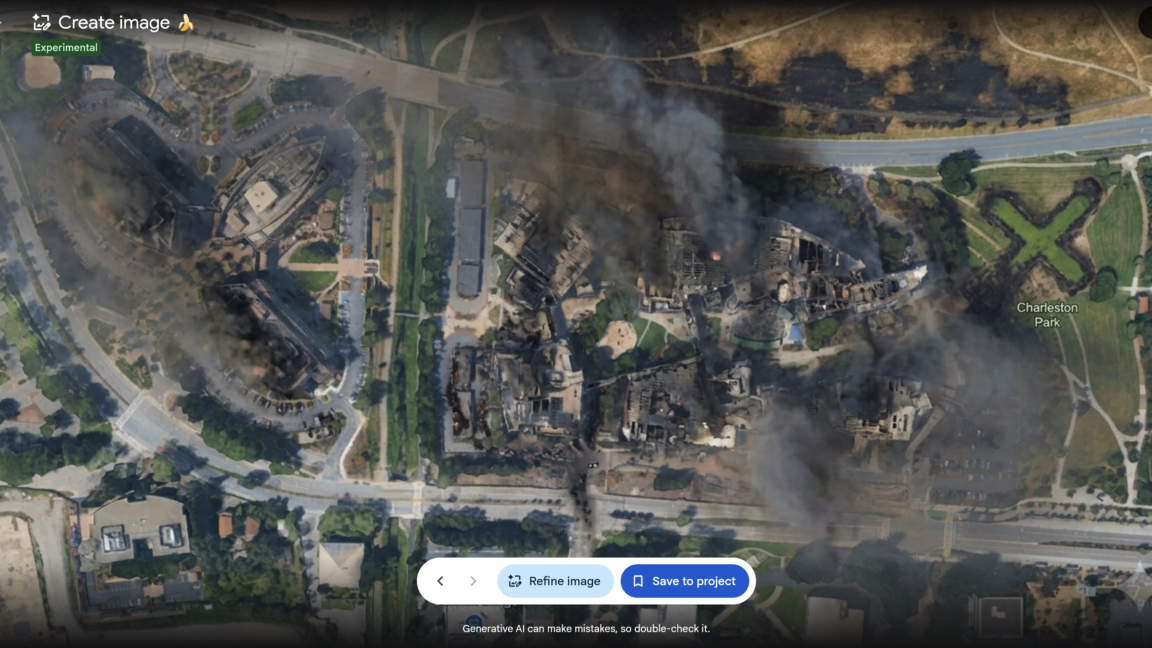
Google Earth risked ruin with retracted AI tool for making fake satellite pics

Google briefly allowed anyone to create AI-modified versions of satellite imagery available in Google Earth—before quickly reversing its decision as people shared examples of AI-generated pictures that illustrated the potential for misinformation and disinformation.

There is no shortage of generative AI tools that already allow people to create AI-modified images of real buildings and cities based on user prompts. But Google’s aborted attempt to incorporate its Nano Banana 2 AI image generator as a Google Earth feature made it even easier for anyone to create modified versions of authentic imagery depicting real locations—something that Google boasted about when initially promoting the new feature.

“For the first time, you can generate custom images using Google Earth’s satellite, aerial, and 3D imagery alongside Nano Banana, which creates concepts grounded in the real world,” wrote Bryan Horowitz, product manager for Google Earth, in a company blog post on July 30.

Read full article

Comments

© Google Earth

  •  

520-Million-Year-Old Fossil from China Fills Gap in Evolutionary History of Cephalopods

Life reconstruction of Eoceras shaanxiense. Image credit: Dinghua Yang.

Paleontologists have identified the earliest-known cephalopod equipped with a siphuncle -- a tubular extension of the mantle found in shelled cephalopods -- pushing back the fossil record of this key evolutionary feature to the Early Cambrian, roughly 520 million years ago.

The post 520-Million-Year-Old Fossil from China Fills Gap in Evolutionary History of Cephalopods appeared first on Sci.News: Breaking Science News.

  •  

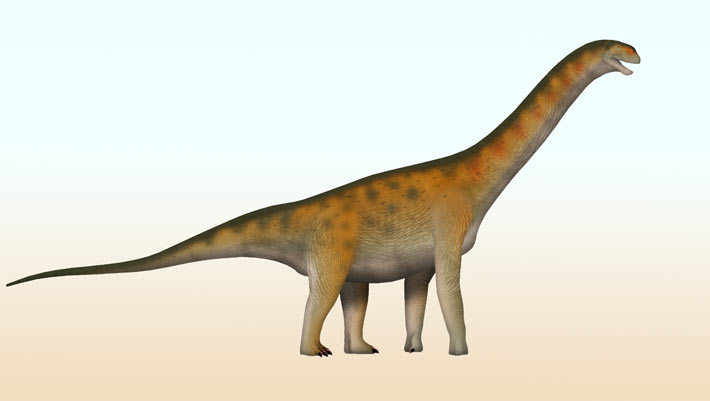
New Species of Triassic Dinosaur Discovered on Shores of Zimbabwe’s Lake Kariba

Life reconstruction of Musango matusadonaensis. Image credit: Mark Witton.

An international team of paleontologists has identified a new species of early sauropodomorph dinosaur in Zimbabwe, adding to growing evidence that southern Africa hosted a richer diversity of dinosaurs during the Late Triassic epoch than previously recognized.

The post New Species of Triassic Dinosaur Discovered on Shores of Zimbabwe’s Lake Kariba appeared first on Sci.News: Breaking Science News.

  •  

Ancient Footprints in Kenya Hint at Bigger Bodies and Group Behavior among Early Human Relatives

One of 1.43-million-year-old footprints found at the GaJi10 site in the Koobi Fora Formation in northern Kenya; a 15-cm (6-inch) ruler is shown for scale. Image credit: Kay Behrensmeyer.

A set of 1.43-million-year-old fossil footprints preserved along the margin of an ancient lake in northern Kenya is offering paleoanthropologists new evidence about the size, gait and social lives of the beings who made them and reopening questions about which species they belonged to.

The post Ancient Footprints in Kenya Hint at Bigger Bodies and Group Behavior among Early Human Relatives appeared first on Sci.News: Breaking Science News.

  •  

The “Rhythm” of the Interstellar Medium

Messier 17

Editor’s Note: Astrobites is a graduate-student-run organization that digests astrophysical literature for undergraduate students. As part of the partnership between the AAS and astrobites, we occasionally repost astrobites content here at AAS Nova. We hope you enjoy this post from astrobites; the original can be viewed at astrobites.org.

Title: The Rhythm of the ISM: Tracing the Timescales of Gas Evolution and Star Formation Across Galactic Environments
Authors: Zuzanna Kocjan and Vadim A. Semenov
First Author’s Institution: University of Maryland
Status: Published in ApJ

The Connection Between Gas and Star Formation in Galaxies

Stars are born in the interstellar medium (ISM) when cold, dense clouds of gas become unstable and collapse under gravity. Despite their plentiful reservoirs of gas, galaxies convert only a small fraction of this material into stars, making star formation a surprisingly inefficient process. A key factor behind this inefficiency is stellar feedback: radiation, stellar winds, and supernova explosions from young stars can inject energy and momentum into the surrounding gas, heating, stirring, and dispersing it. In this way, stellar feedback shapes future star formation across scales ranging from individual regions in the ISM to whole galaxies.

An important tool astronomers use to study star formation is the Kennicutt–Schmidt relation, which links the amount of gas in a galaxy to the rate at which stars form. More specifically, it relates the gas surface density, Σgas, to the star formation rate surface density, ΣSFR. (For more on this relation, see this Astrobites article on a classic research article.) However, this law is underpinned by a crucial ingredient: timescales. In particular, the pace of star formation depends both on how quickly galactic gas is cycled into star-forming material and on how rapidly those regions convert gas into stars once they form. Today’s article investigates the physical origin of star-formation scaling relations behind the Kennicutt–Schmidt law by building on a simple theoretical framework for the ISM.

Consider a Kettle of Boiling Water…

In a given region of a galaxy, the ISM consists of gas in either an actively star-forming state or an inert, non-star-forming state, depending on whether it is dense and unstable enough to collapse (as illustrated in Figure 1). The transition of non-star-forming gas into the star-forming state occurs on the supply timescale, τ+. Conversely, the dispersal of star-forming gas back into a non-star-forming state is characterized by the removal timescale, τ–. As a helpful analogy, the authors compare this process to water boiling in a kettle: the ISM is continuously “boiling,” with gas moving between active and inactive states. Meanwhile, the total gas reservoir gradually decreases, analogous to water slowly evaporating as the kettle boils. The gas depletion time, τ*, therefore represents the timescale over which the available gas would be exhausted by star formation.

Schematic of the gas cycling framework

Figure 1: Schematic of the gas cycling framework used in the authors’ theoretical model for how gas is converted into stars, which takes into account a supply, removal, and depletion timescale. [Adapted from Kocjan and Semenov 2026]

Building on this picture of gas cycling, the authors turn to simulated galaxies, where the motion and evolution of the gas can be followed directly. By tracking how gas flows through the ISM in the simulations, they derive the three characteristic timescales above — τ+, τ–, and τ* — that describe how gas is supplied to, removed from, and ultimately consumed by star formation. The goal is to connect the small-scale physics of the ISM to the large-scale star formation efficiencies and scaling relations observed across galaxies.

The Timescales of the Interstellar Medium

To explore how gas and star formation are connected across different galactic environments, the authors analyze three simulated systems: a dwarf galaxy, a Milky Way–like galaxy, and a gas-rich starburst galaxy, as shown in Figure 2. Despite spanning very different physical regimes, the galaxies exhibit remarkably similar trends in the fraction of gas actively forming stars as a function of Σgas​. This suggests that the amount of star-forming gas is governed primarily by local interstellar conditions, since regions with higher gas surface densities tend to contain denser, more strongly self-gravitating gas.

galaxy simulations and star-forming gas fraction

Figure 2: Using simulations (left to right) of an isolated intermediate-mass dwarf galaxy, Milky Way–like galaxy, and gas-rich galaxy, the authors measure the star-forming gas fraction versus the gas surface density (right). [Adapted from Kocjan and Semenov 2026]

To further understand this trend, this study then applies the authors’ theoretical framework to determine the timescales of ISM gas cycling on the scales of individual star-forming regions. These include the timescales for the formation, dispersal, and local depletion of star-forming gas as described above: τ+, τ−, and τ∗, which also exhibit strong correlations with the gas surface density (see Figure 3). Specifically, the timescale for supplying gas into the star-forming state is linked to the rate at which turbulence redistributes material through the galactic disk. The depletion timescale, over which star-forming gas is turned into stars, decreases at higher Σgas​, since denser regions more efficiently collapse and form stars. By contrast, the removal timescale is comparatively short, reflecting how quickly feedback and changes in local equilibrium can disrupt star-forming clouds. In this way, the “boiling kettle” framework is able to capture the major processes driving small-scale gas evolution.
Scaling relations between the supply, depletion, and removal times

Figure 3: Scaling relations between the supply (left), depletion (middle), and removal (right) times in kiloparsec-scale regions of the simulated galaxies (shown in different colors). Based on the measurements from the simulations, the authors introduce a parameterized model for the gas cycling framework, as defined in the equations. [Adapted from Kocjan and Semenov 2026]

The cycling of gas through different phases of the ISM offers a useful framework for understanding how galaxies form stars. In the relatively well-ordered systems studied here, this balance can be described in simple terms; however, it is likely to become more complex in extreme environments where additional physical processes — such as those operating in the early stages of galaxy formation — play a significant role. Even so, these results highlight how key galactic properties can emerge naturally from the interplay between galaxy-scale dynamics, ISM turbulence, and the state of star-forming gas.

Original astrobite edited by Jayde Willingham.

About the author, Shalini Kurinchi-Vendhan:

After studying astrophysics and literature at Caltech, I moved onto a Fulbright Fellowship in Heidelberg, Germany. I’m passionate about using computer simulations to explore supermassive black holes and galaxy evolution — but I also love poetry and traveling.

The post The “Rhythm” of the Interstellar Medium appeared first on AAS Nova.

  •  

The Guardian Journalist Who Targeted the Free Speech Union is a “Senior Tarbell Fellow”. What Does That Mean?

The Guardian journalist who targeted the Free Speech Union with a story stuffed with misinformation, Aisha Down, is a "Senior Tarbell Fellow". Charlotte Gill investigates what that means.

The post The Guardian Journalist Who Targeted the Free Speech Union is a “Senior Tarbell Fellow”. What Does That Mean? appeared first on The Daily Sceptic.

  •  

Noble Gases Along for the Ride

A rendering of an orange and grey planet against a dark background.

What can some neon trapped in a chunk of rock tell us about Earth’s formation and the protosolar nebula? Quite a lot, as detailed in a recent study in The Planetary Science Journal.

Noble Mysteries

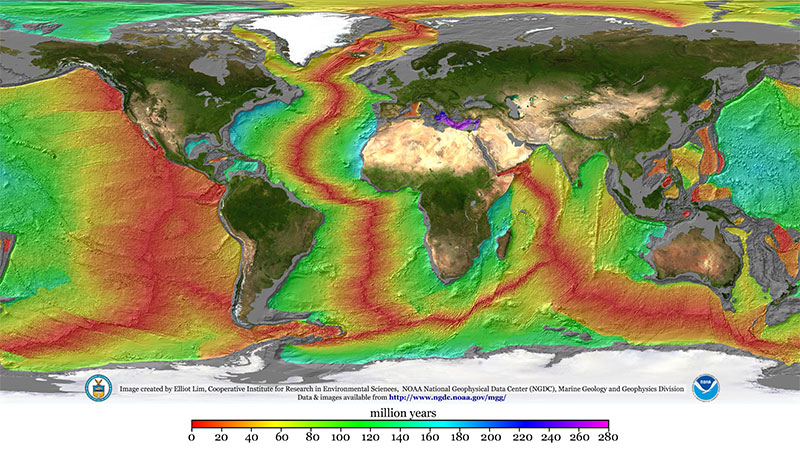
By analyzing rocks pulled from mid-ocean ridges, geologists have concluded that there are tiny amounts of noble gases in the deep interior of Earth. That’s a strange statement upon reflection: how did these gases, which are famously apathetic to essentially all other elements, end up embedded within rocks thousands of kilometers underground? Since their passivity rules out the potential of a chemical reaction that formed them in place, they must have been in the mantle since the very beginning of Earth’s history.

A map of Earth with the continents shown normally but the sea colored according to age.

A map illustrating the age of the seafloor. Mid-ocean ridges stand out clearly in red. By sampling material from these ridges, planetary scientists can infer the composition of Earth’s deep interior. Click to enlarge. [Mr. Elliot Lim, CIRES and NOAA/NCEI]

There are a few scenarios for how this could have happened. Though it’s possible that these inert species were delivered to the early Earth encapsulated within primitive meteorites or in solids contaminated by ions from the solar wind, at least some fraction of these elements likely came directly from the gaseous nebula that surrounded the earliest protoplanets.

That last option is especially exciting to present-day planetary scientists interested in constraining Earth’s formation history because it requires some very specific conditions. Since light noble gases like neon don’t dissolve well in seawater, they must have dissolved into a magma ocean — meaning the nebula was still around when Earth was large enough to have a molten surface. That already restricts us to a very specific time in the solar system’s history, but it doesn’t say much about the specific size of the proto-Earth other than “big,” and it doesn’t say much about the state of the nebula other than “it existed.” Recently, Vincent Savignac and Eve Lee (University of California, San Diego; McGill University) successfully refined these constraints to pin down information about both the early Earth and the nebula that surrounded it.

Infant Earths

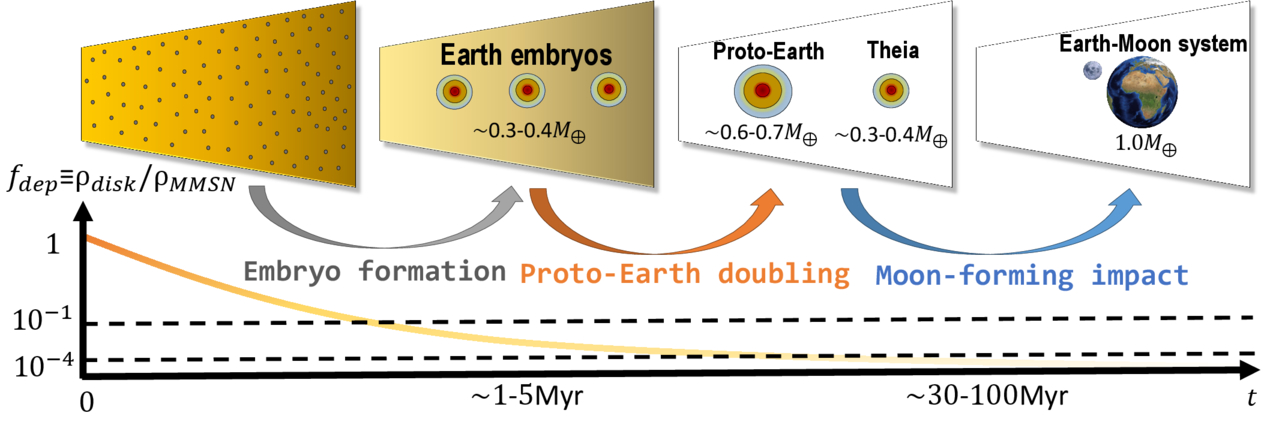
Savignac and Lee began by growing a grid of infant Earths on their computers via models of gas accretion and atmosphere–magma interactions. Each simulation started with a different proto-Earth mass and nebular density, and each one yielded a different amount of neon in Earth’s deep interior. Excitingly, only a small handful of the scenarios tested ended up with values similar to those observed.

A cartoon of small cores surrounded by gaseous envelopes eventually merging into the Earth.

A schematic of Earth’s formation via embryo formation (when the noble gases enter the mantle) followed by mergers. Click to enlarge. [Savignac & Lee 2026]

On the mass axis, the team found a narrow range of acceptable conditions. If a proto-Earth was less than about 20% of Earth’s present-day mass, it couldn’t accrete much gas. This let it cool rapidly, freezing the magma ocean and shutting down neon dissolution before too much could be trapped inside. On the other hand, if a proto-Earth was more than about 40% of Earth’s present-day mass, it would accrete too much gas, stay molten for too long, and be left with too much neon. On the density axis, the researchers found that when the nebula accreted on to the proto-Earth, it must have been fairly depleted compared to its initial density. This implies that the whole process happened at the end of the nebula’s life, just before it was completely blown away by the proto-Sun.

Savignac and Lee demonstrated that these constraints are robust against the later stages of Earth’s evolution. In its later years, Earth either suffered or benefited from a giant impact, depending on your feelings about the Moon, but the researchers showed that this event doesn’t pose a problem for their models. Overall, this study builds a delightful link between rocks from our deep oceans and the particulars of Earth’s formation, demonstrating the unique power of planetary science to tie together different scientific fields.

Citation

“Constructing the Earth’s Formation History Using Deep Mantle Noble Gas Reservoirs,” Vincent Savignac and Eve J. Lee 2026 Planet Sci. J. 7 135. doi:10.3847/PSJ/ae64f7

The post Noble Gases Along for the Ride appeared first on AAS Nova.

  •  
❌