 Login

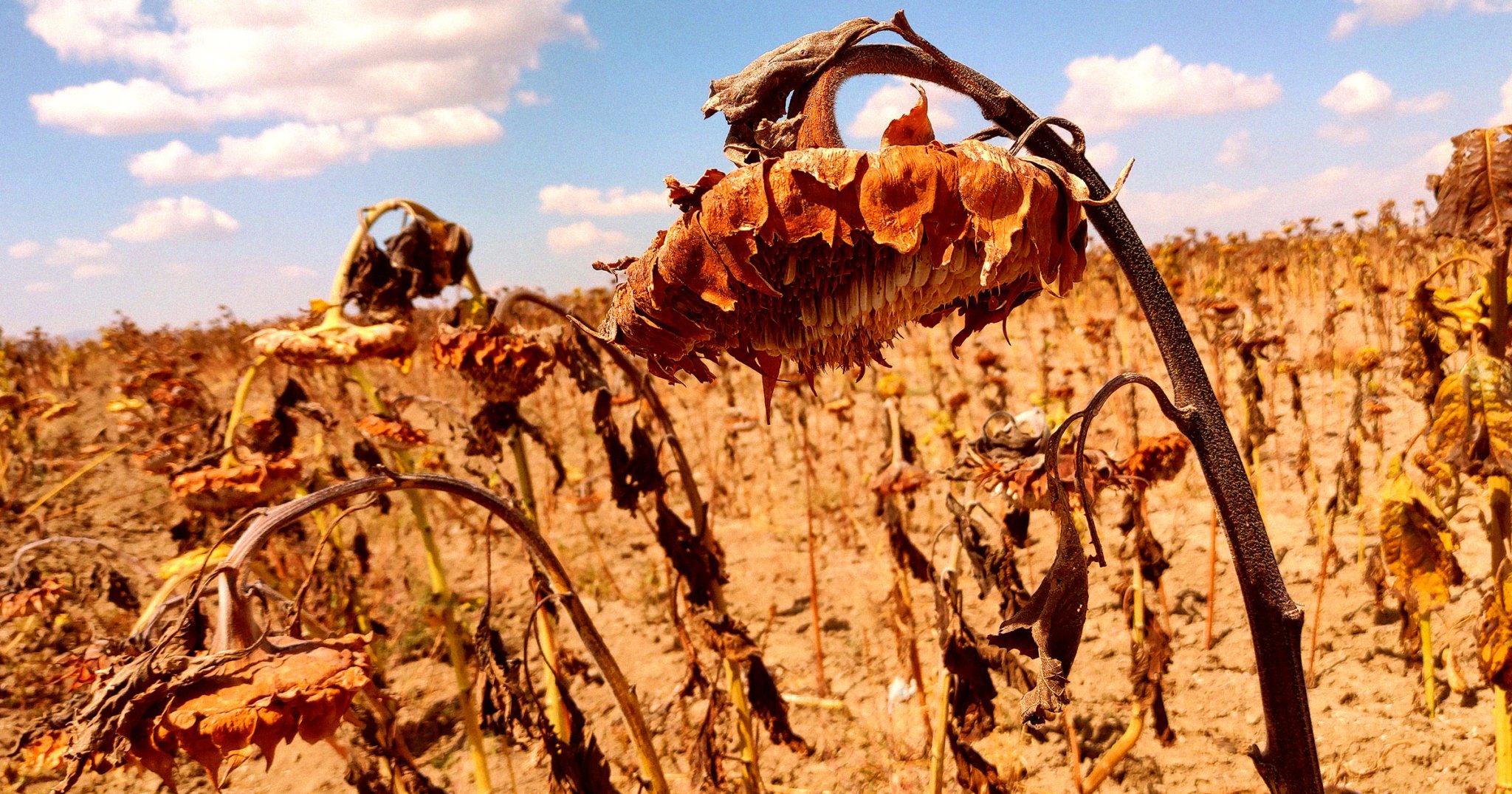
Effects of Record-Breaking El Niño Are Happening on 3 Continents
The recurring climate phenomenon is expected to peak later this year, but it is already causing dry spells and crop failures on three continents.

A climate shock that unfolded about 304 million years ago is offering scientists a dramatic warning about how quickly Earth’s climate system can amplify an initial temperature rise. During the Late Paleozoic Ice Age, a relatively modest increase in global temperatures appears to have triggered a much larger episode of warming, as methane released from thawing permafrost intensified the greenhouse effect. Researchers say the ancient event provides a powerful geological parallel for the climate changes occurring today.
The study, led by Le Yao of the Nanjing Institute of Geology and Paleontology with contributions from University of Cincinnati geosciences professor Thomas Algeo and international colleagues, examined a short-lived warming episode during Earth’s penultimate ice age. Their findings suggest that global sea surface temperatures eventually increased by more than 7 degrees Celsius, or approximately 12 degrees Fahrenheit. The rise was not necessarily caused by one enormous initial pulse of carbon. Instead, it may have developed through a chain reaction in which warming activated additional natural sources of greenhouse gases.
The Late Paleozoic Ice Age extended across a vast span of geological time, when large ice sheets covered parts of the supercontinent Gondwana. Although the planet was in an “icehouse” state, atmospheric carbon dioxide and methane still had the power to destabilize the climate. The newly analyzed warming event is particularly significant because it occurred under ice-age conditions rather than during an already warm greenhouse world. That makes it a valuable analog for the modern Earth, which still contains continent-scale ice masses in Greenland and Antarctica.
According to the researchers, the initial climate disturbance may have been linked to volcanic activity. Volcanic emissions can inject carbon dioxide and other gases into the atmosphere, where they absorb outgoing infrared radiation and prevent some heat from escaping into space. The warming may also have been assisted by changes in Earth’s orbit. Over long cycles, variations in orbital shape alter the distribution of sunlight across the planet, influencing the growth and retreat of ice sheets and changing the seasonal balance of solar energy.
At first, the additional carbon may have produced only a limited temperature increase. But once warming crossed a critical threshold, frozen ground in high-latitude regions began to thaw. Permafrost contains large quantities of organic carbon preserved in frozen soils. When that material becomes available to microbes, decomposition can release carbon dioxide and methane. Methane is especially powerful over shorter atmospheric timescales because, molecule for molecule, it absorbs considerably more infrared radiation than carbon dioxide, even though it remains in the atmosphere for less time.
This process can create a positive climate feedback. An initial warming causes permafrost to thaw, thawing releases greenhouse gases, and the additional gases produce further warming. That extra heat can accelerate more thawing, allowing the cycle to reinforce itself. The researchers describe the ancient event as a transient global warming episode in which a comparatively modest carbon release appears to have crossed a climatic tipping point and initiated much more extensive carbon emissions from natural reservoirs.
The geological timescale of the ancient warming is also central to the study’s relevance. Algeo said the temperature change unfolded over tens of thousands of years, with warming occurring at an average rate of roughly one-tenth of a degree Celsius per 1,000 years. Modern warming is progressing far more rapidly. Researchers have observed an increase of nearly 1 degree Celsius in global sea surface temperature over approximately the past century, a rate many times faster than the average change reconstructed for the ancient event.
The comparison does not mean that Earth is destined to repeat the precise conditions of 304 million years ago. Continents, ecosystems, atmospheric composition and ice-sheet geometry were all different in the Late Paleozoic. However, the physics of greenhouse warming and the existence of carbon feedbacks remain relevant. Ancient climate records reveal how a system that appears stable can respond nonlinearly when warming activates processes capable of releasing additional greenhouse gases.
The findings also place human history in a broader planetary context. All recorded human civilization has developed during the most recent ice age, despite the fact that the term can sound incompatible with today’s climate. In scientific usage, Earth remains in an ice age because substantial permanent ice sheets still exist in Greenland and Antarctica. The ancient warming episode matters precisely because it demonstrates that an ice age does not guarantee a permanently cold or stable climate. Even within an icehouse world, a small disturbance can trigger rapid and substantial changes when reinforcing feedbacks are engaged.
The research, published in the Proceedings of the National Academy of Sciences, underscores why scientists closely monitor permafrost, polar ice and other climate-sensitive carbon stores. The ancient record cannot provide an exact forecast of future warming, but it shows that Earth’s climate has repeatedly responded to carbon disturbances with amplifying feedbacks. As modern emissions continue to raise temperatures at an exceptional rate, the geological evidence offers a clear message: the danger lies not only in the carbon released directly by human activity, but also in the natural carbon sources that warming can unlock.
Subject of Research: Ancient global warming, permafrost methane feedbacks, and climate tipping points during the Late Paleozoic Ice Age
Article Title: A transient global warming event during Earth’s penultimate icehouse
Web References: https://doi.org/10.1073/pnas.2601643123
References: Proceedings of the National Academy of Sciences, DOI: 10.1073/pnas.2601643123
Image Credits: Andrew Higley, University of Cincinnati
Keywords: climate change, global warming, ice age, Late Paleozoic Ice Age, permafrost, methane, climate feedback, tipping point, paleoclimate, geology, volcanic activity, Earth’s climate history
It’s not just you — the United States is going through a record-bustingly hot summer.
According to the National Oceanic and Atmospheric Administration, the contiguous US averaged 76.89 degrees Fahrenheit in July, which is even hotter than the July 1936 Dust Bowl, an environmental and agricultural disaster marked by devastating dust storms.
Much like the Dust Bowl, which was the result of both natural and human-made factors, this year’s record-breaking temperatures are the result of a strong El Niño — a naturally occuring weather pattern — exacerbating the calamitous effects of human-caused climate change.
“It’s not good when you’re breaking records from the Dust Bowl, which we are in this case,” Yale Climate Connections meteorologist Jeff Masters told the Associated Press. “And that was a crazy sort of situation where you put tens of millions of people in motion. You had this great migration because of the drought and the heat that hit the center of the US — just a cataclysmic event in US history.”
“If we’re exceeding records from the Dust Bowl, that says that we’re in deep trouble,” Masters added.
While the heat was more concentrated in the Midwest during the Dust Bowl, all 48 lower states experienced excessive heat this summer — at least one degree Fahrenheit warmer than the 20th century average.
And instead of focusing on ways to fight the effects of climate change, much of the country is moving in the opposite direction. The Trump administration is closely aligned with the fossil fuel industry and is actively seeking to reopen coal-burning plants. AI data centers powered by gas generators are compounding a major uptick in greenhouse gas emissions.
The result is a country literally on fire, while suffering the second-worst July drought conditions on record for the contiguous US, according to Yale Climate Connections. Per the US Drought Monitor, a whopping 71 percent of the contiguous US experienced abnormal dryness or drought during the first week of August, coming on top of billions of dollars in direct damages during the first half of 2026.
Meanwhile, major wildfires continue to burn across both the US and Canada, exposing millions to dangerous levels of air pollution and causing an estimated 4,000 premature deaths across the continent within a single week last month, according to The Economist.
The prognosis is just as grim as one might think.
“This may be one of the coolest years we’re gonna experience for the rest of our lives,” Masters told the AP.
To give humanity a fighting chance we need to “stop burning so many fossil fuels,” he added. “We also need to be spending money to adapt to the new climate that we’ve put in place.”
More on climate change: AI Data Centers Are Causing Unfathomable Amounts of Air Pollution, and It Gets Worse With Each New One They Build
The post It’s Official: This Is the Hottest America Has Ever Been appeared first on Futurism.

© Andrew Kelly/Reuters
A Massachusetts man is feeling some buyer’s remorse after securing a $5.5 million mortgage on a mansion poised to fall into the Cape Cod Bay.
The man, John Bonomi Jr, first made headlines five years ago when he purchased the sprawling 5,817-square-foot estate against warnings from area conservationists, who advised that the beach was eroding at a rate of six feet per year as rising sea levels take their toll.
Bonomi’s house, meanwhile, sat just 12 to 14 feet away from the rapidly-disappearing escarpment — and that was 2021.
Fast forward half a decade, and the situation — not to mention the mansion’s foundation — has only deteriorated as the continual lashing of ocean waves takes its toll. According to the Boston Globe, Bonomi is now trying to recoup his costs by filing suit against JP Morgan Chase, the bank that originally serviced his ill-fated mortgage.
As for his legal strategy, the property owner is essentially pleading insanity, saying that he was “acting under an uncontrollable manic psychosis at the time” he agreed to the terms of the mortgage. It’s a fascinating argument, especially because Bonomi has been diagnosed with bipolar disorder.
“No rational person… would have considered purchasing the Property, and certainly not at the full asking price,” the suit argues. “It is a recognized diagnostic fact that a symptom of bipolar disorder is irrational risk-taking and impulsive behavior, including reckless spending.”
While Bonomi may have a point — it’s astonishing that JP Morgan Chase gave him the green light, mental health episode or not — it remains to be seen whether the courts agree.
According to the Globe, the bank originally lobbied to get the case dismissed. It answered Bonomi’s filings in May, however, saying that, “to the extent a response is required, Chase denies the allegations contained therein and leaves Plaintiff to his proofs.”
More on housing: Family Horrified When They’re Forced to Sell Their Beloved Home to Make Way for AI Data Centers
The post Man Sues Bank for Being Stupid Enough to Give Him a Mortgage Even When Experts Were Warning Him It Was About to Fall Into the Ocean appeared first on Futurism.


© The New York Times

© Joshua A. Bickel/Associated Press

© American Bird Conservancy
Globally, about 1 billion people live near glaciers and depend on glacial water. As temperatures continue to climb due to global warming, glaciers can become unstable and hazardous to nearby communities. These communities risk exposure to a series of linked processes, like ice collapse, flooding, and landslides, which could have life-threatening consequences. Scientists call these events catastrophic glacier hazard chains, or CGHC. So, a team of scientists in China sought to understand the driving forces behind these dangerous phenomena.
The team focused on a CGHC event that occurred in 2018 at the Sedongpu Glacier, located in the Eastern Himalayas. During this event, the glacier obstructed the flow of 30 million square meters (more than 300 million square feet) of the Yarlung Tsanpo River, one of the main rivers within the region.
To reconstruct the event, the team observed satellite images of the Sedongpu glacier over time, using a process called remote sensing. They used the images to calculate ice volumes, glacier velocities, and glacier movement between 1961 and 2018, to determine the glacier’s long-term physical properties and how they changed over time. They found that from 1968 to 2013, the Sedongpu Glacier shrank, or retreated, by over 6 football fields. It also lost ice and water volume and increased its velocity.
The scientists also measured earthquake waves on the Earth’s surface, or seismicity, to characterize any downslope rock or debris movements caused by the glacial retreat. They measured seismicity across 11 different seismic stations within 580 kilometers (about 350 miles) of the glacier. Then, they used this data to identify 2 distinct phases of the CGHC event on Sedongpu Glacier: the ice-rock avalanche and the debris flow.
When the ice-rock avalanche occurred, the team detected noticeable increases in seismicity, suggesting it lasted over 30 seconds. During those 30 seconds, over 8 million cubic meters (more than 280 million cubic feet) of ice fell onto the main glacier. The team recorded even more increases in seismicity during the debris flow, which lasted nearly 5 minutes. The debris from the avalanche hit the main valley glacier at nearly 300 kilometers (200 miles) per hour.
The researchers combined these data to describe how the 2018 CGHC event unfolded. First, the backward movement and shrinkage of the glacier produced an unstable sheet of ice hanging over a cliff face. The steep slope and large cracks in the ice caused an ice-rock avalanche. Debris from the avalanche then accumulated on the main glacier, causing it to move faster. As the main valley glacier moved downslope, it picked up even more debris from the bottom and sides of the glacial valley. The melting ice also increased the glacier’s velocity, and its movement eventually transitioned into a debris flow, which obstructed the Yarlung Tsangpo River.
In total, the CGHC event in the Sedongpu Glacier travelled over 10 kilometers (6 miles) and moved down in elevation for over 3 kilometers (about 2 miles) at a velocity of about 100 kilometers (about 70 miles) per hour. The glacier accumulated enough debris and ice to fill thousands of Olympic-sized swimming pools. Imagine what this could do to a nearby village!
It’s difficult for scientists to estimate when CGHC events will occur, but this team proposed several factors that could help predict them. These factors included the size of the ice-rock avalanche and the glacier velocity, as well as the occurrence of earthquakes, temperature changes, and the melting of the glacier’s underside. They stated that these factors can combine to create a domino effect that drives the CGHC process. They recommended consistent glacial monitoring as temperatures continue to climb, in the Himalayas and globally.
The team concluded that understanding CGHC events can help scientists mitigate glacial hazards and keep people safe, especially in mountainous areas such as the Eastern Himalayas. They stated that their findings illustrate the dangerous processes behind glacial melting, but further research is needed to accurately assess those processes and ensure nearby communities remain safe.
The post Can melting ice increase glacial hazards? appeared first on Sciworthy.

© Joel Sartore/National Geographic Photo Ark

© Allison Joyce/Agence France-Presse — Getty Images

© Rebecca Noble/Reuters
