
❌

Reading view

How Prehistoric Poop Changed Earth’s Ecosystems Forever
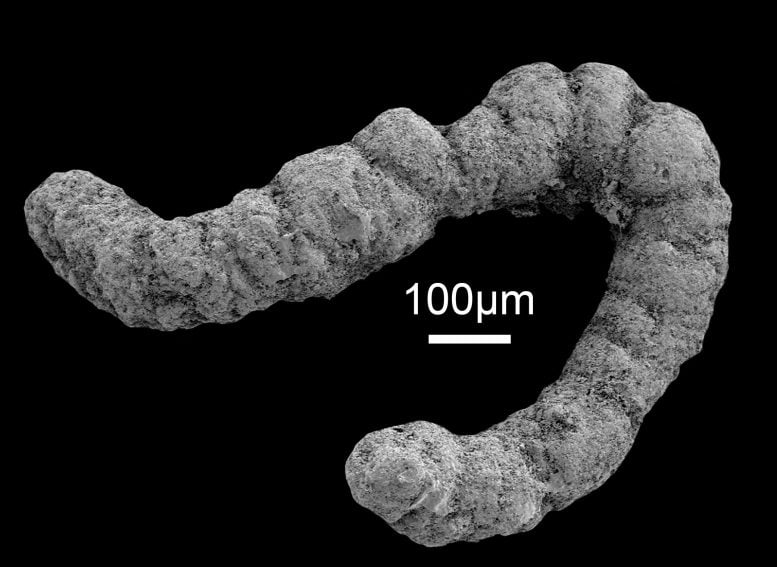
Coprolite From a Museum Fossil CollectionAncient animal waste may have helped fuel the development and diversification of early marine ecosystems. Tiny pellets of fossilized waste may preserve evidence of a major transformation in early animal life. An international study led by Flinders University proposes that excrement helped reshape ancient oceans during one of evolution’s most important turning points. The researchers [...]
  •  

Scientists Uncover Why Walking Gets Slower and More Exhausting As We Age

Senior Man Holding Walking CaneA new study reveals that aging changes the body’s walking strategy, prioritizing balance and safety over efficiency. Walking may seem automatic, but every step requires a complex balance between stability, muscle coordination, and forward propulsion. As people age, that balance begins to shift. New research from Australia suggests the body gradually adopts a more cautious [...]
  •  

Scientists Discover Alzheimer’s-Linked Proteion’s Surprising Role in Making Memories Last

Tau Tangles Amyloid Beta Neuron Cells Brain Alzheimers DementiaA new study shows that tau helps organize and preserve long-term memories, while abnormal tau may contribute to memory problems in Alzheimer’s disease by disrupting memory formation and recall. New research has revealed that tau, a protein closely linked to Alzheimer’s disease, is also essential for creating long-lasting memories. The findings could point to new [...]
  •  

Ancient roos bounce back

Palaeontologists from Flinders University have described three unusual new species of giant fossil kangaroo. Over the last decade, a series of discoveries around Lake Callabonna in arid South Australia have yielded multiple complete...

The post Ancient roos bounce back first appeared on Science Illustrated.

  •  
❌