❌

Reading view

$2m crime novel deal collapses amid questions over AI use

Agents withdraw Jerry Falade’s hotly anticipated debut after saying they can no longer authenticate ‘how the manuscript evolved’

A high-profile publishing deal for a debut crime novel has collapsed after doubts emerged over whether artificial intelligence played a role in writing it.

The hotly anticipated manuscript Call Me, I’ll Hide the Body, by Jerry Falade, was withdrawn from sale by its agent despite reportedly receiving an offer for more than $2m (£1.5m) from Minotaur, owned by Macmillan US, as part of a 14-way auction. The plan was to publish it in 2028.

Continue reading...

© Photograph: FreshSplash/Getty Images

© Photograph: FreshSplash/Getty Images

© Photograph: FreshSplash/Getty Images

  •  
  •  

How scholarly publishers are safeguarding trust in science

This episode of the Physics World Weekly podcast features Antonia Seymour, who is chief executive of IOP Publishing.

Seymour has more than 30 years’ experience in a publishing industry that has evolved significantly from the days of paper journals to today’s sophisticated digital technologies.

In this interview we explore how scholarly publishers are responding to the rapid growth in research output, the rise of artificial intelligence and the increase in threats to research integrity.

A wholly owned subsidiary of the Institute of Physics, IOP Publishing produces more than 100 scholarly journals as well as Physics World.

The post How scholarly publishers are safeguarding trust in science appeared first on Physics World.

  •  

John Bell and the most obscure journal in physics

As I was strolling through Belfast’s Titanic Quarter last summer, I discovered with delight a road called Bell’s Theorem Crescent. It’s named in honour of the Belfast-born physicist John Bell, best known for his eponymous theorem. Despite not being as embedded in popular culture as Schrödinger’s cat, his theorem will certainly ring a bell (forgive the pun) with most physicists.

The story goes back to 1935 when Albert Einstein, Boris Podolsky and Nathan Rosen (EPR) came up with their now-famous thought experiment, which was designed to show that quantum mechanics was, as a description of nature, incomplete. In the EPR scenario, non-local influences can affect the measurement outcomes performed on spatially separated particles.

Given how odd that seemed, some physicists invoked what are known as “hidden variables” to get rid of these non-local correlations and restore local realism. It was in 1964, while working at the CERN particle-physics lab, that Bell showed that no local hidden-variable theory can be compatible with the predictions of quantum mechanics.

This result – Bell’s theorem – is something I was familiar with but I had paid little attention to where it had originally appeared. As I discovered, it was published in a paper called “On the Einstein Podolsky Rosen paradox” in the journal Physics (3 195) in 1964. Also known as Physics Physique Физика, this little-known publication existed only from 1964 to 1968. In fact, Bell’s theorem is the most important result published in it.

The journal was set up by two physicists at Bell Laboratories in the US – Bernd Matthias and future Nobel laureate Philip Anderson. According to A Mind Over Matter – Andrew Zangwill’s 2021 biography of Anderson – they were not too happy with conventional physics journals. “The referees,” Anderson said, “often did a bad job, the editors took too long to make decisions, and too much wrong physics got published.”

Those are complaints you’ll still hear in coffee breaks at most physics conferences today, and they prompted Matthias to contact the media magnate Robert Maxwell, who’d founded Oxford-based publishing house Pergamon Press. Maxwell had figured out that scientific publishing could be a very lucrative business so he helped the two physicists to set up the journal.

A publishing experiment

In their first editorial, Anderson and Matthias called Physics an “experimental journal”, which they hoped would solve the problem of there being “far more good physics written than any physicist can read”. Their solution was to pick only those papers worth the attention of all physicists, which the editors did by reviewing – then accepting or rejecting – every submission themselves. They even paid authors 10 cents a word if their paper appeared in print.

Anderson and Matthias admitted that many physicists had already written to them, criticizing their proposed selection model. They’d been told that their “judgements will be fallible”, that they might be “overimpressed by showiness”, and that they’d end up rejecting excellent work. In response, the pair promised to try their best, accepting they would make mistakes and that their “criteria will be, not better, but different”.

The journal’s criteria clearly succeeded, in that Anderson and Matthias identified the merits of Bell’s paper, which was far from mainstream

These criteria clearly succeeded, in that they identified the merits of Bell’s paper, which was far from mainstream. Keen to find out more about the events surrounding its publication, I contacted Zangwill, who had interviewed Anderson several times for his book. Zangwill shared the following quote, published here for the first time.

“One day,” Anderson recalled, “a paper came in from a guy neither of us had heard of – John Bell. It was about hidden variables in quantum mechanics. Bernd had no clue, but I accepted it with the hope that its publication would spell the death of Bohmian trajectory quantum mechanics. It’s a very famous paper today.”

In 1967 the quantum physicist John Clauser found Bell’s paper after stumbling upon Physics Physique Физика, attracted by its unusual title. Clauser, who shared the 2022 Nobel Prize in Physics, carried out the first Bell test in 1972 with Stuart Friedmann. Their work triggered a long series of experiments that would deepen our understanding of quantum mechanics and catalyse the development of quantum technologies.

Over its short life, Physics did publish work from other notable physicists including Murray Gell-Mann, Leonard Susskind and Leo Kadanoff. In fact, the journal was ahead of its time, with the model of in-house editorial selection for broad interest returning in the 2000s with the Nature series of journals. The inclusive, multi-language title was also well ahead of its day.

Sadly, Physics Physique Физика was discontinued in 1968 after just three volumes

Sadly, Physics Physique Физика was discontinued in 1968 after just three volumes. According to what Anderson told Zangwill, it stopped “not because it lacked submissions, but because they had promised contributors rapid publication and Maxwell kept increasing the time between the appearances of successive issues”. Maxwell’s aggressive pursuit of profit might also have played a role.

The journal has since been archived by the American Physical Society and is freely accessible online. One can only wonder what might have happened if Anderson and Matthias had picked a different name for their journal.

The post John Bell and the most obscure journal in physics appeared first on Physics World.

  •  

In the age of AI, we must double down on the skills that make us experts

In 2008 the US author Neal Stephenson published a speculative fiction novel called Anathem. Set on the fictional planet of Arbre, the story follows an order of monks, mostly isolated from the rest of the world, who every so often open up their doors to receive information on the state of the outside world.

In the book, Stephenson explores a Dark Age of the Internet, in which companies flood the network with plausible-sounding-but-false information in a ploy to force consumers to buy the firms’ own tools for distinguishing truth from falsehood.

Initially, this “crap”, as Stephenson calls it, had to be made by humans, but eventually the process is run by a so-called “Artificial Inanity”, which is able to create hundreds or thousands of bogus versions, or “bogons”, for every legitimate document.

Today, we face our own version of Stephenson’s Dark Age as our information landscape increasingly fills with AI slop, now going beyond AI-generated videos of uncanny kittens or images depicting politicians and celebrities in outlandish situations.

With the rise of chatbots powered by large language models (LLMs), our search results, social-media feeds and even scientific journals are getting polluted with data that, at first glance, appears relevant and plausible but contains no value beneath its gilded veneer.

As LLM-generated slop infects our previously trusted knowledge base, we face an information landscape that is quickly rotting beneath us.

As scientists, we must position our work in relation to other recent research. Yet that task gets harder when we have to sort out the real from the hallucinated. As LLM-generated slop infects our previously trusted knowledge base, we face an information landscape that is quickly rotting beneath us.

Where we could once track an idea to a paper with human authors (who bore consequences for acts of fraud), we face a future where we have to question whether an article’s authors, institutions or experiments ever existed, on top of evaluating its scientific merits.

This is not a hypothetical danger. In 2024 a team led by medical researcher Almira Osmanovic Thunström at the University of Gothenburg invented a fictitious medical condition called “bixonimania” and publicized it through posts on Medium and two pre-print papers.

Their goal was to test whether AI chatbots would pick up and propagate word of the fake disease, which they duly did. The researchers even tried to insert information that made the work obviously fake. This included acknowledging a colleague from Starfleet Academy, thanking the University of Fellowship of the Ring for funding, and even writing early on in the article that “this entire paper is made up”.

Trapped in a bog

As physicists, we are not immune to the dangers of information rot. A flood of LLM-generated articles prompted arXiv in May to announce consequences for authors whose submissions have “incontrovertible evidence that the authors did not check the results of LLM generation”, including having “hallucinated references”. Those consequences include a one-year ban from arXiv and the requirement, thereafter, that any submitted paper must already be accepted at a “reputable peer-reviewed venue”.

I initially welcomed the news. Harsh consequences are one way to discourage LLM usage, especially for sloppy shortcuts. But the more I reflect on it, the more I realize that arXiv’s consequences could eventually fall even on those who are not using LLMs to write their papers.

Relying on shortcuts is easy. Say you’re writing a literature review and paper A, which you’ve read and trust, has a fact you want to cite – but you notice that paper A cites paper B for this fact. It’s simple to scroll down to the reference section and copy paper B’s citation into your own citations (I would be lying if I said I’ve never done this myself).

But as the information landscape rots, this shortcut could run you afoul of policies like arXiv’s. What appears to be a valid citation – maybe even containing the names of authors you know personally – can be hallucinated.

We must double down on the skills that make us experts – our scientific judgement, information literacy, communication skills and careful scholarship.

Or it could be entirely fake, as a team of researchers who cited one of the “bixonimania” pre-prints in a peer-reviewed article discovered. Their paper was justifiably retracted by the journal editor, over their objections. By simply copying a reference without double-checking it, you can unintentionally join ranks alongside LLM users. Worse, you open yourself and all of your co-authors to being banned from arXiv.

I am not suggesting that arXiv’s policy is flawed. Rather, I argue that those who intend their writing to be AI-free must be vigilant. We must double down on the skills that make us experts – our scientific judgement, information literacy, communication skills and careful scholarship. We should lean into practising these skills – and teaching them – even though they are precisely the skills that AI companies claim LLMs can replace.

In Anathem, a character simply hand-waves away their Internet full of bogons, but we have no such solution. Instead, as our information landscape rots, we find ourselves trapped in a bog. To get out, we must plan each step carefully and take none for granted. What appears to be solid ground may well prove treacherous. Moving safely is a slow process, full of checking and double-checking as we painstakingly build out paths and tools we can trust.

Simply choosing not to use an LLM when writing is no longer enough. We have only our own scholarly skills to sort the bogons from the ground truth. We will all have to slow down if we want out of the bog.

The post In the age of AI, we must double down on the skills that make us experts appeared first on Physics World.

  •  

Physics World’s Margaret Harris honoured for ‘Feature of the Year’

Congratulations to Margaret Harris for winning the “Feature of the Year – specialist audience” award from the Association of British Science Writers (ABSW). The Physics World online editor was cited for her article “The physics Nobel prizes you’ve never heard of”. The ABSW describes the article as: “A refreshing angle to Nobel prize reporting. It was an eye-opener, told a great story and gave some deep historical context to the murky world of who wins the Nobels and why.”

In the run-up to each year’s Nobel prize announcements, Physics World editors explore aspects of the award that have often been neglected. As well as her award-winning article from 2025, Harris has argued the case that Lise Meitner should have won a Nobel for her work on nuclear fission (“Overlooked for the Nobel: Lise Meitner”). On a lighter note, Harris has described an e-mail exchange with physics laureate Brian Josephson about his tongue-in-cheek “paper” on mattress rotation (“How to rotate your mattress like a physics Nobel prizewinner”).

The post <em>Physics World</em>’s Margaret Harris honoured for ‘Feature of the Year’ appeared first on Physics World.

  •  

An open access future is only possible by addressing its problems

At the turn of the 21st century the open access (OA) movement proposed an inspiring idea: to make scientific knowledge freely available to everyone, everywhere. In what became known as the Budapest Open Access Initiative, the movement aimed to challenge scientific publishers who continued to raise subscription prices, sometimes without justification. This, OA proponents suggested, was increasingly undermining poorer countries and institutions, who often could not afford the subscriptions.

A quarter of a century on, numerous institutions – both national and international – have strongly promoted the transition from the subscription-based model to OA. But to what extent has this transition actually taken place?

In a recent post on his Journalology blog, publishing consultant James Butcher showed that while open-access publishing increased rapidly from 2000 to 2023, by 2024 it had stagnated if not reversed, with papers in subscription-based journals increasing. Gold OA – where an article processing charge (APC) is paid by the author to make the paper immediately freely available to read – showed a decline compared to hybrid OA, in which a traditional, subscription-based journal makes individual articles freely available to the public.

Butcher offers China as a possible explanation for the trend. The country now has the fastest-growing scientific output, accounting for roughly 25% of all research articles published annually – up from about 13% a decade ago. This rapid expansion of Chinese research activity is influencing the pace of the global OA transition. Data indicate that Chinese researchers rarely publish OA in hybrid journals, tending instead to publish either in fully OA journals or, more commonly, in subscription-based journals.

The data clearly show that the global transition to OA is only feasible once Chinese researchers significantly change their publishing practices. However, this shift entails a major financial challenge for China.

Historically, China has paid considerably less in institutional subscription fees than Europe, Japan or the US. As China’s research output continues to grow, publishing a greater share of papers as OA would impose increasingly high costs, making traditional subscription journals a financially attractive alternative for many researchers.

The reassessment of the open-access model is not limited to China. In 2018 cOAlition S – a consortium of national research agencies and funders from 12 European countries – launched Plan S, which proposes that publicly funded research is made immediately available in full OA without embargo. The consortium has now released a new strategy for 2026–2030 that adopts a more flexible approach, supporting alternatives to paywalled journals without explicitly aiming to replace them.

If these trends consolidate, the OA model may face additional, often overlooked obstacles: coexistence of different publication traditions and the unequal distribution of publication costs across countries and institutions. Both factors hinder progress toward a fully OA system.

Access all areas

OA is a noble concept but, unfortunately, what works in theory does not always withstand the complexity of the real world. APCs today can exceed $10,000 and are paid by the authors’ own research funds. It is worth emphasizing that a good journal has far more readers than authors, so distributing costs among readers is much more equitable than placing them on authors.

We are also in a paradoxical situation where publishers could be collecting both APC revenues and subscription fees. Many publishers are now signing Transformative Agreements with institutions, designed to eliminate this “double dipping” by bundling reading fees and open-access publishing costs into a single contract.

In practice, we have moved from a system of “free to publish, pay to read” to one of “free to read, pay to publish” where the burden of cost has shifted from institutions to individuals. This radical transformation has not eliminated inequality. On the contrary, it paradoxically risks deepening it, producing effects that run counter to the original goals of the OA movement.

OA has also inadvertently promoted the rise of predatory journals, which continue to prosper, while, in the meantime, an entirely different major challenge has emerged: artificial intelligence (AI). Generative AI systems are trained on massive volumes of text, including OA scientific articles. In other words, the scientific community is providing free data to large tech companies, which use them to develop proprietary models that generate large profits.

OA articles are often published under Creative Commons licenses that allow reuse, even for commercial purposes. Yet AI models often do not cite their sources or attribute authorship. Thus, publicly funded knowledge is exploited for private profit, but academic institutions, researchers and publishers often do not receive any recognition in return, not even symbolic.

If AI tools can be properly regulated, however, they can help accelerate scientific progress by using open, high-quality data. Still, the question of whether the benefits of OA outweigh the drawbacks remains largely unanswered.

Taking responsibility

OA has not been a total failure, but neither has it lived up to the high hopes it once inspired. With OA we have gained broader access, but at the cost of new imbalances. We have often sacrificed quality for quantity. And above all, we have largely forgotten that science is not just about sharing, but also about recognition, responsibility and fairness.

OA remains an idea with remarkable potential but only if we resist its most rigid and dogmatic interpretations, which consider it as an unquestionable good. Initially, only the advantages were acknowledged but now, after a quarter of a century, we are beginning to recognize its downsides.

Identifying problems is the only way to develop solutions: without a proper diagnosis, there is no effective cure. Resolving the persistent and emerging challenges of OA is now urgent, especially as the expanding role of Chinese research introduces new and unexpected dynamics into global publishing given their fondness for the subscription model.

There is no magic solution. Improving OA in scientific publishing requires shared responsibility across the research community. Researchers should engage responsibly in publishing and peer review, develop a better understanding of the complexity of the editorial process, and reject unethical practices.

Universities must reform evaluation systems by prioritizing research quality over publication volume, remove perverse financial incentives, and strengthen training in publishing ethics at the earliest stages of scientific careers.

Publishers should ensure fair and institutionally supported publication costs, enhance editorial and peer review standards, and actively counter predatory publishing.

At the policy level, funding agencies and governing bodies can foster greater accountability by supporting ethics training, and develop traceability and compensation mechanisms for AI use of OA content. Agencies could also invest in sustainable community-led models such as diamond OA platforms, in which research articles are published free to read and free to publish, with publishing costs subsidized by universities or government grants.

No-one wants to go back. But if we truly aspire to a science that is open, fair and sustainable, scientists must acknowledge the problem and take responsibility for addressing it.

The post An open access future is only possible by addressing its problems appeared first on Physics World.

  •  

Open data: the benefits and challenges of sharing a precious resource

Data are at the core of science, but traditional journal articles normally deliver a distillation of the raw data gathered by the authors. While the movement towards open access to data is widely supported by researchers and funding agencies, a 2024 study by IOP Publishing revealed that many scientists still encounter a wide range of practical, ethical and technical barriers when it comes to sharing their data.

As a result, the publisher has launched a free online course that aims to give early-career researchers the practical skills and confidence they need to share and manage research data effectively.

To talk about the course and IOP Publishing’s open data policy I am joined by Laura Feetham-Walker, who is head of publishing strategy and performance at IOP Publishing.

IOP Publishing is a wholly owned subsidiary of the Institute of Physics and it publishes Physics World.

The post Open data: the benefits and challenges of sharing a precious resource appeared first on Physics World.

  •  

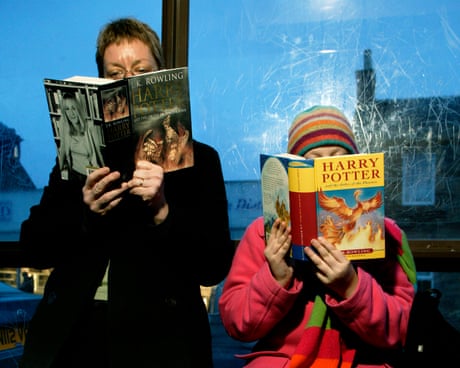
Harry Potter publisher to receive millions in Anthropic copyright settlement

Bloomsbury has 14,087 titles listed in agreement between AI startup and authors over use of their work

The publisher of Harry Potter has received a multimillion-pound payout as a beneficiary of a $1.5bn (£1.12bn) copyright settlement between the AI startup Anthropic and thousands of authors over the use of their protected work to power chatbots.

Bloomsbury, which is home to the bestselling novelists Sarah J Maas and Susanna Clarke as well as JK Rowling, said it had 14,087 titles listed within the settlement, with a proposed compensation of about $3,000 a title.

Continue reading...

© Photograph: Murdo Macleod/The Guardian

© Photograph: Murdo Macleod/The Guardian

© Photograph: Murdo Macleod/The Guardian

  •  

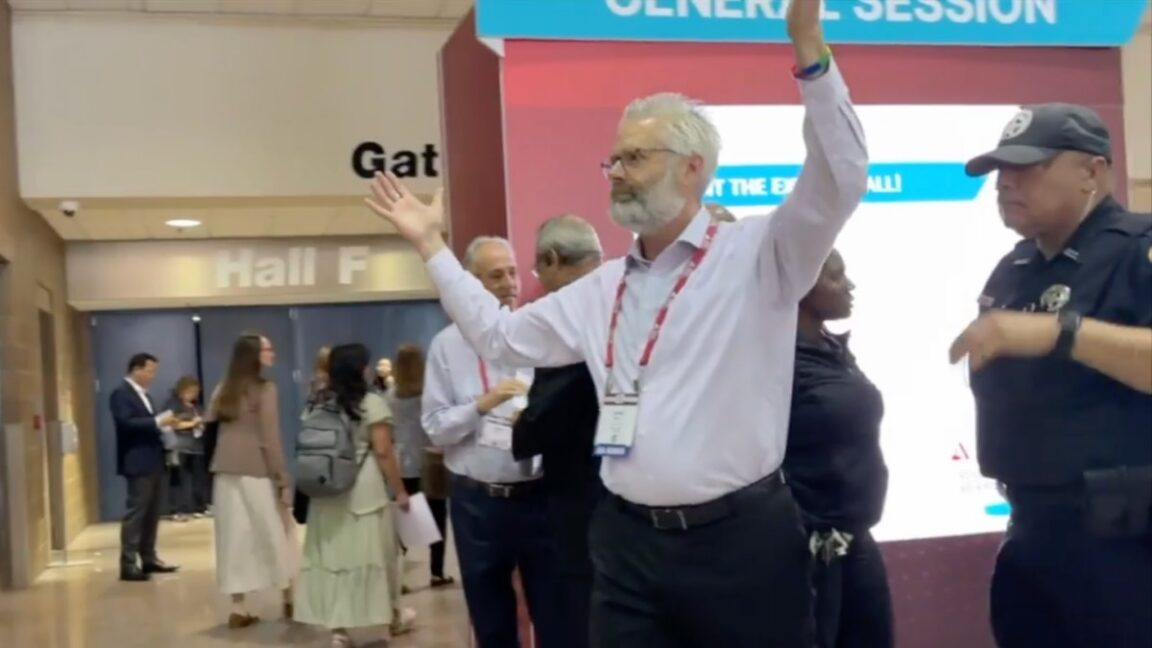
Troubling new details emerge on diabetes ouster controversy

Last month, we reported on a troubling incident at the annual meeting of the American Diabetes Association (ADA) in New Orleans. On June 5, five leading scientists were ousted for handing out copies of an editorial, published in the journal Diabetes Care (an ADA journal) in April, sharply criticizing the Trump administration’s ongoing attacks on scientific research. There was a public outcry and (eventually) a personal apology from the ADA's CEO for the heavy-handed response, but it seems the organization has not yet learned its lesson.

The deputy editors of Diabetes Care have posted an editorial and seven accompanying opinion articles to a preprint server—handily contained in a single PDF file—that they say the ADA has refused to publish. Several troubling new details are included in the articles, including an accusation that ADA leadership knew in advance that members would be handing out copies of the editorial and deliberately set up an ambush by venue security and local police. That decision, in turn, might be due to simmering tensions connected to a session organized the year before.

ADA leadership was provided with the articles in advance of publication with an invitation to simultaneously publish their response.

Read full article

Comments

© Screenshot/MedPage Today

  •  

Book publishers sue Google for copyright infringement over Gemini AI training

Group of major publishers accuses the tech giant of ‘one of the most prolific infringements of copyrighted materials in history’

A group of major publishers have filed a lawsuit against Google, accusing the company of illegally using millions of copyrighted books to help build its Gemini artificial intelligence models, in “one of the most prolific infringements of copyrighted materials in history”.

The case, filed in federal court in New York, has been brought by three publishers – Hachette Book Group, Cengage Learning, and Elsevier – and bestselling American author Scott Turow.

Continue reading...

© Photograph: Bloomberg/Getty Images

© Photograph: Bloomberg/Getty Images

© Photograph: Bloomberg/Getty Images

  •  

MDPI Implements AI-Driven Ethics Screening for All Manuscript Submissions

In a pioneering stride towards maintaining the integrity of scientific literature, MDPI has fully implemented its proprietary artificial intelligence-powered system called Ethicality. This sophisticated tool is now embedded within the publishing workflow to automatically screen all submitted manuscripts, revolutionizing the approach to safeguarding the scientific record. Ethicality is engineered to operate continuously throughout the editorial process, offering a proactive framework that enhances the evaluation and decision-making capabilities of editors globally. Presently, it processes around 2,000 submissions daily, handling a vast and diverse array of academic contributions from across the world.

The development of Ethicality reflects the pressing need for automated solutions in the face of surging scholarly output and increasing demands for transparency, speed, and quality in academic publishing. Traditional manual screening methods, once the norm, are no longer adequate to detect sophisticated manipulations or emerging threats posed by advanced generative AI techniques. Its design integrates an end-to-end integrity layer that scrutinizes manuscripts from the moment they enter the editorial system, ensuring continuous vigilance rather than episodic checks. This paradigm shift marks a new era in editorial practices, combining the precision of AI with human expertise to set robust guardrails around the publication pipeline.

Dr. Milos Cuculovic, MDPI’s head of technology innovation, emphasizes that the role of AI within this context is not to replace editors but to augment their capabilities. Ethicality functions as a vigilant assistant, flagging potential ethical issues and inconsistencies while leaving final judgment to experienced professionals. This human-in-the-loop approach enables a balance where automation streamlines routine tasks without compromising critical oversight. Such a model helps preserve transparency and trust at scale, combating increasingly sophisticated tactics that jeopardize scientific authenticity, such as synthetic content generation, fabricated submissions, and manipulated peer review reports.

Ethicality’s analytical engine examines each submission comprehensively by dissecting fundamental manuscript components, including the title, abstract, author metadata, main body, and reference lists. Beyond textual elements, it also reviews peer review reports sent with the manuscripts, employing natural language processing techniques and machine learning algorithms tailored for scholarly content. This holistic evaluation identifies a wide spectrum of potential integrity breaches, ranging from paper mill-generated manuscripts and spurious authorship claims to subtle citation manipulations and irregular referencing patterns that may indicate gaming of metrics or unethical publication practices.

One of the system’s remarkable features lies in its ability to detect AI-generated or altered text, a rapidly emerging threat in the digital publication ecosystem. Leveraging large language models fine-tuned to recognize nuances and inconsistencies characteristic of synthetic content, Ethicality can pinpoint sections likely created or tampered with by artificial intelligence. This capability is crucial amid widespread concerns that generative AI tools could be exploited to fabricate scientific results or obfuscate fraudulent data, undermining trust in scholarly communication. The AI’s detection mechanisms, however, are continuously refined against real-world data to minimize false positives and maintain editorial efficiency.

In addition to content analysis, Ethicality collaborates with external software suites to cover domains beyond textual scrutiny. For instance, image manipulation detection is managed via integration with specialized tools like Proofig, which applies forensic algorithms to uncover alterations in scientific figures and illustrations. For plagiarism and text duplication, the system incorporates iThenticate services to cross-reference submissions with an extensive repository of published works. This multi-layered approach strengthens MDPI’s ability to uphold ethical standards by combining internal AI capabilities with trusted third-party solutions to comprehensively monitor manuscript authenticity.

The advent of such an automated system answers growing concerns about the sustainability of peer review in an era characterized by exponential growth in submission volumes. By automating repetitive and technical screening tasks, Ethicality frees up valuable editorial resources, allowing human experts to concentrate on evaluating the scientific merit and originality of manuscripts rather than being overwhelmed by manual integrity checks. This redistribution of effort ensures that editorial workflows can keep pace with demand without compromising quality or publication timelines, addressing one of the major bottlenecks in modern scholarly publishing.

Dr. Enric Sayas, the product owner of Ethicality, highlights that the publishing sector is entering a technological race where adversaries leverage advanced AI to generate deceptive manuscripts and fake review reports. Traditional detection tools alone are insufficient to counteract such sophistication. Only by deploying equally advanced AI systems, capable of multi-modal analysis encompassing textual, image, and metadata anomalies, can publishers effectively defend the credibility of scholarly records. Ethicality embodies this next-generation defense mechanism, combining deep learning models with domain-specific heuristics to expose fraudulent submissions before they can impact the scientific corpus.

Ethicality’s role extends beyond mere detection; it facilitates informed decision-making by generating risk signals that prioritize editorial scrutiny. This nuanced output classifies flagged cases according to severity and type of ethical concern, enabling editors to apply their judgment where most critical while bypassing lower-risk items. Such targeted intervention reduces unnecessary delays in the publication process and improves the overall efficiency of manuscript handling. The system’s iterative design also permits continuous learning from editor feedback, enhancing accuracy and adaptability as new manipulation techniques emerge.

The timing of Ethicality’s deployment coincides with an inflection point in scholarly publishing, where generative AI tools have made it increasingly feasible to produce lifelike but fraudulent scientific content. This proliferation necessitates automated defenses that not only identify outright fraud but also detect subtler anomalies such as inconsistent author data, suspicious referencing behavior, and peer review irregularities. By integrating these multifaceted analyses, MDPI demonstrates a comprehensive and forward-looking strategy aimed at preserving the integrity and credibility of academic knowledge dissemination.

Crucially, Ethicality exemplifies how technology can be harnessed responsibly within complex human ecosystems. It respects the indispensable role of expert editors by operating as a sentinel that brings potential issues to attention while leaving interpretive authority intact. This model upholds core values of transparency, accountability, and collaborative oversight, providing a blueprint for other publishers grappling with integrity challenges in the AI era. Moreover, it underscores the broader imperative for publishers to innovate continuously in response to evolving threats and technological opportunities, ensuring that scientific publishing remains a trusted pillar of global knowledge advancement.

As MDPI’s journey with Ethicality moves forward, continuous enhancements and iterations are planned, driven by real-world data and editorial collaboration. This adaptive approach ensures the system evolves alongside the changing landscape of academic publishing and the advent of new manipulative tactics. Ultimately, Ethicality stands as a testament to the potential of AI-powered tools to reinforce scientific integrity, protect the scholarly record, and empower editorial professionals in an increasingly complex and dynamic environment.

Subject of Research: Artificial intelligence applications in scholarly publishing and research integrity
News Publication Date: 2024
Image Credits: MDPI

Keywords

Academic publishing, research integrity, artificial intelligence, editorial workflow automation, AI-generated scientific content detection, paper mill detection, peer review screening, scholarly publishing technology, automated manuscript analysis, scientific record safeguarding

  •  

Why I’m Glad Publishing Has Destroyed Itself

Sensitivity readers, racist gatekeepers, editing by committee – mainstream publishing has been destroyed by woke gobbledegook. The silver lining? Substack is thriving because publishers have failed to discover good new writers.

The post Why I’m Glad Publishing Has Destroyed Itself appeared first on The Daily Sceptic.

  •  

AAS Publishing at AAS 248 in Pasadena

banner for AAS 248

The 248th meeting of the American Astronomical Society, to be held in Pasadena, CA, 14–18 June, is nearly here. The AAS Publishing team looks forward to connecting with meeting attendees, and you can find representatives from the publishing and journals’ editorial staff at the AAS booth in the Exhibit Hall in the Pasadena Convention Center. AAS Director of Scholarly Publishing Kerry Kroffe will be available at the AAS Publishing booth, so be sure to stop by to say hello, chat about the journals, and pick up some swag!

AAS Nova Editors Kerry Hensley and Susanna Kohler, AAS Media Fellow Lexi Gault, Astrobites Media Intern Niloofar Sharei, and the rest of the Astrobites team will also be available periodically at the Astrobites booth in the Exhibit Hall. We look forward to seeing you there!


AAS Peer Review Workshop

This workshop led by the scientific editors of the AAS journals will teach participants about the peer review process, give them the opportunity to see both poor and exemplary referee reports, and provide them with hands-on experience in writing a peer review report. Participants will receive a graduation certificate. While signups for the AAS 248 peer review workshop are closed, more workshops are planned for future AAS meetings, so keep an eye out for more information about upcoming opportunities!


Open Science, Data, and AI in Astronomy: Sessions to Look for at AAS 248

Note: The links in this section take you to the corresponding entries in the AAS 248 block schedule. You must be logged in for the links to work correctly; otherwise, they will take you to the main block schedule page. Note that times and locations are subject to change.

The upcoming AAS meeting has a number of sessions, workshops, and lectures for those interested in open-source tools, data management strategies, and AI’s role in astronomy. Sunday, 14 June, will feature a trio of data-related workshops. (Note that these workshops require an additional fee and can be added to your registration.) The “Euclid Data in the Cloud: Access, Analysis, and Science Opportunities” workshop (10:00 am – 11:30 pm PDT in Room 101) will introduce participants to accessing and analyzing data from Euclid, a European Space Agency mission with NASA participation. The overlapping workshop “High Energy Science Analysis with HEASARC Services” (10:00 am – 12:00 pm PDT in Room 102), organized by the High Energy Astrophysics Science Archive Research Center (HEASARC), is targeted toward early-career scientists and anyone curious about HEASARC services. The workshop will begin with an overview of available services before transitioning into hands-on experimentation with these tools. Finally, “An Introduction to Fornax: Scalable Data and Compute for Scientific Analysis” (2:00–4:00 pm PDT in Room 101) will introduce attendees to NASA’s new Astrophysics Science Platform through live demonstrations and guided exercises.

Of particular interest regarding AI in astronomy is Monday morning’s plenary lecture from Sanmi (Oluwasanmi) Koyejo titled “The Measurement Gap: What AI Can Get Wrong and Why Astronomers Are the Fix.” This session will take place from 11:40 am to 12:30 pm PDT in Ballroom DE.

The “AI-Driven Science in the Survey Era” Special Session will take place on Tuesday, 16 June, from 2:00 pm to 3:30 pm in Ballroom F. This session will highlight recent breakthroughs in a broad range of astronomical sub-fields that have greatly benefited from the use of AI and machine-learning techniques. Also on Tuesday, check out recent work on imaging and data-handling methods at the “Observational Imaging Methods and Data Pipelines” iPoster session from 5:00 pm to 6:00 pm in the Exhibit Hall.

The post AAS Publishing at AAS 248 in Pasadena appeared first on AAS Nova.

  •  

AAS Media Fellowship Now Open for Applications

press conference at AAS 247

Are you an astronomy graduate student who’s interested in science communication? Do you wish you had the opportunity to explore that interest and gain professional development without having to take time off from your graduate studies? Do you want to write for AAS Nova, report on astronomy meetings, help organize and run press conferences, and learn the ins and outs of academic publishing?

Then the AAS Media Fellowship might be for you! This position was developed in 2017 by the American Astronomical Society to provide training and experience for graduate students in the astronomical sciences who are interested in science communication. The fellowship is a remote, quarter-time, one-year (with the possibility of extension to two years) position intended to be filled by current graduate students at US institutions. This year, for the first time, we intend to hire two Media Fellows. The new AAS Media Fellowship term will begin in Fall 2026.

If this sounds like a good fit for you, you can get more information below or at the job register posting. Apply by 26 June 2026 by submitting your contact information, a cover letter, and a short CV to personnel@aas.org. See the job register posting for the full application details.


Essential Duties & Responsibilities

The AAS Media Fellow(s) will report to the AAS Communications Manager. The Fellow(s) will work the equivalent of one day per week (on a schedule that will be jointly developed and agreed upon by the Fellow(s), the AAS Director of Communications & Media Relations, and the AAS Communications Manager) and be responsible for a wide range of duties. The Fellow(s) will be expected to do the following:

  • Assist in sharing astronomy press releases via AAS press office channels.
  • Regularly (nominally 2–3 times per month) write and publish articles for AAS Nova.
  • Occasionally help to prepare other written communications such as AAS or Division press releases.
  • Assist in managing AAS communications such as social media accounts, postings to the AAS website, and emails to members or authors.
  • Serve as backup to the AAS Director of Communications & Media Relations or the AAS Communications Manager during absences for daily tasks like distributing press releases and publishing AAS Nova posts.
  • In the lead-up to and at the AAS winter and summer meetings, help the AAS Director of Communications & Media Relations plan and run press conferences; help represent AAS Nova; and help organize and participate in the live-blogging coverage of the meeting by Astrobites and AAS Nova.

Qualifications

Each Fellow must:

  • Be a graduate student in good standing in the astronomical sciences or a related field at a US institution.
  • Receive the approval of their advisor or department chair to apply.
  • Receive their primary support from their home institution.
  • Have a keen eye for detail and accuracy.
  • Have the ability to absorb complex material, synthesize information, and write short articles that concisely reflect key points of the material to a target audience.
  • Have good working knowledge of, and/or ability to quickly master, tools such as WordPress, Drupal, Microsoft Office, and Adobe Creative Suite.

Compensation

The stipend for this position is $7,500 per year for the equivalent of one day of work per week, payable on a quarterly basis. Travel support will also be provided for travel to one AAS meeting each year.

The post AAS Media Fellowship Now Open for Applications appeared first on AAS Nova.

  •  

AAS Publishing at AAS 247 in Phoenix

banner graphic announcing the 247th meeting of the American Astronomical Society

The 247th meeting of the American Astronomical Society, to be held in Phoenix, AZ, 4–8 January, is nearly here. The AAS Publishing team looks forward to connecting with meeting attendees, and you can find representatives from the publishing and journals’ editorial staff at the AAS booth in the Exhibit Hall in the Phoenix Convention Center. AAS Director of Scholarly Publishing Kerry Kroffe, AAS Editorial Operations Manager Alex Andrews, and AAS Journals Data Editors Greg Schwarz and Gus Muench will all be available at the AAS Publishing booth, so be sure to stop by to say hello, chat about the journals, and pick up some swag!

AAS Nova Editors Kerry Hensley and Susanna Kohler, AAS Media Fellow Lexi Gault, Astrobites Media Intern Amaya Sinha, and the rest of the Astrobites team will also be available periodically at the Astrobites booth in the Exhibit Hall. We look forward to seeing you there!


Open Science, Data, and AI in Astronomy: Sessions to Look for at AAS 247

Note: The links in this section take you to the corresponding entries in the AAS 247 block schedule. You must be logged in for the links to work correctly; otherwise, they will take you to the main block schedule page. Note that times and locations are subject to change.

If you’re interested in open-source software and its uses in astronomy, be sure to check out the “Open-Source Tools for Scalable Astronomical Data Analysis” iPoster session on Monday, 5 January, 9:00–10:00 am in the Exhibit Hall.

Dive into data issues on Tuesday, 6 January, at the “Data Roundtable” splinter session, which will run from 10:30 am to 3:00 pm in Room 121C. This session will be split into a moderated discussion with several short talks and an opportunity for attendees to engage with specific problems that they’re interested in.

Ever wondered why the AAS journals ask you to select five keywords to accompany your research article, or how to pick the best keywords? Join the “5 Keywords and Me” splinter session on Wednesday, 7 January, from 9:00 am to 12:00 pm in Room 121C to learn about the Unified Astronomy Thesaurus and how it makes your work more discoverable.

AAS 247 will include several sessions relating to the use of AI in astronomy. Of note: join the “Advancing AI Infrastructure for Large Astronomy Datasets” special session on Tuesday, 6 January, 2:00–3:30 pm in Room 232A to learn how AI tools can benefit upcoming large astronomical surveys. Wednesday, 7 January, will feature two sessions related to AI: a splinter session from the NASA Artificial Intelligence Science and Technology Interest Group from 10:00 am to 11:30 am in Room 231ABC, and the “AI and Foundation Models for Astronomical Inference” oral session from 2:00 to 3:30 pm in Room 228B. Finally, on Thursday, 8 January, the special session “AI Meets Stars: Advancing Our Understanding of Stellar Lives and Fates with Machine Learning” will take place 10:00–11:30 am in Room 226A.

The post AAS Publishing at AAS 247 in Phoenix appeared first on AAS Nova.

  •  

AAS Nova Celebrates 10 Years of Astronomy Research News

Hubble Ultra Deep Field as seen by JWST

AAS Nova launched in 2015, and what has followed since is a remarkable encapsulation of 10 years of astronomy. Today, for our 2,000th post, we’re looking back on some of the discoveries we shared in the first year of AAS Nova and how far the astronomical community has come since then.

The Solar System, Exoplanets, and Astrobiology

HL Tau

The protoplanetary disk surrounding the young star HL Tauri has numerous visible rings and gaps in this image from the Atacama Large Millimeter/submillimeter Array. [ALMA (ESO/NAOJ/NRAO); C. Brogan, B. Saxton (NRAO/AUI/NSF); CC BY 4.0]

The very first post published on AAS Nova discussed evidence for two planets hiding in the dusty protoplanetary disk around the star HD 100546. Protoplanetary disks are still hot topics — we’ve published almost 90 posts about them — and researchers continue to unveil new complexities like dust traps, crescents, shocks, spirals, jets, circumplanetary disks, gaps, and even more evidence for baby exoplanets blanketed with gas and dust.

Exoplanets are by far the most frequently featured topic on AAS Nova, with more than 300 posts mentioning these distant worlds. Almost exactly 10 years ago, NASA reported that the number of known exoplanets was over 1,800 — and now that number has surpassed 6,000. Researchers continue to discover planets that are smaller, colder, and found in more extreme locations than ever before (even right next door). On the habitability side of the equation, researchers continue to make headway on critical questions, such as whether the multitude of small, rocky exoplanets around M-dwarf stars are likely to have atmospheres.

Back in our solar system, the past decade has brought a bevy of firsts, such as the first measurement of the wind speed on another planet using an aircraft and the first definitive detection of water on an asteroid. Though controversial, researchers reported the first detection of phosphine in the atmosphere of Venus, a possibility that could have implications for life on our planetary neighbor but is complicated by many factors including the possible existence of active volcanoes on Venus. The search for life beyond Earth goes on, with researchers continuing to devise new ways to detect it, if it exists.

High-Energy Phenomena and Fundamental Physics

Gravitational wave astronomy started with a bang 10 years ago when the Laser Interferometer Gravitational-Wave Observatory (LIGO) first detected colliding black holes (a discovery that we covered in our first year!). Since then, LIGO, the Virgo interferometer, and the Kamioka Gravitational Wave Detector (KAGRA) have detected about 300 black hole mergers, and the explosion of gravitational wave data has enabled population-level studies of compact objects across the universe. This era also brought about the first detection of merging neutron stars, which was also studied across the electromagnetic spectrum; the first detection of a merger between a black hole and a neutron star; and the detection of mysterious objects in the “mass gap” between the lightest black holes and the heaviest neutron stars. New techniques for detecting gravitational waves have been demonstrated since they were first recorded in 2015; in 2023, international pulsar-timing collaborations around the globe announced that they’d found significant evidence for the gravitational wave background.

first image of the Milky Way’s supermassive black hole

The first Event Horizon Telescope image of the Milky Way’s supermassive black hole. [EHT Collaboration; CC BY 4.0]

In 2019, AAS Nova covered the release of the first image of a supermassive black hole. Since then, researchers have traced the magnetic fields around a supermassive black hole and taken a snapshot of the black hole at the center of the Milky Way. Considerable intrigue surrounds our galaxy’s central supermassive black hole, with recent research exploring whether it had a short-lived companion in the past and whether a collision with such a companion could explain the properties of the stars that orbit closest to our galaxy’s center.

In other high-energy astrophysics news, our ability to detect fleeting astronomical events has never been better, thanks to facilities like the Canadian Hydrogen Intensity Mapping Experiment, the Zwicky Transient Facility, and, most recently, the Vera C. Rubin Observatory. Astronomers have caught flares from stars totally, partially, and repeatedly torn apart by black holes, homed in on the host galaxies of fast radio bursts, explored the sources of gamma-ray bursts, and even discovered entirely new classes of transients. (And as a little preview of what you can expect in the next 10 years, here’s a refresher on just how much Rubin will reveal about the transient sky.)

The Sun and the Heliosphere

an animation of the Parker Solar Probe crossing a solar switchback

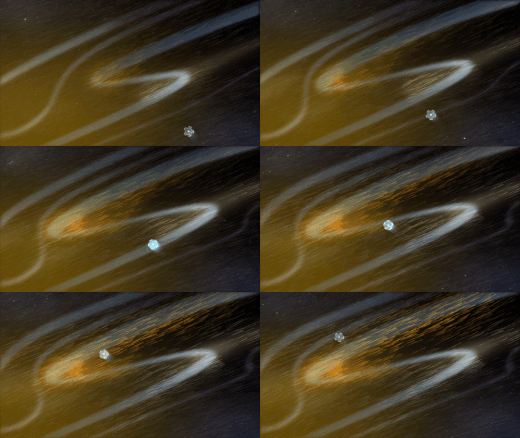
An animation showing the Parker Solar Probe traversing a solar switchback. [NASA’s Goddard Space Flight Center/Conceptual Image Lab/Adriana Manrique Gutierrez]

The past decade has brought remarkable data about our home star from instruments on Earth and in space. The Parker Solar Probe and Solar Orbiter joined the fleet of Sun-studying spacecraft in 2018 and 2020, respectively. Solar Orbiter watches the Sun from within the orbit of Mercury, while the Parker Solar Probe ventures even closer to our home star, getting within 4 million miles of the Sun’s surface and flying through its corona. From these incredible vantage points, the Parker Solar Probe and Solar Orbiter are increasing our knowledge of the Sun and capturing never-before-seen solar phenomena like switchbacks and Sun dots.

Ten years ago, solar physicists were tackling the tricky problem of how to forecast damaging space weather events like solar flares and coronal mass ejections. Today, that work continues, increasingly aided by machine-learning techniques that make handling mountains of solar data more tractable. (The growth of machine learning in astronomy isn’t limited to solar physics; there were only 468 peer-reviewed astronomy research articles published in 2015 that mentioned machine learning, and more than 3,400 articles mentioning machine learning were published in 2024 alone.)

Researchers have also made headway on other persistent challenges like the open flux problem, the coronal heating problem, and how to handle sparse solar data sets.

Stars and Stellar Physics

An early AAS Nova post asked if we’ve finally found Population III stars, the first stars to light up the universe. Through observations and simulations, astronomers are still asking that question, probing whether Population III stars with masses lower than 0.8 solar mass could have formed, as these low-mass stars would still be present in the universe today; whether JWST could detect Population III stars during the epoch of reionization; and whether the first stars were solely massive stars that formed alone. While the first stars themselves may still elude detection, astronomers are gaining confidence that they’ve discovered stars born from the gas enriched by just a single member of the first stellar generation, getting us closer to understanding the first stars in the universe.

Betelgeuse and its companion star

An image of Betelgeuse and its probable companion star from the ‘Alopeke instrument on the Gemini North telescope. Click to enlarge. [International Gemini Observatory/NOIRLab/NSF/AURA; Image Processing: M. Zamani (NSF NOIRLab); CC BY 4.0]

Other stellar astronomy discoveries from the past decade involved stars that are less exotic than the first stars in the universe but no less exciting. Take Betelgeuse: we’ve shared studies of its Great Dimming episode, discussed the possibility that it’s the product of a merging binary system, and reported on the likely detection of its long-sought-after stellar companion.

This decade also brought the discovery of double-faced white dwarfs, a turnover of the initial mass function of a star cluster, and strange brown dwarfs like “The Accident.”

IC 348

JWST image of the star cluster IC 348. A discovery of the amino acid tryptophan was reported in the gas of this cluster, though further research called that discovery into question. [NASA, ESA, CSA, STScI, Kevin Luhman (PSU), Catarina Alves de Oliveira (ESA)]

Interstellar Matter and the Local Universe

There’s been plenty to learn in our cosmic backyard: researchers have discovered a potential “feather” in the Milky Way, tracked the rapid evolution of a gas cloud in the galactic center, found the faintest known satellite of our galaxy, and found evidence for structures within our galaxy that existed before it gained its disk or spiral arms. They’ve even solved the 50-year mystery of the Milky Way’s unexpectedly slow star formation.

In the space between the stars, we’ve seen many interstellar molecular firsts, like the first detection of an isomer of glycine, the simplest of the amino acids necessary for life on Earth, the first detection of ionized buckyballs, and the detection of complex organic molecules in the Large Magellanic Cloud. At the same time, other molecular breakthroughs were called into question. In addition to interstellar molecules, humanity has now also confirmed the first interstellar objects that have roamed into our solar system: 1I/ʻOumuamua in 2017, 2I/Borisov in 2019, and 3I/ATLAS in 2025.

Laboratory Astrophysics, Instrumentation, Software, and Data

Not all of astronomy happens at a telescope: lab work on Earth has shown how laboratory studies can help identify mystery spectral lines in the interstellar medium, explored how magnetic fields affect the formation of planets, and even examined the possibility of growing crops in asteroid soils.

A photograph of stars and long, horizontal, bright streaks caused by satellites.

Stars and satellites as seen by the Dark Energy Camera [CTIO/NOIRLab/NSF/AURA/DECam DELVE Survey, CC BY 4.0]

New instruments bring new understanding of the universe, and we’ve welcomed missions like the Imaging X-ray Polarimetry Explorer, which has made transformative measurements of polarization from sources like X-ray binaries. On the software side, we’ve seen updates to one of the most beloved astronomical software tools, Astropy, introduced its solar-physics counterpart, SunPy, and described algorithms that do everything from classify galaxies to sort Hubble proposals.

Astronomers are concerned not just with the outcomes of their research, but also how outside factors affect their ability to do research in the first place. As the number of Earth-orbiting satellites has exploded and the sources of light pollution have continued to grow, researchers have investigated the effects of light pollution on dark-sky sites and sought to understand the impact of satellite trails and space debris on astronomical observations.

Galaxies and Cosmology

In the broader universe, researchers continue to discover galaxies that are fainter and farther away than ever before. Both ultra-diffuse galaxies and ultra-faint dwarf galaxies have been in the spotlight. JWST, which finally began observations in 2022, has provided an incredible amount of data on galaxies both near and far. JWST revealed surprisingly massive galaxies in the first few hundred million years of the universe, creating challenges for models of galaxy formation and evolution. In 2015, the record holder for most distant known object was the galaxy EGSY8p7 at a redshift of z = 8.68. A decade later, that honor goes to the galaxy MoM-z14, at a redshift of z = 14.44 — an enormous leap that demonstrates how our view of the universe has expanded.

little red dots

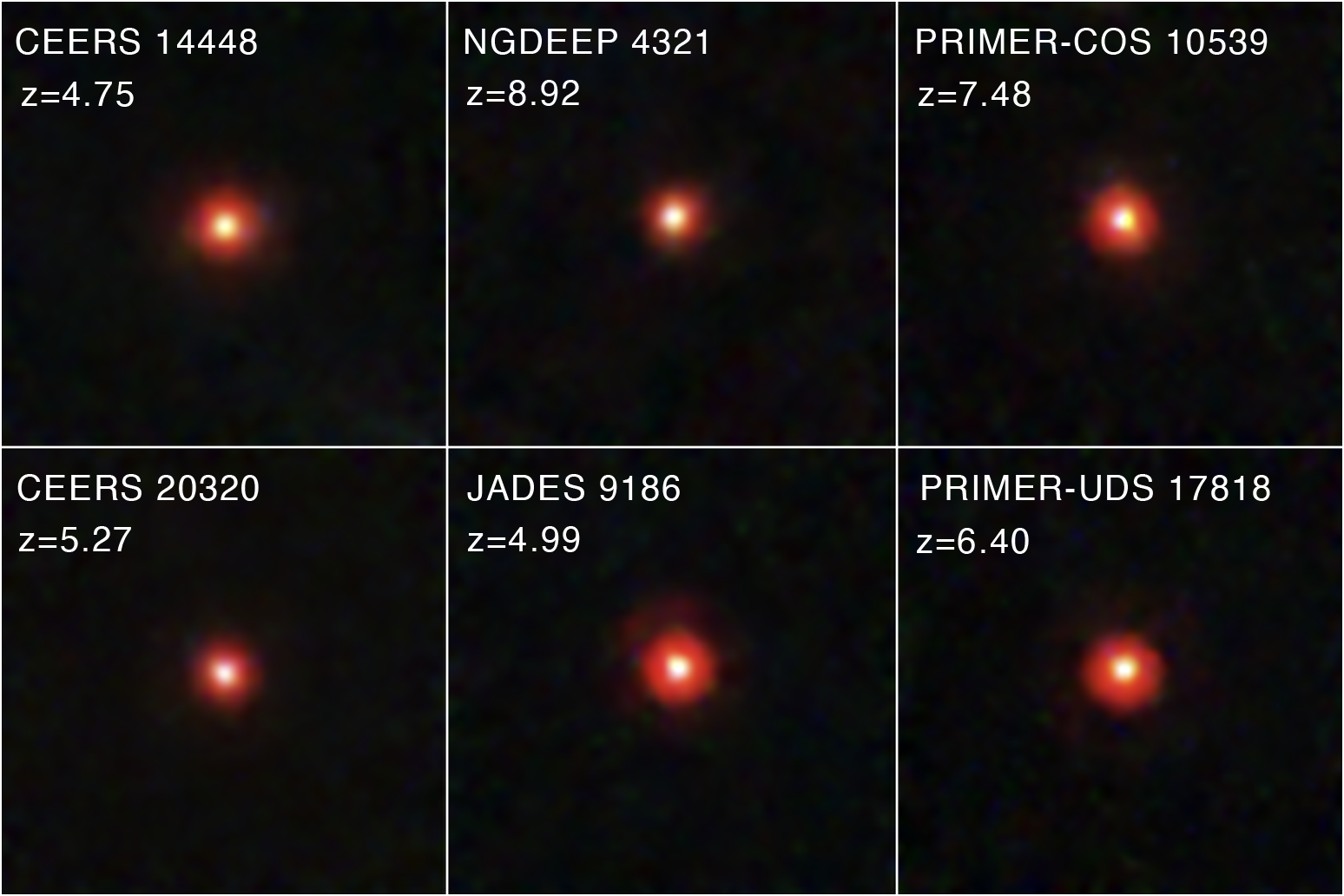
JWST images of six very distant galaxies dubbed “little red dots.” [NASA, ESA, CSA, STScI, Dale Kocevski (Colby College)]

No roundup of galactic and cosmological discoveries from the past decade would be complete without a mention of little red dots: high-redshift sources spotted by JWST that are characterized by their reddish color, small sizes, and “V”-shaped spectral energy distributions. We’ve shared new developments about little red dots 10 times in the past year and a half (most recently discussing sources that seem to require no active galactic nucleus component to explain their properties), but we’ve covered only a small fraction of the scientific discourse that surrounds them: at the time of this writing, the phrase “little red dots” appears in 122 published AAS journal articles.

On the cosmology side of things, the Hubble tension — the apparent disagreement between the universe’s expansion rate measured in the local universe and the rate extrapolated forward from early universe measurements — continues to grow. Another less-well-known tension, in measurements of the S8 or “clumpiness” parameter, has also inspired scientists to propose tweaks to our leading cosmological model. On top of all this tension, measurements from the Dark Energy Spectroscopic Instrument have provided mounting evidence that dark energy, the largest chunk of the mass–energy budget of the universe, changes over time.

Here’s to 10 More Years

In addition to sharing a curated selection of astronomy news, AAS Nova has also brought you summaries of 30 AAS, Division, and topical meetings over the past decade. When the AAS and the Astrobites collaboration formalized their partnership in 2016, we expanded our coverage of astronomy news by sharing Astrobites articles on AAS Nova. In 2017, we launched the AAS Media Fellowship, a quarter-time position that enables an astronomy graduate student to build a portfolio of writing and gain experience working in the press office. Since then, we’ve featured nearly 180 articles written by our five Media Fellows, several of whom have gone on to careers in science writing and policy. We’ve also shared news and updates from the AAS journals, including the transition to open access, the release of new versions of AASTeX, interviews with publishing staff, and the celebration of the Astronomical Journal‘s 175th anniversary.

We hope you’ll join us as we continue our efforts to bring you short, approachable summaries of recent research in astrophysics and planetary science, amplifying the reach of researchers worldwide who continue to discover what’s new in the universe.

The post AAS Nova Celebrates 10 Years of Astronomy Research News appeared first on AAS Nova.

  •  
❌