❌

Reading view

The World Reacts To Sam Altman’s Vision Of The Future

Unfortunately, I think Altman is right when he says AI will “have perfect context of your whole life” and that it will occur “sometime in the next six months.” This is reminiscent of the Black Mirror episode, Nosedive, where, based on total transparency of activities, a social credit system took over society. Fantasy aside, for this and other reasons, I have moved my AI Multiplier to 3.3 from 3.5, which forecasts the speed of doubling in capacity.

The multiplier is currently at 48, and the baseline has moved to 47.69 before the new rate kicked in. Based on this:

Date Multiplier Months elapsed Doublings completed
Dec 31, 2026 122 4.47 1.35
Dec 31, 2027 1,513 16.46 4.99
Dec 31, 2028 18,914 28.48 8.63

⁃ Patrick Wood, Editor.

Over the past few years, the rapid advancement of AI technology has changed the world in a lot of ways. However, OpenAI CEO Sam Altman thinks some more drastic changes are coming within the next six months, but the media community is not necessarily happy about it.

During a recent interview, Altman said that a “descendant of ChatGPT” will be able to essentially watch your computer and phone screen constantly, learn your behavior, and make suggestions, which sparked widespread concerns from the sports media community.

‘Have perfect context of your whole life’

During a recent interview with Cory Levy, founder of Z Fellows, Altman outlined what he sees as the incoming developments in AI technology.

“I think we are close to a world where you have, like, a descendant of ChatGPT watch your computer screen all of the time. Watch every meeting you’re in – record every call, everything like that – have perfect context of your whole life, everything you see. You choose what information you want it to have, but you can connect it to your texts or email or docs or Slack,” Altman said during the interview.

“Then you have this thing that is not making decisions for you, but if you’re like the CEO of a startup, there is always more stuff to do than you can do,” Altman continued. “You can have this thing that’s working alongside you.”

“I think that we’re only like, one model generation away from this actually being incredibly useful,” Altman said. “And I think, hopefully, for me, it will change the way I work.”

Altman was asked his best guess on the timing for something like this.

“Sometime in the next six months,” he speculated.

‘This sounds alarming’

While Altman undoubtedly made these comments to drum up excitement, the sports media community had the opposite reaction, as they expressed outrage at the world that Altman described.

“There are only two AI update announcements at this point. It’s either: 1. We created a powerful new tool with obvious and immediate capacity to be abused by tyrannical authorities. or 2. We found a new way to separate you from any aspect of your own lived experience,” wrote Ben Fowlkes of Yahoo Sports.

“Counterpoint: s**k my d**k,” wrote prominent Barstool Sports personality PFT Commenter.

“Only the biggest losers alive actually want this,” wrote B.W. Carlin, founder of Bad Brain Digital Consulting, who previously worked for Barstool and Sports Illustrated.

“nah homie you can keep that [expletive],” prominent sports journalist Bomani Jones wrote in a post.

“I’m not sure I’ll ever be able to comprehend how anyone can hear this and think ‘oh hell yeah,’” wrote prominent San Antonio Spurs writer Matthew Tynan in a post.

“And what good comes from this exactly?” wrote prominent NBA podcaster Chris of Hoop Spaces in a post on X.

“Has he ever listened to anything he says? Cause this sounds alarming. Not helpful,” wrote longtime NFL and NBA writer Scott Kacsmar in a post.

Altman may be excited for these changes, but it’s clear that not everyone is happy to step into the world that he described.

Read full story here…

💾

Enjoy the videos and music you love, upload original content, and share it all with friends, family, and the world on YouTube.
  •  

Aug. 18, 1868: Helium is discovered

During the total solar eclipse of Aug. 18, 1868, two astronomers, Pierre Jules César Janssen of France and J. Norman Lockyer of England, each independently discovered a new line in the Sun’s spectrum. Lockyer thought it showed an undiscovered element, which he named helium. (In Greek mythology, Helios was the Sun god.) Although scientists wouldContinue reading "Aug. 18, 1868: Helium is discovered"

The post Aug. 18, 1868: Helium is discovered appeared first on Astronomy Magazine.

  •  

More Starlink satellites and two big launches for China

Rocket launches this week On Tuesday, Aug. 18, Chinese aerospace firm LandSpace is targeting 7:35 p.m. EDT for the second flight of its Zhuque-3 rocket from the Jiuquan Satellite Launch Center in China, according to tracking from Next Spaceflight. The launch was scrubbed last week after a Long March 7A rocket exploded hours before Zhuque-3’sContinue reading "More Starlink satellites and two big launches for China"

The post More Starlink satellites and two big launches for China appeared first on Astronomy Magazine.

  •  

World’s largest solar telescope reveals the Sun’s hidden texture

The sharpest images ever taken of the Sun’s surface reveal ribbons of solar plasma curling into tight, wave-like vortices near the edge of a sunspot — a pattern never before seen on our star. The experiment behind the discovery was designed to push the technical limits of a new camera system, not hunt for newContinue reading "World’s largest solar telescope reveals the Sun’s hidden texture"

The post World’s largest solar telescope reveals the Sun’s hidden texture appeared first on Astronomy Magazine.

  •  

JPMorgan, Goldman And 38 Others Test Trading Of Tokenized Assets Across Wall Street

Using blockchain-based representations of real-world assets (securities, including equities and bonds), and operating under the SEC’s December 2025 No-Action Letter that covers Russell 1000 stocks and major ETFs, the titans of Wall Street put the pedal to the metal for 4 hours. The test was a successful proof of concept, and DTCC is planning to move toward a live October 2026 launch. The trading system will operational by the end of 2026. ⁃ Patrick Wood, Editor.

For four hours in July, some of the biggest players in finance put Wall Street’s long-running blockchain experiment to work across an ordinary trading day.

After years of tests with digital versions of securities, cash and trading networks, the focus has shifted to whether these technologies could work together. This time, nearly 40 firms were testing how tokenized assets could move through the institutions that keep modern markets moving.

Over blockchain networks, JPMorgan Chase & Co., Goldman Sachs Group Inc., Invesco Ltd. and Citadel Securities LLC traded stocks and Treasuries, posted collateral, met margin calls and transferred assets. Overseeing it all was the Depository Trust & Clearing Corp., which monitored the exercise from “war rooms” in New York and New Jersey as the firms completed dozens of transactions across various use cases.

The broader aim was to test whether tokenized versions of familiar assets can move through new blockchain systems without sacrificing the settlement, custody and risk controls of traditional markets.

“We tried to replicate the activities that occur in the market on a day to day,” said Nadine Chakar, DTCC’s global head of digital assets. “You don’t want tokenization to be done in isolation. You want it to be part of the daily workflow.”

That is the bet behind much of Wall Street’s tokenization push: not just longer operating hours as markets move toward 24/7 trading, but whether assets can move more freely across institutions, reducing trapped liquidity and some of the handoffs involved in moving collateral.

The July pilot was an attempt to test that proposition under something closer to real market conditions, bringing together exchanges, clearinghouses, banks and asset managers rather than limiting transactions to bilateral trades. Transactions included collateral pledges, margin calls, repo trades, delivery-versus-payment and transfers between blockchains using digital versions of stocks, exchange-traded funds and Treasuries on DTCC’s private network built using Besu and the Canton Network.

DTCC said it plans to move the service from limited tests toward ongoing use in October, adding another blockchain network, expanding support for Treasury corporate actions — coupon payment and Treasury maturity dates — and opening it to eligible participants beyond the July group.

DTCC’s role in the test was key because it maintains the official record for trillions of dollars of securities. If tokenized trades still have to be reconciled back to that traditional record at the DTCC, some of the promised efficiency disappears.

DTCC declined to provide transaction values or client-specific details. Chakar said “the purpose of the day was to simulate a representative snapshot of the market by including exchanges, clearing houses, buy-side and sell-side participants.”

Major hurdles remain, Chakar said, including adoption, regulatory alignment and integration with existing systems.

DTCC says Wall Street’s current tokenization push is different from previous attempts to deploy blockchain to financial markets because institutional demand has grown. The agency pointed to an industry working group that has nearly doubled in a few months to more than 100 members. Whether that matters commercially is a different question, said Vivian Fang, a finance professor at Indiana University.

“Many enterprise blockchain pilots over the past decade failed not because the technology didn’t work, but because they lacked the conditions needed for commercial adoption,” she said. “The ultimate test will be whether market participants meaningfully adopt tokenized securities and whether the platform delivers measurable economic value.”

Collateral Movement

Collateral offered one of the clearest tests of whether tokenization has economic value. In one transaction, DTCC tokenized an equity it held and deployed it as margin at CME Group Inc. within minutes. Tokenized collateral can settle almost instantly, potentially reducing trapped liquidity and allowing firms to put assets to work more efficiently, Chakar said.

JPMorgan, participating as a DTCC clearing member, separately converted securities collateral into digital tokens and used them to fund a margin call. The bank also tested tokenized equity collateral, including Invesco’s Nasdaq 100 ETF, ticker QQQ.

“Tokenization could reduce friction, improve collateral mobility and enable assets to be deployed more efficiently in support of margin requirements,” said Danny Hand, digital assets lead for prime financial services at JPMorgan.

There is a catch. JPMorgan can create tokenized collateral, but clearinghouses still have to accept it, custodians have to handle it and risk systems have to account for it. Broader adoption will depend in part on central counterparties recognizing tokenized collateral after DTCC expands the service.

That helps explain why early adoption may cluster around a handful of uses. Citigroup Inc. has projected tokenized assets could reach $5.5 trillion by 2030, rising to $8.2 trillion in a bullish scenario. Bank of America Corp. Global Research analysts expect early adoption to focus on collateral mobility, on-chain cash management and settlement of standardized financial instruments, with stocks and credit developing more gradually.

Legal clarity remains another obstacle, according to Noelle Acheson, author of the “Crypto Is Macro Now” newsletter. But DTCC is “in the relatively unique position of being able to move the industry forward by setting standards and working with global partners,” she noted. “That said, the transformation is likely to take about a decade.”

Even if those uses take hold, another problem remains: firms are building on blockchain networks that do not automatically communicate. Moving an asset between them still requires both systems to agree on what moved and who owns it.

The July transactions also tested whether separately built systems could work together. Digital Asset Holdings LLC’s Canton Network underpinned several of those trades.

“It was a real functioning secondary market set of activities that was enabled by market participants,” said Kelly Mathieson, the company’s chief business development officer.

For all the activity in July, the exercise was carefully choreographed. Participants spent months testing together in an intentionally narrow window and a relatively small amount of assets were converted into an onchain form. October begins the harder phase: whether the system gets used by a larger group during the course of everyday business.

“It was a massive step for the market and for the overall state of readiness for all participants come October,” Chakar said. “There’s nobody questioning anymore whether the technology works.”

Read full story here…

  •  

An astronomer on what it’s really like to stargaze for a living

metamorworks/Shutterstocl

Jodie Foster tearing up a dirt road, yelling stellar coordinates into a walkie-talkie à la the 1997 sci-fi film Contact. Control rooms alive with a cacophony of “enhance that signal”. Real-time discovery. That’s what I pictured when my PhD supervisor told me I’d be going observing at a telescope.

Cut to 2am on top of a mountain in La Palma last April, at an altitude that makes you forget you’re in the Canary Islands. It was utterly freezing, and I had dressed for the sunny archipelago in thin layers. I almost dropped my mug trying to close the telescope door against the wind.

Coffee and food waited two minutes away in the service building. In the darkness, the wind caught a loose scrap of fabric and scared the life out of me. I fell over within 30 seconds. Winds of 40km/h aren’t uncommon at the observatory; I was just entirely unprepared.

I sat on the road, mourning my dignity. And I looked up. For the first time in my life, I saw the Milky Way. It painted the sky, reminding me violently of my insignificance. Nothing in my life has ever compared to that. I allowed myself to bask in it for ten minutes. Then the work beckoned me: I needed coffee, and hadn’t told my colleague which star was next on the schedule.

How is an observing night prepared?

A night at a telescope begins in the afternoon. At around 4pm, my colleague, who was training me to use the telescope, and I drove up to the Nordic Optical Telescope. It’s a gorgeous piece of kit, with a diameter of 2.56 metres. It collects enough starlight for exquisitely precise measurements.

Every instrument and filter had to be carefully tested. On my side, this was a few lines of code. The telescope operator ensured everything worked properly and set up the telescope. While calibrations ran, I started scheduling the night’s observations.

Telescope time is limited, so having three nights at the helm meant I had to squeeze out every second I could. Hollywood did not prepare me for how many spreadsheets this involves. This sort of scheduling requires careful balancing of many factors. For example, observing stars close together on the night sky consecutively to avoid spending too much time repointing the telescope.

Once calibration and scheduling were complete, I watched the sun set. It was beautiful, but also a warning – working hours will soon begin. If you catch the right moment, you can see a small fleet of astronomers in cars headed to their respective telescopes.

The mountain came to life with domes opening, catching the first starlight of the night. There’s more than 20 telescopes in the observatory on the mountain, whose specialisms range from observing supernovae to exoplanets (any planet beyond our solar system).

The night itself

Around 8pm, the first light from a star – HD153557 in this case , a dwarf star around 59 light-years away – entered the telescope. This is always a bit special. The whir of the dome moving, the shutters opening, seeing the monitors show the first traces of data. I sipped my coffee, turned up the 80s hits, and was content in the knowledge that I’d still be in that chair in 12 hours.

This night started rather predictably. The weather was perfect, not a cloud in sight, and the telescope behaved beautifully. Before long we had a spreadsheet slowly getting filled in with completed observations. I knew the peace wouldn’t last. I’d done ten observing nights at two different telescopes by that point in my career, and not one of them without something disrupting my colour-coded plans. Typically, a cloud will move right in front of a star I’m trying to observe, or it’ll rain and that means we have to close the dome. But every few nights, there’s something a little more exciting.

An email just before midnight brought with it a Target of Opportunity alert. These are observations that need to be done immediately, a blink-and-you’ll-miss-it moment. This one was a gamma-ray burst. It’s one of the most violent events in the universe, over a trillion times brighter than our Sun. This was picked up by a space-based detector and emailed to us to request the observation.

Gamma-ray bursts aren’t in my area of expertise – I research stars like the Sun and their surrounding planets. Far less explosive. Between switching observing instruments, rotating the dome, checking calibrations, I was also digesting as much information as I could about what a gamma-ray burst is. This was probably the closest I’ll ever get to my Jodie Foster moment, and it was a rather anticlimactic, blurry image loading very slowly on a screen.

After the gamma-ray burst was observed, the control room became quiet again. Back to my spreadsheets and falling over trying to get coffee. To feeling slightly lonely but seeing another dome rotating under the moonlight when I stepped outside, and being reminded of the other tired astronomers all working beneath the same stars.

It was 8:30am when I finally got back to my room. Ready for a shower, and bed, and to wake up in five hours and do it all again.

The scientific end product

The reality is that scientific interpretation rarely happens in real time. The telescope measurements are first cleaned and calibrated by a computer programme, which turns them into usable spectra. I then apply my own analysis code to these spectra. For me, this comes much later, at my desk in Birmingham once my sleep schedule has recovered. These particular observations gave us stellar spectra: when a star’s light splits into a rainbow, imposed with patterns that reveal its temperature and chemical composition.

The most common observing nights involve balancing spreadsheets, a whole lot of coffee, and slowly surrendering to the delirium of sleep deprivation. Some of them have dramatic alerts. Some of them end up entirely clouded out and allow for an early bedtime.

There is no pivotal “enhance that signal” moment, but there is the quiet, consistent sense of joy that I’m cataloguing and understanding the stars that could one day be found to host another Earth. Hollywood didn’t prepare me for the scientific process. But it got the wonder spot on.

The Conversation

Alix Violet Freckelton receives funding from UKRI.

  •  

Why snake venom may have evolved to catch dinner, not for defence

In the animal kingdom, any hunt for a meal or encounter with a predator is a matter of life and death. To survive both, animals have evolved a multitude of weapons, of which venoms may be one of the most widespread and effective.

But building a chemical weapon presents an evolutionary dilemma. Should venom be optimised to disarm prey, or to cause rapid pain to deter predators? Our new study suggests that in snakes, a meal comes before self-defence.

Venoms are complex chemical cocktails. Their composition is shaped fundamentally by their intended purpose. Predatory venoms disrupt multiple tissues and organs at once to immobilise prey. On the other hand, defensive venoms have only one job: to cause rapid, intense pain to deter predators. Think of a bee sting, for example.

These differences create a conundrum. What if an animal wants to use its venom for both predation and defence? This is not a trivial question, because the storage capacity of venom glands is limited, and producing venoms is thought to carry an energetic cost. That opens the door to an evolutionary trade-off: investing resources into one function might leave less for the other.

Venomous snakes are probably the best-studied venomous organisms, and for a good reason. Unfortunately, snakebite remains a huge medical issue, especially in tropical countries. More than 100,000 people die yearly and more than 400,000 people suffer lifelong injuries as a consequence of snakebite.

In theory, antivenoms could prevent many of those deaths, but there is another problem. Snake venoms are extremely variable, not just between species but also between different populations of the same species. This means that antivenoms developed for one region can fail to work in another. Understanding what drives this immense venom variation is the first step towards more effective treatments.

Snakes use their venoms both for hunting and self-defence. We have good evidence that diet is the central factor shaping venom composition in many snakes. In contrast, defence against predators has rarely been studied as an important evolutionary driver, and never in comparison with diet.

Based on the results of a previous study, we suspected that species that hunt easy, low-risk prey such as insects might not need a highly lethal predatory venom, freeing up resources to invest in more defensive, pain-inducing compounds instead.

To test this idea, we looked at a group of venomous snakes called meadow vipers (Vipera ursinii and relatives). These curious little snakes live in the lowland steppes and alpine meadows of Eurasia. Their diet is unusual among vipers, as they eat mostly or almost entirely grasshoppers, crickets and locusts.

On the other hand, they also regularly fall prey to predators like birds of prey, badgers and foxes. It’s exactly the kind of pressure that might favour a defensive venom.

For our study, we travelled to where their populations can be found across Europe to obtain venom by “milking” them. It’s a process that causes no harm to the snakes, and they were released back to their habitats afterwards. We also collected venom from other European vipers like the adder (V. berus), asp viper (V. aspis) and nose-horned viper (V. ammodytes), which mostly feed on more dangerous prey, like rodents.

If our trade-off theory held, we would expect these venoms to be more predatory and less pain-inducing than those of meadow vipers.

Putting venom to the test

To measure pain, we tested the venoms on cultures of specialised sensory neuron cells. These are cells responsible for detecting harmful stimuli in the body. If such a cell is activated to produce pain, calcium ions flow into the cell. So, to track whether venom triggered these cells, we treated them with a fluorescent dye that reacts to calcium and measured the emitted fluorescence.

To our surprise, regardless of diet, none of the tested venoms activated these cells, not even that of the insect-feeding meadow vipers. So, it appears that European viper venoms, like in most snakes, probably evolved to overcome prey rather than to fend off predators.

All this does does not mean that viper bites don’t hurt. They do. But it seems that the pain is mostly caused as a side effect of other venom actions, such as inflammation, tissue degradation or muscle spasms.

There are however exceptions elsewhere in the snake world. Some toxins found in lanceheads and coral snakes do directly stimulate pain receptors. However, such toxins have been documented in only a handful of species and their ecological function remains enigmatic.

That means the story of snake venom is far from complete. Rather than revealing a universal rule, our findings suggest that, at least in European vipers, the evolutionary pressure to catch prey has outweighed the need to deter predators. Understanding where that pattern holds – and where it doesn’t – could help explain why snake venoms vary so dramatically, an essential step towards developing better treatments for snakebite around the world.

The Conversation

Bálint Üveges received funding from the Leverhulme Trust, the Bangor Fund / Cronfa Bangor, Bangor University and the Taith research mobility programme of the Welsh Government. He currently receives funding from the National Research, Development and Innovation Office of Hungary.

Wolfgang Wüster receives funding from the Leverhulme Trust, Natural Resources Wales, Natural England and the Amphibian and reptile Conservation Trust

  •  

AI-designed viruses are a test of whether biosecurity can keep pace

TSViPhoto/Shutterstock

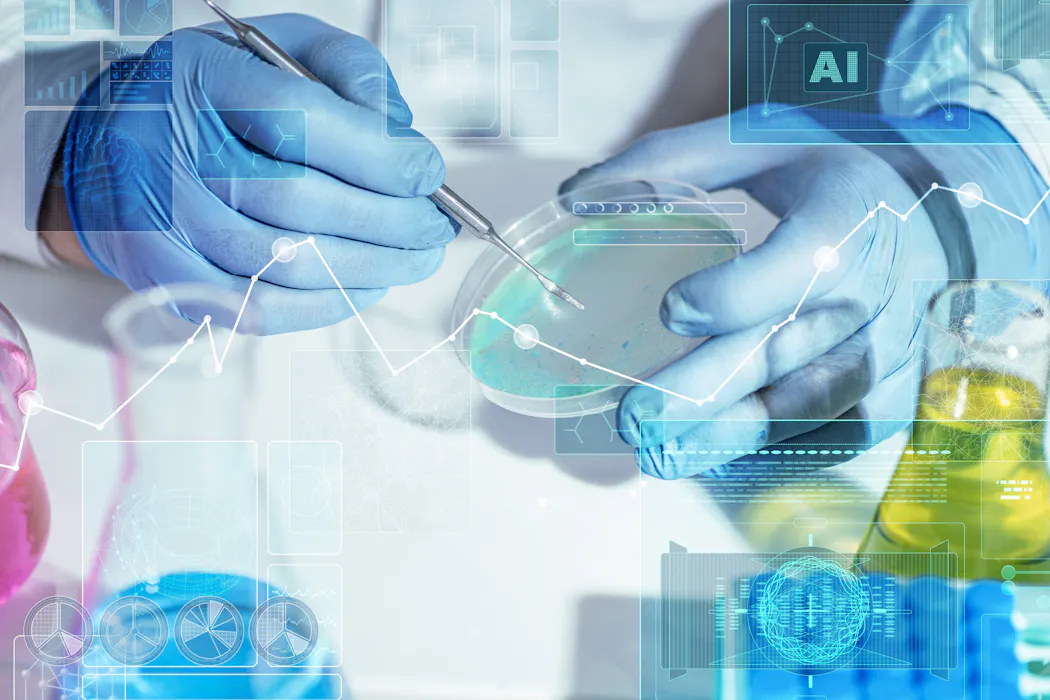
Scientists have crossed an important line in biological engineering. In a recent study, researchers used artificial intelligence to design complete sets of genetic instructions for bacteriophages, viruses that infect bacteria. Some of those computer-generated designs produced working viruses when they were built and tested in the laboratory.

These viruses were designed to infect bacteria rather than people. The researchers worked with bacteriophages that target E. coli, and one of the AI models they used, Evo 2, was developed with safety restrictions. Its developers excluded viruses that infect organisms such as animals, plants and humans from the data used to train it.

Even so, the experiment raises an important question: if AI becomes increasingly able to help design biological systems, are our safeguards developing fast enough?

As engineers working in vaccine manufacturing and public health security, we see good reasons to continue this research. Bacteriophages could potentially be used to treat bacterial infections, including those that are becoming harder to treat with antibiotics. But advances in biological design also create new challenges for biosecurity.

Genome language models work in a broadly similar way to AI language models that learn patterns in text. Instead of learning from words and sentences, they learn patterns in genetic code. Evo 2, for example, was trained on trillions of DNA building blocks taken from many different forms of life.

This gives researchers a powerful new way to study biology and generate possible DNA sequences. It also means that part of biological design can now happen on a computer, before anything has been made in a laboratory.

An AI-generated DNA sequence is still several steps away from becoming a real biological threat. A digital design has to be turned into physical genetic material, assembled correctly and tested under the right laboratory conditions. Each of those stages also creates an opportunity to reduce risk.

One safeguard can be built into the AI model itself. The developers of Evo 2 deliberately removed viruses that infect humans and other similar organisms from its training data for safety reasons. Their research found that the model performed poorly when tested on proteins from viruses that infect humans.

Such precautions will need to be tested and strengthened as AI tools for biology become more capable. Researchers have already argued that AI and biosecurity need to be considered together, so that safeguards develop alongside new capabilities.

Another checkpoint comes when digital DNA is turned into physical DNA. Companies that manufacture DNA to order can check both the requested genetic sequence and the person or organisation ordering it for potential security concerns. Researchers working on DNA synthesis screening have argued for common international approaches as this technology becomes more widely available.

Screening may also need to become more sophisticated. A system designed mainly to recognise DNA that resembles known dangerous pathogens may struggle if AI produces something genuinely new. Recent research on identifying “sequences of concern” has therefore considered what a genetic sequence might do, as well as whether it resembles one already linked to a dangerous organism.

Laboratories and research institutions provide another layer of protection. Potentially risky research can be assessed before experiments begin, including questions about how biological material will be contained, who will have access to it and whether the expected benefits justify the risks.

Research funders can also influence how security risks are managed. UK Research and Innovation (UKRI), for example, has established a Trusted Research and Innovation team to help researchers and institutions identify and manage security risks in collaborative research.

Public health preparedness belongs in this discussion too. If biological design becomes faster and more accessible, health authorities will need to be able to detect and investigate unusual outbreaks quickly. The Metagenomics Surveillance Collaboration and Analysis Programme (mSCAPE), led by the UK Health Security Agency, analyses genetic material from samples to help detect and track emerging pathogens.

The programme is not specifically designed to find AI-created viruses. But its approach is relevant because scientists do not have to know exactly which pathogen they are looking for in advance. Systems capable of detecting unusual or previously unseen organisms could become increasingly valuable as biological technologies develop. Preparedness also means being able to develop diagnostic tests, treatments and vaccines quickly when a new threat appears.

In our view, one of the biggest weaknesses in global biosecurity is that countries are not equally prepared. Some already have established systems for identifying and responding to biological risks, while others are still developing them. We see a similar gap in vaccine regulation, where countries vary considerably in their ability to assess new products. Biological threats can cross borders, so effective preparedness will depend on strengthening these capabilities internationally.

There are difficult trade-offs. Heavy restrictions can slow useful research, including work aimed at understanding disease or developing treatments. Weak safeguards can allow scientific capability to develop faster than the systems intended to prevent misuse.

Open science makes this harder. Evo 2 was released openly, including the code and technical information needed for other researchers to use and develop it. Openness can accelerate discovery and widen access to powerful research tools. But once such tools are widely distributed, controlling how they are used becomes harder.

No single safeguard can deal with all of these risks. Biosecurity will need to operate at several stages, from how biological AI models are developed and released to DNA screening, laboratory oversight and public health preparedness.

The recent bacteriophage study does not show that AI can design a pandemic virus. What it shows is significant enough: AI can already help design complete viral genomes that work when they are physically created.

We have an opportunity to decide what responsible safeguards should look like while this technology is still developing. Waiting for more dangerous capabilities to emerge would leave scientists, governments and public health systems trying to develop protections after they are already needed.

AI is beginning to change what humans can design in biology. Our ability to govern that power needs to develop alongside it.

The Conversation

Tuck Seng Wong receives funding from Department of Health and Social Care (DHSC), UK Research and Innovation (UKRI), and Foreign, Commonwealth & Development Office (FCDO).

Kang Lan Tee receives funding from Department of Health and Social Care (DHSC), UK Research and Innovation (UKRI), and Foreign, Commonwealth & Development Office (FCDO).

  •  

How animals prepare for war

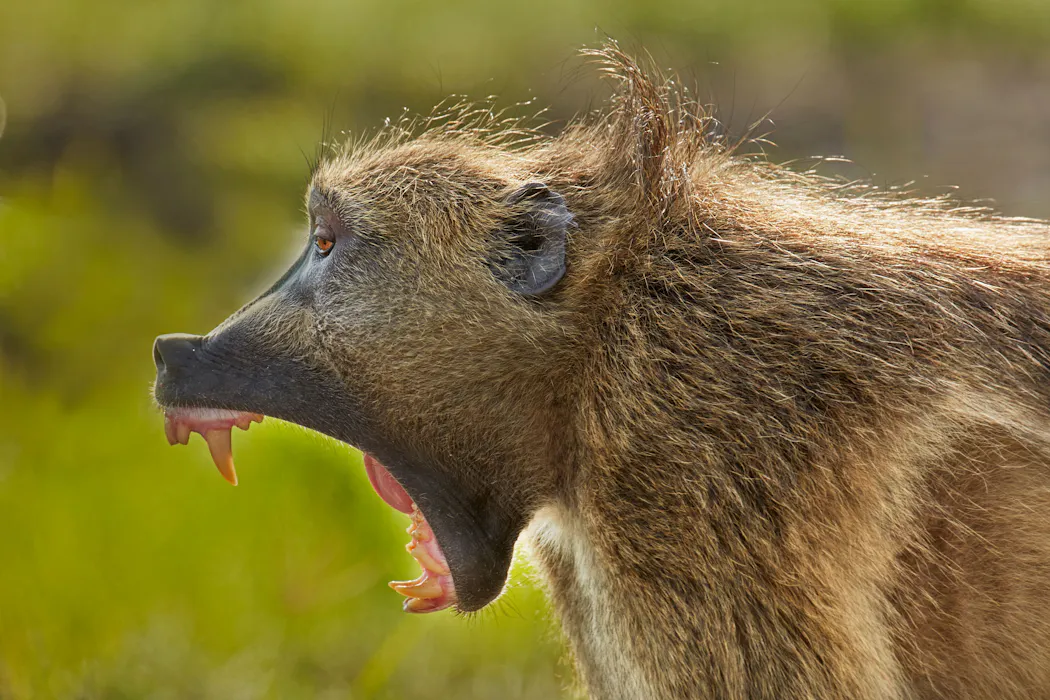
Chacma baboons don't hang around in risky areas. Danita Delimont/Shutterstock

Battles between rival groups are a story as old as time. This sounds like a human story, but it is also one that is playing out across nature.

Conflict between groups of animals competing for territory and resources is widespread, and contests between animals can be dangerous. Getting ambushed, especially by a larger or more powerful group, can have disastrous consequences.

However, conflict is sometimes unavoidable.

Emerging research shows war preparations are not a trait unique to humans.

A new article by my colleagues and I highlights how many of the same principles apply to animals too, and not just in our closest relatives like apes. We reviewed the literature and found examples throughout the animal kingdom of animals preparing for future conflicts. This behaviour probably explains how animals persist in the face of often intense conflict.

Animals may sense the recent presence of their rivals. Many species, such as dwarf mongooses, leave scent marks to advertise their presence, and react to those laid down by rival groups. Others animals may rely on their memories of past conflict to change their behaviour in situations they deem risky, such as at territory edges or contested resources.

There can be sex differences in how animals approach conflict. Vervet monkeys are a good example here. Males often stand to lose more from conflict, while females stand to benefit – as it could lead to securing long-term access to high-quality food. Researchers have observed males attempting to defuse conflict yet females try to promote male participation.

When assessing that the risk of conflict, there are many questions for animals to consider. Are rival groups likely to be close by? How powerful are they? Are they restricting access to key resources? Do you have vulnerable offspring to protect?

Animals use many different approaches to reduce the dangers rivals may pose. Here are three main ones:

1. Inform yourself

Information is power. Across group-living species, from mongooses to invertebrates, there is evidence that animals can prioritise gathering information in risky situations. Chimpanzees have been seen to climb to the top of hills and wait quietly, listening out for rivals before making their next move.

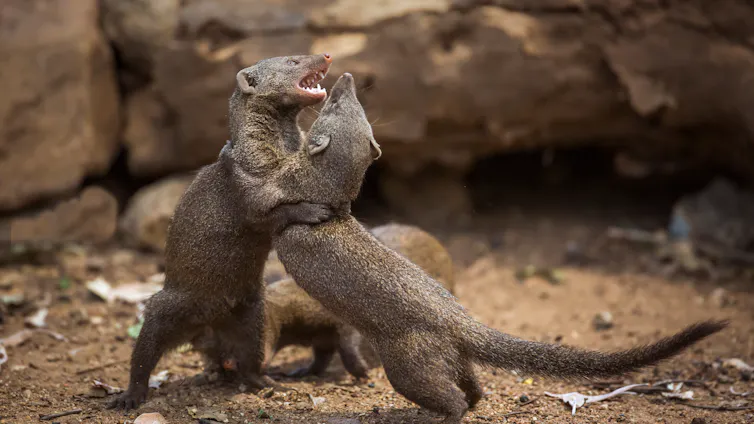
Two dwarf mongooses wrestling standing on their hind legs.
Dwarf mongoose are highly territorial. PACO COMO/Shutterstock

Similarly, when groups of dwarf mongooses encounter the scent of rivals, they move less, investigate their surroundings more and post more sentinels to look out for danger. Gathering information comes at a cost, often in the form of lost opportunities to find food and engage in social interactions. But if the risk is high this can be a small price to pay.

2. Strategise

The way animals use space can be crucial. Some species, such as long-tailed tits and chacma baboons, choose to minimise the time they spend in risky areas, such as where territory overlaps. Others animals, such as meerkats, lay down scent marks near their burrows, which are a valuable resource.

Staying within familiar areas and defending them can give groups of animals a home advantage, as groups are more likely to win when they are on familiar ground. Groups can also stay closer to one another, reducing the chances of animals getting isolated should a contest arise suddenly.

Many species, including ants and apes, raid rival groups. These include targeted forays into rival territory with the goal of injuring and even killing rivals to reduce the threat they pose to their own group. Raids in ant species also allow groups to steal the brood of their rivals, bolstering their future fighting force.

3. Stick together

Make sure your groupmates have your back. Although groups often cooperate with one another, animals can be out for themselves, especially those less related to their groupmates or with less to gain from winning.

Group members therefore need to be confident that the others won’t turn tail when the going gets tough. This can be achieved by both carrot and stick. Chimpanzees play and groom more before conflict occurs. These bond-building activities aim to ensure nobody defects if backs are against the wall. It happens more on days when they later engage in conflict, which suggests they know to some degree that an attack will be more likely.

Vervet monkeys, however, take a different approach. Monkeys that failed to participate in previous contests can face aggression from groupmates, coercing them to step up and help next time.

All of this preemptive behaviour can require animals to keep track of who their rivals are, how strong they are and where they might be. Gathering and processing this information can take a lot of effort. But if it allows animal groups to survive, then intergroup conflict may lead to the evolution of cognitive abilities. Indeed, researchers have suggested the need to outmanoeuvre rivals contributed to the intelligence we have as humans today. That is not to say that all anticipation is mentally costly. When rivals are predictable, simple rules can suffice.

Although our work focused on animals in groups, many of the same principles should generalise to solitary and pair-living animals too. Just imagine how many potential cold wars are playing out between rival animals, each trying to preempt the other while going about their daily lives.

The Conversation

Josh Arbon receives funding from the University of Cambridge Herchel Smith Fund. He works for the University of Cambridge and has previously worked for the University of Bristol.

  •  

Jogo EA Sports FC Mobile oferece 1 mês grátis de Apple TV

E cá estamos nós com mais uma oferta do Apple TV para que novos assinantes (e ex-assinantes qualificados) tenham a oportunidade de testar o serviço por um mês gratuitamente.

Embora esse tipo de iniciativa pinte ocasionalmente sem uma causa especial, a oferta parece estar vinculada a uma ação com o game de futebol da EA Sports FC Mobile (ainda que não seja necessário ter qualquer vínculo com o jogo para resgatar o teste).

A página faz menção aos jogos da Major League Soccer (MLS), que passaram a ser contemplados por padrão no serviço da Apple (ou seja, sem custos adicionais) a partir deste ano, fruto de um acordo estabelecido entre a liga estadunidense e a Maçã em 2022. A notícia chegou na mesma época em que se descobriu que o acordo entre as partes seguirá até 2029, três anos antes da previsão original de encerramento do contrato — em 2032.

No mês passado, a Electronic Arts chegou a anunciar uma parceria com a Maçã relacionada ao Desafio de Habilidades All-Star e à Partida All-Star da MLS — eventos ocorridos nos dias 28 e 29 de julho, respectivamente. Embora essas datas já tenham obviamente passado, a oferta continuará de pé até 31 de dezembro de 2026, o que significa que usuários ainda têm mais algum tempo para iniciar o teste.

Caso você nunca tenha utilizado o streaming da Apple (ou mesmo se você já foi assinante no passado), vale checar a disponibilidade do teste, que pode ser resgatado clicando aqui.

O Apple TV está disponível no aplicativo Apple TV em mais de 100 países e regiões, seja em iPhones, iPads, Apple TVs, Macs, dispositivos Android, smart TVs ou online — além de também estar em aparelhos como Roku, Amazon Fire TV, Chromecast com Google TV, consoles PlayStation e Xbox. O serviço custa R$29,90 por mês, com um período de teste gratuito de 7 dias. Por tempo limitado, quem comprar e ativar um novo iPhone, iPad, Apple TV ou Mac ganha 3 meses do Apple TV. Ele também faz parte do pacote de assinaturas da empresa, o Apple One.

NOTA DE TRANSPARÊNCIA: O MacMagazine recebe uma pequena comissão sobre vendas concluídas por meio de links deste post, mas você, como consumidor, não paga nada mais pelos produtos/serviços usando os nossos links de afiliado.

  •  

RetinaDesk agora mostra o máximo de monitores suportados por cada Mac

Há dois meses, falamos aqui sobre o RetinaDesk, um site muito bacana que ajuda você a escolher o melhor monitor externo para o seu Mac, levando em conta todas as especificidades dos computadores da Apple.

Pois bem, recentemente, a ferramenta ficou ainda mais completa com a adição de uma página que ajuda você a descobrir, de maneira extremamente intuitiva, a quantidade máxima de displays externos suportados pela sua máquina.

O banco de dados da ferramenta cobre todos os Macs com Apple Silicon lançados até hoje, bem como suas respectivas variantes — detalhe que joga o total de computadores listados pelo RetinaDesk para nada menos que 53.

Encontrar essa página é fácil: basta acessar o site do RetinaDesk, clicar na aba “Tools” na parte de cima da tela e, depois, selecionar a opção “Mac External Display Support by Chip” — ou simplesmente acessar esse link. Feito isso, é só selecionar o modelo do seu Mac na seção “Which Mac is it?” e, em seguida, sua respectiva variante — indicada pelo chip e o ano de lançamento (e, às vezes, o número de portas do computador) — em “Step 2”.

RetinaDesk Mac External Display Support by Chip
Captura de tela/RetinaDesk

Uma vez que você indicar o modelo do seu Mac, o número máximo de monitores externos ao qual ele pode ser conectado deverá aparecer à direita da tela, junto de uma ilustração do seu “setup máximo” — ou seja, com o maior número de monitores possível.

A nova página, no entanto, não para por aí, já que ela também conta com outra seção a qual ajuda você a montar setups com diferentes combinações de monitores, os quais podem ter resoluções e taxas de atualização distintas — sempre levando em conta, é claro, as limitações do seu computador. Ela também é uma boa forma de descobrir se o seu Mac suporta uma resolução ou uma taxa de atualização (ou uma combinação dessas duas coisas) específica.

RetinaDesk Mac External Display Support by Chip
Captura de tela/RetinaDesk

A seção “What each built-in port can drive”, por sua vez, exibe com quais resoluções/taxas de atualização cada porta do seu computador é compatível, além de revelar a sua versão (se é Thunderbolt 4 ou 5, por exemplo). Logo abaixo, temos a seção “How you can arrange the displays” que, como seu nome indica, mostra todas as combinações possíveis de monitores para a sua máquina.

Por fim, a ferramenta também deixa você comparar um Mac qualquer com outro modelo da sua escolha, checar se sua máquina precisa estar no modo clamshell para suportar um setup específico e aprender sobre soluções alternativas e suas respectivas concessões.

RetinaDesk Mac External Display Support by Chip
Captura de tela/RetinaDesk

Assim como o resto das ferramentas do RetinaDesk, essa nova página é totalmente gratuita, com o único “porém” sendo o fato de que ela não está disponível em português — problema que, é claro, pode ser facilmente remediado com a ajuda das ferramentas de tradução dos navegadores atuais.

Muito útil, não? 🖥️

  •  

Google Meet expande recurso de notas para reuniões presenciais

Para os adeptos do recurso Anota pra Mim (Take notes for me) do Meet, o Google anunciou ontem que a funcionalidade passou a ser compatível também com reuniões presenciais.

Rivalizando com iniciativas como o app Granola ou o assistente Notetaker do Wispr Flow, o recurso era anteriormente restrito aos encontros virtuais ocorridos dentro da plataforma do Google.

Recurso "Anota pra Mim" no Google Meet (versão web)
Divulgação/Google

Ele permite que o Gemini transcreva conversas e crie resumos da reunião salvos em um documento do Google, criando ainda um relatório encaminhado ao email do usuário com detalhes dos assuntos tratados e uma lista de tarefas da reunião. O Anota pra Mim é compatível tanto com as versões web quanto com o app do Google Meet.

Recurso Anota pra Mim (Take Notes) no app mobile do Google Meet
Divulgação/Google

De acordo com o Google, a distribuição ampliada começou hoje para a versão web e iniciará no dia 31 de agosto para o app no iOS. A ferramenta está disponível para os assinantes dos planos AI Pro (além do AI Pro for Education) e Ultra — no caso dos consumidores finais — e nos planos padrão e Plus das soluções Business e Enterprise do Google Workspace.

  •  

Nova estação de carregamento da UGREEN oferece 300W, display, modos de operação e mais

A conhecida marca UGREEN lançou uma estação de carregamento da linha Nexode Pro, a qual é equipada com seis portas USB-C, uma porta USB-A e uma saída CC (corrente contínua) dedicada, oferecendo uma potência combinada de até 300W.

Assim como um novo modelo de carregador da Satechi que cobrimos recentemente, a estação da UGREEN ostenta uma tela colorida que exibe a potência total de saída, tensão, corrente e o protocolo de carregamento de cada dispositivo conectado. Ela também conta com controles sensíveis ao toque na parte superior, que permitem alternar entre cinco modos de operação.

UGREEN Nexode Pro 300W Charging Station with Smart Display
Divulgação/UGREEN

As portas USB-C1, USB-C2 e USB-C3 suportam até 140W cada uma. Já as portas USB-C4 e USB-C5 fornecem até 100W cada, enquanto a USB-C6 tem capacidade de 30W. A porta USB-A, por sua vez, fornece 22,5W e está localizada ao lado da saída CC, de 240W.

UGREEN Nexode Pro 300W Charging Station with Smart Display
Divulgação/UGREEN

Segundo a fabricante, a estação de carregamento consegue recarregar dois MacBooks Pro em até 50% em cerca de 28 minutos. O carregador também conecta-se ao aplicativo da UGREEN via Bluetooth ou Wi-Fi, permitindo monitorar dispositivos conectados, alternar modos de operação, personalizar a tela e instalar atualizações de firmware.

Medindo 133x90x42mm, o Nexode Pro 300W está disponível na Amazon americana por US$170 — um desconto de 15% em relação ao valor comum (US$200).

NOTA DE TRANSPARÊNCIA: O MacMagazine recebe uma pequena comissão sobre vendas concluídas por meio de links deste post, mas você, como consumidor, não paga nada mais pelos produtos/serviços usando os nossos links de afiliado.

via TudoCelular.com

  •  

Tim Cook espera ser lembrado como um “homem bom e decente” após período como CEO da Apple

O atual CEO 1Chief executive officer, ou diretor executivo. da Apple, Tim Cook, está a alguns dias de deixar o cargo, o qual será ocupado pelo atual vice-presidente sênior de engenharia de hardware da empresa, John Ternus.

É natural que o executivo, nessa reta final, seja questionado sobre seu tempo nessa importante posição e reflita sobre sua influência no cargo — mas, em uma entrevista à CBS News, Cook disse que não pretende definir seu próprio legado.

Ele afirmou que caberá a outros definir seu legado, mas gostaria de ser visto como um “homem bom e decente”.

Ternus assumirá como CEO da Apple a partir de 1º de setembro, e Cook passará a atuar como presidente executivo do conselho de administração da Apple, cuidando de questões relacionadas à interface da Apple com o governo.

Na breve entrevista, realizada durante a inauguração do Centro de Manufatura Avançada (Advanced Manufacturing Center) da Apple em Houston (no Texas), Cook também comentou os investimentos da empresa na manufatura americana, ressaltando que os vidros de todos os iPhones e Apple Watches são produzidos nos Estados Unidos, bem como de elementos do SoC 2System on a chip, ou sistema em um chip., entre outros componentes.

via AppleInsider

Notas de rodapé

  • 1
    Chief executive officer, ou diretor executivo.
  • 2
    System on a chip, ou sistema em um chip.

  •  
❌