❌

Reading view

NASA Is Testing the Antennas for Its Next Mars Aircraft

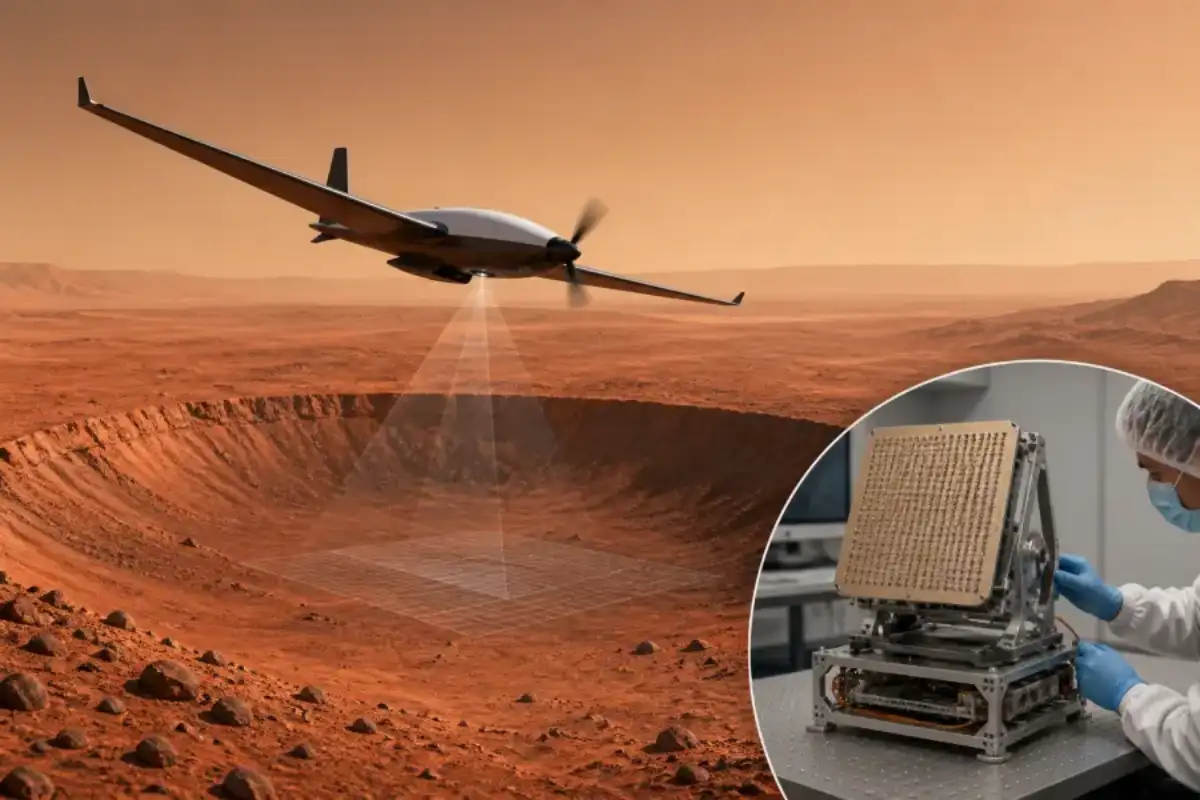
NASA is testing the communications and radar hardware for a proposed Mars aircraft mission called SkyFall. The project is still on Earth, but its engineers are working through the details that would allow three small aircraft to fly in the thin Martian atmosphere and send useful data back to a rover or an orbiter. A […]

The post NASA Is Testing the Antennas for Its Next Mars Aircraft appeared first on Curiosmos.

  •  

New airliner sets record flying 24 hrs nonstop from Australia to France

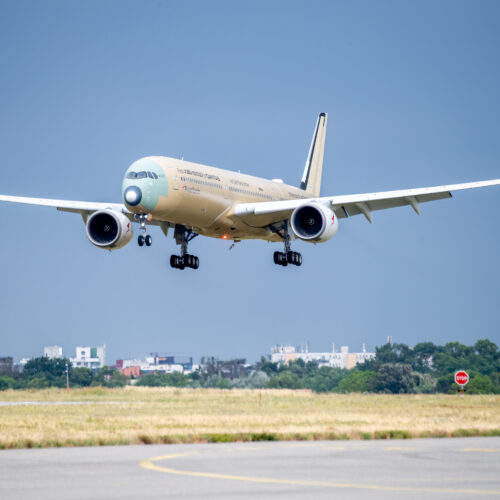
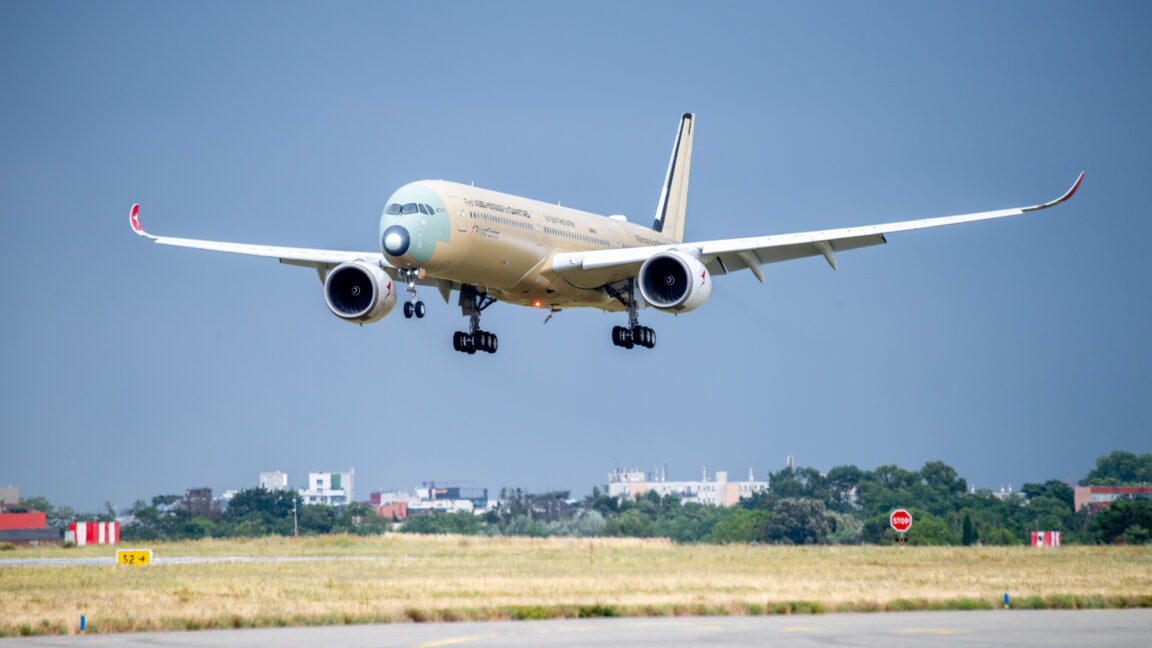
A new Airbus passenger jet completed an ultra-long test flight between Australia and France lasting more than 24 hours—paving the way for the world’s longest nonstop commercial flights starting up next year.

The Airbus A350-1000ULR was developed specifically for Qantas Airways’ planned nonstop flights between Sydney and either New York or London. The Australian airline has ordered a dozen of the new airliners for its Project Sunrise routes that aim to start offering tickets for sale in 2027.

The aircraft had been doing initial test flights near the Airbus facilities in Toulouse, France, with a small team of test pilots and test engineers before conducting its first ultra long-haul test flight last week. After taking off from Toulouse on July 23, it flew for 19 hours and 13 minutes before landing in Melbourne, Australia, on July 24.

Read full article

Comments

© Airbus SAS 2026

  •  

Meet NASA’s New X-59 Test Pilot 

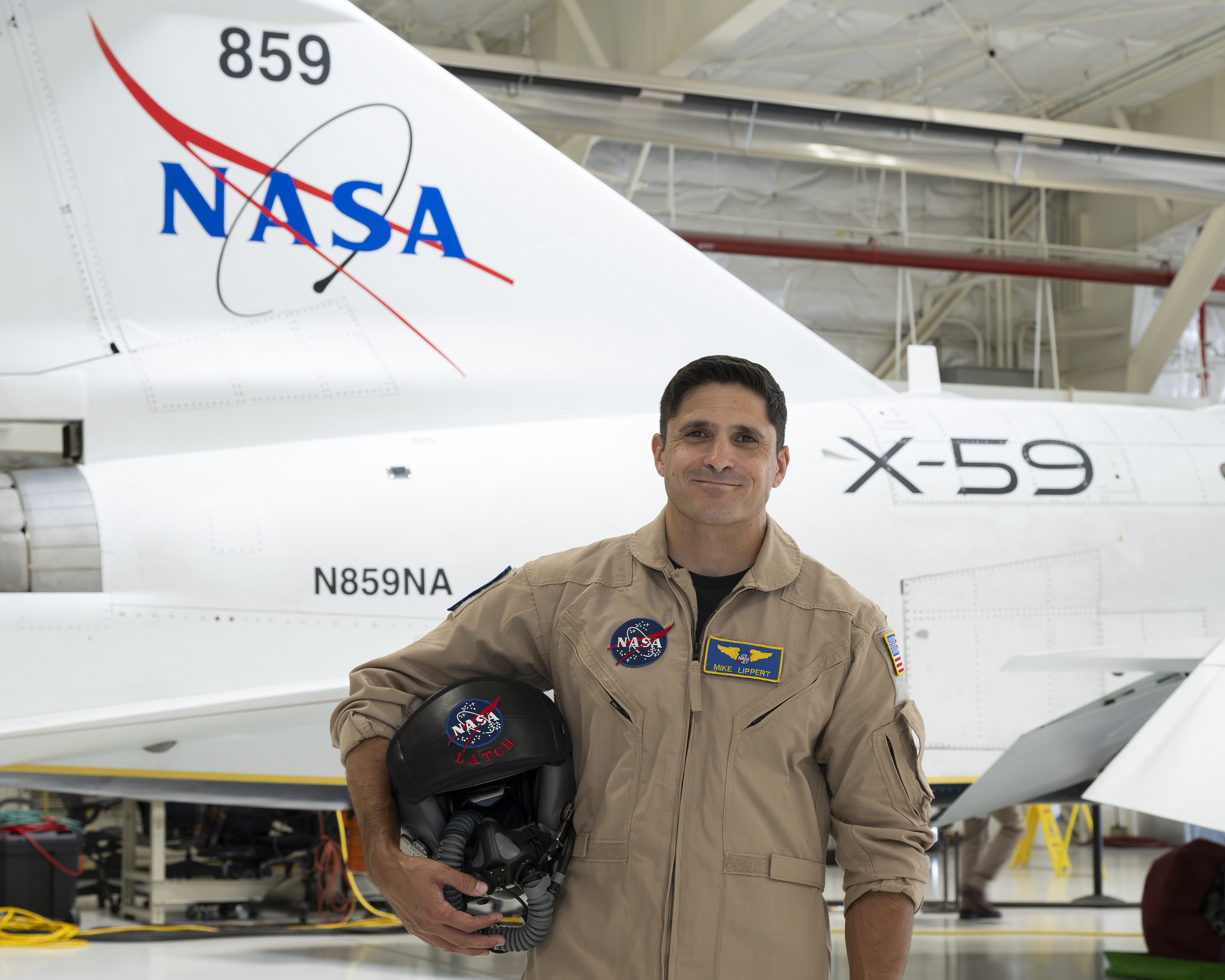
NASA’s X-59 test pilot Mike Lippert stands in a hangar in front of NASA’s quiet supersonic research aircraft, wearing a tan NASA flight suit and holding a flight helmet under the right arm. The X-plane in the background displays the NASA logo, tail number 859, and “X-59” marking.
NASA’s X-59 test pilot Mike Lippert stands in front of the agency’s X-59 quiet supersonic research aircraft at NASA’s Armstrong Flight Research Center in Edwards, California, on Wednesday, June 24, 2026.
NASA/Carla Escamilla

NASA added a new X-59 test pilot to support the agency’s Quesst mission: Mike Lippert, a research test pilot based at NASA’s Armstrong Flight Research Center in Edwards, California.  

“This fulfills a lifelong dream of conducting airborne research and experimental flight test for NASA in the high desert — contributing to humankind’s understanding of the science of flight and the nature of the world around us,” Lippert said. 

Lippert will fly the X-59, along with the F-15 and F-18 support aircraft to monitor the quiet supersonic X-plane when it’s in the air. He joins Nils Larson and Jim “Clue” Less, who have been flying the X-59 since its first flight in October 2025.  

A South Carolina native, Lippert served 20 years with the U.S. Marine Corps before retiring last year as a lieutenant colonel. Like his fellow test pilots, he boasts an impressive flight resume, including logging more than 2,600 hours of flight time in 60 different types of aircraft.  

Lippert said he finds test pilot work especially rewarding. 

“For me, the joy of taking part in experimental flight test and airborne research is the experience of discovery and learning something new every day,” he said. “It is incredibly rewarding to be part of a team solving complex problems and venturing into the unknown, together.” 

Lippert spent the majority of his career flying the AV-8B Harrier operationally and serving as a test pilot in the F-35 program. He is also an aerospace engineer, earning a bachelor’s degree from the United States Naval Academy in Annapolis, Maryland, and a Master of Science in flight test engineering from the U.S. Air Force Test Pilot School at Edwards Air Force Base in California. Additionally, he earned a Master of Science in systems engineering from the Naval Postgraduate School in Monterey, California.  

Lippert is currently pursuing a doctoral degree in aerospace engineering at the University of Alabama Graduate School in Tuscaloosa, where his research focuses on high-speed gas dynamics, including supersonic and hypersonic fluid mechanics — complementing his work on the Quesst mission. 

Lippert is busy preparing for his role at NASA by flying training flights on support aircraft and spending time in the X-59 simulator. He is expected to begin flying the X-59 later this summer. 

More X-59 to Explore

quesst-logo-horizontal-051826sm

Read more on the Quesst mission page.

The post Meet NASA’s New X-59 Test Pilot  appeared first on NASA Science.

  •  

Michael T. Lippert

Pilot standing in front of the X-59 aircraft in a hangar. His arms are crossed in front of him and he's wearing a tan flight suit.

Michael T. Lippert

NASA Pilot

Michael T. Lippert is a research test pilot at NASA’s Armstrong Flight Research Center in Edwards, California. He is assigned to fly the agency’s X-59 quiet supersonic research aircraft, along with the F-15 and F/A-18 support aircraft, and to support NASA’s advanced air mobility research projects.

Experience

Prior to joining NASA in 2026, Lippert served 20 years in the U.S. Marine Corps before retiring as a lieutenant colonel in 2025. He was a flight instructor at Naval Air Station Kingsville in Texas, where he trained U.S. Navy and Marine Corps officers in tactical jet aircraft. He has more than 2,600 hours of flight experience in 60 types of aircraft.

The bulk of his career was spent flying the AV-8B Harrier operationally and serving as a test pilot in the F-35 program. During his last two assignments, he served as the chief test pilot of Marine Operational Test and Evaluation Squadron One at Marine Corps Air Station Yuma in Arizona, and as the government flight test director of the F-35 Integrated Test Force at Naval Air Station Patuxent River in Maryland.

Education

Lippert earned a bachelor’s degree in aerospace engineering in 2005 from the United States Naval Academy in Annapolis, Maryland, and a Master of Science in flight test engineering in 2016 from the U.S. Air Force Test Pilot School at Edwards Air Force Base, California. Lippert also earned a Master of Science in systems engineering in 2019 from the Naval Postgraduate School in Monterey, California. He is currently pursuing a doctoral degree in aerospace engineering at the University of Alabama Graduate School in Tuscaloosa, Alabama. His research focuses on high-speed gas dynamics, including supersonic and hypersonic fluid mechanics.

Awards

Lippert is an associate fellow of the Society of Experimental Test Pilots and a member of the American Institute of Aeronautics and Astronautics. He was part of the multi-agency team that received the Collier Trophy in 2018 for the Automatic Ground Collision Avoidance System. He also contributed to the team that received a Silver Medal from the Royal Aeronautical Society for F-35 testing aboard HMS Queen Elizabeth, a British Royal Navy aircraft carrier.

The post Michael T. Lippert appeared first on NASA Science.

  •  

Electra to build $850M Ohio factory for EL9 hybrid-electric plane

Electra is putting $850 million into its first aircraft factory, and it picked Springfield, Ohio to build the EL9 Ultra Short, its nine-passenger hybrid-electric plane that can take off in as little as 150 feet.

The plant will eventually build up to 800 aircraft a year and create nearly 2,000 jobs, the company said Tuesday. That’s a big commitment for a plane that hasn’t flown yet.

  •  

This is How NASA Flight Tests New Technology

3 Min Read

This is How NASA Flight Tests New Technology

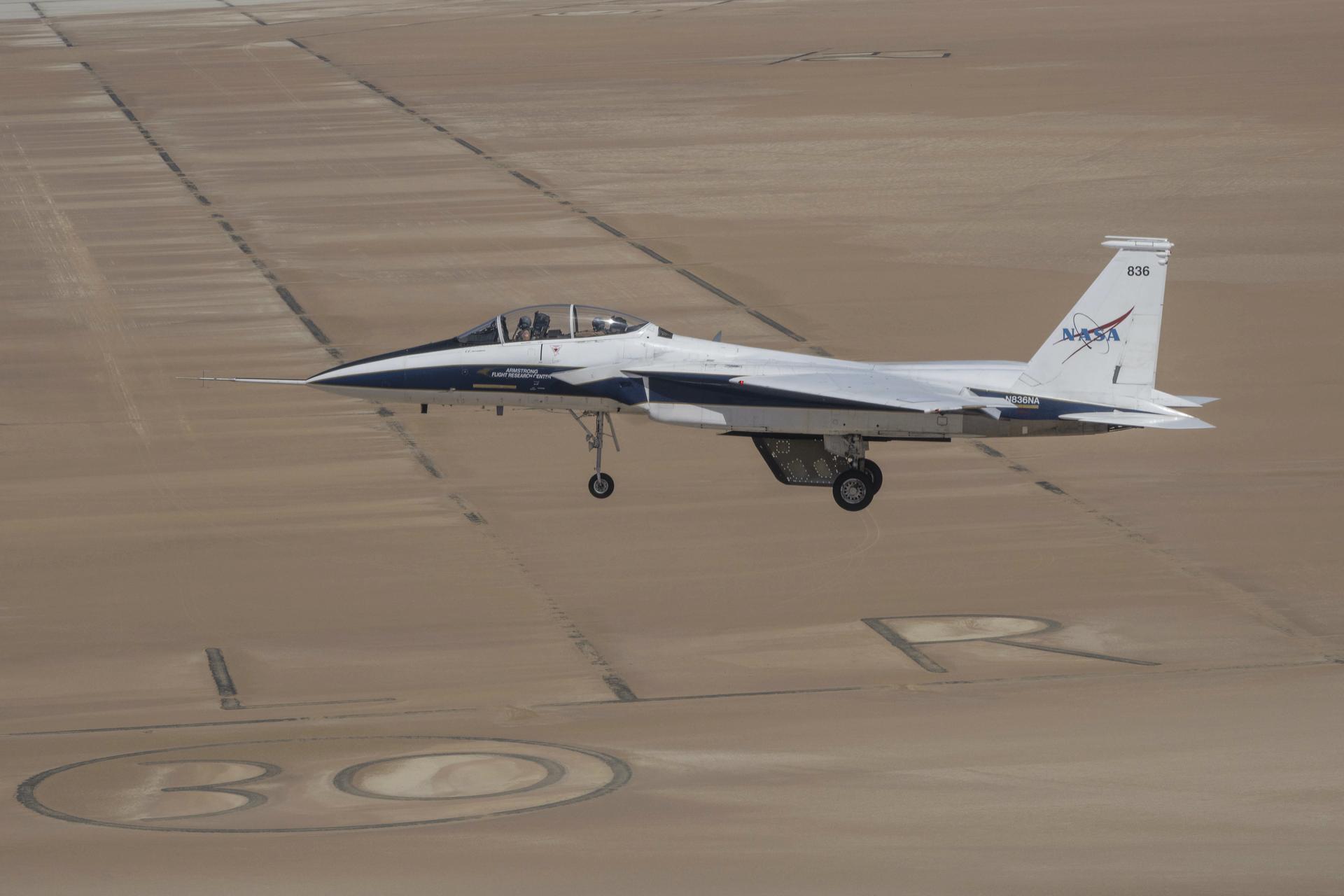
A white and blue painted jet aircraft flies above a tan lakebed with the gear and wheels out. A model wing hangs below the aircraft’s center line. The cockpit is closed and two pilots are visible inside with flight gear on.
An F-15 aircraft flies above the world’s largest compass rose above NASA’s Armstrong Flight Research Center in Edwards, California, on Monday, April 20, 2026. NASA’s Crossflow Attenuated Natural Laminar Flow (CATNLF) test article is attached to the bottom of the F-15. The project aims to lower fuel costs for future commercial aircraft by testing a scale-model wing designed to improve laminar flow.
Credits: NASA/Jim Ross

Flight tests are a big part of how NASA turns breakthrough ideas into reality. From flying humans faster than the speed of sound to proving designs that helped shape the space shuttle, flight testing transforms bold concepts into safer, more efficient technologies that benefit the public.

“Flight tests are a way to safely and effectively prove new technology, which helps certification authorities certify equipment,” said Wayne Ringelberg, chief pilot at NASA’s Armstrong Flight Research Center in Edwards, California. “It helps industry iterate and make systems better, and it promotes research in areas where new ideas can be developed.”

For nearly 80 years, teams at NASA Armstrong have used flight testing in the Southern California desert to push the limits of aerodynamics and advance aviation. Thanks to that work, NASA-developed innovations are aboard every U.S. commercial aircraft and inside every control tower today.

“The space side of NASA uses flight test, too. Every mission, like Artemis II, is never routine,” Ringelberg said. “Everything we’re doing when flying a test mission is something new or different.”

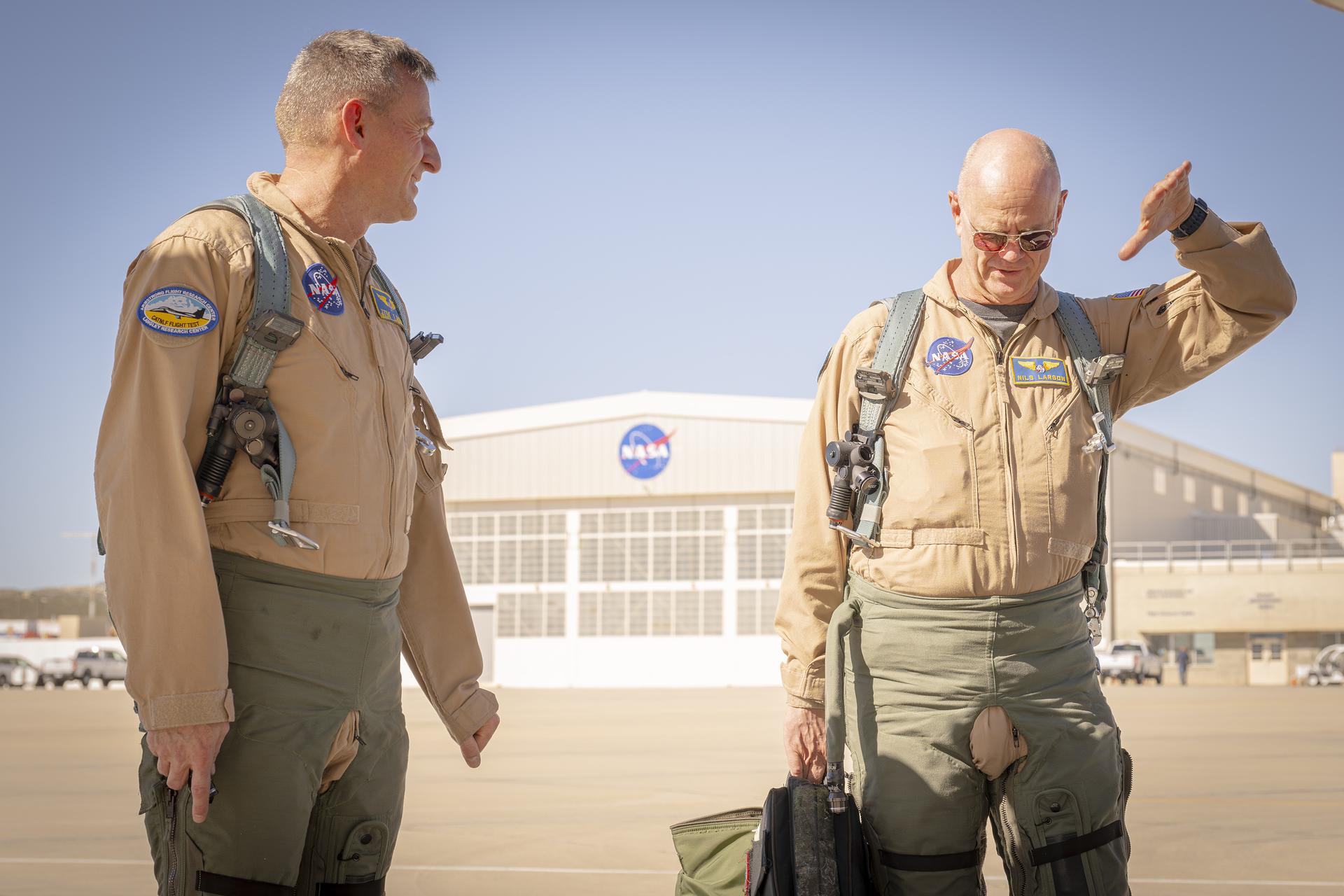
Two men, wearing tan flight suits and green flight gear, walk on a concrete surface away from a building in the background. The man on the left looks at the man on the right as he is moving his left hand in the air. This same man is carrying a bag with flight gear in his right hand.
NASA test pilots Jim Less, left, and Nils Larson walk away from a hangar at NASA’s Armstrong Flight Research Center in Edwards, California, on Thursday, Feb. 4, 2026. The pilots support the agency’s Crossflow Attenuated Natural Laminar Flow (CATNLF) project, which aims to lower fuel costs for future commercial aircraft by testing a scale-model wing designed to improve laminar flow.
NASA/Christopher LC Clark

Every NASA test flight — whether it’s studying new software, hardware, or the revolutionary technology of an experimental X-plane — relies on engineers, researchers, pilots, maintenance crew, control room operators, and many others working together.

“Experienced operators and engineers evaluate how things work in flight,” Ringelberg said. “Most new technologies are designed to work in a lab or can be tested in a wind tunnel or other facility, but you never really know how they’ll perform until you fly them.”

Preflight tests often include computer analysis, simulation, wind tunnel testing, and ground tests focused on an aircraft’s ability to withstand the forces of flight and the environments through which it may fly. After hardware or software is deemed safe to fly, researchers turn the mission over to the flight test team.

To support testing, NASA Armstrong maintains an aircraft fleet modified to create space for new hardware or instruments, as well as the ability to integrate new software. These aircraft are flying laboratories, and pilots are trained to accomplish experimental missions.

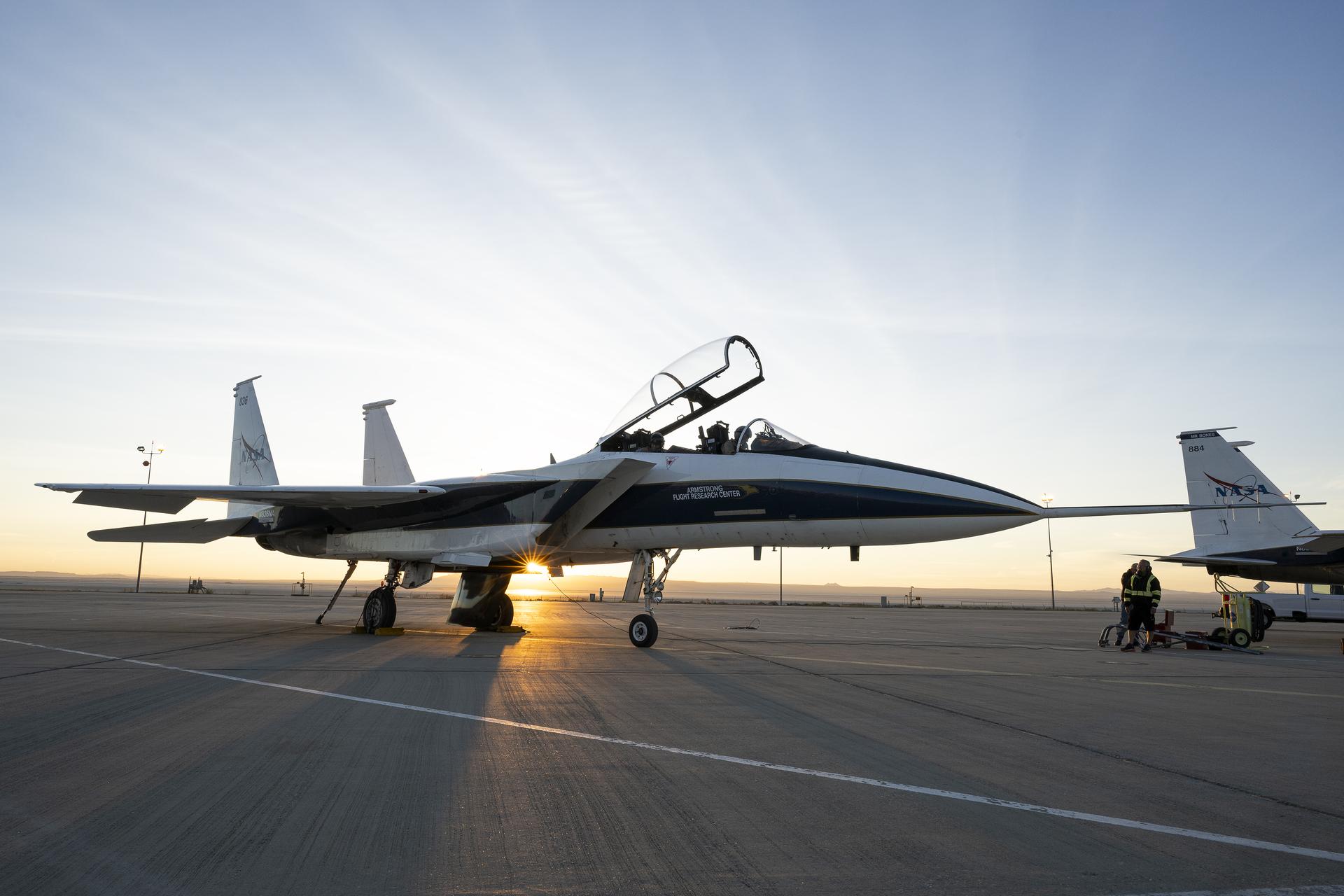
A white and blue painted jet aircraft sits on a concrete surface. The canopy of the aircraft is open, and two pilots sit inside wearing flight gear. The tail of a second jet aircraft is seen to the right of the image, and a desert landscape is seen in the background.
An F-15 research aircraft sits on the ramp at NASA’s Armstrong Flight Research Center in Edwards, California, on Tuesday, March 17, 2026. NASA pilots Jim Less, front seat, and Carrie Worth prepare for the flight. The agency’s Crossflow Attenuated Natural Laminar Flow (CATNLF) test article is attached to the bottom of the F-15. The project aims to lower fuel costs for future commercial aircraft by testing a scale-model wing designed to improve laminar flow.
NASA/Carla Escamilla

For example, flight testing recently helped NASA gather critical data on laminar flow, or the smooth flow of air, over a wing. The work could lower fuel costs for future airliners. Computer modeling, wind tunnel tests, and other methods helped advance the research, but to find out even more about how the wing concept could reduce drag for future airliners, NASA used a scale model in actual flight.

NASA researchers strapped the Crossflow Attenuated Natural Laminar Flow (CATNLF) model wing to the belly of one of NASA Armstrong’s F-15s. The arrangement allowed them to collect all the information they would need without doing the extensive, costly modifications required to install a full-scale wing on an aircraft.

After a flight series is complete, engineers and researchers analyze the data. Did the instrument work as designed? Did the experimental aircraft perform safely at a high altitude? Did the software operate as planned? Each test raises its own set of questions to evaluate.

NASA continues working with academia, the Department of War, and industry partners to advance U.S. aviation through flight test and bring new benefits to the flying public.

Share

Details

Last Updated
Jun 22, 2026
Editor
Dede Dinius
Contact
Keep Exploring

Discover More Topics From NASA

💾

NASA’s Crossflow Attenuated Natural Laminar Flow (CATNLF) project aims to lower fuel costs for future commercial aircraft by testing a scale-model wing desig...
  •  

eVTOLS Are Here: Archer Aviation Confirms ‘Midnight’ Aircraft On-Track for FAA Certification, 2028 Olympics

Electric Vertical Take-Off and Landing (eVTOL) pioneer Archer Aviation has confirmed that it is on track to perform Team USA transport duty during the 2028 Summer Olympics in Los Angeles, California, aboard its Midnight aircraft.

In an email to The Debrief, a company spokesperson said Archer was selected as the Official Air Taxi Provider of the LA28 Olympic Games and Team USA, marking a historic first in the quest for commercial eVTOL operations before the end of the decade.

“Through this exclusive partnership, the two will look to integrate Archer’s Midnight eVTOL aircraft across theLA28 Games in a variety of ways, such as transporting VIPs, fans, and stakeholders, while electrifying vertiport take-off-and-landing hubs for key venues and providing support for emergency services and security,” a company spokesperson explained.

Archer CEO Announces ‘Progress’ Including Upcoming Midnight eVTOL Test Flight in 8 US Cities

Archer Aviation founder and CEO Adam Goldstein recently shared more specific updates about the company’s road to the Olympics and eventually government approval, noting that “we made tremendous progress towards beginning operations in the US later this year, with record FAA certification progress and our most expansive flight testing to date.”

Goldstein also highlighted the company’s recent winning applications to begin pre-certification test flights of Midnight in 8 US states later this year, including New York, Florida, and Texas. According to the CEO, those test flights are part of the eVTOL Integration Pilot Program (eIPP), “which was unlocked through the White House’s Executive Order in June last year.”

Multiple Midnight eVTOL aircraft. Image Credit: Archer Aviation.

“Archer expects Midnight operations in American cities to begin this year as part of the White House’s eIPP and in preparation to serve as the Official Air Taxi Provider of the LA28 Olympic Games, in coordination with the DOT and FAA,” the CEO explained, adding that the two benchmarks “pave the way for Archer to showcase its air taxi technology in parallel with its continued work toward FAA Type Certification for Midnight.”

Six Independently Operating Engines Produce Over 1,500 Horsepower, Last 10,000 Flight Cycles

When asked about the technical aspects that have put Midnight on course to become the first commercial eVTOL air taxi provider in the U.S., the company spokesperson first noted that their aircraft are “designed and manufactured” domestically, which can shorten development timelines and improve quality control. This includes focusing the team’s research and development on what the company termed “differentiating technologies,” including the pioneering aircraft’s unique powertrain.

“Our world-class in-house team, coming with experience from Apple, Tesla, SpaceX and beyond, contribute to our efficient and certifiable electric propulsion design,” the company told The Debrief.

Archer’s Midnight eVTOL aircraft are designed and tested in the United States, reducing quality control issues and increasing design turnaround times. Image Credit: Archer Aviation.

Some of the differentiating technologies the team said set it apart from the competition include rapid charging, long-lasting battery packs “and the capability of >1500 horsepower.” They also note that Midnight’s high-performance battery cells, patented high-voltage architecture, and gearbox are designed to operate reliably for roughly 10,000 “flight cycles” before the vehicle’s battery pack needs replacement.

“We are optimized for electric flight,” the company told The Debrief.

Due to the potential risks in premiering a new vehicle platform, with Archer Aviation telling The Debrief that “eVTOL aircraft are the first new category of aviation in more than 60 years,” the company said Midnight is built as a ‘fly-by-wire’ system, reducing the number of mechanical components that can fail. The company also said that each of Midnight’s engines operates independently “allowing for high levels of redundancy and safety.”

Although the current version of the Midnight eVTOL aircraft is flown by a human pilot, the company told The Debrief that it is “continuing to build the technology stack” required for its longer-term goal of a fully autonomous eVTOL aircraft.

Company Anticipating Final FAA Approval “in the Near Future”

With the 2028 Summer Olympics just two years away, the company said it has transitioned out of a successful Phase 3 of the FAA’s 4-phase Type Certification process, an industry first, and has “already been advancing its work in Phase 4 for some time now.”

“This is where Midnight’s compliance with FAA airworthiness requirements will be demonstrated through formal testing and analysis,” the company told The Debrief.

In his address to shareholders, Goldstein said the company’s flight test program “continued to expand this quarter.” The CEO said this expansion includes piloted VTOL and CTOL flights across its expanded fleet of test aircraft “occurring nearly every day, often multiple times a day.”

eVTOL
Archer Aviation has recently taken over operations at Hawthorne Airport with goals of creating the airport of the future.

To expedite the testing phases leading up to the 2028 Olympics, the company recently took over operations of Hawthorne Airport in Los Angeles County. Goldstein said the move will help Archer develop the local airstrip “into the airport of the future.”

“Located near LAX and several major LA sports and entertainment venues, Hawthorne Airport is expected to anchor Archer’s planned LA air taxi operations while also serving as an innovation hub for next-generation aviation technologies,” the CEO explained.

When asked how soon the company expects to fulfill the FAA’s Phase 4 requirements and gain full certification, the spokesperson told The Debrief that Archer is in the final stages of the process, “and is anticipating approval in the near future.” However, the company also added that their focus is on building a safe, high-performance aircraft, and that once they can demonstrate the safety and versatility of Midnight, “it is the FAA’s job to certify it.”

Christopher Plain is a Science Fiction and Fantasy novelist and Head Science Writer at The Debrief. Follow and connect with him on X, learn about his books at plainfiction.com, or email him directly at christopher@thedebrief.org.

  •  

NASA Just Tested a Secretive Experimental Aircraft in a “Major Milestone” for Supersonic Flight

An experimental aircraft just achieved a “major milestone” that NASA officials say brings the future of quiet supersonic flight closer to being a reality.

The test flights involved the American space agency’s secretive X-59 aircraft, which reportedly reached speeds of 1.4 Mach—roughly 924 miles per hour—during a flight last Friday.

Reaching an altitude of 55,000 feet, the experimental aircraft’s speed and height during last week’s test flight met the conditions the agency says are required for future flights aiming to achieve supersonic flight without the noisy booms it usually generates.

In a statement, NASA said the aircraft’s tests are far from complete, although Friday’s test marks a significant milestone toward reaching its current mission goals.

“The X-59 still has months of performance testing ahead, but after those are complete, NASA’s Quesst mission will fly the aircraft over several U.S. communities to collect data on public perception of the quiet sonic thump it will make at supersonic speeds,” NASA’s statement on Friday read. “Those community overflights will include flights at Mach 1.4 and 55,000 feet.”

Another Milestone for NASA’s X-59

Last week’s test occurred within days of an earlier takeoff that sent the X-59 on its first successful supersonic flight, where the plane reached a top speed of Mach 1.1.

The earlier test also marked a leap forward for the Quesst mission, which is in the process of completing several crucial steps that are expanding the X-59’s capabilities.

Deployed for test flights at various speeds and at different altitudes, flight engineers are currently gauging the aircraft’s flight envelope by having it perform in a range of different flight conditions.

NASA X-59 experimental aircraft
Artist’s concept of NASA’s X-59 supersonic aircraft (Image Credit: NASA/Lori Losey)

During its current test flights, NASA said the supersonic aircraft was accompanied by a NASA F-15 research aircraft, which still produces a sonic boom when it flies, unlike the X-59. NASA engineers plan to mount a shock-sensing probe on the accompanying aircraft during future flights, which the agency says will collect vital information about the shock waves the experimental aircraft produces.

The resulting experiments will help engineers measure the exact capabilities of the new aircraft and its supersonic performance.

Additional Prep for NASA’s Quesst Mission

Although designed to function as a “quiet” supersonic aircraft, the X-59 still produces audible signatures, which NASA likens more to being a soft “thump” than a sonic boom.

During its final testing phases, the X-59’s supersonic acoustic signature will also be measured.

If all goes according to plan, the supersonic aircraft will complete its full round of testing in the months ahead, marking a successful series of demonstrations that it meets all the requirements for quiet flight under a range of different altitudes and other flight conditions.

Ultimately, the technologies being innovated by this experimental plane will help to enable the first supersonic flight over land in decades, paving the way toward a new future of commercial flight faster than the speed of sound.

Additional details about NASA’s Quesst program can be found on its official site.

Micah Hanks is the Editor-in-Chief and Co-Founder of The Debrief. A longtime reporter on science, defense, and technology with a focus on space and astronomy, he can be reached at micah@thedebrief.org. Follow him on X @MicahHanks, and at micahhanks.com.

  •  

Rising Aircraft Emissions Threaten Air Quality, Health

As the world continues to witness unprecedented growth in air travel, a groundbreaking study published in Communications Earth & Environment reveals alarming insights into the global repercussions of accelerating aircraft emissions on air quality and human health. This landmark research meticulously quantifies how expanding aviation activities contribute to deteriorating atmospheric conditions and exacerbate public health crises worldwide, underscoring an urgent need for global policy interventions and technological innovation.

The aviation sector, responsible for a substantial portion of anthropogenic greenhouse gas and pollutant outputs, has long been scrutinized for its environmental footprint. Yet, the intricate dynamics linking aircraft emissions to widespread air quality degradation and subsequent health implications have remained largely underexplored until now. Quadros, Nelen, Snellen, and colleagues harnessed sophisticated atmospheric modeling techniques combined with epidemiological data to elucidate these complex pathways with unprecedented precision.

Aircraft engines emit a cocktail of pollutants, including nitrogen oxides (NOx), particulate matter (PM), volatile organic compounds (VOCs), and carbon dioxide (CO2). These emissions initiate a cascade of atmospheric chemical reactions, creating secondary pollutants such as ozone and fine particulate matter, which profoundly impair air quality. The study’s simulation results reveal that aircraft emissions alone contribute significantly to elevated ground-level ozone concentrations, particularly in densely populated and heavily trafficked air corridors.

One of the study’s pivotal findings focuses on the spatial distribution of pollution burdens. Regions adjacent to major airports and common flight routes exhibit air quality dips notably beyond local vehicular and industrial contributions. The researchers found that the transboundary nature of aircraft emissions facilitates the transport of chemically reactive species across continents, linking aviation activities not only to local but also to regional and global air pollution episodes.

In terms of human health, the implications are disturbing. The researchers applied integrated exposure-response functions to estimate the morbidity and mortality attributable to aviation-induced pollution. Their assessments suggest a substantial increase in respiratory ailments, cardiovascular diseases, and premature deaths attributable to aircraft emissions. Particularly vulnerable populations, such as urban dwellers, children, elderly individuals, and those with preexisting conditions, face disproportionate risks.

Moreover, the study highlights the synergistic effects of aircraft emissions with other urban pollutants, exacerbating harmful synergistic interactions that amplify health risks. For instance, the NOx and VOCs emitted interact under sunlight to generate ozone, a potent respiratory irritant, and exacerbate asthma symptoms. The authors stress the importance of recognizing these nonlinear effects for robust public health policy formulation.

Climate feedback mechanisms linked to aviation emissions emerge as a critical concern in the report. The authors delineate how nitrogen oxides released at high altitudes not only affect surface-level ozone but also perturb the radiative balance of the atmosphere. This creates complex feedback loops that potentially accelerate climate warming, indicating that the environmental cost of aviation extends beyond conventional pollutants to include broader climatic impacts.

Technology advances and mitigation strategies receive thorough evaluation in the study. The authors discuss current emission reduction technologies such as lean-burn engines, sustainable aviation fuels (SAFs), and operational measures like optimized flight paths and altitude adjustments. Despite their promise, the research cautions that without comprehensive adoption and scaling, these technologies alone may fall short of offsetting the forecasted growth in emissions.

The aviation sector is projected to expand considerably over the coming decades, driven by economic growth and increasing globalization. The study’s projections indicate that without stringent regulatory frameworks and aggressive emission reduction commitments, the global burden of aviation-induced air pollution and related health impacts will escalate dramatically, particularly in emerging economies with rapidly growing air traffic.

Policy recommendations form a cornerstone of the researchers’ conclusions. They advocate for coordinated international efforts to tighten emission standards, mandate SAF usage, and invest in next-generation propulsion technologies such as electric and hydrogen-powered aircraft. Furthermore, integrating aviation sector goals into broader air quality management and climate policies is deemed essential to maximize health and environmental benefits.

In addition to technological and regulatory measures, the report emphasizes the role of real-time monitoring networks and data-sharing frameworks. Enhanced surveillance of aircraft emissions and their atmospheric transformations can enable dynamic policy responses, better inform public health advisories, and foster transparency and accountability among stakeholders ranging from airlines to regulators.

The health economics dimension discussed in the study reveals enormous societal costs tied to aviation-related air pollution. Hospitalizations, lost productivity, and long-term healthcare expenditures attributed to pollution-induced diseases impose substantial financial burdens on governments and communities alike, reinforcing the public health imperative for aggressive mitigation.

Further research priorities identified in the report call for improved characterization of ultrafine particles emitted by aircraft engines, nuanced understanding of population exposure patterns near airports, and exploration of co-benefits arising from simultaneous air quality and climate interventions. Interdisciplinary collaboration combining atmospheric science, epidemiology, engineering, and policy studies is championed as the pathway to innovative solutions.

In light of this new research, the aviation industry stands at a crossroads. Balancing the undeniable economic and social advantages of air travel with its adverse environmental and health externalities necessitates transformative thinking and collaborative global action. The study’s revelations provide an indispensable scientific foundation for stakeholders to forge a sustainable aviation future.

This comprehensive investigation serves as a clarion call for urgent recognition of the aviation sector’s hidden consequences, urging policymakers, industry players, and the public to engage in proactive, science-informed strategies that safeguard air quality and human health on a planetary scale.

Subject of Research:
The study focuses on evaluating the global impact of increasing aircraft emissions on air quality and related human health outcomes, analyzing both direct and indirect effects through sophisticated atmospheric and epidemiological modeling.

Article Title:
Global air quality and human health impacts of growing aircraft emissions

Article References:
Quadros, F.D.A., Nelen, R., Snellen, M. et al. Global air quality and human health impacts of growing aircraft emissions. Commun Earth Environ (2026). https://doi.org/10.1038/s43247-026-03732-4

Image Credits: AI Generated

DOI: 10.1038/s43247-026-03732-4

Keywords:
Aircraft emissions, air quality, human health, nitrogen oxides, particulate matter, ozone formation, aviation pollution, atmospheric modeling, public health impact, sustainable aviation fuels

  •  

NASA’s X-59 Reaches Speed, Altitude for Future Quiet Supersonic Flights

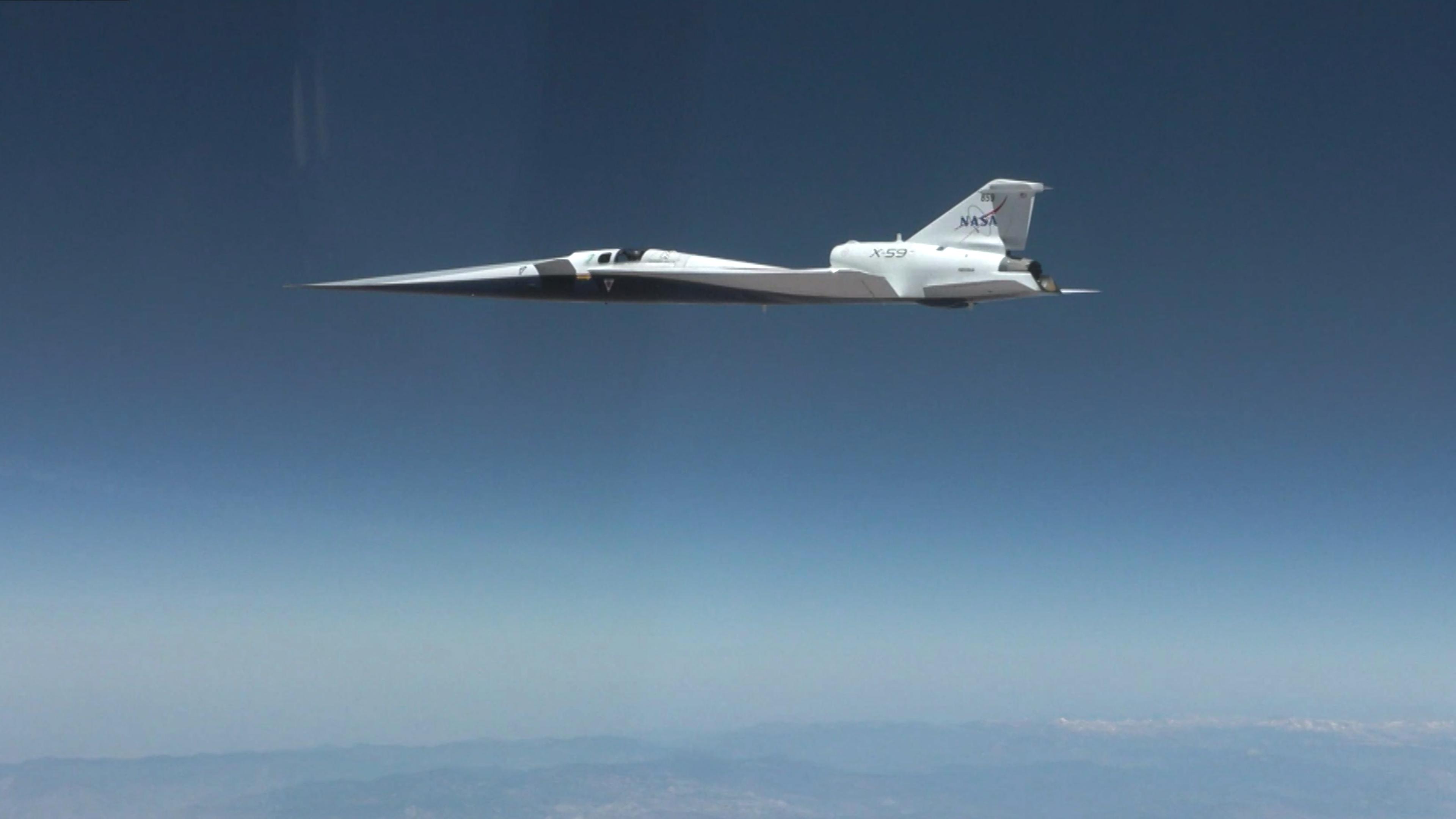
The X-59 in flight on June 12, 2026 against a blue sky.
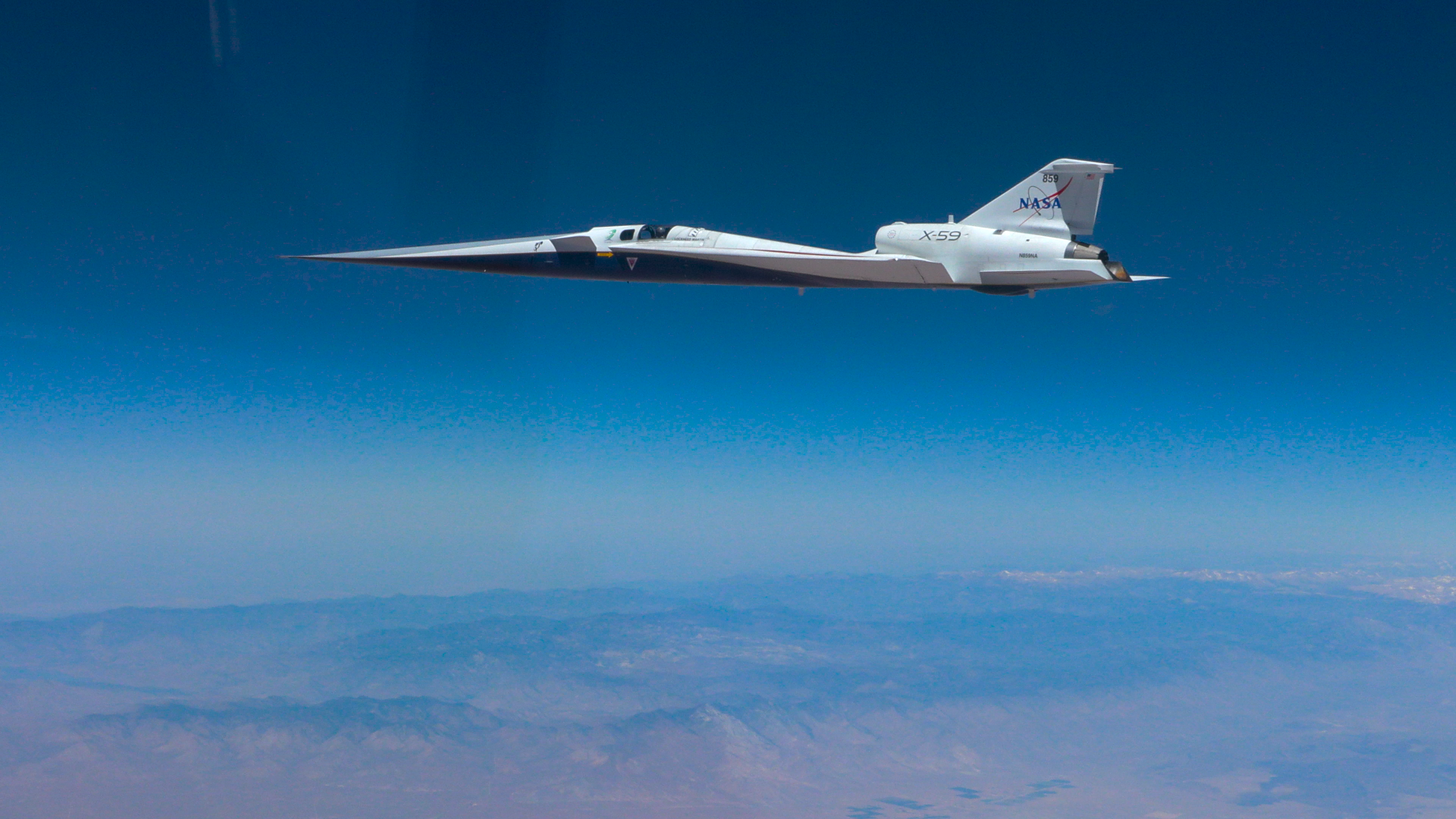
NASA’s X-59 quiet supersonic research aircraft reached its target speed and altitude for future community overflights for the first time during a flight on Friday, June 12, 2026. The milestone marked the first time the aircraft flew at Mach 1.4 and 55,000 feet — conditions it will fly when gathering community response data to its quiet sonic thump.
NASA/Lori Losey

NASA’s X-59 experimental aircraft reached a major milestone Friday, June 12, flying Mach 1.4 (about 924 mph) and an altitude of 55,000 feet, the conditions required for the aircraft to make future flights critical to its mission.  

The X-59 still has months of performance testing ahead, but after those are complete, NASA’s Quesst mission will fly the aircraft over several U.S. communities to collect data on public perception of the quiet sonic thump it will make at supersonic speeds. Those community overflights will include flights at Mach 1.4 and 55,000 feet. 

The milestone comes just days after the X-59’s first supersonic flight. That flight showed the aircraft performed as expected at Mach 1.1, but Friday’s mission conditions flight was an even more critical step for NASA. 

The aircraft’s team has steadily expanded the aircraft’s flight envelope by evaluating its performance at a variety of speeds and altitudes, and having its pilots take on a battery of maneuvers.  

Photo of the XVS screen on the X-59 showing Mach 1.4 at 55,030 was achieved.
NASA’s X‑59 eXternal Vision System (XVS) shows Mach 1.4 at 55,030 feet on Friday, June 12, 2026 during the aircraft’s first mission conditions flight, the approximate conditions it will fly when gathering community response data to its quiet “sonic thump.” The milestone marks the first time the aircraft flew at its designed speed and altitude.
NASA/Lori Losey

The X-59 was designed to fly supersonic without causing a loud sonic boom. However, for these early supersonic flights it has been accompanied by a NASA F-15 research aircraft, a traditional supersonic jet that causes booms obscuring any noise the X-59 makes. During upcoming flights, a shock-sensing probe mounted to the F-15 will gather measurements of the X-59’s shock wave signature, an early measure of its supersonic performance. 

After the team conducts more tests at a variety of altitudes and conditions to complete envelope expansion, the X-59 will enter the acoustic validation phase of Quesst. During this phase, researchers will thoroughly measure the aircraft’s supersonic acoustic signature — the quiet thump it’s designed to make — to confirm it is performing as intended. 

Each flight brings NASA one step closer to flying the X-59 over communities and gathering feedback that could help shape the future of commercial supersonic flight over land. 

More X-59 to Explore

quesst-logo-horizontal-051826sm

Read more on the Quesst mission page.

The post NASA’s X-59 Reaches Speed, Altitude for Future Quiet Supersonic Flights appeared first on NASA Science.

  •  

NASA’s X-59 Flies Supersonic for First Time 

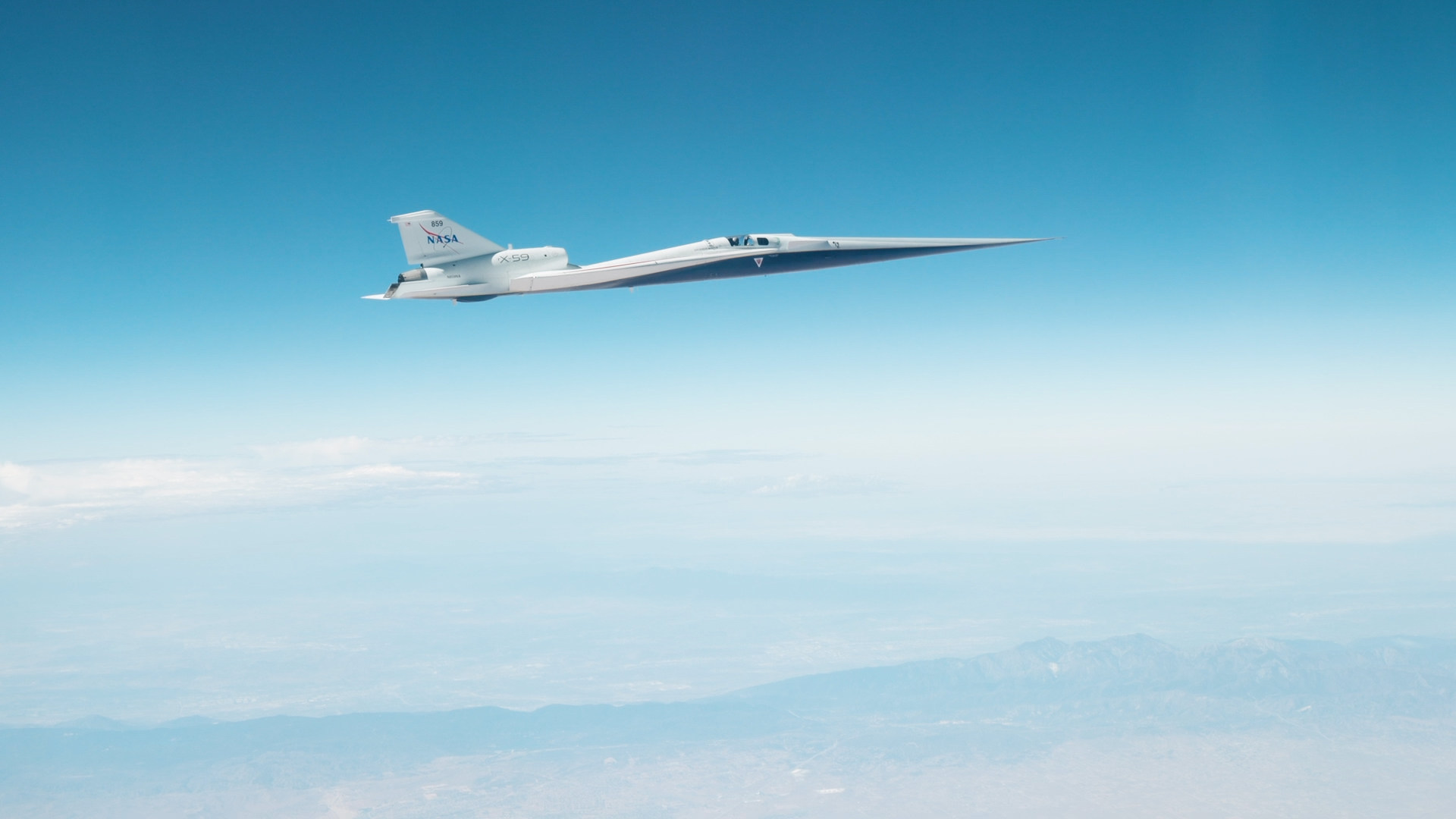
NASA’s X-59 quiet supersonic research aircraft flies above the clouds during its first supersonic flight. The aircraft is shown in side profile during level flight with desert and mountain terrain visible below.
NASA’s X-59 quiet supersonic research aircraft completed its first supersonic flight Friday, June 5, 2026, marking the first time the aircraft exceeded the speed of sound in support of NASA’s Quesst mission. The milestone represents a major step in flight testing as the aircraft expands into the supersonic portion of its flight envelope.
NASA/Lori Losey

NASA’s X-59 experimental aircraft reached a major milestone Friday, June 5, when it flew faster than the speed of sound for the first time.  

The 81-minute flight achieved a speed of Mach 1.1 (approximately 713 mph) at an altitude of 43,400 feet, with the X-59 performing as expected. For NASA test pilot Jim “Clue” Less, the plane’s instruments were the only indication of flying supersonic — exactly what the team wanted. 

“You know you are supersonic when gauges say you are supersonic. I didn’t feel anything,” Less said. “It went smoothly, and we easily got to Mach 1.1.” 

The X-59 is designed to fly at supersonic speeds while creating only a quiet thump instead of a loud sonic boom. For this flight, a NASA F‑15 chase plane flew nearby to monitor the test. Its loud sonic booms obscured any sound made by the X-59. The X-59 will conduct flights focused on its sound profile during a later phase of testing. 

Now that the X-59 has officially kicked off supersonic flight tests, the next big step is its first mission conditions flight. During this test, the X-59 will fly at the same speed and altitude planned for future tests, where the aircraft will fly over several U.S. communities to gather data from people on the ground about its noise levels: Mach 1.4 (925 mph) at 55,000 feet.  

“The plane wants to go faster, and we are looking forward to that,” Less said. 

The X-59 is the centerpiece of NASA’s Quesst mission, which aims to demonstrate quieter supersonic flight and to help enable commercial supersonic flight over land.  

This flight was also the first time the X‑59 appeared in NASA’s flight tracker.

More X-59 to Explore

quesst-logo-horizontal-051826sm

Read more on the Quesst mission page.

The post NASA’s X-59 Flies Supersonic for First Time  appeared first on NASA Science.

  •  

NASA’s X-59 Aircraft Flies Supersonic for First Time

4 min read

NASA’s X-59 Aircraft Flies Supersonic for First Time

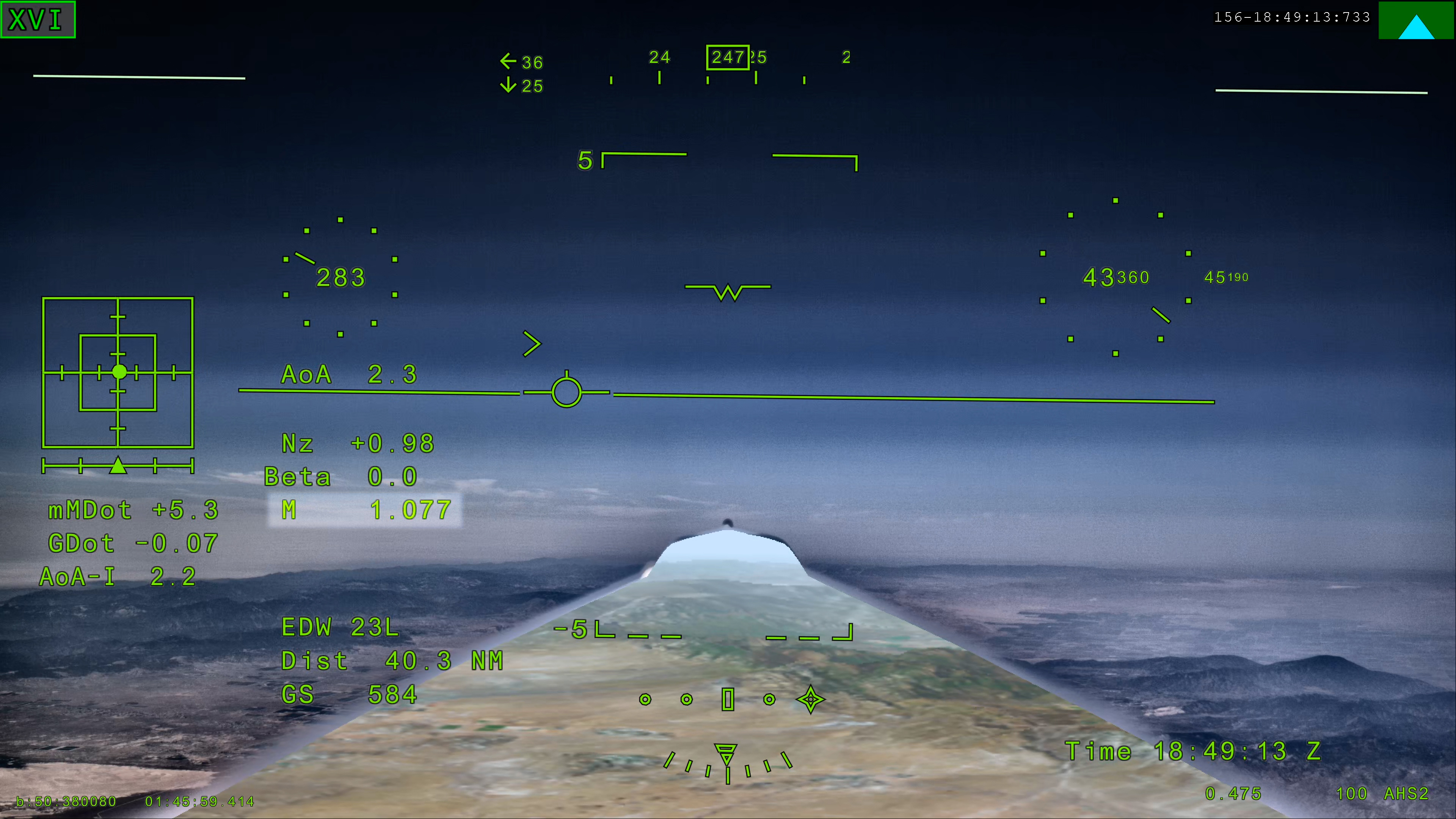
NASA’s X 59 eXternal Vision System digital display shows green flight data overlaid on the forward scenery as the aircraft flies supersonic. Numerical indicators, horizon references, and a Mach number readout are visible on the screen.
NASA’s X 59 eXternal Vision System shows Mach 1.077 on Friday, June 5, 2026, marking the aircraft’s first time reaching supersonic speed in support of NASA’s Quesst mission. The moment represents a milestone for the aircraft as it transitions to include test flights faster than the speed of sound.
NASA

NASA’s experimental X-59 aircraft marked a major milestone Friday, June 5, when it flew faster than the speed of sound for the first time, setting the stage for demonstrating its quiet supersonic capabilities later this year. 

NASA test pilot Jim “Clue” Less took off and landed at Edwards Air Force Base in California, reaching a top speed of approximately Mach 1.1 (713 mph) and altitude of 43,400 feet. The X-59’s flight began at 11:08 a.m. PDT and lasted 81 minutes, with the team focusing on flying qualities at both subsonic and then supersonic speeds.  

In the coming days, we expect to take the next step and push to Mach 1.4

jared isaacman

jared isaacman

NASA Administrator

”X-59 is getting ready for its quiet supersonic debut. Since the aircraft’s first flight on Oct. 28, 2025, the team has made tremendous progress, flying 16 times in the last 90 days and getting into a steady test rhythm. In the coming days, we expect to take the next step and push to Mach 1.4,” said NASA Administrator Jared Isaacman “I’m grateful to the NASA team and Lockheed Martin Skunk Works for their help getting us to this point, and I hope this is the first of many collaborations as we rebuild NASA’s X-plane portfolio.” 

The X-59 is designed to fly at supersonic speeds while creating only a quiet thump instead of a loud sonic boom. For this flight, a NASA F‑15 chase plane flew nearby to monitor the X‑59. The loud sonic booms from the F-15 obscured any sound made by the X-59.  

“The X-59’s first supersonic flight is a testament to America’s enduring leadership in science, engineering, and aerospace innovation,” said Michael Kratsios, Assistant to the President for Science and Technology and Director of the Office of Science and Technology Policy. “This achievement comes as the Trump Administration continues work to unleash supersonic flight and enable American ingenuity.” 

This first supersonic flight is a significant milestone, but an event even more critical to the mission is upcoming. In just days, the aircraft is expected to make its first “mission conditions” flight, reaching a cruising speed of Mach 1.4 (925 mph) and altitude of approximately 55,000 feet. The X-59 also will be accompanied by a chase plane for this flight.  

NASA’s X-59 quiet supersonic research aircraft flies above the clouds during its first supersonic flight. The aircraft is shown in side profile during level flight with desert and mountain terrain visible below.
NASA’s X-59 quiet supersonic research aircraft completed its first supersonic flight Friday, June 5, 2026, marking the first time the aircraft exceeded the speed of sound in support of NASA’s Quesst mission. The milestone represents a major step in flight testing as the aircraft expands into the supersonic portion of its flight envelope.
NASA / Lori Losey

This speed and altitude are the base conditions for the X-59 when it will eventually fly over several U.S. communities enabling NASA to gather data about how people may perceive its quiet thump. NASA will share this data with U.S. and international regulators to help establish new data-driven noise standards to enable a future viable market for supersonic commercial flight over land. 

For the last several months, the X-59 has been participating in an ongoing series of flights where the plane has been flying at a wide range of speeds and altitudes – a process known as envelope expansion. These tests are the first phase of the X-59’s flight testing. They are focused on performance and involve chase plane monitoring. When the aircraft completes this phase it will enter another, focused on its sound profile in order to verify its quiet thump capability.  

The X-59 is the centerpiece of NASA’s Quesst mission, which aims to demonstrate quiet supersonic flight and help enable commercial supersonic flight over land worldwide. These advancements will help travelers reach their preferred destinations faster, spending less time in the air. 

Through Quesst’s development of the X-59, NASA also will deliver design tools and technology for quiet supersonic airliners that will achieve the high speeds desired by commercial operators without disturbing people on the ground. NASA will validate design tools through ground and flight testing, providing U.S. aircraft manufacturers the ability to explore new quiet supersonic concepts, and provide them with confidence that their resulting designs will meet quiet flight requirements.  

quesst-logo-horizontal-051826sm

Read more about NASA’s Quesst mission and the X-59.

Keep Exploring

Discover More Topics From NASA

The post NASA’s X-59 Aircraft Flies Supersonic for First Time appeared first on NASA Science.

  •  

NASA’s X-59 Aircraft Flies Supersonic for First Time

4 min read

Preparations for Next Moonwalk Simulations Underway (and Underwater)

NASA’s X 59 eXternal Vision System digital display shows green flight data overlaid on the forward scenery as the aircraft flies supersonic. Numerical indicators, horizon references, and a Mach number readout are visible on the screen.
NASA’s X-59 eXternal Vision System shows Mach 1.077 on Friday, June 5, 2026, marking the aircraft’s first time reaching supersonic speed in support of NASA’s Quesst mission. The moment represents a milestone for the aircraft as it transitions to include test flights faster than the speed of sound.

NASA

NASA’s experimental X-59 aircraft marked a major milestone Friday, June 5, when it flew faster than the speed of sound for the first time, setting the stage for demonstrating its quiet supersonic capabilities later this year. 

NASA test pilot Jim “Clue” Less took off and landed at Edwards Air Force Base in California, reaching a top speed of approximately Mach 1.1 (713 mph) and altitude of 43,400 feet. The X-59’s flight began at 11:08 a.m. PDT and lasted 81 minutes, with the team focusing on flying qualities at both subsonic and then supersonic speeds.  

In the coming days, we expect to take the next step and push to Mach 1.4

jared isaacman

jared isaacman

NASA Administrator

”X-59 is getting ready for its quiet supersonic debut. Since the aircraft’s first flight on Oct. 28, 2025, the team has made tremendous progress, flying 16 times in the last 90 days and getting into a steady test rhythm. In the coming days, we expect to take the next step and push to Mach 1.4,” said NASA Administrator Jared Isaacman “I’m grateful to the NASA team and Lockheed Martin Skunk Works for their help getting us to this point, and I hope this is the first of many collaborations as we rebuild NASA’s X-plane portfolio.” 

The X-59 is designed to fly at supersonic speeds while creating only a quiet thump instead of a loud sonic boom. For this flight, a NASA F‑15 chase plane flew nearby to monitor the X‑59. The loud sonic booms from the F-15 obscured any sound made by the X-59.  

“The X-59’s first supersonic flight is a testament to America’s enduring leadership in science, engineering, and aerospace innovation,” said Michael Kratsios, Assistant to the President for Science and Technology and Director of the Office of Science and Technology Policy. “This achievement comes as the Trump Administration continues work to unleash supersonic flight and enable American ingenuity.” 

This first supersonic flight is a significant milestone, but an event even more critical to the mission is upcoming. In just days, the aircraft is expected to make its first “mission conditions” flight, reaching a cruising speed of Mach 1.4 (925 mph) and altitude of approximately 55,000 feet. The X-59 also will be accompanied by a chase plane for this flight.  

NASA’s X-59 quiet supersonic research aircraft flies above the clouds during its first supersonic flight. The aircraft is shown in side profile during level flight with desert and mountain terrain visible below.
NASA’s X-59 quiet supersonic research aircraft completed its first supersonic flight Friday, June 5, 2026, marking the first time the aircraft exceeded the speed of sound in support of NASA’s Quesst mission. The milestone represents a major step in flight testing as the aircraft expands into the supersonic portion of its flight envelope.
NASA / Lori Losey

This speed and altitude are the base conditions for the X-59 when it will eventually fly over several U.S. communities enabling NASA to gather data about how people may perceive its quiet thump. NASA will share this data with U.S. and international regulators to help establish new data-driven noise standards to enable a future viable market for supersonic commercial flight over land. 

For the last several months, the X-59 has been participating in an ongoing series of flights where the plane has been flying at a wide range of speeds and altitudes – a process known as envelope expansion. These tests are the first phase of the X-59’s flight testing. They are focused on performance and involve chase plane monitoring. When the aircraft completes this phase it will enter another, focused on its sound profile in order to verify its quiet thump capability.  

The X-59 is the centerpiece of NASA’s Quesst mission, which aims to demonstrate quiet supersonic flight and help enable commercial supersonic flight over land worldwide. These advancements will help travelers reach their preferred destinations faster, spending less time in the air. 

Through Quesst’s development of the X-59, NASA also will deliver design tools and technology for quiet supersonic airliners that will achieve the high speeds desired by commercial operators without disturbing people on the ground. NASA will validate design tools through ground and flight testing, providing U.S. aircraft manufacturers the ability to explore new quiet supersonic concepts, and provide them with confidence that their resulting designs will meet quiet flight requirements.  

quesst-logo-horizontal-051826sm

Read more about NASA’s Quesst mission and the X-59.

Keep Exploring

Discover More Topics From NASA

💾

NASA’s X-59 quiet supersonic research aircraft completed its first supersonic flight Friday, June 5, 2026, marking the first time the aircraft exceeded the s...
  •  

End of an Era: The Retirement of the American AV-8B Harrier II

On June 3, 2026, a notable event took place at Marine Corps Air Station Cherry Point, as the United States Marine Corps officially retired its last AV-8B Harrier II attack aircraft from active service. This provides an opportunity to revisit the history of the AV-8B Harrier II program. A British-American Project In 1972, the American […]

The post End of an Era: The Retirement of the American AV-8B Harrier II appeared first on AERONAUT.media.

  •  
❌