❌

Reading view

Early Access: Meta's Neural Band just got cooler with neural handwriting for Ray-Ban Display

What you need to know

  • Meta announces that its neural handwriting is now rolling out in its EAP (Early Access Program) for the Ray-Ban Display.
  • Users are recommended to write with their index finger on a stable surface, and allow the AI to correct any typos or mistakes.
  • Meta confirmed this was on the way for the Ray-Ban Display in December.

Meta's neural band is an important part of its smart glasses experience. It brings convenience, and Meta says it's offering a new feature in Early Access for silent AI interactions.

If you've got a pair of Meta smart glasses, the company has announced a silent handwriting feature in Early Access using the Neural Band. In a press release, Meta says users can write "AI queries with their index finger when their display is on." It states users can get answers to questions, play a song, pull up directions, and more without much effort—just a finger. Meta went into more detail about this EAP (Early Access Program) feature.

If you're interested, Meta says users must ensure their Neural Band is paired with their glasses and that everything is updated, as well as enroll in the EAP. To enable neural handwriting, head to Meta AI app > Settings > select your glasses > Early Access > toggle Meta AI with neural handwriting. For the "best results," Meta recommends users write with their index finger. It states you should "anchor your wrist on a hard surface and use your index finger to write." What's more, you should write in print, not cursive.

To ensure the Neural Band and neural handwriting feature captures what you're writing properly, you should write smoothly and at a consistent pace. Meta says users shouldn't worry about typos, nor should they wait for their HUD to catch up to what they've written. Continue regardless, and Meta AI will automatically fix any errors.

Neural handwriting is headed to the Meta Ray-Ban Display in the EAP.

Writing in the air

Going hands-on with Meta Orion smartglasses and using an EMG wristband for input

(Image credit: Android Central)

It was teased in December 2025, and now it's finally here. Meta confirmed late last year that it planned to empower its Ray-Ban Display further with "virtual" handwriting. We've now seen this arrive as neural handwriting. This EMG handwriting feature was confirmed to leverage the Neural Band with the user's drawing and gesture inputs. The company also teased Instagram Reel support for its glasses, too.

The neural band was an object of interest for Android Central's Nicholas Sutrich last year, too. To him, it felt like a true device straight out of a Sci-fi movie. To Meta, the sEMG band (neural band) is a requirement for "true AR smart glasses products." Users wouldn't need to rely on a screen to type their commands. The band captures your muscle movements to act out what you're writing or capture your gestures. It's silent and completely hands-free (technically).

Android Central's Take

The neural band is pretty cool, I have to admit. But bringing this "virtual" or neural handwriting just seems like the next logical step for Meta. It can already capture gesture for scrolling through song lists, why not do more? Why not make it so writing a quick message or asking its AI is effortless with single movements?

  •  

FDA cleared a huge Samsung Galaxy Buds feature to help you hear every moment

What you need to know

  • Samsung announced that its Hearing Aid feature for the Galaxy Buds 3 Pro and 4 Pro has been FDA-cleared.
  • It states this will work alongside its Hearing Test, which lets users use "clinical-grade, pure-tone audiometry" to test their hearing and see clear results.
  • Samsung says Hearing Test and Hearing Aid will arrive on the Buds 3 Pro and 4 Pro in the U.S. and other approved markets in Q4 2026.

Samsung announces that a major accessibility feature for its Galaxy Buds has cleared a key governmental hurdle.

The company announced this morning (Aug 11) that its Hearing Aid feature for the Galaxy Buds 3 Pro and 4 Pro has been FDA-cleared. Samsung says this enables the previously mentioned devices "to serve as an over-the-counter hearing aid for adults (18 or older) with perceived mild to moderate hearing loss."

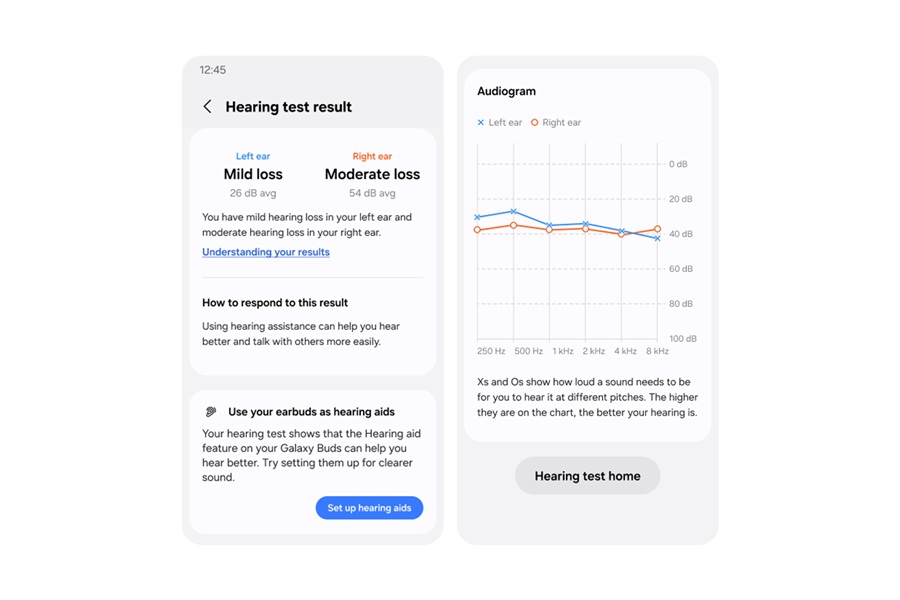
For users, this means you'll have access to the Galaxy Buds' Hearing Test, alongside this Hearing Aid feature. Hearing Test is self-administered from the Galaxy Buds menu in your Settings. Samsung says it uses "clinical-grade, pure-tone audiometry" to test your hearing in each ear. Hearing Test is also said to highlight any "hearing deficits." Your Galaxy Buds will generate an "audiogram" that Samsung says mirrors what you'd receive from a professional test.

Once completed, your test will categorize your results in one of the following categories: mild, moderate, severe, or profound.

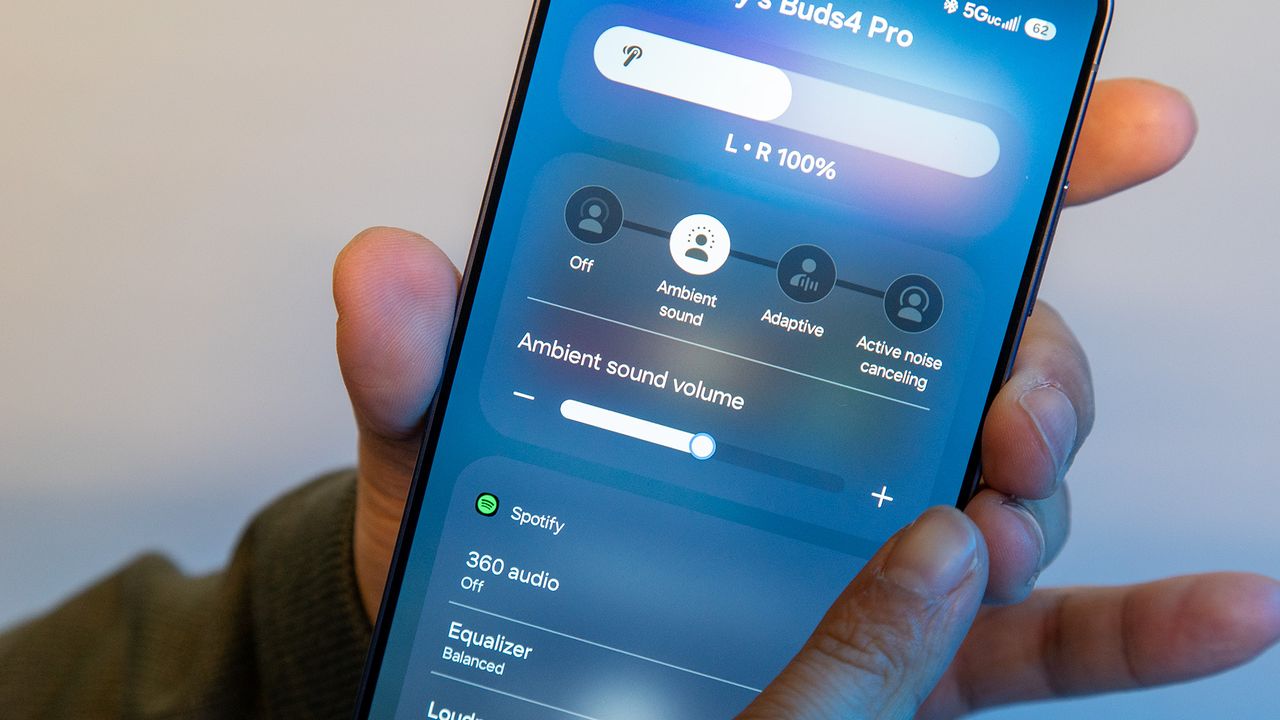
Your Galaxy Buds will then use your Hearing Test results to fine-tune its Hearing Aid feature. It might boost "high frequencies, surrounding whispers, or distant voices." The Galaxy Buds 3 Pro and 4 Pro benefit from familiar true hearing aid features, such as "noise elimination and beamforming." Hearing Test and the Hearing Aid feature for the Buds 3 Pro and 4 Pro will arrive on Galaxy devices in Q4 2026 in the U.S. and other approved markets.

Hear the world around you

Samsung's Hearing Test feature works with its Hearing Aid feature for the Galaxy Buds 3 Pro and 4 Pro, capable of delivering a near professional-like experience to understand your hearing health.

(Image credit: Samsung)

Samsung has continued to focus on the user's hearing health ever since its huge Health app update in June. In the spirit of being proactive, Samsung announced Hearing Health. It will leverage your Galaxy Watch, phone, and Buds to monitor the noise level around you. If loud noises are a constant, your Galaxy Watch would let you know and urge you to make changes. The idea is to help users better preserve their hearing for the long term.

This capability was announced for the revamped app, which includes a lot of new health features for current and upcoming Galaxy devices. For example, the Galaxy Watch 9 and Watch Ultra 2 feature this new Hearing Health feature right out of the box. Samsung reiterates that users can keep tabs on their Hearing Health from the Health app, and now these new features are on the way for the Galaxy Buds to take things further.

Android Central's Take

Preserving your hearing is incredibly important. It's one of those things that if you lose it, it's hard to get back. This is even more important, given that we love earbuds. It's easy to pop those in and start listening while working, reading, or walking. But we've got to be conscious about our noise level. You never want those earbuds too loud. That's something we all learned when we were kids, right?

  •  

Your Motorola phone is getting Android 17 – here's who's first

What you need to know

  • Motorola has confirmed 50+ devices for the stable Android 17 update.
  • Newer Razr and Edge models are expected to receive Android 17 before older devices.
  • Several Moto G models, including the G Stylus 2026, G Power 2026, G87, G86, G77, G67, G57, G47, and G37, are eligible.

Motorola has just announced a massive list of more than 50 devices that will be getting the stable Android 17 update, and the rollout has already started. But before you start clicking the "Check for updates" button, you need to know who gets it first and who’s stuck waiting.

The stable rollout has already begun with the Motorola Edge 2025, with newer premium devices like the Razr 70 series and Edge 70 lineup likely to be given priority, as per the company's announcement on its Spanish website. Motorola says the update will roll out gradually to other eligible models in the coming weeks and months.

Interestingly, this rollout has been in the works for months. Motorola’s Android 17 beta program started just days after Google released Android 17 Beta 1 in February, putting it ahead of a few rival Android brands. This was notable as Motorola was still working on rolling out Android 16, with some eligible phones still waiting months for the last big update.

The confirmed Android 17 roster is a massive one. It includes the Motorola Signature and a long list of Razr models, as follows:

  • Motorola Razr 70 Ultra
  • Motorola Razr 70 Plus
  • Motorola Razr 70
  • Motorola Razr Ultra 2026
  • Motorola Razr+ 2026
  • Motorola Razr 2026
  • Motorola Razr Fold 2026
  • Motorola Razr Fold 2025
  • Motorola Razr 60 Ultra
  • Motorola Razr 60s
  • Motorola Razr 60d
  • Motorola Razr 60
  • Motorola Razr Ultra 2025
  • Motorola Razr+ 2025
  • Motorola Razr 2025
  • Motorola Razr 50 Ultra
  • Motorola Razr+ 2024

The Edge series also gets the same treatment, covering the Edge 70 family, Edge 2026, Edge 2025, Edge 60 series, and Edge 50 Ultra.

  • Motorola Edge 2026
  • Motorola Edge 70 Pro+
  • Motorola Edge 70 Pro
  • Motorola Edge 70 Max
  • Motorola Edge 70 Neo
  • Motorola Edge 70 Plus
  • Motorola Edge 70 Fusion+
  • Motorola Edge 70 Fusion
  • Motorola Edge 70
  • Motorola Edge 2025
  • Motorola Edge 60 Stylus
  • Motorola Edge 60 Pro
  • Motorola Edge 60 Fusion
  • Motorola Edge 60
  • Motorola Edge 50 Ultra
  • Motorola Edge 60

Even the cheaper Moto G phones from Motorola aren’t being left behind. The list also includes:

  • Moto G Stylus 2026
  • Moto G Power 2026
  • Moto G Play 2026
  • Moto G 2026
  • Moto G 2025
  • Moto G Power 2025
  • Moto G Stylus 2025
  • Moto G Max
  • Moto G87
  • Moto G86
  • Moto G86 Power
  • Moto G77
  • Moto G77 Power
  • Moto G67
  • Moto G57
  • Moto G57 Power
  • Moto G47
  • Moto G37
  • Moto G37 Power

Motorola’s Android 17-based HelloUI update introduces Live Updates in a Dynamic Island style, the Qira Moto AI assistant, lock-screen customization options, resizable Quick Settings tiles, refreshed haptics, tinted icons, and a redesigned volume panel.

Remember, rollouts will differ by region and carrier. If your Motorola is on the list, you should eventually see the update pop up under Settings > System > System updates.

  •  

What is the release date for The Shards episodes 3 and 4 on Hulu and Disney+?

The Shards is now streaming on Hulu for US viewers and Disney+ internationally, as it adapts Bret Easton Ellis' novel of the same name.

In my The Shards review, I was pleased to note that it was a welcome return to form for Ryan Murphy. I was also impressed by how well he adapts the source material into a sexy, glamorous yet dangerous TV series.

If you're here, you're wondering when the next episodes will stream. Much like the two episode premiere, we also get two episodes this week.

Here's what you need to know about the release of The Shards episodes 3 and 4.

What time can I watch The Shards episodes 3 and 4 on Hulu?

For US viewers, both The Shards episodes 3 and 4 will drop on Wednesday, August 12 at 6pm PT/ 9pm ET.

Here's when you can stream the new episodes in other countries.

  • US – Thursday, August 13 at 6pm PT / 9pm ET
  • Canada – Thursday, August 13 at 6pm PT / 9pm ET
  • UK – Friday, August 14 at 2am BST
  • India – Friday, August 14 at 6:30am IST
  • Singapore – Friday, August 14 at 9am SGT
  • Australia – Friday, August 14 at 11am AEDT
  • New Zealand – Friday, August 14 at 12pm NZDT

When do new episodes of The Shards come out?

The Shards cast leaning on the edge of a swimming pool

(Image credit: Hulu)

After this week's double bill, episodes of The Shards will premiere on a weekly basis until the finale on Wednesday, September 9. We do have another double bill coming up too, which is good news for those who don't like to wait.

For dates as well as the episode titles for the upcoming The Shards releases, take a look below.

  • The Shards Episode 1 “Pilot”: Out now
  • The Shards Episode 2 “Don’t You Want Me”: Out now
  • The Shards Episode 3 “Help Me! Rhonda!”: Wednesday, August 12
  • The Shards Episode 4 “Robert’s Party”: Wednesday, August 12
  • The Shards Episode 5 “Murder on the Dancefloor”: Wednesday, August 19
  • The Shards Episode 6 “Homecoming Part One”: Wednesday, August 26
  • The Shards Episode 7 “Homecoming Part Two”: Wednesday, August 26
  • The Shards Episode 8 “Hamlet”: Wednesday, September 2
  • The Shards Episode 9 “Stairway to Heaven”: Wednesday, September 9

  •  

Una expedición británica abandonó un fósil en la cima de una isla ártica en 1948 por no poder cargarlo: 78 años después resultó ser el mayor depredador de su especie jamás hallado

Le sacaron algunas fotos, se llevaron un par de huesos sueltos y dejaron el resto expuesto al viento y la lluvia polar. Nadie volvió a pensar en ese fósil durante 37 años, hasta que un grupo de geólogos noruegos tropezó con él por pura casualidad. Ni ellos, ni nadie, imaginó en ese momento que estaban por reescribir el árbol genealógico de uno de los grupos de depredadores acuáticos más extraños del Triásico

  •  

Reader Q&A: ask our reporters anything about fossil fuel profits and the climate crisis – live

Last week reporters Jillian Ambrose and Damian Carrington published a piece which revealed that biggest oil firms made $93bn in profits in three months amid the war in Iran and the climate crisis. They’re online now to to discuss their story and any other questions you might have

Ask a question: log in or sign up here


StanEthel asks: Does anyone in the fossil fuel industry accept responsibility for climate change? If they don’t, how is their denial structured: it’s not happening, it’s someone else’s fault, it’s not our fault?

Damian:

The short answer is no, and a rising tide of lawsuits against fossil fuel companies for their role in the climate crisis means that is unlikely to change anytime soon. The science is ever clearer though. An analysis published last September showed for the first time that carbon emissions from the world’s biggest fossil fuel firms were directly linked to fatal spells of hot weather.

The big oil companies were among the first to realise the dangers of global warming half a century ago. But decades of denial then followed. As the reality of climate crisis has become undeniable, the arguments of the fossil fuel industry have shifted. Gas was cleaner than coal, for example, or that carbon credits from new forests could offset emissions. Today, the industry likes to tout carbon capture and storage (CCS) as a solution. But just this week, one of CCS’s loudest cheerleaders, ExxonMobil, has started a process to sue the European Union which wants to make the company actually store a small amount of CO2.

In the first weeks of the conflict, some predicted that the government’s taxes on North Sea oil and gas would yield a £20bn tax windfall for the Treasury if surging oil and gas prices remained high over the whole year. This is because the government’s windfall tax on North Sea oil and gas, known as the Energy Profits Levy, imposes an effective headline tax rate on North Sea profits of 78%, and the Treasury collects VAT from petrol and diesel sales too.

But prices have not climbed by as much as first feared. So what can we reasonably expect? Before the war, the Office for Budget Responsibility forecast that oil and gas revenues would raise £2.7bn in the 2025/26 financial year. It also suggests that for every $10 increase to the benchmark oil price, the Exchequer can expect an extra £900m in revenue. Meanwhile, every 1p increase in the price of gas hands the Treasury an extra £55m.

Continue reading...

© Composite: Guardian Design

© Composite: Guardian Design

© Composite: Guardian Design

  •  

Why do some people feel life is so unfair? Understanding this may help explain conspiracy beliefs

HimelVector/Shutterstock

Most people set out in life wanting to believe the world is fair. They expect people to wait their turn in queues, to be treated equally in their job, and to be rewarded for hard work. These expectations influence how they understand the world around them, and shape their responses to it.

But what happens when life repeatedly challenges those assumptions? Psychologists have long been interested in this question. Our new research, published in the British Journal of Psychology, suggests adverse experiences shape both how fair people believe the world is, and how they view their place in society.

Over the course of a lifetime, personal setbacks – from illness and bereavement to being a victim of crime – may have a cumulative effect, leading to a growing sense that the world is unfair. We think this is important in the context of today’s increasingly polarised societies, in which trust in institutions has declined severely in the UK and many other countries.

Video: TEDxTalks.

Adversity and unfairness

Our research set out to answer two key questions: do experiences of adversity influence whether people see the world as fundamentally unfair – and if so, what are the societal consequences? We conducted three surveys involving more than 1,200 British participants with an equal gender split and average age of 39.

In one study, we found that people who reported experiencing more lifetime adversity – including illness, bereavement, financial hardship and violence – were more likely to believe the world was unfair.

In another, we compared people who had experienced violent victimisation with those who had not. After accounting for demographic factors, people who had experienced violent crime reported stronger perceptions of injustice.

Our final study found that greater lifetime adversity was associated with lower trust in institutions through perceptions of injustice. This is important because trust underpins many aspects of society, from confidence in public institutions to democratic participation.

Together, these findings suggest that people don’t simply interpret information based on the facts available to them. They also interpret it through the lens of their previous experiences.

Two people can read the same news story, watch the same political debate or hear the same public health advice, yet come away with very different conclusions that may not simply reflect differences in knowledge or politics. It may also reflect differences in how they have come to see the world as a result of the hardships they have faced.

Furthermore, if someone increasingly believes that the world is unfair, they may be more likely to notice fresh examples of perceived injustice, corruption or hidden motives – and interpret new events through that lens.

Belief in conspiracy theories

Previous research has shown that people who feel uncertain, powerless or threatened are often more likely to endorse conspiracy theories. Most of this work, however, has focused on their identities, traits and beliefs.

In our investigation of the impact of adverse life experiences on people, we found a remarkably consistent pattern. When these hardships are associated with stronger perceptions of injustice in the world, the same people more strongly endorse conspiracy beliefs.

Conspiracy theories rarely describe events as random. Instead, they tend to suggest that powerful individuals or organisations are secretly responsible for what happens. They offer explanations that identify intentional causes behind events that might otherwise seem confusing or unjust.

Research suggests that across societies, the level of belief in conspiracy theories is relatively stable over time. But once these beliefs become part of how someone understands the world, they can be difficult to shift.

This makes it all the more important to understand the experiences and psychological processes that may contribute to these worldviews developing in the first place. Our findings suggest that perceptions of injustice are one such pathway.

For someone who increasingly feels the world is unfair, conspiracy theories may become more psychologically appealing – providing a way of making sense of experiences that otherwise feel difficult to understand.

Our research does not suggest that adversity inevitably leads to conspiracy beliefs; nor that conspiracy theories are an inevitable consequence of trauma. Rather, it highlights a long-term psychological process that may help explain why some people become more receptive to these ideas.

In an increasingly polarised world, the media and political focus is often concentrated on what information people consume. But our research suggests we should pay more attention to the experiences that shape the lens through which people interpret information. This could help explain why people can look at the same events and reach very different conclusions.

Ultimately, people’s experiences don’t just affect them in the moment. They shape their worldview – which can influence how they interpret and respond to events and other people’s behaviour far into the future.

So, we believe any effort to reach greater consensus in society may require a deeper understanding of the hardships people have lived through over the course of their lives – and how these can affect their sense of injustice.

The Conversation

Daniel Jolley has received funding from the Leverhulme Trust, the British Academy, and the Engineering and Physical Sciences Research Council (EPSRC). The studies mentioned in this piece were funded by the British Academy/Leverhulme Small Research Grants Scheme (SRG23/230720) and carried out in collaboration between Daniel Jolley, Laura Blackie, and research assistant Anna Maughan.

Laura Blackie has received funding from the British Academy.

  •  

Stellantis, svelato il propulsore elettrico per chi sogna il V8: addio turbo lag

Il ritardo del turbo, nell’enciclopedia delle quattro ruote, indica l’attesa tra la pressione dell'acceleratore e l'effettiva risposta del turbocompressore nei motori sovralimentati. La <strong>divisione performance SRT </strong>di <strong>Stellantis</strong> ha presentato un nuovo concept di propulsore battezzato eBoost Air. La nuova tecnologia di compressione elettrica è realizzata per risolvere uno dei principali problemi dei propulsori.Come si può gestire l'elevata potenza dei turbocompressori di grandi dimensioni conservando la reattività dell'acceleratore? Associata a un prototipo di <strong>motore Hurricane </strong>a<strong> sei cilindri</strong> in linea da 3,0 litri ad alte prestazioni, eBoost Air sfrutta un compressore elettrico per far entrare in funzione i turbocompressori fin dai bassi regimi, offrendo una risposta repentina.<h2>L’innovazione di Stellantis</h2>Quando il motore raggiunge un regime più elevato, entra in funzione l'energia dei gas di scarico. Il risultato è una sovralimentazione costante su tutto l'arco dei giri, eliminando virtualmente il <strong>turbo lag.</strong> Un boost che regala un piacere di guida agli appassionati. I turbocompressori sono alimentati dai gas di scarico del motore, generalmente dissipati in termini energetici.Non disperdendo l'aria di scarico forzata per far girare la turbina, i turbocompressori creano un<strong> sistema di sovralimentazione</strong> che riduce le perdite di pompaggio e garantiscono più ossigeno al motore. Tutto questo si traduce in combustioni più intense, dando una maggiore potenza. Con turbocompressori più grandi, è possibile forzare più aria nel motore, producendo più potenza, ma solo ad alti regimi.A regimi più bassi, la pressione di scarico abitualmente risulta troppo debole per far funzionare correttamente i turbocompressori. La tecnologia del <strong>compressore elettrico eBoost Air </strong>di <strong>SRT</strong> risolve questo problema riducendo il divario di giri con la pressione positiva generata da una turbina elettrica rapida e potente, che fa entrare in funzione i turbocompressori prima, ottimizzando la risposta all'acceleratore.[caption id="attachment_281598" align="alignnone" width="1200"]<img class="size-full wp-image-281598" src="https://www.hdmotori.it/app/uploads/2026/08/Stellantis-Propulsore-Elettrico-Turbo-Lag.jpg" alt="Stellantis, svelato il propulsore elettrico" width="1200" height="800" /> Propulsore elettrico: addio turbo lag Stellantis[/caption]<h2>La soddisfazione dei tecnici</h2>Quando il conducente vuole una coppia immediata e i turbocompressori non hanno ancora raggiunto la velocità di funzionamento richiesta, il <strong>sistema di bypass</strong> convoglia il flusso d'aria attraverso il compressore elettrico, che genera rapidamente la pressione di sovralimentazione necessaria per far entrare in funzione le turbine.Tim Kuniskis, responsabile dei marchi americani e del marketing per il Nord America, ha assicurato: <em>"Gli appassionati non sono interessati alla tecnologia fine a se stessa. Ma quando la tecnologia migliora le prestazioni senza svantaggi, la apprezzano appieno. L’eBoost Air offre esattamente questo tipo di vantaggio tangibile. <strong>È un'idea intelligente</strong> e semplice che affronta di petto il turbo lag e rispecchia ciò che <a href="https://www.hdmotori.it/dodge-charger-daytona-flop-vendite-srt-banshee-eliminata/">SRT</a> sa fare meglio: muoversi velocemente, sfidare le convenzioni e perseguire prestazioni superiori".</em>L’eBoost Air offre le sensazioni istantanee e lineari di un <strong>V8 sovralimentato.</strong> La divisione Street and Racing Technology (SRT) di <a href="https://www.hdmotori.it/stellantis-richiama-20-000-auto-un-guasto-al-servosterzo-potrebbe-provocare-un-incendio/" target="_blank" rel="noopener">Stellantis</a> riafferma così il suo ruolo di primo piano nelle innovazioni dell’industria dell’Automotive 2.0.<em>"La divisione SRT sta sfruttando lo <strong>sviluppo rapido</strong> e l'ingegneria interfunzionale per valutare le tecnologie emergenti in termini di prestazioni -</em> ha dichiarato Tom Sacoman, responsabile delle operazioni SRT - <em>In questo caso, pre-caricando elettromeccanicamente i turbocompressori prima che l'energia dei gas di scarico sia disponibile, siamo in grado di migliorare significativamente la risposta alla sovralimentazione e la guidabilità".</em>[drivek_widget brand_id="fiat" model_id="500-hybrid"]

Lo Smartphone piccolo che va bene a tutti? Motorola Edge 50 Neo, compralo al miglior prezzo da Unieuro a 239 euro.

CLICCA QUI PER CONTINUARE A LEGGERE

  •  

SpaceX has asked to operate up to one million AI satellites, but their direct waste heat would barely affect global temperature; the larger climate question is what launches and mass re-entry would put into the upper atmosphere

Representative rocket lifting off through a plume of exhaust

SpaceX has formally asked US regulators for permission to operate as many as one million AI data-center satellites. That number is real. It is also an upper limit in an application, not an approved fleet, a launch schedule or evidence that one million spacecraft will actually be built.

If the full Starmind system ever existed, its direct waste heat would be too small to become a major global climate driver. The harder environmental question lies in the industrial cycle required to create and replace it: manufacturing enormous amounts of hardware, launching it through the atmosphere and eventually vaporizing much of it during re-entry.

Climate models have only begun to study satellite constellations measured in tens of thousands. A million large computing satellites would sit far beyond the scale directly tested in that literature.

The FCC has accepted an application, not approved a million launches

SpaceX filed its application on January 30, 2026. The Federal Communications Commission accepted it for public comment on February 4.

The filing seeks authority for a non-geostationary system of up to one million satellites between 500 and 2,000 kilometers altitude. The spacecraft would exchange data through optical links and connect with SpaceX’s Starlink network.

Accepting an application for filing is an administrative step. It does not mean the FCC has determined that the architecture is safe, environmentally acceptable or technically achievable. The public notice also says SpaceX plans different hardware versions across multiple orbital shells, so “one million satellites” does not describe one fixed design.

SpaceX has since presented its first AI1 design for the Starmind system. The company’s published specifications give it a 120-kilowatt average compute load, a 150-kilowatt peak and a deployed wingspan of 70 meters.

The computers’ direct heat is not the main climate problem

Computers turn almost all the electricity they use into heat. In orbit, that heat cannot leave through air or cooling water because neither is available. Large radiator surfaces must emit it as infrared radiation.

One million AI1 satellites operating at the advertised average would use about 120 gigawatts for computing. To put a strict upper bound on the direct climate effect, imagine that every watt of that heat somehow reached and was absorbed by Earth. Spread over the planet’s surface, it would average roughly 0.00024 watts per square meter.

That artificial scenario overstates the real effect because radiators can direct most thermal radiation toward deep space. Even so, its value is more than 10,000 times smaller than the IPCC’s estimate of 2.72 watts per square meter for total human-caused effective radiative forcing between 1750 and 2019.

The fleet would therefore not warm Earth simply by running hot computers overhead. Reflected sunlight, radiator orientation and the design of vast solar arrays would still need assessment, but direct compute heat is not the dominant global term.

Space solar power could avoid some terrestrial emissions

SpaceX argues that sun-synchronous satellites could collect solar energy without clouds or night-time interruptions and reject heat without chillers, cooling towers or fans. If orbital computing genuinely replaced electricity from fossil-fueled grids, it could avoid some power-sector carbon emissions and water consumption.

That benefit cannot be calculated from the one-million figure. A fair comparison would need the energy and materials used to manufacture satellites and rockets, propellant production, launch emissions, ground stations, replacement rates, failed spacecraft and the carbon intensity of the terrestrial data centers displaced.

No published life-cycle assessment yet covers SpaceX’s proposed full system. “Powered by solar energy” describes operation in orbit, not the environmental balance of building and continually replenishing the fleet.

Rocket exhaust is unusually effective high in the atmosphere

Rocket emissions are small beside global aviation, shipping or power generation by mass. Their location makes them different. Rockets inject black carbon, water vapor, nitrogen compounds, alumina and other products directly into atmospheric layers that surface pollution rarely reaches.

Black carbon absorbs sunlight and warms the surrounding stratosphere, changing atmospheric circulation and ozone chemistry. A NOAA modeling study found that a tenfold increase in hydrocarbon-rocket soot could warm parts of the stratosphere by 0.5 to 2 degrees Celsius and alter circulation. The authors stressed that soot emissions from different engines remain poorly measured.

A newer 2026 study in Earth’s Future modeled launch and re-entry emissions from the recent megaconstellation era through 2029. It found a global stratospherically adjusted forcing of about -0.0064 watts per square meter from all space missions in its scenario, with megaconstellations contributing 42 percent.

That modeled forcing is small compared with the present greenhouse-gas-driven climate imbalance, and its negative sign represents a slight cooling influence after the stratosphere adjusts. It is not necessarily good news. The same soot warms the stratosphere, changes circulation and can affect ozone. It is better understood as an uncontrolled atmospheric perturbation than as useful climate cooling.

The result also cannot be multiplied mechanically from thousands of satellites to one million. Starmind would use different spacecraft, potentially different launch vehicles and an unknown deployment cadence.

Re-entry would turn satellite material into atmospheric aerosol

Low-Earth-orbit constellations require replacement. Hardware fails, components age and atmospheric drag eventually brings spacecraft down. A million-satellite fleet with a five-year average life would imply 200,000 replacements and re-entries every year. SpaceX has not established that lifetime for the full system, but the example shows why lifespan matters as much as fleet size.

Re-entering spacecraft do not simply disappear. Heating vaporizes metals and creates particles and gases in the upper atmosphere. A 2024 global emissions inventory identified aluminum oxide as the dominant modeled metal oxide from satellites that ablate, alongside nitrogen oxides produced by high-temperature re-entry.

A 2025 atmospheric modeling study tested a scenario with 10,000 metric tons of re-entry alumina per year, a level associated with forecasts of roughly 60,000 satellites. Depending on particle size and re-entry latitude, the model produced regional temperature anomalies reaching about 1.5 degrees in the middle atmosphere and changes to polar-vortex winds.

That is not a prediction of 1.5 degrees of global surface warming. It is a modeled regional response high in the atmosphere, with large uncertainty about particle size, composition and transport. Scaling to Starmind requires basic information that is not public, especially spacecraft mass, material composition, operational life and disposal pattern.

A million is a different environmental regime

Space Daily has already examined how large Starmind spacecraft could affect ground-based astronomy. Climate and atmospheric chemistry pose a separate problem: pollution can accumulate even when each individual launch or re-entry looks small.

The most honest answer is therefore split. Direct waste heat from the orbital computers would be negligible at the global climate scale. Moving computing away from terrestrial grids might avoid emissions, but that benefit has not been demonstrated through a full life-cycle study.

The serious unknown is the launch-and-replacement machine surrounding the constellation. Existing research already finds measurable, though currently small, radiative and ozone effects from today’s much smaller space industry. A fleet approaching one million satellites would turn an emerging source of upper-atmosphere pollution into a planetary experiment without a validated model of the outcome.

The post SpaceX has asked to operate up to one million AI satellites, but their direct waste heat would barely affect global temperature; the larger climate question is what launches and mass re-entry would put into the upper atmosphere appeared first on Space Daily.

  •  

El terremoto de magnitud 7,4 en Colombia dejó más de 100 muertos: qué es el Cinturón de Fuego, la región que concentra el 90% de la actividad sísmica del planeta

El lunes 10 de agosto, un terremoto de magnitud 7,4 sacudió el oeste de Colombia y dejó más de un centenar de personas muertas, con el epicentro en San José del Palmar, en el departamento del Chocó. El sismo, sentido hasta en Bogotá, Ecuador, Panamá y Venezuela, volvió a poner el foco sobre una de las regiones geológicas más activas del planeta: el Cinturón de Fuego del Pacífico

  •  

What conservation looks like from the outside: A conversation with Adam Falk after his first year as CEO of WCS

Soon after becoming president and chief executive of the Wildlife Conservation Society, Adam Falk visited the giraffe keeper at the Bronx Zoo. What struck Falk was the source of the keeper’s commitment. If a giraffe needed help in the middle of the night, he said, the keeper would come in because of his bond with the animal. Falk recognized something familiar. Before joining WCS, he had been a theoretical physicist, a professor at Johns Hopkins University, president of Williams College, and president of the Alfred P. Sloan Foundation. Academics often pursue highly specialized work that matters deeply to them. A university leader has to support those individual efforts while helping the institution work toward shared goals. Falk found much the same challenge at WCS: leading people whose motivation is rooted in the work itself. Adam Falk with Joe Nappi, a Senior Keeper in the Mammal Department, and a Giraffe at the Bronx Zoo. Photo courtesy of WCS. He took over WCS in July 2025 without professional experience in zoology or conservation. That was unusual for the head of an institution founded in 1895, which now operates four zoos and an aquarium in New York alongside conservation programs in more than 50 countries. His first year gave him an outsider’s view of a field with its own history and assumptions. One of his early observations was that conservation work involves people as much as animals. Public campaigns often focus on wildlife, especially large and familiar species. Field programs depend on relationships…This article was originally published on Mongabay

  •  

Un equipo tardó una década en encontrar el árbol más alto de Asia Oriental: mide 84 metros, tiene 1.000 años y los indígenas lo llaman ‘el árbol que toca la luna’

Para llegar hasta él, un grupo de escaladores tuvo que seguir el curso de un río durante 20 kilómetros y después trepar montaña arriba durante dos días completos. Cuando finalmente alcanzaron la copa y dejaron caer una cinta métrica hasta el suelo, el número que apareció superó incluso lo que había calculado el láser desde un avión: 84,1 metros, casi un edificio de 25 pisos escondido en las montañas de Taiwán

  •  

GM exits $3.5B Indiana battery plant as Samsung SDI takes full control

Samsung SDI is taking full control of its Indiana battery plant. The South Korean cell maker is buying out General Motors’ 49.99% stake in their joint venture, according to a regulatory filing, ending GM’s ownership in the $3.5 billion factory.

That turns the New Carlisle, Indiana plant into Samsung SDI’s first wholly owned battery factory in North America.

  •  

Vaping vs. Smoking: Which Is Cheaper in 2026?

If you are trying to reduce your nicotine spending in 2026, one question naturally comes up: is vaping cheaper than smoking cigarettes?

For most adult smokers who switch completely to vaping, the answer is still yes. However, the size of the saving depends on how much you smoke, what type of vape you use, how frequently you replace pods or coils, and where you buy your products.

In the UK, the cost gap is also being influenced by changes to tobacco taxation and the introduction of the Vaping Products Duty (VPD) from October 2026. Even with the new vape tax, vaping is expected to remain less expensive than smoking for many users.

Vaping vs. Smoking: The Quick Answer

For a regular smoker, vaping can cost substantially less than buying cigarettes every day.

The NHS says that, once the initial vape kit has been purchased, vaping has been estimated to cost about one-third as much as smoking.

The exact saving will vary, though. A refillable pod system with e-liquid can have a very different running cost from frequently buying premium disposable or prefilled products.

Here’s a simplified comparison:

Cost factor Smoking Vaping
Initial equipment None Vape device required
Main consumable Cigarettes E-liquid/pods
Replacement parts None Coils/pods may be required
Daily cost Generally higher Generally lower
Long-term cost High Usually lower
UK tax pressure in 2026 Very high Increasing
Potential savings — Significant for many smokers

Why Smoking Is So Expensive in 2026

The biggest reason cigarettes are expensive is taxation.

UK cigarette prices include tobacco duty and VAT. The government increased tobacco duty in November 2025, and another increase is scheduled for 1 October 2026. From that date, the cigarette duty rate will rise to £394.09 per 1,000 cigarettes plus 16.5% of the retail price, subject to the minimum excise duty of £518.75 per 1,000 cigarettes.

For someone smoking every day, these costs add up quickly.

Example: A Pack-a-Day Smoker

Imagine an adult smoker buying one 20-cigarette pack every day.

At a hypothetical retail price of £15 per pack, the spending would be:

  • £15 per day
  • £105 per week
  • £450 per 30 days
  • £5,475 per year

This is only an example because cigarette prices vary by brand and retailer. If the price of a pack rises, the annual cost rises accordingly.

The important point is that smoking creates a recurring expense that is difficult to reduce without cutting consumption.

Why Vaping Can Be Cheaper

Vaping separates the cost of the device from the cost of the consumable.

A reusable pod system or vape kit may require an upfront purchase, but the device can then be used repeatedly. The ongoing expenses generally involve:

  • E-liquid
  • Replacement pods
  • Replacement coils
  • Occasionally a replacement battery or device

This can make the running cost considerably lower than buying a new packet of cigarettes every day.

The NHS specifically states that vaping costs much less than smoking and estimates that, after purchasing a kit, vaping can cost around one-third as much as smoking.

The Cheapest Vaping Setup in 2026

If your primary goal is reducing ongoing costs, a reusable refillable vape is generally worth considering rather than treating vaping as a series of disposable purchases.

A typical cost-conscious setup might include:

  1. A reusable pod kit
  2. A bottle of e-liquid
  3. Replacement pods or coils
  4. A charger if required

Once the device has been purchased, you only need to replace the consumables.

This is particularly important because the UK has already prohibited the sale or supply of disposable vapes. The NHS notes that disposable vapes can no longer legally be sold or supplied in the UK, while reusable and refillable products remain available.

What About the New Vaping Tax?

One of the biggest changes affecting the vaping-versus-smoking calculation in 2026 is the UK’s new Vaping Products Duty.

From 1 October 2026, the duty on vaping liquid will be £2.20 per 10ml. HMRC’s guidance confirms that the duty is calculated according to the volume of vaping product.

For example:

  • 10ml of e-liquid → £2.20 duty
  • 20ml → £4.40 duty
  • 30ml → £6.60 duty
  • 50ml → £11.00 duty
  • 100ml → £22.00 duty

This tax is incorporated into the supply chain and can ultimately affect the retail price paid by consumers.

The government has also increased tobacco duty at the same time. It announced a £2.20 increase per 100 cigarettes alongside the introduction of the £2.20-per-10ml vaping duty, with the stated aim of preserving the price difference between vaping and tobacco.

So while vaping is becoming more expensive, cigarettes are also facing substantial tax increases.

Refillable Vapes vs. Disposable Vapes

When comparing vaping costs, it is important not to treat every vape product as equally economical.

Refillable Pod Systems

Refillable pod systems can be one of the more economical approaches because you purchase e-liquid separately and reuse the device.

Their costs include:

  • Initial device
  • E-liquid
  • Pods or coils
  • Occasional replacement device

For someone who vapes regularly, spreading the cost of the hardware over many months can reduce the effective daily cost.

Prefilled Pods

Prefilled pod systems are convenient because there is less maintenance and no need to manually fill a tank.

However, convenience can come with a higher cost per unit of nicotine or e-liquid compared with buying larger quantities of refillable e-liquid.

Disposable Vapes

Disposable vapes were once popular partly because of their simplicity, but they are no longer a legal retail option in the UK. The NHS confirms that disposable vapes cannot legally be sold or supplied.

For UK consumers in 2026, therefore, cost comparisons should focus mainly on reusable and refillable vaping products.

A Simple Annual Cost Comparison

Let’s use an illustrative example rather than claiming a universal retail price.

Suppose a smoker spends £15 per day on cigarettes:

£15 × 365 = £5,475 per year

Now suppose a hypothetical vaping setup costs £5 per day on average, including e-liquid, pods/coils and the annualised cost of the device:

£5 × 365 = £1,825 per year

That would represent a potential saving of:

£5,475 − £1,825 = £3,650 per year

The numbers are illustrative rather than a prediction of what every vaper will spend. Your actual cost could be considerably higher or lower depending on consumption and product choice.

The NHS’s estimate that vaping can cost around one-third as much as smoking provides useful context for why these savings can be substantial.

What Can Make Vaping More Expensive?

Vaping is not automatically cheap.

Your spending can increase if you:

  • Buy premium devices frequently
  • Use high quantities of e-liquid
  • Replace pods or coils unnecessarily often
  • Buy expensive prefilled products
  • Keep multiple devices
  • Upgrade hardware frequently
  • Vape continuously throughout the day

Someone who regularly buys new devices and premium products may spend much more than someone using a basic refillable pod system.

In other words, your vaping style matters almost as much as the product itself.

What Can Make Smoking Even More Expensive?

Smoking costs can also rise beyond the price of cigarettes.

A smoker may spend additional money on:

  • Lighters
  • Cigarette cases
  • Tobacco accessories
  • Travel-related purchases
  • Convenience-store premiums
  • Tobacco price increases

More importantly, smoking is a daily expense. Even a relatively small increase in the price of a packet can translate into hundreds of pounds of additional spending over a year.

With further tobacco duty increases scheduled for October 2026, this pressure is unlikely to disappear.

Is Vaping Worth It Just to Save Money?

For an existing adult smoker, switching completely from cigarettes to vaping may reduce nicotine-related spending while also reducing exposure to many toxic substances found in cigarette smoke.

The NHS states that vaping is not risk-free, but that nicotine vaping is less harmful than smoking and exposes users to a smaller fraction of the risks associated with smoking.

However, the financial calculation should not be interpreted as a recommendation for non-smokers to start vaping.

If you do not smoke, starting vaping simply to save money does not make financial or health sense. The NHS advises that non-smokers should not vape.

For smokers considering switching, the greatest financial benefit comes from switching completely rather than maintaining both habits.

Dual Use Can Destroy the Savings

One of the biggest mistakes in a vaping-versus-smoking comparison is assuming that someone will completely replace cigarettes with vaping.

For example, if you continue smoking half a pack of cigarettes per day while also vaping, you are paying for two nicotine products.

That can result in:

Cigarette spending + vaping spending = higher total nicotine spending

A complete switch can therefore be much more economical than simply adding vaping to an existing smoking habit.

The NHS also notes that smokers only get the full benefits of switching when they stop smoking completely.

Vaping vs. Smoking: Which Is Cheaper in 2026?

For most adult smokers, vaping remains the cheaper option in 2026, particularly when using a reusable refillable device and buying e-liquid efficiently.

The cost advantage is being narrowed somewhat by the introduction of Vaping Products Duty from October 2026, but tobacco products are also facing higher taxation. The UK government’s policy continues to maintain a price differential between vaping and tobacco.

The Bottom Line

If you’re comparing the two purely on running costs:

Smoking: High and continually rising cost, largely driven by tobacco duty.

Vaping: Lower potential running cost, but affected by device, e-liquid and replacement-pod expenses.

Refillable vaping: Usually the most cost-conscious vaping approach.

Disposable vapes: No longer legally sold or supplied in the UK.

Dual use: Can eliminate much of the potential financial saving.

For a regular smoker, switching completely to a reusable vaping system can potentially save hundreds or even thousands of pounds per year, depending on previous cigarette consumption and vaping habits.

However, cost is only one part of the decision. Vaping is not harmless, and non-smokers should not start vaping. For smokers who want to quit, both financial considerations and health considerations should be taken into account.

Frequently Asked Questions

Is vaping cheaper than smoking in 2026?

Generally, yes. The NHS estimates that vaping can cost about one-third as much as smoking once the initial vape kit has been purchased.

Will vaping become more expensive in October 2026?

Yes. The UK is introducing Vaping Products Duty at £2.20 per 10ml of vaping liquid from 1 October 2026.

Are cigarettes getting more expensive in 2026?

Yes. UK tobacco duty is scheduled to increase again on 1 October 2026, including higher cigarette duty and a higher minimum excise duty.

Are disposable vapes legal in the UK in 2026?

No. The NHS states that disposable vapes cannot legally be sold or supplied in the UK. Reusable and refillable products remain available.

Is vaping completely safe?

No. Vaping is not risk-free. However, NHS guidance says nicotine vaping is less harmful than smoking cigarettes.

What is the cheapest way to vape?

For an adult smoker who chooses to switch, a reusable refillable pod system can generally provide a lower ongoing cost than repeatedly buying prefilled or single-use products. Actual savings depend on e-liquid consumption, hardware costs and purchasing habits.

The post Vaping vs. Smoking: Which Is Cheaper in 2026? appeared first on IGeeKphone China Phone, Tablet PC, VR, RC Drone News, Reviews.

  •  
❌