Login

“Not just hot water”: marine heatwaves can create toxic relationship between seagrasses and microbes
Heat stress from marine heatwaves can create a toxic relationship between seagrasses and a hidden ecosystem of bacteria,

For a long time, scientists considered Ötzi the Iceman a messenger from the Copper Age. But new research shows this frozen mummy wasn’t alone. He hosts small companions — dormant, cold-adapted yeasts. In other words, his remains might not be as frozen in time as researchers once thought.
Since Ötzi’s discovery in the Italian Alps in 1991, his body has been housed in a specialized facility in Bolzano, Italy. Scientists there held his remains at –6° Celsius (21.2° Fahrenheit). This has been to keep his body from degrading. It’s a temp close to that of the glacier in which he’d been found.
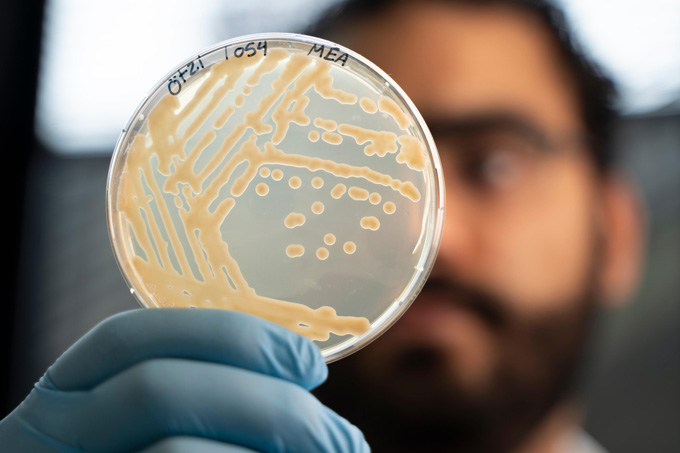
Four ancient species of yeast have now been found in his remains. And they’re still able to grow in the lab, reports Albert Zink. His team isolated “ancient DNA from these species,” he notes. An anthropologist, until recently, he worked at the Eurac research center in Bolzano, Italy. (He’s now at Ludwig Maximilian University of Munich, in Germany.)
Those DNA show the yeast “accompanied [Ötzi] over thousands of years while he was preserved in the ice,” Zink says.
Scientists suspect Ötzi thawed and refroze several times — especially in the first 1,500 years after his death. That could help explain why his remains still host microbes.
Zink’s team shared its results on June 3 in Microbiome.
Submit your question here, and we might answer it an upcoming issue of Science News Explores
Researchers thawed Ötzi’s body to 4 °C (39.2 °F) for five hours. Then, they collected the liquid that melted off his remains. They also swabbed parts of Ötzi’s body and took samples of his skin and other tissues.
Four colonies of yeast grew from these samples. Scientists compared these yeasts to those in soil near the glacier where Ötzi was found. They also checked air and the water that the museum had used to keep the mummy’s chamber humid.
These tests showed those four yeast species really came from the mummy. They were effectively time capsules of Ötzi’s time in the ice after his death. Bacteria were also extracted from internal tissues. None of these grew in the lab.
The new findings suggest the iceman’s remains seem to still be interacting with the environment.
Those microbes could pose a problem. If they don’t stay dormant, they could end up decomposing the mummy.
This conclusion is “right on the mark,” says Patrick Hunt. He’s an alpine archaeologist at Stanford University in California who did not take part in the new study.
Ötzi is “the most important archaeological-science finding of the 20th century,” Hunt says.
Ötzi’s mummy has offered an incredible window into the man’s former life. From many studies, scientists know he wore leather clothes, had multiple tattoos and would have likely gone bald. Past work even shows he ate a high-fat meal before he died and carried an ax made of copper derived from far away.
More such discoveries may emerge only if Ötzi’s body remains preserved. That requires getting to know the cold-loving and potentially damaging microbes on his body. It also makes the new findings essential, Hunt says. They’ll help scientists preserve this iceman for the ages.

Cows belch a lot of methane, a potent greenhouse gas. But it’s not their fault. Scientists have identified a new trigger for the process. It resides in some microbes that live in the cows’ guts.
This tiny organelle appears to help control how much of this greenhouse gas the cows burp out.
@scientificamerican Notoriously, cows burps are rather potent — a single cow can burp out as much as 220 pounds of methane a year. And scientists just identified the special structure inside microbes in their gut that is responsible for all that methane. It’s called a hydrogenobody. Read more at the
♬ original sound – Scientific American – Scientific Americanin our bio.
: Jackie Flynn Mogensen
: Kelso Harper
: Marta Hill
: Getty Images, Chuanqi Jiang/Jinying He/Che Hu/Institute of Hydrobiology, Chinese Academy of Sciences Fei Xie et al.,Rumen ciliates modulate methane emissions in ruminants.Science392,eadv4244(2026).DOI:10.1126/science.adv4244 #cows #methane #science #climate #greenhousegases
Some 30 percent of methane produced by farming comes from cud-chewing animals, or ruminants. These include cattle, sheep, goats and deer.
Like organs in the body, a cell’s organelles perform specific roles. The new organelle was found in fuzzy, single-celled ciliates (SIL-ee-ets). These microbes belong to a group known as protozoa.
Ciliates get their name from the hairlike structures — cilia — that help these cells move and sense their environment. These tiny furballs make up about one-fourth of all microbes living in the rumen. That’s the first stomach of cud-chewing animals. There, these microbes help break down grass and other plants.
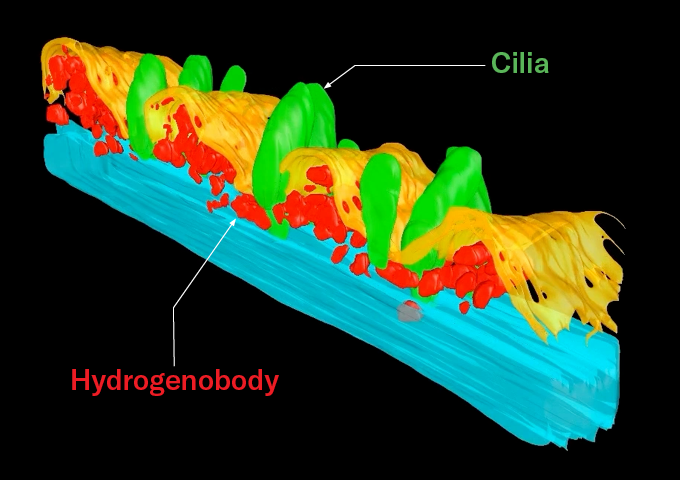
The new organelle makes hydrogen gas. So its discoverers are calling it a hydrogenobody (Hy-droh-GEN-uh-BAH-dee). The hydrogen it spews causes still other microbes in the rumen to produce methane.
To date, ciliates haven’t been studied much, says Ivan Čepička. He works at Charles University in Prague in the Czech Republic. He did not take part in the new research, but does study microbes, including protozoa.
Researchers in China have now cataloged DNA from ciliates found in ruminants. They’ve turned up 65 species, 45 never before identified.
These new species fell into three major groups. One type, Vestibuliferida, look like microscopic Koosh balls. Entodiniomorphida’s cilia develop appear like a shock of hair coming out of just one part of their cell. The third type of these microbes remains an unclassified family.
Some organisms that make hydrogen can prompt other microbes — archaea (Ar-KEE-uh) — to make methane. But those hydrogen-makers usually have organelles called hydrogenosomes (Hy-droh-GEN-uh-soams). They’re related to another organelle that makes energy.
But hydrogenosomes had not shown up in ciliates. So how rumen ciliates made hydrogen had been a mystery, Čepička says. The new study seems to have solved it: That gas comes from the hydrogenobodies. They’re located at the base of the structures that make ciliates look so fuzzy.
Researchers at the Chinese Academy of Sciences in Wuhan and several Chinese universities reported the surprising finding April 30 in Science.
The group had studied 100 dairy cows. The more ciliates these cattle had, the more methane-producing archaea they had. And the more methane-making archaea present, the more methane the cows belched.
Among ciliates, the Vestibuliferida are especially furry and have more hydrogenobodies. They also spew more methane than Entodiniomorphida.
One way to cut the methane in cow burps might be to remove Vestibuliferida from their rumen, the team suggests. It might also be possible to just curb the microbes’ growth.
People have tried to wipe out ciliates from the rumen, notes Todd Callaway. When they did, he adds, they saw a drop in how much methane cows make. But there was a downside, he adds: Cows with fewer ciliates produced less milk and meat. Callaway is a microbiologist and ruminant nutritionist. He works at the University of Georgia in Athens.
Keeping protozoa out of the rumen is hard, Callaway says. Cattle must be isolated in sealed barns. Their feed must be microbe-free. And they need to be kept at least 200 meters (660 feet) from other cattle. At that distance, the ciliates would no longer spread between cattle through the air.
Learning more about ciliates might lead to techniques that cut a cow’s methane burps while keeping her milk and muscle (meat) levels high.
Any such treatments are still a long way off, Callaway says. “This is step one of probably 25. But it’s a good step.”

Astronomers have long wondered whether life on Earth might have had origins somewhere else in the cosmos. The idea that the key ingredients for life, or even simple organisms, might be carried through space by non-animate objects—a concept known as panspermia—has been proposed as one way such “seeding” of life on Earth might have occurred.
But what if it could also happen in reverse? In other words, what if life were one day found on an alien moon, which could later be traced back to Earth?
This is the very idea presented in a new study that explores the provocative idea that Jupiter’s frozen moon Europa may not only be hospitable, but that life from Earth could be thriving there.
In the new study, published in the International Journal of Astrobiology, astrophysicist Zaza Osmanov of the Free University of Tbilisi explored whether Earthly bacteria might have been able to escape our planet by traveling on microscopic dust particles, which, after escaping Earth’s gravity, could have drifted through space until they reached Europa.
There, a vast subsurface ocean is believed to exist beneath the moon’s icy crust, meaning that any simple organisms capable of escaping from Earth on tiny spacefaring rafts of dust might have found their way to a new home, and one that could support life.
The long-debated idea of panspermia already presents the general idea for how this might work. However, Osmanov’s study investigates this idea in reverse order: not only might life on Earth have originated from elsewhere, but our planet could also hypothetically be the source of similar “seeding” events that might occur on alien worlds.
Based on mathematical models, Osmanov calculated how bacteria-rich dust grains could be launched into space, resulting from collisions with incoming dust in Earth’s upper atmosphere. Upon escaping the planet’s gravity, some of these bacteria might be able to sail along toward distant locales like Europa with the help of pressure generated by solar radiation—essentially the same concept as a solar light sail spacecraft, albeit much smaller.
With the help of solar radiation and occasional gravitational interactions, Osmanov theorizes that some particles might eventually be “steered” by such natural processes over time, eventually making their way to Jupiter.
Based on Osmanov’s estimates, there could potentially be as many as hundreds of millions of Earth-originating dust particles that might make their way to Europa every second. That’s a significant number, and although he estimates that the majority would be destroyed on impact, a small fraction could arrive at extremely shallow angles, which he believes may be able to survive landing on Europa’s surface.
However, even if a few bacterial invaders managed to survive, the next challenge they would face would be to reach the moon’s ocean that astronomers believe to be concealed beneath its icy exterior. Based on past studies, tidal forces generated by the massive host planet Jupiter offer a solution: such events are believed to likely cause fractures in Europa’s icy shell, which lead to the creation of entry points where surface materials might be capable of migrating downward.
Adding to this, Osmanov also points to instances where ice melting may also provide a means for the movement of material from the surface down into the moon’s hidden ocean. Over periods of thousands of years, some of these tiny bacterial invaders might make their way past the harsh surface environment and down into the moon’s far more hospitable subsurface ocean.
Osmanov estimates that there may be considerable numbers of Earth-derived particles that could reach Europa’s ocean over geological timescales. This could mean that terrestrial particles, Earthly microbes that have made the journey, may have had time to establish themselves as microbial colonists—if, of course, current presumptions about the moon’s conditions for supporting life are correct.
While the theory remains speculative, and Osmanov concedes that it cannot be tested directly at present, it suggests something fascinating: that the eventual discovery of life on an alien world could have ancestral links to our own planetary home.
Osmanov’s recent study, “Earth as a potential source of life for Europa’s subsurface ocean,” appeared in the journal International Journal of Astrobiology.
Micah Hanks is the Editor-in-Chief and Co-Founder of The Debrief. A longtime reporter on science, defense, and technology with a focus on space and astronomy, he can be reached at micah@thedebrief.org. Follow him on X @MicahHanks, and at micahhanks.com.
In the face of escalating global climate change, understanding how aridity influences terrestrial ecosystems is a critical scientific endeavor. Research led by Li, Feng, Sáez-Sandino, and colleagues marks a significant advance in this pursuit by elucidating how variations in soil elemental ratios—modulated by aridity—dramatically reshape microbial functional traits within soils across diverse biomes. Published recently in Nature Communications, their study offers an unprecedented global perspective on the elemental dynamics driving microbial ecosystem functions, providing vital insights into the nexus between soil chemistry and microbial ecology under changing climatic conditions.
At its core, the research addresses how aridity—not merely rainfall deficit but a complex climatic parameter encompassing temperature and moisture constraints—alters the elemental stoichiometry of soils worldwide. Specifically, the team measured ratios of key soil elements such as carbon (C), nitrogen (N), phosphorus (P), and other micronutrients that serve as fundamental building blocks and energy currency for microbial communities. These elemental ratios are not static; they fluctuate substantially with increasing aridity, which in turn orchestrates shifts in microbial metabolic capabilities, life strategies, and their overall ecosystem functionality.
One of the pivotal findings of the study is that aridity leads to a pronounced reconfiguration of soil elemental ratios, notably elevating carbon-to-nitrogen and carbon-to-phosphorus ratios in drier biomes. This stoichiometric imbalance poses a challenge for microbial communities that rely on balanced nutrient supplies to perform critical functions such as organic matter decomposition, nitrogen fixation, and nutrient cycling. The researchers highlight how these imbalances trigger an adaptive response in microbial communities, selecting for taxa with functional traits suited to nutrient-limited and water-scarce conditions.
Diving deeper into microbial functional traits, the study reveals that aridity-associated elemental shifts favor communities with enhanced resource-use efficiency and greater resilience to stress. Microbes in arid soils tend to exhibit traits such as slower growth rates, increased capacity for substrate uptake under nutrient limitation, and the ability to produce extracellular enzymes that liberate scarce nutrients from complex organic compounds. These microbial adaptations suggest a strategic realignment in energy investment, prioritizing survival and maintenance over rapid proliferation.
Importantly, the researchers employed an integrative methodological approach combining field sampling from various biomes—ranging from humid tropical rainforests to hyper-arid deserts—with advanced metagenomic and bioinformatic analyses. This comprehensive dataset enabled a robust correlation of soil elemental profiles with metagenome-inferred microbial functional gene repertoires, allowing the team to map functional trait distributions in direct relation to soil chemistry. The global scale of this approach is unprecedented, providing a unifying framework that links soil geochemistry and microbial ecology.
Underlying the study’s significance is the implication that aridity-driven shifts in soil elemental stoichiometry and microbial traits can alter fundamental ecosystem processes, including carbon sequestration and nutrient cycling. As microbes mediate soil organic matter turnover, any alteration in their functionality can cascade through ecosystems, influencing plant productivity, nutrient availability, and ultimately the resilience of entire biomes to environmental stress. This mechanistic understanding offers new predictive power for modeling ecological responses under varying climates.
The work also challenges prior assumptions that microbial communities are solely shaped by vegetation type or climatic variables independently; rather, the soil’s elemental makeup emerges as a crucial intermediary modulated by aridity that finely tunes microbial functionality. This highlights the importance of considering biogeochemical feedbacks in ecological models that forecast ecosystem trajectories in the Anthropocene.
From a molecular standpoint, the study sheds light on gene families that increase in abundance under arid conditions—particularly those involved in nutrient acquisition, stress response, and energy metabolism. Genes linked to nitrogen fixation and phosphorus scavenging were notably enriched in drier soils, reflecting microbial strategies to overcome nutrient deficiencies exacerbated by aridity. These patterns illustrate an eco-evolutionary consequence where functional gene pools dynamically respond to elemental limitations driven by environmental stress.
The ecological ramifications extend into the domain of biogeochemical cycles. Soil microbes drive fluxes of critical greenhouse gases such as carbon dioxide, methane, and nitrous oxide; modifications in microbial function tied to elemental stoichiometry may thus influence atmospheric gas exchanges. The study’s findings suggest that aridity, through reshaping soil chemistry and microbial traits, could indirectly modulate climate feedback loops, potentially reinforcing or mitigating warming trends depending on the net effects on microbial metabolism.
An intriguing aspect revealed by the research is the spatial heterogeneity within and between biomes. Despite overarching trends in elemental ratios and microbial responses, localized soil conditions and microclimatic factors introduce complexity, producing diverse microbial assemblages with distinct functionalities. This variability underscores the necessity for high-resolution investigations that integrate soil geochemistry, microbiology, and climate analytics to unravel ecosystem resilience under fluctuating aridity.
The authors further discuss the broader implications for land management and restoration ecology. Enhanced understanding of how soil elemental stoichiometry governs microbial functional traits informs strategies for rehabilitating degraded arid and semi-arid landscapes. By targeting elemental limitations or engineering microbial communities with desirable functional capacities, interventions may bolster ecosystem productivity and stability in water-scarce environments.
Moreover, this research sets a foundation for future studies to explore how anthropogenic influences—such as land use changes, fertilization practices, and pollution—interact with climate-induced aridity to influence soil elemental dynamics and microbial ecology. Given the accelerating pace of global environmental change, such integrative perspectives are essential to design sustainable ecosystems that can endure under combined climatic and anthropogenic pressures.
In conclusion, the work of Li and colleagues presents a paradigm shift in our comprehension of how soil elemental stoichiometry driven by aridity governs microbial functional traits at a global scale. It furnishes a critical link between climate variables, geochemical soil properties, microbial ecology, and ecosystem function, representing a vital step toward predicting biotic responses to future climate scenarios. The interdisciplinary nature and global scope of this study render it a landmark contribution that will likely stimulate novel research avenues and practical applications in environmental science.
This compelling investigation underscores the intricate interplay between elemental resources and microbial life in shaping the resilience and functionality of Earth’s terrestrial ecosystems amidst changing climates. As the world grapples with increasing aridity in many regions, insights from this research could pave the way for innovative strategies to preserve ecosystem services fundamental to human well-being and planetary health.
Subject of Research:
The study investigates how aridity-related variations in soil elemental ratios influence microbial functional traits across global biomes, highlighting the connections between soil chemistry, microbial ecology, and climate-driven ecosystem processes.
Article Title:
Aridity-related differences in soil elemental ratios reshape microbial functional traits across global biomes
Article References:
Li, C., Feng, Y., Sáez-Sandino, T. et al. Aridity-related differences in soil elemental ratios reshape microbial functional traits across global biomes. Nat Commun (2026). https://doi.org/10.1038/s41467-026-73215-9
Image Credits:
AI Generated
New analysis of ancient frozen Greenland rubbish heaps, called middens, has revealed new insights into several ancient societies that have passed through the country over the last five millennia. The findings include insights into ancient diseases and animals that the inhabitants kept but didn’t eat.
Although the team noted the potential risk that climate change could release dangerous ancient microbes into the modern environment, their analysis found little evidence that the pathogens they identified could pose a threat beyond the immediate area around the middens.
Archaeologists have often excavated items discarded by ancient societies from trash heaps to learn more about the people who lived there. Although such excavations often unearth things like animal bones and mollusk shells, offering insights into diet and hunting habits, these ancient rubbish heaps can also contain human artifacts, such as discarded blades and other tools.
In a country like Greenland, where different peoples have settled the region since 2,500 BCE, the ancient middens may also contain microbes that could offer researchers an entirely different type of historical data. For example, microbial data from middens could reveal which diseases ancient populations had to survive. The team notes that microbes could also help determine what ancient societies kept “but perhaps didn’t eat.”
Still, studies of ancient midden microbes are limited, leaving a gap in historical knowledge. The authors of the new paper also highlight that rapidly increasing Arctic warming could release infectious diseases to which humans have lost immunity over the ensuing generations.
To bridge the information gap, Dr Frank Møller Aarestrup, a professor at the National Food Institute of Denmark Technical University and corresponding author of the article detailing the team’s research, examined samples collected during 2020 and 2021 expeditions in West and South Greenland. During those expeditions, scientists collected samples from middens locked in time by permafrost, dating back as far as 4,500 years.

Among the middens sampled were the ancient Norse sites of Kapisilit and Narsarsuaq, where researchers collected soil samples from what the new paper’s authors termed “historic winter enclosures.” The site also contained evidence that it was a summer grazing ground for livestock.
After selecting several soil samples, Dr. Aarestrup’s team sequenced the DNA of ancient microbes found in the midden samples. Next, they compared the data, including entire bacterial communities, to 143 soil samples previously collected from areas of permafrost far away from any known historical human settlements.
According to the team’s statement, the sequencing revealed a total of 1,207 species and differing ranges of bacterial species per midden. In denser areas, the team identified as many as 202 species, whereas less microbe-dense middens had as few as nine.
The team’s analysis also found several species that had not been previously identified. This resulted in the team labeling the unidentified microbes using what they termed “broad taxonomic categories” above the genus and species level, such as family and order.
When comparing the microbial communities in the ancient middens with those from samples collected away from human settlements, the team found a significantly richer community of ancient bacteria preserved in the middens. The team notes that this discrepancy confirms that the middens “preserved the biological legacy of human activity.”
The most soil-like bacterial communities were identified within the oldest Paleo-Inuit middens. The researchers said the finding suggests that the microbial “imprint” left behind by humans and animals diminishes over time.
Bacterial communities were also associated with the types of waste discarded in each ancient midden. For example, although most middens contained bacteria associated with human and animal hosts, middens from colonial-era Nuuk contained decomposing seal skins. The middens from colonial-era sites were also rich in the bacterium Clostridium perfringens, which the team notes is “a major cause of food poisoning.”
Although the team identified strains of bacteria that can cause botulism or other life-threatening conditions, such as toxic shock syndrome, sepsis, and gangrene, they also found a diversity of antimicrobial-resistance genes in the genomes of bacteria collected from the same middens.
According to the study authors, finding the two sets of genes in ancient and modern soil layers “signaled that microbes resistant to antimicrobials can linger in permafrost for centuries.”
Fortunately, the team’s analysis found that most of the identified microbes, including potentially dangerous pathogens, don’t spread far from middens, even those undergoing defrosting. As a result, the team said that these ancient microbes “pose little risk to public health,” at least for the time being.
“Here we show that the risk of release of ancient pathogens from ancient middens in Greenland is currently low,” Dr. Aarestrup explained.
Instead, the researcher noted that Arctic middens appear to function like “long-term natural experiments,” in which both human- and animal-associated bacteria, including “opportunistic” species carrying resistance genes, remain detectable centuries later as a broader “legacy of human activity.”
The study “Microbial composition of archaeological middens: Tracing Human Footprints Through Centuries in Greenland’s Ancient Settlements” was published in Frontiers in Microbiology.
Christopher Plain is a Science Fiction and Fantasy novelist and Head Science Writer at The Debrief. Follow and connect with him on X, learn about his books at plainfiction.com, or email him directly at christopher@thedebrief.org.
As our world is rapidly reshaped by climate change, glaciers have retreated and revealed new swaths of bare land. Throughout the coming decades to centuries, this rocky ground will become dappled with lichens and scrub, eventually giving rise to newborn forests in a process known as ecological succession.
Ecologists have mapped out the stages of ecological succession for plant communities, observing which species are the first to colonize land and how these pioneer species promote secondary growth. Yet before any plants sink their roots into the soil, it is populated by thriving communities of single-celled microbes that prepare it for further habitation. Scientists study how these microbial communities arise to understand how healthy ecosystems develop.
Newly exposed land is nutrient-poor and subject to large temperature fluctuations, so the first species to settle there must overcome these challenges. Pioneer plant species are often habitat generalists, meaning they can thrive under a variety of environmental conditions. However, all plants convert water and sunlight into carbon and energy. Microbes can use many different energy sources, and often contain genes for multiple metabolisms in their genomes. Therefore, researchers wondered whether pioneer microbes could also be defined by their metabolic flexibility.
A team of scientists based at Monash University in Australia tested this hypothesis by studying land left in the wake of 2 retreating glaciers: one on an island off the coast of Antarctica and one in the Swiss Alps. The researchers sampled soils along a path from the tip of the glacier outward, which had been exposed to the air for different amounts of time. By comparing the microbial communities within these soils, the researchers could track the different stages of ecological succession after glacial retreat.
The researchers extracted DNA from the soils and analyzed it using 2 sequencing methods. First, they sequenced a gene called 16S rRNA, which is like a microbial fingerprint for the different species present. They used this method to understand the diversity of these communities and track their species overlap, helping them to identify habitat generalists that thrived under different soil conditions.
To understand the metabolic flexibility of these microbes, the researchers used a second method, known as metagenomics, which sequences all of the DNA in a sample rather than just a single gene. They used these data to reconstruct the entire genomes of microbes present in the soils, providing information on what kinds of metabolic activities they were capable of. The team also measured chemicals like ammonium and sulfide in the soils, as well as atmospheric gases like methane and carbon monoxide, to assess how the microbes used these compounds for growth.
The researchers found microbes inhabiting even the youngest soils, demonstrating the speed at which life takes hold in new environments. The abundance of microbes increased by approximately 8-fold in older soils, alongside a similar rise in species diversity, indicating that complex communities persisted over time. They also found the metabolic capabilities of microbes inhabiting Antarctic and Swiss glacial soils to be remarkably similar, suggesting common selective pressures drove the establishment of these new ecosystems.
They were surprised to discover that the most abundant microbes in younger soils were habitat specialists that were rare in older soils. These pioneer microbes, while still metabolically flexible, had adapted to utilize meager energy sources like atmospheric trace gases, including hydrogen, methane, and carbon monoxide. Many of these microbes could also derive energy from chemicals that dissolved out of rocks, like inorganic sulfur compounds. The researchers proposed that pioneer microbes could quickly take advantage of newly opened ecological niches, like soils exposed during a glacier’s retreat, because of their efficiency at using scant resources.
They found that habitat generalists, on the other hand, tended to dominate older soils. This result suggested that the habitat specialists were eventually outcompeted by the slow and steady growth of the habitat generalists in a real-life turtle-and-hare race.
The team concluded that using multiple growth strategies helps microbes adapt to new environments. However, they acknowledged that ecological succession could occur differently in other landscapes, such as in the aftermath of volcanic eruptions, meteorite impacts, or forest fires. They suggested that future researchers work to uncover how microbial communities lay the groundwork across these diverse ecosystems.
The post When glaciers retreat, microbes take over appeared first on Sciworthy.
 His 5,300-year-old body still hosts cold-loving microbes — and possibly bread-making yeast.