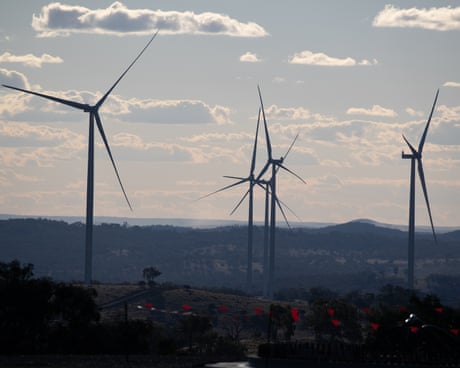
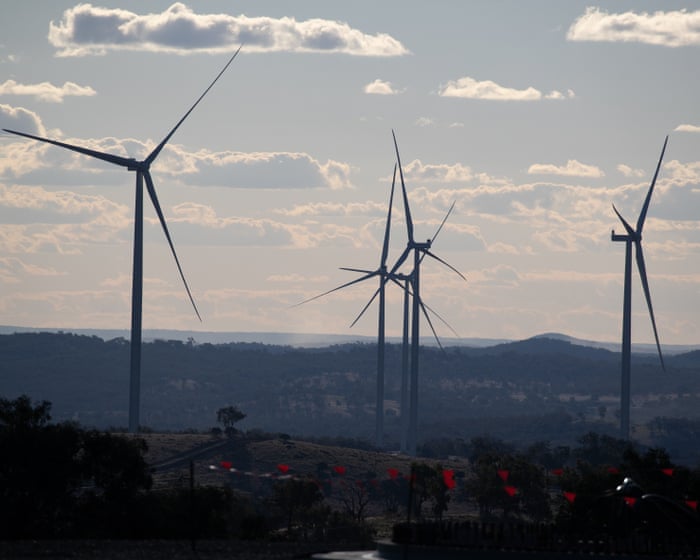
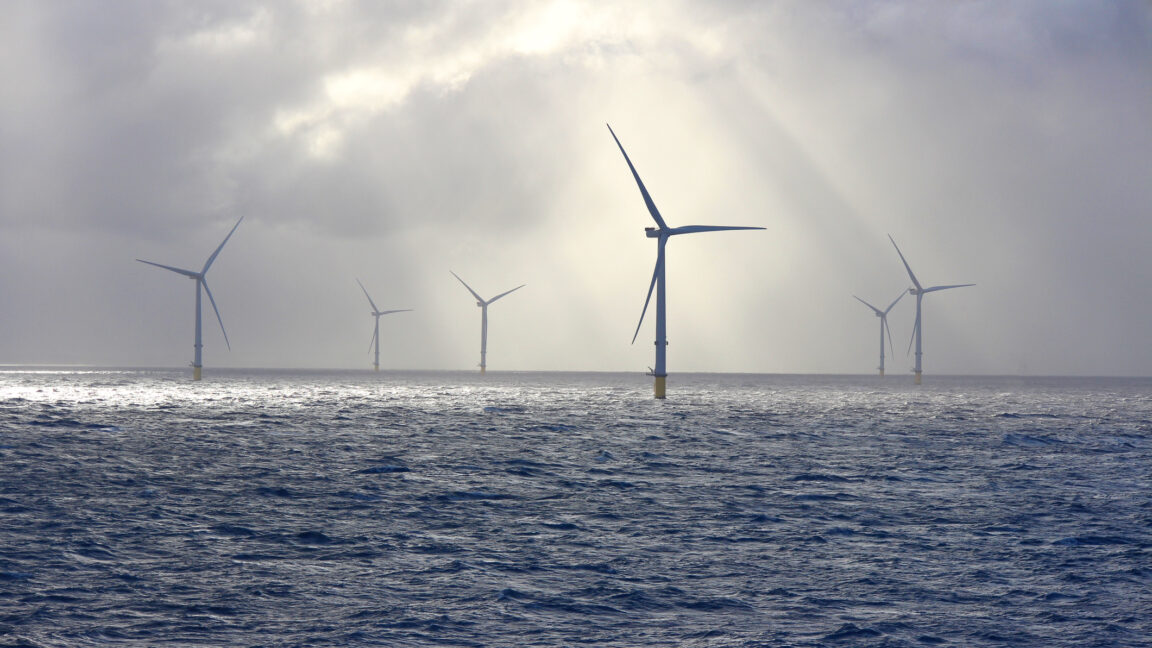
Organised campaigns against wind and solar energy have proved “extremely effective” in undermining community support for renewable energy but enthusiasm for electric vehicles has jumped after Donald Trump’s attack on Iran, according to a detailed snapshot of Australian attitudes to the clean energy transition.
The survey found levels of “deep support” for clean technologies were highest for home batteries and rooftop solar and also improving for major infrastructure projects such as transmission lines, which have been a target for critics of renewables.
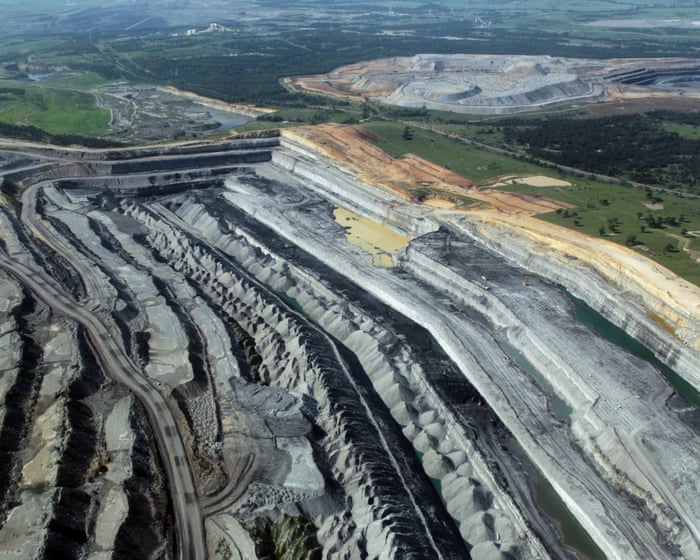
At Branxton community hall in the New South Wales Hunter Valley last week, local resident Janet Murray was given five minutes to speak about plans for the state’s biggest coalmine extension.
Before her were dozens of people, also there to share their views about whether the 19-year extension proposed by Hunter Valley Operations (HVO) should be allowed to proceed.
With summer heat comes pool parties, beach days, backyard cookouts, and, of course, swarms of bloodthirsty mosquitoes.
But while insect bites have always been a side effect of time spent outdoors, the species doing the biting are changing in historically temperate regions like New England. As climate change makes these areas warmer and wetter, their ranges are expanding—and any diseases they carry come with them.
In Connecticut, for example, a statewide mosquito monitoring program has detected 54 different species, including invasives like the Asian tiger mosquito, which can transmit potentially serious diseases including dengue and Zika. The mosquito’s historical territory is in hot and humid climates farther south, but it has been moving north.
Claims by the Coalition and One Nation that abandoning a net zero climate target would bring down power prices are contradicted in a new CSIRO report on the costs of generating electricity.
Generation costs will probably rise after 2030 regardless of Australia’s policy on net zero, according to the CSIRO’s annual GenCost report, but prices should then stabilise at levels below recent price spikes.
East Antarctica hosts the largest ice sheet on Earth, containing enough water to raise global sea levels by 52 metres, were it to fully melt. Yet it has puzzled scientists for decades how and why this ice sheet formed.
In fact, there are two interlinked mysteries. First, Antarctica became covered in ice around 34 million years ago – a period known as the Eocene-Oligocene transition – while the Arctic region stayed largely ice-free for another 25 million years or so.
Carbon dioxide levels in the atmosphere were falling dramatically at the time, and played an important role in falling temperatures. But if that was the sole factor behind the transition, both poles should have cooled together. They didn’t.
This means that something else was probably giving Antarctica a head start.
The second mystery is that sea-surface temperatures in the Southern Ocean remained unexpectedly warm for 10 million years or so after the East Antarctic Ice Sheet formed. This is not what we’d expect to see if the ice sheet had formed purely in response to global cooling, in which case the surrounding oceans should have cooled considerably too.
My new study with colleagues based in the UK and Germany, published in Science, points to an answer buried deep below the ice sheets: Antarctica’s mountains, and the slow motion geological forces that built them.
A continent on the move
This story begins around 170 million years ago, when Antarctica and Africa were last joined together as part of the supercontinent Gondwana. Their split sent Antarctica on a trajectory toward the South Pole – and this massive rupture also set off a chain of events far below the surface.
Africa and Antarctica broke apart during the Jurassic period, around 170 million years ago.
When continents break apart, hot material from Earth’s mantle wells up beneath them, cools and then sinks. This swirling motion destabilises the base of the neighbouring continent, triggering a series of lava lamp-like instabilities that remove chunks of its deep roots, one by one.
These disturbances, called “mantle waves”, sweep below continents over millions of years, travelling more than 1,000 kilometres as they ripple through the hot, sticky rock beneath the landmass.
My research team discovered this phenomenon several years ago. In two Nature papers, we pieced together multiple independent lines of evidence that all pointed to the same conclusion: mantle waves can trigger diamond-bearing volcanic eruptions – violent explosions that rocket magma from the deep roots of the continents, more than 150 kilometres below the surface.
We also found these mantle waves can generate unexplained pulses of uplifting land far from the rift zones where the continent originally broke.
Using computer models that simulate how landscapes evolve over tens of millions of years, we have now traced the effect these waves could have had in East Antarctica. Near the coast, the rifting formed a towering cliff-like feature, called an escarpment, more than two kilometres high.
Hundreds of kilometres inland, the mantle wave stripped away rock deep beneath the continent. Like a hot air balloon rising after dropping its ballast, the land above slowly lifted, creating a vast plateau and triggering a wave of erosion across the landscape.
The uplift didn’t stop there. It kept migrating inland, taking roughly 100 million years to reach the Gamburtsev mountains, over 1,500km from the coast. This range is now buried under 3km or more of ice.
How East Antarctica’s landscape changed over a period of 125 million years up to 34 million years ago, the point at which a continent-wide ice sheet first formed.
Elevation matters enormously for ice. Air temperature drops by roughly 1°C for every 100 metres of elevation gained, so even a modest additional uplift can tip a mountain range from losing its snow each summer to keeping it year round.
Until around 50 million years ago, most of the Gamburtsev mountains sat below 1.5km, too low for much snow to survive the summer. But our models show that from around this time, the wave of uplift (see video above) reached this mountain region and pushed much of the range above 2km. At this elevation, snow and ice could persist and start building up.
According to our calculations, by around 45 million years ago, enough of East Antarctica’s landscape had crossed this threshold for mountain glaciers to take hold and begin spreading.
According to another strand of our analysis, the ice sheet started to form at precisely this time. By the point of continental glaciation, the global temperatures had fallen from a high of around 30°C 50 million years ago, to closer to 20°C.
Once glaciers formed on the highlands, two feedback loops took over. First, ice and snow reflect far more sunlight than bare rock, so as the ice sheet grew, it cooled the surrounding region further. Our modelling suggests this alone lowered global temperatures by around 1°C.
Second, as the air over Antarctica cooled, it held less water vapour, which is a powerful greenhouse gas. Drier air meant a weaker insulating blanket over the region, allowing temperatures to fall further still.
Together, these feedback loops let the ice sheet expand from its mountain strongholds down to the coast, eventually merging into the single ice sheet we see today.
Crucially, the global cooling of roughly 1°C was not enough to freeze the Arctic, as northern hemisphere landmasses didn’t have the elevation to cross this threshold. It would take another 25 million years or so, and much lower CO₂ levels and global temperatures, before major ice sheets could build up there too.
The temperature change that came from ice sheet formation was not enough to make temperatures plummet in polar oceans around Antarctica either, reconciling both mysteries surrounding the origin of its ice sheet.
Setting the stage for ice ages
Our work shows how geology sets the stage for ice ages. The height of the land determines whether a given climate is cold enough to grow ice.
This concept is important for other climate events in Earth’s past. If deep Earth processes can condition a landscape for ice long before the climate cools enough for ice sheets to form, they may too have contributed to earlier ice ages.
Understanding the growth of past ice sheets can also give us clues about the future. Our study shows that the conditions required for a continental ice sheet to form are extraordinarily specific, and took geological timescales to assemble.
When ice sheets melt, however, they disappear much faster than they formed. And once lost, they cannot simply grow back.
Thomas Gernon receives funding from the WoodNext Foundation, a fund of a donor-advised fund program. Gernon is a Visiting Professor at the GFZ Helmholtz Centre for Geosciences in Potsdam, Germany.
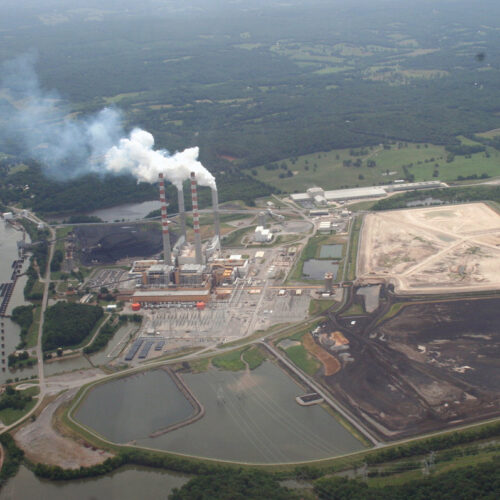
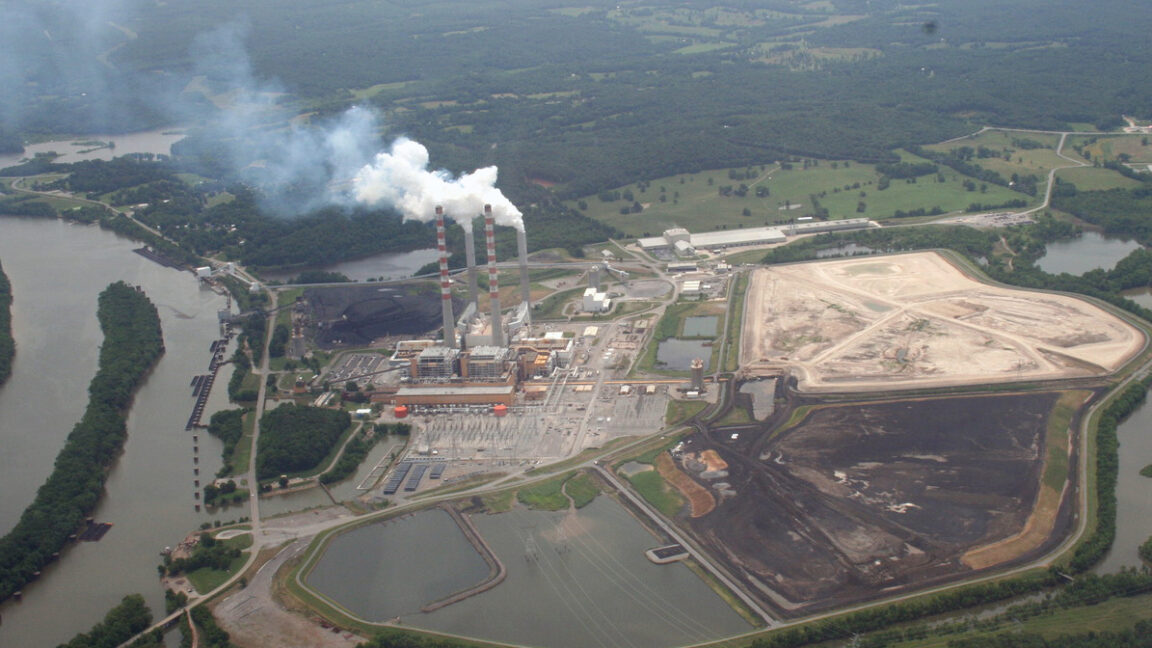
In 2023, after years of pollution, equipment failures, and health concerns, the Cumberland Fossil Plant in Tennessee was slated to close within the decade.
The coal-fired plant had been part of a multibillion-dollar settlement in 2011 after its operator, the Tennessee Valley Authority, failed to install pollution control technology a decade earlier. Regulators cited the plant for more air-pollution violations in 2017 and 2023. TVA said it would shutter Cumberland’s units in 2026 and 2028.
Then the Trump administration replaced four of TVA’s board members, and the agency reneged on its retirement plan in February. Now, TVA has a federal pledge for $46 million to extend Cumberland’s lifespan—part of a nationwide push by President Donald Trump to keep older coal plants running.
MAJURO, Marshall Islands—Perched on the bow of an aluminum landing craft, Anne Cohen gazed a few yards ahead of the vessel toward a yellow robot gliding across the emerald Majuro lagoon.
The unmanned surface vehicle, called Yellowfin, was quickly becoming one of the coral researcher’s most dependable guides in these Central Pacific waters.
“She’s the best dive buddy,” said Cohen, a tenured scientist at the Woods Hole Oceanographic Institution in Cape Cod. Programmed to navigate to a precise set of coordinates, the robot cut through small swells like a tiny sailboat without a mast, directing Cohen toward a destination she had traveled thousands of miles to revisit.
A new study reveals that oak trees can keep photosynthesizing for months after growth ends, challenging assumptions about how effectively forests convert absorbed carbon into long-term storage. A tree can look busy long after it has stopped building itself. Its leaves may still be absorbing sunlight and pulling carbon dioxide from the air, but deep [...]
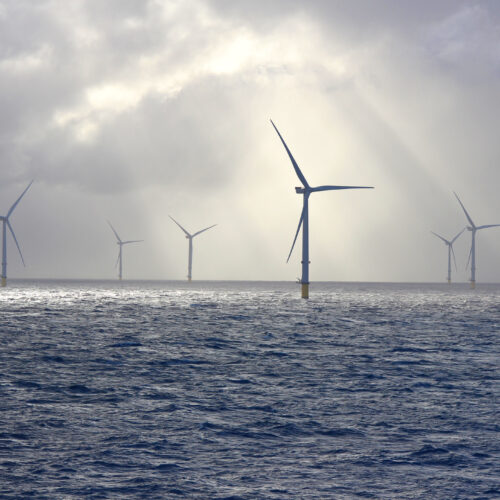
The Trump administration has abandoned its effort to halt wind energy projects across the United States and dropped its challenge to the court ruling that tossed President Donald Trump’s order freezing federal permitting and leasing for wind projects. States that challenged the order hailed the development as one of the most significant legal victories against the Trump White House’s campaign against the energy transition.
On Monday, the US Court of Appeals for the First Circuit dismissed the appeal after the Justice Department filed a motion for its voluntary dismissal on June 10.
The case against Trump’s executive order was filed in May 2025 by a coalition of attorneys general from 17 states and Washington, DC, led by New York Attorney General Letitia James.
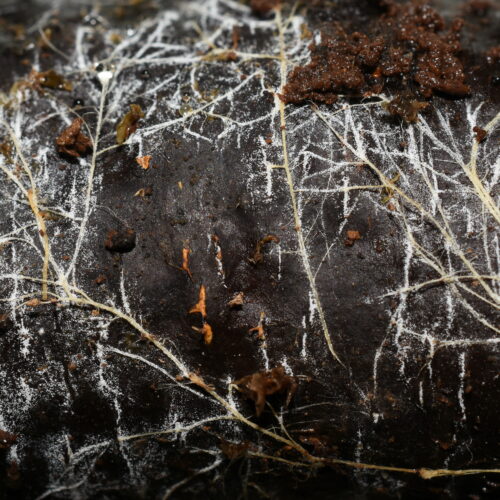
Hidden underground around the world lie 110 quadrillion kilometers of arbuscular mycorrhizal fungal networks—webs of ultra-thin threads that, if connected in a single line, would stretch almost a billion times the distance between the Earth and the sun, according to new research published in Science on Thursday.
These fungal communities form intimate relationships with the roots of plants, which they provide with nutrients like phosphorus and nitrogen in exchange for carbon, 1 billion tons of which the networks sequester underground annually, previous research has found. If the fungal network wasn’t storing it, that carbon would be warming the atmosphere.
But those networks have never been mapped globally until now. The new study led by Society for the Protection of Underground Networks, or SPUN, an organization founded to map mycorrhizal fungi networks, used a combination of literature review, soil samples from around the globe, machine learning and laboratory testing to estimate the distribution and mass of these systems and map where they are densest.
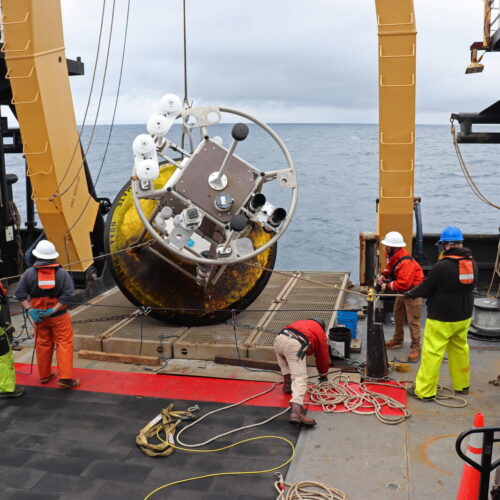
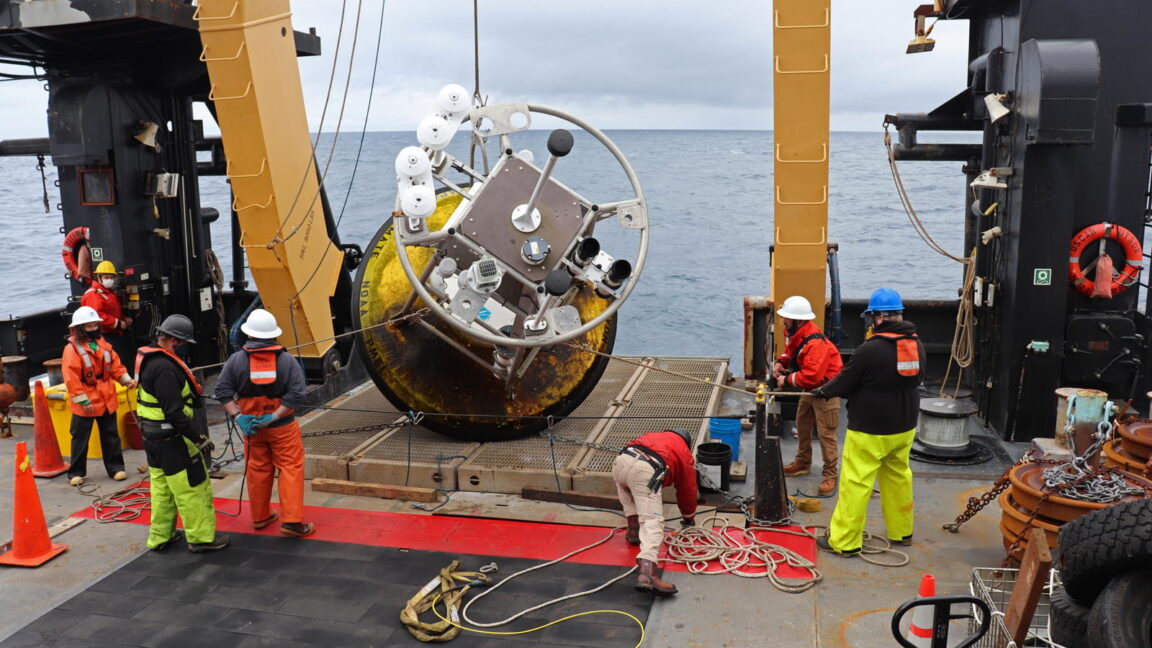
The upcoming loss of a deep-ocean monitoring system is triggering deep anxiety in Alaska, the nation’s top fish-producing state, where temperatures are warming twice as quickly as the global average.
The National Science Foundation announced plans in May to decommission the Ocean Observatories Initiative, a nearly $368 million network of scientific instruments that tracks ocean chemistry, wave action, water temperature, salinity, and a host of other metrics.
The real-time information from these ocean observatories helps scientists, fishery managers, coastal hazard planners, and even the military plan and prepare for the future. Whether that’s calculating how much fish can be harvested or when a marine heatwave or giant wave action may be occurring, the data is used by a plethora of sources.
Australia’s revolution in rooftop solar has left behind commercial and industrial buildings, where installations have lagged far behind homes, according to new analysis.
Australia leads the world in residential solar on per capita terms, with 22GW installed as of last December. But businesses have only installed about a quarter of that – 5.6GW – despite consuming more electricity than households, a report from the Institute for Energy Economics and Financial Analysis (IEEFA) has found.
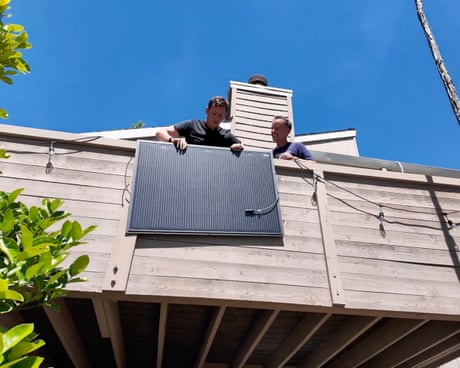
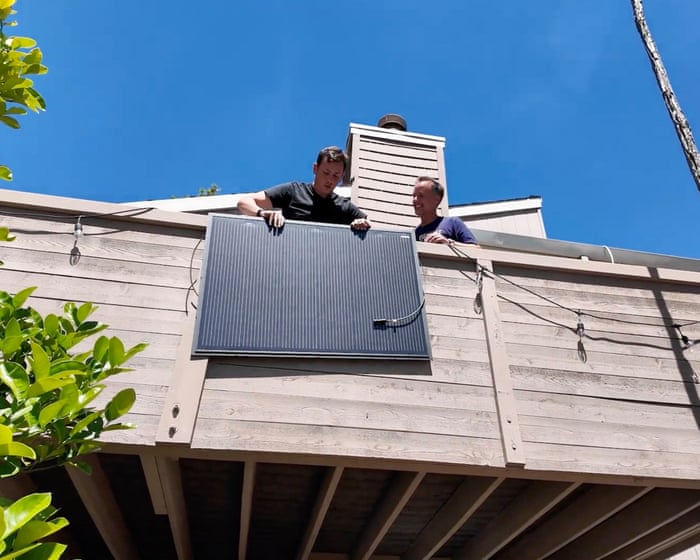
More Americans are using small solar panels in their back yards or balconies as a clean way to cut their electric bills
If you feel like your electricity bill just keeps climbing, you aren’t imagining it. Since 2020, US residential energy prices have surged by about 30%, making power the largest household energy expense behind gasoline, according to the US Energy Information Administration.
But for residents like Alex Curtis, the days of feeling powerless against rising costs are coming to an end. Curtis is waging a war on his electric bill, and his new weapon of choice is a lightweight, thin-film solar panel.
For migrant workers trapped onboard Chinese distant water fishing fleets, cutting the fins off sharks as they writhe violently on rusted decks in the Indian Ocean isn’t accidental. It’s an intentional and lucrative act that marks the start of a bloody half-a-billion-dollar offshore supply chain, tacitly supported by Beijing yet covertly concealed from port inspectors globally.
The Center for Biological Diversity, a nonprofit focused on the protection of endangered species, filed a formal petition this month requesting the U.S. government potentially sanction China for failing to meet American shark conservation standards. Shark populations have declined by more than 70 percent since 1970, with more than one-third of all shark and ray species now threatened with extinction. Yet each year, Chinese-flagged vessels catch, brutally fin, and discard thousands.
Should the National Marine Fisheries Service identify China as having violated the US Moratorium Protection Act, then President Trump could be expected to ban the import of all $1.5 billion of Chinese seafood.

 Login