❌

Reading view

‘Playing around with your favourite artist’s song is an ultimate expression of fandom’: Spotify is taking another step into participatory music tools with its upcoming AI remix feature — but it signals red flags for industry professionals

Spotify wants to introduce new ways for listeners to engage with the artists they love the most, all while expressing their own creativity.

The streamer’s audio mixing feature for playlists has sky-rocketed in popularity, introducing a new way for listeners to modify their playlists. Now Spotify is working on a new AI-powered fan-made covers and remix tool — and it’s seeking the help of Merlin.

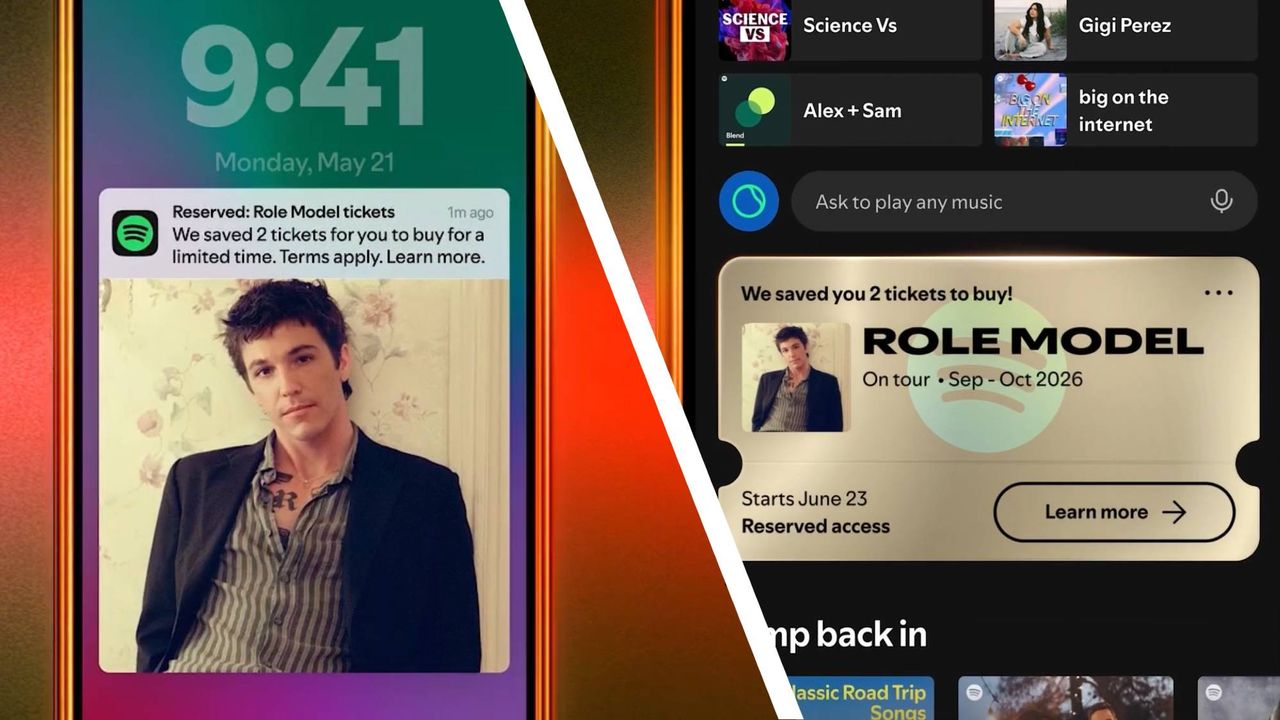
Spotify’s upcoming remix tool will come as a subscription add-on, though we don’t know when it’s due to drop or how much it will be on top of the current $12.99/ £12.99/ AU$15.99 monthly Spotify Premium plan.

Despite knowing very little about it, we do know that the remix feature will garner significant attention across the board of users, artists, organizations, and analysts alike. So what’s the end-goal for Spotify, and what are people saying about its potential knock-on effects for musicians and listeners?

What is the agreement?

The Spotify logo in purple on a purple background

(Image credit: Spotify)

On August 4, Spotify and digital licensing partner Merlin announced a new agreement that would give artists on labels under the Merlin name the option to lend their music to Spotify’s remix feature. Merlin is the second organization to sign on to the deal, following Universal Music Group in May.

For Spotify, the goal is simple: to ‘give listeners a new way to engage with the music they love from participating artists and songwriters,’ as stated in the announcement. Spotify also says the tool ‘will create an additional revenue stream for participating artists’.

However, despite knowing the tool will be AI-powered, Spotify hasn’t gone into detail as to exactly how it will allow listeners to create their own remixes of their favorite songs. The discourse around AI-generated slop is still a hot topic, and Spotify is still bearing the brunt of harsh criticism, so its venture into launching AI-powered music add-ons has left everyone scratching their heads.

What are Spotify’s competitors saying?
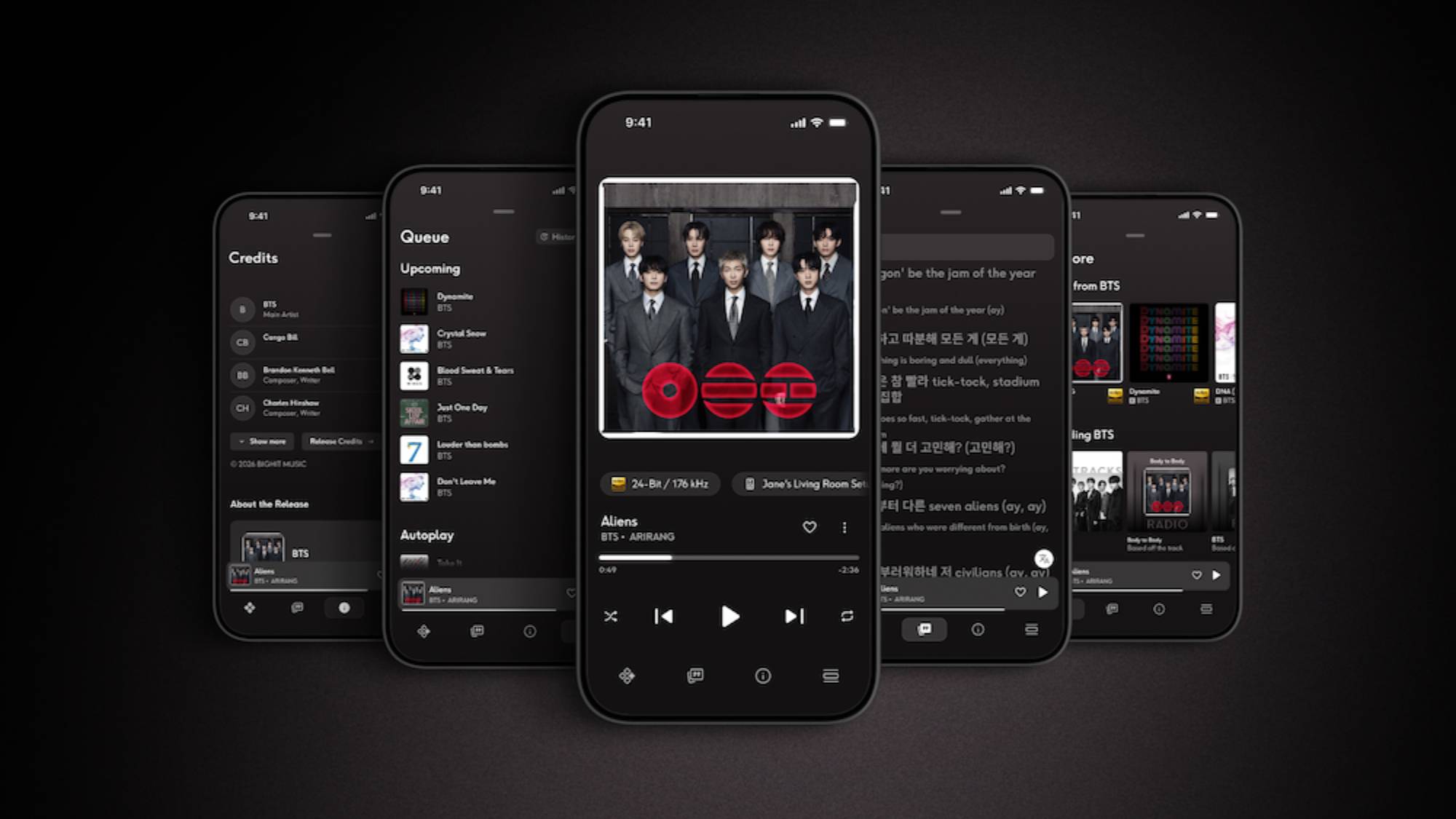
Five smartphones with different pages of the Qobuz app

(Image credit: Qobuz)

As far as rival music streamers go, it’s safe to say the top dogs aren’t too interested in integrating AI throughout their respective UXs. While the likes of Apple Music and Tidal use algorithmic recommendations to fuel discovery, the number of generative AI tools is nowhere near as saturated as Spotify.

Listening to an artist’s music in the way it was released is the only concern for most companies, particularly for Dan Mackta, Managing Director at Qobuz, who gave us the following statement: “Qobuz isn’t looking at anything like this. The finished music that great artists release is good enough for us and our community”.

The desire to keep the traditional listening experience in place is quite prevalent on the one hand. Some users just want to kick back with an album or playlist, hit the play button, and let the music do its thing. But as music analyst and founder of MIDiA Research Mark Mulligan points out, the yearning for active participation is growing.

Mulligan detailed this in a comment shared with us: “A growing share of consumers want to do more than just listen. Audio modification is an opportunity both to tap into consumer creativity and fandom. Playing around with your favourite artist’s song is an ultimate expression of fandom”.

Additionally, he backed this up with his own findings from the recent MIDiA Q1 2026 consumer survey: “The potential of audio modification is significant. Consumer demand is clear, with 54% of consumers interested in some form of audio modification, from changing speed to swapping vocals, rising to 80% for 16–19-year-olds”.

Participatory music is a rising phenomenon, and software labels like A Vinyl Bar in Shibuya want to create experiences that go beyond just listening to a song. However, AI is out of the question, and the creativity is placed in the hands of the user, not generated by a machine.

What are artists/ organizations saying?

A Musician's Union branded placard reading 'music education for all'

(Image credit: Musician's Union)

In light of Spotify’s announcement, it’s not just competitors that are having their say on the AI-powered remix tool. Additionally, artists and music organizations are questioning the long-term financial effects the feature could have.

Musician’s Union is a UK-based organization that represents artists in all areas of the music industry, and its General Secretary Naomi Pohl views Spotify’s partnership with two minds.

“The Merlin and Spotify announcement sounds positive as it suggests artists will have the choice to participate in licensing deals or not and, crucially, that they will share in any revenue generated by the use of their works. This is better than the blanket approach taken by some major labels,” she tells us, but she also raises concerns about how artists will be paid, adding the following:

“However, as with music streaming royalties, there is a question over how artists signed to independent labels will be paid by their label. Artists should in theory get 50% of any revenue their label receives, but in practice this may not happen in all cases as it will depend on the label’s interpretation of the artist’s contract. Many artists signed before AI deals were even conceived of. And, as with music streaming, session or backing musicians on tracks currently stand to receive no share of revenue”.

When it comes to royalties, Spotify has faced severe criticism due to its payment model. Because Spotify pools money generated from subscriptions, it means the most streamed artists over the year will receive a higher percentage of the profits made. So, even if you spend an entire year supporting and streaming an up-and-coming indie band, your subscription money is still going to artists like Taylor Swift.

Royalties aside, the other concern lies within the protection of music in its original form. PRS for Music, who handle the rights and royalties behind music, feel this strongly. “More generally, streaming services are embracing new technologies, including AI, to give fans new ways to engage with the music they love,” a PRS spokesperson told us.

But despite these emerging consumer tools, what could easily get lost is the care for the music itself. PRS fears this will become less of a priority, adding “Creators, and their work, must be central to the development of these new tools. They must be designed specifically to protect the integrity of the work above all else, and to ensure creators are fairly paid for the value they bring to each and every platform”.

At the end of the day, these platforms are there not only for fans to listen and engage with music, but they're there for artists to allow fans to hear music the way they intended. Though Spotify's AI-powered remix tool would be a creative addition to the service, how long will it be before everyone reverts to streaming AI-generated mashups instead of the real thing?
  •  

‘The next major music platform should give people something to do with the music’: Spotify’s former Head of Innovation on his plans to launch an interactive music service, and whether AI features will help or hinder streaming

The current state of music streaming is interesting, yet unpredictable. The shift from the CD era into the streaming era has made access to music more ubiquitous, but it’s also thrown up problems: some users aren’t interacting with music like they did before, and the explosive spread of AI is threatening the entire streaming model. Enter Mauhan M. Zonoozy, former Head of Innovation at Spotify, who has plans to tackle both these problems.

Zonoozy left Spotify in 2023, and since then has set up his own music software label, A Vinyl Bar in Shibuya, a record label-meets-production studio that releases playful music apps the way labels drop records, including jetset.fm and Stacks. Essentially, it’s creating digital music playgrounds.

While Shibuya’s products don’t have extensive libraries of music like typical streaming platforms, they offer users different ways to create new sounds, even if you only use them for a couple of minutes. But despite the label still being in its infancy, Zonoozy knows exactly where he wants to take it.

I chatted with Zonoozy about where his post-Spotify career is heading, and his ambitious plans to insert his music services into a streaming world in which AI is becoming a growing presence.

Music is participatory

A smartphone with the Bop interface, a music-mixing app from A Vinyl Bar in Shibuya

Bop is an interactive DJ music app that lets you mix and mess around with music (Image credit: A Vinyl Bar in Shibuya )

In a short period of time, Mauhan and his “small team of creative technologists” have released a slew of casual, interactive music platforms across web and mobile — but this is only the beginning.

“I spent years at Spotify and I loved it,” Mauhan tells me. “Incredible company, incredible team. But I think I spent most of my time effectively thinking about what comes next. I started A Vinyl Bar in Shibuya around a simple belief that music is a verb, that the next major music platform should give people something to do with the music. It should be more participatory, more engaging”.

Streaming has certainly made music a lot more accessible, but there was always one thing missing for Mauhan: interaction. “With streaming, you can hear almost anything, anywhere instantly, but the dominant interaction is still effectively sorting through folders and pressing play,” he continues. “There's an entire generation that was growing up playing with music through different mediums and different devices. I think their relationship with everything felt a lot more interactive.”

This sparked a lightbulb moment for Mauhan, and his mission statement is simple: “to empower more people to express themselves with music, or feel self-expressive with music”. This is where his latest project, Bop, comes into play.

Three smartphones with the Bop app interface, a pocket DJ app from A Vinyl Bar in Shibuya

(Image credit: A Vinyl Bar in Shibuya )

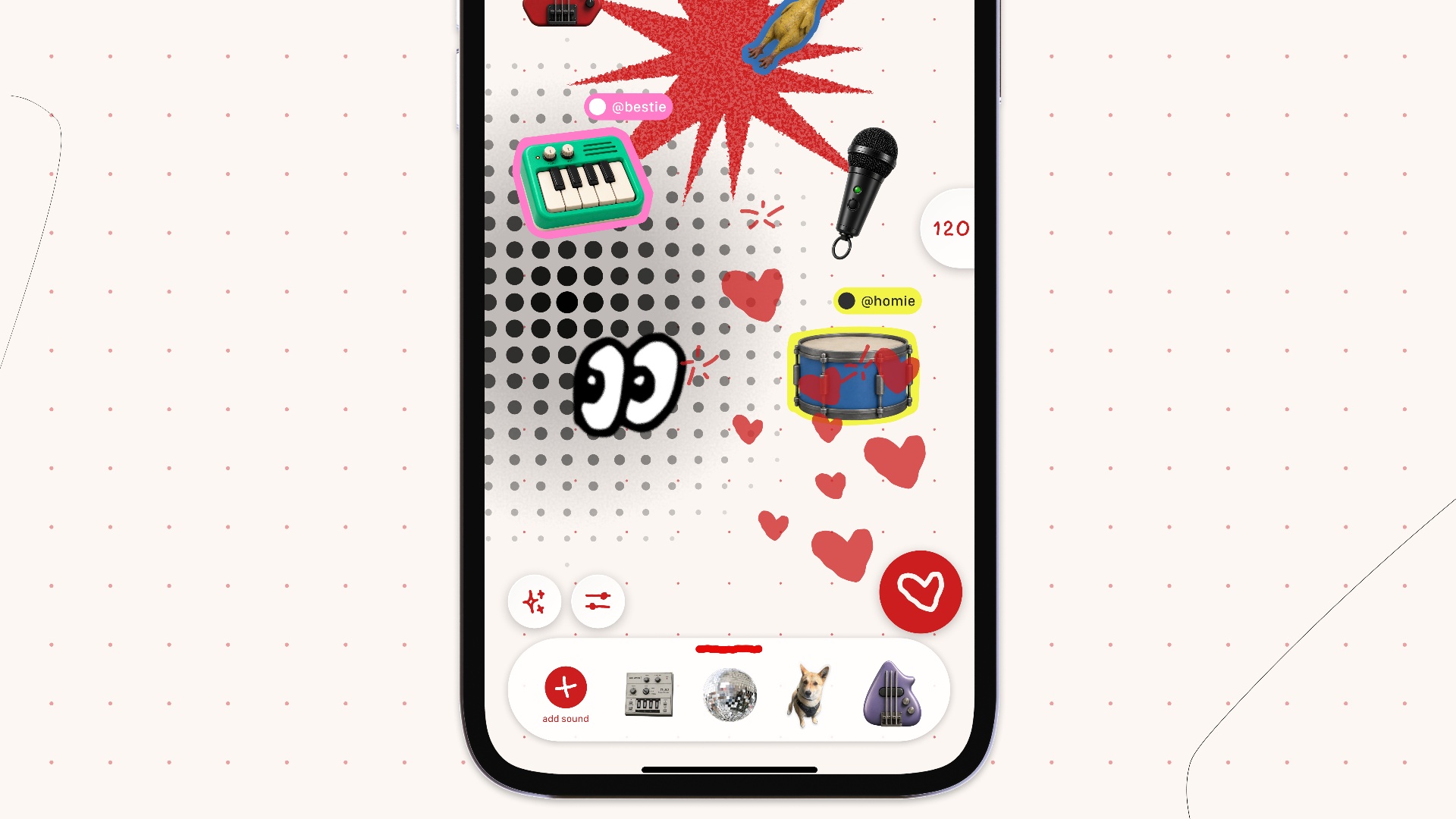
Bop is a pocket DJ app, currently in beta, that lets you mix, mash, and mess with music. Its interface is like an MPC workstation, allowing you to create remixes of popular songs by dragging and dropping effects and sounds onto its grid. “We're not all about replacing the creative process,” Mauhan adds. “We're more about building instruments and new ways to express yourself.”

When it comes to the best music streaming services, tools like this aren’t a new concept — Spotify has its own DJ-style mixing feature — but Mauhan believes there’s still more room for music services whose focus is user expression.

“I think there's a yearning for creative expression (in music platforms),” he says. “I think listening to music the way artists created and intended is absolutely a big part of it, but I also think having Legos that you play and interact with, engage with is also very important.

“The next step in our journey is packaging that up into something that is platform scale, and we can actually deploy it and build a larger community of users and fans around it.”

Next stop: a larger music platform

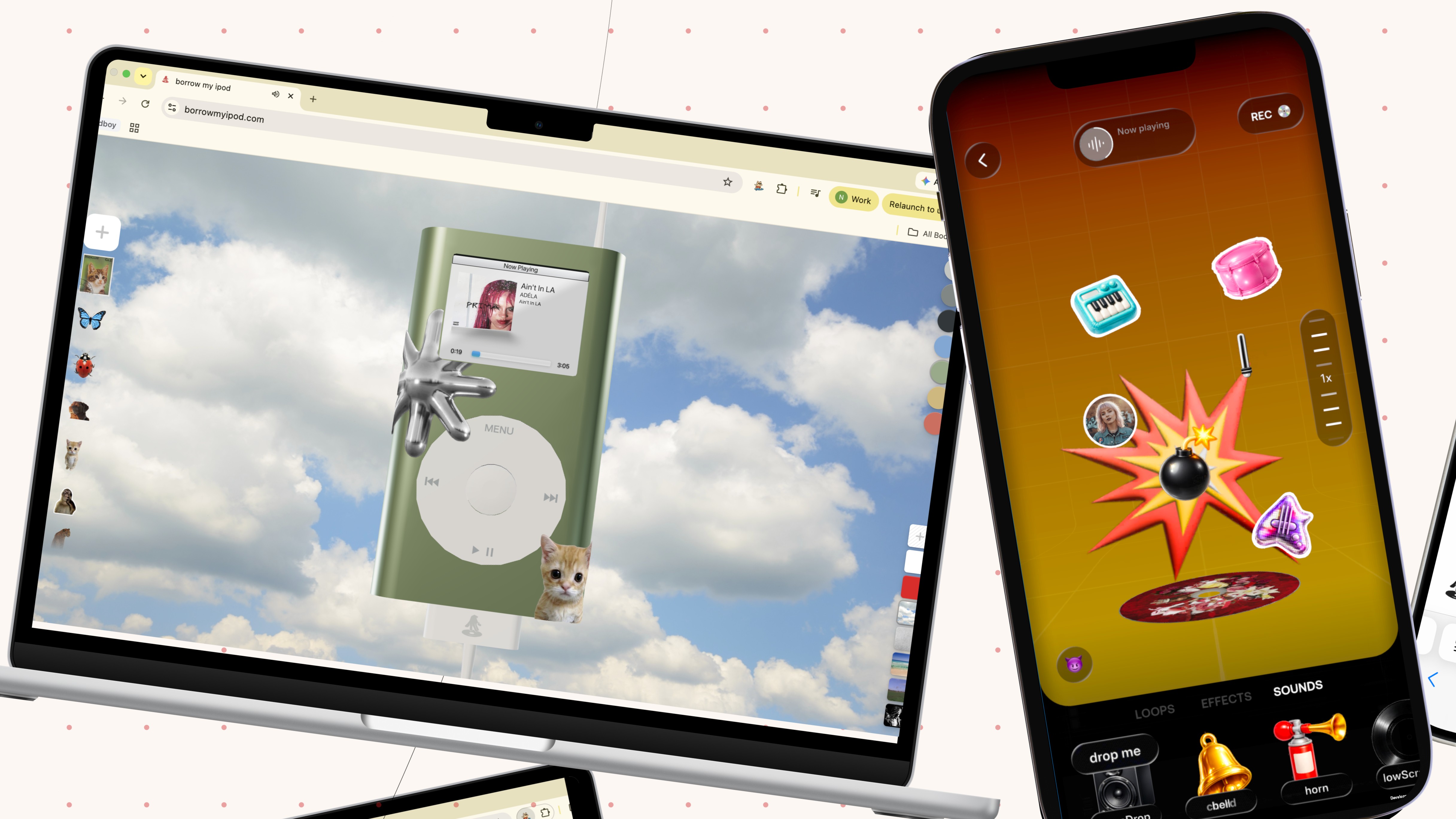
A laptop and a smartphone with two different music software services from A Vinyl Bar in Shibuya

In addition to Bop, borrowmyipod.com is a music service that lets you customize a classic iPod, and you can enter links for your Spotify and Apple Music playlists (Image credit: A Vinyl Bar in Shibuya)

It’s clear that Zonoozy has had a blast developing Shibuya’s array of sonic playground tools, but what I want to know is if there’s a larger music platform on the horizon — and turns out, there is.

“I think there's a bigger platform at the end of the tunnel for sure,” he tells me. “A Vinyl Bar in Shibuya is working actively on building it. I don't think it's gonna look or feel like any streaming platform you've seen before.” Now I’m intrigued — how will this platform compete with the likes of the music streaming big dogs? Turns out Zonoozy has thought about that too.

“We believe it's going to be more participatory,” he shares. “We're not building something that puts the music in the background, we want to put it in the foreground”. And it's as simple as that. “The hints are in the products, and we want things that feel more playful and approachable. I don't think anyone's going to accuse us of building a DSP,” he adds.

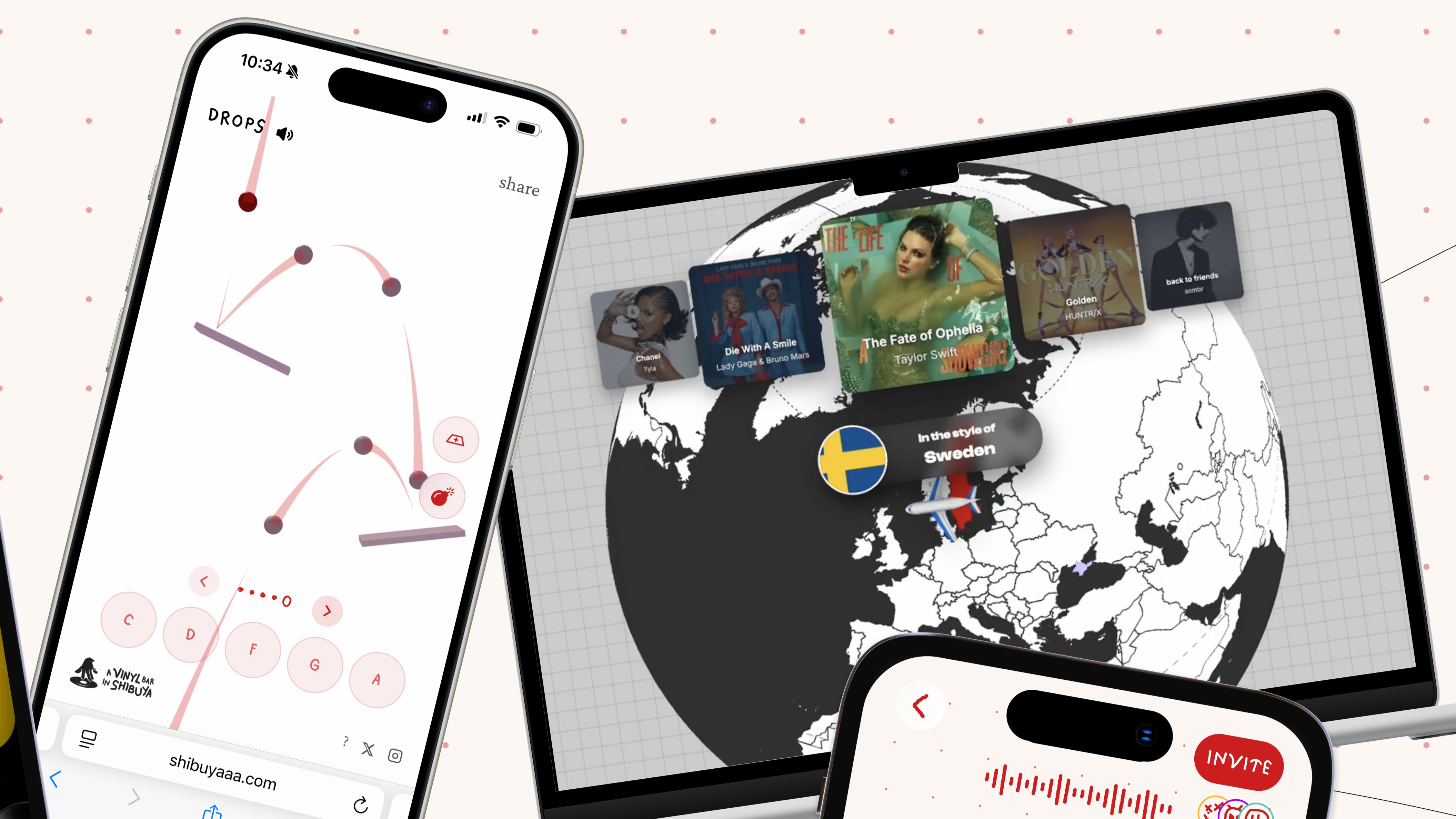
A smartphone and laptop with the interfaces of two music software services from A Vinyl Bar in Shibuya

(Image credit: A Vinyl Bar in Shibuya )

Despite it still being in early stages of development, Zonoozy has a lot of faith in Shibuya’s bigger project; but music streaming tools are evolving rapidly as is tech in general, so he’s had to do a lot of thinking ahead.

“My personal belief was that a lot of the cues around where media is going were in the gaming space,” he continues. “And I think interactive media was always a little bit ahead of the rest of the world in terms of film and music. I think because it was closer to technology, it was exploring the more creative technological boundaries of what you could do with media.

“I think now with what's going on and how powerful these computers in our pockets are becoming, there's so much new, cool stuff you can do. It's a responsibility for all of us working in music and tech to figure out ways to do it that supports the industry, the community, and more than anything, the art form.” It occurs to me that Zonoozy is as interested in conserving as he is in innovating.

Will music streaming survive without AI?

A smartphone showing the interface for Bop, a pocket DJ app from A Vinyl Bar in Shibuya

(Image credit: A Vinyl Bar in Shibuya )

It wouldn’t be a discussion about where the music-streaming industry is going without me bringing up AI, and Zonoozy sounds dismissive about AI at first, telling me: “You know what I like about AI? It's easy to spell”.

AI is having a big influence on music platforms in many ways, with algorithmic recommendations and tools such as AI playlist generators now pretty much part of the package. Because these features are right at users’ fingertips, I ask, will there come a time where listeners won’t be able to use services without the help of AI?

Zonoozy has hope, saying, “It's hard for me to imagine a world where people are building things completely void of touching some semblance of AI, but I do believe that there will be products that are not purely driven by generative media.” While he doesn’t necessarily favor the reliance on AI tools to enhance the UX, Zonoozy isn’t against AI altogether. If anything, he acknowledges its benefits, and how it’s helped provide the foundations to his services.

“It's enabling technology for us, it's just not the consumer proposition,” he adds. “Shibuya doesn't build LLMs or ask anyone to prompt music and wait for a finished song, but we do use it as a co-pilot for coding and development. I'd be naïve to say that there's no AI somewhere in the stack there. But on the music side, all the stems are all hand produced”.

He continues, “I'm not anti-AI. I think AI is an incredible, powerful future-facing infrastructure. I think it can build so many cool things and empower so many cool things. I’m a traditionally strong techno optimist in that sense, I think it will lead to incredible discoveries and advancements — it makes coding infinitely easier. But AI is not our product thesis on our side.”

When it comes to streaming services, there’s a huge focus on churning out tools designed to make the listening experience more personalized, more convenient, and more interactive. Given the pace of this evolution, I find it difficult to envisage where streaming culture is headed — Zonoozy shared my uncertainty.

“In terms of streaming specifically, I don't know what's going to happen,” he admits. “The extreme levels of personalization to custom content made for you — I don't know where that line ends. Is it being personalised, or is it being generated for you?”

  •  

Spotify's rumored song ID tool could upstage Apple Music and Shazam in one fell swoop, and solve my biggest song-saving headache

  • Spotify is rumored to launch its own song ID tool
  • Changes in the Android app were spotted, with references to 'Identify a song’, ‘listening’, and ‘analyzing’
  • It could add a level of convenience when adding identified songs to a playlist, just like Apple Music's Shazam shortcut

There’s one thing that Spotify has over Apple Music, and that’s music discovery features, though the latter service has the edge when it comes to music recognition — but that could all change soon.

In a recent investigation from Android Authority, the outlet found lines of code in the latest version of the Spotify app which suggest the platform is working on its own song identification feature. Though this has only been found in Spotify’s Android app, we wouldn’t rule out the possibility of it launching on iOS.

As it is with every rumor, we’re taking this with a pinch of salt until more information surfaces, but Android Authority’s findings present some pretty convincing evidence, showing text that reads ‘Identify a song’, ‘listening’, and ‘analyzing’. It seems the feature will need access to your device’s microphone, and will display pop-ups when a song can’t be identified.

Essentially, it sounds like Spotify is developing its own in-house version of Shazam, which could act as a band-aid for many music fans out there who, like myself, rely on third-party music-recognition software to put titles to songs.

When Apple bought Shazam in 2018, it thrust the music-recognition platform right into the iOS experience. Instead of needing to use the standalone Shazam app, you can add the ‘Recognize Music’ tab to your iOS Control Center for easier access, and Shazam will be right there at your fingertips.

It also works wonders for quickly adding songs to your Apple Music library. When you Shazam a song, a pop-up reading ‘Add to Apple Music?’ appears and all of your tracks will be sent to your library. Until now, this level of convenience wasn't available for Spotify users.

Two smartphones showing the Shazam control buton in the iOS control centre

Apple Music subscribers can add Shazam-identified songs to their Library through the handy Control Center button on iOS (Image credit: Future)

Since Apple took ownership of Shazam, Apple Music and its users have greatly benefited, but listeners who use Spotify, Tidal, and the rest of the best music streaming services have been missing out. Not all was lost however; last year Shazam rolled out a feature where each song you identified using the app would be automatically added to a special playlist in your Spotify account titled ‘My Shazam Tracks’.

I have to say, this small but effective feature has become one of my most-used tools for keeping tabs on new music, but if you Shazam quite a lot of songs from different genres, it creates a very messy-looking playlist.

Even after my Shazamed songs have been added to ‘My Shazam Tracks’, I still go back into the playlist to individually move songs into my other playlists — which is why a native Spotify song ID tool would go a long way, and would be even better if you can add it to your iOS Control Center.

Just think about it: you’re out and about and a song starts playing which you know you’ve definitely heard before, but can’t remember for the life of you what it’s called or who sings it. A simple swipe down to the Control Center and a tap of a button gives you the song title in seconds, and then it directs you to your Spotify Library where you can add your recently-discovered song to a specific playlist.

We’ve reached out to Spotify for a comment, who replied with the following:

"We're always exploring ways to improve our product and deliver more value to users, but we don't comment on speculation around possible new features and don't have anything new to share at this time".

  •  

I use my Apple Watch every day, but everyone forgets about the accessories it needs — here's your sign to get a new charging station and stock up on screen cases

Most people will snag a new Apple Watch during Amazon Prime Day and then call it a day, but have you ever thought that your new wearable could benefit from some accessories?

We're quick to get the screen protectors and cases for our iPhones, but I feel that this attitude isn't applied to the best smartwatches as it is with smartphones. Now that we're deep into this year's Prime Day event, there are just as many deals on Apple Watch accessories as there are on the devices themselves.

• Browse the full Amazon Prime Day sale

One of the best accessories to get at a cheeky discount are watch straps, especially since Apple's own range is quite expensive. On a non-Prime Day, watch strap alternatives are actually reasonably priced, but during sales events they can drop to less than $10, or £10 if you're shopping in the UK. Portable power banks are also overlooked, and give you reason to no longer carry around your charging lead with you.

Today's best Apple Watch accessory deals in the US

Lugging around your Apple Watch charging lead isn't the most convenient, so having one within reach lifts that pain point. Not only is this portable charger also great for travelling and can be attached to your keys, it's compatible with every Apple Watch model, so you don't need to upgrade your wearable to be able to use it. View Deal

Multi-use charging docks are a handy way to ensure your Apple Watch, iPhone, and AirPods can all be charged at the same time, but some charging stations can break the bank. This space-saving dock from Anlmz is less than $20 this Prime Day, and also comes in handy for hands-free viewing on your iPhone. View Deal

Apple Watch bands are just as good an investment as the wearables themselves, as they can change its whole look. Though I do like the level of comfort you get from Apple's silicone bands, this sub-$8 nylon wristband is a solid alternative, and a secure option if you're active with your wearable. View Deal

Today's best Apple Watch accessory deals in the UK

Power banks aren't just for smartphones, they're great for Apple Watches too. $40 is a bit steep for a small, keychain-sized portable charger, so a 53% discount is what we like to see. View Deal

If you're not prepared to spend the best part of £50 on one of Apple's official straps, Amazon has some great alternatives this Prime Day for less than a tenner — and they're compatible with the most recent models in Apple's wearable lineup. View Deal

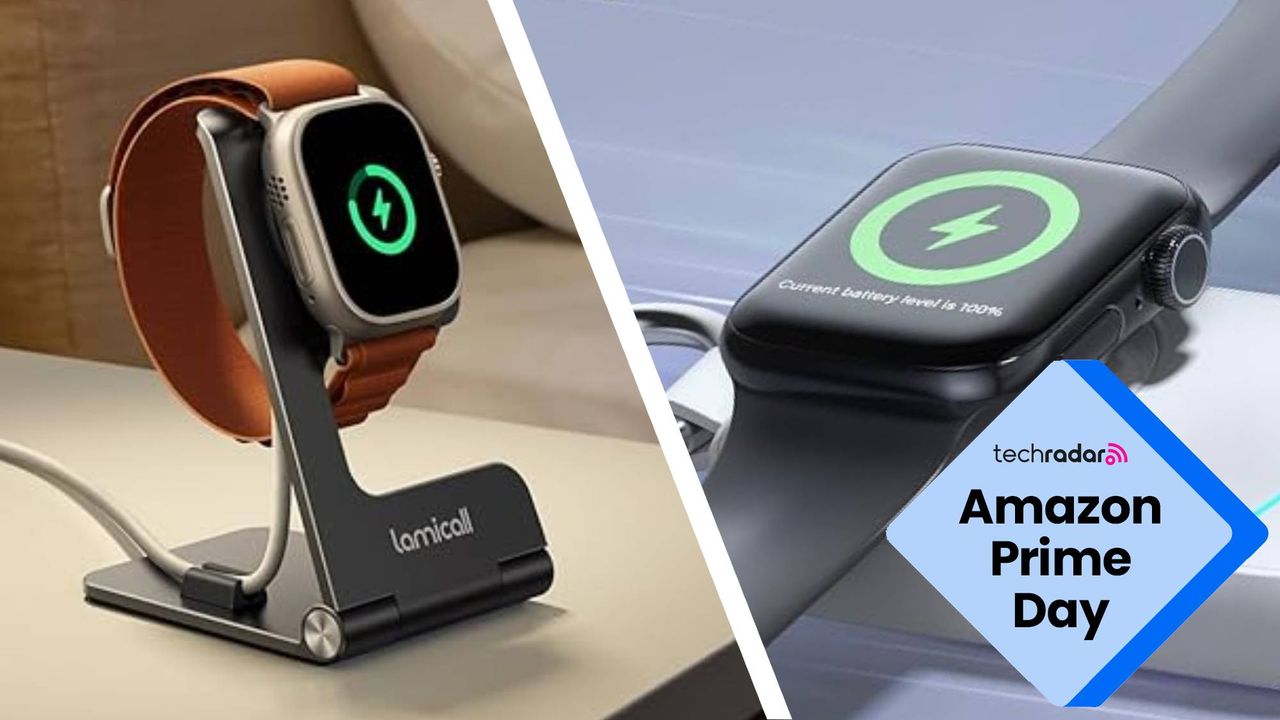
While you'll still need your Apple Watch charger to make use of this stand, it's a handy tool to have with you if you do happen to carry your charger around with you daily. This stand also folds flat, making it a lot easier to pack and travel with. View Deal

You'd be surprised at how easy it is to accidentally knock your Apple Watch while on the move, no matter how well you take care of it. A protective shield will add weight to your wearable, but you'll be thankful when it stops your Apple Watch from scratches and other damage. Just don't make the same mistake as me and buy the wrong size. View Deal

More Prime Day deals in the US

More Prime Day deals in the UK

  •  

Love an air fryer just as much as I do? Here are 9 air fryer Prime Day deals I think you should check out, especially if you think you're overdue an upgrade

Amazon Prime Day is one of the best events for deals on home cooking appliances, including air fryers, which I turn to every time I lack the time or patience to use the oven.

If you love your air fryer just as much as I love mine, but think you could be getting more out of it, some of our highest-rated air fryers from our favorite brands are some of the star appliances in Amazon's monster sale — with the king of dual basket air fryers, Ninja, being one of them.

• Browse the full Amazon Prime Day sale

One of our five-star appliances, the Ninja Foodi Max Dual Zone air fryer, has dropped to £164.99 from £239.99 in the UK — an advanced air fryer for less than £170 is a rather nice sight to see. On the other hand, the equally good Ninja Crispi portable air fryer is now $152.99 down from $179.99 in the US, so there's something for everyone on both sides of the Atlantic.

If Ninja isn't the brand for you, fear not, there's a plethora of other trusted brands with discounted appliances — most notably the Instant Vortex Plus air fryer which you can grab for just $69.99 (was $149.99). I've been using this model for the past two years, and there's a reason why I've stuck with it.

Today's best dual basket air fryer deals in the US

The Ninja Crispi's main selling point is that its glass bases double as food containers, making them perfect for meal prep. The larger one is 3.8L, providing enough space to feed up to six people while also allowing simultaneous cooking of a whole 1.2kg chicken and vegetables. This Prime Day deal is $20 shy of the record-low price we saw during Black Friday.

Read our full Ninja Crispi reviewView Deal

Though it looks more like a mini oven than your standard air fryer, this has seven functions that cover every base when it comes to cooking. Investing in an air fryer oven can help you cut back on the number of small appliances you have taking up countertop space.

Read our full Cusinart Air Fryer Toaster Oven reviewView Deal

For just under half price, you're getting an air fryer that's dependable as well as affordable. Right now, it's much better value than it was during last year's Prime Day and Black Friday events, and I'm confident you'll be getting your money's worth.

Read our full Instant Vortex Plus air fryer review View Deal

An air fryer allows you to enjoy your favorite fried foods with less oil, and this Ninja XL model is perfect for families. The 6.5-quart capacity drawer is enough to make meals for the whole family, and preset functions make air frying, roasting, reheating, and dehydrating easy.View Deal

Today's best dual basket air fryer deals in the UK

The Ninja Foodi Max is the ultimate air fryer for many and it's now down to a great low price at Amazon. It offers six different functions, including Max Crisp, air frying, roasting, baking, reheating, and dehydrating. With two baskets, you get two independent cooking zones with the option to have them sync or match up, depending on your needs. Its extra large capacity is perfect for family cooking or batch cooking as it gives you plenty of room for a 2kg chicken or 1.4kg of fries in each compartment.

Read our full Ninja Foodi max Dual Zone air fryer review View Deal

Record-low price: This dual-basket fryer to yo-yo in price, but this is the first time we've seen it drop below £100 since Black Friday last year. For a dual basket model and 13 different cooking methods, how can you go wrong?View Deal

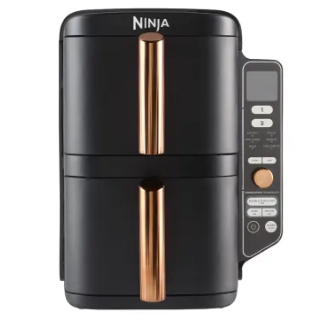
Ninja's recent space-saving air fryer is just £5 more than its lowest-ever price, which is still a bit of a steal for the popular and well-rated appliance. We loved it at TechRadar, awarding it full marks in our review and even putting it in our best air fryer buying guide. Well-built and great-looking on any countertop, it offers five cooking levels across two drawers and two racks, while the 9.5L capacity is ideal for medium to big families.

Read our full Ninja Double Stack air fryer review View Deal

The Instant Pot Vortex's 12L cooking basket makes cooking for larger parties and families, packing eight cooking settings including grill, roast, and dehydrate. Given its large cooking space, you can add a divider to cook two different foods at once. View Deal

Here's a best-ever discount on Ninja's portable air fryer — and a great Prime Day deal. This bundle includes the PowerPod lid, plus two resealable glass containers to carry your dishes until you're ready to cook. According to our testing, it cooks exceptionally quickly, is easy to use and a breeze to clean, making this one of the best air fryer deals I've seen this year.

Read our full Ninja Crispi reviewView Deal

More Prime Day deals in the US

More Prime Day deals in the UK

  •  
❌