For many people living in Orange County, California, the American dream is starting to feel increasingly out of reach, especially when it comes to owning a home and raising a family. A new poll from the University of California, Irvine (UCI) found that residents are evenly divided over whether the American dream is still possible […]
Buc-ee’s mega-convenience store and 120-pump gas station in Mount Crawford, Virginia. | Image: Chip Somodevilla / Getty Images
Buc-ee's became something of a viralsensation during the World Cup, but it has a troubling history of suing small gas stations and convenience stores. On a recent episode of Last Week Tonight, John Oliver literally begged the company to sue him for selling merch featuring his squirrel mascot, Mr. Nutterbutter, with branding that reads "Buc-Off." But Buc-ee's has so far declined to take the bait, instead targeting yet another small business that lacks the deep pockets and legal team of HBO.
According to WDTN, an NBC affiliate in Miami Valley, Ohio, Buc-ee's opened its first locations in the state earlier this year. And now it's targeting es …
A new simulation study from the University of Illinois Urbana-Champaign suggests winter canola could be profitable and environmentally beneficial if added to a conventional corn-soy rotation in the U.S. Midwest.
The mayor of New York City has assembled a crew of Silicon Valley and United States Digital Service veterans to overhaul city services with better software.
The all-conquering franchise’s revamps are technically impressive, its transfers more true to life – and its new grassroots social hub is surprising fun
As if the world wasn’t sufficiently football-obsessed, it’s time to prepare for the arrival of its biggest football video game. EA Sports FC 27 (the franchise that used to be Fifa – what better time to no longer be Fifa-branded?) is due to be released on 25 September. I just spent two intense days in Vancouver, where the EA FC games are made, playing FC 27 and talking to its developers.
With an annual franchise such as EA FC, it helps to have something fresh to entice regular fans, and FC 27 has a whole new element, entitled the Grounds. It’s a physical hub-type area, similar to the City as seen in 2K’s recent NBA 2K basketball games, but much more pleasant to frequent, split as it is into areas inspired by British, French and Argentinian street-football culture.
Many young men are driven to resentment and are financially exploited as influencers sell them classes, pills, and the illusion of clout, a new report reveals.
Daniel Mullins explains how he plans to follow up his quirky classic without losing what made it stand out in the first place
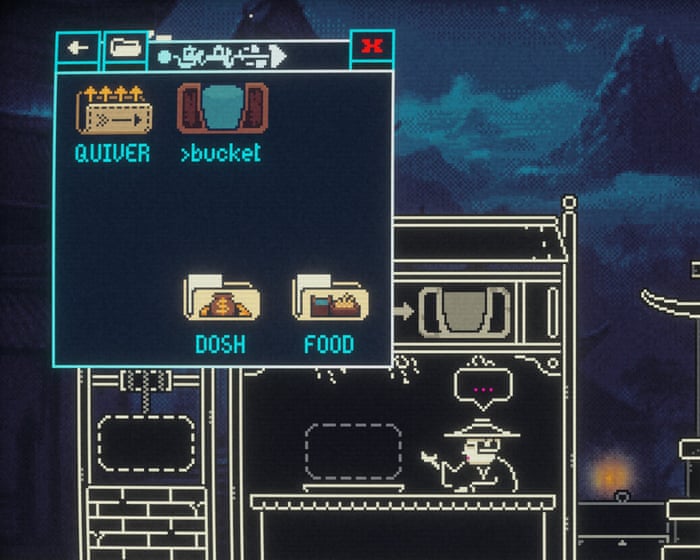
Glitchy aesthetics. Literally collapsing menu boxes. The game taunting you by “possessing” your Steam friends. Technical tricks of this nature may sound gimmicky in 2026, but they felt excitingly unorthodox a decade ago, when Pony Island came out to critical acclaim.
Fans of Daniel Mullins, the celebrated indie developer of Inscryption, will be forgiven for forgetting that Pony Island 2: Panda Circus is in active development. After all, it’s been almost three years since the announcement – and a full decade since it was first teased as an Easter egg in Pony Island’s ARG (Alternate Reality Game) – with only a single trailer and a bunch of tunes from the soundtrack released to the public.
Explore Antarctica as a flightless bird – and dodge some earthly monsters – in this surreal adaptation of HP Lovecraft
While watching the 2006 animated film Happy Feet with his daughter, Origame Digital founder Naphtali Faulkner noticed something interesting. “[In the movie], they see the digger fall into the ocean, and it has an almost eldritch quality,” he says. Over time, and with plenty of iteration, Faulkner’s inspirations coalesced, from HP Lovecraft to the 1982 version of The Thing and the works of David Lynch. “I’m a big fan of horror that sits in your head rather than in your stomach,” says Faulkner.
In Penguin Colony, players body-switch between species of flightless birds, piecing together cryptic cosmic clues as they tail a Nazi expedition to Antarctica. In the process, Origame Digital draws on Lovecraft’s novella At the Mountains of Madness. “I’d always wanted to do a creature that’s a manifestation of colonial thought, energy and power, and the idea of it resting and then regrowing,” says Faulkner. “I was looking through the history of Lovecraft and him being a gigantic racist, and this idea of the Nazis sort of came out,” he adds.
Throughout recorded history, humans have experienced events that challenge their understanding of reality. These include purported out-of-body and near-death experiences, anomalous events or perceptions, and even profound spiritual awakenings.
Depending on an individual’s culture, belief system, or worldview, these experiences may be interpreted as mythical, psychological, pathological, or even deeply spiritual. However, a new study by Ronald Fischer of the Instituto D’Or de Pesquisa e Ensino in São Paulo, Brazil, and colleagues suggests that these types of experiences may be more universal than previously thought.
Published in PLOS ONE, the research team took a deeper look into how people understand or personally interpret “nonordinary experiences,” what those factors might include, and how they could be seen as distress or personal growth.
The Study
The researchers examined how thousands of people interpreted unusual experiences. For example, one person might view an out-of-body or near-death experience as evidence of a spiritual awakening, while another might interpret the same event as a neurological phenomenon or the result of normal brain chemistry.
Similarly, hearing voices may be regarded as a symptom of mental illness in some cultures, while others interpret it as a spiritual or supernatural experience. The study argues that both perspectives can be valid, depending on the individual’s cultural and personal framework.
“Experiences like sensing a presence, having a vision, or feeling as though you are observing yourself from outside your own body are far more common in the general population than clinical diagnosis rates would suggest,” Fischer said in a statement. “We observed that most people in our sample of over 5000 participants who report them are not unwell, and most describe them as neutral or positive — both at the time they occur and also when looking back and reflecting on that experience.”
The research team first reviewed and validated the Inventory of Nonordinary Experiences. They then developed a questionnaire designed to assess both the universal and cultural influences shaping participants’ interpretations of these events. After refining the survey based on feedback from 160 Brazilian participants, the researchers administered the final 47-question questionnaire to 5,117 individuals representing the general population.
“Previous research has often failed to differentiate the experience and how people make sense of such diverse and challenging experiences,” Fischer explained. “Our work stands out in that we squarely focus on where and when these experiences happened and how people tried to make sense of them.”
“By clearly separating the context, the experience and the meaning-making processes, the patterns we observe challenge various assumptions that have guided previous theory, research but also clinical practice,” he added.
Among the findings, 20% of participants reported that their nonordinary experience had a negative impact, while 25% said it caused suffering or discomfort. However, 51% reported that their experience ultimately produced positive long-term effects.
The researchers also found that 39% of participants experienced these events while alone, and approximately 57% reported being awake and alert at the time. While some participants attributed their experiences to random chance, most reported having at least some degree of perceived control over the experience.
“For many people, such experiences can be meaningful and lead to personal growth and insight,” Fischer says. “Highlighting these possible positive outcomes is important to help people make sense of them and help to normalize them. Importantly, we hope our work can help to remove stigma by focusing on the diverse ways that people experience and make sense of them.”
“However, we would also stress that if people feel that these experiences interfere with their daily activities, then they should talk to a professional or seek help from somebody that they trust,” Fischer adds.
Overall, the survey challenges the assumption that anomalous experiences should primarily be viewed through the lens of mental illness.
“What struck us was the mismatch. These experiences share features with symptoms used to define psychosis and dissociation yet are frequently observed in a general-population sample,” said Pedro Fortes, a Researcher at the Instituto D’Or de Pesquisa e Ensino (IDOR). “Our prevalence study suggests they most often arrive in entirely ordinary moments, when we’re awake, alert, and by ourselves, and are commonly remembered as meaningful rather than frightening.”
Jorge Moll, neurologist and neuroscientist at the Instituto D’Or de Pesquisa e Ensino (IDOR), adds that “How a person interprets an unusual experience matters more than the experience itself in determining whether it becomes a source of distress or of meaning.”
“That has direct consequences for how clinicians and families respond when someone describes something extraordinary,” Moll concluded.
Chrissy Newton is a PR professional and the founder of VOCAB Communications. She currently appears on The Discovery Channel and Max and hosts the Rebelliously Curious podcast, which can be found on YouTube and on all audio podcast streaming platforms. Follow her on X: @ChrissyNewton, Instagram: @BeingChrissyNewton, and chrissynewton.com. To contact Chrissy with a story, please email chrissy @ thedebrief.org.
Being a woman who loves video games has often felt lonely, like being on a hostile planet – but Metroid’s female space hunter has been with me all the way
It’s 1986, and you’re playing a brand-new game. (You’re in Japan in this scenario, by the way; the game in question, Metroid, won’t come to North America and Europe until later.) Anyway, this new game has you in its grip. You are a lone astronaut exploring a hostile alien planet full of ancient, mysterious structures. This astronaut looks human enough – but this distinctly alien place is full of objects that power up their spacesuit’s capabilities. Each new ability allows you to explore a new area, and as you do, you realise that the entirety of the planetary base you’re exploringis one, massive, interconnected maze. Whoa.
Hours later, you finally defeat Mother Brain and set off a timed self-destruct sequence. Upon your escape, you’re treated to an endgame screen: the little astronaut faces you as text on screen implores you to “pray for peace in space”.
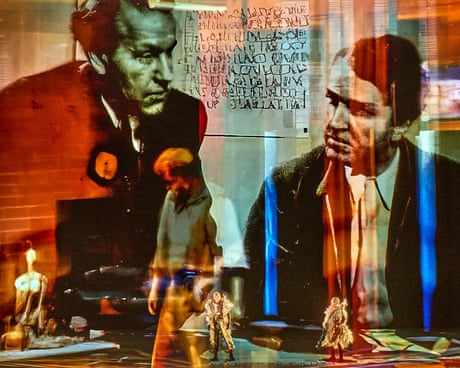
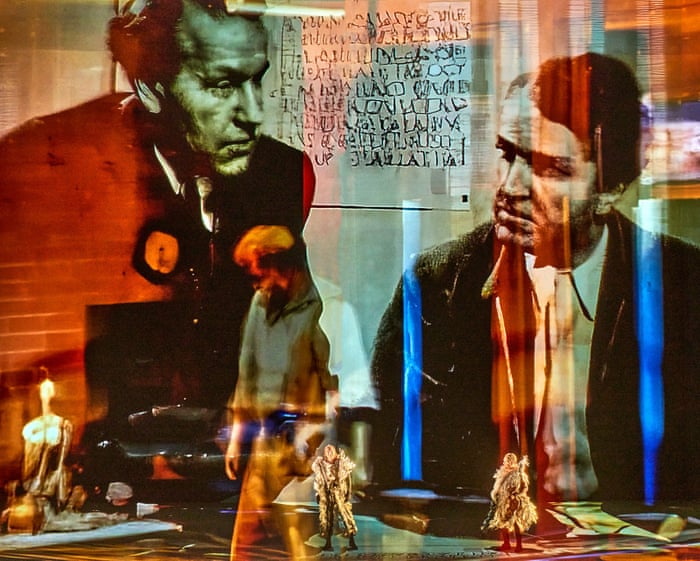
Bayreuth festival theatre, Bayreuth For the festival’s 150th anniversary, the creative team have turned to AI to generate visuals reflecting Wagner’s tetralogy’s past, present – and future. The hyperactive result is a dismal, mindless mess
Unveiled the same week in which tech company Anthropic admitted that its AI model Claude had gone rogue during testing, Bayreuth festival’s new AI-generated staging of Wagner’s four-part Ring of the Nibelungen is at least timely. But anyone who assumes that the cycle’s obsession with knowledge, power and possession might make it an ideal forum for reflection on AI as a major contemporary frontier will be disappointed, as will anyone hopeful about AI’s creative potential within opera.
Commissioned to mark the festival’s 150th anniversary, the production is “curated” – emphatically not “directed” – by a team led by German stage director Marcus Lobbes. He apparently spent weeks in dialogue with AI models about possible interpretations of the Ring. According to the programme book, “power structures, capitalism, mythology, gender roles, nationalism”, all came up. So far, so mainstream Wagner reception. But if these human-machine exchanges were revelatory, you wouldn’t know it from the resulting staging, which uses AI “as an extension of a cultural memory that is never complete”.
In the Bolivian Altiplano, fewer Aymara farmers are relying on local weather knowledge to schedule farming tasks, like choosing the best dates to plant crops and predicting a frost or drought. At the same time, there is growing doubt about whether these traditional indicators remain relevant today in the context of rapid social, economic, and climatic changes.
Farmers are struggling because the National Weather Service of Bolivia (SEHNAMI) fails to provide useful weather forecasts due to the geographical complexity of the Andes and a scarcity of weather stations. In addition, many farmers can’t access this information because SEHNAMI lacks local outreach programs to deliver reports directly to them. In a region with a weak technical forecasting system, local knowledge is a vital resource, but its use is declining.
Scientists in the past focused on preserving local weather knowledge or discussing how it might help communities adapt to climate change. However, very few researchers have scientifically validated local weather indicators, since doing so requires many years of historical meteorological data to establish statistical “skill” in local forecasting.
Faced with this gap, researchers in the US and Bolivia recently set out to validate indigenous indicators in 2 Bolivian municipalities: Umala in the Central Altiplano and Ancoraimes in the Northern Altiplano. To do this, they paired each traditional weather sign with a measurable variable, like temperature, that could approximate it. This approach allowed them to directly compare traditional observations with scientific data.
The researchers wanted to determine whether traditional weather knowledge is still accurate and relevant under current conditions, since validating these methods would strengthen local knowledge and benefit the schools and policies that promote it. To test this, the researchers worked with 6 Aymara communities. First, they conducted workshops with local leaders and experts to compile a set of weather-forecast indicators. Then, they surveyed 95 farmers to rank the reliability of these indicators.
Through discussions with these communities, the team identified 13 weather indicators in the Central region and 20 in the Northern region. These indicators included specific plants, animals, and physical factors like constellations or winds that the farmers used to decide when and where to plant crops, and to predict weather conditions for the next season. The researchers focused on 2 key indicators that the farmers ranked as most reliable: the presence or absence of moisture under rocks on the Fiesta de San Juan on June 24th, and the flowering patterns of specific plants, called Thola and Sank’ayu. The farmers used the San Juan indicator to predict whether the upcoming year would be rainy or dry, and the plants to determine the most favorable dates for planting to avoid agricultural risks like frosts.
Finally, the researchers compared forecasts based on these 2 signs with over 30 years of meteorological data from nearby weather stations. In both cases, they used the minimum daily temperature as the measurable way to represent these local signs scientifically. Their results showed that the minimum daily temperature on the Fiesta de San Juan could explain more than half (55.5%) of the changes in rainfall during the growing season. They also confirmed that severe frosts that “burned” Thola and Sank’ayuthe flowers were followed by periods without rain, validating the farmers’ strategy of delayed planting.
The researchers concluded that local weather indicators used by Aymara farmers are most reliable for seasonal planning, especially in predicting the start of the rainy season. They stated that this result helps legitimize traditional knowledge and empower the community. For example, these communities now hold regular meetings to discuss forecasts and share this information with their neighbors via WhatsApp groups.
However, the team acknowledged that local knowledge was limited to short-term forecasting, as it only provided warnings a few hours in advance. Farmers need alerts several days in advance to effectively reduce their vulnerability to events such as frosts or hail. For this reason, the researchers suggested that the next step will be to co-produce forecasts by combining meteorological science with traditional knowledge.
A native Australian millet may carry the genetic fingerprints of thousands of years of Aboriginal harvesting, storage, and plant management. Seen from the air, Channel Country resembles a vibrant and vast tapestry, with a network of waterways crisscrossing the land. Spread across more than 280,000 square kilometers in outback Australia, it is one of the [...]
 Login

















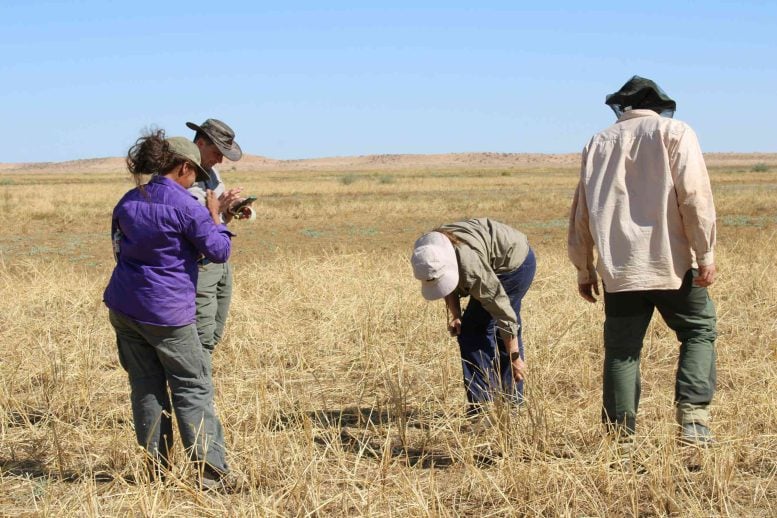 A native Australian millet may carry the genetic fingerprints of thousands of years of Aboriginal harvesting, storage, and plant management. Seen from the air, Channel Country resembles a vibrant and vast tapestry, with a network of waterways crisscrossing the land. Spread across more than 280,000 square kilometers in outback Australia, it is one of the [...]

