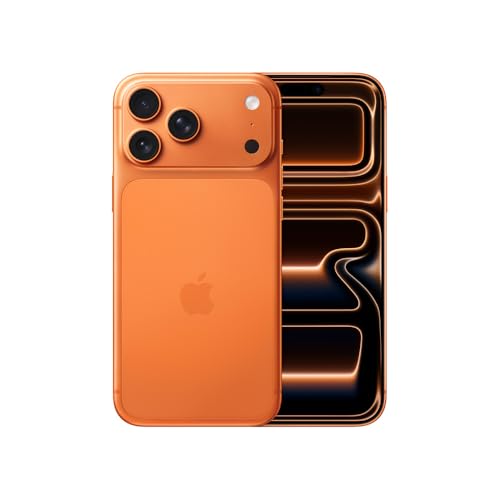
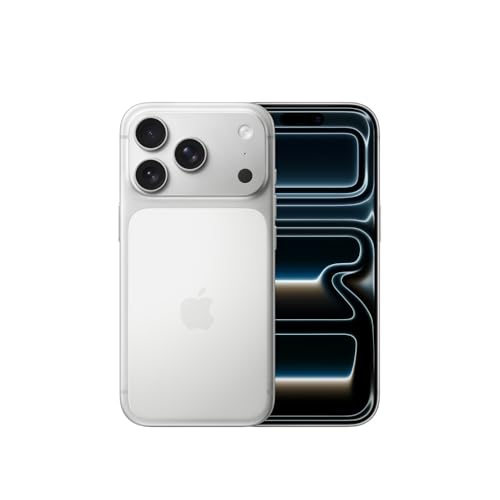
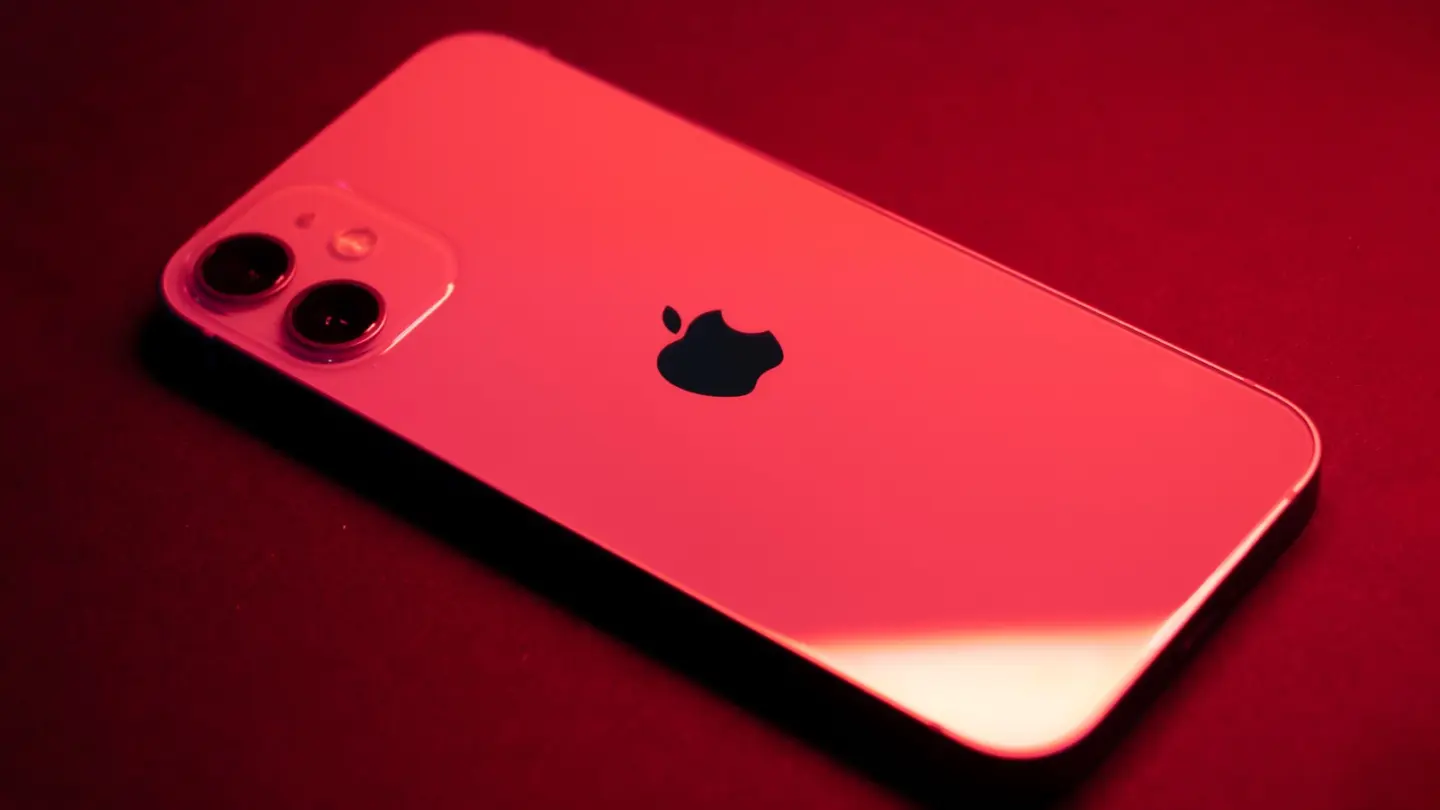
De acordo com a firma, o custo de fabricação do “iPhone 18 Pro” de 256GB — ou seja, o modelo mais em conta dessa linha — ficará cerca de 38% maior em relação ao seu antecessor direto, tornando reajustes de preço do lado dos consumidores “inevitáveis”. Ela, no entanto, abre possibilidade de a Apple sacrificar um pouco da sua margem de lucro para estancar parte do impacto desses aumentos.
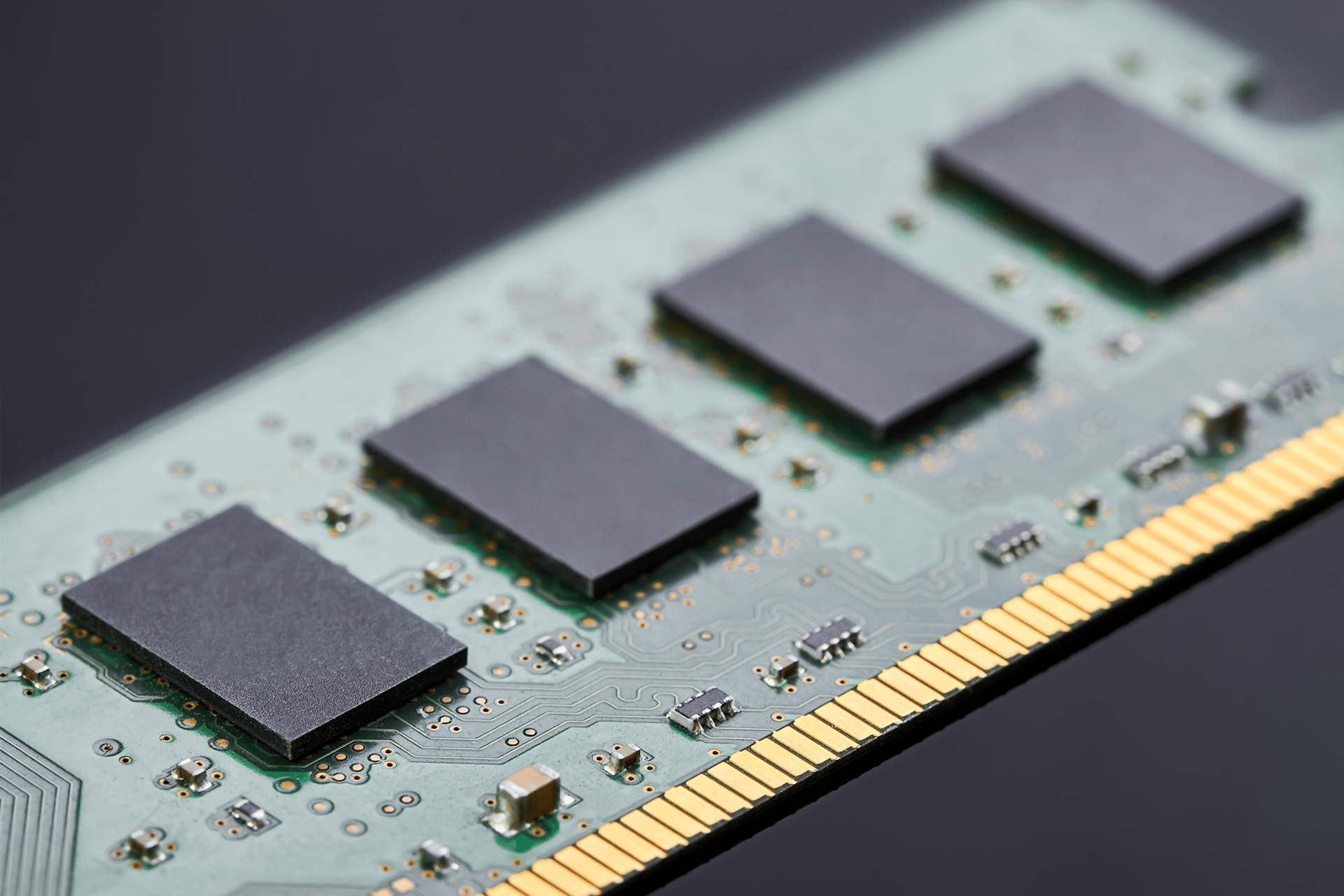
Isso, como não podia deixar de ser, tem a ver com a crise no mercado de DRAM 1Dynamic random access memory, ou memória dinâmica de acesso aleatório., que fez os chips de memória passarem a representar, no terceiro trimestre de 2026, aproximadamente 34% do valor total do smartphone, em contraste com os 10% de um ano atrás. O prognóstico para os iPhones de 2027 também não é muito animador, já que é esperado que esse número passe de 40% ainda na primeira metade do ano que vem.
Antes dessa crise, os componentes mais caros de um iPhone eram, com sobras, o processador e a tela. Caso a participação da memória no custo de fabricação realmente passe dos 40%, isso fará com que a fatia desses outros componentes caia para abaixo de 10% mesmo sem uma redução nos seus preços, tamanha é a pressão no mercado de DRAM atualmente.
Divulgação/TrendForce
Essa estratégia de sacrificar parte da margem de lucro, como lembrado pela TrendForce, foi empregada pela Apple nos últimos lançamentos de MacBooks — que, mesmo assim, sofreram aumentos expressivos recentemente. A firma de pesquisa também não exclui a possibilidade de a empresa aumentar os preços de modelos mais antigos de iPhones junto do lançamento dos novos aparelhos, o que serviria para compensar parcialmente o aumento dos custos de memória.
É, são tempos sombrios no mundo da tecnologia…
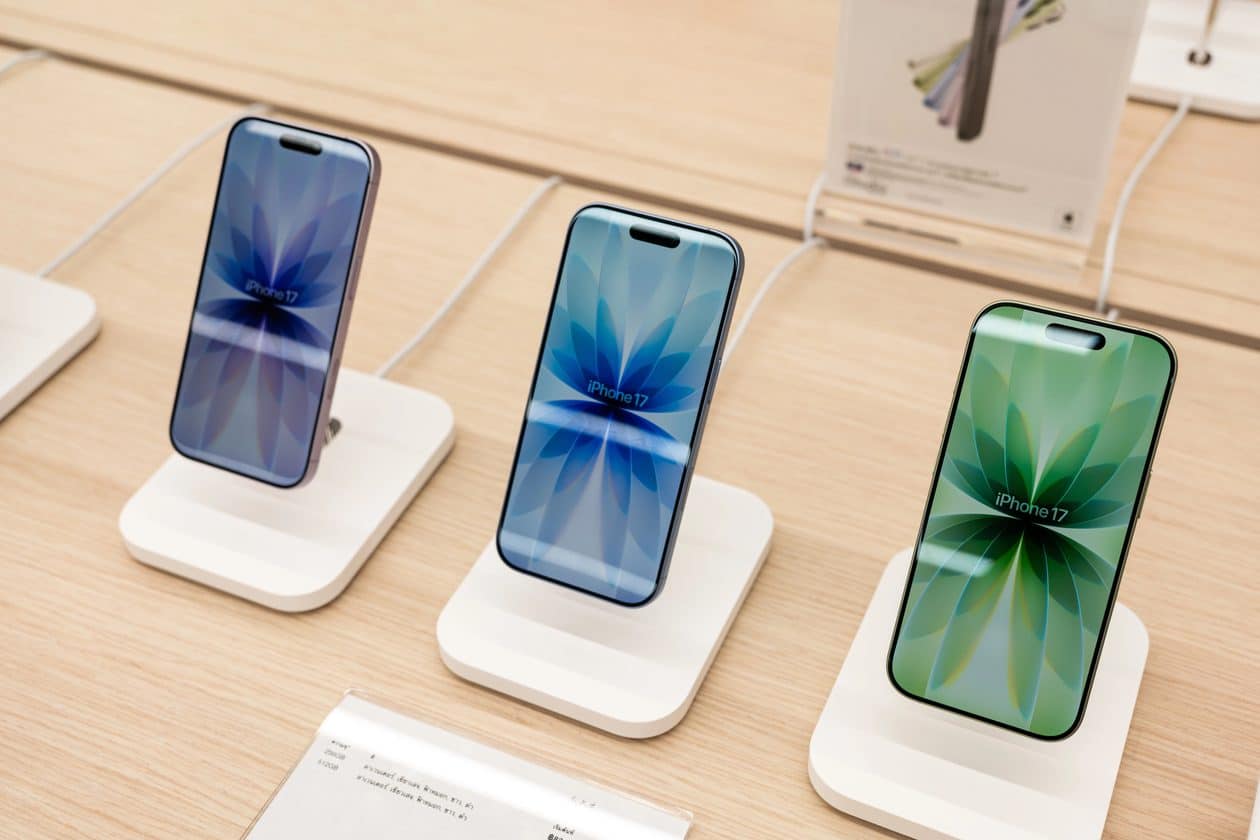
iPhone 17 Pro Max
Cores: prateado, laranja-cósmico ou azul-intenso Armazenamento: 256GB, 512GB, 1TB ou 2TB
NOTA DE TRANSPARÊNCIA: O MacMagazine recebe uma pequena comissão sobre vendas concluídas por meio de links deste post, mas você, como consumidor, não paga nada mais pelos produtos/serviços usando os nossos links de afiliado.
Com inúmeros modelos e variações de Macs já fabricados, a Apple consegue abranger diferentes públicos-alvo. Desta forma, seja você uma pessoa que usa computador apenas para navegar na web ou um profissional que precisa de máquinas parrudas para dar conta do recado, pode usufruir de notebooks ou desktops da empresa.
Para ter certeza de qual modelo de computador da Apple você tem no momento, é possível conferir exatamente essa informação pelo sistema.
Cores: preto-espacial ou prateado Tela: padrão ou nano-texture Chips: M5 Pro ou M5 Max Memória: 24GB, 36GB, 48GB, 64GB ou 128GB Armazenamento: 1TB, 2TB, 4TB ou 8TB
Cores: preto-espacial ou prateado Tela: padrão ou nano-texture Chips: M5, M5 Pro ou M5 Max Memória: 24GB, 36GB, 48GB, 64GB ou 128GB Armazenamento: 1TB, 2TB, 4TB ou 8TB Adaptador de energia: USB-C de 70W ou 96W
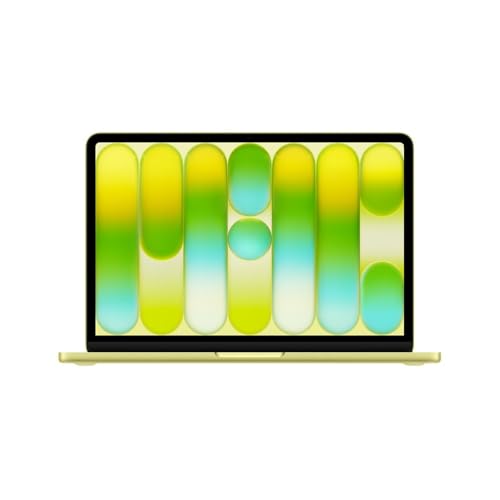
Cores: azul-céu, prateado, estelar ou meia-noite Chip: M5 Memória: 16GB, 24GB ou 32GB Armazenamento: 512GB, 1TB, 2TB ou 4TB Adaptador de energia: USB‑C de 30W, 35W com duas portas ou 70W
Cores: azul-céu, prateado, estelar ou meia-noite Chip: M5 Memória: 16GB, 24GB ou 32GB Armazenamento: 512GB, 1TB, 2TB ou 4TB Adaptador de energia: USB‑C de 30W, 35W com duas portas ou 70W
NOTA DE TRANSPARÊNCIA: O MacMagazine recebe uma pequena comissão sobre vendas concluídas por meio de links deste post, mas você, como consumidor, não paga nada mais pelos produtos/serviços usando os nossos links de afiliado.
Apple offers the MacBook Pro with three different chip options. It starts with the entry-level M5 chip, which you can only get in the 14-inch MacBook Pro. Apple also offers higher end M5 Pro and M5 Max chips for the 14- and 16-inch MacBook Pro, as it has since the M1 arrived in 2020.
The M5 MacBook Pro was released in October 2025. According to reports, Apple plans to upgrade the laptop to an M6 chip this fall, which isn’t a surprise. What is a surprise is that Apple will reportedly skip the Pro and Max M6 variants to focus on the M7 coming later in 2027. So the M6 MacBook Pro could be the only M6 option available.
This article keeps track of the reports about the upcoming M6 MacBook Pro. Keep an eye on this article for the latest news.
M6 MacBook Pro release date: When will it launch?
• Fall 2026 expected
In a July report, Bloomberg’s Mark Gurman reported that the M6 MacBook Pro is expected to ship this fall. Of the five generations of the entry-level MacBook Pro, three have been released in the October/November timeframe, including the past two releases. Here are the release dates for the entry-level MacBook Pro:
This release could be affected by the memory chip shortage that has been affecting the whole tech industry. If Apple is unable to obtain the quantity of chips it needs, Apple could be forced to move the release date back. Or, there could have a short supply of laptops available, which would result in actual delivery dates slipping.
At this point in time, we haven’t heard of any delays. The fall release of the M6 MacBook Pro seems to be on schedule, but the volatility of the chip market could cause it to change unexpectedly.
M6 MacBook Pro: Chip details
First 2nm M-series chip
Redesigned GPU
Apple will upgrade the MacBook Pro M5 to an M6 chip, which will be the key upgrade for this release cycle. The chip is expected to be the first M-series chip built using TSMC’s 2nm process. A smaller process allows for more transistors to be placed on the chip, which would result in faster speeds and improved power efficiency.
The M6 chip is expected to incorporate new features for improved AI processing.
Apple
The M5 chip comes with 10 CPU cores: 4 super cores and 6 efficiency cores. No reports have been made about the M6 CPU core count, but Gurman reported that “performance will also improve.” Apple is also planning enhancements for the built-in video codecs.
In June, Bloomberg’s Mark Gurman reported that the M6 could offer an updated memory architecture and memory bandwidth of 200 GB/s, a 31 percent increase over the M5’s 153 GB/s. Apple will also likely update the chip’s Neural Engine to help AI processing for Apple Intelligence and Siri AI. As for the RAM configurations, Apple offers the M5 with 16GB, 24GB, or 32GB of RAM. Apple isn’t expected to change this with the M6.
The M6 will also have a redesigned GPU. Gurman reported that Apple tested a version of the M6 with 12 GPU cores, which is two more than the M5.
M6 MacBook Pro: Other specifications and features
No major changes expected
The chip upgrade to the M6 is expected to be the only major change with the back MacBook Pro release. The display, keyboard, trackpad, ports, and other features are all expected to be identical or similar to the M5 MacBook Pro.
The M6 MacBook Pro could be the last entry-level model of this particular design.
Foundry
According to Bloomberg’s Mark Gurman, Apple is planning an entry-level M7 MacBook Pro for 2027. This laptop will have a base M7 chip that replaces the M6, but it will also have several new features to match those introduced with the touchscreen MacBook Pro. The entry-level M7 MacBook Pro will have a new design, an OLED display, and other features, but it’s not expected to have a touchscreen.
M6 MacBook Pro: Price
$1,999 (expected)
Ongoing memory constraints could affect configurations
We haven’t heard any reports about the price of the entry-level M6 MacBook Pro, but we can look at recent price history to get an idea. When the M5 MacBook Pro was released in 2025, its starting price was $1,599. Apple bumped it to $1,699 when the M5 Pro and Max models arrived earlier this year and increased the starting storage to 1TB. This past June, however, Apple raised the price to $1,999 due to supply chain constraints. Those constraints aren’t going away anytime soon, and it’s likely that the higher price is now the new normal.
During Apple’s Q3 2026 financial announcement in July, Apple CEO Tim Cook and CFO Kevan Parekh made it a point to explain that the supply chain constraints will affect production costs for months to come. ” We expect the impact from supply constraints to increase significantly sequentially,” said Parekh. “The projected supply constraints in the September quarter affect iPhone, Mac, and iPad.” Cook said, “With less flexibility in supply chain, we expect the impact from the supply constraints to increase significantly sequentially.”
With this in mind, it’s quite possible that prices could go up again with the release of the M6 MacBook Pro. It’s unlikely, but the state of the chip supply chain will influence what prices Apple will offer.
Considering that the M7 MacBook Pro won’t be far from replacing the yet-to-be-released M6 MacBook Pro, one strategy Apple could employ is to price the M6 MacBook Pro at the same $1,999 price and push any price hikes to the next generation. If that’s the case, the M6 could be a good option for anyone on the fence about upgrading.
MacBook Neo sales have given Apple something the Mac rarely achieved through its premium models: immediate access to the enormous market for affordable everyday notebooks.
The new line arrived in March 2026 with a launch price of $599, or $499 through education pricing. That placed a current MacBook within reach of buyers who previously depended on discounted older models, inexpensive Windows laptops or Chromebooks.
Price opened the door, but appearance helped people walk through it. MacBook Neo entered the market in blush, indigo, silver and citrus, avoiding the visual compromises commonly associated with entry-level computers. The aluminum enclosure, color-matched keyboard and 13-inch Liquid Retina display made it look like a deliberate new Mac rather than a reduced MacBook Air.
Those choices changed the conversation around an affordable Apple notebook. Buyers could select a computer according to personality and style before considering processor benchmarks. Students could carry something visibly different from institutional gray and black laptops. Families could distinguish multiple computers by color, while first-time Mac owners received a product with its own identity.
Early shipment estimates suggest that strategy worked. IDC data shared with TechCrunch placed MacBook Neo shipments at approximately 1.1 million units during the March quarter, even though the computer had been available for only about three weeks. Apple does not disclose sales by individual Mac model, so the figure remains an independent market estimate rather than an official unit count.
The pace was nevertheless substantial enough to make MacBook Neo one of the strongest recent Mac introductions. It also pushed the story beyond one successful product launch. Apple had entered a price segment responsible for tens of millions of notebook purchases each year and found customers who had never seriously considered macOS.
Image Credit: Apple Inc.
MacBook Neo Sales Started With a Missing Price Tier
Apple spent years concentrating the MacBook line above the mainstream notebook market. MacBook Air became the accessible model, but its price still placed it beyond many students, families and buyers in countries where local income and currency conversion make Apple hardware especially expensive.
Discounted older MacBook Air generations partially filled that gap. Retailers could keep M1, M2 or M3 models available after newer versions arrived, offering buyers lower prices without Apple designing a dedicated entry-level computer.
That approach had limitations. Availability depended on remaining inventory, configurations varied among retailers and the product still looked like a previous generation being cleared from the channel. It could attract value-conscious buyers, but it did not establish a permanent starting point for the Mac.
MacBook Neo created that starting point. Apple designed the model around an A18 Pro chip rather than the M-series processors used by MacBook Air and MacBook Pro. The base configuration included 8GB of unified memory and 256GB of storage, enough for browsing, school assignments, communication, streaming and everyday productivity without competing directly with higher-performance Macs.
The model retained features that buyers encounter every day: an aluminum body, a 13-inch high-resolution display, a Magic Keyboard, a large Multi-Touch trackpad, a 1080p FaceTime HD camera and a fanless design. Apple rated its battery for as long as 16 hours under its testing conditions.
Performance headroom, memory capacity and external-display support remain more limited than on a MacBook Air. Those compromises are easier to accept when the computer is purchased for writing, research, web applications, video calls and media consumption rather than professional video production or complex development work.
IDC estimated that the sub-$700 segment represented about 75 million annual notebook shipments, close to 40% of global notebook volume. Windows and ChromeOS historically controlled more than 95% of that tier. Apple had been competing for a small premium section of the market while a far larger pool of buyers purchased elsewhere.
MacBook Neo sales gave the company a way into that pool without placing an old design or plastic enclosure at the entrance to the Mac line. A buyer comparing computers at similar prices could now choose macOS without first accepting a major premium.
Color Gave the Affordable MacBook an Identity
Low-cost laptops are frequently designed to disappear. Dark plastic, conservative finishes and generic bodies keep manufacturing simple and reduce the risk that one color will remain unsold. MacBook Neo took the opposite approach by making color one of the most recognizable parts of the product.
Silver preserves a familiar Mac appearance, while indigo offers a darker alternative without returning to standard black. Blush gives the line a softer finish, and citrus creates the visual signature that separates Neo from every other MacBook on a table.
The colors do more than decorate an inexpensive computer. They prevent the model from being defined entirely by what it lacks. Instead of asking why it has an A18 Pro rather than an M5, buyers can begin with which finish they want.
That distinction is valuable among younger customers. IDC described reactions from teenagers who focused on the display, weight and appearance rather than memory specifications or processor architecture. Their interest centered on how the computer would look at school compared with the Windows laptops and Chromebooks already around them.
Apple used a similar strategy when color helped turn the original iMac into a cultural object. Later iBook models carried bright finishes into portable computing, while colorful iMac and MacBook designs made personal computers feel less institutional. MacBook Neo revisits that idea for a generation accustomed to selecting colors for phones, headphones, cases and watches.
The approach also avoids making affordability look like punishment. A lower price does not force the buyer into an anonymous product with a visibly cheaper exterior. Neo has limitations, but its design gives owners something exclusive to the line instead of presenting the computer as a substitute for the MacBook they could not afford.
Color alone did not produce MacBook Neo sales. The launch price, battery life, macOS integration and recognizable MacBook construction carried more purchasing weight. Color made those advantages easier to notice and gave stores a product that could attract attention before a salesperson explained its specifications.
First-Time Buyers Changed the Mac Equation
Apple said customer response exceeded its expectations and connected the launch with record participation from people buying their first Mac. That audience may prove more valuable than existing owners choosing a less expensive replacement.
A first Mac purchase can introduce a customer to applications and services that become part of daily work. People who already use an iPhone can access Messages, FaceTime, Photos, iCloud, AirDrop and iPhone Mirroring from the computer without rebuilding their digital routines.
That familiarity lowers one of the barriers to changing computer platforms. A person may have used Windows throughout school or work while carrying an iPhone for years. MacBook Neo makes the switch less financially demanding, while the connected features reduce the amount of relearning required after purchase.
MacBook Neo sales also challenge the assumption that low-cost notebook buyers care only about the lowest available price. Many customers are willing to spend more than the cost of an entry Chromebook when the difference provides a better display, metal construction, longer useful life or closer integration with a phone.
The line is therefore competing on perceived value rather than absolute cheapness. A $599 launch price remains expensive beside the least costly education laptops, but it enters the same purchasing discussion as many mainstream Windows models. It no longer requires a buyer to stretch directly toward MacBook Air pricing.
Education represents a particularly large opportunity. Schools and families make purchases around durability, battery life, software management, support requirements and the number of years a computer can remain useful. A lower acquisition price gives the Mac a better chance of surviving the first stage of that calculation.
Small businesses face similar decisions. A company that previously reserved Macs for designers or executives can consider Neo for administrative work, communication and browser-based services. Wider Mac deployment then becomes possible without assigning a premium notebook to every employee.
MacBook Neo sales may also protect Apple from depending entirely on upgrades. Mature computer owners can keep a capable Mac for many years, extending replacement cycles. Bringing new people onto the platform creates additional demand without waiting for an existing MacBook Air or MacBook Pro to become obsolete.
Worldwide Adoption Is the Larger Story
The geographic distribution of the first units shows both progress and unfinished work. IDC estimated that 44% of March-quarter shipments went to the United States. That concentration is unsurprising for an Apple launch, but the larger opportunity sits in markets where Mac adoption has remained limited by price.
India offers an early example. Approximately 18,000 units reportedly shipped there during the short March launch period, while retailers later experienced difficulty obtaining enough inventory. The local starting price of ₹69,900 remained above the direct currency conversion of the U.S. price, yet it sat far below the ₹119,900 entry point reported for MacBook Air at the time.
Older MacBook Air generations had previously generated Indian sales when retailers offered substantial discounts. Neo gives Apple and its partners a current model to promote throughout the year rather than depending on irregular clearance inventory.
Availability timing will influence adoption elsewhere. The computer reached some markets later than the initial launch, including Indonesia in May. Local taxes, currency movements, distribution capacity and supply allocation can produce a very different value proposition from one country to another.
Independent forecasts remain optimistic despite severe pressure across the PC industry. TrendForce projected Apple notebook shipments could grow 7.7% during 2026 and estimated that MacBook Neo could reach between 4 million and 5 million units. IDC later said stronger-than-expected demand from the model contributed to an upward revision of its notebook forecast.
Those gains are occurring while memory shortages and rising component costs are pushing much of the computer industry toward higher prices. IDC expects worldwide PC shipments to contract during 2026, making Apple expansion unusual in a market where many manufacturers are reducing configurations and protecting margins.
Supply control helped Apple enter the lower tier at a difficult moment. The company already designs the A18 Pro, uses a highly standardized configuration and purchases components at enormous scale. That structure gave it more room to assemble a focused notebook without relying on a separate processor vendor for the central chip.
Recent Mac price increases caused by rising memory costs may test how much of the early advantage Apple can preserve. Neo depends on remaining close enough to mainstream notebooks that first-time buyers continue placing it on the same shortlist. A widening price gap would return the Mac to the premium territory the new line was created to escape.
The next evidence will arrive through education purchasing cycles and expansion in price-sensitive countries. A personal citrus or blush MacBook can win attention in a store, but deployments across schools and small businesses will depend on supply, local pricing, management costs and useful life. The first semester filled classrooms with individual Neo buyers; the coming academic year will reveal whether entire institutions are ready to replace rows of gray laptops with macOS.
The highly anticipated MacBook Ultra has dominated recent tech discussions with its touchscreen and OLED panel. However, the fresh exterior built around these parts might be an even bigger deal. That is largely because Apple is not keeping this fresh look locked to its top-tier machine for very long. Rumors suggest the company plans to […]
If the rumors are true, Apple’s next few years are shaping up to be the most exciting in a long time. The company has been working on intriguing new devices, including its first foldable iPhone, a touchscreen MacBook Pro with an OLED display, and smart home devices powered by Siri AI and Apple Intelligence.
All of this sounds amazing, but there’s just one problem. All these innovations are likely to come at a high price, especially at a time when prices are already rising due to a global shortage of RAM and other components. In the end, most people probably wouldn’t buy all or possibly any of these innovations.
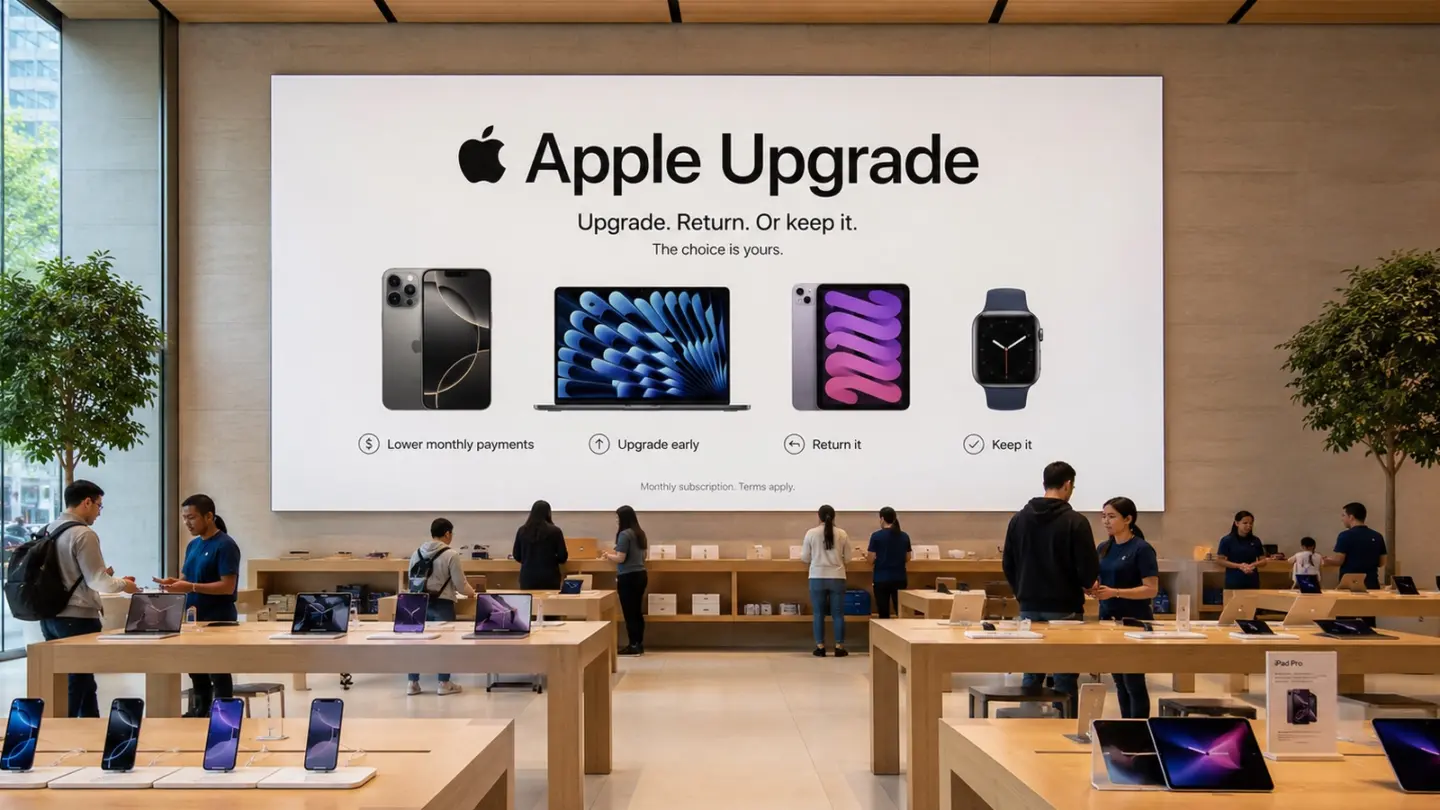
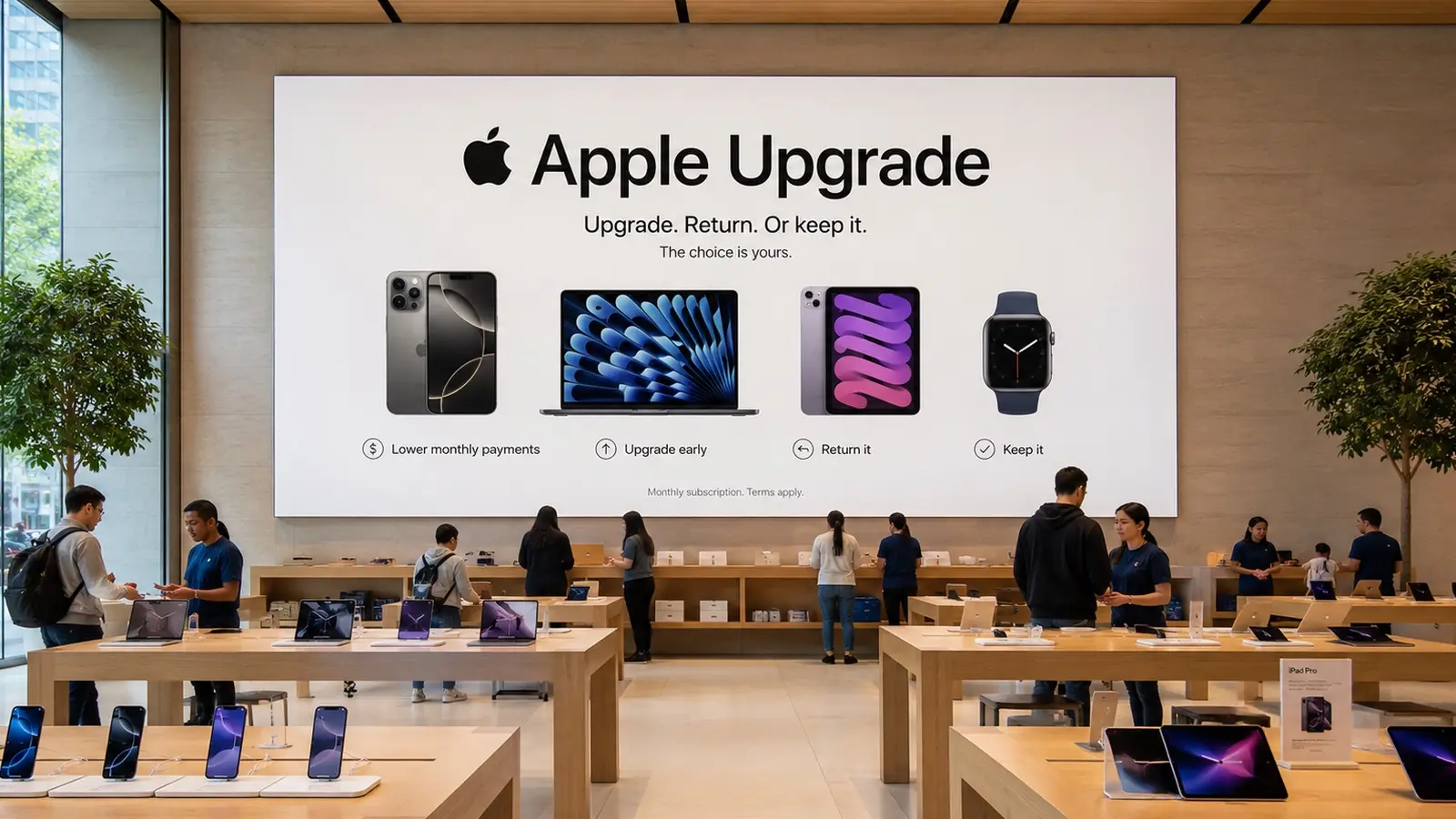
But Apple’s new Upgrade program changes the script and makes it possible for even more people to get their hands on Apple’s highest-end products, even if they don’t have thousands of dollars to spend on a new laptop or phone.
Apple already has niche premium products
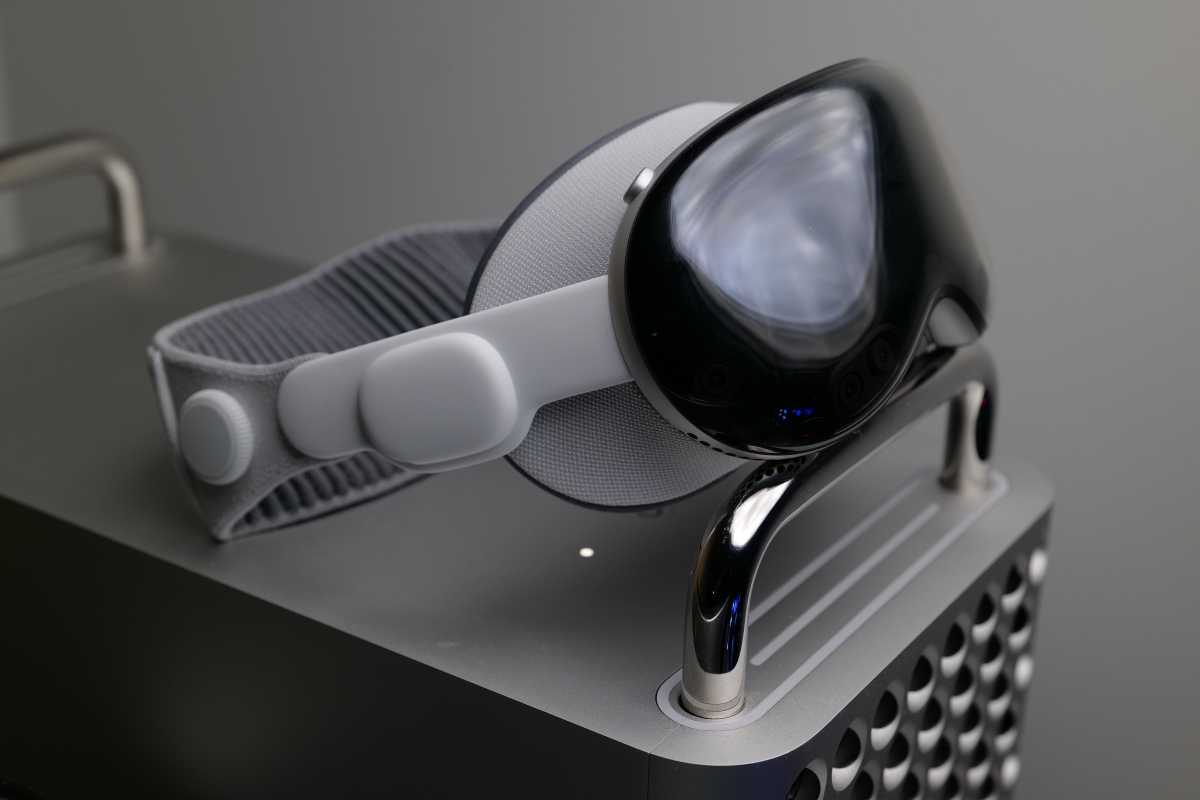
Apple has never been afraid to build products that only a few people can justify buying. The Mac Pro was never a product for the masses. It was an expensive computer aimed at engineers and film directors. The same applies to the XDR Studio Display and Apple Vision Pro.
Those products serve an important purpose. They demonstrate what’s technically possible, even if they aren’t expected to become best sellers. They cater to a niche market that is willing to pay a high price for them. For these users, price isn’t important.
Apple Vision Pro and the Mac Pro are both high-priced devices with limited appeal.
Thiago Trevisan/Foundry
What’s changing over the coming months is that even products on the way aren’t niche high-end devices. The rumored iPhone and MacBook Ultra are designed to be mainstream devices with high price tags, and this could have a major impact on which devices the average consumer chooses.
The iPhone has always been Apple’s most popular product. Even the Pro models, while expensive, remain attainable for many customers through financing, trade-ins, or carrier promotions. Likewise, the MacBook Pro has become the default recommendation for professionals and enthusiasts alike.
However, the rumored iPhone Ultra and MacBook Ultra suggest that Apple may be about to introduce a new product tier positioned well above its Pro models. Not simply because they are faster or more powerful, but because they are much more ambitious to build.
Innovation comes with a price
New technologies always come at a higher price. Typically, building a device with a radical new design requires new manufacturing methods, which drives up production costs. This was the case in 2017 with the iPhone X, which raised the starting price of the high-end iPhone from $649 to $999.
At the time, people were shocked by the higher price. But quickly, $999 became the new normal for a premium smartphone. Now, the iPhone 17 Pro starts at $1,099, which is only 10 percent more than the starting price Apple set for its new iPhone in 2017.
But given the current rumors, Apple’s new “Ultra” devices won’t just be a few dollars more expensive. They could cost up to twice as much as the current Pro models.
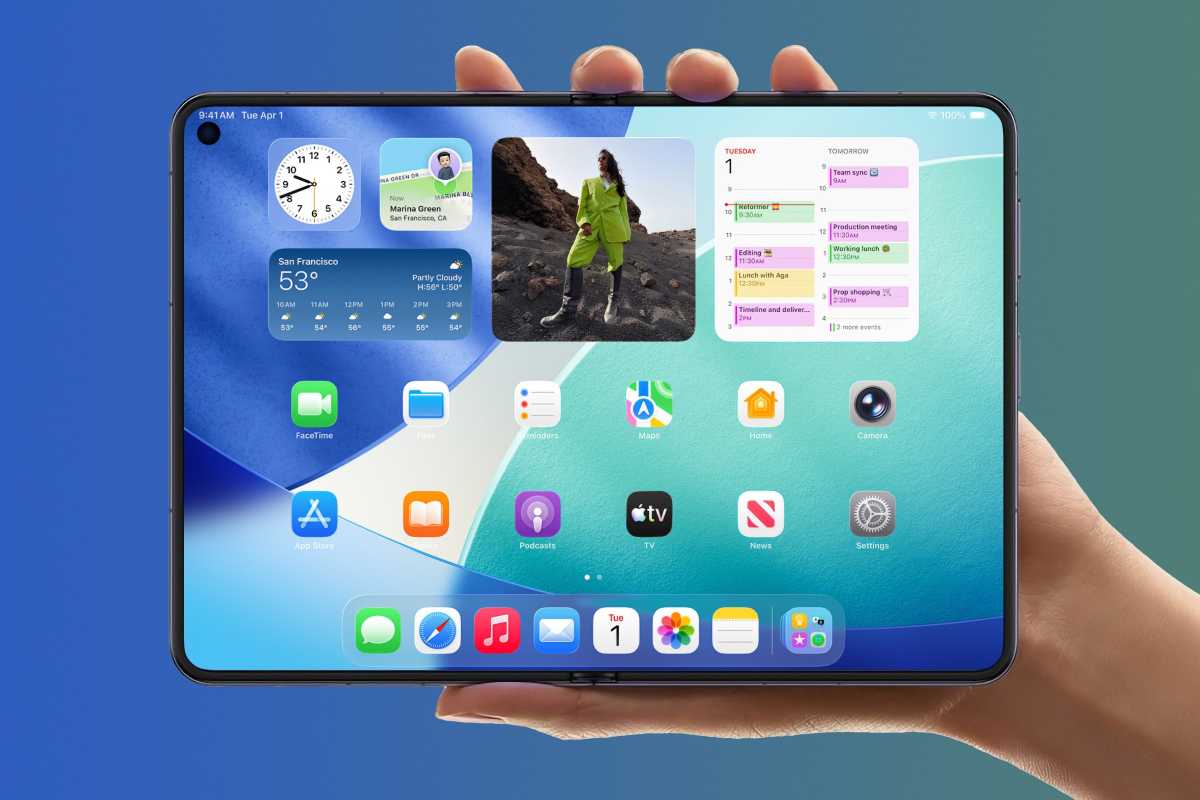
Apple’s upcoming iPhone Ultra could cost twice as much as the iPhone 17 Pro Max.
Foundry
Let’s take the iPhone Ultra foldable as an example. Flexible OLED panels remain expensive. More durable hinges require intricate engineering. Thinner batteries, custom display technologies, and increasingly complex camera systems all push manufacturing costs higher.
Based on what multiple sources have been saying, Apple’s foldable iPhone could cost as much as $2,500 depending on the configuration. That would already be $1,300 more expensive than the iPhone 17 Pro Max costs today. By comparison, Samsung now charges $2,100 for the entry-level version of the new Galaxy Z Fold Ultra and $1900 for the shorter model that mimics the rumored iPhone Ultra.
The rumored MacBook Ultra follows a similar pattern. An OLED touchscreen display with a new design, along with even more RAM and SSD storage, would significantly increase the cost of this machine compared to current MacBook Pro models.
But with Apple Upgrade, those prices aren’t nearly as eye-watering. On a 24-month lease, the iPhone Ultra would likely cost around $70 a month, while a 36-month MacBook Ultra lease would run roughly the same for a 36-month lease. That’s still not as cheap as an iPhone 17 Pro, but it’s much more affordable—and you can bet Apple will advertise it as such.
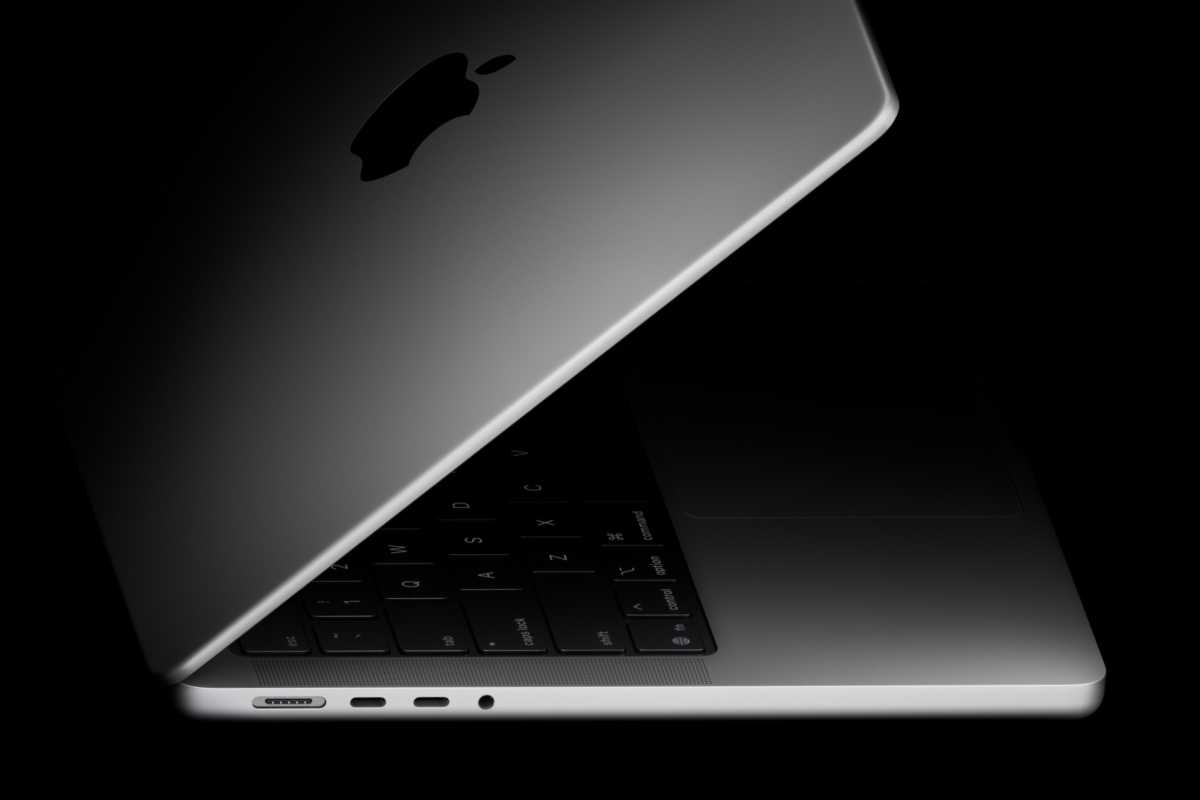
The next MacBook Pro will reportedly have a touchscreen display and an eye-watering price tag.
Apple
The products most people buy won’t stop being good
Of course, having new, high-end products in the lineup doesn’t mean everyone will need them. The current iPhone Pro models are already more than enough for most users. The latest MacBook Pro is so powerful that many buyers have never even come close to using its full potential. Even the base model iPhone has become quite appealing.
In fact, Apple itself has, in a way, anticipated that premium products would become much more expensive and has also been investing in more affordable products that meet the needs of the vast majority of people. This includes devices such as the MacBook Neo and the iPhone 17e.
Ever since we began hearing about them, it seemed as though the new Ultra products would be just like the Vision Pro: cool, futuristic products, but priced way out of reach for most buyers. Ultra products will naturally be aimed at enthusiasts, those who are willing to pay thousands of dollars for an iPhone or a MacBook that looks completely different from current devices and employs the most cutting-edge technologies. And like Vision Pro, the rumored prices didn’t leave much hope for a trickle-down effect.
But with Apple Upgrade, the barrier to entry isn’t nearly as steep. Apple doesn’t offer Vision Pro in its Upgrade program, but a $3,699 Mac (the same price as Vision Pro after last month’s price hike) costs just $76.52 per month for 36 months. Apple would have probably sold quite a few more of them if those terms were available at launch.
Apple’s next era seems genuinely exciting. It just may be an era in which more people than ever don’t own Apple’s latest products—but they still use them around every day.
Many MacBook Air, MacBook Pro, and MacBook Neo owners have noticed something curious; their MacBook battery stops charging at 80% when plugged in. To add to the confusion, even if they leave their MacBook plugged in overnight, the battery seems to be stuck at 80% and will not charge any further. Because this is not ... Read More
Ever since Apple raised prices on MacBooks last month, we’ve been on the lookout for anything that comes close to the prices they were before. Today’s deal gets there: B&H Photo is selling a 14-inch M5 MacBook Pro with a 96W power adapter for $1,729, a savings of $290 on the price Apple charges and just $10 more than the price before the hike.
This is the base-model MacBook Pro, but you’re still getting a lot of high-end features, including the speedy M5 chip, 1TB of storage, 2x faster read/write performance compared to the M4 model. You can also hook up a pair of high-resolution external displays as well as Thunderbolt 5 drives. And with the bundled 96W charger, you’ll get fast charging (up to 50 percent battery in around 30 minutes) as well.
Of course, it also comes with a brilliant Liquid Retina XDR display with ProMotion and XDR, tons of expansion, including Thunderbolt 5, HDMI, and an SDXC card slot, and Wi-Fi 6E. And it all comes wrapped in Apple’s sleek design that’s gorgeous in either silver or space black. We loved this model when we reviewed it and still recommend it even at the higher price.
MacBook Neo helped Apple move against the global PC market in the second quarter of 2026, delivering double-digit Mac shipment growth while most leading computer manufacturers sold fewer units than a year earlier.
Preliminary data from IDC estimates that Apple shipped 6.7 million Macs during the quarter, up 10.1% from 6.1 million in Q2 2025. Its worldwide market share rose from 8.5% to 9.9%, placing the company within a fraction of the 10% threshold.
The rest of the industry moved in the opposite direction. Global shipments fell 4.9% year over year to 68.2 million units, ending nine consecutive quarters of growth. A separate Omdia estimate placed the decline at 3.6% and Apple growth at 15.9%, but both research groups identified the same pattern: the Mac gained ground while established Windows PC vendors contracted or remained flat.
IDC directly connected the Apple increase with the arrival of its lowest-priced notebook. MacBook Neo began shipping in March, giving the model its first complete quarter of retail availability between April and June.
MacBook Neo Drives Mac Shipment Growth
MacBook Neo entered the market as an alternative for buyers previously priced out of the Mac lineup.
The 13-inch notebook launched at $599 with an A18 Pro chip, 8GB of unified memory, a Liquid Retina display and up to 16 hours of video playback. It also brought macOS, Apple Intelligence and integration with the iPhone ecosystem into a price range commonly occupied by mainstream Windows laptops and Chromebooks.
That positioning attracted students, families and first-time Mac customers who did not need the performance or display technology of a MacBook Air or MacBook Pro. The four-color aluminum design also gave the entry model a more recognizable identity than the older Mac notebooks that frequently remained on sale through discounts.
IDC had already identified the computer as an unusual source of strength when it revised its notebook forecast earlier in 2026. Demand exceeded initial expectations in several markets, and reported inventory shortages appeared shortly after the March launch.
The effect became much more visible in Q2. MacBook Neo was available for the entire three-month period, allowing Apple to increase production, expand retail distribution and serve customers who could not obtain the computer during its first weeks.
The entry model also widened the Mac lineup without replacing the MacBook Air. Buyers seeking more memory, faster ports, longer wireless web use or additional external-display support could continue moving toward the M5-powered Air, while the less expensive machine handled education, office work, web browsing and communication.
That separation allowed Apple to reach lower price points without reducing the value of its premium notebooks.
Image Credit: Apple Inc.
Lenovo, HP and Dell Lose Shipments
Apple remained the fourth-largest traditional PC vendor, but its performance contrasted sharply with the companies above it.
Lenovo retained first place with 16.6 million units and 24.4% market share. Its shipments declined 2.1% from the previous year.
HP experienced the steepest drop among the top five, falling 9% to 13 million units. Dell shipped 9.3 million computers, representing a 5% decline. Asus remained nearly flat at 5 million units, up only 0.2%.
Manufacturers outside the five largest brands collectively suffered a 10.5% contraction, indicating that weaker demand and component inflation placed even more pressure on smaller companies.
The figures measure shipments into distribution channels or directly to end users, not confirmed retail purchases by individual consumers. A manufacturer can therefore record shipment growth while some inventory remains unsold in stores or warehouses.
MacBook Neo demand appears to have been strong enough to support Apple production increases rather than simply filling channels. The company reportedly doubled its annual production target after the initial response, although later quarters will reveal how much of Q2 reflected lasting demand rather than launch-period enthusiasm.
Apple also benefits from operating at a scale that provides leverage with memory, storage and semiconductor suppliers. Smaller PC brands face greater difficulty securing components at competitive prices when shortages intensify.
Memory Costs Reverse the PC Recovery
The Q2 contraction arrived after manufacturers and commercial customers accelerated purchases during late 2025 and early 2026.
Buyers expected memory and storage prices to rise, encouraging some businesses to replace computers earlier than planned. Vendors also increased inventories while components remained available.
That activity supported nine quarters of market growth but borrowed demand from later periods. Once the early purchases were completed, the industry faced a more difficult combination of expensive components, cautious consumers and elevated retail prices.
The memory shortage is closely connected to the AI infrastructure boom. Chipmakers are dedicating more production capacity to high-bandwidth memory used by data center accelerators, limiting the supply of conventional DRAM needed for personal computers.
IDC expects little relief before the end of 2027 or early 2028. The research company forecasts an 11.3% decline in worldwide PC shipments across 2026, with the fourth quarter potentially falling 20% from the previous year.
Computer revenue may not decline at the same pace. Manufacturers have raised prices faster than shipments have fallen, allowing them to collect more money from fewer units.
That strategy creates another problem. Retailers and distributors can become trapped with expensive inventory if customers refuse the new prices, forcing promotions or production reductions later.
MacBook Neo initially softened that pressure by giving Apple a new product near the bottom of the notebook market. Its original $599 price made the Mac competitive with midrange Windows machines at the moment many rivals were becoming more expensive.
Image Credit: Freepik
The Price Increase Creates the Next Test
The strongest Q2 MacBook Neo shipments were recorded while most customers could still buy the computer at its introductory price.
Apple raised the U.S. starting price to $699 in late June as memory and storage costs affected the Mac and iPad lineups. The education price remained at $599, preserving the original offer for eligible students and educators.
A $100 increase changes the comparison with discounted Windows notebooks and places the entry model closer to older MacBook Air configurations available through third-party retailers.
Apple must now determine whether the appeal came primarily from the low launch price or from the combination of macOS, battery life, design and iPhone integration.
The company remains better positioned than many rivals to absorb supply disruption, negotiate long-term component agreements and promote several notebooks at different prices. MacBook Neo also uses an iPhone-class A18 Pro processor rather than an M-series chip, providing another way to manage silicon costs and production capacity.
IDC expects the full PC market to deteriorate during the second half of 2026. Apple will enter that period with almost 10% worldwide share, but the September quarter will be the first to measure MacBook Neo demand almost entirely at the higher $699 retail price.
It can be depressing shopping for a new MacBook following Apple’s price hikes, especially a high-end machine. Well, we’ve got some relief for you: Apple’s absolutely decked-out MacBook Pro is $400 off at B&H right now, marking one of the best deals we’ve seen for this model.
The MacBook Pro is always an excellent pick for anyone looking to get a professional laptop they’ll use for years to come. But when it comes with these specs, we can’t help but recommend it even more loudly, even when the price is $3,599. First of all, it comes with the M5 Pro 18-Core chip paired with a 20-Core GPU that packs a Neural Accelerator in every core. Then, it is backed up by a jaw-dropping 64GB of RAM and a super-speedy 1TB SSD. Whatever you want to do with it, this machine will handle every task you throw at it.
The laptop features a gorgeous 16-inch Liquid Retina XDR display with a smooth 120Hz refresh rate and up to 1600 nits of brightness. Connectivity is not something you’ll ever complain about either, as the laptop comes packed with Thunderbolt 5 for blazing 120 Gb/s transfers, plus Wi-Fi 7, Bluetooth 6, and MagSafe 3. This laptop’s battery life hits 24 hours, so you can leave the house without a charger any day.
Snag this impressive pro machine for $400 off before this deal expires over at B&H. You won’t need to upgrade for a very long time once you buy this MacBook Pro.
A Receita Federal disponibilizou mais um edital (0900100/000009/2026) para leilão com produtos apreendidos, nesta ocasião em Curitiba (PR). De um total de 178 lotes disponíveis, pelo menos 13 deles contam com produtos da Apple, como iPhones, MacBooks, iPads e acessórios.
As propostas poderão ser enviadas a partir do dia 17 de agosto, às 8h, com o encerramento previsto para o dia 24/8, às 21h. Aquelas que forem selecionadas serão convidadas a participar do pregão online previsto para o dia 25/8, às 10h.
Relembramos que esses produtos podem vir acompanhados de itens de outras empresas, além de possivelmente não contarem com garantia ou acessórios e de apresentarem estados de conservação dos mais variados.
Vamos aos lotes?
Lote
Produto(s) da Apple
Lance mínimo
2
12x iPad (9ª geração) 8x iPad mini (6ª geração) 3x iPad (11ª geração) 3x iPad (10ª geração) 1x iPad Air (M3) 1x iPad Air (M2) 5x iPad Air (5ª geração) 2x Magic Trackpad (USB-C) 2x Apple Pencil Pro 4x Apple Watch SE (2ª geração) de 40mm 1x Apple Watch Ultra (1ª geração) de 49mm 2x Apple Watch Series 9 de 41mm 1x MacBook Air (modelo não informado) 1x MacBook Air (M2) 1x MacBook (modelo não informado)
R$150.000
3
1x iPad (modelo não especificado) 2x Mac mini (M4) 1x iPad mini (11ª geração) 2x Magic Mouse
R$152.000
5
13x Apple Pencil Pro
R$126.000
6
1x MacBook Air (M3)
R$112.000
16
48x iPhone 17 Pro Max 2x iPhone 17 1x iPhone 16 Pro Max 16x iPhone 16 5x iPhone 15
R$745.000
17
84x iPhone 17 Pro Max 25x iPhone 17 Pro 66x iPhone 17 87x iPhone 16 40x iPhone 15
R$485.000
20
16x iPhone 17 Pro Max 8x iPhone 17 Pro 17x iPhone 17 16x iPhone 16
R$230.000
21
46x iPad (A16) 10x iPad Air (M3) 5x iPad mini (A17 Pro) 30x Apple Watch Series 11 de 42mm 7x Apple Watch Series 11 de 46mm 2x Apple Watch Series 10 de 46mm 2x Apple Watch SE (3ª geração) de 40mm 2x Apple Watch SE (2ª geração) de 44mm 3x Apple Watch SE de 44mm 2x Apple Watch SE de 40mm 4x iPad (modelo não especificado) 1x iPad Air (M3)
R$75.000
24
3x Mac mini (M4) 3x Mac mini (modelo não especificado) 1x Mac mini (M2)
R$27.000
139
2x iPad (A16) 17x iPad (10ª geração) 1x iPad Air (5ª geração) 6x MacBook Air (M1) 4x MacBook Air (M2) 2x MacBook Air (M3) 1x MacBook Air (M4) 6x MacBook Air (modelo não especificado) 1x Apple Watch (modelo não especificado) 1x AirPods Max 1x MacBook de 13” (modelo não especificado) 1x MacBook Pro 14” (modelo não especificado) 1x MacBook Pro 16” (modelo não especificado) 1x MacBook Pro (M4 Pro) 1x AirPods Pro (2ª geração) 17x Apple Watch Series 9 de 45mm 8x iPad (9ª geração) 1x Apple Watch Series 10 de 46mm 1x Apple Watch SE (2ª geração) de 44mm 2x Apple Watch SE (2ª geração, GPS) de 40mm 2x Apple Watch SE (2ª geração, GPS) de 44mm 4x Apple Watch Series 8 de 41mm 5x Apple Watch Series 8 de 45mm 2x Apple Watch SE de 44mm 1x Apple Watch Ultra 2 (GPS + Cellular) de 49mm 1x Apple Watch Ultra 2 de 49mm 1x Apple Watch Ultra de 49mm 2x Magic Mouse 2x MacBook Pro (M3) de 14” 1x MacBook Pro (modelo não especificado) 1x iPad Pro (6ª geração) 1x iPad Air (modelo não especificado) 2x iPad Pro de 11” (modelo não especificado) 1x iPad (modelo não especificado) 2x Apple Pencil (modelo não especificado) 1x Apple Watch Ultra (GPS + Cellular) de 49 mm 2x Mac mini (modelo não especificado) 1x Magic Keyboard para o iPad Pro de 13”
R$80.000
145
2x tela LCD para o MacBook Air (M1)
R$55.000
148
4x AirTags (pacote de 4 unidades) 3x Apple Pencil (USB-C)
R$48.000
175
1x cabo USB
R$135.000
Como participar do leilão?
Se algum desses lotes lhe interessou, para participar é necessário possuir um CPF válido e um certificado digital válido obtido pelo acesso ao Centro Virtual de Atendimento ao Contribuinte (e-CAC).
Os lotes estão disponíveis para lances tanto de pessoas físicas quanto de pessoas jurídicas.
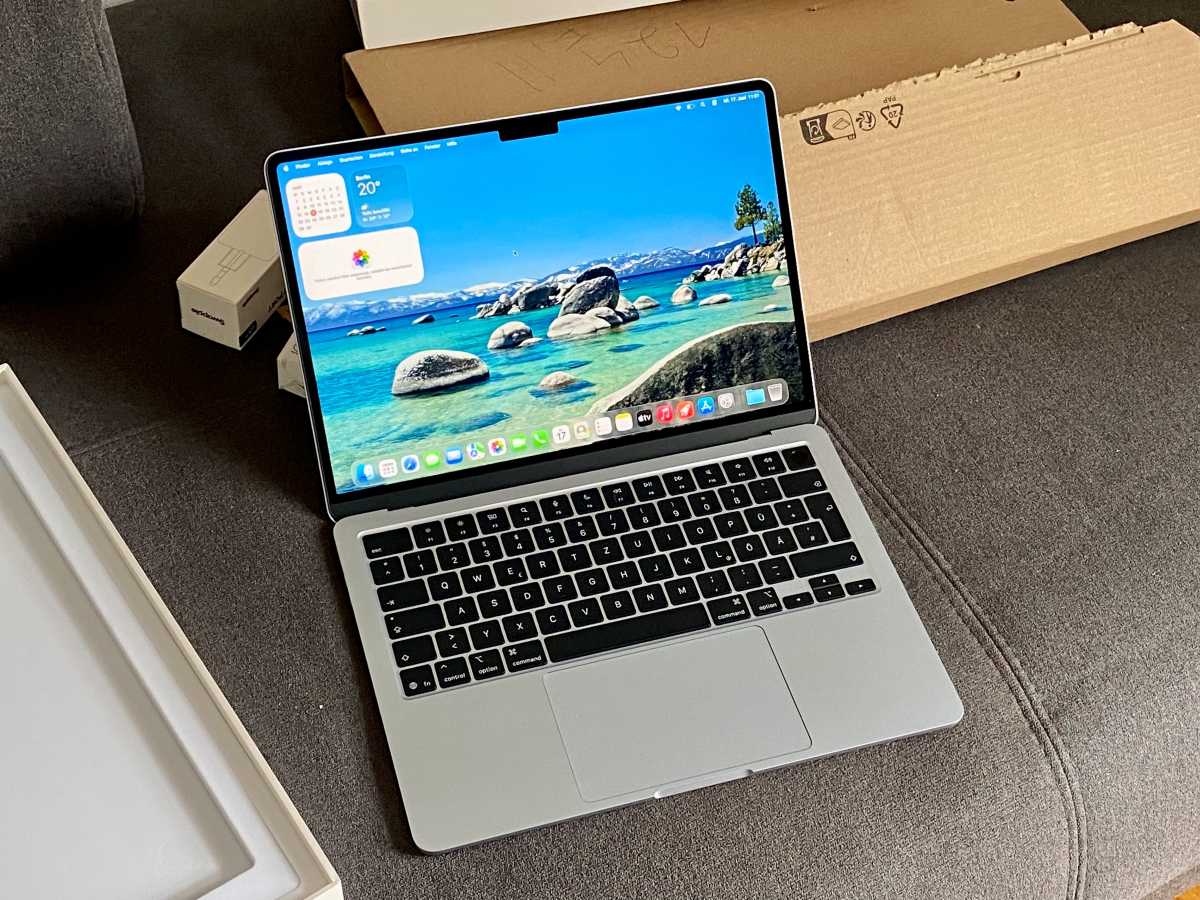
Bereits letztes Jahr habe ich ein himmelblaues Macbook Air M4 getestet. Nun wird es Zeit für einen neuen Test – allerdings eines gebrauchten Macbooks, das uns Swappie zur Verfügung gestellt hat. Und für das Swappie einige Besonderheiten bietet.
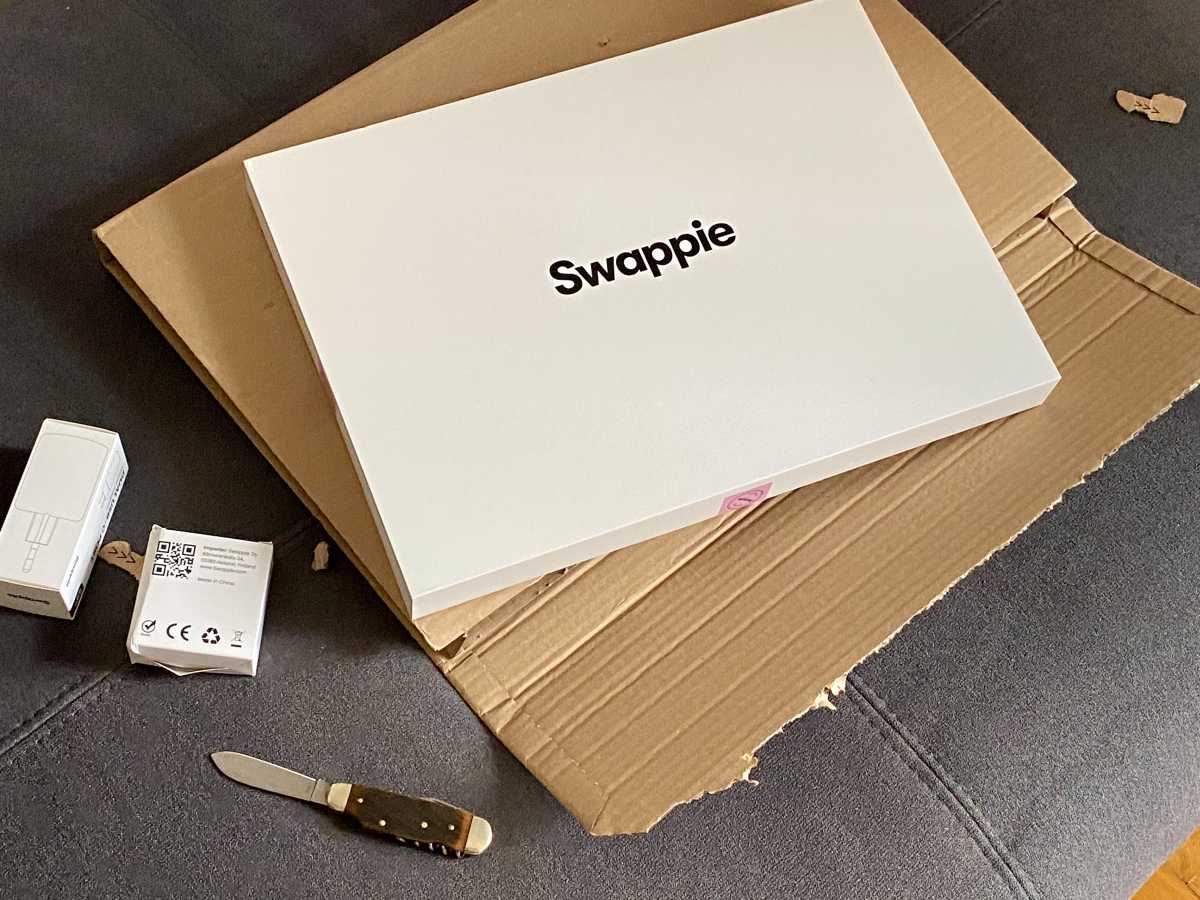
Die Geräte sind gut verpackt und kommen mit Zubehör.
Stephan Wiesend
Auf den ersten Blick ist ein Refurbished-Macbook nichts Ungewöhnliches, auf Ebay gibt es sogar eine eigene Rubrik für „Refurbished“-Geräte und Anbieter wie Backmarket und Refurbed sind hier bereits seit Jahren aktiv. Der finnische Gebrauchthändler Swappie, den wir schon ausführlich vorgestellt haben, macht nämlich einige Sachen anders als die Konkurrenz.
Swappie
Die finnische Firma Swappie hatte bisher nur gebrauchte iPhones, iPads und Airpods im Angebot, inzwischen wurden aber auch Macbooks ins Angebot aufgenommen. Bei gebrauchten iPhones ist Swappie nach eigenen Angaben Marktführer und bereits in 24 Ländern aktiv. Erst kürzlich haben wir einige der angebotenen iPhones näher überprüft – mit gutem Ergebnis.
Auf den ersten Blick sind die Macbooks bei Swappie etwas teuer: Bei Ebay finden Sie ähnliche Modelle oft noch günstiger. Swappie will aber mit seinen Angeboten auch höheren Ansprüchen genügen. So sind im Preis selbstbewusste 36 Monate Garantie und 30 Tage kostenlose Rückgabe enthalten.
Jedes Gerät wird laut Swappie außerdem von firmeneigenen Technikern ausführlich überprüft, der Akku muss außerdem eine Kapazität von mindestens 86 Prozent aufweisen. Dazu aber später mehr. Auf diese interne Überprüfung und Reparatur legt Swappie viel Wert und hat uns vor einigen Jahren sogar nach Finnland eingeladen. Soll doch die eigene Werkstatt besonders hohe Qualität garantieren, was nach unserem eigenen Eindruck durchaus gewährleistet wird.
Man darf nicht vergessen, dass Konkurrenten wie Backmarket und Refurbed im Unterschied zu Swappie rechtlich Marktplätze sind, also Mittler zwischen Käufern und vielen kleinen selbständigen Betrieben. Allein Refurbed stützt sich dabei auf offenbar knapp 300 eigenständige Händler. Nach meinem persönlichen Eindruck hat Swappie Vorteile in der Qualitätskontrolle und einen direkten Ansprechpartner, die Marktplätze oft die günstigeren Preise. Welches Konzept aber wirklich besser ist, wage ich nicht zu bewerten. Auch Kundenbewertungen sind da nicht immer aussagekräftig.
Erster Eindruck: Die Optik
Schon beim Auspacken wird klar, dass der Zustand offensichtlich einwandfrei ist – das Gerät kommt in einem flachen, aber gut gepolsterten Karton von Swappie. Hat jemand das Gerät schon einmal genutzt, ist dies mit bloßem Auge nicht erkennbar.
Das hellblaue Aluminium ist völlig frei von Kratzern, kein Staubkorn ist zu sehen: Erst nach sehr sorgfältiger Suche finde ich ein paar kleine Haare am Lautsprecher. Das ist aber wohl kaum zu vermeiden. Optisch gibt es ansonsten keinen Unterschied zu einem fabrikneuen Gerät, auch Bildschirm, Tasten und Gehäuse sind makellos. Laut Etikett wurde dieses Modell übrigens in Tallinn überarbeitet.
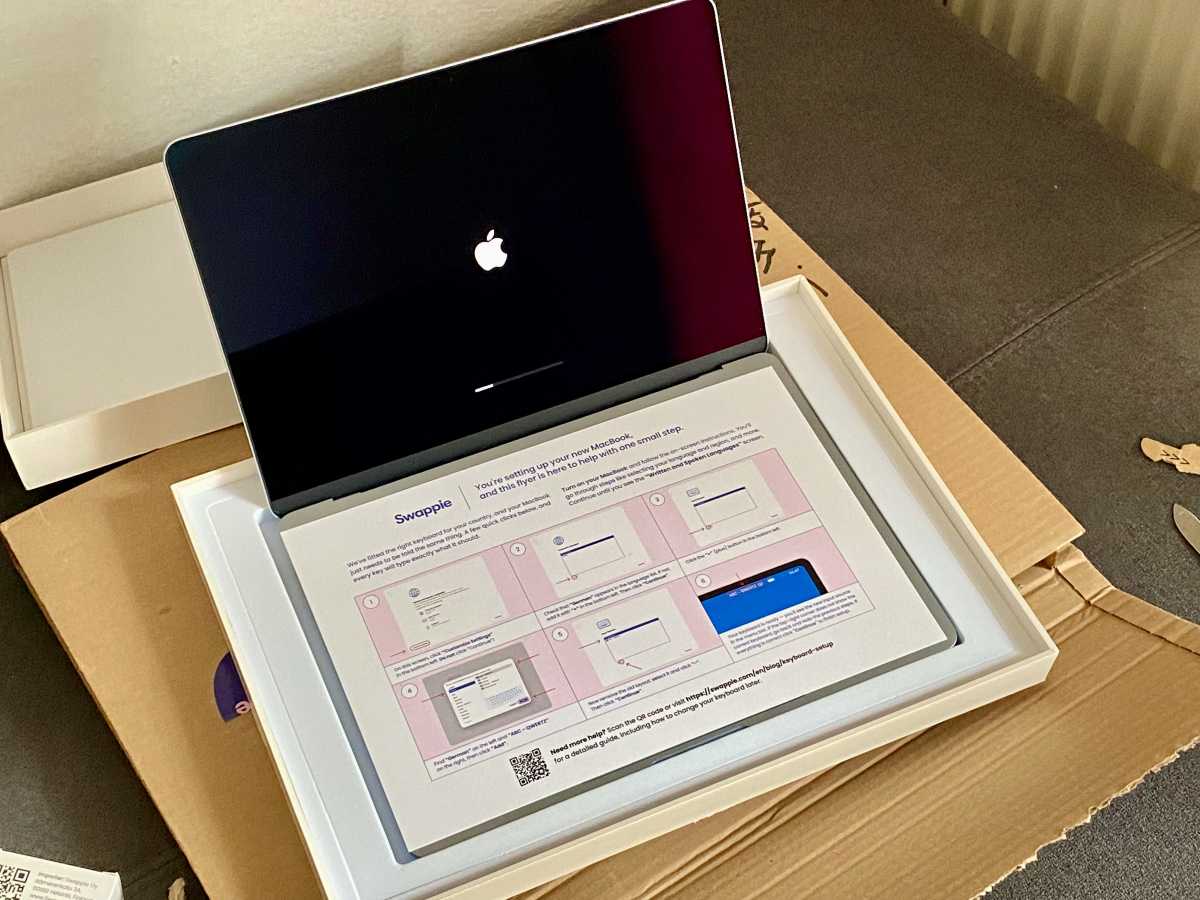
Das Display ist bei der Lieferung mit einem Blatt Papier geschützt, das zusätzlich einige Informationen für ein mögliches Konfigurationsproblem liefert. Einige Modelle haben nämlich von Swappie eine deutsche Austausch-Tastatur erhalten. Bei der ersten Konfiguration nach dem Einschalten macht dies einen zusätzlichen Konfigurationsschritt erforderlich. Bei meinem Testgerät ist dies aber gar nicht notwendig.
Ein beiliegendes Blatt informiert über eine Besonderheit bei der Tastaturauswahl.
Stephan Wiesend
Der Grund für diesen Austausch: Deutsche Kunden benötigen eine deutsche Tastatur, im europäischen Gebrauchtmarkt kursieren aber Geräte mit zahllosen Tastaturbelegungen. Das können Geräte für UK, die Schweiz oder auch die Türkei, Norwegen oder Litauen sein. Swappie baut für den deutschen Markt deshalb bei einigen dieser Geräte eine deutsche Tastatur ein. Das kann übrigens dazu führen, dass bei manchen Geräten die Enter-Taste etwas anders geformt ist, als bei einem original deutschen Gerät.
Positiv: Ein 65-Watt-Netzteil mit zwei USB-C-Schnittstellen liegt bei, ebenso ein 2-Meter-Ladekabel. Das ist nicht selbstverständlich, hat Apple doch bei seinen Macbooks das mitgelieferte Ladegerät gestrichen. Auch die gute Verpackung sollten Sie nicht unterschätzen, alles macht einen guten und professionellen Eindruck.
Technische Überprüfung: So gut wie neu
Leistung und Aussehen sind perfekt, für die Performance dieses Modells kann ich nur auf unseren Testbericht verweisen. Als Arbeitsgerät ist dieses Modell noch immer eine gute Wahl. Das Macbook Air M4 erschien schließlich erst im März 2025 und bietet noch immer hervorragende Leistung und ein elegantes Design ohne Schwachpunkte.
Das Macbook macht optisch einen hervorragenden Eindruck.
Stephan Wiesend
Für eine genauere Prüfung des Zustandes sehe ich mir die Systemdaten des Macbooks etwas näher an. Vor allem der Zustand des Akkus ist interessant: Laut Systemprofiler handelt es sich um ein Modell mit 100 Prozent Kapazität und gerade einmal 20 Zyklen – der Akku sollte also noch viele Jahre halten. Laut der App Coconut Battery (der man leider nicht ganz trauen kann) stammt der Akku vom Apple-Zulieferer Sunwoda und ist etwa anderthalb Jahre alt. In jedem Fall ist er in erstklassigem Zustand und zeigte im Test keine Schwächen.
Auch das Alter der SSD kann überprüft werden. Ich lese dazu die SMART-Daten mit dem SMART-Utility aus und erhalte eine Betriebsdauer von gerade einmal 15 Stunden angezeigt. Auch die SSD ist folglich nahezu neu. Da die Zahl der Ladezyklen nicht so recht zur Zahl der Betriebsstunden passt, sollte entweder der Akku oder die SSD neu sein.
Zusätzlich boote ich noch in den speziellen Modus Apple Diagnose und führe einen kompletten Hardware-Test des Gerätes durch. Hierbei werden so gut wie alle Komponenten inklusive Tastatur und Touchpad getestet. Auch diesen umfangreichen Test besteht das Macbook mit Bravour.
Einziges Manko, das auffällt: Anders als bei einem bei Apple gekauften Gerät erhalten Sie keine Herstellergarantie von Apple. Diese ist für dieses Modell vermutlich bereits abgelaufen.
Erstes Fazit: Swappie hat nicht zu viel versprochen, das Gerät ist in hervorragendem Zustand und kaum von einem Neugerät zu unterscheiden.
Die Preise: “Premium” oder “Fair”?
Wie gut ist dieses Angebot aber im Vergleich mit anderen Anbietern? Vergleicht man die Preise von Swappie mit Angeboten von privaten Käufern auf Ebay, erscheinen die Preise recht hoch. So kostete das von mir getestete Modell in diesem Zustand 919 Euro – dafür gab es noch vor wenigen Wochen im Fachhandel sogar ein nagelneues Macbook M4.
Mit Apples Preiserhöhung hat sich dies aber schon wieder geändert und Swappies-Preise sind plötzlich deutlich attraktiver geworden – vor allem, da bald die letzten Restbestände aus dem Fachhandel verschwunden sind. So kostete das aktuelle Macbook Air im Apple Store vor der Preiserhöhung 1.199 Euro, jetzt jedoch 1.399 Euro. Zumindest für Swappie sind Apples Preiserhöhungen wohl hochwillkommen!
Es gibt aber nicht nur diese Premium-Geräte: Neben den teuren „Premium“-Geräten bietet Swappie aber noch drei weitere „ästhetische Zustandsstufen“ (so Swappie) an. Vor allem in der untersten Qualitätsstufe sollten Sie dem Gerät seine Vorbesitzer dann doch ansehen. Jedes Gerät ist aber geprüft, bietet Garantie und ist uneingeschränkt nutzbar.
Niedrigste Qualitätsstufe ist „Fair“, dann folgen „Sehr Gut“, „Exzellent“ und „Premium“. Premium ist dabei die höchste Stufe, unser Testgerät hat diese Einstufung und ist so gut wie neuwertig.
Die unterste Qualitätsstufe nennt Swappie „Fair“. Hier müssen Sie „sichtbare Kratzer, kleine Dellen und etwas Abrieb auf den Tasten“ erwarten.
Deutliche Gebrauchsspuren gibt es auch noch in der zweiten Stufe „Sehr Gut“, dann müssen Sie „ein paar feine Stellen an Gehäuse oder Display, dazu etwas Glanz auf den Tasten“ akzeptieren. Vor der besten Stufe „Premium“ gibt es die Stufe „Exzellent“, hier sind „höchstens hauchfeine Mikrokratzer, und auch die nur bei direktem Licht“ zu sehen. So gut wie keine Gebrauchsspuren sehen Sie dann in der Stufe „Premium“.
Jedes der Geräte wurde aber komplett überprüft und bietet eine Akkukapazität von 86 Prozent.
Was bei den Preisen bei Swappie auffällt: Ein neuer Akku sorgt für einen kleinen Preissprung. Das ist auch kein Wunder: Ein echtes Problem bei gebrauchten Macbooks ist der gebrauchte Akku und ein gutes Ersatzteil ist kostspielig.
Auf Wunsch erhalten Sie bei Swappie ein Modell mit 100 Prozent Kapazität, müssen aber einen deutlichen Aufpreis zahlen. Je nach Modell sind dies knapp 80 Euro. So kostete ein Macbook Air M2 mit Standard-Akku bei Redaktionsschluss 749 Euro, mit neuem Akku gab es das Modell für 829 Euro.
Das hat übrigens den mich anfangs etwas verwirrenden Effekt, dass ein Macbook im Zustand „Fair“ mit neuem Akku teurer sein kann, als ein Gerät im Zustand „Sehr Gut“ mit Originalakku. Im Vergleich zu einem Akkutausch bei Apple ist der Aufpreis aber noch sehr gemäßigt, bei Apple kostet der Akkutausch beim Macbook Air M2 immerhin 185 Euro.
Wie bei einem iPhone sollten Sie bei einem gebrauchten Macbook auf eine Kapazität von über 80 Prozent achten, ein niedriger Wert ist oft auch ein Zeichen für schwindende Zuverlässigkeit. Swappie garantiert eine Kapazität von mindestens 86 Prozent. Wie auf der Webseite nachzulesen ist, testet Swappie bei jedem Gebrauchtgerät außerdem das thermische Verhalten jedes Akkus und die Stabilität des Stromverbrauchs unter realen Betriebsbedingungen.
Apples Originalakkus sind obendrein längst nicht mehr so anfällig wie bei alten Modellen und sollten knapp 1.000 Ladezyklen überstehen. Gerade bei einem neueren Macbook mit M2 oder M3 sollte ein guter Originalakku deshalb völlig ausreichen.
Garantieversprechen
Kaufen Sie ein altes, günstiges Macbook von einem Privatverkäufer, gehen Sie immer ein gewisses Risiko ein – ein privater Käufer haftet in der Praxis meist nicht für Schäden. Vornehmlich erhalten Sie von Privatkunden ein gut erhaltenes und gepflegtes Gerät. Gelegentlich gibt es aber doch ein Problem – vielleicht ist der Akku ein günstiges China-Modell und hält nur eine Stunde durch oder eine der Tasten funktioniert manchmal nicht.
Swappie bietet dagegen drei Jahre Garantie (neben 30 Tagen Umtauschrecht) und deckt dabei technische und mechanische Defekte ab – zusätzlich zur gesetzlichen Gewährleistung. Ein echter Vorteil gegenüber einem Privatkauf, der auch einen höheren Preis rechtfertigt. Allerdings werden bei einem Akku nur Defekte und Ladeprobleme abgedeckt, kein „üblicher“ Verschleiß.
Interessant für Firmen: iPhones bietet Swappie mittlerweile auch mit ausgewiesener Mehrwertsteuer an, was den Vorsteuerabzug ermöglicht. Bei Macs ist dies bisher nicht möglich. Auch Swappie Care – eine Zusatzgarantie – gibt es bisher nur für iPhones.
Fazit
Der Einstieg in das Geschäft mit Macs kommt für Swappie zum richtigen Zeitpunkt. Nach Apples Preiserhöhung sind gute gebrauchte Macbook noch interessanter geworden.
Wählen Sie ein Gerät der Kategorie „Premium“, erhalten Sie ein neuwertiges Gerät, das ausführlich getestet und sorgfältig gereinigt wurde. Das ist allerdings nicht billig und vor allem der Austausch des Akkus sorgt für einen Aufpreis. Günstigere Modelle hat Swappie aber ebenfalls im Angebot und auch für diese gilt eine lange Garantie und 30 Tage Umtauschrecht. Preislich ist Swappie am oberen Ende, das ist aber für das Gebotene noch in Ordnung.
Beachten sollten Sie nach meiner Meinung aber, dass die Zustandsbeschreibungen von Swappie recht beschönigend sind. So ist der Zustand „Sehr gut“ vielleicht doch eher, was man landläufig als „Gut“ bezeichnen würde …
Apple took a radically different approach to their notebook lineup this year by re-introducing the MacBook as an affordable, lightweight and colorful MacBook Neo. With a starting price of $599 USD (and $499 through Apple’s Education Store), this is the most affordable Mac ‘Book to-date. The Neo is no slouch despite being the […]
At long last, Apple finally announced its Back to School promotion, and at first glance, it seems similar to previous years. You can get a gift card valued at up to $150 for buying a new MacBook Pro, or $100 for buying a MacBook Air, iPad Pro, or iPad Air. But when you dive into the details, you’ll see just how limiting this limited-time offer really is.
First off, it’s shorter than ever. While previous sales have lasted more than three months, this year’s offer ends on August 27, just six weeks from now. So not only did it start about a month later than usual, it’s ending more than a month sooner than recent years:
2026: July 16 to August 27
2025: June 17 to September 30
2024: June 20 to September 30
2023: June 5 to October 2
2022: June 24 to September 26
So students will need to make their decisions on what to buy sooner than ever, many of them before the school year begins. And they’ll also have fewer products to choose from. As expected, the MacBook Neo isn’t part of the promotion, but you also won’t find any desktop Macs. In previous years, Apple has offered iMacs and Mac minis alongside MacBooks, but not this year.
And then there’s the offer itself. After offering buyers a choice of accessories valued at up to $199, including AirPods, an Apple Pencil Pro, or a Magic Keyboard, Apple has returned to giving away gift cards this year: $150 with the purchase of a MacBook Pro, and $100 when you buy a MacBook Air, iPad Air, or iPad Pro. Not only is that less than in 2024, when buyers got $150 when purchasing a MacBook Air, but it also doesn’t take any of the recent price hikes into consideration.
That $100 gift card you’re getting on the iPad Air doesn’t even bring it down to the price it used to be before Apple raised prices by $150. MacBook Pros still cost $150 more than they did just last month, and if you’re planning to use that gift card on a HomePod or Apple TV, well, you might as well just throw your money in the trash.
Unfortunately, this promotion is still among the best “deals” you’re going to find on a MacBook or iPad. Prices on Amazon and other stores have all been adjusted to match Apple’s new prices, and we’ve yet to see much in the way of major Apple discounts yet (although we do recommend looking at the Apple Certified Refurbished Store where prices are more favorable). But remember you’re need to act fast—the clock runs out on the Back to School deal a lot earlier this year.
A leaker with a strong Apple rumor track record says a touchscreen MacBook is "100% confirmed. If true, it would mark a major reversal for Apple, which has long argued that the Mac is built for indirect input rather than reaching up to touch a vertical screen. MacRumors reports: Instant Digital has a good track record for Apple rumors and has provided some strikingly accurate information in the past, so it's always worth noting what they have to say about Apple's plans. The claim is also backed by several recent reports. [...] Touchscreen support is expected to be one of several major upgrades coming to Apple's next-generation high-end MacBook Pro models. Other rumored features include M6 Pro and M6 Max chips, an OLED display, a Dynamic Island (i.e., no notch), and a thinner design. The new laptops could also adopt MacBook Ultra branding.
Notably, macOS 27 Golden Gate also introduces a more touch-friendly interface, since Apple's Sidecar feature now allows users to tap and interact with macOS interface elements using a finger on their iPad. Apple apparently is not going to advertise the new MacBook Pro/Ultra as a touch-first device like the iPad -- it will be "touch-friendly, not touch-first," according to [Bloomberg's Mark Gurman]. In that sense, Apple will let customers use touch and mouse gestures interchangeably for all functions. Further reading: Steve Jobs Was Wrong About Touchscreen Laptops (2012)

 Login