Excavations by the University of Catania at the Tava Tepe site, located in western Azerbaijan, have uncovered an archaeological complex that upends established notions about Late Bronze Age communities in the Caucasus region. What was initially interpreted as an isolated domestic structure, dated to around 1300–1000 BCE, has turned out to be the last link […]
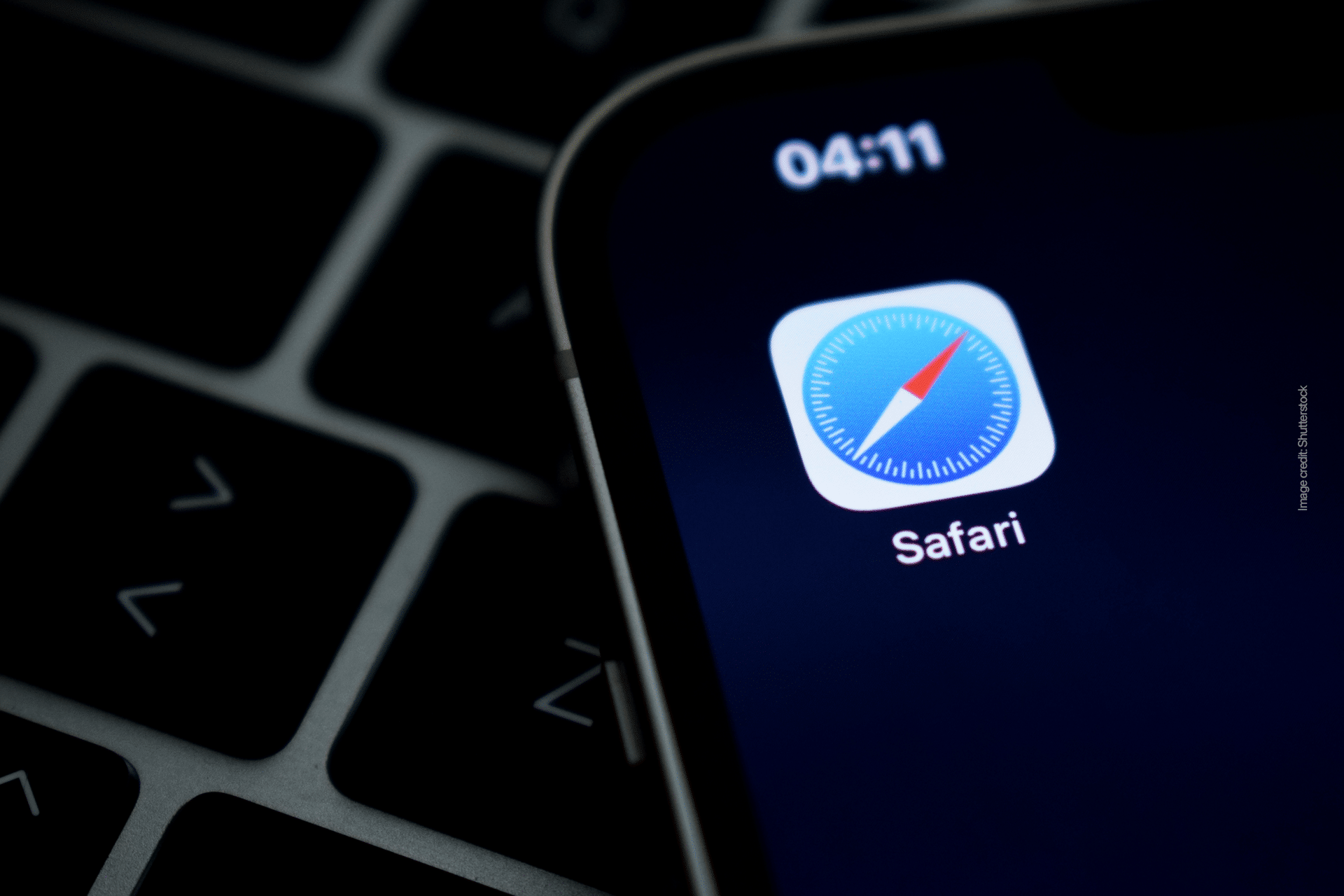
Safari web apps give frequently used websites many of the qualities normally associated with installed software. A site can receive its own icon, open outside the regular Safari tab interface and appear alongside native apps on supported Apple devices.
The feature is useful for services that do not offer an App Store download, websites used throughout the workday and online tools that feel crowded when surrounded by unrelated browser tabs.
A Safari web app remains a website rather than becoming native Apple software. Its capabilities, interface and offline behavior depend on how the site was developed. Safari supplies the app-like container, while the website continues providing the actual service.
The experience also differs across Apple devices. iPhone and iPad place web apps on the Home Screen, while Mac saves them as separate applications that can open from the Dock, Spotlight or Applications folder.
Image Credit: AppleMagazine
Safari Web Apps Are More Than Bookmarks
A traditional bookmark saves an address inside Safari. Selecting it opens the page in a normal browser tab with the rest of the browsing session.
A Safari web app creates a more focused entry point. Its icon appears with installed apps, and opening it produces a separate app window or full-screen interface without the usual collection of Safari tabs.
This distinction is particularly valuable for communication tools, project dashboards, streaming services, publications and business systems. A user can switch to the website through the App Switcher, Dock or Spotlight instead of locating the correct Safari window and tab.
Web apps can also support notifications and icon badges when the website provides those features. On iPhone and iPad, supported notifications can appear on the Lock Screen, in Notification Center and on a paired Apple Watch.
The site still controls the quality of the experience. A website designed as a progressive web app may include responsive navigation, offline resources, custom icons and carefully defined window behavior. A basic website may simply open inside a cleaner Safari frame.
How to Create Safari Web Apps on iPhone
Current iPhone software includes an Open as Web App option when adding a website to the Home Screen.
To create one:
Open the website in Safari
Tap the More button and choose Share. Depending on the selected Safari layout, the Share button may already be visible beside the address field
Scroll down and select Add to Home Screen
Edit the displayed name if necessary
Turn on Open as Web App
Tap Add
The new icon appears on the iPhone Home Screen. Selecting it opens the site separately from the main Safari interface, and the web app can be closed through the App Switcher like other iPhone apps.
If Add to Home Screen is missing from the Share menu, scroll to the bottom, select Edit Actions and add it to the available actions.
The chosen name should be short enough to remain recognizable below the icon. Safari may use an icon supplied by the website. When a suitable image is unavailable, the generated icon may use a simplified site image or monogram.
How to Create Safari Web Apps on iPad
The iPad process is similar, although the Share menu reflects the larger Safari interface.
Open the desired website, select Share, choose More if required and tap Add to Home Screen. Turn on Open as Web App before selecting Add.
The resulting icon appears on the iPad where it was created. It can be organized into Home Screen folders and opened through iPad search like other applications.
An iPad web app can be especially useful for browser-based writing tools, office systems, inventory dashboards and educational platforms. Removing the tab bar gives the website more room and makes it easier to use beside another app.
Whether the web app supports multiple windows, external displays or advanced iPad multitasking depends on its design and the capabilities exposed through Safari. Installing a website does not automatically give it every feature available to a native iPad app.
Safari Web Apps Work Differently on Mac
Apple introduced its current Mac web app system with macOS Sonoma 14. Any webpage can be saved as a web app without requiring the website developer to distribute a Mac application.
To create one, open the page in Safari and choose File > Add to Dock. The same command is available through Safari’s Share button.
Safari displays the proposed name and icon before saving the app. After confirmation, the web app appears in the Dock and Spotlight Applications. Its application file is placed inside the Applications folder located in the user’s Home folder.
A Mac web app receives its own window and menu-bar identity. It uses a simplified toolbar containing navigation and sharing controls rather than Safari’s complete tab and bookmark interface.
The web app can remain in the Dock, run automatically as a login item and participate in normal macOS window management. It can also be opened through Spotlight without launching a visible Safari window first.
Image Credit: AppleMagazine
Mac Web Apps Keep Browsing Separate
A Mac web app operates independently from ordinary Safari browsing. Apple says it does not share ongoing browsing history, cookies, website data or settings with Safari.
When the web app is first created, Safari can preserve an existing website sign-in in many cases. Activity after that point remains inside the web app’s separate data container.
This separation resembles using a dedicated Safari profile, but the web app is even more focused. Searching, following links and changing accounts inside it do not add those pages to the normal Safari history.
The arrangement can be helpful when the same service is used for work and personal accounts. Separate web apps can create clearer boundaries, although account behavior still depends on the website.
Isolation can also explain an unexpected sign-in request. A person may already be authenticated in Safari but encounter a separate session after creating, resetting or reinstalling the web app.
Mac Settings Allow More Control
Mac web apps include settings that are unavailable to ordinary Home Screen bookmarks.
Open the web app, select its name in the menu bar and choose Settings. The application name, starting address and icon can be changed without recreating the app.
Navigation controls can be shown or hidden. Hiding them creates a cleaner appearance for a dashboard that rarely leaves its main page, while displaying them makes sense for sites with deeper navigation.
The title bar can adopt colors supplied by the website. This helps distinguish several installed services but can be disabled when a consistent Mac appearance is preferred.
The Privacy section controls access to the camera, microphone, screen and location. Website data can also be cleared from this area without deleting normal Safari data.
Compatible Safari extensions can be enabled separately for the web app. This prevents every active Safari extension from automatically affecting a focused work tool.
Notifications Make Websites Feel Like Apps
A supported website can request notification permission after it becomes a web app.
On iPhone and iPad, web push notifications use Apple’s notification system. They can appear on the Lock Screen, inside Notification Center and on a paired Apple Watch. They also respond to Focus settings.
Websites must request permission after a direct user action, such as selecting a notification or subscription button. Simply adding a site to the Home Screen does not automatically authorize alerts.
Supported sites can place a count on the Home Screen icon through web badging. This may represent unread messages, pending tasks or new articles, depending on the service.
Mac web apps can send notifications and display unread badges on their Dock icons. Permission should be granted from inside the web app rather than through the same site in Safari if the alerts are intended to belong to the installed app.
Each web app appears by its chosen name in Apple’s notification settings. Alerts, sounds, badges and preview behavior can then be controlled much like those of downloaded software.
Web Apps Do Not Automatically Work Offline
An installed icon does not mean the website has been downloaded completely.
Most web apps continue to require an internet connection because their pages, account data and services remain on remote servers. If the connection disappears, the app may show an error or only display information already stored temporarily.
Websites designed for offline use can cache interface elements and selected content through supported web technologies. The developer decides what remains available without a connection and how changes synchronize later.
This makes offline behavior inconsistent between sites. One writing service may continue editing disconnected documents, while another cannot move beyond its sign-in page.
Anyone depending on a web app during travel should test it in Airplane Mode before assuming that important information will remain accessible.
Links Can Return to Safari
Links belonging to the same website usually remain inside the web app when they fall within its intended navigation area.
External links may open in Safari because they lead beyond the web app’s domain or configured scope. Authentication systems, payment providers and support pages can also move temporarily into a browser window.
This behavior protects the focused identity of the web app. A project-management tool does not need to become a complete browser simply because a task contains a news link.
A poorly configured website may open more links externally than expected. That behavior is generally controlled by the site rather than by a Safari setting available to the user.
Safari Web Apps Do Not Sync Automatically
A web app icon appears only on the Apple device where it was created.
Adding a website to an iPhone Home Screen does not install the same web app on an iPad or Mac, even when every device uses the same Apple Account. Each installation must be created separately.
Safari bookmarks, Reading List items and open tabs can synchronize through iCloud, but web app installations remain local. Mac settings and custom icons also do not automatically transfer to another Mac.
This local behavior allows each device to maintain a different collection. A detailed analytics dashboard may belong on a Mac and iPad, while a compact travel service may only need an iPhone icon.
Removing a Web App Leaves the Website Available
On iPhone or iPad, touch and hold the web app icon and select the removal option. Deleting the icon does not cancel the website account or remove the service from the internet.
A Mac web app can be deleted by opening the Applications folder inside the user’s Home folder and moving the app to the Trash. Removing it from the Dock alone only removes the shortcut.
Website data may remain until it is cleared through the web app’s privacy settings or removed with the app, depending on the platform and current software behavior.
Saved documents stored exclusively by the online service remain subject to that service’s account and retention policies. Removing the web app should not be treated as deleting information held by the website.
Apple Vision Pro Uses a Different Safari Model
Safari on Apple Vision Pro can open multiple spatial windows, synchronize bookmarks and tabs through iCloud, save pages to Reading List and place separate browser windows around the user’s space.
Apple’s current Vision Pro guide does not provide the same Add to Home Screen or Add to Dock installation process documented for iPhone, iPad and Mac.
A website can still feel application-like inside its own Safari window, particularly when positioned as a persistent part of a workspace. That does not make it an installed Home View app.
Apple Watch also does not provide a general Safari web app installation system. It can, however, display supported notifications sent by an iPhone Home Screen web app.
Choose the Starting Page Carefully
A Safari web app opens from a defined starting address, making the selected page important.
Installing a service from its general homepage may produce an app that repeatedly opens promotional content or a sign-in screen. Creating it while viewing an inbox, dashboard, calendar or project page can provide a faster route to the area used every day.
Mac users can change the Application URL later through the web app settings or use Set to Current Page after navigating to a better starting location.
The most effective Safari web apps begin where the work actually happens. A publication can open directly to its latest articles, a company tool can start on its task board and a cloud service can lead to the folder used most often.
That small choice determines whether the icon functions as another website shortcut or becomes an app-like destination that removes several steps from a repeated Apple device workflow.
Além de compartilhar uma página da web usando um link normal, o navegador Mozilla Firefox também permite enviar um endereço da web de outra forma.
Mais precisamente, trata-se da geração de um código QR (QR code) — que pode, posteriormente, ser lido a partir de qualquer câmera ou compartilhado em uma postagem, por exemplo.
Thermes sophistiqués, aqueducs, égoûts : les Romains passent pour des champions de l'hygiène. Pourtant, dans les latrines d'un fort proche du mur d'Hadrien, des sédiments vieux de 1 800 ans racontent une tout autre histoire. Celle de soldats et de leurs familles rongés par les parasites intestinaux.
President Donald Trump has a major problem with explosive diarrhea on his hands.
On Tuesday, HHS secretary Robert Kennedy Jr declared that the ongoing outbreak of cyclosporiasis — a non-lethal but extremely unpleasant gut infection caused by the Cyclospora cayetanensis parasite — was “under control.”
“We’ve identified the source of the outbreak, and the companies that are involved have implemented a recall,” he said, without elaborating any further or naming the companies.
But considering that cases are still rising, the situation is very much not looking under control. According to a Tuesday update by the Centers for Disease Control and Prevention, there have been 4,173 laboratory-confirmed domestic cases of cyclosporiasis since May 1. There are an additional 7,400 cases that have yet to be confirmed, many of which were reported in Michigan and Ohio.
Those tallies appear to be underestimating the scale of the problem considerably. In Michigan alone, state officials warned on Wednesday that there were 7,171 cyclosporiasis cases since June 22, up from 6,571 on July 21, suggesting the outbreak is only getting started.
Cases reported by the Ohio Department of Health tripled to 1,192 cases in its July 16 update, compared to June 20 — another sign that the situation is getting worse, not better.
And that’s just the data we know about. Identifying the parasite is notoriously difficult in a lab, making it particularly difficult to trace, and requiring extensive detective work by health officials.
Yet the public messaging regarding news about the outbreak has been severely lacking and downright confusing. Over the same weekend, the Food and Drug Administration said it had determined the culprit, bagged shredded lettuce supplied by Taylor Farms, one of Taco Bell’s lead suppliers — only to claim that the results were a “false positive” less than a day later.
Taylor Farms, which continues to “voluntarily” recall its tainted lettuce, celebrated the update, claiming the FDA had “apologized to us” in a since-deleted Monday statement.
Just hours later, the situation flipped on its head once again, with the FDA saying that “FDA’s traceback investigation and outbreak data continue to converge on shredded iceberg lettuce from Taylor Farms locations in central Mexico.”
There are plenty of reasons to be highly skeptical of the government narrative. The Trump administration maintains a cozy relationship with Taylor Farms, a company that has made a major donation to Trump’s political action committee, MAGA Inc.
The White House has since vehemently denied accusations from the media that it may be colluding with Taylor Farms behind the scenes, with the Health and Human Services Department calling them “FAKE NEWS” in a Monday statement — the kind of knee-jerk reaction that’s bound to invite even more scrutiny.
Then there’s the Trump administration’s gutting of key public health programs that could make truly getting the cyclosporiasis outbreak under control. Budget cuts have led to massive layoffs at the USDA, CDC, and FDA. Key food inspection and surveillance programs ahve been terminated. A team specifically dedicated to tracking cyclospora was slashed by Elon Musk’s so-called Department of Government Efficiency last year from 11 to just three people.
In short, while Kennedy claims the situation is under control, there’s plenty of evidence to the contrary. Cases are on the rise and even the evidence behind FDA’s leading suspect appears to be shaky, by the agency’s own admission.
It’s the perfect storm of short-sighted austerity measures, chummy business relationships, and poor public messaging by officials who are unable to speak from a place of authority and conviction.
Put simply, Trump’s diarrhea troubles are likely only getting started.
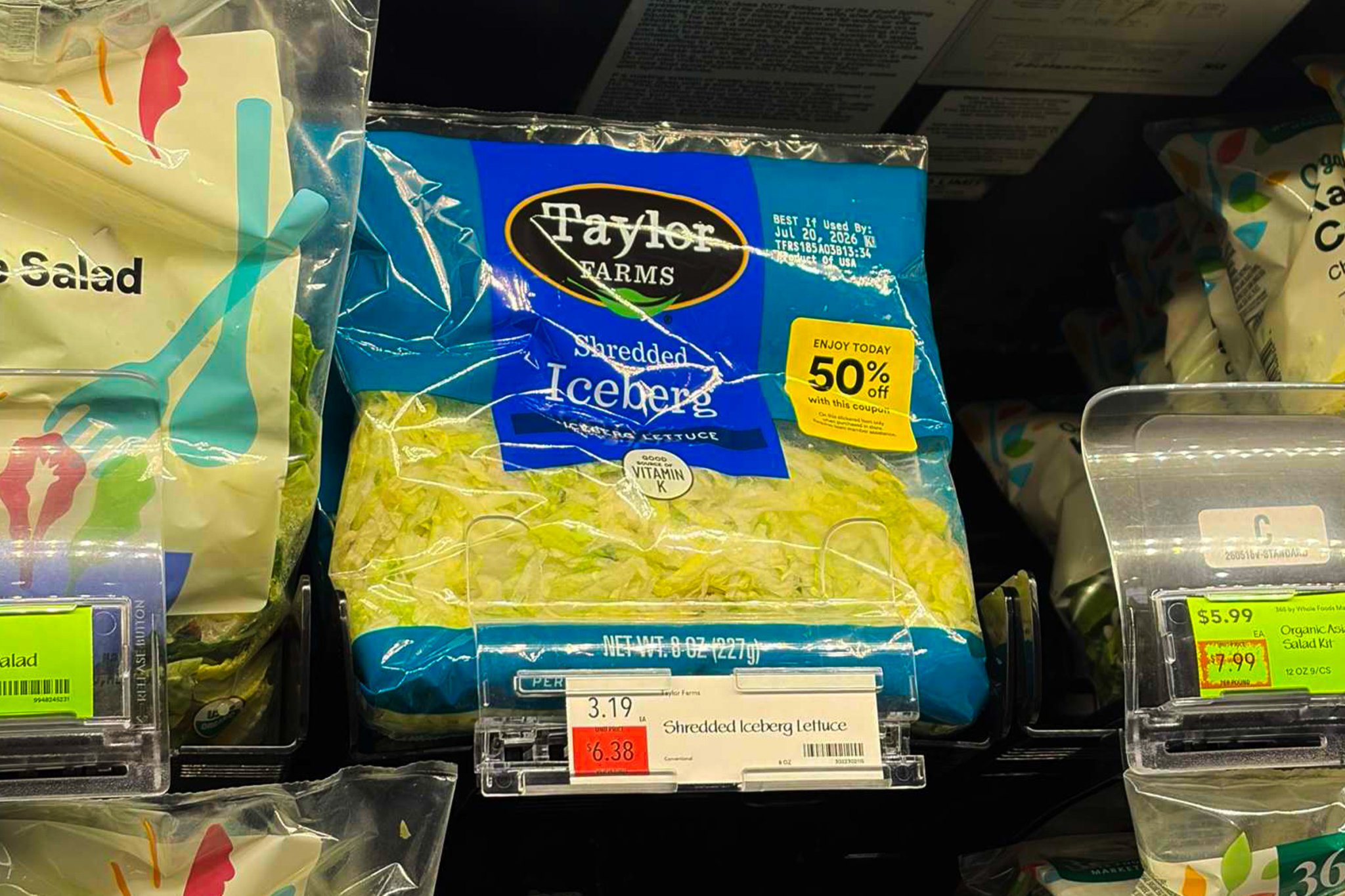
Most of the nation may want nothing to do with Taylor Farms and its shredded iceberg lettuce, which was recalled in dozens of states for potentially being contaminated with a parasite that turns your bowels into a garden hose.
Not so for the Amazon-owned Whole Foods, which is either hoping to capitalize on the controversy or proceeding as if nothing happened.
Over the weekend, we noticed that one of the grocery retailer’s locations in New York City was selling Taylor Farms’ shredded iceberg at a steep 50 percent discount — which, from an optics point of view, is absolutely extraordinary.
Is this an indictment of our country’s ruthless opportunism, and by extension, capitalism at large? Is it a total nonstory? If you’re unlucky enough, you’ll have plenty of time to ponder those questions on the porcelain throne. Many on social media just seemed to think it was a mix of funny and appalling.
“The cost is on the back end,” someone joked. “Discount diarrhea,” chimed another. Others were outraged that the location was still selling the stuff.
“They’re seriously not pulling that off the shelf,” one fumed. “For SHAME.”
The Food and Drug Administration narrowed the culprit down to a Taylor Farms facility in Mexico. So far, Taylor Farms has voluntarily recalled its Mexico products containing shredded iceberg lettuce from 27 states, including Michigan — the epicenter of the outbreak, where over 6,100 people are believed to be infected — Florida, Texas, and North Carolina.
New York state is not currently one of them, so Whole Foods isn’t obligated to pull the products from its shelves (or at least as obligated as is possible under what is technically a voluntary recall). Still, the recall has been expanded at least once already, so it’s not impossible that it could include more states in the near future. A Whole Foods representative declined to go on record, but insisted that the bag of lettuce in question was sourced from the USA, not Mexico, adding that the chain doesn’t carry any of the recalled products.
Tracing the provenance of food products can be pretty byzantine. It’s not clear at this point if Taylor Farms supplied lettuce to companies in states affected by the recall who then distributed that lettuce again more widely, the New York Times noted. Not even the FDA has “distribution information or a list of customers who received” the recalled product since Taylor Farms hasn’t provided it, it said on its website — something it’s not legally required to do.
It’s even more confusing to the public. Taylor Farms doesn’t share which stores and restaurants it directly supplied its products too, so consumers have to do their own detective work, or rely on those locations voluntarily declaring that they used those products.
All that’s to say that there’s a lot of uncertainty over what lettuce is safe and what isn’t. The safest thing to do in this environment, probably, is to just abstain from shredded lettuce entirely. But you have to admit, isn’t that Whole Foods 50 percent discount tempting? Maybe if you’re used to paying outrageous prices for a bag of mushy leaves.
Certamente não há uma pessoa que não goste de pagar mais barato, ainda mais ao realizar compras online, já que é possível comparar o valor de um mesmo produto em diferentes lojas. No entanto, acompanhar a variação de preços em tantos lugares pode ser uma tarefa complicada, mas o aplicativo SmartTracker promete facilitar isso!
Desenvolvido pelo brasileiro Hugo Prione, o app (disponível para iPhone, iPad e Mac) permite acompanhar preços em qualquer site, definir alertas inteligentes e visualizar gráficos de histórico de preços para comprar sempre no momento certo.
O SmartTracker é nativo, roda localmente e funciona em qualquer site que você possa abrir no navegador. Para começar a rastrear um produto, basta tocar no ícone de mais (+) e colar a URL dele. Em seguida, o aplicativo gera o seletor e detecta o formato automaticamente.
É possível escolher o período para que o app atualize as informações: a cada 10, 15 ou 30 minutos — ou então a cada hora, dia, semana ou mês. No Mac, um pequeno processo auxiliar continua em execução em segundo plano, esteja o SmartTracker aberto ou fechado — mesmo ao encerrar o aplicativo, o rastreamento prossegue.
No iPhone/iPad, o iOS/iPadOS decide quando ativar o aplicativo; portanto, o momento da atualização depende do sistema. Além disso, quando o Mac detecta uma alteração, a sincronização via iCloud encaminha o alerta para o iPhone e o iPad — ou seja, o Mac pode manter seus outros dispositivos atualizados de forma silenciosa.
Outros recursos do SmartTracker incluem:
Monitore qualquer texto em uma página: status de estoque, prazo de envio, números de versão — e seja avisado no momento em que mudar.
Defina preços-alvo e receba notificações quando as ofertas ficarem abaixo do seu orçamento.
Veja seus preços mais recentes direto na Tela de Início e na Tela Bloqueada com widgets.
Use o app sem as mãos com a Siri e o app Atalhos (Shortcuts): adicione itens, atualize preços e abra ofertas com um toque ou com a voz.
Organize listas de desejos e coleções por lojas, produtos ou projetos.
Segundo o desenvolvedor, o SmartTracker foi feito com privacidade em mente, de modo que seus dados ficam nos seus dispositivos e na sua conta do iCloud. Ele também não exige uma conta.
Disponível gratuitamente na App Store, o SmartTracker oferece até cinco itens monitorados e três coleções na versão grátis. Para desbloquear itens/coleções ilimitados e atualização em segundo plano, é necessário assinar a versão Premium por R$24/ano ou realizar uma única compra de R$80.
Há algum tempo, o iOS permite compartilhar o seu contato com outra pessoa facilmente por meio do recurso NameDrop, que entra em cena ao aproximar um iPhone do outro.
Por mais prática que essa ferramenta possa ser, porém, ela não chega a atender por completo as necessidades de usuários corporativos, por exemplo, os quais podem ter múltiplas informações de contato salvas nos seus aparelhos — como uma para a vida pessoal e a outra para o trabalho.
E é exatamente essa lacuna que o aplicativo Passable tenta preencher! Focado no app Carteira (Wallet), do iOS, ele permite criar tíquetes digitais personalizados que servem mais como cartões de contato em vez de ingressos ou coisas do tipo, além de poderem ser compartilhados com poucos toques.
O editor do Passable permite mudar, entre outras coisas, detalhes como a cor e o estilo dos seus cartões, bem como adicionar logos e outros elementos visuais. Enquanto um tíquete pode ter um visual mais descontraído para situações mais casuais, outro pode ser mais sério e clean — ideal para o ambiente de trabalho.
Uma vez criado, o tíquete pode ser exportado para o app Carteira e compartilhado com quantas pessoas você quiser. Além disso, caso você exclua ou faça uma alteração no seu cartão, ele será automaticamente atualizado nos iPhones das pessoas com as quais você compartilhou seu contato, o que significa que elas sempre terão o seus dados mais recentes.
Mas não para por aí, já que o Passable também permite criar tíquetes para compartilhar coisas como sites da web, portfólios e até aplicativos da App Store ou do TestFlight — algo que as atuais soluções da Apple não chegam nem perto de fazer.
Com versões para iPhone/iPad, Mac e Apple Vision Pro, ele requer minimamente iOS/iPadOS 18, o macOS 15 ou o visionOS 2.
Com suporte ao português, ele permite criar um tíquete por categoria — limite que é expandido para dez com assinatura Gold, que sai por R$7 mensais, R$55 anuais ou por uma compra única de R$100.
On Thursday, the New York Times reported that the Centers for Disease Control and Prevention had linked the outbreak of cyclosporiasis, an infection notorious for inducing explosive diarrhea, to iceberg lettuce from Taylor Farms that was supplied to Taco Bell.
Per the reporting, Taco Bell said it was voluntarily pulling the lettuce from select states where it received the contaminated produce: Indiana, Kentucky, Michigan, Ohio, and West Virginia. An announcement from the CDC warned the public not to eat food items with shredded lettuce from Taco Bell, but hasn’t identified Taylor Farms as the source.
But while Taco Bell may have served the tainted lettuce, it would be remiss to lay all of the blame on the fast food chain (although one aggrieved customer is already suing it after contracting the illness).
The contamination occurred at the farms or facilities where the food was processed, from a single supplier in Mexico, Food and Drug Administration officials said. The supplier, Taylor Farms, has been involved in previous outbreaks, including another outbreak of cyclosporiasis in a salad mix in 2013.
Taco Bell, to its credit, also immediately pulled its ingredients from some of its locations last week as soon as it learned about the situation, according to local reports.
And then there’s the broader political context that many experts are drawing attention to: how the Trump administration has slashed funding to the CDC and paralyzed the nation’s food safety bodies.
Last February, shortly after Trump took office, the US Department of Agriculture (USDA) dissolved its National Advisory Committee on Microbiological Criteria for Foods, which provided scientific guidance on food safety policy. Ryan Cooper at The Prospect notes that the committee was working on advice for foodborne illness outbreaks before being terminated. The FDA also shut down its National Advisory Committee on Meat and Poultry Inspection.
Not spared during the wave of cuts that wreaked the federal government, the USDA lost over 20,000 workers last year, with 913 of them coming from its Food Safety Inspection Service.
Last year, the CDC — which has lost some 3,000 employees under Trump — scaled back its food surveillance program called FoodNet that monitored eight common foodborne pathogens, changing it so that surveillance of the cyclospora parasite that causes cyclosporiasis was optional.
Dan Jernigan, a former director of CDC’s Center for Emerging and Zoonotic Infectious Diseases, told the Washington Post that the decision was made because funding for food safety had not been maintained over the past few years. That the US is now on track to have more cyclospora cases this year than any previous year in history is likely no coincidence.
Jernigan left the agency last August in protest of Trump ousting its then director Susan Monarez and the policies of health secretary Robert F Kennedy Jr. But he said that the Trump cuts would have little impact on the ongoing outbreak, adding that FoodNet wasn’t designed for real-time outbreak detection or response.
As the WaPo reporting notes, federal and state health authorities have insisted that the cyclosporiasis investigation hasn’t been impeded because the parasite is still reportable to a separate national database. Still, Jernigan said that scaling back FoodNet wasn’t inconsequential.
“Routine outbreak investigators are the firefighters responding to a specific blaze. FoodNet is the citywide system that tracks how often fires occur and whether the overall risk is rising,” he told WaPo. “Removing cyclosporiasis from FoodNet does not take the firefighters away from the current outbreak, but it does remove part of the system that tells us how large the problem is and whether it is getting worse over time.”
Cyclosporiasis is a particularly tough illness to track. Symptoms can take weeks to present, making it difficult for health officials to trace back where sufferers were infected. A recent Wired piece drew attention to how many people may be wrongly misdiagnosing themselves as news of the diarrhea dilemma spread across social media.
Linda Yancey, an infectious disease specialist at Memorial Hermann Health System in Texas, warned that large outbreaks like this could become more common.
“Unfortunately with so many budget cuts, every federal agency is hurting for personnel and resources,” she told Time Magazine earlier this month. “We could be at greater risk of foodborne infections because the FDA is so understaffed and underfunded right now.”
So far, Michigan, the epicenter of the outbreak, has alone tallied over 4,300 cases of infection, while nationwide there could be 7,000 cases, though the Centers for Disease Control and Prevention has only confirmed 1,600 of them.
Apocryphal tales of its meals causing the runs have plagued Taco Bell since time immemorial. But this latest parasitic outbreak is something else entirely.
As the Washington Post reports, federal and state authorities are investigating whether the fast food chain is behind the outbreak of explosive diarrhea cases across the country — further cementing its scatological legacy.
The illness, caused by the cyclosporiasis parasite, has sickened as many as 5,100 people across the country, according to the Centers for Disease Control and Prevention. In Michigan, which appears to be the epicenter of the outbreak, over 3,700 people have been infected, state authorities said.
Taco Bell’s suspected role in the outbreak comes after reports that the chain’s Michigan locations began pulling some of its ingredients. Signs in front of the restaurants stated that they were no longer serving lettuce, cilantro, onion, pico de gallo, and guacamole due to a “nationwide recall,” though what recall they were referring to is unclear.
Health officials have so far struggled to narrow down how the parasite is spreading. While usually found on fresh produce, symptoms can take weeks to manifest, making it difficult to trace back to the source.
Lettuce has emerged as one of the likeliest culprits. In an update this week, Michigan’s chief medical executive Natasha Bagdasarian said that “early information has shown lettuce as a common product that regularly comes up during the investigation.”
“Although we do not have a definite product identified as the source of the outbreak, we want to let Michiganders know what we have learned so far so they can take steps to protect their families,” Bagdasarian added.
Federal authorities haven’t singled out any veggies yet, though acting Food and Drug Administration director Don Prater acknowledged Michigan’s fixation on lettuce.
“What I can say at this point is that we’re continuing our traceback investigation on multiple produce items, including the lettuce,” he said, per WaPo.
So far, no nationwide recalls have been made related to the outbreak. One person familiar with the federal investigation, however, praised Taco Bell’s response.
“It’s good the chain has already voluntarily stopped serving a number of items,” they told the newspaper. They added that some who became sick said they didn’t eat at the chain, suggesting that it’s not the only one responsible.
Une piqûre et tout bascule. À l’échelle microscopique, une véritable opération d’infiltration est déjà en cours : des virus — mais pas que… — exploitent le moustique pour nous atteindre. Pour ce troisième épisode de notre série de l’été consacrée aux secrets des moustiques, Futura vous embarque...
As an explosive diarrhea outbreak splatters across the country, Taco Bell is preparing for the worst.
This week, the fast food chain — or at least its locations in Michigan — began temporarily pulling some of its staple ingredients to help stop the spread of cyclosporiasis, a foodborne parasite that causes sufferers to go running to the toilet even more often than a standard Taco Bell meal might.
Many of your favorite menu items, like the Crunchwrap Supreme and the Cantina Chicken bowl, may be imperiled.
“We are currently unable to sell Lettuce, Cilantro Onion, Pico de Gallo, and Guacamole due to a nationwide recall,” a notice posted at locations in Metro Detroit reads, Michigan outlet WWJ reported. “Any items ordered that normally come with these items WILL NOT contain them,” it stressed.
It doesn’t sound like any cases of cyclosporiasis-related explosive diarrhea have been linked to Taco Bell yet, so the fast food chain is probably just trying to err on the side of caution.
So far, nearly 3,000 people have been infected with the foodborne parasite, with around 86 hospitalized, NBC News reported, citing data from the Centers for Disease Control and Prevention. Michigan appears to be one of the epicenters, accounting for over half the reported cases so far.
Cyclosporiasis symptoms are pretty gnarly, but usually not life threatening. It can cause stomach cramps and a lengthy bout of explosive diarrhea. The intensifier is warranted: one sufferer who spoke to the New York Post was in awe of the “amount of pressure when it comes out,” adding that the “force is crazy.”
No food items have been recalled yet related to the outbreak. The virus is usually found on fresh produce, but we don’t know what specific food items are spreading it or the supplier they come from. Cyclosporiasis is notoriously hard to track because the symptoms usually don’t present until at least a week after the contaminated food is ingested.
They may not all come from the same source, the CDC cautioned, and what we’re seeing could be a cluster of unrelated outbreaks.
To protect yourself, the best thing to do is thoroughly wash and cook your veggies, which you should still eat. And maybe skip on the fast food.
Schistosoma mansoni is a parasitic worm that infects millions of people worldwide, entering the body through the skin. Unlike bacterial infections that often cause pain and inflammation, S. mansoni usually slips in unnoticed, rarely causing discomfort. Scientists have long wondered why our skin’s defenses don’t react more strongly to this invader.
Researchers from the University of Pennsylvania and Tulane University explored whether a specialized group of pain-sensing neurons, called TRPV1+, plays a role in detecting and fighting off S. mansoni during its invasion. TRPV1+ neurons are nerve cells in the skin that respond to heat, spicy foods, and certain bacteria and fungi. When activated, they can trigger pain and release molecules that alert the immune system. Previous researchers have shown that these neurons help defend against bacterial and fungal skin infections, but their role in fighting off parasites was unclear.
To examine how S. mansoni infects its hosts, the team conducted experiments using groups of 4 to 8 mice, matched for age and sex. They repeated each experiment 2 to 3 times to ensure their data was reproducible. They anesthetized the mice, exposed their ears to a solution containing 100 to 150 live S. mansoni larvae, and covered the area with vaseline to keep the solution in place. After 20 to 30 minutes, they counted the number of larvae remaining in the mice’s ears to assess how many had successfully penetrated their skin.
Next, the team measured pain sensitivity in the mice exposed to the parasite by placing them in chambers and applying an infrared heat source to their paws. They recorded how long it took each mouse to withdraw its paw as a sign of pain. They repeated this test 3 times per paw on each mouse, waited at least 5 minutes between each measurement, and calculated an average withdrawal time. They found that mice infected with S. mansoni were approximately half as sensitive to heat-induced pain as an uninfected control group, suggesting that the parasite could be suppressing the mice’s TRPV1+ neurons.
To investigate this further, the team isolated nerve cells that transmit sensory signals from the mice’s skin, known as dorsal root ganglia, and grew them in the lab. They stimulated these neurons by adding a spicy compound in chili peppers, known as capsaicin. Then they measured calcium influx, a sign the neurons were active, using a special dye that glows differently under a microscope depending on calcium levels. This allowed them to see how active the neurons were and how many molecules they released in response to infection and stimulation. They found that 68% of neurons from uninfected mice responded to capsaicin, but only 26% of neurons from infected mice did so, confirming that the parasite dampened their sensory neuron responses.
To test whether restoring the mice’s neuron activity could help their bodies resist parasite invasion, the researchers genetically engineered the mice to produce a light-sensitive protein in their TRPV1+ neurons, called channelrhodopsin. They “turned on” these neurons by stimulating them with blue light for 30 minutes every day for 5 days before infecting the mice with parasites. Six days later, they assessed the mice’s immune response by using a laser to count immune cells in samples of ear tissue. They also determined how far the parasites had spread by counting larvae in lung samples. They saw that mice with the artificially activated TRPV1+ neurons had nearly double the immune response, blocked roughly twice as many larvae at the skin, and had about 20% fewer parasites in their lungs.
Next, the researchers selectively destroyed TRPV1+ neurons in a new set of mice using a compound known as resiniferatoxin. Three weeks later, they confirmed the treatment had worked by testing the mice’s pain sensitivity using the same heat assay as before. After confirming the mice had lost their pain sensitivity, the team exposed the mice to the parasites. They found that the reinfected mice had 1% to 3% weaker skin immune responses and approximately 25% to 30% more parasites in their lungs than a control group, further confirming that TRPV1+ neurons play a protective role during early infection.
The team concluded that S. mansoni has evolved ways to silence pain-sensing neurons, like TRPV1+. Their discovery suggests that future scientists could boost skin immunity against parasites by targeting sensory neurons. For example, they could develop topical creams or therapies that activate these neurons to help our bodies fight off S. mansoni and similar parasitic invaders.
After finding a host and shedding its wings for good, a blood-feeding fly appears to sacrifice some of its vision to better support its parasitic lifestyle. Researchers from Aberystwyth University and the University of Florence have discovered that this major shift in behavior is accompanied by a significant change in the insects’ sensory systems. Deer [...]
Votre chat passe ses journées à explorer le quartier avant de rentrer réclamer sa gamelle et quelques caresses ? Selon une nouvelle étude, ces escapades pourraient aussi l'exposer à de nombreux microbes, parasites et virus susceptibles d'être rapportés jusqu'au foyer.
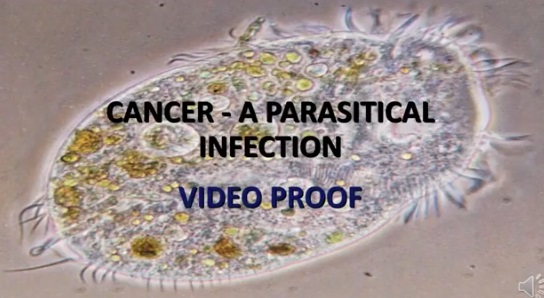
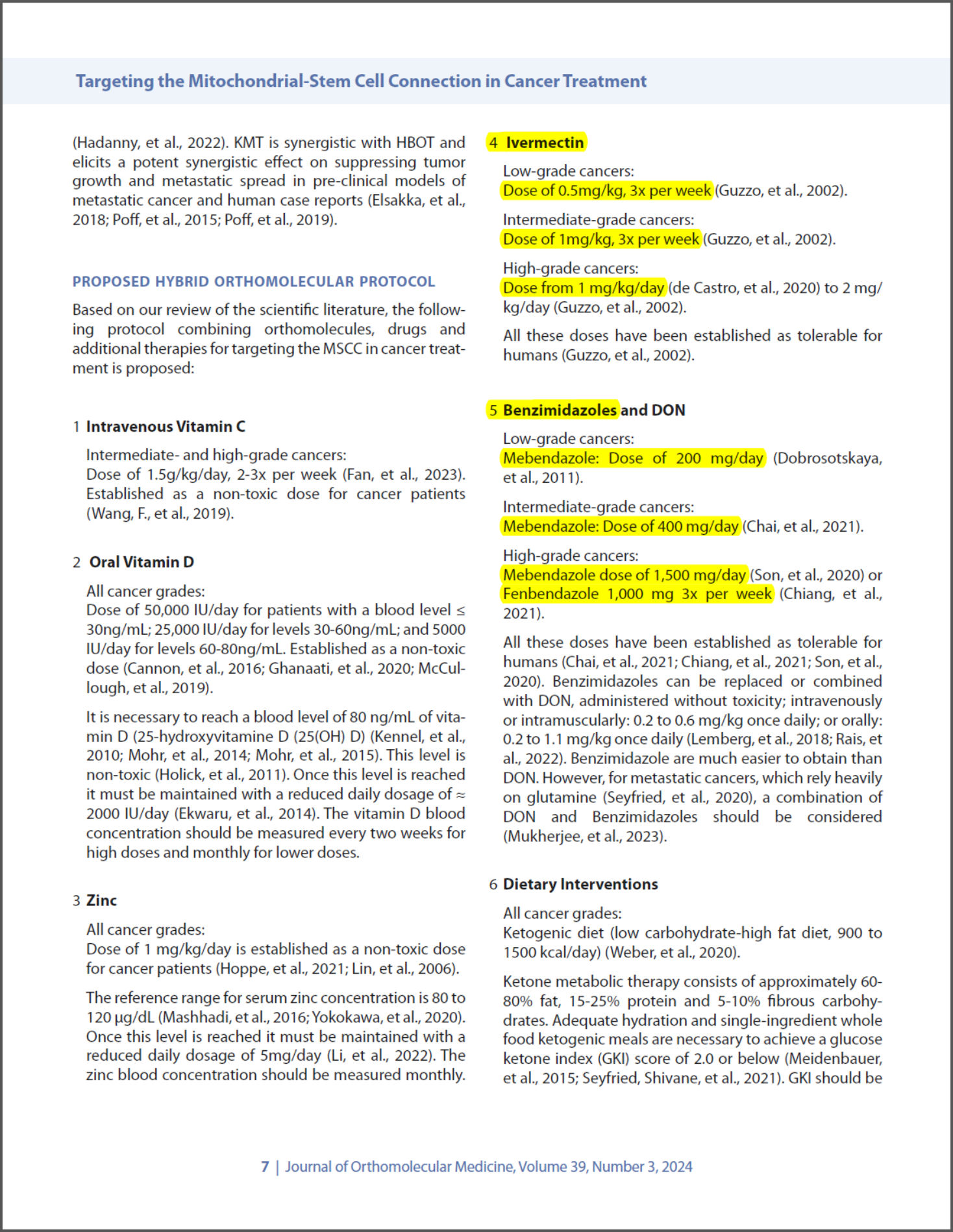
New research advocating a hybrid orthomolecular protocol using anti-parasitical drugs Ivermectin, Fenbendazole, and Mebendazole for cancer treatment offers new hope for cancer victims of the mRNA COVID bioweapon shots.
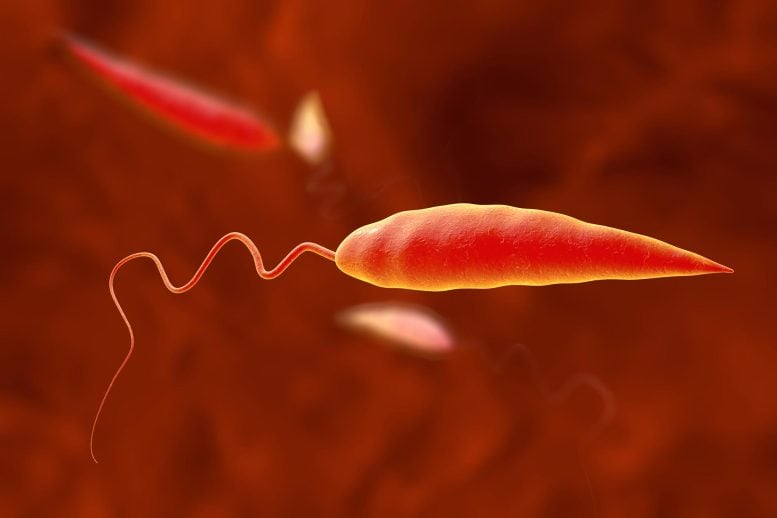
Leishmania parasites appear to evolve through widespread genetic exchange, reshaping assumptions about how they adapt and spread. A parasite long thought to spread mostly by cloning itself may be far more genetically dynamic than scientists once believed. A new international study suggests that Leishmania—a group of microscopic parasites responsible for debilitating tropical diseases—regularly swaps genetic [...]

 Login