 Login

New Book by Chaberek, Greene Probes Evolution as a “Catholic Dilemma”
I recently returned from a safari through Zimbabwe and South Africa. The high point, I’ll confess, was one wildlife encounter in particular.

Not all meteorites are created equal, and one that crashed through the roof of a New Jersey home is giving scientists a rare glimpse into the chemistry of an ancient asteroid while offering new clues to the puzzle of how life began on Earth.
On July 16, 2024, a daytime meteor streaked across the sky and produced a sonic boom as it passed south of the Statue of Liberty.
“A forensic study of the fragments revealed that they contained preserved bits from near the surface of a primitive asteroid where it experienced concentrated salty fluids—a process not previously known from this type of proto-planet world,” said lead author and meteor astronomer Peter Jenniskens of the SETI Institute and NASA’s Ames Research Center in California’s Silicon Valley in a statement.
Two years later, after analyzing fragments from the event, researchers found that the meteorite contained evidence of ancient salty fluids, complex organic chemistry, and processes that occurred on a primitive asteroid billions of years ago.

Daytime meteor (left), impact site, and a fragment of the Hillsborough meteorite (Image Credit: (A) M. Kirschner and M. Hankey, American Meteor Society; [(B) to (D)] A. Gordon/SETI Institute).The findings, published in the journal Science Advances, come from an international team led by meteor astronomer Peter Jenniskens of the SETI Institute and NASA Ames Research Center.
“Our cameras in Northford, Connecticut, and Douglassville, Pennsylvania, as well as a doorbell camera in Wayne, New Jersey, captured the meteor, and from that we measured its trajectory,” said American Meteor Society operations manager Mike Hankey.
Traveling at approximately 32,000 miles per hour (14.4 kilometers per second), witnesses from the surrounding areas, including New York, New Jersey, Connecticut, Rhode Island, and Pennsylvania, reported seeing a bright fireball that broke apart while a part of it broke through the roof of a New Jersey residence.
“The path traced back to low in the asteroid belt,” Hankey adds.
Using footage from meteor cameras, including systems in Connecticut and Pennsylvania, researchers reconstructed the meteor’s path. The trajectory traced back to a region of the asteroid belt between Mars and Jupiter. The space rock disappeared from view about 22 miles above the surface. Shortly afterward, weather radar at Newark Airport detected a cloud of falling debris stretching from Staten Island into New Jersey.
The homeowner acted quickly, handling the space rock with gloves and aluminum foil before placing it in a glass container to protect the material from contamination.
The meteorite was classified as a CM1/2 carbonaceous chondrite, a rare type of primitive meteorite known for containing organic compounds and evidence of water weathering.
According to researchers, the Hillsborough meteorite is only the second witnessed fall of a CM1/2 carbonaceous chondrite ever recorded. Most known CM meteorites belong to the less-altered CM2 category, while no CM1-type meteorite fall has ever been observed.

“A high fraction of compounds were the product of organic chemistry with minerals,” said organic mass spectrometry specialist Phil Schmitt-Kopplin of Technical University Munich. “We do not know if these magnesium organic compounds were contributed by brine chemistry or were simply left over from earlier impact shock processes.”
The final analysis showed tiny salt-rich pockets inside the meteorite, pointing to a formation where water once evaporated on its parent asteroid, leaving behind highly saline fluids. Scientists are comparing these minerals with samples from the asteroids Ryugu and Bennu to better understand early solar system chemistry.
These ancient salty waters may have helped protect and change the molecules needed for life before life first began. The meteorite contained carbon, nitrogen, amino acids, and other organic compounds, many of which appear to have formed through interactions between water, minerals, and carbon-rich chemistry.
“We are thrilled that nature delivered such a precious asteroid sample on our doorstep,” said curator Denton Ebel from the Department of Earth and Planetary Sciences at the American Museum of Natural History.
The recent paper, “Meteor over New York City: Brines in a primitive CM asteroid,” appeared in the journal Science.
Chrissy Newton is a PR professional and the founder of VOCAB Communications. She currently appears on The Discovery Channel and Max and hosts the Rebelliously Curious podcast, which can be found on YouTube and on all audio podcast streaming platforms. Follow her on X: @ChrissyNewton, Instagram: @BeingChrissyNewton, and chrissynewton.com. To contact Chrissy with a story, please email chrissy @ thedebrief.org.
Emergency crews say situation remains ‘dynamic’ as more than 100 firefighters battle Dunwich Heath blaze
A wildfire near Britain’s biggest nuclear power station has caused “total devastation” to one of the UK’s most important landscapes, as fire crews said the situation remained “dynamic”.
More than 100 firefighters have been battling the blaze on Dunwich Heath, near Leiston, on the Suffolk coast since Wednesday evening. The fire service said on Friday afternoon the situation was stabilising but remained a “major incident” that was “dynamic and potentially changeable”.
Continue reading...
© Photograph: Humphrey Nemar/PA
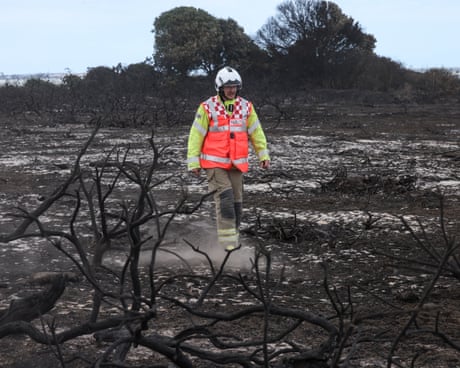
© Photograph: Humphrey Nemar/PA
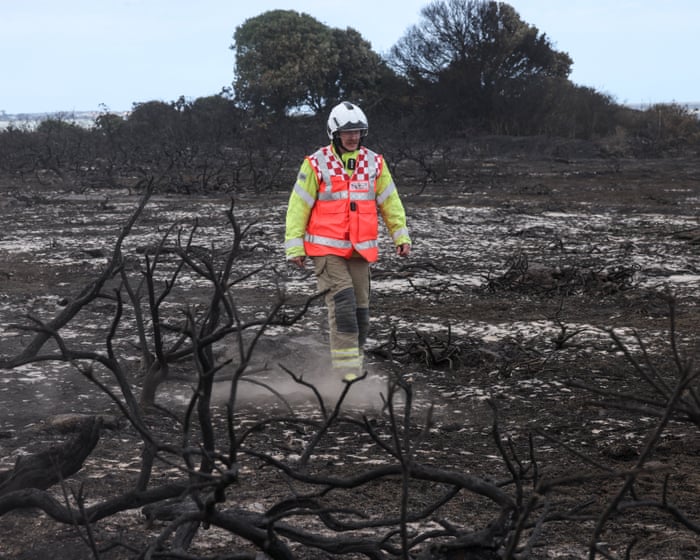
© Photograph: Humphrey Nemar/PA


The small exoplanets of our Sun’s second-nearest neighbor, Barnard’s Star, are inhospitable wastelands, British astronomers say.
Located six light-years from Earth, Barnard’s Star is separated from our closest neighbor, Alpha Centauri, by about 66° in our sky. Now, University of Cambridge researchers have revealed their findings on this exosolar system in a recent paper published in the Monthly Notices of the Royal Astronomical Society.
After careful analysis, the astronomers announced that the exoplanets are unlike any in our solar system, presenting a brutal and barren environment.
Scientists only discovered these four small planets orbiting Barnard’s Star in 2025. Unlike anything in our solar system, these orbital bodies fit into a size range larger than Mars, but smaller than Earth or Venus.
Like a peeled onion, these smaller planets are rich in a mineral only found deep below the Earth’s surface. Chemical analysis revealed large amounts of the mineral periclase on the surface of these planets, something typically only found hundreds of kilometers deep on our planet.
“Barnard’s Star has an enormous amount of the element magnesium compared to other stars, so its planets are likely to be rich in magnesium too,” said lead author Xander Byrne from Cambridge’s Institute of Astronomy. “On Earth, that magnesium goes into making minerals called olivines, which are really important for storing water within the planet.”
Unfortunately for those looking for extraterrestrial life, magnesium serves a different purpose on these exoplanets. Instead of water-storing olivine, it produces the abundant periclase, which is a poor store of water.
Even worse, these inhospitable exoplanets likely no longer have an atmosphere. According to the University of Cambridge team, these ten-billion-year-old planets probably only managed to hold an atmosphere for two billion years at most.
“These planets were always going to be hostile, because they’re really close to their star,” said Byrne. “Even the outermost planet orbits ten times closer than Mercury orbits the Sun. When you’re that close to your star, and have such little gravity, your atmosphere just gets blown off.”
In addition to the lack of atmosphere, the planets’ proximity to Barnard’s Star leaves them tidally locked, like our Moon, with one side always facing toward the star.
However, there is one positive element to these small planets. Typically, such close-orbiting systems are highly unstable, with the planets shooting out from the system, falling into their host star, or catastrophically colliding. Yet in this case, the system is as ordered as a piece of music.
The three inner planets of the exosolar system have years in a 9:12:16 ratio, producing two of what is known as a “perfect fourth” in music. This musical harmony is known as an orbital resonance, with the same type of effect stabilizing Jupiter’s moons in their orbits around that planet.
While our ability to view Barnard’s Star from Earth may be limited, the European Space Agency’s upcoming Plato mission may allow astronomers to discover ever smaller worlds orbiting in the nearby exosolar system.
“Larger planets are much easier to detect than small ones, so we know about very few sub-Earth planets like the ones in this system,” said Byrne. “But the sensitivity of these new missions will help to reduce this bias, allowing us to discover more and more planets that are small and rocky, like Earth.”
The true significance of the research may lie in the value of a null result. While these planets are bleakly hostile to life, observing this exosolar system’s composition can aid future astronomers in narrowing down the search for extraterrestrial life.
The paper, “The Barnard’s Star Planetary System: Stability, Composition, and Evolution of Four Sub-Earth Exoplanets,” appeared in Monthly Notices of the Royal Astronomical Society on June 24, 2026.
Ryan Whalen covers science and technology for The Debrief. He holds an MA in History and a Master of Library and Information Science with a certificate in Data Science. He can be contacted at ryan@thedebrief.org, and follow him on Twitter @mdntwvlf.
 Researchers have detected a sugar in the interstellar medium for the first time. Sugars are central to life. They help form the structural backbone of DNA and RNA and participate in essential metabolic reactions. They are also thought to have been necessary for the formation of the earliest nucleic acids. Yet researchers studying life’s origins [...]
A rocky planet orbiting in the habitable zone of a sun-like star may look like a perfect place for life to thrive — but not if it's too small to hold onto its atmosphere.
So, we may wonder: How much smaller Earth could be and still have its delightfully breathable atmosphere? How small could an exoplanet be to sustain life as we know it?
With these questions in mind, University of California Riverside planetary scientist Michelle Hill and her colleagues recently simulated what happens to the atmospheres of different sizes of rocky worlds. The worlds tested were similar to Earth and orbited in the habitable zones around sun-like stars. It turns out for a world to maintain an atmosphere long enough for life to gain a foothold (a few billion years at minimum), it needs to be at least as big as Mars.
The habitable zone — the area around a star where temperatures are right for liquid water to exist on a planet's surface — is prime real estate in the hunt for alien life. It's also a tough neighborhood for exoplanet atmospheres, because the closer a planet is to a star, the more ways in which radiation and stellar wind will try to strip away an atmosphere.
This is why Hill and her colleagues recently simulated how long it would take rocky, Earth-like planets of various sizes, in the habitable zone of a star like our sun, to lose their atmospheres. In other words, how much smaller could Earth, or a similar planet, be and still keep an atmosphere?
The answer turns out to be that an atmosphere-sustaining planet needs to be about 80% as wide as Earth, but could technically be as small as 60%. This offers astrobiologists a clue about which planets to focus on in the search for habitable worlds and signs of alien life.
"The plethora of exoplanets creates an interesting challenge in the search for potentially habitable planets," wrote Hill and her colleagues. "Of the many targets in the habitable zones of their star, which are the best candidates for follow-up observations with the aim of detecting biosignatures?" In other words, astrobiologists now have almost too many planets to choose from and not enough telescope time to search them all. So, it's time to narrow the search.
One way to do that is to figure out which planets are most likely to be habitable — and for life as we know it, that habitability means having an atmosphere.
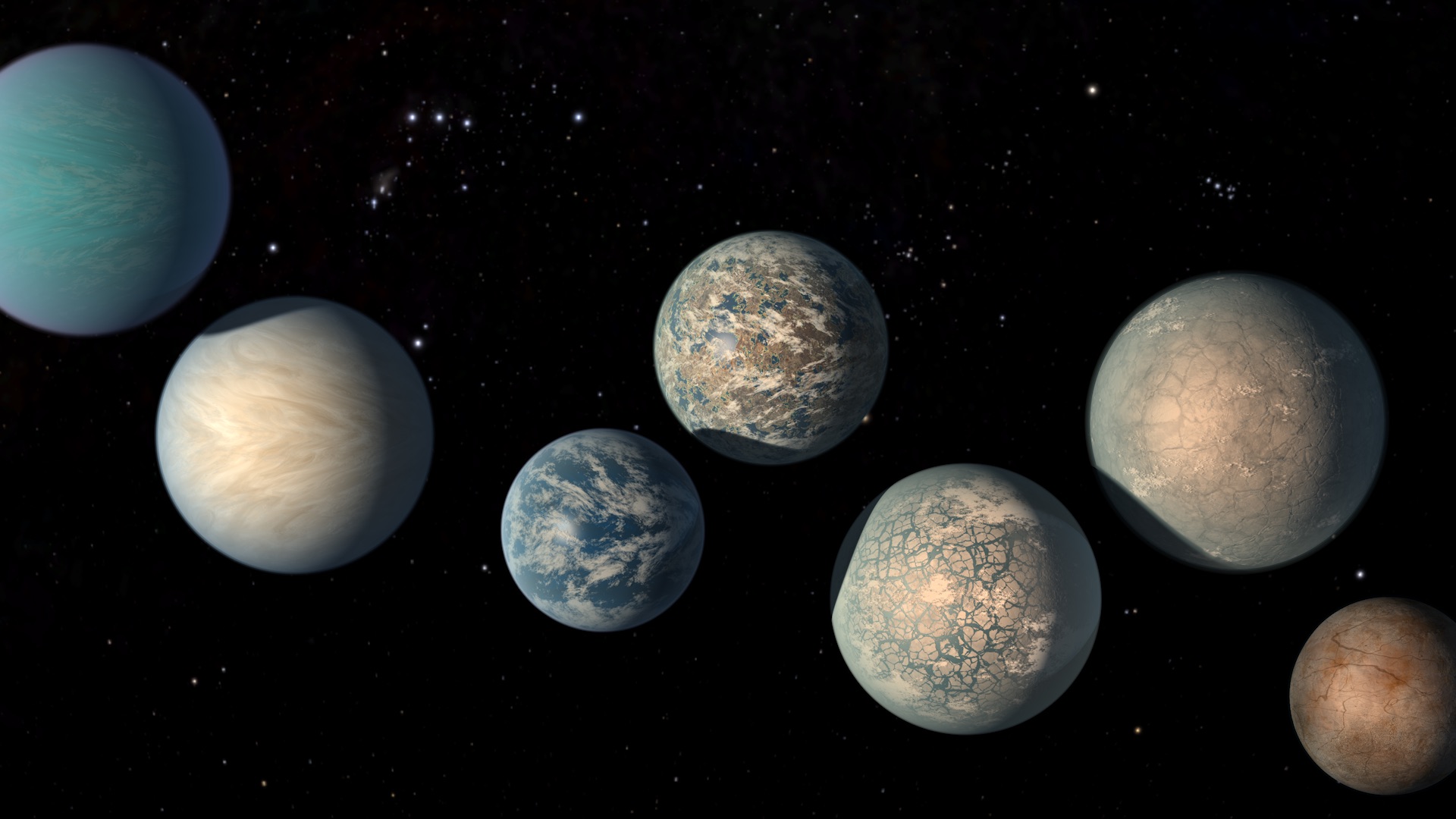
Hill and her colleagues' "Smaller Than Earth Habitability Model" simulates the fate of atmospheres around digital versions of Earth. Some of the simulated worlds are exactly like ours but smaller, with the same chemical makeup and the same proportions of core, mantle and crust. Others have slightly different amounts of carbon, larger or smaller cores, or different starting temperatures. The model traces what happens to these worlds over a few billion years, based on two things: how quickly stellar wind and radiation strip away gas from the planet's atmosphere and how quickly volcanoes pump out gas (mostly carbon dioxide) to replace it.
The model is how the team realized a scaled-down version of Earth needs to be at least 80% as wide as true Earth (0.8 Earth radii) to maintain an atmosphere in the long run. Smaller planets tend to lose gas faster than volcanic eruptions can replace it.
That's because smaller planets have less gravity and weaker magnetic fields with which to hold onto their thin envelopes of gas. They also don't usually release enough gas from within to make up for the loss. Their mantles — the churning layer of magma beneath the crust — tend to release less volcanic gas over time, and their upper layers cool and harden much faster. The latter process cuts off volcanic eruptions much earlier in a planet's lifespan.
By changing some of Earth's parameters, the team managed to get planets as small as 0.6 Earth radii to maintain a stable atmosphere. Carbon was the key: planets with more carbon in their mantles tend to release more carbon dioxide gas in eruptions, and that turns out to be the biggest factor (other than size) in whether a planet keeps its atmosphere.
"Carbon dioxide is a heavy molecule," Hill and her colleagues wrote, "which can make it a difficult molecule to lose. We focus on a pure carbon dioxide atmosphere as a best-case scenario for atmospheric retention." Of course, that's only a best-case scenario for some relatively simple forms of life, so your astrobiological mileage may vary.
It took tons more carbon than Earth contains to make a significant difference to the fate of a planet's atmosphere — but because it's theoretically possible for a planet to form with that much carbon in its makeup, that's useful knowledge. Planets with relatively smaller cores, and therefore relatively thicker mantles, also had better luck on the atmospheric retention front. Starting with a larger supply of radioactive elements, which decay and release heat into the surrounding rock, helped keep the mantle molten and the volcanic gases churning skyward.
Starting with a cooler mantle also helps — which sounds surprising. You'd think a hotter mantle would be more likely to spew volcanic gases into the atmosphere. Yet, a cooler mantle takes longer to start erupting in earnest, which means the planet gets to hold onto its reservoir of gases until its star is older and more settled.
Newborn stars are prone to violent bursts of radiation and plasma, which would sweep away the volcanic gas as fast as it erupted. With a cooler mantle and later eruptions, the planet gets to keep more of the erupted gas.
There's still hope of life for smaller worlds.
Even planets that lose their initial atmospheres entirely — instead of gradually replacing them with things like carbon dioxide and methane — might have a second chance to build a new atmosphere.
Hill and her colleagues suggest that one way for a planet to regain its lost atmosphere could be comet and asteroid impacts, which might deliver volatile elements like hydrogen, oxygen and carbon. These elements can combine to form all sorts of atmospheric gases.
Such impacts could be especially helpful if they happen later in the star system's life, like after the star is past its youthful phase of intense flares.
"While smaller planets face greater challenges in retaining atmospheres, our model suggests that they can develop atmospheres under the right conditions," wrote Hill and her colleagues, so, "even those that initially lose their atmospheres should not be immediately discounted as potentially habitable worlds."
Future simulations using the Smaller Than Earth Habitability Model could study worlds around smaller, cooler stars called red dwarfs — stars like TRAPPIST-1, which is home to at least seven rocky planets, with three of them in the habitable zone. These stars make up about 75% of the stars in our galaxy, and their relatively dim light makes it easier for telescopes like the James Webb Space Telescope (JWST) to capture images of starlight filtering through the atmospheres of planets that pass between Earth and their host stars.
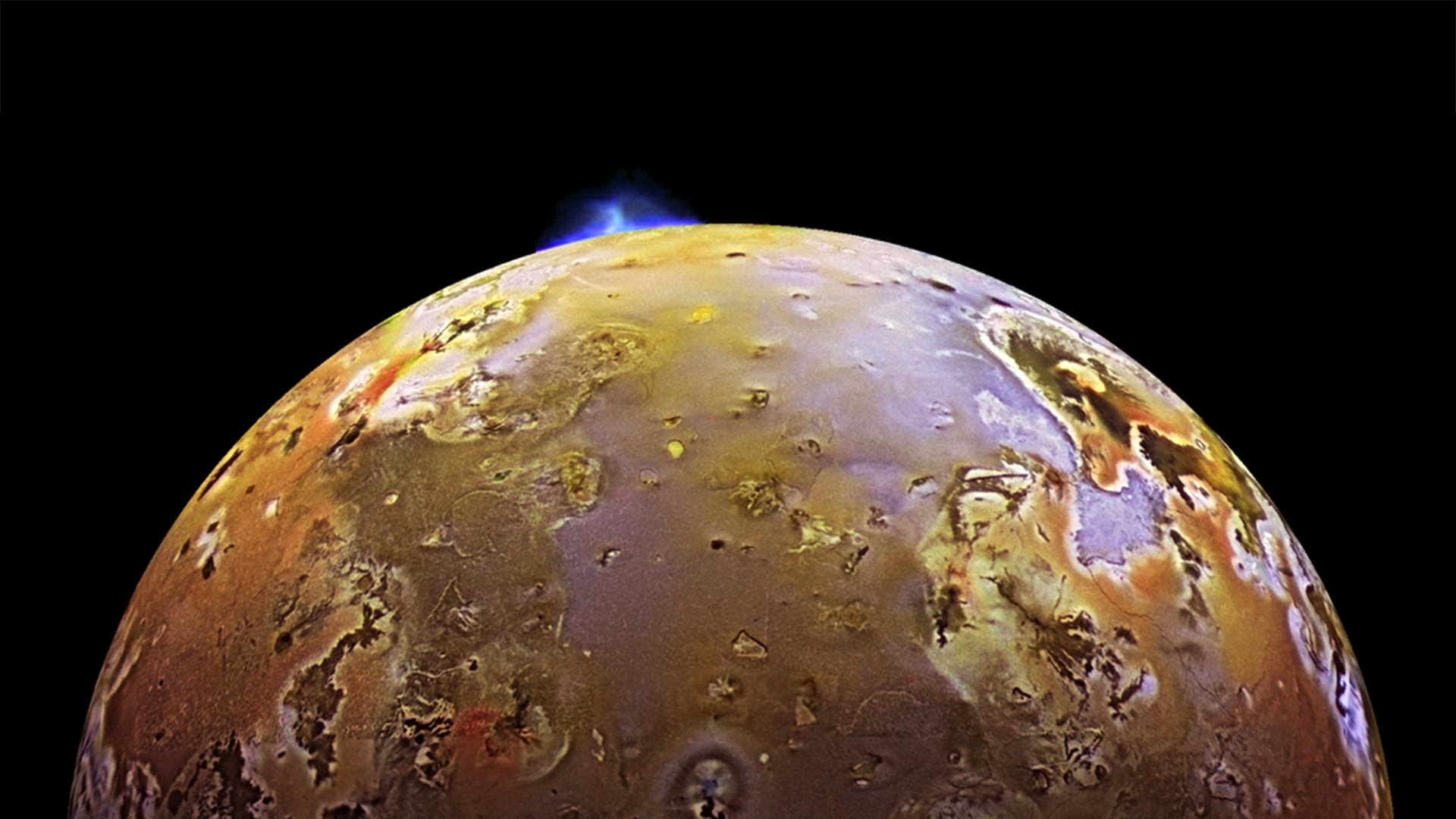
Hill and her colleagues also hope to explore what happens to atmospheres around tidally-locked planets, or planets where tidal forces keep the interior hot and seismically active, similar to Jupiter's moon Io.
The researchers published their work in June in The Planetary Science Journal.

© National Geographic & Disney
A team of scientists exploring a possible deep-sea coral reef off the coast of Benin that 1960s researchers had deemed likely dead found a living, thriving reef supporting a complex underwater ecosystem, including several coral and fish species.
Led by scientists from the Institut de Recherches Halieutiques et Océanologiques du Bénin, the discovery is the first known mesophotic coral reef in the region and offers scientists a tantalizing target for future deep-sea marine-life expeditions.
According to a statement announcing the unexpected discovery, previous historical surveys of the area had indicated a possible reef more than 50 meters below the water’s surface. When a 1960s survey detected the unusual feature, they suspected it was a coral reef that was likely dead.
When team leader Gérard Zinzindohoué and colleagues studied the features, they suspected that the team from the 60s may have provided them with a golden scientific opportunity. Although the feature’s depth ruled out a typical shallow-water coral reef, the researchers note that it could be an entirely different kind of reef structure, known as a mesophotic coral ecosystem, that can inhabit such depths.
“A mesophotic coral ecosystem lives deeper than the usual shallow coral reefs, in zones where light is much more limited,” Zinzindohoué explained. “Unlike typical shallow reefs, it does not always form a single continuous reef structure. Instead, it can appear as patchy or scattered coral communities spread across the seafloor.”
Instead of using mid-twentieth-century technology to settle the debate, the team turned to the National Geographic Exploration Technology Lab, which provided access to its Deep-Sea Camera System.
Following the path set out by the 1960s survey, the team used the underwater camera to map the seafloor with sonar. After several passes, the team covered a total of 11.5 kilometers. Zinzindohoué highlighted the difficulty of the effort, noting that it was “not an easy field campaign.”
“It was a mix of long days at sea, technical problems, and a lot of uncertainty,” the researcher explained. “But then we saw structures on the sonar that looked like they could be reef signatures, which gave us hope that we were close.”
The closer the team drove the Deep-Sea Explorer’s cameras, the more the shockingly unexpected scene began to unfold.

“That was a big moment for us, because suddenly we could actually see the seafloor,” Zinzindohoué said.
Instead of the dark, lifeless structure anticipated by the original survey team, the new team found a healthy reef containing eight distinct types of coral. The system was also actively supporting eight fish species, with the camera capturing them feeding and sheltering among the corals. The species identified by the team include golden African snappers, blackbar soldierfish, Guinean angelfish, West African goatfish, the Monrovia doctorfish, three-banded butterflyfish, and two distinct species of damselfish.

“I still remember seeing those first images,” Zinzindohoué recalled of the vibrant ecosystem lying directly in front of the cameras. “It was a mix of excitement and disbelief, because after all this time thinking about this reef, suddenly there was something real in front of us.”
When discussing the discovery’s significance, Zinzindohoué said that to the team’s knowledge, “this is the first confirmed record of a living mesophotic coral ecosystem on the Gulf of Guinea continental shelf.”
Although the cameras captured a complex ecosystem, the researchers said that the reef does not appear to be a continuous barrier. Instead, the deep-sea environment consists of several patches of coral that occupy rocky seabed areas most suitable for their survival. Still, they add that further surveys may identify more reefs in the same area.
“I think what we found is probably not an exception,” Zinzindohoué said. “It is more likely a reflection of how little we still know about coastal regions in West Africa and elsewhere. If we were able to find this reef again after 60 years, how many others are still undocumented or simply forgotten?”
Since the team was unable to sample the corals directly, they were unable to confirm the species identification with genetic analysis. The team was also hesitant to condemn the original 1960s survey, noting that it is impossible to tell, without more data, whether the corals were dead at the time and have since rebounded.
“This is still an initial exploration,” Zinzindohoué said. “The historical reports suggested that this could be a continuous coral reef barrier extending roughly 40 kilometers parallel to the coast. We only surveyed a small section of this area, and we had a limited number of visual transects.”
Although there are no immediate plans for a return expedition, the research leader said the only thing holding them back from learning more about these ecosystems, which are “still poorly known in this part of the world,” is adequate financial support.
“If I had all the grant money in the world, the first thing I would do is return to the site with a proper scientific diving and sampling program,” he said, before adding that “every additional piece of information matters.”
“I do believe there are more coral systems out there that we have not yet documented,” he said. “But we should not assume they are everywhere. Each discovery needs to be confirmed. Without going back into the field, we are really just guessing.”
On a personal note, the team leader said the most exciting part is understanding the reef’s history and the lessons that can be gleaned from this underexplored region.
“It feels like we have only just started to read an archive that has been there for a very long time.”
The study “First evidence of live mesophotic coral reefs on the Benin continental shelf” was published in Frontiers in Marine Science.
Christopher Plain is a Science Fiction and Fantasy novelist and has spent the last six years as Associate News Editor and Head Science Writer at The Debrief. Follow and connect with him on X, learn about his books at plainfiction.com, or email him at christopher@thedebrief.org
The mass extinction event known as the Great Dying, which occurred 252 million years ago, resulted in the loss of 96% of marine species, and for many years, scientists could not fully explain why certain animals disappeared while others survived.
That longstanding mystery may be closer to a resolution, thanks to a recent study in the Proceedings of the National Academy of Sciences, which suggests that differences in physiology, metabolism, and oxygen use helped determine which marine animals survived the catastrophe.
Stanford University researchers found that physiological differences largely determined which marine animals survived the end-Permian mass extinction after warming oceans lost much of their oxygen. Animals whose bodies could not meet rising oxygen demands, including brachiopods and crinoids that had long ruled the seafloor, had a hard time surviving as ocean temperatures rose and oxygen in the water dropped.
By contrast, mollusks and fish possessed body plans better suited to supplying oxygen as temperatures climbed, allowing them to survive in greater numbers.
“With this study, we essentially wanted to solve the mystery of why, when you go to the beach, you collect the shells of clams and snails rather than those of brachiopods,” said lead author Jose Andres Marquez, a former PhD student in the lab of Stanford’s Erik Anders Sperling.
Marquez and his team developed a model based on species’ metabolic oxygen balance and tested it using direct measurements of oxygen use in living relatives of both ancient groups. This included brachiopods collected from the San Juan Islands in Washington. Their results revealed that the risk of extinction closely aligned with how much oxygen a species required and how effectively it could transport oxygen within its body.
Modern sea animals, such as bivalves, gastropods, and fish, have become more active and muscular over time. Their hunting habits demand more oxygen, even under normal conditions. Although this could seem like a disadvantage during harsh times, it actually worked in their favor. When ocean temperatures rose and oxygen levels dropped during the Permian-Triassic period, these animals already relied on features such as gills, strong blood flow, and larger muscles to get more oxygen when needed.
On the other hand, Paleozoic animals like brachiopods and crinoids were slow-moving filter feeders that thrived in low-oxygen environments when things were stable. However, as temperatures rose, they required more oxygen, and their bodies could not keep up with the demand in the now-oxygen-poor waters.
“Our findings show that, across different organism groups, extinctions happened at much higher rates for those more vulnerable to increases in water temperature and decreases in oxygen availability,” Marquez said.
The findings support decades of evidence from the fossil record. Brachiopods, which once accounted for thousands of species, now number about 400. In contrast, bivalves have diversified and now account for between 10,000 and 15,000 species.
Sperling previously co-authored a 2018 study that identified oxygen loss and warming as the main causes of the Great Dying. However, that earlier research used only physiological data from modern species, so the results were influenced by data from commercially important fish and crustaceans rather than from the ancient groups that have largely disappeared. The new study addresses this limitation by directly measuring the physiology of living representatives of ancient animal groups, including brachiopods.
“This study is really the final nail in the coffin for what caused the Permian-Triassic mass extinction,” Sperling said.
The environmental changes that led to the Great Dying began in oceans that were relatively cool and well-oxygenated, similar to present-day conditions. A massive release of volcanic carbon dioxide altered the atmosphere, driving global temperatures up by 8 to 12 degrees Celsius over several thousand years. By comparison, current climate projections estimate a rise of 1.5 to 4 degrees Celsius above preindustrial levels by 2100, but over a much shorter timescale. “The bad news is, we are on track for Permian-Triassic levels of warming in worst-case scenario projections,” Sperling said.
By comparing more groups of marine animals, the researchers hope to determine whether the physiological patterns that shaped Earth’s greatest mass extinction could help predict which species are most vulnerable as today’s oceans continue to warm. “We’re still at the point where we can change things and do something about it,” Sperling emphasized.
Austin Burgess is a writer and researcher with a background in sales, marketing, and data analytics. He holds an MBA, a Bachelor of Science in Business Administration, and a data analytics certification. His work focuses on breaking scientific developments, with an emphasis on emerging biology, cognitive neuroscience, and archaeological discoveries.
An international research team led by Harvard scientists has announced the first-ever detection of an atmosphere on an Earth-like rocky exoplanet, LHS 1140 b, orbiting within its star’s habitable zone, only 48 light-years away.
The researchers behind the historic discovery, which they are calling “a major milestone in the search for life on other planets,” said the detection of an atmosphere on an Earth-like rocky exoplanet offers the strongest evidence to date that worlds with similar compositions and temperatures to Earth that are also capable of supporting life could exist beyond our solar system.
In a statement announcing the detection of an atmosphere around a habitable-zone rocky exoplanet, the discovery was motivated by theoretical predictions suggesting that LHS 1140 b may contain an atmosphere. The planet was even more tantalizing because its orbit around its host red dwarf star allows for liquid water on its surface, a key ingredient for life as we know it.
Although thousands of exoplanets have been confirmed since 1995, including habitable-zone rocky worlds similar in size and composition to Earth, the team notes that determining whether any of these potential Earth analogs maintain an atmosphere. Like water, an atmosphere is considered a likely necessity for life to emerge.
“An atmosphere is essential for a planet to support life as we know it,” explained Collin Cherubim, the lead author of a study detailing the findings, who recently earned his Ph.D. in Earth and Planetary Sciences from Harvard University.
Robin Wordsworth, the Gordon McKay Professor of Environmental Science and Engineering and Professor of Earth and Planetary Sciences at Harvard, said that as recently as twenty years ago, astronomers still didn’t know if other, terrestrial-type planets “even existed.” However, he explained, they quickly found that this type of planet was common, including some orbiting within their star’s habitable zone.
“The next question was whether any of them had managed to keep an atmosphere,” the professor added.
Before performing any direct observations, the team used computer models to predict what they might find on LHS 1140 b. As noted, those models predicted an upper atmosphere rich in helium. The models also suggested that the atmospheric helium was slowly escaping into space.
To test the model’s predictions, Cherubim and colleagues gained access to the Warm Infrared Echelle (WINERED) Spectrograph on the Magellan Observatory in Chile. The team noted that this powerful telescope allowed them to observe an alignment of LHS 1140 b and another planet transiting its star “on the same night.”
When analyzing the data, the team found that one of the planets appeared to lack any measurable atmosphere. However, as their models had predicted, helium was actively escaping from LHS 1140 b. The finding confirmed that this rocky exoplanet orbiting within its star’s habitable zone was actively maintaining an atmosphere.
David Charbonneau, the head of the Harvard Department of Astronomy and an astronomer at the Center for Astrophysics | Harvard & Smithsonian, and Cherubim’s co-advisor with Wordsworth, was initially skeptical because the entire concept was based on a mathematical prediction of a phenomenon astronomers had never witnessed directly. However, Professor Charbonneau ended up praising the student’s determination and follow-through, which led to the historic detection.
“Collin analyzed the planets we knew about and predicted that this one would have a helium atmosphere,” Charbonneau said. “Then he organized telescope time, got the data, and the detection was statistically rock solid.”
When discussing the implications of the findings, Cherubim noted that “this is the first time anyone has found an atmosphere on a rocky planet in the habitable zone of another star.” Professor Wordsworth agreed, once again noting that until now, planets in these categories with atmospheres had been purely theoretical.
“Now we know at least one has,” the professor said.
The data also suggest that LHS 1140 b’s atmosphere has likely survived for more than three billion years, roughly three-quarters of Earth’s existence. This durability makes LHS 1140 b an excellent candidate for future exoplanet atmosphere studies.
More broadly, the team said that using ground-based observatories to search for escaping gases, such as the helium detected leaving LHS 1140 b, “may become an important tool for studying atmospheres on rocky exoplanets.” They also note the potential value of atmospheric detection for astrobiologists searching for signs of life in the cosmos.
As for Cherubim, he plans on following up his historic discovery with a more detailed analysis of the planet’s atmospheric composition. He also said he would like to investigate the possible presence of surface oceans or other planetary characteristics typically associated with habitability and life. The entire team also said they would like to use Cherubim’s model to search for similar Earth-like, habitable-zone rocky exoplanets.
“This has been a model validation, and hopefully it’s just the first of many more observations to come,” Cherubim said.
The study, “Helium escaping from the atmosphere of a nearby rocky exoplanet orbiting in a habitable zone,” was published in Science.
Christopher Plain is a Science Fiction and Fantasy novelist and Head Science Writer at The Debrief. Follow and connect with him on X, learn about his books at plainfiction.com, or email him directly at christopher@thedebrief.org.
An international team of researchers has demonstrated a new biosignature detection method for distinguishing between abiotic and biotic apatite mineral samples on Mars using instruments already aboard the Perseverance Rover, rather than returning samples to Earth.
The team said their mineral-based biosignature detection approach was successful in identifying samples with nearly 98% accuracy and allows for “deeper time” searches for signs of life, given the longer-lasting nature of minerals compared to biological materials. They also suggest their approach could broaden the capabilities of upcoming rover and life-hunting missions without adding new tools or sensors.
In a study detailing the team’s technique, Robert M. Hazen from the Carnegie Institution for Science and colleagues explained that searching for life and biosignatures beyond Earth “is a central objective of astrobiology.” They also note that this research is complemented by studies exploring the origin and early evolution of terrestrial life. Still, they add, although identifying biosignatures remains a key challenge, “robust mineral biosignatures remain limited.”
For example, most proposed biosignature missions focus on organic molecules or searching for fossils preserved in sedimentary environments or aquatic environments, including the subsurface oceans of some of the solar system’s moons. However, there are few, if any, proposed missions searching for signs of life preserved in mineral records, which the team notes “can retain records of biological activity over much longer geological timescales”
On Mars, NASA’s Perseverance rover has meticulously collected soil and rock samples deemed most likely to contain biosignatures. However, efforts to send a future sample-return mission to the red planet to retrieve samples are currently stalled and may never be completed.
According to the study authors, there are flight-ready instruments “already deployed on the “Perseverance” rover and planned for deployment on the “Rosalind Franklin” rover capable of searching for signs of life in place rather than returning the samples to labs on Earth. However, they add, “to fully exploit these mission-limited yet information-rich tools, it is essential to efficiently extract as much diagnostic value as possible from the data they generate.”
To search for mineral-based biosignatures, the team focused its research on Raman spectroscopy.
“Raman spectroscopy is particularly attractive because it provides bond-specific information on crystal structure and chemical substitution in a nondestructive manner,” they explain.
The team also notes that the Raman spectra acquired by the rover’s instruments “are highly comparable to those obtained under laboratory conditions,” increasing the robustness of any possible life signal.
“This consistency enables direct translation of laboratory reference datasets to planetary environments,” they write.
However, they add, Raman spectra from natural geological samples are often complex, including “overlapping vibrational modes, heterogeneous backgrounds, and chemistry-dependent band shifts.” Until now, this complexity has made interpreting samples based on individual spectral peaks or qualitative inspection inherently challenging.
“Identifying reliable biosignatures that can be detected by flight-ready instruments, such as Raman spectroscopy, remains a central challenge in astrobiology,” the researchers explain. “Developing robust mineralogical indicators of life therefore represents a critical and complementary approach for planetary exploration.”
To test their approach, the team focused on the mineral apatite. A ubiquitous phosphate, the team notes that apatite can be found “in terrestrial and extraterrestrial environments.” Although apatite is a major component of biological formations such as teeth and bones, it also forms naturally, providing an opportunity to search for biosignatures over much longer timescales if scientists can differentiate the two.
“Here, we integrate Raman spectroscopy with interpretable machine learning to distinguish biotic from abiotic apatite, a ubiquitous phosphate mineral in terrestrial and extraterrestrial environments,” the researchers write.
First, Hazen and colleagues compiled 331 Raman spectra samples. Critically, they included only specimens with known origin attributes: biogenic, abiogenic, or synthetic.
Next, they used this data to extract 21 “band-resolved features.” This was accomplished by training a random forest classifier to identify the “most diagnostic” features of each sample.
“Determining the origin of a sample involves assessing multiple independently varying features of a Raman spectrum, including band positions, widths, and relative intensities, the type of multivariate analysis well suited to machine learning,” the study authors explain.
After some comparative analysis, the team ultimately determined that a sample’s carbonate band and the width of the dominant phosphate band, “reflecting chemical composition and crystal structure, respectively,” were the strongest indicators of biological, natural, or synthetic origin.
After using their method to check the 311 samples, the team said the model successfully distinguished biotic from abiotic apatite “with classification accuracy exceeding 96%.” In fact, the team reported that their mineral-based biosignature detection method misidentified only one biotic apatite sample as abiotic and one abiotic sample as biological.
“Here, we show that biologically formed apatite can be distinguished from abiotic counterparts using interpretable machine learning applied to Raman spectra,” the study authors write.
When discussing the potential implications of their new mineral-based biosignature detection approach, the team noted that their findings establish a “broadly applicable and mission-relevant strategy for deep-time archives and future planetary missions.” More broadly, the researchers note that their findings highlight the “growing importance of combining flight-ready analytical instruments with AI” to fully leverage datasets already captured by Mars rovers and other “in situ” planetary missions.
“As planetary exploration increasingly shifts toward autonomous decision-making and target selection, the integration of interpretable AI with mineralogical biosignatures offers a powerful and extensible framework,” they write.
Beyond mineral-based biosignature detection strategies, the research team notes that future life hunting missions will “increasingly rely on the joint interpretation of mineralogical and organic spectroscopic signatures.” These include on-board py-GC-MS measurements, infrared spectroscopy, luminescence, laser-induced breakdown spectroscopy, X-ray fluorescence, and “other analytic methods.”
Future approaches will increasingly rely on AI to analyze these disparate datasets, which the authors note will allow for biologically mediated patterns to be distinguished from natural or synthetic backgrounds “in a physically and chemically consistent manner.”
“In this context, such an integrative and interpretable framework provides a pathway toward autonomous, mechanism-informed life detection across diverse planetary environments, advancing the broader goals of planetary science in understanding habitability, biosignature preservation, and the coevolution of geology and biology,” the authors conclude.
The study “Mineral biosignature identification from Raman spectroscopy using machine learning” was published in PNAS Nexus.
Christopher Plain is a Science Fiction and Fantasy novelist and Head Science Writer at The Debrief. Follow and connect with him on X, learn about his books at plainfiction.com, or email him directly at christopher@thedebrief.org.

Scientists have discovered an abundance of molecules in the cosmos, but for the first time ever, they were able to detect one in interstellar space very familiar to us here on Earth: sugar.
The discovery, made in the vast clouds of gas and dust between stars, could help scientists better understand how some of the chemical ingredients necessary for life formed long before Earth existed.
Researchers at the Centro de Astrobiología, part of the Spanish National Research Council (CSIC), identified the sugar molecule erythrulose within the interstellar medium.
Sugars are considered fundamental building blocks of life. On Earth, they play vital biological roles, including forming the backbone of RNA and contributing to the chemistry that ultimately supports DNA, while also serving as an important source of energy. Scientists studying the origins of life have long sought to understand how the first sugars formed, since they are essential ingredients in the molecules associated with life’s earliest development.
“The detection of erythrulose is very exciting because it opens up the possibility of discovering in space other sugars such as ribose, which is part of RNA, and other important molecules for the origin of life,” says Carlos Briones, co-author of the study, in a statement.
Even so, one major question remains: where did the first biologically important sugars originate?
Previous studies have identified sugars such as ribose and glucose in meteorites and asteroid samples, suggesting that some organic compounds may have been delivered to the early Earth from space. Until now, however, no sugar had been directly detected in the cold molecular clouds where stars and planets form.
The newly identified molecule, erythrulose, was found in the molecular cloud G+0.693−0.027 near the center of the Milky Way. On Earth, erythrulose is a naturally occurring four-carbon ketose sugar.
The discovery was made using highly sensitive radio astronomy observations from the Yebes Observatory’s 40-meter radio telescope and the 30-meter telescope operated by the Institute for Radio Astronomy in the Millimeter Range. Researchers analyzed the unique radio signatures, or spectral fingerprints, emitted by molecules in space.
The team identified 12 spectral lines matching laboratory measurements of erythrulose, confirming the molecule’s presence.
The findings also challenge some existing ideas about how complex molecules form in space. Scientists have generally proposed that interstellar chemistry builds larger molecules by gradually adding carbon atoms. Yet erythrulose proved to be more abundant than related three-carbon sugars that researchers expected would appear first.
“This finding was unexpected, as the prevailing view in astrochemistry is that interstellar molecules grow in size through the sequential addition of carbon atoms,” said Izaskun Jimenez Serra (CAB), the lead author of the recent study.
Instead, the researchers found that erythrulose could form inside icy dust grains from simpler two-carbon alcohols and aldehydes. These frozen environments may function as natural chemical laboratories, allowing increasingly complex organic molecules to develop over time.
The team estimates that during the Late Heavy Bombardment—roughly 4.1 to 3.8 billion years ago, when Earth experienced intense asteroid and comet impacts—between 500,000 and 50 million tonnes of erythrulose may have been delivered to the planet’s surface.
The discovery adds another piece to the puzzle of life’s origins, suggesting that some of its essential ingredients may have arrived with something surprisingly sweet.
This paper was published in the journal Nature Astronomy.
Chrissy Newton is a PR professional and the founder of VOCAB Communications. She currently appears on The Discovery Channel and Max and hosts the Rebelliously Curious podcast, which can be found on YouTube and on all audio podcast streaming platforms. Follow her on X: @ChrissyNewton, Instagram: @BeingChrissyNewton, and chrissynewton.com. To contact Chrissy with a story, please email chrissy @ thedebrief.org.
 The discovery hints that life’s ingredients may form before planets exist.

The conversion van experts at Vantrack say they’re ready to deliver on the promise of Kia’s own WKNDR concept with a new electric camper van based on the popular Kia PV5 Passenger – but unlike the concept that inspired it, this van is headed for production.

