A physicist built a mini-universe out of cold atoms and used it to test where time comes from. It made big headlines a few weeks ago, and I almost skipped it, as most "universe in a lab" stories are nonsense. But then I actually read the paper. Let's take a look.
Apple in China occupies a position unlike the company’s presence in any other country. China is simultaneously a major consumer market, a critical manufacturing center, an extensive developer economy and the home of Apple’s most determined hardware competitors.
That combination creates an opportunity few technology companies can ignore. China has hundreds of millions of affluent mobile users, a strong appetite for premium devices and a digital economy built around smartphones.
It also creates unusual complexity. Apple must compete with Huawei, Xiaomi, Oppo and Vivo while satisfying Chinese regulations, navigating tensions between Beijing and Washington and reducing its manufacturing dependence without damaging the supplier network that helped make the iPhone possible.
The latest market figures show why Apple cannot treat China as a business it has already lost. IDC estimated that Apple captured 18.1 percent of Chinese smartphone shipments during the second quarter of 2026, placing it second behind Huawei at 22.6 percent.
Apple’s shipments increased by 24.4 percent from the previous year even as the wider Chinese smartphone market contracted. The recovery demonstrated that Chinese demand for the iPhone remains substantial when product design, storage, performance and pricing align with consumer expectations.
The same figures also show why the position can never be considered secure. Huawei remains ahead, local brands respond quickly and a few percentage points can separate several major vendors.
Apple in China Still Has Room to Grow
China is already one of Apple’s largest markets, but its scale means that even established product categories contain room for expansion.
The country has a large premium smartphone segment, extensive 5G coverage and consumers accustomed to using mobile devices for communication, payments, shopping, entertainment, transport and work.
An iPhone purchase can also lead to AirPods, Apple Watch, iPad, Mac, iCloud storage and paid applications. The commercial opportunity is therefore larger than the initial handset transaction.
Apple’s strongest advantage is its integrated ecosystem. An iPhone can share passwords, photographs, messages and files with a Mac or iPad, while AirPods and Apple Watch extend the experience without requiring separate accounts and setup systems.
That continuity becomes more valuable as households accumulate devices. Replacing one iPhone is relatively easy. Leaving an ecosystem containing several products, purchased applications, cloud storage and shared family services involves greater friction.
Apple also benefits from a premium identity that remains recognizable in China. Local manufacturers now produce sophisticated flagship phones, but the iPhone continues to operate as both a personal computer and a luxury consumer product.
The importance of that status should not be exaggerated. Chinese buyers are technically informed and increasingly willing to support domestic brands. Brand recognition can attract attention, but it does not excuse weak features or an uncompetitive product cycle.
Recent iPhone Demand Shows the Opportunity
Apple’s 2026 recovery offers a useful example of how quickly its position can improve.
China’s smartphone shipments fell 4.3 percent during the second quarter as memory and component costs pushed several manufacturers toward higher prices. Apple and Huawei held prices more stable, giving buyers a reason to purchase while competing brands became more expensive.
The iPhone 17 generation also addressed several areas where Apple’s standard models had appeared conservative beside Chinese flagships. Stronger base specifications made the regular iPhone more competitive without requiring every customer to move into the Pro tier.
This matters in a market where consumers compare display technology, camera systems, storage, battery life, charging and AI features closely. Apple cannot depend entirely on iOS loyalty when domestic companies introduce visible hardware improvements at several price levels.
The rebound does not establish a permanent trend. Smartphone demand in China remains affected by economic confidence, upgrade cycles, government incentives and the timing of major shopping festivals.
Apple’s position can also look different according to the research firm and whether a report measures shipments or consumer sales. Quarterly rankings should be treated as evidence of momentum rather than a final judgment on the market.
The important signal is that Chinese consumers have not broadly rejected the iPhone. Demand can return rapidly when the product and price create a convincing upgrade.
Huawei Makes China Apple’s Hardest Market
Huawei gives Apple a competitor with advantages unavailable to most global smartphone manufacturers.
The company combines strong national recognition with advanced cameras, communications technology, custom chips, local services and an expanding HarmonyOS ecosystem. Its return to premium smartphones removed the opening Apple had gained when U.S. restrictions disrupted Huawei’s access to important components.
Huawei can also position its products as part of China’s technological self-reliance. That message carries commercial and political weight beyond a conventional comparison between two phones.
Apple must therefore compete against product quality and national sentiment simultaneously. An iPhone can offer strong performance and still lose a purchase to a domestic flagship viewed as technically capable and strategically important.
Xiaomi, Oppo and Vivo add different pressures. They move quickly across price categories, experiment with folding designs, adopt larger batteries and provide features adapted to local applications and buying habits.
Chinese phone makers also operate inside a retail and software environment they understand directly. They can build relationships with local platforms, carriers and commerce services without translating a global strategy into Chinese requirements.
Apple follows a more centralized product model. That consistency protects the identity of the iPhone, but it can make the company slower to answer features gaining popularity inside one country.
Services Depend on Local Rules
Apple in China is not only an iPhone business. The installed device base creates demand for applications, cloud storage, entertainment, subscriptions and digital purchases.
China has an enormous developer community producing games, commerce platforms, social services, education tools and productivity software. The App Store connects those developers with high-value iPhone and iPad customers.
The relationship is commercially important but politically complicated. Apple must operate the mainland App Store according to Chinese law, including rules affecting games, generative AI, communications services and content.
Applications available elsewhere may be absent from the Chinese storefront. Developers may also need licenses or regulatory approval before distributing certain categories of software.
Apple changed commission rates and related policies for the mainland China storefront in March 2026. The company described the adjustments as part of maintaining a strong business opportunity for Chinese developers.
Regulatory and developer pressure has not disappeared. Complaints involving commissions, distribution restrictions and payment policies continue to challenge Apple’s control of the platform.
The company cannot simply copy its response from another region. European rules focus heavily on alternative marketplaces and interoperability, while China combines competition concerns with content regulation, data localization and licensing requirements.
Every concession must therefore be designed for a distinct legal environment without fragmenting iOS into an unmanageable collection of regional systems.
China Is Also Part of the Product
Apple’s relationship with China extends far beyond the devices sold there.
For more than two decades, Apple and its manufacturing partners built a dense network of factories, component suppliers, engineers, logistics operators and toolmakers across the country.
That network does more than provide low-cost labor. It can place specialists from several suppliers near an assembly site, modify production lines quickly and increase output to enormous volumes during a product launch.
China’s infrastructure also supports the less visible stages of manufacturing. Components require precision tooling, testing equipment, chemicals, packaging, subassemblies and experienced quality-control teams before final assembly begins.
Apple has expanded iPhone production in India and moved parts of its Mac, iPad, Apple Watch and AirPods supply chains to countries including Vietnam. It is also increasing semiconductor and component commitments in the United States.
Those investments reduce the danger of relying on one country, but they do not recreate China’s complete manufacturing environment immediately.
A factory in another region may assemble an iPhone while still depending on Chinese machinery, materials, subcomponents or engineering support. Production diversification is therefore a gradual redistribution of individual stages rather than a clean departure.
Apple must reduce concentration risk without weakening the manufacturing system responsible for its product quality, scale and launch schedules.
Image Credit: AFP Photo
Trade Tensions Turn Efficiency Into Risk
The same China supply chain that provides Apple with extraordinary efficiency also exposes the company to political decisions outside its control.
Tariffs can raise the cost of devices exported from Chinese factories. Export restrictions can limit access to materials or production equipment, while sanctions may affect suppliers and technology partners.
Chinese government policies can influence the use of foreign devices inside state agencies and companies. U.S. rules can restrict the technologies available to Chinese firms that also participate in Apple’s supplier network.
Apple cannot solve these problems through product design alone. It must maintain relationships with two governments whose technology policies increasingly emphasize security, domestic production and strategic independence.
Moving more assembly to India gives Apple additional flexibility, particularly for iPhones destined for the United States. China nevertheless remains important as a production center and consumer market.
An aggressive withdrawal could damage supplier relationships and local sales. Moving too slowly could leave Apple vulnerable to another trade disruption.
The company is trying to preserve Chinese capabilities while creating enough capacity elsewhere to keep a political dispute from becoming a worldwide product shortage.
Retail Stores Give Apple a Direct Relationship
Apple’s physical stores remain an important advantage in China because they give the company direct contact with customers.
The stores allow buyers to compare models, receive technical support, attend educational sessions and enter the ecosystem without depending entirely on a carrier or reseller.
That experience is particularly valuable for premium products. A customer considering a Mac, Apple Vision Pro or high-end iPhone may need more explanation than someone replacing an inexpensive handset.
Retail locations also communicate long-term commitment. A prominent store represents more than a sales channel; it signals that Apple intends to remain part of the local technology market.
Online commerce is equally important. Chinese consumers are accustomed to large shopping festivals, aggressive promotions and rapid delivery through domestic platforms.
Apple must balance its controlled global pricing with a market where discounts can change quarterly rankings. Too little flexibility makes the iPhone appear expensive, while frequent reductions can train customers to delay purchases and weaken its premium image.
The strongest 2026 performance came partly from avoiding price increases while component costs were forcing rivals to reconsider their pricing. That advantage may disappear when competitors adjust their supply chains or launch another cycle of promotions.
Chinese Consumers Set a Higher Product Standard
China is often discussed as a sales problem for Apple, but it also functions as a demanding test of the iPhone.
Domestic flagship phones compete through larger batteries, rapid charging, advanced camera hardware, folding displays and deep integration with local digital services.
Features considered experimental elsewhere can become established expectations more quickly in China. Apple’s slower adoption cycle may look disciplined in one market and conservative in another.
The company must decide which expectations represent durable improvements and which are temporary specification contests. Copying every local feature would weaken Apple’s focused product strategy, but ignoring major changes creates openings for rivals.
This pressure can benefit Apple globally. Competition in China forces the company to defend the value of its standard iPhone, improve battery efficiency, strengthen cameras and make software features more useful outside English-speaking markets.
The opportunity is therefore not limited to selling more devices. China can reveal where Apple’s global assumptions no longer match the most competitive part of the smartphone industry.
Chronic pain is often treated as a medical problem that can be measured with scales, prescriptions, and clinical guidelines. For older adults, however, the experience of pain is also shaped by mobility, memory, sleep, mood, independence, and the ability to communicate with health professionals. A new study published in BMC Geriatrics places that lived experience at the center of the discussion, examining how older adults perceive chronic pain management in primary care settings.
The article, authored by P. Gopal, A. Kagarmanova, E. Staab and colleagues, focuses on a point where many long-term health decisions are made: the primary care clinic. Primary care clinicians are often the first professionals to evaluate persistent pain and the people most likely to coordinate treatment over months or years. This makes the setting especially important for older patients, who may be managing several chronic diseases and taking multiple medications at the same time.
Chronic pain is generally defined as pain that persists or recurs for longer than the expected period of tissue healing, commonly described as three months or more. It may arise from osteoarthritis, neuropathy, spinal disorders, previous injuries, cancer, or several conditions acting together. Unlike acute pain, which can serve as a warning signal, chronic pain involves complex changes in the nervous system. Repeated signals can increase the sensitivity of pain pathways, a process known as central sensitization, meaning that pain may continue even after the original injury has stabilized.
For older adults, treating this type of pain is rarely a matter of simply choosing a stronger drug. Age-related changes in kidney and liver function can alter how medicines are absorbed, processed, and eliminated. This can increase the risk of side effects from opioids, sedatives, anti-inflammatory drugs, and other treatments. At the same time, many older patients live with hypertension, heart disease, diabetes, dementia, or depression, conditions that can influence both the perception of pain and the safety of available therapies.
The study’s focus on perceptions is scientifically significant because clinical success cannot be judged only by changes in a numerical pain score. Two people who report the same intensity on a ten-point scale may have very different levels of disability, fear, sleep disruption, or confidence in their treatment. Older adults may value the ability to walk to the shops, sleep through the night, remain socially active, or avoid dependence on family members more than achieving complete elimination of pain. Understanding these priorities can help clinicians define treatment goals that are meaningful in everyday life.
Primary care also presents a distinctive communication challenge. Appointments may be brief, while chronic pain is influenced by physical, psychological, and social factors that require time to explain. Some patients may hesitate to report pain because they fear being dismissed, appearing demanding, or being prescribed medications they do not want. Others may assume that pain is an unavoidable part of aging. When these assumptions remain unspoken, clinicians can underestimate the burden of pain or recommend plans that patients cannot realistically follow.
A patient-centered approach attempts to address this gap by combining clinical evidence with the individual’s preferences, circumstances, and goals. In practice, that may involve medication review, physical therapy, exercise adapted to ability, occupational strategies, psychological support, sleep interventions, and education about pain biology. The technical principle is multimodal care: different treatments target different mechanisms and consequences of pain, potentially reducing reliance on any single intervention. For older adults, coordinated care can also help identify harmful drug interactions and prevent avoidable loss of function.
The research is arriving as health systems confront a rapidly aging population and growing demand for long-term pain care. Chronic pain affects quality of life, physical activity, and healthcare use, yet treatment remains inconsistent across communities. Access to physiotherapy, behavioral health services, specialist pain clinics, and transportation can vary sharply. These structural factors matter because a treatment plan may be clinically sound but ineffective if a patient cannot afford it, reach appointments, understand the instructions, or obtain help at home.
By examining older adults’ views, the paper contributes to a broader shift in pain research: away from treating patients as passive recipients of medical decisions and toward recognizing them as experts in their own daily experience. Their perspectives can reveal whether treatment goals are understandable, whether risks are being communicated clearly, and whether care plans fit real lives. Such information may help primary care teams design more responsive conversations about benefits, harms, uncertainty, and acceptable trade-offs.
The publication does not make the patient’s voice a decorative addition to pain medicine; it treats that voice as evidence relevant to clinical quality. As the medical community searches for safer and more individualized ways to manage chronic pain, the central question is increasingly practical: does the treatment help an older person live better, function more safely, and retain control over daily life? The study by Gopal, Kagarmanova, Staab and colleagues brings that question into primary care, where many of the most important decisions about persistent pain are made.
Subject of Research: Older adults’ perceptions of chronic pain management in primary care settings
Article Title: Perceptions of older adults on chronic pain management in primary care settings
Article References: Gopal, P., Kagarmanova, A., Staab, E. et al. “Perceptions of older adults on chronic pain management in primary care settings.” BMC Geriatrics (2026). https://doi.org/10.1186/s12877-026-08000-w
Bentham Science Launches Two New Journals to Accelerate Research in Wireless Communications and Engineering
Bentham Science Publishers has announced the launch of two new peer-reviewed journals designed to capture the rapid transformation of modern technology: Wireless and Communication Letters and Current Engineering Letters and Reviews. Both publications are now open for manuscript submissions, offering researchers an international platform to share emerging discoveries in communication systems, engineering technologies, and interdisciplinary innovation. The launches arrive as advances in artificial intelligence, sixth-generation wireless networks, satellite systems, advanced materials, and sustainable engineering continue to reshape scientific research and industrial development.
Wireless and Communication Letters is focused on the technologies that enable today’s increasingly connected world. The journal will publish original letters, full-length research articles, comprehensive reviews, mini-reviews, and guest-edited thematic issues addressing both theoretical developments and practical applications. Its scope covers the complete communication chain, from antennas and radio-frequency hardware to signal processing, network architecture, cybersecurity, and intelligent software. By emphasizing the efficient dissemination of research, the journal aims to provide a rapid channel for findings that could influence the next generation of wireless infrastructure.
The technical challenges addressed by the journal are central to the future of digital connectivity. Fifth-generation networks have already introduced high-speed mobile broadband, ultra-reliable low-latency communication, and massive machine-type connectivity, but researchers are now investigating 6G systems capable of supporting even greater data rates, extremely precise sensing, and seamless integration with artificial intelligence. These systems may combine terahertz frequencies, reconfigurable intelligent surfaces, distributed antennas, edge computing, and advanced machine-learning algorithms. Such technologies require new approaches to spectrum allocation, energy efficiency, network coordination, and data security.
The journal also welcomes research on the Internet of Things and machine-to-machine communication, areas in which billions of sensors and devices are expected to exchange data with minimal human intervention. In these environments, communication protocols must operate reliably despite limited power, unpredictable radio conditions, and enormous numbers of connected nodes. Research into low-power wide-area networks, intelligent scheduling, network virtualization, and secure device authentication could help support applications ranging from industrial automation and smart cities to remote healthcare and environmental monitoring.
A further component of the journal’s scope involves the physical science of communication. Antenna design, electromagnetic propagation, microwave engineering, optical links, and satellite communication determine how information travels through real environments. Engineers must account for obstacles, atmospheric conditions, interference, polarization, bandwidth limitations, and the movement of users or spacecraft. Developments in compact antennas, beamforming, optical wireless communication, and satellite-terrestrial integration could improve connectivity in rural regions, disaster zones, transportation systems, and future space missions.
Wireless and Communication Letters is led by Editor-in-Chief Dr. Nasimuddin of the Antenna and Optical Department at the Institute for Infocomm Research in Singapore. Supported by an international editorial board, the journal states that it will apply a rigorous and objective peer-review process. This is particularly important in a field where theoretical claims must often be tested through simulations, prototypes, channel measurements, or performance comparisons. Research involving modulation, coding, information theory, cognitive radio, software-defined networking, artificial intelligence, privacy, and communication protocols will be considered within the journal’s broad technological remit.
Alongside the communications title, Bentham Science has introduced Current Engineering Letters and Reviews, an interdisciplinary journal intended to connect research across the full spectrum of engineering sciences. Announced on 3 August 2026, the journal will publish research articles, short communications, comprehensive reviews, mini-reviews, and thematic issues. Its mission is to bring together discoveries that are often separated into specialist fields, reflecting the reality that many modern technologies emerge from collaboration among mechanical, electrical, materials, chemical, biomedical, environmental, and computer engineers.
The new engineering journal will cover aerospace, civil, structural, transportation, manufacturing, energy, robotics, automation, nanotechnology, artificial intelligence, and digital engineering. It will also address sustainable engineering, renewable energy systems, smart materials, advanced manufacturing, and biomedical technologies. These subjects are increasingly connected: an electric vehicle, for example, depends simultaneously on materials science, power electronics, software, communications, manufacturing, and transportation engineering. An interdisciplinary publication can provide a forum for examining such systems as integrated technological platforms rather than isolated components.
The scientific importance of this approach is becoming more visible as engineers confront challenges involving climate change, resource efficiency, resilient infrastructure, and automation. Renewable energy systems require improved storage, power conversion, and grid management; smart materials can respond to changes in temperature, pressure, or electromagnetic fields; and artificial intelligence can optimize industrial processes by identifying patterns in large streams of sensor data. At the same time, engineering research must demonstrate reliability, scalability, safety, and economic feasibility if laboratory innovations are to produce measurable benefits in society and industry.
Both journals invite contributions from researchers, engineers, scientists, academics, and industry professionals worldwide. Bentham Science says that information about open-access policies, article processing charges, waiver eligibility, editorial policies, and complaints and appeals procedures is available through the respective journal websites. With their emphasis on rapid communication, technical rigor, and interdisciplinary exchange, the two publications seek to become new hubs for research at the intersection of connectivity, intelligent systems, sustainable technology, and engineering innovation.
Subject of Research: Wireless communications, communication engineering, interdisciplinary engineering research, emerging technologies, artificial intelligence, sustainable engineering, and advanced technological systems.
Article Title: Bentham Science Launches Two New Journals to Accelerate Research in Wireless Communications and Engineering
News Publication Date: 3 August 2026 (for the announcement of Current Engineering Letters and Reviews; no publication date is provided for Wireless and Communication Letters).
Keywords
Wireless communications, 5G, 6G, Internet of Things, satellite communications, antenna design, signal processing, artificial intelligence, engineering research, sustainable engineering, robotics, renewable energy, smart materials, advanced manufacturing.
Long-term care residents moving from a nursing facility to an emergency department enter one of the most complex transitions in modern healthcare. The journey may begin with a sudden change in consciousness, breathing, mobility, pain, or behavior, but it quickly becomes a transfer of information, responsibility, and risk between institutions. A new qualitative study published in BMC Geriatrics examines how this cross-setting transition is experienced by the people involved, highlighting a vulnerable point in the healthcare system that is often treated as a routine logistical event.
The study, led by PC Hsu, LY.A. Chen, and YC Chen and colleagues, focuses on residents of long-term care facilities who are transferred to emergency departments. Unlike quantitative research, which typically measures outcomes such as admission rates, waiting times, or mortality, qualitative research investigates how individuals interpret and experience a process. Through this approach, researchers can identify communication breakdowns, conflicting expectations, emotional pressures, and practical barriers that may not appear in hospital databases.
For older adults living in long-term care, an emergency transfer can be medically necessary but physically and psychologically destabilizing. Many residents live with multiple chronic conditions, frailty, dementia, sensory impairment, or limited ability to communicate. These characteristics can make it difficult for them to describe symptoms, understand unfamiliar surroundings, or participate directly in decisions. The emergency department, meanwhile, is designed for rapid assessment and acute treatment, not always for the slower, highly individualized care needs of frail older people.
The transition also creates a handover challenge. Clinical information must travel with the resident, including medication lists, allergies, advance-care preferences, baseline cognitive and functional status, recent symptoms, and the reason for transfer. If any of this information is incomplete, delayed, or misunderstood, clinicians may have to reconstruct the patient’s history under intense time pressure. This can lead to duplicated tests, inappropriate medication decisions, delays in treatment, or care plans that fail to reflect the resident’s usual condition.
A central technical issue is the difference between a patient’s baseline and an acute change. A resident with dementia may appear confused in the emergency department even when their behavior is consistent with their usual state. Conversely, a subtle change in alertness or mobility may indicate infection, dehydration, stroke, or another serious condition. Without reliable baseline information from long-term care staff or family members, emergency clinicians may struggle to distinguish chronic impairment from delirium, a sudden disturbance in attention and cognition associated with substantial risks in older adults.
By examining experiences across care settings, the research addresses the concept of continuity of care. Continuity is not simply the transfer of documents; it includes consistency in clinical goals, communication, decision-making, and personal knowledge of the resident. A successful transition requires coordination among long-term care workers, emergency medical services, hospital clinicians, residents, and families. Each group may possess only part of the relevant information, making the quality of interaction between them as important as the technology used to transmit records.
The study’s qualitative design is particularly valuable because transitions are shaped by human factors. Staff may face time constraints, staffing shortages, unclear responsibilities, or different documentation systems. Families may experience anxiety when they are asked to make urgent decisions without a complete explanation of the resident’s condition. Residents may feel disoriented or powerless as they move between unfamiliar environments. Capturing these perspectives can reveal why formal protocols sometimes fail in practice, even when they appear comprehensive on paper.
The findings are relevant to a wider healthcare challenge: populations are aging while medical care is becoming increasingly fragmented. Long-term care facilities and hospitals often operate under separate administrative structures, with different workflows, electronic records, professional cultures, and performance measures. Emergency departments may focus on rapid diagnosis and disposition, whereas long-term care teams emphasize daily function, prevention, and quality of life. The transition between these systems can therefore become a vulnerable interface where important context is lost.
Improving that interface could involve standardized transfer forms, interoperable electronic records, direct clinician-to-clinician communication, clearer escalation pathways, and explicit documentation of a resident’s baseline function and care preferences. Yet the study’s focus on lived experience suggests that technical solutions alone may not be sufficient. Better transitions also depend on mutual understanding, shared accountability, and recognition that a transfer is not an isolated event but a continuum extending from the long-term care facility to the emergency department and back again.
As healthcare systems search for ways to reduce preventable harm among older adults, the experience of cross-setting transitions deserves greater attention. The study by Hsu, Chen, Chen, and colleagues places this often-overlooked process at the center of inquiry. Its subject is not merely how residents are transported, but how information, clinical judgment, dignity, and responsibility move with them. That perspective may help health services design emergency transfers that are safer, more coordinated, and more responsive to the realities of long-term care.
Subject of Research: Cross-setting care transitions of long-term care residents to the emergency department.
Article Title: The experience of cross-setting care transitions of long-term care residents to the emergency department: a qualitative study
Article References: Hsu, PC., Chen, LY.A., Chen, YC. et al. “The experience of cross-setting care transitions of long-term care residents to the emergency department: a qualitative study.” BMC Geriatrics (2026). https://doi.org/10.1186/s12877-026-08059-5
A common complication of early birth is being thrust into a medical debate that reaches far beyond the neonatal intensive-care unit: how low is too low when a late preterm baby’s blood glucose falls, and what—if anything—does that episode mean years later? A new article in Pediatric Research examines late preterm hypoglycemia through the lens of long-term evidence, highlighting why a seemingly brief metabolic disturbance has become one of neonatology’s most closely watched questions.
Late preterm infants are typically born between 34 weeks and 36 weeks plus six days of gestation. They often appear stronger and more mature than very preterm babies, but their brains, hormone systems and feeding abilities are still developing. After birth, glucose levels can drop as the infant transitions from a constant placental supply to intermittent feeding. Immature glycogen stores, limited fat reserves, difficulty coordinating sucking and swallowing, and illness-related stress can all increase the risk of hypoglycemia.
Glucose is the brain’s primary energy source during early life, making neonatal hypoglycemia biologically concerning. When glucose delivery falls, the brain may initially compensate by using alternative fuels, including lactate and ketone bodies. If the shortage is severe, prolonged or repeatedly missed, however, energy production can become insufficient. This may interfere with neuronal signaling and, in extreme cases, contribute to cellular injury. The challenge is that many affected newborns show no obvious symptoms, while symptomatic infants may display only subtle signs such as jitteriness, poor feeding, lethargy, temperature instability or apnea.
The article by U. Felderhoff-Müser focuses attention on a crucial gap between immediate treatment and long-term certainty. Hospitals commonly screen infants considered vulnerable to hypoglycemia, including late preterm newborns, and intervene with feeding, buccal dextrose gel or intravenous glucose when indicated. These measures are designed to restore glucose quickly and prevent neurological stress. Yet the threshold used to define hypoglycemia is not a universal biological line. It is a clinical value shaped by gestational age, postnatal age, symptoms, measurement method and the balance between avoiding harm and preventing unnecessary intervention.
That uncertainty has made long-term follow-up essential. Researchers have investigated whether neonatal hypoglycemia is associated with later problems involving cognition, executive function, attention, language, motor coordination and school performance. Some studies have reported higher risks after severe, recurrent or prolonged episodes, while others have found limited or inconsistent effects, particularly when low glucose was detected and treated promptly. The differences may reflect more than glucose itself: prematurity, fetal growth restriction, maternal diabetes, infection, respiratory illness and socioeconomic conditions can independently influence neurodevelopment.
This is one reason the evidence remains difficult to interpret. Most long-term studies are observational, meaning researchers cannot randomly assign infants to experience different glucose levels. Instead, they compare children who had hypoglycemia with those who did not, while attempting to account for other medical and social factors. Even sophisticated statistical adjustments may not eliminate hidden confounding. In addition, studies use different definitions of hypoglycemia, different monitoring schedules and different ages or tools for developmental testing, making direct comparisons challenging.
The timing and pattern of low glucose may be as important as the lowest recorded number. A single short episode may carry a different biological significance from repeated episodes or an extended period below a treatment threshold. Continuous glucose monitoring has raised further questions by revealing fluctuations that intermittent heel-stick testing can miss, although sensor accuracy in newborns and the clinical meaning of every detected dip are still being evaluated. The emerging picture is therefore more complex than a simple division between “normal” and “abnormal.”
For clinicians and families, the practical message is not to dismiss hypoglycemia or to assume that every low reading predicts disability. Instead, the long-term evidence supports careful surveillance of infants at risk, rapid confirmation of abnormal results, and treatment strategies that protect the brain without disrupting feeding or exposing babies to unnecessary interventions. Developmental follow-up may be particularly important for infants with severe or recurrent episodes, neurological symptoms, or multiple additional risk factors. Such monitoring can identify difficulties early, when speech, occupational or educational support may have the greatest effect.
The discussion also underscores the need for better research. Future studies will need standardized glucose definitions, precise records of duration and recurrence, improved measurement technologies and follow-up extending into school age and adolescence. Researchers must also distinguish the effects of hypoglycemia from the conditions that caused it and examine outcomes beyond a single global developmental score. Felderhoff-Müser’s review places late preterm hypoglycemia in that broader scientific context: a common neonatal event whose immediate management is well established, but whose long-term consequences still demand careful, nuanced investigation.
Subject of Research: Late preterm hypoglycemia and its long-term neurodevelopmental evidence
Article Title: Late preterm hypoglycemia through the lens of long-term evidence
Article References: Felderhoff-Müser, U. “Late preterm hypoglycemia through the lens of long-term evidence.” Pediatric Research (2026). https://doi.org/10.1038/s41390-026-05316-6
Researchers achieved the first real-world demonstration of quantum entanglement over a busy telecommunications fiber network. A single photon carrying quantum information had to travel more than 24 kilometers through an optical fiber already crowded with powerful internet signals. Despite the noise, it reached downtown Chicago still entangled with its partner at Northwestern University’s Evanston campus. [...]
Japan earthquake relief efforts will receive financial support from Apple following the powerful earthquake that struck Kumamoto Prefecture on the island of Kyushu.
CEO Tim Cook announced the donation through social media on July 30. He expressed concern for people facing the earthquake and continuing aftershocks while thanking the first responders helping affected communities.
“Japan has a very special place in my heart.”
Cook wrote before confirming that Apple was making a donation to support relief work.
Apple did not disclose the amount, recipient organizations or whether its contribution would support the immediate emergency response, longer-term reconstruction or both. The company frequently keeps disaster donation amounts private, even when Cook publicly confirms its participation.
The announcement came as rescue teams continued searching damaged homes, industrial facilities and the remains of a shopping center. Survivors were dealing with water shortages, disrupted transportation, damaged buildings and dangerous summer temperatures.
Image Credit: Wikimedia
Japan Earthquake Relief Follows Deadly Kumamoto Disaster
The earthquake struck southwestern Japan on Tuesday, July 28. Japanese reporting and international agencies have described it as a magnitude 7.1 event, while the U.S. Geological Survey measured it at magnitude 6.8. Differences can occur because agencies use different measurement methods and datasets.
The earthquake reached the highest level on Japan’s seismic intensity scale in parts of Kumamoto. Strong shaking damaged roads, houses and public infrastructure across communities near the epicenter.
The confirmed death toll had risen to 34 by Friday, according to Kumamoto prefectural authorities. Additional people were injured or remained missing as emergency workers entered the period when the likelihood of finding survivors beneath collapsed structures begins to decline sharply.
One of the most severe incidents involved an explosion and partial collapse at a shopping center. The earthquake also toppled a large chimney at a paper factory, damaged traditional homes and caused another section of the stone walls at Kumamoto Castle to collapse.
The historic castle was undergoing extensive restoration after the 2016 Kumamoto earthquakes. Damage to rebuilt or partially restored areas illustrates how recovery from one major disaster can remain unfinished when another arrives.
Aftershocks continued during the rescue operation, increasing the danger for emergency personnel entering unstable buildings. They also discouraged residents from returning to damaged homes, even when those structures remained standing.
Thousands of survivors moved into public shelters or slept inside vehicles. Some families chose cars because evacuation centers were crowded, while others feared that another strong tremor could collapse weakened buildings.
Extreme heat added another emergency. High summer temperatures can quickly create dehydration, heat exhaustion and medical complications, particularly for older people, children and residents sleeping in vehicles without reliable cooling.
Apple Donation Joins an Expanding Corporate Response
The Apple donation places the company among several technology and entertainment businesses providing money for Japan earthquake relief and reconstruction.
The Pokémon Company announced a contribution of 100 million yen to Kumamoto Prefecture, the Japanese Red Cross and other support organizations. The funding is intended to assist people affected by the earthquake and support restoration across damaged areas.
Sony committed 50 million yen and began collecting additional employee donations that the company will match. Its contribution is being directed toward the Japanese Red Cross and an emergency fund operated with Save the Children.
Sony has a direct industrial connection to Kumamoto through its semiconductor operations. The company described the prefecture as a community with which it has developed deep ties since establishing the Kumamoto Technology Center in 2001.
Apple also maintains substantial commercial and cultural connections with Japan through its retail stores, developer community, suppliers and customers. Cook has visited the country repeatedly and has met Japanese developers, musicians, educators and manufacturing partners during previous trips.
The amount behind Apple’s latest commitment may never be made public. The absence of a disclosed figure prevents direct comparison with other corporate donations, and it also leaves unanswered which organizations will distribute the money.
Relief contributions can support several different stages of a disaster response. Immediate funding may pay for water, food, temporary shelter, medical care and emergency equipment. Later funding can help repair homes, restore community services and assist families whose employment disappeared with damaged businesses.
The timing of Apple’s donation places it during the immediate emergency rather than after the complete scale of destruction has been calculated. Recovery costs will continue changing as inspectors determine which buildings can be repaired and which must be demolished.
Kumamoto Faces Another Long Recovery
Kumamoto experienced a destructive sequence of earthquakes in April 2016. Those events killed dozens of people, damaged or destroyed more than 100,000 buildings and displaced large numbers of residents.
Apple responded at the time by allowing customers to send donations to the Japanese Red Cross through iTunes. The system offered preset contribution amounts that were transferred without Apple retaining a percentage.
The company has used similar responses after earthquakes, hurricanes, floods and wildfires in several countries. Cook usually announces the commitment publicly while leaving the amount and distribution arrangements private.
Apple has previously contributed directly to relief organizations and has sometimes provided matching programs for employee donations. It has not announced whether employee matching or a customer donation channel will accompany the current Japan earthquake relief commitment.
The 2026 disaster presents different immediate pressures from the 2016 earthquakes because it arrived during intense summer heat. Shelter capacity alone does not solve the problem when buildings lack sufficient cooling, water or private areas for medically vulnerable residents.
Japanese authorities deployed Self-Defense Force personnel and emergency teams to support local rescuers. Prime Minister Sanae Takaichi instructed agencies to prioritize the protection of life, collect information quickly and coordinate assistance across national and local government.
Electricity had been restored by Friday evening, according to the local power company, but water remained a serious concern. Kumamoto authorities said nearly 80,000 homes were still without running water, creating demand for bottled supplies, mobile water stations and sanitation support.
A water interruption affects more than drinking. Hospitals, shelters, restaurants and homes need reliable supplies for hygiene, food preparation and medical care. Restoration can take longer than electricity because ruptured pipes must be located, isolated and repaired across damaged roads and neighborhoods.
Apple Donation Arrives Before the Full Damage Is Known
Apple’s announcement communicates support without defining how the money will be used. The effectiveness of the contribution will depend on the recipient, timing and ability to direct funding toward needs that remain after the first wave of public attention passes.
Immediate rescue work receives the greatest visibility, but rebuilding homes and local businesses can continue for years. Families may need temporary housing long after shelters close, while damaged schools, transportation routes and medical facilities require larger reconstruction programs.
Private donations cannot replace government disaster funding. They can provide additional flexibility for relief groups that need to purchase supplies quickly or reach people whose circumstances do not fit standard assistance programs.
The continuing aftershocks also make damage assessments provisional. A building considered stable after the first inspection may require another examination, while rain or additional shaking can affect weakened slopes and structures.
Apple has not indicated whether it will open a public donation channel through the App Store or another service. Its current response is limited to the corporate contribution confirmed by Cook.
The next stage of Japan earthquake relief will move from search operations toward shelter support, structural inspections and temporary housing. In Kumamoto, the most urgent calculation is already measured beyond financial totals: nearly 80,000 homes need running water restored while residents endure the hottest weeks of the Japanese summer.
A delivery in Wilmington, N.C., this month. Heat is linked to hundreds of workplace deaths each year, but labor groups say the true toll is unknown because heat-related illnesses are not properly tracked or reported.
Safari web apps give frequently used websites many of the qualities normally associated with installed software. A site can receive its own icon, open outside the regular Safari tab interface and appear alongside native apps on supported Apple devices.
The feature is useful for services that do not offer an App Store download, websites used throughout the workday and online tools that feel crowded when surrounded by unrelated browser tabs.
A Safari web app remains a website rather than becoming native Apple software. Its capabilities, interface and offline behavior depend on how the site was developed. Safari supplies the app-like container, while the website continues providing the actual service.
The experience also differs across Apple devices. iPhone and iPad place web apps on the Home Screen, while Mac saves them as separate applications that can open from the Dock, Spotlight or Applications folder.
Image Credit: AppleMagazine
Safari Web Apps Are More Than Bookmarks
A traditional bookmark saves an address inside Safari. Selecting it opens the page in a normal browser tab with the rest of the browsing session.
A Safari web app creates a more focused entry point. Its icon appears with installed apps, and opening it produces a separate app window or full-screen interface without the usual collection of Safari tabs.
This distinction is particularly valuable for communication tools, project dashboards, streaming services, publications and business systems. A user can switch to the website through the App Switcher, Dock or Spotlight instead of locating the correct Safari window and tab.
Web apps can also support notifications and icon badges when the website provides those features. On iPhone and iPad, supported notifications can appear on the Lock Screen, in Notification Center and on a paired Apple Watch.
The site still controls the quality of the experience. A website designed as a progressive web app may include responsive navigation, offline resources, custom icons and carefully defined window behavior. A basic website may simply open inside a cleaner Safari frame.
How to Create Safari Web Apps on iPhone
Current iPhone software includes an Open as Web App option when adding a website to the Home Screen.
To create one:
Open the website in Safari
Tap the More button and choose Share. Depending on the selected Safari layout, the Share button may already be visible beside the address field
Scroll down and select Add to Home Screen
Edit the displayed name if necessary
Turn on Open as Web App
Tap Add
The new icon appears on the iPhone Home Screen. Selecting it opens the site separately from the main Safari interface, and the web app can be closed through the App Switcher like other iPhone apps.
If Add to Home Screen is missing from the Share menu, scroll to the bottom, select Edit Actions and add it to the available actions.
The chosen name should be short enough to remain recognizable below the icon. Safari may use an icon supplied by the website. When a suitable image is unavailable, the generated icon may use a simplified site image or monogram.
How to Create Safari Web Apps on iPad
The iPad process is similar, although the Share menu reflects the larger Safari interface.
Open the desired website, select Share, choose More if required and tap Add to Home Screen. Turn on Open as Web App before selecting Add.
The resulting icon appears on the iPad where it was created. It can be organized into Home Screen folders and opened through iPad search like other applications.
An iPad web app can be especially useful for browser-based writing tools, office systems, inventory dashboards and educational platforms. Removing the tab bar gives the website more room and makes it easier to use beside another app.
Whether the web app supports multiple windows, external displays or advanced iPad multitasking depends on its design and the capabilities exposed through Safari. Installing a website does not automatically give it every feature available to a native iPad app.
Safari Web Apps Work Differently on Mac
Apple introduced its current Mac web app system with macOS Sonoma 14. Any webpage can be saved as a web app without requiring the website developer to distribute a Mac application.
To create one, open the page in Safari and choose File > Add to Dock. The same command is available through Safari’s Share button.
Safari displays the proposed name and icon before saving the app. After confirmation, the web app appears in the Dock and Spotlight Applications. Its application file is placed inside the Applications folder located in the user’s Home folder.
A Mac web app receives its own window and menu-bar identity. It uses a simplified toolbar containing navigation and sharing controls rather than Safari’s complete tab and bookmark interface.
The web app can remain in the Dock, run automatically as a login item and participate in normal macOS window management. It can also be opened through Spotlight without launching a visible Safari window first.
Image Credit: AppleMagazine
Mac Web Apps Keep Browsing Separate
A Mac web app operates independently from ordinary Safari browsing. Apple says it does not share ongoing browsing history, cookies, website data or settings with Safari.
When the web app is first created, Safari can preserve an existing website sign-in in many cases. Activity after that point remains inside the web app’s separate data container.
This separation resembles using a dedicated Safari profile, but the web app is even more focused. Searching, following links and changing accounts inside it do not add those pages to the normal Safari history.
The arrangement can be helpful when the same service is used for work and personal accounts. Separate web apps can create clearer boundaries, although account behavior still depends on the website.
Isolation can also explain an unexpected sign-in request. A person may already be authenticated in Safari but encounter a separate session after creating, resetting or reinstalling the web app.
Mac Settings Allow More Control
Mac web apps include settings that are unavailable to ordinary Home Screen bookmarks.
Open the web app, select its name in the menu bar and choose Settings. The application name, starting address and icon can be changed without recreating the app.
Navigation controls can be shown or hidden. Hiding them creates a cleaner appearance for a dashboard that rarely leaves its main page, while displaying them makes sense for sites with deeper navigation.
The title bar can adopt colors supplied by the website. This helps distinguish several installed services but can be disabled when a consistent Mac appearance is preferred.
The Privacy section controls access to the camera, microphone, screen and location. Website data can also be cleared from this area without deleting normal Safari data.
Compatible Safari extensions can be enabled separately for the web app. This prevents every active Safari extension from automatically affecting a focused work tool.
Notifications Make Websites Feel Like Apps
A supported website can request notification permission after it becomes a web app.
On iPhone and iPad, web push notifications use Apple’s notification system. They can appear on the Lock Screen, inside Notification Center and on a paired Apple Watch. They also respond to Focus settings.
Websites must request permission after a direct user action, such as selecting a notification or subscription button. Simply adding a site to the Home Screen does not automatically authorize alerts.
Supported sites can place a count on the Home Screen icon through web badging. This may represent unread messages, pending tasks or new articles, depending on the service.
Mac web apps can send notifications and display unread badges on their Dock icons. Permission should be granted from inside the web app rather than through the same site in Safari if the alerts are intended to belong to the installed app.
Each web app appears by its chosen name in Apple’s notification settings. Alerts, sounds, badges and preview behavior can then be controlled much like those of downloaded software.
Web Apps Do Not Automatically Work Offline
An installed icon does not mean the website has been downloaded completely.
Most web apps continue to require an internet connection because their pages, account data and services remain on remote servers. If the connection disappears, the app may show an error or only display information already stored temporarily.
Websites designed for offline use can cache interface elements and selected content through supported web technologies. The developer decides what remains available without a connection and how changes synchronize later.
This makes offline behavior inconsistent between sites. One writing service may continue editing disconnected documents, while another cannot move beyond its sign-in page.
Anyone depending on a web app during travel should test it in Airplane Mode before assuming that important information will remain accessible.
Links Can Return to Safari
Links belonging to the same website usually remain inside the web app when they fall within its intended navigation area.
External links may open in Safari because they lead beyond the web app’s domain or configured scope. Authentication systems, payment providers and support pages can also move temporarily into a browser window.
This behavior protects the focused identity of the web app. A project-management tool does not need to become a complete browser simply because a task contains a news link.
A poorly configured website may open more links externally than expected. That behavior is generally controlled by the site rather than by a Safari setting available to the user.
Safari Web Apps Do Not Sync Automatically
A web app icon appears only on the Apple device where it was created.
Adding a website to an iPhone Home Screen does not install the same web app on an iPad or Mac, even when every device uses the same Apple Account. Each installation must be created separately.
Safari bookmarks, Reading List items and open tabs can synchronize through iCloud, but web app installations remain local. Mac settings and custom icons also do not automatically transfer to another Mac.
This local behavior allows each device to maintain a different collection. A detailed analytics dashboard may belong on a Mac and iPad, while a compact travel service may only need an iPhone icon.
Removing a Web App Leaves the Website Available
On iPhone or iPad, touch and hold the web app icon and select the removal option. Deleting the icon does not cancel the website account or remove the service from the internet.
A Mac web app can be deleted by opening the Applications folder inside the user’s Home folder and moving the app to the Trash. Removing it from the Dock alone only removes the shortcut.
Website data may remain until it is cleared through the web app’s privacy settings or removed with the app, depending on the platform and current software behavior.
Saved documents stored exclusively by the online service remain subject to that service’s account and retention policies. Removing the web app should not be treated as deleting information held by the website.
Apple Vision Pro Uses a Different Safari Model
Safari on Apple Vision Pro can open multiple spatial windows, synchronize bookmarks and tabs through iCloud, save pages to Reading List and place separate browser windows around the user’s space.
Apple’s current Vision Pro guide does not provide the same Add to Home Screen or Add to Dock installation process documented for iPhone, iPad and Mac.
A website can still feel application-like inside its own Safari window, particularly when positioned as a persistent part of a workspace. That does not make it an installed Home View app.
Apple Watch also does not provide a general Safari web app installation system. It can, however, display supported notifications sent by an iPhone Home Screen web app.
Choose the Starting Page Carefully
A Safari web app opens from a defined starting address, making the selected page important.
Installing a service from its general homepage may produce an app that repeatedly opens promotional content or a sign-in screen. Creating it while viewing an inbox, dashboard, calendar or project page can provide a faster route to the area used every day.
Mac users can change the Application URL later through the web app settings or use Set to Current Page after navigating to a better starting location.
The most effective Safari web apps begin where the work actually happens. A publication can open directly to its latest articles, a company tool can start on its task board and a cloud service can lead to the folder used most often.
That small choice determines whether the icon functions as another website shortcut or becomes an app-like destination that removes several steps from a repeated Apple device workflow.
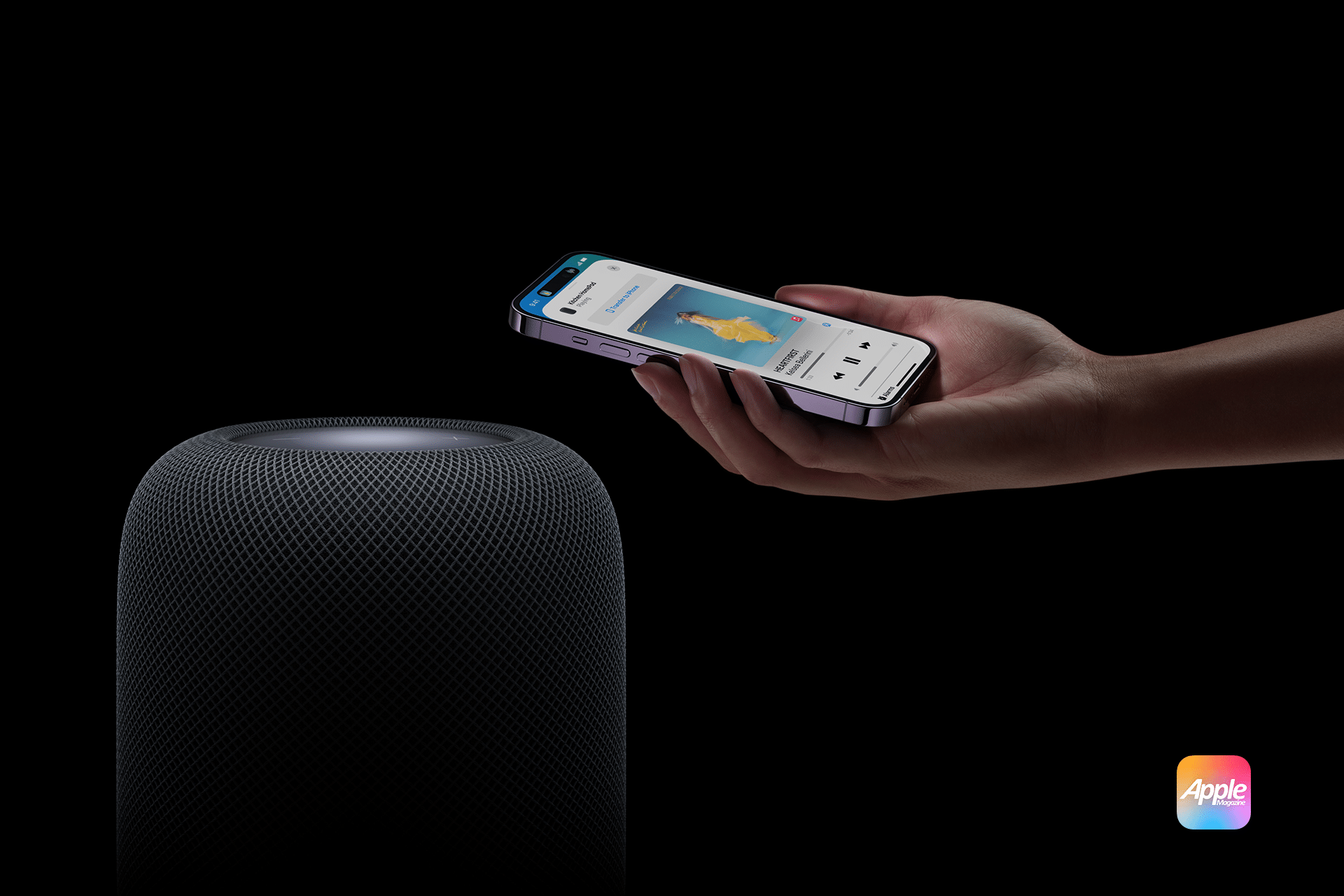
HomePod room temperature automations turn Apple’s smart speaker into more than a source of music and Siri responses. Its built-in climate sensor can trigger fans, thermostats, smart plugs, shades and other compatible accessories when a room becomes warmer or cooler than a selected temperature.
The automation runs through Apple’s Home app. Once configured, it does not require someone to ask Siri for the current reading or leave an iPhone inside the room. HomePod measures the local conditions while the home hub evaluates the rule and controls the selected accessories.
A bedroom fan could start when the room rises above 24°C, for example. A compatible thermostat could activate heating when an office falls below 18°C, while motorized shades could close before afternoon heat makes a living room uncomfortable.
The same system works with humidity. HomePod can trigger a compatible humidifier, dehumidifier or ventilation accessory when relative humidity crosses a chosen level.
Which HomePod Models Measure Room Temperature
Temperature and humidity sensing is available on HomePod mini and HomePod (2nd generation).
The original full-size HomePod does not contain the supported climate sensor. It can act as a home hub and participate in scenes, but it cannot supply the temperature reading used to start this type of automation.
HomePod mini is sometimes overlooked because Apple did not activate its temperature and humidity sensor when the speaker originally launched in 2020. A later software update enabled the component, allowing existing HomePod mini units to report climate information without a hardware upgrade.
Both supported models should run the latest available HomePod software. The iPhone or iPad used to configure the home should also be updated because older software may not display every sensor or automation option correctly.
HomePod normally updates automatically. Its version can be checked in the Home app by opening the HomePod, selecting its settings and scrolling to the software information.
Image Credit: AppleMagazine
The Speaker Must Be Assigned to the Correct Room
The room assigned to HomePod determines how its readings appear in the Home app and how Siri interprets questions about local conditions.
A HomePod physically located in the bedroom but assigned to Living Room will report its sensor as part of the living-room climate group. This becomes especially confusing when several HomePods are installed throughout the home.
To verify the room, open the Home app, touch and hold the HomePod tile, open Accessory Settings and check the Room field. Assign a descriptive name to the HomePod as well, particularly when two supported speakers occupy nearby spaces.
The sensor does not measure an entire home. It reports conditions near the HomePod, so the assigned room should correspond to its physical location.
How to Check the HomePod Temperature
The current reading is available through Siri or the Home app.
A person can ask Siri, “What is the temperature in here?” when speaking to the HomePod inside that room. Questions can also identify a different room, such as “What is the temperature in the bedroom?” or “What is the humidity in the basement?”
In the Home app, open the Home tab and select Climate near the top of the screen. Choose Temperature to see readings from available climate sensors. Opening an individual room can make it easier to identify the relevant HomePod when several sensors are installed.
The Home app may display a range rather than one number when multiple temperature sensors belong to the same room or home. Opening the temperature category reveals the individual readings behind that range.
A newly restarted or updated HomePod may not show a result immediately. Apple says the sensor requires time to calibrate after startup.
How to Create a HomePod Room Temperature Automation
The temperature sensor appears as an automation trigger rather than an accessory that can be turned on or off. The user defines a threshold and then selects what another compatible accessory should do when the reading crosses it.
To create the automation:
Open the Home app on an iPhone or iPad
Select the Automation tab or tap the Add button and choose Add Automation
Choose A Sensor Detects Something
Select the temperature sensor assigned to the appropriate HomePod and room
Choose Rises Above or Drops Below
Set the desired temperature threshold
Add optional time and occupancy conditions
Select the accessories or scene that should run
Configure the desired state of each accessory
Test the automation and tap Done
The selected action could turn on a fan, change a compatible thermostat, close shades or activate an existing scene containing several accessories.
HomePod does not produce cool or warm air itself. It supplies the measurement and functions as a home hub, while the automation controls other equipment connected to Apple Home.
Choosing Rises Above or Drops Below
The direction of the trigger is important.
Rises Above starts the automation when the measured temperature moves from below the selected value to above it. This is the usual option for starting a fan, lowering compatible shades or changing a thermostat to a cooler setting.
Drops Below works in the opposite direction. It can start heating, turn off a fan or activate another accessory when the room becomes colder than the selected level.
These are threshold-crossing events, not continuous questions asking whether the room is currently above or below a value. If the room is already warmer than 24°C when a new Rises Above 24°C automation is saved, the rule may not run immediately. The reading generally needs to fall below the threshold and then rise across it again.
This behavior also explains why an automation may not repeatedly react while the room remains on the same side of the threshold. Another transition must occur before the trigger fires again.
Use Time and Occupancy Conditions
The Home app can restrict a temperature automation to particular times or household conditions.
A bedroom fan may only need to run overnight. Heating in a home office could remain inactive on weekends. A cooling automation might operate only when someone is home, while another rule protects temperature-sensitive equipment regardless of occupancy.
The People condition can limit an automation to when somebody is home, when nobody is home or when selected household members are present or absent. These conditions depend on location access and the devices associated with members of the Apple Home.
Time restrictions should match the behavior of the controlled accessory. Closing shades during the hottest afternoon hours may be useful, but the same action would provide little benefit after sunset.
An automation can also activate a scene instead of controlling one product. A Hot Afternoon scene could close the west-facing shades, start a fan and turn off heat-producing decorative lights with one sensor trigger.
Useful HomePod Temperature Automations
A smart fan is one of the simplest accessories to control. When the temperature rises above a comfortable level, the Home app can turn on a HomeKit or Matter-compatible fan. A second automation can stop it after the room cools.
A thermostat offers more direct climate control, but the available actions depend on the thermostat manufacturer. Apple Home may expose power, heating, cooling and target-temperature controls, while more advanced scheduling remains inside the manufacturer’s app.
Motorized shades can reduce solar heating before an air conditioner needs to work harder. A temperature trigger can close selected shades when a sun-facing room becomes warm, particularly when the automation is limited to daytime hours.
A ceiling fan or portable fan connected through a smart switch or smart plug can also respond to the HomePod sensor. The connected controller must be rated for the appliance, and the appliance must safely resume operation when power is restored. Products with electronic controls may remain off after a smart plug turns them back on.
Portable heaters and air conditioners require greater caution. Many smart plugs are not designed for their electrical load, and some appliance manufacturers prohibit external switching. A compatible thermostat or manufacturer-supported controller is safer than treating high-power climate equipment like a lamp.
Image Credit: Apple Inc.
Humidity Can Use the Same Automation System
HomePod exposes temperature and relative humidity as separate sensors.
A bathroom or laundry-room HomePod could trigger ventilation when humidity rises above a chosen level. A dehumidifier with a compatible control could operate in a damp basement, while a humidifier could respond when heated winter air becomes too dry.
The setup process is almost identical to a temperature automation. Select A Sensor Detects Something, choose the HomePod’s humidity sensor, set Rises Above or Drops Below and assign the action.
Humidity automations also benefit from separate starting and stopping thresholds. Turning a dehumidifier on above 65 percent and off below 55 percent creates a useful operating range instead of responding repeatedly around one value.
HomePod Sensor Placement Affects the Reading
HomePod measures the conditions around the speaker, not at the center of the room or inside an air-conditioning return.
Placing it beside a sunny window, heater, fireplace, kitchen appliance or air vent can produce readings that do not represent the space where people spend time. An enclosed shelf may also trap warmer air around the device.
The speaker needs airflow and a stable surface. It should not be covered or placed where condensation, cooking steam or direct moisture can reach it.
Extended audio playback at high volume can reduce sensor accuracy because heat generated by the speaker may influence the local reading. This matters when an automation uses a narrow threshold and the HomePod frequently plays loud music.
Apple says temperature sensing is optimized for indoor domestic environments between approximately 15°C and 30°C. Humidity sensing is optimized between about 30 and 70 percent relative humidity. Readings outside those ranges may be less accurate.
HomePod is therefore useful for comfort-oriented home automation, but it should not replace specialized monitoring required for medicine, food storage, animals, greenhouses or other temperature-sensitive environments.
Why a Temperature Automation May Not Work
Begin by confirming that the temperature reading itself appears in the Home app. If it is missing, verify the HomePod model, install current software and allow time for calibration after restarting.
Check that the correct temperature sensor was selected. Homes containing multiple HomePods may present several sensors with similar names, particularly when the speakers were never given descriptive room assignments.
Open the automation and confirm that it is enabled. Review its time and People conditions, because a functioning temperature trigger will still do nothing when an additional condition is not satisfied.
Use the Test This Automation control to confirm that the destination accessory responds. If the test fails, the problem is more likely to involve the accessory, its network connection or the selected action than the HomePod sensor.
If the test succeeds but the rule does not run naturally, remember that the temperature must cross the threshold in the selected direction. Temporarily choosing a value closer to the current room temperature can make testing easier.
Home hubs and accessories should remain connected to the same Apple Home. Thread-based accessories also need a supported Thread-enabled home hub or border router, such as HomePod mini, HomePod (2nd generation) or a compatible Apple TV 4K.
Build Two Automations for Stable Climate Control
A single automation can start a device but may not provide the best way to stop it.
Using the same threshold in opposite directions can cause frequent switching when the measured temperature fluctuates around that value. A room hovering near 24°C, for example, could repeatedly move just above and below the boundary.
A more stable arrangement uses two thresholds. One automation turns the fan on when the temperature rises above 24°C. A separate automation turns it off when the temperature drops below 22°C.
The gap creates a controlled operating range. Once the fan starts, it can continue working until the room has cooled meaningfully rather than stopping after a minor change.
Heating can follow the reverse pattern. One automation activates heat below 18°C, while another stops it above 20°C. Humidifiers and dehumidifiers can use the same paired-rule structure.
This separation also makes troubleshooting easier because every automation performs one clear action in response to one specific sensor transition. Instead of asking one complicated rule to manage the complete climate cycle, HomePod supplies the measurements while two predictable Home app automations define when the connected equipment starts and stops.
Labour's growing credibility crisis has deepened, with Angela Rayner facing fresh questions over whether she blurred the line between her time as a home care worker and her years as a union rep.
App Store regulatory changes are beginning to affect Apple Services growth as developers gain more ways to avoid Apple’s payment system or pay lower commissions in major markets.
Apple finance chief Kevan Parekh told investors that changes to the App Store business model in some countries had affected its performance during the June quarter. Softer spending on mobile games created additional pressure.
The acknowledgement is significant because regulatory risk has appeared in Apple filings for years without producing a clearly identified effect on Services performance. Apple is now confirming that rule changes have advanced far enough to influence reported results.
The impact does not mean the App Store has stopped growing. Apple described the store as reaching another June-quarter revenue record, while Services expanded by approximately 12% from the previous year.
The emerging issue is the rate of growth. A purchase can still occur inside an iPhone app while generating less revenue for Apple when the customer pays through a developer’s website or uses terms carrying a reduced fee.
App Store Regulatory Changes Affect Several Markets
Apple did not identify one country or policy as solely responsible for the effect.
The company is adapting to a collection of court orders, competition laws and regulatory agreements that differ substantially among the United States, European Union, China, Brazil, Japan, South Korea and other markets.
Some rules concentrate on payment choice. They allow developers to place links or buttons inside apps leading customers to external checkout pages.
Other changes permit alternative app marketplaces or direct distribution outside the App Store. Several regulators are also examining whether Apple can charge developers for transactions completed through another payment provider.
The financial result depends on the model adopted in each country. Apple may receive no commission, a reduced commission or another fee connected with platform technology and distribution.
This creates a more fragmented App Store business. A subscription sold through the same application can produce different revenue for Apple according to the customer’s country, payment route and the developer terms governing that version of the app.
Image Credit: Apple Inc.
The United States Changed External Payment Links
The most direct change in the United States came from the long-running legal dispute between Apple and Epic Games.
A federal court previously ordered Apple to stop preventing developers from directing customers toward outside purchasing options. Apple responded by allowing certain external links while seeking commissions of between 12% and 27% on purchases completed through them.
The company also introduced design restrictions, an approval process and a warning screen displayed when customers left the App Store environment.
In April 2025, the district court found Apple in civil contempt for failing to comply fully with the anti-steering injunction. The ruling prohibited the company from collecting a commission on purchases made through external links and removed several restrictions governing their appearance.
Apple updated its App Review Guidelines in May 2025. Apps distributed through the United States storefront can include buttons, external links and other calls to action leading customers toward another payment method.
The rules no longer require a special external-link entitlement for the U.S. storefront.
That change gives developers a straightforward financial reason to move some transactions to the web. A company can process a payment through another provider instead of giving Apple a percentage of the digital sale.
The customer can return to the iPhone app and use the purchased subscription or content. The app remains distributed through Apple, but the associated transaction no longer produces the same App Store commission.
Enough developers adopting that route can slow Apple Services growth even if total spending on iPhone applications continues increasing.
The European Union Introduced Alternative Distribution
The European Union’s Digital Markets Act requires Apple to permit alternative app marketplaces, outside payment systems and other changes intended to reduce its control over iOS distribution.
Developers can remain under Apple’s conventional App Store terms or adopt business terms designed for the European market.
The alternative structure separates several services that were previously combined inside one commission. Developers can choose different levels of App Store support, use Apple’s payment system, provide another payment option or distribute software through a competing marketplace.
Apple introduced reduced commissions and technology-related fees to preserve compensation for the tools, security systems, distribution infrastructure and platform access it provides.
Those terms have changed several times following regulatory objections. Beginning in 2026, Apple started moving from its earlier Core Technology Fee toward a Core Technology Commission applied to eligible digital transactions under particular conditions.
The structure means outside payments do not always eliminate Apple fees in Europe. They can still reduce the amount Apple collects or shift revenue among different fee categories.
Regulators continue examining whether the terms provide meaningful choice or discourage developers from leaving the standard model.
Apple argues that alternative stores and payment systems create additional privacy, security and fraud risks. The European Commission has focused on whether Apple’s warnings, technical requirements and fees make those options unnecessarily difficult to use.
European developers must calculate more than one commission. They need to consider payment-processing costs, marketplace charges, customer acquisition, reporting obligations and the Apple terms attached to each distribution method.
The result may be lower App Store revenue without an equally large shift toward independent marketplaces. External website payments can change Apple’s economics more quickly because they do not require customers to install another store.
Apple lowered several commission rates in the China mainland storefront beginning March 15, 2026.
Qualifying transactions under the App Store Small Business Program and Mini Apps Partner Program now carry a 12% commission. The same rate applies to eligible auto-renewing subscriptions after the subscriber’s first year.
These transactions previously qualified for a higher 15% rate.
A three-percentage-point reduction may appear small beside demands for completely independent payments. At the scale of China’s app economy, it can remove a meaningful amount of revenue while improving the share retained by developers.
The Mini Apps Partner Program is particularly important in China because large platforms can contain many smaller services inside one host application.
Reducing the commission can encourage those ecosystems to continue using Apple In-App Purchase. It also demonstrates how Apple may respond to pressure by offering more favorable terms before regulators require a more disruptive change.
Lower commissions can support transaction growth over time, but the immediate calculation is straightforward: Apple receives less from each qualifying purchase.
Image Credit: Apple Inc.
Brazil Opens iOS to Outside Stores and Payments
Apple introduced alternative app distribution and payment options in Brazil through an agreement with the country’s competition regulator, CADE.
Beginning with iOS 26.5, developers can distribute apps through alternative marketplaces, operate those marketplaces and process digital payments outside Apple In-App Purchase.
Apps can also present links leading users to an external website where the transaction is completed.
Apple continues applying notarization and other technical requirements to software distributed outside the App Store.
The company maintains that these protections reduce risks but cannot provide the complete safeguards associated with App Review.
Brazil is a major smartphone and digital-services market. Its effect on Apple Services will depend on whether large developers adopt the new options and whether customers are willing to leave the familiar App Store purchasing flow.
An external option existing in software does not guarantee that people will use it. The developer must usually offer a meaningful advantage, such as a lower price, a different subscription package or payment methods better suited to local customers.
Adoption can increase gradually as existing apps release updates. The financial impact may therefore become more visible over several quarters rather than appearing immediately after the regulatory agreement takes effect.
Why Outside Payments Reduce Apple Services Revenue
Apple receives a commission when an eligible digital purchase uses its in-app payment system.
The fee compensates Apple for distribution, payment processing, fraud management, developer tools, customer support and access to the iOS platform, according to the company.
The standard percentage varies. Small developers and long-running subscriptions can qualify for reduced rates, while other eligible digital transactions may carry higher commissions.
When payment moves to a developer’s website, an independent processor handles the financial transaction. The developer pays that provider, manages more of the customer relationship and retains the amount that would otherwise become an App Store fee.
Apple may still provide the operating system, APIs, development tools and App Store distribution without receiving the conventional payment commission.
This separation explains why App Store activity and App Store revenue can move differently. People may download more applications and spend more on digital services while Apple captures a smaller percentage of the commerce.
The same customer could maintain several subscriptions used exclusively on an iPhone without any of their monthly payments passing through Apple.
Apple can collect other revenue from that user through hardware, advertising, iCloud or its own subscriptions. The external transaction nevertheless removes one part of the Services model.
Most App Store Commerce Never Paid Apple a Commission
The size of the App Store economy should not be confused with Apple’s commissionable revenue.
Apple says the global App Store ecosystem facilitated more than $1.4 trillion in developer billings and sales during 2025. More than 90% of that commerce did not produce a commission for the company.
The largest categories involve physical goods and services such as retail purchases, travel, grocery delivery, restaurant orders and transportation.
Apple does not collect a percentage when someone uses an Amazon app to order furniture, books a hotel or pays for a meal delivered through an iPhone.
App Store commissions generally concentrate on digital goods, application features, virtual items and subscriptions sold through Apple In-App Purchase.
Regulatory changes target this smaller but financially important part of the ecosystem.
Digital transactions require no physical inventory or delivery network, allowing payment commissions to carry attractive margins. Losing part of that revenue can therefore affect profitability more than the dollar amount alone suggests.
Apple does not disclose App Store revenue or profit separately. The category remains combined with cloud services, advertising, media subscriptions, AppleCare, payments and other operations inside Services.
Mobile Gaming Weakness Adds Another Pressure
Regulation was not the only factor Apple identified.
Parekh said softer mobile gaming activity also affected the App Store. Games represent an important source of digital transactions because players purchase virtual currency, characters, cosmetic items, subscriptions and access to additional content.
A decline in game spending directly affects the commission Apple receives through In-App Purchase.
Gaming is also one category where developers have pushed aggressively for alternative stores and payments. Epic Games began its legal confrontation with Apple after introducing another payment method inside Fortnite and attempting to bypass App Store commissions.
The simultaneous effects are difficult to separate. A game can generate lower revenue because players are spending less, because payments moved outside Apple’s system or because both changes occurred together.
Apple does not provide enough category detail to calculate the contribution from each factor.
The distinction matters for the outlook. Gaming demand can recover with successful releases and stronger consumer spending. A permanent regulatory change does not reverse when one popular game reaches the top of the charts.
Image Credit: Apple Inc.
Developers Gain Revenue but Assume More Work
Outside payments can improve the amount a developer retains from each purchase.
A company moving from a conventional App Store commission to a lower-cost web payment processor may use the difference to reduce prices, fund development or improve profitability.
The developer also assumes responsibilities previously handled through Apple.
Independent billing requires payment processing, tax management, fraud protection, refunds, account recovery and customer support. Subscription status must synchronize correctly between the website and the iPhone app.
Customers changing devices or reinstalling an app expect their purchases to remain available. The developer needs its own account system capable of verifying ownership without relying entirely on Apple’s purchase history.
Small developers may decide that Apple In-App Purchase remains worth its fee because it removes operational complexity and gives customers a familiar checkout experience.
Large subscription businesses have stronger incentives to build their own systems. They already maintain accounts and payments across websites, televisions, Android devices and other platforms.
The regulatory effect will therefore vary by developer size and business model. One company may remove Apple billing completely, while another continues using it because external infrastructure would cost more than the commission saved.
Customers May Receive Lower Prices
External payments create the possibility of lower subscription prices because developers no longer need to incorporate the complete App Store fee into the amount charged.
Some services already cost more when purchased through an iPhone app than through their websites. The higher price allows the developer to preserve similar revenue after Apple receives its share.
A visible external link makes comparing those prices easier. Customers can leave the app, complete the transaction on the web and return with an active account.
Savings are not guaranteed. A developer can retain the entire difference rather than passing it to subscribers.
Independent billing can also make subscription management less consistent.
Purchases completed through Apple appear in one location:
Settings > Apple Account > Subscriptions
A subscription purchased directly must be canceled through the developer’s website or account system. Customers using many external services may need to remember several billing portals and renewal policies.
Refunds and purchase disputes also move away from Apple. The developer or its payment processor becomes responsible for resolving the transaction.
Choice can reduce prices while increasing complexity. The practical outcome depends on whether developers make external checkout clearly cheaper and easy to manage.
Apple Is Expanding Other App Store Tools
Apple is responding to the changing environment by adding business models and marketing systems that can keep developers using its commerce platform.
Monthly subscriptions with a 12-month commitment allow participating apps to offer lower recurring payments while securing a complete year of revenue.
The Advanced Commerce API supports more complex content catalogs, optional add-ons and subscription structures that were previously difficult to manage through standard In-App Purchase products.
Apple has also expanded tools for custom product pages, promotional offers, application analytics and international distribution.
These additions increase the value attached to App Store billing. A developer may tolerate a commission when Apple provides conversion tools, subscription management and access to promotional placement that would be expensive to reproduce independently.
The company can also adjust rates for particular categories. The Small Business Program, Mini Apps Partner Program and reduced commission for longer-running subscriptions already demonstrate differentiated pricing.
A more competitive payment market may push Apple toward additional service tiers rather than one universal commission.
The UK Could Create the Next Material Change
The United Kingdom’s Competition and Markets Authority is consulting on rules that would allow developers to direct customers outside Apple and Google’s payment systems.
The regulator expects any fee charged for steering to be fair, reasonable and lower than current app-store commissions. It wants the resulting savings passed to customers or reinvested in developer businesses.
The UK proposal is not yet a final requirement. Its eventual structure could determine whether developers receive the broad freedom available in the United States or a fee-based model closer to some European arrangements.
Regulators are also considering app-review fairness, interoperability and access to mobile-platform capabilities.
The outcome will matter beyond British customers. Each major jurisdiction creates another model that regulators elsewhere can examine when designing their own rules.
Apple must decide whether to continue maintaining different commercial systems by country or move toward broader global terms that reduce operational complexity.
Developers face the same choice. Supporting a separate payment route, marketplace package and reporting process for every region can become expensive enough to cancel some of the benefits regulation intended to create.
The next evidence will come from behavior rather than another policy announcement: how many major apps add external payment links, whether they offer lower prices and how quickly customers move away from Apple’s checkout.
Exploration geologists and Artemis science officers Trevor Graff, left, and Angela Garcia carry out a lunar training development run at NASA's Neutral Buoyancy Laboratory (NBL) in Houston. (Image credit: NASA)
Sometimes to go to the moon, you first have to go underwater.
NASA is currently developing the training program for NASA's Artemis astronauts, some of whom could set foot on the moon during the agency's planned Artemis IV mission. As part of that development, two agency scientists recently donned Artemis moonsuits and took to NASA's underwater training facility.
What is it?
These photos show two NASA exploration geologists and Artemis science officers practicing using the same types of geology tools that astronauts might use when they explore the moon.
The scientists also "deployed a mock lunar payload under low-angle lighting conditions," according to a NASA statement accompanying the photo. NASA is currently aiming to place astronauts at the lunar south pole, where many areas remain in permanent shadow. As such, future lunar explorers may have to operate in near-total darkness and learn how to carry out their missions with very little light.
Exploration geologists and Artemis science officers Trevor Graff, left, and Angela Garcia carry out a lunar training development run at NASA's Neutral Buoyancy Laboratory (NBL) in Houston. (Image credit: NASA)
Why is it incredible?
The fact that NASA is preparing to send humans back to the moon is incredible in itself. Humanity hasn't set foot on our natural satellite since 1972. While NASA still has many technical hurdles to cross when it comes to developing and selecting a moon lander, the agency is pushing ahead with developing the training it will use to prepare its astronauts to explore the lunar surface.
For this particular part of Artemis training development, NASA placed two scientists in its Neutral Buoyancy Laboratory (NBL), a 40-foot-deep (12-meter) pool at NASA's Johnson Space Center in Houston. The particular test in these photos was "the first time that two geologists were suited up simultaneously for lunar geology training in the NBL," according to NASA's statement.
For these tests, a portion of the underwater laboratory was outfitted with soil and rocks that simulate the surface of the moon. The buoyancy of the pool can be manipulated in order to simulate different levels of gravity, helping astronauts train for spacewalks or for exploring other worlds like the moon.

 Login