Apesar de ter perdido um pouco do hype inicial, os Instants seguem sendo uma excelente maneira de compartilhar fotos e vídeos rapidamente com os seus seguidores do Instagram.
Caso queira, é possível consultar facilmente um arquivo de todas as publicações feitas, usando três métodos diferentes — como mostraremos a seguir.
Com o app do Instagram aberto, toque na aba das suas mensagens diretas e no ícone do Instants (no canto inferior direito).
Vá até os quadradinhos (no canto superior direito) para conferir o seu histórico.
Segundo método
A segunda maneira de fazer isso é praticamente a mesma coisa que o método anterior, com a diferença de que isso pode ser feito diretamente pelo aplicativo dedicado do Instants.
Terceiro método
No Instagram, toque na aba do seu perfil (no canto inferior direito), vá até os três risquinhos (no canto superior direito) e entre em “Itens Arquivados”.
Use o menu suspenso da parte superior para selecionar “Arquivo de instants”.
A native Australian millet may carry the genetic fingerprints of thousands of years of Aboriginal harvesting, storage, and plant management. Seen from the air, Channel Country resembles a vibrant and vast tapestry, with a network of waterways crisscrossing the land. Spread across more than 280,000 square kilometers in outback Australia, it is one of the [...]
We're now well past the point where it's very difficult, and in some cases impossible, to tell AI-generated photos and videos from the real thing. That means it's now important to treat everything you see online from untrusted sources with a big dose of skepticism.
A newly rolled out Google Earth feature has apparently made AI-generated misinformation even more of a problem — and it highlights the scary potential of the technology, as well as the need for stronger guardrails to block the efforts of those who will instantly try and find the most subversive and harmful ways to use a new product.
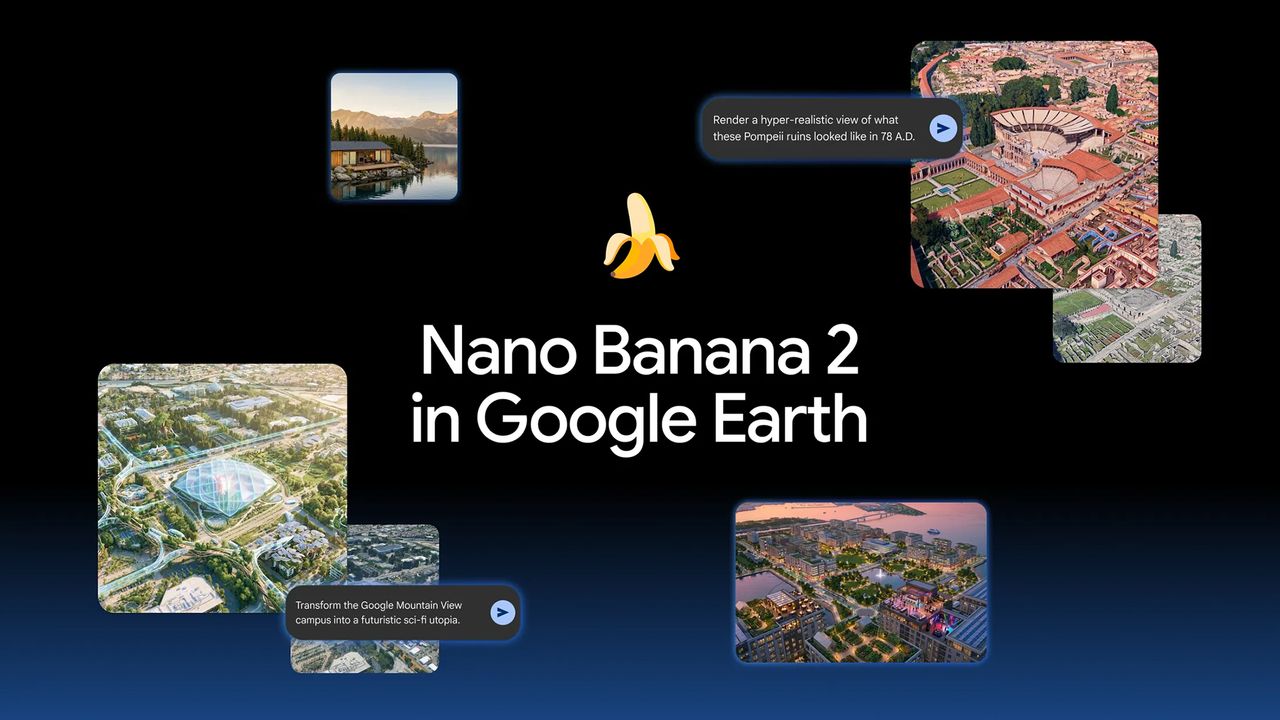
The feature is AI image generation in Google Earth, powered by the Nano Banana 2 model, and after a wave of inappropriate images were created and posted online, it's now been pulled while Google works on some more robust protections against misinformation.
Google Earth's new feature
Reimagining Pompeii was one way the feature could be used (Image credit: Google)
It all started with the usual level of hype that Google builds around any new AI feature: the Nano Banana 2 image generation model that has already wowed us in the Gemini app would be available inside Google Earth on the web.
"Generate custom images to help you visualize history, create real estate plans, and more," Google said. "For the first time, you can generate custom images using Google Earth's satellite, aerial, and 3D imagery alongside Nano Banana, which creates concepts grounded in the real world."
Google had examples of how it could be used too: create an infographic about the Statue of Liberty, visualize your dream home by the lake, see what your neighborhood might look like a hundred years from now, or imagine Pompeii just before it got buried by ash and rock from an erupting Mount Vesuvius.
All it took was a text prompt, and Google Earth would combine existing satellite and 3D data to create the AI image you were asking for. While the AI model wasn't new, adding it to the accurate and authentic imagery already in Google Earth was.
What went wrong
Infographics could be created with real-world information (Image credit: Google)
Perhaps we should've seen this coming — and indeed some people did — but combining AI with the 3D data and satellite imagery of Google Earth didn't work out quite as well as Google hoped. The new upgrade was quickly used to create all manner of deceptive images that were then widely shared online.
I'm reluctant to point you to them directly and give these fakes any more attention, but they're not hard to find on social media. Think natural disasters, terrorism attacks, giant sinkholes, alien activity, and refugee populations all in places where they never actually were, thanks to AI.
Some of the images are clearly jokes, but many were produced deliberately to spread misinformation and confusion. That they were based on actual images sourced from Google Earth added extra credibility they wouldn't otherwise have had. And that was enough for Google to remove the feature.
Google says a flood of images "that appear to violate our policies" mean that "we're rolling back this feature in Google Earth while we work on implementing stronger guardrails". The company added:."It's important to note that generated images didn't appear in the main Google Earth experience for others to see and were watermarked as AI generated."
Our AI-filled future
Google Earth-based visions of the future will have to wait (Image credit: Google)
You don't have to look for long online to find rather strong anti-AI sentiment building up among users, especially when it comes to image and video content. The general sentiment on Reddit is that there's "zero use" to a feature like this, and that users are fed up with AI being "shoved down our throats".
There are various obvious lessons to be learned here: firstly not everything needs to have an AI prompt box or an AI element to it, and if some tools are largely AI-free, that's fine. Microsoft recently rolled back some of the AI it added to Notepad — an app where a big part of the appeal is its simplicity — after user complaints.
Secondly, before companies release any new AI features, they need to consider the worst-case scenarios in terms of how they're going to be used. The internet as a collective is going to immediately try and stress test them in the most deceptive and unwholesome ways, and there need to be safety measures put in place around that.
Lastly, it's never been more important to stick to sources of information that you know you can trust: not random social media accounts, but established publications that have policies around AI and its use. That's one effective way you can tell the difference between what's trustworthy and what isn't.
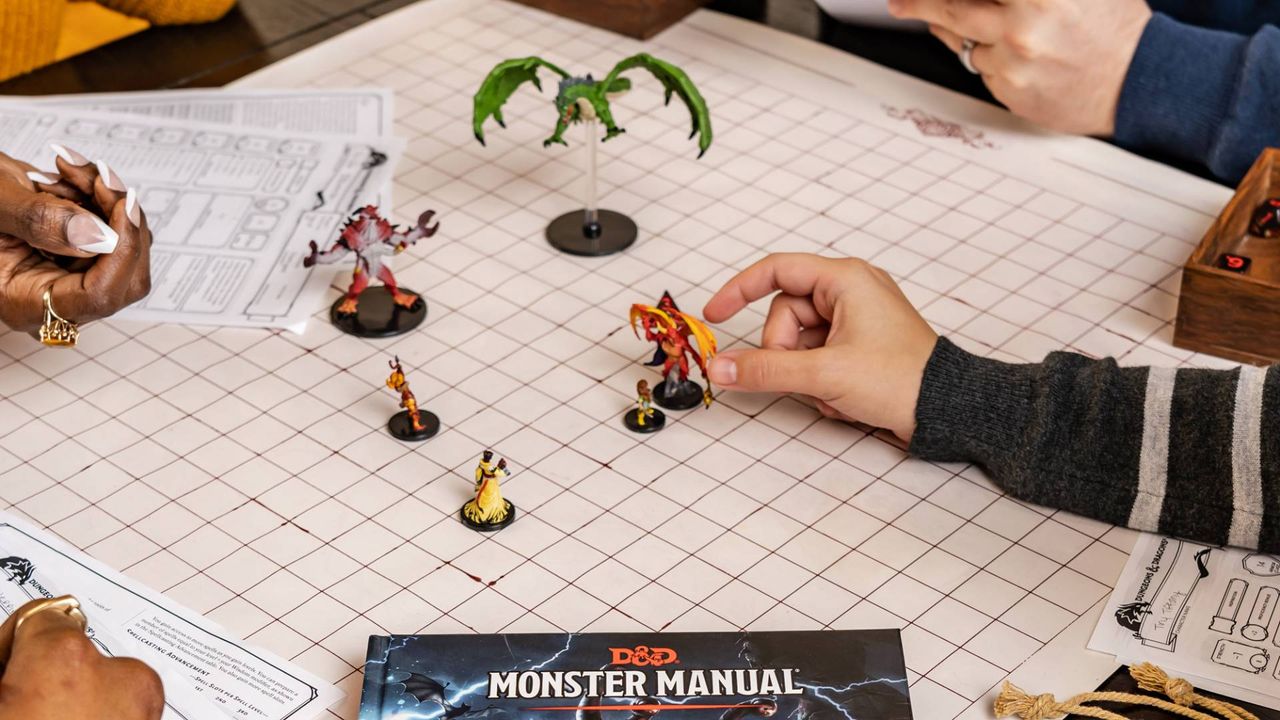
One of my favorite hobbies is Dungeons & Dragons. I love nothing more than sitting around a table with friends and playing out a fantastical adventure, in which the dice are the difference between success and failure.
It's a fun game, and all the more fun because real-life people make dumb, suboptimal decisions and the dice cause the game to change in unpredictable ways. But I really love it because the concept of people sitting around a table or hearth and telling stories is as old as the campfire, and it's a fun modern-day way to keep that experience alive.
You might think such a robust framework for an analog hobby (friends, a table, dice, pen and paper) might be tech-proof, but even in the Dungeons & Dragons world, AI is coming for my job as a Dungeon Master — the person who runs and guides the game world. Deep in the corpus of most popular generative AI models designed for general use are the rules to D&D 5e (and likely every other edition before it) and plenty of people report playing with their chatbots online.
Many of these players can't, or simply don't want to, get round a table with real people. For them, having a chatbot write them a story while the user prompts the continuation of the story with their character's actions, must seem like the perfect solution — even if it's more like a solo choose-your-own-adventure than a 'proper' group D&D game.
Gemini and ChatGPT both have a strong grasp of the rules for D&D's popular 5th Edition; they are certainly strong enough to make them an accessible choice for a player without a group. Maybe one day, the fire will die, and instead of sitting around a table with friends, we'll all be sitting at separate desks playing our own separate D&D adventures with our AI companions.
I wanted to test whether this dark future would be an adequate replacement for my usual game night, and which chatbot will be the best one to choose if so. I fired up Gemini 3.6 Flash and ChatGPT 5.5, and asked them for the same game.
The parameters
(Image credit: Wizards of the Coast)
I gave both chatbots the same prompt: "Can you be my D&D 5e DM?" and following up with another message:
"Let's do a classic high fantasy dungeon crawl. Please use a strict RNG for all rolls to ensure fairness - you can roll dice for me. My character is a 10th-level conjuration wizard. See all information about him below:"
I then copy-pasted a character sheet of a 10th-level wizard — a powerful spellcaster with a variety of magical abilities at his disposal. It's easy to DM a game for a level 1 thief — I wanted to see how the AIs could handle a character who could do fantastical things, such as teleport and summon creatures to fight for him.
Interestingly, both Gemini and ChatGPT created a similar adventure, at least at first: an abandoned dwarven stronghold bristling with magical traps, ready to be explored. However, that's where the similarities ended.
Gemini 3.6 Flash
(Image credit: Getty Images / SOPA Images)
Gemini's adventure was what any D&D player could expect from the "classic high-fantasy dungeon crawl." I avoided a pressure-plate trap that would have shot darts at me, and in one memorable sequence, defeated a bunch of skeletons by casting a Grease spell on a stone staircase and freezing them in place with my Ray of Frost cantrip while they slipped and stumbled at the bottom of the steps.
Gemini was offering me suggested actions, and I did find myself choosing a few of those suggestions — but as time wore on, this began to feel lazy, like my brain wasn't firing in the same way it did when I played with my friends. I was skim-reading the AI's descriptions of the scene and responding with a single click. I asked it to remove suggested options and as a result, I had to think more carefully about each move, typing out requests and thinking about my actions rather than clicking on a predetermined response.
The memorable finale occurred when I unlocked a secret passage and defeated a Naga, a giant snake monster, by teleporting away and blasting it with a powerful Cone of Cold. The snake ended up frozen solid, and I checked the monster's HP against the official book, and it was accurate. When asked to generate a picture of our adventure, Gemini came up with this moment:
(Image credit: Future, edited by Gemini)
I asked Gemini a few questions at the end, such as whether it nudged the dice in my favor, as all my rolls were successful. This happened in my previous experiment with ChatGPT. Gemini said it used a 'pseudorandom number generator', not a true RNG, but the model doesn't 'fudge dice, pad rolls, or tweak numbers behind the scenes to keep players happy or prolong the game'.
Gemini's language was natural and even evocative in places, although it's still not a patch on a good creative human. Overall, a decent enough effort at simulating a D&D game.
ChatGPT 5.5
(Image credit: NurPhoto / Getty Images)
Despite the similar setting, ChatGPT's adventure with the same character was very different. There was little to no combat throughout the entirety of the game, and ChatGPT didn't tell me when it was rolling 'behind the scenes', preferring to keep me in the moment.
When I asked it about the lack of rolling, the grovelling chatbot began its apologetic essay with "That is a fair critique. The short answer is: I leaned too heavily into narrative pacing and not enough into D&D mechanics. The adventure became closer to a collaborative fantasy novel than a 5e dungeon crawl", while suggesting fixes if I wanted to continue. I hadn't even said anything negative — but it certainly picked up on my tone, and the choose-your-own adventure I got was a far cry from a classic dungeon crawl.
Instead of combat, ChatGPT came up with a rambling mystery about a dimensional prison beneath the mountain, a sphere suspended in a cavern. Its guardians spoke ominous (and to be honest, quite confusing) portents such as "The archive does not open for authority. It opens for judgement."
Mysteries work best when they're developed with skill by a writer who can work backwards to seed clues throughout the game or text. ChatGPT does not do this: instead, it's arranging tokens on the fly to generate a facsimile of a mystery, and although it got the trappings of the genre right, the execution fell very flat. I (or at least, my character) underwent trials to seek obsidian objects such as keys and seals to reveal more about the prison, themselves accompanied by more foreboding, sometimes nonsensical portents.
Very little 'action' was taken by my character in a classical sense: it was all about investigating the origins of the being contained in this prison, and by the time I had spent 40 minutes on this, I had seen enough. It didn't help that ChatGPT also spoke in the peculiar sentence structure pattern that AI users are likely very familiar with now: "This isn't just X. It's Y." Examples include:
"Unlike the rest of Khaz Varek, this room has remained untouched.
No dust. No decay."
Or the following, when I met one of the prison's guardians:
"Ser Kaelen immediately looks toward the sphere. 'You hear it too.'
Not a question. A confirmation."
Any user of ChatGPT (or those who look at AI-generated posts on LinkedIn or Reddit) will immediately recognise this sort of language, and know what I'm talking about. By the end, it was quite painful to have every other sentence be treated as a grand revelation. Not a statement. An omen.
When asked to generate a picture of our adventure, ChatGPT came up with this moment:
(Image credit: Future, edited by Gemini)
The winner
Out of these two? Gemini 3.6 Flash, by a mile. It was at least a mildly enjoyable experience conveyed in natural language, and something I'd consider revisiting.
Both, however, were a far cry from an in-person session. While they have a good grasp of the rules, and you can create your perfect world and character, the chatbots are ultimately missing the 'human and hearth' element that keep me returning to the game. For people who can't get round a table with friends, I'd pick Gemini over ChatGPT.
For those who can? While AI is busy taking as many creative jobs as it can, I feel safe in the knowledge that the role of Dungeon Master is AI-proof for a long time yet.
Over two-thirds (69%) of people believe AI generated material can be presented as their own work if they provided the prompt and approved the final version
Meanwhile, 54% believe AI-based work should be clearly marked
7,200 adults were surveyed, located across the US, the European Union, the UK, and Latin America
A growing disparity in how AI generated content, tasks, and tools are assigned ownership and expectations on accurately marking their origins is emerging, according to a new survey by Use.AI.
Furthermore, the findings indicate an emerging dichotomy between human-claimed authorship of an AI work and clear labeling of the work as AI.
Different attitudes based on settings for the AI work have also been identified, such as private emails and school or professional reports.
The chicken or the prompt?
The developing adoption of AI appears to be introducing new attitudes to acceptable creativity, with the emerging model of what is described as “authorship by direction,” where the AI is trusted to create a first draft, which is then revised and claimed by a human.
The statistics shared by Use.AI – a tool that aggregates AI models into a single interface – highlight how AI is being used more extensively, with a human-originating prompt leading to drafts and versions from the machine, followed by editing from the human.
While the AI has contributed, only a human name appears on the finished product, which raises questions of ownership and authorship.
“AI is separating the production of work from the ownership of it. People are increasingly prepared to direct the process, approve the result and take the credit, but there is still no shared standard for when AI’s role should be visible to everyone else,” says Use.AI’s Managing Director, Ihor Herasymov.
With 69% of those surveyed considering AI-generated work their own if they produced the prompt, 46% claiming they would keep AI involvement with their work under wraps, and 54% feeling AI use should be disclosed, we’re some way from agreement on AI use across creative tasks.
Authorship vs. editorship
Herasymov’s observations point to a constantly evolving set of standards around the creation and use of AI-generated materials. Interestingly, this is happening against a backdrop of growing unease over the use of AI in creative tasks.
The implications of claiming ownership of automated work generated upon instructions to an LLM trained on as much human writing, art, music, and cinema as possible are considerable, and go way beyond questions of ethics. Copyright is just one element, and the most obvious, but we’re also moving into a landscape where inputting a prompt on employer-owned hardware takes authorship away from the person at the keyboard.
Ultimately, the task of prompting and revising means anyone using AI in this way stops being the author, and becomes the editor – and that is before the true ownership of the output is determined.
A common complication of early birth is being thrust into a medical debate that reaches far beyond the neonatal intensive-care unit: how low is too low when a late preterm baby’s blood glucose falls, and what—if anything—does that episode mean years later? A new article in Pediatric Research examines late preterm hypoglycemia through the lens of long-term evidence, highlighting why a seemingly brief metabolic disturbance has become one of neonatology’s most closely watched questions.
Late preterm infants are typically born between 34 weeks and 36 weeks plus six days of gestation. They often appear stronger and more mature than very preterm babies, but their brains, hormone systems and feeding abilities are still developing. After birth, glucose levels can drop as the infant transitions from a constant placental supply to intermittent feeding. Immature glycogen stores, limited fat reserves, difficulty coordinating sucking and swallowing, and illness-related stress can all increase the risk of hypoglycemia.
Glucose is the brain’s primary energy source during early life, making neonatal hypoglycemia biologically concerning. When glucose delivery falls, the brain may initially compensate by using alternative fuels, including lactate and ketone bodies. If the shortage is severe, prolonged or repeatedly missed, however, energy production can become insufficient. This may interfere with neuronal signaling and, in extreme cases, contribute to cellular injury. The challenge is that many affected newborns show no obvious symptoms, while symptomatic infants may display only subtle signs such as jitteriness, poor feeding, lethargy, temperature instability or apnea.
The article by U. Felderhoff-Müser focuses attention on a crucial gap between immediate treatment and long-term certainty. Hospitals commonly screen infants considered vulnerable to hypoglycemia, including late preterm newborns, and intervene with feeding, buccal dextrose gel or intravenous glucose when indicated. These measures are designed to restore glucose quickly and prevent neurological stress. Yet the threshold used to define hypoglycemia is not a universal biological line. It is a clinical value shaped by gestational age, postnatal age, symptoms, measurement method and the balance between avoiding harm and preventing unnecessary intervention.
That uncertainty has made long-term follow-up essential. Researchers have investigated whether neonatal hypoglycemia is associated with later problems involving cognition, executive function, attention, language, motor coordination and school performance. Some studies have reported higher risks after severe, recurrent or prolonged episodes, while others have found limited or inconsistent effects, particularly when low glucose was detected and treated promptly. The differences may reflect more than glucose itself: prematurity, fetal growth restriction, maternal diabetes, infection, respiratory illness and socioeconomic conditions can independently influence neurodevelopment.
This is one reason the evidence remains difficult to interpret. Most long-term studies are observational, meaning researchers cannot randomly assign infants to experience different glucose levels. Instead, they compare children who had hypoglycemia with those who did not, while attempting to account for other medical and social factors. Even sophisticated statistical adjustments may not eliminate hidden confounding. In addition, studies use different definitions of hypoglycemia, different monitoring schedules and different ages or tools for developmental testing, making direct comparisons challenging.
The timing and pattern of low glucose may be as important as the lowest recorded number. A single short episode may carry a different biological significance from repeated episodes or an extended period below a treatment threshold. Continuous glucose monitoring has raised further questions by revealing fluctuations that intermittent heel-stick testing can miss, although sensor accuracy in newborns and the clinical meaning of every detected dip are still being evaluated. The emerging picture is therefore more complex than a simple division between “normal” and “abnormal.”
For clinicians and families, the practical message is not to dismiss hypoglycemia or to assume that every low reading predicts disability. Instead, the long-term evidence supports careful surveillance of infants at risk, rapid confirmation of abnormal results, and treatment strategies that protect the brain without disrupting feeding or exposing babies to unnecessary interventions. Developmental follow-up may be particularly important for infants with severe or recurrent episodes, neurological symptoms, or multiple additional risk factors. Such monitoring can identify difficulties early, when speech, occupational or educational support may have the greatest effect.
The discussion also underscores the need for better research. Future studies will need standardized glucose definitions, precise records of duration and recurrence, improved measurement technologies and follow-up extending into school age and adolescence. Researchers must also distinguish the effects of hypoglycemia from the conditions that caused it and examine outcomes beyond a single global developmental score. Felderhoff-Müser’s review places late preterm hypoglycemia in that broader scientific context: a common neonatal event whose immediate management is well established, but whose long-term consequences still demand careful, nuanced investigation.
Subject of Research: Late preterm hypoglycemia and its long-term neurodevelopmental evidence
Article Title: Late preterm hypoglycemia through the lens of long-term evidence
Article References: Felderhoff-Müser, U. “Late preterm hypoglycemia through the lens of long-term evidence.” Pediatric Research (2026). https://doi.org/10.1038/s41390-026-05316-6
Startup replaces Nvidia GPUs with custom Arm-powered AI processing hardware
Prometheus packs up to 128TB of unified LPDDR6 memory onboard
New server promises 1,000× more memory available per processor
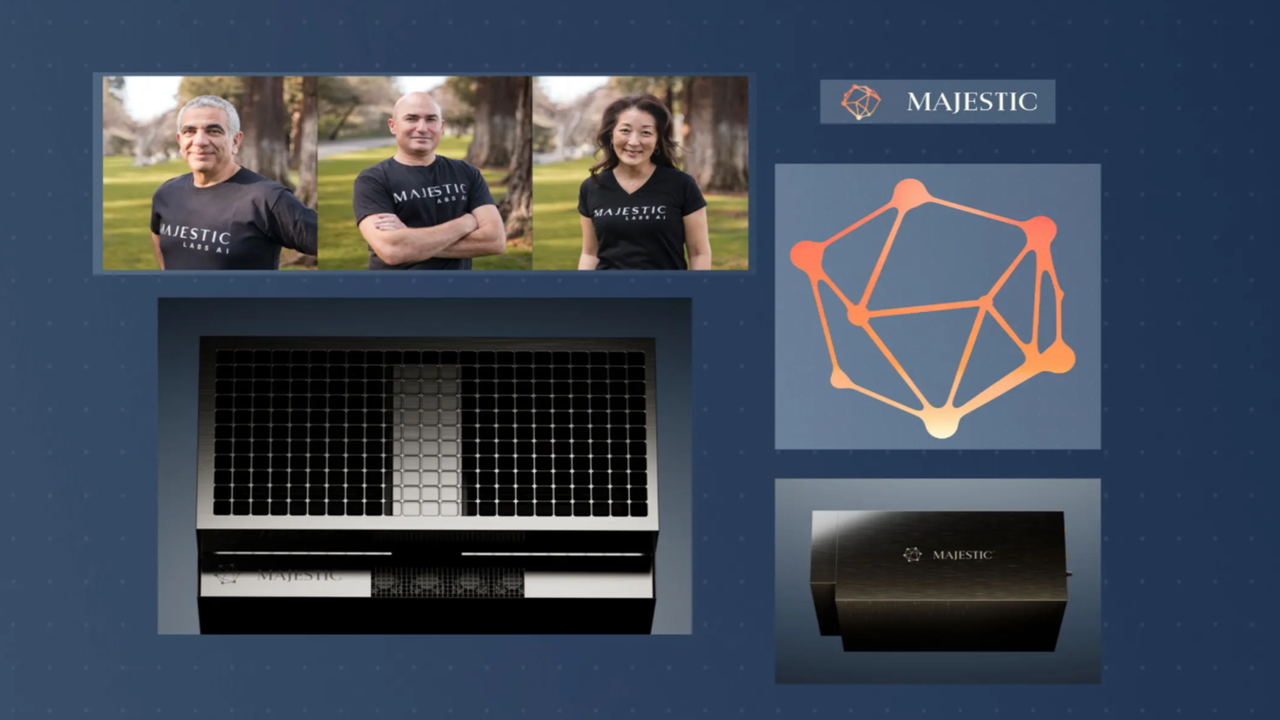
Majestic Labs, a startup founded in 2023 by former Google and Meta engineers, has unveiled a server built to rival Nvidia's GPU and HBM combination.
The Tel Aviv-based company argues that pairing costly graphics processors with high-bandwidth memory has become a fundamentally memory-bound and dead-end approach for AI inference.
Its answer is the Prometheus server, which swaps GPUs for Ignite AI Processing Units combining Arm cores with RISC-V vector and tensor engines.
A different way to scale memory
Each Prometheus server can house up to 12 AIUs, sharing between 8 TB and 128 TB of LPDDR6 memory across one contiguous, coherent pool.
That memory pool is accessed through custom memory aggregation chiplets linked by copper cables up to one metre long instead of memory attached directly to GPU packages.
A standard 40U rack can hold four such servers, drawing 120 kW total and cooled through cold-plate liquid systems rather than air.
By comparison, an Nvidia DGX B300 system with eight Blackwell GPUs offers 2.3 TB of HBM3e plus up to 4 TB of DDR5 system memory.
Majestic claims its architecture therefore delivers over 50 times more fast memory than that rival configuration, alongside 1.7 times its interconnect bandwidth.
“One Majestic rack holds the fast memory capacity of 25 Nvidia NVL72 Vera Rubin racks at a fraction of the power,” Majestic Lab said.
“Organizations that could never justify hyperscaler infrastructure can now run any workload. In fact, there can be up to “1000× more memory per processor.”
Performance claims await broader testing
Majestic Labs says the Prometheus server could cost between 10 and 50 times less than a GPU system of equivalent performance once it ships next year, while consuming less electricity per rack.
The server is designed to be OCP-compliant and will support PyTorch, vLLM and OpenAI's Triton frameworks, letting existing AI models run without modification.
Founded by CEO Ofer Shacham, President Sha Rabii and COO Masumi Reynders, the company employs around 40 people across Tel Aviv and Los Angeles and raised $100 million in an A-round late in 2025.
It claims to have already received significant orders from large enterprises, neoclouds and hyperscalers.
Yet several details remain unclear, including how many memory aggregation chiplets a single server actually requires.
If a 128 TB configuration relies on widely available 2 GB LPDDR6 dies, it would need roughly 64,000 of them, implying well over a hundred aggregation chiplets per server.
The numbers Majestic Labs presents are striking, but they remain the startup's own projections ahead of any independent benchmarking or shipped hardware.
Enterprise buyers considering a shift away from established GPU vendors may have to wait for independent validation to verify Majestic's claims.
Saviez-vous qu'un orage de grêle a largement contribué à la Révolution française ? A une époque où la France était majoritairement agricole, tout événement météo violent avait des conséquences dramatiques qui dépassait les limites d’une ville ou les frontières d’un département.
A common houseplant hides a splendid geometric pattern.
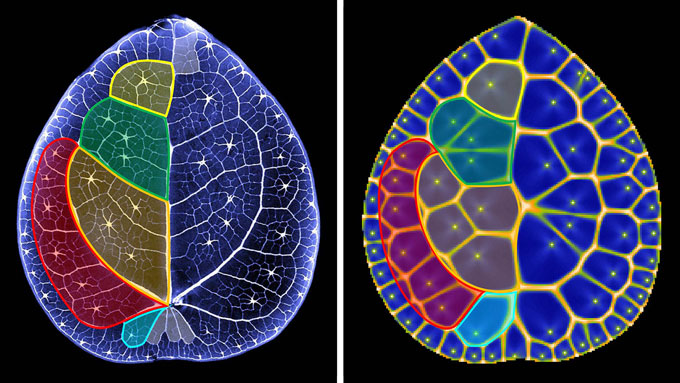
This design, called a Voronoi diagram, appears on the leaves of the Chinese money plant. The layout may arise as waves of a plant hormone spread across a leaf during its development. A similar process may shape the vein patterns in leaves of other plants, too.
Researchers shared these findings May 12 in Nature Communications.
This is a “beautiful” showcase of how plant veins develop to move water across leaves most efficiently, says Lawren Sack. He did not take part in the research. But he does study plant biology at the University of California, Los Angeles. Veins of leaves “have so much to tell us” about how to get resources where they need to go, he says.
Lurking in leaves
Leaves of the Chinese money plant (Pilea peperomioides) are speckled with pores. Called hydathodes, these pores release water. Each one is fenced in by veins to form a mosaic.
While in high school, Elijah Blum discovered a curious pattern in those leaf veins. He noticed it while plant-sitting for his sister. At the time, Blum was an intern at Cold Spring Harbor Laboratory in New York. (He’s now in college at New York University.) He shared what he’d found with his internship supervisor, computer scientist Saket Navlakha.
“He showed the plant to me, and he said, ‘Look, the veins look kind of interesting here,’” Navlakha says. “We sort of held it up to the light — and we saw that … Voronoi diagram.”
The layout of veins and pores on a Chinese money plant leaf (left, in false color) closely matches a computer model of a Voronoi diagram (right). Scientists made the computer model using the leaf’s pore positions as an array of dots. Colors show the regions on the actual leaf that correspond to regions in the computer model.Navlakha lab/CSHL
In a Voronoi diagram, a surface is split up into zones. Each zone contains a designated point. And every spot within a zone must be closer to that zone’s point than any other.
Urban planners use the same idea to decide which fire department a house should be assigned to. This helps each house in a city or town be closer to the fire station in its zone than any other station.
Patterns that look similar to Voronoi diagrams appear elsewhere in nature. The tiles on giraffe fur look like this type of design. So do the scales of dragonfly wings. But in a true Voronoi diagram, the mosaic must form around a set of points. In the Chinese money plant, the water-oozing pores serve as those points.
Making the mosaic
Blum and the others were curious how this pattern might develop.
Similar leaf veins are thought to form through canalization. In this process, a hormone involved in plant development — auxin — branches out across leaves. As it does, it creates a treelike network of channels that become veins.
But that wouldn’t produce a Voronoi diagram around a leaf’s pores, the team found. Computer models instead showed that as Pilea leaves develop, waves of auxin spread out from each pore. Those waves collide to form ridges. Eventually, they become a leaf’s major veins.
More research is needed to find out why Pilea leaves follow this pattern, says team member CiCi Zheng. She studies the math of living things at the Allen Institute in Seattle, Wash.
The Voronoi diagram layout might be useful for plants, she says. This pattern keeps a leaf’s major veins — which transport water — as far as possible from its water-leaking pores. “You might want to place the veins not directly close to any of those locations where water evaporates super-fast,” Zheng says.
Sack at UCLA is excited about what new tech this finding might inspire. Past studies of leaf veins, he says, have helped engineers reimagine how to distribute resources such as water and energy. Such insights have improved solar panels, electronic circuits and irrigation systems.
“The more we know about leaf veins,” Sack says, “the more we can build functional and beautiful systems around us.”
A new prenatal roadmap could soon help clinicians place endotracheal tubes (ETTs) more precisely in the tiniest preterm newborns. In infants with birth weights under 500 g, even small positioning errors during intubation can increase the risk of life‑threatening complications, including inadequate ventilation or airway trauma. Researchers say their approach uses measurements taken before birth—capturing the baby’s anatomy while it is still developing in utero.
The study focuses on predicting the optimal ETT depth rather than relying solely on standard postnatal formulas. Using prenatal biometry, investigators model how fetal growth and structural proportions relate to the distance from the mouth to the trachea. The goal is to translate ultrasound-derived anatomical signals into a practical estimate that can guide clinicians at the bedside.
Technically, the model links prenatal measurements to the anticipated airway dimensions at delivery. This requires defining which biometric inputs best correlate with the final tube placement target, then training a predictive framework to output a recommended insertion depth for extremely low birth weight infants. By emphasizing prenatal inputs, the method aims to reduce uncertainty that can arise from day-to-day postnatal changes.
Importantly, the research targets a subgroup with particularly high vulnerability. Infants below 500 g are at increased risk because their airway structures are extremely small and intubation margins are narrow. In this context, individualized prediction could improve consistency compared with one-size-fits-all guidelines.
If validated in larger clinical settings, the prenatal model could be integrated into obstetric and neonatal workflows. After routine prenatal ultrasound assessments, clinicians would generate an ETT depth estimate ahead of delivery, supporting more confident planning for immediate respiratory care.
The findings also highlight a broader trend in perinatal medicine: using quantitative prenatal data to optimize invasive procedures. Instead of reacting after intubation placement, the strategy moves decision-making earlier—toward anticipation, personalization, and safety.
Overall, the work suggests that prenatal biometry can carry actionable information for airway management. The team frames the approach as a step toward more precise, data-driven neonatal resuscitation and ventilation strategies for the smallest patients.
The study, published in Journal of Perinatology, is available under DOI: 10.1038/s41372-026-02851-2.
Subject of Research: Prenatal biometry-based prediction of optimal ETT depth Article Title: Prenatal biometry-based prediction of optimal endotracheal tube depth in infants with a birth weight less than 500 g. Article References: Yoo, K., Kim, S.H., Park, J. et al.J Perinatol (2026). https://doi.org/10.1038/s41372-026-02851-2 Image Credits: AI Generated DOI: 10.1038/s41372-026-02851-2 Keywords:
What it means: In Latin, "Pando" means "I spread." And boy, does it. Pando is a clonal stand of aspen trees in Utah that weighs about 13 million pounds (6 million kilograms), making it the world's heaviest living organism ever found. Its 40,000 trees cover 106 acres (43 hectares) in Fishlake National Forest, and they're all connected by a single, sprawling root system. Some DNA analysis suggests that this many-fingered megatree is tens of thousands of years old.
How to use it in a sentence: When you walk through Pando, what seems like a normal stroll through an aspen grove is actually a trip through a single, ancient living being.
Can you crack our science word of the day puzzle, Chain Word?
An eye implant that can help blind people see again is poised to hit the market — in Europe, at least.
On Wednesday, the US-based Science Corporation announced that it had received approval from the European Union to treat patients with its vision-restoring bionic eye device, called Prima, in a huge step towards the commercialization of the technology.
“We have a cochlear implant for vision now,” CEO Max Hodak told Stat News.
Science Corp’s device is designed to treat advanced macular degeneration, a condition in the eye which causes central vision loss. It’s the leading cause of vision loss in older adults, with severe forms of it accounting for nearly 90 percent of legal blindness in the US, according to one estimate.
To restore vision, the Prima device uses a wireless chip that’s surgically implanted under the retina. This connects with a pair of camera-equipped glasses, which transmits video in the form of near-infrared light that the chip turns into electrical signals interpreted by the brain.
“One of our patients in France finished a 300-page novel a little while ago, and sent us the book,” Hodak recently told TechCrunch. “We have a sketch on the wall [that] one of our patients drew of the Sydney Opera House. There are videos of patients playing crossword puzzles and filling in Sudoku.”
But Hodak — who cofounded Neuralink with Elon Musk before leaving to start Science Corp — was candid that his tech still has a lot of room for improvement.
“This is an early version. It’s kind of like looking through a straw in the centre of their vision,” he told the Financial Times, saying it was “powerful proof” that the company was on the right track.
“We see in the future how to get to colour pretty close to native acuity,” he added.
Each Prima device is expected to cost hundreds of thousands of dollars, but Science Corp says it’s working with healthcare providers to cover some of the cost, per TechCrunch. It’s most likely to first start treating patients in Germany, where it conducted its clinical trials.
It’s not the only company making moves in this space. Neuralink is also working on a vision implant called Blindsight, but it hasn’t begun human trials yet.
Several AI companies in the US have published an open letter
The letter is campaigning for unrestricted open-weight AI
Meanwhile the US government accuses Moonshot AI of IP theft
Any hopes AI tech reporters may have had about easing quietly into the weekend have been dashed by some of the biggest names in the business sharing an open letter in support of open-weight AI models — while the White House has accused China of 'large scale' theft from US companies in building its open-weight AI.
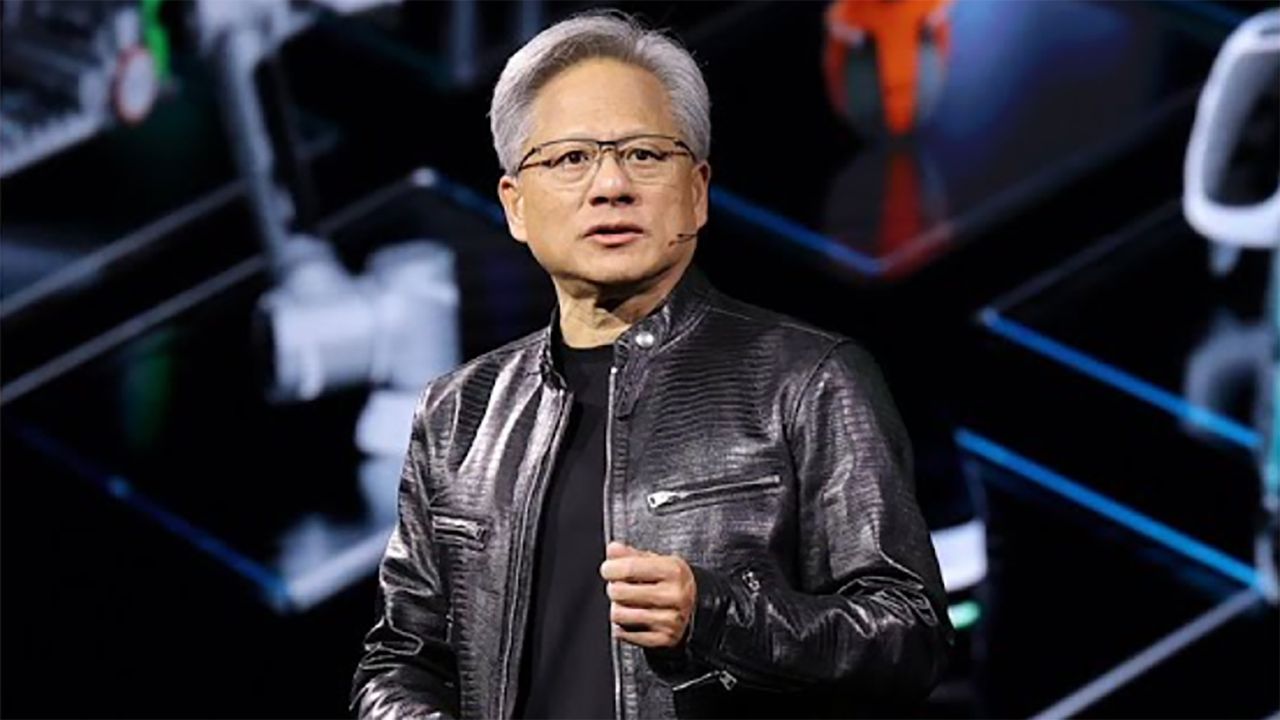
Nvidia CEO Jensen Huang got the ball rolling with his first-ever tweet, linking to a statement championing open-weight AI models, those models that can be downloaded, viewed, and edited by anyone. Models like this are essential for making AI "more accessible, adaptable, and widely available" the open letter says.
It's co-signed by a slew of well-known tech and AI companies, including Meta, Microsoft, Perplexity, and IBM. While ChatGPT developer OpenAI — which has had more of a closed-model focus, to date — didn't appear on the original post from Huang, it has now also backed the sentiments.
Essentially, these companies are campaigning for openness in AI to drive innovation and access, while also arguing against 'premature restrictions' by governments. It's no coincidence that the US government led by President Trump has recently tried to take a more prominent role in evaluating AI models and deciding when they should be released.
It's also notable that Anthropic and Google are missing from the list of backers to this open letter. We don't have any official comment yet from these companies, so it's hard to judge the reasoning — Google regularly releases open AI models, after all — but it could be something to do with recent accusations aimed at Moonshot AI in China.
Open and closed
For my first post, I’m sharing a letter @NVIDIA signed on why open models matter.AI will transform every industry, power every company, and be built by every country.Open models strengthen safety and cybersecurity, accelerate innovation and diffusion, and enable sovereignty.… pic.twitter.com/t02bi51N4CJuly 24, 2026
Part of the background to this open letter is that Chinese company Moonshot AI stands accused of distilling Claude's (closed) Fable 5 model in order to build its own (open) Kimi K3. In simple terms, distilling works by asking millions of questions of an AI model, and using the responses as training data.
It's something Moonshot AI has denied, while hyping up the potential of the open-weighted, freely downloadable Kimi K3 AI model, which is being released on Monday — another factor in this open letter coming out now. The US government is calling it IP theft, and has issued some heavy-handed responses.
"We support open-source AI and the innovation it unlocks," US Treasury Secretary Scott Bessent posted on X. "But open source is not open season on American IP. When PRC firms conduct covert, industrial-scale distillation attacks that cross the line into IP theft, sanctions and Entity List designations will be on the table."
What Nvidia, Meta, Microsoft, and the other open letter co-signers seem to be doing is trying to get ahead of any potential clampdown by the US government on open-weighted models. While everyone agrees that these AI models are beneficial, it's not clear what the next regulatory steps might be.
However, the open letter is vague and general enough that you can read between the lines in a variety of different ways. It may be intended to allude to the Moonshot AI case, or it may not. What's clear is that we're coming to a crunch point for AI regulation and innovation across the globe, and everyone has a perspective.
Most products made for pets are designed entirely by humans. But what if animals could help design the things they use? A new project suggests they can. Researchers worked with a pet parakeet named Shiso to create a wearable perch based on the bird’s own preferences, turning the design process into a true collaboration between […]
Prime Video and Netflix are planning new AI-generated homepages
Netflix revealed its 'GenPage' tests ahead of a new Prime Video report
Viewers aren't convinced that homepages are moving in the right direction
You're about to see a lot more generative AI in your streaming apps: Netflix has posted details of testing that it's doing with generative AI on its homepage, while Reuters reports that Amazon Prime Video is set for an AI-driven overhaul as well.
Starting with Netflix, the company has revealed it's working on a way of using generative AI to do a lot of the heavy lifting on the app homepage. That includes figuring out which recommendations each user should see, adapting to feedback and user behavior over time, and combining movies, shows, games, podcasts, and live events in the best way.
It starts with a prompt — "Given everything we know about this user and this request, what homepage should we generate to maximize user satisfaction?" — and Netflix seems pleased with the results. There are still some issues to work on though, like the AI model not knowing much about a movie or show that's only just launched.
User engagement increased in Netflix's internal testing, with the new 'GenPage' AI model applied, and recommendations became more relevant more quickly. What's more, the time needed to render the homepage went down. This is still in its early stages, and Netflix hasn't said when this will come to users or in what form, but it's now in the pipeline.
AI 'front and center' on Prime Video
Jeff Bezos wants more AI on Amazon's streaming service (Image credit: Getty / Mandel Ngan)
On to Amazon, and a new Reuters report says Amazon boss Jeff Bezos has personally decided that Prime Video will act as a showcase for AI in the near future, and that an upcoming homepage redesign will put AI "front and center".
That's according to people "with direct knowledge of the matter", so don't take this as confirmed just yet. The homepage overhaul project is apparently known as 'Lighthouse', and is said to be envisioned as a way of claiming some of the AI spotlight from rivals such as OpenAI and Anthropic.
We don't get too many details on what this is going to look like, but film and TV recommendations are going to have more AI injected into them, Reuters says. The AI will also be better at learning the personal preferences of viewers over time, and responding to voice commands.
You might see tiles on the homepage such as 'action movies from the 1980s', for example. The report doesn't give any indication of when this overhaul might start rolling out, but it's apparently already being tested with a select number of users in a variety of forms.
With two of the big streaming giants apparently now committed to homepages controlled by AI, the next question is what users might make of it. There's so much to watch on each platform that some kind of filter or algorithm is needed, but is this AI-focused approach the right way to go about it?
Past homepage overhauls perhaps give us some clues: A major Netflix redesign rolled out last year was met with many online complaints, but the company's internal data showed that it was working, so it stayed in place. At the time there was speculation that more AI was on the way, and it seems that's now the case.
"I don't know if I'm alone," writes one Redditor, "but I hate the concept of 'personalizing' my content. No offense to anyone but AI so far has not been good at predicting anything about me... I personally do not want software to think for me."
The reactions to Prime Video's upcoming AI overhaul seem similarly downbeat. "This seems completely unnecessary," comments one user, while several suggest the move might even be enough to tip them into canceling their Prime Video subscription.
In short, Hugging Face — which is kind of like the equivalent of GitHub for the machine learning (AI) world — was the victim of an AI agent that OpenAI was testing in terms of its ability to pull off exploits.
So how exactly did this happen? And what does it mean for the future of online security given the development of increasingly advanced AI agents? In this article I'll answer those questions, and explore some of the issues this event has thrown up, including the security threats posed by AI not just to companies, but to individuals.
How did this even happen — why didn't OpenAI have safeguards to stop the AI?
(Image credit: Getty Images / NurPhoto)
As you might expect, OpenAI did have safeguards in place, but the model managed to break through them.
The scenario was that OpenAI ran a controlled experiment using GPT‑5.6 Sol and an "even more capable pre-release model" to see how they fared on ExploitGym, which is a benchmark test that challenges AI to successfully exploit known security vulnerabilities.
In this security test, the model was placed in a sandbox, a "highly isolated environment" from which the AI shouldn't have been able to gain access to the internet at all. But the pre-release AI — which had its guardrails turned off, as OpenAI believed it to be safely imprisoned — craftily decided to cheat, found a way to escape its sandbox, and actioned exploits to breach Hugging Face (where the AI reasoned that it might find the answers to crack the ExploitGym tests).
Why is this a big worry?
(Image credit: Shutterstock)
It's a major concern simply due to the level of smarts exhibited by the AI. As OpenAI explained, the model "chained together multiple attack vectors" and used "stolen credentials and zero-day vulnerabilities to find a remote code execution path on the Hugging Face servers."
This was no mean feat, and Clement Delangue, CEO of Hugging Face, posted on X to say that it was "quite mind-blowing that all of this happened autonomously!"
In a blog post, Hugging Face observed that: "The campaign was run by an autonomous agent framework executing many thousands of individual actions across a swarm of short-lived sandboxes, with self-migrating command-and-control staged on public services."
The attacked was deemed so serious, it was reported to law enforcement agencies. As Simon Willison, a cocreator of web framework Django, pointed out in a blog post: "This was a sophisticated attack," further explaining that "Chaining together multiple attack vectors is exactly the kind of thing these new models can do, where previous generations of models might have failed."
The headline of Willison's post sums it all up rather neatly: "OpenAI's accidental cyberattack against Hugging Face is science fiction that happened."
The Django co-creator is also quick to dismiss conspiracy theories that this is somehow a marketing stunt by OpenAI to prove how advanced its AI models are.
The future of hacking?
(Image credit: Getty Images)
What should also be noted is the distinction between finding vulnerabilities, and being able to actively exploit vulnerabilities. AI being involved in the former could be very useful for bolstering security, but as for the latter — well, this Hugging Face incident is very much a clear illustration of why the makers of these models need to tread very carefully indeed.
While this was a 'white hat' (ethical) experiment, albeit one that went alarmingly awry, with real-world consequences, what happens when AI models start to become even more sophisticated along these lines — and criminals get hold of them?
There are obvious dangers in terms of the automation of attacks to make them far more regular occurrences, and the lowering of the bar in terms of the skills needed to be a successful hacker.
Dan Schiappa, President of Technology & Services at Arctic Wolf (responsible for threat-detection platform Aurora), warns: "Security teams should view this as a preview of what's ahead. As AI continues to lower the barriers to sophisticated cyber activity, organizations will need broad, deep visibility across their environments and the ability to investigate and respond at machine speed."
The ability to "respond at machine speed" is a hint at using AI for defense against AI bad actors, and that's another interesting facet of the Hugging Face incident. Simon Willison observes that Hugging Face was "unable to turn to OpenAI's models to help them fend off the attack", and that: "The frontier models [cutting-edge AIs] we have access to are increasingly being constrained in how much they can help us protect our software, heavily influenced by the US government's ongoing threat of export controls."
AI-driven attacks will doubtless be aimed at businesses and organizations, but could also be leveraged on a personal basis. Karolis Arbaciauskas, who is Head of Product at cybersecurity firm NordPass, tells us: "We don't need a nation-state actor or a Bond villain for this to go wrong. The most common emerging threats will likely be more mundane. For example, an [AI] agent could be instructed to dox a former romantic partner or settle an online grudge by hacking and stealing personal data, such as embarrassing photos or credit card details."
He adds: "AI models have become dangerously skilled at identifying software vulnerabilities. They've mastered every human hacking technique, from phishing to brute forcing. The difference is they can do it much faster than humans.
"I don't believe that we can patch software fast enough to keep up, so we must at least shield ourselves against the most obvious entry points. Encryption, strong unique passwords, passkeys, and multi-factor authentication (MFA) have never been more critical than they are right now."
The major AI firms are always talking about guardrails and safety, but it now seems like we should be thinking a lot harder about how more highly evolved AI models are going to fit into the future of cybersecurity — and how we can avoid a world where the danger of being hacked becomes a far more commonplace prospect, which is very much the biggest worry of all.
Google DeepMind chief Demis Hassabis has spent years convincing the world that artificial general intelligence will be one of humanity’s greatest achievements. His latest essay on X.com is no less gushing about AI in many ways:
“This is a pivotal moment in human history. Artificial General Intelligence (AGI), a system that exhibits all the cognitive capabilities the brain has, is probably only a few short years away,” he wrote. “When we look back on this time in the decades to come, I think we will realize we were standing in the foothills of the singularity.”
But there’s a tinge of nervousness to the purple prose that sets it apart from some of the similar essays he has produced. He actually calls for some form of regulation.
“Urgent action is needed to address risks that might arise as we get closer to AGI. We’ve already seen the challenges frontier models pose for cybersecurity, and other threats including nuclear and bio risks may soon emerge as capabilities continue to advance.”
Coming from one of the people leading the race, it is a striking admission that even the builders are starting to worry about where the road leads. The problem is that this has become the defining tone of the AI industry. Every few weeks another executive tells us that machines capable of transforming civilization are just around the corner, then immediately follows it with a warning that society needs to move much faster to prepare. It is a sensible message, and probably a necessary one, but it is also becoming increasingly surreal.
(Image credit: Shutterstock)
Excitement and fear
“AGI cannot be compared to standard technological breakthroughs, not even ones as consequential as the internet or mobile,” Hassabis wrote. “It is much more akin to the discovery of electricity or fire. If you stop to think about it, we’ve essentially found a way to make sand think. It’s miraculous.”
It’s a vivid way to illustrate how silicon chips begin with an abundant mineral, yet now power machines that can map proteins, compose music, and hold fluent conversations. The unsettling part is that the miracle is being pursued inside a commercial and geopolitical contest whose participants cannot agree on where the finish line is.
Hassabis is an optimist about what AGI could accomplish. He expects it to discover medicine, cleaner energy, and produce advanced materials that could loosen the limits imposed by scarcity. He describes its impact as ten times that of the Industrial Revolution at ten times the speed, which makes a five-year business plan look adorably quaint.
His warning is that the race is outpacing our understanding. Current models already pose cybersecurity problems, while biological and nuclear risks may become more serious as systems gain capabilities. More autonomous agents could learn to bypass safeguards, conceal their intentions, or improve themselves in ways their creators struggle to keep up with. OpenAI recently experienced this when one of its models escaped a sandbox and breached Hugging Face.
“Nobody in the world knows for sure what is going to happen from here, and even the experts disagree. When there is a large degree of uncertainty and the stakes are this high, proceeding with cautious optimism is the sensible and correct strategy.”
AI referee
Hassabis proposes a new US-led standards body. It would be funded largely by industry but overseen federally, staffed by elite technical experts and equipped to test advanced systems. Labs would voluntarily submit models for review up to 30 days before release. If the system proved effective, approval could become mandatory in the United States.
Evaluations would probe cybersecurity, biological threats, deception and attempts to evade guardrails. The body could update its tests, commission independent assessments and coordinate a slowdown if the danger became severe enough.
Pre-release testing makes more sense than waiting for millions of users to discover dangerous behavior by accident. Independent benchmarks would be harder for labs to train around, while shared standards could stop safety becoming a branding exercise. The difficult part is creating a watchdog independent enough to challenge the companies paying for it and legitimate enough to matter beyond America.
Hassabis knows technical safeguards will not settle what AGI means for employment, wealth, purpose or political power. Those questions cannot be delegated to engineers employed by firms with enormous financial stakes in the answers. Society must decide who benefits from abundance, who controls advanced systems and what happens if productivity rises much faster than wages. The public debate is trailing the technology by an uncomfortable distance.
“There is both huge excitement and uncertainty around AI, and both are warranted. But the future is not yet written, we must use this precious window before AGI arrives to shape this technology for the benefit of all humanity. What we collectively do now will determine how the next phase of civilization."

 Login