
❌

Reading view

Dinosaurs May Have Been Wiped Out by β€˜Oddball’ Space Rock

This painting depicts an asteroid slamming into tropical, shallow seas of the sulfur-rich Yucatan Peninsula in what is today southeast Mexico. The aftermath of this immense asteroid collision, which occurred approximately 65 million years ago, is believed to have caused the extinction of the dinosaurs and many other species on Earth. Shown in this painting are pterodactyls, flying reptiles with wingspans of up to 50 feet, gliding above low tropical clouds. Image credit: Donald E. Davis / NASA.

By analyzing nickel isotopes preserved in the 66-million-year-old debris left by the Chicxulub impact, researchers conclude that the asteroid responsible for Earth’s last mass extinction most likely belonged to an exceptionally rare class of primitive meteorites called carbonaceous chondrites of the Ornans type (CO chondrites).

The post Dinosaurs May Have Been Wiped Out by β€˜Oddball’ Space Rock appeared first on Sci.News: Breaking Science News.
  •  

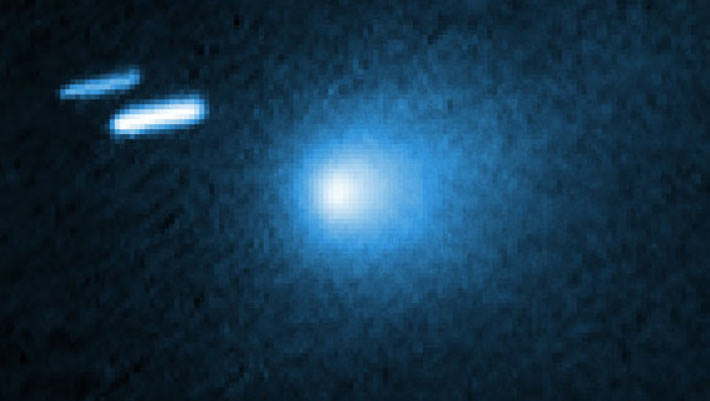
Interstellar Comet 3I/ATLAS Formed Up To 12 Billion Years Ago, New Observations Suggest

Hubble captured this image of 3I/ATLAS on July 21, 2025, when the comet was 446 million km (277 million miles) from Earth. Image credit: NASA / ESA / David Jewitt, UCLA / Joseph DePasquale, STScI.

The interstellar comet 3I/ATLAS carries a chemical fingerprint unlike anything in our Solar System, and it may have formed 10 to 12 billion years ago, before our Sun even existed, according to two papers published in the journal Nature.

The post Interstellar Comet 3I/ATLAS Formed Up To 12 Billion Years Ago, New Observations Suggest appeared first on Sci.News: Breaking Science News.

  •  
❌