 Login

Christopher Nolan’s Disenchanted Odyssey
In Nolan's supposal, the mad scientist takes on the mystique of a wizard. Perhaps this is fitting, given that he sees science and wizardry as the same thing.

Três brechas na configuração de proxy do WebKit, que também afetam a Retransmissão Privada (Private Relay) do iCloud+, foram descobertas, permitindo que o endereço IP de usuários da Apple seja exposto a terceiros. O comportamento afeta todos os navegadores para iOS que dependem de conexões proxy para ocultar o IP do iPhone.
A falha foi localizada pelos desenvolvedores Talal Haj Bakry e Tommy Mysk, fundadores do navegador com foco em privacidade Psylo. Eles explicaram como a exposição da informação do usuário ocorre em uma postagem no blog oficial de Mysk:
Navegadores baseados em WebKit no iOS e no macOS podem ser configurados para encaminhar todo o tráfego web por servidores proxy. […] Em teoria, toda conexão de rede iniciada por uma página deveria passar pelo proxy configurado, de modo que os sites enxergassem apenas o endereço IP do proxy. No entanto, descobrimos que três recursos do WebKit ignoram essa configuração e enviam tráfego diretamente do dispositivo.
As três ferramentas mencionadas ao longo do boletim incluem a pré-busca (prefetching) de DNS, que resolve o endereço pelo caminho normal de DNS do dispositivo em vez de pelo proxy, expondo os servidores DNS reais do usuário; o Related Origin Requests (ROR) do WebAuthn, que faz com que o serviço de credenciais do sistema busque, diretamente do dispositivo, um arquivo de validação hospedado no domínio de origem, expondo o endereço real do usuário; e o WebTransport, que ignora o proxy ao estabelecer uma conexão HTTP/3 direta.
No caso do Safari, o recurso Retransmissão Privada do iCloud+ também é afetado pela falha; embora projetado para ter dois servidores intermediários para o tráfego e as consultas de DNS, os recursos listados ocorrem fora desse mecanismo de proteção, expondo o usuário de qualquer maneira.
Isso afeta também navegadores que utilizam a API 1Application programming interface, ou interface de programação de aplicações. de proxy para privacidade, como o Onion, que foi alertado sobre o problema junto do Tor Project. O relatório pontua, no entanto, que a única exceção quanto à exposição desses dados com algum desses recursos é o nível de segurança “Silver” do Onion Browser, que desativa o WebTransport por meio do Modo de Isolamento (Lockdown Mode).
As conexões por VPN 2Virtual private network, ou rede privada virtual. não são afetadas pela falha de segurança, visto que o tráfego do dispositivo passa pelo túnel do provedor da rede privada virtual.
O relatório conclui informando que o problema foi resolvido na versão mais recente do Psylo, que desabilitou por ora o funcionamento do WebTransport e do WebAuthn, além de bloquear a dica de pré-busca de DNS.
via AppleInsider



NASA will hold a news conference at 2:30 p.m. EDT, Friday, Aug. 14, live from the agency’s Kennedy Space Center in Florida, and media and digital creators are invited to attend in person.
The announcement, held in the XLV Hangar at the Shuttle Landing Facility, will preview a new event at NASA Kennedy later this year tied to America’s 250th anniversary, showcasing American leadership in aviation, space exploration, and emerging technologies while bringing together the public, industry leaders, innovators, and the next generation of explorers.
Participants include:
The agency will stream this news conference live through a variety of platforms:
This event is open to U.S. media and digital creators. The request to attend must be received no later than 12 p.m. on Thursday, Aug. 6, to the Kennedy newsroom at: https://media.ksc.nasa.gov. NASA’s media accreditation policy is available online.
For more information about NASA’s missions, visit:
-end-
George Alderman / Cheryl Warner
Headquarters, Washington
202-358-1600
george.a.alderman@nasa.gov / cheryl.m.warner@nasa.gov
Danielle Sempsrott
Kennedy Space Center, Fla.
321-298-8990
danielle.c.sempsrott@nasa.gov
The post NASA to Host Florida Event Celebrating American Air, Space Leadership appeared first on NASA Science.
NASA will hold a news conference at 2:30 p.m. EDT, Friday, Aug. 14, live from the agency’s Kennedy Space Center in Florida, and media and digital creators are invited to attend in person.
The announcement, held in the XLV Hangar at the Shuttle Landing Facility, will preview a new event at NASA Kennedy later this year tied to America’s 250th anniversary, showcasing American leadership in aviation, space exploration, and emerging technologies while bringing together the public, industry leaders, innovators, and the next generation of explorers.
Participants include:
The agency will stream this news conference live through a variety of platforms:
This event is open to U.S. media and digital creators. The request to attend must be received no later than 12 p.m. on Thursday, Aug. 6, to the Kennedy newsroom at: https://media.ksc.nasa.gov. NASA’s media accreditation policy is available online.
For more information about NASA’s missions, visit:
-end-
George Alderman / Cheryl Warner
Headquarters, Washington
202-358-1600
george.a.alderman@nasa.gov / cheryl.m.warner@nasa.gov
Danielle Sempsrott
Kennedy Space Center, Fla.
321-298-8990
danielle.c.sempsrott@nasa.gov
Welcome to Edition 9.05 of the Rocket Report! It was a big week for launch contracts, with both Rocket Lab and SpaceX scoring sizable deals from the US military for their respective Electron and Falcon 9 rockets. The vehicles have been the workhorses for small and medium lift for the United States over the past decade and may remain so for some time. Also, there will be no Rocket Report next week, as I am traveling on assignment, and Stephen is taking a week off.
As always, we welcome reader submissions, and if you don't want to miss an issue, please subscribe using the box below (the form will not appear on AMP-enabled versions of the site). Each report will include information on small-, medium-, and heavy-lift rockets as well as a quick look ahead at the next three launches on the calendar.

Rocket Lab wins large Electron deal. Rocket Lab Corporation announced this week that it has been awarded its largest launch contract to date, a $266 million multi-launch contract with the US Space Force. Under the contract awarded by the US Space Force Space Systems Command, Rocket Lab will execute 12 suborbital launches, with up to six additional launches. The first launch of this contract is expected no earlier than the end of 2026.
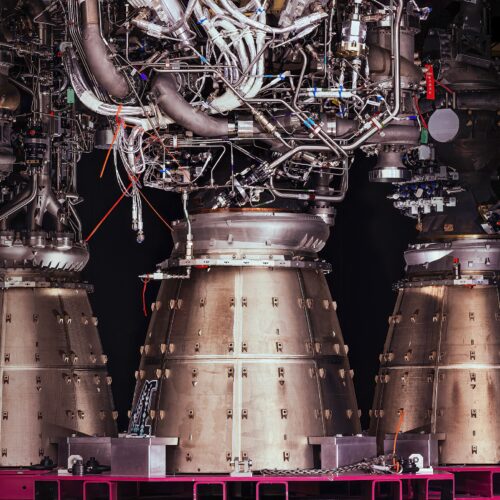
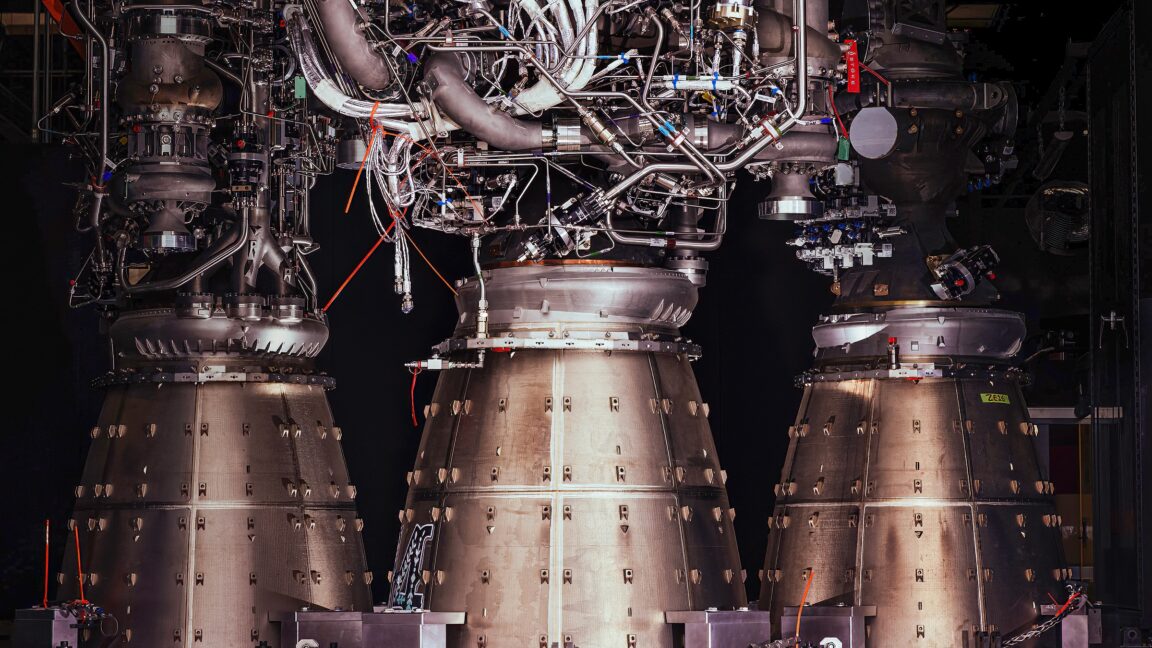
© Stoke Space
Every cloud architect, every financial services executive, and frankly every enterprise CTO should be paying attention to what is going on in the United Kingdom right now. Britain has formally designated Microsoft, Google, Amazon Web Services, and Oracle as “critical third parties” to the financial sector, meaning they are now subject to direct oversight by UK financial regulators rather than being treated as distant infrastructure suppliers outside the regulatory perimeter.
The designations took effect on July 13, 2026, and the oversight will be carried out by the Bank of England, the Prudential Regulation Authority, and the Financial Conduct Authority. The point is straightforward. If these platforms underpin critical banking and financial operations, then their resilience is no longer just a procurement issue. It is now a matter of financial stability.
This is a bigger deal than many people understand. For years, enterprises have treated cloud platforms as outsourced technology providers. Regulators are now making a different argument. They are saying that when enough banks, insurers, payment firms, and market infrastructures depend on the same small group of cloud providers, those providers become systemic infrastructure whether they like the label or not. Reuters reported that the UK’s framework will bring requirements such as resilience testing, self-assessments, and incident reporting directly to these providers. In other words, this is not just more policy language. It is operational oversight aimed at the platforms themselves.
The first thing to understand is that this move is not anti-cloud. It is the opposite. It is an acknowledgment that cloud has become too important to remain lightly touched when it comes to systemic risk. Regulators are not trying to unwind cloud adoption in financial services. They are accepting the reality that core financial operations now depend on a concentrated set of external platforms. When that happens, the conversation changes from vendor management to infrastructure resilience.
The market has spent years talking about cloud concentration risk as if it were some vague future concern. It is no longer abstract. The UK is acting because concentration at this level means that a disruption at one major provider can ripple across multiple institutions simultaneously. That is the core issue. It is not whether Microsoft, Google, Amazon, or Oracle are competent operators. In many cases, they are exceptionally good at what they do. The problem is that too much critical activity depends on too few shared platforms.
This is a concept many business and technology leaders still struggle to internalize. A single bank can do a fine job managing its own vendor exposure and still be part of a broader systemic vulnerability if every other bank is relying on the same provider, the same region, the same identity layer, or the same operational dependencies. Regulators are stepping in because the risk is collective, not just institutional. That is why this matters well beyond the UK. It provides a framework for thinking about cloud not as outsourced capacity, but as part of the plumbing of the financial system itself.
Traditionally, regulators focused on the bank, insurer, or market institution and expected that entity to manage the risks created by outside suppliers. That approach still exists, and financial institutions remain accountable for their own resilience. However, the UK now says that, in some cases, this indirect model is not enough. If a third party becomes critical enough, regulators want direct line of sight into that provider’s resilience posture as well. This is probably the most important architectural and policy signal in the entire move.
That changes the relationship between the financial sector and the cloud providers in a meaningful way. Direct oversight means cloud providers are increasingly being treated less like optional technology partners and more like essential utilities that support national economic confidence. Once that happens, architecture decisions start to carry a different weight. Decisions about control planes, failover models, identity dependencies, regional design, observability, and incident response are no longer just internal engineering choices. They become part of a broader resilience conversation that may now include regulators.
A lot of enterprises have been behind the curve. They built architectures under the assumption that the cloud was simply a faster and cheaper hosting model. It is not. At scale, cloud is shared critical infrastructure. The UK has now made that point explicit.
It’s tempting to read this and assume the problem has now been solved. It has not. Direct oversight of hyperscalers does not remove the responsibility of banks or other enterprises to architect well. In fact, it should push them to architect better. A regulated provider can still be a concentration point. A resilient platform can still be used in a fragile way. And a well-run cloud service can still become part of a badly designed dependency chain.
If you are in a regulated or highly sensitive industry, you should take this as a warning that resilience can no longer be treated as a side topic. You need to know exactly which services are business-critical, which control planes are shared, which identity systems create cross-platform dependencies, and how your recovery assumptions actually work in the real world. Most organizations are much weaker here than they believe.
The UK’s move should also force a hard conversation about operational transparency. If regulators are requiring incident reporting and resilience evidence from major providers, enterprises should be demanding clearer dependency mapping and better architectural visibility inside their own environments. You cannot build true resilience on top of assumptions and vendor slide decks.
The deeper message is that cloud is crossing a line from enterprise technology choice into national and sector-level infrastructure policy. Once a few governments and central regulators start treating cloud this way, the rest of the world tends to follow in some form. We have already seen comparable concern in Europe, and now the UK has made its own move with direct designations and direct oversight.
Architects, CIOs, and boards need to mature their thinking quickly. The conversation is no longer limited to feature depth, discounts, migration speed, or which provider has the best AI story this quarter. The conversation is now about resilience, concentration, transparency, control, and systemic dependency. Those are bigger issues, and they are not going away.
The UK is telling the market something very clearly. Microsoft, Google, Amazon, and Oracle are not just selling cloud services into the financial sector. They are becoming part of the infrastructure on which that sector depends. Once you understand that, everything changes, including how we architect for the future.

A few years ago, I sat in a postmortem that I still think about. We’d had a production incident where a routine deploy had quietly shipped with the wrong configuration, and it took us longer to notice and roll back than anyone was comfortable admitting. But when we traced the root cause, almost none of it was the feature code. It was the scaffolding around it: a Kubernetes manifest no longer matched our cluster, a CI pipeline whose green checkmark didn’t actually verify the thing we assumed it did, and a secrets-management step that three different services each did three different ways. The code itself had been fine for a week. Everything around the code is what failed us.
I have seen some version of that retro at nearly every company I’ve worked at over the last 15 years across a large IT services firm, a medical-device maker, a healthcare-technology company, a cloud-migration startup, and now a large SaaS platform. The names and the tech stacks changed. The pattern didn’t. Smart engineers spending a startling share of their week not on the problem they were hired to solve, but on the accidental complexity of shipping it.
For a long time, I assumed the answer was better documentation, or a stricter DevOps culture, or just hiring people who were more comfortable with YAML. I was wrong on all three counts. What actually changed my mind was reframing the problem entirely: the friction wasn’t a knowledge gap or a discipline gap. It was a product gap. Nobody owned the developer’s experience of shipping software the way a product manager owns a customer’s experience of using an app. And the discipline that closes that gap now has a name: platform engineering, which Gartner describes as having “emerged in response to this increasing cognitive load resulting from the complexity of modern software tools and architectures.” Gartner isn’t shy about how fast it’s spreading, either: the firm predicts that “by 2026, 80% of large software engineering organizations will establish platform engineering teams,” up from 45% in 2022. If that number is even close to right, the interesting question is no longer whether to build a platform team but whether you’ll build a good one.
I want to be careful here, because “DevOps is dead” is a lazy headline and I don’t believe it. The principles behind DevOps include shared ownership, automation, and tight feedback loops. These are as right today as they were when the movement started.
What broke, in my experience, was the operating model. The original promise was “you build it, you run it.” Every team owns its own deployment, its own observability, its own on call. That works beautifully when you have a handful of teams and a shared oral tradition. It falls apart when you have 50 teams, because now you have 50 slightly different ways of doing the same undifferentiated work. 50 ways to define a service. 50 subtly wrong Kubernetes configurations. 50 on-call rotations paging fifty engineers about the same class of problem at 3 a.m.
The cognitive load of “run it yourself” grew faster than most teams could absorb. That framing of cognitive load as the thing you’re actually optimizing for comes from “Team Topologies,” a book that reshaped how I think about org design more than any purely technical text I’ve read. Its fourth principle is blunt about the limit: “Teams can only handle so much complexity before breaking down,” and “competent teams become ineffective when leaders keep adding to their plate without taking anything away.” That last line described my own teams so precisely it stung. “Team Topologies” also gave me the vocabulary I’d been missing. It names four fundamental team types, and it defines a platform team as “a grouping of other team types that provide a compelling internal product to accelerate delivery by stream-aligned teams”. Read that definition again: a compelling internal product. Not a shared-services desk, not a Terraform repo with a wiki. A product. That single word is the whole argument.
Here’s the shift that took me embarrassingly long to internalize: if the platform is a product, then developers are its customers, and you don’t get to tell your customers they’re holding it wrong.
That one reframing has downstream consequences that surprised me.
The first is that adoption has to be earned, not mandated. Early in my time working on internal tooling, I helped build a platform capability that we were quite proud of, and then we did what infrastructure teams love to do: we announced it, and assumed people would come. They didn’t. Teams routed around it, because the golden path we’d paved was, frankly, gravel. The lesson landed hard. A platform that developers have to be forced onto is not a platform, it’s a tax. When we went back and rebuilt it so that the paved path was genuinely the easiest path. This is the same instinct behind Backstage, the developer portal that was built at Spotify and is now a CNCF project; its own pitch is that it “restores order to your microservices and infrastructure” so product teams can ship quickly. Order you have to opt into isn’t order. The tool wins when choosing it is the lazy option.
The second consequence is that “self-service” has to mean what it says. It’s an overused word, so I hold it to the CNCF’s definition from its platforms white paper: “A platform should be self-serviceable. Users must be able to request and receive capabilities autonomously and automatically.” Autonomously and automatically. If a developer has to file a ticket and wait on my team to provision a database, I haven’t built a platform instead I’ve built a slower version of the help desk. The same white paper states the north star plainly: “An essential goal of a platform is to reduce the cognitive load on product teams.” I’ve started using that sentence as a litmus test. For any capability we’re tempted to add, I ask whether it removes load from a product team or quietly adds some. A surprising number of well-meaning platform features fail that test.
The third consequence is that you have to measure the platform the way you’d measure any product and resist measuring the things that only flatter the platform team. “How many clusters are we running” is an output my team cares about and nobody else does. The metrics that matter describe the developer’s lived experience, and the most durable set I know of comes from DORA, the long-running research program into software delivery performance. Its metrics have evolved from the original “four keys” have grown to five. The core throughput measures still ask exactly the right questions: change lead time (“the amount of time it takes for a change to go from committed to version control to deployed in production”), deployment frequency, and failed deployment recovery time, balanced against a change fail rate. I’ve found those double as a remarkably honest scorecard for a platform team, precisely because they refuse to reward busywork. You cannot game your way to a good lead time by shipping more internal tools nobody uses.
The fourth consequence is the hardest culturally: a platform product needs a roadmap, user research, and the willingness to say no. I’ve watched platform efforts collapse into a junk drawer of one-off requests, each reasonable on its own, that together add up to an incoherent pile of tools nobody can hold in their head. Saying no to a well-intentioned request is a product-management skill, and platform teams that never develop it end up rebuilding the very sprawl they were created to eliminate. The best platform leads I’ve worked with spend as much time talking to their internal users as any consumer-facing PM does.
If I could go back to that retro years ago, I’d say a few things to the version of me who thought this was a documentation problem.
Start with the paved road, not the platform. You don’t need to build an internal developer portal in quarter one. You need to find the single most painful, most repeated piece of undifferentiated work is the distance between “here is my container” and “it is running safely in production”. Earn the next piece of scope by delivering that one well. Platforms that begin as grand architectures tend to die as grand architectures; the ones that survive start as one genuinely useful paved road that people choose on their own.
Resist the urge to abstract away everything. The goal of a good platform is not to hide Kubernetes so completely that no one understands what’s happening beneath them; that just trades one kind of fragility for another. The goal is to remove the toil while leaving the understanding intact. When the abstraction leaks you want engineers who can reason about what’s underneath, not a room full of people who only ever knew the buttons. I’ve paid for both mistakes: platforms too thin to help, and platforms so thick that an incident turned into an archaeology dig.
And treat “developer experience” as a first-class business metric, not a morale nicety. Every hour an engineer spends fighting the delivery pipeline is an hour not spent on the thing your customers actually pay you for. When I frame platform investment that way to leadership as reclaiming a meaningful fraction of my most expensive people’s time that’s when the conversation stops being about cost and starts being about leverage. It is genuinely one of the highest-return investments an engineering organization can make, and it almost never shows up as a line item that looks like one.
The platform team is not the group that keeps the lights on. It’s the group that decides how fast everyone else can move. Once I started treating it as the most important product my organization ships internally, almost every other decision got easier. I just wish it hadn’t taken me a missed release and a room full of frustrated engineers to see it.
This article is published as part of the Foundry Expert Contributor Network.
Want to join?

SpaceX successfully launched its Starship vehicle on Friday and appeared to demonstrate important and credible steps toward fulfilling the massive rocket's immense promise. As soon as the vehicle's next flight, Starship could go orbital, begin delivering satellites into space, and potentially return to the launch site to be 'caught' by the tower.
All of this is impressive engineering on a gigantic scale. But despite the marked progress with the 13th test flight of Starship, one key issue—probably the key issue when it comes to Starship's future—remains unresolved.
This concerns Starship's heat shield, the roughly 18,000 ceramic tiles that protect the vehicle's underbelly during its fiery return through Earth's atmosphere. And some experts say SpaceX's current approach may not get Starship to its ultimate goal of flying frequently, at low cost.


© SpaceX
Was SpaceX’s recent Starship flight test a success or a failure? Many are hailing it as a victory, but several of the megarocket’s booster’s engines failed after re-entry, causing it to explode.
SpaceX has had many similarly ambiguous tests before. But this was the first one since its much-hyped IPO earlier this summer — and it’s already clear that it wasn’t a convincing enough display to reverse the company’s fortunes on the stock market.
After hitting an all time low before the weekend and closing at $115, SpaceX shares endeavored to plummet even further on Monday, briefly dipping to $108.66 — a new nadir since going public — before stabilizing around $110. The new low is over 20 percent below its opening IPO price of $135, and less than half of its all time high of more than $225 per share.
It’s a sign of the scrutiny the company will be put through now that it’s a public entity, and comes despite certain predictions that a successful flight would help buoy the company’s shares. When Starship ran into trouble in the past, SpaceX mainly had to weather a storm of media coverage. Now, nervous investors represent yet another liability.
“One of the benefits of being private is that there wasn’t a market to weigh in on and evaluate business decisions,” David Meier, senior investment analyst at the Motley Fool, told The Washington Post.
“Being publicly traded means everything will be evaluated and information transmitted through market prices,” he added. “So every SpaceX launch, every Starlink decision and every xAI decision will be scrutinized by the market.”
Spaceflight, at least currently, isn’t an ideal match for the make-a-quick-buck capitalism that Musk extolls. SpaceX has never been profitable, losing $5 billion last year alone. As Starship’s woes illustrate, rocket development is messy and complicated; there’s no guarantee that progress will be linear, if there’s any made at all. Investors are essentially being asked to keep pouring money into an incredibly lengthy and expensive science experiment.
Meanwhile, Musk has made outrageously lofty promises that SpaceX will eventually use Starship to deploy so many data centers in space that it’d create a “sentient sun,” and establish colonies on the Moon and eventually Mars. Every failure will be compared against those outsized benchmarks, which is almost certainly part of Musk’s enduring schtick.
The thirteenth test flight on Friday was a mixed-bag. The spacecraft’s upper stage successfully made its way to suborbital space and deployed a payload of Starlink internet satellites, which briefly went online before burning up as planned. This was a first for Starship, as previous tests only used dummies. Then the ship re-entered the atmosphere and landed in the Indian Ocean in one piece without exploding.
But the booster was a different story. Though it performed flawlessly on the journey up, only ten of out the thirteen engines fired up on its return to Earth, failing to slow the massive object down in time. Instead of making a planned “soft” splashdown, it slammed into the Gulf of Mexico and appeared to explode on impact.
On the one hand, the flight test validated that SpaceX is making progress with its latest V3 iteration of its spacecraft. In the first V3 flight test in May, the upper stage lost several of its engines on its way to space, and this time it didn’t. The upper stage also survived the splash down instead of exploding, with SpaceX engineers calling it Starship’s best reentry yet.
But the failed booster landing is hard to overlook. Unless the booster is reliably recoverable, then Starship won’t be reusable, an indispensable part of making the behemoth vehicle an economically viable means to ferrying large payloads into orbit and beyond.
Most coverage around the recent test has been positive. Arguably, that makes it all the more concerning that the stock continues to perform so poorly.
“The future of the company is riding on the ability to make Starship work,” Clayton Swope, deputy director of the Aerospace Security Project, told WaPo. “What they’re trying to do is switch to a freight train and get the economies of scale [of] something of that magnitude.”
More on SpaceX: SpaceX Investors in Meltdown Over All the Money They’ve Lost
The post SpaceX Stock Hammered After Starship Booster Fails in First Launch Since IPO appeared first on Futurism.

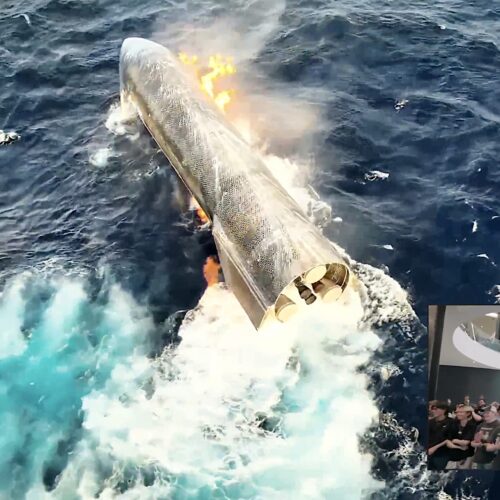
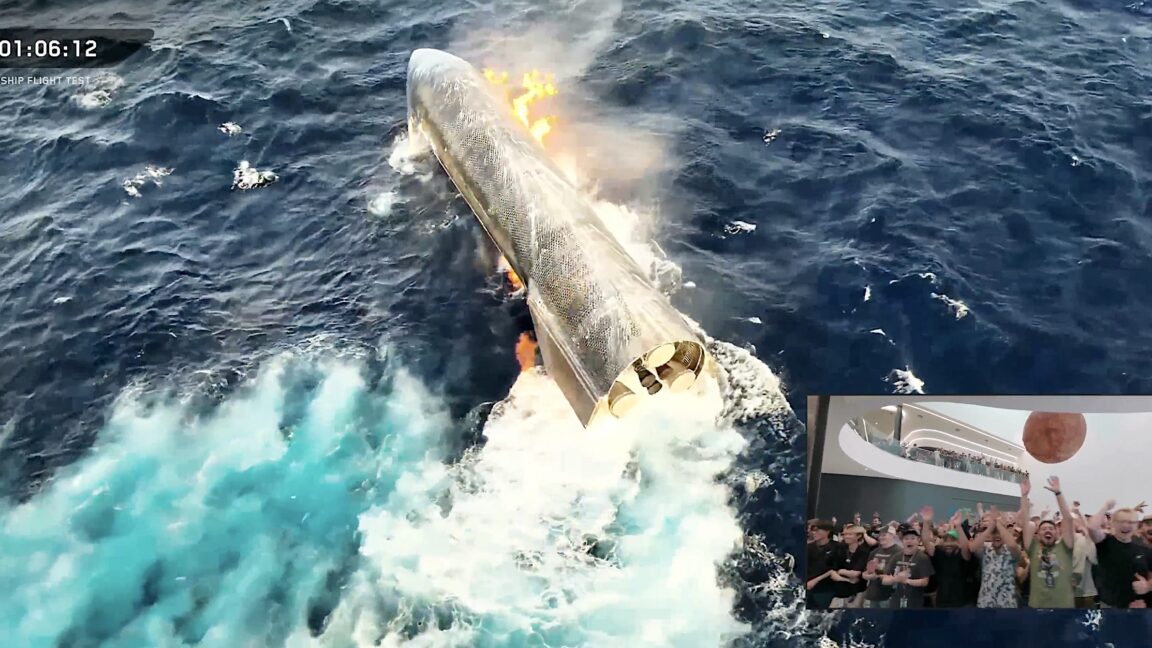
SpaceX was more than lucky Friday, sending its 13th full-scale Starship test flight halfway around the world from South Texas to an on-target, intact splashdown in a remote section of the Indian Ocean.
Starship has made precise splashdowns before. This time, however, the ship gently tipped over and came to rest floating in a remote stretch of ocean west of Australia. Previous splashdowns ended with conflagrations, an outcome SpaceX officials have come to expect with each water landing of Starship.
The buoyant Starship looked to be in fine shape after reaching the Indian Ocean. SpaceX engineers flew drones over the vehicle to inspect its heat shield, getting their best look yet at how more than 18,000 ceramic tiles insulating the ship's stainless steel airframe weathered the trip to space and back. The tiles withstood temperatures up to 2,600° Fahrenheit (1,430° Celsius) as Starship streaked back into the atmosphere at the end of its hourlong flight from Starbase, Texas.
© SpaceX
SpaceX was more than lucky Friday, sending its 13th full-scale Starship test flight halfway around the world from South Texas to an on-target, intact splashdown in a remote section of the Indian Ocean.
Starship has made precise splashdowns before. This time, however, the ship gently tipped over and came to rest floating in a remote stretch of ocean west of Australia. Previous splashdowns ended with conflagrations, an outcome SpaceX officials have come to expect with each water landing of Starship.
The buoyant Starship looked to be in fine shape after reaching the Indian Ocean. SpaceX engineers flew drones over the vehicle to inspect its heat shield, getting their best look yet at how more than 18,000 ceramic tiles insulating the ship's stainless steel airframe weathered the trip to space and back. The tiles withstood temperatures up to 2,600° Fahrenheit (1,430° Celsius) as Starship streaked back into the atmosphere at the end of its hourlong flight from Starbase, Texas.
© SpaceX
Civil servants face being sanctioned if they fail to use the preferred name or gender of a transgender colleague, leaked Whitehall guidance has revealed.
The post Civil Servants Face Sanctions if They ‘Misgender’ Trans Colleagues appeared first on The Daily Sceptic.

SpaceX launched Starship on its 13th suborbital test flight July 24, correcting some of the issues seen on the previous flight while deploying functioning satellites for the first time.
The post SpaceX conducts 13th Starship test flight appeared first on SpaceNews.
Welcome to Edition 9.04 of the Rocket Report! We've had to wait an extra week for SpaceX to get its 13th Starship test flight off the ground. A last-second abort on July 16 led engineers to roll the booster back to its hangar in South Texas to swap out engines. Starship is now back on the launch pad. Liftoff is set for Friday evening. A flawless launch and reentry will put SpaceX on the cusp of an orbital flight later this year. Ars will have a comprehensive recap story after the completion of the test flight.
As always, we welcome reader submissions. If you don't want to miss an issue, please subscribe using the box below (the form will not appear on AMP-enabled versions of the site). Each report will include information on small-, medium-, and heavy-lift rockets, as well as a quick look ahead at the next three launches on the calendar.
India's first private rocket reaches orbit. Indian space officials celebrated the debut flight of Skyroot Aerospace’s Vikram-1 rocket, India’s first fully commercial satellite launcher, as a “grand success” Saturday after an on-target climb into a 280-mile-high orbit following liftoff from an island spaceport in the Bay of Bengal, Ars reports. The Vikram-1 lifted off from India’s primary spaceport on Sriharikota Island around midday local time. The launch was delayed more than a half-hour to resolve a last-minute technical problem. The countdown resumed, culminating in the command to ignite Vikram-1’s solid-fueled first stage booster to propel the rocket off the launch pad.

© Zhou Quan/VCG via Getty Images
Welcome to Edition 9.04 of the Rocket Report! We've had to wait an extra week for SpaceX to get its 13th Starship test flight off the ground. A last-second abort on July 16 led engineers to roll the booster back to its hangar in South Texas to swap out engines. Starship is now back on the launch pad. Liftoff is set for Friday evening. A flawless launch and reentry will put SpaceX on the cusp of an orbital flight later this year. Ars will have a comprehensive recap story after the completion of the test flight.
As always, we welcome reader submissions. If you don't want to miss an issue, please subscribe using the box below (the form will not appear on AMP-enabled versions of the site). Each report will include information on small-, medium-, and heavy-lift rockets, as well as a quick look ahead at the next three launches on the calendar.
India's first private rocket reaches orbit. Indian space officials celebrated the debut flight of Skyroot Aerospace’s Vikram-1 rocket, India’s first fully commercial satellite launcher, as a “grand success” Saturday after an on-target climb into a 280-mile-high orbit following liftoff from an island spaceport in the Bay of Bengal, Ars reports. The Vikram-1 lifted off from India’s primary spaceport on Sriharikota Island around midday local time. The launch was delayed more than a half-hour to resolve a last-minute technical problem. The countdown resumed, culminating in the command to ignite Vikram-1’s solid-fueled first stage booster to propel the rocket off the launch pad.
© Zhou Quan/VCG via Getty Images
A norte-americana Light apresentou o Light Flip, um telemóvel em formato de concha, inspirado nos antigos flip phones, sem aplicações de distração, ecrã tátil ou redes sociais. Já pode ser reservado por 299 dólares.
The post Light Flip: Um telemóvel que recupera o formato de concha e que aposta em ter menos para não o distrair appeared first on Tek Notícias.
Shares of Elon Musk’s SpaceX are continuing their weeks-long decline, hitting a new all-time low of around $115 by Wednesday afternoon.
The scale of the accumulating losses since the company’s hotly-anticipated IPO last month is staggering. The company has wiped out over $1.1 trillion in market value since hitting an all-time high of $225 last month, and it’s possible that its decline is just getting started.
The rocket company has given investors little to grasp onto, apart from an ever-optimistic Musk claiming that it could one day be worth more than the entire Earth. On Thursday, the company was forced to scrub the launch of its Starship spacecraft because several engines failed to start — a perfect metaphor for the company’s recent stock market performance.
Meanwhile, countless short sellers are making billions by betting against the company, adding plenty of downward pressure on the stock.
Looming in the background is the second quarter earnings call of Musk’s EV maker, Tesla, on Wednesday evening. The company has been burning through cash at an alarming rate despite seeing sales and revenues jump. Analysts are still keeping close tabs on the chance that Musk may fold Tesla into SpaceX, a merger of unprecedented proportions. Tesla will likely be facing plenty of questions about the possibility during this week’s earnings call.
“I think there’s over 80 percent chance that Tesla and SpaceX get together in 2027,” tech analyst and longtime Tesla bull Dan Ives said in a note. “It’s the logical move from a data engineering perspective and Musk ownership. It makes too much sense for it not to happen.”
The level of uncertainty is palpable. SpaceX is lining up its prototype Starship rocket for another launch attempt on Thursday. Roughly a week and a half later, the company is expected to release its second quarter financials, a major litmus test of where the company is headed. As Yahoo Finance notes, investors are interested in how much the rocket company will be spending on AI products and the growth of its Starlink internet satellite business.
What likely won’t change is the fact that the company’s lofty valuation remains largely disconnected from its ability to make any money. SpaceX lost almost $5 billion last year — and xAI, which was folded into the company when it took over X-formerly-Twitter, lost a further $6.4 billion.
More on SpaceX: SpaceX Is Learning a Nasty Lesson About Going Public When Your Main Product Is Experimental
The post SpaceX Stock Hits All-Time Low of $115 appeared first on Futurism.

On Thursday, Elon Musk’s SpaceX was forced to call off the latest launch attempt of its enormous Starship spacecraft. According to the almost-trillionaire, several engines failed to start, unintentionally serving as the perfect metaphor for the company’s persistent Wall Street woes.
While a scrub of a rocket launch isn’t exactly anything out of the ordinary, it was the first attempt following the company’s blockbuster IPO last month. At first, SpaceX’s stock rocketed to an all-time high of $225 by mid-June, buoyed by plenty of pent-up investor enthusiasm.
But ever since, the company has struggled to recapture that early unbridled optimism. Shares have slid consistently over the last four weeks, a bruising Wall Street performance that sheds light on lingering doubts over SpaceX’s ability to justify its vast multi-trillion dollar valuation.
Shares dipped below a bruising $120 before trading stopped on Monday afternoon, a new record low that’s well below SpaceX’s IPO price of $135. That means the plummeting stock has wiped out almost half of its value compared to its all-time high, representing over $1 trillion in market cap. Anybody who bought shares after the IPO is now officially underwater.
It’s not difficult to come up with reasons behind the company’s ongoing stock market troubles. As SpaceX’s years-long struggle to develop its super heavy launch platform demonstrates, Musk’s ambitions for the company are largely built on hopes and dreams, from orbital data centers to a city on Mars, which are cool sci-fi concepts but entirely unproven in the real world.
SpaceX is now targeting this Thursday evening for its next attempt to launch its Starship, the 13th test flight in over three years. Despite billions of dollars spent, many of these launches have ended in enormous explosions.
The stakes couldn’t be higher. SpaceX’s long-term ambitions are all tied up with the success of its Starship platform. Without it, the company may not be able to keep up with its ambitious plans to expand its Starlink satellite constellation, help NASA reach the surface of the Moon, and settle on Mars. That’s not to mention SpaceX’s lucrative multibillion-dollar contracts with the Pentagon.
On the other hand, SpaceX has bought itself plenty of time by raising tens of billions of dollars following its IPO. That’s despite having lost almost $5 billion in 2025.
Whether that will be enough cash to turn Starship into a viable and quick-turnaround space launch platform remains to be seen. For one, the degree of complexity is enormous. The spacecraft is the biggest and most powerful rocket ever built — and sticking the landing without erupting into a fireball is proving far more difficult than SpaceX may have anticipated.
More on SpaceX: SpaceX Investors Are Lamenting All the Money They’ve Lost
The post SpaceX Is Learning a Nasty Lesson About Going Public When Your Main Product Is Experimental appeared first on Futurism.

