❌

Reading view

Fabricante chinesa rejeitou vender RAM a preços menores para a Apple

Parece que a tentativa da Apple de colaborar com a fabricante chinesa de memória CXMT encontrou mais um empecilho no caminho: supostamente, a possível fornecedora demandou os mesmos valores (ou até maiores) pagos pela Maçã à Samsung Electronics e à SK Hynix. A informação veio do site sul-coreano Digital Daily.

O desgaste ocorreu após a Maçã tentar negociar os preços das memórias, tendo seu pedido de redução de preço rejeitado pela CXMT, que manteve preços semelhantes ou até mesmo superiores aos das demais fornecedoras da Apple.

Do lado da chinesa, há alguns motivos para essa postura: a barganha de uma empresa americana com uma série de exigências quanto aos processos de certificação de qualidade contrasta com o conforto do seu domínio do mercado doméstico, já que a fabricante possui contratos de longo prazo sob preços elevados com empresas como a HUAWEI e a Xiaomi.

Os desafios

Mesmo sob forte pressão da Micron e do Senado americano, a negociação com a CXMT (presente na lista de restrições comerciais do Pentágono como uma empresa militar da China, vale lembrar) foi uma alternativa encontrada por Tim Cook para mitigar os efeitos da crise de memória.

De acordo com um executivo da indústria de semicondutores consultado pelo veículo sul-coreano, a postura da CXMT ajudou a estabelecer um piso para os preços praticados com a DRAM 1Dynamic random access memory, ou memória dinâmica de acesso aleatório. convencional, suficiente para que a Samsung e a SK Hynix cobrassem um valor consideravelmente mais alto. Esse conforto mercadológico quanto às fornecedoras ocidentais também diz respeito ao foco de produção para memórias de alto desempenho destinadas a data centers de inteligência artificial (IA), deixando a produção para eletrônicos de consumo em segundo plano — o que naturalmente provoca escassez.

Segundo o analista Tim Culpan, a Apple e seus fornecedores estão correndo contra o relógio para obter chips de memória a tempo do lançamento da próxima geração de iPhones, prevista para ser anunciada no mês que vem. Esse cenário fez com que a Maçã recorresse especialmente à Micron, à Samsung e à SK Hynix. A escassez poderá afetar a disponibilidade do “iPhone 18 Pro” e do “iPhone 18 Pro Max”, embora ainda exista alguma confiança de que a demanda inicial poderá ser suprida.

Resta a dúvida se a Apple seguirá em suas tratativas com a CXMT ou se dará o braço a torcer aos interlocutores estadunidenses dessa história. Em ambos os cenários, infelizmente, parece que a conta irá chegar mais alta ao consumidor final.

via Wccftech, MacRumors

Notas de rodapé

  • 1
    Dynamic random access memory, ou memória dinâmica de acesso aleatório.

  •  

Reporter’s notebook: In Dubai’s sun and sand, AI, server farms, and optimism bloom

Walking around Dubai, it’s hard to believe a war is still going on in neighboring countries.

No missiles have struck the city, and it was clear during a recent visit that local residents are keeping to their routines. The biggest public worry, as it has been in many parts of the world, is the extreme heat. (The high today is around 106 degrees.)

Dubai, one of seven emirates in the United Arab Emirates (UAE), continues to emerge as a major global tech hub and is on the verge of becoming a major AI powerhouse. Each of the emirates has their own laws and traditions, with Dubai and Abu Dhabi — the UAE capitol — the most prominent.

Other nations recognize the region’s potential and Dubai’s position. The US, for instance, showed interest in currying favor with the UAE by sending a CIA spy to vet the emirate’s top AI firm, paving the way for future chip and AI deals. That outreach, highlighted in a report in The Wall Street Journal, was a hot topic in the local tech community.

These days, Dubai and Abu Dhabi hope to position themselves as hubs where people and companies go for AI. It’s location makes it an excellent place to do business with connections to Asia, Europe and Africa.

Broadly speaking, the UAE wants to be something of a Switzerland for AI, or “a neutral AI corridor between East and West,” Mahmood Abdulla, a regional technology expert, explained in a 2025 LinkedIn entry.

Data center buildouts

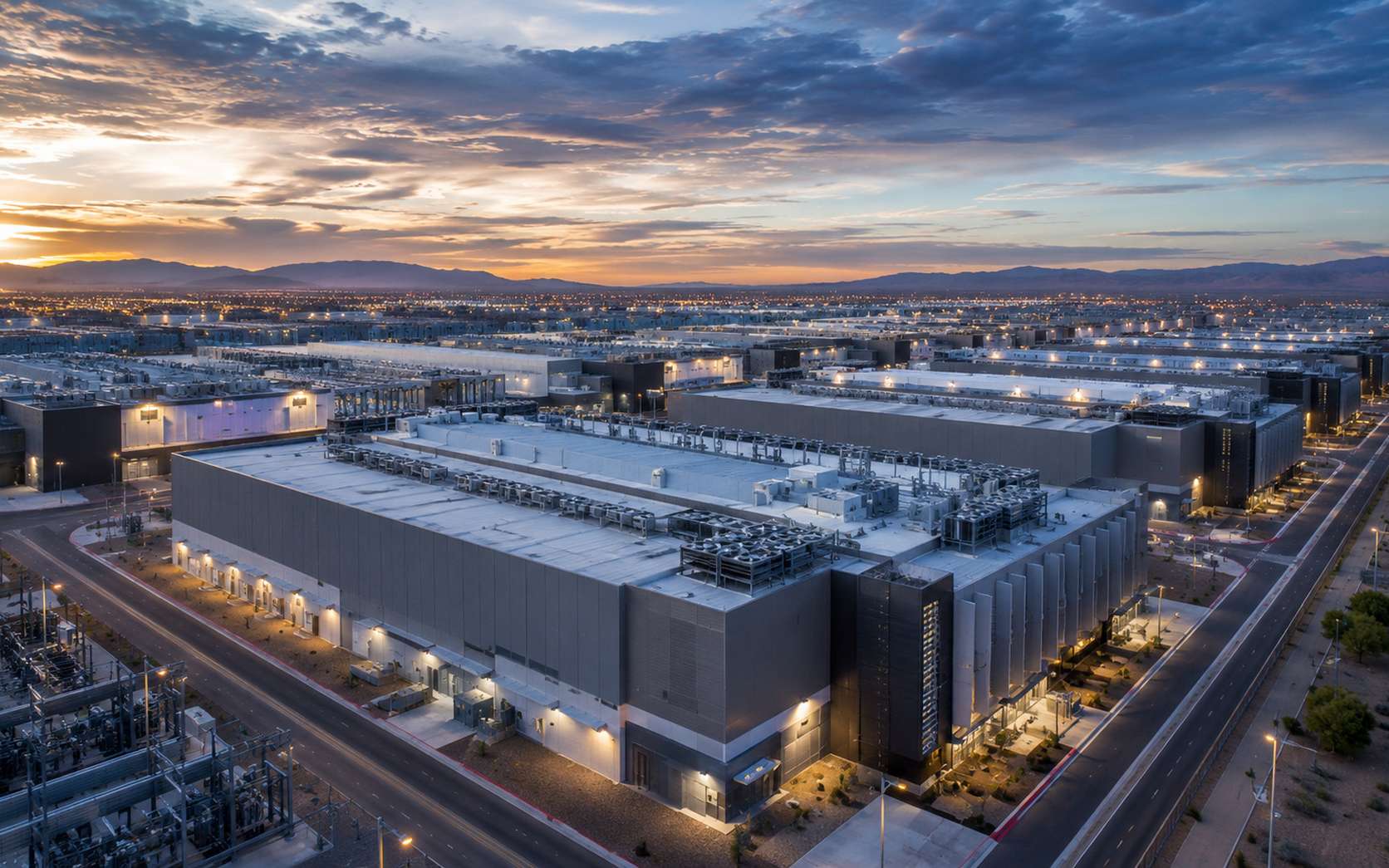
While states like New York are putting a moratorium on the construction of data centers in the US, the UAE is moving in the opposite direction; an aggressive AI data center buildout has government backing.

Stargate UAE, a data center project that involves top tech firms such as OpenAI and Oracle, is being built in Abu Dhabi. The city has essentially planned out a business model designed to turn AI into hard cash with a focus on the energy resources that will play a major role in the effort.

The plan is to redirect Abu Dhabi’s vast energy resources — it has up to 100 billion barrels of known oil reserves — to data centers generating AI tokens. Those tokens can then be sold as compute resources to produce revenue.

With oil markets volatile because of ongoing conflicts and the worldwide rise of renewables, pushing energy use to AI data centers might be a more reliable form of revenue long term.

Will it work? That remains to be seen. But unlike the US backlash against data centers construction in many place, a ban here seems unlikely.

The entrepreneurial spirit

Technological innovations from entrepreneurs have been at the core of Dubai’s rapid growth in recent years as a global business center. Here, AI is already quietly woven into daily life, much as it is in China, where AI is already in factories, homes, and infrastructure.

One founder told me that naming his company to include “AI” is more of a US thing. UAE companies focus less on boasting about AI models and superintelligence; they tend to emphasize user experiences.

On a separate track, Dubai is already targeting the launch later this year of robotic air taxis flying from the airport into the city. (That’s ahead of New York City, where electric air taxis are still being tested.)

Still, Dubai is behind the US when it comes to autonomous ground transport. The first autonomous taxis hit Dubai streets just last year, and there are a limited number operating in tourist areas.

A complicating face tor for the area remains the Iran war. Dubai’s Internet City, a hub with buildings belonging to the likes of Microsoft, Oracle and IBM, largely emptied when the war started in late February. Foreign tech workers left, and property prices declined.

But the real estate market is booming as opportunistic investors buy low. Their bet: the US-Iran war won’t stop the UAE’s growth.

Money is flowing into the area in other ways. Heavy tax burdens in Western countries are pushing wealthy founders to move businesses to Dubai’s tax-free environments. And Dubai is opening the door to those with digital nomad and freelance visas. Although visas can cost thousands of dollars a year, lower rent and healthcare costs compared to the US can offset those costs.

Rivals are emerging, too

UAE’s economic rival, Saudi Arabia is also rising as a tech powerhouse. Riyadh has undertaken reforms at a rapid pace to become an attractive place to do business under its Vision 2030 program.

Saudi Arabia requires corporations to have regional headquarters in the country to win government contracts, a policy that challenges Dubai’s status as a regional business hub.

The UAE also relies heavily on immigrants and human labor, which can be both a plus as well as a challenge. There is no pathway for entrepreneurs or long-time tech workers to retire here, which can undermine worker motivations to stay.

Still, the attractive business environment, combined with local infrastructure and a skilled labor force, make this area appealing. As one founder told me, if the US doesn’t want its most skilled immigrants, the UAE will be happy to welcome them with open arms.

  •  

Data center developer eyes disused newpaper printing plant

As newspapers move online, the buildings that once housed their printing presses need new occupants.

The Minnesota Star Tribune has just sold its old printing plant on the edge of Minneapolis to the aptly named property developer Legacy Investing, which plans to create a new data center there. has found the ideal way to bring them back to life.

This is the second such move by Legacy. It has already bought a building in downtown Minneapolis that it has transformed into a data center for artificial intelligence and cloud computing.

These old buildings, already connected to power, are an attractive option for developers — especially with some grid operators threatening power cuts for new-build data centers during power shortages.

Legacy is taking a small-is-beautiful approach rather than replicating the massive data centers being built for Big Tech firms. Those are the size of small towns and consume huge volumes of water and hundreds of megawatts of power, while the capacity of Legacy’s downtown building is about 30 MW, and it expects the Star Tribune site to host around 20 MW of data center equipment.

The scaled-down approach may well be an attractive option for operators in the future.

This article first appeared on Network World.

  •  

O aviso de “armazenamento quase cheio” é o melhor vendedor da Apple — e a conta chega todo mês

“O armazenamento do iCloud está quase cheio”. Se você usa iPhone, aposto que leu essa frase nesta semana. Talvez hoje. Ela aparece nos Ajustes, aparece por notificação, aparece quando o backup falha de madrugada… e não desiste nunca. Não é um bug. É, possivelmente, o vendedor mais eficiente que a Apple já contratou.

Nas últimas semanas, escrevi aqui duas matérias medindo produtos da Apple numa moeda que todo mundo entende na pele: horas de trabalho. Vimos quanto custa um Mac depois dos aumentos e quanto custou cada geração de iPhone desde 2007. Mas hardware você paga uma vez e o assunto morre; assinatura, não. Assinatura é um pedágio silencioso: poucos reais por mês, para sempre. E ninguém de fato se dá ao trabalho de fazer essa conta — então eu resolvi fazer.

Os mesmos 5GB desde 2011

Antes dos números, um pouco de contexto. Quando o iCloud nasceu, em outubro de 2011, a Apple deu 5GB gratuitos para cada conta. Era a época do iPhone 4s, de câmera de 8 megapixels e fotos de uns 2,5MB cada. Dava para viver um bom tempo dentro daquele limite.

Quase 15 anos depois, os 5GB continuam exatamente os mesmos. Só que o mundo ao redor deles mudou de tamanho: o iPhone 17 tira fotos de 48MP, grava 4K a 60 quadros — cerca de 400MB por minuto — e sai de fábrica com 256GB. Ou seja, a Apple vende um aparelho com 256GB e dá uma nuvem que corresponde a 2% disso. Um backup básico, sozinho, já não cabe. A caixa ficou pequena de propósito ou só ficou pequena? Guarde essa pergunta.

Quem não aguenta o aviso assina o iCloud+. No Brasil, depois do reajuste de até 33% em 2025, as mensalidades saem por R$5,90 (50GB), R$19,90 (200GB), R$66,90 (2TB) e vão até R$399,90 (12TB).

A conta em horas, plano a plano

A régua é a mesma das matérias anteriores: salário mínimo por hora no Brasil (R$8,50), nos Estados Unidos (piso federal de US$7,25), no Canadá (C$17,60, em Ontário) e em Portugal (5,31€). Cada célula mostra quanto tempo de trabalho um mês de assinatura consome.

PlanoBrasilEUACanadáPortugal
iCloud+ de 50GB42min8min4min11min
iCloud+ de 200GB2h20min25min14min34min
iCloud+ de 2TB7h52min1h23min44min1h53min
iCloud+ de 12TB47h8h16min4h33min11h18min
Preços oficiais da Apple em julho de 2026, sempre no plano mensal.

À primeira vista, parece barato — e é justamente assim que uma assinatura funciona. O plano de 50GB custa 42 minutos de trabalho por mês. Quem reclamaria? Mas suba na tabela: o plano de 2TB, o mais comum para quem tem família ou anos de fotos acumuladas, consome quase um dia inteiro de trabalho por mês de um brasileiro de salário mínimo. O mesmo plano custa 44 minutos para um canadense. E o de 12TB beira o surreal: 47 horas mensais — mais de uma semana de expediente, todo mês, só para guardar arquivos.

Vale a comparação com o hardware: nas matérias anteriores, o brasileiro trabalhava de 8 a 12 vezes mais que o americano pelo mesmo iPhone ou iPad. Nos serviços, a distância é menor — cerca de 6 vezes no plano de 2TB —, mas segue aí, firme e forte. Contra o Canadá, a proporção volta às mesmas 10 vezes de sempre. E Portugal repete o papel de meio-termo que já apareceu na conta do hardware: 1h53min pelos mesmos 2TB, 4x menos esforço que o brasileiro — confortável perto de nós, longe do sossego canadense.

O pedágio que nunca acaba

Agora, o detalhe que muda tudo: essa conta não fecha nunca. O iPad de 706 horas dói uma vez; o iCloud cobra todo mês, até o fim dos tempos — ou das suas fotos, o que vier primeiro.

Um ano de iCloud+ de 2TB custa R$802,80 — 94 horas de trabalho, meio mês de expediente por ano. Em 10 anos, são mais de 900 horas: território de iPhone 17, que calculei em 1.006 horas na matéria anterior. Ou seja, guardar as fotos por uma década custa quase o mesmo esforço que comprar o telefone que as tirou.

E tem o degrau seguinte, claro. O Apple One Individual (R$42,90) leva 5 horas mensais de trabalho; o Premium (R$99,90), quase 12 horas — cerca de 140 horas por ano, ¾ de um mês de trabalho anual em assinatura. No fim das contas, o brasileiro de salário mínimo que assina o pacote completo da Apple dedica praticamente um mês do ano só para manter os serviços da Maçã rodando.

Por que a caixa não cresce

Aqui entra o olhar de produto, área em que trabalho há mais de 20 anos. Aquele aviso de armazenamento não é um acidente de percurso: é um funil de conversão dos bons! Ele aparece no momento de maior dor (backup falhou, foto não salvou), oferece a solução a um toque de distância e custa “só” R$5,90. Nenhum vendedor de loja chega perto dessa taxa de conversão.

E o incentivo para manter os 5GB congelados é gigante. Os serviços renderam à Apple US$109,2 bilhões no ano fiscal de 2025, com margem bruta de 75% — o dobro da margem do hardware. Cada pessoa que cede ao aviso vira receita recorrente, previsível e baratíssima de servir. Se os 5GB gratuitos virassem 50GB amanhã, quantos milhões de assinaturas de entrada evaporariam? A Apple sabe a resposta melhor do que ninguém. Tanto que Google (15GB) e Microsoft (5GB, mas com Office no pacote) jogam jogos parecidos — a Apple só joga com a caixa mais apertada do mercado.

Sejamos justos num ponto: nuvem custa dinheiro de verdade (data center, energia, redundância) e o iCloud+ entrega junto recursos como o Retransmissão Privada (Private Relay) e o Ocultar Meu E-mail (Hide My Email). Não é um produto ruim; eu mesmo assino e não pretendo cancelar. O problema não é o plano pago existir, é a versão gratuita ter sido desenhada para não ser suficiente — em 2011, ela era.

No fim, é uma escolha de modelo de negócio — e das mais bem executadas. Só acho saudável que a gente a chame pelo nome. Quando o aviso aparecer de novo aí no seu iPhone — e ele vai aparecer —, lembre que aqueles 42 minutos de trabalho por mês não foram um acaso: foram desenhados, testados e otimizados para esse exato momento. A Apple não vende mais só o telefone. Vende o lugar onde a sua vida digital mora — e cobra o aluguel em dia.

  •  

La Chine prépare un réseau géant pour l’IA : le plan qui pourrait changer l’équilibre mondial

Pékin travaille à un vaste programme d’investissement estimé à 2 000 milliards de yuans, soit environ 295 milliards de dollars, destiné à développer un réseau national de centres de données consacrés à l’intelligence artificielle.

  •  

The AI revolution comes with a hidden tax

It was the best of trends, it was the worst of trends. It was the epoch of artificial intelligence,  it was the epoch of artificial inflation. 

I’m truly excited to be alive at a time when AI, formerly the stuff of science fiction, is now an everyday reality and promising so many benefits to humankind. 

AI is accelerating drug discovery, slashing the cost of protein folding research, diagnosing cancers earlier than human radiologists can, automating the drudgery out of nearly every white-collar job, translating speech across hundreds of languages in real time, and giving the blind a way to see the world through a camera. 

AI is giving us all this and so much more. But no amount of techno-optimism can hide the fact that AI is making just about everything more expensive. 

While the AI trend is making a tiny number of rich people even richer, the public at large is paying the price through rapidly rising prices; it represents a transfer of wealth from the have-nots to the haves. 

AI is a machine that eats resources. It eats chips. It eats electricity. It eats water, land, labor, and building materials. AI’s gluttony creates scarcity, and scarcity creates inflation. 

Here are all the ways AI is driving up costs for you and me. 

Your gadgets cost more

AI runs on memory chips and other computing hardware. AI companies buy so many of them that they’ve created a shortage. NAND prices shot up around 246% from the start of 2025 through last December, according to Kingston. Hard disk drive prices in Europe rose 46% in just four months. 

The chip shortage pushed smartphone prices to all-time highs — one analyst called it a “tsunami-like shock” to the industry. Beyond that, computer and device prices will climb by 20% by the end of 2026, according to one estimate.

Apple CEO Tim Cook told the Wall Street Journal this week that price increases on Apple products are “unavoidable,” citing the surging costs of memory and storage chips driven by AI data-center demand. He described the supply shock as a “hundred-year flood.”

Software costs more

Greedflation has hit the software industry. Salesforce, ServiceNow, and others have increased subscription prices, blaming AI for the hikes. IT spending globally is forecast to grow 13.5% in 2026 over the previous year, reaching $6.31 trillion, according to Gartner, with the bulk of the increase driven by AI infrastructure investments.

The pricing models themselves are getting more complex and more expensive: seat licenses plus API usage plus GPU compute plus data storage plus compliance layers. What used to be one subscription is now five line items.

Enterprise software spending is growing 13.3%, with much of it being price increases on existing contracts rather than new purchases.

Services cost more

The services you buy cost more because companies are burning money on AI and passing on the costs to you. While tokens are getting cheaper, the new reasoning models can use anywhere from several times to tens of times more tokens than traditional models for comparable tasks.

SaaS inflation now runs at 13.2%, which is nearly five times the consumer inflation rate, and a majority of that increase is due to AI costs. 

Goldman Sachs forecasts that agentic AI could drive a 24-fold increase in token consumption by 2030, and that applies to the companies that provide enterprise services. 

Electricity costs more

AI data centers draw power the way a city does, pushing US residential electricity prices up roughly 5% on an annual average basis in 2025. That’s nearly double the general inflation rate of 2.7%.

Wholesale electricity prices near data center clusters have more than doubled since 2020. Goldman Sachs says electricity inflation will hover around 6% through 2027. 

The utilities build new power plants and transmission lines to serve these data centers, then hand the bill to everyone on the grid. You pay for AI’s appetite, whether you use AI or not. 

Your heating bill goes up, too, because the same natural gas that warms your home is being burned to generate power for data centers.

Your car costs more

Modern cars are computers on wheels. And a new automotive chip shortage is now underway. Prices for the memory chips that go into cars are expected to rise 70% to 100% in 2026 adding as much as $400 to the price of a car. 

Your house costs more

Data centers need land near power lines and water. They buy it at record prices, and they outbid the people who would have built homes on it. In Texas, data centers compete directly with homebuilders for utility-ready lots. In Northern Virginia, the data center buildout is squeezing the housing supply in a market that is already short. In Columbus, Reno, and Salt Lake City, data center land deals are pushing up land values beyond anything those markets have ever seen for industrial property. And the houses that do get built cost more, because data center construction has driven up wages for workers by 25% to 30%. 

Data centers even compete with public infrastructure projects for the same crews and the same concrete, copper, and steel — driving up the cost of roads and public works.

Everything costs more

AI is helping all kinds of companies fleece customers. Research from Carnegie Mellon in 2025 found that AI-driven ranking and pricing systems raise prices. 

AI-powered pricing algorithms now set the price of your rideshare, your flight, your hotel room, even your concert ticket. They use AI to estimate the maximum amount you’re willing to pay, then charge you that amount. Called surge pricing or dynamic pricing, the bottom line is that it affects your bottom line. 

A 2020 study in the American Economic Review showed that AI algorithms create a poverty premium: They learn that people with fewer alternatives are less sensitive to price, so they charge poor people more. 

Here’s another weird phenomenon hardly anyone talks about: When competing companies all use similar AI pricing systems, they can arrive at higher prices together without ever talking to each other. It adds up to a kind of accidental price-fixing. 

Food costs more

Higher electricity prices flow through the entire economy. Farms, food processors, trucking companies, and stores all pay more for power because of AI consumption, and they pass those costs down the chain until they’re ultimately paid by food consumers. 

Data centers are also consuming land that was once used for farming, forcing some farms to locate further away from population centers. 

Taxes cost more

Data centers receive enormous tax incentives and subsidies from state and local governments. At least 38 states now offer such incentives to data centers, which means funding shortfalls have to be made up by families paying their taxes. 

Texas is projected to lose $3.3 billion by 2029. Meta’s got a 20-year sales tax exemption from the state of Louisiana on data center equipment worth an estimated $3.3 billion. Pennsylvania will probably give around $2 billion in data center tax breaks. 

AI may one day change the world. But for now, it’s mainly just changing the cost of living. 

AI disclosures: I don’t use AI for writing. The words you see here are mine. I used a few AI tools via Kagi Assistant (disclosure: my son works at Kagi) as well as both Kagi Search and Google Search as one part of my fact-checking for this column. I used a word processing product called Lex, which has AI tools, and after writing the column, I used Lex’s grammar checking tools to hunt for typos and errors and suggest word changes. Why I disclose my AI use and encourage you to do the same. 

  •  

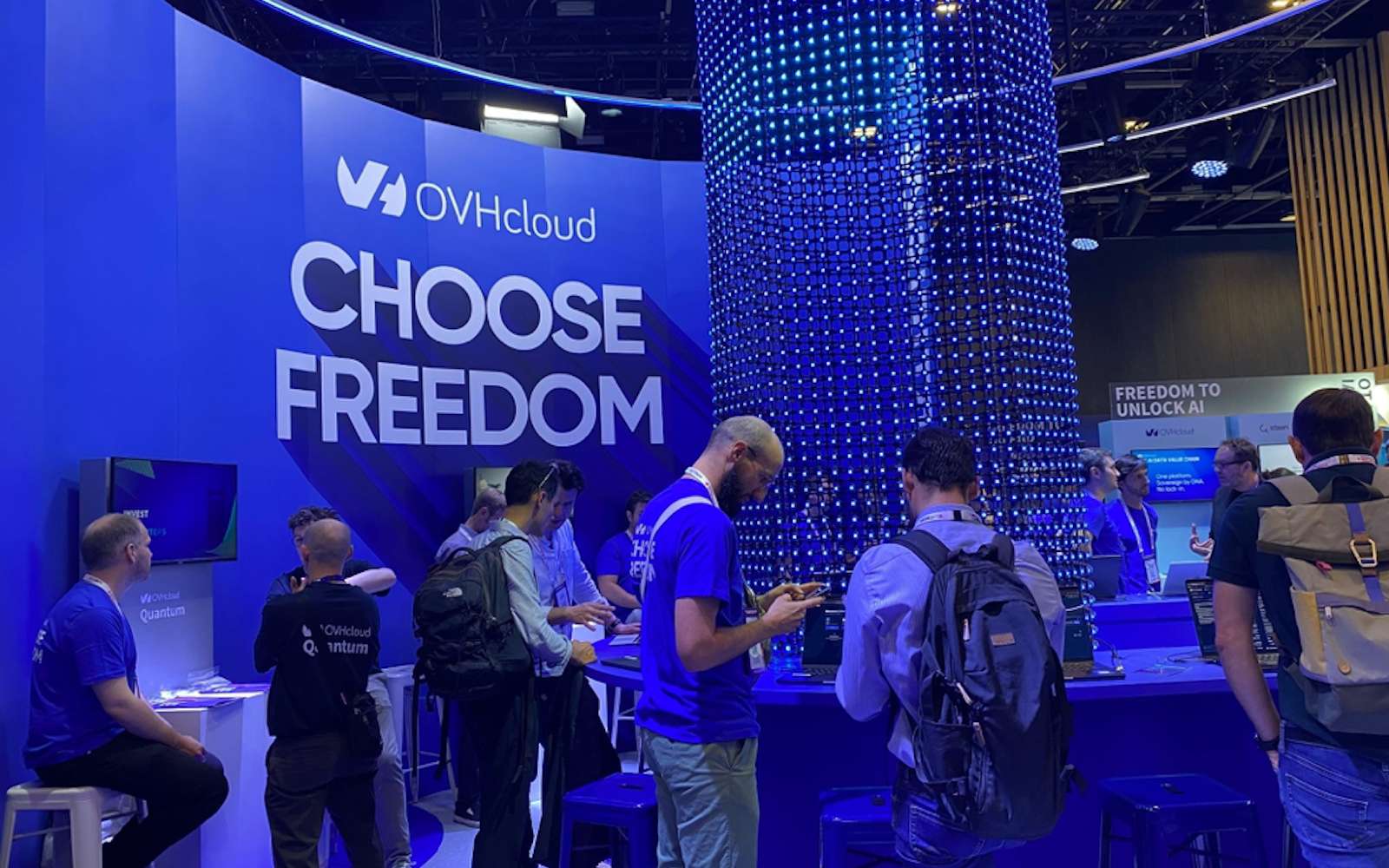
L’informatique quantique à la portée de tous, la révolution annoncée par OVHcloud

À l’occasion de VivaTech 2026, OVHcloud lève le voile sur sa Quantum Platform, une offre de quantum-as-a-service pour appréhender le quantique avant sa montée en puissance. À travers un écosystème de start-up européennes, le groupe entend structurer une filière souveraine. Fanny Bouton,...

  •  

Face à la soif d’énergie de l’IA, la Chine mise sur des serveurs immergés en mer

Face à l’explosion des besoins de calcul liés à l’intelligence artificielle, la Chine a mis en exploitation un data center sous-marin présenté comme le premier au monde à être alimenté par un parc éolien offshore, ce qui réduit la dépendance à l'eau douce et aux énergies fossiles.

  •  

Democratizing AI adoption with Tether’s Bitnet LLM fine-tuning framework

“The future of AI should be accessible, available, and open to people and builders everywhere, and it should not require an absurd amount of resources only available to a handful of cloud providers,” Paolo Ardoino, CEO, Tether.

About 700 million people use generative AIs like Gemini and ChatGPT weekly, but adoption is far from uniform. McKinsey’s 2025 State of AI survey found that nearly half of respondents from companies with more than $5 billion in revenue have reached the AI scaling phase, compared with just 29 percent of those from companies with less than $100 million in revenue, a gap that only widens further down the chain, locking out smaller businesses, developers, and everyday users.

Retail and small businesses are limited to basic AI utilities that their facilities can power, such as text-based inference and multimedia generation, using base models. That is billions of end users, and developers locked out of full utilization and development of intelligent software due to high infrastructure demands.

Tether’s edge-first LoRA fine-tuning framework for Microsoft’s Bitnet LLM is an important step towards developing an infrastructure system that supports billions of AI agents and intelligent machines. By reducing the computational overhead of machine learning and enabling consumer-grade devices to perform advanced operations, Tether’s edge-first approach ensures greater leverage for the larger population.

Imagine a 13-billion-parameter model being fine-tuned on everyday handheld devices like Samsung S25 and iPhone 16, as well as on regular personal computers. The breakthrough combines resource-efficiency and platform-agnostic techniques to develop a fine-tuning framework for the ternary-quantized LLM.

Behind Tether’s Bitnet fine-tuning framework

Bitnet LLM was born out of the vision of an intelligent AI model that doesn’t consume outrageous computing resources even at full precision. Earlier attempts at resource-efficient AI relied on trade-offs, such as running small-parameter models at higher precision or larger-parameter models at lower precision, but neither approach fully solved the problem.

Bitnet takes a more fundamental approach. The result is a model that achieves linear efficiency while consuming only a fraction of the computing resources traditionally required.

The challenge, however, is that contemporary GPUs are optimized for the very floating-point operations Bitnet eliminates, creating a hardware compatibility gap. Compounding this, Bitnet was originally confined to its own Bitnet.cpp inference engine, limiting its broader utility. Tether’s breakthrough addresses both constraints at once by integrating a Vulkan and Metal GPU backend that unlocks true cross-platform capabilities for BitNet inference and LoRA fine-tuning on heterogeneous consumer GPUs, including mobile GPUs. Bitnet can now run on more mature, widely supported inference engines without sacrificing its efficiency advantages.

Vulkan’s cross-platform nature is key here. Unlike CUDA, which ties developers to NVIDIA hardware, Vulkan runs across a broad range of GPUs and operating systems, opening Bitnet to genuinely multi-platform deployment. Tether’s Bitnet fine-tuning framework implements a dynamic tiling technique to mitigate limitations in Vulkan driver buffer allocation on mobile GPUs.

The dynamic tiling algorithm technique was first applied in the fine-tuning framework for QVAC Fabric LLM, the AI model that powers Tether’s QVAC Workbench application.

This implementation demonstrates the efficiency of this approach: fine-tuning a 13-billion-parameter model across a range of consumer devices with varying GPU configurations.

The Bitnet LLM Fine-tuning framework is Tether’s latest achievement and part of a broader expansion into open-source AI and communication technologies that challenge current, slow, fragile, and controlled systems. These developments are open-sourced and packaged as modules in the QVAC SDK for easy deployment and to help developers build edge-first AI applications without needing anyone’s permission.

Tether envisions superintelligence as a foundational element possessed by its owner and is enforcing this through:

Local-first AI

Synonymous with decentralized AI, “Local-first” AI aims to create sovereign AI solutions that do not rely on centralized infrastructure, such as data centers, to operate. They are considered cost-effective, relatively more sustainable, and unarguably more private than centralized AI. Tether is building AI applications that rely entirely on the device’s resources. These applications store data in device memory and use its processors for advanced operations, such as fine-tuning and inference.

P2P computing network for AI inference

Tether’s AI applications are built on the Pear runtime. Pear is a tooling platform for fully P2P applications that can operate without servers. Pear leverages the Holepunch tech stack. Holepunch is purpose-built for stable, direct communication between devices. Pear enables delegated inference for AI applications such as QVAC Workbench. Delegated inference enables a unified, dynamic workstation architecture where compute tasks are fluidly distributed between mobile and desktop environments, allowing either device to offload high-intensity processing to the most capable system. That is, you can start a task on your mobile device and delegate it to your desktop or laptop for completion.

AI for everyone

The only way to scale intelligence to the needs of a ten-billion-strong society is to push it to the edge. This, in turn, depends on the progress made by experiments aimed at cost-effectively localizing AI computation.

Billions of AI agents and countless AI applications deployed by developers in every region of the world, running effectively on user-owned resources, is the only way we can democratize superintelligence and avoid creating another ‘luxury’ cutting-edge technology controlled by unicorns and fully accessible only to elites.

Tether is pioneering limitless superintelligence for an ever-growing society and applications. Follow the journey to truly local and edge-first AI solutions

  •  
❌