❌

Reading view

What You Need to Know About Installing Plug-In Solar Panels

You can now buy panels that plug into electrical outlets, but there are some important safety issues to consider when picking and installing a system.

© Patrick Junker for The New York Times

Plug-in solar panels are as large as windows, and in Germany they are often installed on balconies.
  •  

Plug-In Solar Panels Are Starting to Sprout in U.S. Backyards

Ten U.S. states have legalized systems that can be plugged into standard wall outlets. The technology typically does not require permits or electricians.

© Poppy Lynch for The New York Times

Alex Ottoboni with his balcony solar panel at his condo in the San Francisco Bay Area
  •  

Your Home Could Help Solve AI’s Growing Power Demand

Tesla, Sunrun and Renew Home plan to tap solar panels, batteries, thermostats and other devices installed in millions of homes to meet the energy demands of artificial intelligence.

© Collin Chappelle for The New York Times

Installation of a Sunrun solar panel on a roof in California. Sunrun is working with Tesla and Renew Home to use home energy devices to help data centers get online faster.
  •  
  •  

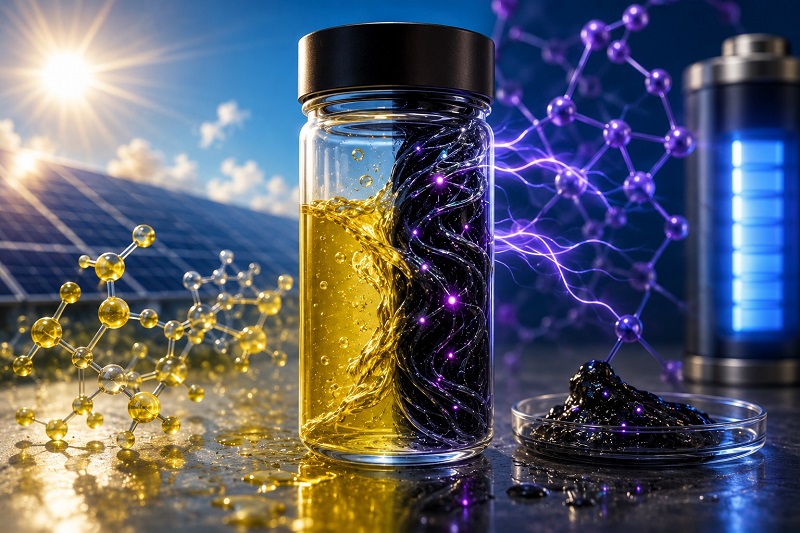
Scientists create a water-based material that stores solar energy like a living system

Scientists at Northwestern University have developed a remarkable new material that can capture energy, store it for months, use it when needed, and then reset itself for reuse. Even more surprisingly, it behaves in a way that resembles living cells. The new material could one day help store renewable energy, power chemical reactions, clean up […]

The post Scientists create a water-based material that stores solar energy like a living system appeared first on Knowridge Science Report.

  •  

El Niño Officially Begins as Solar Power Surpasses Coal, SpaceX Eyes Historic IPO — Today’s Environmental Briefing for Fri, Jun 12 2026

Satellite view of Pacific Ocean showing temperature patterns indicating El Niño weather phenomenon

**

Across the stories today, a common thread emerges: the planet is sending signals, and communities are finally learning to listen—sometimes by choice, sometimes by necessity.

The day’s most prominent signal comes from the Pacific, where scientists have confirmed the arrival of a powerful El Niño that could rank among the century’s strongest climate events. This naturally occurring phenomenon, which emerges every few years to reshape weather patterns globally, arrives at a moment when human communities are already stretching to adapt to climate disruption. For families from Florida to California already spending an extra $400 to $900 annually on climate-related costs—rising to over $1,300 in the hardest-hit areas—the prospect of intensified extreme weather represents more than meteorological curiosity. It’s a reminder that progress and pressure often arrive together.

Yet the day’s coverage also points to growing momentum around solutions that seemed impossible just years ago. Solar power has quietly crossed a historic threshold, generating more electricity than coal in the United States for the first time ever—12.8% versus coal’s 12.2% in May alone. Meanwhile, engineers in Barcelona have finally realized Antoni Gaudí’s sustainable architecture vision at the Sagrada Familia, using modern technology to complete designs that were ahead of their time by more than a century. These breakthroughs suggest that patient innovation can eventually bridge the gap between ambitious vision and practical reality.

The tension between environmental protection and human needs surfaces repeatedly across today’s stories, revealing communities grappling with complex tradeoffs. In Queens, residents debate whether an abandoned railway should become green space or renewed transit infrastructure. Nebraska towns that fiercely rejected wind and solar projects are welcoming nuclear power plants. Even Britain found time to celebrate, with the peacock butterfly claiming the crown in the nation’s first-ever favorite species poll—a small but significant reminder that public engagement with nature remains strong.

Behind the numbers are real communities adapting in real time. In London, new research shows that clean air zones have measurably reduced emergency hospital visits, translating policy into tangible health benefits. But the challenges run deep: in Alabama, a community that lacks basic sanitation infrastructure now faces a proposed data center that would strain resources further, while in Ecuador’s Amazon, an Indigenous community surrounded by two rivers cannot access clean drinking water due to mining pollution.

The natural world continues revealing both its resilience and vulnerability. Scientists captured the first-ever footage of goblin sharks in their deep-sea habitat, while researchers documented how elephant loss triggers immediate dung beetle extinctions in Kenya—the first direct evidence of coextinction in action. Perhaps most remarkably, new research has mapped the underground fungal networks that span 110 quadrillion kilometers worldwide, moving billions of tons of carbon in an invisible web beneath our feet.

These discoveries underscore how much we’re still learning about the systems that sustain life on Earth, even as we’re rapidly changing them. From pharmaceutical pollution in East African waters to the transformation of Miami’s Biscayne Bay into saltier, more acidic habitat threatening endangered sharks, the impacts of human activity continue cascading through ecosystems in ways we’re only beginning to understand.

As these stories unfold, they reveal a world where environmental challenges and solutions are increasingly inseparable from questions of justice, economics, and community resilience. The coming months will test whether the momentum behind renewable energy and conservation can match the scale of changes already underway.

The post El Niño Officially Begins as Solar Power Surpasses Coal, SpaceX Eyes Historic IPO — Today’s Environmental Briefing for Fri, Jun 12 2026 first appeared on EnviroLink Network.

  •  

Solar Power Surpasses Coal in US Electricity Generation for First Time in History

Solar Power Surpasses Coal in US Electricity Generation for First Time in History

In a landmark moment for renewable energy, solar power generated more electricity than coal in the United States for the first time ever during May 2024. Solar supplied 12.8% of the nation’s electricity, edging out coal at 12.2% – marking coal’s fourth-lowest monthly share on record.

This historic milestone represents the continuation of a dramatic energy transformation happening across America. Despite federal policies favoring traditional fossil fuels, solar energy has maintained its position as the leading source of new power capacity in the country. The shift reflects broader market forces driving the transition to cleaner energy sources, including declining costs of solar technology and increasing investor confidence in renewable infrastructure.

The milestone comes from data released by global energy think tank Ember, alongside supporting analysis from the Solar Energy Industries Association and Wood Mackenzie. These figures underscore how solar power has evolved from a niche alternative energy source to a mainstream electricity provider capable of competing directly with traditional fossil fuel generation.

The achievement highlights the resilience of the renewable energy sector and suggests that market dynamics may be more influential than policy directives in shaping America’s energy future. As solar installations continue expanding nationwide and costs continue declining, this May milestone may represent just the beginning of solar’s dominance over coal in the US electricity mix.

The post Solar Power Surpasses Coal in US Electricity Generation for First Time in History first appeared on EnviroLink Network.

  •  

Democrats Once Vowed to Stop Oil and Gas. Now They’re Not So Sure.

As the midterm elections approach, many leading Democrats are rethinking their approach to climate change.

© Anna Moneymaker/Getty Images

A talk on rising energy costs on Capitol Hill hosted by Democrats, from left, Sen. Martin Heinrich of New Mexico, Senate Minority Leader Chuck Schumer and Sen. Sheldon Whitehouse of Rhode Island, in March.
  •  

Rare African Bird Makes Historic UK Debut While Communities Transform Lawns Into Wildlife Havens — Today’s Environmental Briefing for Wed, Jun 10 2026

Rare African bird species perched in British countryside landscape with birdwatchers observing in background

Across the stories today, a common thread emerges: the growing gap between urgent environmental realities and the systems—political, economic, and social—struggling to keep pace with change.

This tension plays out most starkly in the realm of climate health impacts. New research warns that heat-related hospitalizations could double by 2040, while a super El Niño threatens to deepen global economic inequality through cascading climate disruptions. Behind the numbers are real communities adapting in real time. In Pacoima, a working-class Los Angeles neighborhood sandwiched between highways and heavy industry, residents like Jose Luis Salas are mounting their own defense against air pollution, installing shoebox-sized monitoring devices that track what they breathe daily.

Yet the day’s coverage also points to growing momentum around practical solutions gaining real traction. Solar energy quietly surpassed coal in U.S. electricity generation for the first time this May—a milestone that arrived not through grand announcements but through the steady accumulation of rooftop panels and utility-scale installations. Britain cleared a major bottleneck by offering grid connections to over 700 clean energy projects, while new data reveals the country’s green economy now employs over one million workers across a £100 billion sector.

The stories reveal how environmental challenges are increasingly driving innovation at the community level. In Guatemala’s Western Highlands, approximately 60 communities are reviving ancient Maya agricultural wisdom, creating homemade biopesticides from aromatic plants to replace expensive chemical alternatives. Similarly, 120 women farmers in Malawi’s Chiradzulu district have transformed traditional maize cultivation by adding organic fruits and vegetables now in high demand from urban buyers—though their success is shadowed by a troubling reality: their bees, crucial pollinators for food security, are mysteriously disappearing.

It’s a reminder that progress and pressure often arrive together. Colombia enacted groundbreaking legislation requiring detailed cattle tracking to prevent deforestation-linked beef from reaching markets, while Indonesia’s magnificent hornbills face accelerating threats from both habitat loss and an illegal online pet trade. The contrast illustrates how conservation gains in one area can be undermined by emerging threats in another.

Perhaps most telling is how wealth continues to complicate climate action. New research from Greenpeace reveals that the ultra-rich drive a quarter of global emissions not through private jets—their visible symbols of excess—but through their investment portfolios and asset ownership. Meanwhile, chemical companies are quietly pushing “immunity laws” across 15 states to shield themselves from health-related lawsuits, even as communities bear the costs of environmental damage.

The space program offers its own metaphor for these broader tensions. NASA’s latest astronaut selections for Artemis missions reflect both ambition and limitation—crews training for missions that won’t reach the Moon, while hundreds of women gathered at the AeroWomen conference to prepare for space careers in an industry still taking shape.

As the week unfolds, all eyes will be on whether these parallel tracks—accelerating environmental pressures and emerging solutions—can converge into the systemic changes scientists say are necessary. Today’s stories suggest we’re living through a period when local innovation and global challenges are both intensifying, creating opportunities for breakthrough and breakdown in equal measure.

The post Rare African Bird Makes Historic UK Debut While Communities Transform Lawns Into Wildlife Havens — Today’s Environmental Briefing for Wed, Jun 10 2026 first appeared on EnviroLink Network.

  •  
❌