A Receita Federal anunciou dois novos leilões os quais contam com uma série de dispositivos da Apple que entraram de forma ilegal no país. Distribuídos nas cidades de Porto Alegre (RS) e Salvador (BA), eles somam, ao todo, 16 lotes com pelo menos um produto da empresa.
O órgão, é sempre bom lembrar, não especifica os modelos ou as versões de determinados itens incluídos nos lotes, sendo que alguns deles podem estar usados, vir sem caixa ou até mesmo sem acessórios (isso costuma ser alertado). Ele também não faz entregas.
Dentro dos lotes com produtos da Apple, também pode haver outros itens sendo leiloados, vale notar.
Porto Alegre
Com 190 lotes (embora apenas 11 com dispositivos da Maçã), os itens desse leilão estão concentrados na Superintendência Regional da Receita Federal do Brasil da 10ª Região Fiscal. Segundo seu edital, as propostas poderão ser enviadas para análise a partir do dia 25 de agosto, às 12h, e serão recebidas até 28/8, às 18h.
As melhores serão selecionadas para participar do pregão online — o qual está previsto para o dia 31/8, a partir das 14h.
Eis os lotes com dispositivos da Apple inclusos nesse leilão:
Lote
Produto(s) da Apple
Valor mínimo
4
2x AirTag (pacote com 4 unidades) 1x iMac (M4) 20x adaptador de parede USB-C (20W)
R$20.000
10
1x Magic Mouse (USB-C) 1x MacBook Air (M2, 256GB) de 13″ 2x MacBook Air (M1, 256GB) de 13″
R$10.000
18
1x Mac mini (M2)
R$10.000
32
219x adaptador de parede
R$3.000
33
6x adaptador de parede
R$4.000
36
20x adaptador de parede 1x Apple Pencil 6x EarPods
R$10.000
54
74x adaptador de parede 3x adaptador de parede (5W) 10x adaptador de parede (20W) 12x adaptador de parede USB-C 4x iPhone 12 Pro Max
R$3.000
83
2x AirTag (pacote com 4 unidades) 1x Apple Pencil Pro 1x MacBook Neo (8GB/256GB)
R$10.000
85
1x cabo USB-C de 1 metro 1x adaptador de parede (20W)
R$5.200
87
2x Apple Pencil (USB-C) 1x Apple Pencil (2ª geração) 2x Magic Keyboard 1x Mac mini (M4, 256GB) 1x MacBook Air (modelo não especificado, 8GB/256GB) de 13″
R$9.000
94
1x adaptador de parede (20W)
R$4.000
Salvador
Os itens desse leilão estão distribuídos em um total de 52 lotes, embora apenas 5 deles tenham algum dispositivo da Maçã.
De acordo com o seu edital, as propostas poderão ser enviadas para análise a partir do dia 17 de agosto, às 8h, e serão recebidas até 20/8, às 18h. As melhores serão selecionadas para participar do pregão online — o qual está previsto para o dia 21/8, a partir das 11h.
Lote
Produto(s) da Apple
Valor mínimo
28
3x adaptador de parede (20W) 23x cabo Lightning para USB 21x cabo USB-C para Lightning 1x cabo MagSafe para USB-C 1x cabo USB-C de 2m 1x capa de couro com MagSafe para iPhone 12 Pro Max
R$24.000
29
110x cabo Lightning para USB 1x cabo USB-C para Lightning 107x adaptador de parede (5W) 110x adaptador de parede (20W) 31x adaptador de parede (20W) 15x cabo USB-C para Lightning de 1m
R$22.000
31
2x AirTag
R$12.000
34
1x adaptador de parede (20W)
R$36.500
35
1x adaptador de parede (5W) 1x cabo Lightning para USB-C de 1m
R$8.500
Como participar
Todo o processo é feito de forma digital. Os interessados em adquirir os produtos do leilão precisam ter um CPF e um certificado digital válidos, via acesso ao Centro Virtual de Atendimento ao Contribuinte (e-CAC) — o qual será utilizado para acessar o site corretamente e poder participar de tudo.
Alguns lotes estão disponíveis para lances tanto de pessoas físicas quanto de pessoas jurídicas.
Em mais um dos seus comparativos, o canal do YouTube PhoneBuff colocou o MacBook Neo para disputar com o Dell XPS 13, ambos vendidos lá fora pelos mesmos US$700 (após o reajuste recente de Macs) com 8GB de memória — com diferença no armazenamento, 512GB contra os 256GB iniciais no caso da Apple.
Embora o XPS 13 tenha se mostrado um tanto competitivo em diversos cenários, o Neo se mostrou equivalente ou superior na maioria dos critérios estabelecidos no comparativo.
Quanto ao som dos dois, o computador da Apple, mesmo com metade da quantidade de alto-falantes, apresentou um resultado mais consistente em termos de qualidade — embora o XPS 13 tenha apresentado um volume maior.
Em se tratando da tela, tivemos a primeira grande derrota da Maçã: embora o MacBook Neo apresente maior visibilidade em ambientes com alta exposição à luz, o Dell XPS 13 venceu no conjunto geral ao contar com suporte ao toque, uma taxa de atualização de 120Hz e suporte ao padrão de gama de cores DCI-P3.
Sobre a bateria, embora perca em tempo de carregamento, o MacBook Neo compensa a desvantagem de capacidade física (36,5Wh frente aos 52Wh do XPS 13) com eficiência energética, até mesmo considerando a diferença entre a arquitetura x86 do Intel Core 5 320 e a arquitetura ARM64 presente no chip A18 Pro.
Falando em seus chips, aliás, o desempenho é outro ponto para a Apple: o computador da Dell vence em tempo de inicialização e nos testes de navegador por uma margem pequena (19 contra os 21 segundos do Neo), mas perde para o MacBook na descompactação de um arquivo de 6GB, sendo cerca de três vezes mais lenta na máquina com Windows, e também na abertura de um documento de 500 páginas no Word, com uma diferença de 5 segundos (12 no XPS e 7 no caso do Neo). A Maçã também levou a melhor com os programas da Adobe, concluindo mais rapidamente as alterações em projetos do Photoshop e do Premiere. Em jogos, foi o único momento em que o empate foi ruim o suficiente para ambos; títulos como Cyberpunk 2077 passaram com muita dificuldade da casa dos 30 quadros por segundo.
Câmera foi outro ponto positivo para o MacBook Neo, que apresentou imagens com mais nitidez e um microfone com uma filtragem de voz mais suave que sua contrapartida no universo Windows.
Já tratando de design, na avaliação do canal a vantagem é do Dell XPS 13 por sua leveza, bordas mais finas e a presença de retroiluminação no teclado (embora ele destaque positivamente o trackpad do MacBook) — ausência um tanto criticada por diversos entusiastas de tecnologia.
Em conclusão, ambas as máquinas possuem seus próprios pontos positivos — ou seja, não houve uma vitória clara para uma ou outra.
MacBook Neo
Cores: prateado, blush, amarelo-cítrico ou índigo Armazenamento: 256GB ou 512GB (com Touch ID)
NOTA DE TRANSPARÊNCIA: O MacMagazine recebe uma pequena comissão sobre vendas concluídas por meio de links deste post, mas você, como consumidor, não paga nada mais pelos produtos/serviços usando os nossos links de afiliado.
The Company posted quarterly revenue of $109.4 billion, up 16 percent year over year.
[…]
“Today, Apple is proud to report our strongest June quarter ever, with double-digit revenue growth across iPhone, Mac and Services, and in every geographic segment,” said Tim Cook, Apple’s CEO.
You can’t argue with the strong iPhone and Mac sales figures, and Apple specifically called out the MacBook Pro and the MacBook Neo, which Cook said “has been especially popular” and suggested that the company is still struggling to make them fast enough.
It’s admirable (and sensible) that Cook isn’t pointing fingers at anyone but customers who want Apple products, but the key phrase in his statement is “the supply chain just has less flexibility in it than normal.” This is an acknowledgement that while in the past, Apple might have been able to boost chip production from its partners, today the chip industry is maxed out thanks to the wild building of chips for AI applications.
[…]
As an aside, Cook also alluded to reports that Apple has tried to get the U.S. government to authorize purchase of RAM from some forbidden Chinese chipmakers, which has aroused political ire.
The latest financial numbers are in, and the Apple MacBook Neo is single-handedly pushing Mac sales to record levels. During its recent Apple Q3 2026 earnings call, Apple reported that Mac revenue jumped by almost 29 percent over the last quarter. This massive growth happened without the launch of any brand-new hardware during those three […]
Many MacBook Air, MacBook Pro, and MacBook Neo owners have noticed something curious; their MacBook battery stops charging at 80% when plugged in. To add to the confusion, even if they leave their MacBook plugged in overnight, the battery seems to be stuck at 80% and will not charge any further. Because this is not ... Read More
MacBook Neo helped Apple move against the global PC market in the second quarter of 2026, delivering double-digit Mac shipment growth while most leading computer manufacturers sold fewer units than a year earlier.
Preliminary data from IDC estimates that Apple shipped 6.7 million Macs during the quarter, up 10.1% from 6.1 million in Q2 2025. Its worldwide market share rose from 8.5% to 9.9%, placing the company within a fraction of the 10% threshold.
The rest of the industry moved in the opposite direction. Global shipments fell 4.9% year over year to 68.2 million units, ending nine consecutive quarters of growth. A separate Omdia estimate placed the decline at 3.6% and Apple growth at 15.9%, but both research groups identified the same pattern: the Mac gained ground while established Windows PC vendors contracted or remained flat.
IDC directly connected the Apple increase with the arrival of its lowest-priced notebook. MacBook Neo began shipping in March, giving the model its first complete quarter of retail availability between April and June.
MacBook Neo Drives Mac Shipment Growth
MacBook Neo entered the market as an alternative for buyers previously priced out of the Mac lineup.
The 13-inch notebook launched at $599 with an A18 Pro chip, 8GB of unified memory, a Liquid Retina display and up to 16 hours of video playback. It also brought macOS, Apple Intelligence and integration with the iPhone ecosystem into a price range commonly occupied by mainstream Windows laptops and Chromebooks.
That positioning attracted students, families and first-time Mac customers who did not need the performance or display technology of a MacBook Air or MacBook Pro. The four-color aluminum design also gave the entry model a more recognizable identity than the older Mac notebooks that frequently remained on sale through discounts.
IDC had already identified the computer as an unusual source of strength when it revised its notebook forecast earlier in 2026. Demand exceeded initial expectations in several markets, and reported inventory shortages appeared shortly after the March launch.
The effect became much more visible in Q2. MacBook Neo was available for the entire three-month period, allowing Apple to increase production, expand retail distribution and serve customers who could not obtain the computer during its first weeks.
The entry model also widened the Mac lineup without replacing the MacBook Air. Buyers seeking more memory, faster ports, longer wireless web use or additional external-display support could continue moving toward the M5-powered Air, while the less expensive machine handled education, office work, web browsing and communication.
That separation allowed Apple to reach lower price points without reducing the value of its premium notebooks.
Image Credit: Apple Inc.
Lenovo, HP and Dell Lose Shipments
Apple remained the fourth-largest traditional PC vendor, but its performance contrasted sharply with the companies above it.
Lenovo retained first place with 16.6 million units and 24.4% market share. Its shipments declined 2.1% from the previous year.
HP experienced the steepest drop among the top five, falling 9% to 13 million units. Dell shipped 9.3 million computers, representing a 5% decline. Asus remained nearly flat at 5 million units, up only 0.2%.
Manufacturers outside the five largest brands collectively suffered a 10.5% contraction, indicating that weaker demand and component inflation placed even more pressure on smaller companies.
The figures measure shipments into distribution channels or directly to end users, not confirmed retail purchases by individual consumers. A manufacturer can therefore record shipment growth while some inventory remains unsold in stores or warehouses.
MacBook Neo demand appears to have been strong enough to support Apple production increases rather than simply filling channels. The company reportedly doubled its annual production target after the initial response, although later quarters will reveal how much of Q2 reflected lasting demand rather than launch-period enthusiasm.
Apple also benefits from operating at a scale that provides leverage with memory, storage and semiconductor suppliers. Smaller PC brands face greater difficulty securing components at competitive prices when shortages intensify.
Memory Costs Reverse the PC Recovery
The Q2 contraction arrived after manufacturers and commercial customers accelerated purchases during late 2025 and early 2026.
Buyers expected memory and storage prices to rise, encouraging some businesses to replace computers earlier than planned. Vendors also increased inventories while components remained available.
That activity supported nine quarters of market growth but borrowed demand from later periods. Once the early purchases were completed, the industry faced a more difficult combination of expensive components, cautious consumers and elevated retail prices.
The memory shortage is closely connected to the AI infrastructure boom. Chipmakers are dedicating more production capacity to high-bandwidth memory used by data center accelerators, limiting the supply of conventional DRAM needed for personal computers.
IDC expects little relief before the end of 2027 or early 2028. The research company forecasts an 11.3% decline in worldwide PC shipments across 2026, with the fourth quarter potentially falling 20% from the previous year.
Computer revenue may not decline at the same pace. Manufacturers have raised prices faster than shipments have fallen, allowing them to collect more money from fewer units.
That strategy creates another problem. Retailers and distributors can become trapped with expensive inventory if customers refuse the new prices, forcing promotions or production reductions later.
MacBook Neo initially softened that pressure by giving Apple a new product near the bottom of the notebook market. Its original $599 price made the Mac competitive with midrange Windows machines at the moment many rivals were becoming more expensive.
Image Credit: Freepik
The Price Increase Creates the Next Test
The strongest Q2 MacBook Neo shipments were recorded while most customers could still buy the computer at its introductory price.
Apple raised the U.S. starting price to $699 in late June as memory and storage costs affected the Mac and iPad lineups. The education price remained at $599, preserving the original offer for eligible students and educators.
A $100 increase changes the comparison with discounted Windows notebooks and places the entry model closer to older MacBook Air configurations available through third-party retailers.
Apple must now determine whether the appeal came primarily from the low launch price or from the combination of macOS, battery life, design and iPhone integration.
The company remains better positioned than many rivals to absorb supply disruption, negotiate long-term component agreements and promote several notebooks at different prices. MacBook Neo also uses an iPhone-class A18 Pro processor rather than an M-series chip, providing another way to manage silicon costs and production capacity.
IDC expects the full PC market to deteriorate during the second half of 2026. Apple will enter that period with almost 10% worldwide share, but the September quarter will be the first to measure MacBook Neo demand almost entirely at the higher $699 retail price.
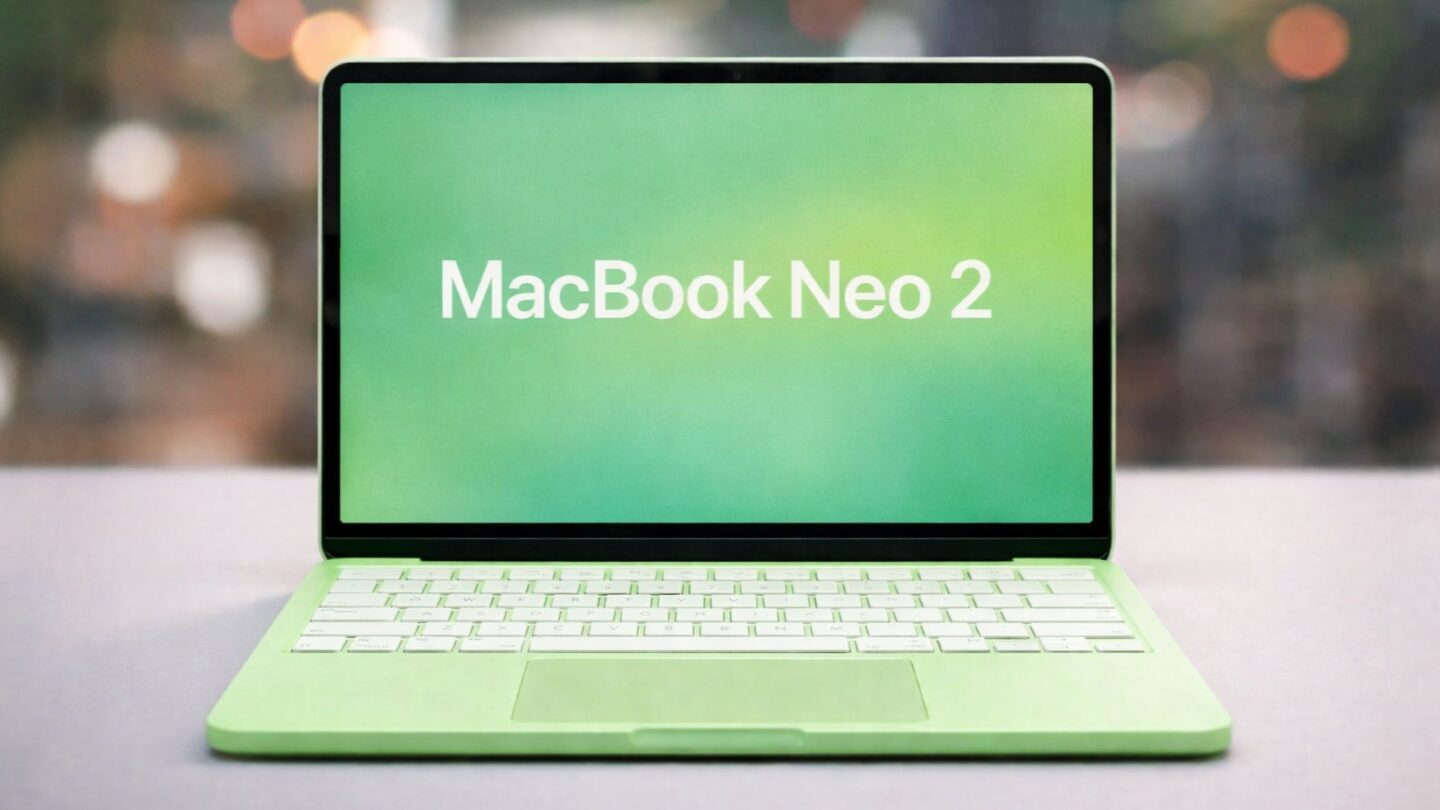
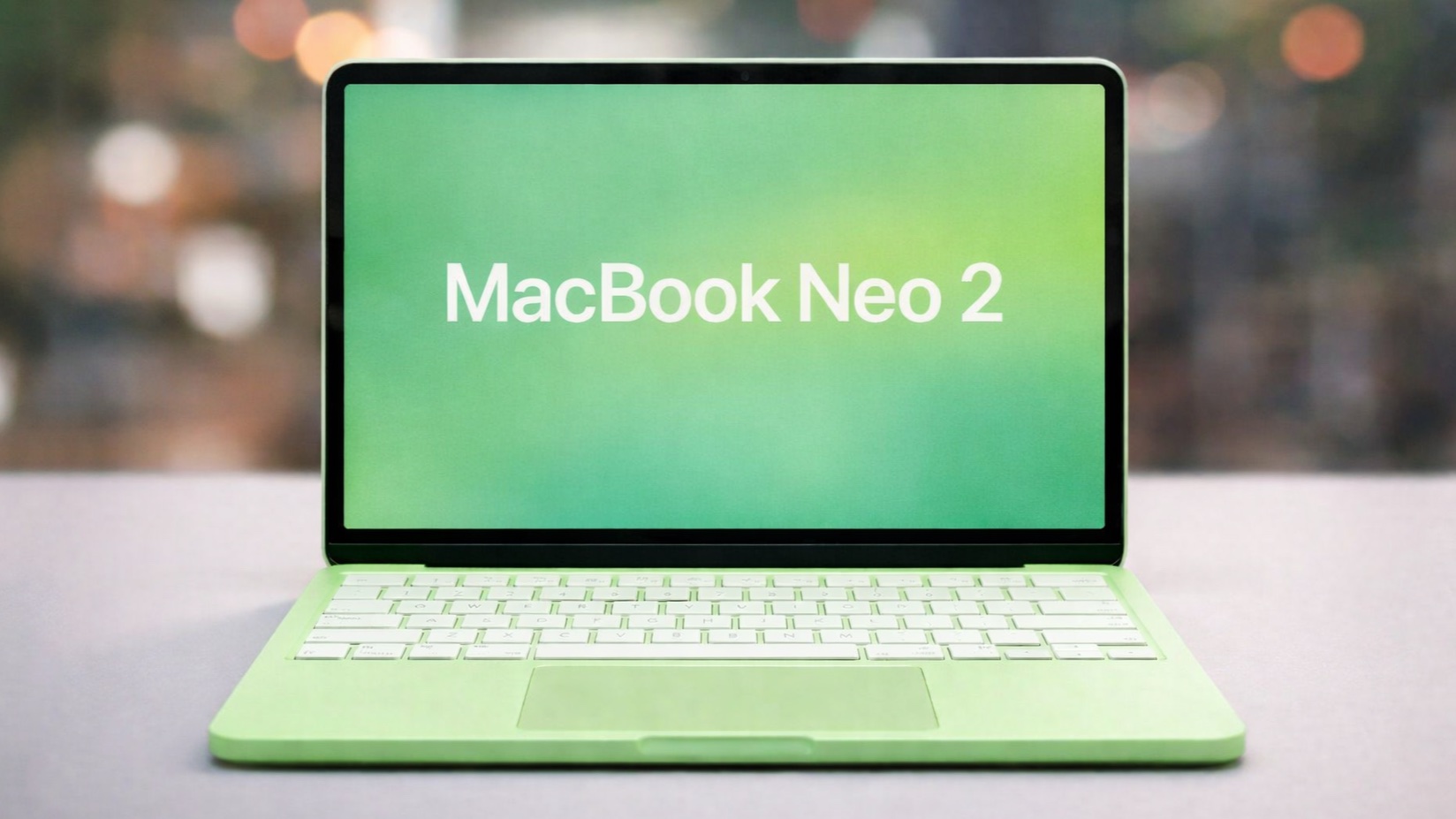
Apple is developing an updated MacBook Neo featuring more memory, an upgraded A19 Pro chip, and additional color options as part of a wide-ranging refresh of its entire Mac lineup, according to a Bloomberg News report by Mark Gurman.
The original MacBook Neo, Apple’s budget-friendly entry-level laptop launched in March 2026, quickly became a huge hit. It debuted at $599 (as low as $499 with education pricing) before rising to a $699 starting price amid industry-wide memory cost pressures. Powered by the A18 Pro chip (the first Mac to use an A-series processor typically found in iPhones and iPads), it offered 8GB of unified memory, a 13-inch Liquid Retina display, and vibrant finishes including Silver, Blush, Citrus, and Indigo. Strong demand led to initial sell-outs, and it has been praised for bringing accessible Mac performance and Apple Intelligence features to a lower price point.
The next-generation Neo will address some of the original’s constraints by increasing unified memory — reports indicate a jump to 12GB — and switching to the A19 Pro chip (already used in recent iPhone models). Extra color options will expand on the fun, marketing-friendly palette that helped the first Neo stand out. These upgrades could help offset the recent price increase by delivering better performance and longevity, particularly for AI-related tasks.
This Neo update forms part of a much larger Mac pipeline. Gurman’s reporting indicates Apple plans new versions of nearly every Mac it sells over the next couple of years, driven by surging demand for AI-capable machines. Key elements include:
• An entry-level 14-inch MacBook Pro with the new M6 chip expected this fall (2026).
• Long-awaited iMac refreshes also targeted for fall 2026.
• High-end 14- and 16-inch MacBook Pros featuring OLED displays and touchscreens, powered by M5 Pro and Max chips, eyed for late 2026 or early 2027.
• A MacBook Air refresh that could include its first major redesign in over four years.
• Updated Mac mini models testing M5 Pro and M6 chips, plus Mac Studio variants with M5 Max and Ultra (or later M7 chips), though memory supply constraints tied to the broader AI boom may affect timing.
Industry observers note that ongoing global memory shortages exacerbated by AI server demand have already driven price increases across Apple’s lineup and could influence both availability and pricing of the new models. Apple has also been exploring ways to sustain sales momentum, including a new leasing program.
MacDailyNews Take: The MacBook Neo’s success showed Apple’s willingness to expand downward in the laptop market while defending premium margins higher up. An improved Neo with more memory and a newer chip would further strengthen that position, especially if it retains a competitive price relative to crappy Windows alternatives. Exact release timing for the updated Neo remains unspecified in the reports, but it fits into Apple’s broader push to modernize the Mac range for an AI-driven era.
Please help support MacDailyNews — and enjoy subscriber-only articles, comments, chat, and more — by subscribing to our Substack: macdailynews.substack.com. Thank you!
A brasileira Sofia Coelho, que atualmente ocupa o cargo de diretora de arte na Apple, ofereceu um raro vislumbre dos bastidores do processo criativo da empresa em uma publicação no LinkedIn, na qual revelou rascunhos e um protótipo do personagem Lil’ Finder Guy.
Coelho disse que a publicação era um “anúncio de aniversário bem-humorado” e descreveu a liderança do projeto como um “projeto de design dos sonhos”. Também mencionou os colegas que trabalharam ao seu lado na campanha.
"On March 4th at 11:00 a.m., measuring exactly one apple tall, a mascot, charmingly coined by the internet as Lil' Finder Guy, was born!"
In a post by Apple art director Sofia Coelho on LinkedIn (post taken down), Sofia shared early sketches and models of Lil' Finder Guy. pic.twitter.com/4Oo8xazSxx
Uma imagem mostrava uma folha de esboços explorando as expressões, as proporções e a forma geral do personagem. Essas imagens estavam ao lado do que parecia ser um protótipo físico do próprio Lil’ Finder Guy — o qual tinha “exatamente a altura de uma maçã”, segundo Coelho.
Ela também observou que a campanha figurou na lista de finalistas do Cannes Lions, uma das premiações mais prestigiadas da publicidade.
Apple Submitted the MacBook Neo & Lil' Finder Guy campaign to the Cannes Lions festival. pic.twitter.com/npRQ3G0hWw
Apple plans to raise the prices of its products as the cost of the memory chips it uses has surged, the technology giant’s boss has said.
Tim Cook, Apple’s outgoing chief executive, told the Wall Street Journal (WSJ) that price increases were “unavoidable” as the situation around memory chips had become “unsustainable”.
During its holiday quarter, Apple’s profit margin on hardware was 40.7%; in its most recent quarter, that dropped to 38.7% — a remarkable figure for physical products. It is these high margins that led to analysts like Ming-Chi Kuo to claim Apple would keep prices more-or-less stable and offset the additional costs through its even higher-margin — 76.7% — services business.
Winkler suggests in his summary that Apple has absorbed the cost increases so far because it has always treated memory and storage upgrades as profit centers. That’s no surprise to the Apple community, which has long chafed at Apple’s premium prices for memory and storage. But now, for instance, the price of standalone internal flash storage is closer to and sometimes even higher than Apple’s upgrade prices.
[…]
Obviously, Apple could absorb such costs and more if it were to accept dramatically lower gross margins. But as high-minded and customer-focused as Apple is, the company is still in business to maximize profit.
I was recently looking to add another SSD and a few hard drives to my setup. Normally, prices go down over time, but currently it SSDs are about double the price I paid last year, and large hard drives are almost triple.
Apple, to my recollection, has never before issued a warning about price increases. Keep in mind that Apple deals with prices in a very different way from its competitors. For Apple, prices are part of a product’s brand, so they don’t fluctuate with component costs.
Apple has raised prices across the board for many of its products today. MacBook Neo now starts at $699 (up from $599), while MacBook Air now starts at $1299 (up from $1099). Other impacted products include MacBook Pro, iPad, iPad Air, and many more.
iPhone, Apple Watch, and AirPods pricing is unchanged.
Earlier this week, I outlined three reasons for agreeing with Mark Gurman that the Apple price increases could be imminent, and that indeed proved to be the case.
iPhones have escaped the increases, but they are otherwise both broad-reaching and pretty dramatic. But perhaps the most surprising thing is that the MacBook Neo has been included …
Apple today increased the starting price of the Mac mini with M4 Pro chip by $200, taking the higher-tier model up to $1,599 on its online store.
[…]
Apple had already raised the Mac mini’s effective starting price in May by discontinuing the $599 configuration with 16GB of RAM and a 256GB SSD, leaving the $799 model with a 512GB SSD as the new entry-level option. Interestingly, the 16GB RAM / 256GB storage option has now been reinstated, but the $799 starting price remains.
Pre-announce it with a small delay, thus giving you a temporary sales boost as people scramble to get their orders in at current prices, and to soften the blow when the increases hit.
I also can’t help but see that “we need to begin raising prices on a number of products, including today’s increases for iPad and Mac,” statement as implying more increases are coming. The iPhone price increase seems inevitable, and my money is on it starting with the new models in September.
Micron CEO, president and chairman Sanjay Mehrotra explained the SCAs in prepared remarks delivered during the company’s Q3 earnings call. He explained that Micron has signed 16 SCAs, most of them covering 2026 to 2030, and that they involve a commitment to buy a certain quantity of product and pay for it in a pricing band that has a floor and a ceiling price. The floor price covers the historically high gross margins mentioned above, and the ceiling price means those who commit to an SCA are insulated if memory prices go even higher.
Micron’s chief business officer has hinted, without calling it out by name, that Apple’s tough supplier negotiations contributed to the conditions behind the global memory shortage.
For years, Apple has been able to dominate and dictate to their suppliers thanks to their scale. But the Asian operations which Tim Cook so famously set up, have been upended, like most everything else, by AI. From TSMC on down, Apple is no longer the customer dictating terms for the entire industry, it’s now the company which has taken over the mantle as the most valuable one in the world: NVIDIA.
Here’s a table with most of the base models whose prices increased[…]
[…]
iPad prices mostly went up 20–25%, but the hardest hit was the no-adjective base model, which rose almost 30%, from $350 to $450. That’s a big increase for a product meant to appeal to buyers for whom price is obviously their biggest concern.
Anyone who purchased a MacBook Neo for $600 (or $500 with education discount) between March and this morning purchased the lowest-price MacBook Apple has ever sold — and perhaps the lowest-price MacBook they ever will sell.
The consumer electronics industry is facing an unprecedented challenge. The rapid expansion of AI data centers has created an extraordinary surge in demand for memory and storage. We have never seen a component price increase this much, this quickly. We have shielded our customers from these increases so far, but we have now reached a point where we need to begin raising prices on a number of products, including today’s increases for iPad and Mac. We know this is not welcome news, and we are working tirelessly to find solutions.
[…]
Apple indicating that it needs to “begin” raising prices suggests that additional price increases might occur later.
“and we are working tirelessly to find solutions.”
I find this to be the most confusing part. Do we believe this to be a genuine effort? Even if so, how would a “solution” actually work? Would they actually lower prices if a solution were to be found?
They also just said they “will continue working” on bringing Siri AI to the EU right before saying in a different venue that they’d stopped working on it.
But even setting aside the prices of competing devices, it just feels wrong to hike prices this much for four-year-old hardware running five-year-old pre-AI silicon. The higher-end model’s price went up 67 percent!
The only way this makes sense is if these prices are really meant for the upcoming new hardware, and those new models are more ambitious home hubs that warrant $200–250 prices.
The Financial Times reports that Apple is seeking clearance from the Trump administration to purchase memory chips from a blacklisted Chinese company. The move would help it meet demand for product manufacturing during the ongoing global memory supply shortage.
Perhaps this is the “working tirelessly” that Apple was referring to.
Apple previously sought permission from the Biden administration to do the same thing back in 2022, and that did not go well – despite promising to use the chips only for iPhones sold in China …
Something happens — outside the company’s control — that causes those essential components to rise in price significantly.
[…]
What you cannot do is hold a philosophically consistent logically coherent view where your answer to how a company should respond in such a scenario is contingent on what the “something happens” is that caused component prices to rise.
Maybe—but that’s only relevant if you accept the premise that it was out of Apple’s control. I don’t know the details of the deals, but there’s an argument that the rising costs to Apple are to some extent Apple’s “fault.” If Tim Cook gets credit for helping suppliers expand capacity and locking in contracts for memory at low prices over the past two decades, doesn’t the same logic apply in reverse? The AI-driven shortages were foreseeable—and publicly discussed years ago. If you believe Micron that Apple chose to prioritize its own past numbers rather than securing its future supply, doesn’t that make today’s situation different from, say, a tsunami that unexpectedly wiped out a bunch of factories? I don’t know exactly how the increased costs should be apportioned, but I think the reasons for the costs are relevant, and I don’t think they’re fully exogenous.
But while tech giants like Apple
and Microsoft, which both announced price hikes this week, have a hefty cash cushion, supply chain leverage and customers numbering in the millions or billions, a much wider swath of businesses face potentially dire straits. Most consumer electronics companies have little margin to spare and can’t confidently raise prices in an economy already grappling with inflationary pressures.
GoPro, the struggling maker of action cameras, warned this month that it might go out of business after memory costs shot up between 80% and 115% at the end of the first quarter. And shares of speaker maker Sonos
are down 23% this year as memory prices pressure margins.
Os próximos meses têm tudo para ser extremamente movimentados quando o assunto são novos Macs, com a Apple preparando uma série de atualizações para os MacBooks Pro e Air, duas novas versões do iMac e até mesmo Macs mini e Studio atualizados, segundo informações da Bloomberg.
De acordo com o veículo, a Apple já encerrou o desenvolvimento de um novo MacBook Pro de 14 polegadas, o qual deverá ser um dos primeiros dispositivos a contar com o chip “M6”. De codinome J804, ele deverá contar com o mesmo design do modelo de entrada atual, que vem equipado com o chip M5.
Outro Mac que já estaria prestes a passar por atualizações é o iMac, que deverá ganhar não só uma, mas duas novas versões, sendo que uma delas ainda receberá uma tela OLED 1Organic light-emitting diode, ou diodo emissor de luz orgânico.. Com os codinomes J833 e J834, eles também serão equipados, é claro, com chips mais recentes — embora o modelo com o display mais avançado demore mais tempo para chegar ao mercado do que o primeiro.
E por falar em telas OLED, também teremos novos MacBooks Pro de 14″ e 16″ que, além de contar com essa tecnologia, também deverão ter painéis sensíveis ao toque, inaugurando esse método de interação entre os Macs. Com os codinomes K114 e K116, respectivamente, eles deverão ser lançados entre o fim deste ano e o início de 2027. No momento, eles estão sendo testados pela Apple com uma versão preliminar do macOS Golden Gate 27.1, cujo lançamento é aguardado para outubro próximo.
Ao contrário do modelo de entrada, no entanto, esses seguirão “presos” na família de chips M5, contando com o M5 Pro e o M5 Max dos MacBooks Pro atuais. Novas versões com os chips “M7 Pro” e “M7 Max”, porém, já estão planejadas para algum momento entre o fim de 2027 e o início de 2028.
Por falar no MacBook Pro de entrada, uma versão do modelo com um design completamente novo — baseado nos modelos com OLED — já estaria sendo desenvolvida pela Apple. Ele deverá vir ainda com o chip “M7” e conta com o codinome K104.
Já os MacBooks Air deverão ganhar novos modelos no início do ano que vem. Com os codinomes J913 (modelo de 13″) e J915 (15″), eles seguirão com o design atual. Vale lembrar, no entanto, que modelos com telas OLED já estão no forno há alguns anos e com lançamento previsto para o início de 2028.
Caçula da família, o MacBook Neo, também já conta com uma nova versão no horizonte, a qual deverá contar com o chip A19 Pro e mais memória integrada — provavelmente 12GB, ante aos 8GB do modelo atual.
Por fim, temos os dois desktops mais tradicionais da Apple: o Mac mini e o Mac Studio. Segundo Mark Gurman, o modelo em testes do primeiro usa os chips M5 Pro e “M6”, enquanto o segundo é empurrado pelos processadores M5 Max e “M5 Ultra”. Não há, no entanto, uma previsão de quando esses computadores chegarão ao mercado — cortesia da atual crise no mercado de memórias.
Haja computador novo, hein?! 😮💨
Mac Studio
Chip: M4 Max ou M3 Ultra Memória: 36GB, 48GB, 64GB, 96GB, 128GB, 256GB ou 512GB Armazenamento: 512GB, 1TB, 2TB, 4TB, 8TB ou 16TB
Cores: preto-espacial ou prateado Tela: padrão ou nano-texture Chips: M5 Pro ou M5 Max Memória: 24GB, 36GB, 48GB, 64GB ou 128GB Armazenamento: 1TB, 2TB, 4TB ou 8TB
Cores: preto-espacial ou prateado Tela: padrão ou nano-texture Chips: M5, M5 Pro ou M5 Max Memória: 24GB, 36GB, 48GB, 64GB ou 128GB Armazenamento: 1TB, 2TB, 4TB ou 8TB Adaptador de energia: USB-C de 70W ou 96W
Cores: azul-céu, prateado, estelar ou meia-noite Chip: M5 Memória: 16GB, 24GB ou 32GB Armazenamento: 512GB, 1TB, 2TB ou 4TB Adaptador de energia: USB‑C de 30W, 35W com duas portas ou 70W
Cores: azul-céu, prateado, estelar ou meia-noite Chip: M5 Memória: 16GB, 24GB ou 32GB Armazenamento: 512GB, 1TB, 2TB ou 4TB Adaptador de energia: USB‑C de 30W, 35W com duas portas ou 70W
NOTA DE TRANSPARÊNCIA: O MacMagazine recebe uma pequena comissão sobre vendas concluídas por meio de links deste post, mas você, como consumidor, não paga nada mais pelos produtos/serviços usando os nossos links de afiliado.
Notas de rodapé
1
Organic light-emitting diode, ou diodo emissor de luz orgânico.
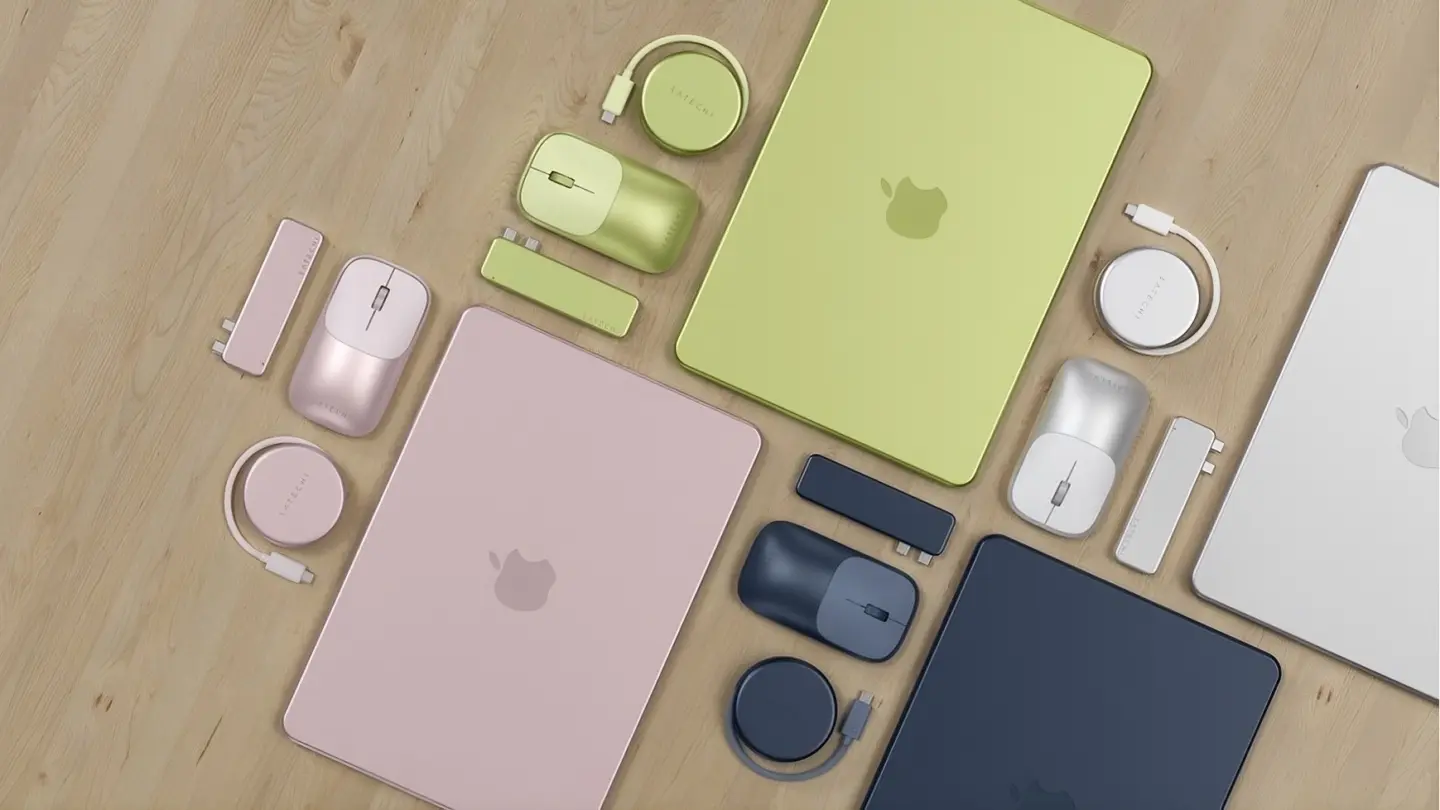
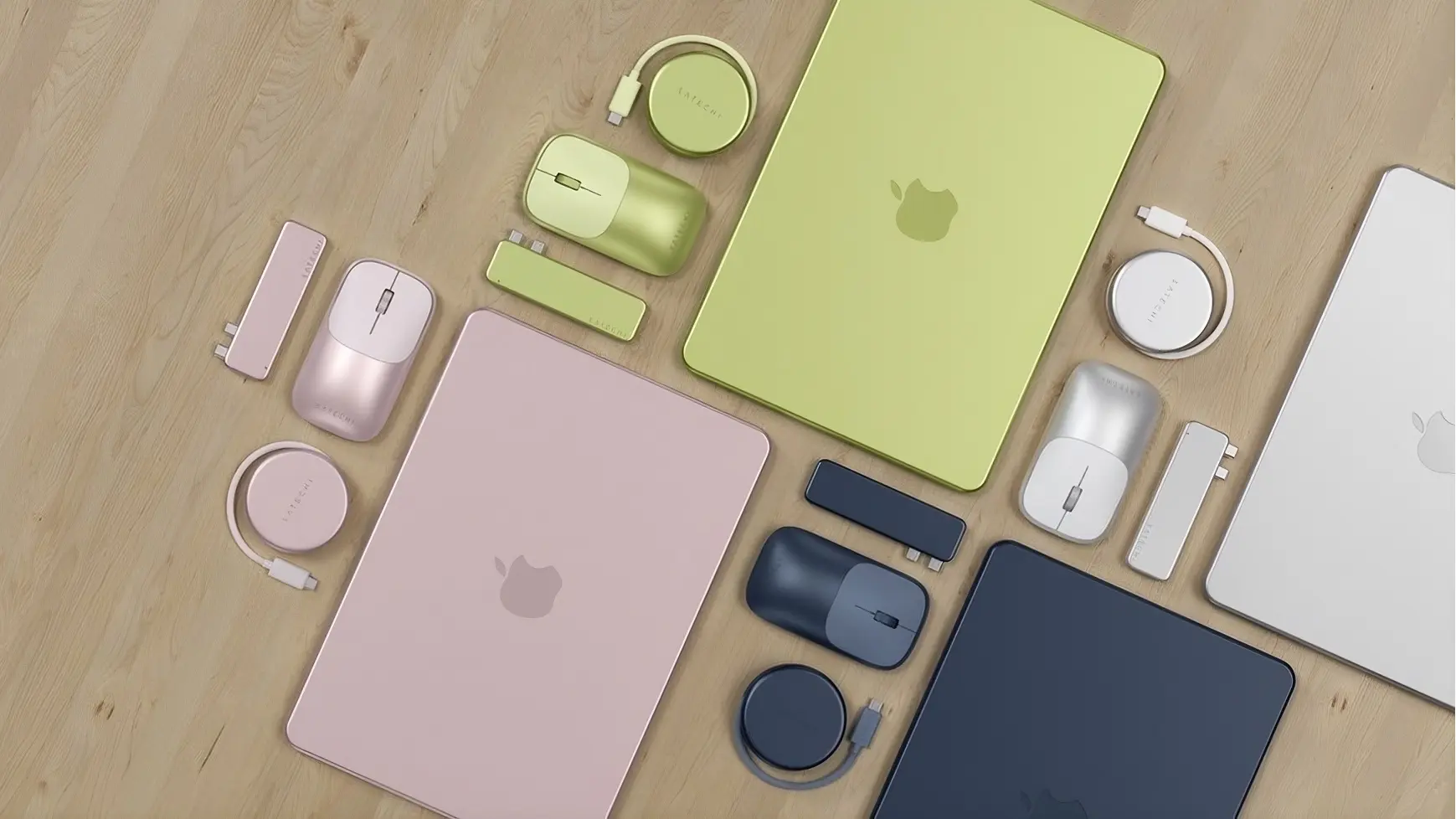
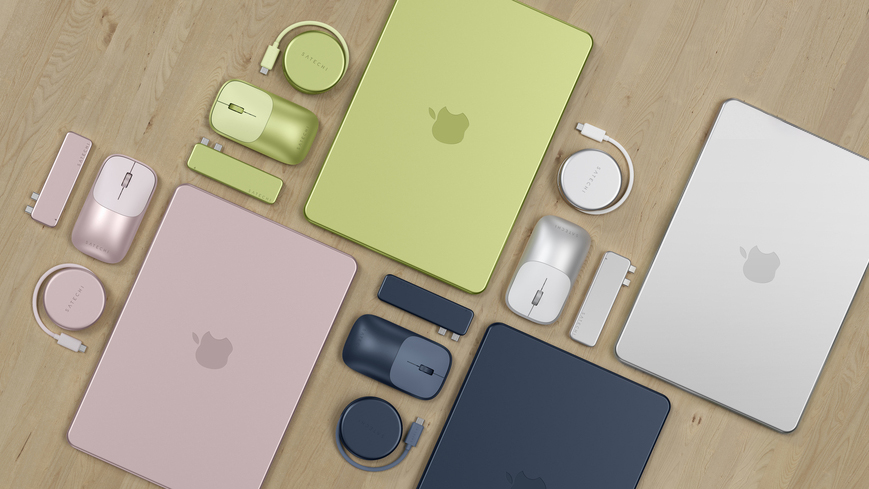
For this week's giveaway, we've teamed up with Satechi to offer MacRumors readers a chance to win a MacBook Neo and a set of color-matched MacBook Neo accessories to go along with it. A second-place winner will also get a set of Satechi's new accessories.
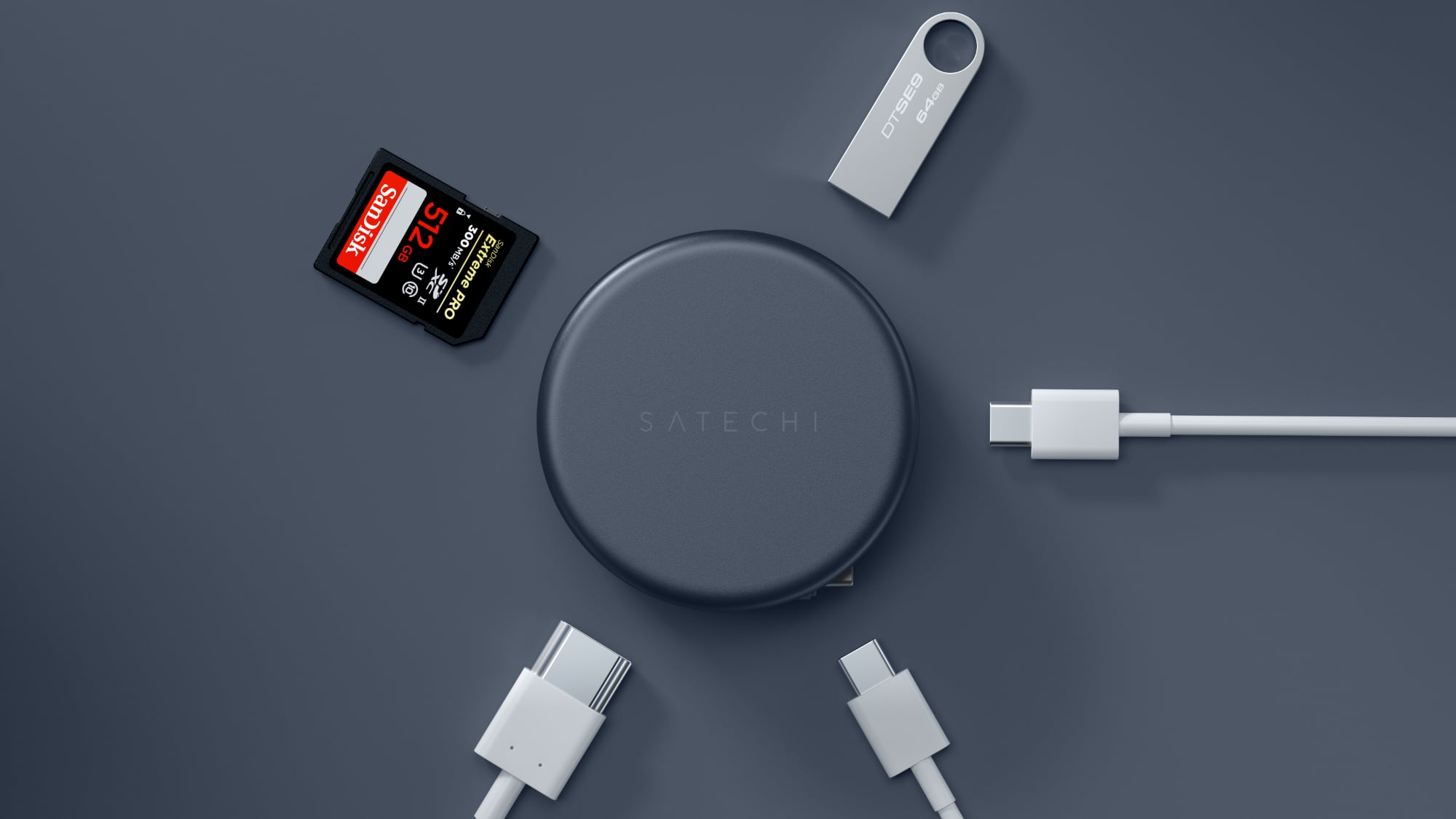
Satechi's OntheGo 5-in–1 Multiport Adapter plugs into the USB-C port on the MacBook Neo and adds five additional ports. It has two USB-C ports, a 5Gb/s USB-A port, an HDMI port that supports up to a 4K 60Hz external display, and an SD card slot. One of the USB-C ports offers 60W passthrough charging and the other supports 5Gb/s data transfer speeds.
An included magnet lets it attach to a MagSafe iPhone or to the lid of the MacBook with a 3M adhesive magnet mount ring. The matching built-in USB-C cable is braided for durability, and it rolls up into the adapter, making it a compact travel option. It measures 2.57 inches in diameter and it's 0.87 inches thick.
Satechi's USB-C Snap Hub also adds ports, but it has a different design. It plugs into both of the MacBook Neo USB-C ports, expanding them into six connections. There are two USB-C ports, an HDMI port that supports a 4K 60Hz display, a 5Gb/s USB-A port, an SD card slot, and a microSD card slot. One USB-C port supports 45W passthrough charging, and the other offers 5Gb/s data transfer speeds.
The hub fits flush to the side of the MacBook Neo, and it has a dual-material design. The top is an anodized aluminum that matches the MacBook Neo's body, while the base is a soft-touch ABS plastic meant to match the keyboard finish.
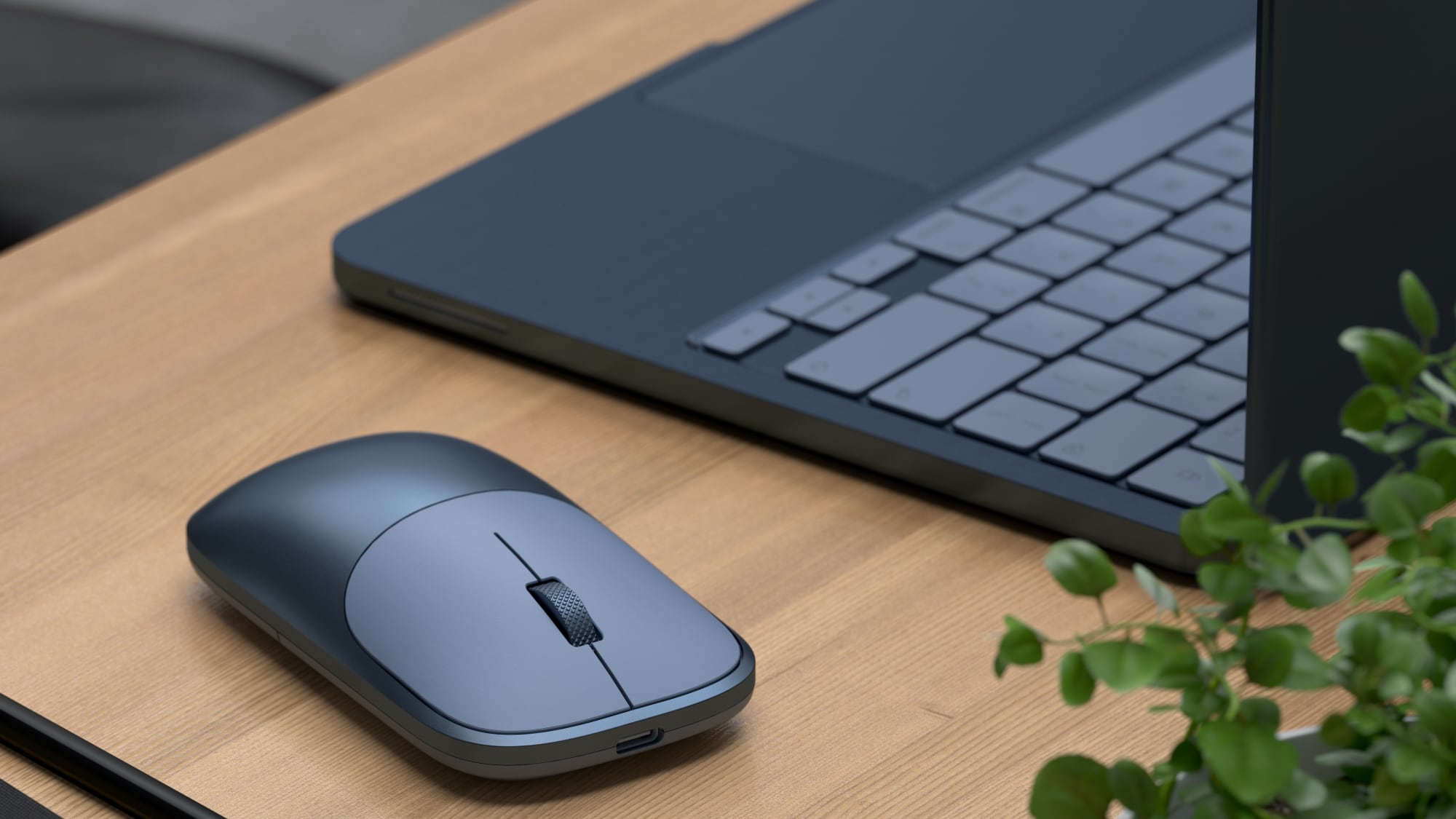
Satechi's Slim EX Wireless Mouse completes the collection, and it's made from color-matched aluminum. The mouse supports two Bluetooth channels and a 2.4GHz wireless connection, and it is able to work across macOS, iPadOS, Windows, and Android. It features quiet click switches and a precision-machined scroll wheel, plus there is a USB-C rechargeable, user-replaceable battery for longevity.
We have a MacBook Neo and a Satechi accessory set to go along with it for one lucky MacRumors reader, and a second winner will get the MacBook Neo accessory kit. To enter to win, use the widget below and enter an email address. Email addresses will be used solely for contact purposes to reach the winner(s) and send the prize(s). You can earn additional entries by subscribing to our weekly newsletter, subscribing to our YouTube channel, following us on Twitter, following us on Instagram, following us on Threads, or visiting the MacRumorsFacebook page.
Due to the complexities of international laws regarding giveaways, only U.S. residents who are 18 years or older, UK residents who are 18 years or older, and Canadian residents who have reached the age of majority in their province or territory are eligible to enter. All federal, state, provincial, and/or local taxes, fees, and surcharges are the sole responsibility of the prize winner. To offer feedback or get more information on the giveaway restrictions, please refer to our Site Feedback section, as that is where discussion of the rules will be redirected.
The contest will run from today (July 17) at 9:00 a.m. Pacific Time through 9:00 a.m. Pacific Time on July 24. The winner will be chosen randomly on or shortly after July 24 and will be contacted by email. The winner will have 48 hours to respond and provide a shipping address before a new winner is chosen.
O MacBook Neo trouxe leveza e um preço competitivo ao ecossistema Apple, mas quem prefere Windows também tem hoje portáteis igualmente leves e capazes para o dia a dia, fáceis de encontrar em Portugal.
It seems fair to say that Apple's MacBook Neo took the rest of the PC industry by surprise. Companies are used to competing on price and features with $1,000-and-up Apple laptops like the MacBook Air and MacBook Pro, but their $600 and $700 models usually come with cut corners and compromises that are more noticeable than the Neo's. The CEO of Asus admitted to being surprised by the laptop's price (while simultaneously trying to downplay the Neo's value); a Microsoft-backed study comparing PCs to the MacBook Neo included several laptops that can't compete with the Neo's price unless they're deeply discounted.
In the last couple of weeks, we've started to see a more intentional and targeted response to the MacBook Neo from PC makers. These mostly seem to revolve around Intel's low-end Core Series 3 processors, codenamed Wildcat Lake; while Intel's last few generations of low-end chips have mostly been rebrands of older and less power-efficient parts, Wildcat Lake is a new purpose-built budget chip that benefits from Intel's latest CPU and GPU architectures and its 18A manufacturing process. This should help these chips compete better with the Apple A18 Pro in the MacBook Neo.
Many early Wildcat Lake systems have already been announced, though not all have included a price tag, and several have only been announced for the Chinese market as of this writing. Lenovo is planning to launch some IdeaPad Slim models with the new processors, with some optional spec upgrades including 16GB of RAM and a 120 Hz high-refresh-rate display. Asus and HP have also announced some early products.

 Login