❌

Reading view

Columbia Economist Baffled as to Why the Masses Aren’t Rising Up Against Elon Musk

As unpopular as SpaceX and Tesla CEO Elon Musk has become in the popular eye, some say the vitriol doesn’t go nearly far enough.

In an episode of his podcast Ones and Tooze, Columbia University economic historian Adam Tooze picked apart the increasingly expensive AI arms race and its consequences for humanity. Among Tooze’s observations: the AI boom is completely upending the long-standing social contract under capitalism, a shift embodied most dramatically by Musk.

During the podcast, co-host Cameron Abadi asked what a “best case scenario” for AI might look like — where a human-level superintelligence emerges that can automate the world’s jobs. In response, Tooze pointed to a report from the Bank of International Settlements: under that scenario, labor’s share of income could collapse from an already paltry 54 percent to just 20 percent, meaning workers would be forced to fight over the remaining crumbs that drop from billionaires’ tables.

“The share in the total pie collapses, and that’s obviously a huge transformation in political power,” Tooze explained. And though that’s a future projection, the economic historian notes we’re already seeing symptoms of this extreme reversal of fortunes today, chiefly in the extreme wealth accumulation of Musk.

“I don’t understand frankly why the event of Musk’s enrichment isn’t more of a scandal, isn’t more a historic moment,” Tooze said. “Like this — to have a trillionaire in our midst ruptures the social bargain in such a — just such a dramatic way, like how can we even be any longer talking about being in the same society as this group of individuals who’ve unleashed this technology on the world.”

“It goes beyond Luddism,” Tooze continued, referring to the 19th-century labor movement that saw workers smash textile looms to fight back against economic exploitation. “It’s not about resisting the technology per se, it’s about asking ‘which social contract this belongs to?'”

Though it remains to be seen how severe an impact AI actually has on the labor market, one scenario keeps surfacing: superintelligent AI fuels a drastic rise in economic inequality, with tech billionaires on one end, and the working class on the other.

Comparing the current “AI arms race” to the actual nuclear arms race, Tooze asks the listener to imagine a “private Manhattan Project, developing a thermonuclear weapon,” calling superintelligent AI “kind of like a labor-market neutron bomb.”

And where the Manhattan Project was funded, organized, and staffed by the US government, the current AI boom takes almost the exact opposite approach, following the whims of the ultra-rich.

“Clearly, government money has gone into Silicon Valley in various ways,” Tooze caveats. “But nevertheless, the contrast between the Manhattan Project… and the realities of the current moment, spearheaded by a figure like Elon Musk, who literally has eviscerated the state apparatus of that first [nuclear] race… it strikes me that it’s really a regression away from the mid-century arms race model to something that’s much more like the ‘Merchants of Death’ vision.” (The Merchants of Death was a moniker for 1930s-era war profiteers.)

“We’re back in that space” Tooze continues, “of private, unfettered, oligarchic — but global — arms race… to my mind, the [AI arms race] analogy is interesting not because of the similarities, but because of the differences it reveals.”

More on Musk: Suddenly, as His Empire Crumbles, Elon Musk Admits He Made a Huge Mistake With DOGE

The post Columbia Economist Baffled as to Why the Masses Aren’t Rising Up Against Elon Musk appeared first on Futurism.
  •  

Tesla weighs selling China business to clear path for SpaceX merger

Tesla is looking at cutting loose its China business to clear a path toward a merger with SpaceX, according to a new Wall Street Journal report.

If true, it would be a massive deal in the auto industry. Tesla’s Shanghai factory builds more than half of all Tesla vehicles, so any separation would carve out the single biggest piece of Tesla’s car operation.

Update: Elon Musk has denied the WSJ report, but as usual, that should be taken with a grain of salt.

  •  

Tesla’s Elon Musk is having a generational meltdown

Tesla CEO Elon Musk has spent 2026 turning his X feed into a problem no investor relations team can fix. His posts have escalated from trolling into open white nationalism, and this week his AI company sued the state of Minnesota to block a law targeting nonconsensual sexual deepfakes.

The board of a public company would have fired the CEO for just a fraction of the stuff Musk is posting these days. However, Tesla is not a normal company. Shareholders have given full control to Musk and now, they have to live with it.

  •  

Elon Musk Launches New Service Where You Can Send Him All Your Money and Hope for the Best

If you were looking for even more ways to give Elon Musk your hard-earned cash, you’re in luck!

His social media platform X has officially rolled out a new banking service, uninspiredly called X Money, to its Premium and Premium Plus users — who are already shelling out up to $40 a month for a blue checkmark and more prominent tweet replies.

The service allows users to store their money in a deposit account and withdraw cash via ATMs using a physical Visa debit card. The microblogging platform is also enticing users with three percent cash-back and six percent annual percentage yield (APY).

But you’re not alone if you’re having second thoughts about handing over a company primarily known for the dissemination of misinformation, child sexual abuse material, and hate speech — while providing a depressing echo chamber to its broadly loathed CEO — your life savings.

As senator Elizabeth Warren (D-MA) pointed out in a letter directly addressed to Musk earlier this year, X Money could pose a risk to “consumers, our national security, and the stability of the financial system,” while citing Musk’s “track record operating X.”

“Your failure to operate X in a safe and responsible manner does not breed confidence in your ability to safely expand into consumer finance,” she wrote.

Musk’s desire to launch a banking app goes way back. In 1999, he cofounded e-commerce payment system X.com, which merged with another company in 2000 to eventually form PayPal. However, the company’s board ousted Musk and replaced him with Peter Thiel at the time over major disagreements, a clear source of frustration and anger for the SpaceX CEO.

X Money is part of Musk’s broader goal of transforming X into what he calls “the everything app,” which, in the timeless words of former CEO and Musk’s mouthpiece Linda Yaccarino, “can deliver, well… everything.”

It’s an ambitious dream that evokes the Chinese app WeChat. But considering Musk’s standing in today’s society — his behavior has quickly turned him into one of the most hated people on the planet — convincing the public of going all-in on X might be more difficult than he anticipated, especially when it comes to personal finance.

Besides, even just getting the feature off the ground has seemingly been far more difficult than Musk anticipated. He originally promised it would launch by the end of 2024.

“It would blow my mind if we don’t have that rolled out by the end of next year,” Musk told then-Twitter employees in October 2023.

Considering he missed his deadline by over two and a half years, chances are his mind has been blown several times over by now.

More on X: Elon Musk Is Having One of His All-Time Meltdowns

The post Elon Musk Launches New Service Where You Can Send Him All Your Money and Hope for the Best appeared first on Futurism.

  •  

Elon Musk Is Having One of His All-Time Meltdowns

What would you do if you were unfathomably wealthy? Collect superyachts, throw extravagant parties, and just generally live a care-free existence? 

Not if you’re Elon Musk. The former trillionaire is busy as ever waging his war on all-things “woke” — and it’s devolved into a performance which, even by his extreme standards, is a meltdown for the ages. Or a few of them simultaneously, involving entities as diverse as an esteemed journal, a chef, a Greek epic and Anne Hathaway.

It all started over the weekend when The Economist released a lengthy interview with Musk, who displayed none of the irreverent charm that once made him so popular, or even the calculating calm you might expect from a powerful business leader.

Musk smugly denied that his USAID cuts have caused the deaths of any children, despite the overwhelming evidence to the contrary. And when the magazine’s editor-in-chief Zanny Minton Beddoes addressed how deeply unpopular he’s become due to the kind of polarizing rhetoric he pushes, he fumed against her at and the media class at large.

“They hate you far more than they hate me!” Musk raged, impotently. “You’re the problem, the media.”

His ire didn’t end there. He took to his personal echo chamber X to label Beddoes a “traitor to the West, plain and simple,” after she criticized him for constantly spreading misinformation about immigrants to his hundreds of millions of followers, and also called her a “woke NPC with zero self-awareness.”

In response, celebrity chef José Andrés, whose nonprofit World Central Kitchen provides food relief, pleaded with Musk to “change” because he was acting “like a tyrant.” And despite Andrés praising some of Musk’s accomplishments, the zillionaire remained as thin-skinned as ever.

“You’re an asshole,” Musk accused Andrés, despite literally just calling someone an NPC and hand-waving aside the deaths of children.

All the while, he’s also been busy crashing out about a resurfaced clip of Anne Hathaway advocating trans rights in an awards acceptance speech — from eight years ago.

“She has a little bird brain,” he wrote. In a flurry of posts that followed, he also said Hathaway was a “marionette” who “just says the words Hollywood tells her to say,” with “no internal thoughts of her own.”

Hathaway, it’s worth noting, recently starred in Christopher Nolan’s film “The Odyssey,” which has been an outstanding critical and commercial success — much to Musk’s chagrin. He has spent the past several months tirelessly campaigning against the adaptation of the Greek epic for being too woke, for reasons such as casting Black women in prominent roles. 

Nolan, according to Musk, “desecrated Homer and groveled on his knees just to meet the woke rules required to win an Oscar.” When it was clear that his obvious attempt at trying to sink the film’s chances had utterly failed, he then vowed that his AI Grok would create a “historically accurate” adaptation of The Odyssey.

Hundreds of billions of dollars to his name, folks. Money truly can’t buy happiness.

More on Elon Musk: Suddenly, as His Empire Crumbles, Elon Musk Admits He Made a Huge Mistake With DOGE

The post Elon Musk Is Having One of His All-Time Meltdowns appeared first on Futurism.

  •  

SpaceX Stock Hammered After Starship Booster Fails in First Launch Since IPO

Was SpaceX’s recent Starship flight test a success or a failure? Many are hailing it as a victory, but several of the megarocket’s booster’s engines failed after re-entry, causing it to explode.

SpaceX has had many similarly ambiguous tests before. But this was the first one since its much-hyped IPO earlier this summer — and it’s already clear that it wasn’t a convincing enough display to reverse the company’s fortunes on the stock market.

After hitting an all time low before the weekend and closing at $115, SpaceX shares endeavored to plummet even further on Monday, briefly dipping to $108.66 — a new nadir since going public — before stabilizing around $110. The new low is over 20 percent below its opening IPO price of $135, and less than half of its all time high of more than $225 per share.

It’s a sign of the scrutiny the company will be put through now that it’s a public entity, and comes despite certain predictions that a successful flight would help buoy the company’s shares. When Starship ran into trouble in the past, SpaceX mainly had to weather a storm of media coverage. Now, nervous investors represent yet another liability.

“One of the benefits of being private is that there wasn’t a market to weigh in on and evaluate business decisions,” David Meier, senior investment analyst at the Motley Fool, told The Washington Post.

“Being publicly traded means everything will be evaluated and information transmitted through market prices,” he added. “So every SpaceX launch, every Starlink decision and every xAI decision will be scrutinized by the market.”

Spaceflight, at least currently, isn’t an ideal match for the make-a-quick-buck capitalism that Musk extolls. SpaceX has never been profitable, losing $5 billion last year alone. As Starship’s woes illustrate, rocket development is messy and complicated; there’s no guarantee that progress will be linear, if there’s any made at all. Investors are essentially being asked to keep pouring money into an incredibly lengthy and expensive science experiment. 

Meanwhile, Musk has made outrageously lofty promises that SpaceX will eventually use Starship to deploy so many data centers in space that it’d create a “sentient sun,” and establish colonies on the Moon and eventually Mars. Every failure will be compared against those outsized benchmarks, which is almost certainly part of Musk’s enduring schtick.

The thirteenth test flight on Friday was a mixed-bag. The spacecraft’s upper stage successfully made its way to suborbital space and deployed a payload of Starlink internet satellites, which briefly went online before burning up as planned. This was a first for Starship, as previous tests only used dummies. Then the ship re-entered the atmosphere and landed in the Indian Ocean in one piece without exploding.

But the booster was a different story. Though it performed flawlessly on the journey up, only ten of out the thirteen engines fired up on its return to Earth, failing to slow the massive object down in time. Instead of making a planned “soft” splashdown, it slammed into the Gulf of Mexico and appeared to explode on impact.

On the one hand, the flight test validated that SpaceX is making progress with its latest V3 iteration of its spacecraft. In the first V3 flight test in May, the upper stage lost several of its engines on its way to space, and this time it didn’t. The upper stage also survived the splash down instead of exploding, with SpaceX engineers calling it Starship’s best reentry yet. 

But the failed booster landing is hard to overlook. Unless the booster is reliably recoverable, then Starship won’t be reusable, an indispensable part of making the behemoth vehicle an economically viable means to ferrying large payloads into orbit and beyond.

Most coverage around the recent test has been positive. Arguably, that makes it all the more concerning that the stock continues to perform so poorly.

“The future of the company is riding on the ability to make Starship work,”  Clayton Swope, deputy director of the Aerospace Security Project, told WaPo. “What they’re trying to do is switch to a freight train and get the economies of scale [of] something of that magnitude.”

More on SpaceX: SpaceX Investors in Meltdown Over All the Money They’ve Lost

The post SpaceX Stock Hammered After Starship Booster Fails in First Launch Since IPO appeared first on Futurism.

  •  

Tesla partly settles racism lawsuit as hundreds of workers press on

Tesla has confidentially settled with three of the five named plaintiffs in the racism lawsuit that has been hanging over its Fremont factory since 2017.

That doesn’t end much. Up to 580 Black workers are still suing over conditions at the same plant, and California’s civil rights agency is taking its own case to a jury.

  •  

The Type of Orbital Data Centers That Billionaires Want to Launch Into Space Would Wreak Ecological Catastrophe, Scientists Warn

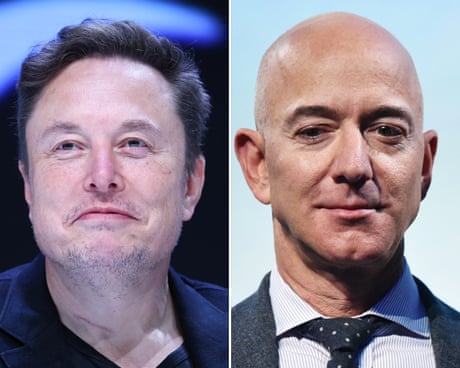
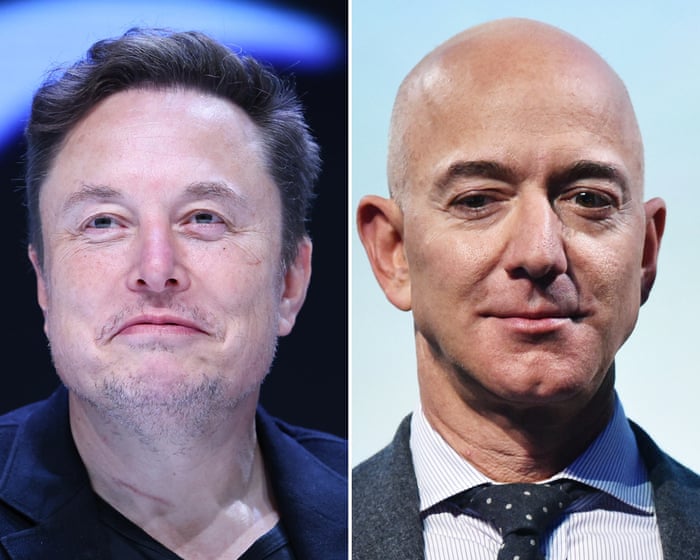
Over the past year or so, a puzzling idea has taken hold among billionaires ranging from Elon Musk to Jeff Bezos: that instead of trying to force data centers on communities that don’t want them down on Earth, it would be much easier just to launch them into space.

The economics and logistics of the scheme, many experts have pointed out, are absolutely absurd. And even beyond those practical concerns, if corporations actually did somehow manage to fill the planet’s orbit with the facilities, scientists are now warning that the environmental cost would be devastating.

A new petition organized by the group EarthJustice, first reported by the Guardian, is warning of “catastrophic” consequences for the planet if the billionaire-backed dream ever came to pass. The 29-page petition calls on the US Federal Communications Commission to investigate current orbital data center licensing requests as potentially in violation of “federal law,” joining the chorus of experts warning that it’s a horrible idea for just about everybody.

“The FCC is currently considering multiple requests for licensing extraordinary numbers of satellite-based data centers to be placed into low-earth orbit over the next decade,” the petition begins. “The proponents of these proposals describe their plans in grandiose, civilization-changing terms. But these same proponents have refused to embrace any inquiry into the impacts of their self claimed epochal technology on the environment, science, economy, or other values. This is not just poor planning and a missed opportunity: it violates federal law.”

The filing does double duty. On top of formally petitioning the FCC to prepare an environmental assessment, it’s also a “petition to deny,” which is a legal mechanism that requires the petitioner to back up their claims with verified facts. That requirement turns the document into a de facto review article — with 113 footnote citations, it’s easily one of the most detailed public accounts yet of what orbital data centers could actually cost the planet.

“The operation of more than a million data center satellites threatens potentially catastrophic forms and quantities of atmospheric pollution, risking damage to the climate, to the ozone layer, to human health, and to the chemistry of the stratosphere itself,” the petition reads.

In particular, the petition warns that giving free rein to tech billionaires to clutter our skies with experimental data centers would accelerate our contamination of the stratosphere, which is currently facing an unprecedented rise in heavy metals, noxious gasses, and carbon particles thanks to record satellite launches.

Satellite companies run by tech and aerospace tycoons are already facing scrutiny for their lack of transparency around this type of pollution, a situation the petition warns would make significantly worse. As the petition authors write, they are “concerned that no [company] has yet provided more than a token acknowledgment of environmental risks.”

“Moreover,” the authors continue, “no [company] has provided satisfactory detail to explain how it will mitigate the cumulative environmental harms flowing from the foreseeable operation of more than a million satellites [emphasis in original], orbiting our planet, colliding and disintegrating and plummeting back to Earth.”

More on data centers: Climate Activists Pelt Microsoft Data Center With Balloons Full of Acid

The post The Type of Orbital Data Centers That Billionaires Want to Launch Into Space Would Wreak Ecological Catastrophe, Scientists Warn appeared first on Futurism.
  •  

The AI jobs apocalypse probably isn’t coming anytime soon

Artificial intelligence may not deliver on its promise of vast economic opportunity at a price that humanity is willing to pay

In March, Anthropic, the cutting-edge artificial intelligence business that gave us the chatbot Claude, published an analysis on the impact of AI on employment, to help us assess the claim that intelligent robots were about to redefine human existence, ending demand for human labor.

Last year in May, Anthropic’s co-founder, Dario Amodei, claimed AI could wipe out half of all entry-level jobs in one to five years. Last January, he told us AI would probably become a “general labor substitute for humans”. In June he said we risk “a world where the economic trade-off dial is stuck on the hypergrowth, hyper-inequality setting”.

Continue reading...

© Photograph: DragonImages/Getty Images

© Photograph: DragonImages/Getty Images

© Photograph: DragonImages/Getty Images

  •  

SpaceX Investors in Meltdown Over All the Money They’ve Lost

Elon Musk’s SpaceX is many different things to many different people — but one thing that it definitely isn’t is a get-rich-quick scheme.

Since its debut on the public tickers back in early June, SpaceX shares have sunk from a high of over $225 to a dismal $110 today, as compounding failures and overvaluation fears take their toll. Overall, SpaceX is down nearly 30 percent compared to its opening stock price of $150 — and all those day-one rubes are now seeing red.

“Elon has ruined me,” one Redditor posted on r/WallStreetBets, along with a screenshot showing a loss of nearly $455,000 CAD on thousands of SpaceX shares. “He was supposed to take us to Mars and burn short sellers. Still holding 7300 shares. Please Elon fly again.”

On Musk’s X-formerly-Twitter, investor’s spirits, like his rockets, weren’t any higher.

Under a post showing off SpaceX’s Starship at sunset, dejected Musk acolytes moped about their fortunes, begging the company to get its act together.

“It sure would be cool if this stops crashing… 30 percent short interest and down 40 percent on the month,” one fanboy groused. “I believed in you and lost over 20k in a month. I really hope that it comes back.”

On Thursday, when SpaceX announced it was delaying the launch of Starship’s thirteenth test flight by a day, commenters were quick to point out that the update came just minutes after US stock markets closed. (The stock continued sinking the next day, falling more than another 3 percent by press time.)

“Notice they wait until market close now,” one poster quipped.

“Sure,” said another user, “wait till market close to announce…lol…as if we didn’t know what the weather was going to do hrs in advance.”

With that major test now scheduled for Friday evening, it remains to be seen whether a successful test will be enough to win back investors. On the flipside, a high-profile failure now could severely compound the company’s woes, putting SpaceX even further from the $2 trillion valuation Musk has promised. Time will tell.

More on SpaceX: China Is Catching Up With SpaceX Fast, Landing First Reusable Rocket Booster on Offshore Platform

The post SpaceX Investors in Meltdown Over All the Money They’ve Lost appeared first on Futurism.

  •  

Tesla quietly closes its secret ~$2 billion AI hardware deal

Tesla has closed the mysterious ~$2 billion acquisition of an AI hardware company that it first hinted at in April — and it did so, again, without naming the target or issuing a press release.

The deal was confirmed in a single passage buried in Tesla’s Q2 2026 10-Q filing, which for the first time attached a final price: $1.95 billion, paid entirely in Tesla stock and equity awards.

  •  

Suddenly, as His Empire Crumbles, Elon Musk Admits He Made a Huge Mistake With DOGE

Last week, SpaceX’s enormous Starship rocket failed to ignite several of its engines, forcing the company to abort its first test launch since its IPO earlier this summer.

The scrub served as the perfect metaphor for the space company’s ongoing struggles to convince investors of CEO Elon Musk’s lofty ambitions — ambitions which have little to no chance of turning into a reality without Starship.

While the almost-trillionaire has promised that SpaceX will one day be worth “more than the rest of the Earth,” its prolonged decline on the stock market suggests otherwise. Instead of joining the AI race, SpaceX has resorted to selling compute to its competitors.

His EV maker Tesla, an early pioneer in the adoption of electric vehicles, has also been flailing. Vehicle sales have been plunging as customers are driven away by the richest man in the world’s tasteless behavior and erratic commentary. Even recent jumps in revenue were thwarted by major AI-related spending, causing Tesla’s share price to tank this week.

As a result of it all, Musk’s empire feels more like it’s coming down around him — making it a perfectly convenient moment for him to sit down with The Economist for an attempt at a clean slate. (Whether it landed we’ll leave to you to decide.)

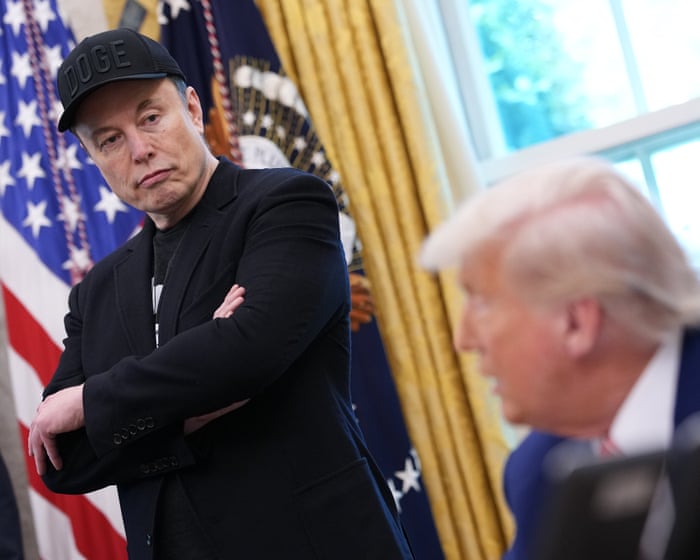
In the interview, published Thursday, Musk lamented that he “got a little too involved in politics” and “got carried away, frankly,” by his efforts to systematically gut the government with the help of his so-called Department of Government Efficiency during the early days of the second Trump administration.

The scars DOGE leaves behind are as evident now as they’ve ever been. Instead of cutting spending, the group forced tens of thousands of government workers out of their jobs, laid waste to foreign aid — with catastrophic consequences — and leaked highly sensitive data. It has sparked waves of protests, hollowed out the Social Security Administration, and fundamentally undermined the role of science in the United States.

Perhaps worst of all to Musk, his disastrous stint as a “special employee” in Washington, DC, last year has made him staggeringly unpopular — possibly even one of the most hated men in America.

“And I got a lot of flack from this, for this obviously,” he conceded in the Economist interview.

Now that his empire is looking worse for wear, it’s no wonder Musk is looking for an opportunity to tell the public that he’s moved on from helping the Trump administration dismantle the government.

But whether he actually regrets his actions is unclear at best. During the interview, Musk showed “no sign of relinquishing the geopolitical bully pulpit,” per The Economist. He doubled down on accusing the media of wrongfully characterizing him as a racist, despite repeatedly making racist comments. He even argued that Europe’s far-right extremist leaders were simply misunderstood.

In an piece accompanying its interview, The Economist acknowledged it sees the centibillionaire’s political views as “plainly bigoted.”

Musk also promised that AI will make money irrelevant — an “age of amazing abundance,” he enthused — and that governments should simply “issue people checks.” Considering his actions at the helm of DOGE last year, it’s clear he sees little role for the government beyond that.

More on Musk and DOGE: Elon Musk Says He Is So Sorry for His Horrible Behavior

The post Suddenly, as His Empire Crumbles, Elon Musk Admits He Made a Huge Mistake With DOGE appeared first on Futurism.

  •  

Elon Musk says he got ‘carried away’ with Trump – but still holds on to contentious political views

In interview, billionaire says instead of running ‘Doge’ he should’ve ‘worked on my companies’ and shares extreme predictions

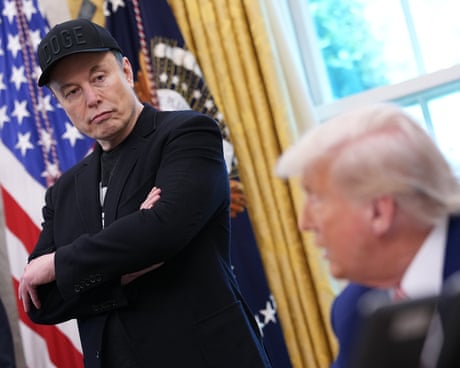
Elon Musk has admitted he became too consumed by politics during his volatile alliance with Donald Trump and his brief appointment as the president’s financial axman, running the so-called “department of government efficiency” (Doge).

The world’s richest person, and briefly its first trillionaire after his SpaceX company floated on the New York stock exchange in June, made the confession in a wide-ranging interview with the Economist published on Thursday. He shared his positions on subjects from foreign wars to AI, and made a number of eye-opening predictions for the future.

Continue reading...

© Photograph: Kevin Dietsch/Getty Images

© Photograph: Kevin Dietsch/Getty Images

© Photograph: Kevin Dietsch/Getty Images

  •  

Tesla Stock in Freefall After Disastrous Earnings Report

Shares of Elon Musk’s embattled carmaker Tesla slid over 13 percent Thursday morning after posting dismal second quarter results the night before.

The stock is hovering at around $324 at the time of writing, down over 15 percent over the last five days and about 28 percent year to date.

The company missed Wall Street expectations, despite its core automotive segment generating just over $20 billion in revenue, up 23 percent from a year ago. However, the company’s gross profits dropped as operating expenses climbed far quicker than revenue, in large part thanks to AI-related capital expenses and other research and development — an intimately familiar refrain for the tech world in 2026.

In other words, investors are growing increasingly wary of Musk’s reinvention of his car business. The almost-trillionaire is trying to shift the company’s focus from selling cars to robotaxis, a humanoid robot called Optimus, and AI — a series of major undertakings that’re clearly weighing it down financially after multiple quarters of major losses.

Worse yet, Tesla’s woes are clearly having knock-on effects on his rocket company as well. SpaceX’s stock has had a bruising month since hitting an all-time high after going public in mid-June. An aborted Starship test launch and Musk’s dubious plan for orbital data centers have investors betting against the company in incredible numbers.

During Wednesday’s earnings call, the company claimed that production of its Optimus humanoid robot remains on track, but didn’t elaborate beyond promising that production is starting “soon.”

“This is going to be the hardest product to scale manufacturing that we’ve ever made at Tesla, because everything on the robot is new,” Musk said.

Tesla’s robotaxi service is also being rolled out to six major metropolitan areas across the country, but continues to lag far behind its key competitor, Alphabet’s Waymo.

Despite slightly more optimistic vehicle sales numbers, the company continues to burn through billions of dollars to keep all of those new plates spinning.

The elephant in the room during this week’s call was the long-rumored possibility of Musk merging Tesla and SpaceX — a doubling down on his portfolio that could set up some of the most unbelievable financial drama in economic history.

The mercurial entrepreneur didn’t rule out the possibility, saying that “we can’t talk about combining companies on an earnings call.”

“It’s got to be done with the appropriate process,” he added.

More on Musk: Elon Musk Says His Goal Is for SpaceX to Be Worth More Than the Entire Earth

The post Tesla Stock in Freefall After Disastrous Earnings Report appeared first on Futurism.
  •  

Tesla (TSLA) crashes 12%, sheds $140B as Elon Musk’s ‘just trust me’ doesn’t hold anymore

Tesla stock is down more than 12% today, wiping out over $140 billion in market value, after the automaker’s Q2 2026 earnings missed on profit and free cash flow turned negative.

The slide got worse during the earnings call, when Elon Musk repeated the same robotaxi and Optimus promises he’s been making for years.

  •  

Space datacenters proposed by Musk and Bezos ‘catastrophic’ for planet, experts warn

New US petition demands review of plans from tech companies amid fears of environmental destruction

Space datacenters proposed by SpaceX, Jeff Bezos’s Blue Origin and others would release staggering levels of pollution that would probably alter the Earth’s atmosphere and be “catastrophic” for the planet, space industry experts and environmental groups warn in a new petition demanding a review of their impacts.

Tech companies have collectively proposed millions of “orbital datacenters” and are pressing forward with plans, which require Federal Communications Commission (FCC) approval. Among other issues, pollution from satellites and rockets burning up upon re-entry appears to be accumulating in the stratosphere at alarming levels. The spacecraft release black soot, rare metals, aluminum oxides and other pollutants with unknown effects.

Continue reading...

© Photograph: Getty Images

© Photograph: Getty Images

© Photograph: Getty Images

  •  

Tesla still has no real plan for Hardware 3 owners promised FSD

Elon Musk was asked directly on Tesla’s Q2 2026 earnings call whether the company still plans to upgrade Hardware 3 (HW3) cars so they can run its latest “Full Self-Driving” software. His answer made one thing clear: Tesla still has no concrete plan.

Instead of committing to a fix, Musk floated a grab-bag of options and timelines — none of them firm — for the millions of vehicles Tesla sold with the promise that they had “all the hardware necessary” for self-driving.

  •  

Elon Musk hints at Tesla (TSLA)-SpaceX merger on earnings call

Elon Musk hinted at a merger between Tesla and SpaceX on Tesla’s Q2 2026 earnings call, pointing to “more and more overlap” between the two companies he controls.

He stopped short of confirming anything, deferring to Tesla’s general counsel and “the appropriate process” — but the exchange is the closest Musk has come to addressing the merger speculation directly.

  •  
❌