The touchscreen and the OLED panel have dominated discussion about Apple's next high-end laptop, but the redesign wrapped around them may prove to be an equally consequential change, largely because it is not expected to stay unique to the machine for long.
Bloomberg's Mark Gurman last week laid out Apple's plan to refresh every Mac it sells over the next two years. In the report, he mentioned that the entry-level 14-inch MacBook Pro due in 2027, reportedly code-named K104, is said to resemble the design of the high-end K114 and K116 machines while using a standard M7 chip. The design debuting on the rumored "MacBook Ultra" would therefore reach a considerably cheaper Mac within roughly a year of launch, a pattern first reported at the start of July.
Apple last redesigned the MacBook Pro in 2021 alongside the introduction of the M1 Pro and M1 Max chips, and that overhaul ran in the opposite direction to this one. The machine grew thicker and heavier, and Apple restored the HDMI port, the SD card slot, and MagSafe charging that it had stripped out in the preceding generation. Five years on, the company is apparently trying to reverse the thickness.
The chassis is expected to be noticeably thinner and lighter. Swapping a mini-LED backlight for a hybrid OLED stack removes an entire physical layer from the lid, since OLED pixels emit their own light. There has so far been no indication that Apple intends to sacrifice ports to find the rest of the millimeters, which is just as well given how poorly that went last time.
The front of the machine is where the change should be most obvious. The notch is expected to disappear in favor of a much smaller hole-punch camera, a change first indicated on a roadmap from research firm Omdia and since corroborated by Bloomberg. The cutout is said to be pill-shaped, paving the way for an interactive Dynamic Island that expands contextually in the way it does on the iPhone.
Whether the screens themselves will grow is less settled. Omdia claimed that Samsung Display will supply 14.3-inch and 16.3-inch panels, marginally larger than the 14.2-inch and 16.2-inch displays on current models, which would imply slimmer bezels wrapped around a slightly bigger screen. A February report from Bloomberg, however, indicated that screen sizes were not expected to change, but that rumor may not have accounted for a slight reduction in bezels.
Apple is said to be fitting a reinforced hinge so the display does not wobble when tapped, but it is not clear if this will result in any external visual changes. Gurman described the approach to touch as "touch-friendly, not touch-first."
What will become of the high-end MacBook Pro is still a loose thread. Gurman's roadmap lists a high-end 14-inch and 16-inch "MacBook" without the Pro suffix, and no separate high-end MacBook Pro sits alongside it, though that phrasing is hard to lean on when the exact branding itself is unresolved. The new MacBook "Ultra" could replace the current M5 Pro and M5 Max models outright at a higher price point or arrive above them as a genuinely new tier while they stay on sale.
If the high-end MacBook Pro gains Apple's next-generation M7 Pro and M7 Max chips in late 2027, considering that the entry-level M7 model will gain the MacBook Ultra's design in the first half of that year, it seems inevitable that the high-end machines will follow, meaning that all five of Apple's most powerful laptops will share the same overall design.
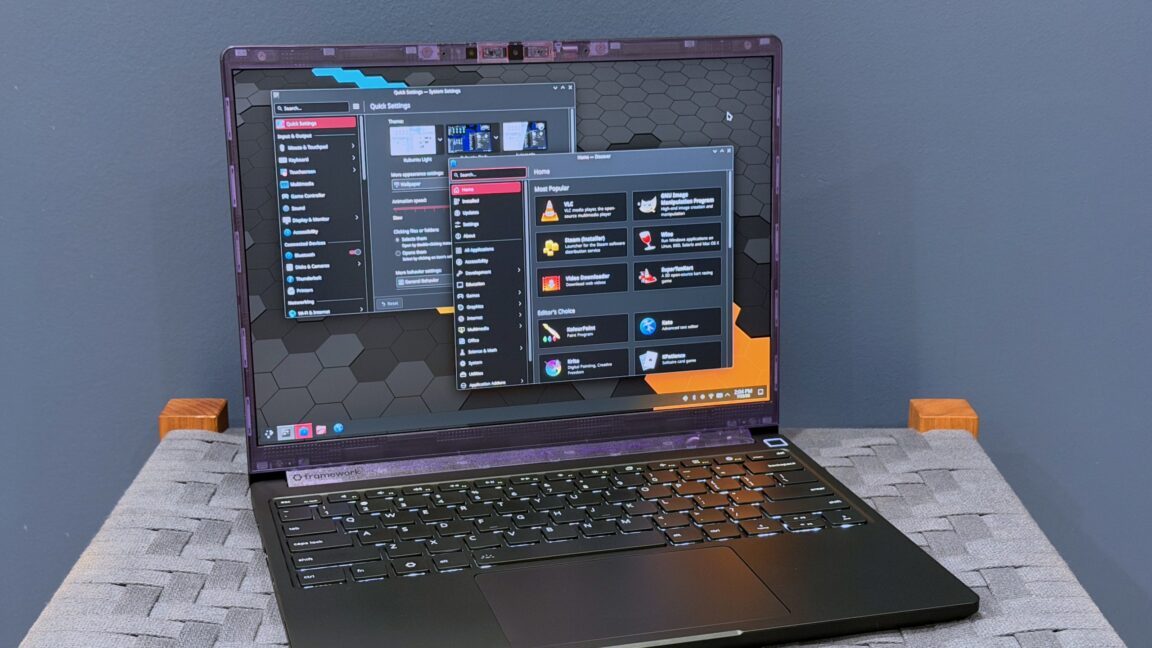
I've liked the Framework Laptop 13 since the first time I used it, partly because I just think the idea of a repairable and upgradeable laptop is cool and partly because it's not Yet Another Ultraportable Trying To Be A MacBook Air Clone. But the design has always had real shortcomings—the most noticeable and serious being its mediocre battery life.
Enter the Framework Laptop 13 Pro. While all previous Laptop 13 refreshes have tinkered around the edges with the original design (a tweaked lid design here, new hinges or new speakers there), the Laptop 13 Pro is as close as we've gotten to a second-generation revision for the original design.
This means that it breaks backward compatibility for some (but not all) Laptop 13 components, most notably the bottom case, the keyboard and trackpad, and the original 55 WHr and 61 WHr battery designs. But by allowing itself to make larger changes to the design, Framework has made major strides in battery life and general fit and finish.
Para a estreia das telas OLED1Organic light-emitting diode, ou diodo emissor de luz orgânico. e do suporte ao toque em computadores com o suposto “MacBook Ultra”, a Apple poderá recorrer exclusivamente à Samsung Display como fornecedora dos painéis.
A informação partiu do site sul-coreano The Elec, o qual afirmou que, segundo as suas fontes relacionadas à cadeia de suprimentos, cerca de 250 mil unidades de painéis OLED de 14 e 16 polegadas (8,6ª geração) da Samsung foram encomendadas, com previsão de produção em massa para o mês de agosto.
A Apple não teria cogitado a LG Display e tampouco a BOE para o desenvolvimento dessas telas, devido a questões de rendimento, tornando a Samsung a única fornecedora viável.
De acordo com uma série de leakers, analistas e jornalistas, especulava-se que o “MacBook Ultra” tivesse o seu lançamento entre o final deste ano e o início do ano que vem, mas devido à crise de memória é possível que ele de fato chegue às lojas somente em 2027.
Segundo o jornalista Mark Gurman (da Bloomberg), tal Mac deverá ser equipado com os chips M5 Pro e M5 Max, com o conjunto (design, construção e tela) posicionando-o acima dos MacBooks Pro.
MacBook Pro de 16″
Cores: preto-espacial ou prateado Tela: padrão ou nano-texture Chips: M5 Pro ou M5 Max Memória: 24GB, 36GB, 48GB, 64GB ou 128GB Armazenamento: 1TB, 2TB, 4TB ou 8TB
Cores: preto-espacial ou prateado Tela: padrão ou nano-texture Chips: M5, M5 Pro ou M5 Max Memória: 24GB, 36GB, 48GB, 64GB ou 128GB Armazenamento: 1TB, 2TB, 4TB ou 8TB Adaptador de energia: USB-C de 70W ou 96W
NOTA DE TRANSPARÊNCIA: O MacMagazine recebe uma pequena comissão sobre vendas concluídas por meio de links deste post, mas você, como consumidor, não paga nada mais pelos produtos/serviços usando os nossos links de afiliado.
Apple's first high-end MacBook redesign in five years is expected to arrive in the near future, bringing a run of firsts to the Mac.
Bloomberg's Mark Gurman expects the laptop to arrive between late 2026 and early 2027, with the later window now looking more likely owing to the global memory chip shortage. Analyst Ming-Chi Kuo expects mass production to begin by late 2026.
Apple last redesigned the MacBook Pro in 2021 with the M1 Pro and M1 Max models, so this would be its first new high-end laptop design in at least five years. Here is everything rumored about the device so far:
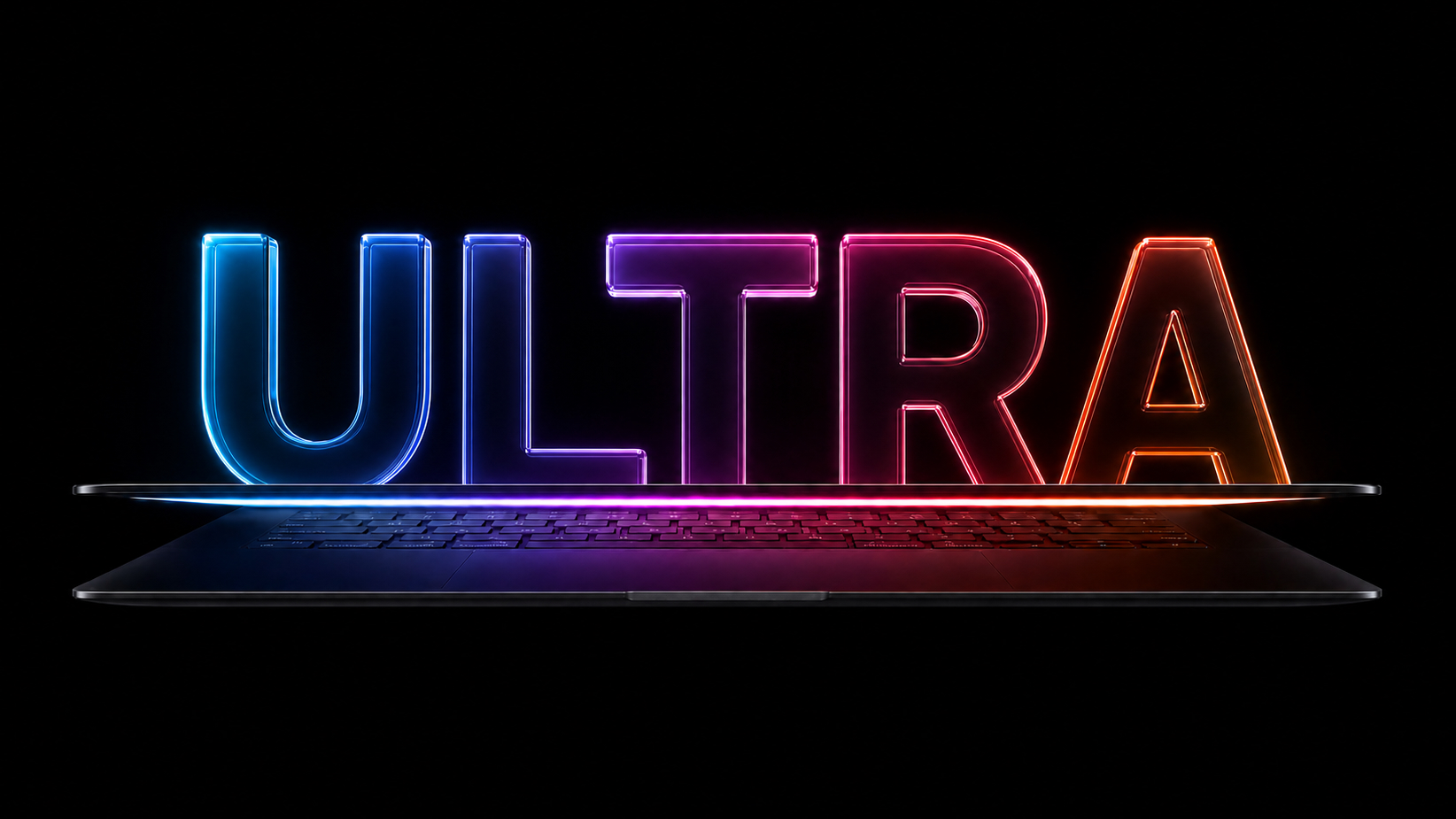
"MacBook Ultra" branding: Apple has reportedly decided to market two new "Ultra" products over the next year, the foldable iPhone and this laptop, which would establish a tier above the MacBook Pro for the first time. The name is not confirmed and Apple theoretically could still use "MacBook Pro" branding, but for now, "MacBook Ultra" seems highly likely.
OLED display: The MacBook Ultra is expected to be the first Mac with an OLED display, replacing the mini-LED backlighting used in current MacBook Pro models. It should deliver richer colors, a higher contrast ratio with true blacks, greater brightness, and improved power efficiency, since individual pixels switch off rather than dim. The laptop will reportedly use hybrid OLED technology combining an oxide TFT backplane with a tandem two-stack OLED structure, the same approach used in the iPad Pro, offering a longer panel lifespan.
Touch screen: The device is expected to be the first Mac to support touch input directly on the display, ending years of Apple resistance to the idea. Kuo first claimed the panel would support touch, Gurman corroborated it, and the Weibo leaker known as "Instant Digital" says the feature is now confirmed. Apple is apparently not positioning the machine as a touch-first device like the iPad, instead letting customers move between touch, trackpad, and keyboard interchangeably, in what Gurman describes as "touch-friendly, not touch-first." The laptop is said to remain a conventional clamshell, with the keyboard and trackpad retained and no detachable or convertible design.
Touch-optimized macOS: Apple is reportedly reworking macOS so that controls adapt to the input method being used. Tapping a menu bar item would apparently surface a larger set of touch-optimized controls, and the system is said to gain iPad-style gestures including pinch-to-zoom and fast scrolling. Touch-based options would be integrated throughout the operating system rather than confined to a handful of apps.
Reinforced hinge: Apple likely plans to add a reinforced hinge so the display does not wobble when it is tapped. The current MacBook Pro hinge moves easily and does not tilt especially far back, both of which could be a problem on a machine designed to be prodded.
Hole-punch camera: The "notch" is expected to disappear, replaced by a far smaller hole-punch camera at the top of the display. The change was first indicated by a roadmap from research firm Omdia and has since been corroborated by Bloomberg. Losing the notch would add visible screen area and free up the menu bar space it currently intrudes upon, taking the design a step closer to an uninterrupted, edge-to-edge display.
Dynamic Island: The cutout is expected to digitally expand into an iPhone-style Dynamic Island. It would be interactive and expand contextually based on the app or Mac feature in use, surfacing items such as Siri, low battery alerts, and AirPods connection indicators in the area surrounding the camera.
M5 Pro and M5 Max chips: The laptop is now expected to ship with the existing M5 Pro and M5 Max chips already found in the current MacBook Pro, rather than the "M6 Pro" and "M6 Max." Apple has apparently scrapped the M6 Pro and M6 Max altogether, accelerating instead to M7 Pro and M7 Max chips said to be optimized for intensive AI workloads with upgraded neural accelerators, graphics improvements, and increased memory bandwidth. A second-generation model with those chips is reportedly planned for late 2027.
Thinner design: The MacBook Ultra is expected to be noticeably thinner and lighter than the current MacBook Pro. Moving away from mini-LED backlighting should itself help slim down the lid. There has so far been no indication that Apple intends to remove ports such as HDMI, MagSafe, or the SD card slot to achieve it, which was a deeply unpopular decision the last time around.
Two display sizes: The laptop is expected to be offered in both 14-inch and 16-inch sizes, mirroring the current MacBook Pro lineup, with the two models reportedly code-named K114 and K116.
Slimmer bezels: Research firm Omdia claims Samsung Display will supply 14.3-inch and 16.3-inch panels, marginally larger than the 14.2-inch and 16.2-inch screens on current models, which would suggest thinner bezels around a slightly bigger display. A February report from Bloomberg indicated that overall screen sizes are not expected to change compared to the MacBook Pro.
Built-in cellular: Apple has reportedly at least considered built-in cellular connectivity for future Macs, which would be a first for the platform. If the plan goes ahead, the MacBook Ultra would likely use Apple's existing C1X modem or its next-generation C2 modem for 5G and LTE. This is seemingly the most uncertain feature on this list.
There are already signs of the touchscreen MacBook in Apple's software. macOS 27 Golden Gate hints at the machine in at least three ways: it adds direct touch input to Sidecar, allowing users to tap and interact with macOS elements with a finger on an iPad; it introduces iPhone-style pull-to-refresh across apps including Safari, Mail, News, Podcasts, and Calendar; and its new "Search or Ask" Siri interface in Spotlight adopts a dark, pill-shaped design that would sit naturally around a Dynamic Island.
There is some awkwardness for buyers. The first MacBook Ultra looks set to pair Apple's most ambitious Mac redesign in years with silicon that has already been on sale for months, but a successor with much more advanced chips could follow less than a year later.
Pricing is the remaining unknown, but it is likely to be high. Apple raised prices across its Mac lineup in June, and the 14-inch MacBook Pro now starts at $1,999, rising to $2,499 with the M5 Pro chip, while the 16-inch model starts at $2,999. The MacBook Ultra is expected to sit above all of them.
As expectativas para a nova geração de dobráveis da família Galaxy Z são elevadas e Bernardo Cunha, responsável pela estratégia e marketing de produto da Samsung Portugal diz que quem entra no universo dobrável raramente volta atrás e acredita que o novo formato do Z Fold8 vai ter grande adesão em Portugal.
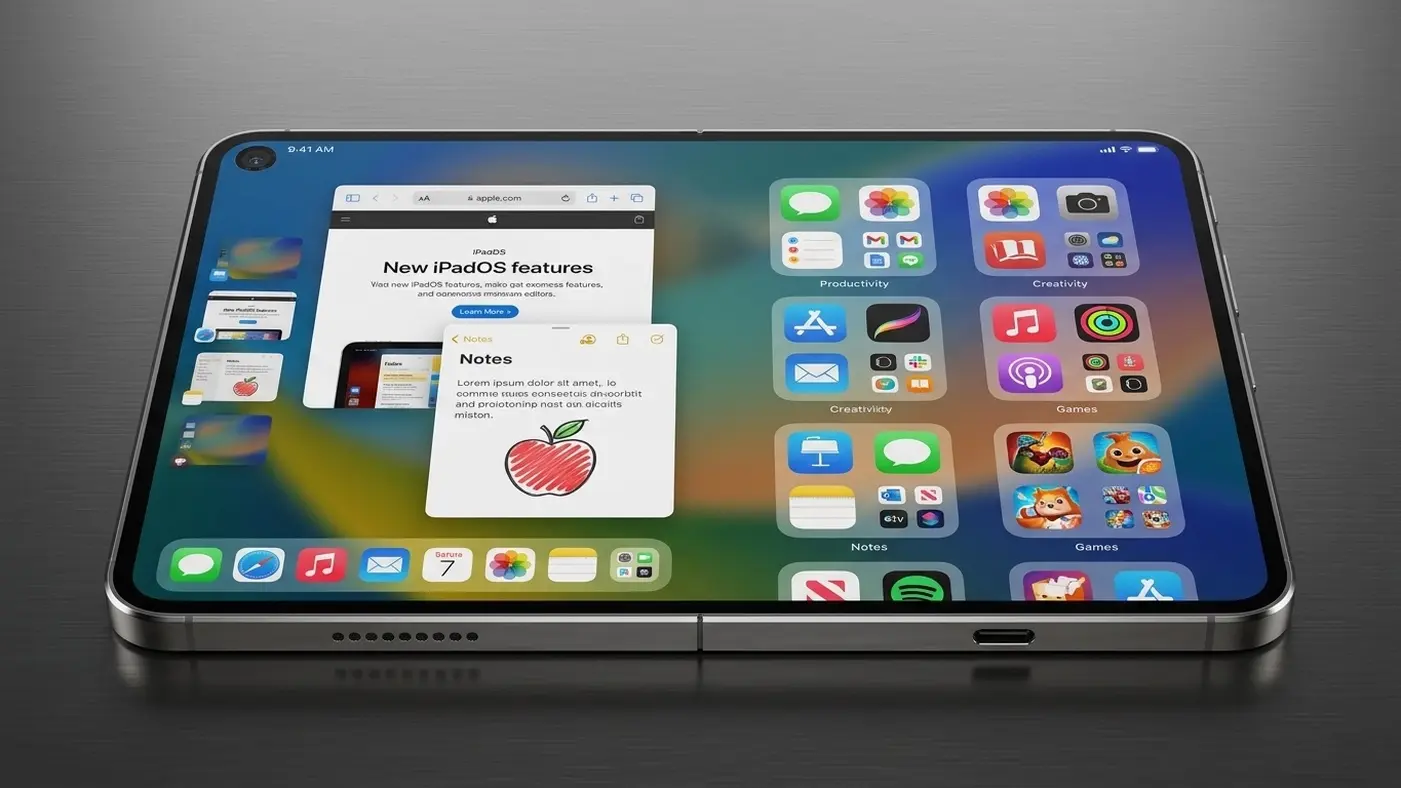
3D render claiming to depict Apple’s first foldable iPhone (image: Jon Prosser)
Apple is poised to enter the foldable smartphone market with its first folding iPhone, widely rumored to be branded as the iPhone Ultra (or simply “iPhone Fold”). Expected to debut alongside the iPhone 18 Pro series in September 2026, the device marks a major milestone in Apple’s mobile strategy after years of development focused on solving the durability issues that plagued early market rivals.
Design: Passport Profile, Titanium Frame, and Liquidmetal Hinge
• Form Factor: The device adopts a book-style horizontal fold (opening like a book) rather than a vertical flip form factor. When closed, it features a wider “passport-style” profile—more similar to the original Google Pixel Fold than Samsung’s narrower Z Fold series.
• Dimensions: Rumored chassis measurements point to an ultrathin design: roughly 4.5–4.8 mm unfolded and 9.0–9.5 mm folded.
• Liquidmetal & Hinge Tech: Apple is widely reported to be using Liquidmetal (bulk metallic glass) for key internal hinge components. Unlike standard crystalline metals, this alloy has an amorphous, glass-like atomic structure that offers exceptional elasticity, high yield strength, and superior wear resistance. This design choice allows the hinge to withstand hundreds of thousands of folds without loosening or deforming, while working alongside 3D-printed titanium support plates and chemically treated ultra-thin glass (UTG) to minimize screen creasing.
• Biometrics & Hardware: Due to the ultra-slim profile when unfolded, Face ID hardware may be replaced by a Touch ID sensor integrated into the power button. Wireless charging and MagSafe compatibility are expected to remain, supported by a specialized back plate structure.
Display: Dual Screens Built for Multitasking
• Inner Display: A 7.7–7.8-inch flexible OLED panel with a roughly 4:3 aspect ratio, giving users an iPad mini-like workspace when unfolded.
• Outer Display: A 5.3–5.5-inch cover screen optimized for quick single-handed tasks when folded.
• Software Experience: The foldable runs a customized version of iOS with adaptive multitasking features designed for multi-window layouts and intermediate angle positions.
Performance and Hardware Specs
• Processor: Powered by Apple’s next-generation A20 chip (built on a 2nm process) and paired with Apple’s custom C-series cellular modem.
• Memory & Storage: Equipped with 12GB of RAM to handle heavy multitasking and Apple Intelligence on-device AI features.
• Battery: Features a split dual-battery design with a combined capacity of around 5,000–5,500 mAh—making it one of the largest battery systems ever put into an iPhone.
• Camera System: Expected to feature a premium multi-camera array engineered specifically for thin housings, utilizing advanced folded optics (periscope layout).
Pricing and Release Timeline
• Launch Window: Target release is September 2026 alongside the flagship iPhone 18 Pro lineup, though initial supply may be constrained.
• Price Point: Positioned as an ultra-premium flagship, pricing is expected to start between $2,000 and $2,500, placing it well above the Pro Max tier.
MacDailyNews Take: Those who want to get their foldable iPhones before Christmas: Order in the first minute of pre-orders!
Please help support MacDailyNews — and enjoy subscriber-only articles, comments, chat, and more — by subscribing to our Substack: macdailynews.substack.com. Thank you!
In an exclusive conversation with The Deep View ahead of WWDC 2026 in June, Doug Brooks, senior product manager of Apple silicon, discussed how Apple’s long-term investments in neural processing, unified memory, power-efficient computing, and hardware-software integration have positioned its devices for the AI era.
He also explained why Macs have become a favorite platform among AI developers, why Mac minis and Mac Studios are emerging as the preferred AI agent machines, and how Apple sees the future of on-device AI across iPhone, iPad, and Mac.
[…]
“We build a chip knowing exactly what systems it’s going to go into. The chip can influence the system design, and the system design can influence the chip requirements. They’re married together very tightly. I’d actually go a step further and include software in that equation. As we enable new capabilities in the chip, we want to make sure those capabilities are exposed all the way through the software stack so developers can benefit and customers can benefit. Because if those transistors go unused, what’s the point? It’s not about adding something and hoping somebody finds a use for it. We want those capabilities available to solve real problems. I think that’s what allows us to build better systems and ultimately better products.”
It seems like a lot of it is just that developers like macOS.
Segundo o que foi reportado por fontes de cadeia de suprimentos, a Foxconn já teria dado o pontapé inicial na produção em massa do “iPhone 18 Pro” e do “iPhone 18 Pro Max”, os próximos smartphones topos-de-linha da Apple.
A informação partiu do portal de notícias chinês MyDrivers, o qual afirmou que a principal fabricante contratada da Apple iniciaria em breve seu período de pico de contratações para dar conta desse estágio de aumento da produção em massa, já iniciado no mês de julho.
Pela primeira vez, a Apple deverá segregar o lançamento dos novos iPhones, separando os modelos tradicionais dos da linha Pro: tanto o “18 Pro” quanto o “18 Pro Max” deverão ser anunciados em setembro ao lado do “iPhone Ultra” — a estreia da Apple no segmento de celulares com telas dobráveis —, enquanto lançamentos como a segunda geração do iPhone Air, o “iPhone 18” e o “iPhone 18e” deverão ficar para o começo do ano que vem.
iPhone 17 Pro Max
Cores: prateado, laranja-cósmico ou azul-intenso Armazenamento: 256GB, 512GB, 1TB ou 2TB
NOTA DE TRANSPARÊNCIA: O MacMagazine recebe uma pequena comissão sobre vendas concluídas por meio de links deste post, mas você, como consumidor, não paga nada mais pelos produtos/serviços usando os nossos links de afiliado.
Os novos dobráveis chegam meses antes de a Apple alegadamente adentrar nesse segmento do mercado com o famigerado “iPhone Ultra” — logo, as apostas da gigante sul-coreana baterão de frente com o futuro dispositivo da Maçã.
Sem mais delongas, vamos conferir os detalhes de cada anúncio abaixo!
Galaxy Z Fold8
Divulgação/Samsung
Agora que os dobráveis da Samsung possuem três variantes, o Z Fold tradicional passou por um reposicionamento, tornando-se talvez a adição mais diferente dentre toda a linha de novos produtos anunciados.
Seu grande destaque é a reformulação no design, adotando um formato que se convencionou chamar de “passaporte”, com uma proporção maior do que aquilo que foi estabelecido nas últimas gerações do dobrável principal da Samsung. Isso resultou em uma tela externa de 5,5 polegadas e aspect ratio de 10:16, além de uma principal de 7,6″ e proporção de 4:3 — especificações bem semelhantes ao que se especula sobre o “iPhone Ultra” —, ambas com taxas de atualização de até 120Hz.
A sul-coreana destacou ainda o peso do modelo, sendo o celular dobrável mais leve já lançado por ela até agora (201 gramas, para ser exato).
Uma das principais diferenças do modelo em relação ao Z Fold8 Ultra está nas câmeras: o modelo padrão conta apenas com duas lentes traseiras (um sensor principal e uma lente ultra-angular, ambos com 50 megapixels), além dos 200mAh de diferença na bateria (4.800mAh no caso do Z Fold8 e 5.000mAh no caso do Z Fold8 Ultra). A linha também marca a estreia das baterias de silício-carbono nos celulares da fabricante.
Quanto ao restante das suas especificações técnicas, destaca-se pela implementação da tecnologia Flex Titanium — baseada em alumínio — para a resistência da tela, a presença do chip Snapdragon 8 Elite Gen 5, opções a partir de 12GB de memória e 256GB de armazenamento (até 1TB), resistência IP48 contra água e poeira, além de suporte ao carregamento de 45W com fio e 15W sem fio. Assim como os demais aparelhos, ele chega com o Android 17 e a One UI 9.
Nos Estados Unidos, ele chega a partir de US$1.900 (US$200 a menos que o Z Fold8 Ultra e US$100 a menos que o Z Fold7) nas cores preta, branca, lavanda e verde pistache (esta última exclusiva para compra no site oficial da Samsung).
Galaxy Z Fold8 Ultra
Divulgação/Samsung
Para os entusiastas do tradicional formato dos dobráveis da Samsung, a melhor opção é o modelo Ultra. Ele conta com as mesmas 8″ na tela principal e 6,5″ na tela externa do Z Fold7, com aspect ratios de 3:2 e 21:9, respectivamente.
Outra diferença notável em relação ao modelo menor é a presença da lente teleobjetiva de 10MP, aos moldes da presente no Z Fold7.
Como citado anteriormente, o aparelho conta com uma bateria de 5.000mAh de silício-carbono, além de compartilhar o Snapdragon 8 Elite Gen 5, as mesmas opções de memória/armazenamento, a resistência IP48 e o suporte aos 45W de carregamento com fio e 15W sem fio do Z Fold8.
Um de seus maiores destaques (nesse caso, negativo) é o preço: US$2.100 — um aumento em comparação ao modelo equivalente da geração passada (vale lembrar, o Z Fold7 chegou por US$2.000 lá fora). Ele está disponível nas cores preta, branca, roxo escuro e verde escuro (esta última exclusiva para compra no site oficial da Samsung).
Galaxy Z Flip8
Divulgação/Samsung
Modelo mais básico da nova linha, o Z Flip8 se destaca pela redução na espessura (13,1mm dobrado contra os 13,7mm do antecessor) e no peso (188g contra 180g do Z Flip7), possibilitando o que a Samsung chama de “uma experiência cotidiana sem vinco”.
Ele conta com uma tela interna de 6,9″, enquanto a externa tem 4,1″, com proporções de 22:9 e 1:1, respectivamente, e suporte a taxas de atualização de 120Hz em ambas. O aparelho chega com um conjunto duplo de câmeras, sendo a lente principal de 50MP, um sensor ultra-angular de 12MP e câmera frontal de 10MP.
Ele chega com o processador Exynos 2600, resistência IP48, 12GB de memória e opções de armazenamento de 256GB e 512GB. Em termos de bateria e recarga, o componente de silício-carbono possui uma capacidade de 4.300mAh, carregamento de até 25W por fio e 15W sem fio.
O Z Flip8 custa US$1.200 (um aumento de US$100 em relação ao Z Flip7) e está disponível nas cores azul, preta, vermelha coral e menta (esta última exclusiva para compra no site oficial da Samsung).
Galaxy Watch9 e Ultra2
Ambos os modelos ganharam suporte ao recurso “levante para falar”, que aciona de imediato o Gemini do Google sem a necessidade de toque ou botão. Os dois relógios contam com o Wear OS 7 e a One UI 9 Watch, compatíveis com smartphones que possuam Android 13 ou superior.
Divulgação/Samsung
Com especificações e design um tanto semelhantes ao seu antecessor, as grandes novidades do Galaxy Watch9 incluem a ampliação de bateria (o modelo de 40mm ganhou um aumento de quase 20%, com 390mAh, enquanto a versão de 44mm possui 445hmAh), a pulseira com design Air Pocket (até 25% mais leve que a presente no Watch8) e a estreia do processador Snapdragon Wear Elite.
Ele continua com as opções de 2GB de memória e 32GB de armazenamento e está disponível em caixas de 40mm e 44mm, nas cores preto e creme, custando a partir de US$380 (um aumento de US$30 em relação ao Watch8).
Já o Galaxy Watch Ultra2 adota uma reformulação na identidade visual que o aproxima do restante da linha, sendo até 12% mais fino que o seu antecessor, mantendo a bateria de 800mAh. A tela também ganhou melhorias, contando com 5.000 nits de brilho máximo.
Para experiências aquáticas, o Ultra2 atende o padrão EN13319 para mergulho e possui certificação IP69K. Além disso, o app Marz deverá receber suporte à metrificação de velocidades e orientações de descompressão.
Disponível nas cores titânio preto e titânio prata, o modelo está disponível a partir de US$700, um aumento de US$50 em relação à primeira geração.
Inteligência artificial
Durante o evento, a Samsung reforçou sua ciência e presença quanto às IAs agênticas, expandindo a experiência para além das telas dos smartphones e passando a oferecer assistência contínua de IA em tempo real nos dispositivos do seu ecossistema; o foco da Samsung é a entrega da experiência hands-free (ou seja, mãos livres). Ela afirmou ainda que essa integração contará com mecanismos de proteção e segurança, embora não tenha adentrado em detalhes técnicos de como fará isso.
A empresa também mencionou a integração de dados biométricos coletados pelos Galaxy Watch ao fluxo de trabalho médico, focada na prevenção de riscos de saúde com o auxílio da inteligência artificial (IA), permitindo a sugestão de refeições e treinos adaptados com base em interpretações de biossinais.
Preço e disponibilidade
Os novos smartphones chegarão ao Brasil no dia 6 de agosto, mas ainda não tiveram seus preços divulgados; ainda assim, a Samsung já antecipou que a aquisição de algum dos dispositivos durante a pré-venda garantirá até seis meses de Google AI Pro sem custos adicionais.
NOTA DE TRANSPARÊNCIA: O MacMagazine recebe uma pequena comissão sobre vendas concluídas por meio de links deste post, mas você, como consumidor, não paga nada mais pelos produtos/serviços usando os nossos links de afiliado.
Os próximos meses têm tudo para ser extremamente movimentados quando o assunto são novos Macs, com a Apple preparando uma série de atualizações para os MacBooks Pro e Air, duas novas versões do iMac e até mesmo Macs mini e Studio atualizados, segundo informações da Bloomberg.
De acordo com o veículo, a Apple já encerrou o desenvolvimento de um novo MacBook Pro de 14 polegadas, o qual deverá ser um dos primeiros dispositivos a contar com o chip “M6”. De codinome J804, ele deverá contar com o mesmo design do modelo de entrada atual, que vem equipado com o chip M5.
Outro Mac que já estaria prestes a passar por atualizações é o iMac, que deverá ganhar não só uma, mas duas novas versões, sendo que uma delas ainda receberá uma tela OLED 1Organic light-emitting diode, ou diodo emissor de luz orgânico.. Com os codinomes J833 e J834, eles também serão equipados, é claro, com chips mais recentes — embora o modelo com o display mais avançado demore mais tempo para chegar ao mercado do que o primeiro.
E por falar em telas OLED, também teremos novos MacBooks Pro de 14″ e 16″ que, além de contar com essa tecnologia, também deverão ter painéis sensíveis ao toque, inaugurando esse método de interação entre os Macs. Com os codinomes K114 e K116, respectivamente, eles deverão ser lançados entre o fim deste ano e o início de 2027. No momento, eles estão sendo testados pela Apple com uma versão preliminar do macOS Golden Gate 27.1, cujo lançamento é aguardado para outubro próximo.
Ao contrário do modelo de entrada, no entanto, esses seguirão “presos” na família de chips M5, contando com o M5 Pro e o M5 Max dos MacBooks Pro atuais. Novas versões com os chips “M7 Pro” e “M7 Max”, porém, já estão planejadas para algum momento entre o fim de 2027 e o início de 2028.
Por falar no MacBook Pro de entrada, uma versão do modelo com um design completamente novo — baseado nos modelos com OLED — já estaria sendo desenvolvida pela Apple. Ele deverá vir ainda com o chip “M7” e conta com o codinome K104.
Já os MacBooks Air deverão ganhar novos modelos no início do ano que vem. Com os codinomes J913 (modelo de 13″) e J915 (15″), eles seguirão com o design atual. Vale lembrar, no entanto, que modelos com telas OLED já estão no forno há alguns anos e com lançamento previsto para o início de 2028.
Caçula da família, o MacBook Neo, também já conta com uma nova versão no horizonte, a qual deverá contar com o chip A19 Pro e mais memória integrada — provavelmente 12GB, ante aos 8GB do modelo atual.
Por fim, temos os dois desktops mais tradicionais da Apple: o Mac mini e o Mac Studio. Segundo Mark Gurman, o modelo em testes do primeiro usa os chips M5 Pro e “M6”, enquanto o segundo é empurrado pelos processadores M5 Max e “M5 Ultra”. Não há, no entanto, uma previsão de quando esses computadores chegarão ao mercado — cortesia da atual crise no mercado de memórias.
Haja computador novo, hein?! 😮💨
Mac Studio
Chip: M4 Max ou M3 Ultra Memória: 36GB, 48GB, 64GB, 96GB, 128GB, 256GB ou 512GB Armazenamento: 512GB, 1TB, 2TB, 4TB, 8TB ou 16TB
Cores: preto-espacial ou prateado Tela: padrão ou nano-texture Chips: M5 Pro ou M5 Max Memória: 24GB, 36GB, 48GB, 64GB ou 128GB Armazenamento: 1TB, 2TB, 4TB ou 8TB
Cores: preto-espacial ou prateado Tela: padrão ou nano-texture Chips: M5, M5 Pro ou M5 Max Memória: 24GB, 36GB, 48GB, 64GB ou 128GB Armazenamento: 1TB, 2TB, 4TB ou 8TB Adaptador de energia: USB-C de 70W ou 96W
Cores: azul-céu, prateado, estelar ou meia-noite Chip: M5 Memória: 16GB, 24GB ou 32GB Armazenamento: 512GB, 1TB, 2TB ou 4TB Adaptador de energia: USB‑C de 30W, 35W com duas portas ou 70W
NOTA DE TRANSPARÊNCIA: O MacMagazine recebe uma pequena comissão sobre vendas concluídas por meio de links deste post, mas você, como consumidor, não paga nada mais pelos produtos/serviços usando os nossos links de afiliado.
Notas de rodapé
1
Organic light-emitting diode, ou diodo emissor de luz orgânico.
Em mais um dos seus tradicionais vídeos comentados com renders, o YouTuberJon Prosser tratou do “iPhone 18 Pro”, previsto para chegar ao mercado no mês de setembro.
O foco da vez é a câmera com abertura variável, um dos aguardados principais diferenciais do “18 Pro” em relação ao seu antecessor.
Relembrando os feitos do Modo Retrato (Portrait Mode), Prosser explica que a abertura variável — que foi inclusiva “confirmada” pelo megavazamento da fornecedora indiana Tata Electronics — poderá contribuir com capturas de fotos mais naturais com mais ou menos profundidade de campo. Quanto menor ela for, mais borrado fica o plano de fundo (efeito chamado na fotografia de bokeh). Ele considera esse uma das maiores melhorias dos iPhones, embora pouco perceptível à primeira vista.
O restante do vídeo menciona a escolha de design pela continuidade do alumínio, as cores — fazendo coro às especulações de azul claro, cereja escuro, cinza escuro e prata —, a Ilha Dinâmica (Dynamic Island) reduzida — já abordada em outro vídeo do mesmo canal sobre o aparelho —, o chip “A20 Pro” (de 2nm, com a especulada ampliação de quase 15% em performance e 30% em eficiência energética se comparado ao A19 Pro), o empacotamento do tipo Wafer-level Multi-Chip Module (WMCM) — acoplando CPU, GPU, Neural Engine e memória na mesma placa —, a bateria de 4.288mAh no modelo menor e 5.567mAh no “18 Pro Max”, além do modem “C2”, que poderá contar com suporte ao 5G via satélite (também abordado em outro vídeo do “18 Pro”).
O vídeo encerra provocando a indagação sobre o apelo da linha em meio à estreia da linha de dobráveis da Apple com o “iPhone Ultra”, que deverá ser anunciado também em setembro.
iPhone 17 Pro Max
Cores: prateado, laranja-cósmico ou azul-intenso Armazenamento: 256GB, 512GB, 1TB ou 2TB
NOTA DE TRANSPARÊNCIA: O MacMagazine recebe uma pequena comissão sobre vendas concluídas por meio de links deste post, mas você, como consumidor, não paga nada mais pelos produtos/serviços usando os nossos links de afiliado.
Essas menções tratam-se de mensagens relacionadas à saúde do componente e chamam a atenção justamente por estarem no plural, já que os smartphones da Maçã contam com apenas uma célula de bateria em suas entranhas.
Foram identificadas, ao todo, três mensagens, as quais muito provavelmente serão exibidas em momentos distintos da vida útil dessas baterias. A primeira (em tradução livre), por exemplo, deverá ser exibida quando as células ainda são relativamente novas:
As baterias deste iPhone estão apresentando o desempenho esperado.
Já a segunda provavelmente entrará em cena assim que o desgaste da bateria começar a afetar a performance do “iPhone Ultra”:
A saúde das baterias deste iPhone se degradou significativamente. Um Centro de Serviço Autorizado Apple pode substituir as baterias para restaurar o desempenho e a capacidade totais.
A terceira, por fim, alertará usuários sobre componentes fabricados por terceiros:
A saúde das baterias deste iPhone sofreu uma degradação significativa, e não foi possível verificar se uma delas é uma bateria original da Apple. Um Centro de Serviço Autorizado Apple pode substituir as baterias para restaurar o desempenho e a capacidade totais.
O iOS, é claro, já exibe mensagens parecidas no seção “Saúde da Bateria e Carregamento” do menu “Bateria”, presente no app Ajustes (Settings), de modo que a novidade aqui é mesmo a linguagem adaptada para um dispositivo com mais de uma bateria. Como o “iPhone Ultra” provavelmente será dividido em duas partes, é bem possível estejamos falando de um par de células.
Segundo o Gurman, a Apple desenvolveu pelo menos dois modelos do Mac Pro que nunca viram a luz do dia: um com processador da Intel — mesmo depois do lançamento da linha M1, curiosamente —, de codinome J170, para atender casos específicos; e outro equipado com o M3 Ultra, chamado internamente de J190 e previsto para ser lançado junto da última leva do Mac Studio, que chegou ao mercado no começo do ano passado.
Um caminho possível para a linha seria um suposto chip superior aos do sufixo Ultra; citado pelo jornalista como a variante “Extreme”, ele teria como objetivo oferecer o dobro de núcleos de CPU 1Central processing unit, ou unidade central de processamento. e GPU 2Graphics processing unit, ou unidade de processamento gráfico. em relação aos do Ultra, e o desenvolvimento do projeto chegou até o M3 antes de ser encerrado devido à preocupação com custos e demanda.
Genius Bar com IA?
Na mesma edição, o jornalista comentou que a Apple passou a testar a implementação de um sistema que utiliza IA para registrar conversas entre clientes e funcionários do Genius Bar.
Divulgação/Apple
Intitulado Live Notes, o recurso opcional testado em algumas Apple Stores permitiria que os funcionários do Genius Bar registrassem transcrições dos seus atendimentos com uma ferramenta capaz ainda de resumir as interações com os clientes. Ambas as partes deverão consentir com a gravação e o resultado final é passível de ajustes, sendo adicionado ao iPad do funcionário como parte do registro do atendimento ou reparo.
Ainda assim, o teste gerou preocupações entre os empregados, os quais temem que esses registros poderão ser usados para metrificar avaliações de desempenho e o trabalho dos colegas. A Apple teria descartado essa possibilidade, afirmando que as gravações não serão armazenadas e que nem mesmo os gerentes possuirão acesso às transcrições.
Notas de rodapé
1
Central processing unit, ou unidade central de processamento.
2
Graphics processing unit, ou unidade de processamento gráfico.
iPhone 17 Pro and Pro Max feature a thermal management system that includes an Apple-designed vapor chamber, delivering exceptional performance.
Apple has significantly boosted its orders for vapor chamber cooling systems, primarily to support production of its highly anticipated first foldable iPhone, according to a Chinese supply chain leaker. The move also points to advanced thermal management in the company’s upcoming Twentieth Anniversary iPhone slated for 2027.
The information comes from the Weibo account “Fixed Focus Digital,” a source that has previously shared details about Apple’s foldable device. The increased orders will first go toward manufacturing the book-style foldable iPhone, internally referred to as the “iPhone Ultra,” which is on track for a September 2026 debut alongside the iPhone 18 Pro lineup.
Apple has reportedly instructed suppliers to prepare around 10 million units of the foldable iPhone for 2026, an increase from earlier projections of 7–8 million. This ramp-up signals strong confidence in the device’s production readiness despite the complexities of its folding mechanism.
Advanced Cooling for a Challenging Form Factor
Fixed Focus Digital previously indicated that the foldable iPhone would feature “impressive” vapor chamber cooling, with Apple “going all out” on its thermal design. This makes sense given the device’s expected thin profile when unfolded (rumored around 4.5–5mm) and the space constraints of a foldable chassis, which could limit traditional heat dissipation options.
Apple first introduced vapor chamber technology in the iPhone 17 Pro models last year. The system uses a small amount of deionized water to efficiently transfer heat away from the powerful A-series chip and spread it across the device’s aluminum frame, helping sustain high performance without thermal throttling.
The same cooling approach is now expected to extend to the foldable iPhone Ultra and potentially the 2027 anniversary iPhones, which are rumored to feature dramatic edge-to-edge displays with glass curving around all four sides for a nearly borderless look.
Broader Context and Timeline
The foldable iPhone is expected to include a 7.8-inch inner display, a 5.5-inch cover screen, an A20 chip, and a Touch ID power button, with pricing likely starting near $2,000. Recent reports confirm that mass production is underway, with key components like OLED panels already in production at Samsung Display.
Meanwhile, Apple’s 20th-anniversary iPhones are planned for two sizes similar to the iPhone 18 Pro models. These devices could mark a major redesign, potentially returning to an all-glass enclosure.
MacDailyNews Take: This latest leak aligns with Apple’s aggressive push into new form factors while maintaining the performance and reliability standards users expect from its flagship devices. As the September launch approaches, more details on the iPhone Ultra’s final specifications are likely to emerge from the supply chain.
Please help support MacDailyNews — and enjoy subscriber-only articles, comments, chat, and more — by subscribing to our Substack: macdailynews.substack.com. Thank you!
According to Bloomberg News‘ Mark Gurman in his most recent Power On newsletter, Apple is making one of the biggest changes yet to its Apple Silicon roadmap for Macs. The company is prioritizing on-device AI performance and graphics capabilities over its traditional generational cadence, leading to a skipped generation of high-end chips and a faster push toward the M7 family.
Apple’s New Chip Roadmap: M6 (Base Only), Then Straight to M7
Apple plans to release a base M6 chip as early as late 2026 for entry-level Macs. This includes testing in a refreshed 14-inch MacBook Pro (internally codenamed J804). Key improvements expected in the M6 include:
• Memory bandwidth rising to around 200 GB/s (up from 153 GB/s on the M5)
• Enhanced GPU performance with up to 12 cores
• A stronger neural engine for better AI workloads
In a notable departure from past strategy, Apple will skip M6 Pro, M6 Max, and M6 Ultra variants entirely. This marks the first time the company has bypassed higher-end versions of a new chip generation.
Instead, Apple is fast-tracking the M7 series to deliver major advancements in on-device AI processing and graphics performance sooner. According to Gurman’s reporting:
• Base M7 — Expected in the first half of 2027
• M7 Pro and M7 Max — Targeted for late 2027
• M7 Ultra — Slated for 2028 (with support for up to 1.5 TB of memory in high-end configurations)
The M7 lineup (with codenames like Delos for the base and Andros for the higher variants) represents Apple’s effort to meet surging demand for AI features and more graphics-intensive software by accelerating technologies originally planned for later generations.
Gurman also notes that M8 chips are already in active development, with high-end variants expected around 2028 on an advanced manufacturing process.
First-Ever Touch MacBook Pro Coming Soon
Gurman’s newsletter also covers Apple’s long-rumored touchscreen MacBook Pro models (14-inch and 16-inch, codenamed K114 and K116). These represent the biggest hardware overhaul of the high-end MacBook Pro lineup since the transition away from Intel chips.
Key details:
• Expected launch window: Late 2026 or early 2027
• Initial models will use current-generation M5 Pro and M5 Max chips (aligning with the decision to skip high-end M6 variants)
• First MacBooks to feature OLED displays
• Adoption of an iPhone-style Dynamic Island interface (with a hole-punch camera cutout replacing the current notch)
• Touch support designed as a “bonus” feature rather than a primary input method — macOS updates will allow seamless switching between touch and traditional trackpad/keyboard use, with adaptive UI elements
Later follow-up models are expected to transition to the new M7 chips once available. The redesigned laptops are also described as potentially thinner and lighter, with reinforced components to handle touch input without screen bounce.
Why the Change? AI Is Reshaping Apple’s Priorities
Gurman explains that this unusual strategy shift allows Apple to focus engineering resources on the more significant architectural leap in the M7 generation. By skipping incremental high-end M6 chips, the company can deliver stronger on-device AI capabilities and graphics performance to its most powerful Macs faster.
This aligns with broader industry trends and Apple’s ongoing push into AI across its ecosystem (including new Apple Pencil models also mentioned in the newsletter).
MacDailyNews Take: M6, we hardly knew ya!
Please help support MacDailyNews — and enjoy subscriber-only articles, comments, chat, and more — by subscribing to our Substack: macdailynews.substack.com. Thank you!
3D render claiming to depict Apple’s first foldable iPhone (image: Jon Prosser)
Apple’s highly anticipated iPhone Ultra — the company’s first foldable smartphone — is generating significant buzz as its expected September launch approaches. A fresh leak shared today provides new details on the device’s battery specifications, offering a clearer picture of how Apple plans to power its ambitious foldable design.
According to a Weibo post from well-known leaker Digital Chat Station, Apple’s battery supplier has submitted regulatory filings for two battery cells rated at 1,921mAh and 2,962mAh. Combined, these cells deliver a total capacity of 4,883mAh. This dual-cell configuration aligns with common designs in existing foldable phones, where separate batteries are typically placed in the two halves of the device to optimize weight distribution and space.
For context, this capacity positions the iPhone Ultra competitively against current foldables:
• Samsung Galaxy Z Fold7: 4,400mAh total
• Google Pixel 10 Pro Fold: 5,015mAh
• Previous-generation Pixel 9 Pro Fold: 4,650mAh
While the iPhone Ultra’s total capacity falls between the Galaxy Z Fold7 and the latest Pixel Fold, real-world battery life will depend on numerous factors beyond raw mAh ratings. These include the efficiency of Apple’s custom silicon, the power demands of the foldable display (both when folded and unfolded), software optimizations in iOS, and overall device thickness and weight.
How It Compares to the Rest of the iPhone 18 Lineup
The same leak ecosystem has also revealed projected battery sizes for the standard iPhone 18 models, giving a broader view of Apple’s 2026 iPhone strategy:
• iPhone 18 Pro: ~4,288mAh (eSIM) or 4,056mAh (physical SIM) — modest gains over the iPhone 17 Pro
• iPhone 18 Pro Max: ~5,567mAh (eSIM) or 5,391mAh (physical SIM) — significantly larger than previous Pro Max models
• iPhone Ultra: 4,883mAh
The iPhone Ultra’s battery is notably smaller than the Pro Max’s, which makes sense given the engineering constraints of a foldable chassis. Apple is expected to prioritize thinness, durability of the hinge, and balanced weight over maximizing capacity.
Battery capacity represents just one piece of the puzzle. The iPhone Ultra’s unique form factor — featuring a large unfolded display — could introduce new power-management challenges and opportunities. Apple has a strong track record of delivering excellent battery life through tight hardware-software integration, so the final endurance figures may outperform what the raw numbers suggest.
MacDailyNews Take: The iPhone Ultra is rumored to launch alongside the iPhone 18 series in September 2026. While leaks continue to provide tantalizing details, official confirmation of specs, pricing, and real-world performance will only come from Apple itself at the launch event. Until then, the iPhone Ultra remains one of the most exciting product developments in Apple’s recent history!
Please help support MacDailyNews — and enjoy subscriber-only articles, comments, chat, and more — by subscribing to our Substack: macdailynews.substack.com. Thank you!
There is a lot of heat inside a modern smartphone. Apple knows this, and it is reportedly taking steps to cool things down for its future devices. Recent reports from the supply chain show the company is ordering a lot more vapor chambers. These cooling parts are essential for keeping high-end devices from overheating, and […]