Login

I conducted a blindfolded Bluetooth speaker test with 4 colleagues and no, JBL didn’t win — here’s which portable speaker got the most votes based on their ears only
I’ve tested more than 50 Bluetooth speakers, and whenever I review a new model, there are a number of factors to consider. Do its features rival the competition? Can its design merge beauty with practicality? Is it actually worth the asking price? But one question is more important than any other: does it genuinely sound good?
This raised a deep curiosity within me. What if a Bluetooth speaker was judged on sound alone, with elements such as pricing, brand reputation, and looks holding no influence on people’s perception of quality? Well, I decided to find out for myself, and blindfolded four of my colleagues for a blind speaker test.
I played a 30-second snippet of a track, asked listeners to make notes, and when each speaker had been tested, I got my participants to rank each speaker from 1 to 5 (with 1 being the best, and 5 the worst). We repeated this process across five different tracks, each spanning a range of genres, in order to determine which sounded the best.

Become a TechRadar Insider by simply clicking 'Join Now' at the top of this page. Have a question? Please email membership@techradar.com
A few things to run through before we get into the results, though. The volume of the speakers were all equalized, but I ensured not to push them above 80% volume, in order to limit distortion and compression. Each speaker was also set to its default EQ, and tracks were streamed from a single source device over Spotify. Also, my listeners had no prior knowledge of the speakers involved in the test, so as to cancel out any prejudices or prior experiences they may potentially hold.
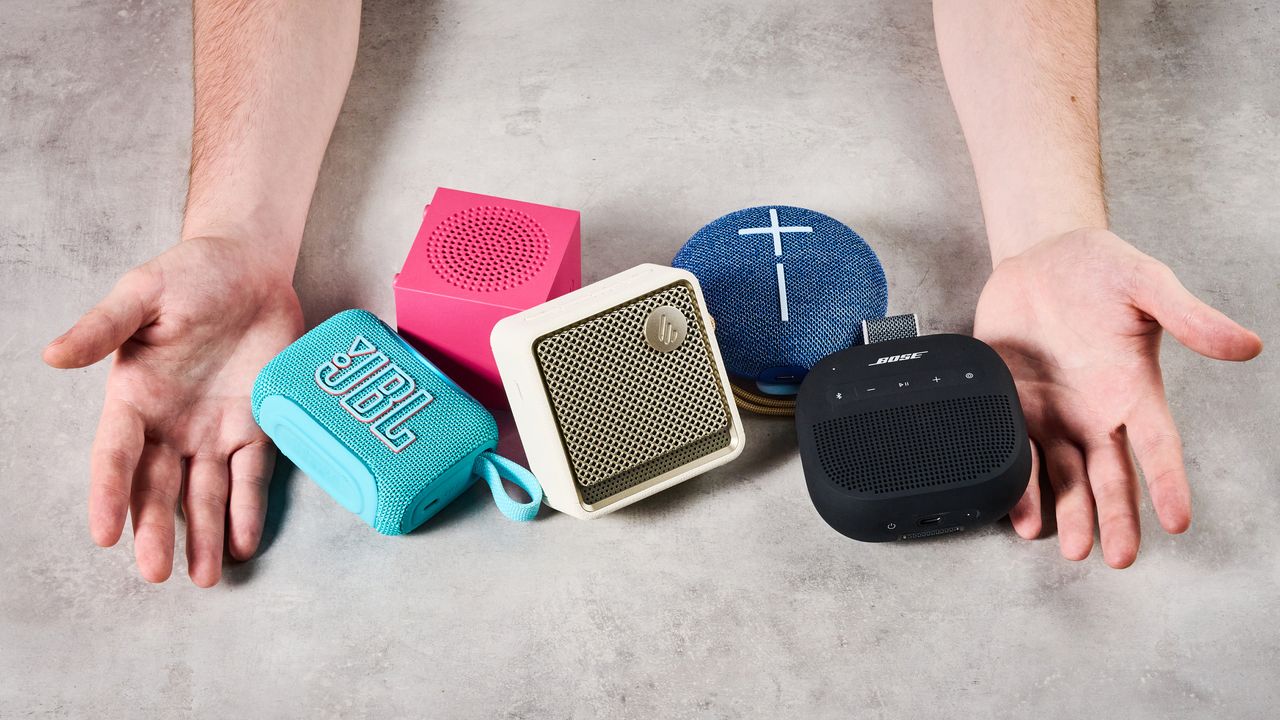
I decided to use five speakers in a very similar size category: the JBL Go 5, the IKEA Kallsup, the Bose SoundLink Micro Gen 2, the Edifier ES20, and the Ultimate Ears Miniroll. Some have a higher power output than others and some are considerably cheaper (or pricier) than others. And some sit in our guide to the best Bluetooth speakers, while others have fallen short. But interestingly, rankings varied quite a fair bit depending on the track and listener involved.
Curious to find out who came out on top? Here’s how our listeners ranked each speaker across each track, as well as the final scores.
Track 1: Fascinator by Max Dean
I started with a house track, Fascinator by Max Dean. I asked participants to listen to a short lead up to some sub-bass, and while I emphasized that the small models wouldn’t produce roaring power, I asked them to assess how well the speakers manage it. When the drop came in, I also asked them to judge how controlled and precise drums sounded in the treble range.
The results were pretty interesting here. Our cheapest option, the $10 / £5 IKEA Kallsup was the clear loser, with one listener, Caspar, noting ‘tinny’ highs and underwhelming bass — a sentiment generally shared across the board. It was quite close between JBL and Edifier here, with some listeners noting a slight lack in low-end impact, but improved mid-range performance and tighter treble.
However, the clear winner was Bose, which ranked 1st with all of our participants — and spoiler alert, this was the only instance of a unanimous verdict across the entire experiment. One listener, Ashley, noted how the track sounded ‘balanced with no distortion’ with others including Josh and Erin highlighting meatier bass and a pleasingly warm tone.
Josh | Caspar | Ashley | Erin | |
JBL Go 5 | 4 | 5 | 4 | 2 |
IKEA Kallsup | 5 | 4 | 5 | 5 |
Bose SoundLink Micro Gen 2 | 1 | 1 | 1 | 1 |
Edifier ES20 | 2 | 3 | 3 | 4 |
UE Miniroll | 3 | 2 | 2 | 3 |
Speaker | Rank |
JBL Go 5 | 4th (15pts) |
IKEA Kallsup | 5th (19pts) |
Bose SoundLink Micro Gen 2 | 1st (4pts) |
Edifier ES20 | 3rd (12pts) |
UE Miniroll | 2nd (10pts) |
Track 2: Orphans by Cero
I changed up the vibe for Track 2, and played a snippet from the jazz-infused indie pop track Orphans by Japanese band Cero. Vocals are meant to be slightly forward, so I asked listeners to determine how well the speakers captured this, while also prompting them to judge how well-balanced percussion and guitars were in the mix.
The Kallsup unfortunately finished in last place once more, with Josh highlighting ‘rolled off’ vocals and unclear guitars in the mid-range. However, the JBL Go 5 wasn’t far in front, with Erin noting ‘lifeless guitars’.
The Edifier ES20 and UE Miniroll performed well, though, with participants highlighting better balance across the frequency range, warmer and more prominent vocals, and cleaner bass. The SoundLink Micro Gen 2 took the win once more, though, with an emphasis on clearer, more tonally accurate guitars, well-defined vocals, and more articulate percussion.
Josh | Caspar | Ashley | Erin | |
JBL Go 5 | 3 | 5 | 5 | 4 |
IKEA Kallsup | 5 | 4 | 4 | 5 |
Bose SoundLink Micro Gen 2 | 2 | 1 | 2 | 1 |
Edifier ES20 | 1 | 2 | 3 | 3 |
UE Miniroll | 4 | 3 | 1 | 2 |
Speaker | Rank |
JBL Go 5 | 4th (17pts) |
IKEA Kallsup | 5th (18pts) |
Bose SoundLink Micro Gen 2 | 1st (6pts) |
Edifier ES20 | 2nd (9pts) |
UE Miniroll | 3rd (10pts) |
Track 3: The Girl From Ipanema by Stan Getz
I wanted to try out something softer next, so I went for the legendary Bossa Nova track, The Girl From Ipanema by Stan Getz. I requested my blindfolded colleagues to tune into the separation between guitars and vocals, the subtlety and texture of vocals and percussion, and control of the double bass. And this is where things got really interesting.
Surprisingly, Bose, which had been bossing it so far, finished in a lowly 4th place here, with listeners generally expressing disappointment with the speaker’s overemphasized bass and slightly unrefined treble response.
However, one thing remained the same, as the IKEA Kallsup came in 5th place. In fact, this was the only occasion in which every listener decided the Kallsup was the worst performer, with Erin writing: ‘No. What? What is this? It sounds like there’s a horde of bees trying to escape.’ Ouch.
Our champion this time out was the Edifier ES20, a speaker which I’ve often championed for its supreme mid-range clarity. Listeners appreciated this model’s beautifully balanced presentation, textured and controlled double bass, and detailed vocals. The UE Miniroll and JBL Go 5 finished 2nd and 3rd respectively, with our participants widely noting their relatively expansive interpretation of the track, and talking up their crisp, textured handling of vocals.
Josh | Caspar | Ashley | Erin | |
JBL Go 5 | 2 | 4 | 4 | 1 |
IKEA Kallsup | 5 | 5 | 5 | 5 |
Bose SoundLink Micro Gen 2 | 4 | 1 | 3 | 4 |
Edifier ES20 | 1 | 2 | 2 | 2 |
UE Miniroll | 3 | 3 | 1 | 3 |
Speaker | Rank |
JBL Go 5 | 3rd (11pts) |
IKEA Kallsup | 5th (20pts) |
Bose SoundLink Micro Gen 2 | 4th (12pts) |
Edifier ES20 | 1st (7pts) |
UE Miniroll | 2nd (10pts) |
Track 4: Come On, Come Over by Jaco Pastorius
But how did the speaker manage a busier, more chaotic mix? I threw on Come On, Come Over by Jaco Pastorius, a funky, high-octane track that has it all. Participants were told to listen for the aggressiveness and clarity of horns, the quality of the track’s mid-bass punch, and how the speakers manage the swathe of instruments and vocals.
And it seemed that in this test, order was restored to how it had been up until Track 3. Bose came out on top, with Ashley praising the speaker’s balanced approach and Caspar highlighting the SoundLink Micro Gen 2’s impactful low end and enhanced vocal clarity. However, the Edifier ES20 and UE Miniroll did run Bose very close indeed. Participants enjoyed the tonality of the vocals, the decently open soundstage, and solid separation on offer.
IKEA’s Kallsup fell to last place, however, largely due to its unregimented bass and tinny mids. Meanwhile, listeners also felt that the JBL Go 5 struggled with the business of the tune, though some did highlight solid clarity in the treble range.
Josh | Caspar | Ashley | Erin | |
JBL Go 5 | 5 | 4 | 4 | 4 |
IKEA Kallsup | 4 | 5 | 5 | 5 |
Bose SoundLink Micro Gen 2 | 3 | 1 | 2 | 1 |
Edifier ES20 | 1 | 2 | 3 | 2 |
UE Miniroll | 2 | 3 | 1 | 3 |
Speaker | Rank |
JBL Go 5 | 4th (17pts) |
IKEA Kallsup | 5th (19pts) |
Bose SoundLink Micro Gen 2 | 1st (7pts) |
Edifier ES20 | 2nd (8pts) |
UE Miniroll | 3rd (9pts) |
Track 5: Black Eye by Allie X
With Track 5, I wanted to assess the portable speakers’ handling of dynamics, so I went with an electronic song from TechRadar’s reference playlist, Black Eye by Allie X. Colleagues were asked to hone in on the attack of strings in the beginning of the snippet, and assess the control and dynamism of the bass and its impact, as well as the breathiness and detailing in the vocals.
And this was an incredibly close battle between Bose, Edifier, and Ultimate Ears. Bose just about managed to top the podium, with Erin delighted with the ‘dramatic strings’ and ‘expansive vocals,’ and Caspar highlighting dynamic bass and ‘nice balance between vocals and instruments’.
Josh’s favorite was the ES20, stating that vocals were ‘wonderfully conveyed’ and that bass was ‘punchy yet controlled’. Ashley, however, liked the UE Miniroll the most, arguing that it offered the cleanest low-end and most articulate vocals of the bunch.
But the poor Kallsup finished in 5th once more. Muted synths, a lack of texture and kick in the low-end, and recessed vocals left our listeners wanting more.
Josh | Caspar | Ashley | Erin | |
JBL Go 5 | 4 | 5 | 4 | 4 |
IKEA Kallsup | 5 | 4 | 5 | 5 |
Bose SoundLink Micro Gen 2 | 2 | 1 | 3 | 1 |
Edifier ES20 | 1 | 2 | 2 | 3 |
UE Miniroll | 3 | 3 | 1 | 2 |
Speaker | Rank |
JBL Go 5 | 4th (17pts) |
IKEA Kallsup | 5th (19pts) |
Bose SoundLink Micro Gen 2 | 1st (7pts) |
Edifier ES20 | 2nd (8pts) |
UE Miniroll | 3rd (9pts) |
Final results: and the winner is…
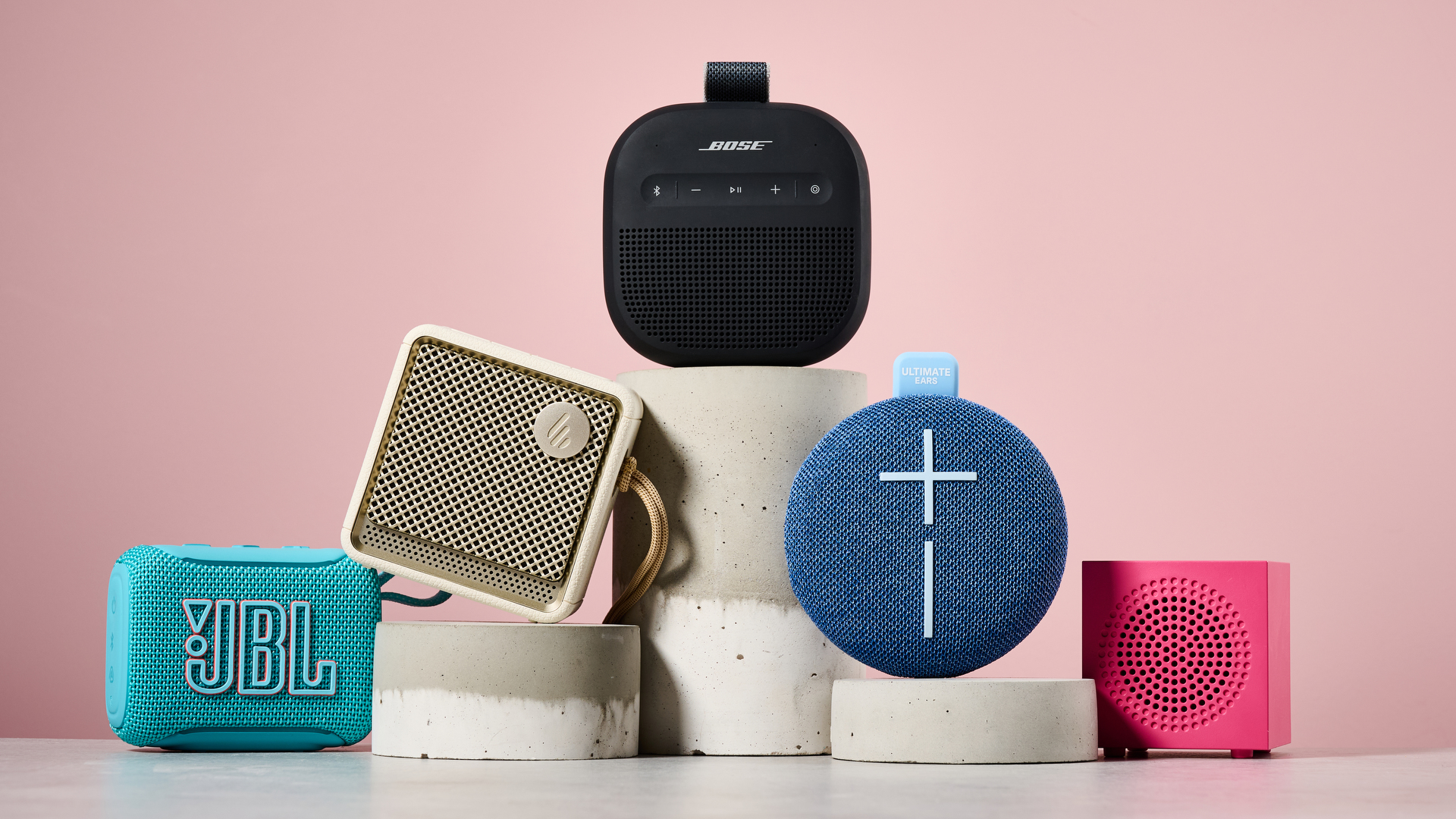
So, the experiment drew to a close. Our listeners handed over their final scores, and I totaled them up to discover which speaker was king on sound alone. And the winner was… the Bose SoundLink Micro Gen 2!
Was I surprised by the result? Well, not entirely. I personally think this is a great-sounding small speaker, and its ability to produce meatier bass than much of the competition, alongside more precision in the treble range and clearer separation was all it needed to scoop up top spot.
What’s important to recognize, though, is that Bose’s small speaker is far pricier than all of the competition. It has a list price of $129 / £119.95, and while it certainly produces the goods in terms of sound, that’s an awfully high price tag given that you can nab larger, meatier, and more feature-rich models at that cost — the JBL Flip 7 is probably the first that comes to mind.
I was surprised, however, that the Edifier ES20 did so well. Josh selected the ES20 as his overall favorite, and it continually competed closely with Bose throughout, even topping the table in Track 3. In the UK, it’s less than half the price of the Bose SoundLink Micro Gen 2, but you really wouldn’t think so. Its composure and clarity in the mid-range is exceptional, and it has enough warm bass and controlled treble to keep more energetic tracks sounding as they should. If you want value for money, I think this model is absolutely worth checking out.
Another standout was the UE Miniroll, which Ashley picked out as her personal favorite. It continued to plate up clear mids and bass throughout, and I think it earns its relatively modest price.
Some may be surprised to see the JBL Go 5 a bit off the pace in 4th, but I still think it produced a solid performance across the experiment considering its limitations. It has a weaker power output than the top 3 speakers, which limits its ability to provide the drive and low-end might that others can. And although it could’ve offered slightly better separation, it's still a great small speaker given its low asking price of $54.95 / £39.99.
I felt very sorry for the IKEA Kallsup, which was regularly placed last by each of our participants. However, in the IKEA speaker's defense, not only does it have the lowest power output of the bunch (at just 3W), but it’s just $9.99 / £5. Yes, it's extremely cheap, and so the fact that it occasionally squeaked 4th place here and there is impressive in itself.
Check out the final table below, where you can see the final scores and rankings for each speaker, as well as their typical asking price. Were the results as you expected? Let me know in the comments!
Speaker | Overall rank | List price |
JBL Go 5 | 4th (77pts) | $54.95 / £39.99 |
IKEA Kallsup | 5th (95pts) | $9.99 / £5 |
Bose SoundLink Micro Gen 2 | 1st (36pts) | $129 / £119.95 |
Edifier ES20 | 2nd (42pts) | $89.99 / £49.99 |
UE Miniroll | 3rd (48pts) | $79 / £69 |