❌

Reading view

'We're trying this out of frustration': Marmots star in OnlyFans account as researchers desperately look for ways to raise funds amid US budget cuts

A team of UCLA scientists has resorted to posting content on OnlyFans to raise money for research amid huge federal funding cuts to U.S. science. But the videos aren't of themselves, they're exclusive recordings of marmots.

"I spend a lot of time waiting for marmots to do things and had the idea one slow morning," Daniel Blumstein, a professor of ecology and evolutionary biology at UCLA, who leads the project, told Live Science in an email. "When I came back with this idea, one of my graduate students immediately said we MUST do this! So here we are!"

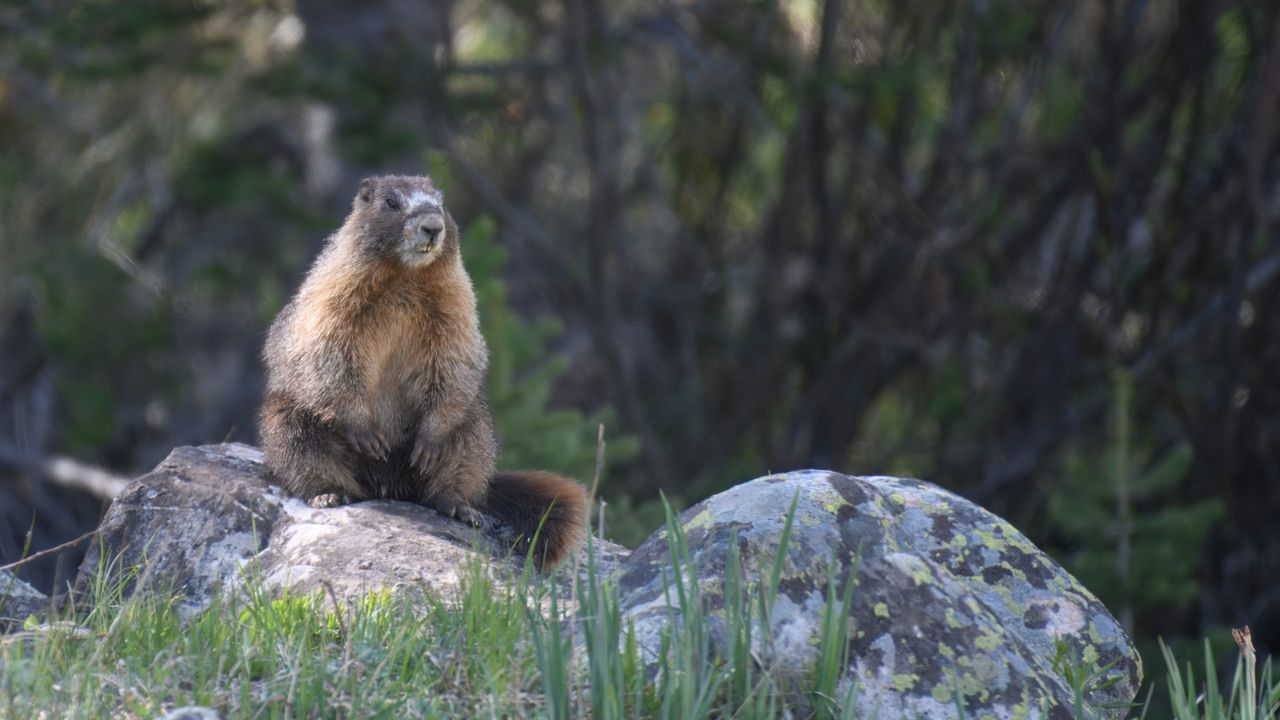
Researchers at the Rocky Mountain Biological Laboratory (RMBL) have been studying yellow-bellied marmots (Marmota flaviventer) at a field station in the Rocky Mountains near Crested Butte, Colorado, since 1962. "The RMBL marmot study is the second oldest continuous study of individually marked mammals in the world," Blumstein said. "We have up to 65 years of data on population dynamics, social and anti-predator behavior and ask a lot of questions about how animals respond to a changing environment."

Yellow-bellied marmots are one of 15 marmot species, a group of cat-size ground squirrels that can be found throughout the Northern Hemisphere. This particular species is widely distributed throughout the Rocky Mountains and several mountain ranges in California. The species live in social groups and are active during the day, which makes them a great subject for long-term behavioral studies.

"Long-term research like ours is both very valuable to understand how and why things change over time, and our project has been very productive," Blumstein said.

However, collecting data over such long periods comes with a significant price tag. And with federal funding cuts draining research budgets across the country, Blumstein and his team have had to look for other methods to raise money for their research. Enter OnlyMarms.

On June 17, the RMBL Marmot Project announced on Instagram that "the state of funding is so bad we are turning to OnlyFans, or as we like to call it 'OnlyMarms'."

Two marmots on a rock

With federal funding cuts draining research budgets across the country, Blumstein and his team have had to look for other methods to raise money for their research. (Image credit: Daniel T. Blumstein, Professor Department of Ecology & Evolutionary Biology Institute of the Environment & Sustainability UCLA)

OnlyFans is a subscription platform that allows users to pay creators to see exclusive photos and videos. The platform has become popular with adult-only content creators, but it hosts others too, including musicians, athletes and celebrities β€” and now marmots.

"We’re trying this out of frustration with an extremely challenging funding environment," Blumstein said. "If we’re lucky, it can help raise money for supplies and some expenses. But unless we are very lucky, it won’t replace the federal funding that has driven discovery in the US since the 1950s."

However, for anyone hoping for spicy marmot content, you might be a bit disappointed. "[It's] almost all G-rated content of marmots playing, being cute, digging, bringing plants to their burrows…normal routine stuff for marmots," Blumstein said. "The occasional scuffle makes it PG rated."

Emily Renkey, who also works on the project, said the team hopes to add videos of marmot pups soon.

"Our 'Onlymarms' page has gotten a bit of engagement since we started it a bit over a month back," Renkey told Live Science. "We've gotten 735 page visits and have 44 fans."

But how much has OnlyMarms actually been able to raise? "Not much," Blumstein said. "We’re letting folks have free subscriptions and ask for tips. They [OnlyFans] take 20% and I have to pay taxes on the balance."

Even so, the team is hopeful that the page is helping to increase public engagement and interest in the project. "Overall I think this can be an amazing way to teach people more about animal social behavior, which can sometimes be hard to observe," Renkey said. "Even we are learning more about marmots through these up close glimpses the game cameras provide."

While it is difficult to get signed consent from the marmots to use this content online, Blumstein said that the funds raised would be used to help protect the creatures in a rapidly changing world. "We are using these funds to help continue the study which provides valuable information about them and how they’re responding to climate change," he said.

The OnlyFans account is just one way the team has tried to share its research with new audiences. "We work hard to translate our research findings to the public," Blumstein said. "Our lab’s running a Fat Marmot Week contest this summer. We're hoping this will let people learn more about these fascinating alpine critters!"
  •  

'This was one of the most arduous expeditions I've ever done': Scientists confirm that 15-mile-wide pit found on Google Maps is ancient meteor crater

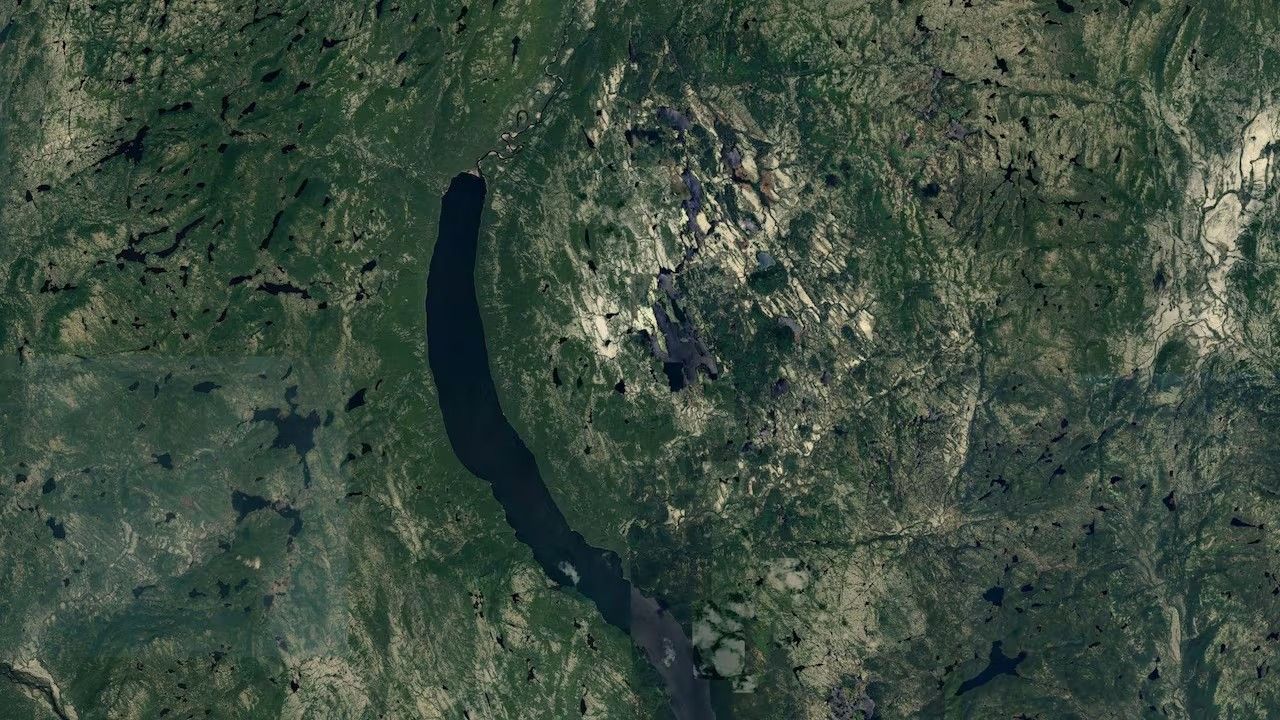
A large pit discovered by an amateur astronomer on Google Maps in 2024 is actually a 390 million-year-old meteor impact crater, scientists have confirmed.

JoΓ«l Lapointe was planning a camping trail through Quebec's CΓ΄te-Nord region when he stumbled upon a large indentation in the terrain, CBC reported at the time. The pit, centered around Lake Marsal, was about 25 kilometers (15.5 miles) in diameter and a near-perfect ring β€” it didn't seem like a normal ditch. Lapointe eventually got in touch with French geophysicist Pierre Rochette, who said that the surrounding topography was "very suggestive" of an impact crater.

Initial testing of samples retrieved from the site contained a mineral called zircon often formed during meteor impacts. However, zircon's presence alone was not enough to prove the crater's extraterrestrial origin story. So a team of scientists had visited the pit in person.

"One of the key things we look for is evidence for shock metamorphism, which can only occur due to the immense pressures created by asteroid or cometary impacts β€” or nuclear explosions," Gordon Osinski, a professor of planetary geology at Western University, told Live Science in an email. "Most of these features are microscopic, so you can only confirm in the lab with samples."

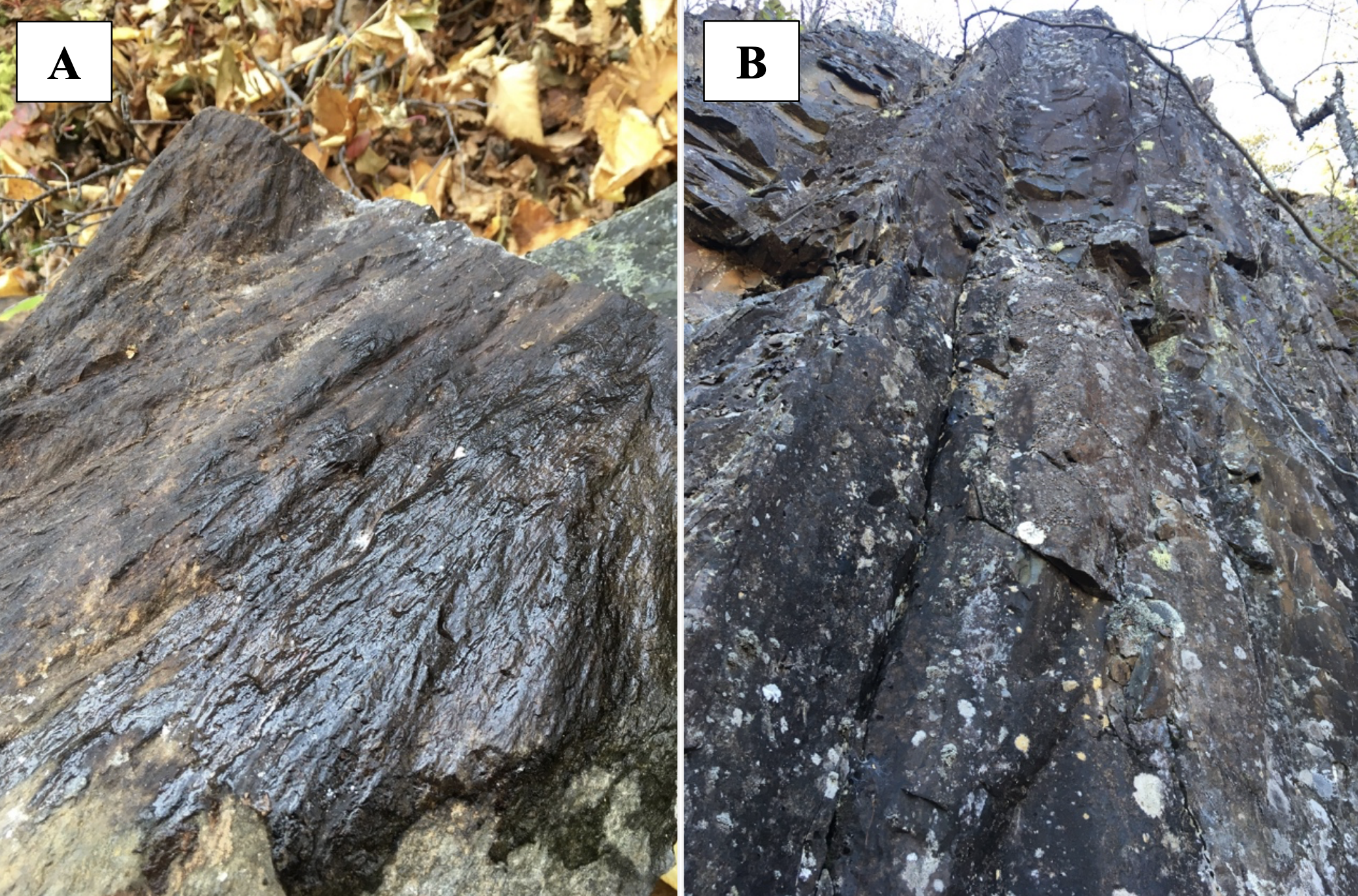
But there is one feature Osinski said can be seen with the naked eye: grooves or lines in the rock's surface called shatter cones, which are caused by shockwaves passing through the ground.

In October 2025, Osinski and a team of geologists visited the site to investigate whether any of these features were present. "This was one of the most arduous expeditions I’ve ever done β€” and I’ve done 25 expeditions to the Arctic and 6 continents," he said. "The terrain was incredibly rough and rugged, plus [there were] lots of bugs."

But they eventually found what they were looking for β€” shatter cones. They also discovered big cliffs of impact melt rock, created by the intense temperatures and pressures produced by a meteor impact. "You can melt literally tens of cubic kilometres of the Earth's crust when you get a big enough asteroid hitting," Osinski told CBC.

Taking samples from the rocks, the team dated the crater at 390 million years old.

A) Shatter cone at the center of the structure. B) melt rock 4 km (2.5 miles) west of the structure center

A) Shatter cone at the center of the structure. B) melt rock 4 km (2.5 miles) west of the structure center (Image credit: Gattacceca, J. et al.)

Osinski, who runs a website called Impact Earth dedicated to verifying meteor impact sites, is used to getting emails about strange looking satellite images. "I get lots of messages from the public thinking they have found a crater and 99/100 turn out not to be the case," he told Live Science. "This is one of those rare examples that shows this is possible."

So far, we know of roughly 200 impact craters on Earth, 31 of which have been found in Canada. "Typically about 1 or 2 craters are discovered per year, but these are typically less than 5-10 km [3 to 6 miles] in size," Osinski said. "[A crater of this size] is pretty rare."

The last meteor crater confirmed in Canada was in 2010.

After the new investigation confirmed the pit was punched out by a meteor impact, Osinski, Rochette and their team named it Uhaachatik Crater following discussions with the Ekuanitshit Innu council, a council representing the indigenous people in the area. The researchers will present their work at the Annual Meeting of the Meteorological Society in Germany next month.

Speaking to Radio-Canada, Lapointe said that he was very happy to hear his discovery had been confirmed as a genuine meteor crater. "It's not every day that an ordinary citizen finds a 390-million-year-old crater," he said. β€œI encourage everyone to not ignore intuition or an observation, even if it isn’t part of your field of expertise.”

Osinski and the team will continue their work on the collected samples to learn more about the impact site. "Any crater discovered offers us insight into how craters form and the effects that they can have on Earth’s geology, biology, and climate," he told Live Science.

  •  

'Explosive diarrhea' parasite infections confirmed in hundreds of people across US, with 1,251 in Michigan alone

At least 20 people across 17 states have been hospitalized due to severe gastrointestinal illness as more than 1,000 cases of the parasitic infection cyclosporiasis have been reported across the country, the U.S. Centers for Disease Control and Prevention (CDC) reports.

The CDC and the Food and Drug Administration (FDA) are investigating several clusters of the illness in Illinois, New York, Pennsylvania and Texas, according to CNN. However, the worst-hit state so far is Michigan, with 1,251 cases reported as of July 9, the Michigan Department of Health and Human Services (MDHHS) reported. According to the Associated Press (AP), this marks the biggest cyclosporiasis outbreak in the state's history.

Cyclosporiasis is a gastrointestinal illness caused by the protozoan parasite Cyclospora cayetanensis, which can enter the body when someone consumes food or water contaminated with the parasite. It then infects the small intestines, invading epithelial cells that line the gut, causing inflammation and leading to watery and often "explosive" diarrhea, according to the CDC. Symptoms usually kick in around a week after infection and can last over a month without antibiotic treatment. While the illness can go away on its own, it is also common for symptoms to disappear for a bit and then return.

Cyclosporiasis is not usually life-threatening, but it can cause severe illness and dehydration, particularly in young children, older adults and people with compromised immune systems. In rare cases, the condition may lead to complications like biliary disease, in which the flow of bile gets blocked and impacts the liver and digestive health, according to the MDHHS.

As of July 1, there was no evidence of a single, multistate outbreak of cyclosporiasis, but the CDC is investigating several clusters. According to an email from the health agency, many of the clusters appear to be linked to Mexican-style restaurants, a chain of grocery stores and a catered event, CNN reported. The FDA is conducting trace-back investigations on white and green onions, cucumbers and cilantro, according to CNN.

Meanwhile, the MDHHS warned that, while the source of the current outbreak is still uncertain, previous Cyclospora outbreaks have been linked to contaminated fresh produce, including raspberries, basil and bagged salad.

Cyclosporiasis cases tend to rise during the spring and summer, with May 1 to Aug. 31 considered "cyclosporiasis season," according to the CDC. However, there have been more cases than usual this year: Whereas Michigan typically reports 50 cases over a whole year, the state has seen over 1,000 cases in just a few weeks, the AP reported.

Compared with outbreaks of E. coli and Salmonella, clusters of Cyclospora are much harder to trace back to their source. This is because the parasite can reproduce sexually, meaning its genetic material is mixed up with each generation, according to Charles River Laboratories. However, Dr. Natasha Bagdasarian, Michigan's chief medical executive, told the AP that "there is clearly a linked outbreak happening right now."

To minimize your risk of becoming infected with Cyclospora, wash all fruits and vegetables thoroughly before eating them; cut away any bruised or damaged areas; and refrigerate cut, peeled or cooked produce as soon as possible, the Michigan Department of Agriculture and Rural Development recommends. If you are experiencing sudden gastrointestinal issues, health officials suggest you visit your local health care provider.

This article is for informational purposes only and is not meant to offer medical advice.

  •  

'Uncharted territory': Record high ocean temperatures confirmed for June as El NiΓ±o strengthens its grip

June global sea surface temperatures have climbed to record highs, prompting concerns over extreme weather, flooding, sea level rise and stress to global ocean ecosystems.

The record, announced by the European Union's Copernicus Earth observation program on July 1, surpassed the previous record set in June 2024, with experts warning that more temperature records will likely be set over the coming months.

"Current conditions could indicate the beginning of a new phase, leading, once more, to uncharted territory," Carlo Buontempo, director of the Copernicus Climate Change Service at the European Centre for Medium-Range Weather Forecasts (ECMWF), said in a statement. "With ocean temperatures at these levels and El NiΓ±o on the horizon, we are likely to see more temperature records fall in the coming months.”

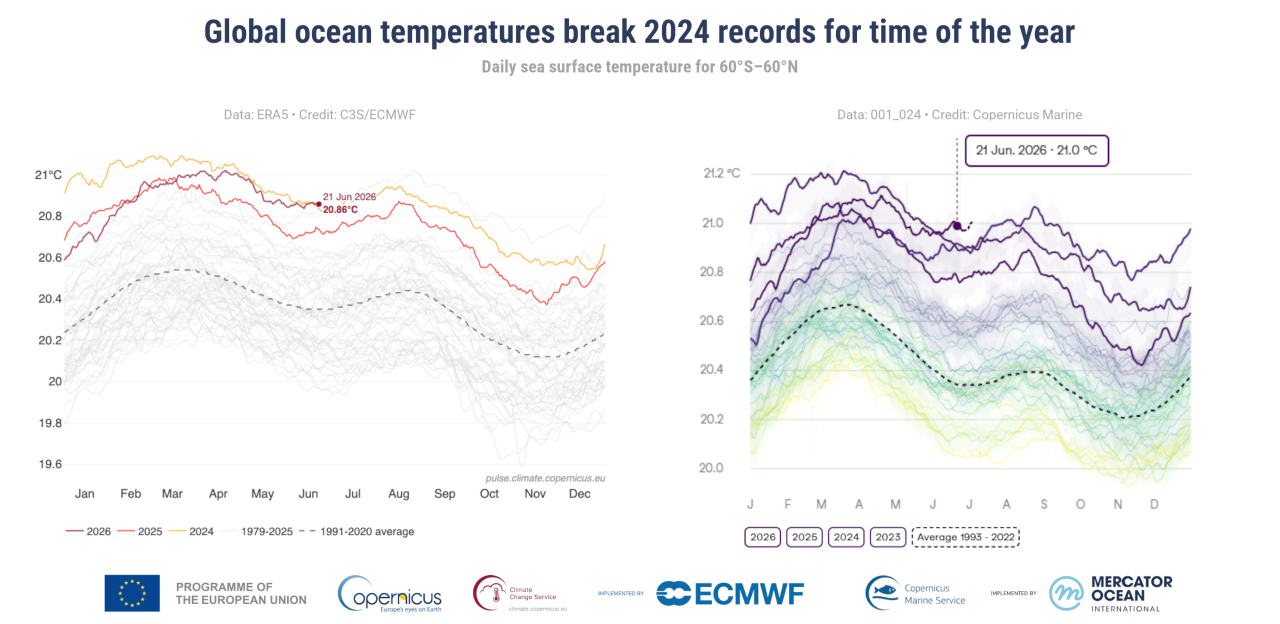
The record temperature was set on June 21, when the Copernicus Climate Change Service recorded global ocean surface temperatures of 20.86 degrees Celsius (69.55 degrees Fahrenheit), beating the record temperature of 20.83 C (69.49 F) set in 2023 and 2024. This measurement was corroborated by the Copernicus Marine Service, an independent dataset that reported temperatures of 21.0 C (69.8 F).

Graphs to show increasing global sea surface temperatures

Graphs to show increasing global sea surface temperatures from two independent data sources (Image credit: Copernicus)

The recent sea surface heating did not occur evenly across the globe. In some areas, such as the Mediterranean, temperatures in June were up to 8 C (14.4 F) higher than average for the period from 1990 to 2020, as per data recorded on June 29, according to the European Space Agency.

The most significant rises in temperature were set in the Mediterranean, the Baltic Sea, bands across the Pacific and off the coasts of Northern Canada.

Warmer ocean temperatures have wide-ranging impacts. "Higher ocean temperatures keep the atmosphere warm for longer, provide extra energy to storms and increase evaporation, thus enhancing the potential for extreme precipitation and flooding," Copernicus Climate Change Service representatives said in the statement. "Ocean warming also contributes to sea level rise and ice melt, and stresses marine ecosystems."

According to data from the Copernicus Climate Change Service, the newly declared El NiΓ±o in the Pacific Ocean β€” the warm phase of a natural climate cycle. This El NiΓ±o is likely to reach levels that have not been seen in decades, with more temperature records expected to be set over the coming months as this Pacific heat is injected into an already warming world.

The service added that it remains to be seen whether these temperature spikes are temporary or indicative of longer term trends.

  •  

11-year-old boy in Canada dies from rabies after waking up with a bat on his face

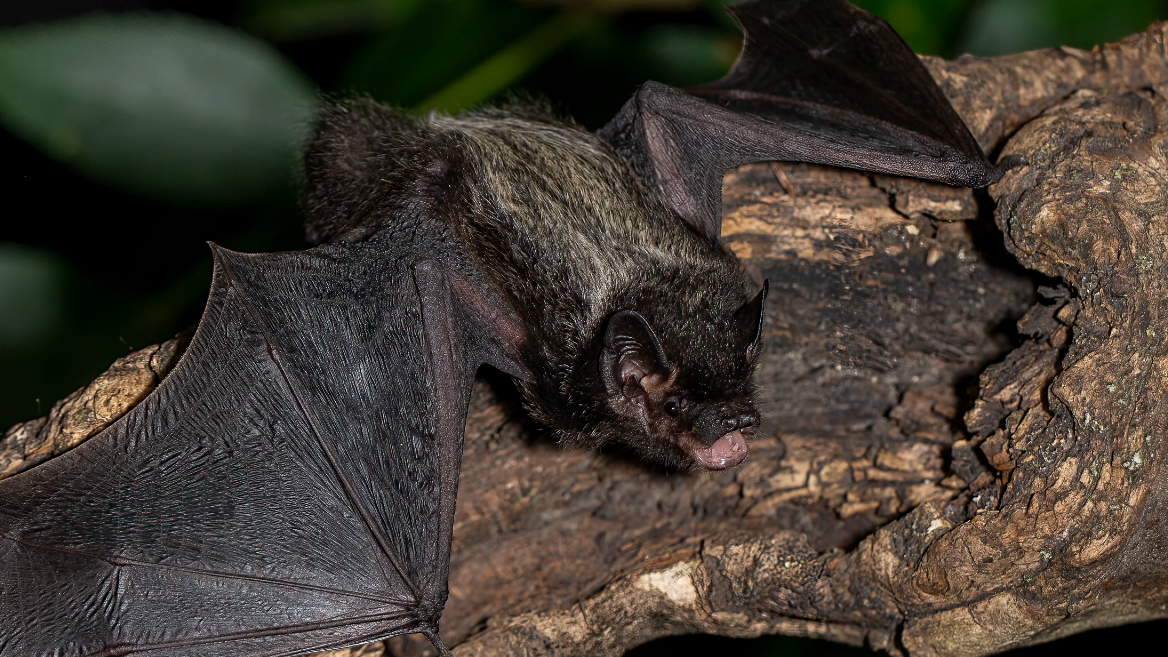
An 11-year-old boy in Ontario, Canada, has died after being bitten by a rabid bat that was resting on his face as he slept. The boy had no obvious bite or scratch marks and didn't show symptoms for the first 19 days after the incident, his doctors report.

While on vacation with his parents at a cottage in northern Ontario in 2024, the boy was woken up in the night by a bat on his nose and mouth, according to a report published in the Canadian Medical Association Journal on June 29. His father caught the bat in a cooking pot and released it outside, and because the child had no visible injuries and the bat did not seem to be particularly aggressive, his parents decided not to seek a medical assessment, the report noted.

A few weeks later, the child began to experience tingling, numbness and swelling on the right side of his face. When he was examined at his local hospital his vital signs appeared to be normal, aside from an elevated heart rate and white blood cell count.

The next day, the boy's symptoms worsened: he lost feeling in the right side of his face and his speech was beginning to slur. While waiting in hospital, he developed a fever, confusion, hallucinations and difficulty swallowing, followed by excessive production of saliva.

After four days in intensive care at McMaster Children's Hospital in Hamilton, Ontario, the child tested positive for rabies, and after five days his brain stem reflexes were absent, indicating a total loss of brain stem function. Seventeen days after admission, following a consultation between his family and medical experts, he was taken off life support and died.

Rabies is a viral disease that primarily affects the central nervous system, according to the CDC. It is mainly spread through bites and scratches from infected animals, with bats accounting for the majority of cases in North America, according to the boy's doctors.

"Bats pose a particular risk because bites or scratches may be small and are easily overlooked, and patients may not recollect or recognize a bat exposure," the medical team wrote in their report.

According to a report in the Journal of Virology in 2013, silver-haired bats (Lasionycteris noctivagans), are responsible for the majority of rabies cases in Canada. Skunks, foxes and raccoons also often carry the disease.

The rabies virus must travel to the brain before symptoms can occur, but once a patient develops symptoms the infection is almost 100% fatal, with most deaths occurring within one to two weeks of symptom development. However, prompt treatment after exposure β€” including wound cleaning, antibody administration and a series of vaccines β€” is nearly always effective at preventing the disease, according to the CDC.

Rabies in humans is very rare in North America, with fewer than 10 deaths reported in the U.S. every year, according to the CDC. In Canada, only 28 human fatalities have been reported since 1924, according to the Canadian Veterinary Medical Association. Even so, the boy's doctors have emphasized the importance of prompt medical attention following exposure to bats and other animals that could carry the disease.

"Early recognition of exposure and timely PEP [postexposure prophylaxis] remain the only effective means of rabies prevention," they wrote. "Any direct human contact with a bat, even in the absence of a visible bite or scratch, is an indication for PEP."

They added that rabid bats do not always display the classic symptoms commonly associated with rabies, such as aggressive behavior and frothing at the mouth. "Any direct human contact with [a] bat is considered high risk," they added.

This article is for informational purposes only and is not meant to offer medical advice.

  •  
❌