❌

Reading view

Tweety gets the third degree in final Coyote vs. Acme trailer

San Diego Comic-Con has kicked off strong, and we've got a couple of new trailers to show for it: the final trailer for Coyote vs. Acme, and the full trailer for director Zach Cregger's fresh take on Resident Evil. Some lucky folks were also treated to a screening of Resident Evil's first 18 minutes.

Coyote vs. Acme

We were thrilled when the first trailer for Coyote vs. Acme dropped in April. The film had been shelved for years and is finally getting the broad theatrical release it deserves thanks to Ketchup Entertainment, which acquired it from Warner Bros. The concept alone is sheer brilliance: Wile E. Coyote, after decades of ACME equipment failing him in his efforts to catch that darned Road Runner, decides to sue the corporation. It’s based on a well-known satirical piece by Ian Frazier (also titled “Coyote vs. Acme”) published in The New Yorker in 1990.

Per the official premise:

Read full article

Comments

© Ketchup Entertainment
  •  

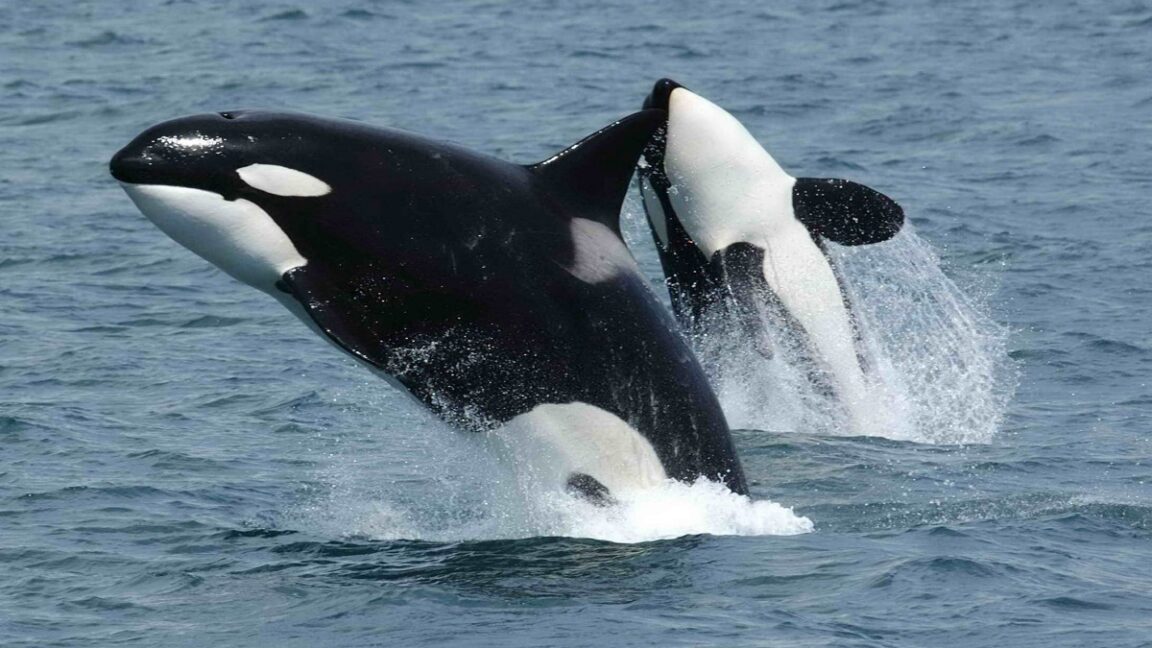
Watch orcas ram a sunfish so hard it explodes

Credit: Kathryn Ayres

There have been numerous accounts in recent years of orcas ramming boats—and sometimes sinking them. Scientists believe this may be a form of culturally learned behavior passed down through generations. Now we have fresh examples: orcas in the Gulf of California were filmed teaming up to ram sunfish with so much force that the carcasses exploded into small fragments. While orcas have been known to use force to remove flesh from prey, this is something different, according to a new paper published in the journal Frontiers in Ethology.

“We think this may help younger orcas feed more easily, or it could also just be for fun," said co-author Kathryn Ayres of Beneath The Waves, a nonprofit organization promoting ocean health. "Orcas are known for playing with their food.”

Orcas engage in cooperative hunting strategies that can involve striking or killing animals—sometimes eating their prey, sometimes not—so the behavior could be described as social interaction, play, or practice as a mode of social learning. Orcas have been observed ramming whale sharks as another orca held the prey steady. Other cooperative strategies include herding mobile rays, blocking an escape path while hunting white sharks, and deliberately producing waves to bump penguins off ice floes.

Read full article

Comments

© Robert Pittman, NOAA/Public domain

  •  

Let Tom Hiddleston be your guide to Pompeii's final day

When Mount Vesuvius erupted in 79 CE, it spewed molten rock, pumice, and hot ash over the cities of Pompeii and Herculaneum, killing thousands of people. It's one of the most famous natural disasters in human history, so naturally there have been countless documentaries about Pompeii (and at least one popular song). But only one features actor Tom Hiddleston taking on the role of a "time detective" to bring the people of Pompeii to vivid life. That would be National Geographic's new three-part docuseries, Pompeii: Out of Time.

The Marvel connection made Out of Time happen. Executive producer Kevin Wright was also a producer on the Disney+ series Loki, which included a scene where Hiddleston's Loki travels through time to visit Pompeii. Hiddleston also studied classics at Cambridge University and had visited the Pompeii archaeological site as a teenager, which the Marvel star attributes to indirectly influencing his career path into acting.

"There is just a passion to the way Tom tells stories that's infectious," Wright told Ars. "We knew that if we could capture that and put it into [the series], it might interest people who wouldn't normally want to watch a documentary about Pompeii. "

Read full article

Comments

© National Geographic/Paolo Verzone

  •  

Troubling new details emerge on diabetes ouster controversy

Last month, we reported on a troubling incident at the annual meeting of the American Diabetes Association (ADA) in New Orleans. On June 5, five leading scientists were ousted for handing out copies of an editorial, published in the journal Diabetes Care (an ADA journal) in April, sharply criticizing the Trump administration’s ongoing attacks on scientific research. There was a public outcry and (eventually) a personal apology from the ADA's CEO for the heavy-handed response, but it seems the organization has not yet learned its lesson.

The deputy editors of Diabetes Care have posted an editorial and seven accompanying opinion articles to a preprint server—handily contained in a single PDF file—that they say the ADA has refused to publish. Several troubling new details are included in the articles, including an accusation that ADA leadership knew in advance that members would be handing out copies of the editorial and deliberately set up an ambush by venue security and local police. That decision, in turn, might be due to simmering tensions connected to a session organized the year before.

ADA leadership was provided with the articles in advance of publication with an invitation to simultaneously publish their response.

Read full article

Comments

© Screenshot/MedPage Today

  •  

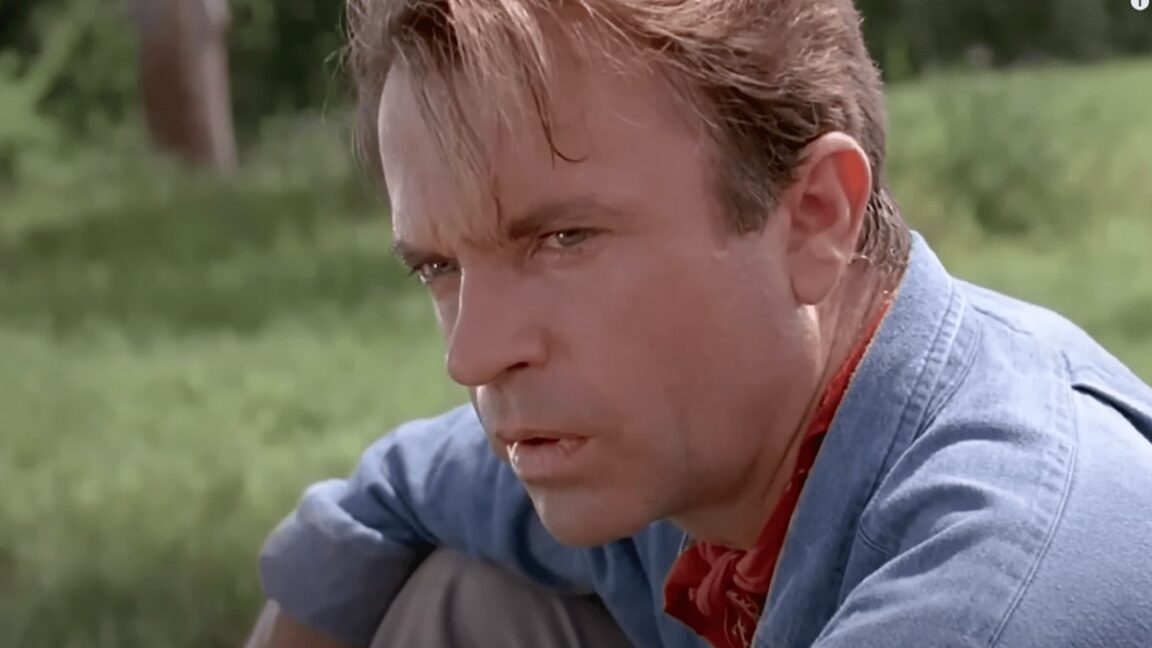
In memoriam: 7 of our favorite Sam Neill films

New Zealand actor Sam Neill, who starred as Dr. Alan Grant in the 1993 blockbuster Jurassic Park and its 2022 sequel, Jurassic World Dominion, died on Monday in Sydney, Australia. He was 78.

While American audiences likely know Neill best for Jurassic Park, he had a long and varied career in film and television. His sheer versatility won him fans around the world. He played the grown Damien in Omen III: The Final Conflict; a Russian officer in The Hunt for Red October; and even made brief cameos (as an actor playing Odin in a theatrical troupe) in Thor: Ragnarok and Thor: Love and Thunder. (The less said about 1997's space horror travesty, Event Horizon, the better, although it has its fans, and Neill made the most of his role.) Yet some of his best performances were in smaller, critically acclaimed independent films such as 1993's Oscar-winning The Piano.

On television, Neill earned his first Golden Globe nomination for the lead role in Reilly, Ace of Spies in the 1980s. He was nominated for both an Emmy and a second Golden Globe for playing the titular Arthurian wizard in the 1998 miniseries Merlin. He played Cardinal Wolsley in The Tudors, and was part of the ensemble cast in the (excellent) 2015 adaptation of Agatha Christie's And Then There Were None. Neill was magnetic as the ruthless CI Major Chester Campbell in Peaky Blinders—an antagonist and romantic rival of Cillian Murphy's Tommy Shelby.

Read full article

Comments

© Universal Pictures

  •  

These painted e-tattoos could be the future of wearable biosensors

Credit: Wanqing Zhang

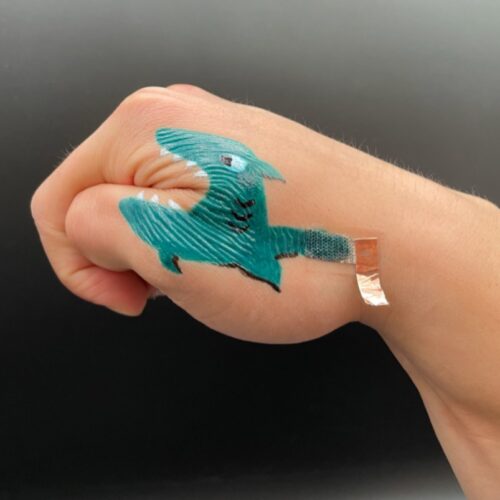
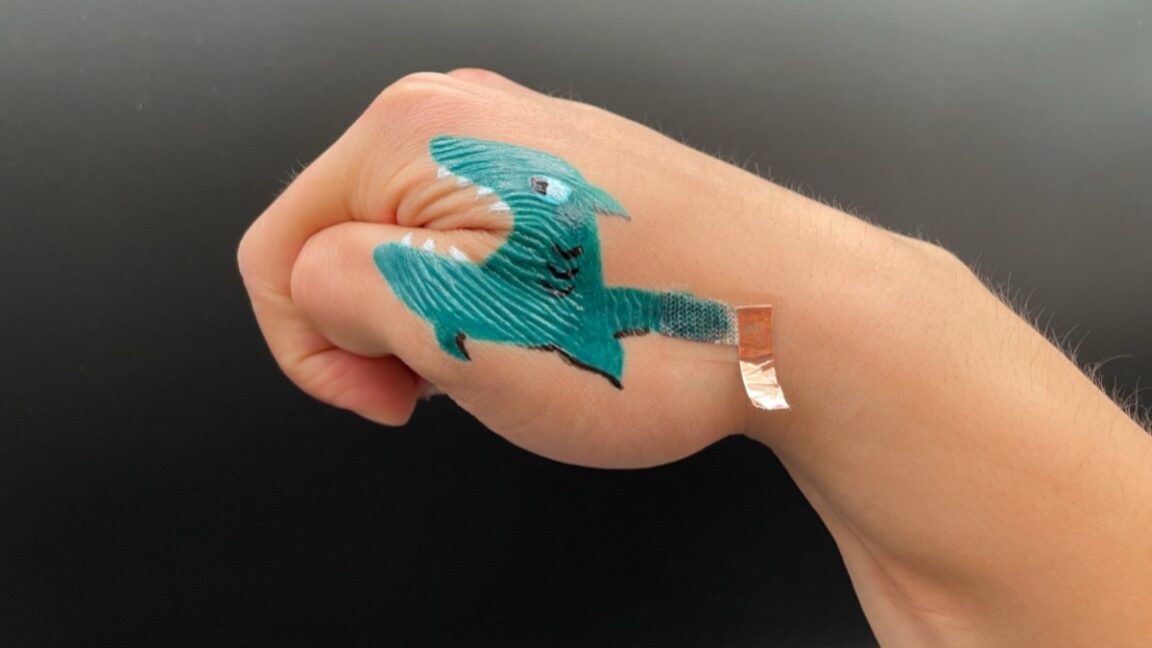
Scientists at Pennsylvania State University have developed a novel conductive ink that can be painted directly onto the skin in colorful custom designs, turning into a functional electrode for biomonitoring after drying. They described their work in a new paper published in the Proceedings of the National Academy of Sciences (PNAS).

As previously reported, epidermal electronics attached to the skin via temporary tattoos (e-tattoos) have been around for more than a decade. So-called e-tattoos connect to skin without adhesives, are practically unnoticeable, and are typically attached via temporary tattoo, allowing electrical measurements (and other measurements, such as temperature and strain) using ultra-thin polymers with embedded circuit elements.

However, these e-tattoos have their limitations, most notably that they don’t function well on curved and/or hairy surfaces, as well as requiring personalized electrode placement design to cover larger areas, since biosignals are spatially distributed. So scientists have been getting creative. For instance, in 2024, researchers developed special polymer-based conductive inks that can be printed onto a person’s scalp to measure brain waves, even if they have hair. This could one day enable mobile EEG monitoring outside a clinical setting, among other potential applications.

Read full article

Comments

© Wanqing Zhang

  •  

Solution to Feynman's reverse sprinkler puzzle also applies to "silly sprinklers"

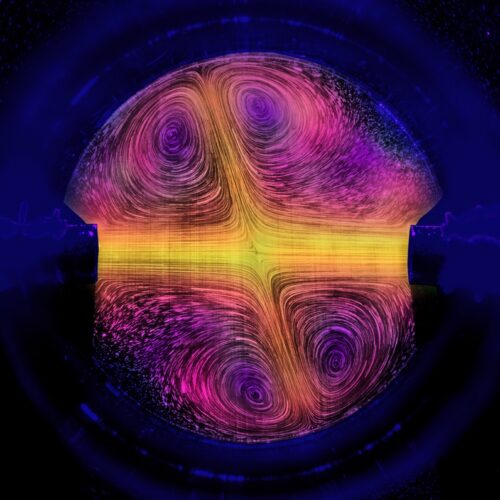
Watering your lawn in the summer can be both pragmatic and fun with so-called "silly sprinklers," designed to create amusing loops and spirals of water jets. And there's some fascinating physics at work to boot. Researchers at New York University's Courant Institute conducted a series of experiments with different silly sprinkler designs to find the answer to a longstanding problem in fluid dynamics, according to a new paper published in the Proceedings of the National Academy of Sciences.

As previously reported, the reverse sprinkler problem is associated with physicist Richard Feynman because he popularized the concept, but it actually dates back to a chapter in Ernst Mach’s 1883 textbook The Science of Mechanics (Die Mechanik in Ihrer Entwicklung Historisch-Kritisch Dargerstellt). Mach’s thought experiment languished in relative obscurity until a group of Princeton University physicists began debating the issue in the 1940s.

Feynman was a graduate student there at the time and threw himself into the debate with gusto, even devising an experiment in the cyclotron laboratory to test his hypothesis. One might intuit that a reverse sprinkler would work just like a regular sprinkler, merely played backward, so to speak. But the physics turns out to be more complicated. “The answer is perfectly clear at first sight,” Feynman wrote in Surely You’re Joking, Mr. Feynman (1985). “The trouble was, some guy would think it was perfectly clear [that the rotation would be] one way, and another guy would think it was perfectly clear the other way.”

Read full article

Comments

© NYU's Applied Mathematics Laboratory

  •  

Check out the first images of Quest shipwreck

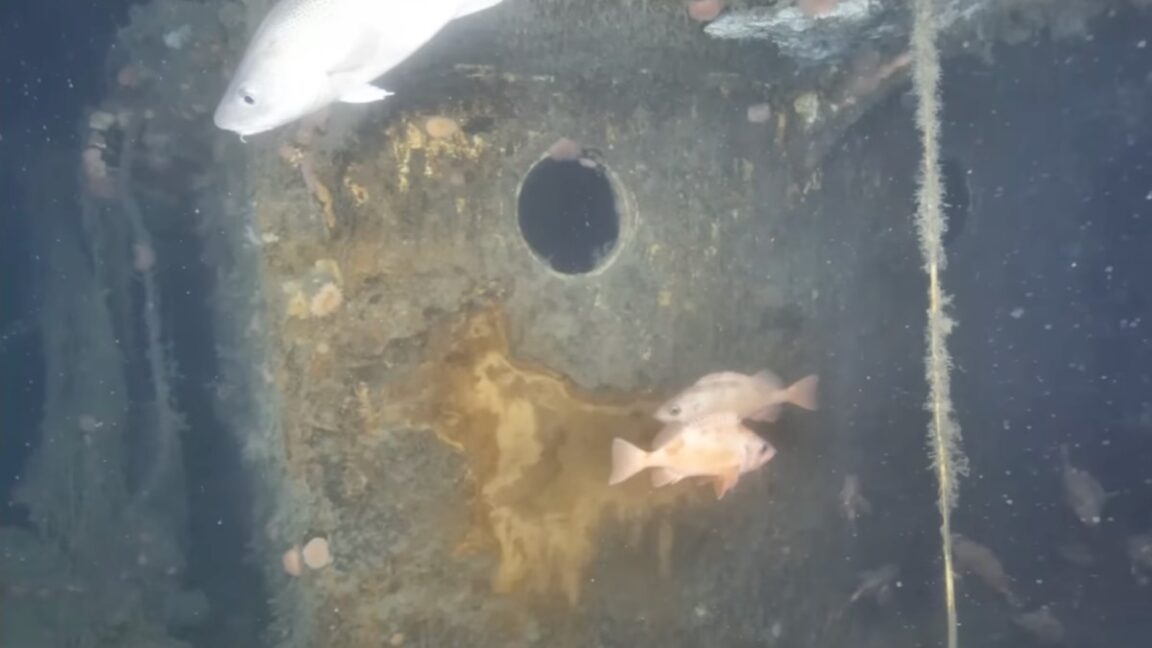
Back in 2024, we reported on the discovery of the Quest shipwreck, the polar exploration vessel that served Arctic explorer Sir Ernest Shackleton on his last voyage. Shackleton died before reaching their destination, and the ship sank in 1962. The Royal Canadian Geographic Society (RCGS) has now released the first images of the wreck more than 60 years after it sank, published in Canadian Geographic magazine.

Shackleton, of course, is most famous for his ill-fated voyage on the Endurance, which became trapped in sea ice in 1914 and sank. Shackleton and his crew defied the odds and survived. (The Endurance shipwreck was finally found in 2022.) By the time Shackleton returned to England, the country was embroiled in World War I, and many of his men enlisted. Shackleton was considered too old for active service. He was also deeply in debt from the Endurance expedition, earning a living on the lecture circuit. But he still dreamed of making another expedition to the Arctic Ocean north of Alaska to explore the Beaufort Sea. He got funding from an old school chum, John Quillier Rowett.

Shackleton purchased a wooden Norwegian whaler, Foca I, which his wife Emily renamed Quest. When the Canadian government withdrew its support, the mission shifted back to the Antarctic, and the Quest received an extensive retrofit. The improvements included a new deckhouse, a heated crow’s nest, a wireless set, and an odograph for tracing and charting the route automatically, as well as a Lucas deep-sea sounding machine, a large and pricey collection of cameras and photographic equipment, and even a small airplane.

Read full article

Comments

© YouTube/Canadian Geographic

  •  

TikTok users don't have as much agency over their FYPs as they think

TikTok's For You Page (FYP) is the default home screen for users of the video-sharing platform. It's a personalized, algorithmically driven content feed, but the approach differs from other social media in that TikTok's algorithm relies heavily on implicit signals—such as how long users watch particular videos—as well as explicit signals such as likes or follows. And generally, that algorithm does remarkably well at predicting which videos will interest particular users.

But some users have voiced concerns that TikTok's almighty algorithm doesn't seem to incorporate negative feedback very well. Even when they don't watch a suggested video or click the "not interested" feature, they keep seeing those videos on their FYP. Northeastern University computer scientists put those suspicions to the test. According to their recent paper, the engagement signals do have an effect, but only temporarily. Then the algorithm gradually relapses unless a user consistently gives the same feedback over and over again.

The research group specializes in "algorithm audits," co-author Piotr Sapiezynski told Ars, to better understand online platforms: "how they work, how they fail, when they fail, how they harm individuals and societies." In this case, he and his co-authors wanted to take a closer look at user agency after hearing multiple anecdotal reports from TikTok users that their negative feedback—responding to prompts by indicating they aren't interested or want to see less of a certain kind of video—doesn't seem to remove those posts from their FYP. "On the other hand, it's unclear why the platforms would offer it, if it doesn't work," said Sapiezynski.

Read full article

Comments

© Getty Images | Bloomberg

  •  

Dragonflies maneuver like fighter pilots

Credit: Samuel T. Fabian et al., 2026

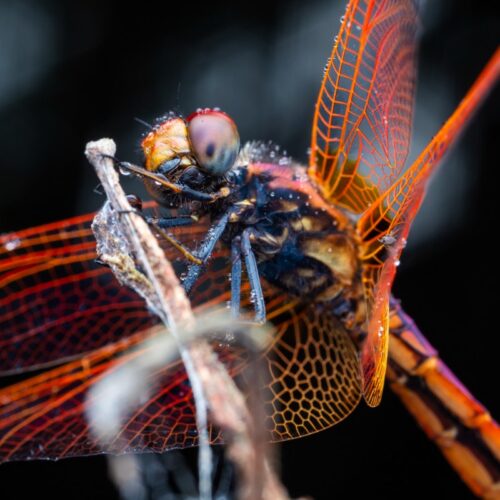
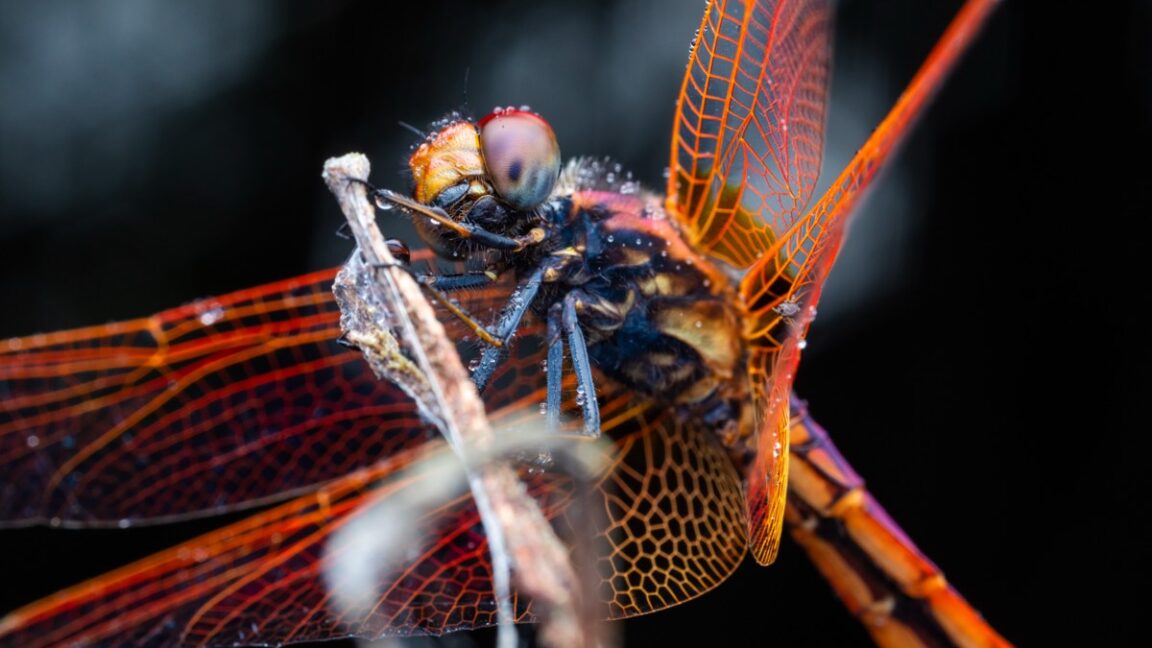
Male dragonflies are known to engage in mid-air "dogfights" to defend their breeding territory, using different maneuvers than those they employ when hunting prey. A new paper published in the Journal of the Royal Society Interface concluded that relatively simple rules drive that behavior, namely that male dragonflies are trying to maintain a tactical position. This mirrors the tactics of human fighter pilots. The research could lead to the development of smarter drones capable of navigating with simple, vision-based guidance rather than complex computation.

Classic pursuits involving prey or mating rituals are asymmetric: there is a chaser and an evader, with each role requiring different maneuvers. In the case of male-on-male interactions, however, it is more of a mutual pursuit, per the authors, who thought that studying flight trajectories of insects or raptors could yield useful insights into the guidance laws that underlie the behavior. They chose the Trithemis Aurora species of dragonfly for study because the males are "fiercely territorial," and there are usually multiple males around a given pond, intent on defending their chosen perches. The dragonflies are also crimson-colored, making them easier to track.

Much of the prior research on dragonfly interactions relied on visual observations or single-camera recordings. For this study, the authors set up a portable stereovideographic rig with two shutter-synchronized cameras to record dragonfly interactions in both color and monochrome, and then reconstructed 102 paired male-on-male flight trajectories to capture the 3D kinematics. They also reconstructed nine trajectories for dragonflies intercepting prey for comparative purposes. This enabled the authors to develop a model for the rules governing the flight behavior.

Read full article

Comments

© Samuel Fabian et al., 2026

  •  

Sony releases trailer for Taika Waititi's Klara and the Sun

One of Taika Waititi's greatest strengths as a director is his unique voice; he's able to bring a light touch to tragedy (Jojo Rabbit) and a gentle sadness to offbeat comedy (Our Flag Means Death). That makes him an excellent choice to direct Klara and the Sun, based on the novel by Kazuo Ishiguro. Sony Pictures just released the first trailer, and it's giving strong Hunt for the Wilderpeople vibes—a good thing, from my perspective, since that's my favorite Waititi film.

Per the official premise:

Based on the bestselling novel from Nobel Prize winner Kazuo Ishiguro and written and directed by Academy Award winner Taika Waititi, Klara and the Sun introduces audiences to Klara (Jenna Ortega), an Artificial Friend who wants nothing more than to find the perfect home. When Klara meets Josie (Mia Tharia), each immediately senses a kindred spirit in the other. Josie has a fraught relationship with her mother (Amy Adams), and they’ve suffered great loss, but Klara’s innocent wonder and unwavering loyalty begin to heal the family and bring light to Josie’s complicated world.

The cast also includes Natasha Lyonne as an artificial friend (AF) store manager; Rachel House as the housekeeper, Melania; Aran Murphy (son of Cillian Murphy) as Josie's best friend, Rick; and Sophia Bryant-Taukiri as Josie's older sister, Sal. Steve Buscemi and Harry Greenwood also appear in as-yet-undisclosed roles.

Read full article

Comments

© Sony Pictures

  •  

How to burst the AI bubble: Strike at its roots

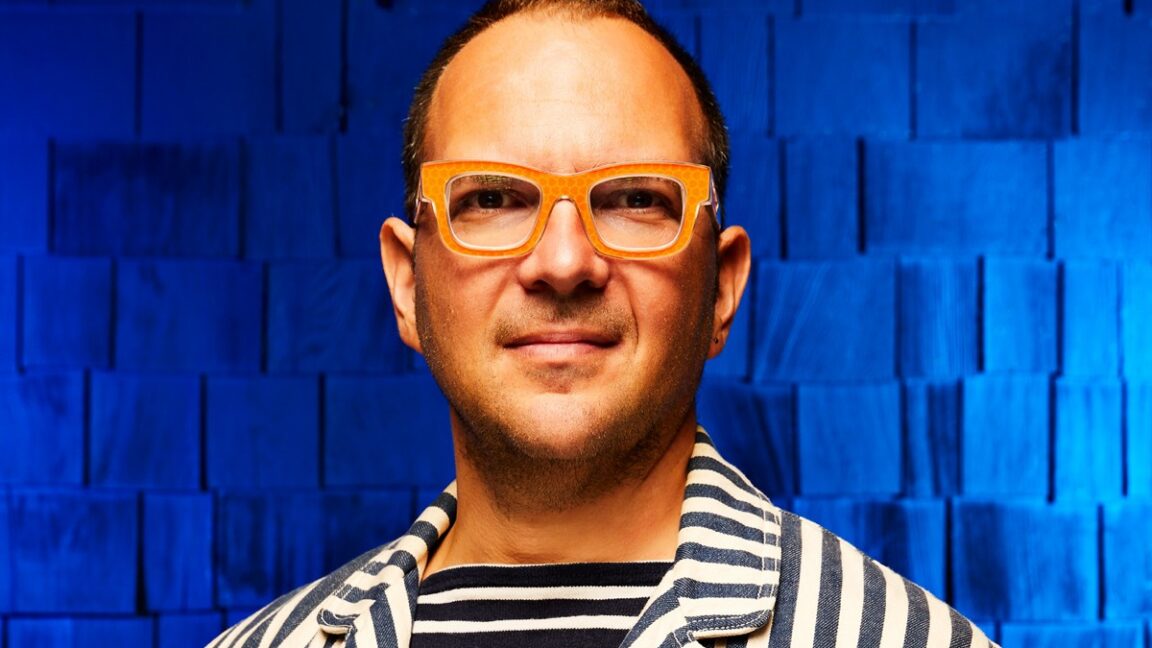
Last year, we featured a lengthy interview with tech journalist/science fiction author Cory Doctorow about his book, Enshittification: Why Everything Suddenly Got Worse and What To Do About It. The prolific Doctorow is back with a provocative new book that serves as a follow-up of sorts, focusing on AI and related issues: The Reverse Centaur's Guide to Life After AI.

Doctorow doesn't actually enjoy talking about AI, but he's constantly being asked to comment on it. "I made the tactical error of being sick of talking about AI," Doctorow told Ars. "So I wrote a book about why I think it's a dumb thing to keep asking people to talk about, and now I have to talk about it." Reverse Centaur is Doctorow's attempt to "sort out the bullshit from the material reality."

In automation theory, per Doctorow, a "centaur" describes a human augmented with a technology, like machine learning, or even just driving a car or using autocomplete. A reverse centaur "is a machine head on a human body, a person who is serving as a squishy meat appendage for an uncaring machine," Doctorow said in a speech last December. He gave the example of an Amazon delivery driver, surrounded by AI cameras monitoring their driving, who essentially serves as a peripheral to the delivery van.

Read full article

Comments

© Copyright Julia Galdo and Cody Cloud (JUCO)/CC-BY 3.0

  •  

Review: Widow's Bay is a boldly original take on comedic horror

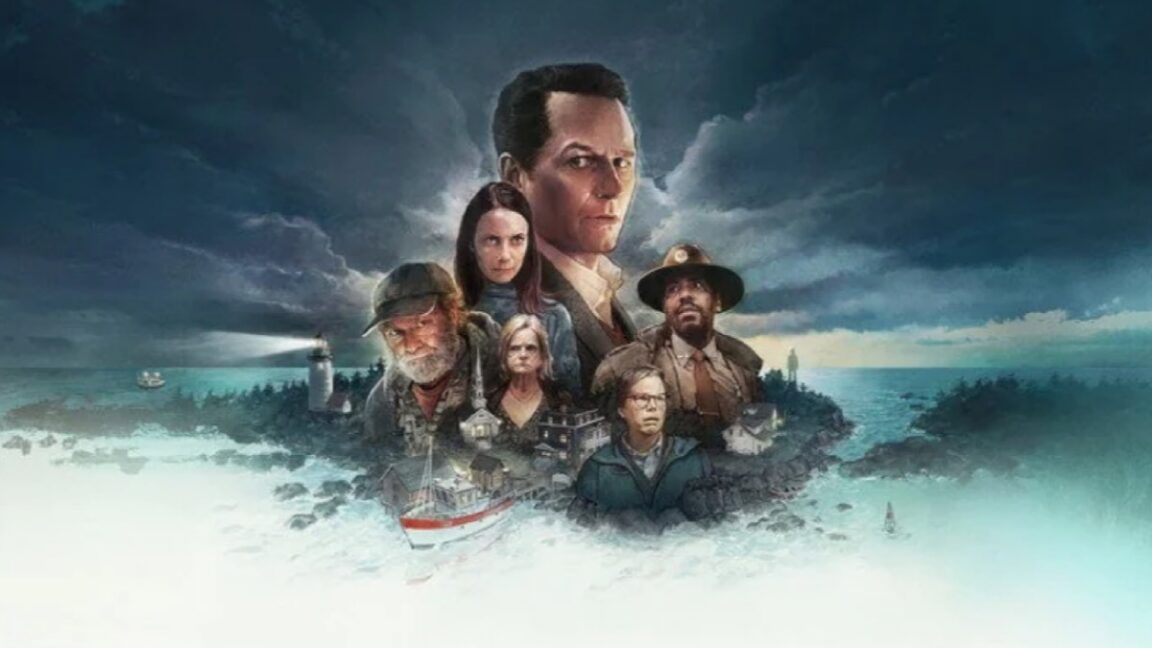
Widow's Bay, the delightfully eccentric new comedic horror series from Apple TV, is easily one of the best new series of the year. There's a reason everyone from Guillero del Toro and Ben Stiller to Damon Lindelolf (Lost) is raving about the show. It's an eminently binge-able, addictive series that pays tribute to all the classic horror tropes while reinventing them in surprising ways. Think Stephen King meets Parks and Recreation, with a dash of Twin Peaks—except Widow's Bay is very much its own refreshingly original beast.

(Some spoilers below but no major reveals.)

Tom Loftis (Matthew Rhys) is a widower and mayor of Widow's Bay, a quirky little seaside town that has a colorfully bizarre history marked by periodic tragedies. Tom is eager to elevate the town into a trendy summer tourist destination. But the arrival of New York Times travel writer Arthur Lloyd (Bashir Salahuddin), who has the clout to make Tom's aspirations for Widow's Bay come true, coincides with the onset of a mysterious fog. Local resident Wyck (Stephen Root) warns Tom that the fog is an omen that the island is "waking up," meaning more supernatural occurrences are bound to happen.

Read full article

Comments

© Apple TV

  •  

Hulk, Punisher join Peter Parker in Spider-Man: Brand New Day trailer

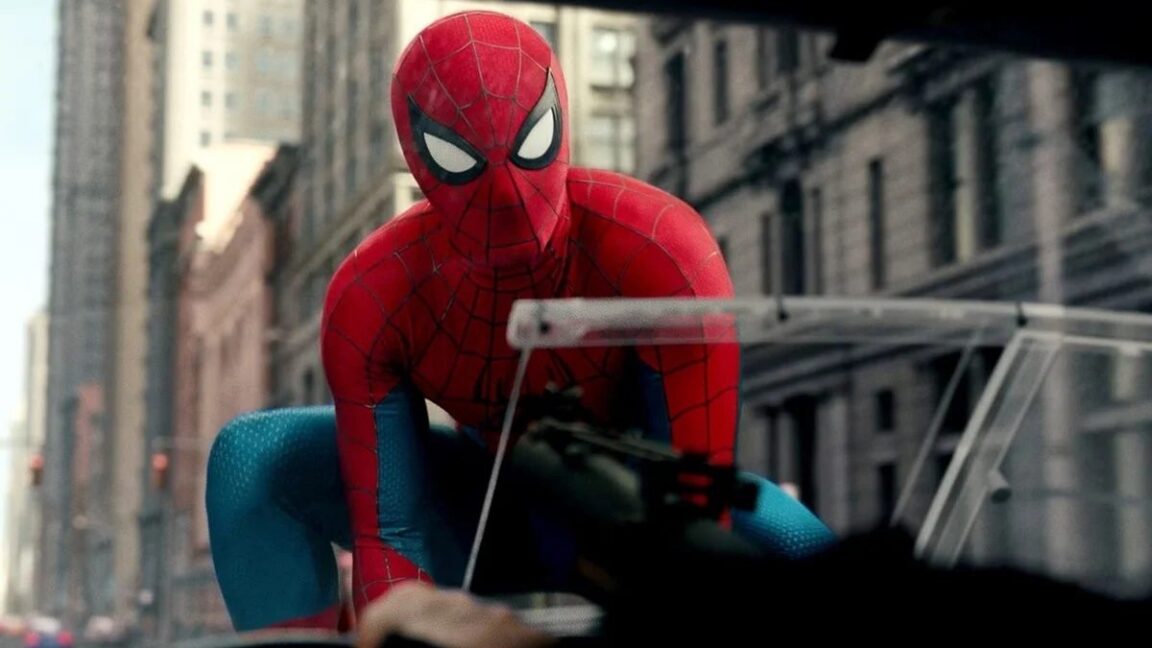
We're about six weeks out from the debut of Spider-Man: Brand New Day, the follow-up to 2021’s No Way Home. It's been five years since Spidey graced the big screen, so naturally, Sony Pictures has released a new trailer to build audience anticipation.

(Spoilers for No Way Home below.)

No Way Home ended on a pretty bleak note, with Peter Parker (Tom Holland) asking Doctor Strange (Benedict Cumberbatch) to erase him from everyone’s memory to protect the multiverse, including MJ (Zendaya).

Read full article

Comments

© Sony Pictures

  •  

Did a medieval flying monk spot Halley's comet, twice? It's complicated

Early in the 11th century, a young Benedictine monk named Eilmer jumped from the 150-foot tower of his abbey in the small English town of Malmesbury, wearing a pair of crude wings he’d fashioned from willow wood and cloth. Eilmer managed to glide a good 600 feet, passing over the city wall before crash-landing in a small valley near the river Avon. The fall broke both his legs, crippling him. Malmesbury Abbey still boasts a stained-glass window in honor of Brother Eilmer.

This legendary experiment in medieval aviation comes to us via 12th-century historian William of Malmesbury in an account written circa 1125, although William neglected to provide future historians with an exact date for the feat. But William does mention another key episode in Eilmer's life when the monk was "advanced in years": Eilmer witnessed Halley's comet in 1066, commenting, "It is long since I saw you." Some historians have interpreted this to mean that Eilmer saw Halley's comet on an earlier fly-by in 989, when he would have been a young boy.

Assuming Eilmer was at least 5 years old in 989, he would have been born no later than 984. This would make Eilmer in his 80s in 1066, with his attempt at flight—which occurred when he was "in his first youth"—likely falling between 1000 and 1010. However, it's an estimate that is based on a lot of assumptions, according to James Aitcheson of the University of Leicester, who argues in a paper published in the journal Notes and Queries that Eilmer may have seen a different comet altogether in his youth—the comet of 1018. If so, he would have been born much later, and the date of his flight would have occurred between the 1020s and 1040s.

Read full article

Comments

© Andrew Dunn/CC BY-SA 2.0

  •  

Did Iron Age Britons remove brains of the dead?

Very little is known about funerary practices in Iron Age Britain, since few human remains have survived. However, the environment in northwest Scotland is more conducive to preserving bone from that period. Archaeologists have previously noted evidence of postmortem manipulation of human remains, such as mummification, and of modifying human bones into tools or decorative artifacts. Now a new paper published in the journal Antiquity describes evidence of postmortem brain removal in remains from that region, as well as sharpened limb bones, possibly for use as tools.

The remains in question were found in 2000 at a burial cairn in Loch Borralie, near the most northwest tip of the Scottish mainland, after erosion revealed a human cranium. The excavated remains belonged to two individuals: one an adult female and the other a juvenile of (at the time) indeterminate sex; the cranium belonged to the latter. The authors of the new paper conducted a fresh osteoarchaeological analysis as well as multi-isotope and ancient DNA analysis. Radiocarbon dating of molar teeth from both sets of remains placed their deaths as occurring between 50 BCE and 70 CE.

In the case of the female individual, the authors noted an unusual break at the base of the cranium that likely occurred near the time of death. It's the kind of fracture that one gets from high-velocity impacts, including vehicular collisions, sporting accidents, falls, assaults, or even long-drop hanging. But the known forensic patterns observed in the aforementioned scenarios don't exactly match the pattern of the Iron Age cranium, leading the authors to conclude that it likely resulted from a targeted impact. They also noted perimortem fractures on both scapulae.

Read full article

Comments

© Rebecca Ellis-Haken

  •  
❌