A team from the University of Granada has confirmed that a room in the Roman villa of Fuente Álamo, in the municipality of Puente Genil, functioned as a library, making it the oldest documented in the Iberian Peninsula and one of the best-preserved in the entire Empire. The study, published in the Journal of Mediterranean […]
A discovery at the Minferri site, in the town of Juneda in Lleida, has completely upended the established chronology for lead metallurgy in the Iberian Peninsula. The research carried out at this Bronze Age site, whose results have just been published in the scientific journal Antiquity, places the production of lead objects between 1900 and […]
The archaeological campaign carried out during May and June 2026 in Cova Dones, located in the Valencian municipality of Millares in southeastern Spain, has completely transformed the previously known scope of this underground site. The work, led by researchers from the Universities of Alicante and Zaragoza, has documented a total of 120 Latin inscriptions on […]
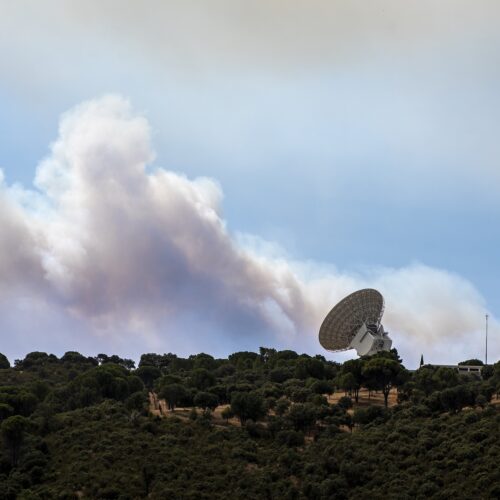
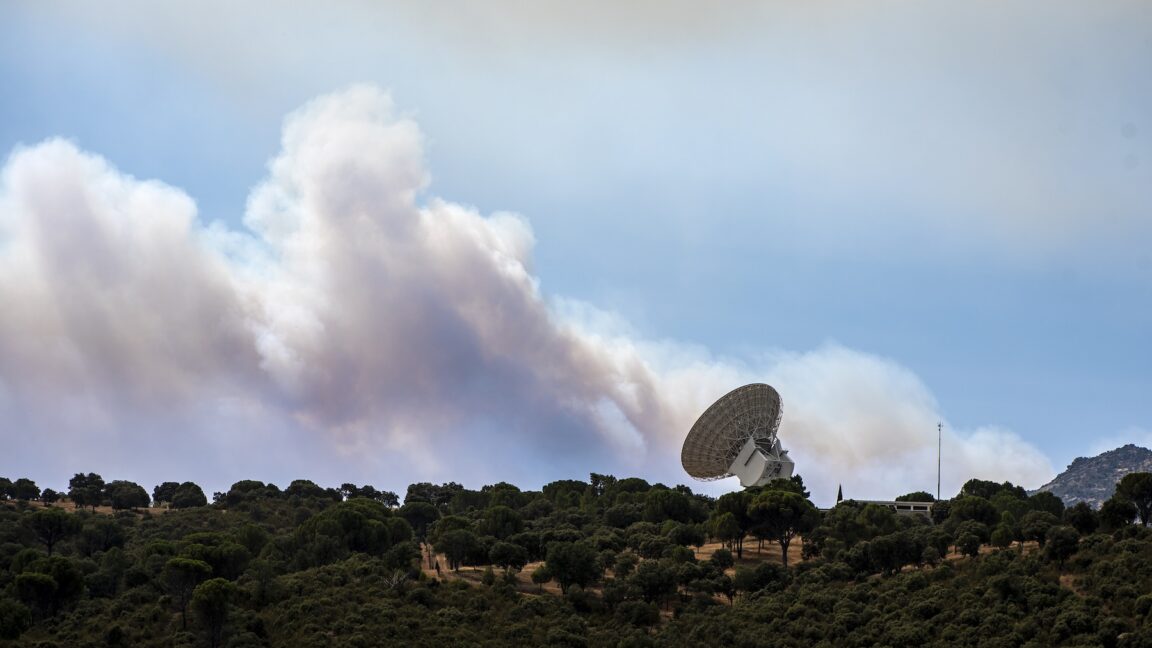
A fast-moving wildfire, one of many raging across Spain, bore down on the Madrid Deep Space Communications Complex on Friday, forcing an evacuation and temporarily suspending operations at one of NASA's most important tracking stations.
The tracking station is part of NASA's Deep Space Network, operating in concert with similar facilities in California and Australia to provide global coverage as Earth's rotation brings the planets, stars, and deep space probes in and out of view. The network supports more than 40 missions from the Moon to the edge of the Solar System, including Artemis, the James Webb Space Telescope, and NASA's twin Voyager spacecraft.
A NASA spokesperson confirmed the tracking station in Spain, located in the hills nearly 40 miles (65 kilometers) west of central Madrid, was evaluated Friday "due to ongoing wildfires in the region. Photos and video from the area showed flames and smoke plumes rising over the ground station's antenna array, anchored by a 230-foot-diameter (70-meter) radio dish and a collection of smaller 112-foot (34-meter) antennas.
A favorite vacation option may be at risk because of rising temperatures. Even those sticking with their summer plans agree: More air conditioning would help.
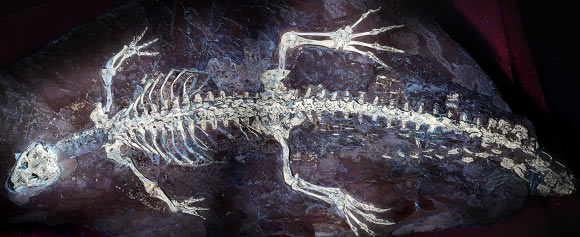
Exceptionally preserved skin of Montsecosuchus depereti, an extinct crocodylomorph no larger than a house cat that prowled the tropical wetlands of Early Cretaceous Spain, has allowed paleontologists to reconstruct details of its scales, sensory organs and even possible banded markings along its tail.
Thinktank says decoupling electricity from gas prices has also helped shield Spain from hikes caused by Iran war
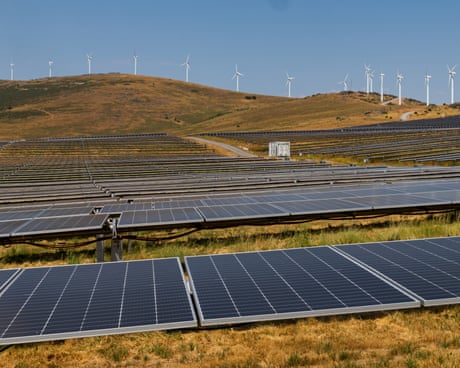
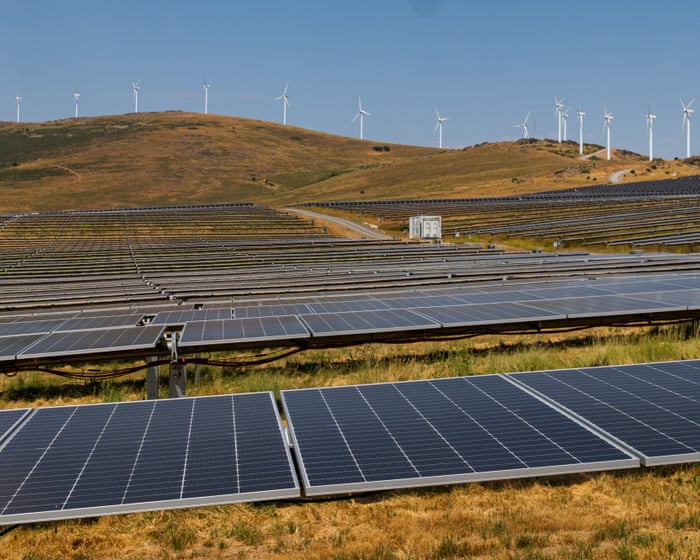
Spanish households save €10 a month on electricity bills because of wind turbines and solar panels installed in the last five years, a report has found.
Typical energy bills would be 19% more expensive if electricity costs were still as tightly coupled to gas prices as in 2021, according to Ember, a climate thinktank. It found Spain’s “strategic” expansion of renewables since Russia invaded Ukraine in 2022 has shielded Spanish households from the latest rises in fossil fuel prices caused by the Iran war.
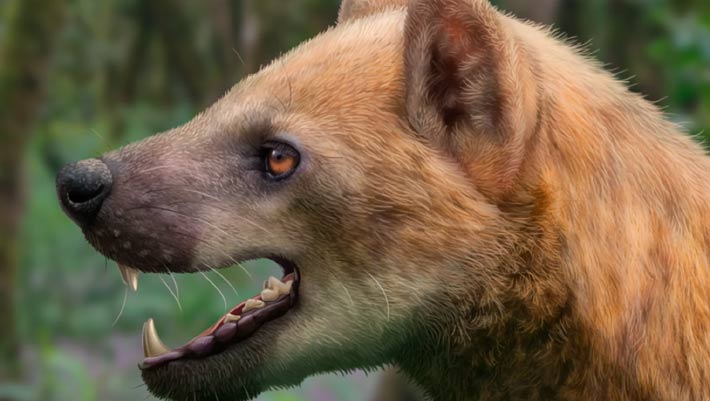
Paleontologists have identified a previously unknown species of amphicyonid -- the extinct family of carnivorous mammals popularly known as bear-dogs -- from two specimens unearthed at a rich fossil site in the Vallès-Penedès Basin near Barcelona, Spain.
New radiocarbon dates from Sala Keimada, a hard-to-reach chamber of Cueva Palomera in the province of Burgos, northern Spain, suggest that generations of people returned to the sacred space from the end of the Ice Age through the Iron Age, leaving behind art, structures and offerings.
Near-complete bovine skeletons unearthed the Early Pliocene site of Camp dels Ninots in northeastern Spain reveal that the ancestors of today’s buffalo and cattle were already growing to impressive sizes long before humans arrived on the continent.

 Login