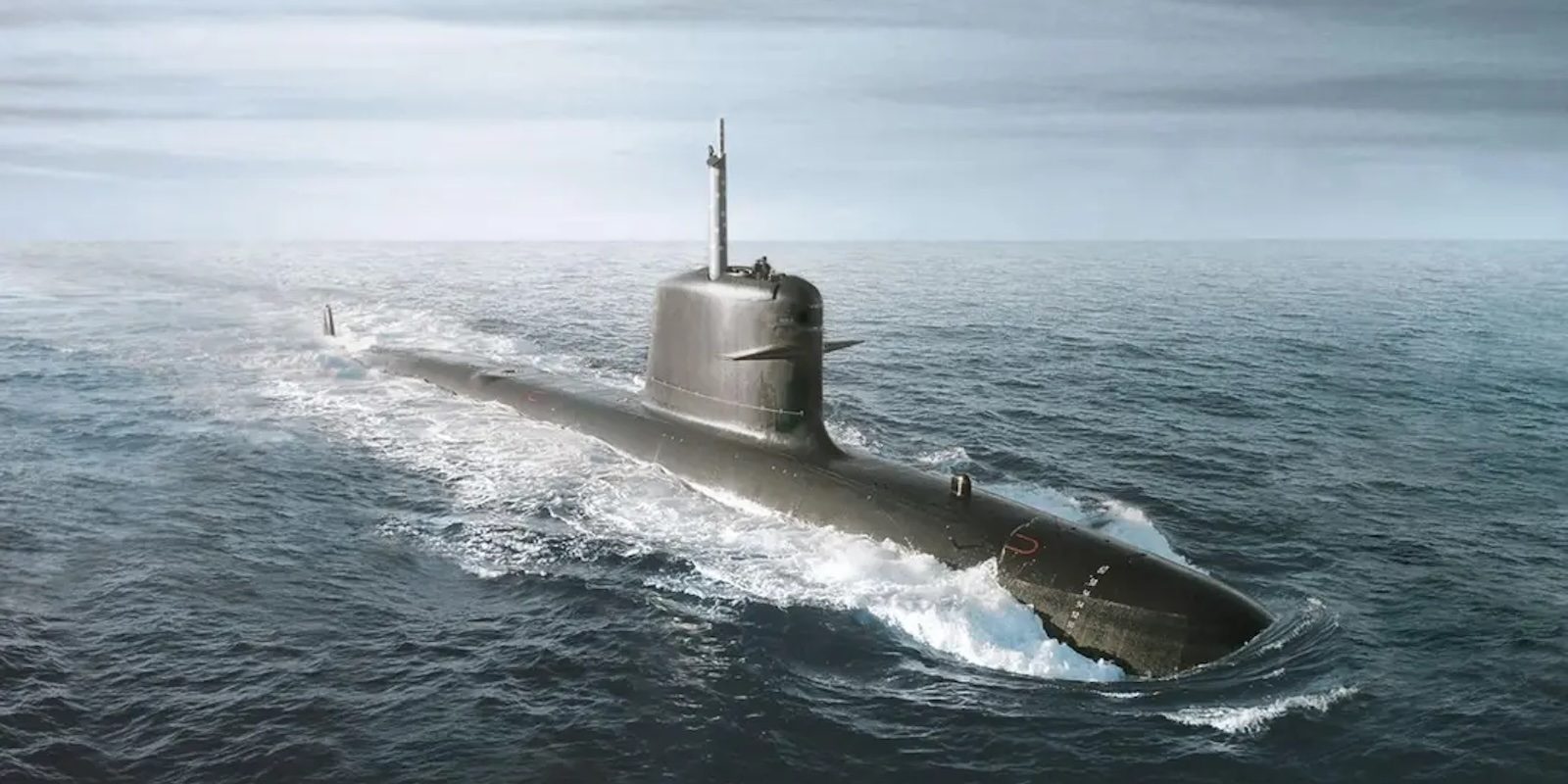
European defense contractor Saft is set to supply lithium-ion battery systems for the next generation of naval submarines, replacing decades-old lead-acid technology with EV-style packs that promise higher energy density, faster charging, and superior underwater endurance.
GE Aerospace and Magellan Aerospace have signed a memorandum of understanding to establish maintenance, repair, and overhaul capabilities in Canada for the F414-GE-39E engine that powers Saab’s JAS 39 Gripen E fighter.
The agreement, announced on July 22, would move forward only if the Canadian government selects the Gripen E for the Royal Canadian Air Force’s fighter fleet.
Under the proposed arrangement, GE Aerospace would train Magellan personnel and license the company as Canada’s domestic center of excellence for F414 engine sustainment. The work would be carried out at Magellan’s facility in Mississauga, Ontario.
Domestic engine support
“Today’s MOU signing builds on a six-decade relationship between GE Aerospace and Magellan that spans both military and commercial engines and will ensure the Royal Canadian Air Force has access to engine sustainment services in country to ensure readiness of the F414 engines,” said Paul Ferraro, Vice President of Defense Engines & Services at GE Aerospace.
The companies said the capability would support aircraft readiness, engine availability, and long-term fleet performance while giving Canada more control over fighter maintenance.
The proposed center would also extend Magellan’s role in military engine support by developing specialized infrastructure, technical expertise, and a skilled workforce within the country.
If implemented, the project would fit with Canada’s push to strengthen its domestic defense industrial base and retain more high-value aerospace work at home.
Sovereign aerospace capability
“This MOU reflects our shared intent to build enduring sovereign aerospace capabilities in Canada,” said Haydn Martin, Magellan’s Vice President in Business Development, Marketing, and Contracts.
“Should the Saab JAS 39 Gripen E aircraft be selected, Magellan Aerospace will be ready to provide world-class engine maintenance, repair and overhaul services that enhance operational readiness for the Royal Canadian Air Force while maintaining highly skilled Canadian jobs, developing advanced technical expertise, and strengthening Canada’s long-term defence industrial capacity,” he said.
For the Royal Canadian Air Force, having an in-country engine sustainment option could reduce dependence on foreign maintenance networks and improve access to repair capacity during periods of higher operational demand.
The planned capability would also support the development and retention of personnel trained to work on fighter propulsion systems.
F414 engine track record
The Gripen E uses the F414-GE-39E, part of GE Aerospace’s F414 engine family. According to GE Aerospace, the F414 has accumulated more than five million flight hours, while more than 1,600 engines have been delivered to eight nations.
The engine features a six-module architecture intended to simplify maintenance and allow components to be replaced or interchanged.
GE Aerospace also says the F414 operates without scheduled overhauls, relying instead on on-condition maintenance designed to maximize engine availability and reduce life-cycle costs.
The engine is built to provide rapid throttle response and unrestricted performance.
However, the Canadian sustainment plan remains tied to Ottawa’s fighter procurement decision. The proposed Mississauga operation would proceed only if Canada chooses the Gripen E, making the MOU both an industrial commitment and a potential element of Saab’s bid for Canada’s future air combat requirements.
The US Army is testing an experimental AI platform designed to dramatically accelerate battlefield planning by reducing decision-making timelines from days or hours to just seconds. The system, known as the Course of Action Generative Pre-trained Transformer (COA-GPT), is intended to help military personnel rapidly develop and adapt operational plans while maintaining human oversight throughout the process.
Developed by researchers at the US Army Combat Capabilities Development Command’s Army Research Laboratory, the Army’s primary fundamental research institution, COA-GPT is being evaluated as part of Project Convergence Capstone 6, the service’s largest experimentation exercise, taking place at Fort Irwin, California.
The trial will assess how AI can support faster, more adaptable decision-making in future battlefield environments.
Tackling human-AI integration in military operations
The COA-GPT is an experimental AI platform built to speed up mission planning while providing commanders and intelligence teams with a more flexible framework for operational decision-making.
The system is designed to address one of the military’s biggest challenges in adopting AI: ensuring effective collaboration between soldiers and AI. By combining AI-generated recommendations with human judgment, COA-GPT aims to help military personnel plan and adapt operations more quickly without removing people from the decision-making process.
According to Dr. Amar Marathe, program manager for COA-GPT at DEVCOM Army Research Laboratory, the platform combines generative AI with decades of military expertise and established doctrine to help Army leaders and soldiers generate, compare and evaluate different operational planning options.
He stressed that the goal is not to replace human decision-makers, but to enhance their capabilities. Instead, COA-GPT is designed to fit into existing military planning workflows, enabling personnel to work faster, improve efficiency and make more informed decisions during mission planning.
Interface helps commanders guide autonomous systems
One of the key scientific challenges behind COA-GPT is enabling machines to better understand human intent across teams of soldiers and AI-enabled systems, according to Marathe. Through a partnership with Hyssos Tech, the platform incorporates an advanced graphical interface that allows leaders at different levels of command to communicate with AI more naturally.
Using tools such as shared maps and visual inputs, commanders can better guide agentic AI systems while reducing miscommunication, cognitive burden and operational friction among personnel.
Marathe further explained that COA-GPT was developed with a flexible, plug-and-play architecture that allows researchers to replace individual components and experiment with new AI capabilities without rebuilding the entire system. This approach enables faster testing, adaptation and integration of emerging technologies as the platform continues to evolve.
Moving forward, the Army will continue refining the COA-GPT testbed through additional soldier feedback and collaboration with industry partners. Researchers will examine how generative AI could reshape the role of Army planning teams, identify the cognitive skills future planners will need and improve workflows to ensure the technology helps maintain a strategic advantage on the battlefield.
New satellite imagery has been released that appears to show what analysts believe is a new kind of Chinese submarine. Captured by BlackSky back in May of this year, the new attack submarine appears to be under construction at the Jiangnan Shipyard in Shanghai.
Concrete details on it are thin on the ground, but analysts believe it could be an improved version of China’s existing Type 093 “Shang” class. If true, this would represent another step in China’s modernization of its undersea capabilities.
From what can be gathered, the new submarine appears to have a smaller conning tower than the Type 093, and appears to be shorter. The smaller tower could be significant as it could reduce drag and turbulence when submerged.
This would, in turn, reduce its acoustic signature, making it more stealthy. Hull design is also just one part of a vessel’s design. If the idea is to make it more acoustically stealthy, then the submarine would likely also feature other refinements like vibration isolation, anechoic coatings, sonar arrays, etc.
New Chinese submarine spotted
If true, this would make the submarine considerably harder to detect and track using things like passive sonar. For potential rivals in theatres like the Indo-Pacific, it could, in theory, thwart detection efforts from P-8 “Poseidon” aircraft, seabed sensor networks, etc. This would feed into China’s anti-access/area-denial strategy within its sphere of influence.
“Its role may be to silently approach U.S. aircraft carriers underwater and launch attacks,” former Vice Admiral Masao Kobayashi, who served as commander of the Japan Self-Defense Forces’ submarine fleet, told Asahi.
In reality, this translates to making it riskier for Western navies to operate near Taiwan or the South China Sea in general. If this new submarine is as quiet as believed, it could, in theory, stalk and potentially attack U.S. carrier strike groups.
Reduced drag would also translate into higher speeds when submerged, and much improved energy efficiency. That would enable it to travel further and operate for longer between resupply.
According to reports, the submarine appears to be around 393 feet (120 meters) long and 33 feet (10 meters) wide. It would also be just the latest in new submarines developed and launched by China in recent years.
Between 2021 and 2025, Asahi explains, China has deployed an estimated ten submarines, with a total displacement of around 79,000 tons between them. Beyond that, analysts are somewhat split on how to classify the new submarine.
New class or improvement?
Some believe it to be an entirely new class, while others prefer to see it as an improved variant of the Type 093. It is also not clear how the submarine is powered and propelled, with some believing it is likely nuclear-powered. However, it is impossible to tell from satellite imagery alone.
“The submarine appears to be a new class,” Timothy Heath, owner of research firm Perceptum, told the South China Morning Post (SCMP).
Whatever the case, it is important to note that we only have satellite imagery to go by right now. Chinese authorities have neither confirmed nor denied the new submarine’s existence.
The submarine appears to be around 393 feet long and 33 feet wide. It would also be just the latest in new submarines developed and launched by China in recent years.
Air defense used to revolve around one basic problem: stopping enemy aircraft and missiles before they reached their targets. The rapid spread of drones has complicated that equation.
Cheap one-way attack drones, small reconnaissance UAVs, and larger strike platforms can now threaten military bases, infrastructure, and frontline units without requiring an adversary to risk an expensive crewed aircraft.
Traditional surface-to-air missiles, or SAMs, remain among the most powerful tools available for defending airspace. But using costly missiles against inexpensive drones can create an unfavorable exchange.
That has pushed militaries toward another option: drone interceptors designed specifically to hunt and destroy hostile UAVs. Here is how the two approaches compare across six key areas.
Cost per interception
The biggest difference is economics.
Modern surface-to-air missiles can be extremely expensive because they require sophisticated seekers, propulsion systems, guidance electronics, and warheads capable of destroying fast and highly maneuverable targets.
That makes sense when the incoming threat is a fighter jet, helicopter, or cruise missile. The calculation changes when the target is a relatively inexpensive drone.
Drone interceptors can potentially offer a lower-cost response. Many are built around simpler airframes, compact sensors, and reusable or comparatively inexpensive components. Some destroy targets by collision, while others carry small warheads or other defeat mechanisms.
The objective is simple: avoid spending a high-value interceptor on a low-value threat whenever possible.
Speed and target types
Surface-to-air missiles maintain a major advantage when speed matters.
SAM systems are designed to engage targets traveling at high subsonic, supersonic, and, in some cases, even greater speeds. That makes them suitable for threats such as combat aircraft and cruise missiles, depending on the system.
Drone interceptors generally operate against slower targets. They are particularly suited to small UAVs whose flight speeds and maneuverability allow another drone to pursue them.
Against a fast jet or missile, however, most interceptor drones would struggle to match the speed and engagement envelope of a dedicated SAM.
Range and coverage
SAM systems are built to defend large areas.
Long-range batteries can monitor and engage threats tens or even hundreds of kilometers away, depending on the weapon. This allows defenders to create layered protective bubbles around cities, bases, and strategic infrastructure.
Drone interceptors usually operate over much smaller areas. They may be launched once radars, electro-optical sensors, or other systems detect an incoming UAV.
Their shorter range makes them better suited to local defense rather than wide-area airspace control.
Ammunition and sustainability
Another important difference is how quickly each system can be replenished. A missile launcher carries a limited number of ready-to-fire interceptors. Once those missiles are used, the system must be reloaded, creating potential vulnerability during large or sustained attacks.
Drone interceptors could offer greater flexibility if they can be manufactured cheaply and stored in larger numbers.
That becomes particularly important during swarm attacks, where dozens of drones may arrive within a short period. The challenge is ensuring that interceptor drones can launch, coordinate, identify targets, and engage quickly enough to deal with multiple threats.
Guidance and autonomy
Surface-to-air missiles rely on highly mature guidance systems.
Depending on the weapon, they may use radar guidance, infrared seekers, command guidance, or combinations of several methods. Drone interceptors increasingly depend on autonomy.
Computer vision, artificial intelligence, onboard navigation, and target recognition can allow an interceptor to pursue another drone with limited human involvement.
That could make them useful against large numbers of small targets, but it also places significant importance on reliable detection, identification, communications, and autonomous decision-making.
Complementary weapons, not replacements
Drone interceptors are unlikely to make surface-to-air missiles obsolete. Instead, they are becoming another layer in increasingly complex air-defense networks.
SAMs remain essential when the threat is fast, long-range, heavily armed, or capable of operating at high altitude. Drone interceptors can fill the gap at the lower end of the threat spectrum, particularly against inexpensive UAVs that may not justify the use of an advanced missile.
The future of air defense will therefore probably not come down to choosing between missiles and interceptor drones. It will depend on using the right weapon against the right target.
As aerial threats become cheaper, more numerous, and more diverse, the most effective defenses will likely combine long-range missiles, guns, electronic warfare, directed-energy systems, and interceptor drones into a layered network capable of responding without exhausting its most expensive weapons.
The US Army and Air Force have signed 10-year Intergovernmental Support Agreements with Arizona State University to expand energy services across military installations in the continental United States.
Signed on July 7, the agreements allow installations to request support for utility monitoring, energy assessments, data integration, resilience planning, and workforce development.
The arrangement is intended to help bases strengthen energy resilience, improve infrastructure management, and prepare for operational disruptions.
Expanding access to energy expertise
Under the agreements, Army and Air Force installations can seek a broad range of technical services from Arizona State University.
These include utility metering and billing analysis, energy and water assessments, building automation, distribution network modernization, on-site generation, microgrid development, independent project reviews, energy readiness exercises, and workforce training.
“Intergovernmental Support Agreements give installations an important mechanism to access support services that can improve readiness and resilience,” said Jordan Gillis, assistant secretary of the Army for installations, energy and environment.
“This effort reflects the Army’s continued focus on strengthening infrastructure, improving efficiency and supporting mission requirements across our installations,” he continued.
The US Army said the partnership can also help installations better understand existing utility systems and identify where modernization or efficiency improvements are needed.
Managing aging utility systems
A major focus of the Army agreement is the condition and performance of utility infrastructure at military installations.
“Through this agreement, Arizona State University will provide the monitoring, analysis and technical support needed to help Army installations better understand and manage aging utility systems,” said David Dentino, deputy assistant secretary of the Army for installations, housing and partnerships.
“This partnership is about improving readiness, increasing resilience, reducing costs and ensuring our installations have the reliable infrastructure needed to support the mission,” he continued.
For the Air Force, the agreement similarly creates a route for installations to obtain services linked to infrastructure, energy efficiency, and mission assurance.
“National security requires energy and water surety,” said Nancy J. Balkus, deputy assistant secretary of the Air Force for infrastructure, energy and environment.
“Every one of our installations is not just a base; it is a power projection platform to assure lethality whenever called upon. Without energy and water security, our missions cannot test, launch, sustain or succeed,” he said.
Supporting long-term installation resilience
Intergovernmental Support Agreements allow military installations to obtain support services from eligible state and local government entities.
For the Army and Air Force, the new ASU agreements provide a framework through which bases can request energy-related expertise without creating separate arrangements for every service.
The broader goal is to improve the reliability of installation infrastructure while giving military facilities more options for monitoring, planning, training, and resilience projects.
By covering services ranging from metering and automation to microgrids and energy readiness exercises, the agreements give installations access to tools that can support infrastructure modernization and long-term operational preparedness.
The initiative also aligns with wider efforts to ensure military installations can continue meeting mission requirements as energy systems, infrastructure demands, and operating environments evolve.
US defense contractor Amentum has secured an $85 million contract to support the modernization of critical infrastructure within the US Navy’s Nuclear Propulsion Program (NNPP).
The three-year agreement will focus on redesigning and upgrading spent fuel examination capabilities at the Naval Reactors Facility in Idaho, a key site responsible for supporting the Navy’s nuclear fleet. The new facility will allow scientists and engineers to analyze used fuel cores, comparing real-world performance data with predictions from advanced design and testing processes.
The company points out that these efforts will help improve the safety, reliability, and long-term mission capability of the Navy’s nuclear-powered vessels.
Strengthening the Navy’s nuclear fuel evaluation capabilities
According to Mark Whitney, president of Amentum’s energy and environment business, the project reflects the company’s continued focus on providing the engineering expertise and operational support needed to sustain the US Navy’s nuclear-powered fleet.
By upgrading critical spent fuel examination capabilities, Amentum aims to help the Navy better analyze, optimize, and extend the performance of nuclear fuel cores. The modernization effort is expected to provide engineers and scientists with improved tools and data to support future fleet readiness, safety, and reliability.
Whitney further noted that Amentum’s broader nuclear expertise positions the company to support some of the most complex challenges in the sector. He said the company’s capabilities cover the full nuclear project lifecycle, delivering safe, innovative, and reliable solutions for customers worldwide.
He also added that Amentum’s integrated global nuclear expertise enables the company to take on demanding projects, including efforts that support the US Navy in maintaining the effectiveness of its nuclear-powered fleet.
Nuclear propulsion program marks decades of innovation and reliability
For more than seven decades, the Navy’s NNPP has remained at the forefront of nuclear technology, developing advanced systems to power the Navy’s global fleet. The program has built a reputation for combining innovation, safety, reliability, and operational efficiency, enabling nuclear-powered vessels to perform critical missions around the world.
Through continuous research, engineering advancements, and rigorous testing, the NNPP continues to support the long-term performance of the US Navy’s nuclear capabilities, Amentum highlights. A collaboration between the Department of Energy and the Department of the Navy, the NNPP is responsible for overseeing the design, development, and operational support required to sustain the Navy’s nuclear-powered fleet.
The program plays a central role in maintaining US maritime advantage by ensuring warfighters have access to vessels with exceptional endurance, stealth, responsiveness, and advanced warfighting capabilities. Through its work across the nuclear propulsion lifecycle, the NNPP helps support the reliability of the Navy’s strategic naval assets.
Furthermore, as operator of the world’s largest nuclear-powered fleet, including 11 active aircraft carriers and more than 70 submarines, the Navy relies on programs such as the NNPP and partners like Amentum to support the safety, performance, and long-term sustainability of its nuclear propulsion systems.
The European Union has begun delaying the release of satellite images showing shipping lanes near the Strait of Hormuz by 24 hours. The move comes in response to an earlier US government request and coincides with the Trump administration ramping up the war with Iran once again.
The unusual change in the free and open data policy for Europe’s Copernicus Earth observation program was revealed by Space News, which reviewed a copy of the decision made by the Council of the EU on July 13. The ordered delay applies to images taken by Sentinel-1 and Sentinel-2 satellites and covers the Gulf of Oman region that includes shipping lanes leading to and from the contested Strait of Hormuz.
The US government first requested that the European Union restrict Copernicus satellite imagery on May 26, according to the decision document seen by Space News. That request occurred during a shaky ceasefire period for the war that began on April 8 and ended on July 8, when the US military resumed a broader campaign of military strikes following an announcement by President Donald Trump.
The Air Force Life Cycle Management Center will oversee development, integration and sustainment of equipment used to access the military’s encrypted GPS signal
HELSINKI — A classified satellite launched by China in June is operating in a creative orbit, giving it a unique vantage point over the geostationary belt. Shijian-31 launched on a […]
History demonstrates military innovation continually rewrites the rules of combat, reshaping warfare and rendering strategies from past conflicts obsolete. The introduction of repeating rifles transformed infantry combat during the 19th […]
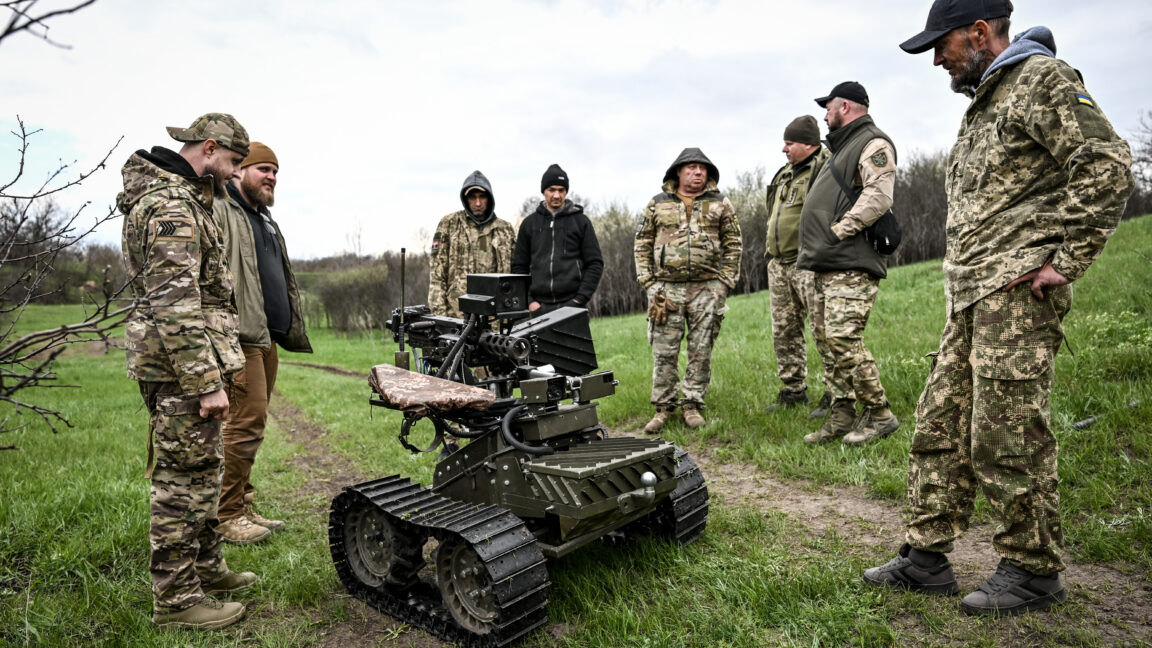
In the latest twist on battlefield innovations, Ukraine has used both flying drone carriers and drone boats to send ground robots armed with weapons or explosives into battle.
The drone-assisted deployments have enabled slower wheeled robots to bypass tough terrain and Russian defenses, and to carry out an unusual robotic amphibious assault on a contested position. Such tactics also showcase the Ukrainian military’s ongoing experimentation with using drones and robots to offset a Russian military advantage in manpower while also sparing Ukrainian soldiers from making dangerous assaults.
On July 19, a Russian military Telegram channel posted a video showing a Ukrainian hexacopter drone carrying a ground robot suspended below by a cable, according to the Ukrainian government-run news platform United24. The Russian Telegram channel described the Ukrainian heavy bomber drone as deploying a four-wheeled ARK-1 robot armed with explosive anti-tank mines on the ground where it continued toward Russian military positions—and apparently generated plenty of outraged comments from pro-Kremlin social media users.
The US military said it has launched its 10th consecutive round of strikes on Iran to force the reopening of the strait of Hormuz.
Earlier on Monday, Iran’s president said the country is in a “full-scale war” after the US expanded its aerial campaign and Tehran struck Washington’s Gulf allies, even as diplomats said talks to de-escalate were continuing.
A Chicago-based company has been awarded an initial $23.67 million acquisition contract under the U.S. Department of War’s Accelerate the Procurement and Fielding of Innovative Technologies (APFIT).
With this Numat Technologies will accelerate the deployment of next-generation chemical and biological protection suits for U.S. Special Operations Forces.
The award is being executed in partnership with the Defense Threat Reduction Agency (DTRA) and is intended to speed the transition of the company’s technology from development into operational use.
Numat will deliver field-ready protective suits at scale
The APFIT program was established to bridge the gap between promising defense technologies and field deployment by providing procurement funding for mature innovations that are ready for operational use. Since its launch, the program has supported the rapid acquisition of advanced capabilities for the U.S. military, with total awards now exceeding $2 billion, according to a press release.
“Over the past 10 years, Numat built the MOF industrial base for this moment, where we can activate an entire supply chain, from material design through high-volume system manufacturing, to protect the Warfighter,” said Ben Hernandez, CEO of Numat Technologies.
“This contract award reflects our long-term investment in American innovation. Numat will deliver finished, field-ready protective suits at scale, made completely in the United States.”
Numat’s protection suits incorporate metal-organic frameworks (MOFs)—highly porous engineered materials designed to capture and neutralize hazardous chemical and biological agents. Unlike conventional protective garments that primarily act as barriers, the company’s MOF-enabled suits are engineered to self-detoxify by neutralizing harmful substances upon contact, while also improving breathability and wearer mobility.
Under the APFIT contract, Numat will supply the MOF-enabled chemical and biological (CB) suits directly to U.S. Special Operations Forces, whose personnel often operate in environments where exposure to chemical and biological threats is a significant concern. According to the company, the suits are designed to offer enhanced protection without compromising comfort or operational effectiveness.
The contract also represents a milestone for the domestic manufacturing of metal-organic frameworks, a technology that has gained increasing attention for applications ranging from defense and industrial filtration to energy storage and environmental protection. Numat said it has spent more than a decade building a U.S.-based supply chain capable of designing, producing and integrating MOFs into mission-critical systems.
Company Chief Executive Officer Ben Hernandez said the award reflects years of investment in establishing a domestic industrial base for MOF technology and positions the company to deliver field-ready protective equipment manufactured entirely in the United States.
The latest award builds on Numat’s long-standing collaboration with several U.S. defense organizations, including the Defense Threat Reduction Agency, the Office of the Assistant Secretary of War for Industrial Base Policy, the Capability Program Executive Office for Chemical, Biological, Radiological and Nuclear Defense, U.S. Special Operations Command, the U.S. Army and the U.S. Navy. These partnerships have helped advance MOF technology from laboratory research to scalable manufacturing, according to the company.
Beyond military applications, Numat said its MOF platform has potential uses across industrial, semiconductor and energy sectors, where advanced materials are increasingly being deployed for gas storage, chemical separation and hazardous material filtration.
The APFIT award underscores the U.S. government’s broader efforts to accelerate the procurement of innovative defense technologies while strengthening the domestic industrial base and reducing the time required to transition emerging capabilities into operational service.
Defense Production Act funding was awarded to Martin Materials Solutions, a small business that makes radiation-resistant cover glass used on spacecraft solar arrays and thermal-control systems
Rune Technologies has unveiled TyrSense, a new line of ruggedized sensors designed to help military units track personnel, casualties, and supplies in contested environments where conventional communications may be unavailable.
The hardware marks the company’s first expansion beyond software, extending its TyrOS logistics platform directly to personnel operating at the tactical edge.
The initial TyrSense products use small, durable NFC tags that can be attached to personnel or cargo. When scanned during a handoff, the system records the location and status of the individual or pallet in TyrOS.
Unlike conventional tracking systems, the location is determined by the node where the scan takes place rather than through GPS.
The tags can also operate without an active cloud connection or satellite signal, allowing units to continue recording movements in denied, degraded, intermittent, or low-bandwidth environments.
Once connectivity returns, the collected information can synchronize with TyrOS.
Aim to replace manual military tracking
Military units continue to rely heavily on manual processes to account for personnel and supplies, according to Rune.
Information about available resources is often maintained through whiteboards, paper manifests, and manually compiled reports. These systems can become difficult to maintain when units relocate or lose network connectivity.
TyrSense is initially designed around three military workflows that commonly depend on manual reporting: personnel accountability, medical operations, and cargo tracking.
For personnel, scanning a tag allows units to update an individual’s duty status, reducing the need for the daily manual process of compiling accountability information.
In medical operations, the system can record each transfer of a casualty as the individual moves from the point of injury through successive levels of care.
For logistics, tags attached to pallets can register shipments as they move through different nodes across a military supply network.
Built to operate when battlefield networks fail
Rune has designed the sensors around conditions where military personnel may have limited or no communications access.
Because individual scans can be registered locally at the tactical edge, units can continue collecting information even during network disruptions.
“A tag has to work in a vehicle and with no signal, because that’s where these counts happen,” said Peter Goldsborough, Co-Founder and Chief Technology Officer of Rune Technologies.
“We built TyrSense so the scan registers at the edge and reaches TyrOS the moment a connection is there. The hardware is deliberately simple. The value is what TyrOS does with the data,” he added.
The approach allows TyrOS to receive updated information once connectivity becomes available rather than requiring personnel to maintain continuous access to remote infrastructure.
Rune plans sensors for fuel and water
TyrSense builds on the company’s deployment of TyrOS with operational military units over the past year.
During Balikatan 26 in the Philippines, the software provided tactical commanders with information on food, water, fuel, and personnel supporting thousands of troops across a Joint Task Force, according to the company.
Rune is also the sole logistics provider for the US Marine Corps’ Project Dynamis and is the only application selected by both prime contractor teams participating in the US Army’s Next Generation Command and Control program.
The company now plans to expand the TyrSense hardware portfolio beyond NFC-based tracking.
The US Air Force’s 142nd Wing has completed its first live bomb-dropping exercise with the F-15EX Eagle II, marking a key milestone in expanding the aircraft’s operational capabilities. In early May, pilots, maintainers, and munitions specialists traveled to Mountain Home Air Force Base in Idaho to carry out the training mission.
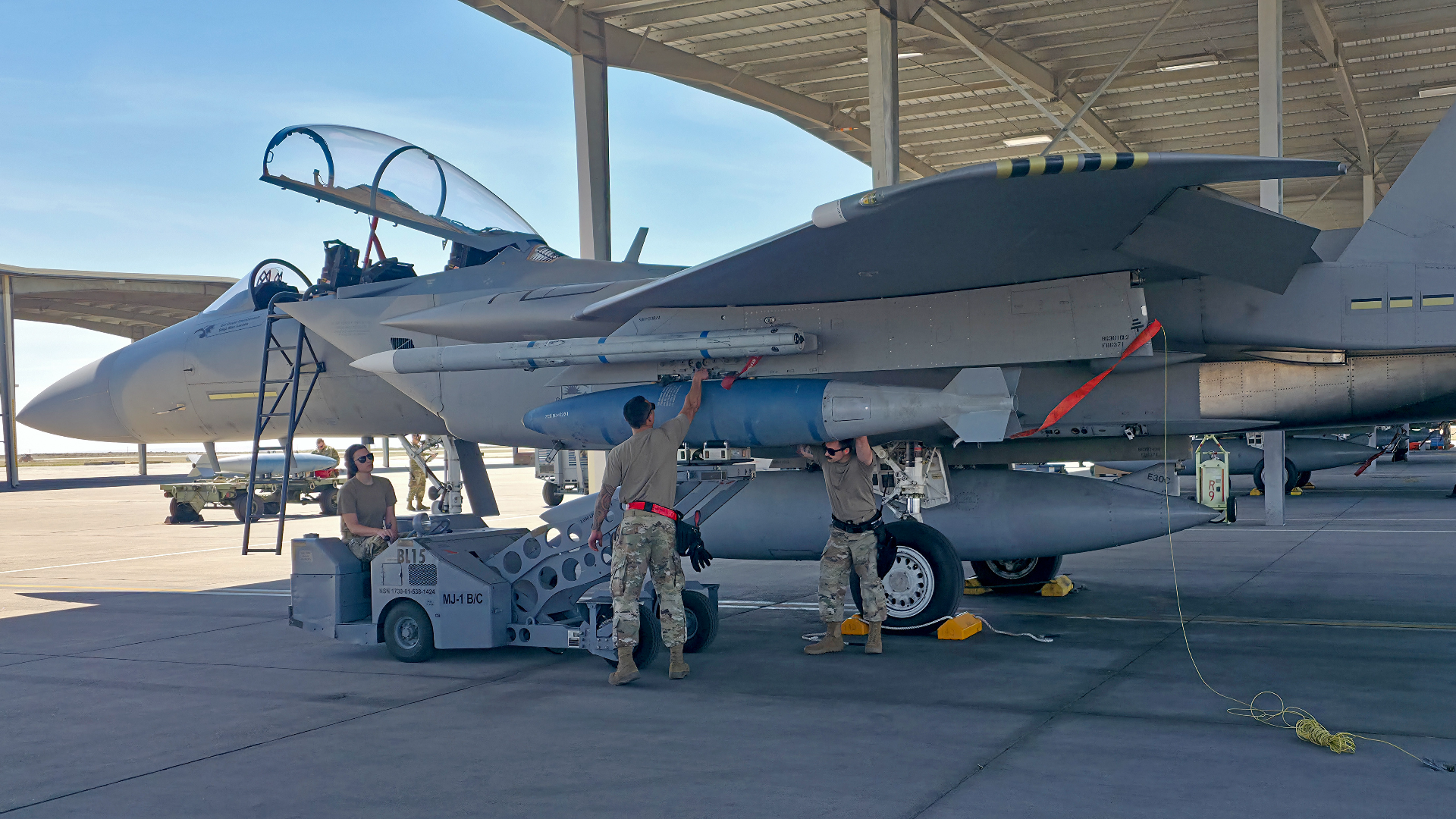
During the exercise, crews loaded 500-pound BDU-50 and 2,000-pound BDU-56 practice bombs onto the aircraft before releasing them over the Mountain Home bombing range. Although these training munitions closely resemble live bombs, they are filled with concrete instead of explosives, allowing crews to safely practice real-world weapons employment.
While the F-15EX has previously undergone weapons testing with the 85th Test and Evaluation Squadron at Eglin Air Force Base in Florida, this marks the first time an operational F-15EX unit has successfully loaded and dropped bombs as part of its mission readiness training.
F-15EX’s new combat role required months of pilot training
The F-15EX Eagle II is designed to do far more than its predecessor. Although it closely resembles the aging F-15C, the newer aircraft is built as a multirole fighter, capable of carrying out both air-to-air and air-to-ground missions. Unlocking that expanded capability, however, required months of preparation and specialized training across the 142nd Wing.
A key part of that effort was led by Maj. Jesse Loya, one of only three pilots in the wing with prior experience in air-to-ground operations. Together, the three completed a nine-month training program focused on the tactics and technical aspects of delivering precision-guided munitions. They then developed a training curriculum to teach the rest of the wing’s pilots the fundamentals of air-to-ground operations, laying the foundation for the unit’s first operational bomb-dropping mission.
According to Loya, the training at Mountain Home Air Force Base served as a stepping stone toward preparing pilots to safely employ air-to-ground weapons. The program focused on building the skills needed to handle ordnance while following a much shorter timeline than the traditional nine-month qualification course.
He said the ability to complete the training so quickly reflected the experience and capabilities the pilots had developed throughout their careers, allowing the wing to accelerate the F-15EX’s transition into a multirole combat aircraft.
Weapons loaders play key role in prepping F-15EX
Preparing the F-15EX Eagle II for its first bomb-dropping mission required extensive training from weapons crews as well as pilots. Tech. Sgt. Tyler Phelps, one of the 142nd Wing’s experienced weapons loaders, traveled to Nellis Air Force Base in Nevada earlier this year to train with F-15E aircraft and earn certification to load bombs.
After returning to Oregon, Phelps and other certified Airmen trained the rest of the weapons team ahead of the Mountain Home mission. Seeing the bombs loaded onto the F-15EX marked the culmination of months of preparation and a major milestone for the 142nd Wing.
The training mission involved 10 sorties, during which crews dropped a total of 24 BDU-50 and 12 BDU-56 practice bombs. The operation was completed without any safety incidents, and all missions received satisfactory evaluations, marking a major step forward in the wing’s transition to the multirole capabilities of the F-15EX.
The next phase in the F-15EX’s air-to-ground certification process will involve loading and dropping live munitions. The crew is scheduled to conduct that mission at Nellis Air Force Base at the end of August, bringing the wing one step closer to full air-to-ground operational capability.

 Login