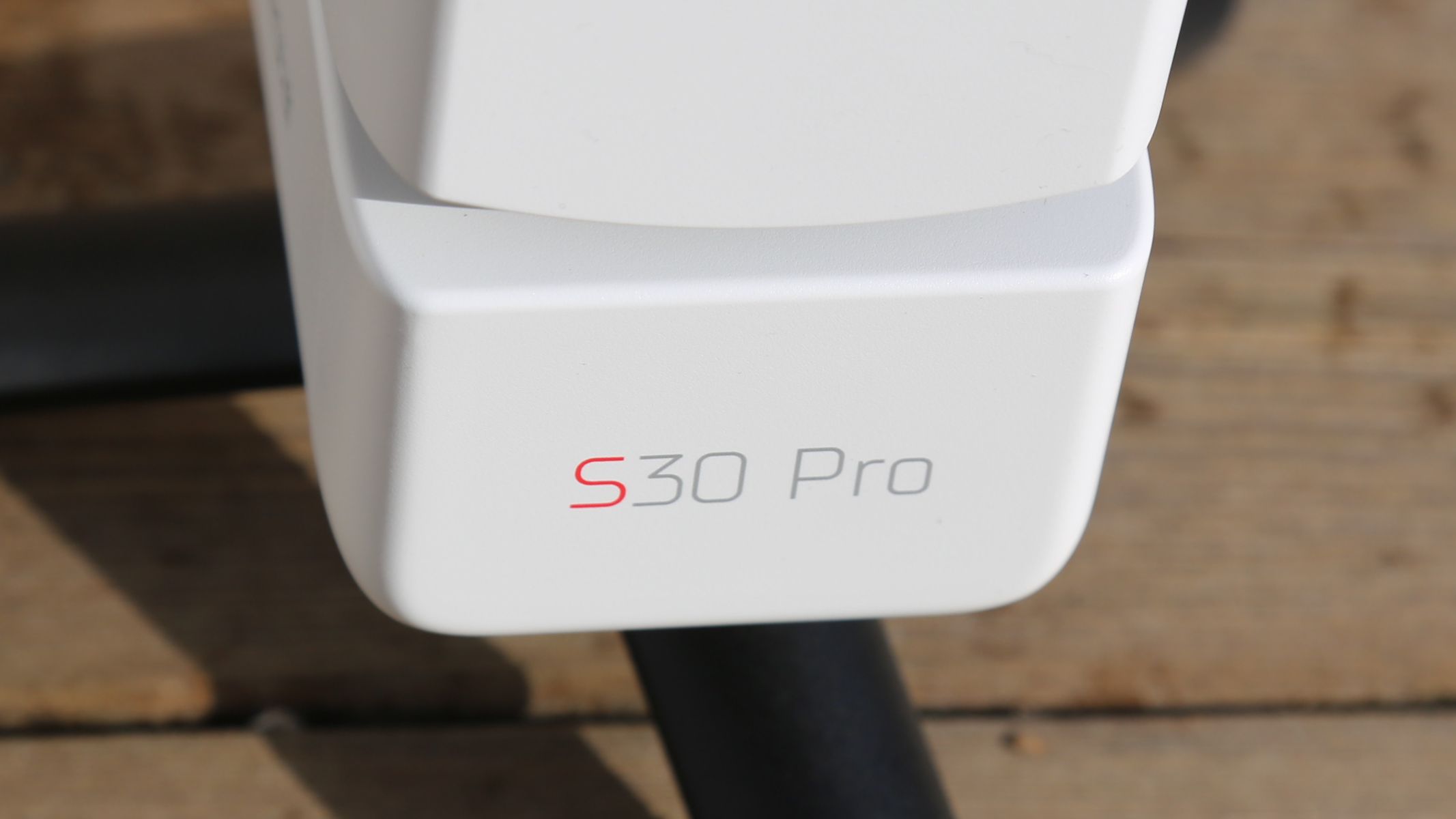
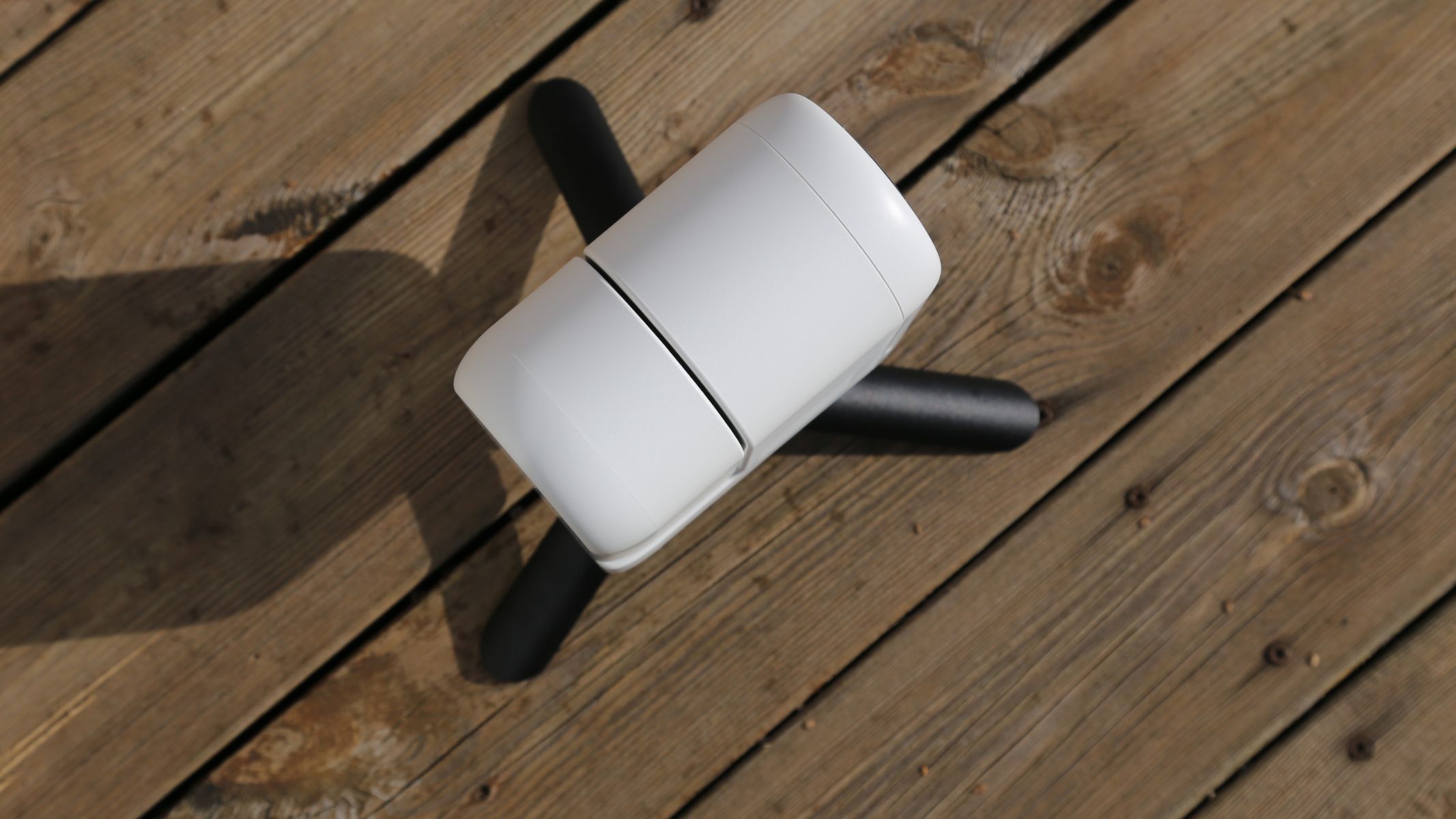
Smart telescopes like the Seestar S30 Pro have changed astrophotography and, arguably, urban astronomy. The Seestar S30 Pro takes that concept further than most. Small enough to fit inside a camera backpack, it combines a refractor telescope, motorized mount, dual cameras and image-processing software into a compact unit controlled entirely from a smartphone. Within minutes of powering on, it can align itself to the night sky, slew to a specified target and begin stacking exposures to reveal galaxies, nebulas and star clusters — even from light-polluted locations.
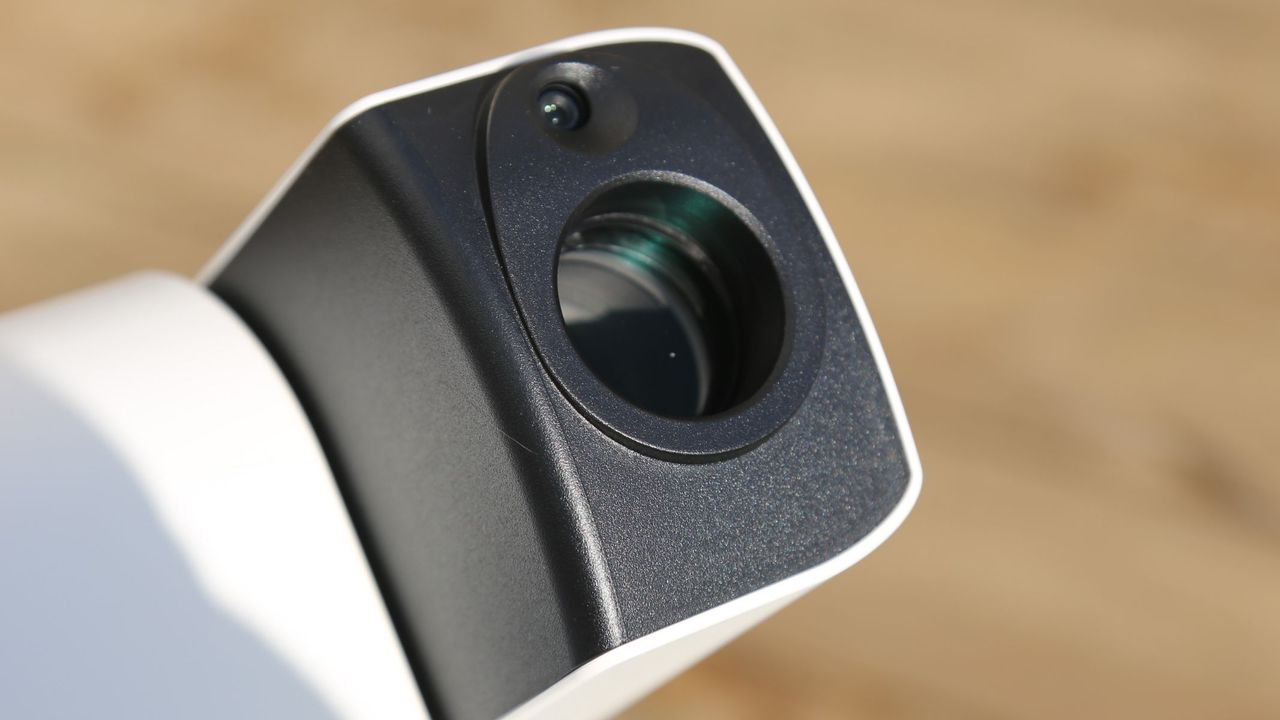
The Pro version of the S30 adds a higher resolution sensor, advanced optics and upgraded software functionality. (Image credit: Jamie Carter)
It makes astrophotography — once a complex and expensive hobby — possible with a single, automated device, though what makes the Seestar S30 Pro particularly interesting is not just its simplicity, but how it changes the experience of observing. Instead of actively operating a telescope, users watch a digital image build in real time. Sure, your eyes don’t see the photons coming from distant galaxies, but that misses the point — urban astronomers can’t see much of those galaxies anyway when using an optical telescope.
(Image credit: Jamie Carter)
Positioned as an upgrade to the originalSeestar S30, it introduces higher-resolution 8.3MP imaging, equatorial tracking support and expanded imaging modes aimed at more advanced users.
Designed for beginners, urban astronomers and astrophotographers of any level who are looking for a portable rig, the Seestar S30 Pro is about convenience, capability and a different way to explore the night sky.
ZWO Seestar S30 Pro smart telescope review
ZWO Seestar S30 Pro: Design
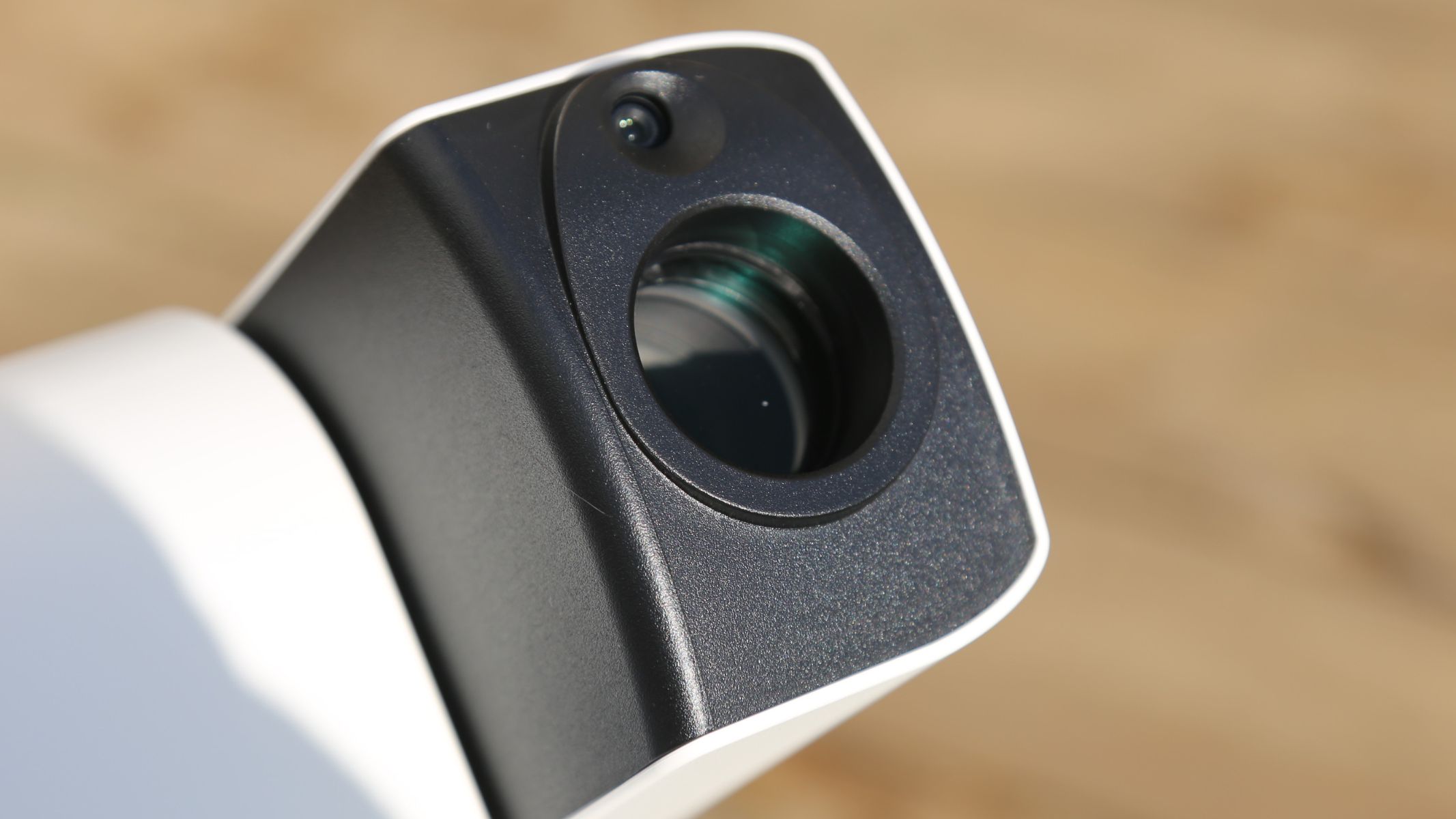
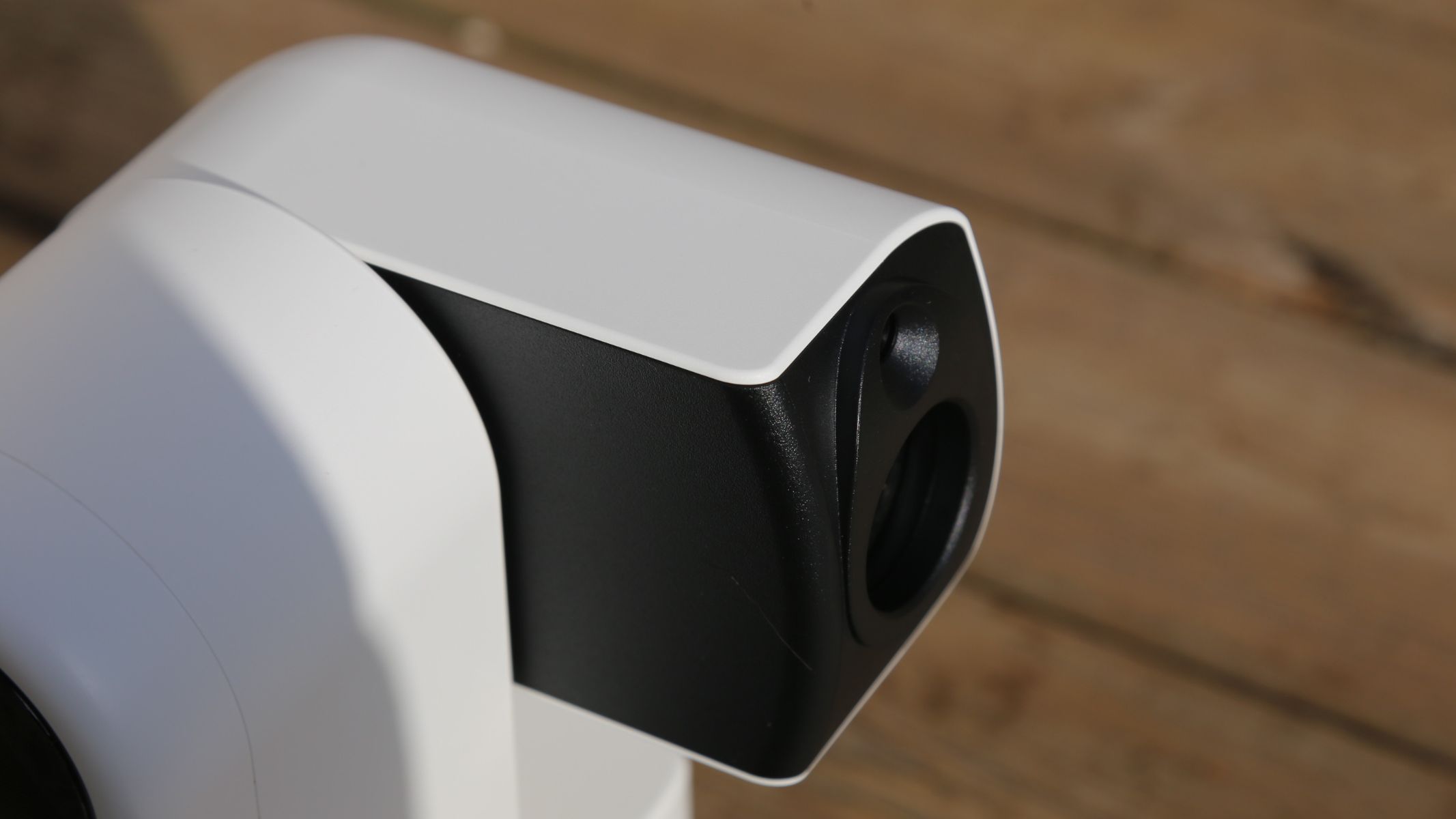
The Seestar S30 Pro features four lens elements in an optical design called an apochromatic quadruplet refractor. (Image credit: Jamie Carter)
Lightweight design
Dual-camera system
Full smartphone control
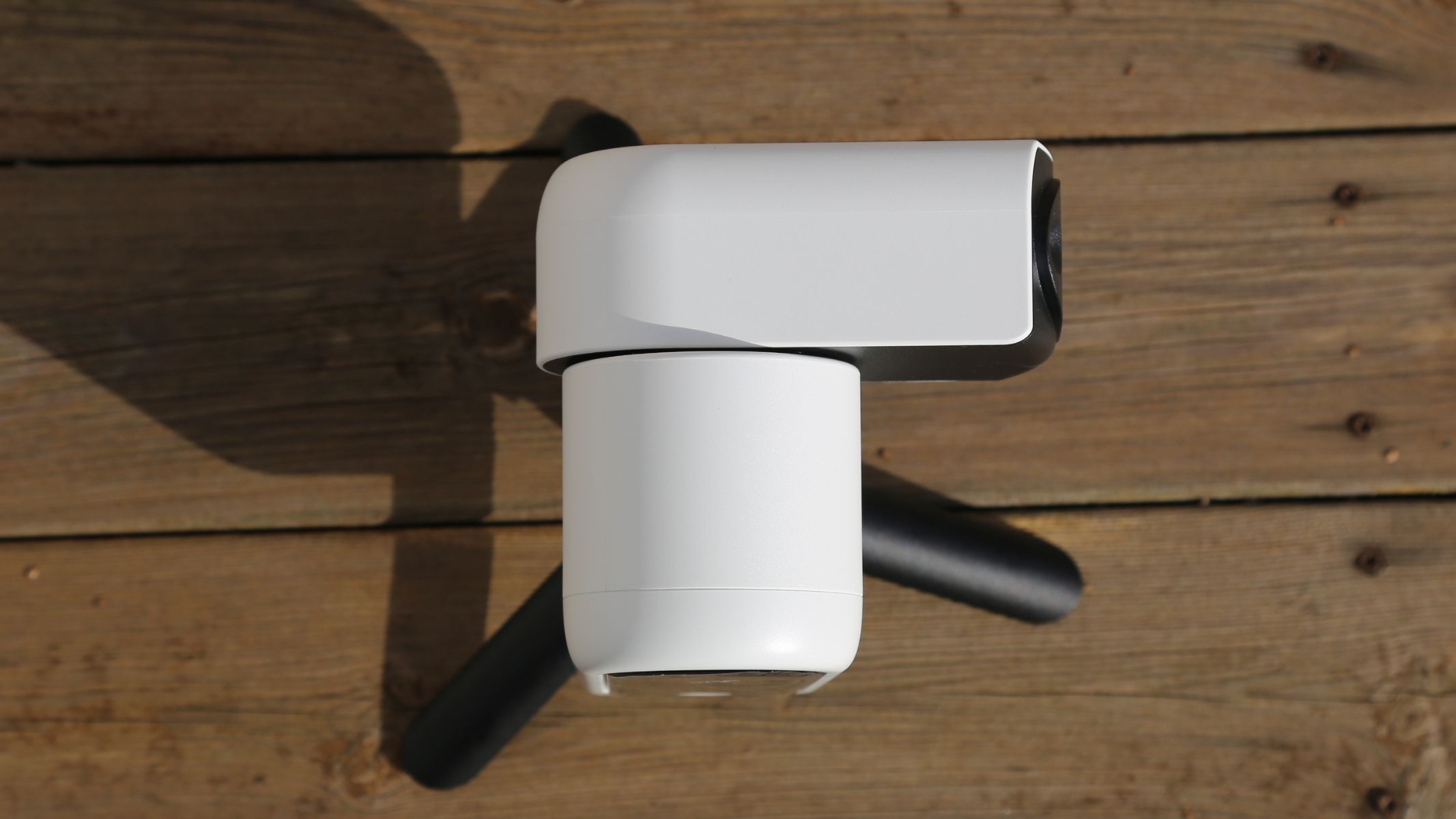
At first glance, the Seestar S30 Pro barely resembles a telescope, being closer in size to a telephoto lens than a traditional optical instrument. That portability is one of its defining strengths — this is a telescope you can realistically take anywhere, whether into a backyard, onto a balcony or on a dark-sky trip. You could even take it as hand luggage on a trip to see a total solar eclipse in a distant land.
When packed away the Seestar S30 Pro is very compact and highly portable.Jamie CarterWeighing just 3.6 lbs (1.65 kg) it is the lightest apochromatic quadruplet smart telescope.Jamie Carter
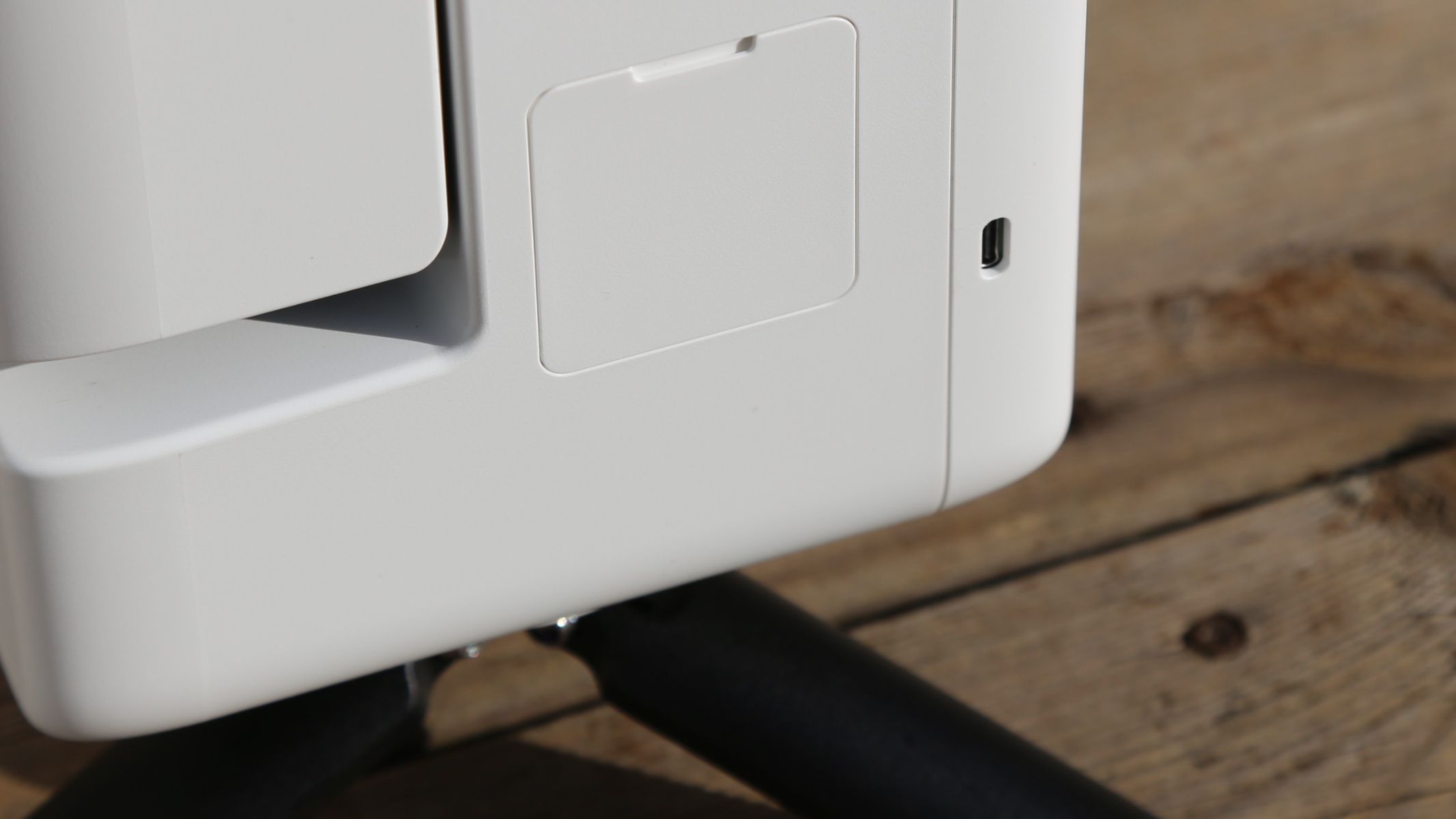
The design is deliberately minimal. Aside from a power button and USB-C slot, there are no physical controls. Everything — from slewing and focusing to image capture and processing — is handled through the Seestar app. Once connected to a phone via its own WiFi network, the system operates entirely offline, connecting directly to your phone without requiring an internet connection in the field.
Apart from the power button and USB-C slot on the S30 Pro, there are no physical controls as everything is controlled by the app.Jamie CarterThe Seestar S30 Pro combines a telescope, camera and automated mount in a single unit. Jamie Carter
Field of view: 4.6 degrees (tele) / 63 degrees (wide)
Mount type: Alt-azimuth (EQ mode supported)
Storage: 128GB internal
Battery: 6000 mAh (~6 hours)
Weight: 3.6 lbs (1.65 kg)
Dimensions: 8.25 x 5.5 x 3.15-in (210 x 140 x 80 mm)
A key feature of this new, improved model is its dual-camera system. The primary telephoto camera is dedicated to deep-sky imaging, using a Sony IMX585 sensor that’s capable of 8.3MP (4K) images, while the secondary wide-angle uses an equally capable Sony IMX586 sensor for sky alignment and wide-field imaging modes.
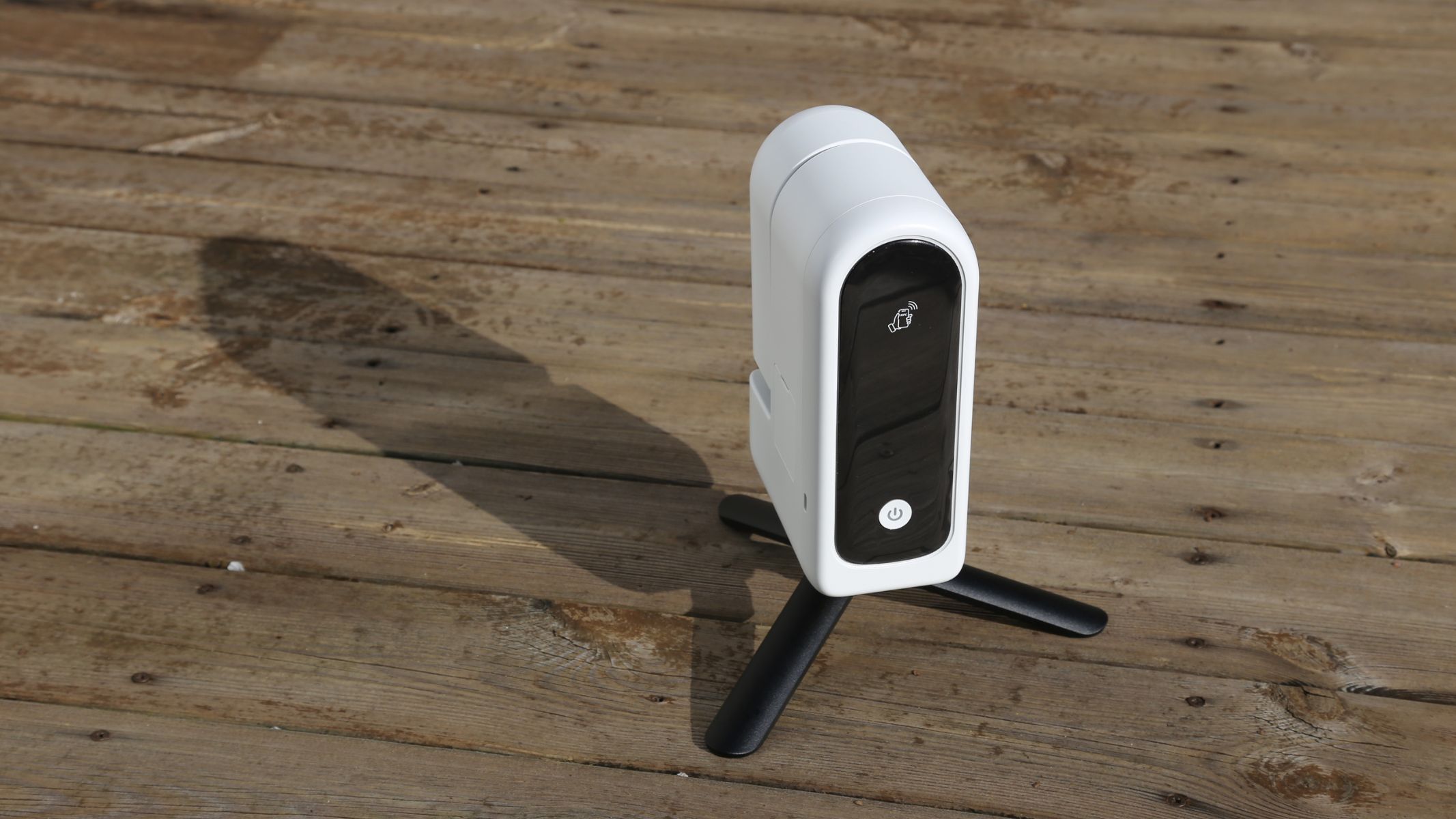
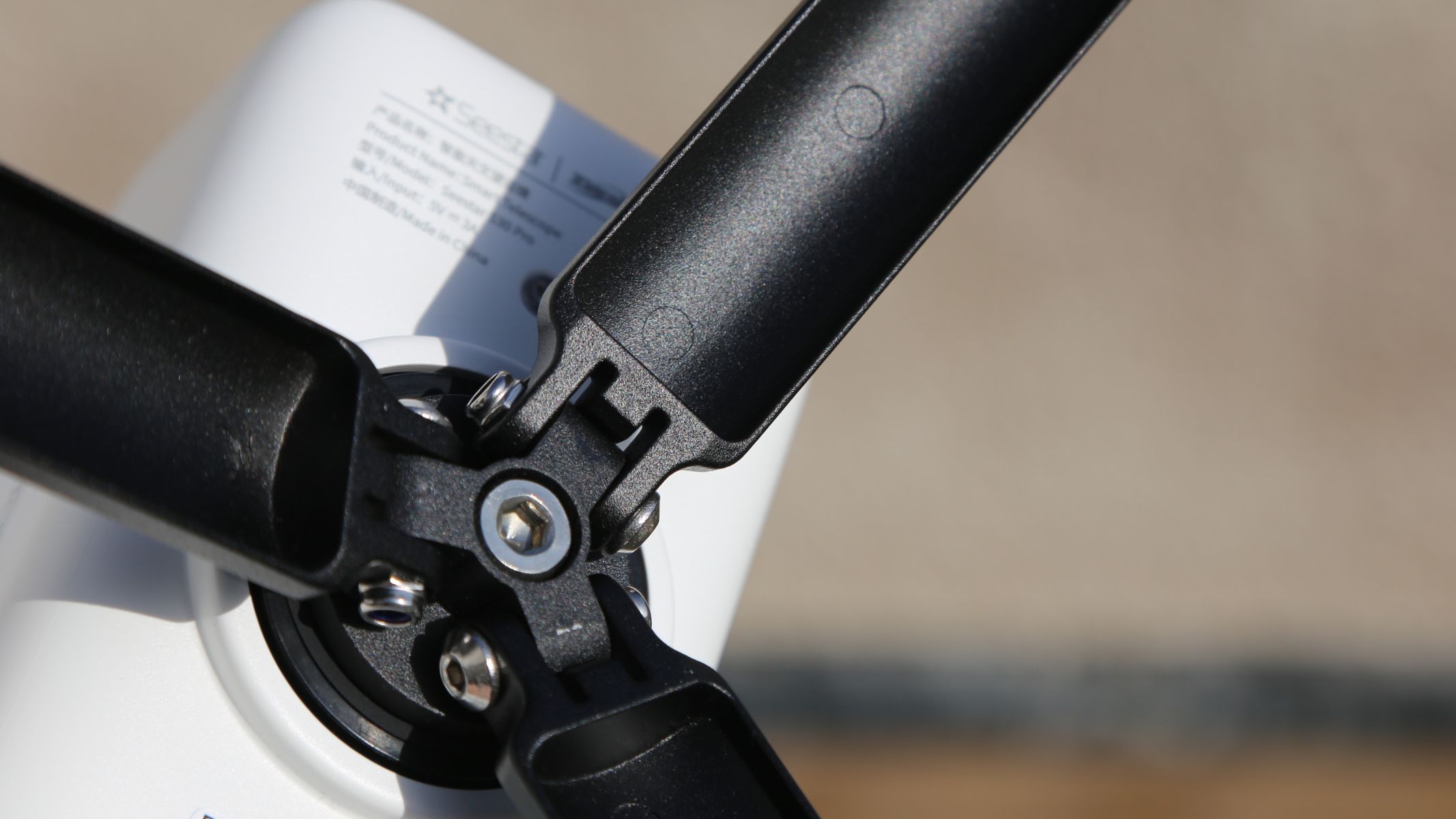
Any tripod can be used with the Seestar S30 Pro. (Image credit: Jamie Carter)
The included tabletop tripod is solid, if small, so users with backyards surrounded by buildings or trees will benefit from mounting the device on a full-size photographic tripod. It also comes with a handy, high-quality padded shoulder bag to store the telescope and all its accessories.
ZWO Seestar S30 Pro: Performance
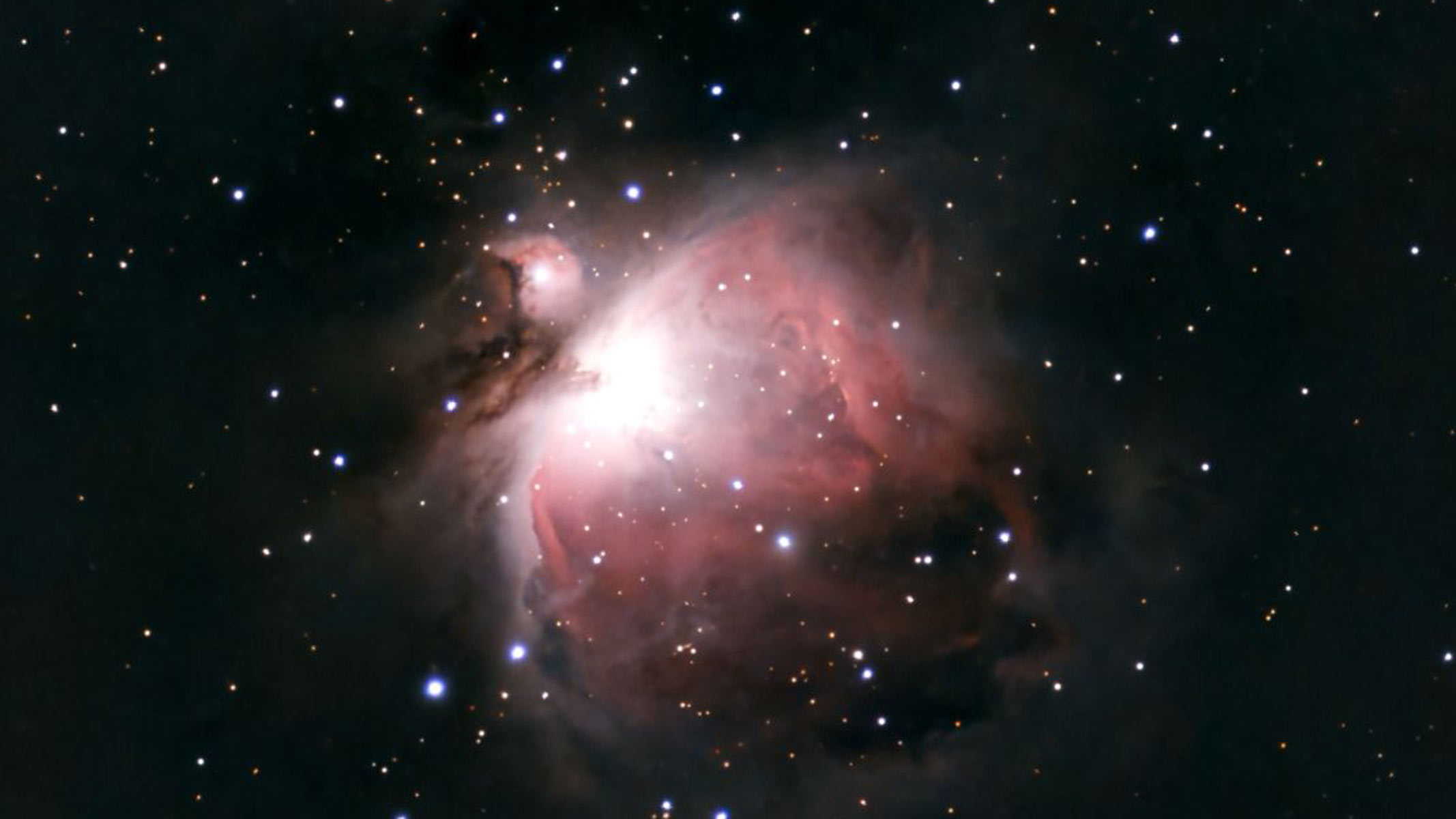
The Orion Nebula (M42) shot in alt-azimuth mode. (Image credit: Jamie Carter)
Automatic stacking with intelligent frame rejection
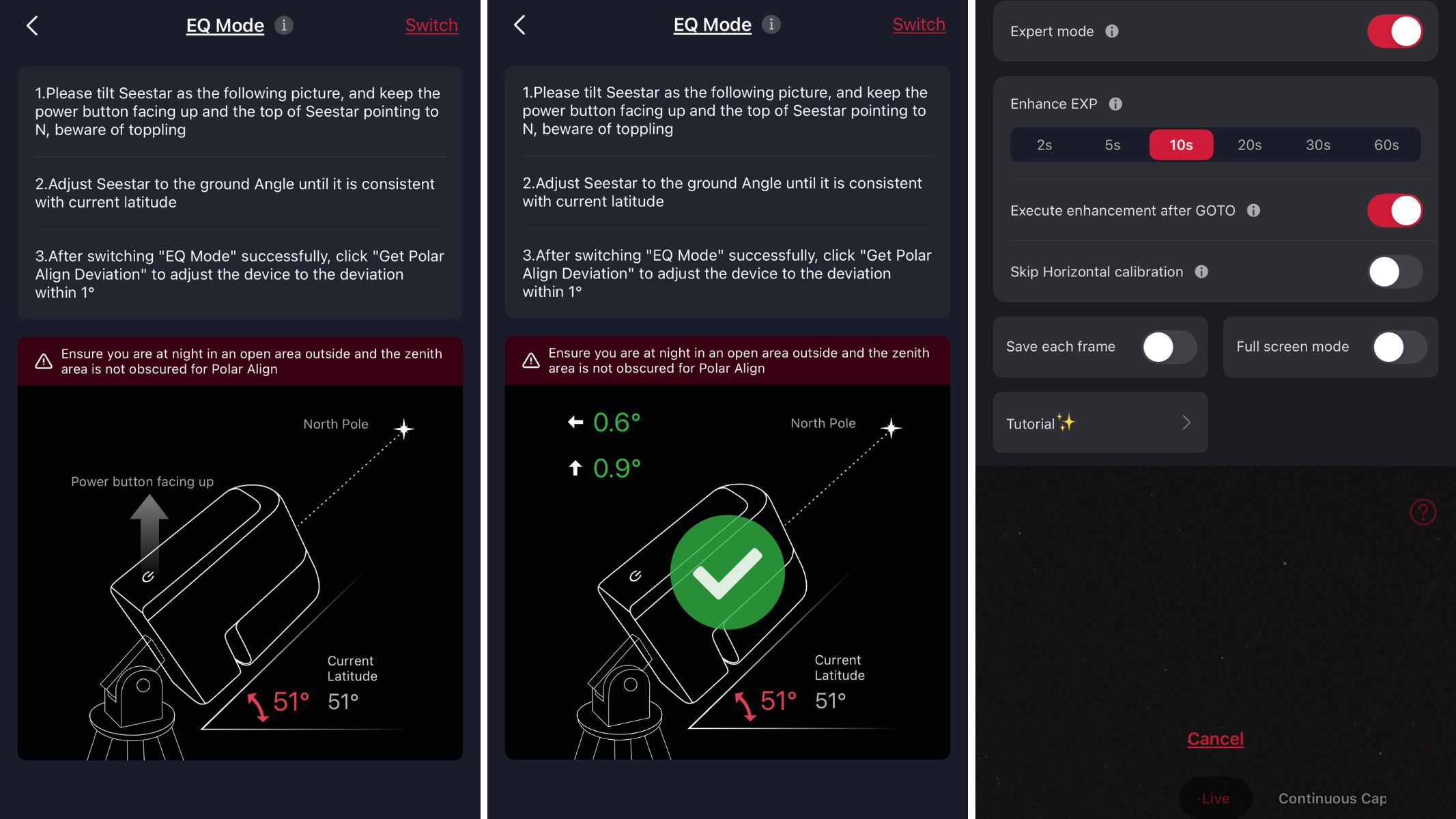
EQ mode enables longer exposures
Strong results under urban/suburban skies
Using the Seestar S30 Pro is less about operating equipment and more about using an app. After powering on and connecting via WiFi, the telescope automatically plate-solves the stars overhead, determines its position and slews to a selected target. Within minutes, it begins capturing short exposures — typically around 10 seconds — which are stacked in real time to reduce noise and improve detail. Crucially, the system automatically discards poor-quality frames caused by tracking errors, wind shake or star trailing.
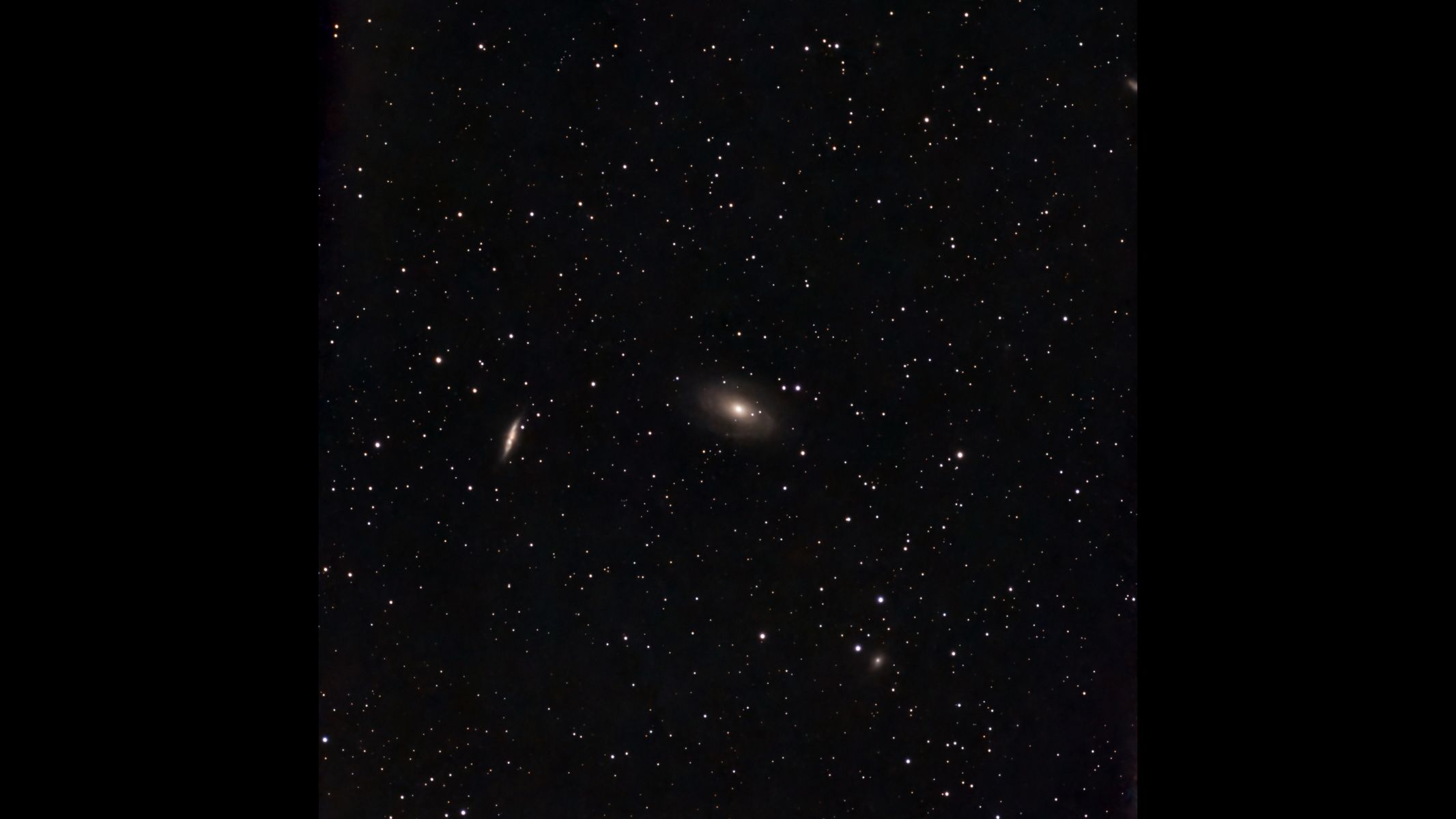
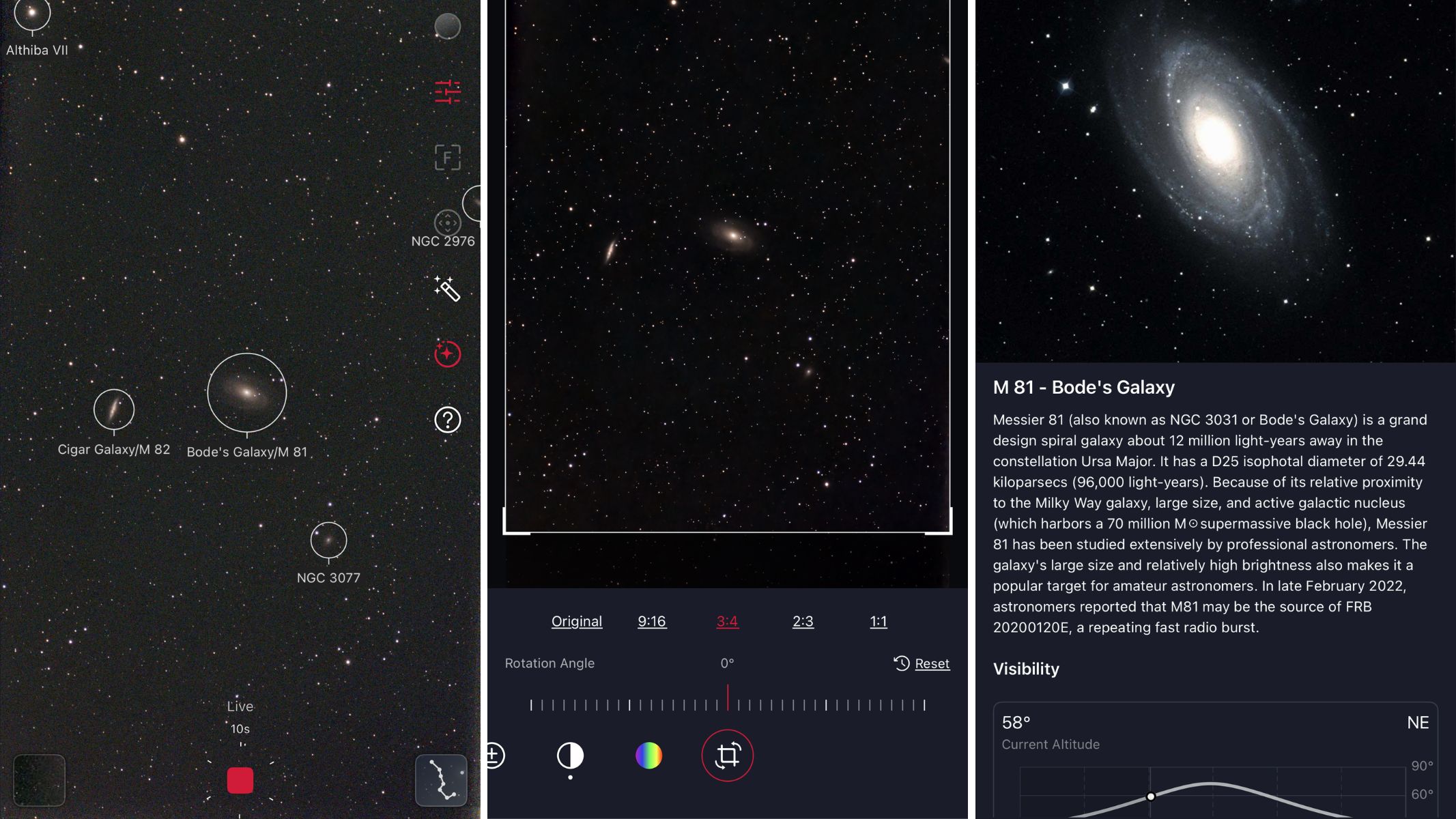
Bode’s Galaxy (M81) and the Cigar Galaxy (M82) shot in alt-azimuth mode. (Image credit: Jamie Carter)
The effect of the image stacking is gradual. As more data is collected, a faint patch of light slowly resolves into a nebula or distant galaxy. The longer the telescope runs, the clearer and more detailed the final image becomes, with nebulosity and spiral arms becoming visible. Stars remain sharp across the field of view — the Seestar S30 Pro’s optics may be small, but they are excellent quality. During our test, we produced some superb images of the Orion Nebula (M42), as well as Bode’s Galaxy (M81) and the Cigar Galaxy (M82), the Whirlpool Galaxy (M51) and the Great Globular Cluster in Hercules (M13).
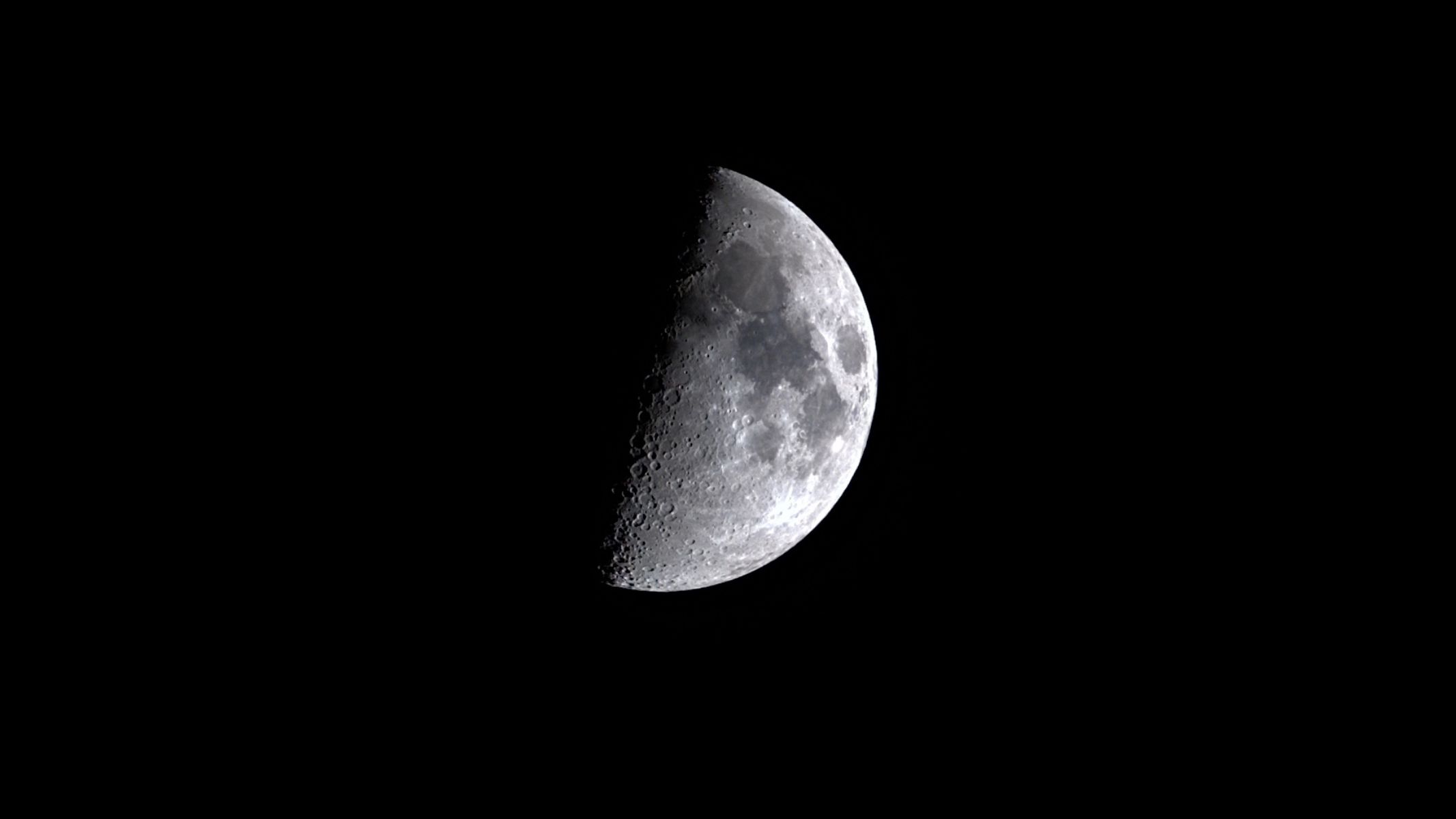
The first-quarter moon imaged by the Seestar S30 Pro. (Image credit: Jamie Carter)
Stacking images is a hugely effective way to do observational astronomy under light-polluted urban skies. By stacking multiple exposures and applying built-in filters (there are three), the Seestar S30 Pro can reveal objects that would otherwise be invisible through the eyepiece of a traditional optical telescope.
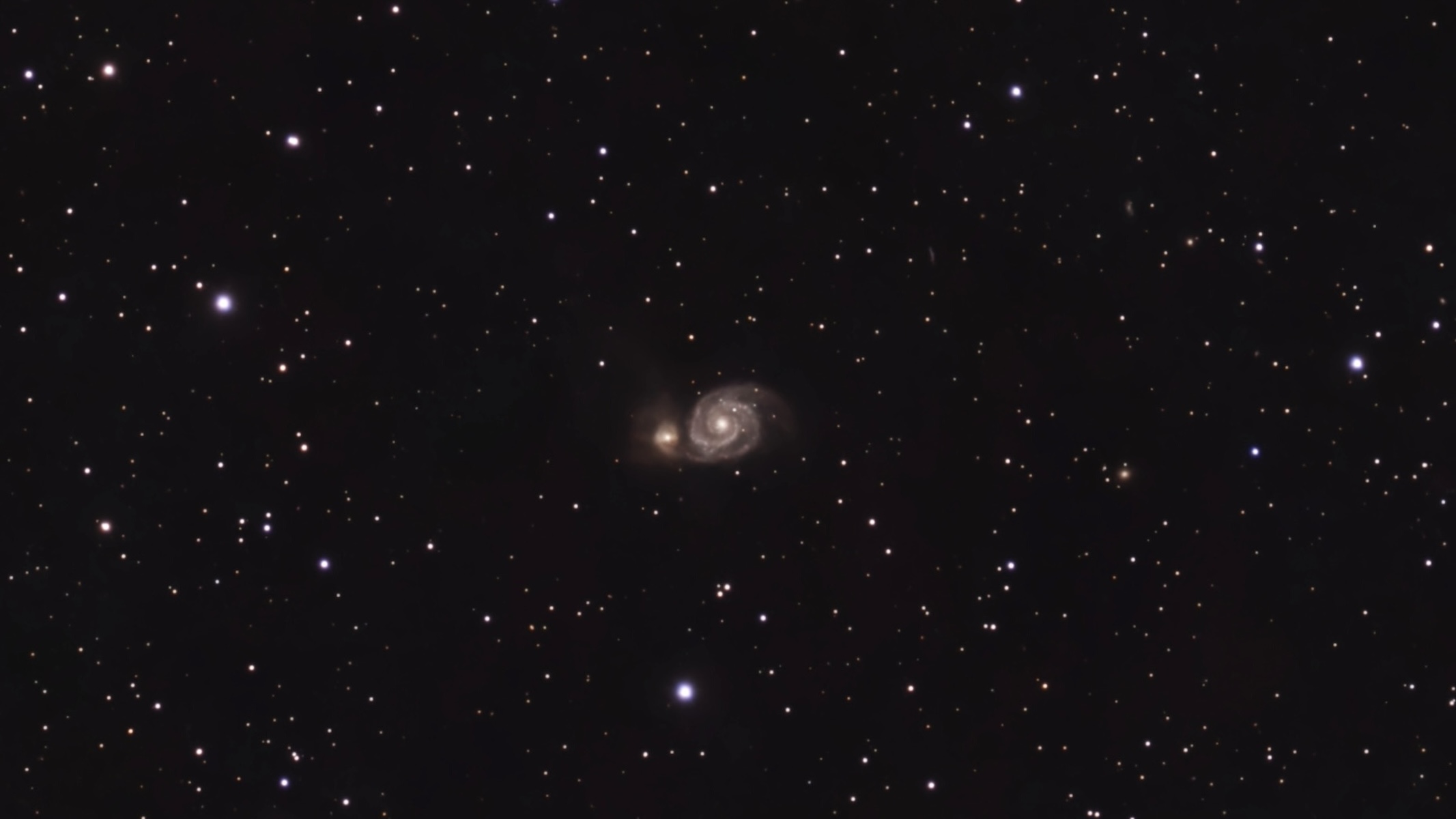
The Whirlpool Galaxy (M51) shot in EQ mode, edited using Deep Sky Stack and with AI Denoise applied.Jamie CarterThe Great Globular Cluster in Hercules (M13) shot in EQ mode, edited using Deep Sky Stack and with AI Denoise applied.Jamie Carter
The all-new equatorial (EQ) mode extends performance further, though aligning the telescope with Earth’s rotation requires purchasing the add-on Seestar TH10 Fluid Tripod Head. This is easy to set up, thanks to an in-app setup process that perfectly positions the tripod and ball head. With Expert Mode engaged, exposures of up to 60 seconds are possible. We tried it on two faint targets — the Whirlpool Galaxy (M51) and the Great Globular Cluster in Hercules (M13)— and got much greater detail.
Jupiter and its moons, as imaged by the Seestar S30 Pro. (Image credit: Jamie Carter)
Planetary imaging is less impressive, with planets appearing small and lacking fine detail. That said, we did manage to image Jupiter and its moons. The telescope is clearly optimized for deep-sky imaging rather than solar system work — the exception being the moon, which looked fabulous through the Seestar S30 Pro.
ZWO Seestar S30 Pro: Functionality
The Seestar app identifies objects, and offers editing and astronomical information. (Image credit: Jamie Carter)
Intuitive smartphone app
Automated imaging and Plan mode
Built-in processing and FITS export
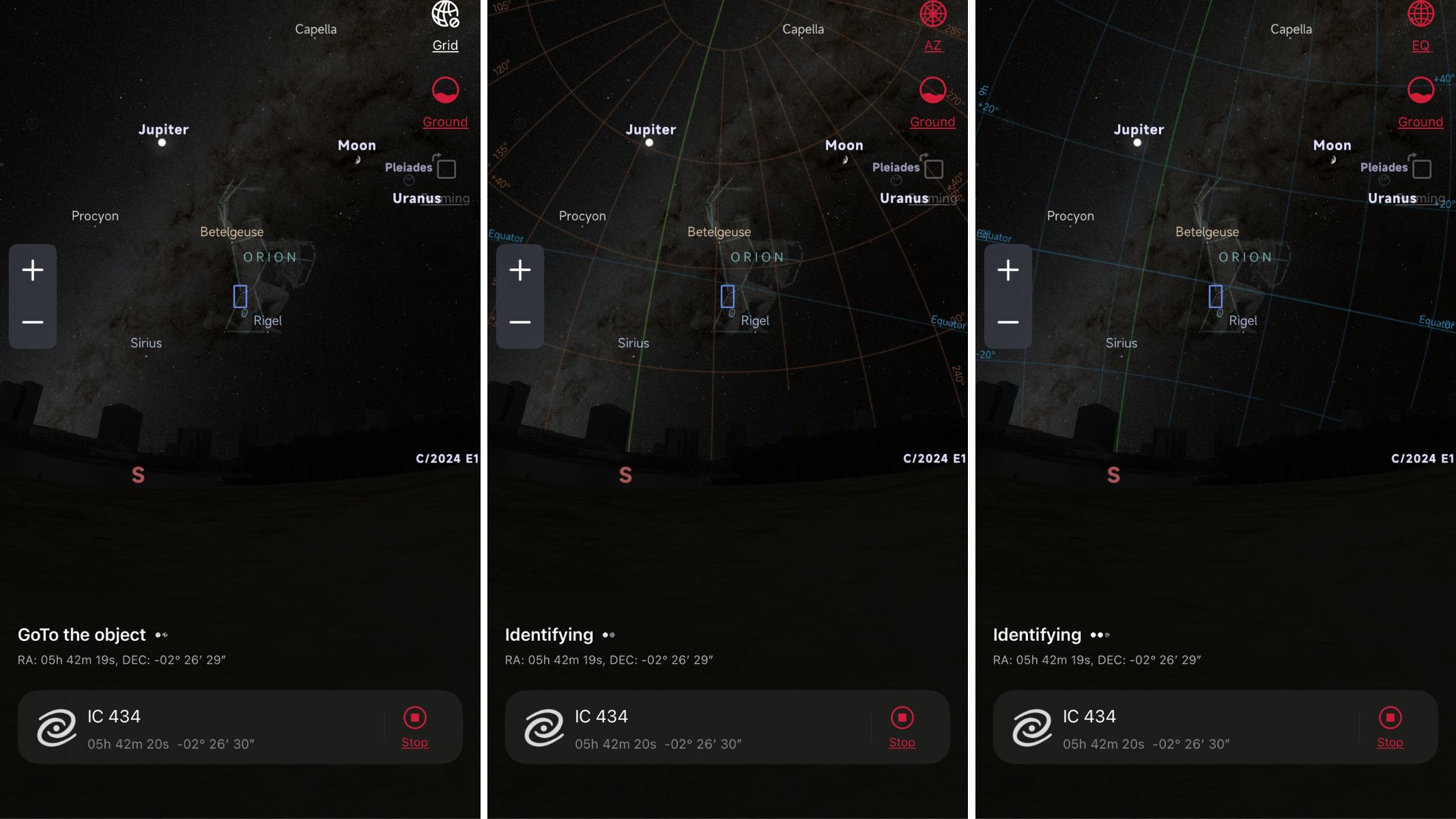
The Seestar app is central to the entire experience. It acts as both controller and processing platform, offering a planetarium-style sky atlas that displays objects visible from the user’s location. Selecting a target triggers automatic alignment, slewing and image capture. Once imaging begins, the app displays real-time progress, including exposure count and total integration time. Users can stop a session at any time or continue it for deeper results. The telescope can operate largely unattended, making it easy to leave running and check later.
Equatorial (EQ) mode set-up on the Seestar S30 Pro app for longer exposure times. (Image credit: Jamie Carter)
If all of this is beginning to sound like the Seestar S30 Pro is ideal for lazy astronomers, it doesn’t end there. Cue the app’s Plan mode, which allows users to schedule multiple targets for imaging overnight. Orion Nebula not rising until 3 a.m.? No problem. Pre-sunrise comet? Stay in bed. Assuming you’ve checked for clear skies beforehand, the Seestar S30 Pro can observe while you sleep. However, Plan mode does come with limits: exposure time and gain cannot be fine-tuned per target, so users must rely on default settings. For most, that won’t deter.
The Seestar app’s Sky Atlas makes it easy to find objects. (Image credit: Jamie Carter)
For those interested in post-processing, the Seestar S30 Pro supports FITS file export, enabling images to be refined in external software such as Siril, PixInsight, DeepSkyStacker or Photoshop (though advanced users dealing in FITS files may find that the system’s 128GB internal storage needs frequent attention). Alternatively, the built-in Deep Sky Stack provides quick results with minimal effort, allowing frames to be discarded and the effective AI Denoise pipeline to be engaged — something that takes a little patience, but delivers excellent results.
How we tested the ZWO Seestar S30 Pro
The Seestar S30 Pro has a tiny footprint. (Image credit: Jamie Carter)
Testing took place over multiple nights during late winter and early spring, under suburban Bortle 6 skies in cold but not freezing temperatures. It was also used in Bortle 2 skies in sub-zero temperatures, with no ill effects on the 6-hour battery life. The telescope was used to image a variety of deep-sky objects, with sessions ranging from short captures to integrations lasting several hours. Both standard alt-az mode and EQ mode were tested.
Should you buy the ZWO Seestar S30 Pro?
Buy it if:
✅ You want an easy, automated entry into astrophotography: The S30 Pro is incredibly easy to use and highly portable without skimping on optical quality.
✅ You observe from light-polluted locations: Built-in image processing and stacking allows fine details to be resolved on deep sky objects even when observing from light-polluted locations.
Don't buy it if:
❌ You want full manual control over imaging: Whilst having equatorial (EQ) imaging mode and certain modes for the Milky Way and 8K wide-field stitching, it actually lacks custom exposure times and gain control for precision tweaking.
❌ You’re primarily interested in planetary observation: The S30 Pro is capable of imaging planets but they just aren't as impressive as its deep-sky images.
The Seestar S30 Pro is best understood not as a traditional telescope, but as an automated imaging system designed to make astrophotography accessible. It’s also an upgrade on the Seestar S30 that may or may not be worth the money, depending on your needs.
For beginners, it provides a clear pathway into astrophotography without the usual financial or technical barriers. For more advanced users, it’s an efficient grab-and-go system for casual or supplementary imaging.
If the ZWO Seestar S30 Pro isn't for you
If you’re looking for a more affordable entry point, the ZWO Seestar S30 offers similar ease of use, but with lower (2MP) resolution and fewer advanced features. For those who simply want basic, shareable images, it remains a strong alternative.
The DwarfLab Dwarf Mini is even smaller and more portable but it is limited to 2MP imaging. At the other end of the market, the Unistellar Odyssey is a premium smart telescope offering much larger apertures and access tocitizen science campaigns, albeit at significantly higher prices.
For an overview of the top telescopes in this category, read our guide to the best smart telescopes.
A federal judge has approved a $1.5 billion copyright settlement in which artificial intelligence company Anthropic will pay thousands of authors about $3,000 per book after using pirated copies of their works to train its Claude chatbot.
[…]
Bestselling thriller novelist Andrea Bartz first brought the suit with two other authors in 2024. It’s the first major settlement in dozens of AI copyright lawsuits that are still working their way through courts.
There doesn’t appear to be any other path for appeal or recourse, as the judge rejected both requests for either a new judgement or trial.
[…]
In the end, Masimo didn’t succeed in getting the Apple Watch banned or fundamentally redesigned. It won an empty victory with the funds it will be paid, and the patents affecting the lawsuit will expire in 2028 and 2029 anyway.
Although the ruling confirms the financial penalty, it does not affect current Apple Watch users. The smartwatch’s blood oxygen monitoring feature remains available after Apple introduced a software update in January 2024 that allowed sales to continue despite earlier legal challenges.
With Apple shares trading near all-time highs around $326, fresh speculation about a potential stock split has resurfaced. While the company has not announced any plans, the upcoming leadership transition adds a new dimension to the discussion.
Apple announced in April 2026 that Tim Cook will step down as CEO on August 31 and transition to Executive Chairman, with John Ternus (currently Senior Vice President of Hardware Engineering) taking over as CEO effective September 1, 2026. This marks the most significant leadership change at Apple in over 15 years.
Could the CEO Transition Influence a Split?
Analysts and investors are debating whether the smooth handover could accelerate or delay a split:
• Potential catalyst: A new CEO often seeks early wins to build momentum. A stock split would be a low-risk, high-visibility move that signals confidence and appeals to retail investors — especially as Ternus begins his tenure.
• Likely timing: Most observers expect any decision to wait until after the transition settles (late 2026 or 2027), once Ternus has established his priorities around AI, hardware innovation, and Mac refreshes.
• Continuity advantage: With Cook remaining as Executive Chairman, the board is expected to maintain strong oversight, reducing any perceived risk around major shareholder-friendly actions.
Apple has not split its stock since the 4-for-1 in August 2020. With fractional-share trading now widespread, the urgency is lower than in the past, but a split could still broaden accessibility and create psychological tailwinds.
Apple’s stock has performed strongly in 2026, rebounding from a weaker 2025 and recently approaching record levels. Solid services growth, ongoing buybacks, and AI/hardware momentum (including upcoming Mac lineup overhauls) have supported the rally — all without a split.
Historically, Apple splits (1987, 2000, 2005, 2014, 2020) have often coincided with periods of optimism and growth. A future split under Ternus could similarly project confidence in the company’s long-term trajectory.
MacDailyNews Take: The Cook-to-Ternus transition is unlikely to hinder a stock split and could even encourage one as an early signal of confidence under the new leadership. That said, Apple tends to be deliberate, so any move would likely prioritize substance over optics.
While a split (even a modest 2-for-1 or 3-for-1) could project optimism and attract more retail interest, Apple’s fundamentals (robust cash reserves, ongoing innovation, and execution on AI/hardware roadmaps) appear to be driving the stock’s current momentum without one. Splits are cosmetic in terms of intrinsic value but have historically aligned with growth phases. Investors should watch for any board signals or SEC filings, but the lack of a split hasn’t held back the rebound in 2026.
Apple’s split history:
• June 16, 1987: 2-for-1
• June 21, 2000: 2-for-1
• February 28, 2005: 2-for-1
• June 9, 2014: 7-for-1
• August 31, 2020: 4-for-1
Please help support MacDailyNews — and enjoy subscriber-only articles, comments, chat, and more — by subscribing to our Substack: macdailynews.substack.com. Thank you!
The company behind the disk space analyzer TreeSize has irked some users by no longer offering support or updates for perpetual licenses beyond their maintenance period unless customers subscribe. Further frustration has come from JAM Software's long-standing policy of not providing license keys or installers to TreeSize perpetual license holders after that support period ends.
Since 2025, JAM Software has been transitioning most TreeSize editions to subscription models. Today, it sells perpetual licenses only for personal use, which include 12 months of updates, support, and “downloads of older versions, and your license,” plus the option to extend the support period. TreeSize currently has "no plans to discontinue the sale of perpetual licenses for TreeSize Personal," product manager Hendrik Christ told Ars Technica.
As perpetual-license maintenance periods expire, customers are discovering that extending support now generally requires subscribing to software they already own the right to use.
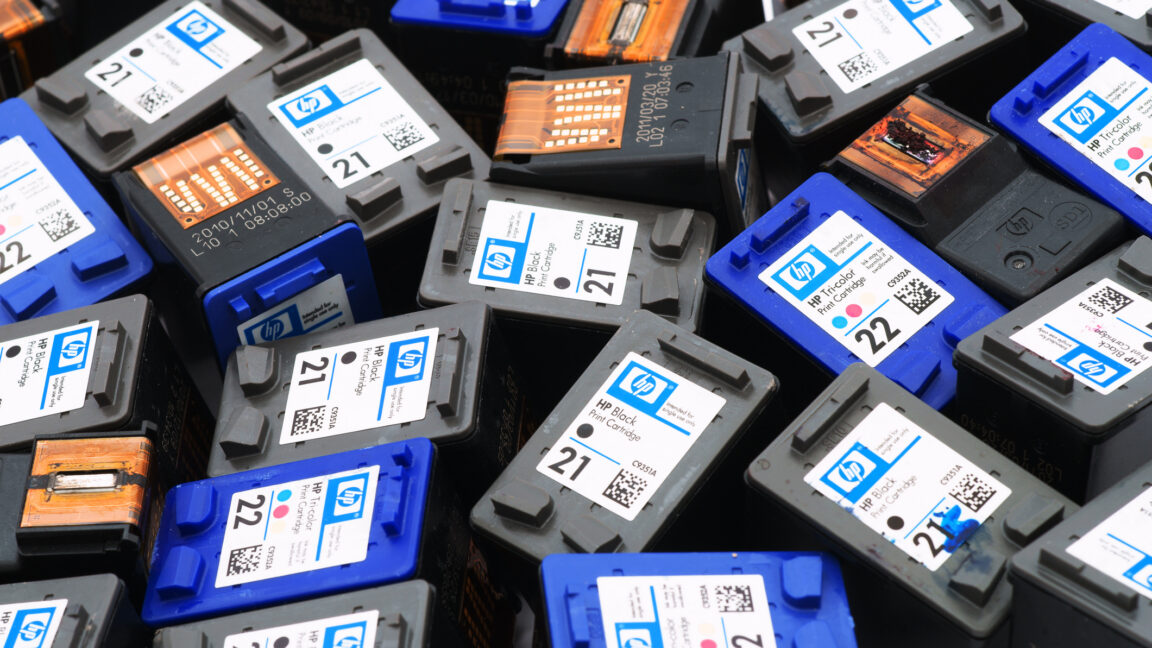
The Indian government has fined HP India and its partners a total of 1.4 billion rupees (about $14.4 million) for working with reseller partners in the “cartelization” of computers, ink cartridges, and toner.
The Competition Commission of India (CCI) said this week that it found HP India had colluded with some channel partners to drive up the cost of bids for government contracts for computers, as well as for selling ink cartridges, toner, and other printing supplies, including graphic and digital manufacturing supplies.
It said that HP was aiming to outcompete other OEMs and discourage resellers from selling “counterfeit” ink and toner.
One of the Russian government’s most elite hacking groups has adopted an attack, known as Clickfix, to compromise devices belonging to sensitive organizations in Ukraine, the latter country’s CERT center is warning.
Clickfix has emerged as an effective attack technique that attackers, primarily financially motivated criminals, began using in the last year or so. Websites under the control of the attackers display a CAPTCHA that requires the visitor to copy a jumble of text and paste it into the terminal. The text contains scripts that, once entered, perform malicious actions, typically by installing malware or exfiltrating sensitive data. Ukraine’s CERT said Wednesday that Sandworm, an advanced hacking unit inside the GRU, Russia’s military intelligence arm, is now using the technique.
"GhettoVibe," "ScoutCurl," and many more
The Clickfix attacks began in the spring and have continued through the summer. The campaign has resulted in the network compromise of at least one organization when a connected device was found to be infected by FreakyPoll, the name of one of Sandworm’s custom malware packages. Ukrainian authorities discovered 10 compromised websites that displayed a PowerShell command as part of a fake CAPTCHA that said it had to be passed to ensure a real human was behind the visiting device’s keyboard.
Energy companies are raising money at IPO at their fastest pace this century, taking advantage of investors’ hunt for new ways to bet on the boom in power-intensive AI data centers.
Initial public offerings for energy firms raised $12.6 billion in the first half of this year, according to data firm Dealogic. That marks the highest half-year level since the peak of the dotcom bubble in late 1999 and the highest first-half figure on record. It is well above 2025’s full-year total of $4.3 billion.
The surge in fundraising comes as access to the vast amounts of energy needed to run data centers emerges as a bottleneck in a multi-trillion-dollar AI investment boom.
De todos os usos excêntricos dos AirPods, este é um forte candidato aos mais inusitados: um desenvolvedor utilizou os fones de ouvido da Apple como um monitor de estatísticas para discos de frisbee.
A façanha partiu de Paul Tracer, que compartilhou a descoberta no Reddit e apresentou o seu aplicativo, o Kinapod Disc, para detectar as características de cada arremesso.
Para que a mensuração funcione corretamente, é necessário instalar um AirPod no disco, fixando-o a um pequeno furo centralizado; já no iPhone, é preciso ativar a Detecção Automática de Ouvido dos AirPods. O AirPod instalado no disco também precisa ser definido como microfone, e só depois a sessão de arremessos deverá ser iniciada no Kinapod Disc.
O aplicativo é capaz de medir a taxa de rotações por segundo, a quantidade de giros completos realizados durante o voo, a velocidade estimada de lançamento, o tempo de voo, além de uma avaliação da quantidade e da consistência dos arremessos.
Tudo isso é possível graças aos sensores incluídos nos AirPods, como o giroscópio, além de recursos como o rastreamento da cabeça e outros elementos que auxiliam no funcionamento de recursos como o Áudio Espacial (Spatial Audio).
Segundo Tracer, o app é compatível com todos os AirPods (exceto os AirPods Max, obviamente) lançados a partir de 2019.
NOTA DE TRANSPARÊNCIA: O MacMagazine recebe uma pequena comissão sobre vendas concluídas por meio de links deste post, mas você, como consumidor, não paga nada mais pelos produtos/serviços usando os nossos links de afiliado.
I know there are options out there like Paddle, FastSpring, and Lemon Squeezy that have worked for many apps like mine over the years. But I also wanted something simple for my users. Not to mention Apple Pay was a must-have.
I believe all the services he mentions do support Apple Pay.
RevenueCat serves as the source of truth for whether or not a customer is licensed.
I create RevenueCat customer IDs from local iCloud identifiers (more specifically, calling userRecordID() on my CKContainer in CloudKit).
When the user makes a purchase, they earn an entitlement that I look for in Arborist to grant them a license.
He doesn’t need to run his own server, and the purchases are automatically tied to the user’s iCloud account, so there are no e-mails or serial numbers to deal with. On the other hand, well, it’s all dependent on the Apple Account.
The app, which helps manage Git worktrees, is shipping now.
In Tower 15, we introduced the “Fully Merged” badge and Automatic Branch Management to help you keep your repository tidy. With Tower 17, we’re taking the detection behind that badge to a whole new level. […] Tower now matches your local branches against merged pull requests from your hosting service, such as GitHub or GitLab.
[…]
Trust is everything when deleting branches — so we redesigned the “Fully Merged” hint view to show you exactly which checks matched.
[…]
One that is particularly noteworthy is that updating submodules is now significantly faster! Tower gathers each submodule's Git data concurrently instead of one at a time—something you will especially notice in repositories with many submodules.
The AI music generation tool Suno scraped millions of songs and lyrics from YouTube Music, Deezer, and Genius, as well as from the stock music libraries Pond5, Jamendo, Freesound, the International Music Score Library Project, and podcasts via RSS feeds, according to a hacker who breached the company and shared data about Suno’s training libraries with 404 Media. The hacker was also able to access user information for hundreds of thousands of Suno’s customers, as well as Stripe payment information, they said.
[…]
As part of these legal proceedings, Suno previously admitted that it was trained on “essentially all music files of reasonable quality that are accessible on the open internet,” which included a total of “tens of millions of recordings.” Suno has been making the argument that it is allowed to train on copyrighted works as fair use in those cases, one of which has been settled.
Suno has long acknowledged that its AI music generator relied on the scraping of millions of songs available across the internet, but a new hack reveals just how the company pulled from streaming services and websites[…] all while user information remained vulnerable.
[…]
“Our goal has always been to help people create original new music, not replicate someone else’s. That’s why we build our models around what we call ‘Original Creation, By Design,’” the spokesperson said in a statement. “For example, we intentionally do not use artist names as a category of training metadata because we want our models to help people create brand new songs, not music that replicates other artists’ existing work. It’s also why we built Suno with detection filters that block or prevent a user from using specific artist, song, or album names as prompts, and prevent users from uploading lyrics or sound recordings that match existing works.”
The iPhone maker alleges that this misconduct, which it says reveals a pattern of theft from OpenAI employees who previously worked at Apple, was directed by OpenAI’s senior leadership, including Chief Hardware OfficerTang Tan.
The lawsuit, which was filed in the U.S. District Court for the Northern District of California, accuses Tan of using Apple’s confidential project code names during OpenAI’s recruiting process, asking job candidates to bring in Apple hardware components to their interviews, coaching departing Apple employees on how to evade the company’s security procedures, and asking for details about the company’s unannounced products.
Apple’s allegations are detailed and shocking, and it sounds like they have a lot of evidence.
The lawsuit names Chang Liu and Tang Tan as two of the defendants. Tang Tan served as VP of product design at Apple, leading iPhone and Apple Watch product design. He departed the company in February 2024 to work with Jony Ive. Chang Liu, meanwhile, worked at Apple for eight years and was a senior system electrical engineer before departing to join OpenAI in January 2026.
Apple’s lawsuit also names OpenAI and io Products as defendants.
OpenAI’s hardware efforts are being led by Jony Ive, Apple’s former chief design officer.
[…]
Ive, Hankey, and Cannon are not personally mentioned anywhere in Apple’s initial filing today.
OpenAI’s Director of Strategic Communications, Drew Pusateri, took to X to comment on the company’s behalf.
In his post, he claims OpenAI has “no interest in other companies’ trade secrets,” adding that OpenAI remains “focused on building innovative technology that empowers people everywhere.”
This seems like a weak response, given that Apple says it reported its findings to OpenAI in February and never heard back. Presumably, they’ve already investigated but see the situation as serious enough that they need to say as little as possible.
It’s not clear to me the extent to which Apple believes the behavior was limited to the named defendants. It’s hard to believe that the rest of OpenAI’s leadership—including Altman and Ive—were unaware, given the scale of their recruiting from Apple. It’s equally hard to believe that they were aware and thought they could get away with it. I guess little from Altman would surprise me at this point. I’d like to believe that Ive wasn’t part of it, but then are we to believe that his former coworkers all kept him in the dark?
What is immediately notable about this whole thing is the myriad conflicts of interest. Apple, of course, has a current partnership with OpenAI to power Apple Intelligence features, something repeatedly mentioned on the previous version of its marketing webpage, and conspicuously absent on the current one.
But the history runs far deeper. Among the defendants in the suit is io Products — do not blame me for that capitalization choice — founded by Jony Ive and acquired by OpenAI last May. Total mentions of “Ive” in the body of this lawsuit? Zero. Also, one of the investors in Ive’s company was Emerson Collective, founded by Laurene Powell Jobs, and which now has equity in OpenAI. Neither Emerson nor Powell Jobs are defendants.
It all reads a bit as if Apple has been building up evidence of these allegations for some time and recently got their smoking gun. It’s not just nebulous “trade secrets” either, there are specific mentions down to “metal finishing techniques” that Apple apparently invented and protected.
It also comes a little less than a month after OpenAI was rumored to be threatening Apple with a lawsuit over the perceived failure of their deal to bake ChatGPT into the iPhone. As I wrote at the time, even just that threat was clearly not going to go over well in Cupertino.
Apple and OpenAI have a commercial relationship involving the
integration of OpenAI’s ChatGPT into Apple Intelligence. The
companies have entered into a written agreement governing that
integration. That agreement is not at issue here. OpenAI’s acts of
trade secret misappropriation alleged herein do not arise from and
have no connection to that agreement.
Be that as it may legally speaking, in practical terms it seems untenable for that Apple Intelligence partnership to continue after this.
Namely, while Apple frames OpenAI – or at least its fledgling hardware division – as “rotten to its core” (interesting terminology!), they really only have a case against two and maybe three individuals. But they also clearly believe that if this case goes to trial, they will have a case against a lot more.
[…]
The parallels to the Anthony Levandowski situation after he left Google for Uber have been drawn.
[…]
It is interesting that Apple is not suing Yu-Ting “Alyssa” Peng, who is named in the suit as a co-conspirator with Liu while she was still employed at Apple, before she also subsequently went to work at OpenAI. Is it possible she’s cooperating or has cooperated with Apple in this investigation?
[…]
Even if these allegations are found to be untrue or embellished, can he reasonably stay at OpenAI now? And perhaps that’s the real outcome Apple is looking for here, as they clearly frame him as the ringleader of the 400-plus people who have come over to OpenAI from Apple.
OpenAI’s ambitions to build a hardware rival to the iPhone are already running into trouble because of Apple’s trade secret lawsuit, according to Bloomberg’s Mark Gurman, who argues the damage is showing up well before any court ruling.
[…]
The scale of the talent drain is a major part of why this matters to Apple. More than 400 former Apple employees now work at OpenAI, including former Apple design chief Jony Ive, and Gurman says the company poached so heavily from Apple’s iPhone product design group specifically that Apple had to rebuild parts of the team. Apple has responded with bigger retention bonuses and executives personally working to keep engineers from leaving.
I can’t believe this awful company solicited confidential information and stolen trade secrets, hiring from this other company while pretending to partner with them. ‘Rotten to the core’ indeed
Apple has reportedly sent legal letters to dozens of former Apple employees now working at OpenAI, telling them to preserve potentially relevant documents and communications as it continues to pursue its trade secret lawsuit against the AI company.
Apple’s challenge against the EU’s designation of its App Stores and iOS platform as “gatekeepers” was dismissed by Europe’s top court on Wednesday, reports Reuters.
[…]
The company also disputed the classification of iMessage as a number-independent interpersonal communications service, or NIICS, which would subject the app to EU telecoms rules. But the General Court said Apple’s actions regarding the iMessage service are inadmissible.
Back in 2023, Apple acknowledged that it qualified under the then-new definition of being what the EU called a gatekeeper service. But key to that is the size of the operation, and since 2024, Apple has been claiming it runs five smaller App Stores rather than one large one.
[…]
“Irrespective of the devices in question,” ruled the judges, “those stores have the same purpose, namely to connect app developers with end users in order to facilitate the distribution of software applications.”
Apple disagreed with the decision but didn’t say yet if it would appeal. “We firmly believe the DMA’s mandate goes beyond what is lawful and proportionate, threatening to erode decades of privacy and security protections we’ve built and leaving our users vulnerable to new risks,” an Apple spokesperson said in a statement to multipleoutlets. “We will continue advocating for the innovation and privacy our European customers deserve.”
Apple still has two cases pending with EU courts. The first is a challenge to the EU Commission’s decision last year forcing Apple to open iOS to third-party developers, and the second is an appeal against the €500 million fine imposed in April last year for anti-steering violations.
Reddit will start requiring people to be logged into Reddit to use old.reddit.com.
The new requirement will take effect “over the next month,” a Reddit employee going by the username boat-botany announced on the social media platform today. The person claimed that the change is part of an ongoing effort to “tighten how automated systems access Reddit.”
[…]
Perhaps more alarming for old-school Redditors is that boat-botany’s post left the door open for Reddit retiring old.reddit.com.
New Reddit will not load anything more than the post itself without Javascript (JS).
[…]
Cynically, it seems like Reddit discovered they can make scraping harder by making your browser load more and work more, which they had already done by rewriting a nice piece of HTML into a 5x more bloated mess of web components or whatever.

 Login