❌

Reading view

New North Sea oil drilling faces delay after gear accidentally dropped in sea

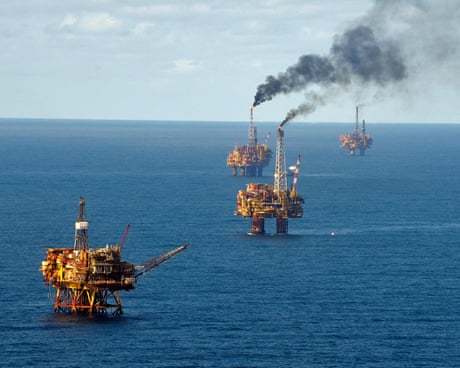
Exclusive: Blunder at Rosebank, UK’s biggest undeveloped oilfield, comes as government considers granting licence

Production at Britain’s biggest undeveloped oil and gasfield could be delayed for months after equipment from a rig was accidentally dropped in the North Sea, the Guardian can reveal.

Andy Burnham’s new government is under pressure from the fossil fuel industry to allow oil to be retrieved from the Rosebank site despite opposition from climate campaigners and some Labour MPs.

Continue reading...

© Photograph: Martin Langer/Alamy

© Photograph: Martin Langer/Alamy

© Photograph: Martin Langer/Alamy

  •  

In One of Africa’s Deepest Lakes, Scientists Have Found a Species No One Expected Swimming at Incredible Depths

A remarkable discovery has been made in East Africa’s Lake Malawi, one of the deepest bodies of water on the African continent.

Africa’s impressive lakes have long remained a focus of speculation for naturalists, involving folklore about strange creatures—including supposed holdovers from prehistoric times—alleged to inhabit some of their waters.

However, a much smaller discovery made by a team of researchers with the Department of Zoology at the University of British Columbia (UBC) at Vancouver, Canada, is nonetheless challenging our past thinking on what kinds of life forms can be found lurking in the depths of some of Africa’s storied lakes.

In a remarkable discovery, a variety of lake fly larvae have been found descending into the very oxygen-deprived depths of Lake Malawi, where they hide more than 650 feet below the surface to avoid predators.

After spending their days in this deep-water “dead zone,” the larvae reemerge at night and feed—or at least some of them do, if they are lucky enough to escape the fish searching for a dinner of their own, while these tiny insects are commuting back to the surface.

A Surprising Discovery Deep in Lake Malawi

To chart the unusual daily cycle of these larvae, UBC researchers Dr. Philip Matthews and Dr. Evan McKenzie used sonar technologies, which were positioned deep within the lake.

While this provided an idea about where these tiny insects were going, it was dissecting the larvae that revealed how these remarkable little creatures have somehow evolved a respiratory system that contains two pairs of small air sacs, which function like ballast tanks, allowing the larvae to control their buoyancy.

insect submariners
Chaoborus edulis larva (Image Credit: Philip Matthews)

Within these sacs, they discovered the presence of resilin, a material that can either expand or contract in proportion to changes in the pH of the sac’s walls. As a result, the larvae can change the volume of these unique air sacs, thereby controlling their buoyancy.

It is an unusual capability these creatures display, to say the least. Curious about how deep they might be able to go, the researchers placed several of the larvae within small pressure chambers to simulate the depths they might travel to before the sacs imploded.

Much to the team’s surprise, these natural buoyancy systems held out under conditions that would match depths of 400 meters (1,312 feet), which is much deeper than what the sonar data reveals about the larvae’s daily descents into Lake Malawi.

While it has long been assumed that insects, which often thrive in freshwater environments, do not live in open oceans due to such pressures associated with the depths of the world’s largest bodies of water, these African insect larvae reveal that such creatures can survive under such conditions.

Based on their findings, the UBC researchers hope to work on finding ways of simulating such capabilities, perhaps by creating pH-powered resilin smart materials, or even artificial systems that emulate the way muscles operate.

The team’s findings appeared in the new study, “Crush-resistant air sacs allow insect larvae to exploit aquatic habitats at extreme depth,” published in the journal Science.

Micah Hanks is the Editor-in-Chief and Co-Founder of The Debrief. A longtime reporter on science, defense, and technology with a focus on space and astronomy, he can be reached at micah@thedebrief.org. Follow him on X @MicahHanks, and at micahhanks.com.

  •  

New methods for removing harmful nitrates from drinking water identified

Nitrate contamination of drinking water poses a major health concern, particularly in agricultural communities where fertilizers, livestock manure and septic systems can leach nitrates into groundwater. Many rural households rely on private water wells, which may not be routinely tested, leading some to consume contaminated water without realizing it.

  •  

Trump says nearly 200 firms have signed pledge to protect Americans from costs arising from datacenters

‘Ratepayer Protection Pledge’ president has touted is non-binding as people continue to struggle with rising bills

Donald Trump has announced that about 200 entities have signed on to his non-binding “Ratepayer Protection Pledge”, expanding a voluntary commitment which claims to ensure US consumers will not bear the cost of the AI datacenter build-out.

Trump delivered remarks on Thursday at the Environmental Protection Agency (EPA) headquarters, alongside Lee Zeldin, the agency’s administrator, and Chris Wright, the energy secretary. Other attenders included governors who signed on to the pledge, including Brian Kemp of Georgia, Mike DeWine of Ohio, Spencer Cox of Utah and Jeff Landry of Louisiana.

Continue reading...

© Photograph: Bloomberg/Getty Images

© Photograph: Bloomberg/Getty Images

© Photograph: Bloomberg/Getty Images

  •  

“Everywhere We Looked, We Found the Temperature Rising”: NASA Identifies a “Surprise” Heat Signature Below the Surface of Jupiter’s Moon Io

NASA’s Juno mission scientists have reported the first successful temperature measurements below the surface of Jupiter’s moon Io, including indications of significant heating within the moon’s shallow subsurface.

Collected during a pair of close flybys of the Solar System’s most volcanically active world, the Juno mission measurements were described as a complete “surprise” since the instrument was designed for a different purpose.

“[The readings] break new observational ground for both fiery and icy worlds beyond our planet,” the team said.

MWR Instrument Designed to Probe Jupiter’s Atmosphere Provides Double Duty

Due to the extreme gravitational pull of its host planet, Jupiter, Io is repeatedly stretched and pulled as its slightly elliptical orbit carries it around the massive gas giant. This repeated motion generates a tremendous amount of heat, which the scientists note is “many times greater” than the same type of heat generated on Earth.

However, a detailed understanding of this process has remained elusive, as the only data on the moon’s inner heat came from infrared telescope observations. The team notes this data is limited to the temperature of Io’s upper rocky surface layer.

Conversely, Juno is equipped with an instrument called the Microwave Radiometer (MWR). According to the team’s statement announcing the successful subsurface temperature detection, Juno’s Microwave Radiometer was custom designed by Scott Bolton, the mission’s principal investigator at Southwest Research Institute in San Antonio and a co-author of the study detailing the team’s findings, to “peer beneath Jupiter’s top clouds” for a closer look at the gas giant’s complex atmosphere.

“The MWR’s six microwave antennas serve as a single instrument, simultaneously detecting microwaves at a wide range of wavelengths, from about half an inch to 20 inches (1.3 to 51 centimeters),” the team explains.

“Everywhere We Looked, We Found the Temperature Rising”

Bolton said the team’s novel approach allowed the instrument to observe wavelengths from different depths, “providing a new way to characterize the deep atmosphere of giant planets and the subsurface crusts of icy and rocky moons.” This included observations of Jupiter’s other ‘Galilean’ moons, Ganymede and Europa.

“At Ganymede and Europa, we explored tens of miles below the surface, assuming their ice shells were mostly pure water,” the mission scientists explained.

However, Bolton added, using the instrument to successfully probe into Io’s volcanic rock “was an unexpected discovery.”

Io
This map represents data captured by the Microwave Radiometer instrument aboard NASA’s Juno, indicating heat rising from just beneath the surface of Jupiter’s moon Io. The colors illustrate a distinct temperature gradient across the moon, with the most extreme, localized heat output in red. Image Credit: NASA/JPL-Caltech/SwRI/USGS.

The feat was accomplished during a pair of flybys on December 30, 2023, and February 3, 2024, where Juno came within roughly 930 miles (1,500 km) of Io’s surface. Shannon Brown, the paper’s lead author at NASA’s Jet Propulsion Laboratory in Southern California, said that during these flybys the MWR instrument measured the moon’s thermal emission “at depths ranging from a few inches down to tens of feet.”

“Everywhere we looked, we found the temperature rising by more than 40 degrees Fahrenheit just several feet into the surface — a gradient far steeper than solar heating alone can explain,” Brown said.

Jupiter's moon Io
This graphic illustrates the areas of Io sampled by the Microwave Radiometer instrument aboard NASA’s Juno spacecraft during two close flybys of the Jovian moon. Image Credit: NASA/JPL-Caltech/SwRI/USGS.

Although more information is likely needed to make a conclusive determination, the team said that the data suggests two possible explanations for the readings. The first option is heat rising steadily through what the team termed a “conductive crust.”

“While this background heat flow — measured at 1 to 3 watts per square meter — is relatively gentle on a local scale (roughly equivalent to a small nightlight glowing under every square yard), across the entire moon it represents a release of energy up to 30 times Earth’s average,” they explained.

Another possibility proposed by the joint research team suggested that the heat signal detected by Juno’s MWR could be coming from cooling lava flows covered by 30 to 35 feet (9 to 11 meters) of solidified crust that cover approximately 10% of Io’s surface “at any given time.”

A Similar Instrument Could be Used to Scan Earth

When discussing the implications of the team’s findings, Bolton said the “surprising” ability to see below Io’s surface “has important implications for studying Earth’s volcanoes.” He also noted that if scientists used a similar instrument to measure areas on Earth near volcanoes, they might see a similar heat signature in the planet’s subsurface temperature gradient, “providing new information on how terrestrial volcanoes work.”

“Io provides a unique window into learning how tidal heating works throughout the cosmos, a fundamental process that provides energy and heat to worlds that are far from their parent star,” Bolton explained. “This process can not only create the most volcanic body in the solar system, in the case of Io, but also fuels the subsurface oceans on the moons of giant planets, such as Europa and Ganymede.”

“Up until this point, we could only observe the heat escaping at the surface or through eruptions,” the mission scientists added. “Now we can characterize how the heat is moving from the interior toward the surface.”

NASA has additional information about Juno available at the mission’s official webpage.

Christopher Plain is a Science Fiction and Fantasy novelist and has spent the last six years as Associate News Editor and Head Science Writer at The Debrief. Follow and connect with him on X, learn about his books at plainfiction.com, or email him at christopher@thedebrief.org.

  •  

Who is Miatta Fahnbulleh, the radical-thinking new UK energy secretary?

Selection of economist formerly at helm of green thinktank marks continuation of decarbonising Miliband era

In her first 48 hours as energy secretary, Miatta Fahnbulleh was left in no doubt about the thorny policy decision at the top of her in-tray. Protesters from Fossil Free London met her outside her new offices dressed as firefighters holding placards reading: “We’re already putting out fires, don’t start new ones.”

The MP for Peckham – a radical economist who is outspoken about the climate crisis – is a surprising choice as secretary of state for energy and net zero for those who believe the speculation in Westminster that Andy Burnham wants to approve new oil and gas drilling in the North Sea.

Continue reading...

© Photograph: Wiktor Szymanowicz/Future Publishing/Getty Images

© Photograph: Wiktor Szymanowicz/Future Publishing/Getty Images

© Photograph: Wiktor Szymanowicz/Future Publishing/Getty Images

  •  

‘Risking blackouts’? How Great Britain’s grid operator was dragged into a political row

Neso denies allegations aired by Tory MP that staff took part in cover-up over decision-making in heatwave

In a control room in Wokingham, Berkshire, staff work around the clock, minute by minute, to align Great Britain’s fluctuating power supplies with its ever-changing demand.

However, as households struggle to adapt to soaring summer temperatures, staff at the government-owned National Energy System Operator (Neso), tasked with keeping the lights on, have faced the kind of challenge usually reserved for the country’s coldest winter nights in recent weeks.

Continue reading...

© Photograph: Evening_T/Getty Images/iStockphoto

© Photograph: Evening_T/Getty Images/iStockphoto

© Photograph: Evening_T/Getty Images/iStockphoto

  •  

Scientists Warn Something is Vanishing from Earth’s Oceans at an Alarming Rate, Driving the Planet Into an “Unsafe Space”

Scientists are sounding the alarm over a worsening situation in Earth’s oceans and freshwater systems, according to a new study that warns of “irreversible” changes our planet could be facing.

New research led by the Scripps Institution of Oceanography at UC San Diego has revealed the rapid disappearance of oxygen from bodies of sea and fresh water, leading to environmental changes that could endure for centuries if left unmitigated.

The new study, which appeared in the journal Limnology and Oceanography, argues that widespread aquatic deoxygenation—reduced levels of dissolved oxygen in oceans and coastal waters, lakes, rivers, and streams—is increasingly becoming a problem, and one that influences nine other crucial environmental processes.

These processes are all included in what is known as the Planetary Boundaries framework, a science-based tool that outlines the requirements of a safe operating space for humanity. Introduced in 2009 by Earth system scientists led by Johan Rockström, this framework identifies nine critical environmental processes that regulate Earth’s stability.

Specifically, the nine planetary boundaries outlined in this framework are climate change, biosphere integrity, land use changes, biogeochemical flow of nutrients, ocean acidification, freshwater changes, atmospheric aerosol loading, stratospheric ozone depletion, and pollution.

Now, the Scripps researchers behind the recent study say they believe dissolved oxygen levels should also be formally included in this framework.

Aquatic Deoxygenation is a Growing Concern

Erica Ferrer, a Scripps Oceanography alumna and current postdoctoral scholar at UC Santa Barbara’s National Center for Ecological Analysis and Synthesis and lead author of the new study, says that her team’s work “is designed to elevate the profile of aquatic deoxygenation as a global threat and show that it does not operate in isolation.”

“The health and stability of our planet depends on the health and stability of aquatic ecosystems, which need oxygen to function normally,” Ferrer said.

Driving this growing problem, the new research says, is the excessive influx of nutrient pollution into water bodies, as well as anthropogenic warming, and changes occurring in natural ventilation systems within deep ocean waters.

With depleting oxygen levels scientists are seeing, longer-term changes to chemical and biological processes that regulate our planet’s climate are expected to occur. The decline, Ferrer and her colleagues argue, is also likely to impact a diverse range of aquatic organisms and ecosystems.

Even ocean mammals that acquire air at the surface are likely to be impacted, since deoxygenation can either cause the relocation or outright depletion of the organisms that make up their diets. This, in addition to causing severe damage to habitats and alterations to the food webs they depend on.

Ferrer and her colleague, study co-author and Scripps biological oceanographer Lisa Levin, are hopeful that their findings will encourage a deeper level of engagement on the potential ramifications of aquatic oxygen loss, and how other environmental challenges outlined in the planetary boundaries framework can act as multipliers, rather than separate existential concerns.

“Adding aquatic deoxygenation to the Planetary Boundaries framework will help us understand its impacts on Earth system stability,” Ferrer said in a statement, adding that mitigation of ocean deoxygenation impacts “represents a critical component of maintaining biodiversity and climate.”

Levin, Ferrer, and their colleagues’ study, “Abundant interactions and feedbacks between aquatic deoxygenation and the other planetary boundaries suggest ‘unsafe’ levels of oxygen loss with far‐reaching impacts,” appeared in the journal Limnology and Oceanography on June 30, 2026.

Micah Hanks is the Editor-in-Chief and Co-Founder of The Debrief. A longtime reporter on science, defense, and technology with a focus on space and astronomy, he can be reached at micah@thedebrief.org. Follow him on X @MicahHanks, and at micahhanks.com.

  •  

Miliband has been relentlessly attacked for net zero; what will happen now?

Tories, Reform, fossil fuel industry and some in his party lined up against decarbonisation target as energy secretary

“Whenever the Labour party feels a bit sad,” according to one close observer of the current government, speaking some months ago, “they wheel out Ed Miliband to talk about rooftop solar.”

It might not have been literally true, but it often felt during Keir Starmer’s premiership as if energy secretary Miliband brought the sun. Unfailingly upbeat, with a simple message that was understandable to voters, he had a clear mission – to decarbonise the UK’s power sector by 2030 – that was seen to be progressing fast.

Continue reading...

© Photograph: Carl Court/Getty Images

© Photograph: Carl Court/Getty Images

© Photograph: Carl Court/Getty Images

  •  

Climate and rock art advocates take on Woodside’s ‘carbon bomb’ WA gas project in federal court

Albanese government’s approval of North West Shelf gas extension being challenged by the Australian Conservation Foundation and Friends of Australian Rock Art

The Albanese government’s decision to approve one of the world’s largest gas projects in Western Australia is being challenged in the federal court, setting up a significant test of how Australia’s environment law deals with the climate crisis.

The Australian Conservation Foundation (ACF) and Friends of Australian Rock Art (Fara) are this week running concurrent court challenges against the approval of the extension of Woodside’s major North West Shelf gas export project.

Continue reading...

© Photograph: Ari Balle-Bowness/Australian Conservation Foundation

© Photograph: Ari Balle-Bowness/Australian Conservation Foundation

© Photograph: Ari Balle-Bowness/Australian Conservation Foundation

  •  

“It Was a Mix of Excitement and Disbelief”: When Scientists Sent Deep-Sea Rovers to Confirm a 1960s Theory, They Made a Surprising Discovery

A team of scientists exploring a possible deep-sea coral reef off the coast of Benin that 1960s researchers had deemed likely dead found a living, thriving reef supporting a complex underwater ecosystem, including several coral and fish species.

Led by scientists from the Institut de Recherches Halieutiques et Océanologiques du Bénin, the discovery is the first known mesophotic coral reef in the region and offers scientists a tantalizing target for future deep-sea marine-life expeditions.

Deep-Sea Coral Reef Spotted in the 1960s was Considered Dead

According to a statement announcing the unexpected discovery, previous historical surveys of the area had indicated a possible reef more than 50 meters below the water’s surface. When a 1960s survey detected the unusual feature, they suspected it was a coral reef that was likely dead.

When team leader Gérard Zinzindohoué and colleagues studied the features, they suspected that the team from the 60s may have provided them with a golden scientific opportunity. Although the feature’s depth ruled out a typical shallow-water coral reef, the researchers note that it could be an entirely different kind of reef structure, known as a mesophotic coral ecosystem, that can inhabit such depths.

“A mesophotic coral ecosystem lives deeper than the usual shallow coral reefs, in zones where light is much more limited,” Zinzindohoué explained. “Unlike typical shallow reefs, it does not always form a single continuous reef structure. Instead, it can appear as patchy or scattered coral communities spread across the seafloor.”

Instead of using mid-twentieth-century technology to settle the debate, the team turned to the National Geographic Exploration Technology Lab, which provided access to its Deep-Sea Camera System.

“We Could Actually See the Sea Floor”

Following the path set out by the 1960s survey, the team used the underwater camera to map the seafloor with sonar. After several passes, the team covered a total of 11.5 kilometers. Zinzindohoué highlighted the difficulty of the effort, noting that it was “not an easy field campaign.”

“It was a mix of long days at sea, technical problems, and a lot of uncertainty,” the researcher explained. “But then we saw structures on the sonar that looked like they could be reef signatures, which gave us hope that we were close.”

The closer the team drove the Deep-Sea Explorer’s cameras, the more the shockingly unexpected scene began to unfold.

deep-sea life
Image Credit: Gérard Zinzindohoué

“That was a big moment for us, because suddenly we could actually see the seafloor,” Zinzindohoué said.

Instead of the dark, lifeless structure anticipated by the original survey team, the new team found a healthy reef containing eight distinct types of coral. The system was also actively supporting eight fish species, with the camera capturing them feeding and sheltering among the corals. The species identified by the team include golden African snappers, blackbar soldierfish, Guinean angelfish, West African goatfish, the Monrovia doctorfish, three-banded butterflyfish, and two distinct species of damselfish.

deep-sea life forms found on a coral reef assumed dead.
Image Credit: Gérard Zinzindohoué

“I still remember seeing those first images,” Zinzindohoué recalled of the vibrant ecosystem lying directly in front of the cameras. “It was a mix of excitement and disbelief, because after all this time thinking about this reef, suddenly there was something real in front of us.”

More Research Needed to Determine if the Coral Reef Was Ever Dead

When discussing the discovery’s significance, Zinzindohoué said that to the team’s knowledge, “this is the first confirmed record of a living mesophotic coral ecosystem on the Gulf of Guinea continental shelf.”

Although the cameras captured a complex ecosystem, the researchers said that the reef does not appear to be a continuous barrier. Instead, the deep-sea environment consists of several patches of coral that occupy rocky seabed areas most suitable for their survival. Still, they add that further surveys may identify more reefs in the same area.

“I think what we found is probably not an exception,” Zinzindohoué said. “It is more likely a reflection of how little we still know about coastal regions in West Africa and elsewhere. If we were able to find this reef again after 60 years, how many others are still undocumented or simply forgotten?”

Since the team was unable to sample the corals directly, they were unable to confirm the species identification with genetic analysis. The team was also hesitant to condemn the original 1960s survey, noting that it is impossible to tell, without more data, whether the corals were dead at the time and have since rebounded.

“This is still an initial exploration,” Zinzindohoué said. “The historical reports suggested that this could be a continuous coral reef barrier extending roughly 40 kilometers parallel to the coast. We only surveyed a small section of this area, and we had a limited number of visual transects.”

Although there are no immediate plans for a return expedition, the research leader said the only thing holding them back from learning more about these ecosystems, which are “still poorly known in this part of the world,” is adequate financial support.

“If I had all the grant money in the world, the first thing I would do is return to the site with a proper scientific diving and sampling program,” he said, before adding that “every additional piece of information matters.”

“I do believe there are more coral systems out there that we have not yet documented,” he said. “But we should not assume they are everywhere. Each discovery needs to be confirmed. Without going back into the field, we are really just guessing.”

On a personal note, the team leader said the most exciting part is understanding the reef’s history and the lessons that can be gleaned from this underexplored region.

“It feels like we have only just started to read an archive that has been there for a very long time.”

The study “First evidence of live mesophotic coral reefs on the Benin continental shelf” was published in Frontiers in Marine Science.

Christopher Plain is a Science Fiction and Fantasy novelist and has spent the last six years as Associate News Editor and Head Science Writer at The Debrief. Follow and connect with him on X, learn about his books at plainfiction.com, or email him at christopher@thedebrief.org

  •  

“Forever Chemical” Breakthrough Rapidly Degrades Synthetic Substances Linked to Cancer and Other Health Problems

The problem of per- and polyfluoroalkyl substances, or PFAS, a group of potentially cancer-causing “forever chemicals,” may finally have a solution, thanks to German scientists.

The PFAS group contains more than 10,000 synthetic substances that refuse to break down, leading to the term “forever chemicals,” and which instead build up in the body to cause developmental issues, immune problems, and even cancer.

Now, Helmholtz-Zentrum Dresden-Rossendorf (HZDR) researchers have reported not one, but two new solutions to the forever chemical problem in recent papers published in the journals Chemical Engineering Journal Advances and Scientific Reports.

One of these new processes for addressing this long-standing environmental problem employs hydrodynamic cavitation, while the other employs cold atmospheric plasma combined with gas dispersion.

Forever Chemicals Explained

PFAS have exceptionally stable carbon-fluorine bonds, which make them difficult to break down. Through industrial wastewater, these forever chemicals are released into oceans and rivers, where they can accumulate in plants, animals, and humans. While some of them are tied to specific health risks, many are still question marks, with their health consequences unclear.

The work at HZDR is part of Germany’s “National Water Strategy,” aimed at protecting the country’s water supplies. In a 2022 preliminary study that the new work built on, researchers degraded PFAS chemicals through a hydrodynamic cavitation process.

Work on these new processes was conducted at the Helmholtz Center for Environmental Research (UFZ), confirming that both processes degrade PFAS and produce fluoride, which the researchers hope will soon be adopted in industry.

The First Solution

“In hydrodynamic cavitation, we pass PFAS-enriched water through a constriction, generating small vapor bubbles,” explained co-author Dr. Sebastian Reinecke, head of the Department of Water and Environmental Technologies at HZDR. “When the bubbles burst under the rising ambient pressure in the water downstream of the constriction, the PFAS that are attached to the bubbles are exposed to local temperature spikes of several thousand degrees Celsius.”

While this occurs, highly reactive hydroxyl radicals form during cavitation, which the team believes then attack intermediate products, hastening the breakdown of PFAS.

The researchers demonstrated that PFAS chemicals in tap water were broken down, with higher concentrations of fluoride produced as treatment duration increased. A persistent and well-studied PFAS, perfluorooctane sulfonate (PFOS), was used in the research, with 37% of the dissolved chemical eventually breaking down.

“We are now conducting follow-up experiments to increase the degradation rate,” Reinecke added. “Our goal is to improve the process to a degradation rate of more than 80 percent of the PFAS in the solution and mineralizing more than 50 percent of the fluorine that is bound in the chemicals – that means, breaking down the carbon-fluorine bonds that are typical of PFAS.”

Plasma Vs. PFAS

Dr. Amit Kumar, an environmental engineer at HZDR, led another series of experiments on cold atmospheric plasma and gas dispersion, which offered the advantage of not requiring catalysts or additional chemicals. Kumar applied some of his previous research on breaking down micropollutants to the problem of forever chemicals. 

“We generated plasma at the water surface while simultaneously introducing gas into the PFAS-contaminated water,” Reinecke explained. “The PFAS attach to the surface of the gas bubbles. As they rise, the water is constantly circulated. This brings the PFAS to the surface, where they are broken down in the plasma.”

Roughly 35% of the fluorine atoms in these forever chemicals were released as fluoride salts in the process, almost completely degrading long- and short-chain PFAS. 

“While this method has significantly faster reaction kinetics than cavitation, it also consumes far more energy per volume unit,” Reinecke notes. “In addition, the process generates numerous transformation products that we have not yet been able to investigate in detail – for instance, gaseous compounds that form during the reaction.” 

Scaling PFAS Degradation

With their central ideas proven, the researchers are now focused on scaling up these processes for industrial-scale wastewater applications. Part of this involves increasing the reaction volume from 50 milliliters to 5 liters and combining the two separate processes.

“I believe we’ll achieve high degradation rates by combining the highly reactive species from the plasma with the effects of cavitation,” says Reinecke.

Additionally, follow-up work is currently investigating whether any byproducts of the plasma process are harmful and how to mitigate those effects.

Merging the techniques could lead to a highly efficient new PFAS removal technology, providing a powerful tool for dealing with one of the most significant threats to clean water supplies.

The paper, “Enhanced Degradation and Defluorination of Perfluorooctane Sulfonate (PFOS) in Tap Water Using Gas-Dispersed Cold Atmospheric Plasma,” appeared in Scientific Reports on June 13, 2026, and the second study, “Degradation and Defluorination of Perfluorooctane Sulfonate (PFOS) Forever Chemical in Water Using Hydrodynamic Cavitation Treatment,” appeared in Chemical Engineering Journal Advances on March 26, 2026.

Ryan Whalen covers science and technology for The Debrief. He holds an MA in History and a Master of Library and Information Science with a certificate in Data Science. He can be contacted at ryan@thedebrief.org, and follow him on Twitter @mdntwvlf.

  •  

A New Solution to the Dinosaur-Killer Meteorite Mystery Creates Fresh Questions

Researchers from the University of British Columbia studying material from the mysterious dinosaur-killer meteorite that wiped out 75% of Earth’s species, including non-avian dinosaurs, have determined the doomsday space rock was likely a rare type of carbonaceous chondrite.

Although the international team behind the discovery, which includes researchers from Paris, Brussels, and Vienna, said the evidence for this category of “oddball” meteorite offers a viable solution to its mysterious composition, they note that the rarity of chondrite meteorites makes its origin a new mystery that needs to be solved by future research.

They also note that a chondrite meteorite impact would have much less effect on atmospheric sulfur, which is critical to most extinction models, potentially casting doubt on its central role in dinosaur extinction.

Many Details About the Dinosaur Killer Meteorite Remain a Mystery

According to a statement, the Cretaceous-Paleogene impactor resulted in one of the largest extinction events in the planet’s history. While most scientists agree that the event played a significant role in ending the dinosaurs’ reign, the study’s authors note that “the exact mechanism and the extent of the impact-extinction link are debated.” They also note that the origin and composition of the dinosaur killer have remained a mystery.

An analysis of the Chicxulub impact structure reveals that the doomsday dinosaur-killer meteorite was between 10 and 15 kilometers (approximately 6 to 9 miles) wide. Estimates also suggest it impacted Earth at 64,000 km/m (40,000 mph) beneath the modern-day Yucatán Peninsula in Mexico.

Although previous studies identified the meteorite as similar to carbonaceous chondrites, the researchers said that carbonaceous chondrites are a diverse class of space rock, “leaving the exact nature of the impactor unclear.”

“Carbonaceous chondrites of the Ornans class (CO) are definitely not like the typical meteors you find in museum collections,” explained study co-author and visiting professor Dr. Philippe Claeys.

For example, the professor explained, a CO contains fewer volatile elements, such as zinc, carbon, Sulphur, and H20 “than other classes of meteorites we’ve discovered so far on Earth.”

One Mystery Solved

To try to unravel the mystery of the dinosaur-killer meteorite, the researchers teamed up with scientists from the Institut de Physique du Globe and the Université de Paris to conduct high-precision nickel isotope measurements of meteor samples from the event that have been collected over the years from the thin, worldwide layer of clay created by the explosive impact.

Dr. Claeys, a professor at Vrije Universiteit Brussel, currently visiting the Pacific Center for Isotopic and Geochemical Research in Earth, Ocean and Atmospheric Sciences at UBC, noted the challenging nature of the isotopic analysis, primarily due to the limited number of samples.

“Only a minute fraction of the projectile is preserved in the planet’s KT clay layer because the entire meteorite vaporized upon impact,” the researcher explained.

Still, the study authors explain, evaluating Nickel isotopes offers several advantages over other testing methods. For example, Nickel has five isotopes that the researchers note  “allow for up to three separate internally normalized signatures.” They also highlight the availability of Nickel in “virtually all types of available early Solar System solids,” including iron meteorites, which allows for comparison with a wide variety of potential impactors.

Finally, they write, CI chondrites have a distinct Ni isotope signature from the rest of the class, therefore “making it possible to distinguish a CI-like impactor clearly” from other meteorite types.

After completing an isotopic analysis of samples of marine clays containing microscopic pieces of the ejecta, the team said their results “constrain the impactor to one group of carbonaceous chondrites, CO chondrites, “ as well as some evidence for “ungrouped chondrites.”

“By combining our new Ni isotope data with the existing evidence, we demonstrate that the composition of the Chicxulub impactor was most likely CO chondrite-like,” the researchers write, adding that this identification is possible “given nickel’s high abundance in primitive meteorites compared to the Earth’s crust and the distinct isotope compositions they record.”

A New Mystery is Created

While the isotopic analysis offers a compelling solution to the composition of the famed dinosaur-killer that slammed into Earth millions of years ago, the team said the identification casts doubt on the extent of its role in the dinosaurs’ extinction. Specifically, they note that CO chondrites are “dry” compared to others in their class, meaning they contain much less of the volatiles that most extinction theories cite as a significant mechanism.

“As highly volatile elements, such as C, N, and S, in CO chondrites are less abundant than in the typical CCs, questions arise whether the impactor was an essential contributor to the volatiles released during the impact,” they explained.

The most important volatile in most extinction theories is Sulfur (S). However, the authors note, CO chondrites would deliver “approximately half as much S” as more common types.

If the new analysis is correct, it also puts the dinosaur-killer’s origin in question. The authors note that possible sources include distant, debris-rich regions of the outer Solar System or even the outer area of the asteroid belt near Jupiter.

Combined with the compositional analysis lacking volatiles, the team notes that their findings allow “further studies of the mechanism behind the extinction.”

Finding “Doesn’t Alter Our Theory” of What Caused Land Dinosaur Extinction

When discussing the potential implications of their findings, the researchers said their study “highlights the extraterrestrial origin of the K-Pg mass extinction and the isotopes of Ni as a well-suited tool to characterize the nature of extraterrestrial material on Earth.” They also note that the composition of the dinosaur-killer “opens the door for further research into the connection between the impact and the mass extinction.”

From a scientific perspective, the research said their work “highlights the use of Ni isotopes in fingerprinting extraterrestrial materials on Earth,” and helps evaluate the risks associated with “potential future impact events and their consequences.” The study also shows how even an uncommon type of space rock can permanently alter the planet’s history.

“Being impacted by such a rare, distant projectile really underscores how unlucky the dinosaurs were,” Dr. Claeys said.

The researcher also noted that the lack of volatiles in this category of meteorite “doesn’t alter our theory of what caused the extinction event.” However, he notes, if correct, the result “makes it less likely that Sulphur contained in the impactor was the smoking gun.”  Instead, the fine debris “thrown into the atmosphere” by the forceful impact would have been the primary factor in the end of the dinosaurs.

The study “The origin of Cretaceous-Palaeogene impactor revealed by nickel isotopes” was published in Science Advances.

Christopher Plain is a Science Fiction and Fantasy novelist and has spent the last six years as Associate News Editor and Head Science Writer at The Debrief. Follow and connect with him on X, learn about his books at plainfiction.com, or email him at christopher@thedebrief.org

  •  
❌