
❌

Reading view

Puzzling Near-Earth Asteroid Turns Out to Be Comet with Weak Tail
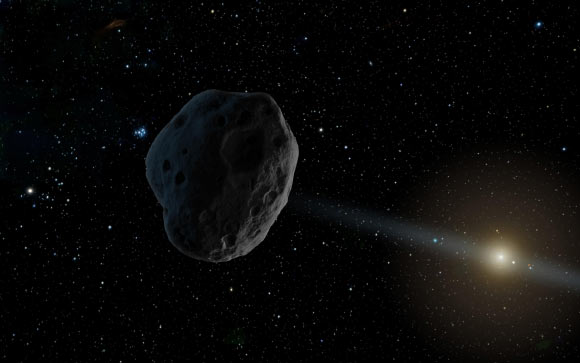
This artist’s concept depicts a near-Earth asteroid with an elongated orbit; a few objects such as these can exhibit significant perturbations in their motion around the Sun and, like 1998 SH2, could turn out to be regular comets with a weak tail and coma. Image credit: NASA / JPL-Caltech.

The near-Earth object (875163) 1998 SH2, which is currently classified as an asteroid, has revealed a hidden identity: it’s actually a comet in disguise, according to a new study published in the journal Nature Astronomy.

The post Puzzling Near-Earth Asteroid Turns Out to Be Comet with Weak Tail appeared first on Sci.News: Breaking Science News.
  •  

Astronomers Discover and Directly Image Third Planet in Beta Pictoris System

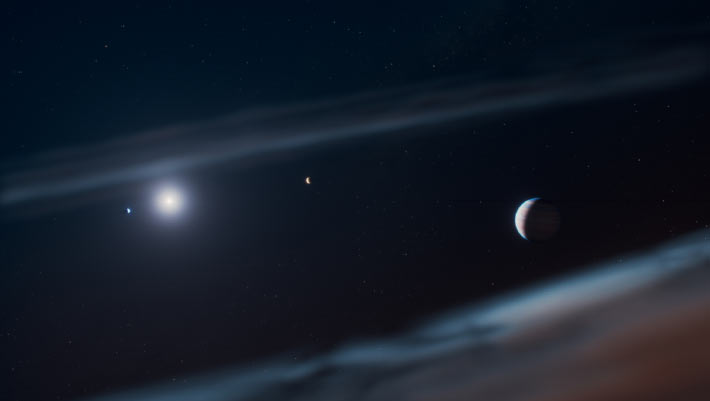
This artist’s concept shows the Beta Pictoris system with the discovered giant exoplanet Beta Pictoris d at the right. Image credit: NASA / ESA / CSA / STScI / Ralf Crawford, STScI.

Named Beta Pictoris d, the newly-discovered world is 100 times fainter than Beta Pictoris b -- the first planet discovered around the A5-type star Beta Pictoris -- and is among the lightest exoplanets ever to be imaged from the ground.

The post Astronomers Discover and Directly Image Third Planet in Beta Pictoris System appeared first on Sci.News: Breaking Science News.
  •  

Une des rares exoplanètes observables directement a joué à cache-cache pendant 10 ans avec les astronomes

Une équipe d’astronomes a découvert par imagerie directe une troisième exoplanète en orbite autour de l’étoile Bêta Pictoris. Baptisée Bêta Pictoris d, elle est 100 fois moins lumineuse que Bêta Pictoris b, la première exoplanète découverte dans ce même système, déjà par imagerie directe. Bêta...

  •  

Cientistas descobrem planeta que andou mais de uma década a “brincar” às escondidas

Durante 11 anos esteve ali, praticamente à vista de todos. Entretanto, foi possível perceber que as imagens antigas escondiam um dos exoplanetas mais ténues alguma vez captados diretamente a partir da Terra.

The post Cientistas descobrem planeta que andou mais de uma década a “brincar” às escondidas appeared first on Tek Notícias.

  •  

Interstellar Comet 3I/ATLAS Formed Up To 12 Billion Years Ago, New Observations Suggest

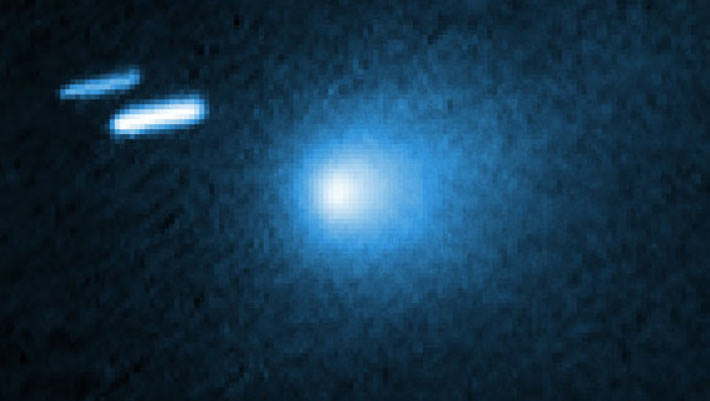
Hubble captured this image of 3I/ATLAS on July 21, 2025, when the comet was 446 million km (277 million miles) from Earth. Image credit: NASA / ESA / David Jewitt, UCLA / Joseph DePasquale, STScI.

The interstellar comet 3I/ATLAS carries a chemical fingerprint unlike anything in our Solar System, and it may have formed 10 to 12 billion years ago, before our Sun even existed, according to two papers published in the journal Nature.

The post Interstellar Comet 3I/ATLAS Formed Up To 12 Billion Years Ago, New Observations Suggest appeared first on Sci.News: Breaking Science News.
  •  

Astronomers Detect Clearest Signs Yet of Magnetic Fields on Extrasolar Planets

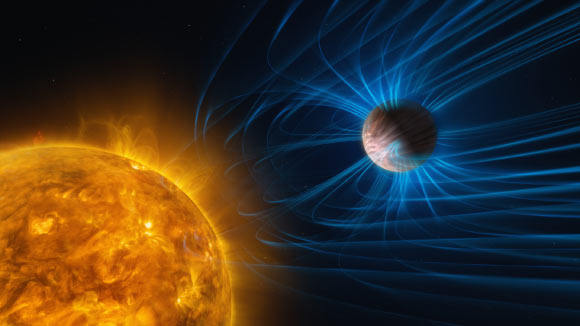
This illustration shows magnetic activity in an ultra-hot Jupiter. Image credit: ESO / M. Kornmesser / L. Calçada.

By tracking fierce winds racing through the atmospheres of seven ultra-hot Jupiters, astronomers have uncovered the strongest evidence yet that magnetic fields shape weather on worlds beyond our Solar System.

The post Astronomers Detect Clearest Signs Yet of Magnetic Fields on Extrasolar Planets appeared first on Sci.News: Breaking Science News.

  •  

Medir ventos estranhos deu pistas sobre exoplanetas onde pode vir a ser possível viver

Pela primeira vez, cientistas compararam ambientes magnéticos de outros planetas, um passo fundamental para compreender aqueles que podem ser habitáveis, conservar água e, talvez, um dia, albergar vida tal como a conhecemos - e criar auroras ainda mais espetaculares.

The post Medir ventos estranhos deu pistas sobre exoplanetas onde pode vir a ser possível viver appeared first on Tek Notícias.

  •  
❌