The emergency archaeological intervention promoted by Cantonal Archaeology on Zürcherstrasse Street in Windisch (in the Swiss canton of Aargau) has concluded within the expected timeframe, according to sources from the institution in mid-July. The excavation team, composed of around twenty specialists, worked for eleven months on an area of approximately 4,000 square meters—the future site […]
Exclusive: Blunder at Rosebank, UK’s biggest undeveloped oilfield, comes as government considers granting licence
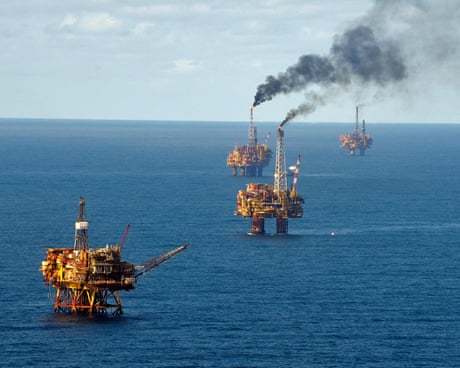
Production at Britain’s biggest undeveloped oil and gasfield could be delayed for months after equipment from a rig was accidentally dropped in the North Sea, the Guardian can reveal.
Paleontologists at the University of New South Wales have described a new genus and species of dasyurid marsupial from the Early Miocene of Australia, offering the first solid evidence that the family Dasyuridae -- which today includes quolls, Tasmanian devils and tiny antechinuses -- existed long before scientists had proof of it in the fossil record.
Emergency SOS via satellite is now available in Andorra and Iceland, allowing supported iPhone and Apple Watch users to contact emergency services when cellular and Wi-Fi coverage are unavailable.
Apple added both countries to an updated support document, expanding the feature to 20 supported markets. Users in Andorra and Iceland can call or text 112 before choosing the satellite option when an ordinary emergency connection cannot be completed.
The expansion covers every iPhone 14 or later model running iOS 26.4 or newer. Apple Watch access requires Apple Watch Ultra 3 with watchOS 26.4 or later.
Emergency SOS does not turn the devices into conventional satellite phones. The system is designed for short emergency exchanges in locations where normal communication networks cannot be reached. Users must remain outdoors with a sufficiently clear view of the sky and follow onscreen directions while the device establishes and maintains a connection.
Emergency SOS via Satellite Reaches 20 Markets
Emergency SOS via satellite first launched in the United States and Canada in November 2022 with the iPhone 14 lineup. Apple gradually added European countries, Australia, New Zealand, Japan and Mexico as regulatory approval and emergency-service support became available.
Andorra and Iceland now join Australia, Austria, Belgium, Canada, France, Germany, Ireland, Italy, Japan, Luxembourg, Mexico, the Netherlands, New Zealand, Portugal, Spain, Switzerland, the United Kingdom and the United States.
The addition is particularly relevant for travelers and residents exploring mountainous or remote terrain.
Andorra contains extensive hiking, cycling and skiing areas across the Pyrenees, where cellular coverage can become unreliable beyond populated valleys and resorts. Iceland presents a different but equally demanding environment, with large rural areas, volcanic landscapes, glaciers and routes far from conventional infrastructure.
Satellite availability does not guarantee a connection everywhere. Mountains, deep valleys, dense tree cover and tall structures can obstruct the line between the device and a passing satellite. Apple also warns that satellite connectivity may not function in locations above 62 degrees latitude, which can affect some northern regions.
Most of Iceland lies below that threshold, although environmental conditions and the position of surrounding terrain can still influence performance.
International travelers can generally use Emergency SOS while visiting a supported country, even when the feature is not offered in their home market. Exceptions apply to devices purchased in certain countries or regions where Apple satellite connectivity is restricted.
iPhone 14 and Newer Models Gain the Expansion
Every version of iPhone 14 and later contains the hardware required for Apple satellite features. Users in Andorra and Iceland must install iOS 26.4 or a newer release before relying on Emergency SOS.
The system appears only when the iPhone cannot reach cellular service or Wi-Fi. Apple recommends trying the local emergency number first because another carrier network may still be able to complete the call even when the user own provider shows no coverage.
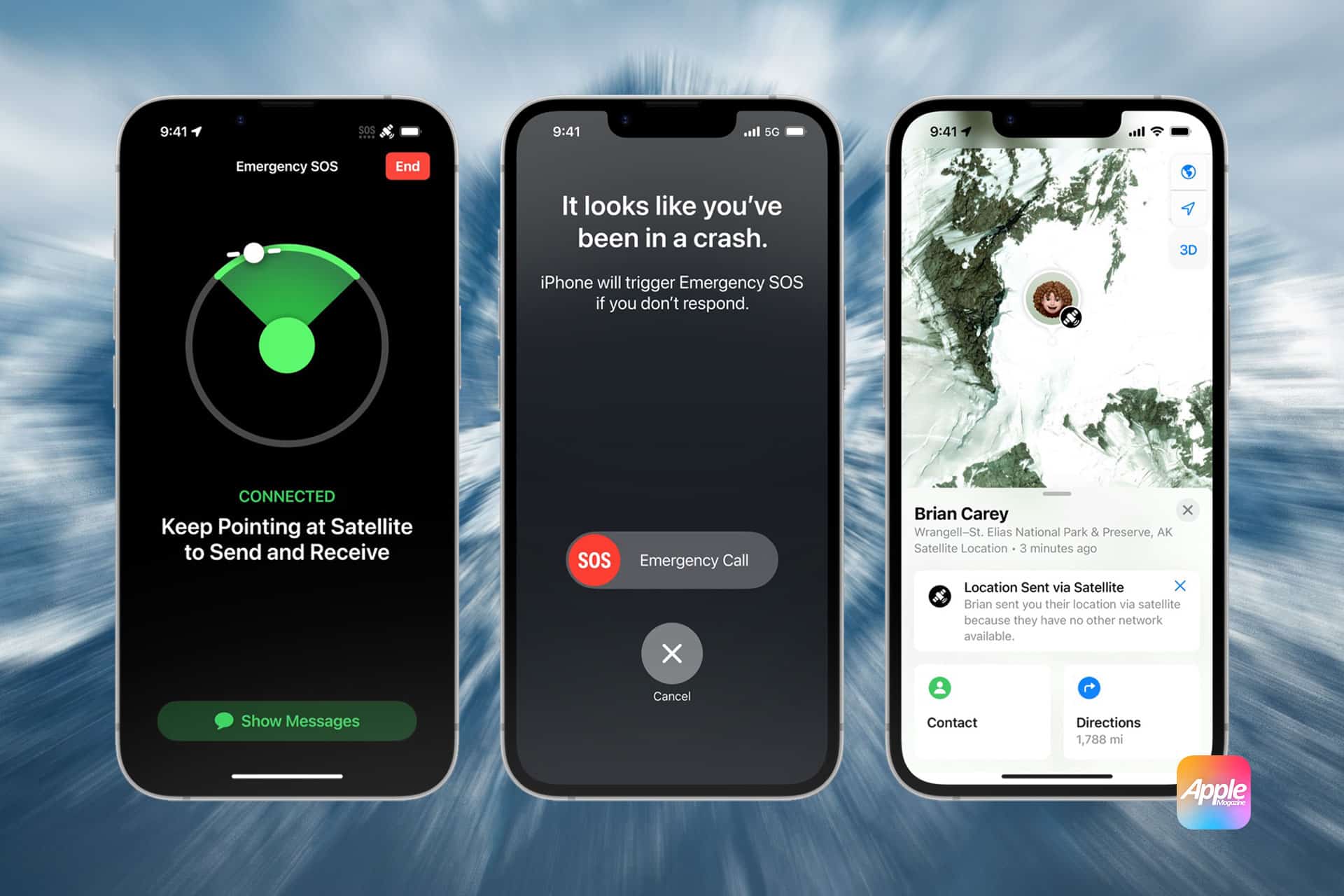
When the call fails, the iPhone offers Emergency Text via Satellite. The user answers a short series of questions describing the emergency, including the type of assistance needed and whether anyone is injured.
The compressed questionnaire reduces the amount of information that must be transmitted through the limited-bandwidth satellite connection. Once connected, the iPhone sends the responses and location to an emergency dispatcher or an Apple-supported relay center capable of contacting local responders.
In Andorra and Iceland, the applicable emergency number is 112.
Users can also choose to notify emergency contacts. When Medical ID and emergency contacts have been configured in the Health app, selected details can be shared during the incident.
The conversation does not operate at the speed of an ordinary text exchange. Under ideal conditions, a message may require approximately 30 seconds to send. Light or moderate foliage can extend that delay beyond one minute, while heavier obstructions may prevent a connection entirely.
The iPhone displays guidance showing which direction to turn or move as satellites pass overhead. The phone can remain connected while the screen is locked, but it should not be placed inside a pocket or backpack during the exchange.
Apple Watch Ultra 3 Works Without an iPhone Nearby
Apple Watch Ultra 3 brings similar protection directly to the wrist, allowing users to contact emergency services even when an iPhone is not available.
Emergency SOS via satellite on Apple Watch Ultra 3 does not require an active carrier plan. Apple includes the service at no additional charge for two years following activation of the watch.
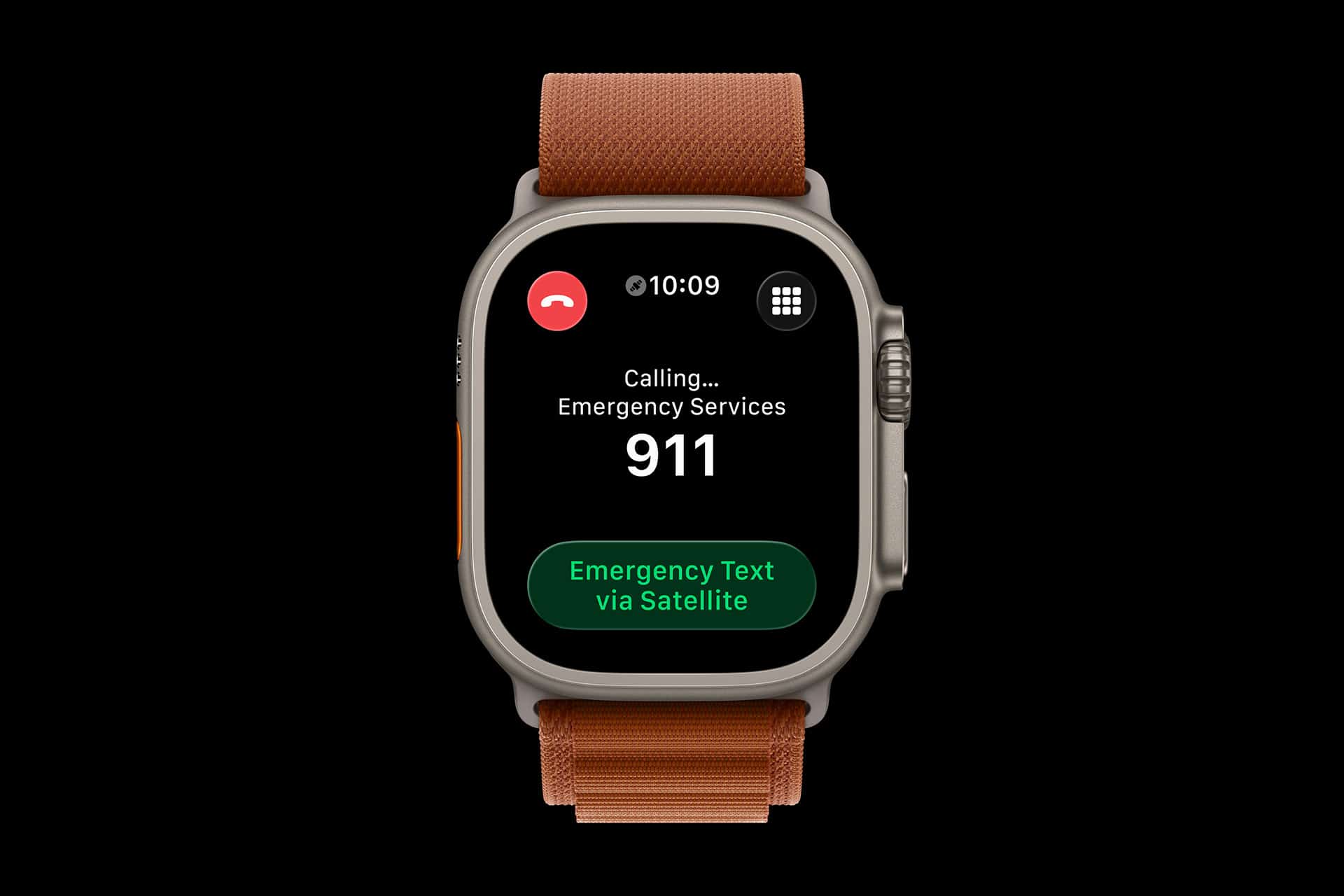
When cellular and Wi-Fi connections are unavailable, users can attempt an emergency call or open Messages and text 112. If the message cannot be delivered through an ordinary network, the watch presents the satellite emergency option.
Apple Watch Ultra 3 also guides the wearer toward the satellite connection. The device can remain in its normal position on the wrist rather than being held above the head, although the user may be instructed to turn or move away from an obstruction.
A wet watch may have more difficulty maintaining satellite communication, an important limitation for swimmers, boaters and users caught in severe weather.
The watch can send the emergency questionnaire, location, elevation, Medical ID information and battery level. Emergency contacts can also receive information about the incident when the user has enabled that option beforehand.
Crash Detection and Fall Detection add another layer. If iPhone 14 or later or Apple Watch Ultra 3 detects a severe crash or hard fall and the user remains unresponsive, the emergency notification may be transmitted over satellite when cellular and Wi-Fi networks are unavailable.
Image Credit: Apple Inc.
Preparation Matters Before Going Off-Grid
Apple provides a connection demonstration that allows users to practice finding a satellite without contacting emergency services.
On iPhone, the demonstration can be opened through the Satellite controls or the Emergency SOS section in Settings. Apple Watch Ultra 3 users can add the Satellite control to Control Center or place a satellite complication on the watch face.
Testing the process before a remote trip helps users understand how quickly conditions can affect the connection. A clear field may establish contact rapidly, while a canyon or heavily wooded trail may require movement toward more open terrain.
Medical ID and emergency contacts should also be completed before leaving network coverage:
Health > Profile > Medical ID
A Medical ID can provide responders with information such as allergies, medical conditions, medications and emergency contacts. Users remain responsible for deciding which personal details they want stored and shared.
Emergency SOS via satellite is included free for two years after activating an iPhone 14 or newer model. Apple provides the same two-year period with Apple Watch Ultra 3, although the company has not established the long-term price that may apply after promotional access ends.
The arrival in Andorra and Iceland gives hikers, drivers, skiers and other travelers another route to help, but the safest preparation still includes checking weather conditions, sharing an itinerary and carrying adequate power before moving beyond ordinary network coverage.
WARSAW, Poland — The Polish government has agreed to invest around $745 million in the development of the planned IRIS² multi-orbit satellite internet constellation with the European Union. The money […]
SAN FRANCISCO – Zenno Astronautics, a New Zealand startup focused on applying superconducting magnets for spacecraft attitude control and acceleration, plans to redomicile to the United States. “It is obvious […]
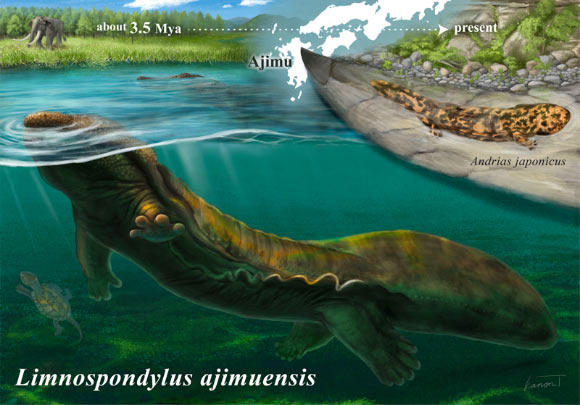
A new genus and species of cryptobranchid salamander that lived in lakes in Japan about 3.5 million years ago has been identified from three fossil vertebrae, filling a major gap in the fossil record of one of the world’s oldest amphibian lineages.
From Nevada to Manchester, developers are trialling innovative solutions to clean energy’s biggest challenge
In the deserts of the United Arab Emirates a sprawling clean energy project, stretching across an area roughly the size of 12,600 football fields, will play host to a breakthrough allowing solar energy to power the equivalent of half a million homes through the night.
The Gulf state has been steadily combining 5.2GW of solar power capacity with 19GWh of battery storage to create the largest battery scheme in the world.
Campaigners hope move will force commercial banks to rethink holding assets linked to the fossil fuel
Climate campaigners have declared a victory after the Bank of England said it would no longer accept bonds linked to one of the most polluting industries on the planet for key loan arrangements.
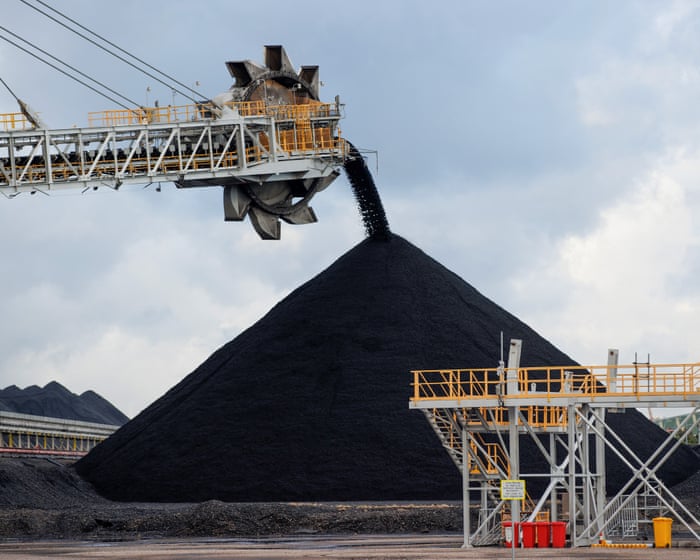
The ban, which comes into force in October, marks a fresh crackdown on thermal coal, which is burned in power plants to create electricity, and has long been a target of green policy activists.
Party manifesto pledged to honour existing North Sea exploration licences but not issue new ones
Andy Burnham risks his first confrontation with Labour MPs if he announces new oil and gas drilling licences when he becomes prime minister, insiders have warned.
Speculation is rife that Burnham will unveil fresh plans for drilling in the North Sea after he is installed in Downing Street.
Thalha Jubair, 20, and Owen Flowers, 19, sentenced to five and a half years each for cyber-attack that cost Transport for London £39m
The data of millions of commuters was stolen, Londoners were left out of pocket and 27,000 Transport for London staff were forced to reset their passwords.
Over four days in 2024 a pair of teenage hackers had London’s transport network at their mercy. Thalha Jubair and Owen Flowers had burrowed into the heart of Transport for London’s IT systems and held the “keys to the kingdom”.
It's a shameful day for the Church of England, says Julian Mann, as its General Synod passes an anti-Israel motion pledging to "engage with" what the Chief Rabbi calls a "shocking" document containing "so much falsehood".
L'Australian Space Agency (ASA), in collaborazione con le autorità di gestione delle emergenze, ha isolato Forrest Beach nel Queensland dopo il ritrovamento di sei sfere metalliche argentate. Gli oggetti si sono rivelati essere "space balls", ovvero serbatoi a pressione in leghe di titanio utilizzati nei vettori spaziali, precipitati in mare a causa del rientro incontrollato di un razzo e spinti a riva dalle correnti. Alice Gorman, archeologa spaziale della Flinders University, ha ipotizzato che i serbatoi si siano staccati prima del raggiungimento delle orbite più alte, data l'assenza di bruciature termiche evidenti. L'intervento di messa in sicurezza ha richiesto l'uso di tute protettive speciali per scongiurare contaminazioni da idrazina, un propellente altamente tossico e infiammabile potenzialmente rimasto all'interno dei contenitori.
Operator brings in independent legal firm to look into whistleblower allegations relating to June heatwave
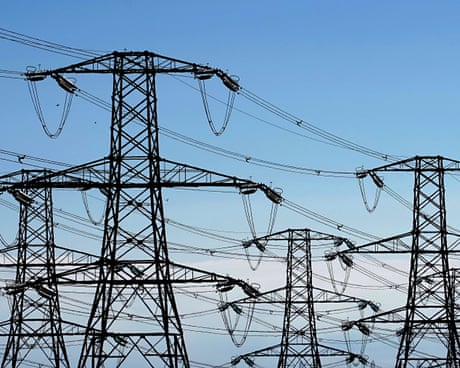
Great Britain’s grid operator has brought in independent investigators to look into accusations that its staff were involved in a cover-up over the power system being at a greater risk of blackouts during the heatwave.
The government-owned energy system operator will face the scrutiny of an external legal firm after a whistleblower claimed that control room staff were warned against leaving a paper trail relating to efforts to stabilise the power system during record high temperatures in late June.
WARSAW, Poland — Poland will host the first European Space Agency (ESA) center located in an eastern flank member state, one that will be focused on civil security and resilience. […]
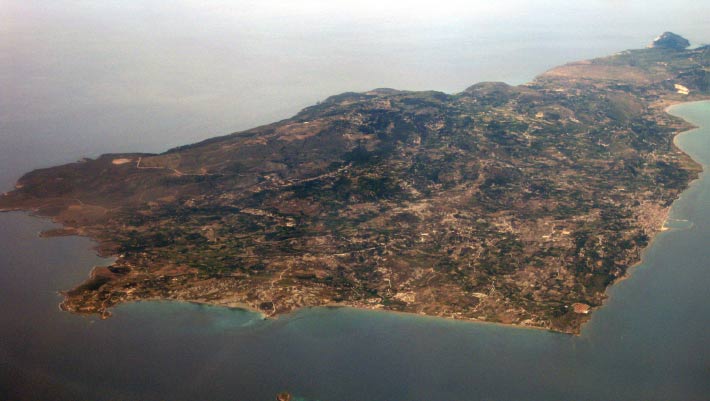
For as long as readers have pored over Homer’s Odyssey they have pictured Ithaca, the homeland Odysseus fights for ten years to reach, as an island unto itself.
Plans to build a NZ$3.5bn datacentre in Makarewa in the country’s south has drawn concern about electricity and water use, and potential noise pollution
People living near the site of New Zealand’s first planned AI datacentre are calling for more transparency about the project, especially about how the centre’s huge electricity and water use and potential noise pollution could affect them.
Singapore-based company Datagrid has secured approval to build a NZ$3.5bn (US$2bn) AI datacentre on a 49-hectare site in Makarewa, just north of New Zealand’s southern-most city, Invercargill. Construction is due to begin this year, with the centre becoming operational by 2028.
Paleontologists working in northeastern Thailand have identified a new species of mamenchisaurid sauropod dinosaur, offering fresh evidence that a group of giant sauropods once thought to be almost exclusively East Asian also roamed mainland Southeast Asia.
The findings, reported by Jean-Baptiste Camps and colleagues, relied on a novel approach to uncovering evidence for these long-lost texts: a complexity science approach that allowed them to estimate the volumes of lost ancient literature that once existed, by inferring references to such texts from existing chivalric narratives beginning in the 12th century.
The team’s findings also bring to attention a new concern for historians, since according to their simulations, as much as 60% of all ancient texts from this period, and more than 95% of manuscripts once believed to have existed, may have been lost to time. The findings were recently reported in PNAS Nexus.
Evidence of “Lost” Medieval Manuscripts?
The names we commonly associate with epic tales passed down to us from ancient literature are not the only heroes of yore that existed—they are merely the ones whose stories survived.
For every Gilgamesh, Thor, and King Arthur, it is possible that several more heroic characters from undiscovered ancient epics also exist. However, based on Camps and his team’s findings, they are probably unrecoverable stories, lost to time apart from scant references that occasionally appear in the few surviving manuscripts that have made their way down to us throughout time.
Some of the problems that have contributed to this concerning loss of ancient knowledge are technological. In the days before the invention of the printing press, texts had to be copied manually—a process that led to both innovations, but also errors and inconsistencies as these early copies were made.
From existing copies of surviving ancient texts, scholars can often infer a significant amount of information based on subtle (or in some cases, not-so-subtle) changes that appear from one version to the next. Philologists, researchers who study the structure, historical development, and relationships between languages, refer to the evolutionary “trees” encompassing such texts and their evolution through time as stemmata.
What’s ‘Stemmata’ With You?
Since modern stemmata are based only on existing copies, they lack the full evolutionary history of texts and fail to account for versions that have been forever lost, which may have contained significant differences or additional information.
Jean-Baptiste Camps and his colleagues’ new model has revealed a key discovery: that the early years of a text’s creation, and the number of copies that were made during that time, are of crucial importance to their survival.
As one might guess, the fewer copies that are made, the more endangered the text becomes. However, another implication based on the team’s modeling is that if no copies of the original work are made, all the surviving derivatives generally form what scholars recognize as a subsidiary branch of that manuscript’s family tree.
And therein lies the issue: one that has sobering implications for the preservation of knowledge from ancient times.
Roland’s Unknown Song
As an example, the researchers point to the Song of Roland, an 11th-century account of the Frankish military leader Roland’s deeds at the Battle of Roncevaux Pass. The events in question took place in AD 778, during the reign of Charlemagne, and the account remains the oldest single surviving major work of French literature.
However, the version of the tale we know today comes to us from several different manuscript copies that were made over time. While this speaks to the tale’s popularity in the Medieval world of the 12th to the 16th centuries, it also underscores the fact that its oldest, original versions are probably unknowable to us today.
But how is such knowledge lost to time? Arguably, one of history’s most famous examples involves the famous burning of the library at Alexandria—a story which is itself somewhat contested by modern scholars, in that rather than one catastrophic loss of information resulting from the destruction of a single building, a range of factors over an extended period are more likely to have resulted in the loss of this wealth of knowledge from the ancient world.
This is merely one example; a range of other instances involving random occurrences, accidents, and cataclysmic events point to additional reasons for the fragility of knowledge. One that Camps and his colleagues point to is obvious: the Black Death, which, in addition to raging through Europe and decimating human populations, also likely contributed significantly to the destruction of ancient manuscripts.
Knowledge must be protected, in other words, and the team’s recent findings only underscore how fragile it is—and also how easily it can be lost.
The team’s study, “On the transmission of texts: Written cultures as complex systems,” appeared in PNAS Nexus on July 7, 2026.
Micah Hanks is the Editor-in-Chief and Co-Founder of The Debrief. A longtime reporter on science, defense, and technology with a focus on space and astronomy, he can be reached atmicah@thedebrief.org. Follow him on X @MicahHanks, and at micahhanks.com.

 Login