 Login

‘OnlyMarms’: Marmots Are on OnlyFans to Raise Money for Research
A team of scientists uploaded videos of the squirrel-like rodents in the wild on the adult-content site OnlyFans to raise money amid government budget cuts.

Drones capable of spraying water and fire retardants have been practicing how to snuff out wildfires early in California and Alaska this summer—demonstrating a possible rapid-response tool for firefighting as climate change transforms wildfire season into a nearly year-round risk for much of the United States.
Most drones are significantly smaller than crewed aircraft and have shorter flight ranges, meaning they cannot replace large airtankers in delivering massive payloads of water or other fire-suppressing payloads to remote wildfires. But companies and fire agencies—along with organizers of the $11 million XPRIZE competition—are testing whether drones can help firefighting crews respond more quickly to small fires and put them out before they become more destructive.
The California Department of Forestry and Fire Protection, also known as CAL FIRE, ran its own field test involving five autonomous drones that worked together to deploy between 500 and 1,000 gallons of foam combined for suppressing fires on July 15, according to the TV station KPMH. The demonstration was organized with the help of the nonprofit FireWERX and the California-based company Seneca, which is making the drones commercially available starting in 2026.


© Seneca

Australian conversion experts Janus Electric are celebrating a series of orders that will see the company convert 67 Class 8 heavy-duty freight and drayage trucks from diesels to advanced, battery-swap electric vehicles.
Matt Burgess (MacRumors, ArsTechnica):
On Thursday, San Francisco city attorney David Chiu sent legal notices to Apple and Google demanding that they remove from their app stores 13 face-swapping apps, which allow users to create AI-generated nonconsensual nude images. The letters say the Silicon Valley giants should stop “aiding and abetting” the sale of explicit deepfake images and “sever” business relationships with the app developers.
[…]
Researchers have repeatedly found and reported apps in Apple’s App Store and Google’s Play Store that allow people to generate sexual images using AI—including some apps being rated as suitable for use by children. While new laws and bans aim to tackle the scourge of explicit deepfakes online, technology and social media companies consistently direct millions of people toward the harmful tech.
Both Apple and Google have developer policies that prohibit pornography, abuse, and harassment on their platforms.
Burgess gives the impression, which is my base assumption, that these 13 apps were clear about what they do, so App Review has no excuse for missing them. But I’m sure it’s keeping us all safe in other regards.
Meanwhile, in a preprint research paper published in May, researchers from Cornell University and Georgetown University identified 420 apps offering general face-swapping capabilities on Google’s and Apple’s app stores. They tested 155 to see if they could be used to create face swaps with nude images; in 70 percent of cases, it was possible, with the apps not including safety measures to prevent this.
Previously:
Update (2026-07-21): Danny Bradbury:
Chiu isn’t arguing that hosting an app automatically makes a platform liable for what it does. Platform operators already won that battle with Section 230 of the Communications Decency Act. That 30-year-old law says websites generally aren’t responsible for content posted by users, allowing platforms to host user-generated content without getting sued every time someone defames someone in a comment thread.
Courts have often extended those protections to cover app stores too. Apple and Google are treated as distributors of whatever a third-party developer uploads, rather than publishers.
Chiu is attempting to sidestep that argument by focusing on the companies’ payment systems, noting that Apple and Google collect a cut of every in-app purchase. According to the Tech Transparency Project (TTP), that means they profit from apps that generate revenue by creating non-consensual intimate imagery.
A Apple está expandindo sua presença em Sunnyvale, no condado de Santa Clara (na Califórnia, Estados Unidos), desta vez com o aluguel de um prédio comercial de aproximadamente 11.700 metros quadrados.
De acordo com o Mercury News, o imóvel está localizado no número 580 da North Mary Avenue. O valor do acordo não foi divulgado até o momento.
Posts relacionados
Embora a Apple esteja apenas alugando o imóvel no momento, ela tem a possibilidade de comprá-lo posteriormente — uma prática que tem se tornado comum. Isso porque, um ano após alugar um prédio comercial em Peery Park, também em Sunnyvale, a empresa oficializou a compra do empreendimento.
O acordo marca a primeira grande movimentação imobiliária da Apple na região em 2026, após investir mais de US$1 bilhão em 2025 com a expansão da sua presença na região sul da baía de San Francisco.
via AppleInsider


© Joel Angel Juarez/Associated Press

On today’s totally normal episode of Quick Charge, it seems like EV sales are starting to normalize in the US after the loss of the Federal Tax Credit last September – but they’re taking off everywhere else, and Europe is leading the charge!

California Governor Gavin Newsom signed SB 168 today, creating a new “MyFirstEV” program that gives first-time electric vehicle buyers a $3,500 instant rebate at the dealership starting later this summer.
The point-of-sale discount is backed by $135.5 million in state funding, matched dollar-for-dollar by participating automakers — and a California-headquarters rule makes Rivian and Lucid the biggest winners, while Tesla qualifies only on its cheapest models.

© Nathan Weyland for The New York Times
Wealth tax criticized by billionaires and Gavin Newsom would levy a one-time 5% tax on residents worth over $1bn
A popular proposal in California to impose a wealth tax on billionaires has gained enough signatures to qualify for the ballot in November, state officials announced on Wednesday.
The news is set to intensify an already heated debate around the tax, which has pitted tech moguls and the state’s governor, Gavin Newsom, against the labor union backing the measure.
Continue reading...
© Photograph: Jae C Hong/AP

© Photograph: Jae C Hong/AP

© Photograph: Jae C Hong/AP
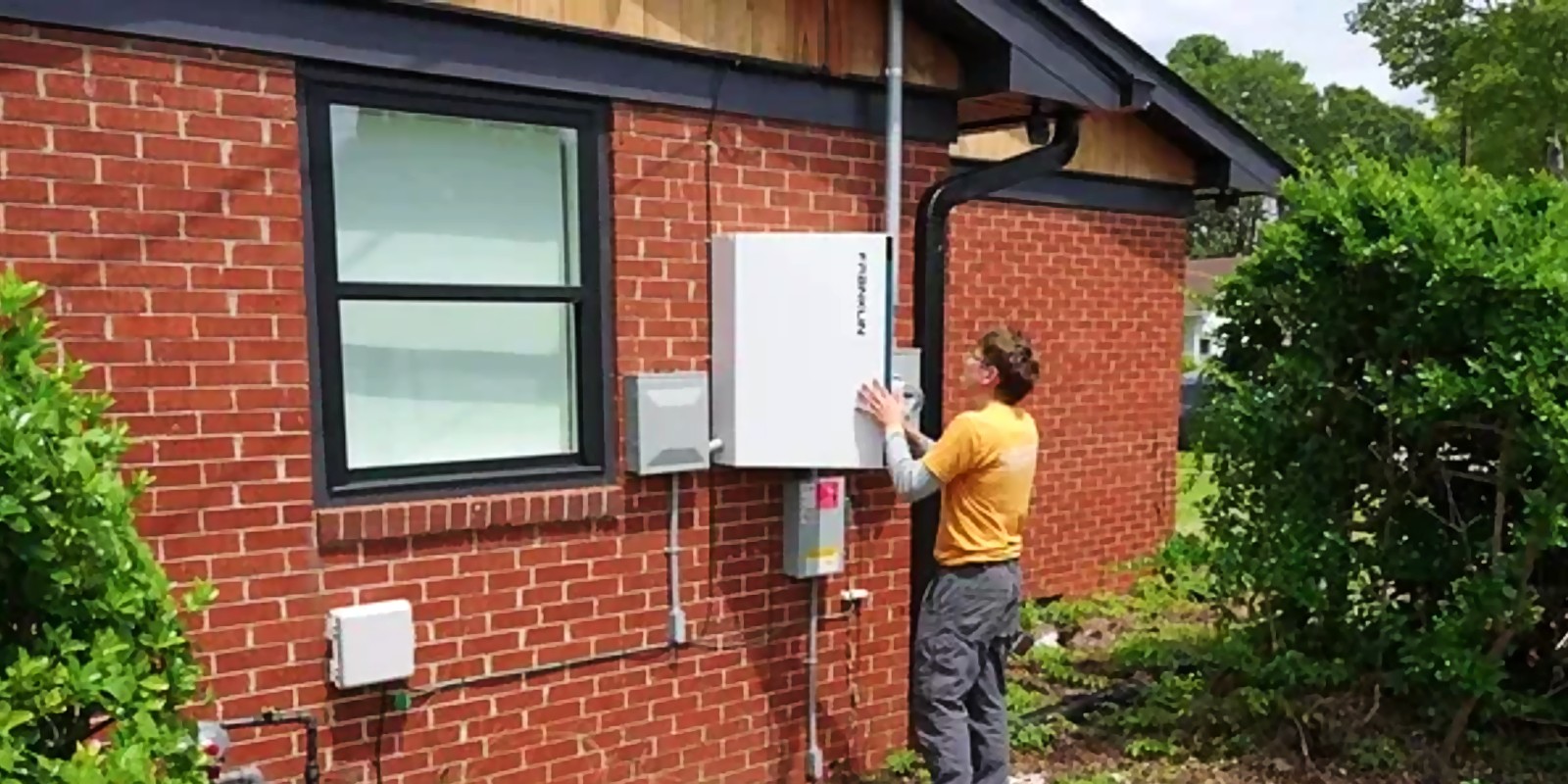
Ava Community Energy’s SmartHome Battery program is offering income-qualified North California residents up to $6,000 in up front incentive cash to install a FranklinWH smart battery and connect it to the utility’s virtual power plant (VPP).
California state regulators say AT&T lied to the Federal Communications Commission in an attempt to shut off its old copper phone network without providing an adequate replacement.
"AT&T asserts that California seeks to prohibit or hinder wireline carriers from discontinuing copper facilities and investing in fiber," said a June 15 filing by the state of California and the California Public Utilities Commission. "Indeed, AT&T has been making this argument for years. It is not and has never been true."
As we reported last month, AT&T sued California over the state’s refusal to let it stop providing phone service to all potential customers in its wireline network territory. AT&T also petitioned the Federal Communications Commission to declare that California cannot enforce its rules and to let AT&T stop providing service to about 199,000 phone customers.


© Getty Images | KoldoyChris
In a groundbreaking study published in PNAS Nexus on May 23, 2026, researchers have unveiled compelling evidence that extreme risk protection orders (ERPOs), frequently known as “red flag” laws, substantially diminish the likelihood of arrests among individuals subjected to these legal interventions. This decline in arrests encompasses a broad spectrum of offenses, notably violent crimes and firearm-related offenses, and persists not only during the enforcement period of the orders but intriguingly continues well beyond their expiration. These findings are poised to reshape public policy discussions concerning firearm violence prevention strategies in the United States.
The context driving this research is a nationwide crisis of firearm violence, which as of 2024, has tragically culminated in over 43,000 deaths, with shootings in 2025 alone injuring approximately 40,000 individuals, excluding cases of suicide. Such staggering figures underscore the urgent need for efficacious interventions. ERPOs have emerged as a targeted legal mechanism whereby courts temporarily restrict firearm access for individuals deemed to pose an imminent threat to themselves or others. Currently, 22 states, alongside the U.S. Virgin Islands and the District of Columbia, have enacted distinct ERPO statutes, reflecting growing legislative momentum. California pioneered this policy approach in 2016, branding them Gun Violence Restraining Orders.
The retrospective cohort study analyzed detailed arrest data from 679 California residents subject to ERPOs between 2016 and 2019. Demographic profiling revealed a predominance of males (91.9%) with an average age slightly above 40 years. Ethnically, the cohort comprised mainly White individuals (59.9%), followed by Hispanic (19%) and Black populations (10.3%). Researchers meticulously compared arrest rates across three critical intervals: six months preceding the ERPO issuance, during the active order period, and the subsequent six months following order expiry. The scope of offenses under scrutiny included any form of arrest, violent crime, firearm-related offenses, and firearm-specific violence.
Quantitative analysis revealed that the presence of an ERPO corresponded with an impressive 55% reduction in arrests for any offense compared to the baseline six-month period prior. Arrests specifically for violent crimes plummeted by 71%, while firearm-related arrests witnessed a striking 76% decline. Most notably, firearm violence arrests decreased by an extraordinary 80% during the enforcement phase. These statistics not only affirm ERPOs’ immediate efficacy in curtailing dangerous behaviors but also highlight their targeted protective potential.
Perhaps more unexpectedly, the data indicated that the downward trend in arrests did not revert to pre-order levels once ERPOs expired. Instead, reductions persisted and even deepened in certain categories. Post-expiration, arrest rates for any offense decreased by 63%, violent crime arrests by 75%, firearm-related offenses by 70%, and firearm violence arrests by 63%. Such sustained effects provoke critical questions about the mechanisms through which ERPOs might exert enduring behavioral influence, potentially functioning as a catalyst for long-term risk amelioration.
While the study’s outcomes exude optimism, authors elucidate several methodological limitations. Primary among these is the reliance on arrest records as a proxy for criminal activity, a metric subject to inherent biases and imperfect capture of all unlawful behavior. Additionally, the exclusive focus on California’s ERPO implementation during a specific timeframe limits the generalizability of findings to other jurisdictions or more current contexts. Nonetheless, the robust statistical associations discovered furnish key empirical support for ERPOs’ role in comprehensive violence reduction frameworks.
Veronica Pear, the study’s lead investigator and a respected epidemiologist affiliated with the UC Davis Centers for Violence Prevention, articulates the multipronged utility of ERPOs. “While often conceptualized primarily for suicide prevention, our analysis elucidates their significant function in preventing interpersonal violence,” Pear asserts. This research thus broadens the conceptual paradigm, reinforcing ERPOs as a practical, evidence-based intervention capable of mitigating acute crises and producing enduring safety benefits.
This study also complements a growing body of literature that underscores ERPOs as instrumental in suicide prevention, consolidating their standing as a versatile tool in public health and criminal justice spheres. The convergence of findings across domains of self-directed and other-directed violence lends vital credence to expanding ERPO adoption and refining enforcement protocols, especially given the current societal imperative to stem firearm-related morbidity and mortality.
From a policy perspective, these insights furnish lawmakers with empirically grounded justifications for instituting or strengthening ERPO frameworks. Importantly, the study encourages a nuanced appreciation of ERPOs’ temporal dynamics, highlighting the necessity for continued engagement and perhaps supplemental interventions after an order lapses to sustain positive outcomes.
On the frontier of violence prevention research, the study paves avenues for further investigation into optimizing ERPO implementation, exploring differential impacts across demographic subgroups, and elucidating the behavioral psychology underlying observed arrest reductions. Such endeavors will be pivotal in tailoring ERPO policies that maximize protective effects while respecting individual rights and legal safeguards.
As firearm violence continues to exact a heavy toll on American communities, this research provides a beacon of evidence-informed hope. By harnessing the nuanced potential of ERPOs, stakeholders can better navigate the complex interplay of legal, public health, and social factors driving violence prevention and move toward a safer society.
Subject of Research: People
Article Title: Reduced incidence of arrest following an extreme risk protection order among respondents in California
News Publication Date: 23-May-2026
Web References:
References:
Keywords: Gun violence, Public health, Crime, Criminology, Human social behavior

© Nina Riggio for The New York Times
