❌

Reading view

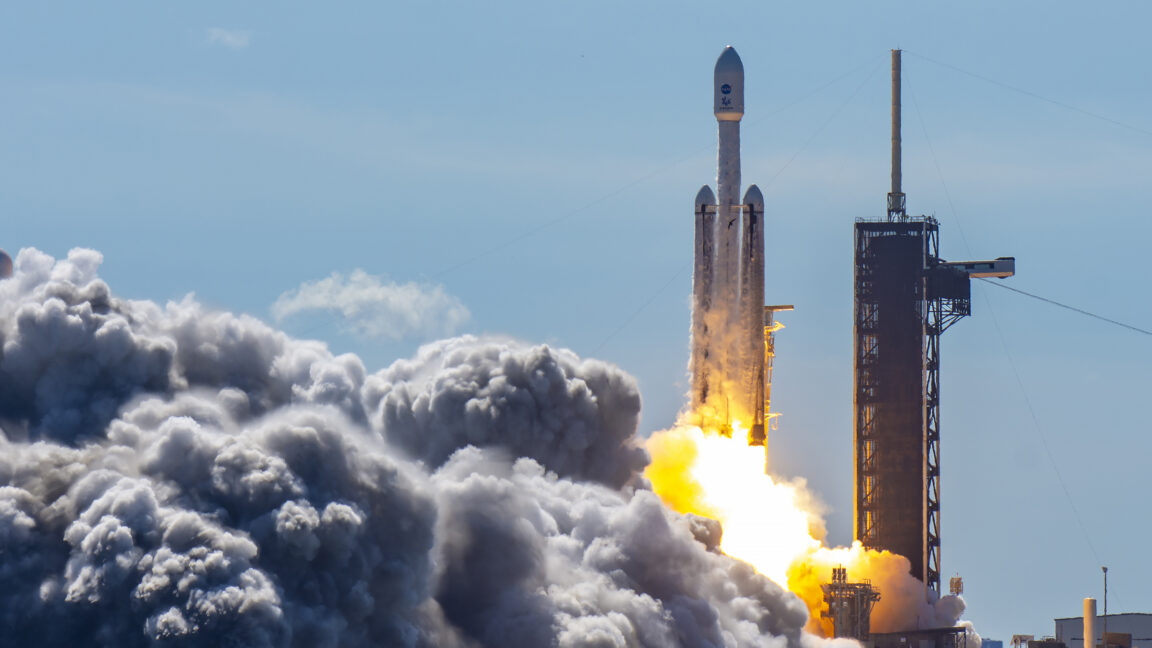
The Space Force is now seeking to buy up to $30 billion in rocket launches

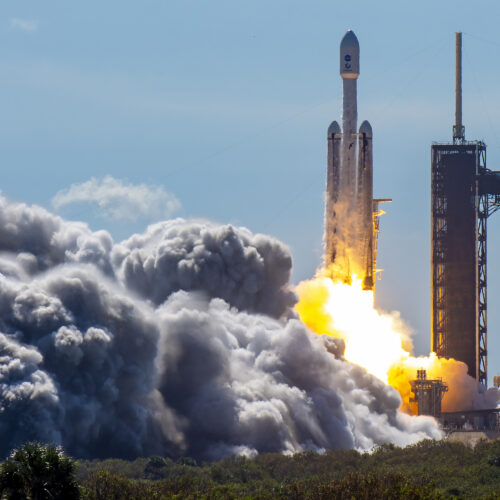
It seems as though $5.6 billion wasn't enough. That was the news from the US Space Force on Friday, when military officials announced they were tripling the maximum value of one of the service's National Security Space Launch contracts to $17 billion.

The expansion of the Space Force's National Security Space Launch (NSSL) Phase 3 contract comes as the Pentagon signals rising demand for military satellite launches. The NSSL program is set up to allow Space Systems Command, which oversees the Space Force's launch program, to select from a pool of launch providers for individual missions to deliver the military's satellites to orbit.

The NSSL program has two parts. Lane 1 covers the Space Force's more risk-tolerant missions, such as medium-lift launches with experimental payloads or rideshare missions carrying satellites for the Pentagon's surveillance or data relay constellations. Lane 2 includes higher-priority strategic missions, like the government's largest and most expensive spy satellites, or radiation-hardened communications satellites designed to survive a nuclear war.
Read full article

Comments

© SpaceX

  •  

The Space Force is now seeking to buy up to $30 billion in rocket launches

It seems as though $5.6 billion wasn't enough. That was the news from the US Space Force on Friday, when military officials announced they were tripling the maximum value of one of the service's National Security Space Launch contracts to $17 billion.

The expansion of the Space Force's National Security Space Launch (NSSL) Phase 3 contract comes as the Pentagon signals rising demand for military satellite launches. The NSSL program is set up to allow Space Systems Command, which oversees the Space Force's launch program, to select from a pool of launch providers for individual missions to deliver the military's satellites to orbit.

The NSSL program has two parts. Lane 1 covers the Space Force's more risk-tolerant missions, such as medium-lift launches with experimental payloads or rideshare missions carrying satellites for the Pentagon's surveillance or data relay constellations. Lane 2 includes higher-priority strategic missions, like the government's largest and most expensive spy satellites, or radiation-hardened communications satellites designed to survive a nuclear war.

Read full article

Comments

© SpaceX

  •  

Wally Funk, last of Mercury 13 and oldest woman in space, dies at 87

Wally Funk, who in 2021 became the oldest woman to fly into space—60 years after she and 12 other women sought the same opportunity as NASA's original astronauts—died on Wednesday at 87 years old.

Funk was the last living member of the First Lady Astronaut Trainees (FLATs, or as they were later dubbed by the media, the Mercury 13), a group of women pilots who volunteered to go through the same physical and psychological tests as the United States' first spacemen.

Despite performing as well or better than their male counterparts, though, the Lovelace Woman in Space Program was conducted separately from NASA, and the space agency required that its astronauts be test pilots with jet time. The US military, however, did not accept women into its flight programs.

Read full article

Comments

© Blue Origin

  •  

Blue Origin, for the first time, is expected to raise private capital

The rocket company founded by Jeff Bezos, Blue Origin, is raising private capital, the DealBook newsletter reported early Wednesday.

According to the publication, the company is raising $10 billion, leading to a valuation of $130 billion. Coatue Management, a big asset manager, is expected to lead with a $4 billion commitment. Another $4 billion is expected to come from large institutional investors. And Bezos will contribute an additional $2 billion.

Founded in 2000, Blue Origin is seeking to become a global leader in spaceflight, developing a line of super heavy lift rockets, lunar landers, and plans for two megaconstellations. It is seeking to compete in the same areas—launch, telecommunications, data centers from space—as SpaceX.

Read full article

Comments

© Matthew Staver/Bloomberg via Getty Images

  •  

Rocket Report: Indian startup nears first launch; SpaceX's millenary milestone

Welcome to Edition 9.01 of the Rocket Report! Back in January, I wrote about the 20 launches and landings we were most excited about in 2026. The list included things that were, at the time, officially scheduled to occur this year. I also gave my own view of the probability of each of these events actually happening before December 31. Halfway through the year, we can only count one of the events as completed, and that was NASA's Artemis II mission in April. Many are now scheduled for next year, proving again that delays are a constant in the space industry. A couple of them—such as the launch of NASA's Roman Space Telescope—do appear to be on track to happen soon.

As always, we welcome reader submissions. If you don't want to miss an issue, please subscribe using the box below (the form will not appear on AMP-enabled versions of the site). Each report will include information on small-, medium-, and heavy-lift rockets, as well as a quick look ahead at the next three launches on the calendar.

Swift Boost Mission reaches orbit. A pioneering commercial mission to reboost the orbit of NASA's Swift astronomy satellite launched early Friday after attempts earlier in the week were thwarted by bad weather and a technical issue. The Link servicing satellite developed by Katalyst Space Technologies soared to orbit on the tip of a Northrop Grumman Pegasus XL rocket that dropped from the belly of a modified L-1011 jetliner over the remote Pacific Ocean. Mission managers called off two launch attempts Tuesday and Wednesday due to poor weather around the L-1011's staging base on Kwajalein Atoll in the Marshall Islands. On Thursday, "a launch vehicle issue temporarily prevented teams from deploying the rocket" after takeoff of the L-1011.

Read full article

Comments

© SpaceX

  •  

Ars Live recap: When are the big rockets NASA desperately needs going to be ready?

New Glenn Catastrophe Aftermath: What's Next for the Space Industry? | Ars Live

This week Ars hosted a live discussion with two space industry experts about the aftermath of the catastrophic explosion of the New Glenn rocket in late May.

Along with Ars Technica Space Editor Eric Berger; the director of research at Quilty Space, Caleb Henry; and the host of the Main Engine Cut Off podcast, Anthony Colangelo, spoke about various topics. Chief among them was the implications of this failure for NASA's attempt to land humans on the Moon for the Artemis IV mission. Blue Origin and SpaceX are both building landers to support this goal and the rockets to deliver them to the Moon.

During the conversation, Berger reported that the current Blue Origin "architecture" for a human mission would require four launches of new variant of the New Glenn rocket, known as 9x4, because it has nine first stage engines, and four upper stage engines. This is a more powerful version than the "7x2" variant that exploded a little more than a month ago. Blue Origin has not set a target date for the 9x4 rocket's debut, but some sources have indicated the company is targeting late 2027 or early 2028.

Read full article

Comments

© Blue Origin

  •  

Report: Kennedy Space Center not ready for era of super heavy rockets

NASA's infrastructure at Kennedy Space Center, the crown jewel of US spaceports, is aging and approaching its limit due to increased demand from private companies, including SpaceX and Blue Origin, a new report finds.

"NASA’s launch infrastructure is vital to providing the agency, other government agencies, and commercial partners access to space for their most complex and expensive missions," states the report, published by the NASA Office of Inspector General. "Nevertheless, NASA’s launch infrastructure is dated and often does not provide the capacity to meet the growing demands of the agency and its partners."

The report covers NASA's launch facilities at the Kennedy Space Center in Florida and Wallops Flight Facility in Virginia. However, the most noteworthy information in the report concerns the Florida spaceport, where demand from SpaceX's Starship and Blue Origin's New Glenn launch vehicles is expected to stress NASA.

Read full article

Comments

© Trevor Mahlmann

  •  

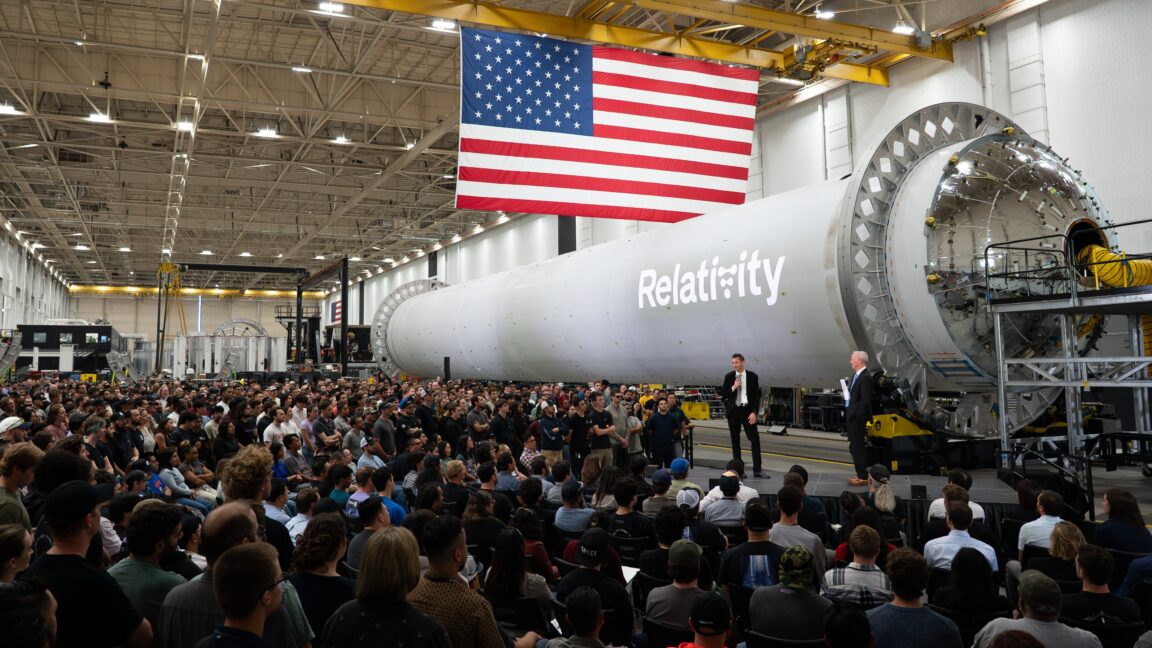
Rocket Report: Rebuild begins at Blue Origin launch pad; Relativity targets Mars

Welcome to Edition 8.46 of the Rocket Report! We don't mention Starship in the body of this week's report, so I'll give a brief update here. The next test flight of SpaceX's mega-rocket—Flight 13—could happen as soon as next month, according to Gwynne Shotwell, the company's president and chief operating officer, in a recent interview with CNBC. There's still a fair bit of work to do before Flight 13, so don't count on a launch next month just yet. What we do know, based on Shotwell's comments to CNBC, is the next Starship test flight will look a lot like the previous one last month, with a suborbital flight path and a splashdown of the ship in the Indian Ocean. SpaceX is holding off on an orbital flight until at least the following launch, Flight 14, after the ship was unable to complete a critical engine restart in space on the last flight.

As always, we welcome reader submissions. If you don't want to miss an issue, please subscribe using the box below (the form will not appear on AMP-enabled versions of the site). Each report will include information on small-, medium-, and heavy-lift rockets, as well as a quick look ahead at the next three launches on the calendar.

Isar test flight scrubbed again. Isar Aerospace still commands top position among a new generation of European rocket startups, but the company’s efforts to launch a critical test flight of its Spectrum rocket continue to encounter roadblocks, Ars reports. The latest delay came Monday, when Isar scrubbed a launch attempt after "detecting off nominal behavior in the vehicle’s fluid systems," according to a social media post. "The teams are analyzing the new data to isolate the root cause." Isar is flush with cash, having raised nearly $1 billion to date, but is still lacking in the critical currency of flight experience. The Spectrum rocket has flown just once to date, on a failed launch last year that lasted less than 30 seconds.

Read full article

Comments

© Relativity Space

  •  

Rocket Report: Rebuild begins at Blue Origin launch pad; Relativity targets Mars

Welcome to Edition 8.46 of the Rocket Report! We don't mention Starship in the body of this week's report, so I'll give a brief update here. The next test flight of SpaceX's mega-rocket—Flight 13—could happen as soon as next month, according to Gwynne Shotwell, the company's president and chief operating officer, in a recent interview with CNBC. There's still a fair bit of work to go before Flight 13, so don't count on a launch next month just yet. What we do know, based on Shotwell's comments to CNBC, is the next Starship test flight will look a like like the previous one last month, with a suborbital flight path and a splashdown of the ship in the Indian Ocean. SpaceX is holding off on an orbital flight until at least the following launch, Flight 14, after the ship was unable to complete a critical engine restart in space on the last flight.

As always, we welcome reader submissions. If you don't want to miss an issue, please subscribe using the box below (the form will not appear on AMP-enabled versions of the site). Each report will include information on small-, medium-, and heavy-lift rockets, as well as a quick look ahead at the next three launches on the calendar.

Isar test flight scrubbed again. Isar Aerospace still commands top position among a new generation of European rocket startups, but the company’s efforts to launch a critical test flight of its Spectrum rocket continue to encounter roadblocks, Ars reports. The latest delay came Monday, when Isar scrubbed a launch attempt after "detecting off nominal behavior in the vehicle’s fluid systems," according to a social media post. "The teams are analyzing the new data to isolate the root cause." Isar is flush with cash, having raised nearly $1 billion to date, but is still lacking in the critical currently of flight experience. The Spectrum rocket has flown just once to date, on a failed launch last year that lasted less than 30 seconds.

Read full article

Comments

© Relativity Space

  •  

Rocket Report: Rebuild begins at Blue Origin launch pad; Relativity targets Mars

Welcome to Edition 8.46 of the Rocket Report! We don't mention Starship in the body of this week's report, so I'll give a brief update here. The next test flight of SpaceX's mega-rocket—Flight 13—could happen as soon as next month, according to Gwynne Shotwell, the company's president and chief operating officer, in a recent interview with CNBC. There's still a fair bit of work to do before Flight 13, so don't count on a launch next month just yet. What we do know, based on Shotwell's comments to CNBC, is the next Starship test flight will look a lot like the previous one last month, with a suborbital flight path and a splashdown of the ship in the Indian Ocean. SpaceX is holding off on an orbital flight until at least the following launch, Flight 14, after the ship was unable to complete a critical engine restart in space on the last flight.

As always, we welcome reader submissions. If you don't want to miss an issue, please subscribe using the box below (the form will not appear on AMP-enabled versions of the site). Each report will include information on small-, medium-, and heavy-lift rockets, as well as a quick look ahead at the next three launches on the calendar.

Isar test flight scrubbed again. Isar Aerospace still commands top position among a new generation of European rocket startups, but the company’s efforts to launch a critical test flight of its Spectrum rocket continue to encounter roadblocks, Ars reports. The latest delay came Monday, when Isar scrubbed a launch attempt after "detecting off nominal behavior in the vehicle’s fluid systems," according to a social media post. "The teams are analyzing the new data to isolate the root cause." Isar is flush with cash, having raised nearly $1 billion to date, but is still lacking in the critical currency of flight experience. The Spectrum rocket has flown just once to date, on a failed launch last year that lasted less than 30 seconds.

Read full article

Comments

© Relativity Space

  •  

Revised Artemis lunar lander plans take shape

Blue Moon Artemis 3

NASA has provided more details about the revised approaches that Blue Origin and SpaceX are taking to accelerate work on Artemis lunar landers.

The post Revised Artemis lunar lander plans take shape appeared first on SpaceNews.

  •  
  •  
  •  

Can the Artemis III Mission Go on as Planned?

NASA has chosen four astronauts for the Artemis III mission, but there has been a major setback: the destruction of a Blue Origin rocket and its only launchpad. Our science reporter Katrina Miller describes what this event might mean for the U.S. goal of landing on the moon by 2028.
  •  

NASA names crew for Artemis 3 mission to test lunar landers

Artemis 3 crew

NASA has named the astronauts who will fly the next Artemis mission, a test flight in low Earth orbit where Orion will attempt to dock with two lunar lander prototypes.

The post NASA names crew for Artemis 3 mission to test lunar landers appeared first on SpaceNews.

  •  
❌