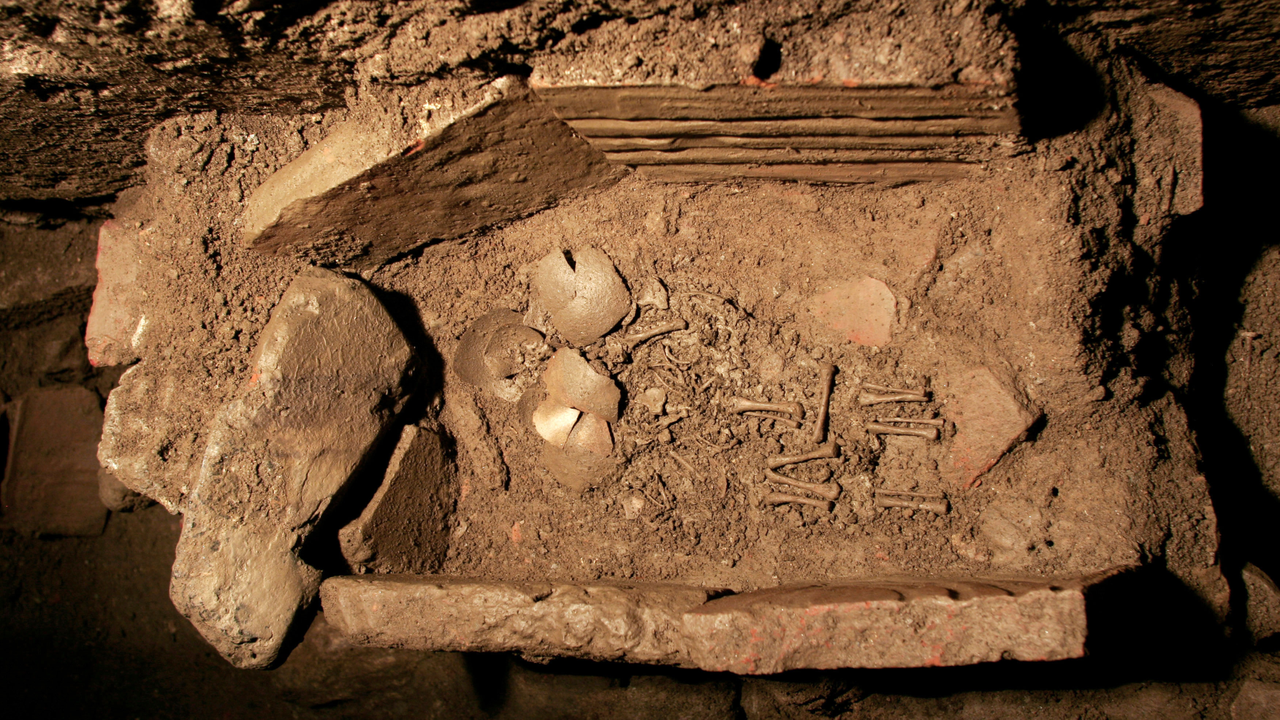
Cut marks suggestive of cannibalism have been discovered on the fossils of an ancient human relative in a cave in Spain, new research finds. But many of the bones from the species, known as Homo antecessor, were from adults — not just children, as previous discoveries had found — adding a new dimension to the cannibalism that was practiced in this area 850,000 years ago.
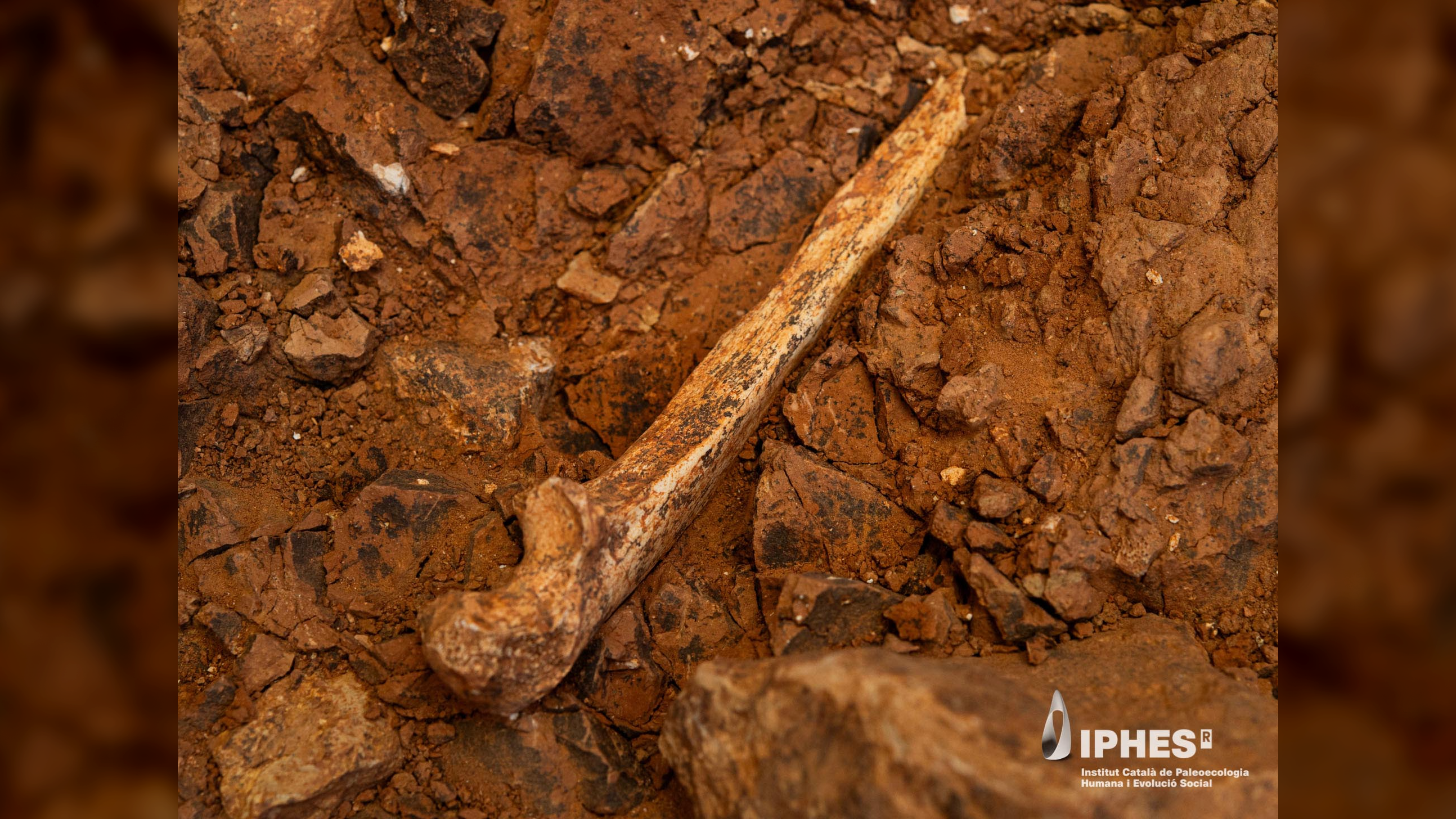
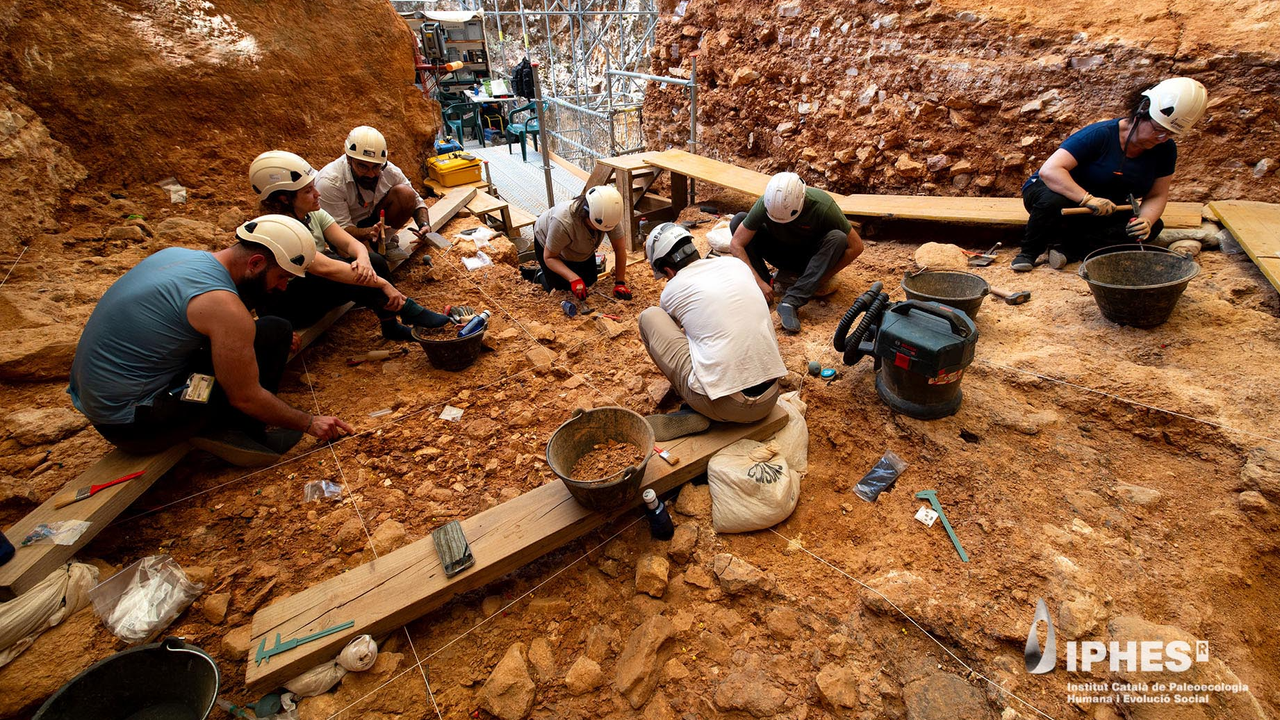
The two dozen bones and teeth were recently found in Gran Dolina cave, part of the Sierra de Atapuerca archaeological complex in northern Spain, according to a July 24 translated statement from the Catalan Institute of Human Paleoecology and Social Evolution (IPHES). Among the remains were fragments of a skull, spine, arm and leg bones, as well as three teeth from several members of the now-extinct H. antecessor, a relative of modern humans that lived in Europe between about 1.2 million and 770,000 years ago. Several of the bone fragments had cut marks from stone tools.
Over the past few decades, researchers have identified numerous cases of cannibalism at Gran Dolina, meaning H. antecessor is the oldest known human relative to eat its own group members for nutritional reasons. In a 2010 study, researchers noted that most of the evidence of cannibalism at Gran Dolina came from the bones of infants and juveniles, who would have been easier to capture and kill as the young, defenseless members of a rival group. But the newly excavated fossils have upended that assumption.
"The discovery of more adult individuals, some of whom also bear cut marks, demonstrates that cannibalism was not restricted to younger individuals," Palmira Saladié, a biological anthropologist at the IPHES who coordinated the work, said in the statement.
The first-ever ulna (forearm bone) discovered from an adult Homo antecessor individual at Gran Dolina in Atapuerca, Spain. (Image credit: Maria D. Guillén / IPHES-CERCA)
The number of individuals found at Gran Dolina has now risen to at least 13, and about half of them are adults. "The increase in the number of individuals, and especially the addition of more adults, allows us to begin understanding this population from a much more complete perspective than ever before," Andreu Ollé, an archaeologist at the IPHES, said in the statement.
Excavation at Gran Dolina has also brought to light an assemblage of stone tools made from flint, quartzite and sandstone, along with animal bones from hyenas, beavers, deer, horses and rhinoceroses, according to the statement.
Evidence of cannibalism at the site is extensive. Stone tools found in the cave are consistent with the cut marks on the human bones, and the animal bones have revealed butchering techniques that were also used on humans. Some of the human bones also had human bite marks, Saladié told Live Science in 2025, which is the "most reliable evidence that the bodies found at the site were indeed consumed."
But while the practice of cannibalism at Gran Dolina has been confirmed, the reason for it is still unclear. Researchers hope the newly discovered adult bones may help them better understand the practice among H. antecessor groups.
"We have only just begun excavating this new area" at Gran Dolina, Marina Mosquera, an archaeologist at the IPHES, said in the statement, "and the first results already demonstrate its enormous scientific potential."
Further analyses on the bones are now underway to explore questions about age-related differences in cannibalism, the number and length of cannibalistic episodes, and the social organization of H. antecessor, according to the statement.
What do you know about early humans? Test your knowledge with our human origins quiz!
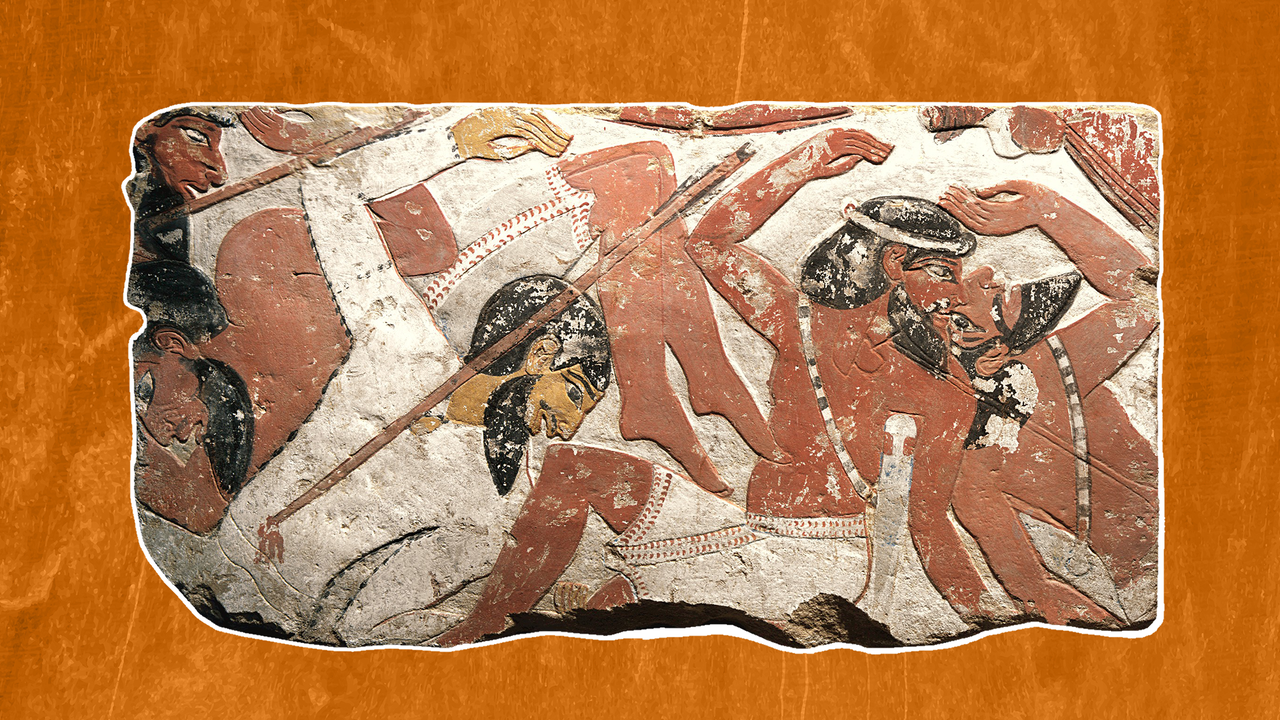
The ancient Egyptians sometimes reused crafted materials. This block, which features a battle scene, was likely created during the reign of Amenhotep II between 1427 and 1400 B.C., during the 18th dynasty. But when it was discovered, the block was being used as part of the foundation of the unfinished mortuary temple of Ramesses IV (who ruled from 1153 to 1147 B.C., during the 20th dynasty).
The painted sandstone slab was discovered in Luxor in 1912 by Egyptologist Herbert E. Winlock, who later became the director of the Metropolitan Museum of Art, which has the block in its collection. In his original publication describing the artifact, Winlock wrote that it featured a scene of an Egyptian pharaoh slaying his enemies with a bow and arrow. "The block may be taken as one of the best preserved specimens of the great imperial pictorial-relief yet discovered," he wrote.
The excellent preservation of the artifact and its vibrant colors was likely due to its reuse in Ramesses IV's temple foundations, Catharine Roehrig, the Met's curator emerita of Egyptian art, wrote in a 2008 explanation of the relief fragment.
Measuring roughly 24 by 45 inches (61 by 115 centimeters), the painted sandstone carving was likely part of a larger scene depicting an Egyptian pharaoh vanquishing an enemy army, according to Roehrig. The pharaoh's chariot and horses appear in the upper-right corner, while a rival soldier tries to avoid being trampled to death. Three of the enemies have been pierced by arrows.
The pointed beards and distinctive clothing suggest the enemies were ancient Syrians or possibly the Hyksos, a Semitic-speaking foreign dynasty that ruled Egypt from around 1640 to 1530 B.C., during the Second Intermediate Period, James P. Allen, former curator of Egyptian art at the Met, wrote in 2005. The battle scene may therefore reflect historical conflicts fought between dynasty 18 pharaohs like Amenhotep II and Asiatic rulers.
But the relief was unlikely to have been created as a commemoration of a specific historical battle. "Their primary purpose was to portray the pharaoh in his role as the victorious defender of Egypt," Roehrig wrote.
For more stunning archaeological discoveries, check out our Astonishing Artifacts archives.
The archaeological campaign carried out during May and June 2026 in Cova Dones, located in the Valencian municipality of Millares in southeastern Spain, has completely transformed the previously known scope of this underground site. The work, led by researchers from the Universities of Alicante and Zaragoza, has documented a total of 120 Latin inscriptions on […]
A team of archaeologists has concluded, after several months of fieldwork, the excavation of a Germanic settlement of exceptional dimensions in the Sieker district, southeast of the German city of Bielefeld. The work, carried out under the supervision of the Landschaftsverband Westfalen-Lippe (LWL), has brought to light a populated structure that specialists are already calling […]
The emergency archaeological intervention promoted by Cantonal Archaeology on Zürcherstrasse Street in Windisch (in the Swiss canton of Aargau) has concluded within the expected timeframe, according to sources from the institution in mid-July. The excavation team, composed of around twenty specialists, worked for eleven months on an area of approximately 4,000 square meters—the future site […]
The presentation of the project took place in the Palestra Grande of the Excavations, at the end of the International Workshop Pompeii: Excavations and Ongoing Research, held in the Park Auditorium. During the meeting, representatives from Italian and foreign institutions and universities participating in research activities at the site shared the progress of their respective […]
The Roman soldiers who guarded the Danube frontier almost two thousand years ago did not live on bread and vegetables alone. The analysis of more than 10,000 animal bones found at the Diana-Karataš fort, in eastern Serbia, demonstrates that meat was a regular part of their diet and that it varied significantly over the six […]
Historians and archaeologists know that maize was a central food source and cultural symbol across the ancient Maya world, but much of what is known has come from studies focused on large Maya cities and elite burials.
Historians and archaeologists know that maize was a central food source and cultural symbol across the ancient Maya world, but much of what is known has come from studies focused on large Maya cities and elite burials.
Archaeologists in El Salvador have uncovered the unusual burial of a face-down human skeleton that was interred along with a ceramic vessel shaped like a sea turtle nearly 3,000 years ago. The burial may be from a pre-Maya civilization that practiced human sacrifice.
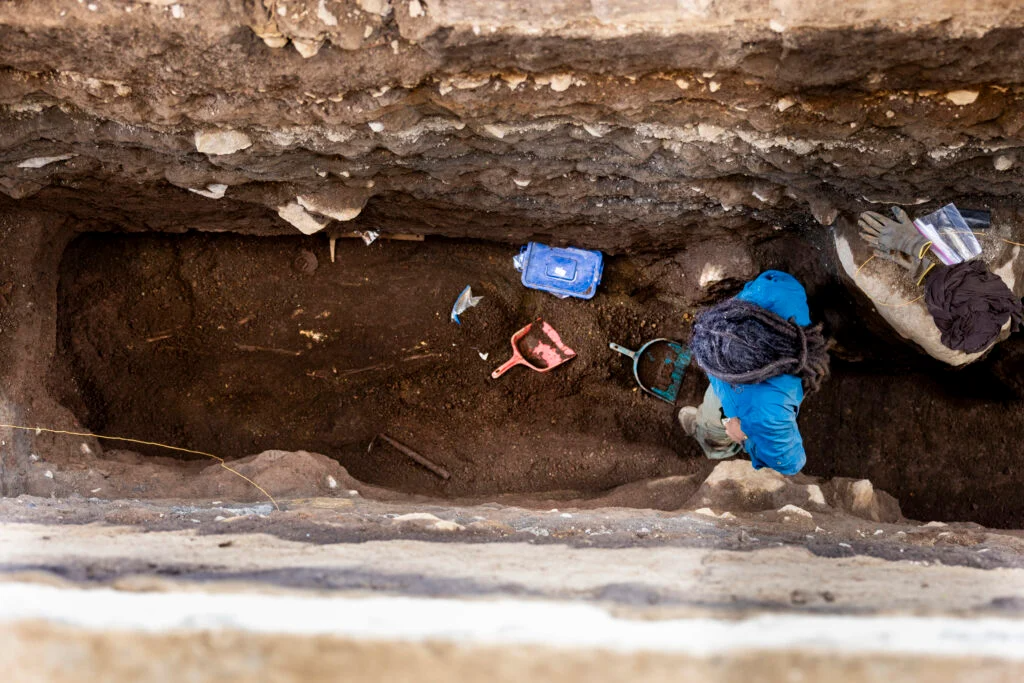
According to a translated statement from El Salvador's Ministry of Culture, the burial was found July 2 in Antiguo Cuscatlán, a suburb of San Salvador, during excavation work directed by Carlos Flores Manzano, an archaeologist and doctoral student at Yale University.
Although the skeleton has not been radiocarbon-dated yet, it was discovered underneath a layer of volcanic ash from an eruption of the Plan de la Laguna volcanic crater thought to date to between 850 and 830 B.C., during the Middle Preclassic period (roughly 1000 to 400 B.C.) in Mesoamerica.
A ceramic vessel shaped like a sea turtle was discovered in the grave. (Image credit: El Salvador Ministry of Culture)
During this period, societies in southeastern Mesoamerica were becoming more sedentary and developing more complex cultures, archaeologists have found. But in addition to the archaeological remains of crop cultivation and painted ceramics discovered over the years in Antiguo Cuscatlán, experts have pointed to some burials as evidence of human sacrifice — and the newly uncovered burial may be similar.
In the late 1970s, archaeologist William R. Fowler excavated at Chalchuapa, an ancient town east of Antiguo Cuscatlán with thousands of years' worth of history. While digging in an area known as Structure E3-7, Fowler found 33 human skeletons — mostly adult males — that he interpreted as sacrifices of war captives due to signs that their feet and arms were bound.
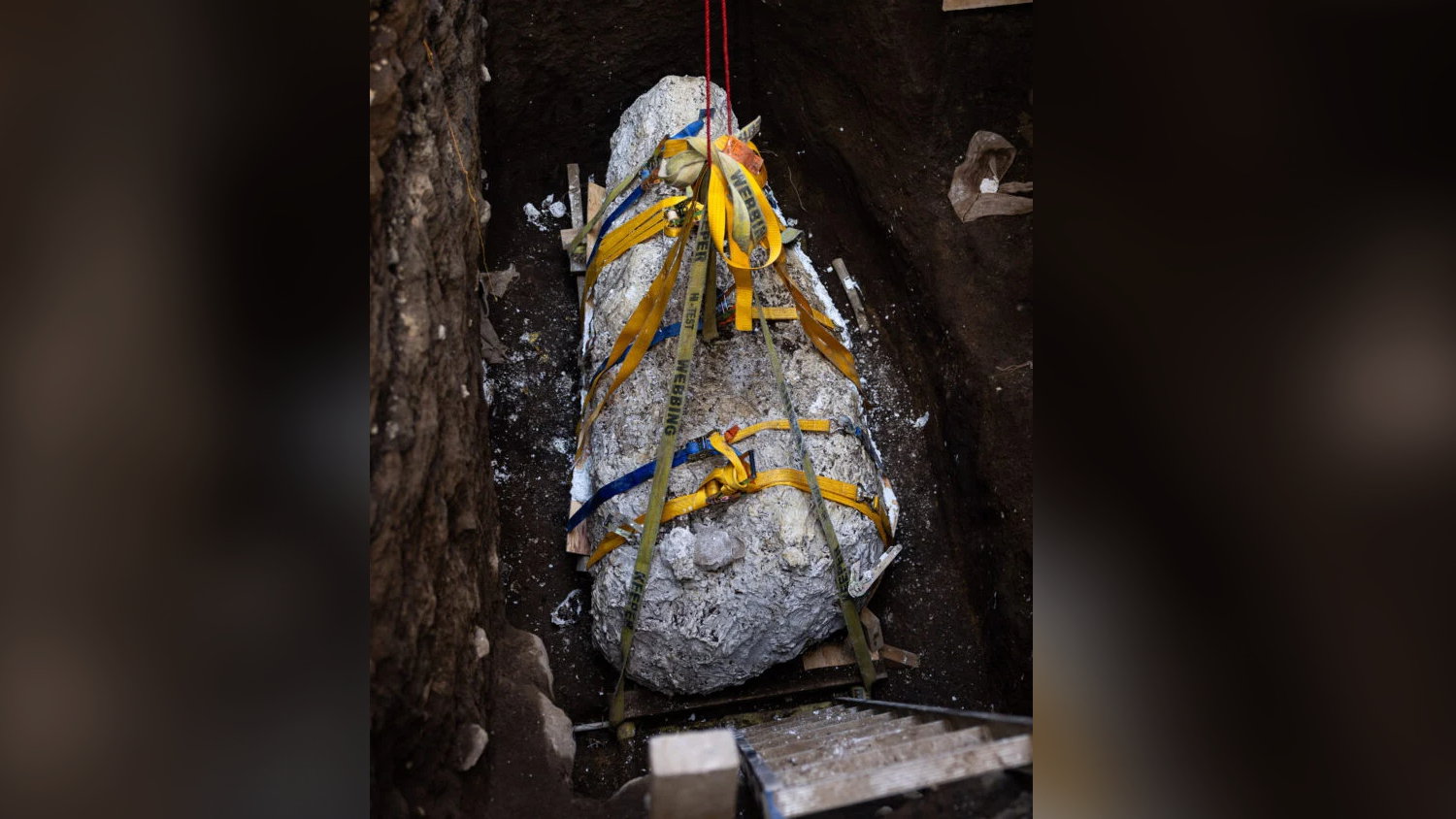
The burial was encased in plaster to prevent damage during recovery. (Image credit: El Salvador Ministry of Culture)
According to the El Salvador Ministry of Culture's statement, the newly uncovered burial is likely not the only one in the area. Archaeologists may eventually find a burial mound with several dozen skeletons, similar to what Fowler uncovered at Chalchuapa. However, Fowler's interpretation of human sacrifice has been questioned in recent years, including by Flores Manzano in a 2020 study.
Instead of being linked to sacrifice, the unusual burial position might be related to an ancient understanding of the cosmos and underworld, Flores Manzano told Diario El Salvador. If that's the case, the sea turtle ceramic vessel found near the skeleton's hand may be associated with Orion's Belt, which features in later Maya astronomy as part of a sacred journey.
The fragile burial was encased in plaster before being removed for further study. Flores Manzano said the skeleton will now undergo chemical analysis so researchers can learn more about the individual's life, diet and possible cause of death. He expects the analyses to take about a year, after which the results will be announced to the public.
How much do you know about the first people to reach the Americas? Find out with our First Americans quiz!
What it means: In archaeology, lithics refers to artifacts made of stone. Scientists used to think Homo sapiens was the only human species to make stone tools. But like many oversimplified stories about human evolution, this one turned out to be a bust. Humans in Indonesia were making sharp-edge stone flakes 1.5 million years ago, before our species even existed.
How to use it in a sentence: Lithics preserve well, so scientists base a lot of what we know about ancient civilizations on their stone tools, while artifacts such as textiles or leather rot away.
Can you crack our science word of the day puzzle, Chain Word?
Researchers from the Vrije Universiteit Brussel (VUB) are playing a key role in the summer exhibition wONDERLAND at the Yper Museum. Thanks to interdisciplinary research on more than 1,000 excavated skeletons, they have succeeded in giving the anonymous medieval city dweller a face and a voice once again after centuries.
Museums, libraries, archives and heritage organizations face a difficult problem: Many of the objects they preserve are made from materials that naturally deteriorate.
Archaeologists have uncovered a rare and unusual burial of premature twins in a 1,200-year-old tomb near the Temple of Artemis at Ephesus in Turkey. Although the burial was found in an abandoned latrine, researchers think the intention was to protect the babies in the afterlife.
"This interment was made in an unexpected and exceptional setting," Lilli Zabrana, an archaeologist at the Austrian Academy of Sciences who co-authored a new study detailing the discovery, told Live Science in an email. Burials previously discovered at Ephesus were made in a dedicated cemetery outside the boundaries of the ancient temple.
"What is even more unusual is that the burial contains two premature infants, who were probably twins, which is a rather rare occurrence," study co-author Caroline Partiot, a bioarchaeologist at the Austrian Academy of Sciences, told Live Science in an email. Evidence of a rare genetic condition found in one of the infants makes the finding even more unique, the researchers noted.
In the study, published online July 13 in the journal Childhood in the Past, Partiot and Zabrana analyzed bones found in a tomb that was likely built in the eighth to ninth century, during the middle Byzantine era. The grave was placed within an abandoned latrine channel, originally built during the second or third century, Zabrana said, but the latrine was a later addition to a Roman odeum — a building used for musical performances — that was built in the first century within the sacred area of the famous Temple of Artemis at Ephesus (one of the Seven Wonders of the Ancient World), which was originally built around 550 B.C.
When excavators opened the cist, or stone-lined grave, they saw two tiny skeletons buried side by side. Based primarily on the size of the bones, Partiot and Zabrana estimated the skeletons were from infants who were likely born prematurely at around 33 to 34 gestational weeks, or 7.5 months in utero. (A full-term pregnancy typically lasts between 39 and 40 weeks.)
"The hypothesis that they were twins is based on the fact that they have very similar ages at death and were buried in direct contact with one another," Partiot said. "However, it will only be possible to confirm whether they were indeed twins through future DNA analyses."
Although the researchers did not find any evidence of trauma or disease on the babies' skeletons, they did notice a rare bone called a supernumerary cervical rib. This hereditary trait involves the growth of an extra rib bone that forms at the back of the neck in about 1% of people and usually doesn't cause any problems. However, Partiot has found that, in babies, there is an association between cervical ribs and anomalies in Hox genes — a group of genes that code for specific body parts during embryonic development — that can lead to stillbirth, prematurity or sudden infant death.
"To the best of our knowledge, no cases of twins with cervical ribs have been documented in an archaeological context" before this one, the researchers wrote.
The twins may have been buried in an odd location outside the known burial grounds at Ephesus because they died as premature infants who probably hadn't been baptized yet, the researchers proposed. The infants' final resting place was likely a kind of "practical compromise" between Christian burial practices and local customs, the researchers wrote in the study.
The team found no evidence of the twins' mother nearby or in the Ephesus cemetery. "It is possible she died at the same time, but it is also possible that she did not; it is difficult to say," Partiot said. "Both infant mortality and maternal mortality were very high at the time."
But the twins' protective cist grave preserved their skeletons for more than a millennium, which "clearly indicates that this was a respectful burial rather than the disposal of human remains," Zabrana said. Ultimately, the tomb reveals a family's "intention to care for the two deceased infants in death, and to acknowledge their fleeting place within the community," the researchers wrote.
What do you know about the bones in your body? Test your knowledge with our human skeleton quiz.
Today, people speak or sign around 7,500 languages. Yet this figure provides only a snapshot of a constantly changing history. How many languages existed before written records? Did agriculture reduce linguistic diversity by allowing expanding farming populations to replace smaller hunter-gatherer groups? Or did population growth initially create more opportunities for new languages to emerge?
The silkworm moth, whose caterpillars have been used in silk production since antiquity, may have been brought to southern Central Asia 4,000 years ago—nearly 2,000 years earlier than previously assumed—according to new research from Washington University in St. Louis.
Human sacrifice was deeply ingrained in Inca civilization. Children and young people were selected for sacrifice to appease the gods and sacred mountain spirits. Being chosen was considered a great honor for both the victims and their families. Now, research into the remains of three individuals sacrificed as part of an ancient Inca ritual is revealing new insights into how they died.
Fish, shellfish, maize, manioc, rice and even chicken eggs. Molecular residues preserved in more than 180 ceramic vessels from southern Brazil have made it possible to reconstruct what different communities were cooking more than a century ago, showing that access to food varied according to the origin and social status of their inhabitants.
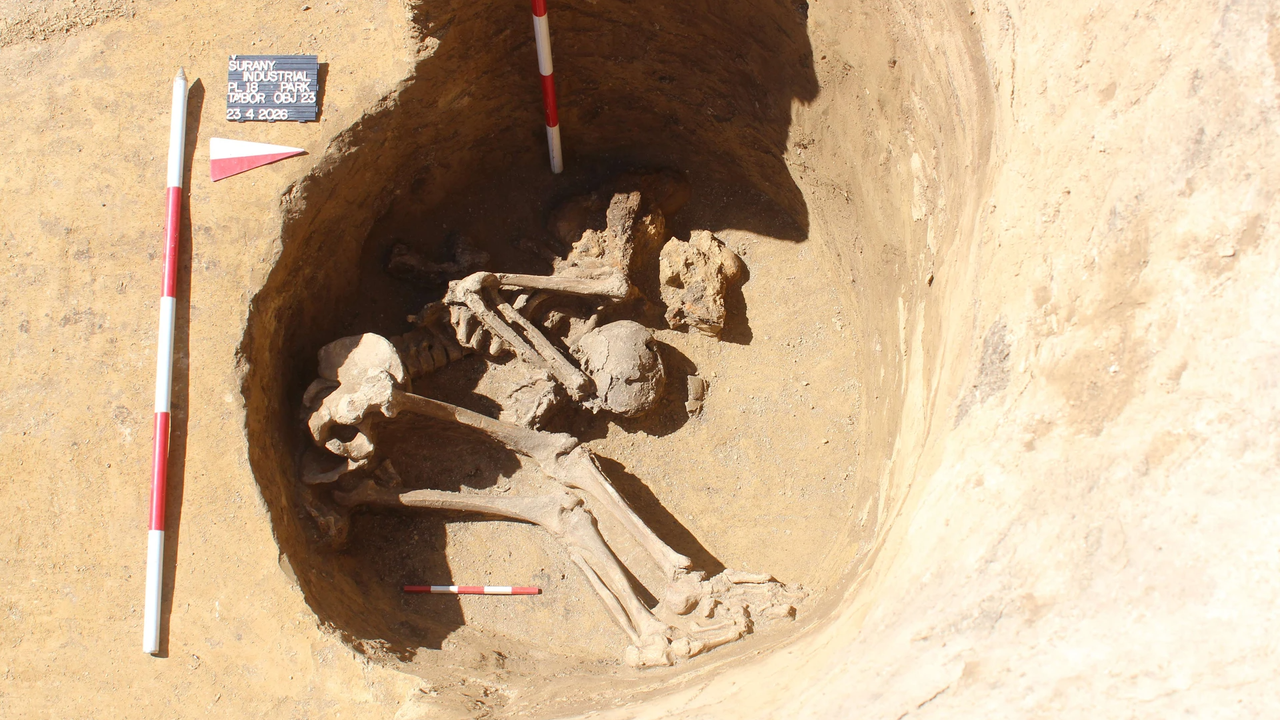
Archaeologists in Slovakia have uncovered a large Roman military camp likely used by Marcus Aurelius' troops during conflicts with Germanic tribes in the late second century. The "extremely rare" camp came as a surprise to archaeologists, as it holds the hastily buried remains of numerous soldiers in unusual graves, including wells.
Remains of the 18.2-acre (7.4 hectare) camp were found near the town of Šurany in southwestern Slovakia, according to a translated July 17 statement from MH Invest, which excavated the area along with the Institute of Archaeology at the Slovak Academy of Sciences (SAS).
"We have a unique opportunity to explore practically an entire Roman marching camp, which is extremely rare in the European context," Matej Ruttkay, director of the SAS Institute of Archaeology, said in the statement. "We are clearly investigating a place that disappeared immediately after the military conflict between the Romans and the Germans."
Between A.D. 166 and 180, the Romans fought a series of battles against a Germanic people called the Marcomanni, who lived north of the Danube River along the border of the Roman Empire in what are now Slovakia and the Czech Republic. Marcus Aurelius, who reigned as Roman emperor from 161 to 180, commanded troops in the Marcomannic Wars with the goal of defending and securing Rome's border against barbarian invasions. But the wars ended upon Marcus Aurelius' death, when his son Commodus negotiated a peace with the Marcomanni, according to third-century Roman historian Cassius Dio.
The newly discovered Roman military camp had clear defensive characteristics, including five entrance gates, fortifications, and a curved ditch-and-rampart system typical of marching or legionary camps, according to the statement. The Šurany camp is only the second Roman military installation ever found in western Slovakia; the first camp, discovered in 2024 by SAS archaeologists, is thought to be where Marcus Aurelius wrote part of his Meditations.
The Šurany camp surprised archaeologists with a large number of skeletons — and parts of skeletons — buried in ditches, wells and hastily dug shallow graves, according to the statement.
"Our preliminary findings indicate that in most cases these are Roman soldiers," Marek Vojteček, an archaeologist at the SAS Institute of Archaeology, said in the statement. "Numerous components of Roman military equipment and weaponry were also found with the skeletal remains, such as spears, arrowheads, parts of helmets, segmented and scale armor, legionary brooches, coins, and the characteristic 'caligae' military sandals, from which iron nails on the soles have been preserved," he said.
X-ray analysis of blocks of clay revealed the intact sandal nails, which are now stored at the SAS Institute of Archaeology's specialized laboratory for further analysis. "It is literally a miracle to see the original footwear of a Roman soldier and even to be able to determine its size," Michal Cheben, an archaeologist at the SAS Institute of Archaeology, said in the statement.
The unusual burials raise important questions about the use and abandonment of this Roman military camp, according to Cheben, including whether the soldiers died from combat injuries or disease and why the bodies weren't looted before being thrown into storage pits and wells. "Laboratory analyses and further genetic and anthropological research may provide answers," Cheben said.
Because the camp was so large and the artifacts so numerous, a comprehensive analysis of the site will take several years and will involve international experts in carbon dating, soil analysis, isotopic analysis and ancient DNA, according to the statement.
"This is a long-term process, so many results will only become known in the coming years," Ruttkay said.
From Augustus to Nero, see how much you know about ancient Rome's famous leaders with our Roman emperor quiz!
For more than a century, two enormous structures cutting across the desert southwest of Egypt’s famous Red Pyramid have been assumed to be ancient transport features—perhaps roads or ramps used to haul limestone blocks duringpyramidconstruction. However, a new study argues that archaeologists may have been looking at the wrong answer all along.
Instead of transportation infrastructure, researchers now suggest the mysterious earthworks could represent a nearly 4,600-year-old sophisticated hydraulic engineering system, with two giant dams built to capture, regulate, and redirect water through the desert landscape.
If confirmed, the discovery would dramatically revise our understanding of how thebuilders of Egypt’s pyramidsengineered not only stone, but water itself.
The new research, published in Nature Heritage Science, combines satellite imagery, historical maps, digital elevation modeling, watershed analysis, and paleoclimate data to reexamine the little-studied features at Dahshur, the royal necropolis where Pharaoh Snefru built both the Bent Pyramid and the Red Pyramid.
While no excavation has yet confirmed the interpretation, researchers argue that the structures display multiple characteristics far more consistent with dams than with construction ramps.
“This study presents, for the first time, evidence of two ancient, giant dams built across Wadi Dahshur, Egypt, along with a water diversion channel west of the Red Pyramid,” researchers write. “Satellite imagery and watershed mapping show that the two long structures, previously interpreted as stone transport ramps, exhibit the technical signature of dams, each extending 600–700 m and anchored to the valley flanks.”
Egypt’s Red Pyramid of Dahshur. (Image Source: Olaf Tausch/Wikicommons)
The findings add a fascinating new chapter to one of archaeology’s enduring mysteries. How did ancient Egyptians organize the enormous logistical operation required to construct the pyramids during the Fourth Dynasty?
The Red Pyramid, completed around 2600 BCE during Snefru’s reign, is widely recognized as Egypt’s first successful “true” pyramid. Scientists have spent decades studying the monument itself. However, much less attention has been devoted to the surrounding landscape and the engineering systems that may have supported its construction.
According to researchers, the wider landscape may have been far more technologically sophisticated than previously appreciated.
The two massive structures stretch approximately 2,000 to 2,300 feet (600 to 700 meters) across Wadi Dahshur. Earlier researchers interpreted one as a transport route leading from nearby quarries while considering the other a natural rise in the terrain. However, the new analysis points to several features that appear difficult to reconcile with those interpretations.
Rather than following the valley, both structures run directly across it, anchoring into the surrounding hillsides much like embankment dams. One also contains a distinctive zigzag geometry that the researchers argue resembles a duckbill spillway—a specialized overflow design still used in modern hydraulic engineering because it can safely release significantly larger volumes of water than a straight spillway of the same width.
No securely identified duckbill-style spillway has previously been documented from ancient Egypt. So if that interpretation is correct, it would mean that the Dahshur structure is one of the earliest known examples of this type of hydraulic design anywhere in the world.
Researchers believe the two structures may have functioned together as a multi-stage flood-control system.
In their proposed scenario, one dam traps sediment carried by flash floodswhile allowing cleaner water to pass into a second reservoir. From there, water could have been diverted through an artificial channel running remarkably close to the western side of the Red Pyramid before reconnecting with the surrounding drainage network.
That canal is especially intriguing because it raises the possibility that water may have played a more direct role inpyramid construction than traditionally assumed.
Historic Royal Air Force aerial photograph of Egypt’s Red Pyramid showing the two enigmatic linear structures southwest of the pyramid that a new study suggests may be ancient dams rather than long-assumed transport ramps. (Image Source: Royal Air Force/UCL Institute of Archaeology/Landreau, et al.)
Researchers have long known that the ancient Egyptiansexploited waterways for transporting heavy stone. Previous discoveries at Giza revealed harbor basins and canals associated with pyramid construction, while papyrus records from Wadi el-Jarf describe crews transporting limestone by boat during Khufu’s reign.
The newly proposed Dahshur canal could represent another piece of that larger hydraulic network.
If maintained at a stable water level, it could have assisted in transporting heavy materials on barges or water-assisted sleds over relatively flat ground. Even beyond transportation, the water could have supported workers, supplied construction areas, mixed mortar, reduced dust, and later been adapted for irrigation or ceremonial uses.
The hypothesis also depends on a very different view of Egypt’s climate nearly 4,600 years ago.
Today, the Dahshur plateau lies within an extremely arid landscape, making the idea of dams initially seem ridiculous. However, paleoclimate evidence reviewed by the researchers suggests northern Egypt during the Old Kingdom was considerably wetter than it is today.
Although the Sahara was already drying following the end of the African Humid Period, seasonal rainfall appears to have remained substantially higher than modern levels. Even infrequent storms could have produced powerful flash floods racing through normally dry wadis.
The study estimates that while average annual rainfall may have ranged between roughly 2 to 6 inches (50 to 150 millimeters), individual storm events could generate enough runoff to create destructive floodwaters requiring engineered control systems. Rather than depending solely on the annual Nile inundation, Egyptian engineers may also have exploited seasonal runoff flowing through desert valleys.
That broader perspective fits with growing evidence that water management extended well beyond the Nile floodplain itself.
Other nearby examples showing evidence of water management well beyond the Nile floodplain include the famous Sadd el-Kafara dam, located less than 12 miles (20 kilometers) east of Dahshur, which is generally regarded as one of the world’s oldest large dams.
Additional archaeological sites around Saqqara and Giza likewise show increasing evidence of canals, flood-control structures, and carefully engineered landscapes associated with pyramid construction.
Even so, the researchers stress that their interpretation is still a hypothesis awaiting archaeological confirmation.
The structures themselves have never been excavated. Much of the area lies within a military zone, limiting direct access, while centuries of windblown sand have buried much of the earliest construction. Modern roads, pipelines, and other infrastructure have also altered parts of the site, making efforts to reconstruct its original appearance more difficult.
Future excavations will therefore be critical. Researchers hope sediment studies could determine whether deposits behind the structures resulted from flowing water rather than drifting desert sand.
Excavations may also reveal construction techniques, protective stonework, spillway features, and datable material capable of establishing whether the structures truly belong to Snefru’s era.
If those investigations support the new interpretation, they would suggest that Old Kingdom engineers possessed a much wider understanding of landscape-scale hydraulic engineering than previously identified.
More intriguing, the study hints that similar forgotten infrastructure could still lie covered beneath Egypt’s deserts, disguised as ordinary landscape features or misidentified for generations.
“Nevertheless, the convergence of geomorphological evidence, watershed connectivity, hydraulic plausibility, and regional cultural context supports the interpretation of the Dahshur structures as intentional large-scale hydraulic installations rather than incidental landscape features,” researchers write. “Other hydraulic structures are most probably lost in the desert, waiting to be identified as such.”
Tim McMillan is a retired law enforcement executive, investigative reporter and co-founder of The Debrief. His writing typically focuses on defense, national security, the Intelligence Community and topics related to psychology. You can follow Tim on Twitter:@LtTimMcMillan. Tim can be reached by email: tim@thedebrief.org or through encrypted email:LtTimMcMillan@protonmail.com

 Login