 Login

Updated 10-5-2026 – Big Search Engine List: Who Indexes What?
Last updated: 10-5-2026 For SEOs working at scale, understanding which search engines actually crawl and index the web, and which…

Breathing clean air depends on filters that do more than trap particles—they must hold them. In many conventional systems, captured dust can loosen under airflow and mechanical disturbances, which lowers filtration efficiency, shortens service life, and forces more frequent replacement. The bottleneck is not capture alone, but durable retention of what the filter catches.
A research team led by Professor Sanghyuk Wooh and Professor Chae Bin Kim has introduced a dynamic imine bond adhesive (DIBA) designed to keep airborne particles embedded. The concept is to marry solid-like stability with liquid-like adhesion, so the filter surface can “refresh” itself while working.
The coating is built by crosslinking polydimethylsiloxane (PDMS) via dynamic Schiff base chemistry. This chemistry enables bond exchange at the interface, allowing adhesive sites to reorganize over time rather than degrade into inert residue. The result is a coating that is both mechanically robust and chemically active.
When sprayed onto commercially available filter media, the DIBA layer behaves like an internal reservoir of stickiness. As particles are collected, they are drawn into the adhesive film rather than remaining only on the exterior fibers. Capillary-driven wetting then forms adhesive bridges around individual particulates, increasing the real contact area that governs holding strength.
Performance tests combined chemical, mechanical, and interfacial characterization—rheology, FTIR, atomic force microscopy, and microscopy—with filtration trials. The coating boosted particle adhesion dramatically, approaching a nearly seventy-fold improvement compared with typical behavior. Importantly, the adhesive renewal process helps counteract the gradual loss of attachment that plagues standard filters.
Filtration efficiency improved by roughly 10–30% across multiple commercial materials, without raising pressure drop. The upgrade is significant in practical terms: one reported shift is from MERV 6 toward MERV 11, indicating better capture at the same airflow penalty.
The coated filters also sustained operation under high-speed airflow (up to 20 m/s) and delayed pore clogging. By maintaining effective particulate capture for longer intervals, the DIBA approach extended filter lifespan by nearly a factor of two relative to conventional designs.
Because DIBA is applied through simple spray-coating, it is compatible with existing manufacturing and retrofit workflows. The researchers highlight applications ranging from HVAC and air purifiers to cleanrooms, industrial dust collectors, automotive cabin filters, and personal protective equipment.
More broadly, the work suggests a platform for next-generation filtration where energy use and replacement schedules improve simultaneously. The dynamic adhesive strategy could be adapted to other separations, including water purification and environmental remediation, wherever particles need to be captured and kept immobilized.
Subject of Research: Not applicable
Article Title: A Super-Adhesive Air Filter With Capillarity-Mediated Spontaneous Particle Absorption via Dynamic Bond Exchange
News Publication Date: 22-Apr-2026
Web References: https://doi.org/10.1002/adma.202600006
References: DOI: 10.1002/adma.202600006
Image Credits: Professor Sanghyuk Wooh from Chung-Ang University, Republic of Korea and Professor Chae Bin Kim from Pusan National University, Republic of Korea
Air filtration, dynamic adhesive chemistry, Schiff base, PDMS, particle retention, capillarity, MERV, particulate matter, surface engineering, polymers
Glenview, Illinois—CHEST, the American College of Chest Physicians’ flagship journal portfolio, has reported a major milestone for its open-access publication CHEST® Critical Care: the journal has earned its first Journal Impact Factor of 2.7. Released annually by Clarivate through the Journal Citation Reports, the metric reflects the average number of citations received by articles published in a journal, serving as a widely used proxy for scholarly influence.
In practical terms, an Impact Factor offers more than prestige. It functions as a signal to authors, clinicians, and research teams that the work circulating in a journal is being engaged by the wider scientific and medical community—particularly important in time-sensitive domains like intensive care medicine, where findings can influence protocols and bedside decision-making.
Hayley Gershengorn, MD, FCCP, Editor in Chief of CHEST Critical Care, emphasized that the achievement is rooted in the ecosystem around the journal. Authors contribute original and reproducible studies; reviewers help refine rigor and clarity; editorial leadership maintains standards; and readers ensure the research travels beyond publication.
The journal was designed to accelerate dissemination of high-quality critical care research while keeping access frictionless. Because CHEST Critical Care is fully open access, its content can be read by practitioners, investigators, and policymakers worldwide without subscription barriers—an element that can broaden citation pathways and facilitate adoption of evidence-based practices.
Beyond original studies, the journal publishes a range of formats, including reviews and case reports, as well as “How I Do It” clinical education articles. This blend supports both scientific discovery and translational learning, which can be critical for managing complex syndromes such as sepsis, respiratory failure, and septic shock.
For biomedical audiences, open-access visibility plus peer-reviewed credibility creates a compelling combination: findings are discoverable, accessible, and citable. That coupling helps explain why emerging journals can gain momentum quickly when their content resonates with urgent clinical needs.
To follow updates across the CHEST journal ecosystem, readers can visit the CHEST website and track news via the journal’s social channels. The organization frames the Impact Factor as a validation of community effort—and as motivation to keep publishing research that improves outcomes in critical care.
Subject of Research: Critical care medicine; scholarly publishing metrics
Article Title: CHEST Critical Care Achieves First Journal Impact Factor of 2.7
News Publication Date: Not provided
Web References: https://www.chestnet.org/guidelines-and-topic-collections/publications ; https://www.twitter.com/journal_chest
References: Clarivate Journal Citation Reports (Journal Impact Factor methodology)
Image Credits: Not provided
Keywords: CHEST Critical Care, Journal Impact Factor, Clarivate, open access publishing, critical care medicine, citations, peer review, intensive care research
A pod of killer whales has sunk another yacht off northwestern Spain, reinforcing a bizarre pattern of vessel encounters that has stretched on for more than six years along the Iberian coast.
In the incident, reported Friday (July 24), the whales destroyed the rudder of a 46-foot-long (14 meters) Swedish-flagged yacht off Galicia in northwestern Spain, forcing the two people aboard to send a mayday call. A Spanish coastguard vessel towed them to safety, Spain-based news outlet Sur in English reported.
The incident came after several other encounters in the same waters earlier that week, including one in which a pleasure craft called the Idem sank near Estaca de Bares, the northernmost point of the Iberian Peninsula. The ship sank after the killer whales, also known as orcas (Orcinus orca), destroyed its rudder. Both occupants were rescued.
That makes the Idem at least the eighth boat lost to these encounters since they began, according to groups that track the incidents. More than 700 interactions between orcas and vessels have been logged since 2020, ranging from a brief nudge to a multihour rudder-ramming session, according to the Atlantic Orca Working Group, the Spanish-Portuguese research collective that has coordinated data collection on the phenomenon from the start.
Researchers have identified roughly 15 individual killer whales involved in these incidents, out of an Iberian subpopulation of fewer than 50. The group is so small that the International Union for Conservation of Nature lists it as critically endangered, as it is dependent mainly on Atlantic bluefin tuna for its food.
The family-like cluster is thought to be led by a female known as White Gladis. That name comes from an early theory researchers themselves once floated: that White Gladis suffered some kind of traumatic run-in with a boat and that the encounter flipped a behavioral switch, with her being the first in the group to start ramming rudders.
Alfredo López Fernandez, a biologist with the Atlantic Orca Working Group, told Live Science in 2023 that this kind of defensive, trauma-driven origin was gaining traction among researchers at the time. But "defensive" isn't "vengeful" — and the idea has since curdled online into a punchier revenge story most scientists studying the population don't endorse.
So why do orcas go after the boats? Nobody knows for certain, but the leading explanation is simple: Orcas are some of the most social animals on the planet, and social animals pick up habits from one another the way trends spread through a friend group. Researchers describe the behavior as socially learned — young orcas appear to watch adults ram a rudder and then try it themselves, and the habit has spread through the group over time.
A 2022 study in the journal Marine Mammal Science found that the killer whales usually targeted sailing boats and often lost interest after striking the rudder and causing the boat to stop.
None of that makes the encounters any less disruptive for the people living through them. The standard guidance from authorities like the Maritime Safety and Rescue Society and the Atlantic Orca Working Group, refined over repeated encounters, is to cut the engine, drop the sails if possible, disengage the autopilot, and let go of the wheel entirely, giving the orcas nothing to push against. Boats that follow this protocol tend to sustain less damage than those that don’t.
Sailors are asked to report every encounter. Each one adds to the data scientists are using to try to solve a years-long mystery.

We've all heard of the fearsome megalodon, the largest known shark to have ever lived, but how about its predecessors, contemporaries and successors? Shark Week premiere "Jurassic Sharks" uses CGI to flesh out the fossils of ancient cartilaginous fish, and Live Science is here with all the TV and streaming details.
► Date: Tuesday, July 28 at 8 p.m. ET/PT
► TV: Discovery (US)
► US stream: YouTube TV / DirecTV / Hulu + Live TV / HBO Max
► Watch anywhere: Get 85% off Surfshark VPN
Using fossil records and "cutting-edge" visual effects, "Jurassic Sharks" will attempt to trace the ancestry of modern-day species back through millions of years, and build a picture of the prehistoric ocean, complete with superpredators that are both weird and awe-inspiring.
It's a must-watch for budding palaeontologists and animal fans alike.
"Jurassic Sharks" airs on Discovery at 8 p.m. ET/PT on Tuesday, July 28.
If you don't have the Discovery channel on cable, it's available on a streaming basis from several cable alternatives. Best of all, many of the services offer a free trial to new customers.
YouTube TV usually costs $82.99 per month but comes with a free trial and $15 off each of your first five months.
The DirecTV MyEntertainment genre pack costs $42.99 per month after a 5-day free trial, and Hulu + Live TV costs $89.99 per month after a 3-day free trial.
Alternatively, the HBO Max streaming service starts at $10.99 per month.
"Shark Week" programming typically airs on Discovery+ in the U.K. at a later date.
At the time of publication, plans for "Jurassic Sharks" and the other 2026 "Shark Week" specials are still firmly under wraps.
If you're currently in the U.K. for work or on vacation from the U.S., you can still catch "Jurassic Sharks" by using a VPN, such as Surfshark.
If you're traveling abroad you can access your usual streaming services from anywhere with a good VPN.
A VPN, or virtual private network, is a piece of internet security software that can alter your device's digital location, unlocking the geo-restrictions on most streaming platforms.
Our expert colleagues at TechRadar rate Surfshark as one of the best VPNs. Not only is it great for unblocking streaming services, it has top-level security features, a reasonable price tag and, right now, a big discount.

Live Science x Surfshark Exclusive Shark Week Deal
Whether you're tuning into Discovery's Shark Week or diving deep into the web, privacy matters. Surfshark keeps your connection encrypted and your data out of sight – no matter what waters you're navigating.
Protect unlimited devices for just $2.39/mo + 4 Extra Months. Save 85%! Shark Week Special runs from July 26 to August 1, 2026.
🥇 From $2.39 per month
✅ Block ads, trackers, scams, and malware
🤝 30-day money-back guarantee
🏆 4 Extra monthsView Deal
We test and review VPN services in the context of legal recreational uses. For example: 1. Accessing a service from another country (subject to the terms and conditions of that service). 2. Protecting your online security and strengthening your online privacy when abroad. We do not support or condone the illegal or malicious use of VPN services. Consuming pirated content that is paid-for is neither endorsed nor approved by Future Publishing.

Great white sharks can launch themselves clear out of the ocean, but why they breach so dramatically remains one of marine biology's biggest mysteries. "Air Jaws: Red, White and Breach", premiering during "Shark Week" 2026, follows a team of filmmakers and scientists as they investigate the shark's behavior.
► Date: Sunday, July 26 at 9 p.m. ET/PT
► TV: Discovery (US)
► Stream: YouTube TV / DirecTV / Hulu + Live TV / HBO Max
► Watch anywhere: Get 85% off Surfshark VPN
"Shark Week" is now in its 25th year, and to mark this milestone, Jeff Kurr and marine biologist Alison Towner head to the Californian coast, which has seen an unexpected surge of great whites (Carcharodon carcharias) breaching the surface.
With cinematographer Andy Casagrande in tow, "Air Jaws: Red, White and Breach" aims to capture this behavior in full glory, and to establish why breaching great whites have entered American waters.
"Air Jaws: Red, White and Breach" airs on Discovery at 9 p.m. ET/PT on Sunday, July 26.
If you don't have the Discovery channel on cable, it's available on a streaming basis from several cable alternatives. Best of all, many of the services offer a free trial to new customers.
YouTube TV usually costs $82.99 per month but comes with a free trial and $15 off each of your first five months.
The DirecTV MyEntertainment genre pack costs $42.99 per month after a 5-day free trial, and Hulu + Live TV costs $89.99 per month after a 3-day free trial.
Alternatively, the HBO Max streaming service starts at $10.99 per month.
"Shark Week" programming typically airs on Discovery+ in the U.K. at a later date.
At the time of publication, plans for "Air Jaws: Red, White and Breach" and the other 2026 specials are still firmly under wraps.
If you're currently in the U.K. for work or on vacation from the U.S., you can still catch "Air Jaws: Red, White and Breach" by using a VPN, such as Surfshark.
If you're traveling abroad you can access your usual streaming services from anywhere with a good VPN.
A VPN, or virtual private network, is a piece of internet security software that can alter your device's digital location, unlocking the geo-restrictions on most streaming platforms.
Our expert colleagues at TechRadar rate Surfshark as one of the best VPNs. Not only is it great for unblocking streaming services, it has top-level security features, a reasonable price tag and, right now, a big discount.
Live Science x Surfshark Exclusive "Shark Week" Deal
Whether you're tuning into Discovery's Shark Week or diving deep into the web, privacy matters. Surfshark keeps your connection encrypted and your data out of sight – no matter what waters you're navigating.
Protect unlimited devices for just $2.39/mo + 4 Extra Months. Save 85%! Shark Week Special runs from July 26 to August 1, 2026.
🥇 From $2.39 per month
✅ Block ads, trackers, scams, and malware
🤝 30-day money-back guarantee
🏆 4 Extra monthsView Deal
We test and review VPN services in the context of legal recreational uses. For example: 1. Accessing a service from another country (subject to the terms and conditions of that service). 2. Protecting your online security and strengthening your online privacy when abroad. We do not support or condone the illegal or malicious use of VPN services. Consuming pirated content that is paid-for is neither endorsed nor approved by Future Publishing.

Specially engineered materials known as metamaterials can boost heat transfer over nanoscale distances compared with conventional materials, thanks to the coupling of quasiparticles known as surface phonon polaritons. This new result, from researchers at Carnegie Mellon University, Stanford University and Purdue University, all in the US, could help improve technologies such as on-chip cooling and thermophotovoltaic systems.
The maximum radiative heat transfer between two macroscopic-sized objects at different temperatures can be estimated by assuming that the objects are “black bodies”. These are ideal entities that absorb all the radiation falling on them and emit thermal radiation according to Planck’s law. This approximation breaks down, however, when the objects are placed within a few hundred nanometres of each other. In this case, they begin to exchange heat much more strongly thanks to a phenomenon known as near-field enhancement, which can exceed the far-field black body limit by several orders of magnitude. This effect is already put to good use in technologies such as heat extraction and thermophotovoltaic systems.
Until now, near-field enhancement had only been observed and studied in naturally occurring materials, such as polar dielectrics, doped semiconductors and metals, explain the study leaders, mechanical engineer Sheng Shen at Carnegie Mellon and electrical engineer Shanhui Fan from Stanford. Although theoretical studies have predicted that metamaterials could surpass the performance limits of naturally occurring materials, there had not previously been any experimental demonstration of metamaterial-enhanced near-field radiative heat transfer. Identifying such metamaterials would be of great use as it would allow the effect to be exploited more widely.
Shen, Fan and colleagues observed enhanced near-field radiative heat transfer in a nanodevice platform comprising metamaterials based on arrays of gold split-ring resonators patterned on silicon nitride membranes. The researchers positioned the metamaterials so that they faced each other across a nanoscale gap, observing that heat transfer between them increased by as much as four times compared with similar setups using ordinary materials.
As well as confirming that radiative heat transfer is enhanced over short distances for these metamaterials, the results suggest that the interaction between metamaterials and surface phonon polaritons is responsible for the increase. These quasiparticles are produced by phonons, which are vibrations of the crystalline lattice, as they interact with oscillating electromagnetic fields at the material surface – in this case, those at the surface of the gold metamaterial structures. This coupling allows heat to tunnel across the gap between them and the silicon nitride membranes more efficiently – something that increases the energy flow between the two, explains Shen.
According to the researchers, the effect could help enhance and manipulate heat exchange at the nanoscale and could find applications in next-generation cooling for high-performance microelectronics, thermophotovoltaic systems for waste-heat harvesting and high-sensitivity infrared detection.
There are still a number of challenges to overcome before such applications see the light of day, however. On the theoretical side, notes Fan, the complex interactions between the metamaterial units and their supporting substrate make numerical calculations and analyses exceptionally difficult. “To address this difficulty, we have developed a numerical tool based on fluctuational electrodynamics to design the structures, alongside a coupled-mode theory model to fully elucidate the underlying physics,” he says.
Experimentally, measuring nanowatt-level radiative heat exchange across a sub-micron gap also demands extreme precision. The researchers tackled this challenge by designing an on-chip device using a “suspended thermal bridge” method that transforms the minute heat exchange into a measurable temperature rise. Indeed, they succeeded in detecting heat flow of less than 1 nW in these nanodevices.
They report their work in Nature.
The post Metamaterial boosts heat transfer on the nanoscale appeared first on Physics World.
Frost can spread not only along surfaces but also via suspended “ice bridges” that form above them. The discovery of this previously unknown frost-propagation pathway could lead to new ways of making surfaces that resist frost growth, thereby improving the performance of devices that operate in cold, humid environments.
Frost accumulation is a major problem in refrigerators, aeroplanes and heat pumps, to name just a few. On the microscale, it primarily spreads from one individual freezing water droplet to the next via two-dimensional bridges, or causeways, that temporarily form on the surface of an object. Although the wettability of the surface is known to affect the spreading process, the mechanism behind this effect was poorly understood.
To learn more, a team led by physicist Nenad Miljkovic at the University of Illinois Urbana-Champaign, US imaged the channel-forming process using high-speed high-resolution optical microscopy combined with a profilometry technique called focal plane shift imaging (FPSI). They found that frost can spread in two distinct ways. On hydrophilic surfaces, causeways form along the substrate, in line with current theoretical models. On superhydrophobic surfaces, however, the situation is quite different. Here, frost spreads via ice bridges that are suspended above the surface in three-dimensional space.
This suspended or “out-of-plane” growth mode represents a fundamentally different pathway for frost propagation, says team member Siyan Yang, the first author of a Nature Physics paper about the work. Previous studies likely overlooked this mechanism, Yang adds, because of limitations in experimental observations.
The researchers also studied the growth rate of the different bridge types. They found that suspended bridges grew slower than bridges on the surface due to the reduced thermal coupling between the bridges and the cold substrate. This reduced coupling correspondingly reduces the vapour pressure difference between ice and water droplets (which depends on surface droplet geometry, itself controlled by wettability) and drives down ice growth. Indeed, the team found that the speed at which frost spreads fell more than 80% in this mode.
To test the practical relevance of their findings, the researchers applied superhydrophobic coatings to metre-sized structures such as the finned-tube aluminium heat exchangers commonly found in air conditioners, refrigerators and automotive systems. Condensation frosting on such systems poses a major efficiency challenge because frost has an inherently low thermal conductivity. When it accumulates on heat exchangers, it therefore severely impedes heat being exchanged with the surrounding air.
On uncoated commercial heat exchangers that are inherently hydrophilic, the team found that frost rapidly forms and spreads across the fins. “In the superhydrophobic counterparts, however, the onset of frost formation is delayed, and it propagates much more slowly,” Yang says. In the two kinds of commercial systems they tested, she adds, applying superhydrophobic coatings nearly doubled the frost propagation time.
The results suggest that designers of anti-frost surfaces could benefit from trying this new strategy, Yang says. “Rather than focusing solely on delaying initial ice nucleation, surfaces could be engineered to control the geometry of ice-bridge growth and interrupt frost spreading, thereby improving the performance and energy efficiency of a host of equipment operating in cold and humid environments,” she tells Physics World.
The team is now investigating how surface chemistry and surface structures influence suspended ice-bridge formation and frost propagation. “We are also exploring ways to translate the fundamental mechanism into scalable anti-frost coatings and heat-exchanger technologies,” Yang reveals. “Ultimately, our goal is to establish predictive design rules that connect microscale ice-bridge dynamics with real-world frost management performance.”
The post Frost spreads across surfaces via suspended ‘ice bridges’ appeared first on Physics World.
A new glass screen containing nanoclusters of copper iodide could create higher-resolution X-ray images using a much lower dose of radiation. The scintillating screen, which also works underwater, can be moulded into curved shapes, overcoming key limitations of the conventional rigid, flat-panel detectors used for many medical imaging applications. These include mammography, say the researchers at King Abdullah University of Science and Technology (KAUST), Saudi Arabia, and the University of Hamburg, Germany, who developed it.
X-ray scintillators capture X-rays passing through an object and convert them into flashes of visible light to form a digital image, explains physicist Mehmet Bayindir of KAUST and the University of Hamburg. The more efficient the scintillator is at this conversion, the clearer the final image and the lower dose of radiation required to generate it.
He and his colleagues’ detailed analyses of a scintillator containing nanoclusters of copper, iodine and an organic ligand revealed a fascinating phenomenon: its photoluminescence and radioluminescence pathways appear to have distinct physical origins. This implies that the scintillating light yield – that is, how much visible light a material emits when struck by high-energy X-rays – can be separated from its standard photoluminescence quantum yield (how efficiently the material converts absorbed ultraviolet or visible light into a different wavelength of light).
Until now, Bayindir explains, it was assumed that a material must have high photoluminescence efficiency to perform well when excited by X-rays. “Breaking this assumption directly challenges conventional wisdom and opens up a promising new design space for making high-performance scintillators – provided that materials highly responsive to radiation can be engineered of course.”
In recent years, researchers have been looking into cubane-type [Cu4I4L4, L: organic ligand] nanocluster glasses (NCGs) for use in this context. These belong to a family of hybrid transparent luminescent amorphous materials that show much promise for X-ray scintillation applications.
In their latest work, detailed in ACS Energy Letters, Bayindir and colleagues studied several stable alkyl-phosphine ligand-based NCGs. In these amorphous zero-dimensional quantum systems, ionizing radiation is mostly absorbed by the heavy iodine and copper elements at the cluster cores. The researchers used these NCGs to make large-area, free-standing scintillating screens – both planar and conformal – with ultrasmooth surfaces, using a fabrication methodology that they developed in their lab.
The screens are robust and can image samples – both electronic and biological – with sub-3 µm spatial resolution. They also work underwater, something that is difficult for conventional screens. The researchers demonstrated this by capturing a very clear scan of a fish’s tail in water that was indistinguishable from an image taken in air.
Such a glass scintillator represents a significant milestone, says team leader Osman Bakr. “Indeed, the level of precision we obtained allows us to capture highly detailed, high-contrast X-ray images of complex internal microstructures, such as the delicate anatomy of a microscopic insect and an electronic memory card, to cite but two examples,” he says.
“Combined with the fact that this new nanocluster glass becomes almost rubbery when heated to 42 °C, we can mould it into any three-dimensional shape at low temperatures,” study lead author Bashir Hasanov adds. “This could allow for X-ray imaging systems that curve to fit a person’s body and overcomes the limitations of conventional rigid, flat-panel detectors.”
One possible application is in mammography, he notes. Today, a major drawback of current mammography machines is that breast tissue must be firmly compressed between flat panels so that it can be imaged. This is very uncomfortable – and even painful – and deters many women from going for a scan.
“One in 20 women around the world will be diagnosed with breast cancer in their lifetime, with annual cases projected to reach 3.2 million and related deaths climbing to 1.1 million by 2050,” says Bayindir. “Many of these fatalities stem from late-stage diagnosis.
Nearly one-third of women miss their initial mammogram appointments, something that significantly increases their risk of succumbing to the disease. “While the reasons for this vary, the medical literature frequently cites the physical discomfort of tissue compression,” says Bakr. “What is more, because current guidelines recommend starting routine mammography screenings at age 40, cumulative lifetime exposure to X-ray radiation remains a clinical concern for many. Our long-term objective is to completely redefine this clinical experience.”
Indeed, the researchers say they would now like to bring this quantum glass out of the lab and into real-world applications. Bakr tells Physics World that his team’s immediate next step is to scale up the geometric dimensions of its mouldable screens while maintaining perfect thickness and clarity. “This would move us closer to full-scale clinical prototyping for 3D conformal medical imaging.”
“We are also designing a novel detector architecture capable of high-resolution imaging on curved surfaces using an array of specialized optical sensors,” he reveals.
The post Mouldable glass screen could make mammograms clearer and much more comfortable appeared first on Physics World.
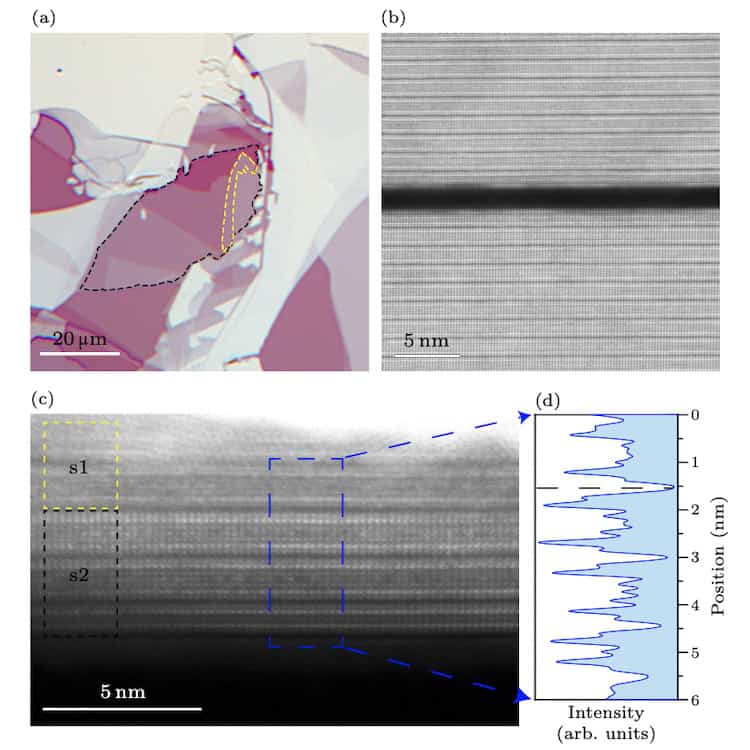
Thanks to a novel encapsulation technique, researchers at Fudan University in Shanghai, China, have succeeded in imaging the surface structure of the atomically thin topological quantum material MnBi2Te4 (MBT) for the first time. The work could help advance our understanding of the intrinsic properties of this technologically important class of materials and enable their use in novel devices.
The electronic, magnetic and topological properties of materials thinned down to atomic-scale thicknesses are very different to those of their bulk counterparts. They can, for example, be employed to study exotic quantum states that could prove useful for a host of advanced applications, such as next-generation spintronics and dissipationless electronics.
Before such devices see the light of day, however, we need to understand these emergent properties, which means accurately determining the surface atomic structure of these materials. This is no easy task because these surface structures are extremely sensitive to their environment. What is more, the most common technique used to study them, transmission electron microscopy (TEM), requires samples to be prepared as lamellae, which degrades them, changing their structure. The high-energy electron irradiation beam in the microscope does them no good either.
In the new work, a team led by Yuanbo Zhang of the State Key Laboratory of Surface Physics and department of physics at Fudan University, studied the topological quantum material MBT. This is the only intrinsic magnetic topological insulator made in the laboratory so far and can be used to study novel topological states – such as the quantum anomalous Hall effect and axion-insulator physics – many of which are fundamentally governed by surface states.
Like other sensitive 2D materials, explains study co-author Jingjing Gao, MBT’s surface is exceptionally vulnerable to external perturbations, such as ambient air exposure, heat or standard electron microscopy preparation. These degrade the surface layer and irreversibly alter its structure. Indeed, a previous TEM study also revealed that the septuple-layer structure of an MBT flake transforms into a Bi2Te3-like quintuple layer configuration under ambient conditions.
To overcome this problem, Gao and colleagues developed a protective encapsulation technique that successfully shields the delicate surface structure of MBT from its environment and protects it during TEM sample preparation.
The researchers examined two types of encapsulating materials. The first was hexagonal boron nitride (hBN), which is chemically inert and already routinely employed to protect 2D materials. The second was a thin flake of MBT itself, which provides a “homomaterial” capping layer. They encapsulated the MBT in one of these two materials immediately after they had exfoliated (or shaved off) flakes of MBT from a bulk sample. They did this inside an inert argon-filled glovebox.
The protective layer acts like an atomic-scale barrier that isolates the MBT surface from oxygen, moisture, ion-beam damage and other environmental disturbances produced during the focused-ion beam processing used to prepare the samples for TEM. It also protects the MBT from the high-energy electron irradiation in the imaging microscope.
The researchers found that the homomaterial encapsulation is especially protective because the atomically similar layers can intimately contact with a minimal interfacial gap.
The technique strongly reduces defect formation, so the original lattice structure remains stable throughout the entire TEM workflow, explains Gao. “We therefore succeeded in safeguarding the ‘true’ surface throughout, allowing us to visualize the intrinsic septuple-layer structure at atomic resolution for the first time.”
The work will be important for both understanding intrinsic magnetic topological insulators and for developing quantum devices from these materials in the future, she tells Physics World. “Making such devices will demand exceptionally stringent requirements for sample surface and interface quality. This is because the MBT’s unique topological and magnetic properties are hosted by its surface states and even minor atomic reconstruction can distort its intrinsic quantum behaviour.”
Looking ahead, the researchers, who detail their work in Chinese Physics Letters, say they will now be looking to construct heterostructure devices with high-quality intrinsic surfaces and interfaces based on MBT. They will also make use of their encapsulation strategy to fabricate and study magnetic topological heterostructures.
“We will also explore topological superconductivity by interfacing MBT with superconductors, thereby advancing the development of topological quantum computing platforms,” reveals Gao.
The post Encapsulation enhances surface structure imaging of 2D quantum material appeared first on Physics World.
Altermagnets can transfer their unusual magnetic properties to nonmagnetic materials placed next to them, say theorists in China and the US. This so-called “proximity effect” had already been observed in ferromagnets and superconductors, but it is new for altermagnets, which were only recognized as a distinct class of magnetic materials in 2024. If confirmed experimentally, the team says the effect could aid the development of advanced quantum materials with applications in fields such as spintronics, valleytronics and fault-tolerant quantum computing.
In ferromagnets, proximity effects make it possible to tune properties such as magnetic anisotropy, coercivity and exchange bias in nonmagnetic materials that have acquired magnetic polarization from a neighbouring ferromagnet. Similarly, ordinary materials that have picked up superconducting correlations from a nearby superconductor are a mainstay of experiments on topological superconductivity and topological quantum computing.
In the latest research, physicists led by Tong Zhou of the Eastern Institute of Technology in Ningbo sought to understand whether altermagnets could likewise transfer their behaviour to a neighbouring material. To do this, they created a model of a van der Waals bilayer heterostructure in which the bottom layer is a two-dimensional (2D) altermagnet, V2Se2O, while the top layer is a non-magnetic semiconductor, PbO.
Zhou explains that the vanadium atoms in V2Se2O form two opposite-spin sublattices that are connected by rotational symmetry rather than by simple translation or inversion. This complex structure is what gives V2Se2O its characteristic altermagnetic spin splitting, with a band structure in which spin-up and spin-down electrons have different energies that vary in periodic patterns. V2Se2O also has a so-called spin texture, which is a pattern of spin polarization that produces a net zero magnetization in the material.
Using first-principles calculations, the researchers found that the distinctive symmetry-patterned magnetism of V₂Se₂O can indeed transfer into the PbO layer across the interface between them. As a result, Zhou says the originally spin-degenerate bands of PbO develop a clear momentum-dependent spin splitting.
Importantly, this pattern is not arbitrary. Instead, it follows the symmetry expected from the altermagnetic order of V2Se2O. What is more, the real-space spin density of the PbO mirrors the symmetry of the V2Se2O, showing that it has inherited altermagnetism rather than simply becoming generically spin polarized.
When the researchers rearranged the V2Se2O into a conventional antiferromagnetic configuration with no alternating spin splitting, they found that the induced splitting in PbO disappeared. They also observed that the degree of induced splitting decreases when the PbO is placed further away from the V2Se2O, confirming the proximity effect.
As a final piece of evidence, the researchers searched for similar proximity effects in other altermagnetic systems, ranging from insulators to metals and covering material platforms with 3D architectures as well as 2D ones. “Even graphene, one of the most common 2D materials, can acquire altermagnetic characteristics when interfaced with CrSb, which is an experimentally well-established altermagnet,” Zhou notes.
One of the work’s main implications is that altermagnets could be used to generate spin patterns in many otherwise non-magnetic materials, Zhou tells Physics World. “This means that instead of searching only for intrinsic altermagnets, we can now design ‘proximitized’ altermagnetic systems by combining an altermagnet with a semiconductor, metal or superconductor,” he says.
In semiconductors, Zhou notes, the altermagnetic proximity effect can induce controllable spin and valley splitting, which are promising for spintronics and valleytronics devices, respectively. In superconductors, meanwhile, the effect can generate momentum-dependent spin splitting without the need to apply an external magnetic field or introduce net magnetization – something that Zhou says offers a new route toward topological superconductivity and the Majorana modes that could revolutionize fault-tolerant quantum computing. “More generally, this effect provides a versatile platform for designing field-free spin devices, topological quantum devices and multifunctional van der Waals heterostructures,” he says.
Looking ahead, Zhou and colleagues say they would now like to observe the altermagnetic proximity effect in heterostructures fabricated in the laboratory. They also want to find out how to control the strength of the effect – for example, by changing interlayer spacing, stacking, strain, gating and possibly even layer twisting.
“More fundamentally, an important question is how fast and how reversibly altermagnetic order, and therefore the altermagnetic proximity effect, can be reconfigured dynamically,” Zhou says. “That would be especially interesting for controlling spin-dependent transport and topological phases in real time.”
The research is described in Physical Review Letters.
The post Altermagnets can turn neighbouring materials altermagnetic, too appeared first on Physics World.
Confine a liquid to a region a millimetre or less in size, and you’re in the weird world of “microfluidics” – where surface tension and capillary action dominate in ways we easily overlook from our macro-scale vantage point. Despite being a term that was coined only in 1992, the underlying phenomena have been with us for millennia, as Albert Folch argues in How the World Flows: Microfluidics From Raindrops to COVID Tests.
Folch, who is a professor of bioengineering at the University of Washington in the US, has spent his career developing microfluidic devices that exploit the peculiar properties of flows at this scale. In this book, he now steps back to admire the full scope and impact of microfluidics, revelling in droplets that form rainbows, deliver inhalable asthma medications, make up salad dressings and cosmetics, and print scaffolds of living tissue to aid patients’ healing.
I particularly enjoyed Folch’s ode to the Olmec – Indigenous people who lived in Central America from about 1200 BCE to 400 BCE. They would harvest latex from Panama rubber trees by tapping the bark and collecting the liquid drop by drop before the day’s heat caused the latex to coagulate and seal the cut. The Olmec even had their own version of vulcanization – the process that makes rubber elastic – using the juice of morning glory vines to process the sap into bouncy elastic balls, stretchy bands, shoe soles and raingear.
The Olmec spread their knowledge to neighbours as well. In fact, the name “Olmec” comes from the Aztec language and literally means “the rubber people”. Like the maple sugar industry – which gets its own historical treatment from Folch – the Olmec latex harvest relied on a tree’s vascular system, made up of narrow 25 µm capillaries that carry liquids like water, sap, resin and latex to nourish and defend the tree. Although the Olmec civilization eventually declined, their technology and ingenuity lived on, impacting the entire world.
Folch walks readers not just through the physics and biology of these systems – capillary rise, photosynthesis, transpiration – but through their human impact, too. He includes wonders, such as natural rubber powering a Victorian-era craze that brought us tyres, inflatable boats, children’s dummies (pacifiers) and other objects. Folch also covers darker stuff, such as the British businessman Henry Wickham (1846–1928) who smuggled thousands of rubber tree seeds out of the Brazilian Amazon to establish plantations in Africa and Asia, where he could exploit cheaper labourers.
Another chapter begins in the mountains near Granada, Spain, where villagers are rebuilding acequias – open-air waterways originally built by the Moors in medieval times. For nearly 1000 years, acequias turned the arid slopes into terraced fruit gardens by diverting snowmelt toward agriculture and recharging the groundwater. Water seeps downward through the acequia’s dirt bottom, protecting it from evaporating in the hot Sun and feeding aquifers.
As Folch notes, aquifers contain nearly 30% of Earth’s freshwater – far more than is found in rivers and lakes, which make up less than 1% of the total. But in the US alone, industrial agriculture has been draining aquifers at rates as high as 60 cm per year, far exceeding the slow percolation of rainfall into these underground reservoirs.
In fact, aquifers take hundreds or thousands of years to recharge, which, Folch notes, means a depleted aquifer effectively ceases to exist for those of us living now. Without acequias and other dedicated efforts to replenish aquifer levels through microfluidic flow, today’s corn fields will soon turn to dust.
How the World Flows charts the history of other unexpectedly microfluidic technologies too. Candles, for example, carry their fuel to the flame by capillary action along the wick. Then there’s paper, which soaks up ink through capillary action. Among more recent microfluidic inventions, Folch offers special laurels to the ballpoint pen, of which BIC alone has sold over 100 billion units since 1950.
Folch also takes care to introduce readers to many microfluidic medical devices, which might not be as widespread as ballpoint pens, but are perhaps more important. They range from dialysis machines that clean blood for failing kidneys, to COVID tests and continuous glucose monitors that let diabetics manage their blood glucose levels – a microfluidic technology that’s critical in my own home.
Folch describes the microfluidic devices that enable the Human Genome Project, as well as prototype instruments that could one day catch cancer cells through a simple blood screening. He also covers devices that could pick the perfect personalized drug cocktail for treating a patient’s tumour by studying their biopsied cells.
The most stunning microfluidic device Folch describes may be us
But the most stunning microfluidic device Folch describes may be us. As he argues, we ourselves are microfluidic. From our lungs to our cardiovascular system, from our lymphatic system to our sweat glands, our bodies rely on flow through tiny vessels.
Our bodies make up for diffusion’s slow pace by operating in parallel. Like the many co-operating central-processing units in a supercomputer, our bodies absorb oxygen through 500 million micro-sized alveoli in our lungs. We hear through ears equipped by microfluidics to act as both microphones and accelerometers. Our kidneys clean some 200 litres of blood a day – sending two litres of urine to our bladders as they do – through massively parallelized filtration.
Throughout How the World Flows, Folch’s enthusiasm for his subject shines. His approach is that of a storyteller, rather than a scientist, and the book is all the better for it. Whether readers are microfluidics experts or not, they will walk away with new stories to tell. (Don’t skip the footnotes…)
Although Folch’s stories are wide-ranging and entertaining, he stumbles at times with the overarching narrative. Some transitions are rough, and it’s not always clear why he’s chosen to order the stories in the way they’re presented. Nevertheless, his book is a fun and highly readable introduction to microfluidics that’s sure to entertain lay readers and excite a new generation of microfluidic engineers.
The post The wonderful world of microfluidics appeared first on Physics World.
Photonic glasses containing gold-cored, silica-shelled nanoparticles can produce high-purity colours across the visible spectrum. Crucially, the colours are independent of viewing angle. Developed by researchers in Korea, their design avoids the short-wavelength scattering that has prevented the attainment of a true red – and blurred other colours – in previous photonic glasses.
Synthetic materials are usually coloured using pigments, such as those found in dyes or paints. A pigment has a chemical composition that causes it to reflect light at certain wavelengths and absorb light at other wavelengths. Nature, however, makes widespread use of structural colour, whereby the physical structure of a material dictates which wavelengths are reflected and which are absorbed. A familiar example is iridescence, which is responsible for rainbow-like colours on some plants and animals.
Creating colour using structure rather than chemistry has several advantages. One is that there are no chemical chromophores to be bleached by sunlight, so the colour tends to be more durable. Another benefit is that there is no dye to leach if the material comes into contact with water or another solvent.
While structural colour can be created using traditional photonic crystals, these can be tricky to produce controllably. Moreover, a surface that relies on interference effects is inevitably iridescent – which means that its colour changes with the viewing angle.
One solution is colloidal photonic glasses, which are not physically textured but have particles such as silica or polymers dispersed throughout them with short-range order. These can be produced simply by solution processing, and their colour does not vary with viewing angle. The principal problem with these glasses is the attainment of colour purity – especially in the red. The challenge is that the glasses scatter light more effectively at shorter (bluer) wavelengths owing to Rayleigh scattering. This effect makes the sky appear blue and adds unwanted blue light to structural colour.
In the new work, nanophotonics expert Seungwoo Lee of Korea University in Seoul and colleagues synthesized 230 nm core–shell nanoparticles in which silica surrounds a 20 nm gold cluster. This has a plasmonic resonance that absorbs shorter wavelengths. The researchers then dispersed the nanoparticles in ethoxylated trimethylolpropane triacrylate. This is a photocurable resin that has a very similar refractive index as the nanoparticles. The resin was applied to surfaces by painting or solution deposition and then cured under ultraviolet light.
The resulting photonic glass scatters red light randomly, while absorbing shorter wavelengths. Lee stresses that this is different from a traditional paint. “The reflected colour is determined by particle size, spacing, refractive-index contrast, and the degree of structural order, rather than by a molecular chromophore alone,” he says. When the researchers reduced the size of the nanoparticle shells, first to 180 nm and then to 160 nm, they found that they packed more closely together, producing first green and then deep blue colours.
The explanation for the blue scattering is more subtle than for the red: “The gold core is not needed to ‘make’ blue in the same way that a blue dye would,” explains Lee. “However, the gold core can still improve perceived colour purity by reducing broadband diffuse scattering and nonresonant background light.” explains Lee “Without this suppression, silica-only photonic glasses tend to look milky or whitish because many wavelengths are scattered together.”
The researchers are now exploring several possible extensions of their research. They believe that the work could provide easily applied coatings that are durable as the light scattering comes from within the material structure rather from than a surface pigment.
They also believe it could have anti-counterfeiting properties: “In a normal ink or paint, its colour mainly originates from chemical pigments or dyes,” says Lee; “Our material produces a nanoscale structural signature: a specific reflectance spectrum, bandwidth, angular response, and microstructural arrangement determined by the particle diameter, core–shell geometry, refractive-index matching, volume fraction, and assembly pathway. This gives several possible authentication handles.”
Lee believes that it should be possible to reduce the cost of the material using a metal that is cheaper than gold. However, the precious metal is only 0.022% of the film by weight, so the technology may already be economically viable.
The film is described in Proceedings of the National Academy of Sciences.
“I think it’s really neat,” says materials scientist Aaswath Raman of the University of California, Los Angeles. “The concept of structural colour has been around for a really long time but to me it’s, like, the last steps before we see it out it the real world.”
He says the largest problems he foresees are the simple economics of competing with industrially-optimized paint industry – even if the technology is, in principle, superior. Nevertheless, he says, “of the technologies we see in research this is likely quite a good candidate for commercialization”. The next step, he says, is to actually find a “first use” application – he suspects the aerospace industry, which values ultralight, durable coatings, could be a candidate.
The post Photonic glasses deliver angle-independent structural colour, including reds appeared first on Physics World.
In today’s technologies, mechanical mechanisms generally provide the brawn while electronics supplies the brains. This is partly because it is challenging to write information into mechanical memories without resetting each bit individually. However, that could change as researchers led by Pedro Reis at École Polytechnique Fédérale de Lausanne in Switzerland and Martin van Hecke at AMOLF in the Netherlands have now found a practical means of writing mechanical bits. Their technique, which they describe in Science Advances, uses structures that resemble children’s slap bracelets placed on a rotating turntable. While they acknowledge it is unlikely to replace electronic memories, they argue that it could have specialist applications and might produce insights that translate into electronic innovations.
“The framework we propose could be very useful, for example, in the domain of physical intelligence, where you provide hardware with capabilities that don’t require essentially a brain or an electronic control system to do individual tasks,” Reis says.
Reis and van Hecke’s interest in mechanical memory stems from their research on metamaterials, which are materials that are defined not just by their composition, but also by the structures within them. Mechanical systems offer a tangible means of getting to grips with the complex behaviour of these metamaterials. “Often, all sorts of things that we do rely on nonlinear responses,” van Hecke notes, adding that such responses are much easier to study in mechanical systems than in optical devices.
A metamaterial made up of an array of switchable mechanical elements could function as a form of mechanical memory. However, to be practical, it needs to be possible to flip the states of individual mechanical bits using global controls, as opposed to addressing them individually. Otherwise, writing data will be very fiddly.
A solution emerged from Reis’ interest in rotating platforms, which he describes as “a very versatile way of loading mechanical systems”. While the pair had been friends for more than two decades, they had been working independently until, during a visit, the penny dropped and they realized that placing the metamaterial array on a rotating platform could provide the control they needed.
Because the angular velocity of the platform sends its momentum outwards, each mechanical object experiences a force in the radial direction, known as the centrifugal force. If this angular velocity is not constant, the object will experience an additional force in the orthogonal azimuthal direction, known as the Euler force. “So you have a complex force and bi-directional field that is highly tuneable,” says Reis. “And this tuneability is what we realized is very powerful.”
To construct their array, the researchers used clamped beams with two stable mechanical states – a little like a slap bracelet can be coiled up or flat, except these beams could either curve to the right or to the left. To individually address different beams, they ensured that each beam was unique in its width, the angle it was clamped at, and so on, all of which affect how much force is needed for a beam to ping into the opposite state. By tuning the parameters of each clamped beam and the angular acceleration of the rotating platform, they could engineer the applied force to switch (or not switch) specific beams, thereby writing data into the array purely by rotating the platform.
Doing this accurately requires a level of precision in acceleration control that surpasses what standard lab motors can achieve. However, the researchers say they were able to team up with a local company that had designed high-spec rotating platforms for its high throughput silicon chip production process. By programming platforms with five tailored clamped beams and the right rotation functions, they showed they could write the letters of the alphabet in ASCII script.
“This is a significant advance because it points toward future smart devices and robots that can be reprogrammed remotely without complex wiring or electronics, using only carefully designed motion‑based signals driven by a sole dynamic driving strategy,” explains Damiano Pasini of McGill University, Canada, who studies systems for mechanical computing but was not involved with this work directly.
Reis says he is excited about the scalability of the approach and its potential in high throughput experiments. Meanwhile, van Hecke is looking into how the idea might transfer to other systems, such as applying engineered force functions to crumpling sheets of complex glasses. “It just opens up possibilities for both studies, really fundamental studies of complex systems, but also real applications where you use this dynamic idea,” he tells Physics World.
The post Physicists create mechanical memory device from slap-bracelet-like structures appeared first on Physics World.

With elements from synthesizers, loopers, and effects pedals, Teenage Engineering’s devices lie somewhere between musical instrument and modern art. These grooveboxes, as they’re often called, are capable of helping you produce songs in real time from a single unit, with an eye-catching design language. A wide swath of the brand’s offerings are 30 percent off at Guitar Center when you use code TE30, at Amazon when you click the on-page coupon for whichever product you’re interested in, and B&H Photo (discount applied automatically at checkout). The terms for the Amazon coupon claim it will run through August 8th, 2026, while Guitar Center deal is listed as “limited time.”
The OP-XY is one of the flagship units, which my colleague Terrence O’Brien described as a “greatest hits tour for Teenage Engineering.” Normally $2,299, the discount code brings the price down to a more palatable $1,609.30, which is a lot cheaper, but still pretty pricey for an aspiring musician. That said, it’s loaded with features for both production and live performance, and has a premium, durable build quality that reflects its price point. It’s currently sold out at Amazon, but in stock and discounted at Guitar Center and B&H Photo. Read our Teenage Engineering OP-XY review.
The model I’m most tempted by is the EP-40 Riddim, a compact sampler with a library of over 400 built-in synth settings and effects particularly well-suited for producing dub and reggae music, plus 128MB of storage for your own loops and recorded sounds. It’s a bit less intimidating for a beginner than the OP-XY, both in terms of price point and features, and its tighter genre focus may help concentrate your efforts and onboarding. Normally $329, the EP-40 is $230.30 at Amazon, Guitar Center, and B&H Photo during the promotion.
 Note: MacRumors is an affiliate partner with some of these vendors. When you click a link and make a purchase, we may receive a small payment, which helps us keep the site running.




YH Toys YH18001 PRO is a compact yet powerful 1/18-scale brushless RC monster truck designed for enthusiasts who want high-speed performance without stepping up to a larger and more expensive platform. Featuring a 4300KV brushless motor, 4WD drivetrain, metal drivetrain components, and a claimed top speed of 70km/h, the YH18001 PRO promises an exciting driving experience on a wide variety of terrains.
Whether you’re new to the RC hobby or looking for a portable off-road basher, the YH18001 PRO packs impressive specifications into a rugged pickup-style body.
Despite its 1/18 scale, the YH18001 PRO is engineered for performance rather than being a simple toy.
The truck measures 277 × 202 × 120mm and weighs approximately 758g, making it easy to transport while remaining stable at higher speeds. Its aggressive pickup truck body is complemented by LED headlights, realistic wheel arches, and a durable PVC shell that gives it an authentic off-road appearance.
The biggest highlight is its 2435 4300KV brushless motor, paired with a 35A integrated brushless ESC and receiver.

This setup enables the truck to reach speeds of up to 70km/h under ideal conditions, providing rapid acceleration and smooth throttle response. Compared to brushed RC vehicles, the brushless system delivers:
The truck supports proportional throttle and steering control, allowing drivers to precisely manage speed instead of operating at only full throttle or full brake.
The YH18001 PRO uses a shaft-driven four-wheel-drive system designed to maintain traction across challenging surfaces.
It performs well on:
The drivetrain also includes numerous upgraded metal components such as:
These upgrades improve durability during aggressive driving and repeated jumps.
Handling is enhanced by a double wishbone independent suspension system with front and rear spring shock absorbers.

This setup helps the truck absorb bumps while maintaining tire contact over uneven terrain, improving both stability and cornering performance.
Large off-road tires with deep tread patterns provide strong grip on loose surfaces, making the truck suitable for recreational bashing as well as casual racing.
The YH18001 PRO arrives in RTR (Ready-to-Run) configuration.
Inside the box you’ll find:
Only three AA batteries for the transmitter need to be purchased separately.
Power comes from a 7.4V 1600mAh 20C Li-ion battery.
Expected performance includes:
While runtime is typical for a high-speed brushless RC vehicle, enthusiasts planning extended sessions may wish to purchase an additional battery pack.
The included 4-channel 2.4GHz transmitter provides:
The 2.4GHz system also minimizes interference when multiple RC vehicles are operated nearby.


YH Toys YH18001 PRO delivers an impressive balance of speed, durability, and value in the increasingly competitive 1/18-scale RC market. Its 70km/h brushless powertrain, metal drivetrain upgrades, independent suspension, and full-time 4WD make it a capable off-road performer that is equally enjoyable for beginners looking to step into the hobby and experienced drivers wanting a compact high-speed basher.
For RC enthusiasts seeking a portable monster truck with genuine hobby-grade performance, the YH18001 PRO stands out as an exciting option that offers far more capability than its compact dimensions might suggest.
The post YH Toys YH18001 PRO Review: A 70km/h 1/18 Brushless RC Monster Truck Built for Speed and Off-Road Fun appeared first on IGeeKphone China Phone, Tablet PC, VR, RC Drone News, Reviews.

New users can save on the latest language-learning tech with a one-year subscription to Rosetta Stone Sapphire at a big discount.
(via Cult of Mac - Your source for the latest Apple news, rumors, analysis, reviews, how-tos and deals.)

The mega-disposable vaping sector has officially entered the 50,000-puff arena, introducing complex multi-battery architectures and hyper-advanced displays. In this ultimate high-capacity clash, the Upends UP9 50K Vape Kit goes head-to-head with the NEXA Ultra II (also recognized as the Ultra 50k II). Both devices seek to eliminate the anxiety of running out of juice on a long trip, yet they treat the 50k puff milestone with distinct approach pathways. The UP9 relies heavily on a specialized dual-battery setup, whereas the Ultra II leans into its innovative locked flavor preservation design.

When it comes to aesthetic footprints, both devices break away from generic box shapes, opting instead for structural elements that immediately command attention. The Upends UP9 features a striking, clear visual layout dominated by a transparent e-liquid tank and an expansive, wrap-around 270-degree 3D screen. This sweeping panoramic screen offers constant, high-definition tracking of your real-time settings and power levels from almost any viewing angle. The combination of a crystalline tank and a smooth outer framework creates a look that feels highly technical and deeply satisfying to handle.

The NEXA Ultra II responds with a refined, ultra-modern polycarbonate chassis designed specifically to minimize annoying smudges and fingerprints. It is noticeably more compact than its direct predecessor, giving it a much softer, more pocketable feel. Like the UP9, the Ultra II boasts a clear, transparent tank window that lets you confidently evaluate your remaining e-juice by eye rather than guessing blindly. Its standout visual asset is a massive, smartwatch-inspired front display panel flashing crisp animated circuitry graphics. For those who prefer a stealthier approach, it introduces a convenient Dark Mode toggle that allows users to switch off the flashing lights while keeping basic stats active.
Looking closely at the underlying mechanics reveals two distinctly engineered beasts designed to squeeze out maximum longevity.
The Upends UP9 is powered by a creative dual-battery system, distributing power across a built-in 850mAh base battery combined with a separate 230mAh battery tucked into the pod itself to achieve a total output pool of 1080mAh.
Capacity & Puff Count: Packs a massive 20ml e-liquid reservoir delivering a full 50,000-puff ceiling.
Adjustability: Utilizes a highly flexible Triple Power Mode scaling from a cool 15W draw (yielding 50,000 puffs) up to a punchy 25W cloud mode (dropping total yields to 30,000 puffs).
Convenience: Integrates a Smart Click Match System, Type-C fast charging, and dedicated airflow adjustments to tailor the restriction.
The NEXA Ultra II utilizes a single, robust 900mAh quick-charge battery paired with an equally impressive 20ml e-liquid capacity.
Juicy Lock System: NEXA implements a two-part assembly system featuring their proprietary Juicy Lock click-in framework. The tank and battery ship as separate components in the box, locking out leaking or stale e-juice prior to activation.
Output Modes: The Ultra II is driven by a 1.0Ω dual mesh coil system supporting two distinct operation presets. Normal Mode delivers a steady, cool vape for the full 50,000-puff threshold, while Turbo Mode instantly cranks up flavor intensity, throat hit, and vapor density (reducing life to 30,000 puffs).
| Specification | Upends UP9 | NEXA Ultra II |
| Battery Configuration | 1080mAh Total (850mAh + 230mAh Dual System) | 900mAh Integrated Battery |
| Output Adjustability | Triple Modes: 15W / 20W / 25W | Dual Modes: Normal / Turbo |
| Display Style | 270-degree Panoramic 3D Screen | Animated Circuit Screen with Dark Mode |
| Freshness Protection | Smart Click Match System | Click-in Juicy Lock Mechanical Seal |
Choosing between these two 50k juggernauts hinges on your preference for fine-tuning power versus total flavor structural defense. The Upends UP9 is a spectacular choice if you love deep wattage personalization, giving you three distinct power modes and a massive dual-battery reserve to play with. On the other hand, if your priority is consistent, zero-fade flavor performance protected by a physical leak-proof seal and an option to black out your display lights completely, the NEXA Ultra II stands tall as the absolute gold standard for long-haul durability.
Read Also: Kanger Subox Mix vs NEXA ULTRA II: The Battle of the 50K Puff Titans
The post Upends UP9 50K VS NEXA Ultra II Quick Comparison Review appeared first on IGeeKphone China Phone, Tablet PC, VR, RC Drone News, Reviews.


