US Accuses American of Allegedly Wiping His Phone Using a 'Duress' Password During Border Search
Read more of this story at Slashdot.
Looks like moving the user’s TCC db to /private/var/containers/Data/ProtectedSystem/[UUID]/Data/Library/Application Support/com.apple.TCC/ was not the only change in the whole privacy castle of macOS 27. (What btw was a great move as now attackers with full disk access permissions can’t modify your privacy settings)
macOS 27 quietly ships a new privacy mechanism I hadn’t seen documented anywhere: it extends the
com.apple.maclprotection that has always guarded sandboxed apps’~/Library/Containers/<bundle-id>/Datafolders to a hand-picked set of non-sandboxed apps’~/Library/Application Support/<name>folders too. I noticed it by accident — Firefox’s profile folder was suddenly inaccessible from Terminal, while MacPass, a password manager sitting right next to it, was wide open. That asymmetry didn’t sit well with me, so I pulled the thread. It ends in a hardcoded app allowlist baked into /usr/libexec/sandboxd (thx @ciphwall for the hint), meant to be updated live via XProtect.
Previously:
On Wednesday, an a pro-privacy account called “Orwell Day” shared a video on X-formerly-Twitter of a man discovering a Flock license plate reader embedded inside an otherwise innocent roadside speedometer. Operated by the local Sheriff’s department, the device was cleverly hidden to be undetectable to approaching road and pedestrian traffic.
“What lurks on the back of it?” the man behind the camera asks as he approaches the device. “Look at that. Someone did some custom metal fabricating and decided to put a Flock camera, a mobile one, anywhere they want to put it, in the speedometer.”
They are hiding Flock cameras now, secret compartment found in speed radar box pic.twitter.com/4kkeRsKufi
— Orwell Day (@OrwellDay) July 22, 2026
That particular unit is operated by police in Volusia County, Florida, encompassing the suburbs north of Orlando. However, it’s not unthinkable that the practice might spread to other locales as the public backlash against ALPRs grows — and it’s growing fast.
So far, the privacy advocates behind the website DeFlock.org note that 53 US cities have ended their previous ALPR contracts with Flock. (Some municipalities are turning to alternative ALPR providers like Axon.)
In cities where local leaders aren’t ready to cut the cord, however, citizens are taking matters into their own hands, sawing down Flock towers, sabotaging their solar charging panels, or paint bombing the camera’s sensors.
While that kind of direct action has forced some municipalities to reconsider their Flock contracts, others are doubling down. Now, it seems some towns are getting crafty, secreting the now-infamous surveillance devices in roadside objects to throw saboteurs off their trail.
It’s not without precedent. In 2025, the Associated Press reported that US Border Patrol officers were hiding ALPRs and other surveillance devices inside traffic barrels, allowing them to monitor thousands of drivers throughout the US for “suspicious travel patterns.”
As the AP reported at the time, the program encompassed states like Arizona, Texas, and Michigan. In many cases, hidden cameras were discovered in locations that were hundreds of miles away from the nearest border.
At the moment, the full scope of covert ALPRs in the US remains to be uncovered. But with over 95,000 of the spy gadgets and counting deployed across the country, the number of hidden cameras is surely much higher than the public is currently aware.
More on Flock: LAPD Abandons Flock Contract After Making a Horrifying Discovery
The post So Many People Are Smashing Flock’s Cameras That It’s Disguising Them Inside Other Objects appeared first on Futurism.

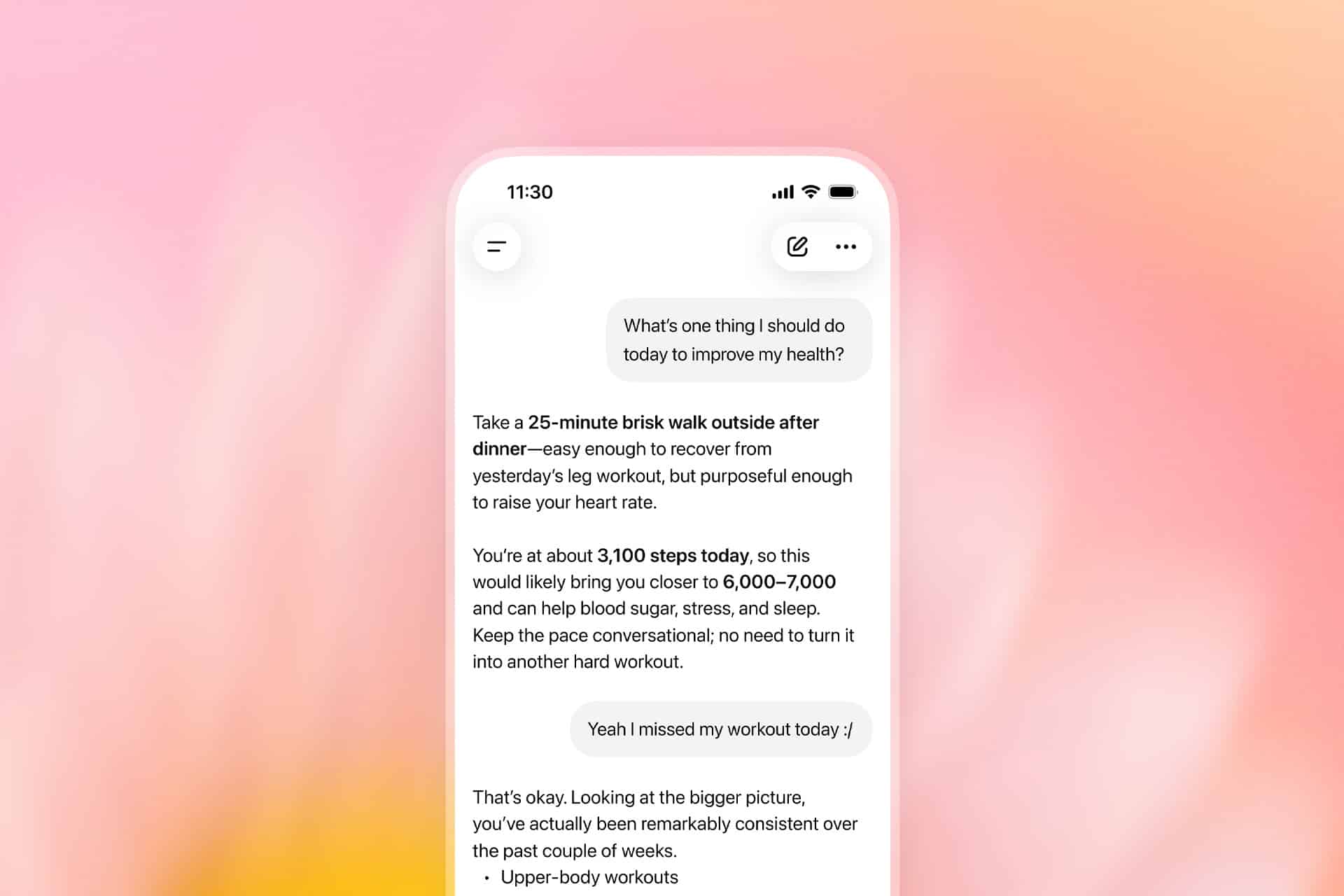
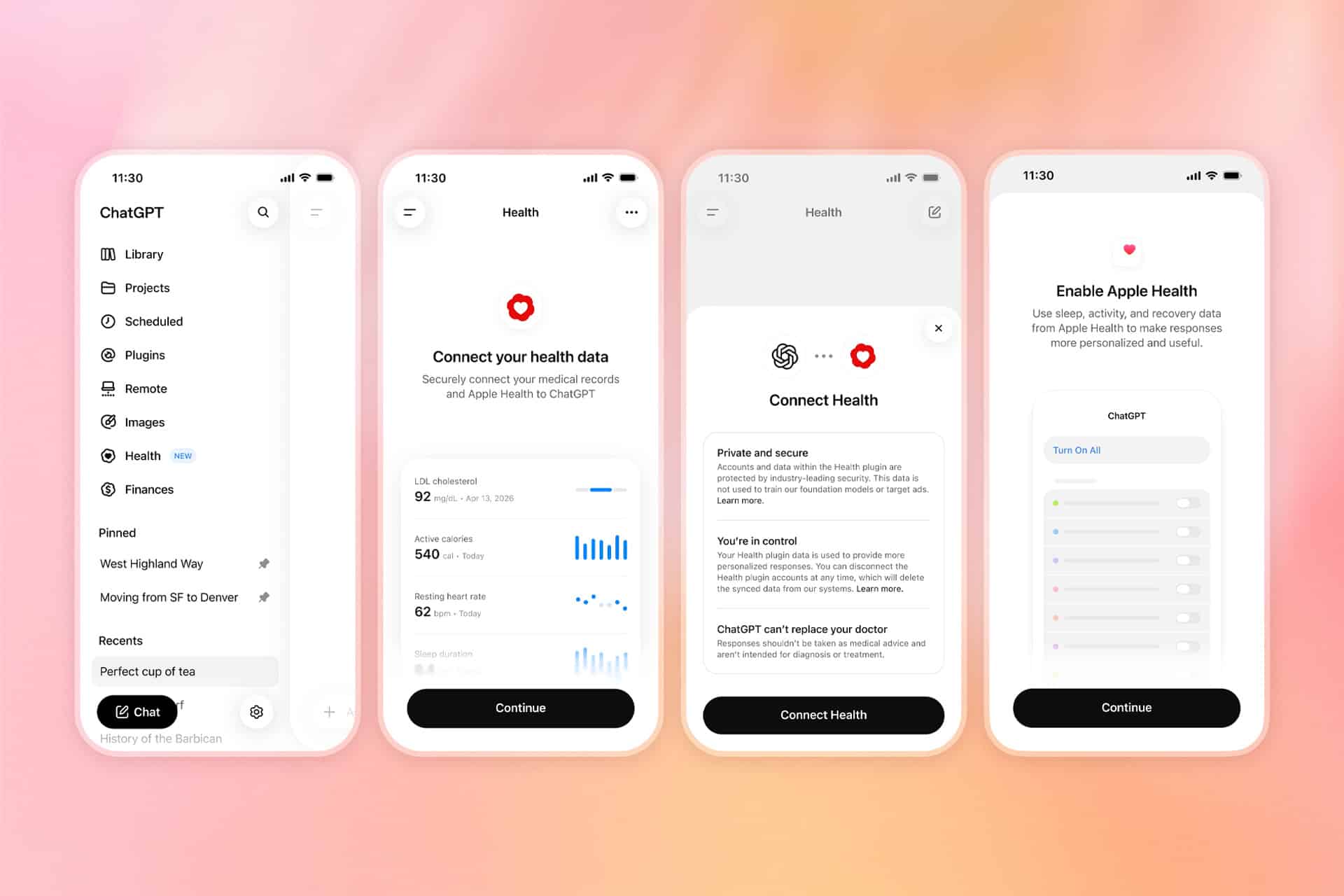
ChatGPT Health is returning with substantially wider access, giving more iPhone users the option to connect information from Apple Health directly to the AI assistant.
The expansion follows a limited test introduced in January. OpenAI is now gradually making the dedicated Health experience available to eligible ChatGPT Free, Go, Plus and Pro users in the United States who are at least 18 years old.
Despite the close Apple connection, this is not a feature created by Apple or built directly into the Health app. OpenAI operates the service through ChatGPT, while Apple Health serves as one of the sources users can voluntarily connect.
Once permission is granted, ChatGPT can examine selected health and fitness information stored on iPhone, including activity, sleep, workouts and other measurements collected by compatible apps and devices. Users can then ask questions about changes over time without manually exporting records or uploading screenshots during every conversation.

ChatGPT Health originally appeared as a limited early-access experience for a small group of testers. The expanded rollout replaces that narrow availability with support for eligible adult users across the United States, although OpenAI says access may take several weeks to reach every account.
The feature works on the ChatGPT website and iOS app, but connecting Apple Health requires an iPhone. Users also need a recent version of the ChatGPT app before the Health option appears in the sidebar or More menu.
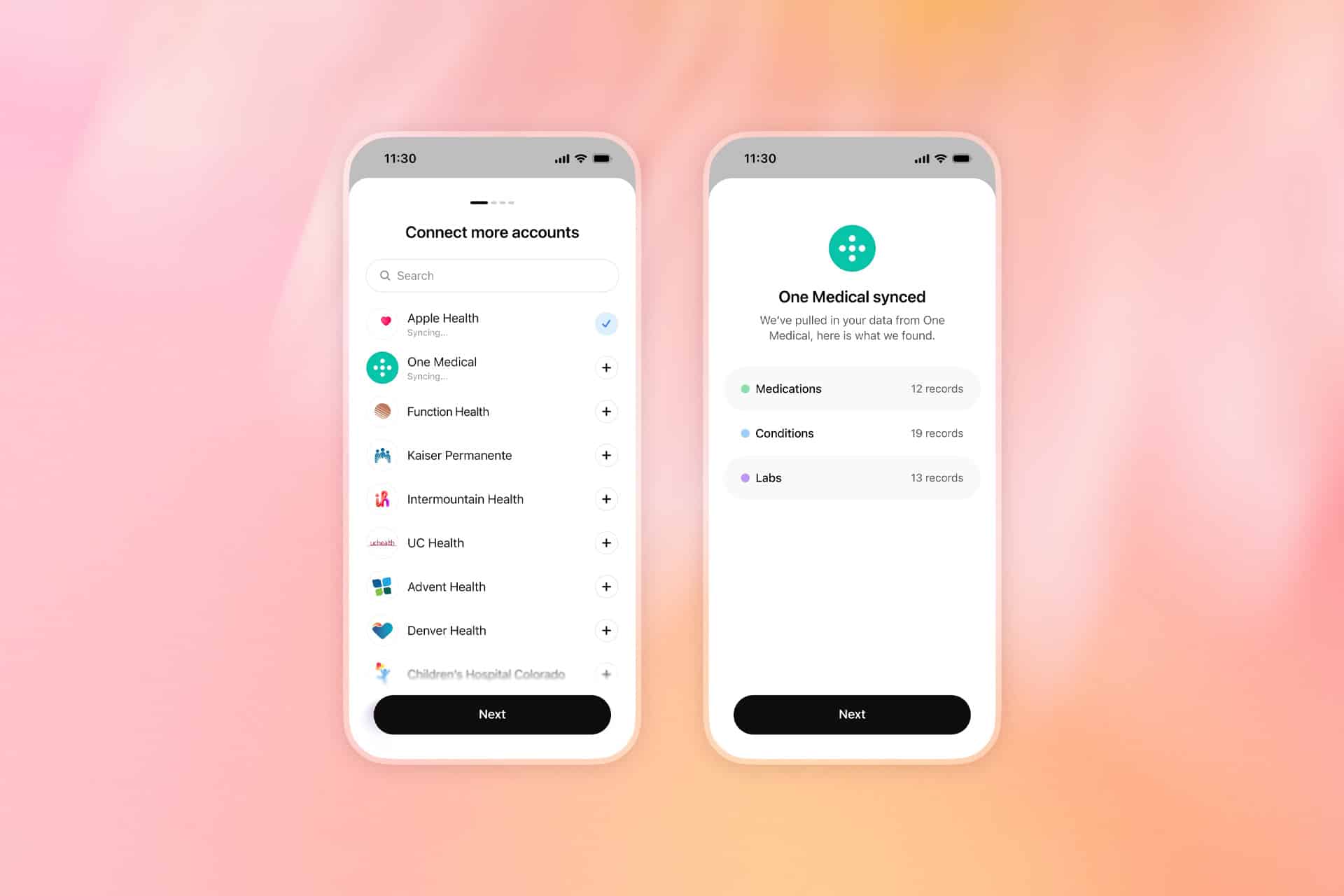
Apple Health is only one part of the system. ChatGPT can also connect to supported medical-record portals, One Medical and Function Health. Bringing those sources together allows the assistant to answer questions using a broader personal context than activity data alone.
A user could ask how sleep duration has changed across several weeks, whether workout frequency declined after a schedule change or how recent laboratory results compare with earlier tests. ChatGPT can also help organize questions before a medical appointment or summarize changes found across connected records.
Information from third-party fitness services can reach ChatGPT through Apple Health when those apps already share their data with the iPhone database. That may include measurements from platforms such as Garmin, Oura, Whoop, Strava and MyFitnessPal, depending on which categories each service makes available.
Not every proprietary score transfers. An app may calculate its own readiness, recovery or sleep score without writing that exact result into Apple Health. ChatGPT can only use the information made available through the connected source and approved by the user.
After synchronization, health information can inform responses throughout ChatGPT rather than remaining limited to conversations opened from the Health tab. The assistant normally asks for permission before using connected information, and users can also add “@Health” to a prompt when they specifically want a response based on their records.

The appeal of the integration comes from turning a large collection of measurements into questions expressed in ordinary language.
Apple Health can already organize trends, highlights, medications, laboratory results and activity records. ChatGPT adds a conversational layer capable of comparing those categories or explaining them in a more personalized format.
Someone preparing for an annual physical could ask for a summary of meaningful changes since the previous appointment. A runner might request a comparison between training volume, sleep and resting heart rate. Another user could ask which information deserves discussion with a clinician after receiving new laboratory results.
That does not make ChatGPT a doctor. OpenAI says the feature is intended to support medical care rather than diagnose conditions or recommend treatment. Urgent symptoms and emergencies still require professional assistance.
The distinction is especially important because health data can appear more conclusive than it is. A change in heart rate, sleep or activity may have several explanations that cannot be determined from an iPhone record alone. Wearables can identify patterns, but they do not automatically reveal the medical cause behind them.
ChatGPT may help users notice relationships and prepare better questions. It should not be treated as the final authority on whether a symptom is harmless, whether medication should change or whether professional care is unnecessary.
The service is also read-only. ChatGPT can examine approved Apple Health information but cannot alter the original records stored on iPhone. It cannot add a diagnosis, change a medication list or write new measurements back into the Health app.
Users retain control over which Apple Health categories are shared. Someone may allow access to steps, workouts and sleep while withholding reproductive health, medications or other sensitive information.
That selective approach may be more appropriate than approving every category simply because the option is available. A useful response does not always require a complete health history.

Connecting Apple Health to ChatGPT creates a different privacy relationship from using health features entirely within the Apple ecosystem.
Apple designs the Health app around on-device protections and user-controlled permissions. ChatGPT Health requires selected information to synchronize with OpenAI systems so the company can analyze it and generate personalized responses.
OpenAI says connected Apple Health data, medical records and conversations using that information are not used to train its foundation models or target advertising. The company also applies additional encryption and isolation protections to health information.
Users can disconnect Apple Health at any time. OpenAI says synchronized data from the disconnected source will be deleted from its systems within 30 days.
Previous conversations are handled separately. Information already included in ChatGPT conversation history remains until those chats are deleted, even after the Apple Health connection is removed.
Memory introduces another consideration. Conversations using Health can create memories when ChatGPT memory is enabled, although OpenAI says memories are not generated directly from synchronized health data. Temporary Chat or separate project memory can reduce how much personal context continues across future conversations.
The new Health experience should also not be confused with the existing ChatGPT integration inside Apple Intelligence. Siri and Writing Tools can use ChatGPT for certain requests without requiring the dedicated ChatGPT app or a connected account.
ChatGPT Health is a separate OpenAI service with its own account, permissions, privacy controls and health-data connections. Using ChatGPT through Siri does not automatically give OpenAI access to Apple Health.
That separation gives users a meaningful choice. They can continue keeping health information inside Apple apps, share only selected categories with ChatGPT or connect medical records for a more comprehensive view.
The expanded rollout makes one of the most personal databases on iPhone available to conversational AI. Its usefulness will depend not only on the quality of the answers, but also on whether users understand exactly which information they are sharing and where it goes after leaving the device.
The post ChatGPT Health Expands Apple Health Access appeared first on AppleMagazine.
A medida temporária tem como objetivo colmatar as lacunas existentes até que seja estebelecido um novo enquadramento jurídico de longo prazo para prevenir e combater o abuso sexual infantil online, avança o Conselho da UE, sendo aplicável até ao dia 3 de abril de 2028.
The post Extensão do controlo de conteúdos de abuso sexual de crianças com “luz verde” do Conselho da União Europeia appeared first on Tek Notícias.

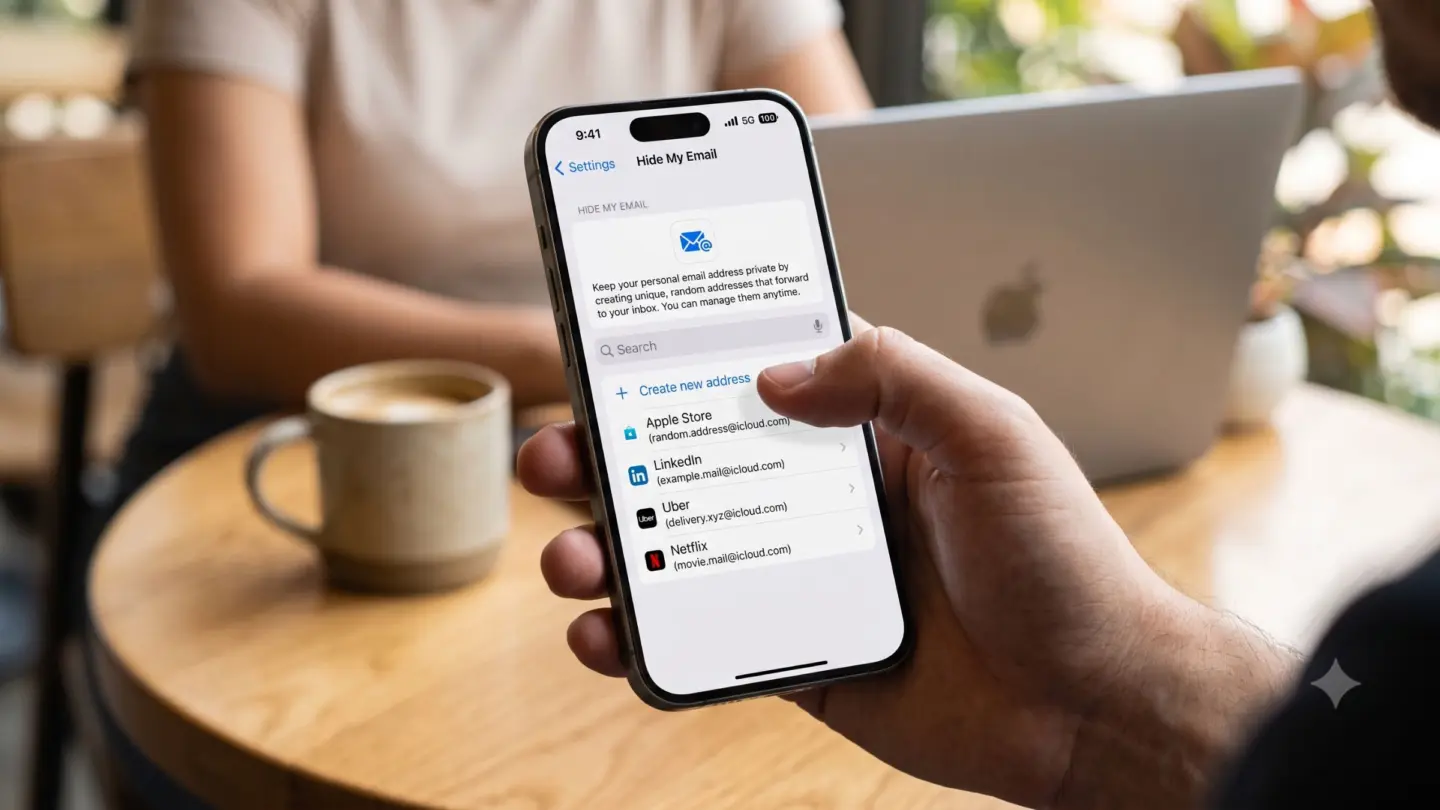
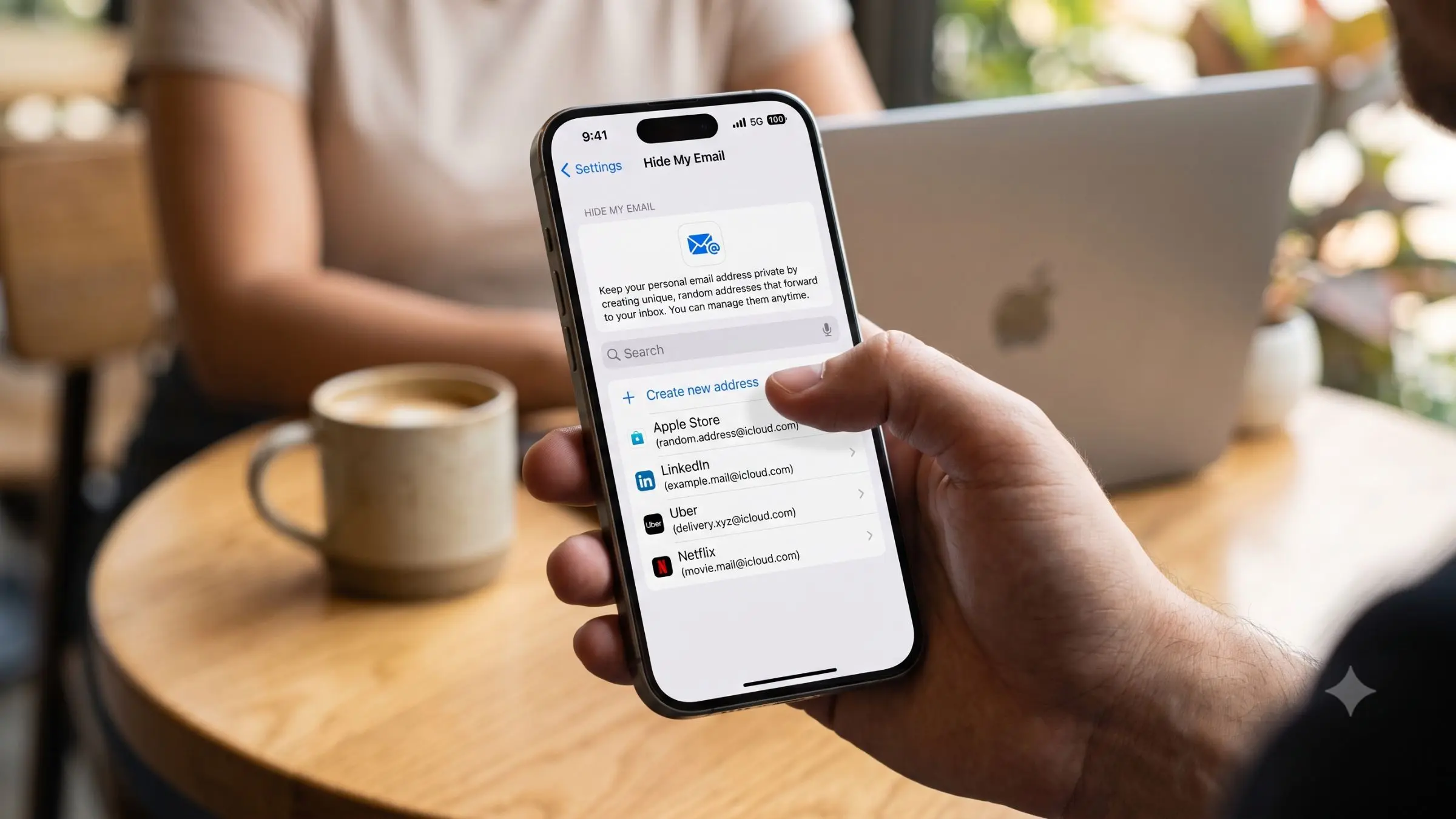
Apple patches the Hide My Email flaw that exposed users’ real addresses for more than a year after outside pressure forces its hand.
(via Cult of Mac - Your source for the latest Apple news, rumors, analysis, reviews, how-tos and deals.)

Sometimes in business, the first to market isn’t ultimately the most successful.
That’s the reality for surveillance company Flock Safety, a now-infamous firm working to blanket the United States in automatic license plate readers known as ALPRs, which are basically AI-integrated cameras that interface to form wide-reaching webs of surveillance.
If you’ve heard of Flock, there’s a good chance it’s from one of the hundreds of decentralized local protests against the company’s devices currently raging across the country, or from a wave of negative press coverage.
According to data compiled by the anti-Flock site DeFlock.org, at least 53 municipalities have shredded their contracts with Flock over concerns that federal officials were accessing data collected by the company. Unfortunately for privacy activists and citizens concerned about police surveillance, that doesn’t necessarily mean ALPRs are going away — just that they’re increasingly being supplied by Flock’s competitor.
With Flock suffering some major brand damage as the face of ALPRs, the company Axon has emerged as a strong runner up. The publication Gadget Review observes that in cities like Denver, officials are ending controversial contracts with Flock in order to make room for Axon, which provides a remarkably similar surveillance architecture — just without the specter of federal overreach.
While Axon might lack the toxic name recognition that currently hampers Flock, the police tech company has plenty of controversy of its own.
Back in 2024, Axon was panned for the release of “Draft One,” a ChatGPT-integrated piece of software that transcribed law enforcement body cam audio into police reports. As critics noted at the time, the technology was widely prone to hallucinations, and large language models remain particularly susceptible to racial bias.
Prior to that, Axon faced significant backlash for its announcement that it would deploy drones armed with tasers into schools, as part of a hare-brained scheme to combat the school shooting epidemic which continues to plague the US. (They were also implicated in lighting a guy on fire.)
Overall, privacy advocates now face an added challenge: not just of slowing Flock’s advance, but in making the case that there are no good ALPRs, regardless of what company’s logo is slapped on the surveillance pole.
More on Flock: In Light of Overwhelming Backlash, Flock Cancels Creepy Audio Surveillance Feature
The post Flock Is in Serious Trouble After Massive Backlash appeared first on Futurism.

Earlier this summer, socialite Kylie Jenner appeared in a series of ads promoting Meta’s controversial smart glasses.
The camera-adorned and AI-enabled spectacles, a collaboration with global eyewear juggernaut Ray-Ban, have been at the center of a discussion over personal privacy and surveillance so heated that many owners are now too afraid to be seen in public while wearing them.
Critics say they’re far too easily abused to prey on unsuspecting victims, even garnering them the pejorative nickname of “pervert glasses.” Wired also found in June that Meta silently added a facial recognition system to its glasses’ software — yet another privacy nightmare in the making — but hadn’t activated it.
Now, an inventive group of activists calling themselves Everyone Hates Elon took matters into their own hands by transforming a Meta AI glasses ad featuring Jenner into a cleverly subversive statement. Specifically, they seem to have added a lenticular overlay on top of a London bus stop ad that transforms her visage into a terrifying bug-eyed monster — but only when seen from a specific angle.
As a video that’s making its rounds on social media demonstrates, standing right in front of the ad shows Jenner’s face as the black-and-white demon, with a bold type caption that reads: “We’re always watching.”
Users were quick to point out that the addition was referencing John Carpenter’s 1988 dystopian sci-fi epic “They Live,” in which the protagonist finds a pair of sunglasses that reveal subliminal messages hidden all over the world, in billboards and other media. They also expose a race of bug-eyed aliens that masquerade as humans, much like Jenner in the tampered-with Meta ad.
“Meta has spent years tracking us online,” an Everyone Hates Elon spokesperson told online arts magazine Hyperallergic. “Now it wants to track us in the real world too.”
As its name suggests, Everyone Hates Elon was formed last year to voice opposition to Elon Musk for his disastrous attempts to gut US government budgets, as well as spouting far-right talking points and racist rhetoric. It has run guerrilla poster campaigns that call Musk a “bellend,” and parody Tesla’s latest vehicle as “the Swasticar,” which can go “from 0 to 1939 in 3 seconds.”
The group has also taken aim at Amazon founder Jeff Bezos and president Donald Trump’s extensive relationship with deceased sex criminal Jeffrey Epstein.
Meta’s glasses are a natural target for the activists’ latest campaign given how easily they’re exploited for highly questionable behavior.
“Meta and Ray-Ban’s new AI glasses can be used to secretly record women and young people for sexual reasons,” the spokesperson told Hyperallergic. “Simply put, that’s abuse.”
“Billionaires could fund cures for cancer — so why are they funding glasses for perverts instead?” the group asked rhetorically.
More on Meta’s glasses: The Backlash Is So Strong That People With “Pervert Glasses” Are Afraid to Use Them in Public
The post New “Advertisement” for Kylie Jenner’s Meta Perv Glasses Shows Something Extremely Funny If You Look at It From the Wrong Angle appeared first on Futurism.

These days, it’s hard to say which technological “innovation” US citizens hate more: AI data centers or Flock surveillance poles.
The American revulsion with the former is well known. The latter, however, has seen an even more shocking rise in resistance, as the number of people hacking down, blinding, or otherwise sabotaging Flock cameras has reached a level best described as “countless.”
Those who cut down Flock surveillance devices are regarded as folk heroes, garnering huge defense campaigns aided by the rapid growth of the online anti-Flock community.
Amidst immense pressure from the public, the company is starting to back down on its quest to create a law enforcement-led surveillance state. On Friday, the Electronic Frontier Foundation announced that Flock was officially ending its “human distress detection” pilot program, an always-on audio surveillance tool that monitored public places for sounds of “screaming.”
“This feature was designed to help identify potential violent incidents in areas where other public safety tools were less effective,” Flock explained in a recent blog post. “The feature was only available to a small number of customers as part of a limited trial, and was never broadly released. After careful consideration and community consultation, we decided to remove the feature.”
On top of the obvious privacy concerns that come with a high-powered audio surveillance device, the feature raised major questions around civil liberties, given that law enforcement could use the program as a pretense to swarm any community on a whim.
Yet, as the EFF observes, the threat posed by Flock’s audio surveillance devices is far from over. The company still has thousands of audio devices installed in communities throughout the US, where they often appear without warning at the behest of local law enforcement.
Still, that such a scattered yet ferocious public pressure campaign can help force a company to abandon a pilot like this is noteworthy. The cancellation speaks to the power a collective can have when they focus their efforts on a single target.
According to the EFF, Flock’s decision demonstrates that “public pressure can sometimes work to influence both companies and lawmakers that control a city’s purse strings to discontinue or divest from harmful products.”
“Flock’s decision to end ‘distress detection’ for human voices is a win,” the group added.
More on Flock: AI Surveillance Startup Caught Using Sweatshop Workers to Monitor US Residents
The post In Light of Overwhelming Backlash, Flock Cancels Creepy Audio Surveillance Feature appeared first on Futurism.

Joseph Cox (MacRumors, Hacker News):
A vulnerability in Apple’s “Hide My Email” tool lets almost anyone discover a person’s real email address that is supposed to be hidden by the feature, and Apple has failed to fix it for more than a year, according to a security researcher and 404 Media’s own tests.
[…]
“Apple Hide My Email is leaking email addresses that are supposed to be hidden. We reported the issue and replication instructions to Apple over a year ago. We don’t know why it hasn’t been fixed, but we don’t feel comfortable waiting any longer. Hide My Email users deserve to know that it may be possible for attackers to discover their hidden email addresses,” Tyler Murphy, the co-founder of EasyOptOuts, which discovered and reported the issue to Apple, told 404 Media.
“Free, publicly accessible people-search sites make it easy to link an email address to other personal details, so people relying on Hide My Email for safety may be at risk,” Murphy added.
[…]
To test the issue I generated a new Hide My Email address and provided it to Murphy. Around five minutes later, he replied with my real email address linked to my Apple account which was supposed to be hidden.
Murphy said that he reported the issue to Apple in June of last year, and the company told him it was looking into it. Apple said it had been fixed in March of this year, but Murphy found that wasn’t the case. He again contacted Apple, with the company saying that it would appreciate him not revealing the existence of the flaw until it had been resolved.
Apple then said it planned to address the issue in June, but since it still hasn’t been fixed[…]
March 19, 2026: Using the reproduction instructions from our initial report, we determined that the vulnerabilities hadn’t been fixed.
May 22, 2026: We realized that the vulnerabilities may have greater severity and scope than we thought initially and reported this to Apple. Apple never acknowledged the report of increased severity.
June 30, 2026: Apple again reported that the vulnerabilities were fixed and asked us to verify. We determined that the vulnerabilities hadn’t been fixed.
This is every fucking Feedback I file.
Not good. Especially the “We reported the issue and replication instructions to Apple over a year ago” part.
This is becoming a pattern. At least Apple still allows third-party e-mail providers.
Very few details are available right now. I have seen speculation that the original email address is revealed when someone replies using their hidden email address, but the impression I get from Cox’s reporting is that no user interaction is necessary[…]
[…]
I am also unclear about how, as of May, the EasyOptOuts guys found the “vulnerability may have greater severity and scope” than initially reported. Ominous, though.
Previously:
Update (2026-07-13): Jeff Johnson:
I don’t know whether I’ve accidentally stumbled upon that vulnerability, or perhaps in this case the Hide My Email user just messed up in some way, but I’ve definitely discovered a bizarre and troubling Hide My Email bug in Mail app (on macOS Sequoia 15.7.7).
[…]
Bizarrely, however, Mail app displayed an alert that I’ve never seen before, “This message was forwarded to you by Hide My Email,” despite the fact that I have previously received many emails from people using Hide My Email.
[…]
- Why I am seeing two different
@icloud.comemail addresses, one of which appears to be the sender’s unhidden address?- Why are the
To:andFrom:fields in my reply disabled?- Why is my reply not from my
@underpassapp.comemail address but rather displayed falsely as from the sender’s@icloud.comaddress and really from my unrelated Apple Account address?
Update (2026-07-16): Joe Rossignol:
Apple this week was sued over a reported “Hide My Email” flaw that could expose a user’s real email address. The proposed class action lawsuit alleges that Apple violated California’s false advertising law and other consumer protection statutes by knowingly offering a feature that does not work as advertised.
This is interesting in that the June 2025 bug report is the evidence that Apple “knew” the feature didn’t work, while “Apple continued to represent to consumers that Hide My Email would actually hide users’ email.” How long are they supposed to get to fix a bug?
Update (2026-07-20): Jeff Johnson:
The misleading user interface elements in Mail app are a bug, but by themselves they’re not a vulnerability. The vulnerability is that when I send a reply to my maliciously crafted email, my Apple account email address is disclosed in the “From” field of the sent reply! In other words, the Mail app interface lies, fails to show the true sent value of the “From” field.
There are a couple of crazy aspects to this information disclosure vulnerability:
- It does not require that the victim actually use Hide My Email! I never use it. As I mentioned in my previous blog post, I don’t even have an
icloud.comemail account.- It does not matter which of the victim’s email accounts receives the email from the attacker. If your Apple account email address is
a@foo.com, but you receive a maliciously crafted email addressed tob@bar.com, Mail app will still send your reply froma@foo.com, thereby disclosing your Apple account address.
Update (2026-07-21): Juli Clover:
Apple addressed a vulnerability in Hide My Email that exposed a user's real email address, reports 404 Media. Apple told the site the issue was fully fixed in a patch released on July 3.
[…]
While the bug has now been addressed, email logs that pre-date the fix could still expose user email addresses.
Update (2026-07-22): See also: Hacker News.
It appears that the vulnerability I discovered, and which still occurs, is different from the vulnerability reported by others[…]
The Supreme Court on Monday ruled that when law enforcement officials used a “geofence warrant” – a warrant that instructed Google to provide location data for cellphone users who were near a particular place during a specific time period – to obtain evidence used to convict a Virginia man of a 2019 bank robbery, they conducted a “search” for purposes of the Fourth Amendment. By a vote of 6-3, the justices sent Okello Chatrie’s case back to the lower court for it to consider whether, as the Fourth Amendment requires, the search was “reasonable.”
Writing for the majority, Justice Elena Kagan emphasized that “[a]n individual has a reasonable expectation of privacy in records about his cell phone’s location, and police intrude on that constitutionally protected interest when they demand the information—even though for only a limited time, and from a third-party tech company.”
[…]
For purposes of whether the government conducted a search, Kagan said, it does not matter that law enforcement officials “access[ed] only a short amount of cell-phone location information.” […] Nor does it matter, Kagan continued, that Chatrie gave Google permission to collect and use the location data.
Previously:
The British government will introduce a ban on social media access for all users under 16 years of age, set to take effect in 2027.
[…]
The plan goes further than a similar ban introduced in Australia. It will cover major platforms Snapchat, TikTok, YouTube, Instagram, Facebook, and X. An exhaustive list has not yet been released, but Starmer said the rules will apply to services “whose purpose is to enable social interaction and which allow users to post material.”
Messaging apps like WhatsApp and Signal are not covered by the ban, and most social media platforms already require children to be over 13 to create an account and use their services.
So-called AI ‘romantic companion’ chatbots – designed to simulate sexual relationships or roleplay with users – will have to enforce a minimum age of 18 and the government will also be looking in more detail at overnight curfews and breaks in infinite scrolling for under-18s, with more detail coming in July.
[…]
The government said it will “learn the lessons” from Australia’s experience by introducing more highly effective age assurance measures to support compliance, making it far harder for children to bypass safeguards.
In practice that means anyone opening a new account will likely have to prove they’re over 16 by uploading an ID or passing a facial age scan, the same checks that adult sites serving UK visitors have implemented since July 2025 under the Online Safety Act.
Long-standing accounts are largely exempt, but signing up fresh now triggers verification, effectively ending anonymous account creation in the UK.
New VPN rules are set to be issued by the Labour Party government as part of the under-16 social media ban. The government has not revealed any plans to regulate them, but ministers have said details about action alongside the social media ban, including regarding VPN use, will come in July.
Paige Collings and Jillian C. York (Hacker News):
There remains no reliable, privacy-preserving method of verifying the age of every internet user and methods vary from one platform to the next.
Young people will not simply be protected from being contacted by adults or endlessly scrolling—they’ll also lose access to educational videos on YouTube, local events on Facebook, and potentially cut off from distant friends and family.
[…]
The provision also requires internet service providers to limit the time kids spend online, and has rules about who can contact them online. These extreme rules will take decisions about using technology away from families and put them in the hands of government regulators.
The problem is, there’s no such thing as “age verification” for the internet. What we call “age verification” is actually mass surveillance, so invasive and pervasive that it makes the ad-tech industry’s commercial surveillance look like some kind of cypherpunk darknet pirate utopia[…]
[…]
Any attempt to save kids from online harms should start with saving kids from online surveillance, but that’s the opposite of what we’re doing today. After decades of failing to pass and enforce privacy controls for the internet, those same governments are breaking all land-speed records to pass “age verification” laws that make privacy illegal[…]
Lots of US states, European countries, and Australia have introduced “age verification” regulations. They present it as the classic “save the children” talking point, but it’s really just a precursor to attribution of speech, particularly attributing your words to your real identity.
Sean Hollister (via John Gruber):
Azdoufal is the security researcher who used Claude Code to help discover that every DJI Romo robot vacuum cleaner and a million baby monitors and security cameras were embarrassingly easy to hack. This time, he says he discovered over 985,000 photo IDs sitting on the public internet for any half-decent hacker to steal.
[…]
Traditionally, you’d need to provide a photo ID every time you wanted to get into a club. But with the verification system, the receptionist can pull up your stored identity documents and check if your face matches. There’s also an optional app called PuffPal that lets clubs scan a QR code for faster entry.
But when Azdoufal decompiled that PuffPal app, he explains in his report, he discovered that Nefos had no meaningful level of security.
Previously:
Update (2026-07-01): Craig Grannell:
I find it incredible that the UK government is about to create a cliff edge where teens will simultaneously be able to access social media and vote, having had no experience of the latter and with scant understanding of how algorithms work.
Update (2026-07-08): James Ball (via Nick Heer):
There are almost no truly public spaces on the internet. Everywhere we congregate is privately owned, even if it operates as a public space. But we seem somehow content to accept them as fiefdoms in their own right, beyond the reach of government. Instead of demanding that they function as safe and pleasant public spaces for all of us, we are asking our governments just to ban teenagers from them.
[…]
It is one thing to ban our children from one park when there are others nearby. It is quite another to ban them from every public space when there are no others on offer.
[…]
I am skeptical as to whether social media is as dangerous as some of its critics say. I am even more skeptical as to whether it is particularly dangerous to teens and young people. […] The central facet of my argument in this post is that wherever you land on the matters of the harms of social media, a ban for teenagers is the wrong response. If the harms are overstated, the policy is unnecessary. If they are not, it is an abdication.
That show of respect for its customers may change with iOS/macOS 27. Reports suggest that, at least in the first beta, Apple Intelligence is mandatory[…]
[…]
“So what’s the problem?”, you might ask. Apple’s AI takes up several gigabytes of storage and leaves less headroom for RAM.
Those are small inconveniences, however, compared to my biggest gripe with Siri AI: It’s completely ruined Spotlight.
[…]
The new Siri-first interface that presumes that if you’re searching for anything but an app or file, you must want Siri to feed you a few links of Apple Intelligence’s choosing.
Getting to a web search from a Spotlight query now requires multiple taps: Type your query, tap “Show Results” (careful: hitting enter will trigger Siri to craft a response, eliminating the possibility of seeing any actual Spotlight content), tap on “Show More” next to the list of Siri-surfaced web results, scroll down until you see Search Google (or whatever engine you have set as your default), then tap that.
Apple Intelligence used to be opt-in, but now it seems that you can’t even opt out. I had previously mentioned the removal of the switch in the context of hypocrisy, but it seems there are enough issues here for it to warrant its own post. Also, I had previously written that the switch was combined with Siri, meaning that you could turn off Apple Intelligence if you turned off Siri, too. I now doubt that’s the case.
I’m thinking that asking for a switch to turn of “Apple Intelligence” systemwide is like asking for a switch to turn off Spotlight.
Indeed, we can turn off Spotlight, both the indexing (except, alas, for APFS Time Machine volumes) and the UI, and I think that’s a good thing.
Previously:
Apple today introduced the next generation of Apple Intelligence, powered by a bold new architecture that integrates the latest Apple Foundation Models deep into Apple’s platforms and is uniquely designed to protect users’ privacy.
[…]
The next generation of Apple Intelligence also helps power Siri AI, an entirely new version of Siri.
[…]
Image Playground offers new powerful ways for users to bring their imagination to life. They can create high-quality images in virtually any style, now including photorealistic, thanks to a new generative model that runs on Private Cloud Compute. This is a major transformation for image generation across platforms. And generated images will automatically include a hidden SynthID watermark to identify them as AI-generated.
[…]
Now Messages offers one-tap suggestions based on the context of users’ conversations, making it easier than ever to get things done, such as creating a reminder or a note.
[…]
Apple Intelligence powers even more enhancements across operating systems. With automatic proofreading, users receive improved suggestions for spelling and grammar as they type across the system.
Apple WWDC26 “big features”: selling a rebranded gemini.
What’s confusing about this Apple-Google partnership is that Google pretty much calls all things AI “Gemini”. The models are “Gemini”, the assistant is “Gemini”, and the feature integrations are “Gemini”. So Apple is taking pains to emphasize that they’re building atop the Gemini models, not the Gemini assistant.
Google creating the model, Apple figuring out how to integrate it and make it easy to use. Are we back to Apple and Google each focusing on what they do best?
This is my favorite Apple event in a long time.
Instead of bombarding you with a million new features that mostly feel half-assed, this feels like it’s actually catered to the user experience instead of to marketing checklists.
All of these AI additions to MacOS/iOS look like nice improvements, but somehow it all feels unambitious given the current state of AI.
But I suppose it’s better for them to underpromise given what happened with Siri last year…
As I expected, Apple is going to punt the “on-device” story for Apple Intelligence and push towards the “private cloud compute” story for the models that you’ll actually want to use. I’m glad on-device isn’t going away, but it’s clear a hybrid approach is absolutely necessary
Apple’s most advanced on-device AI model in iOS 27 requires a minimum of 12GB of unified memory, meaning the standard iPhone 17 is excluded.
The 16 Pro was explicitly sold as having Apple Intelligence-capable hardware.
Apple today said it is expanding Private Cloud Compute (PCC) beyond its data centers, partnering with Google and NVIDIA to run Apple Intelligence workloads on Google Cloud.
[…]
All server components and software are part of a trusted computing base subject to verifiable transparency and no-privileged-access guarantees, plus Apple has a cryptographically verifiable ledger of all Google Cloud hardware that is part of the PCC fleet to mitigate the risk of supply chain attacks. PCC on Google Cloud also uses many of the same architectural security patterns as PCC on Apple silicon.
PSA: Remember that Apple Intelligence is disabled in macOS if you boot from an external drive.
See also: Mac Power Users Talk.
Previously:
Update (2026-06-19): Apple:
As we continue to refine our approach to image generation, the ImageCreator class is being discontinued and will no longer work in iOS 27, iPadOS 27, macOS 27, and visionOS 27 or later.
[…]
Transition to presenting the Image Playground sheet, which provides a consistent, system-managed image generation experience. Alternatively, you can integrate another image generation service of your choice.
This week, Apple announced a series of discovery features that will personalize app recommendations based on users’ interests and behavior, providing a new way for developers to have their app discovered.
At Apple’s Worldwide Developers Conference (WWDC), the iPhone maker introduced Personalized Collections in the App Store, which will showcase recommendations tailored to the individual. These will also include new “App Notes” that explain why the specific apps were recommended to you. Starting this week, you’ll find these new personalized suggestions in various places in the App Store, including the Apps or Games tab or on the Search tab.
Mysk:
Now Apple is putting the extensive identifiable analytics they collect in the App Store in action. They record every tap and there’s no way to turn it off.
They can even calculate your typing speed.
[…]
If you don’t like Apple Music privacy options, you can stream music from Spotify. But where else can you download apps on the iPhone?
The data is associated with your account and unencrypted.
Previously:
Update (2026-06-17): Mysk:
The screenshot in the sub-post was taken from a CSV file you get when requesting your data from Apple. It’s called “App Store Click Activity.” Every event contains 110 attributes 🤯
In this PDF, Apple describes the data points collected in this category.
I requested my own data yesterday but am still waiting for Apple to prepare it.
Mysk:
There’s an ongoing class action lawsuit against Apple related to this. In iOS 26, Apple added an option to “reset” the identifier associated with “usage statistics,” but we haven’t seen any effect for this option. The analytics are still identifiable and linked to the user.
See also: John Gruber, Thom Holwerda, MacRumors.
Update (2026-06-19): Mysk:
It is not only about recording your typing skills in the search field, the App Store app even reports how much time you spend on every part of an app description as you scroll, hence recording your reading skills 🙃.
Apple also forces iOS to open any App Store link in the App Store app, and that will immediately log a detailed event that user XYZ has viewed that particular app as well as the referrer.
[…]
This data collection is not new. Apple has been doing it at least since iOS 14 when we discovered it. All data collected is NOT anonymous. The data is associated with your Apple ID. This means that given a court order, Apple has to hand this data to law enforcement.
Mysk:
Just for fun, I generated a 1000-character text and pasted it in the search field in the App Store. Well, the analytics captured the entire text, linked it to my ID and sent it to Apple, before even pushing “enter”. Now imagine you accidentally paste something private in there🙃
Update (2026-06-23): I received my own personal data from Apple and can confirm that it does include my timestamped App Store search queries.
Unfortunately, due to the Digital Markets Act (DMA), Apple will not be able to ship Siri AI in the European Union with the release of iOS 27 and iPadOS 27. Over the past several months, EU regulators did not accept any of Apple’s proposed solutions to bring Siri AI to the EU while safely supporting other virtual assistants.
[…]
EU users will be able to access Siri AI on macOS 27 and visionOS 27. Developers located in the EU will not be able to test or use the new Siri AI features for their apps on iOS 27, iPadOS 27, and watchOS 27.
[…]
According to EU regulators, the DMA requires Apple to give any AI system nearly unlimited access to a user’s device, as well as the ability to act on that access autonomously without a user’s ongoing visibility and control.
[…]
Apple designed a solution called Trusted System Agent — an intermediary that would allow virtual assistants to safely access the same features and capabilities as Siri AI for devices in the EU. Apple also shared a plan to launch Siri AI in the EU while gradually rolling out this new solution over an 18-month period. The European Commission said no. In fact, the European Commission did not agree to any of Apple’s proposals.
This phrasing is not very clear, perhaps intentionally so. Apple is trying to give the impression that it did all this extra work to meet the DMA’s requirements, and yet the EC rejected its proposals, so it’s their fault Siri AI isn’t shipping in the EU. But it looks like the crux is that the Trusted System Agent is currently vaporware. What the EC rejected is that Apple wanted to be able to ship Siri AI now on the promise of future openness. The TSA would actually be built during this 18-month window of exclusivity. It’s not surprising that the EU would reject that proposal. The App Store doesn’t approve apps that flout the guidelines but promise to comply later. It doesn’t even entertain proposals of the form, “If I built this would it be approved?”
European Commission (via Steve Troughton-Smith, Update: John Gruber, Mastodon):
So first, the decision not to roll out Siri AI in the EU is Apple’s and Apple’s only.
Because absolutely nothing in the DMA prohibits Apple from introducing new products in the EU.
What Apple is however not allowed to do, just like any other gatekeeper, is to close the market.
[…]
Apple simply made a request to the European Commission to be exempted from their interoperability obligations under the DA.
And this for at least 18 months on top of it. Guess what? That’s not an option.
Apple said it detailed its plans for Siri AI to EU regulators six months ago, along with a technical proposal to allow secure third-party access to that data.
“In essence, a commission that’s asking us to conduct a very risky experiment on many, many, many tens of millions of users,” Greg Joswiak, Apple’s marketing chief, told reporters, “and we only want to ship these capabilities when we can do so safely.”
The EU said not to ship it without the TSA, yet Joswiak spins this as the EU asking Apple to be reckless? And if Apple wanted to ship them safely, why did it stop working on them?
Apple spoke of having spent hundreds of thousands of engineering hours on changes to comply with the EU. In the new report, though, Apple now says that it no longer knows what to work on.
So currently none of its engineers are working on adapting Siri AI to meet the EU’s demands.
It seems like Apple isn’t taking this very seriously. They’re more interested in trying to score PR points by blaming the delay on the EC rather than on building something compliant. So I guess the EC was prescient not to grant an exemption based on the promise that they’d follow through with the TSA.
However, do I think Apple should be made to open up that level of system access?
Honestly yes. They are worried about protecting my data. But it’s MINE. Me, the user.
Stick a big privacy prompt, maybe a system settings screen and reboot, but I want access to my data!
We can look to BrowserEngineKit to see how well it works out to introduce a trusted intermediate layer that Apple doesn’t itself rely on. And this seems like a much harder problem.
Yeah, that privacy layer is a stupid [non] starter. “Find the place my friend said we should go swimming and give me directions”
The only way that query can work with an intermediary layer is if the AI asks that layer to do the searching for them and only gets the response back.
Except that basically kills the advantage of LLM agents & instead delegate all the ‘smart’ parts to some dumb on device model Apple makes.
Previously:
Update (2026-06-11): Amy Worrall:
I keep seeing people (usually Americans) confused by where the EU is coming from with Apple and the DMA, eg “how can they care about privacy but also demand AI companies can access your data?”
My read is, the EU’s starting point is that a gatekeeper cannot treat itself as inherently more trustworthy than any other company. So if anyone’s AI can access your data, including Apple’s, it’s not up to the gatekeeper to say “we trust ourselves but don’t trust other companies” and force that on users.
The users should get to choose who they trust. And I think Apple is trying to draw a different line than it says. It worries that AI could be hijacked to steal your passwords and photos. But you can already install apps that manage and access that data. You can also install apps that access your calendar and mail data, and these apps can incorporate AI. Such apps actually get more access than what the EC wants because they must communicate with your servers directly. I would rather let an AI search my downloaded e-mails than read/write to my IMAP server, but Apple is blocking that option. The actual line it’s drawing isn’t that AI can’t access your data but that (aside from iMessage) it can only access it via additional engineering work and additional hoops for users to enter credentials. It seems like what Apple really wants is to make it hard for anyone to compete with Siri.
Update (2026-06-12): Cory Birdsong:
I’m skeptical that Siri AI is even capable of being meaningfully private or secure. As far as I know there is no mitigation for prompt injection, as Matthew Green describes here.
If it has access to private information, is exposed to external input and can access the Internet then how can they meaningfully claim it’s private or secure?
There’s a lot to unpack here, including more background information — and on-the-record statements — from a briefing Apple held Tuesday that I was invited to at Apple Park.
It’s frustrating that Apple has said so little on the record. They want to communicate that their “offers for compromise have been rejected,” but what exactly did they offer? Personally, I don’t think the TSA would be a very good solution because it would lock in both the limitations of Apple’s technology and their role as a gatekeeper. But Apple did not even say that the EC rejected the idea of the TSA, only that it rejected their proposal to violate the law for 18 months while building it.
But the bottom line is that Apple’s public statements regarding the DMA and the European Commission have never been this strident before.
[…]
Now, they’re a bit more on war footing. There’s a massive gulf between what Apple is willing to do with Siri AI in the EU and what the Commission is demanding from Apple for DMA compliance.
The European Commission isn’t demanding anything, the law is demanding it. The laws have been in place for several years now, Apple is currently in default of the law on several fronts, and is fighting its existing fines.
When the Chinese government wanted access to user data, Apple complied, but when the EU parliament voted for their citizens to be able to choose how to share their own data, that put Apple on a “war footing.”
There is some kind of irony in how Apple isn’t allowing Europe access to the new AI stuff; and meanwhile for the US, Apple is removing the setting for us to opt-out of it, effectively forcing it on us.
That’s how it is these days, huh? Either a government or a giant corporation makes our technology choices for us. We don’t get to choose for ourselves.
Previously:
Update (2026-06-17): John Gruber:
What exactly is the motivation for Apple and Google to engineer entirely separate systems for the EU to bring new features into compliance with the Commission’s broad interpretation of the DMA? Because if Apple doesn’t engineer a DMA-compliant version of Siri AI, iOS users in the EU will ... switch to Android, whose system-level AI was deemed noncompliant by the Commission a few months ago?
I briefly hoped that the DMA would lead to a sort of California effect for software, where products are designed for the stricter (more open, in this case) jurisdiction, and everyone else reaps the benefits, too, because that’s easier for companies than making separate versions of their products. But it turns out that Apple finds it well worth it to feature flag away the EU features it doesn’t want us to have, as well as the ones it doesn’t want to adapt for the DMA.
This doesn’t directly hurt Apple. It doesn’t force Apple to design, engineer, and ship a compliant EU-exclusive version of Siri AI that supports plug-and-play LLM back ends. It only hurts iPhone users who live in the EU, who are stuck with the old dumb version of Siri for the foreseeable future.
This demonstrates a market failure or legislative failure, depending on how you look at it. Both halves of the duopoly are in conflict with the law of the second largest economy in the word. Users will get a worse Siri, but this doesn’t bother Apple enough to do anything about it. Maybe the customers in the EU can be used as a bargaining chip. Neither Apple nor Google is worried that a competitor will come along with a compliant phone to challenge their dominance.
Here we are two years later and I think the answer is more clear than ever which side of the continental divide is more fun.
Gotta admit that as an EU citizen, I feel handicapped when it comes to brainstorming ideas to utilize Foundation Models.
Like, if I were to build a new app around them, it’s difficult to gauge if this is something Siri AI does out of the box when it isn’t available to me.
And unlike Apple, I intend to build software for the entire world.
Apple is acting out of greed and spite (see their hairbrained fee structures for alternative marketplaces as an example), but also yes, the DMA and enforcement thereof seems like a particularly difficult and capricious regulatory dynamic.
[…]
Those arguing that Apple is acting purely out of spite seem to suggest there is some obvious solution for iPhone Mirroring that would satisfy the interoperability mandate, but they never go into what that obvious solution is because they don’t know. They don’t know because I would guess no one does, not even Apple and certainly not the European Commission.
As far as I can tell, the European Commission doesn’t see it as their responsibility to help gatekeepers design features ahead of time in a way that should be compliant with the DMA. What they want instead is to decide whether or not a given feature runs afoul of the DMA after its released in the EU and presumably after they’ve gotten feedback from third parties.
If a developer emails Apple and asks if an app idea they have will be approved, they will get told to build it, submit it to the App Store, and see. The EU is the App Store here, and Siri AI is the app. I guess Apple don’t like their own policies.
I sympathize, even though Apple is in a better position than the developer, because it has more resources, because it would only potentially be blocked from shipping in one market, and because it can still sell its product in the EU, just with certain features disabled. Building something that might not be accepted is risky, but if you don’t submit anything that you think would be complaint with the rules, you don’t seem very serious. It’s still unclear to me exactly what Apple’s plan is. Its press release says it “will continue working” on bringing the features to the EU, but its SVP of marketing said in an interview that “none of its engineers are currently working on solutions.” Perhaps this implies that it’s banking on a legal or political solution rather than a technical one.
Update (2026-06-25): Jack Wellborn:
While the relationship between the European Commission and Google tells us nothing about playing ball, it tells us exactly how inconsequential support for alternative marketplaces is when it comes to regulatory scrutiny of integrated features. Apple hasn’t played ball with alternative marketplaces and now its new AI-based features are being withheld from the EU lest they get scrutinized for fines by the European Commission. Google hasn’t had to play ball with alternative marketplaces and now its new AI-based features are either being scrutinized for fines by the European Commission or being withheld lest they also get scrutinized. The European Commission is, rightly so in my opinion, regulating both operating systems equally and regardless of their support for alternative marketplaces.
It struck me today what a contrast this is with the rest of the AI world, increasingly connected via MCP. Imagine if Gmail was only accessible to AI on Android phones. If Teams was only accessible from a Windows Surface laptop. That is the kind of environment Apple’s policies create, with data locked into silos and monopolies free to leverage their existing strengths into dominance of new technologies too.
No thanks. Just as I should be able to sideload an app onto my own phone, I should be able to choose whether ChatGPT can access my iMessage history. The world is not going to come crashing down by giving users control of their own data.
Update (2026-07-02): Tim Hardwick:
Apple CEO Tim Cook held “constructive” talks with EU tech chief Henna Virkkunen on Tuesday about releasing Siri AI in the bloc while complying with the bloc’s digital rules, reports the Financial Times ($).
[…]
As for Apple’s proposed Trusted System Agent, a Commission official told the publication its contact with Apple on the idea was limited, and that it lacked a concrete proposal or details on how such an agent would work beyond the general concept. The official claimed Apple “focused on obtaining a green light to delay compliance.”
Update (2026-07-03): Nick Heer:
The DMA has been in effect for nearly four years and there is no reason why either party should be having so much difficulty with this proposal stage. Either the Commission is mischaracterizing Apple’s engagement, or Apple’s representatives need to be far better prepared.
It seems like Apple’s strategy is to encourage its customers to pressure the EU into changing the rules.
Previously:

Apple (Hacker News):
Siri AI is an entirely new version of Siri deeply integrated into iPhone, iPad, Mac, Apple Watch, and Apple Vision Pro. It can draw on personal context understanding to search across messages, emails, photos, and more, and get things done across apps with even more systemwide app actions. Additionally, Siri AI can answer questions related to the content on a user’s screen or go out to the web to get up-to-date information using broad world knowledge and generate a helpful answer. A dedicated Siri app allows users to revisit a past conversation or kick off a new one — all in one place — and uses iCloud to privately sync conversational history across a user’s products.
Apple (MacRumors, MacStories):
Powered by the next generation of Apple Intelligence, Siri AI is a completely reimagined version of Siri that is more helpful, more capable, and more intelligent. With detailed, engaging responses and natural back-and-forth conversation, Siri AI helps users get more done than ever.
[…]
Siri has been rebuilt from the ground up with powerful AI at its core. It takes full advantage of the bold new architecture for Apple Intelligence, including the next generation of Apple Foundation Models that run on device and on servers using Private Cloud Compute. When Private Cloud Compute is handling users’ requests, their personal data is not stored nor made accessible to Apple or anyone else. Outside experts can continue to verify this privacy promise at any time. Additionally, Siri AI uses the system orchestrator to tap into core capabilities like the Spotlight index and App Toolbox, which work entirely on device to keep users in control of their data.
[…]
For products that support Apple’s most advanced on-device model ever, Siri AI offers even more expressive voices, as well as a major boost in accuracy with systemwide dictation. Users have the ability to customize the expressiveness and pace of Siri’s voice so it’s just right for them. Dictation now captures what users say as polished text with greater precision, automatically handling capitalization, punctuation, and formatting as they speak. With improved speech understanding, users can speak naturally and trust that their words will appear clearly, accurately, and as intended.
I remain uninterested in these more advanced Siri features. They matter in that Apple needs to show that they’re not “behind” and that they can actually deliver on what they announce and advertise. But I don’t find the use cases compelling and wouldn’t trust the results.
If you really care about a particular concert, would you believe Siri about how the tickets work and that it will auto-create a reminder at the right time? Why should I believe that it can figure out whether a particular irregularly shaped object can fit inside an irregularly shaped container when said shapes are probably not even published on the Web? Can it really dig into my e-mail to find the right flight info? An answer without being able to see the sources is not useful. And I certainly don’t want it to pick for itself which vacation photos to send out.
I just want the basic features—from a decade or so ago, like music controls, reminders, and access to my purchases—to work quickly, reliably, and offline to the extent possible. I did not hear anything to suggest that this was a focus. Instead, everyone is celebrating how slow the demos were because that proves they weren’t fake.
It’s actually super important that the Siri demo was kind of slow, because it emphasized it was real. Would be even better if it were live, though.
The other interesting thing to note from the keynote: watching the demos, there is ZERO doubt these are real, recorded demonstrations on live devices. There will be no confusion about what is real or fake like there was at WWDC 2024 and the initial attempt at the new Siri.
In fact, I think most of them were single takes of multiple demos back-to-back. That’s the way it should be, even when they feel a little slow.
Who the fuck wears a $4000 VR headset to find out if their boots will fit in their fucking backpack?
THATS the best example they could come up for that feature?
also I wouldn’t trust the answer anyway
These Siri demo’s feel like OpenAI demo’s from a view years ago. However, this is built in to the operating system.
Much like Dropbox vs iCloud, I feel like long term, once it’s good enough Apple will succeed in making AI a “feature” rather than a product.
Apple needed to show that they could make a version of Siri that wasn’t three years behind. They didn’t succeed.
And, if your standards are the state of the art in AI circa June 2024, when Apple took their first crack at answering the question, they did quite well.
[…]
What’s fascinating about this specific demo is that it also showed just how far behind Apple is.
[…]
Still, the bubble was strong enough to convince OpenAI to make the exact same mistake Dropbox did: the company somehow convinced itself that it could make enough money selling subscriptions to consumers; Anthropic, meanwhile, realized that it was enterprises who were willing to pay for AI’s massive productivity benefits, even as OpenAI failed to capitalize on their consumer market penetration by refusing to build an advertising product.
This is a long-winded way of saying that I don’t think that Apple’s agentic shortcomings are a big deal, at least for now. Agents help you do work and be more productive, and consumers don’t want to work or care about being productive. What they do want to do is watch short-form video, and an iPhone is simply much better at that than any other device ever will be; in that context, Siri being good enough is enough, and it appears that Apple crossed that bar.
They need to execute, they need to prove this can scale, and most of all, they need to get third-party apps on board with App Intents and App Schemas. But it seems like they’re doing all of that. This is not a done deal but it is very realistic.
Siri doesn’t have access to the filesystem or tool-calling, so it’s completely unable to do the kinds of tasks you might easily do with Codex or Claude. It’s a good start, but the state of the art has already dramatically shifted over the past year. The question is will Siri move in this direction, or stick to providing answers from the web?
Will Apple introduce its own distinct Codex-style agentic programming model that can do all this, and work with Xcode? You would hope so…
Have new Siri now. Siri still can’t do “turn lamp off and turn plug on” in one command.
The revamped version of Siri that is officially named “Siri AI” will be available to test in the iOS 27, iPadOS 27, macOS 27, and visionOS 27 developer betas starting today, and it is coming to the Apple Watch in a future watchOS 27 beta. “Siri AI” will also be included in the public betas of each platform that are launching in July.
“Siri AI” requires a device that is compatible with Apple Intelligence.
Apple senior vice president of software engineering Craig Federighi has explained why the company launched a standalone Siri app in iOS 27, after previously characterizing a dedicated chatbot as contrary to its Apple Intelligence strategy.
[…]
“We see Siri not as a separate chatbot, just an unintegrated place you go and chit-chat, but rather as an integral, conversational tool that you use in the moment, deeply integrated into your experience.”
Clear as mud.
ldt:
How to bypass the new Siri waitlist (Mac only)
See also: New Siri Waitlist.
Previously:
Update (2026-06-11): famebot:
…And playlists, contacts, settings and preferences. Peel off the agentic slop bandwagon and focus on core performance, smarter caching, and resilience under adverse network conditions.
Love the new Siri, sick.
Update (2026-06-12): Juli Clover has a hands-on video.
Though this is a test conducted on the very first version of Siri A.I. from a fixed point in Calgary, it seems to work quite well. So far, it is better than any version of Siri Apple has released yet and, as you can see above, it is almost as good as the original 2010 demo, before Apple acquired the company.
Update (2026-06-16): Riccardo Mori:
On the one hand, if Siri has indeed become this reliable at understanding queries like those demoed so far, it’s indeed impressive. On the other hand, I can’t help but ask myself, once again, whether people at Apple even know how regular people actually use their phones and devices.
Apple executives downplay and obfuscate the role of Google in Siri AI. The Siri AI announcement didn’t even mention Google or Gemini once! Does anyone actually believe Apple’s BS? The argument seems to be that since Google made a bespoke implementation for Apple, Google is not really involved, and it’s all Apple. Ridiculous.
It’s really odd to me that Apple is getting so much credit for Google’s work. Siri now “works” to the extent it does because Siri is to a very large extent Gemini, and Apple has wrapped that in a bow.
Apple didn’t “nail” anything. Apple failed at its own internal efforts and was forced to outsource.
This is the advantage of being a platform: you can fail and still win.
Chance Miller (via John Gruber):
Apple’s Siri team, led by Craig Federighi, held a post-WWDC keynote tech talk with members of the press this afternoon to talk through iOS 27 and the new Siri AI.
During the talk, Federighi shared more details about Apple’s collaboration with Google.
Apple looks like it will use some combination of Google Gemini models, combined with Google’s Confidential Inference and Apple’s own Private Cloud Compute for private hosting. These systems will process both your queries and evaluate private data from your devices.
[…]
Apple has since “expanded” PCC to encompass Google’s hardware as well. I will confess that I find the details of the new “expanded” PCC just a bit vague. It sounds a lot like Apple is primarily going to rely on Google’s existing confidential compute (running in Google datacenters) to process this data, but they’re bolting on a new layer of technical security to control which models are actually running. In any case: security experts can argue about whether this is good enough to keep Cozy Bear away from your data. What I will grant is that it’s probably good enough to keep Google and Apple from accessing your stuff, which is what most people are worried about in the first place.
So why am I so nervous?
[…]
So far we’ve discussed two adversaries: the misaligned designers of private agents (such as search operators), and the possibility of remote prompt injection attacks. But of course, in any discussion of technical privacy systems we need to talk about the last elephant in the room: your government.
Previously:
Meta, who owns and operates FaceBook and Instagram, has enabled a setting automatically that allows anyone to use your public Instagram photos, profile picture, and/or reels for AI purposes. This includes everything from your posts, stories, stickers, reels, and even your profile photo. Some users may not like this, whether they’re opposed to AI in ... Read More
The post How to Stop Meta Using Your Instagram Photos & Reels for AI appeared first on OS X Daily.