A large Danish study found a modest but consistent association between long-term road traffic noise exposure and higher Parkinson's disease risk, with a 3% increase for every 11.5 dB rise in noise at the most exposed side of a home. The Guardian reports: The researchers modeled noise exposure at the most and least exposed exterior of the residence of each participant and calculated the difference in noise levels. The magnitude of the effect was modest but consistent; at the most exposed facade, for every 11.5dB rise in noise level, the risk of Parkinson's disease rose by 3% over the study period. Having a quiet part of the home may mitigate the association between exposure to road traffic noise and higher risk of Parkinson's disease, according to the findings.
The study, published in Jama Neurology, included 3.1 million Danish participants aged 40 and over, and followed them for 18 years. It was established using nationwide health register data, making it the largest study on road traffic noise and Parkinson's disease. Previous research linked the rise in neurological disorders, including Parkinson's disease, with exposure to environmental toxins. Environmental risk factors such as air pollution, microplastics and pesticides have become the main focus of prevention strategies. The study is one of the first to make the link to noise pollution.
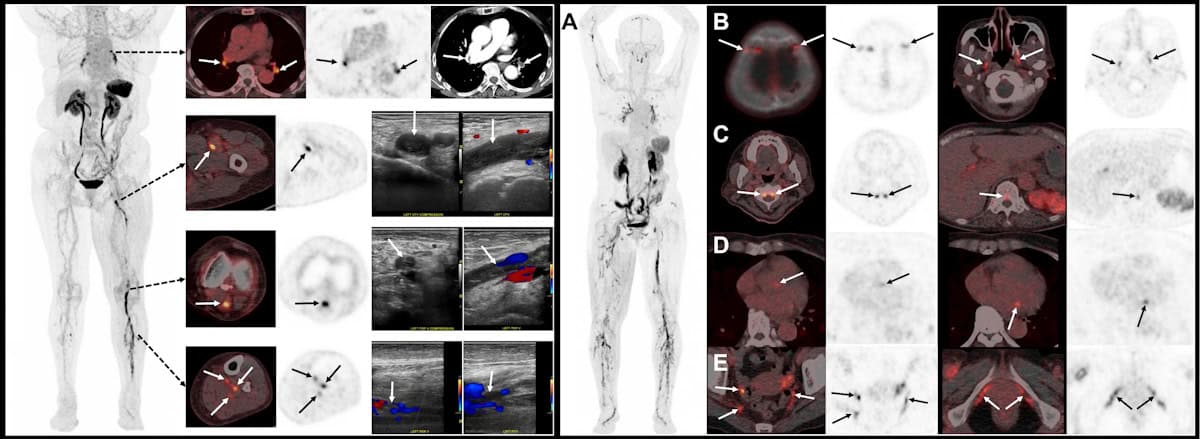
Image of the year Left: 18F-GP1 PET/CT images showing multiple blood clots in the deep veins of the left leg, plus several clots in the right calf and clots in both lungs. Right: 18F-GP1 PET/CT images showing widespread blood clots throughout the body. (Courtesy: S Han et al. Asan Medical Center, Seoul, Korea)
A PET radiotracer that can detect deep vein thrombosis (DVT) in the legs and clots that have travelled to the lungs has been chosen as the “Image of the Year” at the Society of Nuclear Medicine and Molecular Imaging (SNMMI) 2026 annual meeting. Developed by Sangwon Han and colleagues at the Asan Medical Center, University of Ulsan College of Medicine, in Korea, the novel tracer enables whole‑body imaging of blood clots (thrombi) in the legs and lungs in a single scan.
A DVT is a blood clot that forms in a deep vein, usually in the legs. It’s a common condition, with an incidence of roughly half that of all cancers, and it can lead to serious complications. Clots can break off and travel to the lungs, which could cause a potentially life‑threatening pulmonary embolism (a blockage in the artery supplying blood to the lungs). Early detection of DVT is therefore critical for determining the most appropriate treatment for each patient.
Currently, the standard imaging method for diagnosing DVT is venous ultrasonography (VUS). But while this works well for detecting clots in the thigh-to-knee region, whole-leg VUS requires skilled operators and advanced machines, takes longer, and has lower diagnostic sensitivity in the calf. In addition, conventional imaging techniques such as VUS and CT rely on indirect structural changes rather than directly visualizing the clot.
Aiming to enable faster and more efficient DVT diagnosis, Han and his research team are studying fluorinated GP1 (18F-GP1) a novel thrombus-targeted PET tracer. The tracer selectively binds to specific receptors on activated platelets (the cell fragments that cause blood to clots), allowing direct visualization of active thrombus formation.
“In our Phase 1 study, 18F-GP1 PET/CT showed 100% detection rate in 20 patients with confirmed DVT or pulmonary embolism,” Han told the SNMMI delegates. “But that study was limited by its small sample size and an absence of negative groups so specificity could not be assessed at that time.”
So in this latest work, Han and his team performed a phase 2, non-randomized study investigating the ability of 18F-GP1 PET/CT to identify acute lower-extremity DVT in 46 symptomatic patients. This included 22 patients with proximal DVT and 24 with none or distal DVT, as diagnosed using VUS.
The researchers acquired chest-to-feet PET/CT scans approximately 2 h after intravenous administration of 250 MBq of the radiotracer. The images were assessed by three blinded nuclear medicine physicians from different institutions, who assigned focal 18F-GP1 uptake higher than background activity as positive for thrombosis. They classified proximal DVT as clots involving the iliac (pelvic), femoral (thigh) and popliteal veins (behind the knee), and distal DVT as clots confined to the calf veins.
“Our primary objective was to assess the sensitivity and specificity of qualitive 18F-GP1 PET/CT interpretation for proximal DVT,” Han explained. “Secondary objectives included assessing the agreement between PET/CT and VUS for distal DVT, inter-reader reproducibility, exploring the detection of pulmonary embolism and assessing safety.”
When evaluated against VUS as a reference standard, 18F-GP1 PET/CT exhibited high diagnostic accuracy for detecting clots, demonstrating a sensitivity of 95% and a specificity of 92% for proximal DVT. “For distal DVT, both positive and negative agreement between PET/CT and VUS were strong,” added Han. “Inter-reader agreement was also excellent.”
The scans also identified concomitant pulmonary emboli in some patients, as confirmed by CT pulmonary angiography, illustrating the advantage of simultaneously assessing DVT and pulmonary embolism in a single scan. The researchers noted that the radiotracer was well tolerated, with no drug-related adverse events observed.
Speaking in the plenary session when his award was announced, Han shared a “striking image” recorded using 18F-GP1 PET/CT, which showed extensive blood clots, not only in the leg and lungs, but also in many unusual sites, including cranial and spinal vessels, cardiac valves, and vessels in the pelvic region. “This image clearly shows the remarkability ability of fluorinated GP1 to visualize thrombi throughout the body,” he explained.
“We believe this represents an important step towards thrombus-specific imaging,” Han concluded. “The potential of GP1 PET can expand beyond DVTs to many other thrombotic diseases such as embolic stroke or other cardiovascular diseases.”
The SNMMI Image of the Year is the society’s highest award, and the most anticipated, given out in recognition of an image that’s truly cutting-edge and representative of the future of nuclear medicine. This year’s winning image was chosen from nearly 1500 abstracts submitted for the meeting.
“It is truly a great honour to receive the Image of the Year award,” said Han.
As AI reshapes the way we communicate, researchers at Texas A&M University are developing an artificial intelligence-powered platform that could transform care for children with autism and older adults living with dementia. The technology learns each person’s unique communication style, behaviors, and preferences, enabling increasingly personalized support for caregivers, therapists, and families over time.
Called VoiceLove, it is one of three projects being developed with support from the Advanced Research Projects Agency for Health (ARPA-H).
At the core of the system is an AI engine that analyzes both speech and nonverbal behaviors documented through short videos recorded by caregivers or therapists during daily communications and interactions. Rather than comparing participants against a general model, the platform focuses on understanding each person’s individual patterns and communication style.
“Every child with autism is unique, and effective support should reflect that,” he said. “Our project leverages artificial intelligence to understand each child’s individual behaviors, communication styles, and preferences. The goal is to deliver personalized recommendations that help families, educators, and clinicians work together more effectively, enabling more responsive, data-driven care and improving the health and well-being of children with autism,” says Dr. Junhyoung Kim, associate professor in the School of Public Health, one of the principal investigators on the project, in a statement.
The AI system was created to identify behavioral patterns in communication, interests, and responses across different situations. Based on its observations, the program provides personalized recommendations that could help therapists or caregivers create individualized intervention plans.
“The key innovation behind this platform is its ability to understand each child individually and learn their unique preferences, needs, communication styles, and strengths to deliver personalized recommendations,” Kim said. “For people living with dementia, the platform is designed to enhance person-centered care by helping residents communicate their needs, preferences, and daily experiences more effectively.”
Researchers say the technology could support a wide range of developmental goals, including improving communication skills, encouraging self-care, strengthening social engagement, and enhancing a person’s quality of life.
The same personalized approach could also benefit people living with dementia, where communication challenges often make it difficult for individuals to express their needs and wants.
“Our vision is to create an AI platform that continuously learns from each child’s daily experiences,” Kim said. “As the system identifies patterns in behaviors, preferences, and responses to different activities, it can provide therapists and caregivers with personalized recommendations that evolve over time.”
“This adaptive approach helps explain why certain behaviors occur and supports more individualized, proactive care,” Kim added.
VoiceLove is designed to keep learning. As caregivers continue using the app, the AI analyzes new interactions while also incorporating caregiver observations, experiences, and responses to daily prompts.
The research team plans to begin with a small pilot study involving children with autism and older adults living with dementia after receiving Institutional Review Board approval.
Participants will use the platform for approximately one month while researchers evaluate its usability, feasibility, and overall user experience, and from there, insights derived from the pilot will help to inform a larger-scale study at some point in the future.
Chrissy Newton is a PR professional and the founder of VOCAB Communications. She currently appears on The Discovery Channel and Max and hosts the Rebelliously Curious podcast, which can be found on YouTube and on all audio podcast streaming platforms. Follow her on X: @ChrissyNewton, Instagram: @BeingChrissyNewton, and chrissynewton.com. To contact Chrissy with a story, please email chrissy @ thedebrief.org.
Researchers, including those from the University of Tokyo, found a way to optimize how cells bind to small packages they release called extracellular vesicles. By coating the vesicles with metal ions, they made cells and their corresponding vesicles stick together more strongly than they would naturally. This reduced the time needed for cells to capture their own vesicles, even in mixtures containing billions of other vesicles.
Jackie found an online audience through a webcam pointed at her nest in California. She was rescued last week after a fight with other eagles, officials said.
Un'analisi condotta dalla University of Pennsylvania su 12.000 pazienti affetti da diabete di tipo 2 e pubblicata su The BMJ ha rilevato che i farmaci agonisti del GLP-1 (come semaglutide e tirzepatide) comportano un rischio leggermente maggiore di caduta dei capelli rispetto ad altri antidiabetici. I pazienti in terapia con GLP-1 mostrano un rischio superiore del 37% rispetto a chi assume inibitori SGLT-2 e del 68% rispetto a chi usa inibitori DPP-4. L'incidenza reale resta comunque ridotta (1,6% dei casi) e riguarda forme di alopecia non cicatriziale: il fenomeno è in gran parte reversibile ed è causato dallo stress metabolico del rapido dimagrimento e da potenziali carenze nutrizionali.
President Donald Trump has a major problem with explosive diarrhea on his hands.
On Tuesday, HHS secretary Robert Kennedy Jr declared that the ongoing outbreak of cyclosporiasis — a non-lethal but extremely unpleasant gut infection caused by the Cyclospora cayetanensis parasite — was “under control.”
“We’ve identified the source of the outbreak, and the companies that are involved have implemented a recall,” he said, without elaborating any further or naming the companies.
But considering that cases are still rising, the situation is very much not looking under control. According to a Tuesday update by the Centers for Disease Control and Prevention, there have been 4,173 laboratory-confirmed domestic cases of cyclosporiasis since May 1. There are an additional 7,400 cases that have yet to be confirmed, many of which were reported in Michigan and Ohio.
Those tallies appear to be underestimating the scale of the problem considerably. In Michigan alone, state officials warned on Wednesday that there were 7,171 cyclosporiasis cases since June 22, up from 6,571 on July 21, suggesting the outbreak is only getting started.
Cases reported by the Ohio Department of Health tripled to 1,192 cases in its July 16 update, compared to June 20 — another sign that the situation is getting worse, not better.
And that’s just the data we know about. Identifying the parasite is notoriously difficult in a lab, making it particularly difficult to trace, and requiring extensive detective work by health officials.
Yet the public messaging regarding news about the outbreak has been severely lacking and downright confusing. Over the same weekend, the Food and Drug Administration said it had determined the culprit, bagged shredded lettuce supplied by Taylor Farms, one of Taco Bell’s lead suppliers — only to claim that the results were a “false positive” less than a day later.
Taylor Farms, which continues to “voluntarily” recall its tainted lettuce, celebrated the update, claiming the FDA had “apologized to us” in a since-deleted Monday statement.
Just hours later, the situation flipped on its head once again, with the FDA saying that “FDA’s traceback investigation and outbreak data continue to converge on shredded iceberg lettuce from Taylor Farms locations in central Mexico.”
There are plenty of reasons to be highly skeptical of the government narrative. The Trump administration maintains a cozy relationship with Taylor Farms, a company that has made a major donation to Trump’s political action committee, MAGA Inc.
The White House has since vehemently denied accusations from the media that it may be colluding with Taylor Farms behind the scenes, with the Health and Human Services Department calling them “FAKE NEWS” in a Monday statement — the kind of knee-jerk reaction that’s bound to invite even more scrutiny.
Then there’s the Trump administration’s gutting of key public health programs that could make truly getting the cyclosporiasis outbreak under control. Budget cuts have led to massive layoffs at the USDA, CDC, and FDA. Key food inspection and surveillance programs ahve been terminated. A team specifically dedicated to tracking cyclospora was slashed by Elon Musk’s so-called Department of Government Efficiency last year from 11 to just three people.
In short, while Kennedy claims the situation is under control, there’s plenty of evidence to the contrary. Cases are on the rise and even the evidence behind FDA’s leading suspect appears to be shaky, by the agency’s own admission.
It’s the perfect storm of short-sighted austerity measures, chummy business relationships, and poor public messaging by officials who are unable to speak from a place of authority and conviction.
Put simply, Trump’s diarrhea troubles are likely only getting started.
There’s something undeniably fishy about the Trump administration’s handling of the rising outbreak of an explosive diarrhea-causing parasite — and we’re not talking about tainted iceberg lettuce.
On Saturday, the FDA announced that it had found traces of the Cyclospora cayetanensis parasite — which more than likely won’t kill you, but will almost certainly cause weeks of violent diarrhea — in samples of bagged shredded lettuce supplied by Taylor Farms, one of Taco Bell’s lead suppliers.
One day later, the agency suddenly reversed its decision, announcing that its test results were a false positive, seemingly exonerating Taylor Farms. The company is still carrying out a voluntary recall of the offending greens, a move first announced on Friday.
The unexpected twists and turns of the devastating outbreak highlight how the Trump administration is struggling to get coherent messaging out to the American people, a public health disaster facilitated by massive health budget cuts and major layoffs at the FDA, USDA, and CDC. We still don’t know exactly how many people are affected, numbers that vary wildly depending on whether you ask the CDC or individual states. It’s a confounding mess, compounded by the fact that the parasite is notoriously difficult to trace in a lab.
There are plenty of reasons to be suspicious of the FDA’s baffling reversal on Sunday. For one, the Trump administration’s relationship with the embattled food supplier goes way back. Case in point, Taylor Farms made a mysterious $1 million donation to the Trump-aligned super PAC MAGA Inc on March 26, 2025, as first spotted by lawyer and public health policy leader Matthew Cortland — six days before the FDA loosened food traceability rules which could’ve helped prevent outbreaks like the current one.
The company appears to have considerable sway in Washington, DC. On July 17, a day before the FDA announced it had found traces of the parasite, the New York Times reported that Taylor Farms representatives had met with White House and FDA officials the day before to discuss what the company viewed as “shortfalls in the FDA and CDC’s outbreak response process.”
While it’s unclear whether the supplier successfully strong-armed the FDA into going back on its initial claims of having found traces of the parasite, the timelines are certainly suspect. According to the NYT, Taylor Farms had also hired lobbyist Trent Morse, who served as the deputy director of the White House Presidential Personnel Office before he resigned in September.
The story only gets stranger after the FDA issued its mea culpa. In the early morning hours of Monday, Taylor Farms published an “update” — which has since been deleted for an unknown reason — claiming that the FDA had “apologized to us” while trying to reassure customers that “all other Taylor Farms products… are not involved in the recall.”
Less than 12 hours later, the FDA once again pulled a 180.
“To clarify, this false-positive lab sample DOES NOT change the basis for FDA’s ongoing outbreak investigation or the overwhelming epidemiological data supporting the current voluntary recall by Taylor Farms,” the agency tweeted on Monday.
“FDA’s traceback investigation and outbreak data continue to converge on shredded iceberg lettuce from Taylor Farms locations in central Mexico,” the statement reads. “FDA will continue to work with federal and state partners to investigate this multistate outbreak and ensure products implicated in this outbreak have been removed from the market.”
It’s hard to rule out that White House officials were trying to vindicate Taylor Farms, considering the Trump administration has long been accused of giving major MAGA Inc donors favorable “pay for access” treatment. Taylor Farms’ willingness to recall the lettuce alone speaks volumes.
Naturally, the White House is now accusing the media of putting far too much of a spin on the story.
“This is how the FAKE NEWS works: imply collusion, ignore the facts,” the Health and Human Services Department, which oversees the FDA, tweeted on Monday, replying to reporting by Meidas Touch about Taylor Farms’ PAC donation. “Nothing influences our decisions except science and the safety of the American people.”
By Tuesday, the White House had already declared victory, with HHS secretary and notorious anti-vaccine activist Robert Kennedy Jr claiming that the outbreak was “under control.” He vaguely referred to “companies that are involved,” which had “implemented a recall” — but never mentioned Taylor Farms by name.
Most of the nation may want nothing to do with Taylor Farms and its shredded iceberg lettuce, which was recalled in dozens of states for potentially being contaminated with a parasite that turns your bowels into a garden hose.
Not so for the Amazon-owned Whole Foods, which is either hoping to capitalize on the controversy or proceeding as if nothing happened.
Over the weekend, we noticed that one of the grocery retailer’s locations in New York City was selling Taylor Farms’ shredded iceberg at a steep 50 percent discount — which, from an optics point of view, is absolutely extraordinary.
Is this an indictment of our country’s ruthless opportunism, and by extension, capitalism at large? Is it a total nonstory? If you’re unlucky enough, you’ll have plenty of time to ponder those questions on the porcelain throne. Many on social media just seemed to think it was a mix of funny and appalling.
“The cost is on the back end,” someone joked. “Discount diarrhea,” chimed another. Others were outraged that the location was still selling the stuff.
“They’re seriously not pulling that off the shelf,” one fumed. “For SHAME.”
The Food and Drug Administration narrowed the culprit down to a Taylor Farms facility in Mexico. So far, Taylor Farms has voluntarily recalled its Mexico products containing shredded iceberg lettuce from 27 states, including Michigan — the epicenter of the outbreak, where over 6,100 people are believed to be infected — Florida, Texas, and North Carolina.
New York state is not currently one of them, so Whole Foods isn’t obligated to pull the products from its shelves (or at least as obligated as is possible under what is technically a voluntary recall). Still, the recall has been expanded at least once already, so it’s not impossible that it could include more states in the near future. A Whole Foods representative declined to go on record, but insisted that the bag of lettuce in question was sourced from the USA, not Mexico, adding that the chain doesn’t carry any of the recalled products.
Tracing the provenance of food products can be pretty byzantine. It’s not clear at this point if Taylor Farms supplied lettuce to companies in states affected by the recall who then distributed that lettuce again more widely, the New York Times noted. Not even the FDA has “distribution information or a list of customers who received” the recalled product since Taylor Farms hasn’t provided it, it said on its website — something it’s not legally required to do.
It’s even more confusing to the public. Taylor Farms doesn’t share which stores and restaurants it directly supplied its products too, so consumers have to do their own detective work, or rely on those locations voluntarily declaring that they used those products.
All that’s to say that there’s a lot of uncertainty over what lettuce is safe and what isn’t. The safest thing to do in this environment, probably, is to just abstain from shredded lettuce entirely. But you have to admit, isn’t that Whole Foods 50 percent discount tempting? Maybe if you’re used to paying outrageous prices for a bag of mushy leaves.
In a stunning reversal on Sunday, the Food and Drug Administration said that lettuce samples from Taylor Farms did not, after all, test positive for the microscopic parasite Cyclospora cayetanensis, which is behind the rising outbreak of explosive diarrhea sweeping the nation.
Health officials have been racing to control the intestinal infection, which fortunately is not deadly, but can cause weeks of violently watery diarrhea.
By Saturday, the FDA said it had found traces of the parasite in shredded iceberg lettuce supplied by Taylor Farms — one of Taco Bell’s lead suppliers — only to change its mind just one day later.
“To be clear, at this moment, FDA has not identified a single positive product test result for cyclospora,” a Taylor Fresh Foods spokesperson told Reuters in a statement.
The bizarre 180 leaves far more questions than answers. And further muddying the waters was lawyer and public health policy leader Matthew Cortland’s stunning discovery about the food supplier’s relationship with the Trump administration.
In a post on Patreon, Cortland found that Taylor Farms had made a $1 million donation to the Trump-aligned super PAC MAGA Inc on March 26, 2025. That’s just six days after the FDA announced it was pushing back the implementation of its “Food Traceability Rule” by 30 months.
The rule, which was originally meant to go into effect on January 20 of this year, would’ve established “traceability recordkeeping requirements beyond those in existing regulations, for persons who manufacture, process, pack, or hold foods,” according to the regulator’s website.
Considering the effort would’ve allowed, in the words of the FDA, for the “faster identification and removal of potentially contaminated food from the market, resulting in fewer foodborne illnesses and deaths,” the agency’s decision to move back the compliance date raised eyebrows. (Congress even doubled down earlier this year, forbidding any funds to be appropriated to enforce the Food Traceability Rule before July 20, 2028.)
Where all of this leaves the ongoing outbreak of explosive diarrhea is tough to say. As Cortland points out, the Centers for Disease Control and Prevention has only acknowledged a small fraction of the cases of the illness so far. As of Friday, that’s 1,644 cases across five states. However, compared to reported tallies from individual states — Michigan alone has reported over 6,000 cases as of Monday — that’s likely vastly underestimating a more widespread phenomenon.
One reason for the discrepancy could be the difficulty of confirming the presence of the parasite with a lab test, a process that requires painstakingly dying eggs and then examining samples under a microscope. The parasite can’t be grown in a lab, greatly hampering scientists’ efforts to trace the outbreak.
“You’re looking for a needle in a haystack,” food-safety professional Jennifer McEntire, who consults for Taylor Fresh Foods, told the Wall Street Journal. “With E. coli and salmonella if you find it you can make the needle bigger. That doesn’t happen for cyclospora.”
And chances are that the situation could get even messier as the parasite spreads. The Trump administration’s FDA and USDA have lost tens of thousands of workers last year amidst budget cuts. A food surveillance program called FoodNet that monitored eight common foodborne pathogens is now no longer required to keep tabs on the cyclospora parasite. A team responsible for identifying parasitic outbreaks across the US was cut from 11 people to just three in September, as CNN reports.
For now, Taylor Fresh Foods will still have to recall its iceberg lettuce — despite the FDA now claiming the samples it viewed did not test positive after all.
In a new review paper, Dr. Gregory Marcus from the University of California, San Francisco and colleagues analyzed decades of research on how caffeine -- most often consumed as coffee -- affects the heart and its risk factors.
The world has been obsessed with what Gen Z is or isn’t doing.
They’re not having sex, apparently. They don’t go out. And let’s not forget drinking: for the young twenty-somethings to forgo damaging their livers and brains by imbibing poison as prolifically as their predecessors clearly shows a lack of respect — and that they don’t know anything about having a good time.
But it appears that in the end, the apple doesn’t fall too far from the tree. New research from beverage retail research group IWSR shows that Gen Z are now catching up on boozing like a friend knocking back a whole row of shots after showing up later than they said they would.
“They’re late to the party, they’re not skipping the party,” IWSR president Marten Lodewijks told Business Insider.
According to the survey, 74 percent of Gen-Zers say they’ve had at least one drink over the past six months, a huge leap from 66 percent just three three years ago. The heaviest drinkers were Millennials at 81 percent, and the lightest were Baby Boomers at 71 percent. Gen X, fittingly, were in the middle at 77 percent.
The legal drinking age youths are catching up, but their drinking habits look a little different from their elders’. They’re drinking more cocktails than any other generation, with 84 saying that they had a mixed drink in the past six months. Gen-Zers were also the most likely to follow government health guidance on alcohol (49 percent), and the most likely to say they drank alcohol with five or more people on their last occasion (18 percent).
In a statement, Lodewijks declared that Gen-Z’s reputation as the generation of moderation “is now conclusively debunked.”
“The evidence demonstrates that Gen Z consumers enjoy drinking at roughly the same levels as the rest of society,” he added.
In retrospect, it always should’ve been clear why Gen-Zers didn’t drink as much. Shifting attitudes towards drinking culture may be part of it, sure, but what almost certainly had the biggest part to say was the COVID-19 pandemic that stopped them from going out around when many of them just hit their legal drinking age.
“They were literally coming of age at a point in which everything got shut down,” Lodewijks told BI.
Wonderful. With their boozing now in line, what other Gen-Z habits can we worry about? Their addiction to romanticAI companions? We cast a mournful glance towards the bottle.
Author: José R. Pineda got his Ph.D. from University of Barcelona in 2006. Since 2007 he has worked for Institut Curie and The French Alternative Energies and Atomic Energy Commission. Currently he is a researcher of the EHU. He investigates the role of stem cells in physiologic and pathologic conditions.
For decades, Alzheimer’s research has been dominated by a seemingly intuitive idea: the disease is largely explained by the accumulation of abnormal proteins in the brain, primarily beta-amyloid and tau. However, while this view has been useful, it has fallen short in explaining certain fundamental aspects. One of the most striking is that Alzheimer’s affects women far more than men. This is not a minor difference: roughly two-thirds of cases occur in women, and the clinical progression tends to be faster and more severe. The work by López-López and colleagues addresses this imbalance from a different angle. Instead of focusing exclusively on protein accumulation, it shifts attention to the brain’s immune system—specifically to a molecular pathway known as interferon signaling. What the study proposes is that the brain’s immune response, far from being a mere bystander, could be a central driver of the disease, and one that operates differently in men and women 1.
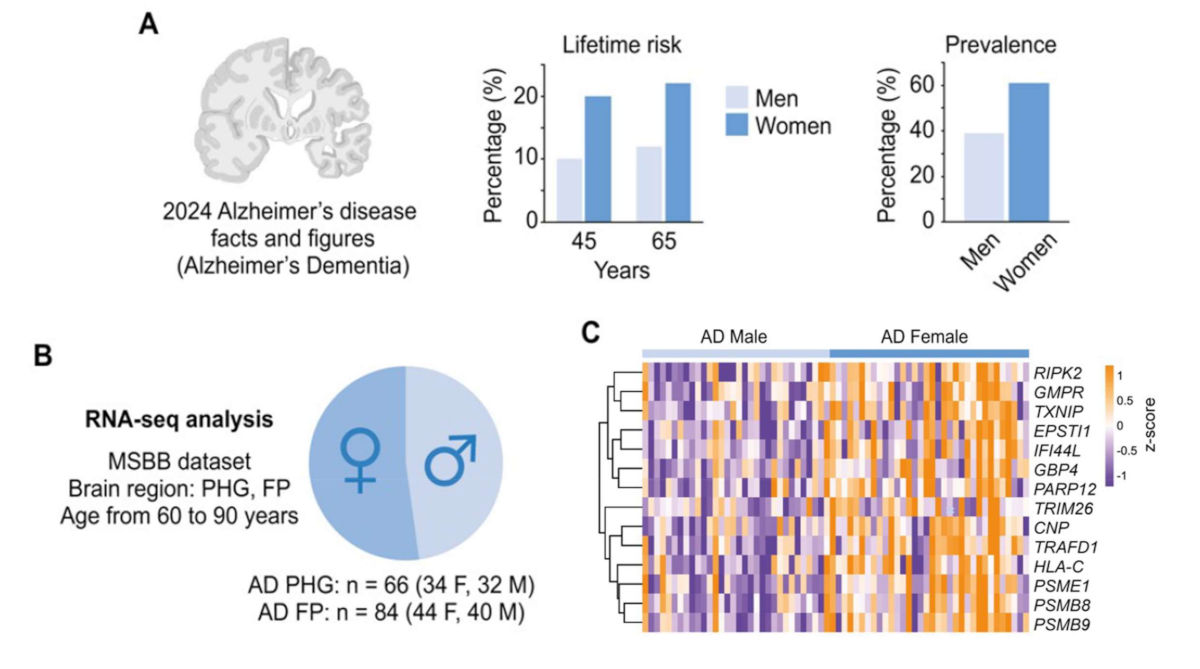
To understand the importance of this idea, it helps to briefly consider what interferons are. They are molecules that form part of the body’s first line of defense against infections, especially viruses. They activate genetic programs that help cells detect and neutralize threats. Under normal conditions, this system is essential for survival. The problem arises when it becomes chronically or inappropriately activated, as is the case in several inflammatory diseases 2. So, the study begins with an analysis of human brain tissue from Alzheimer’s patients. Using transcriptomics (techniques that measure the activity of thousands of genes at once) the authors identified a clear pattern: in the brains of women with Alzheimer’s, genes associated with the interferon response were much more strongly activated than in men (Figure 1). This pattern was not explained by differences in disease severity, since both groups showed comparable levels of neuropathological damage. Instead, it points to an intrinsic difference in how the brain responds to the disease. This finding is significant because it suggests that women not only develop Alzheimer’s more often, but may do so through a partially distinct biological pathway. In other words, the same clinical diagnosis may conceal different underlying mechanisms depending on sex.
(A) Diagram illustrating the lifetime risk at 45 and 65 years of age, and prevalence of Alzheimer’s disease (AD) in women and men. (B) Schematic of the RNA sequencing (RNA-seq) cohorts between samples from female and male (all aged 60–90 years) and (C) Heatmap showing the top interferon-related genes with sex-biased expression differences in female AD samples compared to male AD samples. Adapted from: López-López V. et al. doi: 10.1186/s12974-026-03840-0. Under a Creative Commons Attribution 4.0 International License.
To move beyond correlation and explore causality, the researchers turned to animal models. They used genetically modified mice (APP/PS1), widely employed in Alzheimer’s research because they develop amyloid plaques similar to those seen in patients. Once again, the same pattern emerged: female mice showed much stronger activation of the interferon pathway, along with increased brain inflammation, neuronal damage, and functional impairment. An especially interesting point is that these differences were not limited to amyloid plaque levels. Indeed, female mice did have more plaques, but the study shows that neuronal damage and inflammation cannot be explained solely by amyloid accumulation. This supports a growing idea in the field: that Alzheimer’s toxicity depends not only on protein buildup, but also on how the brain responds to it. In this context, microglia (the brain’s resident immune cells) become key players. Cell-level analyses revealed that these cells are the main drivers of interferon activation. In essence, microglia detect signals of damage or stress and launch an inflammatory response which, if sustained over time, can ultimately harm neuronal tissue. To test whether this pathway is not only associated with disease but actually contributes to it, the authors performed direct manipulation experiments acutely activating interferon signaling in healthy animals using an immune stimulus. To do that, they did intraperitoneal administration of polyinosinic:polycytidylic acid (poly(I:C)) to induce inflammation, but also they performed crossings between the APP/PS1 mice and a microglia-specific Rela conditional knockout line (AD hiIFN). The result was striking: within hours to days, the brains of these animals began to show changes resembling Alzheimer’s pathology, including altered neuronal activity, synaptic disruption, and markers of axonal damage. This results suggest that activation of this pathway is not a secondary phenomenon, but may be sufficient to induce key features of the disease. In parallel, the researchers performed the inverse experiment: they chronically enhanced interferon signaling in microglia within APP/PS1 mice (an Alzheimer’s disease model). This led to a worsening of neurodegenerative features, even though, paradoxically, amyloid plaque levels did not increase—and in some cases even decreased. This last finding is particularly revealing because it challenges a widespread assumption: that fewer plaques necessarily means a healthier brain. Here, the opposite happens!! The animals had less amyloid burden, yet more neuronal damage and worse function. This points to inflammation, and specifically interferon signaling, as an independent driver of degeneration.
Next, the key question is whether this pathway can be targeted therapeutically. To address this, the study explores a pharmacological intervention aimed at the cGAS–STING pathway (a molecular system that senses cellular damage and triggers interferon production). Using a specific inhibitor (STING inhibitor C-176), the researchers demonstrated by RNA-seq and immunohistochemistry that the treatment was able to reduce interferon signaling in the brain. The results were consistent: inflammation decreased, neuronal integrity was better preserved, and cognitive performance improved in memory tests (very important from the therapeutic and functional perspective). More importantly, these effects were far more pronounced in females, which aligns with the idea that this pathway is more active in them and therefore more impactful when blocked. Notably, these improvements occurred without significant changes in amyloid plaque levels. Once again, the conclusion is clear: modulating the immune response may be as important as, or even more important than, targeting protein aggregates. Taken together, this work proposes a shift in how Alzheimer’s is understood. Rather than viewing it solely as a disease of protein accumulation, it suggests it is also—critically—a disorder of immune dysregulation. More specifically, one in which excessive interferon signaling plays a central role, particularly in women.
The practical implications are twofold. First, it opens the door to therapies that modulate immune pathways in the brain, something already feasible in other diseases using drugs that target similar mechanisms. Second, it highlights the importance of incorporating sex as a biological variable in both research and treatment design. What works in men may not work the same way in women, and vice versa. As with any preclinical study conducted in mice we must be cautious when extrapolating to humans: results in animal models do not always translate directly, and manipulating the immune system carries inherent risks, given its essential role in protecting against infections. However, the value of this work lies not only in its potential clinical applications, but in the conceptual framework it offers.
By identifying interferon signaling as a key factor in sex-specific vulnerability to Alzheimer’s, the study provides a mechanistic explanation for a long-observed but poorly understood phenomenon. Perhaps more importantly, it suggests that intervening in this pathway could alter disease progression even without changing classical amyloid pathology. In a field where many clinical trials have failed by focusing solely on plaque removal, this perspective is not just novel, it may be necessary to explore it in the future.
References
López-López, V., Iniesta, G., Galán-Ganga, M. et al. (2026) Sex-dependent interferon signaling contributes to female-biased vulnerability in Alzheimer’s disease. J Neuroinflammation doi: 10.1186/s12974-026-03840-0↩
Sleep has long been suspected to influence how aging bodies manage multiple chronic conditions, but the interplay between rest quality and physical decline has been harder to untangle. Now, a new cross-sectional study of Chinese older adults adds an evidence-packed twist: poor sleep and frailty are not just independently linked to cardiometabolic multimorbidity—they also appear to act synergistically.
Researchers analyzed how sleep quality and frailty relate to the co-occurrence of cardiometabolic disorders, focusing on patterns that emerge when both factors are present at once. Using statistical modeling suited for observational data, the team assessed whether the combined effect of sleep impairment and frailty exceeds what would be expected if each acted alone.
The findings point to independent associations in both directions. In other words, older participants with worse sleep quality were more likely to show cardiometabolic multimorbidity, and those with greater frailty also faced higher odds. This dual relationship strengthens the biological plausibility of the sleep–health link in late life.
But the headline result is synergy. The study suggests that the joint presence of insufficient or low-quality sleep and frailty corresponds to a disproportionately greater burden of cardiometabolic multimorbidity. Such interactions matter because they imply that tackling only one factor may leave a major portion of risk untouched.
From a mechanistic perspective, poor sleep can disrupt metabolic regulation, impair glucose homeostasis, and contribute to inflammatory signaling, all of which can accelerate vascular and metabolic dysfunction. Frailty, meanwhile, reflects reduced physiological reserve—often shaped by chronic inflammation, muscle loss, and stress-axis dysregulation—creating a vulnerable platform for cardiometabolic disease to cluster.
The cross-sectional design cannot prove causality, but it helps map where risk concentrates in real-world aging. The authors argue that clinicians and public health programs should consider sleep quality and frailty together, rather than treating them as separate problems.
In a Viral science news framing, the study’s message is clear: “better sleep” and “less frailty” may be more connected than previously assumed, potentially offering a more coordinated prevention strategy for seniors facing multiple cardiometabolic conditions.
Subject of Research: Sleep quality, frailty, and cardiometabolic multimorbidity in Chinese elderly population (cross-sectional analysis)
Article Title: Independent and synergistic associations of sleep quality and frailty with cardiometabolic multimorbidity: a cross-sectional analysis in Chinese elderly population
Article References: Bing, S., Liu, W., Song, S. et al. Independent and synergistic associations of sleep quality and frailty with cardiometabolic multimorbidity: a cross-sectional analysis in Chinese elderly population. BMC Geriatr (2026). https://doi.org/10.1186/s12877-026-07985-8
A new study reported in BMC Geriatrics spotlights cognitive reserve—the brain’s lifelong ability to adapt—as a potential resilience factor for how older adults experience frailty. The research frames frailty not as a fixed state, but as a dynamic process that can worsen or improve over time, with cognition playing a key role in that trajectory.
Frailty affects mobility, independence, and health outcomes, and clinicians increasingly treat it as something that evolves. Yet, why some people regain strength after health setbacks while others decline remains an open question. Zhao, Liau, Ma and colleagues investigate whether individuals who build stronger cognitive reserve across their lifespan may be better protected.
The team examines frailty progression and recovery in later life using longitudinal data, allowing participants to move between clinical frailty states rather than being categorized once and followed as static cases. This design is crucial for capturing real-world resilience, where improvement can occur after hospitalization, illness, or functional decline.
Cognitive reserve is often linked to differences in brain structure and function, as well as to lifelong experiences such as education, complex work, and engagement in mentally demanding activities. In the study’s framing, higher cognitive reserve may support more efficient neural processing and compensatory mechanisms, even when aging-related changes begin to accumulate.
Technically, the analysis explores associations between cognitive reserve measures and the odds of frailty worsening or recovering across follow-up. By considering longitudinal changes, the authors aim to isolate whether cognitive reserve is correlated with healthier trajectories, not merely with baseline health.
If validated, these findings could reshape how risk is assessed in geriatrics. Instead of focusing solely on current impairments, clinicians may consider cognitive reserve as part of a broader resilience model that includes cognitive health alongside physical function.
The implications extend beyond individual prediction. Cognitive reserve is influenced by modifiable factors, suggesting that public health strategies promoting lifelong learning and cognitively stimulating environments might contribute to better aging outcomes.
With its 2026 publication in BMC Geriatrics, the study adds to a growing evidence base connecting cognitive aging with systemic vulnerability. The authors argue that resilience is not only physical—brain adaptability may also buffer older adults against the downward cycle of frailty.
Finally, the study offers a viral-science-friendly takeaway: your brain’s “practice” over decades may help determine whether frailty becomes a chronic decline or a condition with room for recovery.
Subject of Research: Frailty progression and recovery in later life; cognitive reserve as a resilience factor.
Article Title: Lifelong cognitive reserve as a resilience factor for frailty progression and recovery in later life.
Article References: Zhao, M., Liau, S.J., Ma, X. et al. Lifelong cognitive reserve as a resilience factor for frailty progression and recovery in later life.BMC Geriatrics (2026). https://doi.org/10.1186/s12877-026-07919-4
Older adults in China are not experiencing health improvements evenly, and a new study links part of that gap to how physical activity is distributed across communities. Researchers report that physical activity is associated with better health outcomes, but the benefits are not uniform—creating measurable health inequality rather than a single “one-size-fits-all” effect.
The findings focus on older adults and examine whether differences in activity levels translate into unequal health trajectories across demographic and socioeconomic conditions. Instead of treating “activity” as a simple yes-or-no behavior, the analysis considers how gradients of movement relate to disparities in health.
To quantify inequality, the study employs population-level metrics commonly used in health economics and epidemiology. These approaches can separate overall health variation into components that reflect group differences, allowing investigators to estimate how much of the inequality is potentially attributable to physical activity patterns.
The work also emphasizes that health inequality can widen even when average health improves. In this scenario, some groups may adopt or maintain activity more easily—because of access to safe spaces, health literacy, social support, or fewer mobility constraints—while other groups fall behind.
Technically, the authors analyze observational data and control for key confounders that might otherwise explain both activity and health status. This helps reduce the chance that the observed association is merely driven by factors such as baseline chronic disease burden, education, or geography.
Importantly, the results suggest that physical activity does not just correlate with health—it may act as a modifiable lever shaping how evenly health benefits are shared. If interventions can shift activity patterns among disadvantaged groups, the study implies that inequality could shrink, not just outcomes improve.
Because the paper is based on real-world evidence from China, it also highlights cultural and structural realities that shape behavior. Urban design, community programming, and the availability of age-friendly exercise options may influence who can be active consistently.
From a “viral science news” perspective, the headline takeaway is straightforward: getting older doesn’t have to mean accepting unequal health. The study frames physical activity as both a health tool and an inequality amplifier—meaning targeting participation gaps could deliver outsized public health impact.
Subject of Research: Health inequality among older adults; physical activity effects Article Title: The impact of physical activity on health inequality among older adults: evidence from China Article References: Dang, X., Pan, J., Xing, X. et al. The impact of physical activity on health inequality among older adults: evidence from China. BMC Geriatr (2026). https://doi.org/10.1186/s12877-026-08008-2 Image Credits: AI Generated DOI: https://doi.org/10.1186/s12877-026-08008-2 Keywords: physical activity; health inequality; older adults; China; public health; epidemiology
A new study highlights what shapes how older adults choose dental services, offering insights that could help clinicians and policymakers make care more reachable for aging populations. Published in BMC Geriatrics, the research examines preferences from the perspective of elderly people, focusing on the practical and psychological drivers behind where they seek treatment.
Researchers report that dental service choice is not determined by clinical need alone. Instead, older participants weigh multiple factors, including perceived quality, trust in providers, and the comfort they expect during visits. Such preferences can influence whether seniors present early for care or delay until symptoms become more severe.
The analysis also underscores the role of access-related conditions. Transportation difficulties, scheduling constraints, and the overall convenience of clinics can strongly affect whether elderly adults follow through on appointments. In practice, even when dental services are available, logistical friction can reduce uptake.
Cost perception emerges as another key theme. The study points to the way affordability, expected out-of-pocket expenses, and insurance-related clarity can shape willingness to seek preventive services. When costs feel uncertain, older adults may prioritize only urgent needs rather than routine checkups.
Beyond logistics and economics, communication quality matters. Participants appear to value providers who explain procedures clearly, demonstrate patience, and treat them with respect. For many seniors, feeling heard can improve satisfaction and reinforce continued engagement with dental care.
The findings also suggest that health-related experiences influence preference. Prior dental outcomes, fear of pain, and past interactions with the healthcare system can steer individuals toward specific service settings. This is particularly relevant for older adults who have accumulated years of unmet needs or negative impressions.
Importantly, the study frames these determinants as modifiable targets. By improving appointment accessibility, strengthening patient-provider communication, and ensuring transparent pricing, dental programs could better align services with senior expectations.
As populations age worldwide, these behavioral insights may help reduce barriers to oral healthcare. The research calls for strategies that address both the measurable elements of service delivery and the lived concerns of older adults deciding where to go for treatment.
Subject of Research: Factors influencing elderly preferences for dental services
Article Title: Factors related to the preference for dental services from the perspective of the elderly

 Login