❌

Reading view

Samsung Plans 50-Tool Hybrid Bonding Production Line in Pyeongtaek
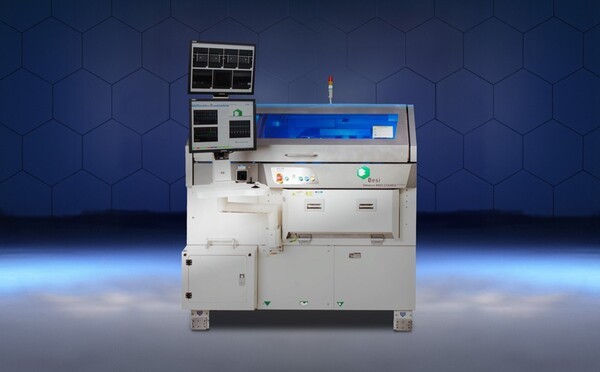
BESI's Datacon 8800 Cameo Ultra Plus AC hybrid bonding system. (Source: BESI)

Samsung Electronics is preparing to build a production-scale die-to-wafer (D2W) hybrid bonding line equipped with approximately 50 bonders at its Pyeongtaek semiconductor campus to support next-generation high-bandwidth memory (HBM) and advanced logic chips. Equipment installation is expected to begin toward the end of this year.

According to industry sources on July 21, Samsung has selected Dutch advanced packaging equipment maker BE Semiconductor Industries (BESI) as its preferred supplier and has begun the procurement process for around 50 D2W hybrid bonding systems. The line is expected to be installed in the P5 fab at the Pyeongtaek campus.

Richard Blickman, chief executive officer of BESI, previously said during the company's first-quarter earnings call in April 2026 that "more definitive developments" regarding Samsung's adoption of its hybrid bonders were expected around the middle of this year. At the time, BESI's hybrid bonding equipment was undergoing Samsung's qualification process.

The order, however, has yet to be finalized. Samsung has requested design modifications to the equipment, delaying agreement on delivery schedules. Such modifications involve changes to system architecture, components or modules to meet customer-specific requirements.

Pricing has also complicated negotiations. Industry sources estimate that BESI's hybrid bonders cost roughly 6 billion won per unit—about twice the price of competing systems.

"BESI supplies hybrid bonders to companies such as TSMC and Micron, and it is reluctant to redesign its equipment exclusively for Samsung," one industry source said. "Samsung still considers BESI's technology the strongest option, but as negotiations become more complicated, it is also evaluating domestic suppliers that can respond more quickly to its requirements."

Samsung's semiconductor equipment subsidiary Semes has also been asked to provide D2W hybrid bonders for the production line and is hoping to supply equipment for two hybrid bonding production lines at the Pyeongtaek campus.

"Semes initially felt significant pressure after Samsung prioritized BESI, but sentiment has shifted recently," another industry source said.

Semes completed development of its D2W hybrid bonder earlier this year and delivered evaluation units to Samsung for performance verification. Industry sources believe the equipment has successfully passed internal testing.

Samsung is also considering Hanwha Semitech as a potential supplier. The company completed development of its second-generation D2W hybrid bonder, SHB2 Nano, in February and delivered an evaluation system to SK hynix in April 2026.

The evaluation platform was supplied as an integrated cluster that combined Hanwha Semitech's bonder and plasma activation module with an EFEM (Equipment Front End Module) from CyMechs and a wafer cleaning module from Zeus.

Samsung's investment in a D2W hybrid bonding production line at Pyeongtaek is closely tied to advanced packaging for HBM and logic semiconductors.

In addition to its existing advanced packaging operations in Cheonan, Samsung is developing next-generation hybrid bonding capabilities at Pyeongtaek for future HBM products.
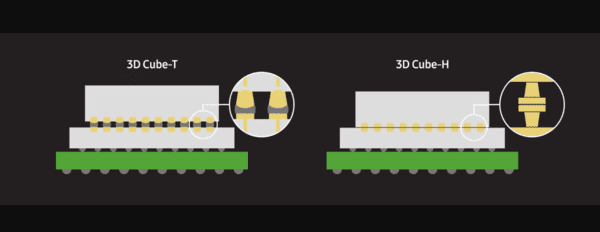
Samsung Foundry's 3D Cube-H advanced packaging technology. (Source: Samsung Electronics)

Replacing conventional thermo-compression (TC) bonding with hybrid copper bonding (HCB) between HBM DRAM dies can significantly improve performance, reduce power consumption and lower heat generation. The technology directly bonds copper and dielectric materials without using microbumps, shortening interconnect distances between chips.

The technology is expected to play a key role in custom HBM (cHBM). Samsung plans to replace the conventional HBM base die with a customer-specific logic die incorporating proprietary compute intellectual property (IP). The logic die will complement external CPUs and GPUs while optimizing data transfer, with HBM DRAM stacks vertically integrated above it in a 3D system-in-package (SiP) architecture.

In June 2026, Samsung Foundry introduced 3D Cube-H, its next-generation hybrid bonding-based 3D vertical stacking solution. The heterogeneous integration technology targets AI chips and high-performance computing (HPC) systems, offering improvements in performance, power efficiency and bandwidth over existing packaging technologies. Samsung Foundry is actively promoting the technology to customers.

Hybrid bonding equipment is expected to begin arriving at Samsung's Pyeongtaek campus later this year. Internally, however, Samsung is targeting 2030 for large-scale commercial production using hybrid bonding, reflecting the technology's greater manufacturing complexity compared with conventional TC bonding.

One industry source said widespread adoption of hybrid bonding is likely to coincide with the introduction of NVIDIA's next-generation Feynman AI accelerator, expected around 2029.

  •  

Global Semiconductor Equipment Market to Top $229 Billion by 2028, Driven by AI

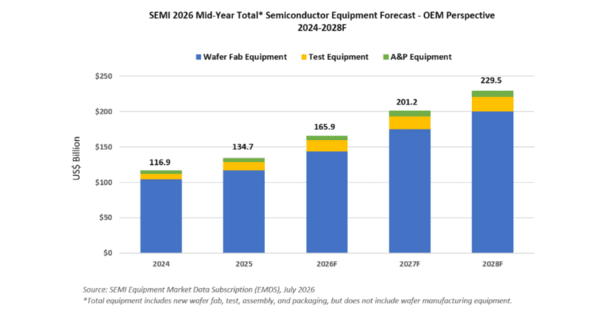
Global semiconductor equipment market forecast. (Source: SEMI)

The global semiconductor equipment market is expected to continue its rapid expansion on the back of artificial intelligence-driven demand, with annual sales projected to exceed $229 billion in 2028, according to SEMI.

The global semiconductor industry association said on July 21 that worldwide semiconductor equipment sales are expected to reach $165.9 billion in 2026, up 23.2% from a year earlier. The market is forecast to maintain a similar growth trajectory over the following two years, reaching a record $229.5 billion in 2028. If realized, the industry will post five consecutive years of growth beginning in 2024.

"AI has rapidly accelerated demand for more powerful and efficient semiconductors," said Ajit Manocha, president and chief executive officer of SEMI. "As chipmakers increase investment in advanced logic devices, next-generation memory, testing and packaging for the AI era, spending on semiconductor equipment is expected to remain on a strong growth trajectory."

The wafer fab equipment (WFE) market is projected to reach $143.9 billion this year, an increase of 23.1% from 2025. The WFE segment includes wafer processing equipment, mask and reticle equipment, and fab facilities equipment. Growth is being driven by investment in next-generation semiconductor technologies, including HBM-related DRAM and 3D memory.

SEMI expects the WFE market to expand another 21.8% in 2027 and 14.1% in 2028, reaching approximately $200 billion.

Within the WFE segment, foundry and logic equipment spending is forecast to rise 18.9% this year to $78 billion. The market is expected to grow another 18.1% in 2027 and 13.6% in 2028, reaching $104.7 billion. Capacity expansion for AI accelerators and high-performance computing (HPC) chips is expected to remain the primary growth driver, while the transition to volume production of 2-nanometer gate-all-around (GAA) process technology is likely to sustain equipment investment.

DRAM equipment spending is projected to increase 39% this year to $38.8 billion, followed by growth of 27.4% in 2027 and 15% in 2028, reaching $56.9 billion. NAND equipment spending is expected to rise 30.7% this year to $13.9 billion, before increasing 31.1% in 2027 and 14.5% in 2028 to $20.8 billion.

The back-end equipment market, which includes test, assembly and packaging equipment, is also expected to post strong growth. The segment is forecast to expand 31% this year to $15.3 billion and nearly double to $29.4 billion by 2028, including $20.8 billion in test equipment and $8.6 billion in assembly and packaging equipment.

SEMI said continued semiconductor miniaturization, rising device complexity, wider adoption of advanced packaging technologies and increasingly stringent reliability requirements will support long-term growth in the back-end equipment market.

By region, China is expected to remain the world's largest semiconductor equipment market through 2028, although its growth is forecast to moderate this year. Taiwan is expected to continue investing heavily in advanced process equipment for AI and HPC chips, while South Korea is projected to increase investment in advanced memory technologies, including HBM.

  •  

Kostek Systems Appoints Bae Geon-woo as CEO

Bae Geon-woo, newly appointed CEO of Kostek Systems. (Photo: Kostek Systems)

Kostek Systems has appointed Bae Geon-woo as its new chief executive officer, as the semiconductor equipment maker looks to accelerate growth by expanding shipments of high-bandwidth memory (HBM) process equipment to its key customer, Samsung Electronics.

The company held an extraordinary shareholders' meeting at its headquarters in Pyeongtaek on July 20, where Bae, the company's largest shareholder, was appointed as an inside director. At a subsequent board meeting, he was elected chief executive officer.

Kim Yong-seop, vice president of Kostek Systems, said Bae joined the company's product development team two years ago and has been involved across the business, including product development, sales, procurement, materials, manufacturing, human resources, administration and accounting.

"He has developed a deep understanding of the company and is an essential leader for its future management and growth," Kim said.

Bae is the eldest son of former CEO Bae Jun-ho. Born in 1991, he graduated from the University of Washington in 2018 and earned a master's degree in Interaction Science from Sungkyunkwan University in 2021. He joined Kostek Systems' product development team in 2024.

He owns a 46.59% stake in the company, consisting of 45.37% inherited from his father and an existing 1.22% personal holding.

Bae will lead the company alongside department heads who also serve as registered directors. He identified collective intelligence and rapid decision-making as the company's core management strategies.

"We will build an open organizational culture where employees can freely propose ideas regardless of rank or position," Bae said. "Given the importance of this period, we will also improve the speed of decision-making."

To support that strategy, the company plans to strengthen communication and collaboration across departments and implement organizational restructuring when necessary.

Kostek Systems logo displayed in the lobby of the company's headquarters in Pyeongtaek. (Photo: THE ELEC)

Kostek Systems expects to generate stable revenue this year from new equipment, including its Peel-off System and De-taper equipment. The company expects sales to increase several-fold over current levels as shipments of the equipment to Samsung Electronics ramp up.

The Peel-off System removes temporary bonding film (TBF) used during the temporary bonding/debonding (TBDB) process for HBM manufacturing. TBDB temporarily bonds a device wafer to a carrier wafer before through-silicon via (TSV) formation and etching, and includes the subsequent debonding process in which the carrier wafer is removed.

The De-taper system removes temporary protective tape used to protect chip bumps during fan-out panel-level packaging (FO-PLP) and 2.3D packaging processes.

Over the longer term, the company also plans to localize additional high-value semiconductor equipment, including Temporary Bonders (TBs). Rather than competing directly with established large equipment suppliers, Kostek Systems aims to focus on differentiated technologies and underserved "blue ocean" markets where localization opportunities remain.

"Our goal is to establish a differentiated position in the semiconductor equipment market through proprietary technology," Bae said. "Our core products and key customers are clearly defined, and our employees are fully aligned, giving us confidence in the company's rapid growth."

Founded in 2000, Kostek Systems develops semiconductor and display manufacturing equipment. The company reported revenue of approximately 19.2 billion won and an operating loss of about 740 million won in 2025.

  •  

RFK Jr Wants to Waste $5 Billion in the Worst Way Imaginable

Since riding Donald Trump’s coattails to power, Robert F. Kennedy Jr has taken his haphazard anti-vaccine views and enshrined them as a core tenet of US health policy.

According to 16 current and former health officials who spoke to Reuters, RFK Jr has taken much more drastic measures to push his anti-vaccine agenda than was previously known.

Speaking on condition of anonymity, two officials told the news agency that RFK approached National Institute of Health director Jay Bhattacharya earlier this year with a proposal to spend up to $5 billion in tax dollars to establish links between vaccines and autism.

As Reuters notes, that kind of spending would encompass ten percent of the NIH’s annual budget, a massive waste that would fly in the face of decades of established science showing vaccines definitively don’t cause autism.

“He’s an anti-vaccine activist. That’s who he is. That’s who he’s been for 20 years,” Paul Offit, director of the Vaccine Education Center at the Children’s Hospital of Philadelphia told Reuters. “To expect that as secretary of Health and Human Services he’d be anything other than that is wishful thinking.”

It certainly wouldn’t have been the first time RFK Jr attempted to twist the science to link vaccines with autism. Earlier this year, the US Department of Health and Human Services was caught spending $1.6 million funding a study on hepatitis B vaccines conducted by controversial Danish researchers Peter Aaby and Christine Stabell Benn.

Had the Africa Centres for Disease Control and Prevention — the public health arm of the Africa Union — not stepped in to stop the RFK-backed study, researchers would have withheld inoculations from thousands of newborn infants in Guinea-Bissau.

The situation drew notable comparisons to the Tuskegee Experiment, a highly unethical medical experiment that used hundreds of Black men as guinea pigs to study the long-term effects of syphilis. Despite the fact that effective treatment was available, nearly 400 men spent decades without treatment, suffering life-long consequences at the hands of manipulative researchers.

Though the Tuskegee Experiment may not have produced any medical breakthroughs or scientific discoveries, its cruel legacy seemingly lives on as inspiration for RFK and his HHS cronies.

More on RFK Jr: CDC Report on Vaccines and Autism Caught Citing Hallucinated Study That Does Not Exist

The post RFK Jr Wants to Waste $5 Billion in the Worst Way Imaginable appeared first on Futurism.

  •  

Apple Sends Letters to Dozens of Former Employees Now at OpenAI

Michael Acton, reporting for the Financial Times from San Francisco:

About 40 former employees now working at OpenAI have been sent letters directing them to preserve documents and communications and demanding meetings with Apple’s lawyers, according to multiple people familiar with the matter. Apple and OpenAI declined to comment.

The decision to hit employees with personal legal letters highlights Apple’s aggressive tactics after it last week launched a blockbuster lawsuit accusing OpenAI and two employees of stealing secret hardware plans.

  •  

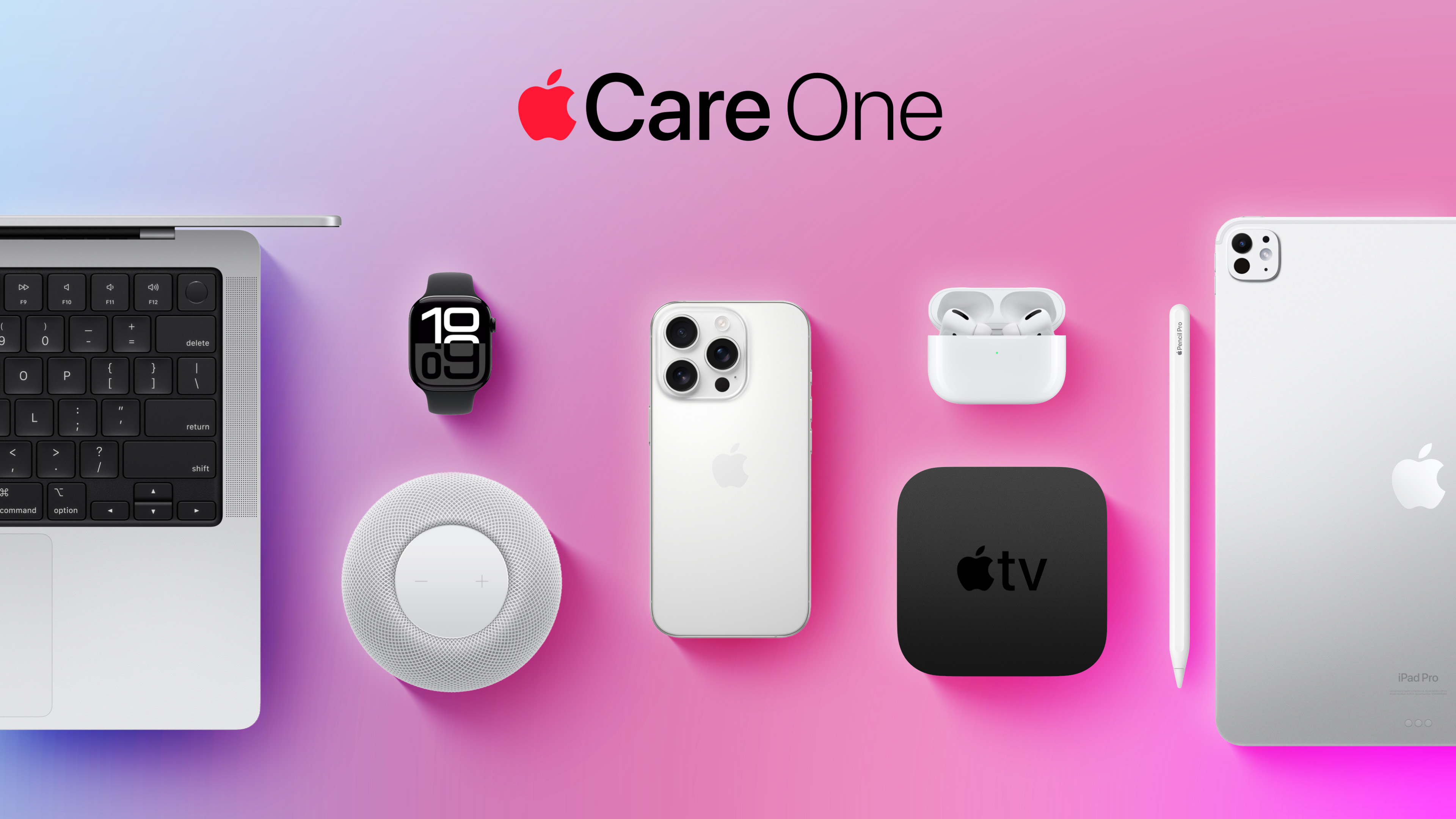
'AppleCare One' is Now Even More Valuable

While the monthly and annual prices of AppleCare+ plans for Macs and iPads received a slight increase this week, AppleCare One continues to start at $19.99 per month in the U.S., making the multi-device plan even more valuable.


Launched in July 2025, AppleCare One allows you to cover up to three devices as part of a single subscription for $19.99 per month, and additional devices can be added for $5.99 each. AppleCare One offers repairs for accidental damage, 24/7 priority tech support, and theft and loss protection for the iPhone, iPad, and Apple Watch.

If you have an iPhone 17 Pro, a MacBook Air with an M5 chip, and an iPad mini with an A17 Pro chip, for example, AppleCare+ plans with theft and loss coverage where applicable can cost up to $26.97 per month for those devices in total. As mentioned, AppleCare One still costs $19.99 per month, so you can save $6.98 per month in this scenario.

Notably, you can add Apple devices that you already own to an AppleCare One plan, so long as they are in good condition and less than four years old. A diagnostic check and/or inspection may be required to verify a device's condition.

AppleCare One remains available in the U.S. only.

This article, "'AppleCare One' is Now Even More Valuable" first appeared on MacRumors.com

Discuss this article in our forums

  •  

The Ancient Survival Mechanism Making Weight Loss So Difficult

Belly Fat Weight Loss Woman Measuring Waist Tape MeasureBiological defenses make losing weight and keeping it off unusually difficult. Better treatments, healthier environments, and sustainable habits may support long-term health more effectively than willpower alone. For years, weight loss has been framed as a simple test of discipline: consume fewer calories and exercise more. Modern research, however, shows that body weight is regulated [...]
  •  

Quando a Samsung vai vender TV 3.0? Nós conversamos com a marca para descobrir

A TV 3.0 (DTV+) já é uma realidade em algumas cidades brasileiras, mas o acesso à nova geração da televisão aberta ainda esbarra na necessidade de comprar um conversor. Para descobrir quando a Samsung vai vender Smart TVs com suporte nativo ao novo padrão, o Canaltech conversou com a marca.

A empresa sul-coreana afirmou que adota uma postura cautelosa em relação à integração da funcionalidade nas suas TVs. 

"A Samsung informa que está monitorando o desenvolvimento da nova tecnologia e comunicará ao mercado, oportunamente, sobre os próximos passos da iniciativa”, pontuou a companhia.

A expectativa dos consumidores por aparelhos com recursos da TV 3.0 integrados já de fábrica se justifica pelo fato de o novo padrão prometer levar benefícios como interatividade e qualidade superior de imagem e áudio aos lares brasileiros.

Mas, por enquanto, apenas moradores das cidades de São Paulo, Rio de Janeiro e Brasília podem usufruir dos recursos da tecnologia. E essa experiência ainda depende da aquisição de conversores externos vendidos por marcas como Intelbras e Aquário, que são comercializados por valores acima de R$ 650.

Conversor TV 3.0 Intelbras

Ainda restam etapas para as TVs chegarem às lojas

Vale destacar que o cenário de espera destacado pela Samsung é seguido por outras marcas do setor, como LG e TCL, que também confirmam não haver datas oficiais para o lançamento de aparelhos que já cheguem às lojas com essa tecnologia integrada.

Essa estratégia das empresas está relacionada principalmente ao fato de que a adoção de um sistema inédito exige adaptações de hardware e software. Também é necessária a coordenação entre emissoras e fornecedores de tecnologia para integrar a infraestrutura aos receptores domésticos.

O governo federal ainda não concluiu todas as etapas que definem o funcionamento padrão da TV 3.0 no Brasil. Nesse contexto, televisores lançados neste momento poderiam ficar incompatíveis com futuras transmissões caso as especificações da tecnologia ainda sofram alterações durante o processo de padronização.

O próprio ministro das Comunicações, Frederico de Siqueira Filho, revelou que a TV 3.0 ainda passa por ajustes técnicos antes de ser expandida para outras cidades brasileiras. Segundo o chefe da pasta, essas adequações e obstáculos iniciais são normais por se tratar de uma transição que envolve uma tecnologia inovadora.

TV 3.0 Anatel

Quais os avanços trazidos pela TV 3.0?

A principal proposta da nova geração da televisão aberta brasileira é trazer recursos interativos para as transmissões tradicionais. Na prática, o telespectador vai continuar assistindo aos canais já conhecidos gratuitamente, mas com uma interface mais fluida, que se assemelha às plataformas de streaming.

Um dos destaques fica por conta da possibilidade de comprar produtos relacionados à programação ao vivo diretamente pela TV, sem a necessidade de escanear QR Code para finalizar a aquisição. Votações em reality shows ou para escolher o melhor jogador de uma partida também podem ser feitas com o controle remoto.

O público também poderá escolher diferentes câmeras para acompanhar um evento esportivo ao vivo. Em partidas de futebol ou corridas de Fórmula 1, por exemplo, será possível acompanhar a transmissão principal na tela toda e assistir à programação em uma janela menor (Picture-in-Picture).

A TV 3.0 promete ainda entregar qualidades de áudio e imagem superiores ao sinal atual, oferecendo transmissões ao vivo com suporte à resolução 4K. O público terá até mesmo acesso a alertas automáticos sobre tempestades e inundações emitidos pela Defesa Civil local.

Com todas essas previsões de recursos, uma pergunta ainda pode passar pela cabeça dos espectadores: vai precisar de internet para acessar as funcionalidades da TV 3.0? O Canaltech entrou em contato com a Anatel para tirar essa dúvida.


{{WHATSAPP_CHANNEL}}

  •  

Quanto dura a bateria do novo Moto G Max da Motorola? Nós testamos

O Motorola Moto G Max chegou ao mercado brasileiro para representar mais um avanço na conhecida linha Moto G da marca. Para dar conta de uma rotina diária de uso, a fabricante equipou o dispositivo com uma bateria de 5.200 mAh que entrega boa autonomia, além de suporte a carregamento rápido de 33 W.

O Canaltech testou o celular em diferentes cenários para colocar sua bateria à prova e, a seguir, detalhamos os resultados de autonomia e tempo de recarga do smartphone.

Quanto tempo dura a bateria do Moto G Max no dia a dia?

Nosso teste padrão submeteu o aparelho a quatro horas consecutivas de reprodução de vídeo em alta resolução. Nesse cenário, o Moto G Max consumiu apenas 23% de sua carga total.

Esse rendimento indica que o celular consegue suportar cerca de 17 horas e 20 minutos de reprodução de vídeo até que a bateria se esgote por completo. Essa estimativa indica que o dispositivo pode ser uma boa alternativa para usuários que costumam consumir conteúdos do YouTube e de serviços de streaming no celular.

Teste bateria Moto G Max

O Moto G Max também foi testado em cenários de uso moderado. Em uma rotina que envolveu acessar plataformas como Instagram, WhatsApp e recursos de IA, além do consumo de músicas e podcasts no Spotify, o celular alcançou autonomia para um dia inteiro, restando cerca de 20% de carga ao final do dia.

Ainda assim, usuários que também utilizam o smartphone para sessões de gameplay podem precisar conectá-lo à tomada antes do fim do dia. Isso porque jogos mais exigentes demandam um esforço maior do seu processador MediaTek Dimensity 6400, o que resulta em um consumo maior de energia.

Como é o carregamento do Moto G Max?

Além do tempo que o aparelho pode ficar longe da tomada, outro fator importante é sua velocidade de carregamento. Nesse aspecto, o Moto G Max sai da caixa com suporte a carregamento rápido com fio de 33 W.

Nosso teste utilizou o carregador original do dispositivo e, nesse contexto, ele demorou cerca de 1h10 para sair de 0% e atingir a carga completa.

E você sabia que existem aparelhos que chegam às lojas com bateria de 10.000 mAh? Conheça 6 celulares com essa característica que desafiam a tomada. 


{{WHATSAPP_CHANNEL}}

  •  

As Much of the East Coast Is Choking on Wildfire Smoke, Texas Is Drowning in Life-Threatening Floods

Fresh off a month that saw all but five states mired in severe drought, the US is reeling from multiple crises of national proportions.

First, there’s the record-breaking heat dome which is currently baking most of the continental US. According to the Guardian, over 100 million Americans are currently living under extreme heat warnings, forecasted to persist well into the weekend.

At the same time, the country is being smoked out by dozens of wildfires across North America, a situation the heat wave isn’t exactly helping. On top of that, smoke from over 800 blazes in Canada is helping choke out the US Midwest and North-East, making the air hazardous to breathe.

Things aren’t necessarily any prettier outside of the smoke-zone — just wetter. Communities situated around the Guadalupe River in Texas are reeling after near endless rainfall triggered massive floods across the state for the second year in a row.

So far, at least one person is dead, while thousands have been forced to evacuate. At least 57 counties representing over six million people were placed under flood watches over the past few days. With even more rain on the horizon, it remains to be seen when Texas will get relief from the torrential downfalls.

Stepping back, it’s clear this cascade of extremes isn’t happening in a vacuum. The overlapping wildfires, floods, and heat waves are all being amplified by the same climate forces: a rapidly warming planet, fueled in no small part by skyrocketing carbon emissions from the US itself.

All in all, it’s been an action-packed summer as the El Niño cycle rolls on — and unfortunately, the devastation is far from over.

More on climate disaster: Scientists Propose Dimming Sun to Combat El Niño

The post As Much of the East Coast Is Choking on Wildfire Smoke, Texas Is Drowning in Life-Threatening Floods appeared first on Futurism.

  •  

Striking Workers Bring Car Factory to a Screeching Halt Over Humanoid Robots

From the factories of Detroit to the postal warehouses in Shenzhen, a new kind of worker is clocking in — and the humans it’s replacing aren’t going down without a fight.

In late June, thousands of rank-and-file workers in the Korean Metal Workers’ Union voted to authorize a strike in response to Hyundai’s announcement it would deploy over 25,000 humanoid robots across its factories.

Weeks later, that strike is slowing production at a Hyundai factory down to a trickle. According to the Wall Street Journal, the workers began a partial strike after negotiations broke down last week. Starting on Monday, workers refused to work for four hours of each shift, leaving production lines stalled for half the work day.

Per the WSJ, the economic impacts of the strike are stark: the pullback could disrupt production of about 5,000 cars, and cut into Hyundai’s sales revenue by around $135 million. Should Hyundai choose to dig in their heels after the labor action, the union said it could escalate the strike, either by prolonging the length of the strike, upgrading it to a full strike, or both.

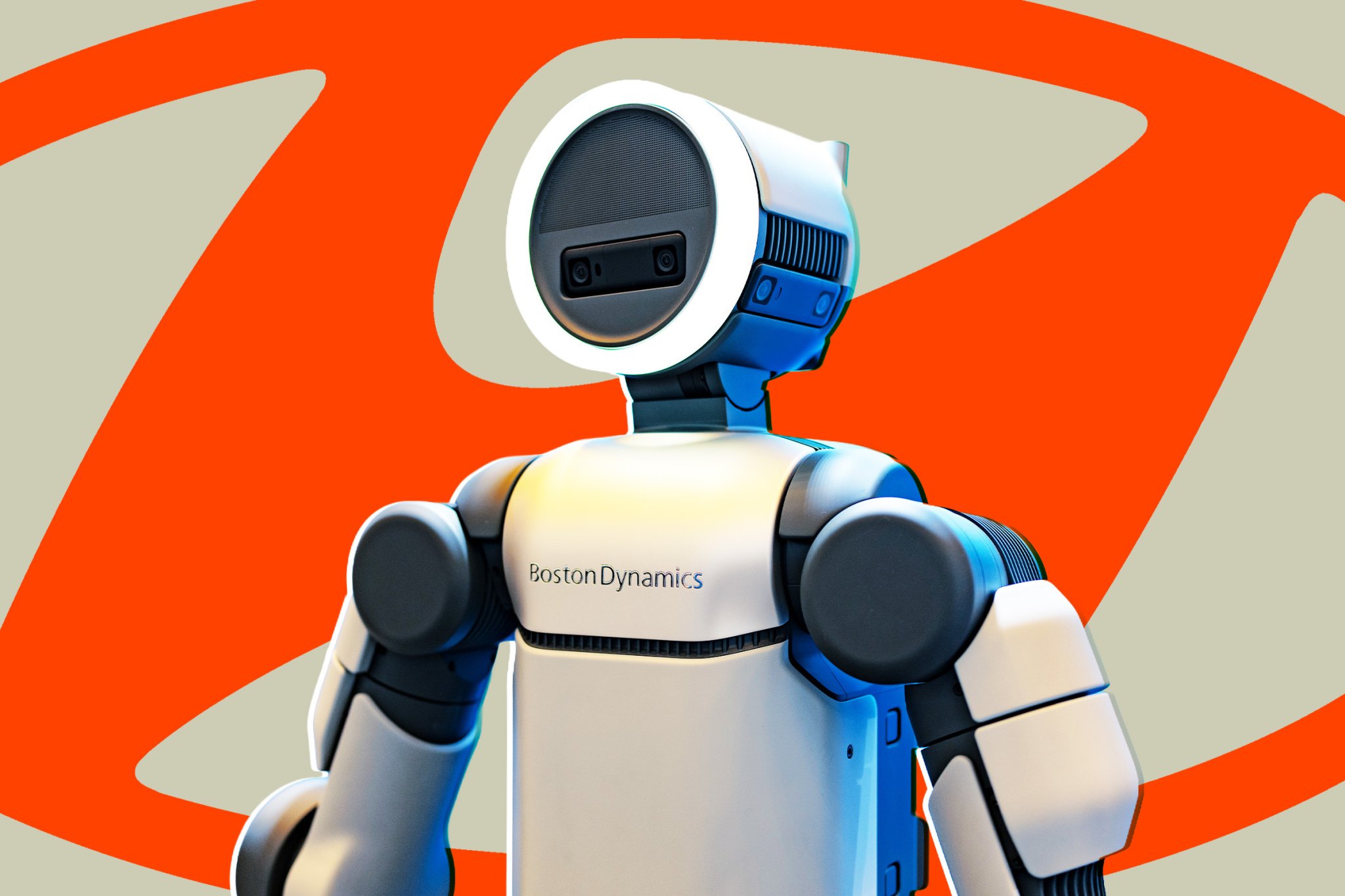
The mobilization appears to be the first of its kind over humanoid robotics, specifically, marking a pivotal moment in labor history. At issue is Hyundai’s threat to deploy thousands of “Atlas” model robots built by Boston Dynamics, bipedal humanoids that measure about 6’2″ in height and can lift a maximum of 110 pounds.

While the robots have yet to be deployed, union organizers explained that the strike is meant to give workers the power to renegotiate their contracts on their own terms, before the automation drive begins in earnest.

“We have to prepare to ensure there are safeguards in place,” secretary general of the KMWU and lead negotiator Byun Jun-hwan told the WSJ.

Specifically, the union’s demands include job security guarantees designed around AI and automation, larger bonuses that reflect Hyundai’s profit margin, a transition away from hourly wages to a fixed salary agreement, and a formal agreement allowing workers final say on any humanoid robotics deployment.

More on automation: AI Is Pushing Older Employees Straight Out of the Workforce, New Report Finds

The post Striking Workers Bring Car Factory to a Screeching Halt Over Humanoid Robots appeared first on Futurism.

  •  

Family Horrified When They’re Forced to Sell Their Beloved Home to Make Way for AI Data Centers

Like a tornado descending from the heavens, data centers are tearing through homes across the US, roaring like a jet engine, leaving schools without power, and decimating entire communities unlucky enough to stand in their path.

Case in point, one Georgia family has been forced to sell their home, after the state utility concern decided it needed to build a new transmission line to connect new AI data centers.

As reported by CBS, the Brown family of Coweta County, Georgia decided to sell their home to Georgia Power, rather than risk seizure by eminent domain.

Ansley Brown, whose parents raised her in the home, told CBS, “it’s ours. It’s our family. We belong here.”

The Browns are just one of likely 300 landowners who will have their property seized so that Georgia Power — a for-profit, investor-owned corporation — can make a cozy home for the tech industry.

“To us it’s theft,” Browns’ mother told CBS. “It’s literally a billion-dollar company stealing land from smaller people, people who can’t fight back. We don’t have the money to fight Georgia Power.”

For its part, the utility company told CBS they “have worked hard to be transparent, negotiate in good faith,” and “make the process as easy as possible.”

The Browns, understandably, don’t see it that way.

“You can’t tear down 35 miles of rural Georgia and it not hurt something or somebody,” the mother said. “And to say that you’re doing it in the name of data centers is a slap in the face to us, our community, our animals.”

More on data centers: Massive Data Center Cooks Nearby Residents Alive Amidst Deadly Heatwave

The post Family Horrified When They’re Forced to Sell Their Beloved Home to Make Way for AI Data Centers appeared first on Futurism.

  •  

Sony’s flagship RGB LED TV is incredible

The Sony Bravia 9 II displaying an image of a bird, on a wooden home theater credenza with SVS speakers on either side.
Sony’s flagship Bravia 9 II is the best RGB LED TV I’ve seen this year.

The Sony Bravia 9 II is the most anticipated new TV in years. It's an amazing RGB LED TV. I watched Dungeons & Dragons: Honor Among Thieves on the new Bravia with my son, who has been getting into the roleplaying game but had never seen the movie. The landscapes of Faerûn looked natural and real, while the magic cast by the Red Wizards of Thay was vibrant and colorful. Specular highlights in HDR really pop. I saw it with Xenk's glowing sword as he fought in the Underdark in Honor Among Thieves, but also in the explosions as Furiosa flees across the desert in Mad Max: Fury Road and the sun reflecting off the waves in The Meg.

The Bravia 7 II …

Read the full story at The Verge.

  •  

AI-Pilled Tech CEO Convinced He Has the Perfect Solution for Online Dating, Announces Harebrained App Idea

Look, dating in the 2020s sucks. The apps are bad, people are rude, and the etiquette of it all seems to be evolving at the speed of sound. Yet for all the downsides, there’s nothing that can’t be made 100 times worse with the addition of AI slop.

For better or worse, that’s exactly what Hinge founder Justin McLeod has in mind for his latest dating app, “Overtone.”

First spotted by TechCrunch, McLeod announced an $18 million round of funding on the company’s blog. While that’s a hefty chunk of change for any startup, confidence from venture capitalists isn’t exactly shocking considering the founder’s previous success. What really stands out about the blog, though, is that McLeod used the bulletin to vague-post about his grand vision for a new, AI-integrated dating app.

“Think about the most un-human parts of the dating app experience,” McLeod challenged: “writing personal ads for ourselves, judging each other in a split second based on photos, sorting through thousands of potential partners, and wrangling them through the precarious funnel of like to match to chat to date.”

“None of those steps exist because anyone wanted them,” McLeod’s pitch continues. “They exist because they were the best the technology could do.”

Like many, many startup founders before him, McLeod asserts that Overtone is “not a dating app,” but something different — in this case, a “service.” That may be a distinction without a difference, but it signals a sloppified shift in the founder’s approach.

While details remain scarce, we do know that Overtone is meant to be a “a voice- and audio-forward service, enabled by AI, that provides highly curated introductions.” What that means in practice is difficult to say. Will the app be manipulating voice messages meant for potential lovers? Does it connect people based on the information they give, or on the information generated by AI?

In his blog, McLeod provides few concrete clues as to what Overtone might encompass, though the app he envisions isn’t exactly inspiring.

“We get to know each person deeply, learning about them in their own voice, hearing their own unique story,” McLeod writes. “And we make only the introductions that are worth making, grounded in relationship science and thoughtful reflection. We transparently explain why we believe someone is a great match. And we leave it up to our daters to meet in person and discover chemistry, with guidance along the way.”

So, if you ever saw some AI-generated fruit slop and thought, “how can I integrate this into my dating life?” Overtone might be just the app for you.

More on AI startups: Startup Upset After Journalist Points Out How Creepy Its Humanoid Robots’s Hands Are

The post AI-Pilled Tech CEO Convinced He Has the Perfect Solution for Online Dating, Announces Harebrained App Idea appeared first on Futurism.

  •  

Data Centers Are Making Electricity Brutally Expensive for the Public

Despite a financial situation more reminiscent of a Ponzi scheme than a technological revolution, the data center boom is continuing at a rapid pace, bringing novel kinds of biological contamination, ear-splitting noise, and unprecedented levels of pollution to communities across the US.

Those environmental burdens also come with a financial one: skyrocketing demand for electricity, which is increasing the cost of utilities for renters and homeowners alike.

According to a report by Monitoring Analytics, an independent monitor for the largest transmission company in the US, PJM, data center demand is expected to drive over $23 billion in customer price increases by 2028. That eye-watering figure, first spotted by Fortune, is a direct result of the country’s old and confusing electrical infrastructure, which ultimately leaves regular people, not the tech industry, holding the bag.

Whether they’re data centers, factories, or other large facilities, Fortune points out that local regulators and transmission companies like PJM have a hard time figuring out who’s responsible for rising energy demand. While a small power line from a data center campus to a nearby substation is easily billed to the data center, figuring out who to invoice gets harder further on down the line, particularly with shared infrastructure like the substation itself, or the long-distance transmission lines connecting to it.

Though utility companies can and do charge data centers for the electricity they use, Fortune observes that the facilities undergirding the AI boom can “fine tune” their electricity use minute-by-minute, gaining an edge that the average consumer could only dream of.

Because many utility companies charge based on a system of “peak demand” — a measure of a customer’s energy usage at the exact moment the collective grid hits peak demand — data centers have gotten into the habit of scaling down right when the grid measures highest demand. That’s not because they’re actually trying to use less power, but because that narrow window is what determines how high their bill will be. In reality, their overall usage remains the same.

This is more or less the scenario that played out in a Bitcoin mining operation in Texas, where the company Riot Platforms agreed to cut its power use on hot summer days, only to ramp back up massively at night. In exchange, the company negotiated for a lower flat electricity rate overall, and even snagged some state subsidies meant to encourage responsible energy use.

Load-shifting like this can genuinely help the grid, but it also means companies with the ability to game the system get rewarded with subsides that an average household will never get. And because companies are merely changing when they suck their juice — not how — subsidized load-shifting ends up being a poor strategy for reducing electrical use overall.

And while data centers are just the most contemporary example of this practice, the shrewd manipulation of US energy markets by for-profit corporations dates back decades. That may not be comforting news for citizens scrambling to hold data center firms accountable in the here-and-now, but it should at least give them an idea of where to start looking for inspiration.

More on data centers: New York Becomes First State to Ban AI Data Centers

The post Data Centers Are Making Electricity Brutally Expensive for the Public appeared first on Futurism.

  •  

Will AI fix prior authorization—or make it worse?

If you’re like me, you or a loved one has struggled through the process of gaining pre-approval for the medical care that your physician has recommended. Personal stories abound regarding the tribulations of patients as they go through hoops to get their health insurer to pay for certain prescription medications, medical procedures, and more.

When used judiciously, this process—known as prior authorization—serves as a check on overuse and spending on services or technologies for which there are less costly alternatives. But a large majority of physicians voice concerns about care delays, which can cause patients to abandon recommended treatments while waiting for the insurance company to verify their eligibility and confirm that the treatment is, indeed, medically necessary. Patients who are denied care may submit an appeal, but that requires more time.

AI might be able to help. With its ability to efficiently sort through vast reams of information, artificial intelligence could theoretically expedite approval of unambiguously allowable claims, thereby reducing care delays. However, AI-driven prior authorization is facing resistance, as it may increase wrongful denials of health insurance coverage. A 2025 American Medical Association survey of physicians revealed significant concern about the application of AI tools, with 61 percent of doctors worrying that AI will exacerbate denials of what they deem are necessary treatments.

Read full article

Comments

© showcake via iStock/Getty Images Plus

  •  

US Hospitals Are Outsourcing In-Person Nursing to Remote Health Workers in the Philippines

The next time you’re checking into a hospital, it’s possible that your nurse may actually be 8,000 miles away.

That’s the reality at a growing number of hospitals throughout the US and the world, which are turning to low-paid telehealth workers in the Philippines to help fill in the duty roster. As it is for remote driving and AI data labeling, the Philippines has become a wellspring of cheap labor for transnational healthcare companies, which are more than happy to exploit a country where millions of people live in poverty.

Stunning reporting by Rest of World detailed the lives of some of the 210,000 full-time Filipino workers employed in remote healthcare. This new class of workers makes up for a massive shortage of almost 80,000 registered nurses in the US.

One of the workers, Alice, is a licensed nurse working in Quezon City, a city of three million people in the Philippines. In 2019, she signed on with a telehealth company providing mental health and substance abuse treatment to US-based patients in California and New Mexico. Alice told RoW she earns $5 an hour, five times as much as the hospital job she left behind.

“We have this virtual clinic that functions like a lobby where patients check in,” Alice explained, “and then we traffic or triage them and send them to each of the providers’ personal Zoom room.”

To get a job communing with US patients through a screen, a Filipino worker simply needs to have a medical degree — it doesn’t matter what kind. While it’s likely that many telehealth recruits come from healthcare administration backgrounds, RoW notes that about 30 percent of the people employed in these jobs are trained nurses or other medical professionals.

The result is a scenario where tens of thousands of healthcare workers are physically present in their communities, but spend their days caring for patients half a world away in a desperate bid to pay the bills. Already facing a mounting shortage of trained healthcare professionals, the Filipino people have watched as telehealth corporations court the remaining hospital workers to oversee care for patients in the US.

“If they can’t go abroad, remote nursing is the next best thing because local wages are so low,” Nico Uba, secretary general of the group Filipino Nurses United told RoW. “Then local hospitals are left understaffed and overworked.”

The companies running this insidious scheme prey on two sets of healthcare workers on opposite ends of the world: the underpaid Filipino, for whom a wage of $5 an hour is much higher than the national average, and the overworked American, for whom a 50-hour work week is practically a vacation.

The remote healthcare industry is well aware of this tension, and is happy to take advantage. As JL Botor, president of the Healthcare Information Management Association of the Philippines told RoW, US hospitals can save up to 70 percent of their overhead costs by hiring Filipino workers instead.

In all, Botor notes that the country is a “clinical process outsourcing powerhouse,” as well as “a premier global hub for supporting overstressed international healthcare systems.”

More on healthcare: Lawsuit Claims the Mayo Clinic’s Use of AI Is Butchering Patient Care

The post US Hospitals Are Outsourcing In-Person Nursing to Remote Health Workers in the Philippines appeared first on Futurism.

  •  
❌