❌

Reading view

Golden Gate Spotlight

Hartley Charlton:

Apple today announced that it has rebuilt the search infrastructure that powers key features like Spotlight, Photos, and Mail across all of its major next-generation software platforms.

LLM search using Core Spotlight:

Level up basic search into a retrieval-augmented system using SpotlightSearchTool and LanguageModelSession. Explore Core Spotlight integration, delegate-based hydration patterns, and how metadata quality impacts your search results. Learn how to use custom PipelineStages for tasks like sentiment analysis. Discover best practices for indexing and building flexible, context-rich search experiences in your app.

Corentin Cras-Méneur:

So from what I understand from the WWDC keynote, Spotlight is actually going to work?? When I search for simple files, it fails the VAST majority of the time!

Saagar Jha:

I feel like I am watching the Mac OS X Leopard intro again guys how did we mess up search so bad we have to present it again

Howard Oakley:

Semantic search is different, in that its matches aren’t as crisp and Boolean. Rather than working like a simple index, it’s more like a thesaurus in effect.

[…]

Rather than compiling more exhaustive sets of keywords, semantic search can broaden the scope to cope better. And because we can interact through Siri, we can fine-tune our search results by specifying the cattle should be black and white, perhaps, and combining conventional search criteria such as location.

To get this to work effectively, there are some limitations. Because semantics are so contextual and variable, this involves apps and Core Spotlight. That’s a big benefit to user privacy, as Core Spotlight’s indexes are separated by user and stored locally, although in places like ~/Library/Metadata rather than volume-based Spotlight indexes in the existing hidden .Spotlight-V100 folders. And unlike global Spotlight indexing and search, it requires apps to have code to support both tasks, as it can’t just happen by magic.

While I’m sure we’ll all be impressed with many of the results of semantic search, hits that we never expected to find, it’s going to prove harder to assess those that it misses.

Rhythmic Fistman:

Never has it been so inconvenient to find a file whose name you know exactly

Maybe rebuilding Spotlight’s infrastructure will fix this, or maybe adding the semantic stuff will make handling simple cases like this worse.

i3aychikov:

Personally, in my experience, I’ve noticed that the new Spotlight is much faster than the one in MacOS 26 Tahoe. It opens with less delay, and finds the right app or file instantly when Spotlight in Tahoe seems to have had a slight delay.

See also: TidBITS-Talk.

Previously:

Update (2026-07-13): Howard Oakley:

Already that has revealed the qualities of what would be offered as a Top Hit in its ranked search, with scores such as mrScore: 0.2516, mrScoreText: 0.6878, kMDItemDisplayName: 1.0000, mrScoreFreshness: 0.50000000, mrScoreResultType: 0.0700, freshnessDate: (null), pommesL1=0.0000, L2=-4999.0283 While most of those are opaque, it’s notable that ‘freshness’ is included in ranking. In contrast, searches made in the Finder’s Find window are unranked, and don’t calculate any of those scores, nor take into account freshness.

Howard Oakley:

Salient features of Spotlight’s AsYouTypeTopHit ranked search include:

  • inclusion of hits across multiple search domains;
  • a freshness_score as a measure of recency or topicality;
  • three opaque scores of mrScore, pommesL1 and pommesL2;
  • related search considering similar data sources and websites;
  • identification of Top Hits.
  •  

Sleep Quality Links Synergistically with Frailty to Increase Cardiometabolic Multimorbidity in Elderly Chinese

Sleep has long been suspected to influence how aging bodies manage multiple chronic conditions, but the interplay between rest quality and physical decline has been harder to untangle. Now, a new cross-sectional study of Chinese older adults adds an evidence-packed twist: poor sleep and frailty are not just independently linked to cardiometabolic multimorbidity—they also appear to act synergistically.

Researchers analyzed how sleep quality and frailty relate to the co-occurrence of cardiometabolic disorders, focusing on patterns that emerge when both factors are present at once. Using statistical modeling suited for observational data, the team assessed whether the combined effect of sleep impairment and frailty exceeds what would be expected if each acted alone.

The findings point to independent associations in both directions. In other words, older participants with worse sleep quality were more likely to show cardiometabolic multimorbidity, and those with greater frailty also faced higher odds. This dual relationship strengthens the biological plausibility of the sleep–health link in late life.

But the headline result is synergy. The study suggests that the joint presence of insufficient or low-quality sleep and frailty corresponds to a disproportionately greater burden of cardiometabolic multimorbidity. Such interactions matter because they imply that tackling only one factor may leave a major portion of risk untouched.

From a mechanistic perspective, poor sleep can disrupt metabolic regulation, impair glucose homeostasis, and contribute to inflammatory signaling, all of which can accelerate vascular and metabolic dysfunction. Frailty, meanwhile, reflects reduced physiological reserve—often shaped by chronic inflammation, muscle loss, and stress-axis dysregulation—creating a vulnerable platform for cardiometabolic disease to cluster.

The cross-sectional design cannot prove causality, but it helps map where risk concentrates in real-world aging. The authors argue that clinicians and public health programs should consider sleep quality and frailty together, rather than treating them as separate problems.

In a Viral science news framing, the study’s message is clear: “better sleep” and “less frailty” may be more connected than previously assumed, potentially offering a more coordinated prevention strategy for seniors facing multiple cardiometabolic conditions.

Subject of Research: Sleep quality, frailty, and cardiometabolic multimorbidity in Chinese elderly population (cross-sectional analysis)

Article Title: Independent and synergistic associations of sleep quality and frailty with cardiometabolic multimorbidity: a cross-sectional analysis in Chinese elderly population

Article References: Bing, S., Liu, W., Song, S. et al. Independent and synergistic associations of sleep quality and frailty with cardiometabolic multimorbidity: a cross-sectional analysis in Chinese elderly population. BMC Geriatr (2026). https://doi.org/10.1186/s12877-026-07985-8

Image Credits: AI Generated

DOI: 10.1186/s12877-026-07985-8

Keywords: Sleep quality; frailty; cardiometabolic multimorbidity; older adults; cross-sectional analysis

  •  

Physical Activity and Health Inequality in China’s Older Adults

Older adults in China are not experiencing health improvements evenly, and a new study links part of that gap to how physical activity is distributed across communities. Researchers report that physical activity is associated with better health outcomes, but the benefits are not uniform—creating measurable health inequality rather than a single “one-size-fits-all” effect.

The findings focus on older adults and examine whether differences in activity levels translate into unequal health trajectories across demographic and socioeconomic conditions. Instead of treating “activity” as a simple yes-or-no behavior, the analysis considers how gradients of movement relate to disparities in health.

To quantify inequality, the study employs population-level metrics commonly used in health economics and epidemiology. These approaches can separate overall health variation into components that reflect group differences, allowing investigators to estimate how much of the inequality is potentially attributable to physical activity patterns.

The work also emphasizes that health inequality can widen even when average health improves. In this scenario, some groups may adopt or maintain activity more easily—because of access to safe spaces, health literacy, social support, or fewer mobility constraints—while other groups fall behind.

Technically, the authors analyze observational data and control for key confounders that might otherwise explain both activity and health status. This helps reduce the chance that the observed association is merely driven by factors such as baseline chronic disease burden, education, or geography.

Importantly, the results suggest that physical activity does not just correlate with health—it may act as a modifiable lever shaping how evenly health benefits are shared. If interventions can shift activity patterns among disadvantaged groups, the study implies that inequality could shrink, not just outcomes improve.

Because the paper is based on real-world evidence from China, it also highlights cultural and structural realities that shape behavior. Urban design, community programming, and the availability of age-friendly exercise options may influence who can be active consistently.

From a “viral science news” perspective, the headline takeaway is straightforward: getting older doesn’t have to mean accepting unequal health. The study frames physical activity as both a health tool and an inequality amplifier—meaning targeting participation gaps could deliver outsized public health impact.

Subject of Research: Health inequality among older adults; physical activity effects
Article Title: The impact of physical activity on health inequality among older adults: evidence from China
Article References: Dang, X., Pan, J., Xing, X. et al. The impact of physical activity on health inequality among older adults: evidence from China. BMC Geriatr (2026). https://doi.org/10.1186/s12877-026-08008-2
Image Credits: AI Generated
DOI: https://doi.org/10.1186/s12877-026-08008-2
Keywords: physical activity; health inequality; older adults; China; public health; epidemiology

  •  
  •  

NASA Sets Briefings for SpaceX Crew-13 Mission to Space Station

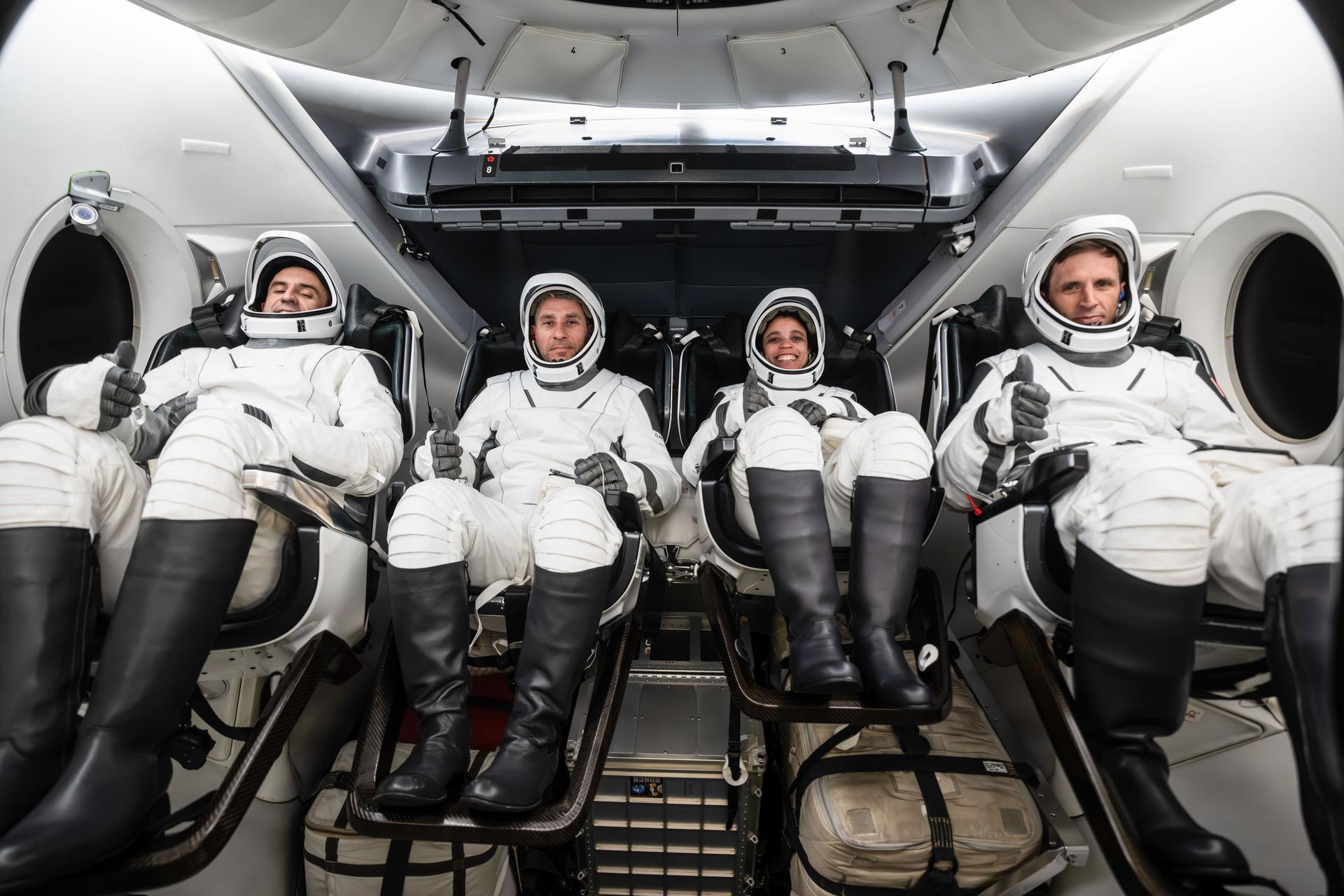
The SpaceX Crew-13 members are pictured in their pressure suits seated inside a mockup Dragon spacecraft during a preflight training session at the company's headquarters in Hawthorne, California. From left are, Roscosmos Sergey Teteryatnikov, NASA astronauts Luke Delaney and Jessica Watkins, and CSA (Canadian Space Agency) astronaut Joshua Kutryk.
NASA’s SpaceX Crew-13 members are pictured in their pressure suits seated inside a mockup Dragon spacecraft during a preflight training session at the company’s headquarters in Hawthorne, California. From left are Roscosmos Sergey Teteryatnikov, NASA astronauts Luke Delaney and Jessica Watkins, and CSA (Canadian Space Agency) astronaut Joshua Kutryk.
Credit: SpaceX

NASA and its partners will discuss the upcoming crew rotation mission to the International Space Station during a pair of news conferences on Monday, Aug. 3, from the agency’s Johnson Space Center in Houston.

Mission leadership will provide an overview of NASA’s SpaceX Crew‑13 mission at 12 p.m. EDT. Next, crew members will discuss their training and mission preparations at 2 p.m. This is Crew-13’s final media availability prior to traveling to the agency’s Kennedy Space Center in Florida for launch.

NASA will stream these events live. Learn where to watch online:

https://www.nasa.gov/live

The Crew-13 mission will carry NASA astronauts Jessica Watkins and Luke Delaney, CSA (Canadian Space Agency) astronaut Joshua Kutryk, and Roscosmos cosmonaut Sergey Teteryatnikov to the orbiting laboratory. The crew will launch aboard a SpaceX Dragon spacecraft on the company’s Falcon 9 rocket from Space Launch Complex 40 at Cape Canaveral Space Force Station in Florida no earlier than mid-September.

International media attending in person must email the NASA Johnson newsroom at jsccommu@mail.nasa.gov by 5 p.m., Tuesday, July 21. United States-based media attending in person must respond by 5 p.m., Thursday, July 30. Media joining virtually must respond by 10 a.m. the day of the event. NASA’s media accreditation policy is available online.

Briefing participants are as follows (all times Eastern and subject to change based on real-time operations):

12 p.m.: Mission Overview News Conference

  • Joel Montalbano, deputy associate administrator, Human Spaceflight Mission Directorate, NASA Headquarters
  • Dana Weigel, manager, Low Earth Orbit Program, NASA Johnson
  • Mathieu Caron, director, Astronauts, Life Sciences, and Space Medicine, CSA
  • Julianna Scheiman, director, NASA Science and Dragon Programs, SpaceX

2 p.m.: Crew-13 News Conference

  • Jessica Watkins, commander, NASA
  • Luke Delaney, pilot, NASA
  • Joshua Kutryk, mission specialist, CSA
  • Sergey Teteryatnikov, mission specialist, Roscosmos

Following the news conference, crew members will be available for limited media interviews. All interview requests must be submitted by 5 p.m. on July 30, to the NASA Johnson newsroom at: jsccommu@mail.nasa.gov.

This will be the second flight to the space station for Watkins, who was selected as a NASA astronaut in 2017. Watkins grew up in Lafayette, Colorado, and earned an undergraduate degree in geological and environmental sciences from Stanford University, as well as a doctorate in geology from the University of California, Los Angeles. As a geologist, she studied the Martian surface and was a member of the Curiosity rover science team at NASA’s Jet Propulsion Laboratory in Southern California. Watkins first launched to the space station as a crew member aboard NASA’s SpaceX Crew-4 mission, spending a total of 170 days in space across space station Expeditions 67/68 in 2022. She will be the first NASA astronaut to launch aboard a SpaceX Dragon spacecraft twice.

Selected as a NASA astronaut in 2021, Delaney earned a bachelor’s degree in mechanical engineering at the University of North Florida and a master’s degree in aerospace engineering at the Naval Postgraduate School. The Florida native is a distinguished naval aviator who participated in exercises throughout the Asia Pacific region and conducted missions in support of Operation Enduring Freedom. As a test pilot, Delaney evaluated developmental aircraft systems and served as a test pilot instructor. He also worked as a research pilot at NASA’s Langley Research Center in Hampton, Virginia, where he supported airborne science missions. This is the first spaceflight for Delaney.

The Crew-13 mission also is the first spaceflight for Kutryk. Prior to his selection as a CSA astronaut in 2017, he served as a CF-18 fighter pilot, flying missions in support of Canada’s NATO, U.N., and North American Aerospace Defense Command commitments. A native of Fort Saskatchewan, Alberta, Kutryk also worked as an experimental and operational test pilot at the Aerospace Engineering Test Establishment in Cold Lake, Alberta. Kutryk received a bachelor’s degree in mechanical engineering from the Royal Military College of Canada in Kingston, Ontario, and he is a distinguished graduate of the United States Air Force Test Pilot school in Edwards, California. He has master’s degrees in space studies, flight test engineering, and defense studies.

This mission will be Teteryatnikov’s first trip to the orbiting laboratory. He graduated from the Naval Academy, St. Petersburg, Russia, in 2011 as an engineer specializing in ship power plant operations. Before his selection as a test cosmonaut, Teteryatnikov served in various naval engineering roles, including undersea vessels and specialized engine room operations. He was selected for the Gagarin Research and Test Cosmonaut Training Center Cosmonaut Corps in 2021 and has served as a test cosmonaut since 2023.

For more information about the mission, visit:

https://www.nasa.gov/mission/nasas-spacex-crew-13

-end-

Joshua Finch / Jimi Russell
Headquarters, Washington
202-358-1100
joshua.a.finch@nasa.gov / james.j.russell@nasa.gov

Leah Cheshier / Anna Schneider
Johnson Space Center, Houston
281-483-5111
leah.d.cheshier@nasa.gov / anna.c.schneider@nasa.gov

Share

Details

Last Updated
Jul 20, 2026
Editor
Jessica Taveau
  •  

The Latest Texas Floods Tested Warning Systems. This Time, They Passed.

A lack of sirens and flood forecasting systems made the state’s Hill Country vulnerable to deadly floods last summer. That has changed.

© Brandon Bell/Getty Images

Flood debris blocked a road in Kerrville, Texas, on Thursday.
  •  

National Academies Report Backs Climate Change Attribution Science

Attribution science is advancing quickly, researchers said. That could support lawsuits seeking damages for severe events worsened by global warming.

© Stephane Mahe/Reuters

A firefighting helicopter at a wildfire burning in the Forest of Fontainebleau near Paris on Monday.
  •  

Apple iPhones hit record 20% global market share in Q2 2026

Apple's iPhone 17 Pro in Deep Blue
Apple’s iPhone 17 Pro in Deep Blue

The global smartphone market faced significant headwinds in the second quarter of 2026, with shipments slumping to the lowest Q2 level in 13 years due to a deepening memory chip crisis. According to Counterpoint Research, overall shipments declined sharply year-over-year. Yet Apple stood out as a bright spot, bucking the trend with resilient demand for its premium iPhone lineup.

Apple’s Strong Performance in a Challenging Market

Apple’s iPhone shipments grew by approximately 3% year-over-year in Q2 2026, even as the broader market contracted by around 11%. This growth propelled Apple to a record 20% global market share for the quarter. Key factors included:

• Sustained consumer demand for the iPhone 17 series and other premium models.

• Apple’s strategy of keeping prices stable despite rising component costs, unlike many competitors who faced pressure from the memory shortage.

• Strong performance in key regions, supported by promotions and trade-in programs.

This marks a notable achievement for Apple, highlighting the enduring appeal of its ecosystem and product quality in an environment where many Android vendors struggled with higher bill-of-materials costs and softer demand.

Top 5 Smartphone Brands Global Sell-in Shipment Share (Preliminary Data)

Top 5 Smartphone Brands Global Sell-in Shipment Share (Preliminary Data)
Source: Counterpoint Research’s preliminary Market Monitor report (based on sell-in). Notes: OPPO includes OnePlus and realme. Percentage totals may not add up to 100% due to rounding.

Broader Market Context: The Memory Crisis Takes Its Toll

The memory chip shortage has ripple effects across the industry, leading vendors to adjust shipment plans and pass on higher costs. Global shipments hit multi-year lows for a Q2 period, reflecting cautious buying from both consumers and supply chains. While some brands saw sequential improvements through promotions (e.g., during China’s 618 festival), year-over-year declines dominated for most players.

Apple’s ability to maintain pricing power and grow shipments underscores its premium positioning, which has helped it capture higher revenue shares even in softer quarters.

What This Means for the Industry and Consumers

• For Apple: Hitting a record 20% share reinforces its leadership in the premium segment. With innovations like advanced AI features and consistent ecosystem updates, the company continues to attract loyal users and convert new ones, particularly in emerging markets.

• For Competitors: Brands reliant on mid-range and budget devices face tougher conditions. The memory crunch may lead to further consolidation or shifts toward value-oriented strategies.

• For Consumers: Expect continued pressure on prices in the short term, but Apple’s stable pricing offers a relative value proposition. Trade-ins and promotions could become even more important for upgrades.

MacDailyNews Take: As the memory crisis persists into late 2026 and potentially beyond, analysts will watch how Apple sustains its momentum—especially with the upcoming iPhone 18 cycle on the horizon. The company’s focus on software optimization, services growth, and selective hardware advancements positions it well to navigate challenges.

This Q2 result isn’t just a bright spot in a down market, it’s a testament to Apple’s strategic resilience. In an industry grappling with supply constraints, premium differentiation continues to pay off!


‎
Please help support MacDailyNews — and enjoy subscriber-only articles, comments, chat, and more — by subscribing to our Substack: macdailynews.substack.com. Thank you!

Support MacDailyNews at no extra cost to you by using this link to shop at Amazon.

The post Apple iPhones hit record 20% global market share in Q2 2026 appeared first on MacDailyNews.

  •  

Apple Watch accounts for 90% of AI smartwatch shipments as Edge AI hits 25% penetration in Q126

The Apple Watch lineup — including Apple Watch Series 11, Apple Watch Ultra 3, and Apple Watch SE 3 — supports everyone’s goals in the new year.
Apple Watch Series 11, Apple Watch Ultra 3, and Apple Watch SE 3.

Global shipments of Edge AI-capable smartwatches experienced robust growth in the first quarter of 2026, with Apple maintaining overwhelming dominance in the emerging category of on-device AI wearables. According to Counterpoint Research, the Apple Watch accounted for the vast majority of these AI-enabled shipments, highlighting the company’s lead in integrating advanced intelligence directly into its devices.

Edge AI Reaches 25% Market Penetration with Strong Growth

Counterpoint Research reported that global Edge AI-capable smartwatch shipments grew by 70% year-over-year in Q1 2026, achieving a market penetration of 25%. One in every four smartwatches shipped during the quarter now features Edge AI capabilities, enabling local machine learning inference for improved speed, privacy, and efficiency.

Apple solely accounted for ~90% of Edge AI smartwatch shipments in Q1 2026. This dominance stems from its custom Neural Engine technology, which powers seamless on-device features such as Siri intent recognition, high-frequency sleep apnea monitoring, and advanced gesture detection without cloud dependency.

Health Monitoring Features Accelerate

The adoption of Edge AI aligns with rapid growth in advanced health capabilities. Shipments of smartwatches with blood pressure monitoring doubled, while those with sleep apnea detection tripled between Q1 2025 and Q1 2026. Key penetration shifts include:

• Blood pressure monitoring: rose from 11% to 23% of shipments
• Sleep apnea detection: increased from 5% to 18%
• ECG: grew from 31% to 34%

These developments reflect a broader industry move toward clinically relevant, real-time health insights powered by on-device AI.

Apple’s Overall Market Performance

Apple’s shipments grew 21% year-over-year, securing a 23% share of the total global smartwatch market. Counterpoint Principal Analyst Anshika Jain said in a statement: “Apple captured the highest shipment share and was the strongest performer in the quarter, helped by its refreshed lineup, meaningful health upgrades and the more affordable Apple Watch SE 3.”

Counterpoint’s Research Director Mohit Agrawal commented on the transition in Edge AI, “Edge AI in smartwatches is shifting from primarily a hardware integration to one that also includes software optimization. The real unlock is smaller, more efficient models and OS-level access that lets any app run inference locally. AI needs to turn from a single application into a personal layer that works on personal data. This enables instant health alerts, gesture control, and richer personalized experiences, and that is why Edge AI penetration is set to approach 32% in 2026.”

MacDailyNews Take: Counterpoint expects Edge AI penetration in smartwatches to near 32% by the end of 2026. As the category evolves from basic tracking to intelligent, personalized health and interaction tools, Apple’s integration of hardware, software, and privacy-focused AI continues to give it a substantial edge in the competitive wearable market.


‎
Please help support MacDailyNews — and enjoy subscriber-only articles, comments, chat, and more — by subscribing to our Substack: macdailynews.substack.com. Thank you!

Support MacDailyNews at no extra cost to you by using this link to shop at Amazon.

The post Apple Watch accounts for 90% of AI smartwatch shipments as Edge AI hits 25% penetration in Q126 appeared first on MacDailyNews.

  •  

OnlyFans performers become unlikely allies of CISOs in securing websites

CISOs at government organizations and universities have an unexpected ally coming to their aid: OnlyFans models.

For some time, hackers have exploited weaknesses in the websites of universities or government departments to host scams or malware, using content stolen from the OnlyFans website as bait to attract victims.

Now, according to security researchers at Upguard, the fightback has begun: creators of adult content on OnlyFans are leveraging Google search results and the protection offered by copyright law to break up the traffic distribution systems created by bad actors.

These distribution systems work in three stages: entry points using adult or other content to attract and capture web traffic, a routing system sends it to destination sites, and those sites monetize the traffic through scams and malware. It has proved to be a lucrative business for the scammers.

Google recognizes the approach and calls such actors SEO parasites as they benefit from the reputations of other organizations — in particular government or academic sites, which Google views as having high authority.

Since the creators of OnlyFans content are also the copyright holders, they are able to issue Digital Millennium Copyright Act (DMCA) take-down notices for the stolen content posted by the bad actors to other sites. Upguard was able to track this through Google’s DMCA Transparency Report, and through the Lumen Database, another tracker of takedown notices, to which it was granted research access.

“This allows us to identify likely compromised sites: government and university domains advertising unlicensed adult content,” Upguard said.

The OnlyFans creators’ action has two benefits for the operators of the affected websites: The adult content associated with their domain disappears from Google search results, no longer affecting their reputation — and if they receive takedown notices for such content they can check their webservers for the vulnerabilities that enabled the bad actors to post it there in the first place.

This article first appeared on CSO.

  •  

Nature study identifies a new way to spot nuclear weapons in orbit

Russia's Kosmos-2553 spacecraft, alleged to be part of a nuclear weapons program, prior to launch. Credit: Ministry of Defense of the Russian Federation

NEW YORK — A study published last week in Nature Astronomy has proposed a new satellite design and technique to detect thermonuclear warheads in space. Funded in part by the […]

The post Nature study identifies a new way to spot nuclear weapons in orbit appeared first on SpaceNews.

  •  

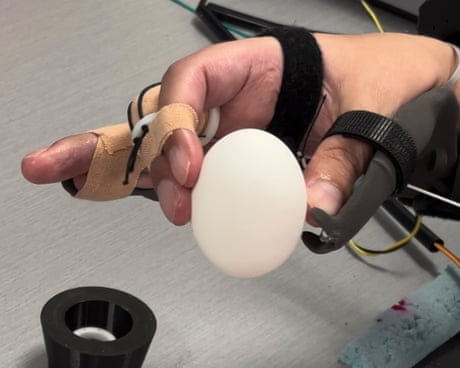
Brain implant helps paralysed man to feed himself and drink from cup

Keith Thomas can move arms and hands, and feel sensation of touch after ‘double neural bypass’ and months of training

A man who was paralysed from the chest down in a swimming accident six years ago has been able to feed himself and drink from a cup thanks to a brain implant that bypasses his spinal cord injury.

Keith Thomas of Massapequa, New York, could not lift his arms off his wheelchair when he agreed to trial the technology in 2021, but after surgery to implant electrodes in his brain and many months of training, he was able to move the limbs again.

Continue reading...

© Photograph: Feinstein Institutes for Medical Research

© Photograph: Feinstein Institutes for Medical Research

© Photograph: Feinstein Institutes for Medical Research

  •  

New Winged Robot Can Fly and Swim Like a Puffin

Scientists hoped for years to make a machine that could emulate the movements of diving birds, such as puffins, and offer an affordable, unobtrusive way to monitor fragile marine ecosystems. A team of researchers at M.I.T. has been able to create such a waterproof winged robot, according to a study published July 9 in the journal Science.
  •  
❌