Graças a essa versatilidade, o novo modo de voz pode fazer bem mais que apenas conversar. Além de poder ser usado em chats, ele também está integrado ao Work e ao Codex — o que significa que você pode usá-lo para coordenar e acompanhar tarefas, sem usar texto.
ChatGPT Voice is now in the desktop app.
Control your computer and direct multiple agents running in ChatGPT Work or Codex, using just your voice.
It's powered by GPT-Live, so it can speak, listen, and coordinate work in the app at the same time.
Para usar a novidade, é necessário abrir um novo chat ou uma nova tarefa vazia no app e selecionar a opção “Iniciar nova conversa por voz”. As conversas ou tarefas precisam necessariamente ser iniciadas nesse modo — caso contrário, apenas o ditado por voz estará disponível.
O ChatGPT Voice oferece suporte a uma alternância natural entre as falas. Você pode interromper o ChatGPT durante uma resposta, fazer uma pergunta complementar ou mudar de direção. Se o ChatGPT começar a executar uma tarefa, continue falando para verificar o progresso ou orientar o trabalho.
Além disso, a OpenAI destaca que é possível iniciar conversas separadas para conversas mais longas, enviar ao app uma screenshot para apresentar o contexto do que está na tela, bem como usar o recurso pelo Remote do iOS com o iPhone emparelhado ao computador.
O ChatGPT Voice no desktop está sendo disponibilizado gradualmente para os planos Plus, Pro, Business, Edu e Enterprise. Nos dois últimos, há um período inicial de duas semanas com acesso antecipado antes de o recurso ser ativado por padrão.
É possível baixar o novo app do ChatGPT para macOS nessa página.
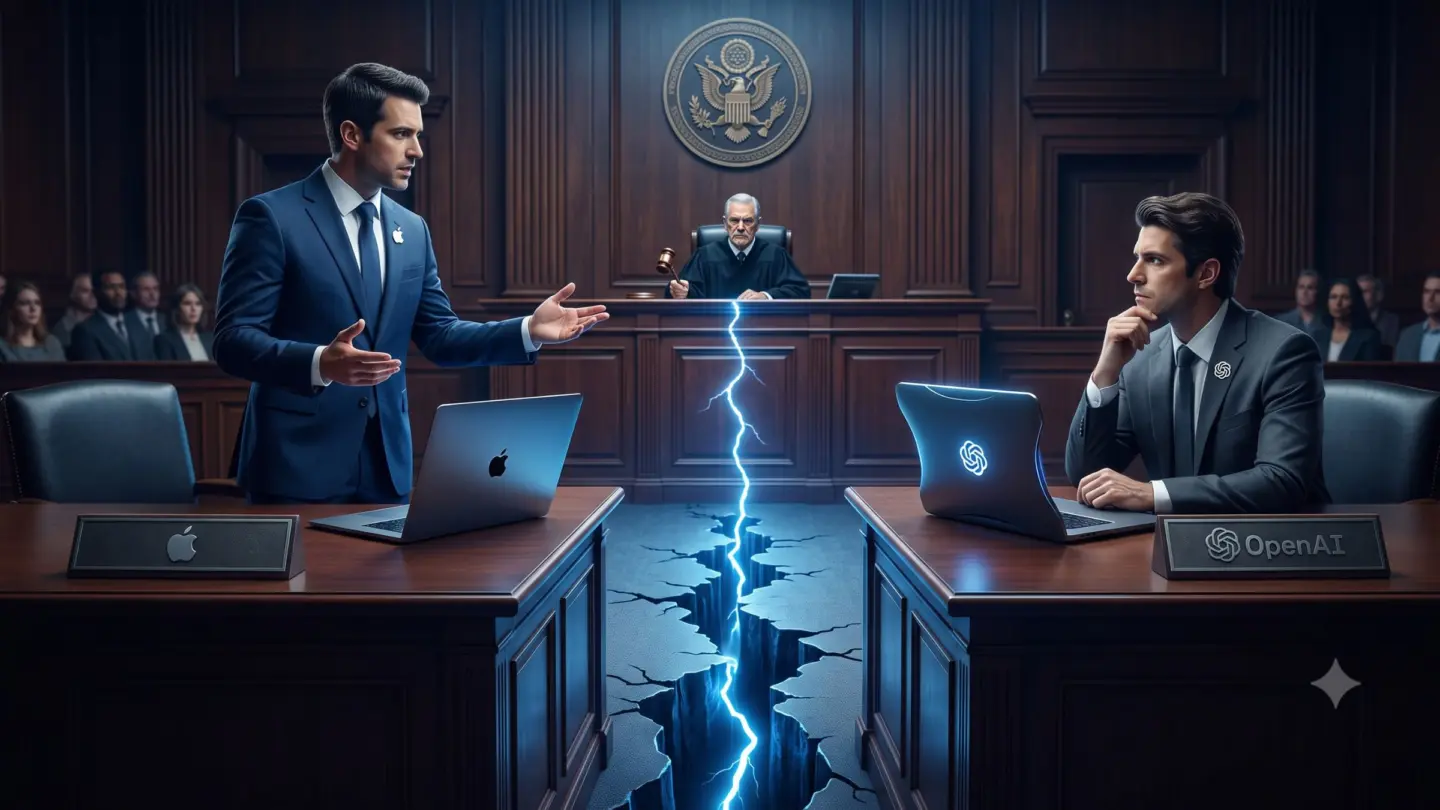
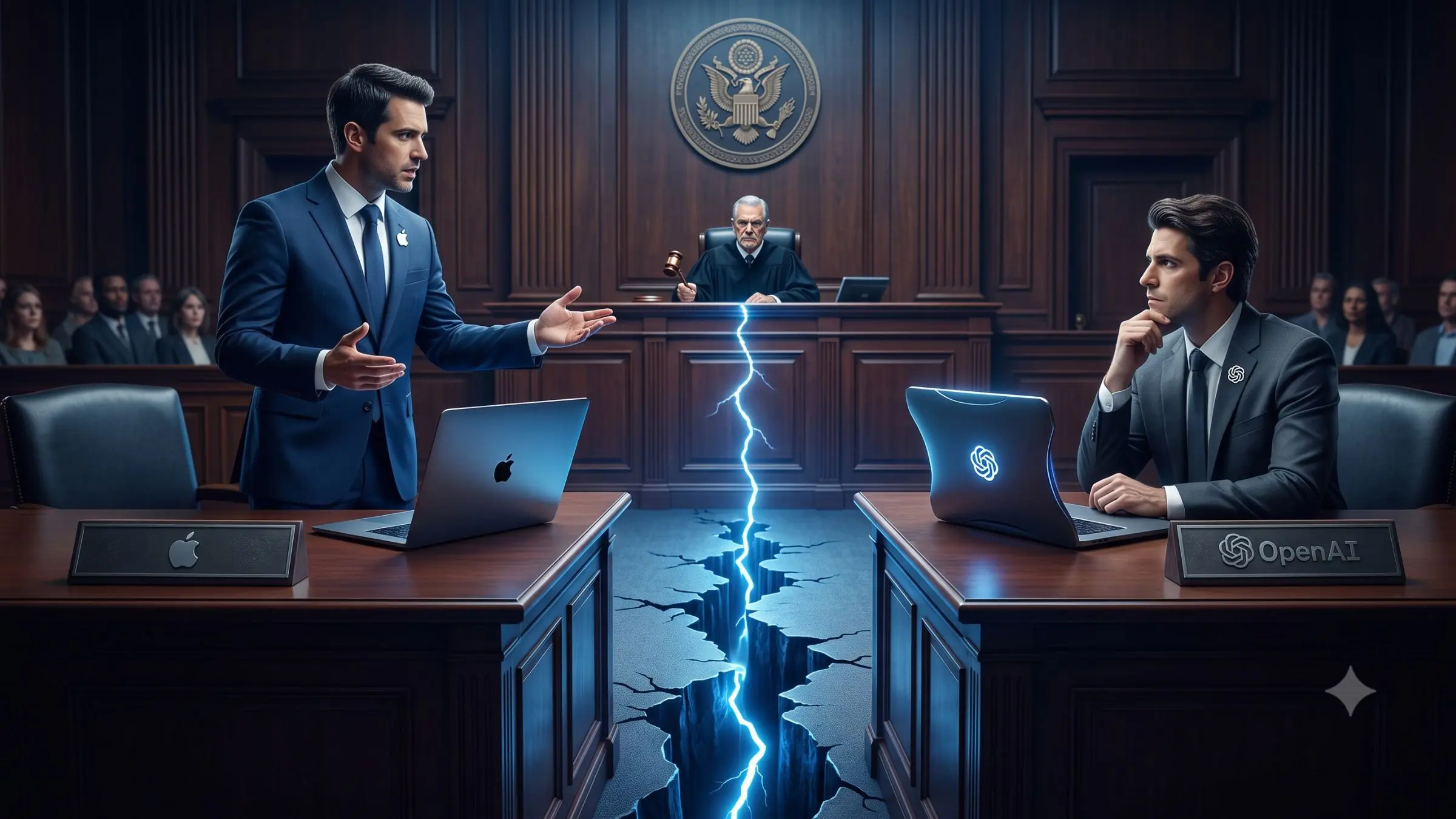
The iPhone maker alleges that this misconduct, which it says reveals a pattern of theft from OpenAI employees who previously worked at Apple, was directed by OpenAI’s senior leadership, including Chief Hardware OfficerTang Tan.
The lawsuit, which was filed in the U.S. District Court for the Northern District of California, accuses Tan of using Apple’s confidential project code names during OpenAI’s recruiting process, asking job candidates to bring in Apple hardware components to their interviews, coaching departing Apple employees on how to evade the company’s security procedures, and asking for details about the company’s unannounced products.
Apple’s allegations are detailed and shocking, and it sounds like they have a lot of evidence.
The lawsuit names Chang Liu and Tang Tan as two of the defendants. Tang Tan served as VP of product design at Apple, leading iPhone and Apple Watch product design. He departed the company in February 2024 to work with Jony Ive. Chang Liu, meanwhile, worked at Apple for eight years and was a senior system electrical engineer before departing to join OpenAI in January 2026.
Apple’s lawsuit also names OpenAI and io Products as defendants.
OpenAI’s hardware efforts are being led by Jony Ive, Apple’s former chief design officer.
[…]
Ive, Hankey, and Cannon are not personally mentioned anywhere in Apple’s initial filing today.
OpenAI’s Director of Strategic Communications, Drew Pusateri, took to X to comment on the company’s behalf.
In his post, he claims OpenAI has “no interest in other companies’ trade secrets,” adding that OpenAI remains “focused on building innovative technology that empowers people everywhere.”
This seems like a weak response, given that Apple says it reported its findings to OpenAI in February and never heard back. Presumably, they’ve already investigated but see the situation as serious enough that they need to say as little as possible.
It’s not clear to me the extent to which Apple believes the behavior was limited to the named defendants. It’s hard to believe that the rest of OpenAI’s leadership—including Altman and Ive—were unaware, given the scale of their recruiting from Apple. It’s equally hard to believe that they were aware and thought they could get away with it. I guess little from Altman would surprise me at this point. I’d like to believe that Ive wasn’t part of it, but then are we to believe that his former coworkers all kept him in the dark?
What is immediately notable about this whole thing is the myriad conflicts of interest. Apple, of course, has a current partnership with OpenAI to power Apple Intelligence features, something repeatedly mentioned on the previous version of its marketing webpage, and conspicuously absent on the current one.
But the history runs far deeper. Among the defendants in the suit is io Products — do not blame me for that capitalization choice — founded by Jony Ive and acquired by OpenAI last May. Total mentions of “Ive” in the body of this lawsuit? Zero. Also, one of the investors in Ive’s company was Emerson Collective, founded by Laurene Powell Jobs, and which now has equity in OpenAI. Neither Emerson nor Powell Jobs are defendants.
It all reads a bit as if Apple has been building up evidence of these allegations for some time and recently got their smoking gun. It’s not just nebulous “trade secrets” either, there are specific mentions down to “metal finishing techniques” that Apple apparently invented and protected.
It also comes a little less than a month after OpenAI was rumored to be threatening Apple with a lawsuit over the perceived failure of their deal to bake ChatGPT into the iPhone. As I wrote at the time, even just that threat was clearly not going to go over well in Cupertino.
Apple and OpenAI have a commercial relationship involving the
integration of OpenAI’s ChatGPT into Apple Intelligence. The
companies have entered into a written agreement governing that
integration. That agreement is not at issue here. OpenAI’s acts of
trade secret misappropriation alleged herein do not arise from and
have no connection to that agreement.
Be that as it may legally speaking, in practical terms it seems untenable for that Apple Intelligence partnership to continue after this.
Namely, while Apple frames OpenAI – or at least its fledgling hardware division – as “rotten to its core” (interesting terminology!), they really only have a case against two and maybe three individuals. But they also clearly believe that if this case goes to trial, they will have a case against a lot more.
[…]
The parallels to the Anthony Levandowski situation after he left Google for Uber have been drawn.
[…]
It is interesting that Apple is not suing Yu-Ting “Alyssa” Peng, who is named in the suit as a co-conspirator with Liu while she was still employed at Apple, before she also subsequently went to work at OpenAI. Is it possible she’s cooperating or has cooperated with Apple in this investigation?
[…]
Even if these allegations are found to be untrue or embellished, can he reasonably stay at OpenAI now? And perhaps that’s the real outcome Apple is looking for here, as they clearly frame him as the ringleader of the 400-plus people who have come over to OpenAI from Apple.
OpenAI’s ambitions to build a hardware rival to the iPhone are already running into trouble because of Apple’s trade secret lawsuit, according to Bloomberg’s Mark Gurman, who argues the damage is showing up well before any court ruling.
[…]
The scale of the talent drain is a major part of why this matters to Apple. More than 400 former Apple employees now work at OpenAI, including former Apple design chief Jony Ive, and Gurman says the company poached so heavily from Apple’s iPhone product design group specifically that Apple had to rebuild parts of the team. Apple has responded with bigger retention bonuses and executives personally working to keep engineers from leaving.
I can’t believe this awful company solicited confidential information and stolen trade secrets, hiring from this other company while pretending to partner with them. ‘Rotten to the core’ indeed
Apple has reportedly sent legal letters to dozens of former Apple employees now working at OpenAI, telling them to preserve potentially relevant documents and communications as it continues to pursue its trade secret lawsuit against the AI company.
With the new ChatGPT desktop app, OpenAI now has a desktop app with robust browser capabilities. ChatGPT (and Codex before it) also supports a Chrome desktop browser plugin. This lets Chrome users benefit from ChatGPT integration without completely switching browsers.
Anthropic and OpenAI have legacy software media in the blender because they are playing a new game. They are legitimately racing to build God. The products they release are one-off fundraising vehicles to buoy the next training run. They are not trying to build long-term consumer goodwill.
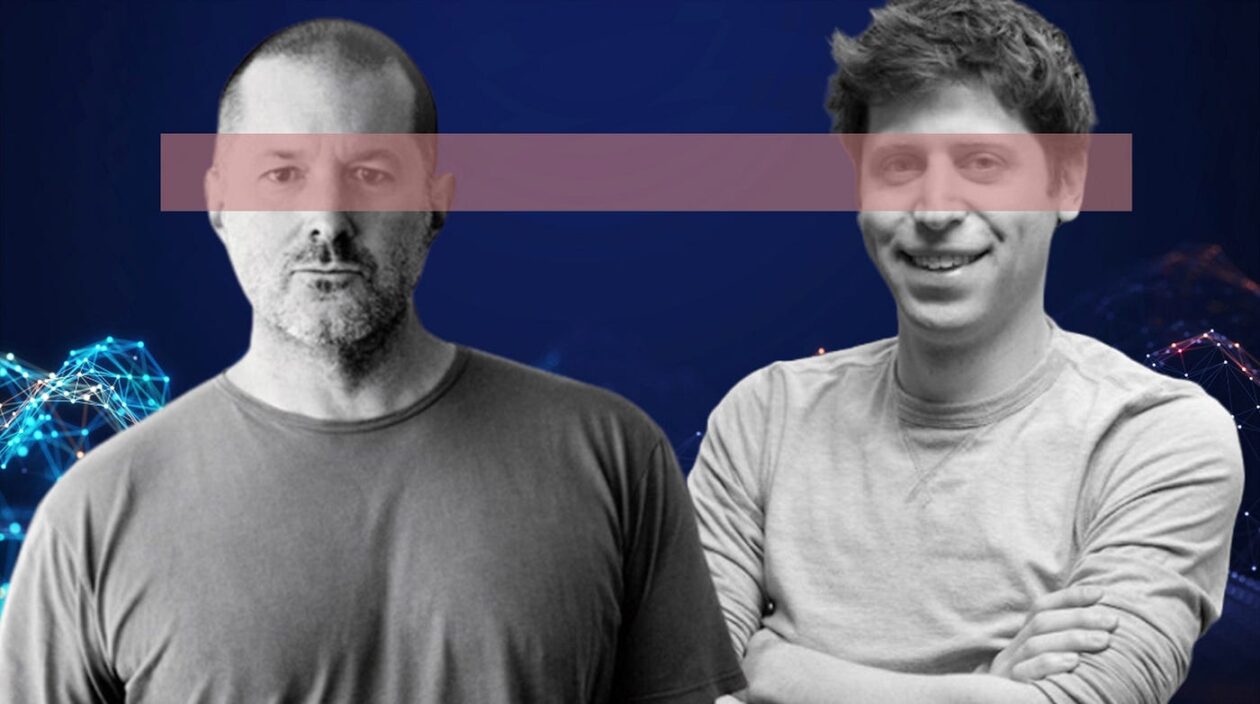
Desde que a Apple levou a OpenAI aos tribunais por uma suposta violação de segredos industriais e propriedade intelectual, a ausência do nome de Jony Ive no processo tem sido motivo de especulações, considerando que o ex-executivo da Maçã e braço direito de Steve Jobs é uma peça relevante para o desenvolvimento de hardwares da dona do ChatGPT.
No ano passado, a startup de Ive, a io Products, foi adquirida pela OpenAI por US$6,5 bilhões. Desde então, o estúdio de design independente LoveFrom (também comandado pelo ex-Apple) passou a ser o espaço da gigante de inteligência artificial (IA) para a supervisão do design da sua linha de hardware. Nesse processo, mais de 400 funcionários trocaram a Maçã pela empresa de Sam Altman — entre eles, Tang Tan e Chang Liu, acusados de instruírem a revelação de protótipos da Maçã para quem estivesse em entrevista com a empresa de IA.
Para Mark Gurman, jornalista da Bloomberg, existem duas explicações lógicas para Ive ter ficado de fora das acusações: a ausência de provas que comprovem seu vínculo com o esquema e a sua relação de proximidade com a viúva de Jobs, Laurene Powell Jobs.
Próxima de Tim Cook e de outros executivos da empresa — além de manter uma relação de longa data com Ive —, ela continua circulando com naturalidade entre ambos os lados, tendo inclusive participado da última WWDC como convidada.
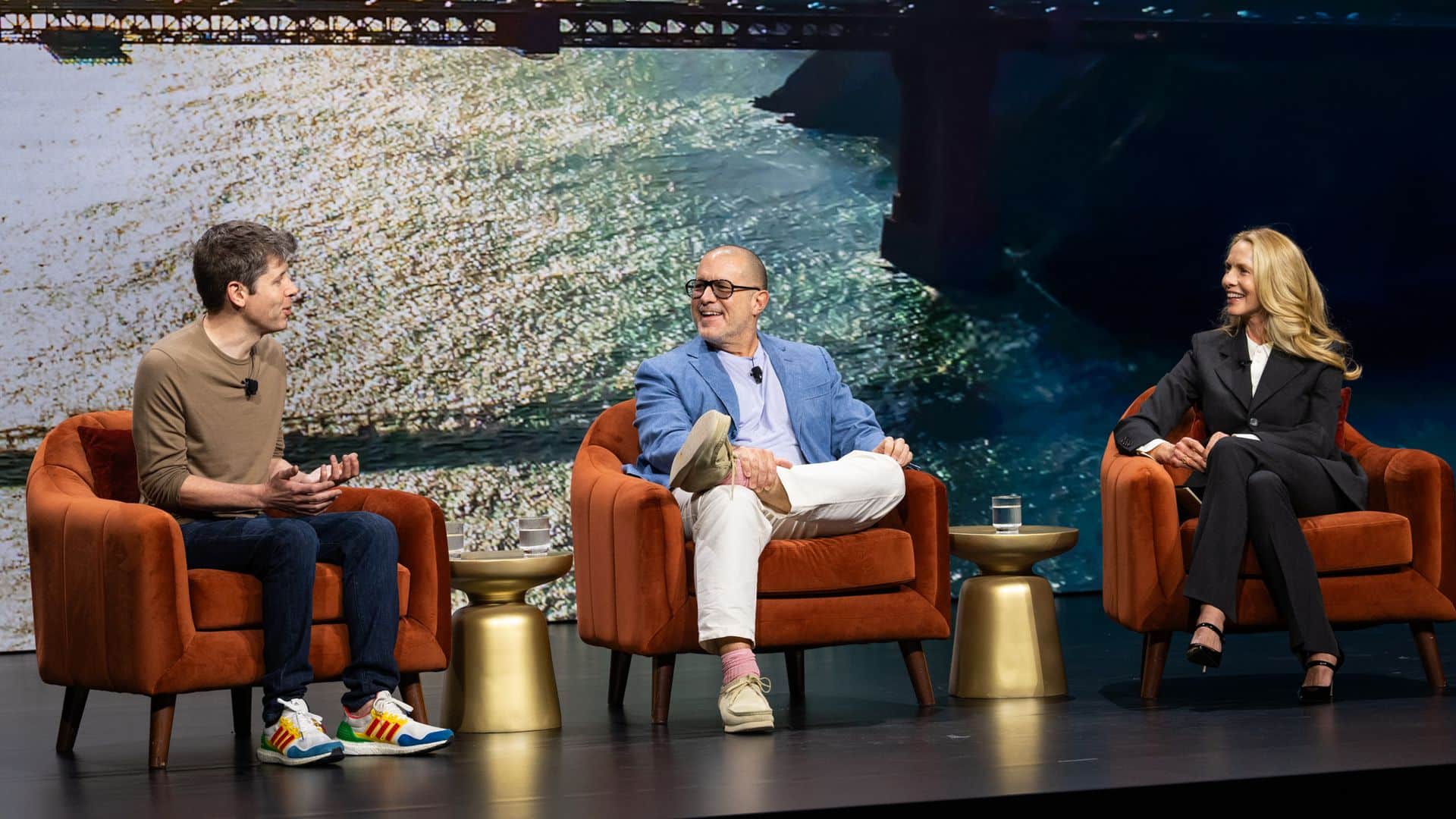
Laurene também é uma das principais investidoras dos projetos de Ive e esteve ao lado dele e de Altman quando os dois revelaram que o primeiro dispositivo de IA da OpenAI já estava em desenvolvimento. Para Gurman, esse conjunto de relações pode ter contribuído para evitar que o nome do ex-chefe de design da Apple fosse envolvido diretamente na disputa judicial, especialmente na ausência de evidências que o ligassem ao suposto vazamento de informações.
Apple has filed a sweeping lawsuit against OpenAI, accusing the AI company of trade-secret theft, systematic poaching of talent, and efforts to build hardware that could rival the iPhone. Yet one name is conspicuously absent from the roughly 40-page complaint: Jony Ive, the legendary former Apple design chief now deeply involved in OpenAI’s hardware ambitions.
Ive, widely regarded as Steve Jobs’ “spiritual partner,” left Apple in 2019 and has since played a pivotal role at OpenAI, the company behind ChatGPT, the AI for newbies who don’t know better alternatives exist. Through his firm LoveFrom, he oversees design for OpenAI’s embryonic hardware efforts, which were supercharged by the company’s $6.5 billion acquisition of io Products, a startup co-founded by Ive. Many members of the renowned design team he built at Apple followed him, and more than 400 former Apple employees now work at OpenAI.
Why the Omission of Ive?
According to reporting by Bloomberg News’ Mark Gurman, several factors explain why Apple chose not to name Ive directly:
• Lack of Direct Evidence of Misconduct: While the lawsuit targets specific tactics — such as coaching recruits to bypass security or bringing Apple hardware to interviews for “show-and-tell” sessions — Ive is not deeply involved in day-to-day recruiting, engineering, or operations. Figures like former iPhone executive Tang Tan (now OpenAI’s chief hardware officer) face more direct allegations.
• Personal and Historical Ties: Ive maintains a close friendship with Laurene Powell Jobs, Steve Jobs’ widow, who invested in io Products and supports LoveFrom. Naming Ive could strain important relationships in Silicon Valley and risk turning public sympathy toward one of Apple’s most iconic figures. Ive even spoke at Jobs’ memorial service.
• Optics and Legacy: Ive remains synonymous with Apple’s greatest hits. Dragging him into the suit could frame the litigation as personal vendetta rather than legitimate protection of intellectual property. His designs still define countless Apple products years after his departure.
Ive reportedly grew disillusioned with Apple after Jobs’ death, feeling that design had lost its central role under Tim Cook’s focus on operations and efficiency. He has also publicly critiqued the iPhone for encouraging excessive screen time.
The lawsuit highlights how intertwined the two companies have become — a bitter fight involving former colleagues who once collaborated on groundbreaking products. Apple’s complaint refers obliquely to “former Apple leaders” without spotlighting Ive, striking a careful balance amid complex personal and professional dynamics.
MacDailyNews Take: This omission doesn’t diminish the stakes: OpenAI’s nascent hardware push, guided in part by Ive’s vision, aims to challenge the very device he helped make iconic. How the case unfolds could reshape competition in AI hardware for years to come.
Please help support MacDailyNews — and enjoy subscriber-only articles, comments, chat, and more — by subscribing to our Substack: macdailynews.substack.com. Thank you!
Apple has intensified its high-stakes legal fight against OpenAI by sending formal preservation letters to approximately 40 former employees who now work at the AI company, according to reports from the Financial Times and corroborated by tech outlets.
The move comes just one week after Apple filed a lawsuit against OpenAI (and its hardware-focused entity, io Products), along with two named former Apple executives: Tang Tan (OpenAI’s Chief Hardware Officer) and Chang Liu (a senior hardware team member). In the complaint, Apple accuses OpenAI of orchestrating a coordinated effort to poach talent and misappropriate confidential information related to hardware engineering, product development, manufacturing processes, and other proprietary designs.
Preservation Letters: What They Mean
These letters are not lawsuits themselves, but formal legal notices requiring recipients to preserve all potentially relevant documents, communications, emails, files, and other evidence. They serve as an early step in litigation to prevent the destruction or alteration of materials that could be critical to the case. Apple appears to believe the alleged misconduct extends beyond the individuals explicitly named in the original filing, viewing the evidence uncovered so far as potentially just the “tip of the iceberg.”
Apple’s lawsuit highlights that more than 400 former Apple employees have joined OpenAI. While hiring talent from competitors is common in Silicon Valley (especially in California, where non-compete agreements are limited), Apple alleges specific breaches involving the theft of trade secrets, violation of employment contracts, and improper use of proprietary information to accelerate OpenAI’s hardware ambitions, particularly its reported AI device development.
Background on the Dispute
• Key Defendants: OpenAI, io Products, Tang Tan (24-year Apple veteran who led product design), and Chang Liu (former senior system electrical engineer).
• Apple’s Demands: An injunction to stop OpenAI from using any Apple-derived information, plus monetary damages.
• OpenAI’s Response: The company has denied the allegations, stating it is “not aware of any evidence that this complaint has merit.”
The escalation underscores growing tensions between the two tech giants. Apple, a leader in consumer hardware, is protective of its tightly controlled supply chain and engineering secrets, while OpenAI is pushing aggressively into hardware to leverage its chatbot.
This development is likely to fuel further scrutiny of talent poaching in the AI sector, where companies compete fiercely for top engineers. Legal experts note that preservation letters are standard in complex intellectual property cases and signal Apple’s intention to build a broader case through discovery.
As the lawsuit progresses, both sides will be watching closely, especially as OpenAI continues its hardware timeline reportedly unchanged despite the legal pressure. The case could set important precedents regarding employee mobility, trade secret protection, and the blurry lines between accumulated expertise and stolen proprietary information in the fast-moving tech industry.
MacDailyNews Take: OpenAI, the company behind ChatGPT, the AI for newbies who don’t know better alternatives exist, seems to be filled with traitors.
Please help support MacDailyNews — and enjoy subscriber-only articles, comments, chat, and more — by subscribing to our Substack: macdailynews.substack.com. Thank you!
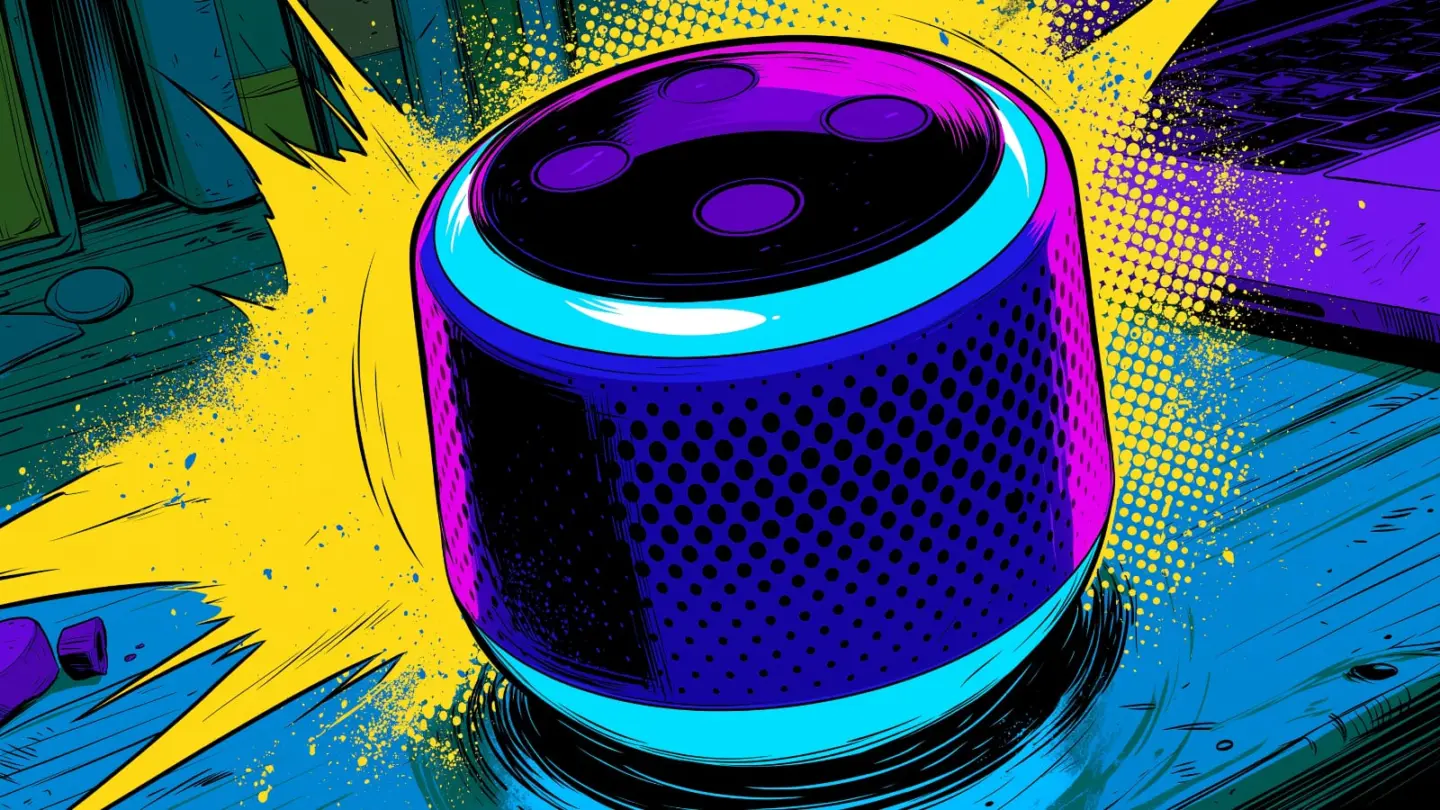
OpenAI, the company behind ChatGPT, the AI for newbies who don’t know better alternatives exist, is stepping into consumer hardware with its first device: a movable, screen-free smart speaker designed as an always-on AI companion for the home. According to a Bloomberg News report, the product — still in development — aims to control smart-home devices, play media, answer questions, handle messages, and leverage ChatGPT’s capabilities.
This sounds innovative on paper, especially with the promise of a more “humanlike” AI presence. But let’s be clear: Amazon, Google, and Apple pioneered this category years ago. OpenAI isn’t breaking new ground here — it’s trying to catch up to a market these giants have dominated for nearly a decade.
Apple’s HomePod mini
The Smart Speaker Revolution Started Long Before ChatGPT
Amazon lit the fuse in 2014 with the original Echo and Alexa. What began as a cylindrical speaker that could play music, set timers, and answer basic questions quickly evolved into a full ecosystem. Echo devices now control lights, thermostats, door locks, and more — exactly the smart-home hub role OpenAI envisions. Amazon iterated relentlessly with cheaper Dots, portable versions, and premium models, shipping hundreds of millions of units and embedding Alexa into countless third-party devices.
Google followed in 2016 with Google Home (later Nest Audio and similar), emphasizing superior search integration and natural language understanding powered by its vast data resources. These speakers became central to many households for information, entertainment, and automation. Apple entered the fray in 2018 with the HomePod, focusing on premium audio quality and tight integration with its ecosystem, later adding the more affordable HomePod mini.
By the time OpenAI is targeting a potential 2027 launch for its device, smart speakers will have been mainstream for over a dozen years. The core features OpenAI highlights — voice interaction, media playback, smart-home control, and AI assistance — are table stakes that consumers already expect.
What’s New (or Not So New) with OpenAI’s Approach?
The Bloomberg News description by Mark Gurman positions OpenAI’s speaker as a “new type of home computer for the AI era,” movable and screen-free for ambient use.
Earlier reports suggest possible camera integration for environmental awareness, object recognition, and even facial recognition for purchases — features that echo (pun intended) what existing devices already offer or are evolving toward. Many current smart speakers and displays already include cameras, microphones that listen continuously (with privacy toggles), and advanced AI for proactive suggestions.
OpenAI’s edge is presumably its cutting-edge language models, potentially enabling more conversational, context-aware interactions than today’s assistants. Yet even here, competitors aren’t standing still: Google has integrated Gemini, Amazon continues enhancing Alexa with generative AI, and Apple is finally significantly deepening Siri with on-device intelligence in its ecosystem.
Privacy Concerns Loom Large, Especially Versus Apple
One area where OpenAI’s entry raises fresh questions is privacy. An always-listening, camera-equipped AI companion that processes conversations, surroundings, and potentially personal interactions could amass intimate data about users’ daily lives. OpenAI has faced broader scrutiny over how it handles training data and user inputs with its models, and a device that lives in the home would amplify those risks — including potential data sharing, advertising uses, or breaches.
In contrast, Apple has long positioned itself as a privacy leader in the smart speaker space. HomePod devices prioritize on-device processing where possible, use randomized identifiers instead of linking data to user accounts, and offer straightforward controls to delete Siri history. Apple’s ecosystem design generally minimizes cloud transmission and avoids using customer data for ad targeting in the same way its competitors do. OpenAI, as a newer hardware player heavily reliant on cloud-based AI, will need to earn similar trust — something that could prove challenging given the always-on nature of the proposed companion.
Challenges Ahead for the Newcomer
OpenAI enters a crowded, mature market where hardware margins are thin, privacy concerns run high, and user loyalty to existing ecosystems (Amazon for shopping, Google for search, Apple for seamless device handoff) is strong. Building reliable hardware at scale, managing always-listening microphones and potential cameras responsibly, and competing on price (rumored $200–$300 range) won’t be trivial.
History shows that smart speakers succeeded because they solved simple, everyday problems affordably and reliably — not because they promised revolutionary AI companionship. OpenAI’s version may feel more “alive” thanks to advanced models, but it risks being perceived as a me-too product unless it delivers truly standout experiences that justify switching or adding yet another device to the home.
MacDailyNews Take: In the smart speaker space, OpenAI following well-trodden footsteps laid by Amazon, Google, and Apple. The real test will be whether ChatGPT can make the familiar feel fresh enough to stand out — while addressing privacy headwinds that Apple has long navigated more cautiously.
Our prediction is that it won’t.
OpenAI has always been skeevy, from eschewing its open source roots to Sam Altman to desperately overpaying for a washed Jony Ive. Just plain skeevy.
If ever a Skynet would arise, we expect it would spring from the diseased loins of OpenAI. – MacDailyNews, July 13, 2026
Please help support MacDailyNews — and enjoy subscriber-only articles, comments, chat, and more — by subscribing to our Substack: macdailynews.substack.com. Thank you!
OpenAI has replaced its Mac apps with a confusing 1.45 GB amalgamation, killed its ChatGPT Atlas Web browser after less than a year, and boosted ChatGPT Voice by backing it with more capable models.
According to Bloomberg News‘ Mark Gurman, Apple’s aggressive lawsuit accusing OpenAI of systematically stealing its intellectual property poses a significant threat to the AI company’s efforts to develop consumer hardware devices that could rival the iPhone — potentially disrupting those plans long before any courtroom resolution.
The Core Allegations
Apple filed the blockbuster suit last week, claiming OpenAI orchestrated a coordinated effort to misappropriate trade secrets. Key details include:
• OpenAI allegedly encouraged former and prospective Apple employees to bring unreleased product information, prototypes, CAD designs, and supplier details to interviews and new roles.
• OpenAI instructed hires on evading Apple’s security protocols, reportedly using a checklist tied to its former iPhone design leadership.
• Specific individuals named include OpenAI’s Chief Hardware Officer Tang Tan (a 24-year Apple veteran who led iPhone and Apple Watch design) and engineer Chang Liu, who allegedly retained access to Apple systems post-departure to download confidential files on unreleased products.
Apple claims it has uncovered a “pattern of theft” involving more than 400 former employees now at OpenAI. The suit also implicates io Products (Jony Ive’s hardware startup, acquired by OpenAI for $6.5 billion), describing OpenAI’s emerging hardware efforts as “rotten to its core” due to reliance on misappropriated secrets.
Why This Matters for OpenAI’s iPhone Rival Plans
OpenAI has been aggressively building a hardware division to create AI-powered consumer devices — potentially including a smartphone or agent-based hardware that could bypass traditional app ecosystems and compete directly with Apple’s ecosystem dominance. This push gained momentum with the io Products acquisition and talent poaching from Cupertino.
Gurman’s reporting highlights how the lawsuit creates immediate headwinds:
• Talent and Reputation Risks: Even without a final verdict, the public accusations could slow recruiting, damage partnerships, and invite scrutiny from suppliers wary of legal entanglement.
• Injunctive Relief: Apple is seeking court orders to bar OpenAI from using the alleged secrets, return materials, and preserve evidence—moves that could force redesigns or delays in OpenAI’s device timeline.
• Broader Competitive Tension: The clash comes amid a strained partnership (Apple integrates ChatGPT into Siri and Apple Intelligence), with both sides eyeing greater independence in AI hardware. OpenAI’s ambitions to reduce reliance on the iPhone now face a major legal and PR obstacle.
OpenAI’s Response and Context
OpenAI has denied the claims, stating it has “no interest in other companies’ trade secrets” and remains focused on innovative technology.
The suit escalates existing frictions, including reports of OpenAI previously considering legal action against Apple over their integration deal.
MacDailyNews Take: OpenAI has always been skeevy, from eschewing its open source roots to Sam Altman to desperately overpaying for a washed Jony Ive. Just plain skeevy.
If ever a Skynet would arise, we expect it would spring from the diseased loins of OpenAI.
This isn’t just a legal spat, it’s a flashpoint in the intensifying battle for the future of AI devices. Apple is fiercely protecting the decades of innovation behind its hardware supremacy, while OpenAI bets big on disrupting it with AI-first experiences. As Gurman notes, the disruption to OpenAI’s plans could be swift and substantial, regardless of how the case ultimately resolves in court.
Please help support MacDailyNews — and enjoy subscriber-only articles, comments, chat, and more — by subscribing to our Substack: macdailynews.substack.com. Thank you!
In a sharp escalation of tensions between two of the tech industry’s biggest players, Apple has filed a civil lawsuit against OpenAI, accusing the AI powerhouse of stealing confidential information from former Apple employees to advance its own efforts in building competing hardware devices.
The complaint, filed Friday in the U.S. District Court for the Northern District of California, targets OpenAI along with two of its executives: chief hardware officer Tang Tan and technical staff member Chang Liu, both former Apple employees. Apple claims they improperly took proprietary data to help OpenAI accelerate development of AI-powered devices that could rival Apple’s ecosystem.
Key Allegations
According to the suit, Tan and Liu used various methods to extract Apple’s confidential information, including trade secrets related to product design, engineering, and hardware development. The goal, Apple alleges, was to bolster OpenAI’s push into consumer devices—potentially including screen-free or AI-centric hardware initiatives that overlap with Apple’s ambitions in areas like Siri enhancements and Apple Intelligence.
“Former Apple employees took confidential information to OpenAI to advance the AI company’s device efforts,” the complaint states. Apple emphasizes that such actions breach the trust and legal obligations these individuals owed their former employer.
This lawsuit comes amid a complex web of partnerships and rivalries in the AI sector. Apple and OpenAI have a high-profile collaboration, with OpenAI’s ChatGPT integrated into Apple’s iOS, iPadOS, and macOS platforms. However, the suit highlights underlying friction as both companies vie for dominance in AI hardware and software.
Broader Context in Tech Turf Wars
The filing underscores the intense talent wars and intellectual property battles defining the AI boom. Tech giants routinely poach top engineers, but accusations of trade secret misappropriation have become more common as companies race to lead in generative AI, on-device processing, and next-generation consumer gadgets.
Apple, known for its tight control over its supply chain and design secrets, has a history of aggressively protecting its intellectual property through litigation. OpenAI, valued at hundreds of billions and backed by major investors, is rapidly expanding beyond software into hardware explorations, often in partnership with figures like former Apple chief designer Jony Ive.
Such suits often lead to countersuits or settlements as companies seek to avoid prolonged public scrutiny of internal practices.
Potential Implications
• For Apple: Reinforces its reputation as a defender of innovation secrets while potentially straining its partnership with OpenAI on AI features for iPhones and Macs.
• For OpenAI: Could slow hardware momentum and invite closer scrutiny of its hiring and integration practices.
• Industry-Wide: May prompt other firms to tighten employee agreements and non-compete enforcement in the high-stakes AI talent market.
MacDailyNews Take: The case is expected to draw significant attention as it unfolds, potentially revealing more details about the secretive race to build the next generation of AI devices. Apple is seeking injunctive relief, damages, and the return or destruction of any misappropriated materials.
Please help support MacDailyNews — and enjoy subscriber-only articles, comments, chat, and more — by subscribing to our Substack: macdailynews.substack.com. Thank you!
Em meio à polêmica envolvendo a abertura de um processo contra a OpenAI, a Apple enviou cartas — mais precisamente advertências legais individuais — para dezenas de funcionários da empresa de inteligência artificial.
Segundo o Financial Times, cerca de 40 ex-funcionários da Apple que hoje trabalham na OpenAI receberam as cartas. Nela, a Maçã solicita reuniões com seus advogados, exigindo a preservação de documentos e comunicações.
A empresa, vale recordar, acusa alguns dos seus ex-funcionários de roubar planos secretos de hardware e entregá-los à OpenAI — que trabalha atualmente com o ex-chefão de design da Apple, Jony Ive, para desenvolver seus próprios dispositivos.
O envio desse tipo de documento é descrito pelo FT como uma prática agressiva. Nos documentos judiciais, a Maçã argumenta que as evidências que possui representam apenas a “ponta do iceberg” em relação à conduta da OpenAI.
Tendo denunciado diretamente a empresa e dois de seus ex-funcionários, a Apple afirma que todo o negócio de hardware da OpenAI estaria comprometido pelo uso de seus segredos comerciais de forma ilegal.
Procuradas pelo jornal, tanto a Apple quanto a OpenAI recusaram-se a comentar a reportagem.
Dave Eggers attends the "The Turning Point: To Be Destroyed" premiere. | Image: John Lamparski/Getty Images for Tribeca Festival
Last year, Sam Altman invited author Dave Eggers to give a talk to around 200 OpenAI staffers. The man has written countless novels, screenplays, pieces of journalism, started McSweeney's, and founded multiple schools and nonprofits that support writers and the arts more broadly. So one might expect he'd roll into the company's offices and offer tips on being relentlessly prolific, or how to excel in multiple fields. Instead, he apparently laced into the company. According to the Financial Times, Eggers told the staff:
"The effect of ChatGPT on educators' lives is catastrophic. Whether you intended to do it or not, you've made every teache …
DataDome analysis claims agentic traffic has surged by 45% in Q2 2026
Meta AI bots have grown over 163% on the previous quarter
The analysis was conducted by bot management and agent control platform DataDome
If you run a website, every crawl costs bandwidth, resources, logging, and creates CDN transactions, and while search engine crawlers offered the promise of sending visitors, AI bots do not.
Analysis in a report from cybersecurity firm DataDome has shown that while bots from Meta AI have increased activity, they’re not delivering any significant returns to websites.
Conversely, ChatGPT crawlers have reduced in traffic, but are sending more referrals.
AI agent traffic is growing
While Meta AI is usually considered to be the “chatbot within Facebook” it seems that it is becoming something more – and the emergence of the Meta-WebIndexer bot (which grew 163% on Q1) suggests that Meta may be indexing a library of websites, in much the same way Google has done for the past few decades.
The growth of Meta AI as an active crawler is only part of the story, as is ChatGPT’s comparative efficiency. The OpenAI tool seems to know enough about websites, so can provide the answers it already “knows.” Conversely, Meta AI’s activity indexing the web seems to explain its heavy impact in Q2 2026.
But also emerging is the Model Context Protocol (MCP) signal, which connects AI agents with external tools, and differs from standard crawler traffic.
“Q2 showed us that the ground is shifting faster than most organizations realize. Meta now dominates AI traffic on our network, MCP traffic has emerged as a real signal, and ChatGPT is driving more referral value with fewer crawls," noted Jérôme Segura, VP of Threat Research at DataDome.
The differences in the way the AI agents are interacting with websites – some behaving like users, others scraping content – means that organizations need to act accordingly.
“What the data makes clear is that not all agents are created equal. The organizations building policy around these distinctions are the ones gaining an edge, and that's exactly why agent trust adoption is accelerating."
Unfortunately, MCP’s existence and growth into a significant, measurable quantity, means that it should also be treated as part of an organization’s attack surface.
Allocating resources
Given the origins of the report, there is naturally a cybersecurity aspect to this. While ransomware, malware, and phishing are not going anywhere, autonomous software on the web needs addressing in a different way.
Those “organizations building policy” that Segura mentions might, for example, give full crawl access to Google, allow ChatGPT to retrieve results, but rate-limit Meta AI based on its poor return.
Meanwhile, unknown agents – perhaps cybersecurity threats – would require additional verification or be blocked entirely.
Entre as novidades anunciadas pela OpenAI e pela Meta estão mais controlos para os pais, mecanismos de segurança reforçados e ferramentas concebidas para adaptar a experiência aos utilizadores mais jovens.
Public backlash to AI is intensifying — and transforming into real-world attempts at physical violence. Industry leaders are fearing for their lives.
Leading AI companies and their top executives are beefing up security, the Wall Street Journal reports, as escalating anti-AI industry sentiment is culminating in threats and attempts of violence against the people and ventures building leading AI models. Some executives are even traveling with armed guards, while others have taken to keeping a lower public profile.
“Tech CEOs, a few years ago, definitely did not have security,” Dakota Dominguez, an executive at the Silicon Valley-based security firm JPT Security, told the WSJ. “A lot of tech companies now are incorporating that into their budgets.”
Earlier this year, the AI industry was shaken when a 20-year-old anti-AI activist named Daniel Moreno-Gama, armed with a gun and a Molotov cocktail, unsuccessfully tried to firebomb the home of OpenAI CEO Sam Altman. No one was injured, but the high-profile incident followed a string of violent threats and at least one OpenAI lockdown.
OpenAI isn’t alone. Per the WSJ, around the time that Altman’s home was targeted, OpenAI rival Anthropic faced a close call when a man snuck into its headquarters behind an employee carrying an envelope with an executive’s name on it. The man reportedly then told a guard that the executive was “going to be killed.” The man was stopped before anyone got hurt.
All in all, it’s easy to see why tech leaders are budgeting for beefed up security.
Not all anti-AI sentiment has manifested in attempted physical violence. Activists have also shut down data centers, taken down AI-powered surveillance cameras, and protested outside AI company headquarters. As the fight over AI data centers heats up, some polls have shown that AI is less popular with Americans than Immigration and Customs Enforcement. People fear that AI will result in mass layoffs, a further consolidation of wealth and power, or even a catastrophic apocalypse — outcomes that many leaders in the AI industry have issued warnings about.
“That’s why people are setting warehouses on fire,” a former Pinterest employee named Bonnie Kate Wolf, who was laid off during an AI-focused restructuring, told the WSJ. “You can’t go back to serfdom. It really feels like the people in power want to be kings. Historically, that doesn’t work out for kings.”
Apple has reportedly sent legal letters to dozens of former Apple employees now working at OpenAI, telling them to preserve potentially relevant documents and communications as it continues to pursue its trade secret lawsuit against the AI company.
The Financial Times ($) reports that Apple has targeted around 40 former employees with legal preservation letters, acting on its belief that the alleged misappropriation of confidential information may extend beyond the individuals named in its original complaint.
The development follows Apple's lawsuit filed last week against OpenAI, in which the company alleges a coordinated effort to obtain confidential information relating to its hardware engineering and product development.
Apple claims OpenAI recruited key engineers, including former Apple executives Tang Tan and Chang Liu, and benefited from proprietary designs, manufacturing processes, and other trade secrets. Tan is OpenAI's Chief Hardware Officer and a 24-year Apple veteran who led product design, while Liu is on the hardware team at OpenAI after working as a senior system electrical engineer at Apple.
The complaint says that more than 400 former Apple employees now work at OpenAI and suggests that the alleged misconduct is broader than a few isolated actions by individual employees. OpenAI has denied the allegations, saying in a statement to Bloomberg this week that it is "not aware of any evidence that this complaint has merit."
Apple has requested an injunction requiring OpenAI to cease using any Apple information during the development of OpenAI's AI hardware device. Apple is also seeking damages and suing Tan and Liu for breach of contract for violating their employment agreements. The company believes the evidence uncovered so far may represent only the "tip of the iceberg," according to its lawsuit.
O esperado primeiro equipamento de inteligência artificial da OpenAI continua envolto de mistério e voltou a ser adiado. A equipa, liderada por Jony Ive, o “pai” do iPhone, está a recrutar elementos para a sua equipa diretamente da Apple.

 Login