❌

Reading view

Move over, GPS: Navigation satellites in low-Earth orbit are making a comeback

New navigation satellites in low-Earth orbit could provide 100 times stronger signal strength compared to GPS and other global navigation satellite systems operating from higher orbital altitudes—enabling greater location accuracy within dense cities, under thick foliage, and even inside buildings. Such signals would also likely prove more resilient to interference at a time when commercial flights, maritime shipping, and even various smartphone apps face increasingly widespread disruption from GPS jamming.

That vision may start to take shape when the first six production satellites of California-based Xona Space Systems are scheduled to launch in October 2026, with early service starting in 2027. Once the full constellation of 258 Pulsar satellites has been launched in the following years, Xona claims that customers will be able to accurately pinpoint their locations anywhere on Earth to within several centimeters.

“That added power means that we can get into that indoor environment that GPS can't get to today,” Adrien Perkins, co-founder and VP of engineering at Xona Space Systems, told Ars. “Our higher power allows you to get into those jamming environments a lot further than you would with GPS by itself.”


Read full article

Comments

© Xona Space Systems

  •  

Move over, GPS: Navigation satellites in low-Earth orbit are making a comeback

New navigation satellites in low-Earth orbit could provide 100 times stronger signal strength compared to GPS and other global navigation satellite systems operating from higher orbital altitudes—enabling greater location accuracy within dense cities, under thick foliage, and even inside buildings. Such signals would also likely prove more resilient to interference at a time when commercial flights, maritime shipping, and even various smartphone apps face increasingly widespread disruption from GPS jamming.

That vision may start to take shape when the first six production satellites of California-based Xona Space Systems are scheduled to launch in October 2026, with early service starting in 2027. Once the full constellation of 258 Pulsar satellites has been launched in the following years, Xona claims that customers will be able to accurately pinpoint their locations anywhere on Earth to within several centimeters.

“That added power means that we can get into that indoor environment that GPS can't get to today,” Adrien Perkins, co-founder and VP of engineering at Xona Space Systems, told Ars. “Our higher power allows you to get into those jamming environments a lot further than you would with GPS by itself.”

Read full article

Comments

© Xona Space Systems

  •  

ULA's last six Atlas Vs can't launch anything besides Boeing's Starliner

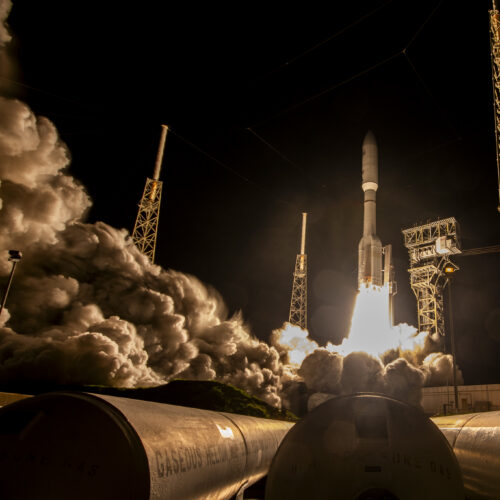
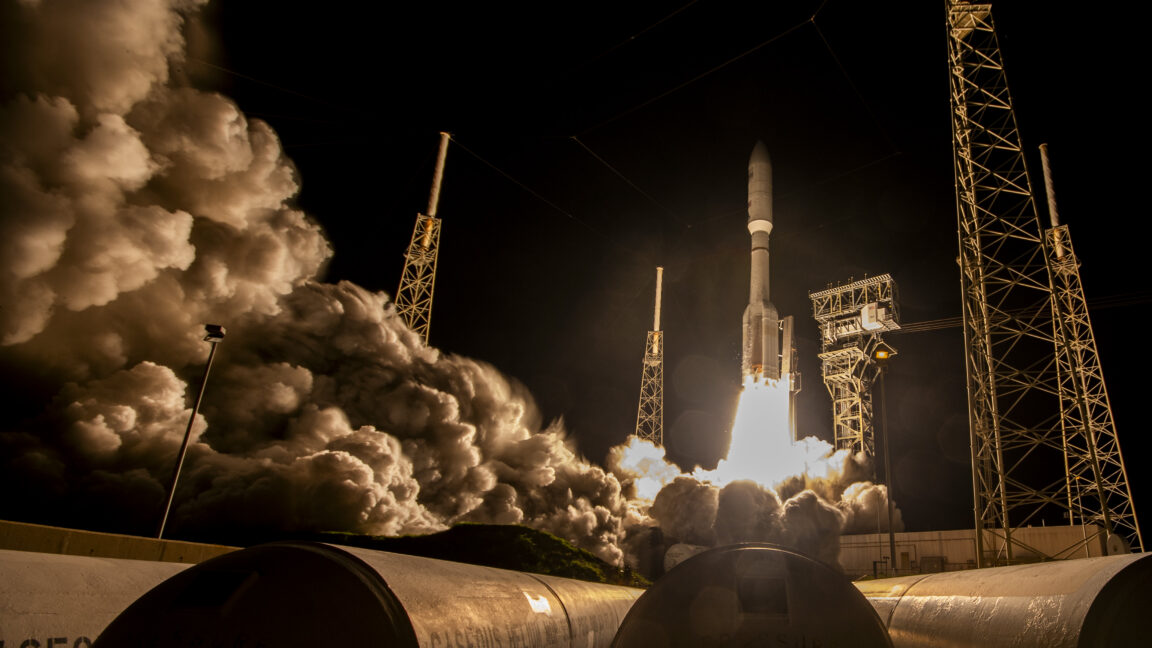
The final flight of United Launch Alliance's Atlas V rocket is still several years off, but an important era for the once-dominant launch company came to a close last week.

The final flight of an Atlas V for the Amazon Leo broadband constellation lifted off from Cape Canaveral Space Force Station in Florida at 12:30 am EDT (04:30 UTC) last Thursday, sending 29 satellites to orbit to move the network closer to providing initial services.

All 29 spacecraft deployed from the Atlas V rocket less than an hour after launch. They will use onboard propulsion to raise their orbits from an altitude of approximately 289 miles (465 kilometers) to their final operating positions at 392 miles (630 kilometers) above the Earth.

Read full article

Comments

© United Launch Alliance

  •  

Ariane 6 dá “boleia” a 36 satélites da Amazon e bate recorde europeu na capacidade de lançamento

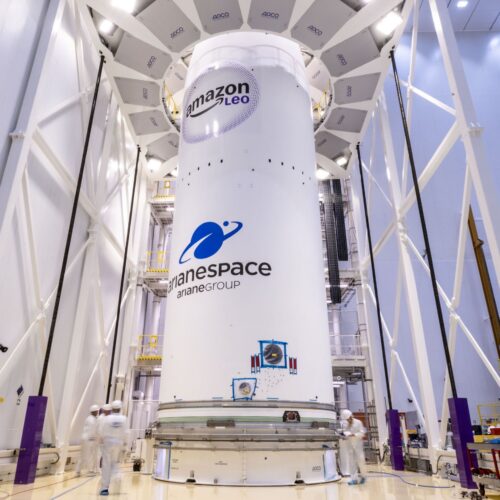
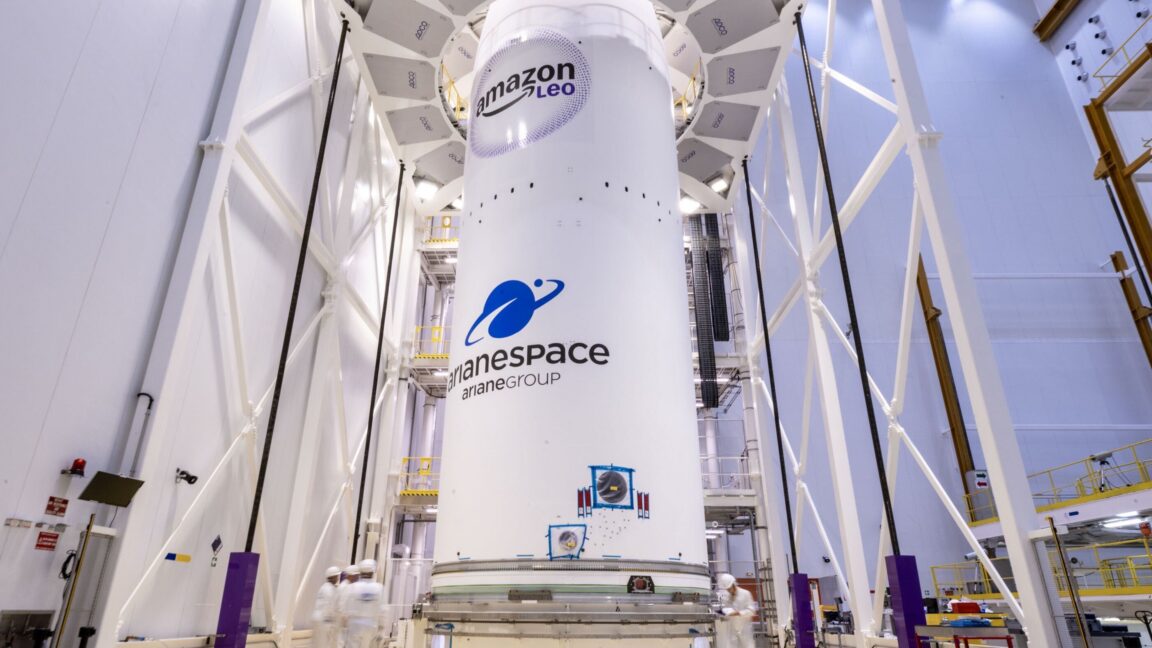
Marcando o oitavo voo consecutivo realizado com sucesso, o foguetão Ariane 6 colocou em órbita 36 satélites da constelação Leo da Amazon, aproveitando para bater o recorde europeu do voo mais “poderoso” de sempre.

The post Ariane 6 dá “boleia” a 36 satélites da Amazon e bate recorde europeu na capacidade de lançamento appeared first on Tek Notícias.

  •  

Among the large new rockets Amazon was counting on, only Europe has delivered

Amazon now has hundreds of flight-ready satellites standing idle in Florida, waiting to join the company's low-Earth orbit Internet constellation, an Amazon official said Tuesday.

"They're built, and sitting in a payload processing facility waiting for trips to orbit," said Steve Metayer, vice president of Amazon Leo Production Operations, during a teleconference with reporters. "And we're currently manufacturing several satellites a day."

Metayer spoke on the eve of the company's next mission, during which an Ariane 64 rocket will launch three dozen Amazon Leo satellites into orbit from a spaceport in French Guiana. Liftoff is targeted for 7:53 am ET (11:53 UTC) on Wednesday.

Read full article

Comments

© Amazon

  •  

Moment historique à Kourou le 17 juin : Ariane 6 s’apprête à décoller dans sa version la plus puissante jamais lancée !

Le prochain vol de la fusée européenne Ariane 6 est prévu pour le 17 juin. Il s'agira du premier décollage dans cette configuration avec quatre nouveaux propulseurs plus puissants pour mettre en orbite la charge utile la plus importante jamais envoyée par ce lanceur.

  •  

Study: Cave Lions were Distinct Species that Occasionally Bred with Ancestors of Today’s Lions

Cave lions painted in the Chauvet Cave, France.

The extinct Eurasian cave lion (Panthera spelaea) and today’s African and Asian lions (Panthera leo) belong to separate evolutionary lineages that diverged roughly 1.7 million years ago -- far earlier than previously thought, according to an analysis of 12 cave lion genomes spanning more than 100,000 years.

The post Study: Cave Lions were Distinct Species that Occasionally Bred with Ancestors of Today’s Lions appeared first on Sci.News: Breaking Science News.

  •  

FCC lifts looming deadline for Amazon Leo satellite broadband constellation

The Federal Communications Commission has waived a requirement for Amazon to launch half of its satellite broadband constellation by the end of July, a key regulatory reprieve that buys the tech giant time to get more of its spacecraft into orbit.

Amazon won regulatory approval for the Amazon Leo network in July 2020. The FCC's authorization came with two deadlines. First, Amazon had to launch half of its 3,232 satellites by July 30, 2026, in order to maintain authorization to launch the rest of the network. The regulator gave Amazon a deadline of July 30, 2029, to have all of its first-generation satellites in orbit.

It has been apparent for some time that Amazon would not meet the FCC's requirement to launch half of its satellites—1,616 spacecraft—by the end of next month. Amazon filed an application in January requesting the FCC extend the deadline to July 2028 or waive it altogether. The commission decided on the latter option, removing any time limit for the 50 percent deployment milestone, but keeping the July 2029 deadline in place for the entire constellation.

Read full article

Comments

© Amazon

  •  

FCC lets Amazon Leo miss deployment deadline with temporary spectrum penalty

Schwarz at SmallSat Symposium 2026

Amazon no longer faces a July 30 cutoff for deploying half its planned 3,232 broadband satellites, but the reprieve comes with a temporary loss of spectrum priority that could give SpaceX and other rivals more leverage in orbit.

The post FCC lets Amazon Leo miss deployment deadline with temporary spectrum penalty appeared first on SpaceNews.

  •  

UK startup NewOrbit raises $18.5 million in Series A round

SAN FRANCISCO – NewOrbit Space, a UK startup developing satellites for very low Earth orbit (VLEO), has raised $18.5 million in a Series A investment round. With the funding, announced […]

The post UK startup NewOrbit raises $18.5 million in Series A round appeared first on SpaceNews.

  •  

PRESENTIS usa rede Galileo e soluções da GMV para proteger infraestruturas críticas

O PRESENTIS, projeto liderado pela GMV, recorre ao sistema de navegação europeu Galileo para garantir segurança e resiliência às infraestruturas críticas europeias para possíveis ataques realizados durante aplicações críticas de sincronização do tempo.

The post PRESENTIS usa rede Galileo e soluções da GMV para proteger infraestruturas críticas appeared first on Tek Notícias.

  •  

Kombustíveis: o comparador de preços de combustíveis em tempo real do grupo KuantoKusta

O Kombustíveis é a plataforma do grupo KuantoKusta dedicada à comparação de preços de combustíveis em postos de abastecimento de todo o país, em tempo real. Está disponível em formato web, bem como aplicação para iOS e Android.

The post Kombustíveis: o comparador de preços de combustíveis em tempo real do grupo KuantoKusta appeared first on Tek Notícias.

  •  

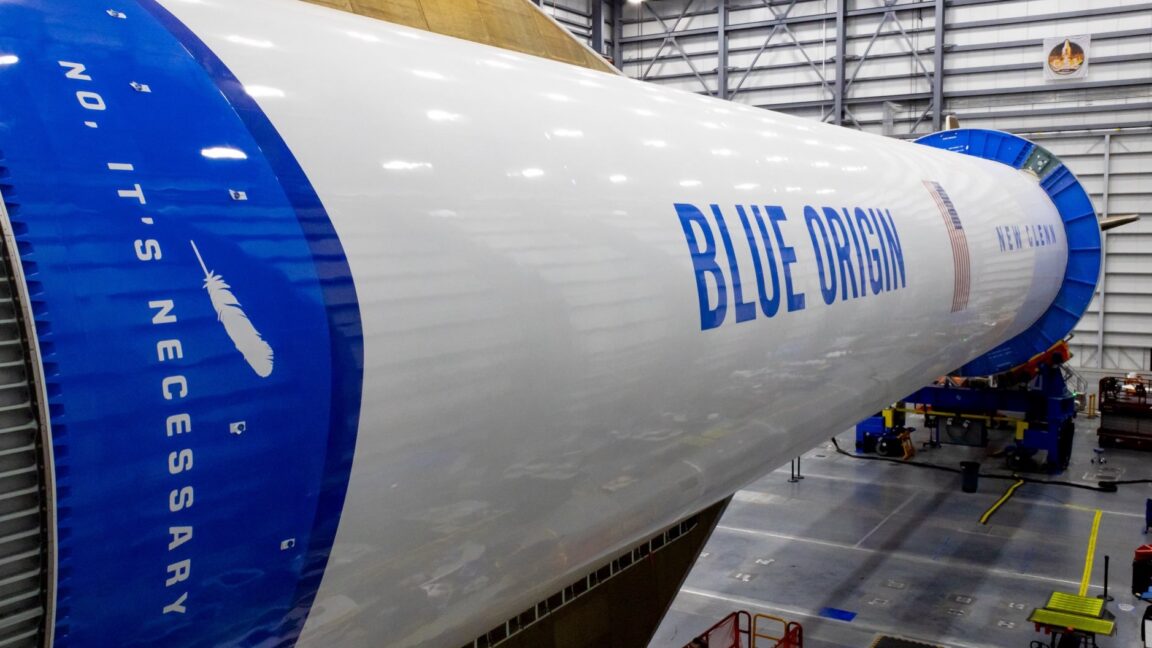
Amazon turns to Jeff Bezos' other company to do some heavy lifting

It was less than two months ago that the third flight of Blue Origin's heavy-lift New Glenn rocket left a customer's payload in an unusable orbit. Investigators have now identified the cause of the failure, and Blue Origin is preparing to launch the next New Glenn mission as soon as next week.

The Federal Aviation Administration and Blue Origin announced the closure of the failure investigation May 22. Yesterday, officials confirmed Blue Origin's next launch will loft a payload of 48 commercial satellites for Amazon's broadband network in low-Earth orbit. This will be the most satellites Amazon has launched on a single rocket, surpassing previous flights on United Launch Alliance's Atlas V, SpaceX's Falcon 9, and Europe's Ariane 6.

Blue Origin and Amazon, each founded by Jeff Bezos, have not officially revealed a target launch date, but public notices of airspace and maritime closures suggest the mission is set to lift off from Cape Canaveral Space Force Station, Florida, as soon as next Thursday, June 4. Blue Origin is expected to roll the New Glenn rocket to its launch pad in the coming days for a test-firing of its seven main engines, fueled by liquified natural gas and liquid oxygen.

Read full article

Comments

© Blue Origin

  •  
❌