❌

Reading view

A mosquito-hunting killer drone is available for preorder – and I have questions

  • Tornyol's drone tracks mosquitoes by their wingbeat and takes them down mid-flight
  • Can autonomously patrol areas of up to 5 acres
  • Preorders are open with a refundable $100 deposit, ahead of a targeted 2027 US launch

Tornyol, a San Francisco-based startup backed by Y Combinator, has built an autonomous micro-drone whose sole purpose is finding mosquitoes and flying straight into them. Forget spray, swatters and stinky citronella candles that go out halfway through your al fresco dinner — this propellered assassin can keep your yard bug-free all on its own.

Or at least, that's what its makers claim. Tornyol's drones use ultrasonic phased-array sonar — the same basic principle behind a car's parking sensors — paired with smartphone-grade microphones and custom signal-processing software. The system listens for the specific wingbeat frequency of a mosquito, distinguishes it from harmless insects like bees, and then closes in for a mid-air kill, using its whirring propellers as the business end. In other words, the mosquito is chopped to bits.

The company says its base station carries a 380-microphone array capable of tracking targets in real time to a distance of around 8m, with future planned drone versions likely to bring that sensing ability onto the aircraft itself.

Each drone flies for around five minutes at a time before heading back to its base station to recharge, a process Tornyol says takes about 30 minutes. The idea is a relay of short, targeted flights rather than a drone loitering in the air all evening. A single unit is pitched as capable of covering up to five acres (over 20,000 square meters).

As for safety, Tornyol cites the drone's tiny size and shrouded propellers as proof that it's safe to have buzzing around family and pets.

You can reserve one right now for a refundable $100 deposit. Once the drone is ready to ship, you'll be given a choice between an ongoing $50-a-month subscription or a one-off payment of $1,100 to own the hardware outright. A US launch is pegged for 2027, but availability everywhere else is TBC, pending local drone and pest-control regulatory approval — which, given what this thing actually does, may take a while.

It's pitched as being about more than backyard convenience, too. Tornyol frames its tech as a public health boon: mosquitoes are linked to roughly 700,000 deaths a year worldwide through diseases like malaria and dengue, and the company claims its approach could eventually slash the cost of mosquito control.

Right now, though, the achievements are more modest: on July 14, Tornyol co-founder Alex Toussaint posted a video of the drone's first confirmed "air-to-air kill": a moth, in a curtained-off test area, rather than a mosquito in the wild.

Here's the buzzkill

So: a small, autonomous, AI-guided drone that identifies living targets and kills them on sight, patrolling your garden 24/7. What could possibly go wrong?

I'll admit that my sympathy for the mosquito is limited. Few people are going to find issue with a device that quietly thins out a blood-sucking insect responsible for ruining many a summer evening. If Tornyol's drones work as advertised and stay in their lane, this is about as palatable a "killer robot" as killer robots get.

But that's the thing about a system built to autonomously identify a target by sound and eliminate it: the target list is a software decision rather than a hardware one. Tornyol's own marketing boasts of distinguishing mosquitoes from "beneficial" insects like bees — which suggests the drone's kill criteria are, by design, adjustable. Currently it's tuned to a mosquito's wingbeat, but what's stopping a future firmware update — or a different customer altogether — from retuning it for something else?

And once you're comfortable with an autonomous hunter-killer aircraft policing the back garden, the scope creep writes itself. Mosquitoes today. Flies tomorrow, probably without much complaint either. But mice? Rats? Pigeons? Those are bigger, warmer-blooded and considerably more sympathetic targets, and if we're talking about robots that hunt and kill creatures on your property, where does the line get drawn — and by whom?

Tornyol's engineers appear to be solving a real problem, and it's a no-brainer to root for a tool that could put a dent in a global killer like malaria. But there's something dystopian about killer domestic robots too, and this is a solid first step to putting them in our homes.

  •  

Long-Range Drones in Action: Ukraine’s SBU Destroys a Russian Tu-95 Bomber at Engels Air Base

The Security Service of Ukraine (SBU) has carried out another successful special operation, resulting in the destruction of a Russian Tu-95 strategic bomber. At the time of the strike, the aircraft was stationed at Engels Air Base in Russia’s Saratov region. According to a statement published on the SBU’s official Facebook page, the bomber had […]

The post Long-Range Drones in Action: Ukraine’s SBU Destroys a Russian Tu-95 Bomber at Engels Air Base appeared first on AERONAUT.media.

  •  

First Shot Without a Pilot: What the YFQ-44A Flight Tests Mean for the Future of Air Combat

Today, we’ll take a closer look at the combat trials of the YFQ-44A unmanned fighter, developed by Anduril Industries. Over the Mojave Desert, the aircraft accomplished something no operational U.S. Air Force drone had done before: it launched a live air-to-air missile at a target under the command of a remote operator who was not […]

The post First Shot Without a Pilot: What the YFQ-44A Flight Tests Mean for the Future of Air Combat appeared first on AERONAUT.media.

  •  

Mission Aborted: Ukrainian Drones Destroy Russian Su-24M at Saky Air Base

Strike drones destroyed a Russian Su-24M bomber while it was being prepared for a combat sortie at the Saky military air base in temporarily occupied Crimea. The operation was carried out by special forces from the Omega Special Purpose Center of the National Guard of Ukraine. The unit’s combat divers once again demonstrated their ability […]

The post Mission Aborted: Ukrainian Drones Destroy Russian Su-24M at Saky Air Base appeared first on AERONAUT.media.

  •  

The era of combat drones: A US Air Force unmanned aerial vehicle has destroyed a target with a combat missile for the first time

The U.S. Air Force has successfully carried out the first-ever missile launch from an uncrewed collaborative combat aircraft developed under the Collaborative Combat Aircraft (CCA) program. The test was conducted in partnership with defense company Anduril Industries, with the YFQ-44A unmanned aircraft serving as the test platform. During the exercise, the aircraft launched an AIM-120 […]

The post The era of combat drones: A US Air Force unmanned aerial vehicle has destroyed a target with a combat missile for the first time appeared first on AERONAUT.media.

  •  

Russian Tankers Burning in the Black Sea: Ukrainian Drones Strike 20 Vessels

On the night of July 15, the Unmanned Systems Forces continued targeting vessels of the Russian fleet involved in military logistics and energy exports. Previous strikes had focused on ships operating in the Sea of Azov, while this operation targeted vessels in the Black Sea. As a result of the successful operation, 20 Russian vessels […]

The post Russian Tankers Burning in the Black Sea: Ukrainian Drones Strike 20 Vessels appeared first on AERONAUT.media.

  •  

US military sent explosive drone boats into combat for the first time

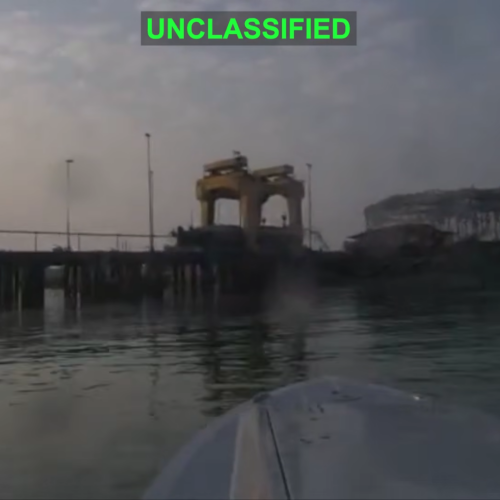
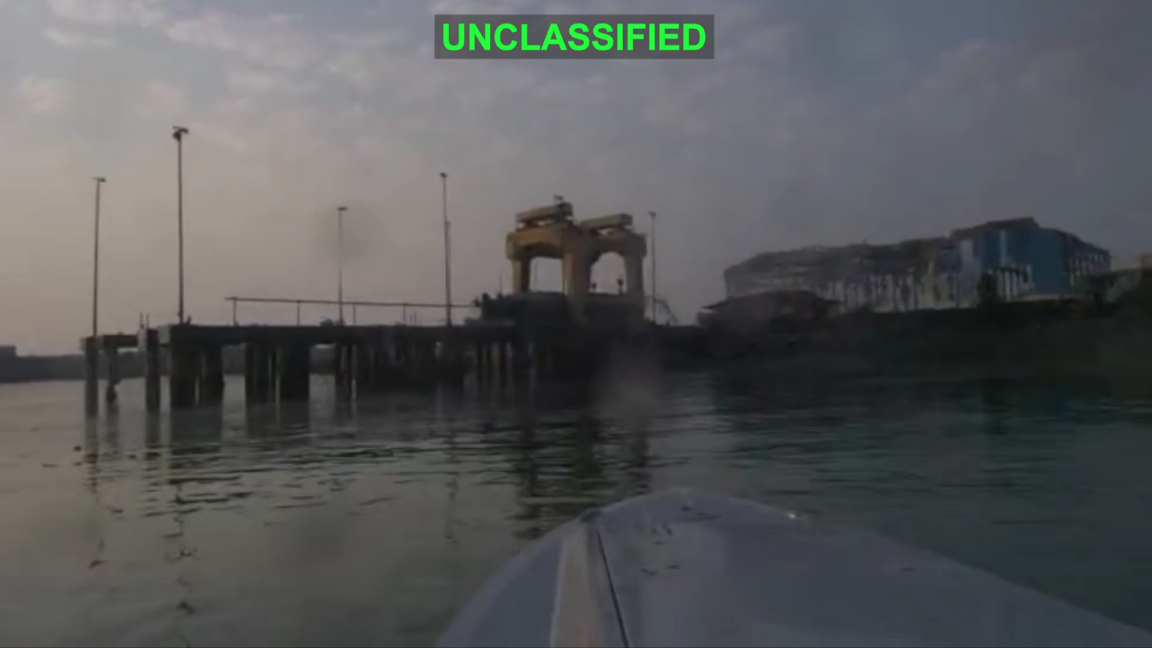
For the first time in its history, the US military sent explosive-laden drone boats into combat by attacking an Iranian midget submarine and naval port. The unprecedented use of such kamikaze sea drones by the United States comes nearly a decade after Iranian and Houthi forces first demonstrated such weapons.

The US military shared a video showing three “one-way attack surface drones” exploding after approaching an Iranian midget submarine and ship maintenance facility at Iran’s Bandar Abbas Naval Base on the night of July 12. US Central Command, the US military combat command responsible for Middle East operations, described the strikes in a social media post as the “first time American forces have employed sea drones in combat operations.”

The US drone boats were able to “make a low-speed, uncontested approach” to their targets before exploding, according to USNI News, a news service from the nonprofit US Naval Institute. USNI News also identified one of the targets as an Iranian Ghadir-class midget submarine that was out of the water while being suspended from a gantry.

Read full article

Comments

© US Central Command

  •  

50,000 Attack Drones: Germany to Finance One of the Largest UAV Procurements for Ukraine

Germany is financing the procurement of 50,000 FPV attack drones for Ukraine, according to Reuters, citing its own sources. The order is reportedly one of the largest known drone procurements for Ukraine funded by a Western government. The full-scale war has now continued for more than four years, during which Ukraine has made extensive use […]

The post 50,000 Attack Drones: Germany to Finance One of the Largest UAV Procurements for Ukraine appeared first on AERONAUT.media.

  •  

Ukrainian drone strikes forced Russia to stop shipping in vital sea corridor

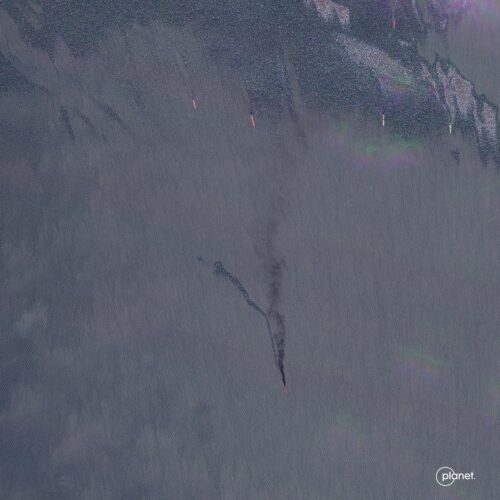
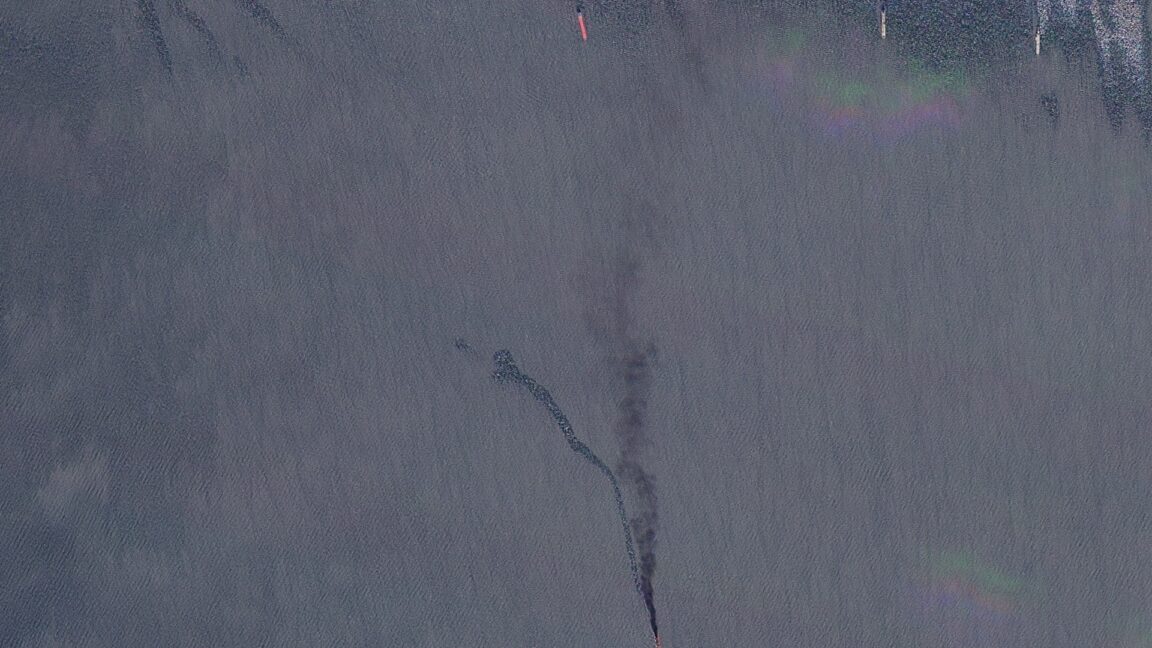
Ukrainian drone strikes have forced Russia to completely halt shipping in the Sea of Azov in less than a week, showing once again how a country without traditional naval power can still effectively blockade maritime corridors.

Ukraine’s Unmanned Systems Forces have flown one-way attack drones to target and strike more than 100 Russian tankers and other ships in total, along with posting video evidence showing such drone strikes occurring every night between July 6 and July 14. The campaign has forced Russia to completely shut down the shipping route that flows from Russia’s Don River into the Sea of Azov, and to halt all Kerch Strait shipping transits from the Sea of Azov into the Black Sea, according to Reuters reporting.

The shutdown of such maritime lanes has further isolated the Russian-occupied Crimean Peninsula by cutting off seaborne delivery of fuel in particular. Crimea had already been experiencing severe fuel rationing and power outages as Ukraine stepped up its mid- and long-range drone strike campaign on Russian energy infrastructure and supply lines, leaving behind damaged oil refineries with billowing black smoke and burned-out trucks littering highways.

Read full article

Comments

© Planet Labs PBC

  •  

Increased drone surveillance of illegal July 4th fireworks led to $100K fine

More cities and towns deployed drones to spot illegal fireworks during the Fourth of July celebrations commemorating America’s 250th anniversary—leading to a $100,000 fine in one instance and coming as part of a broader national trend of first responders turning to drone surveillance.

Police and fire departments have described using both increased drone surveillance and steep fines to deter people from shooting off illegal fireworks, with many departments publicizing their drone videos on social media and warning that their drones will be watching in the future. Incidents involving illegal fireworks have led to costly fires, injuries, and even multiple deaths each year, along with creating local air and noise pollution for residential neighborhoods.

This year, the $100,000 fine for illegal fireworks came from the Sacramento Fire Department in Northern California deploying its own drones for the first time on the Fourth of July, according to CBS News Sacramento. Sacramento Fire Captain Justin Sylvia described the fire department’s drones as being capable of recording scenes in high-resolution video to help investigators identify the house or closest location using Google Maps.

Read full article

Comments

© MediaNews Group/Orange County Register via Getty Images / Contributor

  •  

Nighttime Devastation in the Sea of Azov: Ukrainian Drones Reportedly Sent Another Nine Tankers of Putin’s “Shadow Fleet” to the Bottom

“Birds” of the Armed Forces of Ukraine’s Unmanned Systems Forces successfully struck nine additional tanker vessels belonging to the Russian Federation’s illicit fleet in the waters of the Sea of Azov during the night of 8 July. According to information provided by the defenders, the total number of damaged ships over the past 72 hours […]

The post Nighttime Devastation in the Sea of Azov: Ukrainian Drones Reportedly Sent Another Nine Tankers of Putin’s “Shadow Fleet” to the Bottom appeared first on AERONAUT.media.

  •  

US seeks cheaper hunter-killer drones after Iran destroys $1B worth of Reapers

The US military has lost dozens of Reaper drones collectively worth more than $1 billion while carrying out surveillance and attack missions over Iran. Now the Pentagon is seeking large numbers of cheaper drones that can perform such missions despite the expectation that many will be lost in combat.

In a call for industry pitches, the Defense Innovation Unit’s notice described the US military’s current reliance on drones and crewed aircraft, each costing more than $30 million, as being “unsustainable against adversaries utilizing layered defenses enabled by increasingly low-cost antiaircraft capabilities.” It envisions deploying more “cost-effective” drones to “overwhelm enemy air defenses even while experiencing numerous [drone] losses.”

That is, in practice, what Ukraine’s military has been demonstrating with its long- and mid-range strike campaign against Russian supply lines, oil refineries, and various energy or industrial targets within Russia or occupied Ukraine. The Ukrainian campaign has been overwhelming Russia’s overstretched air defense capabilities by launching hundreds of relatively inexpensive drones and missiles on a daily basis to attack targets far behind the frontlines, while continuing to damage or destroy Russia’s most sophisticated air defense systems.

Read full article

Comments

  •  

Kremlin suspected of flying drones over Europe using Russian shadow fleet

Mysterious drone flights that disrupted major European airports and flew over NATO member military bases hosting US nuclear weapons may be the work of a coordinated Kremlin campaign launched from Russian-linked commercial ships.

That recent assessment from the UK-based International Institute for Strategic Studies used automatic identification system (AIS) maritime tracking data and other publicly available data to show how Russian-linked ships and “shadow fleet” vessels that transport sanctioned Russian oil were often located nearby during various drone incidents. The report suggests that the drone incidents—which impacted a dozen NATO member countries and Ireland between August 2024 and February 2026—also revealed the vulnerability of European air defenses against surveillance and harassment incursions by low-cost drones.

The IISS report identified 144 drone sightings over Europe during that time period that were unlikely to involve hobbyist recreational drones or drone activity related to the war in Ukraine. About 48 percent of the sightings took place over military bases, 26 percent happened over critical infrastructure such as ports and energy or industrial facilities, and 18 percent occurred over civilian airports. Most occurred at night or in the early morning hours before sunrise, and the drones themselves were typically described in media reports as resembling “professional” or “military-style” drones.

Read full article

Comments

© DAMIEN MEYER/AFP via Getty Images

  •  

Russia Has Now Lost More Troops in Ukraine Than in Every War Since World War II Combined, New Analysis Finds

By any historical measure, the human cost of Russia’s invasion of Ukraine has entered unprecedented territory. Now, a new analysis from the Center for Strategic and International Studies (CSIS) estimates that Russia has suffered roughly 1.4 million battlefield casualties, including as many as 450,000 deaths, since launching its full-scale invasion in February 2022.

If accurate, those losses not only dwarf those sustained by the Soviet Union in Afghanistan and Russia’s wars in Chechnya—they exceed the combined military fatalities Russia and the Soviet Union suffered in every conflict since the end of the Second World War.

​More striking, researchers estimate that Russia’s battlefield losses have become increasingly lopsided relative to Ukraine’s, with the casualty ratio climbing from roughly two or three Russian casualties for every Ukrainian casualty during much of the war to nearly eight-to-one during the first half of 2026.

​CSIS estimates Ukraine has suffered between 525,000 and 625,000 battlefield casualties, including between 125,000 and 150,000 fatalities, since Russia’s full-scale invasion began in February 2022. Combined, the report finds, Russian and Ukrainian battlefield casualties have now exceeded 2 million.

​The evidence shows that while Moscow continues to push offensive operations, it is doing so at an increasingly staggering human cost.

The report, Russian Blood and Treasure: The Ballooning Costs of Putin’s War, examines battlefield casualties, fatalities, territorial gains, rates of advance, and more than 20,000 documented Ukrainian strikes against Russian targets.

Rather than relying on anecdotal assessments, the researchers compiled numerous datasets to evaluate how Russia’s military campaign has evolved over more than four years of fighting. Their conclusion: although Russia continues to wage war, its battlefield performance has deteriorated while the costs in manpower have reached historic levels.

“Russian battlefield costs continue to mount, with as many as 450,000 battlefield deaths and 1.4 million casualties between February 2022 and June 2026,” researchers write. “These rates are astounding.”

Those numbers place the war in a category unlike virtually any other conflict fought by a major military power since 1945.

According to the report, Russia’s estimated fatalities in Ukraine are more than four times greater than all U.S. military deaths in every war combined since World War II, including Korea, Vietnam, Iraq, Afghanistan, and the Persian Gulf War.

The report estimates that the United States has suffered approximately 102,000 combat fatalities across every major conflict fought over the past 80 years since World War II. Russia, by comparison, is estimated to have suffered as many as 450,000 battlefield deaths in Ukraine alone in just over four years.

The comparison is even more extraordinary when viewed through Russia’s own military history. The Soviet Union lost an estimated 14,000 to 16,000 troops during its decade-long war in Afghanistan. Russia’s First and Second Chechen Wars claimed between 12,000 and 25,000 military fatalities.

​Even when combined with every other Soviet and Russian military intervention since 1950—including Georgia, Syria, Hungary, Czechoslovakia, and earlier fighting in Ukraine before 2022—the total remains dramatically below the losses estimated in the current war.

​According to the CSIS analysis, Russian battlefield deaths in Ukraine are now more than nine times greater than all Soviet and Russian military fatalities in other conflicts since World War II combined.

Significantly, the casualty imbalance between Russia and Ukraine continues to widen.

For much of the conflict, researchers estimate Russia suffered between two and three casualties for every Ukrainian casualty. However, by early 2026, that ratio had nearly quadrupled to approximately 8:1, reflecting mounting Russian losses while Ukraine increasingly leveraged defensive positions and new technologies to inflict disproportionate damage.

​Combined, both sides have now endured more than two million casualties, underscoring the extraordinary scale of Europe’s largest land war since World War II.

The report identifies several reasons for Russia’s escalating losses. Russian commanders have increasingly relied on attritional tactics that send small, often poorly trained infantry squads forward to probe Ukrainian positions, supported by artillery, glide bombs, first-person-view drones, and armored vehicles.

If Ukrainian defenders reveal their positions by opening fire, those locations are identified, mapped, and then targeted with artillery, FPV drones, and glide bombs before additional Russian forces press the attack.

According to the report, the strategy has inflicted staggering casualties while producing only incremental territorial gains.

Ukraine, meanwhile, has spent years constructing dense defensive belts consisting of trenches, minefields, anti-tank obstacles known as “dragon’s teeth,” artillery positions, and increasingly sophisticated drone networks.

​According to the report, the battlefield has effectively become a vast “kill zone” stretching roughly 12 to 25 miles from the front, where soldiers and vehicles are under near-constant surveillance from drones capable of detecting and directing attacks against almost any movement.

​Estimates cited in the report suggest that more than 90 percent of Russian casualties may now result from drone attacks rather than traditional infantry engagements, showing how unmanned systems have radically changed the battlefield.

​AI-enabled drones capable of autonomous target identification and terminal guidance provide further increased Ukraine’s defensive advantages while reducing the effectiveness of Russian electronic warfare.

Critically, this tremendous human cost has not translated into rapid military gains.

CSIS found that Russian offensives around key cities such as Kostiantynivka, Pokrovsk, and Sloviansk have advanced at average rates of only about 55 to 100 yards per day—roughly half the length of a football field on a good day and among the slowest offensive rates recorded in modern warfare.

​The researchers compare these advances to the infamous Battle of the Somme during World War I, one of history’s most attritional campaigns, while noting that Russia’s early invasion advances in 2022 moved between 30 and 100 times faster than current operations.

Perhaps even more telling, the report notes that Russia’s territorial gains have begun moving in the opposite direction. After years of incremental advances, Russian-controlled territory actually shrank during April and May 2026, marking the first monthly net territorial losses since 2024. Ukrainian counteroffensives reclaimed roughly 155 square miles during the spring, suggesting Russia’s immense expenditure of manpower is producing diminishing strategic returns.

The staggering casualty figures raise questions about Russia’s ability to sustain its current strategy indefinitely.

Researchers estimate Russia is currently suffering between 30,000 and 34,000 battlefield casualties each month, while recruiting roughly 27,000 new soldiers monthly. If those estimates are accurate, Moscow may now be losing personnel faster than it can replace them, continuing to strain an already strained wartime economy.

Despite these staggering losses, the report concludes that neither side appears close to military collapse. Russia retains considerable manpower reserves and continues operating a wartime economy capable of sustaining prolonged combat.

In a June 28 speech to the ruling United Russia Party Congress, Russian President Vladimir Putin sought to project strength, insisting that Russia had the resources, political will, and national unity needed to pursue the war. He also rejected the idea that Western pressure could force a strategic defeat, claiming Ukrainian forces were retreating across the front, and framing Russian victory as equally inevitable and essential to the country’s core interests.

Ukraine, meanwhile, has demonstrated an ability to impose disproportionate costs through defensive tactics, long-range strikes, and rapidly evolving drone technologies that continue to reshape modern warfare.

Ultimately, this suggests the war remains locked in a brutal contest of attrition with no clear military end in sight. Although both sides continue adapting their tactics and technologies, neither has demonstrated the ability to achieve a decisive breakthrough.

As long as the conflict continues under these conditions, the report suggests the human toll—already unprecedented in post-World War II Europe—is likely to continue climbing, with both Russia and Ukraine facing the prospect of hundreds of thousands more casualties before the fighting ultimately ends.

“The war in Ukraine heavily favors the defender, a dynamic that has frustrated Russian offensives but also constrained Ukrainian counterattacks,” researchers write. “As the data in this analysis shows, Russia’s progress on the battlefield has been historically poor, with Russian casualties, fatalities, and average rates of advance among the worst of any major power in any war since World War II.”

Tim McMillan is a retired law enforcement executive, investigative reporter and co-founder of The Debrief. His writing typically focuses on defense, national security, the Intelligence Community and topics related to psychology. You can follow Tim on Twitter: @LtTimMcMillan.  Tim can be reached by email: tim@thedebrief.org or through encrypted email: LtTimMcMillan@protonmail.com 

  •  

Scientists Create Bio-Inspired Robots to Hack the Hovering Powers of This Exceptional Species to Build Better UAVs

An innovative new approach to building safer, more efficient small unmanned aerial vehicles is taking a cue from nature.

Anticipating worsening turbulence due to environmental concerns in the coming years, engineers studying the unmatched hovering ability of kestrels hope to reverse engineer the secrets of their exceptional flight capabilities to help assemble better future drones.

Smaller drones, known as sUAVs, have a range of different applications that include delivery services, photography, and more. However, wind conditions can often cause turbulence that either grounds them temporarily or, when caught off guard, can lead to their destruction.

Now, a team of researchers has published their findings in the Journal of the Royal Society Interface, which details an ongoing collaboration between RMIT University and the University of Bristol that seeks to overcome such issues by building drones that operate more like some of nature’s best flyers.

Specifically, the nankeen kestrel is an avian species whose amazing prowess while flying during adverse conditions still confounds researchers. To unravel the secrets of their flight, the researchers used motion capture technologies made possible in RMIT’s special Industrial Wind Tunnel facility, one of the largest such facilities anywhere on the Australian continent.

“Birds don’t rely on a single response to wind gusts,” according to RMIT researcher Matt Penn. “They constantly adjust their wings and tails to stay balanced, while the natural flexibility of their feathers and joints helps absorb sudden changes in airflow.”

“They can also sense disruptions very quickly, which allows them to respond almost instantly and maintain control,” added Penn, one of the team members who co-led the studies into how birds can cope with turbulence.

According to Penn and his colleagues, these birds possess a range of unique strategies that help them overcome the dangers of turbulence, which help them navigate under conditions that would cause most sUAVs to come tumbling from the sky.

To attempt to understand what makes kestrels such adept fliers, the team created a robotic replica to mimic some of their key flight movements and characteristics, which allowed the team to unravel some of the secrets to how these incredible birds perform.

“By creating a robot replica, we were able to measure how specific movements were contributing to steadiness in flight,” said Dr Mario Martinez Groves-Raines, a researcher now with the Royal Veterinary College in London, adding that precision measurements of kestrel flight that normally could not be achieved in nature were possible using the team’s robotic version.

“We uncovered several unique techniques behind the kestrel’s impressive stability,” Groves-Raines said. “Many of these techniques have the potential to improve [the] manoeuvrability of small aircraft, which encounter similar challenges to kestrels.”

“This research shows what’s possible when engineers look to nature for solutions,” added RMIT senior researcher Associate Professor Abdulghani Mohamed.

“Our findings open new pathways for designing aircraft that can better handle turbulence.”

Going forward, the researchers say they hope to apply their findings toward the construction of novel sUAVs, which can help future drones operate safely and more efficiently, much like their agile avian forebears.

Ultimately, similar engineering in the coming years may have applications that extend well beyond just drone flight, and could also help to ensure safe operations for much larger aircraft.

The team reported their findings in a pair of new studies, ‘Bridging the Gap: A Review of Gust Mitigation in Birds and Small UAVs’, and ‘Stability and control benefits of coupled wing and tail morphing in kestrel wind-hovering flight explored using a robot replica’, both of which were published in the Journal of The Royal Society Interface.

Micah Hanks is the Editor-in-Chief and Co-Founder of The Debrief. A longtime reporter on science, defense, and technology with a focus on space and astronomy, he can be reached at micah@thedebrief.org. Follow him on X @MicahHanks, and at micahhanks.com.

  •  

Odd police video shows drone removing knife from motionless suspect

In a supposed “nationwide first” use of drones to disarm a person, the Sacramento County Sheriff’s Office in California promoted a video showing how a small quadcopter drone used a dangling magnet to remove a knife from the hand of a motionless suspect.

The promotional video shared to Facebook and Instagram on June 22, 2026, uses the Mission: Impossible film franchise theme to dramatize video footage of the incident that took place earlier in the month, which involved what the video describes as a “felony suspect armed with a knife and a firearm” who “was not responding to negotiators.” The sheriff’s office is just one among hundreds of US police departments and sheriff’s offices that have deployed camera-equipped drones to assist first responders.

In a Facebook post, the Sacramento County Sheriff’s Office described having surrounded the suspect’s residence with a SWAT team after the “known felon and parolee-at-large was seen earlier with a firearm.” A first drone deployed to the scene located the suspect hiding in a corner of the garage, but also spotted the motionless suspect holding a knife in one outstretched arm.

Read full article

Comments

© Sacramento County Sheriff’s Office

  •  

Over 60 Targets: Unmanned Systems Forces Strike “Orion” UAV, Air Defense Assets, and Russian Logistics

On the night of June 23, Ukraine’s Unmanned Systems Forces carried out a series of strikes against enemy targets in temporarily occupied Crimea and other occupied territories. According to the commander of the Unmanned Systems Forces of the Armed Forces of Ukraine, Robert “Madyar” Brovdi, medium-range drones struck more than 60 enemy targets. Among the […]

The post Over 60 Targets: Unmanned Systems Forces Strike “Orion” UAV, Air Defense Assets, and Russian Logistics appeared first on AERONAUT.media.

  •  

Weapons in the war against drug cartels: Honduras to purchase Ukrainian drones

Honduras plans to purchase Ukrainian unmanned aerial vehicles to counter drug trafficking and strengthen border security, according to an announcement made today by the country’s president, Nasri Asfura. The statement comes amid the Central American nation’s ongoing struggle with organized crime, gang activity, and drug supply networks, which continue to pose significant security challenges in […]

The post Weapons in the war against drug cartels: Honduras to purchase Ukrainian drones appeared first on AERONAUT.media.

  •  
❌