For all the hysteria over “woke” casting and ahistorical choices, Christopher Nolan’s epic is on track to make $200 million globally during its opening weekend.
For all the hysteria over “woke” casting and ahistorical choices, Christopher Nolan’s epic is on track to make $200 million globally during its opening weekend.
Evil Empire creatives explain how it is playing to today’s ‘metroidvanias’ and honouring the original’s legacy with much fresh slaying to be done
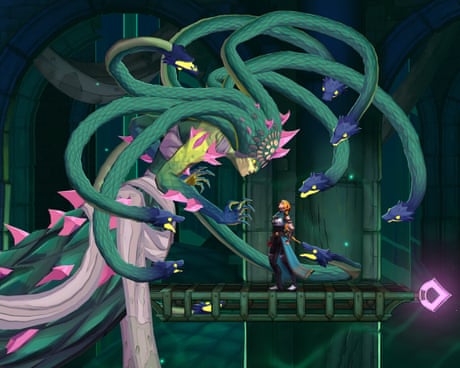
Since the last Castlevania game hit the shelves (2014’s Castlevania: Lords of Shadow 2), Konami’s dormant series has unexpectedly spawned a hit genre. With an entire generation raised on “metroidvanias” – a portmanteau of Metroid and Castlevania – millions of players have only ever seen the games inspired by Konami’s seminal games. Now with Belmont’s Curse, launching in October, Castlevania is finally dashing back to console, where Konami hopes to reclaim its side-scroller throne.
Set 23 years after the events of 1989’s Castlevania 3 – the same setting as the hit Netflix show – Belmont’s Curse shakes off the series’ 3D ambitions and takes the Belmonts back to basics. Dispatching players to the demon-infested streets of 1499 Paris, you’re placed in the tattered boots of Trevor Belmont’s daughter, Rose. As a bishop pleads with the Belmonts to rid Paris of the ancient evil besetting the city, Rose heads into the sewers, longsword in hand, and her demon-slaying adventure begins.
BBC Philharmonic/Havlat/Kaziboni/Piatti Quartet (NMC) Einstein’s field equations, Newton’s universal law and artificial intelligence are among the subjects of Laidlow’s ambitious orchestral works
Robert Laidlow is as at home in the realms of science and technology as he is in the world of classical music. As this NMC debut album demonstrates, his intricate, wildly imaginative work is eminently approachable, even if the core concepts are highly complex.
Warp, a terse, 12-minute piano concerto, proposes a musical solution to Einstein’s field equations as the intrepid Joseph Havlat boldly goes where no pianist has gone before amid the distorting fabric of orchestral space-time. Strident orchestral lines spiral ever upwards, stretching instruments to their limits, while the piano maintains its course towards a serene conclusion. Handsomely recorded, the BBC Philharmonic and Vimbayi Kaziboni offer vibrantly detailed support.
The defense secretary’s idea of administering testosterone therapy to members of the US Armed Forces reveals little understanding of the complexity of hormones.
Cadmium (Cd) contamination is a growing threat to food safety, and rice is one of the most vulnerable crops. Because rice plants can accumulate cadmium from contaminated soils more readily than many other staples, Cd can become a major dietary exposure route for large parts of the world’s population. Yet attempts to lower cadmium often create trade-offs—reducing uptake of essential nutrients or weakening plant performance.
A new study from Okayama University, Japan, and collaborating researchers in China reports a precision-editing strategy designed to avoid those trade-offs. The team focused on the rice metal transporter gene OsNramp5, which is known to move metals such as manganese and cadmium, and used base-editing to search for a beneficial point mutation within the gene rather than disabling it.
Using adenine and cytosine base editors, the researchers generated more than 1,600 genome-edited rice lines and screened them for reduced cadmium accumulation. Their saturation mutagenesis approach targeted OsNramp5 to identify variants that kept normal plant physiology while limiting Cd buildup in grain.
The key breakthrough was the I441T substitution: changing isoleucine to threonine at amino acid position 441. This single change reduced cadmium levels in both shoots and brown rice without altering gene expression, protein abundance, or the subcellular localization of the transporter.
Importantly, the mutation did not come at the cost of micronutrients. Field trials on cadmium-contaminated soil showed a 48% decrease in cadmium concentration in brown rice, from 0.14 mg/kg in wild type to 0.07 mg/kg in the edited plants, while iron, manganese, and zinc levels remained essentially unchanged.
The researchers then explored the mechanism behind the selective effect. Although OsNramp5 transports multiple metals, the I441T mutation shifted its selectivity—enhancing zinc transport preference. Increased zinc accumulation in root cells promoted competitive inhibition against cadmium during root-to-shoot movement.
Instead of completely blocking cadmium uptake, the edited transporter selectively limited cadmium translocation, reducing grain contamination while preserving essential mineral delivery. The team supported these conclusions with physiological assessments, gene and protein analyses, yeast transport assays, and agronomic evaluation.
Overall, the work demonstrates how precision genome editing can address a long-standing breeding challenge: lowering toxic metal accumulation without disrupting nutrient homeostasis. The researchers propose that the OsNramp5I441T allele could accelerate development of safer rice varieties for mildly contaminated regions.
Subject of Research: Not applicable Article Title: Genome-edited rice variety with low-cadmium accumulation in the grain News Publication Date: 18-Jun-2026 Web References: http://dx.doi.org/10.1073/pnas.2610609123 References: DOI: 10.1073/pnas.2610609123 (Proceedings of the National Academy of Sciences) Image Credits: Credit: Professor Jian Feng Ma from Okayama University, Japan
Keywords: cadmium, rice, OsNramp5, base editing, genome editing, metal transporters, food safety, micronutrients, zinc competition, plant breeding
Despite positioning itself as an anti-hookup app, users tell WIRED that Goose has fake profiles, harsh acceptance standards, and problems with inclusivity.
Despite positioning itself as an anti-hookup app, users tell WIRED that Goose has fake profiles, harsh acceptance standards, and problems with inclusivity.
In South Korea’s 2015 census, one in five people was named Kim: 21.5 percent of the population, or 10.69 million people. Next came Lee at 14.7 percent, Park at 8.4 percent and Choi at 4.7 percent. Add those four together and you approach half a country of roughly 51 million. Stretch the list to the ten most common surnames and you cover 63.9 percent of everyone, barely down from 64.1 percent in 2000.
Picture that in a Seoul subway carriage. A dozen people named Kim might be sitting together, none of them related. So why does a country of tens of millions run on such a short list of names?
The answer sits mostly in the last two centuries of Korean history.
Why the pool of names is so small
For most of the Joseon dynasty, a surname was a sign of rank, not something everyone had. Family names belonged to the yangban, the aristocracy. Commoners and enslaved people generally had none. The story of Korea’s few surnames is really the story of how everyone below the aristocracy eventually got one, and which names they reached for.
The spread began long before any law required it. A study of one prefecture’s census records, reported by Moon Ki-hoon in The Korea Herald, found that the share of local households without a surname fell from 45 percent in 1681 to just 6 percent in 1816.
The 1894 turning point and the rush to noble names
The legal end of the class system came with the Gabo Reform of 1894. When surnames finally became universal, the people newly free to choose one tended to pick from a small set of high-status clans. Kim, Lee and Park were the obvious picks, and for a clear reason.
Andrew Eungi Kim, a professor at Korea University’s Graduate School of International Studies, told ESPN that “those names were the most prestigious for having produced large numbers of kings, royalties and other historically significant figures.” In a society where family line shaped your opportunities, choosing such a name carried real weight. The top three surnames now cover 44.6 percent of the population, a share that has barely moved since the Joseon era.
Once taken, those names held firm. Yumi Moon, a historian of East Asia at Stanford University, explained the taboo against dropping an inherited name: “Changing your surname [which is] inherited from your ancestors is disgraceful, according to the custom of the olden.” A name chosen for advantage in one generation became, in the next, an ancestral inheritance nobody would think to change.
Living with a short list of names
So many shared names creates practical problems, and Koreans built a workaround into the system: the bon-gwan, or ancestral seat. Two people can both be named Kim yet belong to completely separate clans, each traced to a different founding region. The largest, the Gimhae Kim clan, has around 4 million members, with the Gyeongju Kim adding roughly 1.5 million more.
That distinction once mattered in law. An old rule banned marriage between two people who shared both a surname and an ancestral seat. In practice, millions of unrelated Gimhae Kim could not marry one another. The Constitutional Court ruled the ban unconstitutional on 16 July 1997. A revised Civil Code, narrowing the ban to close blood relatives, took effect on 31 March 2005.
Custom has proved harder to shift than law. Kim Beom-jun, a professor at Sungkyunkwan University, notes that “In Korea, the Confucian tradition still runs deep with people, an example of which is the practice of not allowing their children to use different surnames from those of their fathers.” He does not expect the mix to change: “I don’t think there will be many changes in the portions of family names in the future, either,” he said.
There is one quiet source of new variety. The 2015 census recorded 5,582 distinct surnames, more than 4,800 of them newly registered since 2000. Most came from naturalised citizens writing foreign names into Hangul. The list is growing at the edges even as its centre holds. Whether a handful of clans can keep anchoring the identity of a slowly diversifying country is the open question the census leaves behind.
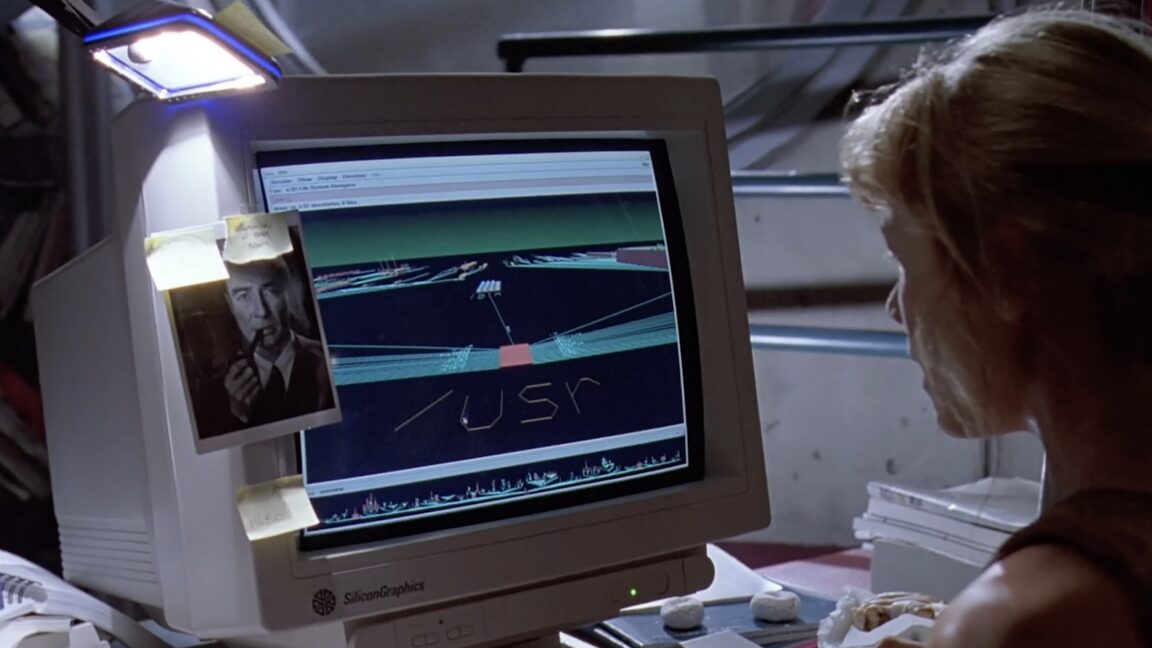
Jurassic Park, while beloved as a film, has been the subject of snarky memes for the infamous line in which one of the characters declares, "This is a Unix system, I know this!" while using a computer with an unusual 3D file manager interface.
Despite the memes, the film's production team was meticulous in accurately sourcing the right PCs (and adjacent details) for the sets—not too much of a surprise, given writer Michael Crichton's background with computing and his obsessive attention to detail in the book the film is based on.
New Zealand actor Sam Neill, who starred as Dr. Alan Grant in the 1993 blockbuster Jurassic Park and its 2022 sequel, Jurassic World Dominion, died on Monday in Sydney, Australia. He was 78.
While American audiences likely know Neill best for Jurassic Park, he had a long and varied career in film and television. His sheer versatility won him fans around the world. He played the grown Damien in Omen III: The Final Conflict; a Russian officer in The Hunt for Red October; and even made brief cameos (as an actor playing Odin in a theatrical troupe) in Thor: Ragnarok and Thor: Love and Thunder. (The less said about 1997's space horror travesty, Event Horizon, the better, although it has its fans, and Neill made the most of his role.) Yet some of his best performances were in smaller, critically acclaimed independent films such as 1993's Oscar-winning The Piano.
On television, Neill earned his first Golden Globe nomination for the lead role in Reilly, Ace of Spies in the 1980s. He was nominated for both an Emmy and a second Golden Globe for playing the titular Arthurian wizard in the 1998 miniseries Merlin. He played Cardinal Wolsley in The Tudors, and was part of the ensemble cast in the (excellent) 2015 adaptation of Agatha Christie's And Then There Were None. Neill was magnetic as the ruthless CI Major Chester Campbell in Peaky Blinders—an antagonist and romantic rival of Cillian Murphy's Tommy Shelby.
À quelques kilomètres de Saint-Malo, les rochers de Rothéneuf abritent plus de 300 visages, monstres et corsaires figés dans le granit. Œuvre monumentale de l’abbé Fouéré, ce site sculpté à même la falaise intrigue autant qu’il fascine, entre légende locale et énigme artistique. Un lieu unique...
As Christopher Nolan’s The Odyssey arrives in theaters, archaeologists working off the western coast of Greece say a real-life cult site devoted to the legendary story’s hero has been uncovered.
Local traditions had long told of a stony hilltop on the Greek island of Ithaca that had once been home to a shrine to Odysseus, the legendary Greek king of the isle and main protagonist in Homer’s famous poem.
Now, after close to two decades of archaeological work on the island that served as home to the fictional king in Homer’s epic literature, archaeologists say they have uncovered the most compelling evidence yet that a genuine historical cult site had existed there, dedicated to the famed hero of The Odyssey.
An Ancient Cult Site Devoted to Odysseus
Researchers with the University of Ioannina recently revealed the discovery of new inscriptions and artifacts supporting the existence of a cult element devoted to Odysseus, uncovered at the ancient complex at Agios Athanasios, which had been a public sanctuary devoted to the worship of Homer’s famous hero during the Hellenistic and early Roman periods.
According to a statement released by the Greek Ministry of Culture, the building complex is characterized by a series of robust structures located on terraces, which involve several monumental elements featuring carved architecture and niches for what appear to have been votive offerings or inscriptions, all of which point to its use as a cult site.
Yannos Lolos, one of the project’s lead archaeologists, recently told ArtNet that the site’s role was revealed partially through a reexamination of existing materials found there, which helped reveal what he calls “new and strong inscriptional evidence” linking the site to Odysseus.
Bronze Bust and Inscription Discoveries
Among the most important discoveries at the site were a small bronze bust of Odysseus dating to the first or second century C.E., as well as a roof tile fragment which bore an inscription that reads, “to Odysseus.”
However, an even more compelling discovery involved a second stamped roof tile inscribed with the hero’s name but appearing in the Greek genitive case; this is significant, since it indicates ownership, thereby identifying the sanctuary as “belonging” to Odysseus.
A close-up image depicting the tile recovered from the site, bearing an inscription that references Homer’s Odysseus (Image Credit: Greek Ministry of Culture).
Based on current evidence, organized cult worship is believed to have begun at the site by around the late fourth century B.C.E., which places its use at around 500 years after Homer composed his famous epic poem, and almost a full millennium after the legendary events the epic describes.
The physical sanctuary itself was built onto a massive natural rock formation, and remnants of the ancient structure include a primary tower, a large oblong building, and terraces which were carved directly into the underlying bedrock.
Excavations over the last several years have also revealed the site’s deeper history, which points to evidence of earlier Mycenaean occupation during the 13th and 14th centuries B.C.E., at which time the site had likely served as a strategic center overseeing nearby harbors and local water resources.
A Discovery with Legendary Significance
In a statement, the Greek Ministry of Culture said the two new engravings arrives “in combination with the other available data, to document the development of a prominent public complex at the site,” which it said help to establish the “major role in the religious, social and possibly political life of the Ithacians of the Hellenistic-early Roman periods, but also with a broader pilgrimage character.”
The recognition of this ancient cult site only adds to the existing evidence that already supported worship of Odysseus on Ithaca. Past discoveries have revealed ancient coins depicting the hero, found near ritual offerings at Ithaca, which were also linked to cult activities. However, the identification of the sanctuary offers the most conclusive archaeological evidence to date that Homer’s legendary hero had been the cult’s focus.
Of course, these discoveries fall short of establishing Odysseus as a true historical figure, and most scholars agree that Odysseus was a fictional character born out of traditions that incorporated real places and events into their broader mythos.
However, in at least a few instances, the lines between myth and ancient history have been blurred—a famous example being Heinrich Schliemann’s identification of a site (originally discovered by British amateur archaeologist Frank Calvert, with his identification of the mound of Hisarlik) which helped reveal the archaeological reality behind the city of Troy, which had previously been considered a mythical location.
It was also reported last year that an archaeological discovery resembling the “labyrinth” from Greek mythology had been uncovered on Crete, in a discovery some have called “one of the most important archaeological finds” of the century.
Although the discoveries at Ithaca don’t establish Homer’s Odysseus as a historical figure in this way, they do confirm that centuries after The Odyssey was composed, inhabitants of Ithaca engaged in cult activities to honor the legendary king at a sanctuary on the island, which, according to legend, he once ruled.
Micah Hanks is the Editor-in-Chief and Co-Founder of The Debrief. A longtime reporter on science, defense, and technology with a focus on space and astronomy, he can be reached atmicah@thedebrief.org. Follow him on X @MicahHanks, and at micahhanks.com.
Horror is so hot right now. There’s Obsession, Evil Dead Burn and Hokum in the cinema, Widow’s Bay, From and Something Very Bad Is Going to Happen on TV, and, of course, a rotting smorgasbord of horror games including Resident Evil Requiem (pictured top) and Reanimal, soon to be joined by Silent Hill: Townfall, Silver Pines and Dreadmoor. We’re also seeing weird cross-pollinations, with horror movie studio Blumhouse making games, while games themselves become horror films and the whole backrooms genre infects every medium it touches.
So it was fascinating to attend last week’s horror and gaming conference at Falmouth University, in Cornwall: a gathering of students, researchers and lecturers, all engaged in the academic study of horror games. There were brilliant talks on zombies and posthumanism, the gothic in games, and the role of monstrous little girls in survival horror (there are a lot of them!). Subjects as diverse as masculine fragility, disability and ageing came up; Will Doyle, creative director at Supermassive Games, gave a great keynote on the art of creating horror in games using tools such as revulsion, spatial alienation and the human instinct of apophenia. I learned a lot about theorists such as Julia Kristeva and Mark Fisher, and about the technical similarities between indie horror games and film noir (for example, the use of darkness and creative camera techniques to “hide” budget restrictions). It was incredible fun.
The restrictions, which can be turned off, will include a crackdown on “addictive” app features and will be in addition to a total ban on children under 16 accessing platforms like TikTok and YouTube.
 Login