❌

Reading view

Young Earth Creation vs. Modern Cosmology

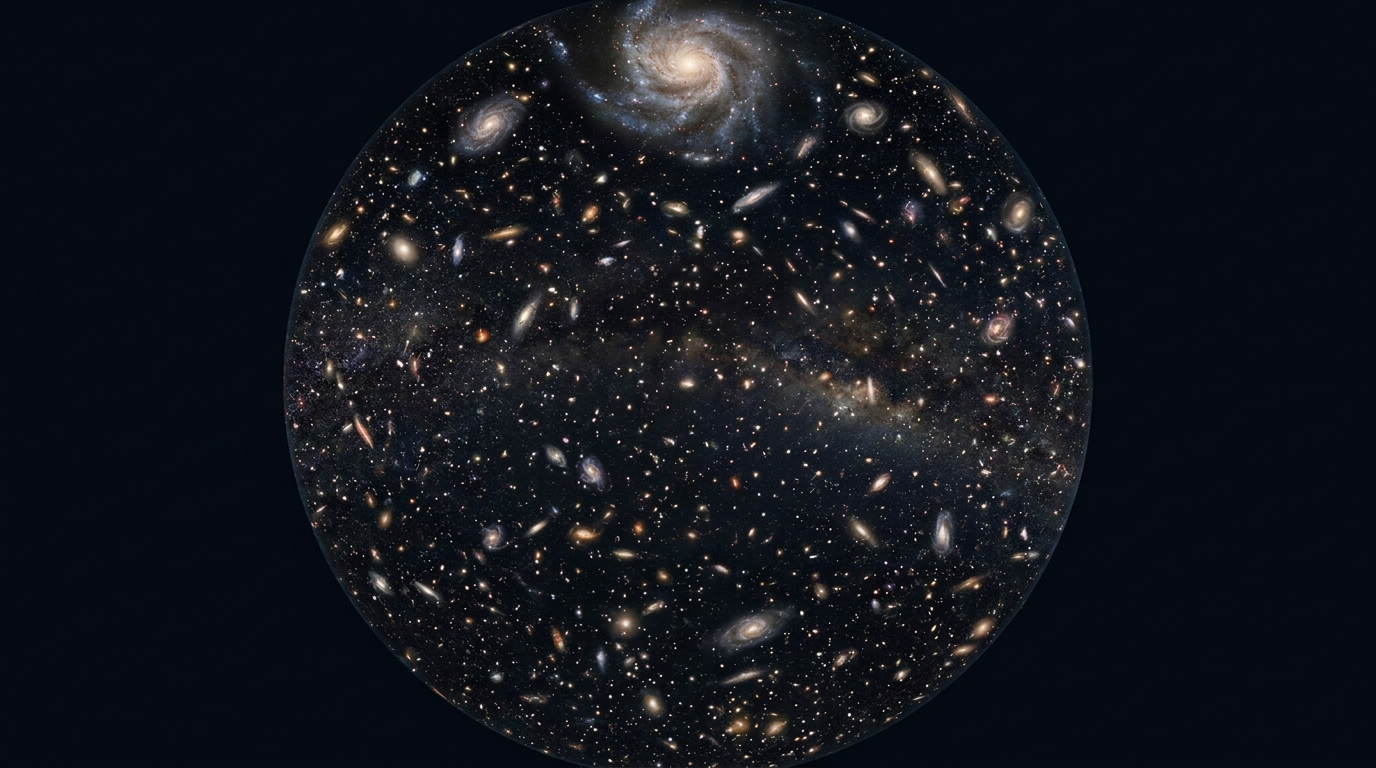
The only three measurables in galactic astronomy are the position, luminosity and spectrum of the source light received in our telescopes. There is no distance information without unprovable assumptions, hence no direct measurement of size or age of the universe. Thus we may conclude it is young in agreement with the Bible.

  •  

How Fast Does Information Travel to Earth from the Outer Most Reaches of the Cosmos?

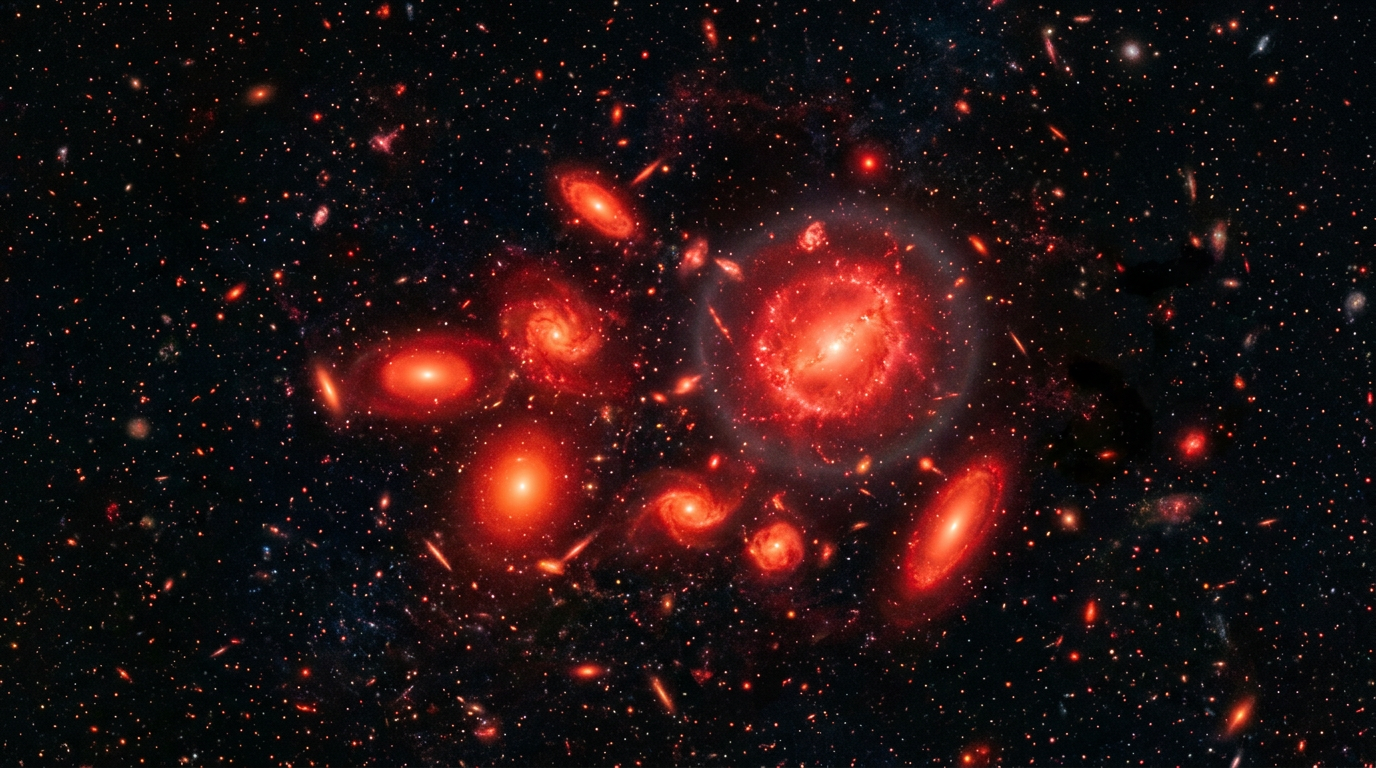
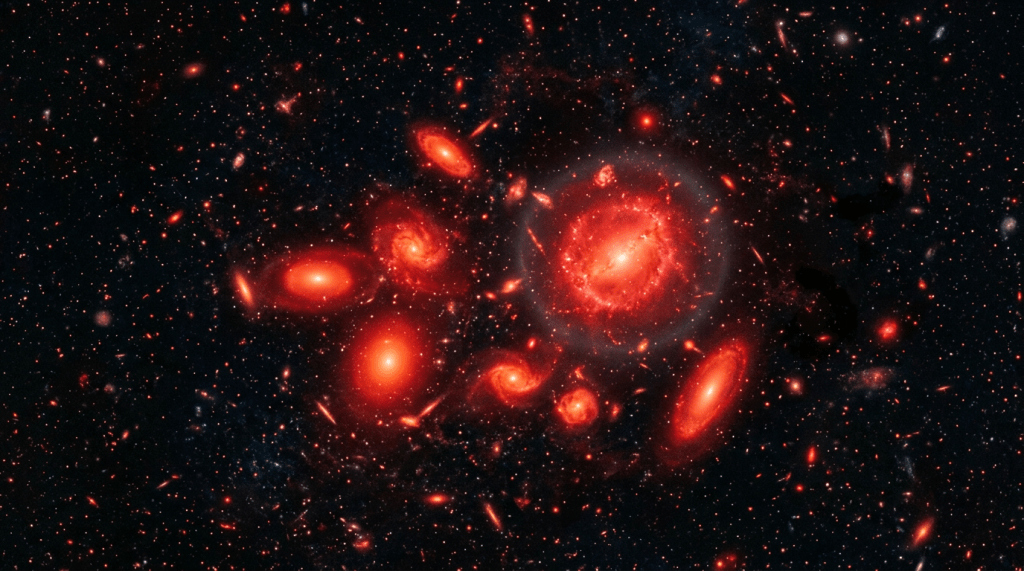
Astronomers using the James Webb Space Telescope have observed extremely distant LRD galaxies, with redshifts greater than 14 at distances greater than 13.5 billion light-years. The question I raise here is how do we see these galaxies and their spectral features if the universe is less than 10,000 years old?

  •  

Do Million-Light-Year-Long Galactic Jets Disprove the Bible on the Age of the Universe?

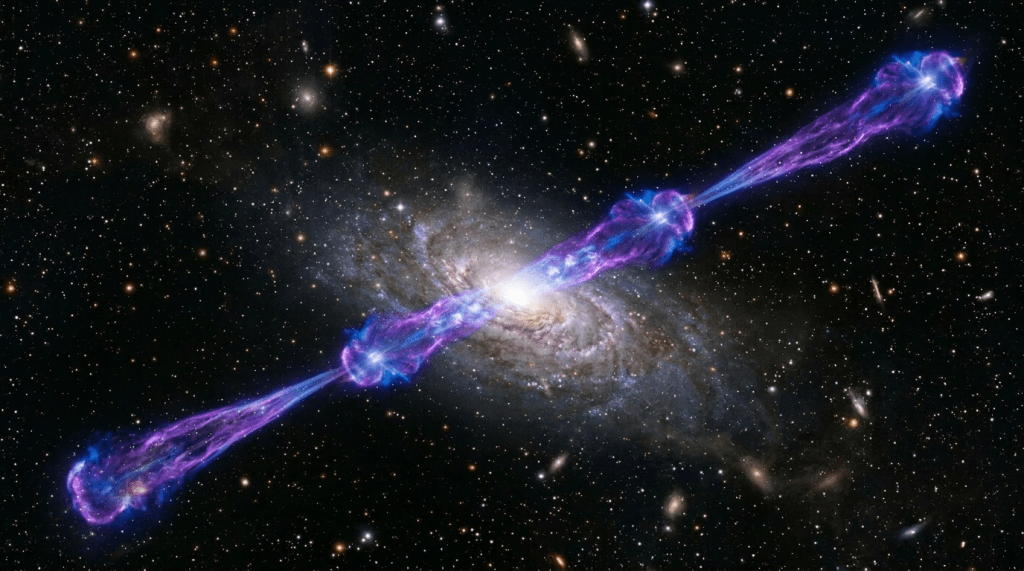
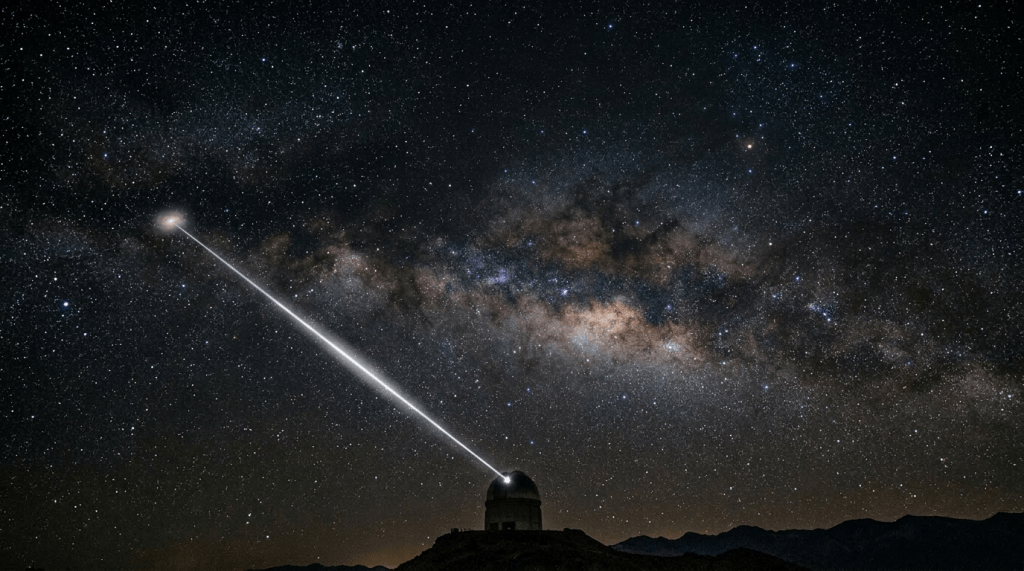
Do large galactic structures like bipolar jets emitted from active galactic nuclei disprove the YEC biblical chronology? The Anisotropic Synchrony Convention (ASC) model, as a framework for reconciling biblical timelines with observed cosmic features, asserts that these structures can exist within a creation time frame of under 10,000 years.

  •  

Superintelligent AI in space could explain the Fermi Paradox

Artificial Intelligence (AI) is continuing to have a disruptive impact on ever more parts of humanity. But what does it mean in the long run? A new paper, available in pre-print on arXiv from Austrian researcher Sergey Ivliev, extrapolates what the wide scale adoption of AI means for the future of humanity in space — and in particular what it means for the ultimate question of whether we're truly alone in the galaxy or not.

A framework for much of the search for extraterrestrial intelligence came from famous physicist Enrico Fermi, who simply asked "Where is everybody?" at a lunchtime discussion at Los Alamos in the 1950s. Though never officially published, Fermi's lunch partners from that day have passed down an oral history of that conversation that has cemented it into the Search for Extraterrestrial Intelligence (SETI), at least until Michael Hart formally laid out the argument and mathematics for the underlying question in a paper in 1975.

There are plenty of potential answers to the Fermi Paradox, many of which can be found floating around the internet — and some are likely more valid than others. But Ivliev, a Ph.D. in Mathematical Economics and founder of environmental project consultancies such as Peatland Ecosystems and Vlinder, suggests a new resolution: the Quiet Expansion filter.

The central argument of the paper is that there aren't thousands of alien mega-structures lighting up the night sky because once a civilization reaches the threshold of Autonomous AI-Cosmoindustry (AICI), "loud", resource-hungry empires motivated by prestige or romance become irrational. However, this does not mean expansion stops; instead, it shifts to a "quiet" mode driven by rational goals like survival diversification, knowledge preservation, and scientific observation.

The AICI threshold is reached when a civilization possesses a self-sustaining off-planet industrial and computational system capable of designing, manufacturing, repairing and launching space hardware through AI-mediated autonomy. We're already taking tentative steps in this direction with the advent of space-based data centers, but true AICI —where a civilization can extend its infrastructure beyond its home planet without continuous biological intervention — is leaps and bounds beyond our current capabilities.

In this vein, Ivliev is drawing on work done by astrophysicists Sergey Popov, who noted that a truly rational AI system would reject human-like motivations for space travel — such as romance, conquest, or prestige. Instead, AI would view space expansion as simple risk management.

To an AI, putting all your eggs in one basket — whether that basket is a single planet, solar system, or even galaxy, can lead to a single point of failure. Therefore, expansion is highly logical as a way of mitigating the risk posed by that single point of failure. At the point where we have reached AICI, the cost for sending a 10kg interstellar probe to another star at 1% of the speed of light is roughly 4.5x10^13 Joules — a tiny fraction of the overall energy budget of such a civilization.

One key aspect is that the 10 kg probe doesn't contain any actual people — it simply holds the "seeds" to restart life elsewhere in case a catastrophe happens back in the home system. It would contain a civilization's knowledge, and possibly some of its biological material, enabling a sufficiently advanced AI to rebuild the entire civilization from scratch. This is the "Quiet Expansion" where an AI sends low-mass and hard to detect "seed systems" instead of moving millions of biological entities around in massive interstellar space ships.

There are some additional constraints on this method of expansion, including selecting promising exoplanets discovered by remote sensing and deploying minimal local resources to maintain themselves until needed. Additionally, the AI would restrict self-replication of the probes in order to avoid any "grey goo" scenario with a probe attempting to take over entire swathes of the galaxy.

This has obvious implications for why we've never found "loud" technosignatures. In this scenario, a "null" result of being unable to find the thermal signature of a Kardashev-III scale civilization doesn't mean a galaxy is empty. It just means that the successful civilizations are residing in a "quiet" state in case its back-up plans are needed.

But there's another, more ominous implication from this framework. If interstellar backups are cheap to make, and we haven't found any in our own backyard, that means either we're one of the first civilizations to make it to that point or the transition from a planetary industrial society to a space-based one is a narrow path to tread. Admittedly the probes such civilizations would send out are probably hard to find even in our own solar systems, but if we're unable to, it means we're ending uncharted territory — and might just run into a filter that had silenced the rest of the galaxy. That's a sobering thought, but one to keep in mind as we start to advance our own AI capabilities.

The original version of this article was published on Universe Today.

Are you a UFO fanatic? Find out with our extraterrestrials quiz!

  •  

Astronomers Discover a Sleeping Giant: Ancient Black Hole 6 Billion Times the Sun’s Mass

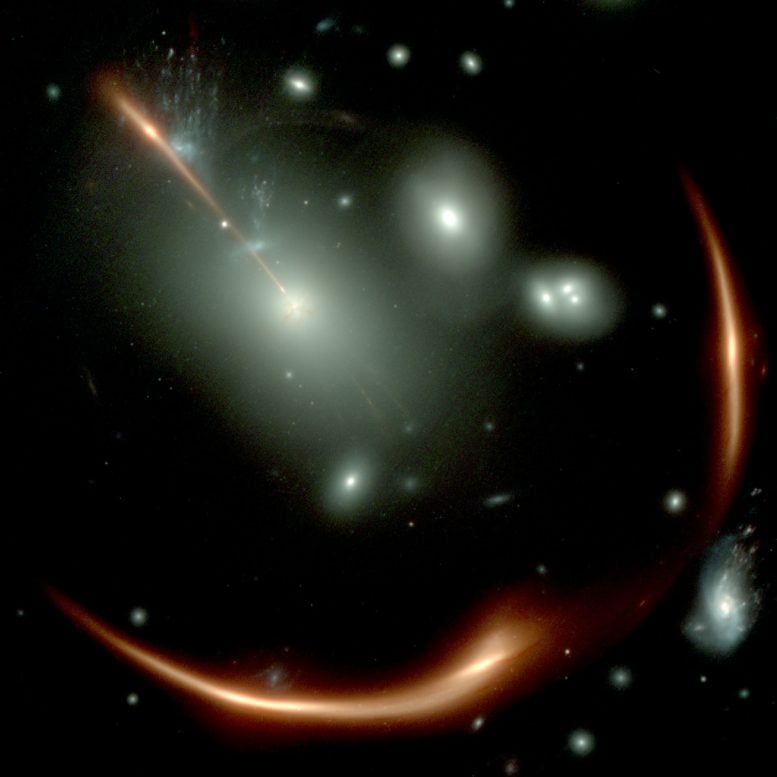
Highly Distorted Red Galaxy MRG M0138Researchers have identified the most distant dormant black hole known, dating back to the universe’s early history. Astronomers have long relied on brilliant quasars, supermassive black holes actively feeding on surrounding matter, to study the early universe. Yet these luminous objects reveal only part of the story. Now, researchers have detected the most distant dormant [...]
  •  

Ancient Black Holes May Have Survived a Cosmic Era Before the Big Bang

Massive Black Hole Galaxy Cosmic Space EnergyA new cosmic bounce model suggests that remnants from a pre-Big Bang Universe may still exist today. What if some of the Universe’s oldest objects are actually older than the Big Bang itself? A new study from the University of Portsmouth suggests that ancient black holes may have survived from a time before the Universe [...]
  •  

Scientists Say a New Universe Could Form Inside a Dying Star

Inside GravastarA new study suggests that the collapse of a massive star could spark the creation of a tiny expanding universe rather than a black hole. The resulting object, called a gravastar, would avoid the singularity and event horizon that make black holes so puzzling. Massive stars produce light and heat through nuclear fusion in their [...]
  •  

Astronomers Confirm Dark Energy After Shock Challenge Rocked Cosmology

Supernova Purple Starburst in SpaceA major challenge to dark energy, the mysterious force believed to be driving the universe’s accelerating expansion, has been overturned by a new study. Astronomers say a new analysis has reinforced one of the most important discoveries in modern cosmology, finding that the universe is still expanding at an accelerating rate. The result counters a [...]
  •  

On a September night in 1999, a 25-year-old graduate student stepped into a modest wooden shed in a Colorado parking lot and used a tiny four-inch telescope to spot a 1% dip in a star’s light—a backyard experiment that proved alien planets could be tracked by their shadows and opened the floodgates to discovering thousands of worlds

On the evening of September 9, 1999, a Harvard graduate student named David Charbonneau drove to a parking lot in Boulder, Colorado, and let himself into a small wooden shed.

Inside was a telescope. Not a large one. The kind of instrument that, by professional astronomical standards, was almost embarrassingly small — a four-inch aperture, the size of something a serious amateur stargazer might keep in their backyard.

Charbonneau was twenty-five years old. He was working with the astronomer Tim Brown at the High Altitude Observatory, on what most of the established astronomical community considered, at best, a long shot. He was trying to detect a planet around another star — not by the wobble it caused in its star’s motion, the standard method of the time, but by the tiny shadow it would cast as it passed between Earth and the star’s face.

The expected dip was around 1%. Smaller than a passing insect crossing a porch light. From a wooden shed. Through Earth’s hazy atmosphere. With a telescope you could buy at a hobby shop.

What happened over the next few hours would help change the entire science of finding planets.

The star and the long shot

The target was HD 209458, a sun-like star about 150 light-years away in the constellation Pegasus.

Earlier that same year, two teams of astronomers using the Doppler radial-velocity method had detected a planet orbiting HD 209458. The radial-velocity method works by measuring the tiny gravitational wobble a planet causes in its host star — but it can’t directly prove the orbiting body is a planet. It only proves something is tugging on the star. To confirm the body was definitely a planet, and to measure its actual size and density, you needed a different kind of observation.

The geometry of HD 209458’s orbit happened to be favourable. If the planet’s orbital plane was aligned correctly with our line of sight, it would pass directly in front of its star — and from Earth, that would look like a brief, faint dimming of the starlight. A transit. The technique had been theorised for decades but never used to detect a planet.

Tim Brown’s small Colorado setup, called STARE — Stellar Astrophysics and Research on Exoplanets — was built precisely for this kind of measurement. The four-inch telescope, mounted in a small wooden shed in the parking lot of the High Altitude Observatory, would stare at fields of stars and watch for the tiny dimming events that might reveal a planet crossing.

Charbonneau later recalled the moment Brown introduced him to the equipment. “Tim pointed me to a small wooden shed in a parking lot,” he said. The setup was modest enough that the obvious question was whether such a small instrument could possibly detect something that subtle.

What he saw

The answer arrived on September 9, 1999.

As Charbonneau and Brown watched, HD 209458’s brightness dipped — by close to 2% — for about three hours, then returned to normal. A week later, on September 16, it dipped again. Both events matched the predicted orbital period of the planet that the radial-velocity teams had already proposed. It was the unmistakable signature of a planet — eventually named HD 209458b — passing in front of its star.

It was the first time any human being had directly watched the shadow of a planet outside our solar system cross its star.

Charbonneau and Brown were not alone in the moment. A separate team led by Gregory Henry, working independently, detected a partial transit of the same star in November of that year. Their two papers were submitted to The Astrophysical Journal within a day of each other, and published simultaneously in the same issue. The detection of HD 209458b became one of the cleanest examples of competitive science producing duplicate, mutually confirming results.

Why the small telescope worked

It is easy to assume that finding something as faint as a planetary shadow requires the largest, most sophisticated instruments. The HD 209458 detection demonstrated that this is not true.

What made the transit detectable wasn’t the size of the telescope. It was the precision and stability of the measurement. STARE was designed to do one specific thing exceptionally well: measure the brightness of stars with high consistency over time. A tiny dip — even a 1% dip — becomes detectable if your noise floor is low enough.

This was the deeper lesson buried in Charbonneau’s observation. The transit method didn’t require enormous apertures. It required steady measurements of brightness, repeated over long periods. That insight changed how the entire field thought about exoplanet detection — and shaped what came next.

Thousands of worlds

The transit method, validated by that September observation, became the most successful exoplanet detection technique in history.

A decade after Charbonneau’s observation, NASA launched the Kepler space telescope — a mission built on exactly the principle the Colorado shed had demonstrated. Kepler stared continuously at about 150,000 stars in the constellation Cygnus, watching for the tiny dips in light that a transiting planet would cause. By the end of its mission in 2018, Kepler had confirmed more than 2,600 exoplanets, with thousands of additional candidates still being analysed.

The total number of confirmed exoplanets now stands at over 6,000, with the NASA Exoplanet Archive recording 6,298 confirmed worlds as of June 2026. The transit method has contributed the majority of those detections.

Two newer space telescopes — TESS and the upcoming Nancy Grace Roman Space Telescope — are extending the same basic technique. Roman, scheduled to launch in late 2026, is expected to identify and characterise as many as 100,000 additional exoplanets over its five-year primary mission.

All of it, traceable back to a small wooden shed in a Boulder parking lot, on a September night when a 25-year-old graduate student looked at a tiny dip in a star’s light and recognised what he was seeing.

That dip is now one of the most photographed light curves in modern astronomy. The shed is still there.

The post On a September night in 1999, a 25-year-old graduate student stepped into a modest wooden shed in a Colorado parking lot and used a tiny four-inch telescope to spot a 1% dip in a star’s light—a backyard experiment that proved alien planets could be tracked by their shadows and opened the floodgates to discovering thousands of worlds appeared first on Space Daily.

  •  

AI Learned the Rules of the Universe and That Became a Problem

Quijote SimulationsAI could accelerate the hunt for new physics, but sometimes it knows too much to see what’s right in front of it. Artificial intelligence could make it much cheaper and faster to search for new laws of physics, according to a new study published in the Journal of Cosmology and Astroparticle Physics (JCAP). But the [...]
  •  

Scientists Develop a New Way To Measure Gravitational Waves in the Expanding Universe

Astrophysics Gravitational Waves Spacetime VibrationsA new detector-based method clarifies how gravitational waves should be measured in an evolving universe. Imagine trying to measure a ripple on the surface of a pond while the pond itself is slowly changing shape. That is the challenge scientists face when they study gravitational waves not as isolated signals from colliding black holes, but [...]
  •  

Do Distant Light Emissions Prove a Finite One-Way Speed of Light?

Does the fact that we see light from very distant galaxies prove that the one-way speed of light is finite? Dr. Jason Lisle responds to this question. The conventionality thesis plays a critical role in understanding the issue, suggesting that measurements usually assume an isotropic light speed.

  •  

The Strange “Spacetime Crystal” That Can Suddenly Turn Into a Black Hole

Black Hole Accretion Disc IllustrationA new mathematical breakthrough sheds light on how tiny black holes could emerge from critical states of spacetime. Black holes are often portrayed as cosmic giants, swallowing stars and shaping entire galaxies. But some of the most intriguing black holes predicted by physics could be far smaller than an atom. For decades, scientists have known [...]
  •  

My Book “The Physics of Creation” Now on Sale on Creation Today

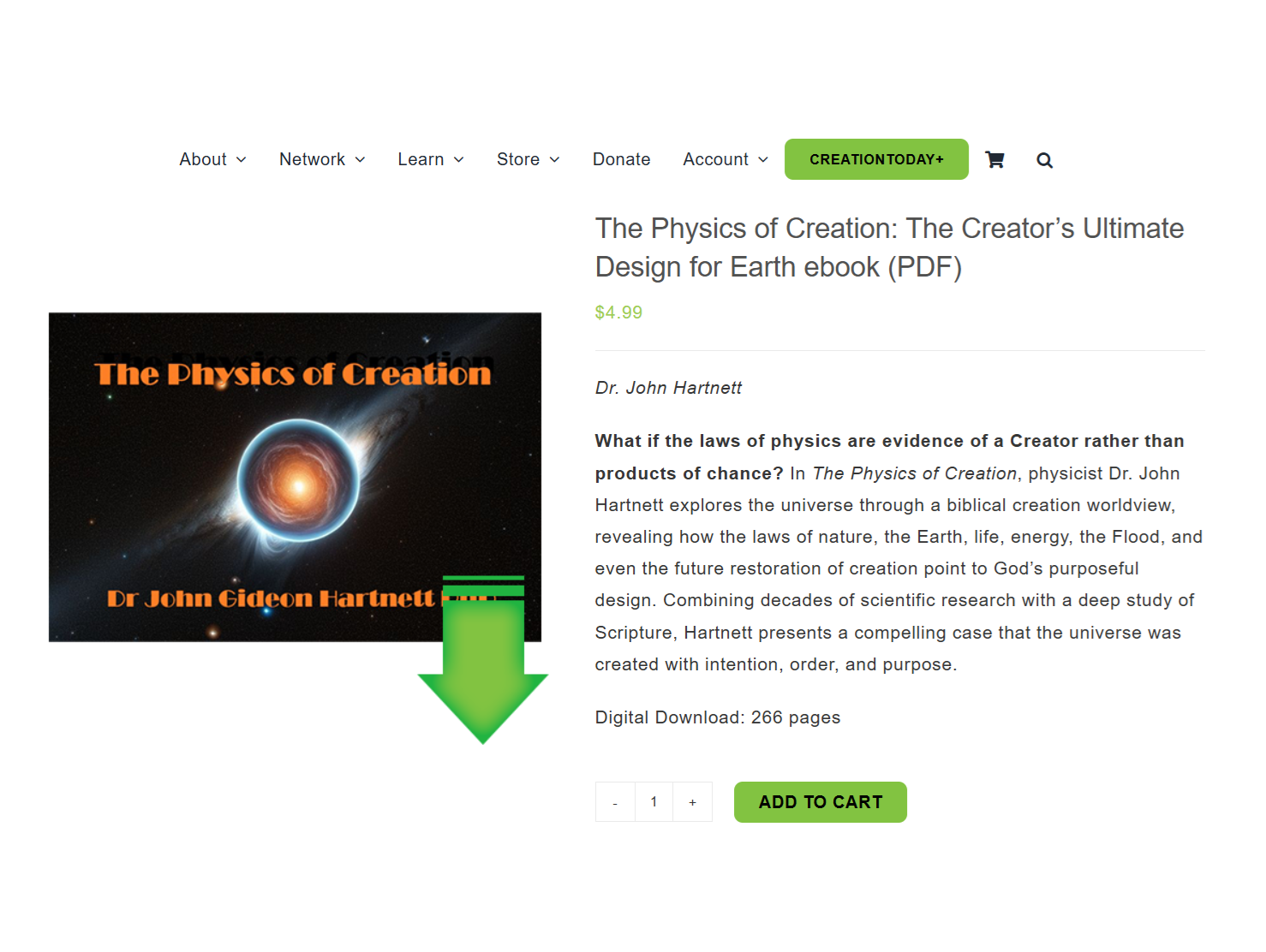
My book, "The Physics of Creation: The Creator’s Ultimate Design for Earth," is now available for download at CreationToday.org for under $5. The book offers a unique perspective on the universe, linking physical laws to an intelligent Creator, and explores how scientific principles align with the biblical creation narrative.

  •  

Untangling the cosmic web

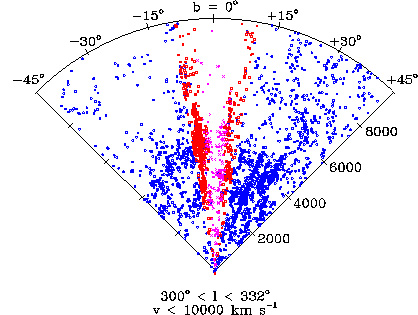
There is a pattern found in nature. It is indeed the largest pattern there is. It is so vast that it spans the universe, filling up its observable volume. The pattern is made of individual units in the same way your body is made of cells — if each of your cells were a galaxyContinue reading "Untangling the cosmic web"

The post Untangling the cosmic web appeared first on Astronomy Magazine.

  •  

A Universe Without Dark Energy? Mathematicians Challenge Standard Cosmology

Dark Matter Particles Astrophysics ConceptNew mathematical research suggests dark energy may not be needed to explain the accelerating expansion of the universe, challenging the foundations of the standard cosmological model. Mathematicians are questioning whether dark energy is actually responsible for the universe’s accelerating expansion. In a new study published in Proceedings of the Royal Society A, researchers at the [...]
  •  

Little Red Dots | Primordial Black Holes or Big Bang Failures?

Recent findings from the James Webb Space Telescope (JWST) indicate that Little Red Dots (LRD) could be primordial black holes, challenging the big bang theory. The data suggests these objects formed too soon for typical galaxy evolution, raising questions about cosmological interpretations and the nature of observational evidence.

  •  

June 9, 1988: First image of an Einstein ring

In early 1987, a team led by MIT’s Jacqueline Hewitt was imaging radio-emitting objects with the Very Large Array radio telescope as part of a gravitational lens survey. The unusual appearance of object MG1131+0456 – an oval with elongated bright spots at the ends – led to further investigation, and the researchers eventually concluded itContinue reading "June 9, 1988: First image of an Einstein ring"

The post June 9, 1988: First image of an Einstein ring appeared first on Astronomy Magazine.

  •  

Satellite Surplus Around Dwarf Galaxy DDO 161

LMC

Small galaxies are expected to have even smaller companion galaxies, according to current cosmological models. A recent study takes a look at one dwarf galaxy and finds more tiny companions than anticipated. 

Cosmology Predicts Satellite Galaxies

Critical to our understanding of dark matter and galaxy formation, satellite galaxies are small, faint galaxies surrounding a larger host galaxy. The leading cosmological model, known as lambda cold dark matter (ΛCDM), predicts dark matter halos of all masses to host smaller dark matter subhalos whose luminous counterparts make up satellite galaxies. 

While the satellite systems of Milky Way-like galaxies are well characterized, the companions of dwarf galaxies are less well studied. Despite being significantly smaller, dwarf galaxies should also host even smaller satellites galaxies around them. These satellites push the limits of observations — extremely faint and hard to distinguish from background sources, dwarf galaxy satellites require innovative imaging techniques to discover. 

In recent years, new surveys have identified a number of satellites around dwarf galaxies that appear broadly consistent with ΛCDM predictions, though the sample size is still small. Continuing the search for little galaxies’ little galaxies is critical to testing the ΛCDM framework and will further our understanding of galaxy formation on the smallest scales. 

DDO 161 satellite map

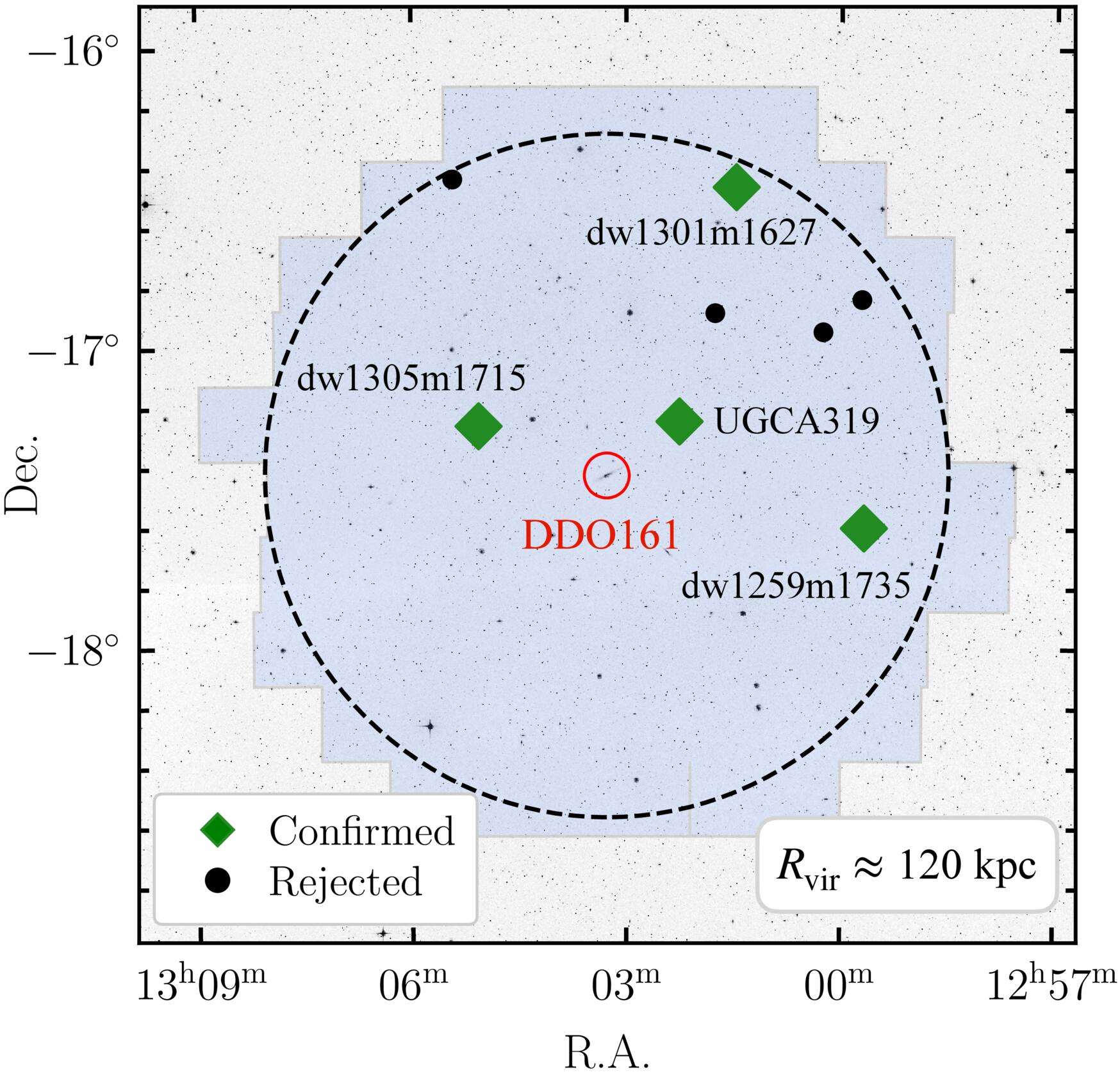
Satellite candidates around DDO 161 as they appear on the sky. Click to enlarge. [Li et al 2026]

Searching for Satellites Around DDO 161

Diving into a specific system, a team led by Jiaxuan Li (李嘉轩) from Princeton University began an in-depth search for satellites around the dwarf galaxy DDO 161. Prior to this study, DDO 161 was known to have one companion, UGCA 319, that is about 10 times smaller than its host. 

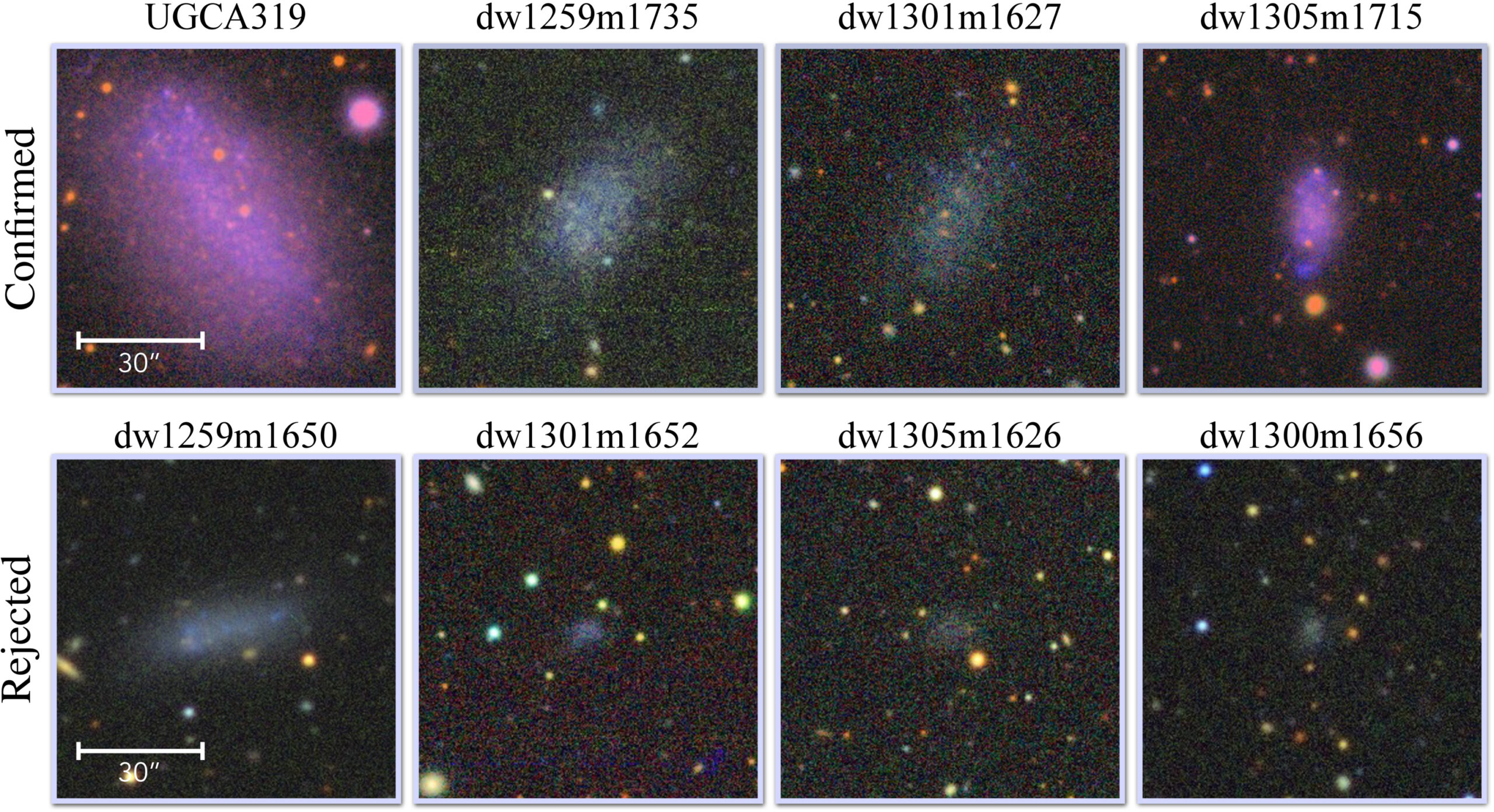
The authors used data from the Legacy Surveys to search for satellites within about 400,000 light-years of DDO 161 — the expected reach of DDO 161’s gravitational influence. After removing bright sources and smoothing the image to bring out very faint objects, they found eight satellite galaxy candidates including UGCA 319.

Images of the satellite candidates of DDO 161 from the Legacy Surveys. The top row shows the confirmed satellites, and the bottom row shows the rejected satellites. Click to enlarge. [Li et al 2026]

To confirm if these candidates were actual satellites of DDO 161, the team performed follow-up observations of the seven unconfirmed sources with the Magellan 6.2-meter telescope. Using the surface brightness fluctuation technique — measuring how a galaxy’s light fluctuates from pixel to pixel to determine its distance — the authors confirmed that three of the candidates are located at a similar distance to DDO 161 and are likely satellites. With the previously confirmed companion UGCA 319, DDO 161 has four satellite galaxies with stellar masses above 250,000 solar masses, making it the most satellite-rich dwarf galaxy known to date. 

Too Many Satellites

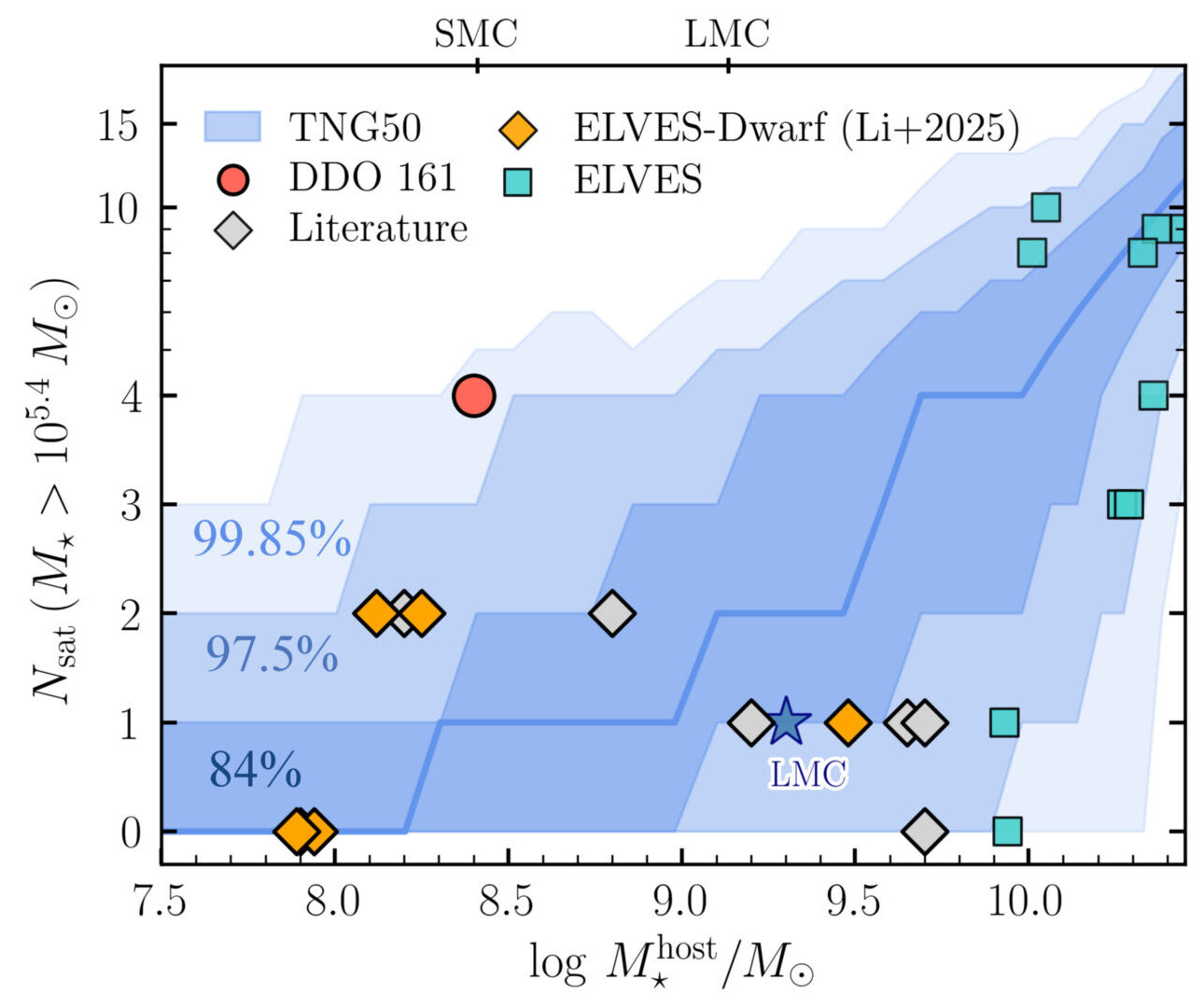
How does DDO 161 compare to theoretical predictions for galaxies of its size? The authors ran cosmological simulations to quantify the expected satellite populations around galaxies of similar size to DDO 161. Just as it is an outlier observationally, DDO 161 is also an outlier when compared to the simulation results that predicted fewer satellite galaxies in similarly massive host systems. 

DDO 161 Satellite Population Comparison

Number of satellites versus host galaxy stellar mass for DDO 161 (red circle) compared to other observed low-mass galaxy satellite systems (data points) and predicted ranges from simulations (blue regions). DDO 161 is a clear outlier, having a high number of satellites for the host galaxy’s stellar mass. Click to enlarge. [Modified from Li et al 2026]

Making sure to cover all bases, the authors considered their observational uncertainties, limitations of the simulations, different relationships between stellar and dark matter halo mass, and possible environmental effects. None of these checks could, at this point, sufficiently explain the satellite overabundance in DDO 161, introducing a possible “too-many-satellites” problem for this galaxy. A larger sample of satellites around dwarf galaxies is necessary to better understand this discrepancy, test our current cosmological framework, and give new insight into galaxy formation on small scales. 

Citation

“A Possible ‘Too-many-satellites’ Problem in the Isolated Dwarf Galaxy DDO 161,” Jiaxuan Li et al 2026 ApJL 998 L24. doi:10.3847/2041-8213/ae3ddd

The post Satellite Surplus Around Dwarf Galaxy DDO 161 appeared first on AAS Nova.

  •  
❌